Lawyers see future in stem-cell research

Posted: 7/07/06

Lawyers see future in stem-cell research

By Kate Coscarelli

Religion News Service

WASHINGTON (RNS)—Since its beginnings, stem-cell research has attracted attention from doctors, politicians and religious activists.

Now that the field is moving from theoretical musings to practical applications, add one more group—lawyers.

From trial lawyers duking it out over attempts to establish stem-cell research institutes in California and Missouri to patent attorneys helping New Jersey scientists protect their discoveries, the legal world increasingly is seeking a piece of the action.

With private industry and public funding dumping millions into stem-cell research, many are already speculating that the dividends for law firms could be huge.

“The future is pretty bright,” said Tom Turano, the co-chairman of the newly formed stem-cell technology practice group at Kirkpatrick & Lockhart Nicholson Graham, which has offices in Newark, N.J. “We are really at the beginning of something here.”

The potential for legal work in the stem-cell field is vast, experts insist. Intellectual property lawyers help make sure discoveries are protected and in position to be developed into marketable products. Venture-capital attorneys build deals. Other lawyers are hired to lobby legislators. Immigration attorneys smooth the way for foreign scientists to work in laboratories here. And experts in insurance law fight over what therapies should be covered.

“Lawyers are vital to getting this off the lab bench,” said Ray Thek of Lowenstein Sandler in Roseland, N.J., who has done stem-cell work for a doctor at Hackensack University Medical Center.

But diving into the specialized field is no small investment, said Joel Henning, a senior vice president of Hildebrandt International, a legal consulting company. That could keep many small firms and even some big ones out of the field.

“At this time, it is pretty exotic,” said Henning, who works in the consultancy’s Chicago office. “It is limited in the number of clients that are going to be into it. (But) more firms will get interested as time goes on.”

The Kirkpatrick firm is one that got interested—fast. It recently created a nine-lawyer group out of its existing staff in an effort to make sure a cross-section of lawyers were keeping up to speed on developments in the field.

“The science moves much faster than the law,” said Turano, who recently helped patent a mutated gene that eventually will help scientists create an affordable diagnostic test to detect a rare connective tissue disease.

“Sometimes, by the time the law gets around to (an issue), nobody cares about it,” he said. “The group was formed specifically for the purpose of trying to stay ahead of the curve.”

Kate Coscarelli writes for The Star Ledger in Newark, N.J.

News of religion, faith, missions, Bible study and Christian ministry among Texas Baptist churches, in the BGCT, the Southern Baptist Convention ( SBC ) and around the world.


Preparation eases jitters for first-time church campers

Posted: 7/07/06

Preparation eases jitters
for first-time church campers

By Laura Frase

Communications Intern

With summer in full swing, youth pack their bags for church camp, stuffing their Bible between sunscreen and T-shirts.

Anticipation brings a wide range of emotions among campers. Some are church camp veterans, excited about worship and luaus; others face their first camp experience as anxious as their first day of school.

To avoid camp jitters, Youth Minister Shannon Hopkins at First Baptist Church in Teague calls all the students the week before camp and confirms their plans to attend camp. He also enlists students who attended previous camps to give testimonies at church about their camp experiences.

Summer campers work their way across a balance beam at Mount Lebanon Encampment’s ropes course. (Photo by Laura Frase)

Otherwise, if this is a student’s first time, “most get nervous and chicken out,” Hopkins said.

Before students leave for camp, Heart of Texas Baptist Camp Director Rhonda O’Banion advises making a list of what to bring and—more importantly—what not to bring.

O’Banion also stresses the importance of arriving with a good attitude and flexibility.

“When they come, they are sharing facilities and space with a lot of people,” she said.

Mount Lebanon Baptist Camp, considered a medium-sized camp, housed more than 1,000 youth for one week’s camp, leaving little room for privacy.

To prepare for camp, Youth Minister Jase Waller at First Baptist Church in Seminole tells students to be well-rested and physically prepared. If students aren’t prepared for camp, it becomes a distraction, he said.

“I think (Satan) uses that against us while we’re at camp,” Waller said. “It’s a distraction to prevent us from hearing what we need to hear.”

Like many church camps, Camp Copass strives to “create an environment conducive to the Holy Spirit working in the kids’ lives,” so it doesn’t allow radios, televisions, cell phones or other distractions, Director Angie Smith said.

“They’re here to be secluded from the world so they can hear the Lord.”

Youth listen to God through worship and prayer. But camp worship isn’t like Sunday morning worship in most churches, unless children jumping up and down, spinning in circles and singing about papayas and God’s love are a Sunday norm.

“Youth should expect to have a lot of fun,” said Stuart Lutz of Zephyr Baptist Encampment.

In the Bible studies, quiet times and worship, camps offer a broad range of activities, from archery to belly-flop contests to zip lines.

Even with all the activities, the primary focus remains on a relationship with God.

At Camp Chaparral, Director Mike Leamon encourages discussing Scripture whenever possible.

“We try to design activities that encourage trust and unity,” he said. The ropes courses at many camps develop trust, unity and relationships among the campers and with God. Courses feature obstacles that only can be completed through teamwork and trust.

Throughout the day, “they should expect some intense time with God,” Leamon added.

O’Banion agrees with the expectations, but also said: “They should expect to meet a lot of new people, to have a good time … to be stretched beyond their comfort zone and to be inspired and changed by the worship experience.”

Hopkins wants to see more one-on-one time with God at camps.

“I expect students to be challenged, not entertained,” Hopkins said. “I want students to be challenged spiritually. I don’t want to just touch the surface.”

While recreation remains balanced with spiritual development, camps continue to reach believers and nonbelievers through activities in a nurturing environment.

“Our goal is to point those (campers) to Christ,” Leamon said. “We share the gospel with the lost, disciple believers and provide good, quality, Christian fun.”

News of religion, faith, missions, Bible study and Christian ministry among Texas Baptist churches, in the BGCT, the Southern Baptist Convention ( SBC ) and around the world.


Summer Camp High: Follow-up important

Posted: 7/07/06

Staff leaders join teens in worship at a Mount Lebanon Baptist Encampment youth camp. (Photos by Laura Frase)

Summer Camp High: Follow-up important

By Laura Frase

Communications Intern

With summer church camp professions of faith in Christ soaring to more than 9,000 last year in Texas and rededications hovering at 8,000, some church leaders express concern about a “camp high.”

They question whether youth will stand by their decisions or if their commitments are based on peer pressure and overwhelming emotions.

Rhonda O’Banion of Heart of Texas Baptist Camp and Mike Leamon of Chaparral Baptist Assembly believe it’s a mixture of both.

Campers paint diuring a crafts session.

“I know people personally who have accepted Christ at camp and maintained that relationship, and there are those that base it off emotions,” Leamon said.

While O’Banion agrees, she believes that “sometimes God uses an emotional atmosphere to get their attention.”

Youth Minister Jase Waller from First Baptist Church in Seminole is careful about picking camps for his youth group because some camps play on emotions and some focus on numbers by displaying how many salvations happened at camp on their website, he said. But “there are many camps that do not plan the emotional high,” he added.

At Zephyr Baptist Encampment, Director Stuart Lutz tries to keep camp sincere.

“We push it where it’s not all tears. We want it to be real,” he said. “Our goal isn’t to get every kid at camp down the aisle.”

Youth ministers Waller and Shannon Hopkins of First Baptist Church in Teague agree the key lies in follow-up.

A Mount Lebanon Baptist Encampment staff member offers students advice on how to overcome obstacles during a ropes course activity.

Youth need encouragement at home and are less likely to stand by their decision if they do not receive it, Hopkins said. “That’s how you keep students firm.”

If families are not encouraging or supportive, Hopkins pairs the student with another adult who will push the student to follow up on his or her decision.

Hopkins said the church’s student ministry tries to get new believers plugged in to the church.

Waller agreed, saying “that where we hear God as youth ministers, we need to help prevent spiritual heightening by assisting our students with follow-through and discipleship.”

Lutz is a strong supporter of follow-up as well.

“Five days is just the beginning of what God wants to do with them,” Lutz said.

Many of the camps agree that follow-up is as important as making the decision and are taking the initiative to help churches.

“We try to give churches materials that help with follow-up and stress the importance of following up on a decision made at camp, whether the person is part of the church or a guest of someone with the church,” Leamon said. “They need to stick with these kids and follow up and make sure they get guidance.”

On top of post-camp encouragement, Highland Lakes Camp and Conference Center has a prayer team across Texas designed to pray for new believers.

While “camp high” may be a concern, Highland Lakes Director Danny Dawdy still believes that Christian camping is “one of the greatest evangelism tools we have as Baptists.”

“As we look at the numbers being saved in Baptist camps, we really need to do what we can to support and continue this heritage of Christian camping,” he said.

News of religion, faith, missions, Bible study and Christian ministry among Texas Baptist churches, in the BGCT, the Southern Baptist Convention ( SBC ) and around the world.


Superheroes draw on universal themes

Posted: 7/07/06

Superheroes draw on universal themes

By Lauren Kirk

Special to the Baptist Standard

Dazzling special effects and out-of-this-world action un-doubtedly attract viewers to the big-screen versions of popular superheroes like Superman, Batman and X-Men. But Baylor University English Professor Greg Garrett believes an even more powerful force draws people into these comic book-inspired adventures.

Superhero stories “communicate important truths about the way we live,” Garrett said. “These are powerful stories with larger-than-life characters.”

The characters’ popularity is indisputable. At $103.1 million, X-Men: The Last Stand ranked the third-highest grossing film over a three-day start of any film in history and reached $120 million over its four-day opening.

Superman Returns hit theaters June 28, and promises to be the blockbuster hit of the summer. (DC Comics/Warner Bros.)

Last summer’s Batman Begins topped the $200 million mark less than two months after its release.

And Superman Returns, which hit theaters June 28, promises to be the blockbuster hit of this summer, vaulting to first place at the box office faster than a speeding bullet.

These movies—and the superhuman characters they feature—touch on universal themes, Garrett insists. He has written several books about the spiritual dimension of movies and comic books. The Gospel Reloaded, which he wrote with Chris Seay, compares the Matrix characters to comic book characters and to biblical themes. Holy Superheroes explores what superheroes can teach about spirituality and faith.

And his upcoming book, The Gospel According to Hollywood, looks at underlying religious meaning in popular films.

“I was drawn to the stories. I wanted to make connections between the stories that are important to me and to Christians and the stories that I love in popular culture,” Garrett said.

X-Men, for instance, focuses on themes of tolerance and prejudice, he noted. Created by Stan Lee and Jack Kirby in the early 1960s, the stories about oppressed mutants paralleled struggles in the Civil Rights movement.

Batman—the caped crusader who committed his life to fighting crime after his parents’ murder—touches on life and death issues with which everyone can identify, he observed.

“We all face loss in our lives. We all wonder what we’re supposed to be doing with our lives,” Garrett said.

The familiar story of Superman—sent to earth by his father, endowed with special powers and committed to saving humankind from the forces of evil—closely parallels the Jewish belief that the Messiah will come to save the world and draws on Christian beliefs about Jesus as the Messiah, Garrett noted.

“The approach that Jesus takes in the Gospel of Mark, going around doing good deeds, is similar to what Superman does,” he said. “If there is a problem and somebody needs help, he steps in and does something about it to save the day.”

Garrett thinks Christians can use the themes in comic book stories and the movies inspired by them to witness to nonbelievers interested in these stories but not in Christianity.

He suggests Christians do this by finding connections between the comic book stories and their own stories of faith and then sharing these stories with others.

“We need to recognize that we are all spiritual beings,” he said. Not everyone accepts organized religion, but “almost everyone responds to powerful, spiritual stories in our culture.”

News of religion, faith, missions, Bible study and Christian ministry among Texas Baptist churches, in the BGCT, the Southern Baptist Convention ( SBC ) and around the world.


Texas Tidbits

Posted: 7/07/06

Texas Tidbits

Baylor Social Work receives $1.1 million grant. The Baylor University School of Social Work’s Center for Family and Community Ministries was awarded a $1.1 million grant from the Christ Is Our Salvation private foundation, to be administered over the next three years. The grant to strengthen congregational community ministries will focus on educating future community ministry leaders for churches; preparing leaders through internships; producing community ministry resources and training for churches; and publishing a quarterly journal as a resource for church leaders. As part of the grant proposal, the center will name Gaynor Yancey, associate dean for baccalaureate studies in the School of Social Work, as associate professor of church and community.


Wayland names alumni development director. Danny Andrews, longtime editor of the Plainview Daily Herald, has been named director of alumni development for Wayland Baptist University. He succeeds Joe Provence, who has served as the university’s alumni director since 1985. Andrews, who graduated from Wayland in 1972, began working at the Herald as a sports writer in 1967. He took the position of sports editor in 1970 and was promoted to editor in 1978. In his new position, Andrews will be responsible for fundraising efforts among Wayland alumni, including the annual fund and endowment campaigns. He also will plan all the homecoming events and activities and oversee the alumni publication, Footprints. Andrews’ wife, Carolyn, is administrative assistant to Wayland President Paul Armes. The Andrewses have three children—Brandon, of Tampa, Fla., Kayla of Carrollton and Brad of Lubbock.


Missions service award deadline set. The nomination deadline for the 2006 Texas Baptist Missions Foundation Mission Service awards is Aug. 4. The awards, presented by the Texas Baptist Missions Foundation Council, include the Pioneer Award for service in missions, the Innovator Award for creativity in missions and the Adventurer Award for leadership in missions. The awards will be presented at the Texas Baptist Missions Foundation luncheon Nov. 13 at the Baptist General Conven-tion of Texas annual meeting in Dallas. Nomina-tions may be submitted in writing to Bill Arnold at the Texas Baptist Missions Foundation, 333 North Washington, Dallas 75246 or via e-mail to Bill.Arnold@bgct.org.


Sadler named interim religion chair at Wayland. Religion professor Paul Sadler has been named interim chairman of Wayland Baptist University’s religion and philosophy division. Fred Meeks, who has led the division since 1992, retires Aug. 31. Sadler, who joined the Wayland faculty in 1990, assumed duties as interim chair July 1, allowing for overlap during the time of transition. Sadler holds a bachelor’s degree and a doctorate from Baylor University and master of divinity degree from Southwestern Baptist Theological Seminary. He served as pastor of Park Lake Drive Baptist Church, Bosqueville Baptist Church and Meadow-brook Baptist Church, all in Waco, from 1970 to 1990 before joining the Wayland faculty.


UMHB names dean. The University of Mary Hardin-Baylor has named Derek Davis, former director of the J.M. Dawson Institute of Church-State Studies at Baylor University, founding dean of its new College of Humanities. Formerly, all departments under sciences and humanities at UMHB were combined in one college, the College of Science and Humanities. The College of Humanities includes the departments of English, modern foreign languages, history/political science and communication/media studies. Davis also will serve as the interim dean of graduate programs and research—also a new position at UMHB. Davis holds bachelor's, master’s and law degrees from Baylor University and a doctorate from the University of Texas at Dallas. He is the author or editor of 16 books on religious liberty and related topics.

Convencion calls for immigration reform. The Hispanic Baptist Convention of Texas joined the call for comprehensive immigration reform, unanimously approving a resolution that urges lawmakers to pass legislation to protect the country’s borders, provide avenues for undocumented workers to become citizens and allow compassionate ministry.


Baylor cancer program commended. The American College of Surgeons Commission on Cancer granted approval with commendation to the cancer program at Baylor University Medical Center in Dallas. Only one in four hospitals that treat cancer receives this special approval, according to the commission. Programs approved by the commission provide quality care close to home; comprehensive care offering a range of state-of-the-art services and equipment; a multi-specialty team approach to coordinate the best treatment options available to cancer patients; access to cancer-related information, education and support; a cancer registry that collects data on type and stage of cancers and treatment results; lifelong patient follow-up; ongoing monitoring and improvement of care; and information about ongoing clinical trials and new treatment options. To maintain approval, facilities with commission-approved cancer programs must undergo an on-site review every three years.


Scholarships endowed at Hardin-Simmons. John and Sharon Hyde recently established the Richard C.C. Kim endowed scholarship at Hardin-Simmons University. Kim was professor and head of the political science department at Hardin-Simmons when Hyde—a district court judge from Midland—was a student in the early 1960s. The scholarship is available to any undergraduate student or students who have completed 30 hours or more of college credit and have a grade point average of 2.5 or higher. The family of Kenneth Lambert, former assistant comptroller at Hardin-Simmons, established an endowed scholarship in his memory. The scholarship will benefit students pursuing a teaching certification in the Irvin School of Education.


United Way honors TBM, BCFS. The United Way recently recognized Texas Baptist Men and Baptist Child & Family Services as the top faith-based volunteer organizations ministering in San Antonio in 2005. Both organizations served people who fled to San Antonio when hurricanes Katrina and Rita struck the Gulf Coast last fall. Baptist Child & Family Services cared for more than 1,700 special-needs evacuees and their families in 12 shelters. In six weeks, volunteers served more than 18,500 hours. More than 900 workers came from around the nation to serve alongside the 120 Baptist agency employees who led the ministry. Texas Baptist Men disaster relief volunteers prepared about 650,000 meals for hurricane evacuees staying at 22 shelters across San Antonio. Volunteers worked more than 30,000 hours in helping evacuees.


Honors program established at Hardin-Simmons. Hardin-Simmons University has established an endowed honors program, established by a bequest from R.M. Hardwick. Earnings from this endowment will be used to support the Hardin-Simmons University honors program through scholarship and program support.


Justice Department awards Baylor center $2.9 million grant. Baylor University’s Center for Religious Inquiry Across Disciplines has received a $2,975,035 grant from the Justice Department’s Office on Violence Against Women. It will fund the Faith and Community Technical Support program, which will provide support for small, rural, faith-based and/or community-based programs that provide services for victims of domestic violence, and it will provide technical assistance to organizations receiving funds. This is one of the first grants given by the Office on Violence Against Women that will provide funds to faith-based organizations.

News of religion, faith, missions, Bible study and Christian ministry among Texas Baptist churches, in the BGCT, the Southern Baptist Convention ( SBC ) and around the world.


TOGETHER: BGCT: Working separately & together

Posted: 7/07/06

TOGETHER:
BGCT: Working separately & together

Have you ever watched three or four friends build something on a free Saturday? If they’re smart, they start early, divvy up the work in a way that best suits their talents and go to work. They don’t all do the same thing at the same time. They work both separately and together; and, in the end, if they’ve worked well, they build something that will last.

Baptists are like those building friends. We come together, divvy up the work and go at it. Churches and conventions work both separately and together; and, in the end, we’ve built something special. Of course, we know that it is God building through us, but we surely are part of the work (1 Corinthians 3:9).

wademug
Executive Director
BGCT Executive Board

The Baptist General Convention of Texas helps churches in a unified project of kingdom building; but churches are the most important element. Together, we’re like those building friends. We’ve got a job to do, and it sure helps to have friends helping. It makes the effort more enjoyable, and you get a lot more done.

Many people today just do not grasp how Baptists work. It’s hard for them to understand that churches, the BGCT, and other Baptist bodies can all be autonomous and yet work together—having a kingdom goal and working cooperatively.

When we see friends working on weekend building projects, we know each one of them is an autonomous individual who will make his own decisions. But we also know those friends cooperate, or they will not get as much done. Before they came together to work that morning, each got out of bed in his own house, and at the end of the day, will return there. They have their own individual lives, but they choose to do some things together because it’s enjoyable and productive.

That’s what Baptist groups are like. Each is autonomous, but we choose to come together and work because it’s a joy and it’s productive.

The BGCT, national bodies and regional associations do not tell churches what to do, nor do they tell each other what to do. They’re autonomous, but they cooperate where they can.

Disagreements that have divided Baptists in recent years have had some particularly grievous consequences in harming cooperation and trust, but our polity of autonomy still enables us to move forward in kingdom work. Baptists, despite our struggles, still are seeking to reach people for Christ through missions and evangelism; we’re still trying to disciple the saved; and we’re still trying to meet the needs of a hurting world.

At the national level, the BGCT is not joined at the hip with either the Southern Baptist Convention or the Cooperative Baptist Fellowship. The BGCT makes its own decisions in seeking to best serve the churches of Texas and the needs of the world. But we also know we are not alone. That’s why we cooperate where we can with each group; and where we can’t, we go our own way, the way that Texas Baptists say they want to go together.

The Baptist churches of Texas work together through the BGCT on the same eternal project. We work as friends, but we don’t all do the same thing all of the time. It’s the Baptist way, and it’s a very effective way.

We are loved.

Charles Wade is executive director of the Baptist General Convention of Texas.

News of religion, faith, missions, Bible study and Christian ministry among Texas Baptist churches, in the BGCT, the Southern Baptist Convention ( SBC ) and around the world.


Cybercolumn by Berry Simpson: Workover

Posted: 7/07/06

CYBER COLUMN:
Workover

By Berry Simpson

When I opened my mail I found an ID, card and an invitation to join AARP, the American Association of Retired Persons.

So, it’s finally come to that.

Not that this was a big surprise. I know how old I almost am, and I know AARP keeps track of people like me and would eventually find me. And besides, maybe I’ll even join their club, since I hear they have good discounts. I wonder if they have accounts with New Balance or REI? That would be a real asset.

Berry D. Simpson

The thing is, I never expected to feel like a newbie in my AARP years. I thought I’d be more settled in by now—doing things that were familiar to me.

The day I received the invitation to join AARP, I was working on several last-minute details for an oil well workover near Tatum, N.M. As I worked on the project timeline and tried to arrange all my equipment, I kept uncovering more things I should’ve remembered but apparently forgot. It feels like I’m starting over as a production engineer. I used to do a lot of this sort of thing, but it’s been 10 years since my last hands-on workover.

I used to enjoy sitting on workovers. I found that focusing on one single project was relaxing. The isolation was relaxing as well. But in the past years, I think, I’ve lost my grip on field work and wellsite work, and now I find it tedious and draining rather than focusing and energizing. Maybe I’ll grow back into it.

Well, two days later, while sitting on location and watching the pulling-unit crew run tubing, I was reading a book by Calvin Miller Into the Depths of God. Miller observes: “It is amazing that we take our individual schedules so seriously that we never wonder if God has anything else for us to do.”

It occurred to me that maybe I needed more unplanned, even forced, intrusions into my tightly scheduled life to remind me to listen to God and rely on other people who want to help me. When my schedule clicks along the way I planned it, I don’t need help from anyone. I can handle everything myself.

Is that a good way to find God?

So, the first night in the drilling trailer—the company I’m working with also is drilling an oil well in the same field and has a trailer on the drill site where I could spend the night instead of driving three hours home every night and three hours back to the well each morning—I prayed: “Lord, come to me in this workover; speak to my insecurities; speak to my loneliness; speak to my frustrations; speak to my fears of doing the wrong things; speak to my fears of being able to pay all my drilling and workover bills this summer.” It’s a new thing for me to pray and ask God to speak to me through a situation rather than praying for God to calm me or lessen the stress.

Miller writes: “We cringe when we think of letting other people gain control of our lives. Yet the time when we best develop character is when we are no longer in charge of our circumstances.” That cringing Miller writes about came from me. I like controlling my own schedule, and I don’t like having someone else control me. And I don’t like having situations control me, either.

So, maybe Miller was speaking to my situation here on this workover. Sitting on this well is certainly not something I’d have chosen for myself at this time. And even though I am technically the wellsite supervisor here, it doesn’t feel like I’m in charge at all. It feels more like the well itself is in charge. It feels like the earth is making all the decisions, and all I can do is respond. And when I do get to be in charge and make decisions, it feels like I’m in over my head and making expensive decisions based on little experience and limited insight. Maybe the problem isn’t that well work is so tedious, but that it is so unpredictable.

Sitting in my pickup trying to escape the 100-degree heat, I wonder: Is this more about finding God than about relearning old skills? I think so. I think if finding God is a priority, then everything we do becomes a portal. Especially things that make us uncomfortable, things that intrude on our schedule, things that make us feel vulnerable and at risk.

If we pay attention, it all points toward God.

Berry Simpson, a Sunday school teacher at First Baptist Church in Midland, is a petroleum engineer, writer, runner and member of the city council in Midland. You can contact him through e-mail at berry@stonefoot.org.

News of religion, faith, missions, Bible study and Christian ministry among Texas Baptist churches, in the BGCT, the Southern Baptist Convention ( SBC ) and around the world.


RIGHT OR WRONG? Ordaining divorced deacons

Posted: 7/07/06

RIGHT OR WRONG?
Ordaining divorced deacons

“I've heard about churches that are ordaining divorced and remarried men as deacons. What does the Bible say about the qualifications of deacons and marriage?”

The qualifications for deacons are found in Acts 6:1-6 and 1 Timothy 3:8-13. The Acts passage reports the launch of deacon ministry. It describes how the early church commissioned seven men to attend to the daily needs of the congregation while the apostles devoted their time to teaching the gospel. The 1 Timothy passage lists lifestyle and character traits given to Timothy as he tried to organize the church at Ephesus.

Taken literally, the 1 Timothy passage renders most everyone ineligible to serve as a deacon. Just as the Apostle Paul describes character traits for the pastorate that render all of us unqualified to stand in the pulpit

(1 Timothy 3:1-7), deacons read 1 Timothy 3:8-13 and lament, “I am not worthy.” Grace takes priority over standards.

Honest servants recognize that on one level or many, they are not blameless. Families are not perfect. Everyone has a past. And the list could go on. To evaluate these obvious inadequacies, each church also looks to the proven personal Christian character of the nominee. Except in the case of divorce. For some reason, this past failure carries a lasting visible stain. Oddly, we have been able to accept the claim of a young drunkard or drug addict, “The Lord saved me and called me to the ministry.” Yet the person whose marriage fell apart when he was 23 years old still struggles to find redemption at 55.

The tension lies in the admonition in 1 Timothy 3:12, “Let deacons be married only once” (NRSV) or “Let the deacons be the husbands of one wife” (KJV). Is Paul speaking to divorce, a common occurrence in Corinth? Or is Paul speaking to polygamy, another common occurrence in Corinth? Each is an acceptable interpretation, and each has an acceptable application.

The burden in selecting deacons lies in Paul’s admonition in 1 Timothy 3:10: “… let them first be tested.” The qualities an autonomous Baptist church would seek in a deacon are discerned over a long period. Be wary of the church that ordains the newcomer or the troublemaker. If a person was married and divorced many years ago and yet that person has since proven to be exemplary in Christian character, their family is in good order, and they are respected within the local church, why not give them equal consideration to those who have not faced divorce?

I have served two Texas Baptist churches. The first ordained as a deacon a fine man who had experienced the pain of divorce in his youth and had since put his life together with a wonderful woman. This act of grace took place years before I arrived in Matador. E.A. Day is one of the most influential people in my life. The divorce of his youth gave him wisdom and humility for service. I cherish his memory and the church that trusted him.

In my second and current church, the members of our congregation rose up during the nomination process and said, “We trust these two men!” The deacons and the church reconsidered the issue and chose overwhelmingly to ordain these men who had faced divorce in the distant past. Both churches are better for it. Grace and proven character should speak louder than previous mistakes.

It has the ring of gospel in my ears. What about yours?

Stacy Conner, pastor

First Baptist Church

Muleshoe

Right or Wrong? is sponsored by the T.B. Maston Chair of Christian Ethics at Hardin-Simmons University’s Logsdon School of Theology. Send your questions about how to apply your faith to btillman@hsutx.edu.

News of religion, faith, missions, Bible study and Christian ministry among Texas Baptist churches, in the BGCT, the Southern Baptist Convention ( SBC ) and around the world.


BaptistWay Bible Series for July 16: Invest yourself in the spiritual life of another

Posted: 7/06/06

BaptistWay Bible Series for July 16

Invest yourself in the spiritual life of another

• 2 Timothy 1:1-14

By Joseph Matos

Dallas Baptist University, Dallas

A couple of months ago, I received a phone call from Rob, a friend I grew up with in our church youth group more than 20 years ago. He had been on my mind often over the years, but we had lost contact as each of us moved from place to place. I repeatedly failed in finding his contact information.

So, I was overjoyed when he called. Then I was humbled by the reason he gave for seeking me out and calling me. He is an elder in his church now, and in the days preceding his calling me, he was challenged to recall someone who had an impact on his spiritual growth. When presented with the challenge, Rob thought of me.

It was not that he had not sought me out before. But this challenge gave him new resolve to do so. Thus, he contacted John Bell, our youth minister growing up. Somehow, he had my new phone number, even though I could not remember giving it to him after our recent move.

Rob proceeded to express appreciation for the role I played in his life while we were teenagers. He had many friends, but he said with me alone could he share spiritual matters.

Now, I am no spiritual giant, and as I look back on my youth, even as a Christian I was immature. I mentioned how much it meant for him to say this, especially since such conversations did not dominate our friendship. It truly was humbling, because I could not remember making an overt attempt to influence him. I still was growing myself. But he assured me I had shared in shaping a life.

According to tradition, Paul’s second letter to Timothy was written during Paul’s second and final imprisonment. The time of Paul’s death was drawing near. While this letter includes instructions to Timothy in his task as leader in Ephesus—in similar fashion to the first letter—it is much more reflective and personal in tone. The letter reads more like a farewell address than a platform for instruction.

Contained in the first chapter are Paul’s words of recollection, encouragement and exhortation to Timothy. Paul reminded Timothy of the people and events that shaped his life. In light of these, Timothy was to carry out his mission.

What shaped Timothy’s life? Clearly, his experiences traveling and ministering with Paul made an impact on him. Only briefly in this letter (3:10-11) did Paul mention any specific example of Timothy’s travels with Paul, but these must be in the background here.

The book of Acts, however, and others of Paul’s letters illustrate how closely Paul and Timothy were joined in ministry. In 2 Timothy 1:6, Paul recalled being present at the beginning of Timothy’s ministry. Also, Paul exhorted Timothy to pattern his teaching after the example set by him (v. 13). Even now, as Paul was writing the letter, he could shape Timothy’s life through intercessory prayer (v. 3).

Paul recognized, as well, that even before Timothy partnered with him in ministry, Timothy’s grandmother, Lois, and mother, Eunice, played a key role in his spiritual development. He acknowledged that the sincerity of faith Timothy exhibited first lived in them (v. 5). We can infer from this that Timothy gleaned spiritual insights from his mother and grandmother. Beyond that, Paul offered no other insight into their impact on Timothy. But perhaps Paul made allusion to their influence on Timothy when, in 3:15, he reminded Timothy he had learned the Scriptures from his youth.

Paul’s reminders to Timothy of the many factors which influenced his life served as impetus for further encouragements and exhortations. Timothy was to rekindle the gift of God imparted to him (v. 6). He did not receive a spirit of fear, but “a spirit of power, of love and of self-discipline” (v. 7).

Consequently, Timothy was not to be ashamed to testify about Christ or to be ashamed of Paul, who was in prison for the gospel. Paul then exhorted Timothy to join him in his suffering for the gospel (vv. 8-9), which he further described (vv. 9-10). To this gospel, Paul was appointed “a herald and an apostle and a teacher” (v. 11).

Though his loyalty to the gospel was the reason for his present suffering, Paul himself was not ashamed. For he knew the one he believed, and he was convinced he would guard it for “that day” (v. 12).

Paul concluded with two further admonitions to Timothy. First, he exhorted Timothy to continue in following what he heard from Paul “as the pattern of sound teaching” (v. 13). The words which shaped Timothy should continue to do so.

Second, Timothy was to “guard the good deposit” entrusted to him (v. 14). The word “guard” is the same as used in verse 12 for the Lord’s activity of protecting what Paul entrusted to him. Timothy would be able to do this “with the help of the Holy Spirit” which lived in him.

Indeed, Timothy, like my friend, Rob, could acknowledge those that shaped his life. He could draw on his upbringing by his grandmother and mother. This letter recalled the direct impact Paul had on his life. These guiding influences served as the foundation for his continued service to the Lord.

Rob’s call prompts me to recall those who shaped my life. I have some calls to make myself.


Discussion questions

• Who has shaped your life? If possible, would you consider contacting that person?

• Are you in need of hearing more encouraging words?

• Whose life are you shaping? What can you say or do to prepare them for service?

• Could you present your words as a “pattern for sound teaching?”


News of religion, faith, missions, Bible study and Christian ministry among Texas Baptist churches, in the BGCT, the Southern Baptist Convention ( SBC ) and around the world.


Family Bible Series for July 16: God guides believers with strength

Posted: 7/06/06

Family Bible Series for July 16

God guides believers with strength

• Exodus 13:17-18, 20-22; 14:5-6, 10, 13-14, 31; 15:1-2, 11-13

By Greg Ammons

First Baptist Church, Garland

A boater was rescued after being lost for a brief time. Authorities asked if he had a compass and what caused him to be lost. The relieved boater replied: “Yes, I have a compass. But no matter how much I tried to make the needle point north, it continued to point southeast.”

As Exodus opened, the Israelites must have felt much like the rescued man. God was leading in a direction which made them uncomfortable. No matter how much Moses tried to divert God in another direction, the Lord kept staying the course.

The Israelites had to answer a basic question, which Christians must answer today as well. Can I be sure God will guide and protect me if I follow him faithfully?


God takes into account our weaknesses (Exodus 13:17-18)

After the death of the firstborn throughout Egypt as the 10th plague, Pharaoh allowed God’s people to leave the land. Yet, God did not lead his people by way of the Philistines as they left. He did not want their hearts to become afraid when they saw war. Perhaps they would change their minds and return to Egypt (v. 17). Instead, God led them through the wilderness by the Red Sea (v. 18). He knew their hearts and took into account their weaknesses.

The Lord deals with his children the same today. He fully is aware of our circumstances and even how we will respond to them. The psalmist worded it beautifully when he wrote: “For he knows our frame. He remembers that we are dust” (Psalm 103:14).

Yet, it is our weakness that often fits us for his service. Paul spoke of a thorn in the flesh that gave him strength (2 Corinthians 12:9).

Hudson Taylor, the great missionary to China, once said, “I am thankful that God looked long enough to find someone as weak as myself so he could use me.” Be assured today that God knows your weaknesses but will use you through them.


God gives his constant presence (Exodus 13:20-22)

As the Israelites ventured into the wilderness, they camped at Succoth (v. 20). It must have been a frightening time for them, so God gave physical evidence of his presence. “The Lord went before them by day in a pillar of cloud to lead the way, and by night, in a pillar of fire to give them light” (v. 21). He did not take the pillars away, so the Israelites would be assured of God’s presence.

Often, Christians are in situations in which they simply need to know that God is near. Perhaps you are in such a situation now. God promised he would never leave nor forsake his children (Hebrews 13:5).

Corrie ten Boom experienced God’s presence in the most extreme of circumstances. Placed in a Nazi concentration camp, along with her sister, Betsy, Corrie would write her thoughts in a journal. She often wrote of a peace which passed all understanding as she was comforted by God’s presence, although she was surrounded by torture and death. You can be assured of God’s presence today, as well.


God fights for his people (Exodus 14:5-6, 10, 13-14)

Soon after the Israelites left Egypt and camped in the wilderness, Pharaoh changed his mind and went after them (vv. 5-6). Naturally, the Israelites were afraid and wondered what God would do (14:10). Moses calmed the heart of the people when he told them to “stand still and see the salvation of the Lord … the Lord will fight for you” (vv. 13-14). We know what happened next as the Red Sea parted, the Israelites safely crossed over and the Egyptians perished in the waters.

John Paton, a missionary to the New Hebrides Islands, spoke of a time when he was surrounded by hostile natives. He simply looked up to the Lord and asked for protection. God fought for the missionary as the natives were thrown into confusion and retreated.

Christians today can know God will do battle for them. There is never a situation in which God will leave believers powerless or defenseless. Claim this promise the next time you are in such a situation.


God guides believers with strength (Exodus 14:31-15:2; 11-13)

The Israelites saw the great miracle God performed at the Red Sea and feared him (v. 31). As a result, they sang a song of praise and spoke of the Lord being their strength (15:2). They sang, “the people whom you have redeemed, you have guided them in your strength” (v. 13).

A simple fact of Scripture is that God loves you today as much as he loved the Israelites in the Old Testament. You can trust that God will guide you with strength today in your fearful situations, just as he led the Israelites. God does not change. He is the same yesterday, today and forever (Hebrews 13:8). You can demonstrate your dependence upon God by following his leading. He will guide and protect you throughout the journey.


Discussion question

• Name a time when God took into account your weakness to give you strength.

• Which attribute of God brings you the most comfort in troubled times?

• Name specific ways God may fight for his people today.


News of religion, faith, missions, Bible study and Christian ministry among Texas Baptist churches, in the BGCT, the Southern Baptist Convention ( SBC ) and around the world.


Explore the Bible Series for July 16: Beware of speaking rashly for God

Posted: 7/06/06

Explore the Bible Series for July 16

Beware of speaking rashly for God

• Job 38:1-42:17

By James Adair

Baptist University of the Americas, San Antonio

Job has suffered incredible loss, indescribable pain and extraordinary sorrow. His three friends have added insult to injury, and the interloper Elihu has added his opinion. Job has expressed his outrage and called for justice.

At the end, the only one who has not yet been heard from is God, who now prepares to speak from the midst of a whirlwind. God’s message to Job is simple: I am sovereign, you can’t understand my ways, and you’ll just have to accept it. Is that the answer Job was looking for? Can he “just accept it”?


Job 38:1-41:34

An old preacher went to the hospital to visit a middle-aged man who had just been diagnosed with terminal cancer. He brought along a young man studying for the ministry. “How do you feel?” the old preacher asked. “I’m really mad at God!” the patient replied. “Why is he doing this to me? I don’t need a God who would do this to me, and I don’t want a God who’s too weak to stop it from happening. I hate God, I hate him!”

And he began to cry. The old preacher spoke a few words of comfort, offered a brief prayer and left the sick man to himself. After they were out in the hall, the seminary student said to the preacher with astonishment: “How could you just stand there and not say anything while that man was raving? All those things he said about God just weren’t right! Why didn’t you set him straight?”

With a look of compassion, the old preacher put his right hand on the student’s shoulder. “Son,” he said: “Don’t you worry about anything. God’s a big boy; he can take care of himself.”

Like the young man, and Job’s friends, we often feel the need to correct those who are railing against God. “No, God’s not unfair! God’s not capricious! God does care!”

Elihu is an enigmatic character who suddenly appears at the beginning of Job chapter 32 and disappears just as suddenly at the end of chapter 37. He criticizes Job’s friends for failing to answer Job’s complaints, he criticizes Job for justifying himself before God, and he claims his words are the words of God. God is not unjust, he says, for God knows everything people do, so God’s actions always are right.

Elihu’s understanding of God and the universe is comprehensive, logically consistent and wrong.

Though the opening words of God’s soliloquy in chapter 38—“Who is this that darkens counsel by words without knowledge?”— might have originally applied to Job, in the canonical structure of the book, they also apply to Elihu, perhaps primarily to Elihu.

God rebukes Job for his lack of understanding, but God’s dismissal of the words of Elihu as “words without knowledge,” without any further reference to him, suggests a greater condemnation. One thing Job had in common with his three friends and Elihu is that none of them understood as much about God as they claimed. God’s speeches illustrate his great power and wisdom, and the implication of the speeches to Job and the others is this: “If you can’t understand my works, and you can’t replicate my power, how can you debate with me about my justice?”


Job 42:1-17

When my daughter was about 3 years old, my wife was trying to get her dressed to go somewhere, and she was putting up a fight about wearing some pants. The phone rang, and my mother-in-law was on the phone, so my wife talked to her for a few minutes in Spanish.

After she got off the phone, my daughter, still adamant about not cooperating, said to her, “Ooga booga!” “What does that mean?” my wife asked. “It means I don’t want to wear pants, and I don’t have to!” my daughter replied. In her ignorance of the ways of the world, she assumed that since she couldn’t understand Spanish, it must just be a bunch of gibberish, so she figured she could make up her own language as well.

Comparing a 3-year-old child’s understanding of the world with an adult’s is analogous to comparing an adult’s understanding to God’s, as Job discovered. Job had been through a lot in recent days: The loss of his possessions, the loss of his children and the loss of his health. He thought he understood how God worked, and he was mad because God seemed to be violating God’s own code of conduct.

Why had God allowed all these terrible things to happen to him when he was God’s faithful servant? Why did God let the wicked run roughshod over the good? God had to be called to account!

In his ignorance, Job challenged God to appear before him. Much to his surprise and chagrin, God took him up on his challenge. It is interesting to note that God never answers any of Job’s questions directly. God refuses to be judged by humanity’s puny intellect.

Instead, God issues intellectual challenges to Job to ascertain whether he really is ready to sit in judgment upon God. Since Job is completely unable to answer God’s questions, it is clear the trial of God will not occur with Job as judge.

Instead, recognizing the profundity of his own ignorance, Job humbly repents, and God accepts him.

Verses 7-9 are crucial to understanding this chapter and the whole book. God is angry with Job’s friends because they have not spoken correctly concerning God, while Job has.

What? Job said God was unfair, that God allowed injustice in the world and that God had punished him for no good reason. Was he right after all?

Yes! By human standards, at least, everything Job said was true, and God praises him for his perception. Job may have spoken in ignorance, but his friends spoke in presumption. Job may not have had a very good understanding of the ways of God, but his understanding was much better than his friends.

Furthermore, while Job spoke rashly to God, he didn’t speak rashly for God, as his friends had. Job prays for his friends’ forgiveness, God accepts his prayer, and all is restored. Job’s family and friends bring him gifts, and before too long, Job has twice as much wealth and 10 new children.

Contrary to expectations, the story of Job has a happy ending. The present form of the book may mask the fact that many, perhaps most, who suffer do not end their lives in prosperity. Their personal book of Job stops at the end of chapter 41.

For them, the words of Job—which God praised as right—are their own words, which they address to those of us who are not suffering: “Have pity on me, have pity on me, O you my friends, for the hand of God has touched me!” (Job 19:21). Let us respond to our own suffering with faith and to the suffering of others with mercy.


Discussion questions

• What do you think Job’s reaction would have been had God revealed to him the wager between God and Satan? Why did God decline to mention it?

• Is it appropriate to express our true feelings about God to God or others?

• Is “praise the Lord anyway” appropriate or realistic in every situation?

• What is the difference between speaking to God, speaking about God, and speaking for God? What are the potential benefits and dangers of each?


News of religion, faith, missions, Bible study and Christian ministry among Texas Baptist churches, in the BGCT, the Southern Baptist Convention ( SBC ) and around the world.



Cybercolumn by Jeanie Miley: ‘Living the rightness’

Posted: 7/03/06

CYBER COLUMN:
'Living the rightness'

By Jeanie Miley

“I don’t have to prove myself right,” the movie character told his movie son. “I just have to prove them wrong.”

Those words flew off the screen and into my head, and I’ve been pondering them ever since. I was stunned by them and shaken by the awareness of how many times I’ve seen that very principle at work.

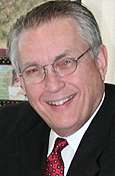
Jeanie Miley

The next day, a man tried to impress some of us that he was doing the work of the Lord by showing how wrong other groups of people are. He didn’t achieve his purpose with us, I’m afraid, and I heard later that he had a lot to say about how wrong we were because we didn’t latch on to his point of view and give him stars for his effort to prove other people wrong.

Making other people wrong can become a full-time job, if you let it. You can use that tactic to put other people on the defensive, control and intimidate them. You can use it to make other people think you know what you’re talking about. You can use it to try to make yourself look good and other people bad. You can use it to win competitions and elections and fights, and you can destroy other peoples’ reputations and opportunities, just by making them wrong.

When your agenda is to make other people wrong, you learn how to manipulate facts and data to support your effort, but after awhile, you lose something precious and that is your own personal integrity. Along that slippery road of making other people wrong, other people become objects to you, and you lose your respect for other human beings who are, after all, made in the very image of God.

The truth is that some people are wrong and some people are working with wrong facts, and that needs to be exposed. Some systems are wrong, and those systems need to be changed. Some things are wrong, and those things needs to be addressed and made right, for sure!

I’ve thought a lot about this precious gospel of Jesus Christ that we who call ourselves followers of him hold in the frail and fallible clay vessels of our humanity.

I’ve thought a lot about how this gospel of Jesus Christ is life-changing. The Good News of Jesus Christ has the power to heal us at the deepest level of our brokenness, if we will let it. A personal, vital, dynamic love relationship with the living Christ, made possible by the mystery and power of the Holy Spirit, can transform us, from the inside out, if we will cooperate with that process. We can be liberated and empowered, set free and redeemed by this amazing grace if we will agree to that process of transformation.

I just keep wondering what would happen if we who call ourselves disciples of Christ would focus more on living the rightness of that relationship more boldly and beautifully. I keep thinking about how things would be different if we were more proactive in making sure that we are right about loving with Christ’s love, giving with Christ’s generosity and forgiving with Christ’s compassion.

I keep on wondering how things would be if more of us would be more intentional about living and proclaiming the rightness of an authentic relationship with Christ. I keep on thinking about how things might be if we were more passionate about following Christ more nearly day by day.

I keep wondering if living what is right might come a little closer to taking care of what is wrong.

Jeanie Miley is an author and columnist and a retreat and workshop leader. She is married to Martus Miley, pastor of River Oaks Baptist Church in Houston, and they have three adult daughters. Got feedback? Write her at Writer2530@aol.com.


News of religion, faith, missions, Bible study and Christian ministry among Texas Baptist churches, in the BGCT, the Southern Baptist Convention ( SBC ) and around the world.