Posted: 6/22/06
Nathan Porter says NAMB
denying wife hospice care
By Hannah Elliott
Associated Baptist Press
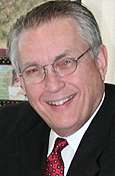
WACO (ABP)—Veteran Southern Baptist home missionary Nathan Porter wants his terminally ill wife of 54 years, Fran, to die in comfort, surrounded by those who love her. It might not happen if his former employer has its way, he insists.
“Southern Baptist churches, through action of (the North American Mission Board), have now abandoned us on their word, promise and commitment to provide us help when we most desperately need it,” said Porter, who served 30 years with the Southern Baptist Home Mission Board—predecessor agency to NAMB.
Porter needs help from NAMB, he said, to care for his wife, 74, who requires round-the-clock assistance for a condition called Progressive Supranuclear Palsy. She is in the last stages of the disease and requires 24-hour-a-day care.
A degenerative brain disease that affects roughly 19,000 people nationwide, PSP inhibits muscle movement, balance and speech. While it usually develops over a period of six to 10 years, by the end of their life most victims become bedridden, unable to speak, swallow or even move their eyes. PSP patients don’t die from the disease. Instead they succumb to pneumonia or infections in the blood, like Mrs. Porter has now.
The disease has no known cause, treatment or cure. The Porters have chosen not to use artificial means like inserting a feeding tube or using antibiotics. Instead, they treat Mrs. Porter’s recurrent fevers with only Tylenol, and they expect an infection to end her life within the next couple of weeks.
Through all the health issues, Porter said, he always trusted that his insurance benefits would cover any medical problems his wife had. Now, Porter said, NAMB has not provided adequate professional care to support her mounting hospice bills. She has been in hospice care for 15 months. The requests aren’t for a handout, he said; he earned the care he needs for his wife’s quality of life in her last days.
“I think I have about 24 (nurse) visits left, so I’ve just been going with four hours a week,” he said. “And I have to increase that. One person can’t keep her anymore, so I’m going to double up the little that I have left, hoping that she will die before it runs out. Excuse me for saying that, Frannie.”
Although blunt, Porter’s hope that Fran will die soon only echoes what she herself has wished. Through a faint breath, she told a reporter she wanted to die and had “asked God to take me home quickly. I have peace.”
The daughter of an ordained bivocational minister, Mrs. Porter graduated from Southwestern Baptist Theological Seminary on May 1, 1987. She served two years as a hospice chaplain at St. John’s Hospital in Fort Worth and, along with being ordained as the senior adult minister at Calvary Baptist Church in Waco, received an endorsement from the Southern Baptist Convention Chaplains Commission.
Mrs. Porter’s condition was diagnosed on Jan. 8, 2004. Since then, and mostly in recent months, Porter has made it his personal crusade to petition NAMB for increased care from professional nurses. Currently, NAMB funds hospice volunteers to attend to Mrs. Porter two mornings a week for three hours each time. Porter also pays for private care in the afternoons, but that’s not enough, he said, especially for someone who loyally served Southern Baptists and their mission board for his entire career.
Born in Brazil to Southern Baptist missionary parents, Porter worked for the Home Mission Board three decades, much of the time with college evangelism. He earned masters and doctoral degrees from Southern Baptist Theological Seminary in Louisville, Ky., and excelled in everything from working in race-related issues to fund-raising for global poverty with the Baptist General Convention of Texas.
Through the years, Porter earned a reputation as an activist, opposing capital punishment and promoting social justice causes. He also drew fire for calling the Home Mission Board “sexist” and rallying students to “tear down the walls of biblical idolatry.”
Now, he said, he has lost faith in his old employer.
“I hurt for them because I love NAMB, and I love what we’ve done. It’s part of my life—I gave my life to the Home Mission Board. I have been very angry at Southern Baptists and the whole mission board for what they’ve done,” he said.
Porter said NAMB initially agreed in writing, with the approval of insurance provider United Healthcare, to pay for 120 hours from a skilled nurse to care for Fran. After three months, though, Porter said he received word they had decided not to pay for the nurse. Porter refused to pay the bill himself and called his old college roommate Bob Banks, former executive vice president of the Home Mission Board, for help.
After Banks spoke with Carlos Ferrer, NAMB’s interim chief operating officer, Porter said the board agreed to pay for unlimited nurse care for Fran.
Porter’s joy at the news changed March 1, however, when representative Michelle Rosich called to tell him his policy had changed again.
This time, she told him that he owed NAMB for 500 hours of care, that he would receive only 120 hours of care for the rest of the year, and that any hours he had accrued for 2006 would count against the 120 offered.
The Porters have some security—a modest money market account and neighbors who bring much-needed meals—but Porter plans to get a second mortgage for their house within the next few months.
When asked what he would say to Ferrer if he had the chance, Porter said he would remind him that the calling of the Home Mission Board is to help the needy, no matter the cost.
“Policy is not the most important thing; doing the will of God is,” he said. “I think they’re missing it. I think God is not happy. Man, learn the joy of helping! And do it instead of using all this money to pay the public relations guy to get the president on CNN, or spending all this money on a private airplane to send the president to London to see the preview of a movie, or paying a friend $3 million the first year he works there. That’s mission money?”
NAMB recently forced President Bob Reccord to resign on charges of poor management and potential conflict of interest.
Rosich did not return phone calls regarding this story. NAMB officials declined to comment specifically on the Porters’ case, but an official statement from NAMB spokesman Marty King said Porter was requesting coverage outside of the normal insurance plan.
“We’ve also explained that coverage of similar expenses last year resulted from a misinterpretation of the policy by our own staff,” King’s statement said. “Although we assumed responsibility for those non-covered expenses last year, we cannot repeat that mistake again this year. Out of fairness to the more than 2,000 staff, missionary and retiree families covered by our health plan, we must adhere to the plan document as it is written.”
For now, Porter plans to use what he has and hope for the best. But despite his natural tendency for jocularity, he too has suffered since his wife’s diagnosis. He used to cry often about Fran’s seemingly cruel twist of fate. But he said he can’t summon the strength to cry much any more. He sees a psychiatrist, funded by Medicare, twice a month and said the all-consuming care he gives Fran often leaves him feeling like a “nobody.”
“When my children call, they don’t ask how Frannie’s doing. They’re more concerned about me,” Porter said. “I’ve had nightmares. I’m tired all the time. I’ve lost my memory, and I don’t think it’s just age.”
John Garcia of Waco has noticed the change, although he said Porter is handling Fran’s condition much better than he used to. Garcia, a Calvary member who plans to attend Truett Theological Seminary this fall, makes weekly trips out to the Porters’ home. He met Nathan and Fran through a friend at church and “fell in love with them.”
“It’s pretty obvious why people would want to be around Nathan,” Garcia said. “Nathan has a personality that you just want to like. You can’t not listen to him.”
Garcia gets “wisdom and insight” from the Porters, especially from Porter’s stories about his days working for civil rights. He said he looks forward to each visit, especially since he has sensed a change in Porter’s psyche.
“It has been good just to see how Nathan has changed in the past several months,” Garcia said. “He was dejected and tired, and he was honest with the fact that he struggled with it. (Now) he sees (caring for Fran) as a whole new level of relationship.”
For Porter, part of that deepened relationship with his wife is learning from the way she continues to care about others.
“People would come in, and she would talk about how angry she was at first and then how God had given her peace and contentment,” Porter said. “And now if you were to ask her, ‘What should I pray for you?’ she would say to pray for death. And now she prays and says, ‘God take me home quickly to be with you, bless those I leave behind, and care for them.’”
News of religion, faith, missions, Bible study and Christian ministry among Texas Baptist churches, in the BGCT, the Southern Baptist Convention ( SBC ) and around the world.