Central Texas church knows how to read its community

Posted: 6/23/06

First Baptist Church in Laguna Park created a town library where it houses more than 8,000 donated books and a coffee house/Internet cafe. (Photos by Laura Frase)

Central Texas church knows
how to read its community

By Laura Frase

Communications Intern

LAGUNA PARK—When Pastor Doug Evans looked at a storage room at church, he saw the potential for a small town’s first community library.

Evans, pastor of First Baptist Church in Laguna Park, said he was tired of all the junk in the storage room, and in the process of cleaning it out, a 350-book library was born.

When Evans told the church they were going to build a community library in the storage room, everybody laughed, he recalled.

But three-and-a-half years later, the library has outgrown its original home and moved into a new building down the road from the church, where it houses more than 8,000 donated books.

The church received everything it needed for the library—supplies, labor and books—through donations. “Friends of the Library,” composed of members of the church and some local residents who are not, help with shelving books and taking care of the library.

Along with the new building came new ideas to get people involved with the church and library. The church created its own coffee shop in the library.

“We have just about anything you could want, and a live band plays every Friday and Saturday,” Evans said. “The community needs good stuff to do.”

Laguna Park, located near Lake Whitney, has a population around 3,500. First Baptist Church attracts about 100 on a good Sunday, Evans said.

“We’re just an ordinary, little church doing what we can to reach the lost,” he said. Evans felt the community needed a library because “it suffers a bit” and believes it’s due to the alarming rate of illiteracy in the town.

“If we can help out the literacy rate, we’ll do it with after-school tutoring and other programs to bring the literacy rate up.”

The church plans to start reading programs this summer. “This summer, we have a woman doing storytelling, and we’ll see how it grows from there,” he said. The library has created a bridge between the church and the community.

“People don’t need to come to church and be preached at. We need to get out there and make a difference,” Evans said. “That’s what Jesus did.”

News of religion, faith, missions, Bible study and Christian ministry among Texas Baptist churches, in the BGCT, the Southern Baptist Convention ( SBC ) and around the world.



Texas Baptist Forum

Posted: 6/23/06

Texas Baptist Forum

Southern Baptists & alcohol

According to a Southern Baptist Convention resolution, I’m just one step away from hell. I am now in a special status where I am not eligible to serve in an SBC position.

The convention resolution states: “Resolved, that we urge that no one be elected to serve as a trustee or a member of any entity or committee of the Southern Baptist Convention that is a user of alcoholic beverages.”

Letters are welcomed. Send them to marvknox@baptiststandard.com; 250 words maximum.

“Fort Worth’s greatest crime scene is also the site of one of her greatest miracles. The Darkness sought to shut us down, but the Light shines ever brighter and ever stronger and will not be extinguished.”
Al Meredith
Pastor of Wedgwood Baptist Church in Fort Worth, noting hundreds of people have become Christians since the September 1999 shooting that killed seven people (Star-Telegram/RNS)

“For people in America who are a part of my political tradition, our great sin has often been ignoring religion or denying its power or refusing to engage it because it seemed hostile to us. For … the so-called Christian right and its allies, their great sin has been believing they were in full possession of the truth.”
Bill Clinton
Former U.S. president, accepting an award from the Tanenbaum Center for Interreligious Understanding (The Associated Press/RNS)

“Everything possible must be done to fight AIDS.”
Carlo Maria Martini
Roman Catholic cardinal, once considered a candidate for the papacy, announcing his support for use of condoms as a “lesser evil” to the spread of AIDS (RNS)

I have a couple of ounces of Jewish Passover wine in the evening to get rid of a tickle in my throat—it is better than cough medicine. And I might have an “adult” beverage twice a year if my wife and I are on a special date.

I have the Holy Spirit inside of me, who gives me wisdom regarding when I may be a stumbling block. I don’t need Nashville telling me what I can drink.

This action is typical of the pharisaical SBC. They are too busy being whitewashed tombs instead of rescuing those headed for the cemetery.

As a Texas Baptist pastor (and a Souhwestern Baptist Theological Seminary grad), I am fed up with the “be like us or leave us” mentality. I am about ready to leave.

I would rather be known as a “soul-winner” than a “teetotaler.”

William Campbell

Port Aransas


Southern Baptists & Calvin

While reading Roger Olsen’s column “God is sovereign over his sovereignty” (May 29), I remembered The Doctrines of Our Faith by E.C. Dargan, published by the Southern Baptist Sunday School Board in 1905.

In Chapter 19, “God’s Work in Saving,” Dargan discusses election and makes statements considered quite Calvinistic. In part III, addressing “difficulties,” Dargan notes: “If he chooses some, regenerates them and actually saves them, what shall we say to those who are left out of these operations? We can only answer, with all reverence, that this is God’s affair, and he will see to it.”

Obviously, this book is not Scripture and did not settle the long Arminian/Calvinist debate, but it does provide evidence that many early Southern Baptists were quite Calvin-istic, especially by today’s standards.

Another interesting part of the book is George W. Truett’s introduction. Although too long to repeat here, it contains assertions such as: “The time is surely most propitious for a faithful restatement, in every Baptist church in the land, of the fundamental doctrines of God’s word. … Most cordially do I welcome this new book, and most heartily do I commend it to brother pastors everywhere, to the end that they may at once use it as a textbook in a series of doctrinal studies for their young people.”

Could it be that George W. Truett, the man for which Baylor University’s seminary is named, held Calvinistic theological views?

Lex Herrington

Floydada

Complement, not compete

“Arctic Edge, Arctic Edge; Where Adventure Meets Courage.” I can’t get that Vacation Bible School theme song out of my head. I love it.

VBS was great this year—the motto, the verses, the stories and especially the video of the family. On the third-day video, the brother and sister were fighting (as they had the whole trip) over a candy bar and accidentally knocked their father down and broke his leg.

As I watched, I thought to myself, “When brothers and sister fight, the Father is hurt.” I wonder how long it is going to take before we in the family of God get past this kind of immature behavior. We keep sticking our tongues out at others by calling them and viewing them as “the competition,” whether they are another church or another denomination.

Fighting over candy bars ($$). Don’t we realize that it is the Father who is hurt by this kind of attitude and behavior? We don’t realize this, because we are not thinking or looking at him much, but only ourselves, our church, our denomination, our little kingdoms.

The good news is that we can grow up in Christ and get past this embarrassment and begin complementing rather than competing, begin encouraging rather than ignoring. Let’s live today the way we will in heaven. Why wait? Much of the way we treat each other today will not be allowed in heaven.

Bubba Stahl

Corpus Christi


News of religion, faith, missions, Bible study and Christian ministry among Texas Baptist churches, in the BGCT, the Southern Baptist Convention ( SBC ) and around the world.


On the move

Posted: 6/23/06

On the move

Bill Burch to First Church in Morgan as minister of youth.

David Carfrey to Buel Church in Cleburne as pastor.

Adolphus Cleveland to The White Stone Church in Lubbock as pastor from New Beginnings at Ridgecrest Church in Lubbock.

Tim Fox to Centerpoint Church in Burleson as interim pastor.

Chuck Gilliland to First Church in Blum as pastor.

Luke Holmes to Hyde Park Church in Denison as interim pastor.

Gordon Moore to Casa View Church in Dallas as associate pastor for music and senior adults from the International Mission Board, where he was a church planter in Spain.

Shane Nation to Heaven Bound Church in Lubbock as pastor.

David Rogers to The Heights Church in Richardson as pastor of emergent ministries, where he had been community minister.

Bob Rowe to Ambrose Church in Sherman as pastor.

Rodney Stanford has resigned as pastor of Kentuckytown Church in Whitewright.

Bruce Venable to First Church in Lubbock as university minister from the Louisiana Baptist Convention, where he was state associate director for collegiate ministry.

William Wissore to First Church in Venus as pastor.

News of religion, faith, missions, Bible study and Christian ministry among Texas Baptist churches, in the BGCT, the Southern Baptist Convention ( SBC ) and around the world.


Texas Tidbits

Posted: 6/23/06

Texas Tidbits

BGCT hotel block opens. Discounted hotel rooms for messengers and visitors to the Baptist General Convention of Texas annual meeting now are available. The BGCT has negotiated discounted rates with a variety of hotels in Dallas, where the meeting will be held Nov. 13-14. To receive the reduction when making reservations, Texas Baptists must use the discount code “BGCT.” For a complete list of discounted hotels as well as other information about the BGCT annual meeting, visit www.bgct.org/annual meeting or call (888) 244-9400.


Memorial gift initiates endowment campaign. Christian Ethics Today received a $100,000 gift from Harold Simmons in memory of his longtime friend, ethicist Foy Valentine, the journal’s founder. In response, the publication’s board of directors organized the Friends of Foy Valentine Committee and set a $500,000 goal to partially endow the journal, which is sent free of charge to more than 4,300 subscribers. Two directors—Darold Morgan of Richardson and David Sapp, of Atlanta, Ga.—will oversee the campaign. For more information, visit www.ChristianEthicsToday.com.


DBU receives gift from Stokes Foundation. Dallas Baptist University received a $100,000 gift from the Ann Bradshaw Stokes Foundation, given to establish the Ann Bradshaw Stokes Fund for Music and Theater.


Retiree Ministries Retreat set. Russell Dilday, chancellor of the B.H. Carroll Institute and former president of Southwestern Baptist Theological Seminary, will preach and Bill Tolar, retired dean of Southwestern Seminary’s School of Theology, will teach the morning Bible study at the 8th Retiree Ministries’ Retreat at Glorieta Conference Center, Sept. 25-29. Music evangelist Dick Baker of McKinney will lead the music. The Baptist General Convention of Texas and Glorieta Conference Center jointly sponsor the retreat. Room and meals are $376 per couple, $286 for a single occupancy and $188 for a single double occupancy. Prices include a full meal package. For reservations, call (800) 797-4222.


Scholarships established at Hardin-Simmons. The Dub and Betsy Pierce Endowed Scholarship for teaching recently was established at Hardin-Simmons University by their family. The scholarship will benefit students preparing to teach in any field and at any grade level. The Hubert C. and Grace V. Toombs Endowed Memorial Scholarship recently was established after funds for the scholarship were made possible by two gift annuities from the couple. The scholarship benefits promising or exceptional students in graduate programs. The Glynn Breeden Endowed Memorial Scholarship for Missionary Kids was established to benefit HSU students who are children of missionaries, and the Howard J. Jones Endowed Memorial Scholarship was set up to benefit graduate or undergraduate students preparing for Christian ministries.


UMHB received $50,000 from builder. The Univer-sity of Mary Hardin-Baylor received a $50,000 gift from MW Builders of Texas, a Temple-based construction company, after completion of a major student housing project. The company built three apartment-style buildings in the student-residence complex on the west side of the campus.


Urban Training Institute slated for July. Transform-ing communities is a focus of the second annual Urban Training Institute of the Southwest, July 18-21 at Cityplace Conference Center in Dallas. The leadership training event for urban ministry practitioners features presentations by author Leonard Sweet, evangelism professor at Drew Theological School; Robert Linthicum, president of Partners in Urban Transformation; and Brad Smith, president of Bakke Graduate University. For more information, visit http://citycoreinitiative.org/uti or call (214) 828-5242.

News of religion, faith, missions, Bible study and Christian ministry among Texas Baptist churches, in the BGCT, the Southern Baptist Convention ( SBC ) and around the world.


TOGETHER: CLC builds Baptists’ biblical convictions

Posted: 6/23/06

TOGETHER:
CLC builds Baptists’ biblical convictions

Baptists are in danger of losing the fruit of one man’s life. For decades, students of T.B. Maston came out of his Christian ethics classes to move across Texas and the world and give prophetic witness to the ethical demands of the gospel of Jesus Christ. They were pastors, missionaries, and college and seminary professors and presidents. They led the Christian life commissions of national and state Baptist conventions. But the Maston tradition of Christian ethics will be silenced if the seminaries do not maintain a strong Christian ethics emphasis and denominational agencies that promote biblical ethics get sidetracked from their calling.

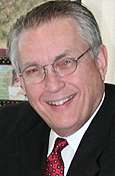
wademug
Executive Director
BGCT Executive Board

It was my privilege to take the last class he taught in seminary, “Contemporary Issues in Christian Ethics.” He emphasized: Every concern can be addressed from a biblical perspective. Nothing is more important than discovering and following the will of God in one’s life. The goal in life is to be a Jesus kind of person. And you can get people to see difficult truths best if you take the time to love them.

He illustrated how to bring about change in church with a rubber band: “You can use a rubber band to lift a 2-by-4 if you work with it. Increase the tension slowly, and the board can be lifted. Jerk the band, and it will snap, leaving the board where it was.” I learned applying that truth was not easy, but you have to keep the tension on, and you have to be more interested in long-term change than in short-term irritations.

This story may put it all in perspective. In Texas Baptists: A Sesquicentennial History, Leon McBeth tells how the BGCT Christian Life Commission came into being.

A.C. Miller, who would become the first CLC director, recalls BGCT Executive Secretary J. Howard Williams saying in 1948: “We go along here preaching what we call the gospel, but we leave out the help that we can give to labor, we leave out the help that we might give to race … . We ought to have some agency by which we could promote this phase of the Christian life.”

In 1950, a committee of seven reported to the convention: “The major need of our day is an effective working combination of a conservative theology, an aggressive, constructive evangelism and a progressive application of the spirit and teaching of Jesus to every area of life.” Maston was one of the seven members of this historic committee.

The proposed Commission on Problems in Christian Living got a new name before it was adopted when an opponent argued it was dangerous to have “this commission on the Christian life,” and the name stuck.

The new commission was created for two purposes—“to help create an awareness of the many areas of daily life in which specific Christian principles apply and to point out ways to make that witness more effective,” Williams said.

The six areas of research, writing and emphasis were scriptural basis and approach to moral issues, the family, race relations, public morals, economic life and world order.

Texas Baptists are compelled to support a strong Christian Life Commission, not only because of our history, but also because of the challenge that still faces our people and churches as we place our biblical convictions up against the moral chaos of our world.

Pray for us as we seek the person who will follow Phil Strickland in leading the BGCT Christian Life Commission.

We are loved.

Charles Wade is executive director of the Baptist General Convention of Texas.

News of religion, faith, missions, Bible study and Christian ministry among Texas Baptist churches, in the BGCT, the Southern Baptist Convention ( SBC ) and around the world.


Court agrees to hear test of partial-birth abortion ban

Posted: 6/23/06

Court agrees to hear test
of partial-birth abortion ban

By Robert Marus

ABP Washington Bureau

WASHINGTON (ABP)—The Supreme Court will expand its review of a controversial federal abortion law.

The justices agreed June 20 to hear a California case involving the Partial-Birth Abortion Ban Act of 2003. They will consider, in Gonzales v. Planned Parenthood, whether the ban is unconstitutionally vague and places too heavy a burden on women seeking abortions.

The court has already said it would hear a Nebraska case (Gonzales v. Carhart) challenging the same law on the grounds that it does not permit an exemption designed to protect the health of the mother seeking an abortion.

Federal appeals courts ruled the law unconstitutional in both cases. Attorney General Alberto Gonzales appealed those decisions.

Congress passed the law to ban an abortion procedure, known medically as “intact dilation and extraction,” that involves the partial delivery of a fetus, whose skull is then punctured and its contents evacuated to make it easier to pass the head through the birth canal. Doctors say it is used only in exceedingly rare circumstances.

The last time the Supreme Court dealt with a similar law—in this case, a Nebraska state ban on the procedure—was in 2000. In Stenberg v. Carhart, the justices ruled 5-4 that the law was worded so vaguely as to possibly ban other abortion procedures, and also violated the Constitution because it did not include a health exception.

The federal partial-birth ban does not provide a health exception. Instead, it cites congressional findings determining that the procedure is never medically necessary to protect a woman's health.

Both cases will be heard by a Supreme Court different in ideological make-up than the one that ruled the law unconstitutional in 2000. The justice who decided that case by casting her vote with the five-member majority—Sandra Day O’Connor—voted frequently in favor of abortion rights.

Since then, she has retired and been replaced by Justice Samuel Alito, who was nominated by abortion-rights opponent President Bush and confirmed by a divided Senate in January. Much of the controversy over Alito’s appointment centered on whether he would vote to uphold abortion rights or restrict them.

Arguments in both cases will take place in October, after the court begins its 2006-2007 term.

News of religion, faith, missions, Bible study and Christian ministry among Texas Baptist churches, in the BGCT, the Southern Baptist Convention ( SBC ) and around the world.


Storylist for 6/26/06 Issue

Storylist for week of 6/26/06

TAKE ME TO: Top Story |  Texas |  Opinion |  Baptists |  Faith in Action |  Faith & Culture |  Book Reviews |  Classifieds  |  Departments  |  Bible Study


TROUBLED WATERS: Are Baptists watering down commitment to baptism?


TROUBLED WATERS: Are Baptists watering down commitment to baptism?

Shoes for orphans sought

Dawson led ETBU, BGCT institutional board

Church secretary retires after 47 years

Central Texas church knows how to read its community

Around the State

On the move

Texas Tidbits


Baptist Briefs


Church with mission roots in Brazil helps missionaries


Court agrees to hear test of partial-birth abortion ban


Books reviewed in this issue: Renewing the City: Reflections on Community Development and Urban Renewal by Robert D. Lupton; Dinner With a Perfect Stranger: An Invitation Worth Considering by David Gregory; and Second Calling: Finding Passion and Purpose for the Rest of Your Life by Dale Hanson Bourke.


Cartoon

Classified Ads

Around the State

Texas Baptist Forum

On the move


EDITORIAL: SBC: Many changes, very little change

DOWN HOME: Buying toothpaste, counting blessings

TOGETHER: CLC builds Baptists' biblical convictions

RIGHT OR WRONG? Approach to ethical decision making

2nd Opinion: They die rejected, abandoned, alone

Texas Baptist Forum


BaptistWay Bible Series for June 25: Qualifications for elder, deacon enumerated

Family Bible Series for June 25: A strong commitment to Christ is vital

Explore the Bible Series for June 25: God is present even in his absence

BaptistWay Bible Series for July 2: Even the young can provide a good example

Family Bible Series for July 2: Proclaim your declaration of dependence

Explore the Bible Series for July 2: Live a life that seeks to meet God's standards


Previously Posted
SBC Annual Meeting Coverage
WMU emphasizes God's call to missions

Patterson, Mohler discuss Calvinism

CP standard, WMU ‘invitation' nixed

Page elected SBC president in upset of establishment

Rice urges SBC to support U.S. efforts to spread freedom

SBC gives IMB first crack at solving its own problems

Multiple motions referred to SBC Executive Committee

Baptists teetotally—but not unanimously—against alcohol

Election could prove troubling to Calvinists in SBC

Burleson optimistic despite results of motion, bylaw change

GuideStone investments positive, most medical premiums decrease

Welch: SBC will baptize a million in a year

Statue of Billy Graham unveiled at convention

New SBC president an inerrantist, but he's ‘just not mad about it'

S.C. pastor calls Southern Baptist ‘fat-cats' to action

'Everyone Can' messages challenge Southern Baptists to evangelizet

Fish accentuates positive in NAMB report to SBC

Draper, Rankin address younger pastors meeting

Rick Warren calls pastors to imitate Christ

Rogers' widow cautions against narrowing fellowship

Shook tells pastors 'stunts' can open people to the gospel

New Orleans Seminary president thanks SBC for aiding recovery

Church founded by Lottie Moon gets new building


OTHERS
Church's sports camp scores with Corsicana children

Laredo church offers water

Calvary Waco bridges gap between church, community

Well-drilling innovation brings water to Kenyan villages

Offering of Letters addresses hunger

Texan places first at national tournament


• See complete list of articles from our 6/12/ 2006 issue here.


RIGHT OR WRONG? Approach to ethical decision making

Posted: 6/23/06

RIGHT OR WRONG?
Approach to ethical decision making

Christians should consider the Bible as a primary resource, but is there any basic approach—ethical theory—that can assist me in making ethical decisions?

Ethics can be approached from three basic, theoretical angles. The deontological approach considers our duty or obligation. It asks, “What must I do?” The teleological angle is pragmatic and considers the consequences of actions. It asks, “What will work?” And the relational approach factors the effects of actions upon others. Due to space limitations, let’s consider the first approach—duty or obligation

This theory of ethics can be attractive to us for at least these reasons: First, it addresses our need to do something in a given circumstance; it is tangible. Second, it considers how our values shape our decisions. Third, it factors our sense of duty as we act on behalf of the right and the good in this world.

One of the premiere spokespersons for this approach has been W.D. Ross, a British moral philosopher. Ross termed his approach prima facie ethics or duties. Prima facie comes from Latin and essentially means “on the face of it” or “the first appearance.”

Ross says we should consider the following seven duties as we make decisions ethically. I will add biblical-theological themes. Perhaps they will help you think about how you can use duty theory in your life.

• Fidelity. The appeal is to keep our promises, being honest, stay with contracts. Of course, the other side of this approach is not to be deceptive and not to lie. (Being people known by our promises is both Old Testament and New Testament in force.)

• Reparation. Inevitably in this life, we cause injury to other people or things. This duty calls us to repair injuries and offer care for those who have been hurt by our actions. (Several points of the Torah, the first five books of the Old Testament, illustrate literal reparation with regard to livestock, for example. Jesus provided counsel toward how to relate to people whom we have harmed or who have harmed us.)

• Gratitude. Good things come to us. We have a duty to respond with appreciation. (Our thanks to God for the blessings of life are acts of worship. Our appreciation to others fortifies our relationships.)

• Non-maleficence. “Do no harm” is a concrete way to state this duty. (The latter Ten Commandments consider “no harm” issues. Jesus developed these further in the Sermon on the Mount.)

• Beneficence. This duty leads us not only to just do no harm, but also to do what is good on behalf of others. (Love one another.)

• Self-Improvement. We have a responsibility, a stewardship, toward being the best self we can be. (Love your neighbor as yourself.)

• Justice. Playing fair is more than a schoolground cry, but also one of the duties placed on our actions. (“Let justice roll down like the waters.”)

Although we may begin with any one of these duties named by Ross, we will discover each leads to the others as we seek to implement them. And although these duties can be helpful to us for our decision-making, the other two major theories are needed. They will be developed at a later time.

Bill Tillman, T.B. Maston Professor of Christian Ethics

Logsdon Seminary

Hardin-Simmons University

Abilene

Right or Wrong? is sponsored by the T.B. Maston Chair of Christian Ethics at Hardin-Simmons University’s Logsdon School of Theology. Send your questions about how to apply your faith to btillman@hsutx.edu.

News of religion, faith, missions, Bible study and Christian ministry among Texas Baptist churches, in the BGCT, the Southern Baptist Convention ( SBC ) and around the world.


CBF names Rob Nash global missions coordinator

Posted: 6/22/06

CBF names Rob Nash global missions coordinator

By Hannah Elliott

Associated Baptist Press

ATLANTA (ABP)—With a standing ovation, leaders of the Cooperative Baptist Fellowship unanimously approved Rob Nash as the group’s new global missions coordinator June 21.

The CBF Coordinating Council approved Nash to lead the organization’s missionary force in a meeting prior to the CBF general assembly in Atlanta.

The vote came after the committee that nominated Nash formally thanked Jack Snell, a CBF associate missions coordinator who had served in the top spot on an interim basis. Snell stepped in after former missions coordinator Barbara Baldridge resigned unexpectedly in May, 2005.

Tim Brendle, the search committee’s chair, thanked Nash for his willingness to “undertake a task that will not be easy.” He also said it was a “holy moment” for the Fellowship and for Nash, thanking God for guiding them to the choice.

In a speech after the election, CBF Coordinator Daniel Vestal agreed.

“I believe that in history, when it is written, there will be some defining moments in CBF,” he said. “I think that history will show the election of Rob Nash is a defining moment.”

Nash, 47, grew up the child of missionaries in the Philippines. Since then, he has traveled and studied in more than 30 countries in Asia, the Middle East, Africa, Europe and South America. He received a master of divinity from Southern Baptist Theological Seminary.

Prior to his CBF position, he served as dean and associate professor of religion and international studies at Shorter College in Rome, Ga. He has also held various pastor positions in Kentucky and Georgia.

Nash, his wife, Guyeth, and their two children are members of First Baptist Church in Rome, Ga.

News of religion, faith, missions, Bible study and Christian ministry among Texas Baptist churches, in the BGCT, the Southern Baptist Convention ( SBC ) and around the world.


Nathan Porter says NAMB denying wife hospice care

Posted: 6/22/06

Nathan Porter says NAMB
denying wife hospice care

By Hannah Elliott

Associated Baptist Press

WACO (ABP)—Veteran Southern Baptist home missionary Nathan Porter wants his terminally ill wife of 54 years, Fran, to die in comfort, surrounded by those who love her. It might not happen if his former employer has its way, he insists.

“Southern Baptist churches, through action of (the North American Mission Board), have now abandoned us on their word, promise and commitment to provide us help when we most desperately need it,” said Porter, who served 30 years with the Southern Baptist Home Mission Board—predecessor agency to NAMB.

Porter needs help from NAMB, he said, to care for his wife, 74, who requires round-the-clock assistance for a condition called Progressive Supranuclear Palsy. She is in the last stages of the disease and requires 24-hour-a-day care.

A degenerative brain disease that affects roughly 19,000 people nationwide, PSP inhibits muscle movement, balance and speech. While it usually develops over a period of six to 10 years, by the end of their life most victims become bedridden, unable to speak, swallow or even move their eyes. PSP patients don’t die from the disease. Instead they succumb to pneumonia or infections in the blood, like Mrs. Porter has now.

The disease has no known cause, treatment or cure. The Porters have chosen not to use artificial means like inserting a feeding tube or using antibiotics. Instead, they treat Mrs. Porter’s recurrent fevers with only Tylenol, and they expect an infection to end her life within the next couple of weeks.

Through all the health issues, Porter said, he always trusted that his insurance benefits would cover any medical problems his wife had. Now, Porter said, NAMB has not provided adequate professional care to support her mounting hospice bills. She has been in hospice care for 15 months. The requests aren’t for a handout, he said; he earned the care he needs for his wife’s quality of life in her last days.

“I think I have about 24 (nurse) visits left, so I’ve just been going with four hours a week,” he said. “And I have to increase that. One person can’t keep her anymore, so I’m going to double up the little that I have left, hoping that she will die before it runs out. Excuse me for saying that, Frannie.”

Although blunt, Porter’s hope that Fran will die soon only echoes what she herself has wished. Through a faint breath, she told a reporter she wanted to die and had “asked God to take me home quickly. I have peace.”

The daughter of an ordained bivocational minister, Mrs. Porter graduated from Southwestern Baptist Theological Seminary on May 1, 1987. She served two years as a hospice chaplain at St. John’s Hospital in Fort Worth and, along with being ordained as the senior adult minister at Calvary Baptist Church in Waco, received an endorsement from the Southern Baptist Convention Chaplains Commission.

Mrs. Porter’s condition was diagnosed on Jan. 8, 2004. Since then, and mostly in recent months, Porter has made it his personal crusade to petition NAMB for increased care from professional nurses. Currently, NAMB funds hospice volunteers to attend to Mrs. Porter two mornings a week for three hours each time. Porter also pays for private care in the afternoons, but that’s not enough, he said, especially for someone who loyally served Southern Baptists and their mission board for his entire career.

Born in Brazil to Southern Baptist missionary parents, Porter worked for the Home Mission Board three decades, much of the time with college evangelism. He earned masters and doctoral degrees from Southern Baptist Theological Seminary in Louisville, Ky., and excelled in everything from working in race-related issues to fund-raising for global poverty with the Baptist General Convention of Texas.

Through the years, Porter earned a reputation as an activist, opposing capital punishment and promoting social justice causes. He also drew fire for calling the Home Mission Board “sexist” and rallying students to “tear down the walls of biblical idolatry.”

Now, he said, he has lost faith in his old employer.

“I hurt for them because I love NAMB, and I love what we’ve done. It’s part of my life—I gave my life to the Home Mission Board. I have been very angry at Southern Baptists and the whole mission board for what they’ve done,” he said.

Porter said NAMB initially agreed in writing, with the approval of insurance provider United Healthcare, to pay for 120 hours from a skilled nurse to care for Fran. After three months, though, Porter said he received word they had decided not to pay for the nurse. Porter refused to pay the bill himself and called his old college roommate Bob Banks, former executive vice president of the Home Mission Board, for help.

After Banks spoke with Carlos Ferrer, NAMB’s interim chief operating officer, Porter said the board agreed to pay for unlimited nurse care for Fran.

Porter’s joy at the news changed March 1, however, when representative Michelle Rosich called to tell him his policy had changed again.

This time, she told him that he owed NAMB for 500 hours of care, that he would receive only 120 hours of care for the rest of the year, and that any hours he had accrued for 2006 would count against the 120 offered.

The Porters have some security—a modest money market account and neighbors who bring much-needed meals—but Porter plans to get a second mortgage for their house within the next few months.

When asked what he would say to Ferrer if he had the chance, Porter said he would remind him that the calling of the Home Mission Board is to help the needy, no matter the cost.

“Policy is not the most important thing; doing the will of God is,” he said. “I think they’re missing it. I think God is not happy. Man, learn the joy of helping! And do it instead of using all this money to pay the public relations guy to get the president on CNN, or spending all this money on a private airplane to send the president to London to see the preview of a movie, or paying a friend $3 million the first year he works there. That’s mission money?”

NAMB recently forced President Bob Reccord to resign on charges of poor management and potential conflict of interest.

Rosich did not return phone calls regarding this story. NAMB officials declined to comment specifically on the Porters’ case, but an official statement from NAMB spokesman Marty King said Porter was requesting coverage outside of the normal insurance plan.

“We’ve also explained that coverage of similar expenses last year resulted from a misinterpretation of the policy by our own staff,” King’s statement said. “Although we assumed responsibility for those non-covered expenses last year, we cannot repeat that mistake again this year. Out of fairness to the more than 2,000 staff, missionary and retiree families covered by our health plan, we must adhere to the plan document as it is written.”

For now, Porter plans to use what he has and hope for the best. But despite his natural tendency for jocularity, he too has suffered since his wife’s diagnosis. He used to cry often about Fran’s seemingly cruel twist of fate. But he said he can’t summon the strength to cry much any more. He sees a psychiatrist, funded by Medicare, twice a month and said the all-consuming care he gives Fran often leaves him feeling like a “nobody.”

“When my children call, they don’t ask how Frannie’s doing. They’re more concerned about me,” Porter said. “I’ve had nightmares. I’m tired all the time. I’ve lost my memory, and I don’t think it’s just age.”

John Garcia of Waco has noticed the change, although he said Porter is handling Fran’s condition much better than he used to. Garcia, a Calvary member who plans to attend Truett Theological Seminary this fall, makes weekly trips out to the Porters’ home. He met Nathan and Fran through a friend at church and “fell in love with them.”

“It’s pretty obvious why people would want to be around Nathan,” Garcia said. “Nathan has a personality that you just want to like. You can’t not listen to him.”

Garcia gets “wisdom and insight” from the Porters, especially from Porter’s stories about his days working for civil rights. He said he looks forward to each visit, especially since he has sensed a change in Porter’s psyche.

“It has been good just to see how Nathan has changed in the past several months,” Garcia said. “He was dejected and tired, and he was honest with the fact that he struggled with it. (Now) he sees (caring for Fran) as a whole new level of relationship.”

For Porter, part of that deepened relationship with his wife is learning from the way she continues to care about others.

“People would come in, and she would talk about how angry she was at first and then how God had given her peace and contentment,” Porter said. “And now if you were to ask her, ‘What should I pray for you?’ she would say to pray for death. And now she prays and says, ‘God take me home quickly to be with you, bless those I leave behind, and care for them.’”

News of religion, faith, missions, Bible study and Christian ministry among Texas Baptist churches, in the BGCT, the Southern Baptist Convention ( SBC ) and around the world.


BaptistWay Bible Series for July 2: Even the young can provide a good example

Posted: 6/21/06

BaptistWay Bible Series for July 2

Even the young can provide a good example

• 1 Timothy 4:1-16

By Joseph Matos

Dallas Baptist University, Dallas

Young ministers make lots of mistakes. I made my share. I have sermons I wish I could have back. They weren’t heretical by any means, but they certainly weren’t well-informed either. My exposition of some passages still haunts me today. I only can hope my mistakes were overlooked as indiscretions of youth.

Young or old, ministers are accountable for their leadership of God’s people. Paul sought to equip Timothy for his task in Ephesus. Paul’s words to Timothy so long ago can serve today to prevent many from making errors of doctrine and conduct.

1 Timothy 3:14-16 concludes Paul’s discussion on the qualifications for overseers and deacons. In these verses, Paul expressed his desire to see Timothy and his trust that the written instructions would suffice until he could see Timothy again. That desire serves well as preface for Paul’s words to Timothy in chapter 4 also.


False teachers, again (1 Timothy 4:1-5)

Just as predicted, many had “abandoned the faith” to follow deceiving (wandering) spirits. So, before turning his attention to Timothy, Paul again broached the subject of these false teachers. We think of “later days” as only pertaining to our time, but Paul recognized that shortly after the inception of the church, theological error and immoral behavior threatened the integrity and purity of the body of Christ.

He described their attitude and teachings. They were liars who thought nothing of it. They had “seared consciences.” They had no sense of guilt. Their prohibitions against marriage and certain foods give only a glimpse of their heresy.

For Paul, such restrictions ran contrary to God’s declaration that these were good. Both were to be received with thanksgiving. There was no room for forced asceticism.


Timothy’s responsibility (4:6-11)

In response to the asceticism of the false teachers, Timothy was to follow Paul in affirming the general goodness of things properly received. In doing so, Timothy would be acting as a “good minister”—the word is diakonos: servant, earlier translated “deacon”—of Christ. He also would reveal his faithful stewardship of the truth that was passed on to him.

Of course, to maintain his focus on the truth, Timothy was to avoid “godless myths” and “old wives’ tales.” There just was no room for irreligious and silly myths.

In addition to truth, Timothy was to “train to be godly.” The word for “train” is rooted in a Greek word from which we get our word “gymnasium.” Timothy was to exert himself toward godliness. Paul did not discount the need for physical training but placed greater emphasis on the need for training in godliness. The reason was clear: The effects of such training are more enduring; they benefit this life and the next.

This axiom Paul declares is a “trustworthy saying” (the third of its kind in 1 Timothy). Such godliness is that which Christians should “labor and strive” and is grounded in the hope we have in the living God, who is the Savior of the world.


Overcoming dissent (4:12-14)

Paul then tried to prevent Timothy from being discouraged by others. He was not to allow others to despise his youth or to treat him with contempt.

In his qualifications for overseer, Paul discouraged selecting recent converts lest they become proud. Timothy certainly was no recent convert by this time. Yet Timothy was still young in Paul’s eyes.

Paul’s advice to Timothy is sound. Timothy’s life would speak for itself. His example would remove any doubts. The word for “example” here often comes into English as the word “type.”

As with “gymnasium,” the word “type” is a transliteration. It referred to an impression made in order to create a mold. Thus, Timothy was to cast the mold for others to follow. The dimensions of this mold were Timothy’s speech, life, love, faith and purity. Though much of Timothy’s leadership would be through words, his effectiveness would be increased by an exemplary life.

Though certainly not an exhaustive list of duties, three activities were to be central to Timothy’s work in Ephesus until Paul’s arrival. First, he was to be involved in “public reading” (presumably of Scripture as the NIV inserts). Second, he was to carry out the ministry of “preaching.” The original language communicates the idea of exhortation and encouragement. Third, and related to the second, Timothy was to be “teaching.” Paul further encouraged Timothy, reminding him of his giftedness.


Conclusion (4:15-16)

Paul summed up his instructions to Timothy with a final exhortation and a word of promise. Literally, Timothy was to put these things into practice and be in them. If he did, his progress would be evident to all. If that were not enough, Paul told Timothy to watch his life (literally, “yourself”) and doctrine (teaching) closely. “Persevere” interprets the idea of “continually remain in them,” an apparent allusion to the false teachers who had left (v. 1). The desired result is plain; it would mean salvation for Timothy and those who would hear him.

What a contrast to the false teachers. To fulfill his task responsibly, Timothy’s words and conduct must be consistent with what is true and godly. The people in his congregation would be affected by it.

The church today must be able to look to ministers who are committed to truth and godliness.


Discussion questions

• What issues sidetrack church leaders today? How does one determine what is of central importance and what is not?

• Are there any words for “seasoned” ministers in Paul’s words to Timothy? What constitutes exemplary speech, life, love, faith and purity?

• Notice Paul’s words to Timothy (train, labor, strive, be diligent, watch). What do these suggest about the effort required to be good ministers?

• How can we encourage young ministers in their tasks?


News of religion, faith, missions, Bible study and Christian ministry among Texas Baptist churches, in the BGCT, the Southern Baptist Convention ( SBC ) and around the world.


Family Bible Series for July 2: Proclaim your declaration of dependence

Posted: 6/21/06

Family Bible Series for July 2

Proclaim your declaration of dependence

• Exodus 1:5-14; 2:23-25

By Greg Ammons

First Baptist Church, Garland

Our forefathers were burdened with what they called “taxation without representation.” As a result, 13 colonies in North America declared themselves independent of the kingdom of Great Britain. They framed a document explaining their justification for doing so. It was known as the Declaration of Independence and was ratified by the Continental Congress on July 4, 1776.

As we celebrate this great event, Christians are reminded of a similar proclamation we must declare. However, ours is a declaration of dependence rather than independence. Believers must be dependent upon God and turn to him at all times. The Israelites realized early in the book of Exodus the various times they must turn to God.


When relocation is necessary (Exodus 1:5-7)

The conditions were harsh. Famine and drought forced Jacob and his descendants to move to Egypt. God warned Jacob earlier such a relocation would happen but promised the patriarch he eventually would return to his homeland (Genesis 46:4).

God could be trusted in the midst of a relocation. Joseph already was in Egypt (Exodus 1:5). God sent him ahead to prepare the way for Jacob and his descendants to survive. Although they were in a foreign land, this clan still accomplished God’s will and plan for their lives.

Relocation in our society is much more common than in biblical times. Today, the average American moves every seven years and 11 times during the course of their life. There are times in which these relocations can be difficult for Christians, especially in the senior years. We need to know God’s provision and care will be evident wherever we go.

There was an erroneous belief in the days of the Old Testament that God’s care, love and provision were confined to the border of Canaan. God’s people believed if they traveled beyond the border of the Promised Land, then they also journeyed beyond the care and provision of God. Therefore, relocation to another country was a major undertaking of faith. Yet God proved just as faithful in Egypt as he was in Canaan. We can turn to him for help when relocation is necessary.


When life changes for the bitter (Exodus 1:8-14)

The Israelites faced difficult days ahead under the cruel dictatorship of Pharaoh. He viewed the large number of Israelites as a threat (v. 9). In order to keep them under subjection, Pharaoh worked them inhumanely (vv. 9-11). God’s people faced severe hardship and oppression from the hands of the Egyptians. “They made their lives bitter with hard labor in brick and mortar” (v. 14).

Life can deal harsh blows to believers today as well. When it does so, Christians must ensure bitterness does not develop within them. Paul warned Christians about the root of bitterness, which can easily spring up within us (Ephesians 4:31).

One of the most venomous snakes on the planet is the rattlesnake. One rattlesnake contains enough venom to kill several hundred human beings. The venom stuns or kills its prey as it works in deadly ways. Interestingly, if cornered or agitated, the rattlesnake will become so infuriated it will turn and bite itself. The snake will actually inject the deadly venom into its own body.

Bitterness in the life of a Christian can do the same. As we allow the circumstances and situations of life to make us bitter, it affects our entire being. Bitterness acts like a venom to poison our spirit and relationships. Avoid injecting bitter venom into yourself when life’s conditions become harsh. Turn to God for help and turn away from bitterness.


When help seems a long time coming (Exodus 2:23-25)

Unfortunately, help for the Israelites was not on the horizon. Pharaoh’s grip remained firm upon God’s people for a long time. “The Israelites groaned in their slavery and cried out, and their cry for help … went up to God” (v. 23). Yet God heard their groaning and remembered his covenant with his people (v. 24). He had compassion on his people, although help would not come immediately.

Often, Christians become discouraged when it is not God’s plan for help to come immediately. Sometimes, the Lord allows believers to endure hardship for a season in order to train and shape them into the people he desires. While in this quiet season, we must remember that silence does not equal unconcern. God is concerned with every situation of our life. Although help seems a long time in coming, we can trust God’s heart with confidence.

Patience is a virtue in the Christian life. It often is difficult to possess, but it provides us strength when we do so (Isaiah 40:31). Someone said: “Patience is a virtue; possess it if you can. It is found seldom in a woman, but never in a man!”

May you patiently wait upon the Lord, even if relief seems in the distance. Make your declaration of dependence today, and turn to God for help.


Discussion questions

• Discuss a time in your life when relocation was difficult for you.

• Have you injected bitterness into your own life recently?

• Why do you feel it is difficult to wait upon the Lord?


News of religion, faith, missions, Bible study and Christian ministry among Texas Baptist churches, in the BGCT, the Southern Baptist Convention ( SBC ) and around the world.