Foster parents heard God’s call to service on the radio

Posted: 5/26/06

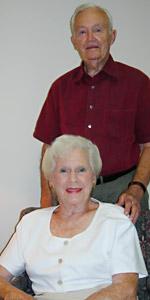
The Bamfords volunteered as foster parents, impressed by the STARRY program's emphasis on restoration and healing to the children and their caregivers.

Foster parents heard God’s
call to service on the radio

By Miranda Bradley

Children at Heart Ministries

AUSTIN—When Rabecca and Scott Bamford decided they wanted to make an impact on young lives by becoming foster parents, they believe God used a radio commercial to lead them to just the right place.

“We’ve been blessed with a nice home and a good job,” Mrs. Bamford said. “So we knew this was the right time.”

The Bamfords began to search for a program that suited their needs, but, at first, it was hit or miss.

“Our first certification classes were with a for-profit organization, and it just wasn’t what we were looking for,” Mrs. Bamford said. “I didn’t feel like they offered much hope for the kids. It always drained me.”

But on his way to work one morning, her husband heard an advertisement on a local Christian radio station for the STARRY foster care program.

See Related Stories:
Former foster child finds fulfillment as foster mother
Adoptive parents fill empty nest, meet child's needs
First-time parents receive help at Port Neches church
Foster parents heard God's call to service on the radio

“We just knew that was too much of a God thing to pass up,” Mrs. Bamford said. “We called STARRY right away.”

STARRY, part of Children at Heart Ministries in Round Rock, provides services to children and families through its emergency shelter, community-based counseling and foster care programs. It recently expanded its foster care program to meet a growing demand for temporary in-home placement.

The partnership with radio station KLOVE had begun just three months earlier, when STARRY became a spotlight ministry for the station.

An advertising spot highlighting the organization’s need for foster parents was a huge success, sparking many inquiries from people who sought a faith-based child placement agency.

“It was really a wonderful collaboration,” said Stacy Grant, STARRY foster care coordinator. “We had several people contact us just because of the ad, and even better was the fact that they were Christian individuals seeking to share their homes with needy children. It was more than we had hoped.”

The Bamfords found what they had been seeking in STARRY.

“They focus on bringing restoration and healing to the children and their caregivers,” Mrs. Bamford said. “STARRY really strives to bring healing to the entire family, so they can be reunited with their children.”

Instead of focusing only on legalities in training and orientation, the Bamfords discovered the STARRY courses for foster parents taught something much more valuable.

“At STARRY, it’s truly about seeing through the eyes of the child and the parents,” Mrs. Bamford said. “It’s not about judgment, just loving them and meeting them where they are.”

With one class to complete before their certification, the Bamfords eagerly await their first placement. As a home-schooling stay-at-home mother of two, Mrs. Bamford looks forward to welcoming their new addition, whoever he or she may be.

“Our children are very excited, too,” she said. “They just can’t wait to have a playmate.”

Christina, 11, and Michael, 8, are a big reason the Bamfords decided to become foster parents in the first place.

“We want them to remember always that God blesses us so we can bless others,” Mrs. Bamford said.

“That’s why it’s important that they are part of this process. It’s the most important lesson we can teach them or anyone we bring into this family.”

For more information on foster care, contact Stacy Grant at (512) 246-4229. For other inquiries, contact STARRY directly at (512) 246-4290 or visit www.starry online.org.

News of religion, faith, missions, Bible study and Christian ministry among Texas Baptist churches, in the BGCT, the Southern Baptist Convention ( SBC ) and around the world.


IMB trustees elect former staffer as chair

Posted: 5/26/06

IMB trustees elect former staffer as chair

By Hannah Elliott

Associated Baptist Press

ALBUQUERQUE, N.M. (ABP) —International Mission Board trustees elected John Floyd, a former top administrator of the Southern Baptist agency, as board chairman—raising questions about a possible conflict of interest.

Meanwhile, outgoing trustee Chairman Tom Hatley leveled additional criticism against blogging trustee Wade Burleson, whom the trustees previously tried to have removed from the board.

IMB trustees have been deeply divided in recent months over the leadership of President Jerry Rankin, stricter policies governing new missionaries and Burleson’s accusations of agenda-driven political machinations behind the scenes. Trustees tried again to get Burleson to quit blogging about trustee meetings.

Floyd’s election as chairman could signal further division on the board.

Floyd, administrative vice president at the independent Mid-America Baptist Theological Seminary in Germantown, Tenn., out-polled Wayne Marshall of Mississippi 39-34 for the chairmanship. Sixteen trustees were absent or abstained from the vote.

Floyd, retired IMB regional director for Europe, has been linked to new IMB policies, adopted by trustees late last year, that require stricter baptism practices for new missionaries.

Burleson and other bloggers assert Floyd is sympathetic to Landmarkism—an exclusivist theology that claims Baptists are the only true church.

Many independent Baptists, Missionary Baptists and fundamentalist Southern Baptists ascribe to some Landmark beliefs.

Immediately after Floyd’s election, Burleson and fellow blogger Marty Duren raised concerns about his new role. “Is there a conflict of interest when a former staff administrator of the IMB becomes the chairman of the board?” Burleson, pastor of Emmanuel Baptist Church in Enid, Okla., asked May 23 in his blog, wadeburleson.com.

Burleson and Duren asked if it is appropriate for Floyd, who currently receives a pension administered by the IMB, also to sit on the committee that controls IMB pensions.

Floyd “may turn out to be the best chairman the IMB has ever had,” Burleson conceded.

But, he added, Floyd’s service could be a violation of a Southern Baptist Convention bylaw, which states: “No person shall be eligible to serve on any one of the above entities from which he/she receives any part of his/her salary, directly or indirectly, or, which provides funds for which he/she has a duty of administration. When such conditions become applicable, that person shall be considered as having resigned and such vacancy shall be filled in accordance with established convention procedure.”

Duren, in sbcoutpost.com, wrote May 23: “I’m sure the question will be raised if pension is the same as salary, but should they be differentiated in these cases? In my mind, no.”

Former employees serving as agency trustees is rare in SBC life, although the IMB currently has three.

Spokesmen for the SBC and IMB did not return phone calls seeking comment on the SBC bylaw and the appropriateness of a former agency employee serving as board chair.

Outgoing Chairman Hatley concluded his final report to the board by saying Burleson had breached trustee confidentiality in his blog.

Previously, Hatley endorsed a trustee request that no blogging about the IMB sessions be allowed, “out of respect for the trustees.”

Burleson quickly stepped up to a floor microphone and asked for evidence of his offenses. Hatley said the issues were not for discussion in open meetings and had been misrepresented. He then asked for Burleson’s microphone to be turned off.

In the executive committee report, Hatley acknowledged that Burleson had “apologized” for and retracted “certain things” on his blog that criticized trustees. But Hatley encouraged Floyd not to lift restrictions previously imposed on Burleson governing his online comments.

Along with Floyd, John Russell from Bell Shoals Baptist Church in Brandon, Fla., was elected vice chairman.

News of religion, faith, missions, Bible study and Christian ministry among Texas Baptist churches, in the BGCT, the Southern Baptist Convention ( SBC ) and around the world.


Texas Baptist Forum

Posted: 5/26/06

Texas Baptist Forum

Margins of society

The author of the “Faith & immigration” letter (May 15) misunderstands the theology of Jesus. The people Jesus most identified with were those who lived on the margins of society. The lepers, prostitutes, sinners, tax collectors, poor and women were all people who lived at these margins. In fact, many of these people were those who broke Roman and Jewish laws and traditions. They were the outcasts, the untouchables and the illegals.

Jump to online-only letters below
Letters are welcomed. Send them to marvknox@baptiststandard.com; 250 words maximum.

“Occasional drop-bys and clunky dropping of biblical references aren’t going to do the trick. These voters weren’t born again yesterday.”

Ruth Marcus
Columnist, explaining why Democratic efforts to court evangelical voters may not work (washingtonpost.com)

“If we would have followed that principle, the very men who turned this denomination back to biblical inerrancy would not have been qualified to have served as president of the Southern Baptist Convention or … in any leadership position whatsoever at all.”

Ronnie Floyd
Southern Baptist Convention presidential nominee, regarding a blue-ribbon SBC committee’s recommendation that elected convention officers be chosen from churches that give at least 10 percent of undesignated offerings through the Cooperative Program (BP)

“By all means, let us argue. But let us remember we are not enemies. … I have not always heeded this injunction myself, and I regret it very much.”

John McCain
Arizona senator, at Liberty University, patching up his relationship with university Chancellor Jerry Falwell, whom he labeled among “agents of intolerance” during the 2000 presidential campaign (The Washington Times/RNS)

The keepers of the margins were the Pharisees and the Saducees. These were the ones who made the rules and kept the rules in relation to the marginalized. They were so concerned with these laws and rules that they lost touch with the importance of relationships.

Jesus emphasized the two greatest commandments as the focus of the Christian in the kingdom of God. Jesus told his followers these two rules were the essence of the law. Actually, Jesus shifted the margins whereby the Pharisees and Saducees became the marginalized in the kingdom of God. Identifying and loving those in need are at the core of the kingdom of God.

Let’s be legalistic about the two greatest commandments, not our cultural prejudices.

Walter Norris

Plano


Authority in the church

I have just read the two articles on churches that have elders (May 15). If those who hold to elder rule are correct, then so are the Catholics when they say, “No priest, no church.”

In Matthew 18:15-18, Jesus clearly places the government in the hands of his church. The members of the church, the Body of Christ, are the board of directors of the church. We are commanded to “tell it to the church” and told that “whatever you bind on earth will be bound in heaven, and whatever you loose on earth will be loosed in heaven.” If the elder is the ruler, then the elder is the church. Christ loved the church (elder) and gave himself for the church (elder).  How can this be?

Jesus made it clear in the gospels where the authority resides, in the church.  Those Scriptures in Acts and in the epistles (which some have interpreted to support elder rule) must be and have been traditionally interpreted by congregational Baptists in the light of Jesus’ plain teaching.

Are congregational Baptists going to become Catholic Baptists?

Doyle Purifoy

Mexia


Benefits of elders

As our church, Oak Street Baptist in Graham, was in the process of writing a new constitution/bylaws, a committee addressed the issue of elders.

It was not an issue of the congregational versus the presbytery paradigm for us. It was taking a hard look at the sacred Scriptures and determining what God wanted when he gave the office of elders to the church. We found that in the New Testament there was a healthy balance of leadership decisions made along with congregational decisions.

We (pastor and committee) presented our findings to the church body, who voted unanimously to proceed with adopting a body of elders into our constitutional framework. In 2003, our church again voted unanimously to accept the proposed constitution with the role and responsibilities of elders included in it.

As the pastor, I can say that it has been a blessing and a strengthening of leadership and ministry in our church to have lay elders who have come alongside. This leadership “team” has done just what we hoped for—broadened and deepened our effectiveness.

Anyone interested in seeing the results of our efforts can go to our website at www.osbcgraham.com and look at the “about us” section. I hope it helps other churches and pastors as much as it has helped us.

Joe Finfrock

Graham


News of religion, faith, missions, Bible study and Christian ministry among Texas Baptist churches, in the BGCT, the Southern Baptist Convention ( SBC ) and around the world.


Couples need preparation for wedding & marriage, pastors say

Posted: 5/26/06

Couples need preparation for
wedding & marriage, pastors say

By Ken Camp

Managing Editor

ATHENS—Like many pastors, Kyle Henderson finds great fulfillment in conducting weddings and preparing couples for marriage. And he treasures thank-you notes he receives from couples—particularly the ones he refused to marry.

The wedding policy at First Baptist Church in Athens requires anyone who is married in the church to go through premarital counseling.

“Somebody has to sign off on it. That doesn’t mean it has to be me, necessarily, but every couple needs to go through a recognized premarital counseling program,” Henderson said.

See Related Stories:
LOVE AND MARRIAGE: Long-married couples share the secret of success
Couples need preparation for wedding & marriage, pastors say
Retirement community residents find love in golden years

Paul Powell, longtime Texas Baptist pastor and dean of Baylor University’s Truett Theological Seminary, advises pastors to schedule at least two prenuptial conferences with a bride and groom—one to plan their wedding and the other to talk about marriage.

“The couple should be reminded that the wedding will last only about 30 minutes. Hopefully, the marriage will last a lifetime. Both need careful and prayerful planning,” Powell writes in The New Ministers Manual.

In the wedding-planning conference, Powell suggests discussion of church policies regarding weddings, appropriate music and other details related to the ceremony. The premarital counseling session should address issues such as faith, finances, in-laws, personality differences and physical intimacy, he recommends.

At First Baptist in Athens, if Henderson counsels a couple himself, he expects them to meet for three sessions and work through the PREPARE—Premarital Personal Relationship Evaluation—inventory.

The assessment tool—developed by David Olson, Joan Druckman and David Fournier and promoted by the Baptist General Convention of Texas Christian Life Commission—helps couples examine their own personality traits and explore significant issues such as communication, conflict resolution, problem-solving and financial management.

The inventory allows Henderson to deal briefly with areas in which the couple shows strength and devote plenty of time to areas where the prospective bride and groom need help.

In some cases, it reveals a high probability for conflict—so much that Henderson may discourage the couple from marrying or even refuse to conduct their wedding.

“I’ve had to tell some couples I couldn’t marry them, and some have written me thank-you notes later when they’ve dealt with the issues we discussed,” he said.

Jay Hogewood, pastor of University Baptist Church in Baton Rouge, La., uses the same personal relationships inventory with couples whom he marries—not only to discover strengths and weaknesses, but also to spark meaningful conversations with each couple.

“The conversations that stem from there are valuable. We’re able to speak in fairly candid ways,” he said. Hogewood insists on a minimum of three conference sessions, and he may schedule as many as seven if necessary.

Hogewood never has refused to conduct a wedding, but he insisted he would if the inventory revealed warning signs of abuse or if a couple failed to show strength in every area on the inventory—particularly in communication and conflict resolution.

“If they are strong in those two areas, they can weather a lot,” he said.

Both Hogewood and Henderson help couples examine their families of origin and talk about how to blend family styles that may be vastly different.

Beyond the simple mechanics of selecting Scriptures to be read during a wedding ceremony, they also talk in depth with couples about their spiritual commitments.

“Mismatched faith is a real problem,” Henderson said. Some may not share the same faith. Others may vary widely in terms of spiritual maturity and level of commitment.

Henderson typically devotes about 30 minutes of one conference session to discussing the wedding ceremony.

As much as possible, he encourages the couple to reduce stress by simplifying as much as possible—even to the point of making sure they understand they have the option to elope.

“It is so stressful. The wedding ceremony can be the most uncomfortable time for everyone involved, and I’ve witnessed so many meltdowns,” Henderson lamented. “I urge them to simplify whenever and wherever it’s possible.”

The trappings of the wedding often are more important to the parents of the bride and groom than to the couple getting married, he noted. So, instead of obsessing over the flowers, candles and ceremony, Henderson encourages the couple to focus on the commitment they are making to each other. Borrowing the Jewish custom of the Ketubah, he prints out the wedding vows and has the bride and groom sign them.

“It’s a way to help them get connected to their vows,” he said. In his ministry, he has encountered only a handful of couples who chose to write their own vows.

“Most wouldn’t know where to begin,” he said. “That’s just stress they don’t need.”

News of religion, faith, missions, Bible study and Christian ministry among Texas Baptist churches, in the BGCT, the Southern Baptist Convention ( SBC ) and around the world.


Retirement community residents find love in golden years

Posted: 5/26/06

Jim and Ruby Finney walk hand-in-hand into their sunset years together after finding each other at Calder Woods, a Buckner Benevolences retirement community in Beaumont.

Retirement community
residents find love in golden years

By Jenny Pope

Buckner Baptist Benevolences

BEAUMONT—Jim Finney and his new bride, Ruby, are like any other newlywed couple—they take long walks holding hands, watch sunsets from their favorite park bench and go on frequent dates to the theater and local restaurants.

“We’ve been married almost seven months, and we’ve never had a fight. Not even once,” she said. “Are you supposed to?” he questioned with a laugh and smiling eyes.

Jim and Ruby Finney pledge their love to each other after meeting at Calder Woods, a Buckner Benevolences retirement community in Beaumont.

As residents of Calder Woods, a Buckner Benevolences retirement community in Beaumont, the Finneys found love in a time when many people have lost their loved ones and struggle with severe loneliness and depression.

See Related Stories:
LOVE AND MARRIAGE: Long-married couples share the secret of success
Couples need preparation for wedding & marriage, pastors say
Retirement community residents find love in golden years

“Relationships like the Finneys’ are generally a very positive thing,” said Craig Garrett, chaplain of Calder Woods. “I think that when someone has such a major loss in their life, they have to find some way to reinvest that energy in one way or another. A relationship like this can be a really positive way to do that.”

As a recent widower, Finney threw himself into the many trips and activities Calder Woods offers to help fight the pain of losing his wife and mother of his seven children.

“I was very depressed,” he said. “So, I made up my mind that I was going to start going to everything available, on every trip Calder Woods had to offer. And that’s when our relationship began.”

“He started sitting with me on the bus, and we just became good friends,” Mrs. Finney added. “We usually like to do the same things—go on trips and take walks when the weather is nice. We started walking together around the complex. … It was a nice relationship.”

Things took a turn toward a more serious commitment one night at the local community theater. The two were sitting together on the front row when some interactive dialogue led the actor to mention “that nice man and his wife” on the front row.

“I remember thinking: ‘That sounds pretty good. I think I should proceed further.’ So I proposed, and she accepted. And it’s been lovely ever since,” he said.

Mrs. Finney never expected the proposal, she said, and told her admirer that after being widowed three times she was “bad luck.” But he wouldn’t listen. The couple celebrated their marriage last year, along with more than 40 family members—including his seven and her five children.

“Jim has a really nice family; I think they all approved of me. I was really dreading meeting them because I wasn’t sure what they’d think,” she laughed.

“That’s been another nice thing about our marriage,” he said. “Ruby’s family has accepted me, and my family has done the same thing. It makes all the difference in the world.”

Their family’s support is important, but ultimately the Finneys’ friendship and comfort matters the most. The two newlyweds found love where they never expected it.

“Never, never in my wildest dreams did it cross my mind that I’d ever be married again,” Finney said. “I feel so indebted to Ruby, because I was so depressed, and she’s helped me so much. She’s just made life worth living.”

News of religion, faith, missions, Bible study and Christian ministry among Texas Baptist churches, in the BGCT, the Southern Baptist Convention ( SBC ) and around the world.


LOVE AND MARRIAGE: Long-married couples share the secret of success

Posted: 5/26/06

Long-married couples share the secret of success

By Ken Camp

Managing Editor

HOUSTON—It not only takes a village to raise a child; it also takes a village to make marriage successful, some long-married Baptist couples agreed.

Bill and Ruth Osborne are among 139 couples Tallowood Baptist Church in Houston recently recognized as having been married 50 years or longer. (Photos by Ken Camp)

“It’s important to be part of community,” Bill Osborne said, pointing to examples from 60 years of life together with his wife, Ruth, to illustrate the principle.

He met his future wife in a sociology class at Purdue University in 1945. He was a Baptist farm boy from Kansas; she grew up in Indiana, the daughter of strict Roman Catholic parents.

“He was taught that everyone who was Catholic was a heathen, and I was taught that everyone who wasn’t Catholic was a heathen,” she recalled.

Once they started dating, they learned to respect each other’s commitments to God.

“I grew up believing only priests and nuns could interpret the Bible. I was impressed by the way he could quote Scripture and how he could explain it,” she said.

As their relationship grew more serious and they discussed marriage, they committed to find a church where they could worship together. After exploring the beliefs of several denominations, they finally agreed Baptists seemed closest to their understanding of New Testament teachings.

See Related Stories:
LOVE AND MARRIAGE: Long-married couples share the secret of success
Couples need preparation for wedding & marriage, pastors say
Retirement community residents find love in golden years

When they decided to marry at a Baptist church in West Lafayette, Ind., Osborne’s parents were several hundred miles away and unable to help with the wedding. Her parents—who disapproved of her marriage to a Protestant—refused to participate in any way.

“So, the church gave us a wedding. In the 60 years since then, I’ve never known of another congregation to do that for a young couple, but they provided everything for us,” Osborne said. Church members even gave the young couple a reception—once they were able to round up enough rationed sugar for a wedding cake.

“When we needed them, the community responded to us. … And community is a two-way street. It’s important for a couple to find a place where they can work together—to contribute and share the experience of doing something meaningful.”

Since they moved to Houston in 1968, the Osbornes—parents of four children—found community at Tallowood Baptist Church. And they’re not alone. Recently, the church honored 139 couples from their membership who have been married 50 years or longer.

Roger and Lavonia Duck Hudson and Claire Mann

“To say that, it sounds as if our church is made up entirely of senior adults, but the wonderful thing about our congregation is how intergenerational it is,” said Pastor Duane Brooks. “The young people look up to these couples, and they encourage each other.”

One long-married couple at Tallowood—B.O. and Marilyn Wilkins—met as students at Louisiana State University. She was society editor of the campus paper; he came to the newspaper office to submit brief items for an engineering student organization. They struck up a conversation and agreed to go on a date.

“And we didn’t like each other a bit,” she recalled. “At a Tiger football game, I was interested in hats and high heels, but he was interested in football.”

But several years later, after Wilkins completed his military service in World War II, graduated from college and began work in Port Arthur, some high school classmates from northeast Arkansas contacted him.

They were scheduled to travel through Baton Rouge and wanted to get together with him. He called his mother there and asked her to see whether Marilyn Kirby might be available to be his guest that evening.

She agreed, and it marked the first of many shared experiences for the young couple. After a four-month engagement, they married.

And 56 years later, they still begin each day with a kiss and the words: “I love you,” he noted.

Their love for each other—sustained in the context of a supportive community at Tallowood Baptist, where they have been members since 1965—helped them withstand heartache, particularly the death of one of their two children—22-year-old son Stephen—in 1973.

Roy and Audrey Stolting B.O. and Marilyn Wilkins

“For all those years, we sang in the choir and stood by each other,” both literally and figuratively, she said. “We learned to keep on keeping on. Even after the death of our son, we were singing in the choir. Later, people told us what an encouragement it was to see us there.”

Another Tallowood Baptist couple, Hudson and Claire Mann, met on the tennis courts in their hometown of Homer, La. She was in the seventh grade, and he was a sophomore. They dated in high school but drifted apart as he went to LSU, and she attended Baylor University.

But he never forgot her, and an aunt encouraged him to write her at Baylor to let her know he still cared. She received the same urging to write him, and their letters crossed in the mail. After a fairly brief courtship, they married in 1947.

“Long before we got married, her faith in God was a great attraction to me, even more than her ability on the tennis court or her physical beauty—which was considerable. … I had prayed the Lord would bring her back into my life. So when he did, I felt obligated to marry her,” he said, with a twinkle in his eye, when asked for the secret to their long marriage.

“A good sense of humor helps out a lot, too,” she added.

That sense of humor served them well as they discovered early in their marriage they were two very different people who grew up in distinctly different families.

“We had to learn to adjust from the word go, and there have been adjustments all along the way,” he said.

Lavonia Duck learned early in her marriage the importance of making adjustments—even unwelcome ones. She met her future husband, Roger, during a morning devotional time on the Hardin-Simmons University campus. She fell in love with the young business major, and after they dated about a year and a half, they married.

To her dismay, during his senior year, he felt God’s calling into ministry.

“I grew up in the Depression, and my father was the pastor of half-time churches that paid him in chickens and produce,” she recalled.

“I loved the church. I had played the piano in church since I was 8 or 9 years old. I was the first queen regent in GAs in Texas. But I just didn’t see myself in the role of a pastor’s wife. I wanted more stability than what I had seen growing up.”

But she adjusted, and for 56 years she has served alongside her husband in ministry—first in the pastorate, later as missionaries in Colombia and Southern Baptist Foreign Mission Board regional representatives, and finally in their shared practice as marriage and family therapists and licensed professional counselors.

“We have spent most of our married life working together or in close proximity, and we seldom get tired of each other,” he said.

But it hasn’t always been easy. Since they married young, they faced a big challenge learning how to grow up as individuals and learn to respect their differences, Duck said.

“We are certainly not compatible in many ways. Actually, we go about almost everything we do differently,” he said. But in time, they learned to “define those differences and celebrate them.”

Roy and Audrey Stolting—who have been Tallowood Baptist members 13 years—first met when she was 13 years old, and he was a 20-year-old young man about to enlist in the military.

When he returned from active duty three years later, “she had changed considerably,” he recalled—and he liked the changes.

Initially, she agreed to date him just to make another boy jealous. But he impressed her, and “even met with my parents’ approval, which wasn’t easy,” she said.

After a 13-month courtship, they married, and they have been together 58 years.

The couple learned early the importance of depending on God.

When he returned to active duty in the Air Force—at the promise of twice the salary he was making as a first-year schoolteacher in New Jersey—he was shipped off to Japan for more than three years. At the point when his wife was preparing to join him, the United States entered the Korean War, and the military denied all requests for dependent family travel overseas for two years.

“The Lord never took his hand off us,” she said. “He promised he would never leave us nor forsake us, and he never has.”

When asked what advice they would offer young couples, Stolting responded: “Be truthful. Be faithful. And discuss things before making a decision. Talk about it before you go out and do foolish things.”


News of religion, faith, missions, Bible study and Christian ministry among Texas Baptist churches, in the BGCT, the Southern Baptist Convention ( SBC ) and around the world.



Texas Baptists provide oasis in northern Mexico desert

Posted: 5/26/06

Texas Baptists provide oasis
in northern Mexico desert

By John Hall

Texas Baptist Communications

Deported immigrants and needy Mexican nationals find an oasis—a place of rest and regrouping—in the middle of the desert, thanks to Texas Baptists.

About 150 people each month find rest and receive a meal at the Oasis in Ojinaga, Chihuahua—a ministry supported by the Mary Hill Davis Offering for Texas Missions and the Texas Baptist Offering for World Hunger.

The ministry originated to meet the needs of Mexican immigrants who were deported from the United States and found themselves in the region without food, shelter or transportation.

In time, it has grown to include care for people from southern Mexico who travel through the area to visit family in a nearby hospital, as well as homeless people battling drug addiction.

Ed Jennings, director of missions for Big Bend Baptist Association, said Christians are helping people when they need it, but they do more than meet physical needs. Volunteers also distribute tracts and Bibles, pray for people and share their faith.

“It’s one facet of fulfilling the biblical mandate to share the gospel in all the world and trying to help with the emergency needs of people in that situation,” he said.

And God is working in people’s lives, transforming them through the ministry, Jennings said.

“They’ve seen people come to know the Lord,” he said. “They’ve seen the struggle of substance abusers and have been there for support.”

News of religion, faith, missions, Bible study and Christian ministry among Texas Baptist churches, in the BGCT, the Southern Baptist Convention ( SBC ) and around the world.


Friend’s death inspires summer missionary’s commitment

Posted: 5/26/06

Friend’s death inspires
summer missionary’s commitment

By John Hall

Texas Baptist Communications

CROCKETT—Ginny Moers found a mission in the wake of tragedy.

In December, Brittany Brown—one of Moers’ closest friends—died in a car accident weeks before she was to go to China on her first mission trip.

Ginny Moers

As her expected departure date drew near, she spoke about it frequently and ever-growing enthusiasm. She always had wanted to go on an overseas mission trip.

“She was an amazing, amazing girl—funny, talented,” Moers said. “She loved the Lord. She just wanted to be used.”

The tragedy pushed Moers—already a dedicated Christian involved in the Sam Houston State University Baptist Student Ministries and a Christian sorority—to examine her own life.

She always has “had a heart for missions” but admits she sometimes has been hesitant about breaking out of her comfort zone. She had filled out the application to serve through Go Now Missions, the Baptist General Convention of Texas’ student missions program, but had not submitted it. Following Brown’s death, Moers felt a stronger call to follow God’s urging in her life.

“Brittany just wanted to be used,” Moers said. “It made me think a lot that I don’t need to be so selfish.”

She submitted her application, and this summer she will serve in Germany, building relationships with young people in hopes of sharing her faith. “I want to get over my fear. I want to go and put myself out there and put myself in situations where I feel uncomfortable,” she said.

No matter how uncomfortable she gets, she believes firmly God has called her in this direction and will follow God’s calling to make a difference in the lives of others. It’s what Brown would have done, and Moers will remember that.

“She was a blessing in my life, even though I knew her for a short amount of time,” Moers said.

News of religion, faith, missions, Bible study and Christian ministry among Texas Baptist churches, in the BGCT, the Southern Baptist Convention ( SBC ) and around the world.


New media introduce Christian music to new markets

Posted: 5/26/06

New media introduce
Christian music to new markets

By Beau Black

Religion News Service

WASHINGTON (RNS)—Not long ago, illegal downloads flattened CD sales and sent the music industry into a panic. But that seems forgotten now, or nearly so, as Christian labels and artists and their mainstream counterparts are looking to technology to revolutionize how they reach listeners.

Technology, once decried as the music business’s executioner, now is seen by many as its salvation.

Singer-songwriter Derek Webb, formerly with the band Caedmon’s Call.

This wave of “new media” technology, including Apple’s iTunes Music Store and the website MySpace, enables artists to find fans and connect with them immediately. It’s also creating opportunities for Christian record companies—particularly battered by the downturn in the music industry—to target consumers.

And for Christian artists who make music for the masses and want to find a broader audience, the technological revolution is freeing their music from what some call the Christian music ghetto.

As Christian artists employ new media like iTunes and MySpace, they’re finding fans and connecting with them in immediate and lasting ways.

Singer-songwriter Derek Webb, formerly with the band Caedmon’s Call, has been a hit on iTunes. He said the new technology is “the shot in the arm that the flailing music industry needs right now.”

“The industry is being crushed under the weight of the ‘old law’—the old way of making and distributing music,” he said. “But we know from sales of iPods and downloads that there are more people paying attention to music now than ever before. They’re just not buying records in traditional ways.”

Using iTunes, listeners can download individual songs for just 99 cents or buy entire albums without ever entering a music store. Those songs can then be transferred to the wildly popular iPods or burned onto a CD. MySpace is a virtual online “networking” community that allows users to set up a personal page, interact with other MySpace members and compile a list of online MySpace “friends.” Bands have set up their own MySpace pages and enlisted their “friends” to promote album releases and concerts and spread the word to others who might never hear of them otherwise.

“A lot of what we’re trying to do is build relationships with consumers,” said Leisa Byars, a marketing expert at the EMI Christian Music Group. “Consumers in that 18-25 bracket are using technology to create relationships with people all over the world.”

Frequently, she said, those relationships are built on common interests like music. “We’ve always talked to friends about music. Now we can share it with the world, through blogging and MySpace.”

It’s no secret that portable digital music players are flying off shelves—Apple sold 14 million iPods in the last quarter of 2005, and downloaded singles outsold CDs for the first time in December—most of them sold on iTunes.

iTunes’ editorial staff singles out artists across genres, and several Christian acts have won their blessing, including Webb.

When Webb was a member of Caedmon’s Call, the band would make cassettes with songs and interview clips and send them to campuses it had never visited to help spread the word. But duplicating and sending boxes of cassettes over and over was extremely expensive.

Once the band switched to downloadable song files, word spread more quickly—not to mention with less work.

“They’re totally free, and people can pass them on to their friends,” Webb said. “I can’t imagine how independent bands did it without the Internet.”

Webb has become a favorite on iTunes, having contributed an “iTunes Exclusive” acoustic set of his songs, several podcasts—radio-style broadcasts of interviews or music made available online—and a celebrity playlist. Even the relatively low-tech podcasts can be effective marketing tools.

“I was told by the company that helps us promote things online that … our podcast was one of the things they’d gotten the most response from out of all their artists,” Webb said. Celebrity playlists allow fans to see what their favorite artists listen to, Webb said, at no cost to the artist. “I can sit down with someone (virtually) and say, ‘Here are 16 songs you have to get.’ It was really fun.”

The David Crowder Band, which is on the EMI label, has proven a master of connecting, allowing fans to watch the recording of its latest CD through a webcam setup. The band even invited hundreds of fans out to Crowder’s farm near Waco for a barbecue and sing-along included on the record.

Denise George, EMI-CMG’s director of artist development, said technologies like satellite radio and iPods have allowed listeners to personalize their music experience, and labels now are learning to “meet consumers the way we want to experience music.”

One way is to allow customers to hear music before they buy. “It used to be that if it was their favorite artist, they’d buy it,” Byars said. Not anymore, particularly when listeners can sample songs on iTunes, MySpace or artists’ websites.

Christian musicians who don’t want their music relegated to the church subculture are using new media to reach new audiences.

Recently in Dallas’ Deep Ellum club district, the members of independent band Green River Ordinance leapt onto the stage at Club Clearview and ripped through their set to a room buzzing with fans. But the real story wasn’t on the stage or in the audience—it’s on the audience’s home computers.

Like a growing number of independent acts, Green River Ordinance has taken full advantage of MySpace, building its list of “friends” to more than 18,000. That list allows the band to spread the word quickly about concerts and CD releases—or to mobilize fans as it did for a radio station’s online contest to open for Bon Jovi. The winner, of course, was Green River Ordinance.

As guitarist Jamey Ice recalls, the band members stayed up all night before the contest ended messaging their “friends” to vote for them. Before a recent trip to Tyler, the band used a MySpace feature to look up users in the area and message them about the show.

“We’d never played there before, but it was packed because we’d ‘MySpaced’ it so much,” he said.

News of religion, faith, missions, Bible study and Christian ministry among Texas Baptist churches, in the BGCT, the Southern Baptist Convention ( SBC ) and around the world.


Protect religious liberty, Pinson urges grads

Posted: 5/26/06

Protect religious liberty, Pinson urges grads

By Ken Camp

Managing Editor

WACO—Young ministers bear the responsibility for protecting the precious gift of religious liberty from some in the rising generation who would trade freedom for conformity, Bill Pinson told graduates of Baylor University’s Truett Theological Seminary.

“Resist those who would endeavor to establish themselves as the voice of God for others and thus abridge their freedom,” Pinson, executive director emeritus of the Baptist General Convention of Texas, said at the first seminary graduation ceremony held separately from the university commencement.

“Make no mistake—there are those who seek to douse the flame of freedom,” he told the seminary graduates. “Their kind has always existed, and they still do today. And to compound the challenge, multitudes both past and present are willing to trade the risks inherent in freedom for the security promised by conformity both to political and religious powers.”

Religious liberty deserves special attention by Baptists because it is the capstone of all other distinctive Baptist beliefs, such as the lordship of Christ, biblical authority, soul competency and a free church in a free state, he stressed.

“Abandon or weaken a commitment to religious freedom, and other precious beliefs and polities are compromised,” he said.

Baptists draw their commitment to religious freedom from bedrock biblical beliefs, not secular sources, Pinson emphasized.

“Religious liberty is not an add-on, a lately accepted conviction, but part of the DNA of Baptists,” he said.

When Baptists remain true to their best instincts, they resist the temptation to indulge in “hyper-individualism,” choosing instead to recognize the value of community, he said.

“Baptists emphasize the priesthood of all believers. Baptists insist that matters such as interpretation of Scripture and development of doctrinal statements should take place in the context of prayerful deliberation with fellow believer-priests,” Pinson said. “Baptists cherish Christian community, fellowship (and) koinonia.

“However, Baptists also insist that no person or group of persons has authority to dictate biblical interpretation or Christian doctrine to another. Each person is free under the Lordship of Christ.”

Baptists should celebrate religious freedom and appreciate the people who have sacrificed to make it possible, he said. Young ministers, in particular, have a responsibility to understand—and help others understand—the vital role of religious liberty.

“It is not by accident that the First Amendment bundles together several freedoms such as worship, assembly, publication and speech. Only where there is freedom to worship—and to assemble, to publish and to speak—is there full religious freedom. Only where there is no officially established religion, where there is friendly separation of church and state, does religious freedom exist for all,” he said.

News of religion, faith, missions, Bible study and Christian ministry among Texas Baptist churches, in the BGCT, the Southern Baptist Convention ( SBC ) and around the world.


Contested presidential race highlights differences in SBC

Posted: 5/26/06

Contested presidential race
highlights differences in SBC

TAYLORS, S.C. (ABP)—Ronnie Floyd, pastor of the largest Southern Baptist church in Arkansas, and Frank Page, a South Carolina pastor with a record of strong financial support of the denomination’s budget, each will be nominated for Southern Baptist Convention president at the June 13-14 annual convention.

Floyd is the favorite of the SBC’s established leadership, which has controlled the presidency 27 years. Page was recruited by a group of Southern Baptist young conservatives who say the convention’s establishment is excluding too many people.

The group also criticized Floyd for his church’s weak support of the Cooperative Program, the SBC’s central budget that supports the denomination’s ministries and agencies.

Ronnie Floyd Frank Page

First Baptist Church of Springdale, Ark., where Floyd has been pastor 20 years, gave $32,000—or 0.27 percent of its $12 million in undesignated receipts—to the Cooperative Program last year.

During the same period, First Baptist Church of Taylors, S.C., where Page is pastor, gave $535,000—or 12.1 percent—of its $4.4 million in undesignated receipts.

Floyd has served as president of the SBC Pastors’ Conference, chairman of the SBC Executive Committee and a member of the special committee that restructured the denominational agencies supported by the Cooperative Program. He won the endorsements of three SBC seminary presidents—Paige Patterson of Southwestern Baptist Theological Seminary, Danny Akin of Southeastern Baptist Theological Seminary and Al Mohler of Southern Baptist Theological Seminary—all loyal to the current SBC leadership.

The endorsements prompted a rare warning from Morris Chapman, the SBC’s chief executive, who said it is inappropriate for agency leaders to become in-volved in SBC politics.

“Nominating or being nominated for an elected officer of the SBC, or endorsing a nominee for an elected office, in my opinion, les-sens the importance of the work to which the entity head has been called,” Chapman wrote in his blog, morrischapman.com.

“When a president of an entity publicly endorses a potential nominee or nominates a candidate for elected office, he potentially alienates some who otherwise hold him in high esteem, because they differ with the person he has embraced publicly for an elected office.”

“Today, political strategies, agendas and power politics threaten to distract us from empowered possibilities of a people who rely solely upon God’s guidance,” Chapman wrote.

The “potential for conflict exists if the president of an SBC entity is at the same time the president of the Southern Baptist Convention,” he added. The president serves ex officio on the SBC’s most powerful agency boards, including the SBC Executive Committee, which votes on funding for the agencies, Chapman noted.

In a news release announcing his candidacy, Page praised Floyd and gave assent to the movement that ousted moderates in the 1980s. He said the differences that prompted his nomination are not about theology or personalities but “methodology—how we do missions and how we do convention work.”

Page described an SBC establishment that has lost touch with those who put it in power.

“There is a serious disconnect between the leaders of our Southern Baptist Convention and the rank-and-file layperson and pastor,” he wrote. “Some perceive that there is a well-oiled machine, filled with power-hungry politicians, running the show, while the vast majority of loyal, supportive people are left without any voice and/or influence. While this observation may or may not be true, there is a serious perception of disconnect and distrust.

“Many of us are tired of seeing the same names on committees year after year,” he continued. “Many of us are losing patience with the perception that a few people control everything in the Southern Baptist Convention.”

Compiled from Associated Baptist Press reports by Greg Warner and Robert Marus

News of religion, faith, missions, Bible study and Christian ministry among Texas Baptist churches, in the BGCT, the Southern Baptist Convention ( SBC ) and around the world.


Protect religious liberty, Pinson urges grads

Posted: 5/26/06

Texas Tidbits

Leeper appointed Baylor chief of staff. Baylor University President John Lilley has appointed Karla Leeper chief of staff, effective June 1. Leeper, associate professor and acting chair of the department of communication studies at Baylor, will succeed interim chief Michael Morrison, who returns to teaching duties at Baylor Law School. Leeper is a graduate of the Univer-sity of Iowa. She earned a master’s degree and a doctoral degree from the University of Kansas.


Levrets receive missions award. Hardin-Simmons University’s Logsdon School of Theology named Fred and Marylou Levrets recipients of the 2006 Jesse C. Fletcher Award for distinguished service in missions. The Levrets—both former Hardin-Simmons students—served 29 years in Africa as missionaries with the Southern Baptist Foreign Mission Board.


Baylor Center for Literacy conducts survey. The Center for Literacy in Baylor University’s School of Social Work is conducting a statewide survey in order to produce a directory of church-based literacy ministries in Texas. Project goals include documenting the faith community’s contribution to addressing the challenge of Texas’ low literacy levels, as well as promoting networking among local literacy programs, said Director Rob Rogers. The survey is for churches that sponsor classes in English-as-a-Second-Language, adult basic education, or tutoring programs for children and youth. The survey is online at http://www1.baylor.edu/surveys/Literacy_FaithBased/literacy_esl_survey.htm. A printed version of the survey also is available by calling (254) 710-3854. Data collection will continue through the summer, and the directory will be available online by early fall. For more information, contact the Center for Literacy at centerforliteracy@baylor.edu.


Gift establishes two scholarships at UMHB. A $440,000 gift from the Catherine Pirtle Howes estate enabled the University of Mary Hardin-Baylor to establish two endowed scholarships—one in her name and the other in memory of her father, John William Pirtle.


Gilbert estate benefits DBU. Dallas Baptist University recently received more than $100,000 from the estate of Dorothy Gilbert, a longtime supporter of the school, to support the Russell H. Perry Free Enterprise Award. Since its inception, the Perry Award has honored many North Texas leaders, and in doing so has raised more than $2.4 million in scholarship funds for DBU students.


Truett Seminary receives gift for scholarships. Baylor University’s Truett Theological Seminary received $350,000 from Bonner and Clara Magness of Lufkin for scholarships to benefit students preparing for full-time Christian service. The Magnesses recently completed their fifth charitable gift annuity to benefit the seminary.


UMHB increases aid to students in military. The University of Mary Hardin-Baylor has increased financial assistance offered anyone serving in the U.S. military. All active-duty personnel—entitled to military financial assistance to attend college—are eligible to receive an additional scholarship from the university in combination with the military waiver to offset completely the cost of tuition and fees. UMHB has a long-standing and unique relationship with Fort Hood. The university has held extension classes on post for nearly six decades, educating military student learners while they serve in the U.S. armed forces. Likewise, many military personnel and their family members drive the 20 miles to Belton to attend classes at the university campus. The military scholarship is available only to active- duty personnel; however, other scholarships are available to active reservists, veterans and their family members.

News of religion, faith, missions, Bible study and Christian ministry among Texas Baptist churches, in the BGCT, the Southern Baptist Convention ( SBC ) and around the world.