TOGETHER: Intercede for missions opportunities

Posted: 5/26/06

TOGETHER:
Intercede for missions opportunities

Lately, I have been reminded again of the worldwide scope of Texas Baptist work as I traveled to Vietnam with three of the strongest and most courageous leaders I know. They all are Texas Baptist pastors.

In addition to leading their congregations, Hue Nguyen is president of the Vietnamese Baptist National Fellowship, John Nguyen is president of the Vietnamese Baptist Fellowship of Texas and Daniel Tran has led in the translation of the Bible into Vietnamese and leads three theological training schools for Vietnamese pastors in Dallas, Houston and on the West Coast. At their invitation, I went with them to Hanoi, Vietnam.

Last year, these pastors asked the Baptist World Alliance to send a delegation to their homeland to intercede on behalf of the Baptists there and express their desire for full recognition and normalization of relationships with the government of their country. It was touch-and-go as to whether we would get the audience, but with the help of President Jimmy Carter, we were graciously received both by the office of religious affairs and by the leader of the Fatherland Front of Vietnam.

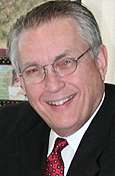
wademug
Executive Director
BGCT Executive Board

It is too soon to know if things will improve enough so Baptists will be able to buy land and build church buildings, hold Sunday schools, train pastors and minister openly to the needs of the poor, the sick and the orphans. But we were encouraged by our reception.

The effort in Vietnam illustrates the passion Baptists have for reaching people for Christ, discipling believers and ministering to people in need. And our Texas Baptist churches are becoming an ever-stronger component in this worldwide effort.

Texas Baptists always have had the world on their hearts. We were blessed by those who came here to help us start churches in the 19th century. And we now are going around the world to do the same. Through WorldconneX, our BGCT missions network, we are facilitating church mission trips and helping churches support missionaries in ways we would not have imagined just a few years ago.

There will be a major missions rally on Sunday evening, Nov. 12, before our BGCT annual meeting in Dallas. Pastors of some of our strongest churches are sponsoring this rally, and WorldconneX and BGCT staff are encouraging and supporting it.

I ask you to make these missions opportunities a matter of earnest intercession with the Father. Our world is really lost, and it is tragically broken. We need more of us doing more than we have ever imagined. We can develop a worldwide strategy for mission advancement that connects local churches to mission needs through catalysts in key places around the world. We can maximize the power of individual involvement and cooperative strategic partnerships.

In Vietnam, as we prepared to make our first visit, Pastor Hue led the delegation in prayer. His heart broke for the needs of his people and their spiritual darkness. In many ways, Vietnam is more prosperous than it has been in decades, but these pastors yearn that their people will know the life that is truly abundant and eternal in Jesus Christ. My heart was blessed. My commitment grows to help Texas Baptists see how we can embrace Texas people and involve Texas churches so that from here we can touch the world with the saving heart of Jesus.

We are loved.

Charles Wade is executive director of the Baptist General Convention of Texas.

News of religion, faith, missions, Bible study and Christian ministry among Texas Baptist churches, in the BGCT, the Southern Baptist Convention ( SBC ) and around the world.


SBC annual meeting attendance expected to jump this year

Posted: 5/26/06

SBC annual meeting attendance
expected to jump this year

By Tony Cartledge, N.C. Biblical Recorder

& Greg Warner, Associated Baptist Press

GREENSBORO, N.C. (ABP) — After a decade of steady decline, attendance at the Southern Baptist Convention is expected to jump this year, amid ripples of unrest with the current leadership and the first openly contested presidential election since 1994.

Several estimates suggest at least 10,000 Southern Baptist messengers are charting a course for Greensboro, N.C., where the SBC annual meeting will be held June 13-14. But if interest continues to grow in the final weeks, there could be several thousand more.

Fewer than 10,000 messengers registered between 2001 and 2004 before attendance jumped to 11,641 for the 2005 convention in the SBC’s home city of Nashville. That’s a far cry from the 40,000 that attended during the height of the conservative-moderate conflict of the 1980s.

Since the Nashville meeting, however, Southern Baptists have witnessed the top executives of one mission board resign amid scandal, the other mission board president embroiled in conflict with trustees, the threatened first-ever removal of one of those trustees, a statistical decline getting progressively worse, and the emergence of a network of reform-minded bloggers protesting the “exclusionary” tactics of the SBC leadership.

Southern Baptist leaders rightfully claim some positive momentum too, such as the national recognition that followed the SBC’s disaster-relief work after Hurricane Katrina.

But there’s no denying the growing unrest stirring among some Southern Baptists, who expected more from the conservative movement that has held the convention’s reins for 27 years. Now, for the first time since moderates withdrew more than a decade ago, there is talk of party politics and busing church members to the convention next month.

“Angry conservatives will show up to vote; status-quo conservatives are complacent and staying home,” said one longtime SBC observer. It “could be a close vote.”

Conflict centers on the contest for SBC president. Arkansas pastor Ronnie Floyd is running with the support of the conservative establishment. Floyd is expected to face opposition, but so far no candidate has emerged.

Ronnie Floyd, pastor of the largest Southern Baptist church in Arkansas, and Frank Page, a South Carolina pastor with a record of strong financial support of the denomination’s budget, each will be nominated for SBC president at the annual convention.

Floyd is the favorite of the SBC’s established leadership, which has controlled the presidency for 27 years. Page was recruited by a group of Southern Baptist young conservatives who say the convention’s establishment is excluding too many people.

It’s too early to predict the attendance in Greensboro, much less the outcome. Most churches don’t select their messengers, or delegates, until the final weeks.

SBC officials downplay expectations of a significant increase over last year. Registration secretary Jim Wells of Branson, Mo., said he expects to see 10,000-12,000 messengers in Greensboro, and a total attendance of 14,000-16,000.

The prediction from the Greensboro Convention and Visitor’s Bureau is higher—12,000-14,000 messengers, with a total of 18,000 or more visiting the city for the meeting.

Those who decide late could have serious difficulty finding a place to sleep in Greensboro, where hotel rooms have been booked solid for months. The convention bureau assisted SBC officials in obtaining 4,500 rooms in Greensboro—all that were available—and also helped locate additional rooms outside of Greensboro.

Statistics released following the Nashville convention showed that nearly 83 percent of the messengers drove to the meeting last year. Greensboro, like Nashville, is located in an area that is thick with Southern Baptist churches and linked by several major highways. A large number of drive-in messengers could easily make the trip, and their response is likely to determine whether the attendance is one to remember.

Online pre-registration through the SBC web site is tracking about the same as for last year’s meeting in Nashville, Wells said. Among messengers attending the 2005 meeting, 7,416 had pre-registered, nearly two-thirds of the total. Another 1,809 persons pre-registered, but did not attend.

Wells declined to release information about what parts of the country are producing the most pre-registrations. “It would not be a true picture,” he said, “because many churches wait until their May business meeting to elect messengers.”

Wells said he expects a surge in online registrations during the last week before the convention.

SBC officials in Nashville are preparing for the prospect that the messenger count could be higher than anticipated. Donald Magee, SBC associate vice president for finance, is overseeing preparations for the registration area at the Greensboro coliseum.

“There is no way to tell exactly how many folks are coming,” he said, “so we have to prepare more than enough materials.”


News of religion, faith, missions, Bible study and Christian ministry among Texas Baptist churches, in the BGCT, the Southern Baptist Convention ( SBC ) and around the world.


CBF aids flood victims in Serbia, Zambia

Posted: 5/26/06

CBF aids flood victims in Serbia, Zambia

By Carla Wynn

Cooperative Baptist Fellowship

ATLANTA (ABP)—The Cooperative Baptist Fellowship has given $10,000 in flood-relief assistance to disaster areas in Serbia and Zambia.

As part of that gift, CBF gave $5,000 to the Union of Baptist Churches in Serbia to provide personal hygiene items and drinking water to flood victims.

“Serbian Baptists have churches directly impacted by the flooding, and several Baptist families have been flooded out,” said Jim Smith, CBF Global Missions associate coordinator for mission teams serving in Germany.

Those congregations “were interested in not only helping their Baptist members but non-Christians in the neighborhoods stricken by the flooding,” Smith said.

The Fellowship gave an additional $5,000 for flood relief in Zambia, where the Zambezi River had overflowed, displacing thousands of people. Fran and Lonnie Turner, CBF missionaries serving in sub-Saharan Africa, visited one camp housing more than 1,600 displaced people. CBF’s relief funds provided food and blankets for people in the camp.

As in Serbia, the economic impact of flooding in Zambia is more longlasting and destructive than the short-term physical danger, said David Harding, the Fellowship’s international coordinator for emergency response and transformational development.

“It is not so much a matter of (physical) danger as a matter of your life being turned upside down and the recovery it requires,” Harding said.

Flooding in Europe, which started in March and worsened as the Danube River and its tributaries swelled, has created a state of emergency in eight Serbian municipalities, with estimated damage totaling $45 million, Reuters reported.

In Africa, heavy rains also caused overflowing rivers that flooded Zambian villages and destroyed agriculture, homes and lives.

The heavy period of rain followed last season’s severe drought, according to the Zambia Red Cross Society.


News of religion, faith, missions, Bible study and Christian ministry among Texas Baptist churches, in the BGCT, the Southern Baptist Convention ( SBC ) and around the world.


Cybercolumn By John Duncan: Sweet, sweet pie

Posted: 5/26/06

CYBER COLUMN:
Sweet, sweet pie

By John Duncan

I’m sitting here under the old oak tree, thinking of pie and crust, of sweetness and hardship, of happiness and sadness. On numerous occasions over the years in this column, I have written about Ruth Stewart. She played the organ for our church many years ago. She passed away not long ago. I dedicate this column to her daughter, Kathleen Stewart.

Ruth died two days after her 96th birthday, having been born on April 26, 1910. She was born to J.L and Cora Crane. J.L. was a Baptist preacher and carpenter.

John Duncan

One March day in 1930, Ruth climbed out of the bathroom window to elope with her beau, John Stewart. John was the crust of the pie, a man of the Depression, a frugal man who worked hard for everything he possessed. And he also mixed the sound for recordings of church musicals while producing numerous albums.

John passed away one March day in 2004, four days shy of his 74th wedding anniversary. He liked to invite me into his home and turn on Pat Robertson videos he recorded and discuss the end times. I would be a rich man if I had a dime for every time John asked me the question, “Don’t ‘cha think we’re living in the last days?” He smoked a pipe, loved to discuss the end times, and was a crusty old character who served up opinions on life, politics, church, “the fundamentalists,” “the liberal politicians,” the Southern Baptist denomination, music and the end times. He swung at those topics like a first-time tennis player swinging at tennis balls, hit and miss, hit, hit, hit, miss and kabang! The big hit over the fence!

John was the crust of the pie, hard on the outside, but soft when you understood his background and his fears. He once said, “Preacher, I’m afraid.” John’s hardness probably resulted in deep fear, yet he had peace in Christ. It happens so in some people. He spoke of the fear of sickness and death. He died and donated his body to science and requested no funeral. You could say, in the words of the poet Percy Shelley, “Music when soft voices die, vibrates in the memory.” John’s melodious voice still resonates in my memory, “Don’t ‘cha think we’re living in the last days?”

“Get some desert!” John said on our first lunch meeting. We, meaning John and Ruth and I, piled in their 1965 Mustang one June day in 1987. It was my first year at Lakeside Baptist Church, a church I have pastored for 19 years. Things were not going well, and it showed on my face. John became my ally in the war, my flashlight in the darkness, my song in the shadows, the one who tuned the joyous knob of encouragement in the dissonance of my sad-song struggle. The crust tasted good and good for many years as we shared friendship. He let me be myself. What a great blessing in life when people let you be you and the you that God created!

Oh, but where would the pie be without the crust?

If John was the crust, Ruth was the pie. Before her exit from the bathroom window, Ruth trained as a concert pianist. She used those skills to play the piano and organ for churches most of her life. She played the organ at Lakeside into her eighties.

She once played for our late former of minister of mMusic, Randal Purvis. He was known for singing on the spur of the moment, tunes like “His Eye is on the Sparrow,” his favorite. He would tell the organist what he planned to sing, never practice, and, “old leather lungs,” as his friends called him, would belt out the song without the blink of an eye. Except, one Sunday all eyes blinked.

Randal told Ruth which song he was going to sing before the worship service. She heard one song, and when the time came for the special music, Randal sang another. Ruth played. Randal sang. Neither of them stopped. They played on, sang on, and plowed on. It sounded like an old tin can rattling in off beat. If I can be so kind, it was the worst sounding mess of a song I have ever heard in any worship service. Neither of them blinked, but the church blinked, fidgeted, squirmed and made faces like you see when a baby sucks on a lemon. We all laughed about it later. Life brings moments etched in the memory forever. That was one of them.

Then another Sunday, I told this great story about baseball player Babe Ruth. I told the story, rising high and low with voice intonation, when, suddenly, to make my point I gestured with my hand toward the congregation and clearly stated, “The problem with Ruth was that he made a mistake!” Ruth, the organist, looked at her husband, face ashen, and whispered, “I made a mistake. I made a mistake?” John, never one to be quiet, within hearing told her, “No, Ruth. He’s talkin’ about Babe Ruth. Babe Ruth made a mistake, not you!” Ruth loved to tell that story every time I saw her. She rarely forgot, saved every card I ever sent to her from church or Cambridge, England, and loved to repeat stories a thousand times. And she shared the gospel story to every living soul who ever walked in her home, called on the phone, including phone sales solicitors, and even people she did not know at restaurants. The gospel resonated within her heart and created wonderful notes on the musical score of her  life, notes of grace and kindness and love and sweetness and humor.

Ruth had a great sense of humor. One summer Sunday night at Lakeside Baptist Church, the worship fizzled and the sermon ended with a dud like the fizz of a firecracker that never ignites. I prayed, and the song commenced, “Set My Soul Afire, Lord!” The minster of music waved his arms for congregational singing, Ruth played the harmonious tunes of the hymn, and I watched and smelled a burning smell and watched, when suddenly, the organ caught on fire! The minister of music jumped over a rail, unplugged the organ, and God showed up in holy fire as the song ended! Ruth and I laughed about that for years. I now say, “Watch what you sing for, because you never know when God might just give you what you sing for!”

Ruth wrote in her Bible the plan of salvation, sermon notes, outlines and her favorite verse, Lamentations 3:22-23, “It is of the Lord’s mercies that we are not consumed, because his compassions fail not. They are new every morning: great is thy faithfulness.”  She used an old King James Version, because, in her day, that was the only thing going. And John loved the King James as much as he loved Ruth, and Ruth wanted to please John, so she used KJV.

I spoke at Ruth’s funeral and shared all the change she had experienced in her life: From Model T cars to sophisticated automobiles with navigation systems; from black-and-white televisions that fit on the coffee table with rabbit ears wrapped with aluminum foil to wide-screen plasma televisions connected to the world by satellite dish; phones with rotating dials to cell phones with digital pictures; Elvis Presley to Shania Twain; big-church pipe organs with a genuine sound to synthesizers and key boards with fake sound. Ruth witnessed change. One constant remained, though—Christ.

Ah, this is life. The spring suns shines, and music still echoes in churches and the Dallas Mavericks are in the NBA basketball playoffs, and encouragement is like a piece of pie, tasty and sweet, and life rolls on. And once in awhile, someone comes along in life that helps put some music in your own heart and the music lights a fire that sets the soul aflame with joy and peace and grace and life. And once in a blue moon, if the moon really turns blue, you, as pastor, are privileged to do funerals where you say nice things, true things, and glorious things about God and his saints. And you do it with gratitude and are humbled by it.

So when I think of Ruth, I see her smiling and grinning, and I think of John and the end times and set my soul afire, Lord.

And that’s the way life goes: Make music in Jesus’s name that causes the hearts of those who hear it to sing! I miss Ruth already. And next time I see her, I am going to say, “Ruth, where’s John? Guess the end times have come. And Ruth, remember the time the organ caught on fire while we sang ‘Set My Soul Afire’?” And we’re gonna hug each other and cry and laugh and slap our knees and sing our souls to life for all of eternity. Maybe she’ll say as she did when last I visited her, “Sing ‘Amazing Grace.’” And I did. And I will. And we will. And we shall sing at the feet of Jesus. And we’ll eat at the banquet table and eat with Jesus at the great feast, and old John will show up and say, “Get some desert!” And we will talk about old times and Jesus and worship Jesus and sing and eat the pie and the crust and laugh our souls to high heaven, because we’ll be there for all eternity!

The wind blows this spring morning. The green grass waves in the wind. A bird sings and chirps the joy of morning. And God loves to hear his people make music to him. And on this morning I am. On this day I will. Don’t ‘cha think we’re living in the end times?


John Duncan is pastor of Lakeside Baptist Church in Granbury, Texas, and the writer of numerous articles in various journals and magazines. You can respond to his column by e-mailing him at jduncan@lakesidebc.org.

News of religion, faith, missions, Bible study and Christian ministry among Texas Baptist churches, in the BGCT, the Southern Baptist Convention ( SBC ) and around the world.


On the Move

Posted: 5/26/06

On the Move

Ken Bangs to River Christian Fellowship in Texarkana as pastor.

Larry Barnett to First Church in Refugio as supply music director.

Jeff Bishop to CrossTrails Church in Commerce as pastor.

Rick Burton to Calvary Church in Friona as pastor from First Church in Crowell.

Dave Collett to First Church in Mason as pastor from First Church in Flower Mound, where he was minister of youth and missions.

Sterling Edwards has resigned as student minister at University Church in Houston to start a church in Long Island, N.Y.

Thomas Faltysek to First Church in Victoria as student minister.

Hadley Foster to Sandbranch Church in Bigfoot as pastor.

Allan Gilbert to Littleville Church in Hamilton as interim pastor.

Angela Hamm to Northway Church in Dallas as teaching pastor from First Church in Lewisville, where she was spiritual formation/single adult minister.

Jay Haugh to First Church in Lewisville as associate student pastor.

Reid Hughes was previously reported as pastor of First Church in Corinth. He has decided to decline the position.

Steve Martell to Hyde Park Church in Austin as minister of media.

Steven McCaslin to Emmanuel Church in Weatherford as pastor.

Shannon Moreland has resigned as pastor of CrossTrails Church in Commerce.

Scott Neathery to First Church of Wake Village in Texarkana.

Floyd Peltier to Pottsville Church in Hamilton as pastor.

Ted Winton to Garner Church in Weatherford as pastor.

News of religion, faith, missions, Bible study and Christian ministry among Texas Baptist churches, in the BGCT, the Southern Baptist Convention ( SBC ) and around the world.


RIGHT or WRONG?: Is the ‘Social Gospel’ secularism?

Posted: 5/26/06

RIGHT or WRONG?
Is the 'Social Gospel' secularism?

I’ve heard this statement, “The gospel is both personal and social.” I get the personal part, but doesn’t the “social” angle launch us into a secular, liberal, more humanistic direction? How should I understand this idea of both personal and social application of the gospel?


Jesus affirmed the gospel was both personal and social. Two events in his life illustrate the dual nature of the gospel—literally, “good news.” Jesus began his public ministry “preaching the gospel of God.” He declared the kingdom of God was at hand and it was time to repent and believe in the gospel (Mark 1:14-15). When asked by a lawyer at a later time to name the greatest commandment, Jesus responded by uniting two into one: Love God and love others (Matthew 22:37-40).

What we experience on Sundays when the pastor invites us to trust Jesus as Savior—“repent and believe”—highlights the gospel’s personal nature. Disciples confess Jesus as Lord and begin the lifelong process of being transformed into his likeness. Actions that grow from this side of the gospel include witnessing, helping others and cultivating personal moral virtues—honesty, sexual purity and abstaining from acts that harm the body, such as smoking, drinking and drugs. While these practices may impact others, the emphasis falls on the individual qualities.

Helping people who have fallen on difficult times often results from this personal transformation. For example, I received a phone call as I was composing this response. The caller was seeking assistance to help pay an electric bill. Churches often receive requests like this. Most Christians offer as much help as they can. We can apply the term “social ministry” to describe this kind of help. The disciple’s relationship to Christ has created a desire to help others in tough times.

Some people need repeated assistance. No matter how hard they try, they just can’t keep up with rent, utilities and groceries. Think about a single mother of three with little education who works 60 hours a week cleaning houses and still can’t make ends meet.

The “social” nature of the gospel does not necessarily launch us into a liberal or secular direction. Look at the reality of poverty in the United States. Amos directed harsh words against Israel for its mistreatment of the poor (Amos 5:1-24). He pronounced God’s judgment on the nation because of injustice and oppression of the needy. We could apply the term “social action” to Amos’ message. Social action focuses on eliminating causes of poverty rather than providing individual help.

Christians of various traditions across the theological spectrum agree we live in a society that falls short of God’s ideal. The specific responses to the needs of society may differ, but Christians want to see society transformed according to their understanding of the kingdom of God. As we address the problem of poverty, one approach has been to offer incentives to businesses that hire the poor. Some Christians support tax cuts aimed at stimulating the economy to create more and better-paying jobs. Then everyone might have a job through which they can provide for their family. Other Christians believe the system itself is in need of transformation. These believers might insist the minimum wage needs to be increased and taxes reduced for those who live near or below the poverty level.

Christians agree the gospel is both personal and social. What distinguishes believers is the direction and understanding of how to change society.

David Morgan, pastor

Trinity Baptist Church

Harker Heights


Right or Wrong? is sponsored by the T.B. Maston Chair of Christian Ethics at Hardin-Simmons University’s Logsdon School of Theology. Send your questions about how to apply your faith to btillman@hsutx.edu.

News of religion, faith, missions, Bible study and Christian ministry among Texas Baptist churches, in the BGCT, the Southern Baptist Convention ( SBC ) and around the world.


Family Bible Series for May 28: Mary’s life demonstrates unwavering focus

Posted: 5/17/06

Family Bible Series for May 28

Mary’s life demonstrates unwavering focus

• Luke 10:38-42; John 12:1-8

By Greg Ammons

First Baptist Church, Garland

Arnold Palmer was about to win the 1961 Masters Golf Tournament. He had a one-stroke lead over Gary Player. Palmer hit a tremendous tee shot on the final hole. As he was walking to his ball, a friend in the gallery spoke to Palmer. He stopped and shook his friend’s hand, which was uncharacteristic of Palmer. The golfing great said later the incident caused him lose his focus. He went on to bogey the hole and lost the tournament by one stroke. Palmer said it was a costly lesson for him. He vowed he never again would lose focus before a round ended.

Often, believers in Jesus lose their focus. They allow even well meaning friends to distract them from giving the Lord their very best. Mary of Bethany is a tremendous scriptural example of keeping her unwavering focus on Jesus. Her actions show us how we can keep our focus on Christ as well.


Listen to Jesus (Luke 10:38-42)

As Jesus entered Bethany, he accepted the invitation of Mary and Martha to visit their home (v. 38). As they visited, Martha was busy with the details of hosting, while Mary focused on Jesus. Martha was irritated by Mary’s reluctance to help her and asked, “Lord, don’t you care that my sister has left me to do the work by myself?” Jesus replied, “Martha, Martha, you are worried and upset about many things, but only one thing is needed” (v. 41). He then stated Mary had chosen what is better (v. 42).

Jesus gave Martha some wonderful advice as he commended Mary for her devotion. Details are important but should never detract us from focusing primarily upon Jesus. Our Lord was not telling us we should be slack in service or simply sit around and do nothing. However, he was pointing to where the primary focus of life must be centered. The wise person listens to this great advice from Jesus.

Listening is a difficult art. For many people, talking comes easily, but listening is difficult. Our mind thinks four times faster than a person speaks. There is much room for wandering. However, the wise Christian listens intently to Jesus when he speaks and keeps the primary focus upon the Savior.


Give your best to Jesus (John 12:1-3)

Later, six days before the Passover, Jesus returned to Bethany. There was a dinner given in Jesus’ honor (v. 2). As the guests reclined at supper, Mary took an expensive perfume and poured it on Jesus’ feet. She then wiped his feet with her hair (v. 3). The house was filled with the fragrance of the perfume.

Mary took the best gift she possessed and lavished it upon Jesus. In her estimation, no gift was too great to give to her Lord. As you evaluate your service to Christ, seek to determine if what you are giving is truly your best. God gave us his very best in the person of Jesus. In return, he deserves the best we can give him.

Antonius Stradivarius is a name synonymous with violins, and the reason why is no accident. Stradivarius made a commitment that no instrument would leave his shop until it was as near perfection as was humanly possible. He once said, “Other men will make violins, but no man shall make one better.” As a result, the name Stradivarius has become associated with excellence. May Jesus get the very best of your life in service.


Seek the approval of Jesus (John 12:4-8)

After Mary had broken open the very expensive perfume and anointed Jesus with it, one of the disciples became indignant. Judas Iscariot, who would later betray Jesus, fumed, “Why wasn’t this perfume sold and the money given to the poor?” He did not say this because he cared about the poor but because he was the dishonest treasurer among the disciples (v. 5).

Jesus replied: “Leave her alone. It was intended that she should save this perfume for the day of my burial” (v. 7). Jesus commended Mary for her selfless and expensive action.

It was the pattern of Jesus’ ministry to gain the approval of his heavenly father. On five separate occasions during Jesus’ earthly ministry, the heavenly father boomed, “this is my beloved son in whom I am well pleased.” Every action of the Son gained the Father’s approval.

Our actions and service must be focused so they gain the approval of our Lord. Often, Christians will seek the approval of family members, friends or other church members. It is important to some believers how others view them. Yet, the greatest approval we can gain is from Jesus. May your service to Christ now be such that one day in heaven you hear the phrase, “well done, good and faithful servant.”


Discussion questions

• Do you listen to Jesus on a consistent basis?

• Is your current service to Christ truly your best?

• In what ways do your actions gain the approval of God?


News of religion, faith, missions, Bible study and Christian ministry among Texas Baptist churches, in the BGCT, the Southern Baptist Convention ( SBC ) and around the world.


Explore the Bible Series for May 28: Micah describes the deliverer of Jerusalem

Posted: 5/23/06

Explore the Bible Series for May 28

Micah describes the deliverer of Jerusalem

• Micah 1:1-7:20

By James Adair

Baptist University of the Americas, San Antonio

Imagine you live in a place and time where you and your neighbors struggle to make ends meet day after day, year after year. Your political leaders over the past several years have varied from bad to worse. It is certain they have been more concerned with their own well-being than with that of their subjects.

On top of your struggles for existence on the economic level, a great, ferocious empire threatens to overrun your country, bringing devastation, suffering and humiliation. You care little about politics; you just want to live a normal, quiet life.

In addition to everything else, the army threatening to invade will do its best to change your understanding of God and religion. Many neighbors will undoubtedly go along with the shifting religious winds, on the theory of “go along to get along,” but your understanding of God is important to you and your family. You have no wish to change religions, and you long for deliverance. Where will you turn?

The prophet Micah was from the village of Moresheth-Gath, southwest of Jerusalem. The invading Assyrian army had forced him and many of his neighbors to abandon their homes and flee for safety to the walled city of Jerusalem.

Micah was quickly disillusioned about the prospect of Jerusalem providing a lasting defense against the enemy. He saw the sins of the people, and especially the rulers, and he encouraged the people to look elsewhere for their deliverance. He believed the kings were weak, corrupt rulers, concerned about the city of Jerusalem, to be sure, but oblivious to the fate of those from rural areas like Moresheth.

Micah saw hope only in a return to the faith of their ancestors, and in particular, he envisioned a time when a new Davidic king would arise to deliver the people. This king would “feed his flock in the strength of the Lord” (5:4); that is, he would care about the common people and about the proper worship of God. His reign would bring security and peace to the nation.

This is the historical setting in which the prophet Micah preached. An eighth century B.C. contemporary of Isaiah, he spoke for the poor of Judah, the rural and village dwellers, those who felt the effects of King Hezekiah’s rebellion against his Assyrian overlord.


Micah 5:2-5

The evangelist Matthew and many other early Christians saw Jesus as the fulfillment of Micah’s messianic prophecy, albeit in a spiritual rather than a literal sense. As I ponder this Scripture, I wonder whether people in a situation similar to that of Micah would think of Jesus as their deliverer.

I suspect the typical Iraqi civilian who had suffered at the hands of both Saddam Hussein and U.N. sanctions, only to have their nation occupied by a “Christian” nation, might have a hard time thinking of Jesus as the answer to their prayers for deliverance. The problem is exacerbated, from a theological point of view, when a small number of Christians equate the nation’s military victories, whether in Iraq or elsewhere, to Christ’s triumph over Muhammad, or other similar sentiments.

All too often Christians in the West have co-opted the Jesus of Scripture—now a conquering hero, leading his faithful troops into battle against the unbelievers. This isn’t the Jesus of the New Testament, and it’s not the Jesus who can bring hope to the oppressed around the world.

The Jesus we preach should be a Jesus that inspires respect even among those who do not choose to follow him, not one who calls down God’s judgment on people of other faiths. Much of the world—industrialized or economically underdeveloped, North or South, Christian or Muslim—has a dangerous, unbiblical, even satanic concept of Jesus. A Jesus who advocates war and violence is the devil wearing a God-mask. We need to reform the image of Jesus we portray to the world, and we can start by remembering the last line of this reading from Micah: “he shall be the one of peace.”


Micah 6:1-8

When you fill out an application of almost any sort, there are certain requirements you must meet. If you’re applying for enrollment in a particular university, your grades and test scores must meet a set of minimum requirements, say a 3.0 average and a 1200 on the SAT. If you’re applying for a job, don’t even bother to send in your application if you don’t have all the qualifications the company is looking for, because they’ll just pull your application out and put it in the circular file (AKA file 13 or le garbage).

If you’re applying for a loan, your family income had better be over a specified minimum, and your credit score had better be pretty high as well, or you can say sayonara to the loan. We live in a society that has requirements for almost everything you might want to do, especially if benefits are involved. In fact, the higher the benefits, the higher the requirements, generally speaking.

One could hardly argue with the notion that being in a proper relationship with God is a great benefit, so surely the requirements must be great, right? Surely God requires a certain level or quality of sacrifice (in today’s capitalist world, perhaps a specific dollar amount, or more likely, a euro amount) in order to “get in good”? Maybe God also requires we adhere to a certain set of doctrinal precepts?

In fact, God requires neither of these, though a right relationship does require something that is, in a sense, much more demanding. God requires we treat our fellow human beings properly and that we live our lives before God in proper humility.

Micah addressed listeners familiar with the proper sacrifices that the law required them to bring to the temple. Burnt offerings, thanksgiving offerings, peace offerings, sin offerings, guilt offerings–all these and more were required at certain times of the year or under certain circumstances. The idea behind an offering was God would be pleased by the sacrifice and forgive sin, grant a request or give a blessing. Micah questioned the very heart of their belief system when he challenged them to sacrifice their lives, not their animals. Animal sacrifices weren’t bad, as long as they accompanied proper behavior. They were certainly no substitute for right living. Too many people today of all religious persuasions put too much emphasis on either doctrines or peripheral behaviors and put too little emphasis on what Jesus called "the weightier matters of the law" (a probable reference to this passage from Micah).

How else can one explain the fact that many who attend church regularly take no direct action to combat poverty? How else can one explain those who think they are obeying God by killing others in God's name? How else can one explain those who think of themselves as righteous but who have a cavalier attitude about the sufferings of others, particularly if the “others” belong to a different nation, tribe, ethnic group or religion?

To do justice means we must stand up for the underdog, side with the weak and oppose the powerful when they use their power to oppress others. To love kindness means to remember the bond that we share with our fellow humans, a bond that crosses barriers of ethnicity, nationality, language, social status, gender or sexual orientation.

To walk humbly with God means to realize that no matter how certain we are about our beliefs and vaues, we must always allow for the possibility that we do not have the totality of God’s wisdom or truth on our side; in other words, we might be wrong, and our adversaries might be right. If we as people who are serious in our commitment to follow God will observe these “requirements,” and if we can persuade our neighbors and governments to do the same, the world will be a much better place.


Micah 7:7-8

Confucius, the ancient Chinese sage, said, “Our greatest glory is not in never falling, but in rising every time we fall.” A contemporary wise man, Vince Lombardi, said, “It’s not whether you get knocked down. It’s whether you get up again.” A recent popular song says, “I get knocked down but I get up again?; you’re never gonna keep me down.

These sentiments echo the words of the prophet Micah, but with one difference. Micah’s determination to get up and keep on going was based not on his own efforts but on his faith in the God who never abandons the faithful.


Discussion questions

• How does Micah’s perspective toward Hezekiah and his policies differ from Isaiah’s? How do the perspectives of urbanites, suburbanites, people from small towns and people who live in rural areas differ from one another today? Why is it important to understand these differences?

• How does the typical Christian view Jesus? How does the typical Muslim view Jesus? Is the image of Jesus that Christians portray to the Muslim world what we want it to be?

• Which is more important for Christians, orthodoxy (right doctrine) or orthopraxy (right practice)? Is there a minimal standard for correct belief that all Christians should accept? Is there a minimal standard for correct practice all Christians should follow?

• What is the difference between self-determination and reliance on God? Are the two mutually exclusive?


News of religion, faith, missions, Bible study and Christian ministry among Texas Baptist churches, in the BGCT, the Southern Baptist Convention ( SBC ) and around the world.


Storylist for 5/15/06 issue

Storylist for week of 5/15/06

TAKE ME TO: Top Story |  Texas |  Opinion |  Baptists |  Faith in Action |  Faith & Culture |  Book Reviews |  Classifieds  |  Departments  |  Bible Study


Frank Page, South Carolina pastor, to face Floyd in SBC race

Brownsville attorney will lead investigation into Valley funding

Rebecca St. James single 'Wait for Me' focuses on sexual purity

Artist's mural places San Antonio children on Noah's Ark

Classes in world religions increase respect for religious freedom, study shows

Da Vinci Code's premise based on a hoax, scholars say

Classes in world religions increase respect for religious freedom, study shows

Bill amended to allow chaplains freedom to pray according to conscience

Paige Patterson endorses Floyd for SBC president

Pat Robertson labels Americans United 'communist'

Critics note Floyd's stingy CP giving, controversial ministry innovations

Tennessee Baptists reject Belmont's offer; lawsuit for control looms

Fellow IMB trustee criticizes Burleson

Dobbses say IMB response 'inaccurate'


Called to ministry


Women in Ministry
Called to ministry: Big dreams, openness to God's calling guide student

Baptist women in ministry face ongoing challenges

Dangerous ground transformed by church


Buckner sends shoes to children orphaned by hostage massacre

Carpenter's Helpers meet neighbors' needs

Students share gospel on Galveston Island

Ex-offender ministry yields transformation

Texans nominated for SBC committees

On the Move

Around the State

Texas Tidbits


Elders—common title, different definitions

Herschel Hobbs on church governance

Who has authority to make decisions for a church?

Small churches adapt to survive

Baptist Briefs


Baptists help after tornado


Christians called on to counter Da Vinci Code claims

Bible reading on rise, survey reveals


Reviewed in this issue: Finding Our Way Home: Turning Back to What Matters Most by Mark R. McMinn, Seventeen Roadblocks on the Highway of Life: And How to Move Around Them by Brian Harbour and Holy Blood, Holy Grail: The Secret History of Jesus, The Shocking Legacy of the Grail by Michael Baigent, Richard Leigh and Henry Lincoln.


Cartoon

Classified Ads

Texas Baptist Forum

Around the State

On the Move


EDITORIAL: Is it Code or evangelistic opportunity?

DOWN HOME: Call to daughter transcends time

TOGETHER: Texas Baptist students go into world

2nd Opinion: ‘Put our money where your mouth is'

RIGHT of WRONG? Insisting on retirement package

Texas Baptist Forum

Cybercolumn by Berry Simpson: Stuck


BaptistWay Bible Series for May 14: Can right motives lead to wrong actions?

Family Bible Series for May 14: Hannah offers insight into difficult situations

Explore the Bible Series for May 14: Everyone needs hope, encouragement

BaptistWay Bible Series for May 21: Momentary delight, lifelong disaster

Family Bible Series for May 21: No time like the present to begin serving

Explore the Bible Series for May 21: Prayer and fasting should be followed by action

Updates • Tennessee Baptists reject Belmont's offer; lawsuit for control looms

Fellow IMB trustee criticizes Burleson

Dobbses say IMB response 'inaccurate'

Previously Posted
IMB reinstates missionary couple

School allows Christians equal access

NAMB trustees regroup, move on after Reccord's resignation

Memphis Declaration voices dissatisfaction

U.S. allies violate human rights

Baptist foster care continues in troubled Sri Lanka

Feeding the hungry disarms terrorists, author insists

Law mandates training for camp workers

Attorney will guide BGCT church-starting investigation


• See complete list of articles from our 5/01 2006 issue here.


Frank Page, South Carolina pastor, to face Floyd in SBC race

Posted: 5/19/06

Frank Page, South Carolina
pastor, to face Floyd in SBC race

By Greg Warner & Robert Marus

Associated Baptist Press

TAYLORS, S.C. (ABP)—Frank Page, a South Carolina pastor with a record of strong financial support of the denomination’s budget, reportedly will be nominated for Southern Baptist Convention president next month.

Page’s decision ensures that messengers to the June 13-14 annual convention will have a choice between two distinct visions for the SBC’s future. It also means Wade Burleson, widely speculated as a candidate for the post, will not be nominated.

Page is expected to face Arkansas pastor Ronnie Floyd, who is the favorite of the SBC’s established leadership, which has controlled the presidency for 27 years. But Floyd has been criticized for his church’s weak support of the Cooperative Program, the SBC’s central budget that supports the denomination’s ministries and agencies.

First Baptist Church of Springdale, Ark., where Floyd has been pastor for 20 years, gave $32,000—or 0.27 percent of its $12 million in undesignated receipts—to the Cooperative Program last year. During the same period, First Baptist Church of Taylors, S.C., where Page is pastor, gave $535,000—or 12.1 percent—of its $4.4 million in undesignated receipts.

A blue-ribbon SBC panel, alarmed by sluggish CP giving, is calling for Southern Baptists to elect officers who represent churches that contribute at least 10 percent.

Page was unavailable May 19 but his staff confirmed his decision. Burleson said he talked to Page earlier in the day. "He's going to allow his name to be nominated," Burleson, pastor of Emmanuel Baptist Church in Enid, Okla., told Associated Baptist Press.

Burlseon has been an outspoken advocate for the need of new leaders in the SBC who will be more inclusive of conservatives with different views and not enforce narrow parameters of “conformity.” Burleson said recently he would be nominated for president if a candidate did not arise who was committed to the same goals.

“Because Frank is announcing that he will be a candidate for the presidential nomination, I stand by what I said,” Burleson said in an interview. “The conversations I have had with Frank have been wonderful,” he added, suggesting Page will seek the same goals Burleson has articulated.

“We must stop narrowing the parameters of cooperation in the area of missions and evangelism,” Burleson wrote in a May 16 blog posting. “We cannot, we must not, define Southern Baptists in more narrow terms than our Baptist Faith and Message, and more importantly, we cannot disenfranchise committed, conservative Southern Baptists who hold to the integrity of the Scriptures but differ on the interpretations of minor doctrines of the sacred text.”

This will be the first time since 1994 that the SBC presidency has been seriously contested, with at least two candidates announced ahead of time.

Page was courted as a candidate by Burleson and other conservatives eager for a change in the SBC’s direction. As recently as May 16, Page declined the nomination.

“I did not have a peace about it, and I can’t move forward if I don’t have that,” he said.

It is not known what factors changed his mind. Staff members at Page’s church did not comment on the situation May 19.

Page’s church in Taylors, located in the Greenville-Spartanburg area of upstate South Carolina, has an average weekly attendance of about 2,000. It gave $535,000 to the Cooperative Program through the South Carolina Baptist Convention in 2005—or 12.1 percent of its undesignated budget of $4,407,392.

Floyd’s Springdale church, located in the fast-growing Fayetteville-Springdale-Bentonville-Rogers area of northwest Arkansas, has an average Sunday morning attendance of about 7,000.

Floyd already has won the endorsements of three SBC seminary presidents—Paige Patterson of Southwestern Baptist Theological Seminary; Danny Akin of Southeastern Baptist Theological Seminary; and Al Mohler of Southern Baptist Theological Seminary—all loyal to the current SBC leadership. The endorsements prompted a rare warning from Morris Chapman, the SBC’s chief executive, who said it is inappropriate for agency leaders to become involved in SBC politics.

The church gave $32,000 through the Arkansas Baptist State Convention to the Cooperative Program last year, or one-fourth of 1 percent of its undesignated receipts of $11,952,137. According to church leaders, the congregation gave an additional $189,000—about 1.8 percent of undesignated receipts—directly to the Southern Baptist Convention’s budget, bypassing the state convention, and another $300,000 to “Southern Baptist causes,” including $25,000 to SBC seminaries.


News of religion, faith, missions, Bible study and Christian ministry among Texas Baptist churches, in the BGCT, the Southern Baptist Convention ( SBC ) and around the world.


BaptistWay Bible Series for May 28: A parent’s worst nightmare

Posted: 5/17/06

BaptistWay Bible Series for May 28

A parent’s worst nightmare

• 2 Samuel 13:20-21, 30-33; 14:25-15:10; 18:6-15, 33

By Joseph Matos

Dallas Baptist University, Dallas

2 Samuel’s record of the fallout following David’s sin against Uriah and Bathsheba brings the trifecta of bad parenting by otherwise exceptional leaders to completion.

Recall Eli. He was a good priest and judge over Israel, even serving as mentor to young Samuel. Despite that, his two sons were corrupt (1 Samuel 2).

Then Samuel grew up and was a model judge and priest as well. He even went on to anoint the first two kings of Israel. Yet, like Eli before him, he could not control his own sons. In fact, one of the reasons the people of Israel clamored for a king was the prospect of Samuel’s sons succeeding him (1 Samuel 8:1-6).

Now we see David. He would go down in history as Israel’s model king because of his devotion to Yahweh. However, with respect to his relationship with his children, he followed in the footsteps of Eli and Samuel. They were as ineffective in their private family lives as they were effective in their public ministries. Such incongruence is beyond explanation.

Ironically, Saul, ineffective as a leader, was the father of Jonathan, one of the most loyal and trustworthy people in the Old Testament. That is equally difficult to explain.

In his rebuke of David after the Bathsheba/Uriah incident, Nathan declared to him the consequences (2 Samuel 12:10-12, 14). First, “the sword will never depart from your house” (v. 10). Second, the Lord said through Nathan, “Out of your own household I am going to bring calamity upon you” (v. 11). Third, if that were not enough, the Lord continued: one who was close to David would take David’s wives and sleep with them out in the open. The Lord remarked: “You did it in secret, but I will do this thing in broad daylight before all Israel” (vv. 11-12).

On hearing this, David confessed his sin. As a result, Nathan assured him the Lord had taken away his sin, and his life would be spared. But because David’s actions resulted in utter contempt for the Lord, the son conceived from the union between David and Bathsheba would die (vv. 13-14).

David was forgiven, but the consequences were not removed. The son soon died. From there, without specifying which action corresponded to which prediction, 2 Samuel 13-19 report the fulfillment of the above declarations.


Amnon and Tamar

The first incident illustrating the chaotic situation in David’s household was Amnon’s rape of Tamar (chapter 13). She was Absalom’s full sister, but Amnon’s half-sister. Amnon lusted after her for some time before finally deceiving her and taking her to bed. Absalom offered words of comfort and then took her into his own home. Still, Tamar was “a desolate woman” (v. 20). David became “furious” (v. 21), but apparently did nothing else about it.

This mirrors the actions of many parents. Because of their own mistakes, they feel ill-equipped or hypocritical in bringing correction to their children. Does this explain David’s lack of response?


Absalom and Amnon

Though he took a long time to act (two years), Absalom finally exacted revenge on Amnon for his violation of Tamar. His ploy was to get David and his sons, including Amnon, to attend a festival he was hosting. David refused to go but blessed him and, at Absalom’s pleadings, permitted Amnon to attend. David was protective of Amnon since he was the heir apparent. Absalom’s men subsequently struck down Amnon at his orders. David’s other sons fled.

When the report of Amnon’s death got back to David, Absalom fled.


Absalom and David

What followed the next several years was division between Absalom and David. Absalom lived in virtual exile. After two years, seeming reconciliation between them ensued. But it was a tense reunion. Absalom had returned; but he used this as opportunity to undermine the authority of his father. He campaigned at the city gate to hear the peoples’ cases, stating no representative of David was available to do so. After two more years, Absalom gained the affection of the people of Israel and organized a coup (2 Samuel 14:25-15:10).

This time, David fled. He fled with his officials and his household, but he left his concubines behind (15:14-16). Ahithophel, longtime advisor to David, defected to Absalom’s side. Ahithophel then advised Absalom to sleep with the concubines David left behind. Absalom followed the advice, sleeping with the women in a tent pitched on the roof of the palace. By this act, he communicated to Israel that he had successfully replaced David (16:15-22) and fulfilled in literal fashion Nathan’s prophecy to David.


Absalom’s Death

All this culminated in a final battle between the armies of David and Absalom. David’s troops were roundly winning the battles when, in a freakish moment, Absalom’s hair caught in some tree branches. Joab and his men identified Absalom and killed him, ignoring David’s prior orders to take him alive (18:5-15).

Joab sent word to David of the “victory.” However, what others believed to be a victory because David’s kingdom was preserved, David interpreted as defeat. Recall his sorrowful response: “O my son Absalom! My son, my son Absalom! If only I had died instead of you—O Absalom, my son, my son!” (v. 33).

David had won back his kingdom, but at what price? He lost his son.

Fortunately for David, another son, Solomon, would give him opportunity to redeem himself.


Discussion questions

• Where did David go wrong? Could he have prevented any or all of the problems in his family?

• What could David have done to rectify the situation with his children?

• What price has your family paid for your achievements, as good and honorable as they may be?

• How do you balance ministry (work) and foster a healthy family life?

• Does doing all the right things guarantee your children will be faithful?

• When is it too late for a parent to make things right with a child?

• Could Paul have had the incidents of 1 and 2 Samuel in mind when he penned the qualifications for overseers? Read 1 Timothy 3:4-5.


News of religion, faith, missions, Bible study and Christian ministry among Texas Baptist churches, in the BGCT, the Southern Baptist Convention ( SBC ) and around the world.


Cybercolumn by Brett Younger: My speech to the high school seniors

Posted: 5/17/06

CYBER COLUMN:
My speech to the high school seniors

By Brett Younger

Your alarm goes off way too early. It’s irritating, but you’re used to ignoring it. Then your mother starts her imitation of your alarm, which is harder to ignore. You plead, “Five more minutes, Mom.” She bellows, “You don’t have five minutes,” but you know you do, if you skip the milk and put your fruit loops in a plastic bag you can eat in the car.

The bathroom mirror is also irritating. Your hair looks like you slept on it, while wearing a hat, and being electrocuted. You sprinkle some water on your head and hope for the best.

Brett Younger

You’re almost awake when you get to chemistry, which is super frustrating. For some unknown reason, chemistry has rules, but 90 percent of the rules are broken 90 percent of the time, and then the teacher says, “This is one of those odd cases, just memorize it.” Consequently the exceptions to the rules make up the rules and the rules are wrong more than they’re right.

English literature isn’t much of an improvement. Who decided Pride and Prejudice is interesting? Mrs. Bennet makes your own mother look normal, Keira Knightley is a lot more appealing than Elizabeth, and something is seriously wrong with Mr. Darcy.

Calculus isn’t the most helpful class in the world. Integrals, derivatives, optimization, implicit differentiation—these are not words that come in handy very often. The teacher drones on and on, sounding like she’s speaking a foreign language, which makes it different from your next class.

Because your Spanish teacher doesn’t speak a foreign language. He’s a football coach whose Spanish might get him through a visit to Taco Bell.

Your friends want to go to Mama’s Pizza for lunch. You point out that you went to Mama’s yesterday, but apparently, “Let’s do something different” isn’t a persuasive argument. Your friends almost never do anything out of the ordinary. They tell the same Chuck Norris jokes over and over.

You’re late getting back to European history, but you didn’t miss anything. For what seems like a century, you’ve been reviewing the revolutions of the 19th century, a century you’re relatively certain will not be coming back.

You’re glad when school is over. When you get home, you go online to the same places you went yesterday—bored.com, stupidvideos.com, killsometime.com. You check your e-mail, play a little Minesweeper, some Free Cell for variety.

There’s nothing on TV. You’re not sure you “get” Oprah. You briefly consider reading the phone book but take a nap instead.

When your parents get home, the inquisition begins: “How was your day?” “Who did you eat with?” “What did you learn?” “Did you talk to any one who’s cute?”

Then the nagging starts. Your parents can’t seem to get that the more they tell you to do something, the less likely you are to do it in a timely manner. It’s a simple rule.

You fear that certain parental phrases will be ringing in your head for the rest of your life: “Pick up your clothes.” “Make your bed.” “Finish your vegetables.” “Don’t stay out late.”

The lectures fit into two categories—the importance of things of which you already know the importance, and things that aren’t important but which your parents inexplicably believe to be important.

It’s probably been this way forever. It was more this way than not 2,000 years ago. It’s easy to forget that Jesus’ disciples were younger than they look in stained glass, which seems to add about 20 years. No one is certain, but in all probability, the disciples were teenagers or close to it.

All the disciples had Jewish mothers. It couldn’t have been long since they pleaded with their mothers to sleep five more minutes. They had bad hair days. They got tired of the same old thing for lunch. They faced the same fear of ending up with a dull job and no life.

The most excitement they ever knew began when John the Baptist showed up. John is an alarm clock without a snooze button. He’s a wild character shouting that a normal day isn’t nearly enough, that things have to get better, and he means now. John imagines a world of justice and compassion, the kind of world the best high school seniors imagine.

John the Baptist is standing with two of his students when Jesus walks by. John says: “That’s the one. That’s the one to follow. You know how cocky I can be, but I’m not worthy to tie his sandals.”

The disciples start following Jesus. He turns and asks, “What are you looking for?” They answer nervously, “We thought we’d see where you’re staying.” In other words, “We don’t have anything better to do, so we’re wondering what you’re doing.” Jesus offers the invitation that will change their lives, “Come and see.”

They stay with Jesus all day, because he’s interesting. They have no idea what they’re getting themselves into. They don’t know that they will end up leaving behind their nets, homes and friends. They’ll change their ideas about almost everything.

We go to church to discover what we’re getting ourselves into. We don’t know what we’ll be leaving behind or what ideas we’ll change. We are here to open ourselves to God, who’ll lead us to new places. We are here because the people who follow Jesus have extraordinary lives.

The sad truth is that most people are bored. They’re tired of measuring their lives by how they’re doing in their family’s eyes or in the eyes of people doing better than they are or worse than they are. If you’re going to have a full life, you need to remember that you’re not your bank account or your ambitions or your parents’ ambitions.

Your parents are good people, but some parents—not yours, yours are fine—desperately want their children to make enough money that they can be sure that they’re not moving back home. They want you to have success, but you recognize that some of the most miserable people are successful. Don’t set your sights on a successful life, set them higher. Live a joyful life. Plan for the future, but leave room for the Spirit.

Don’t be superficial with your faith. Don’t work toward a job you’d be embarrassed to talk to God about. Don’t turn your head when you see someone hurting. Don’t believe the lies on MTV or Fox News. Don’t waste your life on things that don’t matter, not when there is so much that does.

Stay curious. Listen to the lonely. Feed the hungry. Love and be loved. Find good friends who know how to laugh. Care for children. Make the world less racist, less militaristic and less materialistic. Think about the faith you have and the faith you wish you had. Make the church more like Christ. Make your lives wonderful.

“Come and see” is how the disciples’ story begins. It’s a great way to start a story. “Come and see” is the invitation to explore without knowing exactly where we’re going, but to know that if we catch a glimpse of God, we’ll also catch a glimpse of who we can be. Don’t waste this one odd and precious life you’ve been given. Come and see what it means to imagine, hope, and believe.

Brett Younger is pastor of Broadway Baptist Church in Fort Worth and the author of Who Moved My Pulpit? A Hilarious Look at Ministerial Life, available from Smyth & Helwys (800) 747-3016. You can e-mail him at byounger@broadwaybc.org.


News of religion, faith, missions, Bible study and Christian ministry among Texas Baptist churches, in the BGCT, the Southern Baptist Convention ( SBC ) and around the world.