Roadside religious displays reveal breadth of expression

Posted: 11/04/05

Joseph Zoetl, a Benedictine monk, has crafted miniature cityscapes of the Vatican and other religious locales to create the Ave Maria Grotto in Cullman, Ala. (Photo by Timothy Beal/RNS)

Roadside religious displays
reveal breadth of expression

By Cecile Holmes

Religion News Service

CLEVELAND, Ohio (RNS)–From golf courses to cross gardens, believers are sharing personal religious experiences in very public ways along America's highways and back roads.

“If you talk to these artists about their work, they will describe it as a sacred process, as a form of prayer,” says scholar Timothy Beal, who has studied this “roadside religion” over the past several years.

The founders of offbeat sacred spaces such as the World's Largest Ten Commandments in Murphy, N.C., or the World's Largest Rosary Collection in Skamania County, Wash., immerse themselves in spiritual disciplines that are close kin to traditional practices.

Beal is a religion professor at Case Western Reserve University in Cleveland and author of Roadside Religion, In Search of the Sacred, the Strange and the Substance of Faith, published by Beacon Press.

As he studied the quirky, sometimes spectacular creations featured in Roadside Religion, Beal found himself making a journey that included re-examining his own religious roots in evangelical Christianity.

The wildly different places he visited might provoke amazement, even disdain, he said, but they were given birth by a common longing for self-transcendence, relationship and meaning.

“Creating these places is a kind of spiritual discipline and a way for them to meditate on the sacred story,” he said.

Their reference points and methodologies seem unorthodox, but their need to share profound experience is real. They find purpose in communing with others about a private spiritual experience in the public spaces they create. Often these offbeat storytellers are people without a church, spiritual pilgrims without a specified destination. Visiting their miniature Holy Lands, grottoes and gardens of wooden crosses with spiritual admonitions emblazoned on rusty appliances became “something of a religious journey” for Beal and his family. He began to understand them as spaces set apart in a way “that orients it towards and opens it to divine transcendence.”

Like many a student of the sacred, Beal chanced upon his first example of roadside religion. He had been working in Washington on a more traditional “scholarly” project, the functions of biblical interpretation in militant white supremacist groups in the United States. His wife, Clover, a Presbyterian minister, and his two children, Sophie and Seth, accompanied him on that working vacation.

“We were driving back to Cleveland on Interstate 68 and there, on a hilltop near Frostburg, Md., was a giant steel girder structure with a sign in front of it–'Noah's Ark Be-ing Rebuilt Here!'” Beal said. “We kept driving that day, but I knew I'd be back.

“A year later, Clover, our two kids and I were piling into a rented motor home for a tour through the Bible Belt to explore roadside religious attractions like Para-dise Gardens, the World's Largest Ten Commandments and Holy Land USA.”

Beal relates that trip in his book. With humor and sensitivity, he analyzes the substance of American faith as he explores what these places mean to the people who made them and to the people who visit them.

His journeys took him to examples of what he views as “outsider religion,” places including Golgotha Fun Park, a biblically themed miniature golf course in Cave City, Ky., and Precious Moments Inspiration Park in Carthage, Mo., home to millions of wide-eyed child angels.

The stories behind the places are as interesting as the places themselves. Beal's ability to link each to the Bible and to American religious and cultural history makes his narrative intriguing.

“Just as the highly individual works of outsider art can often powerfully reveal the breadth and depth of human creativity … so the places explored in this book can reveal the breadth and depth of human religious experiences and expressions,” Beal said.

Because they're off the beaten path, he says, such places open new routes to consider central themes in American religious life, including pilgrimage, exile, the nostalgia for lost origins and the desire to recreate sacred time and space.

“We tend to think about faith as belief. But at the heart of faith is risk and vulnerability,” Beal said. “What really struck me in my various travels and visits for this book was that faith is all about relationship, or, more to the point, hospitality. It's about letting another in. That other might be God, or it might be another human being. For many religious traditions, it's both.”

News of religion, faith, missions, Bible study and Christian ministry among Texas Baptist churches, in the BGCT, the Southern Baptist Convention ( SBC ) and around the world.


Youngest, oldest children missing out on Sunday school

Posted: 11/04/05

Youngest, oldest children
missing out on Sunday school

By Analiz Gonzalez

Associated Baptist Press

VENTURA, Calif. (ABP)–Bible training for school-age children remains popular, but preschoolers and adolescents are kept out of the Sunday school loop in a growing number of churches.

A study of 614 Protestant churches nationwide by the Barna Group of Ventura, Calif., reveals the youngest and the oldest children in many churches are missing out on the Sunday school experience.

In 2004, churches were 6 percent less likely to offer Sunday school programs for children ages 2-5 than they were in 1997. Churches offering Sunday school to children under the age of 2 dropped from 79 percent in 1997 to 73 percent in 2004.

Sunday school for middle-school children dropped from 93 percent in 1997 to 86 percent in 2004. Sunday school for high-school children dropped from 86 percent to 80 percent.

In all, about 20,000 fewer churches provided Sunday school for each of the mentioned age groups. That may be related to the finding that only one of every seven pastors, or 15 percent, considers Sunday school the church's first priority.

The study showed, however, that Baptist churches are among the most likely to consider Sunday school their highest priority, with 23 percent of Baptist pastors calling it No. 1 on their list.

Based on the views of younger pastors, however, Sunday school might be in trouble in the future. Twenty-one percent of pastors over 59 said it was their first priority, while only 10 percent under the age of 40 called it their first priority.

Dennis Parrott, director of Bible study and discipleship for the Baptist General Convention of Texas, said he doesn't consider Sunday school to be in “serious peril.”

“It just means we need to continue to focus on that and make it strong,” Parrott said. The amount of focus on Sunday school is down because enthusiasm for anything church-related is down, he said.

The Barna Group also found that, in 2004, 15 percent fewer churches offered Vacation Bible School to children than in 1997. The study said that equals a total of 38,000 fewer churches offering VBS than eight years ago.

Among other Barna findings:

There also has been a 10 percent drop in the number of churches having midweek church programming for children–from 64 percent in 1997 to 58 percent in 2004.

bluebull One out of every five churches, or 18 percent, creates its own Sunday school curriculum for school-age children. Only 10 percent created their own curriculum in 2002.

bluebull Only 4 percent of Baptist churches create their own curriculum. They are among the least likely groups to do so.
News of religion, faith, missions, Bible study and Christian ministry among Texas Baptist churches, in the BGCT, the Southern Baptist Convention ( SBC ) and around the world.


Texas Tidbits

Posted: 11/04/05

Texas Tidbits

Resolutions to BGCT may be submitted in advance. Messengers to the Baptist General Convention of Texas annual meeting who wish to present resolutions for consideration of the BGCT committee on resolutions are encouraged to submit the resolution in writing prior to the convention, said Chairman Joseph Parker, pastor of David Chapel Missionary Baptist Church in Austin. The deadline for submitting resolutions at the convention is 5 p.m. Monday, Nov. 14, but to allow adequate consideration by the committee and because of printing deadlines to include the resolutions in Tuesday's Convention Bulletin, Parker encourages early submission. Resolutions must be signed by an elected messenger, with church name included. Proposed resolutions may be submitted to Parker at David Chapel Mission-ary Baptist Church, 2211 E. Martin Luther King Jr., Austin 78702 or faxed to (512) 472-5399.

Buckner Foundation names executive VP. David Slover, senior development director for Children's Medical Center, has been named executive vice president of the Buckner Foundation. Slover, 41, will oversee the daily operations of the foundation, direct its fund-raising efforts, establish and build donor relationships and manage foundation assets to support Buckner's ministries. As senior director of development and campaign director for Children's Medical Center, he led the organization's $150 million comprehensive campaign. He also has served as director of planned and major gifts at Southern Methodist University and assistant vice president at Baylor Health Care System Foundation in Dallas. Slover earned his bachelor's degree and master of business administration degree from Baylor University in Waco and attended Southwestern Baptist Theological Seminary in Fort Worth. Slover and his wife, Carol, have two children, Seth and Sarah. They are members of Valley Ranch Baptist Church in Coppell, where he serves as a deacon.

Buckner Retirement Services names VP. Buckner Benevolences named Pearl Merritt vice president and general manager of Buckner Retirement Services. She previously served as senior vice president of operations for Sears Methodist Retirement System in Abilene. As vice president and general manager, she will lead all aspects of Buckner Retirement Services, which includes retirement communities in Austin, Beaumont, Dallas, Houston and Longview. A licensed vocational nurse and registered nurse, she earned the bachelor of science in nursing degree from McMurry University in Abilene and the master of science in nursing and master of science in management and human resources degrees from Abilene Christian University. She also earned the doctor of education degree from Texas Tech University. She is a member of Broadview Baptist Church in Abilene.

DBU Patriot Weekend scheduled. Dallas Baptist University's Patriot Weekend–a one-day preview event for high school juniors and seniors–Nov. 12 includes informational seminars for prospective students and their parents, as well as an inspirational concert by DBU's Glowing Heart music ministry team. Information on financial aid options, the admission process and campus life will be highlighted. Students interested in DBU's Christian Leadership Scholarship can interview and apply while parents meet DBU administrators. The cost for the weekend is $25 and includes two meals for both students and their parents. For more information, or to register for Patriot Weekend, contact the office of undergraduate admissions at (214) 333-5360, or register online at www.dbu.edu/patriotday. Students unable to attend this event may register for the spring semester Patriot Weekend event Feb. 11.

News of religion, faith, missions, Bible study and Christian ministry among Texas Baptist churches, in the BGCT, the Southern Baptist Convention ( SBC ) and around the world.


TOGETHER: The important thing is to come to God

Posted: 11/04/05

TOGETHER:
The important thing is to come to God

The hearts of people across the nation have gone out to University Baptist Church in Waco and, especially, to the young family of Pastor Kyle Lake. Several calls came to me Sunday afternoon with painful messages about the death of this gifted minister as he was preparing to baptize a new believer. Surrounded by a loving congregation, the pastor was about to participate in one of the most joyous acts of worship any pastor gets to do–baptize a new disciple of Jesus Christ.

But he would not be able to finish the service. Something went wrong. He died, apparently from an electrical shock. Doctors from the congregation sought to help. Everyone prayed. But he is gone from us, and it is too soon for us.

wademug
Executive Director
BGCT Executive Board

Every pastor knows the joy of baptizing a believer. Few things we do are more fulfilling and significant. The potential of what God will do in this new disciple's life, the joy in the smile of the one being baptized, the celebration that another soul has discovered how much God loves them, the relief that comes when sins are forgiven.

Every baptism is a moving illustration of the work of Christ and the transformation that has occurred in the life of a new believer. Jesus' death and resurrection are memorialized in baptism. The believer's death to the old life and birth to new life in Christ are portrayed in baptism. The great eschatological hope of the church is powerfully dramatized in baptism. We do not tremble in fear of dying because in Jesus Christ, though we die, yet shall we live. (See Romans 6:1-14).

In heart-wrenching moments like these, we look for a safe place to stand and a sturdy place to rest. People who love us can help. The assurance that God loves us and wants good for us in the midst of such stark pain and loss undergirds us. The knowledge that the pastor was faithfully serving his Lord in the very moment of death somehow comforts us. The realities of heaven, where the Father embraces his children, and the realization that eternal life is now a promise fulfilled become more real to us.

The answer we do not have is why something like this happens. Studies will be made to try to ascertain why there was a dangerous electrical charge in the baptistry. Precautions will be identified and taken to prevent this from happening in other places. But still we don't know why someone who is serving God and people with such devotion and love is taken too soon from us.

When I need the answer to “why” questions, I begin to realize that even if I knew God's purpose and timing, it would not change my grief. In moments of deep brokenness, what I need is his presence, not his answers. Later on, I may be able to see some signs of why, perceive some reason for my loss, but right now, it hurts too bad. And since no one can change it, please just be present with me. Understanding is always valuable, but sometimes, quiet presence is all we can hope for.

Martin Marty has reminded us that there are summer Psalms filled with delight and praise. And there are wintry Psalms filled with pain, accusation and loneliness. The people of God have known for a long time that sometimes we come to God with joy and gladness and sometimes we come with anger and desperate questions. The important thing for us all is that we come.

We are loved. Truly we are.

Charles Wade is executive director of the Baptist General Convention of Texas.

News of religion, faith, missions, Bible study and Christian ministry among Texas Baptist churches, in the BGCT, the Southern Baptist Convention ( SBC ) and around the world.


Pastor lives in Sunday school classroom

Posted: 11/04/05

Joe Dougharty, pastor of Lakeview Baptist Church in Vidor, saw his parsonage torn in half by Hurricane Rita. The pastor temporarily is living in a Sunday school classroom and using the situation to share the gospel.

Pastor lives in Sunday school classroom

By John Hall

Texas Baptist Communications

VIDOR–Hurricane Rita took Joe Dougharty's truck, his home and everything in it. Insurance is covering the cost of his mobile home, but everything in it is gone forever. The pastor of Lakeview Baptist Church and his wife have been living in one of his church's Sunday school classrooms since the hurricane struck.

The situation is tough, but he believes this situation happened for a reason. This is a trial, but also an opportunity, he insists. Rather than focus on the needs of his family, Dougharty is working to meet the needs of the community. He and his church have given out 250 boxes of food to families. They are clearing trees off people's homes.

His generosity has prompted people to ask why he is helping others rather than himself. That offers him a chance to share the gospel.

“I got to tell him the material things could be replaced,” he said. “If one person gets saved from me sharing, it was worth losing everything.”

Day-to-day living has become an exercise in faith for the pastor's family, but God provides for their physical needs, he said. Texas Baptist Men prepared meals after the storm. Churches are coming along to help members remove trees in their yards.

Soon, Dougharty hopes to have a new mobile home placed next to the church. But that is still in the future. Now, he focuses on serving his Lord a day at a time.

“I know I'm where God wants me,” he said. “I'm just going to continue by faith day by day.”

News of religion, faith, missions, Bible study and Christian ministry among Texas Baptist churches, in the BGCT, the Southern Baptist Convention ( SBC ) and around the world.


Wayland trustees approve borrowing $7 million

Posted: 11/04/05

Wayland trustees approve borrowing $7 million

By Teresa Young

Wayland Baptist University

PLAINVIEW–Wayland Baptist University trustees approved borrowing up to $7 million to complete the Pete and Nelda Laney Student Activity Center and to buy the former Charter Plains Hospital property in Lubbock.

Approved in two separate recommendations from the property management committee, the move calls for borrowing up to $2 million to complete funding and begin construction on the activity center, a project started in 1999 on the Plainview campus.

Funds raised to date total nearly $2.9 million, with additional gifts anticipated. The university chose to name the building after Pete Laney of Hale Center, former Speaker of the House of Representatives in Austin, and his wife, Nelda, both of whom have supported higher education.

In another vote, trustees authorized a contract with Mill-Hicks of Lubbock for the construction project with an approximate base cost of $4.5 million, with alternates bringing the total to $4.8 million.

Another $200,000 is allowed for equipment and furnishings, with total expenditures not to exceed $5 million.

The 50,000-square-foot facility will include a double gymnasium, an elevated indoor running track, weight room and aerobics area, classrooms, a student lounge and a climbing wall.

Trustees also approved a contract to purchase the former Charter Plains Hospital property in Lubbock for $3.5 million. An additional $1.5 million was approved for renovation, equipment and furnishings for the facility, which will become the main location for the university's Lubbock campus.

Newly elected trustee officers are Chairman Vernon Stokes of Midland, Vice Chair Edgar Murphy of Lubbock, Secretary Max Gabriel of Plainview and Assistant Secretary Rose Mediano of Lubbock.

Trustees also approved an honorary doctor of divinity degree for Don Guthrie, pastor of First Baptist Church in San Antonio, noting his strong support for Wayland's San Antonio branch.

News of religion, faith, missions, Bible study and Christian ministry among Texas Baptist churches, in the BGCT, the Southern Baptist Convention ( SBC ) and around the world.


Wayland students spend break ministering in New Orleans

Posted: 11/04/05

Wayland University students spent their fall break helping a family in Graford whose home burned. Others renovated a flood-damaged home in New Orleans.

Wayland students spend break
ministering in New Orleans

By Teresa Young

Wayland Baptist University

Five Wayland Baptist University students and three adult sponsors traded in the chance to rest over fall break for an opportunity to serve families devastated by Hurricane Katrina.

Baptist Student Ministries Director Donnie Brown, his wife, Lori, and sponsor Virgil Hart led the group on a 15-hour trek to the New Orleans area, where they spent three days working on storm-damaged homes.

The New Orleans trip was one part of Wayland's response to the great need along the Gulf Coast, coordinated through Go Now Missions of the Baptist General Convention of Texas' Student Min-istries office, Brown noted.

Wayland students Austin Kane (front) and Colby Anderson remove laminate flooring from a home in a New Orleans suburb damaged heavily by water from Hurricane Katrina. (Photo by Wayland Baptist University)

The Wayland group worked with Williams Boulevard Baptist Church in Kenner, La., to coordinate their efforts there.

“We broke into two groups, and one group would 'nuke' the house, which is gutting all the sheetrock about four feet up from the floor and preparing it to be repaired,” Brown explained.

“The second group was preparing homes for the nuking process, carrying out damaged furniture and items, cleaning and pulling out carpet and tile floors.”

While much of the New Orleans area suffered damage beyond repair, Brown said the Wayland group worked in homes that were salvageable but required heavy work.

Many of the residents were elderly or disabled or worked long hours and simply could not do the work themselves.

The students tried to prepare for the landscape of the storm-ravaged area, but Brown said it was impossible to really know what to expect.

“We drove through neighborhoods where the levy broke, and there's just no way to describe it except total destruction,” he said. “There was no electricity for miles, and the smell of death was just all around.”

One student volunteer, senior Jalissa King of Portales, N.M., expressed amazement at what she witnessed.

“We saw that it was an equal-opportunity storm. The rich and the poor were both affected by it, and life is not back to normal there yet,” she said, noting that after a summer spent in disaster relief in tsunami-stricken Thailand, she felt prepared for the trip.

“It was a pretty overwhelming experience. There were all these signs around with people trying to make money off others' misfortune, and it made me mad.”

Despite the destruction, students said they saw God working in the situation and left with a renewed hope.

“We told one man that he was an inspiration because he was so upbeat after losing everything. He told us: 'I haven't lost everything. I've lost those possessions you see, but God is still in the blessing business, and he continues to bless us with things unseen as well as seen,'” Brown said.

“That passage in Matthew 25 about when we do it unto the least of these … it just hit me that when we looked into their faces, we were looking into the face of Jesus.

“God was blessed, honored and lifted up through our service, and that was our goal.”

Meanwhile, another Wayland student group served closer to home, working in Graford with a family whose home burned.

Students put in long hours of hard labor helping the DeHaan family, friends of Wayland sophomore Michael Aker of Fort Worth, recover from their loss.

The trip came together after Aker and roommate Luke Loetscher were discussing how they could help. The pair began talking to other students and recruited a volunteer group for the fall break venture.

The family initially thought part of their home could be salvaged and rebuilt. Once the group started working, though, the plans changed.

“We were planning on building a metal frame for the house, and we had to tear most of the existing structure down for that,” said Loetscher, a sophomore who went on the trip.

“We decided we weren't going to be able to salvage the wood, and the family got a good deal on a mobile home, so we ended up tearing down the house altogether.”

Several volunteers said it was difficult to have their plans change after putting in hours of heavy work tearing down the roof and the tin siding from the house, but in the end it proved to be necessary to remove the fire-damaged home and make room for the new structure.

“It was hard to have the plans change, and it taught me to be patient. But our team was really good, and we worked really hard. We definitely felt the presence of God,” Loetscher said.

“We knew we came to help the family, and we were able to. We got a lot done that we couldn't have without God's help.”

The group worked 12-hour days and spent their evenings at First Baptist Church in Graford. The work was tiring, but Loetscher and Aker said they felt it was rewarding for all members of the team.

“I think it was a good trip,” Aker said. “It was a lot of hard work that sometimes seemed pointless, but in the end it all culminated into one big point. A lot of people said they wouldn't have had it any other way. It was worth it to give up the break.”

News of religion, faith, missions, Bible study and Christian ministry among Texas Baptist churches, in the BGCT, the Southern Baptist Convention ( SBC ) and around the world.


Baylor regents consider candidate for school presidency

Posted: 11/04/05

Baylor regents consider
candidate for school presidency

By Ken Camp

Managing Editor

WACO–Baylor University regents were summoned to a called board meeting Nov. 4 to consider a unanimous recommendation from the school's presidential search committee.

Regents met after this issue of the Baptist Standard went to press.

Committee Chair Bill Brian of Amarillo characterized the candidate as “a proven leader in higher education” who “understands and appreciates the strong relationship between the Baptist General Convention of Texas and Baylor.”

The candidate has deep Baptist roots and a strong commitment to distinctive Baptist principles, but he currently attends a Presbyterian church, Brian noted.

“We probed that thoroughly with the candidate,” he said. “We all were satisfied he is committed to historic Baptist principles, and what we understand as Baptist distinctives are a vital part of who he is.”

Regents Chair Will Davis of Austin–in consultation with Vice Chair Jim Turner of Dallas–appointed the 11-member presidential search committee after Robert Sloan told the regents in January he would vacate the university presidency June 1 to assume the chancellor's role and the board formalized the transition at its February meeting.

In addition to Brian, other regents on the search committee were Jay Allison of Frisco, Joe Armes of Dallas, Joe Coleman of Houston, Randy Ferguson of Austin, Phil Lineberger of Sugar Land, Drayton McLane of Temple, David Sibley of Waco and Donell Teaff of Waco. Davis and Turner also served on the committee.

In May, regents elected law professor Bill Underwood interim president. Underwood told the board in September he was withdrawing his name from consideration for the permanent president's position.

For updates, visit baptiststandard.com.

News of religion, faith, missions, Bible study and Christian ministry among Texas Baptist churches, in the BGCT, the Southern Baptist Convention ( SBC ) and around the world.


Cyber Column by Brett Younger: Kind things to say to clueless people

Posted: 11/04/05

CYBER COLUMN:
'Anybody could have done it,' 'It really is confusing' & other kind things to say to clueless people

By Brett Younger

I’m not sure how this happened. This is so not me. In August when I received my car registration renewal I immediately sent it in. I was pleased to receive my sticker well before the expiration date. 

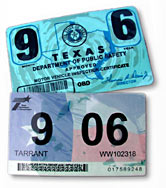
That’s when the story gets fuzzy. As best I can reconstruct it, I inexplicably scraped off the sticker that looked most like the one that I had received in the mail and replaced it, without recognizing that I now had two registration stickers and no inspection sticker.

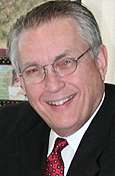
Brett Younger

(If you have done this, it would be nice if you would let me know. I will not tell anyone except my wife, Carol, as she seems to need evidence that I’m not the only one this foolish.)

I realized my mistake, but it took a while. I stared at my windshield in disbelief for a long time. Later that morning, I pulled in to the “In-N-Out Lube” and tried to explain, “The goofiest thing happened.”

Jerry, my mechanic, gently interrupted: “It certainly did. Anybody could have done it. It really is confusing. We get at least three or four of these a week.”

John, the smirking teenager standing behind Jerry, did not seem to agree that anybody could have done it or that it’s really confusing. John was more of the opinion that it takes a special brand of ineptitude to scrape off your inspection sticker and replace it with a second registration.

I handed Jerry my receipt from two months earlier (at least I’m an idiot who saves receipts) and he graciously said, “We don’t have a choice. We have to do the inspection again, but we can shave a few dollars off of this. The government does the dangdest things. It’s just ridiculous how much these look alike. At least now your registration and inspection will be the same month. That’s an advantage.”

I’m still not clear on how this is an advantage, but I am grateful to Jerry for being kind and I’m more confident than ever about my radiator, power steering, and brake fluids.

“Anybody could have done it” and “it really is confusing” are such Christian things to say. Jerry made me think about other gracious comments we can use when confronted with stupid behavior. Some of these suggestions are pretty specific:

“I think I have a coupon for tattoo removal.”

“I can hardly see the stain.”

“It’s going to grow back.”

“You were too cute for him.”

“You didn’t like working there anyway. You said a monkey could do that job.”

“I’ve read that the SAT is a terrible predictor of college success.”

“I wrecked my first car when I was 16, too.”

“Most men your age look funny in shorts.”

Some kind comments after stupid behavior would be helpful around the church:

“Not every sermon has to be thought-provoking.”

“The Bible says, ‘Make a joyful noise.’ You certainly did that.”

“It’s not like you’re the first person to fall asleep during a prayer.”

“Bless your heart.” (This one works particularly well when spoken by a Southern woman.)

Sometimes a mistake is an opportunity to speak sacred words:

“I know how you’re feeling. I’ve been there, too.”

“You made a mistake, but it’s not who you are.”

“No matter what, I will always be here for you.”

“All I want you to do is come home.”

Brett Younger is pastor of Broadway Baptist Church in Fort Worth and the author of Who Moved My Pulpit? A Hilarious Look at Ministerial Life, available from Smyth & Helwys (800) 747-3016. You can e-mail him at byounger@broadwaybc.org.


News of religion, faith, missions, Bible study and Christian ministry among Texas Baptist churches, in the BGCT, the Southern Baptist Convention ( SBC ) and around the world.


Storylist for 10/31/05 issue

Storylist for week of 10/31/05

GO TO SECTIONS:
Around Texas       • Baptists      
Faith In Action

      • Departments      • Opinion       • Bible Study      


North Carolina convention plans restrictions on 'gay-friendly' churches

Iraqi constitution has double vision on human rights

Controversy stirs over Katrina religious school tuition grants bill

Senate panel retains subsidies for food for the needy

COMMENTARY: Welcome to a China where Mao is a capitalist icon

Waco pastor Kyle Lake killed, electrocuted in baptism accident

Baylor regents approve downsizing for board

Miers' withdrawal leaves question mark on court pick

Rosa Parks remembered as looking to God in stand for civil rights


Articles from our 10/31/05 issue:


To China with Love


To China with Love

Saintly Chinese foster families care for special-needs children

'Orphan Souls' means more than shoes

Southeast Texas needs workers for recovery

Churches go high tech

Church views cable TV as ministry outlet

Church media user's guide: Keep it simple

BGCT annual meeting focuses on unity

Institutional board nominees to be considered at BGCT

Committee works 'Rubik's cube' to develop list of nominees

Ministry helps stay-at-home moms

On the Move

Around the State

Texas Tidbits

Previously Posted
Kirbyville church showers hurting community with kindness

Russian orphan still needs adoptive family

TBM offers disaster relief

Underwood resists idea of potential Baylor presidential draft

Brooks retires after 27 years with BGCT


N.C. Baptists make sharp right turn

Baptist Briefs


DBU students spend fall break ministering in Mississippi


Narnia author's stepson describes the real C.S. Lewis

Disney movie inspires Christian musicians' project

Narnia offers churches outreach opportunities

New books explore Lewis mystique

New stem cell methods answer some questions, raise others

Americans believe in traditional family but tolerant of divorce

Support for embryonic stem cell research increasing

Previously Posted
Fertility, not theology, cause of decline

Skater evangelism blends boards & Bibles to reach teens


Around the State

Texas Baptist Forum

Classified Ads

Cartoon

On the Move


EDITORIAL: Pray for China, a waking global giant

DOWN HOME: Who couldn't love a child like that?

TOGETHER: Your church has a missions partner

2nd Opinion: How can a benevolent God allow evil?

Right or Wrong: Sex with her boyfriend

Cyber Column by Berry D. Simpson: Sunlight in the mountains


BaptistWay Bible Series for Oct. 30: God's presence, power & provision offer strength

Family Bible Series for Oct. 30: Imitating God begins with love and obedience

Explore the Bible Series for Oct. 30: Once freed from sin, don't choose to be its slave

BaptistWay Bible Series for Nov. 6: Be obedient; God will provide the victory

Family Bible Series for Nov. 6: Is suffering really necessary?

Explore the Bible Series for Nov. 6: Freedom from bondage brings its own struggles


See articles from previous issue 10/17/05 here.


Right or Wrong? Embryonic stem cells

Posted: 11/04/05

RIGHT OR WRONG?
Embryonic stem cells

I read where a Christian went to China to get treatment for Lou Gehrig's disease. Problem is, the treatment uses stem cells from aborted fetuses. According to the Chinese government policy of one child per family, these babies were going to be aborted anyway. Is this terminally ill Christian wrong for getting help in this way?

When I asked several people in my congregation to define a stem cell, they had difficulty doing so. If you're a little vague about stem cells, you're in good company.

There are different types of stem cells.

Adult stem cells are extracted from bone marrow, skin, blood, umbilical cord and other tissues. They have more limited applications than stem cells from embryos, although some recent research indicates there may be wider applications for these stem cells.

Embryonic stem cells are unspecialized cells extracted from 4- to 5-day-old embryos that have the capacity to develop into almost any type of tissue in the body. A stem cell line, or colony, is derived from a single embryo. The cells can replicate themselves for months or years in labs, and, once established, can be used in research.

Because the Bush administration has limited government funding for development of new embryonic stem cell lines, some patients have gone overseas to receive treatments utilizing stem cells. They have done this because some scientists contend the existing embryonic stem cell lines in the United States are contaminated.

The ethical issue for Christians concerns the use of embryos for medical research. One concern is that individuals will become pregnant in order to sell their embryos. Another is that scientists will use embryos in unethical ways, such as trying to create a cloned human baby.

Further, some Christians fear the use of such embryos will encourage more abortions. To address some of these concerns, the National Academies' National Research Council and Institute of Medicine recently has published guidelines for human embryonic stem cell research to guide scientists in their use and procurement of stem cells. Also, there have been proposals that Congress enact new laws that would place limits on the use of embryonic stem cells for research purposes.

In the specific case spelled out in the question, the stem cells do come from aborted fetuses, but they were not fetuses created to be used in medical experiments. To me, there is a difference. Doubtless, some Christians would be troubled by any experimentation on an aborted fetus and therefore could not accept such treatments. However, many Christians would not be troubled by such experimentation. They would justify such usage by the positive results that might ensue. From my perspective, there may be medical dangers involved in such a decision, but there are no ethical dangers for the individual if the person believes using an aborted fetus in this way is ethical or, at the very least, the lesser of two evils.

For society, however, there is another moral issue underlying this question: Is it right for the wealthy to be able to buy good medical care, which is not available to others? A trip of this magnitude and the proposed treatments would be very expensive. Only the wealthy would be able to afford such a trip and such treatments. Many would argue most medical care in the world is available to the wealthy first and then to others. This may be true, but is this the kind of societal value Christians should support?

It seems to me, Christians should support equal access to medical care, and good medical care should be available to everyone. We may not be able to provide such care at this time, but shouldn't that be our goal?

Philip Wise, pastor

Second Baptist Church

Lubbock

Right or Wrong? is sponsored by the T.B. Maston Chair of Christian Ethics at Hardin-Simmons University's Logsdon School of Theology. Send your questions about how to apply your faith to btillman@hsutx.edu.

News of religion, faith, missions, Bible study and Christian ministry among Texas Baptist churches, in the BGCT, the Southern Baptist Convention ( SBC ) and around the world.


North Carolina convention plans restrictions on ‘gay-friendly’ churches

Posted: 11/03/05

North Carolina convention plans
restrictions on 'gay-friendly' churches

By Steve DeVane

North Carolina Biblical Recorder

WAKE FOREST, N.C. (ABP)—Baptists in North Carolina next month will be asked to place new restrictions on churches that condone homosexuality, creating perhaps the most specific ban of gay-friendly churches in Southern Baptist life.

The president of a conservative group within the Baptist State Convention of North Carolina said Oct. 18 he will propose an amendment to the convention’s articles of incorporation that would tighten requirements for church membership in the state convention to eliminate “ambiguity” on the gay issue.

The article dealing with membership in the convention currently says: “A cooperating church shall be one that financially supports any program, institution, or agency of the convention, and which is in friendly cooperation with the convention and sympathetic with its purposes and work.”

Bill Sanderson, president of Conservative Carolina Baptists and pastor of Hephzibah Baptist Church in Wendell, N.C., said he will propose adding the following:

“Among churches not in friendly cooperation with the convention are churches which act to affirm, approve, or endorse homosexual behavior. Such actions include: 1) official public statements affirming, approving or endorsing homosexual behavior, 2) ordination of those whom the church knows have not repented of their homosexual behavior, 3) any pastor of the church performing or the church providing facilities for a marriage or other ceremony, blessing or union of persons of the same sex, 4) affiliating with, contributing money to or maintaining membership in a group which the church knows affirms, approves or endorses homosexual behavior, and 5) accepting as members those whom the church knows have refused to repent of sin, including homosexual behavior. The board of directors shall apply these provisions, subject to the right of a church to appeal to the next session of the convention.”

Sanderson said he thinks there should be “no ambiguity” about where the convention stands on the homosexual issue. “We need, I feel, to set a very clear statement about how we as Baptists in North Carolina feel about this,” he said.

The first sentence of Sanderson’s proposal is identical to wording added to the constitution of the Southern Baptist Convention in 1993. Four of the provisions seem to deal with specific instances in which churches in North Carolina have been removed from the convention under a policy not in the convention articles of incorporation.

In 1992, the convention board of directors—then known as the general board—adopted a financial policy that prohibits the convention from accepting funds from “any church which knowingly takes, or has taken, any official action which manifests public approval, promotion or blessing of homosexuality.”

Since churches must give funds to the convention to be a cooperating member, the policy effectively kept out such churches. The policy, which was reaffirmed by the convention board in 2003, first was used to remove Pullen Memorial Baptist Church in Raleigh and Binkley Memorial Baptist Church in Chapel Hill from the convention. Pullen had voted to bless the union of two homosexual males. Binkley voted to license a gay man to the ministry.

The policy was later used to force out Wake Forest Baptist Church in Winston-Salem, which held a same-sex union for two lesbian members in September 2000.

Two years ago, the convention used the policy to refuse funds from McGill Baptist Church in Concord. Convention officials said the church fell under the policy because it baptized two men believed to be gay.

The homosexuality issue came under discussion again this year when the convention’s nominating committee voted to exclude from consideration persons from churches that are affiliated with the Alliance of Baptists. The organization’s website includes a statement affirming same-sex marriage, which was adopted during the organization’s annual meeting in 2004, as well as the report of a task force on human sexuality that was commissioned and received “with gratitude”—though not officially adopted—in 1995. That report calls for full acceptance of gays, lesbians, bisexual and transgendered persons.

Sanderson said those earlier expulsions prompted his proposal. “It’s all about that, so when these things happen we already know where we’re standing,” he said.

Sanderson said he thinks churches that affirm homosexuality should not be in the convention.

“This brings it down without any problem whatsoever,” he said. “You know if you’re on this side of this theological issue, you’re on the wrong side.”

Sanderson said he included in his proposal a general reference to sin so the provision could be applied to people who have not repented of lying, backbiting, adultery, murder or other sins.

Clella Lee, chair of the convention’s constitution and bylaws committee, said a motion similar to Sanderson’s was proposed to the committee.

“The committee did not believe it was in the best interest of the convention to recommend a change in the definition of a cooperating church to the executive committee without the time to consider historical precedence, present concerns, and future long-term implications,” she said.

“I believe it is unlikely that such in-depth consideration could be accomplished during the convention session. My hope is that the convention messengers will recognize the magnitude of amending this article without giving careful consideration to each of the areas I mentioned.

“If the convention wants to consider changing the definition of a cooperating church, I strongly encourage the messengers to make a motion to that effect and refer it to the constitution and bylaws committee or a special committee formed to study this issue and report to the convention in 2006.”

The convention articles of incorporation can be amended by a two-thirds vote of messengers to the convention annual meeting provided the proposed amendments are printed twice in the Biblical Recorder, the convention’s newspaper.


News of religion, faith, missions, Bible study and Christian ministry among Texas Baptist churches, in the BGCT, the Southern Baptist Convention ( SBC ) and around the world.