Ethics and evangelism focus of inaugural lecture at Howard Payne

Updated: 5/09/08

Jimmy Allen (2nd from left), David Sapp (2nd from right) and Richard Jackson (right) delivered the inaugural Currie-Strickland Distinguished Lectures in Christian Ethics at Howard Payne University. Gary Elliston (center, back) endowed the lectures in honor of David Currie (left) and in memory of Phil Strickland, whose widow, Carolyn, attended the event.

Ethics and evangelism focus
of inaugural lecture at Howard Payne

By Ken Camp

Managing Editor

BROWNWOOD—Evangelism and ethics both grow out of a vibrant relationship with the God who is love, speakers told participants at the inaugural Currie-Strickland Distinguished Lectures in Christian Ethics at Howard Payne University.

People cannot fully come to know God apart from the Bible, but they cannot really know the Bible apart from God, said David Sapp, pastor of Second-Ponce de Leon Baptist Church in Atlanta, Ga.

“If God breathed it, how can we possibly understand it apart from knowing him?” Sapp asked.

Proper understanding of Scripture and application of its teachings in daily life require disciples to seek the mind of God, he said. Sapp suggested three themes that help Christians interpret Scripture—love, covenant and conquest of fear.

Love is the key

“Love is key to understanding the mind and heart of God,” he said.

But determining the most loving thing to do in the midst of any circumstance proves difficult, he acknowledged. Consequently, many Christians retreat to a rule-based ethic and treat the Bible as a “moral and ethical encyclopedia” from which they pluck isolated verses—usually ones that reinforce their own opinions and prejudices, he added.

God demonstrated his love through covenant relationships, and covenant serves as an interpretive key for reading Scripture, Sapp noted.

“Without commitment, there is no covenant,” he said. “Covenant commitment is an obligation not just of contract but of relationship.”

Covenant finds its expression in community, Sapp noted. In the Old Testament, God established covenant with Israel as a people, not strictly with individuals. While the New Covenant has more individual expression, he observed, it still offers invitation to enter into a larger community as part of the kingdom of God.

“Sin is social and not just personal,” he said.

The defeat of fear

Much sin grows out of fear, and “defeat of fear is part of the agenda of God,” Sapp said. “Much of our sin has its genesis in fear. Fear is fertile soil for evil.”

Both ethics and evangelism express God’s love, said Richard Jackson, director of the Jackson Center for Evangelism and Encouragement and pastor emeritus of North Phoenix Baptist Church in Phoenix, Ariz.

“Evangelism is born in the heart of a God of love,” Jackson said. From the earliest passage in Genesis and throughout the Bible, Scriptures testify to God’s loving pursuit of spiritually lost men and women.

“Jesus Christ didn’t come to heal the sick, or he would have healed them all. He didn’t come to feed the hungry, or he would have fed them all,” Jackson said. “He came to seek and save the lost. He healed the sick and fed the hungry because of who he is.”

Likewise, Christians today evangelize because Christ gave them that assignment, he said. Christians meet needs and seek justice because of who they are.

“Because Jesus lives in me, I will reach out to help those who are hurting,” he said.

Evangelism and ethics

Evangelism and ethics—“winning people to Jesus and wanting people to act like it”—bring Baptists together, noted Jimmy Allen, former denominational executive and recent coordinator of the New Baptist Covenant celebration in Atlanta.

Allen recalled his experiences as pastor of First Baptist Church in San Antonio, leading a church with a historic commitment to missions and evangelism to recognize ethical challenges and injustices in their own community.

At the downtown San Antonio church, Allen noted, people already possessed the necessary desire. They just needed to be challenged.

“A church will follow the vision of its pastor if the pastor has a passion for it,” he said.

But in some churches, he added, members must be shaken from their complacency and challenged to look beyond the four walls of the church building to see community needs.

“The moribund church never looks outside its windows except to see if the grass is mowed,” he said.

Gary and Molli Elliston of Park Cities Baptist Church in Dallas established the Currie-Strickland lectures in honor of David Currie, executive director of Texas Baptists Committed, and in memory of Phil Strickland, longtime director of the Baptist General Convention of Texas’ Christian Life Commission.



News of religion, faith, missions, Bible study and Christian ministry among Baptist churches, in Texas, the BGCT, the nation and around the world.


Bible Studies for Life Series for May 18: Be trustworthy

Posted: 5/08/08

Bible Studies for Life Series for May 18

Be trustworthy

• 1 Samuel 18:1-4; 19:4-7; 20:10-13, 16-17

By Gary Long

Willow Meadows Baptist Church, Houston

So far this month, we’ve considered two keys to unlocking your best relationships: Showing appreciation and working at communication.

Appreciation and communication are incredibly important aspects of any healthy relationship, but trust is the foundation. A relationship without trust is not a relationship at all. At the heart of every relationship is an abundance or a lack of trust that determines the quality and value of that relationship.

The goal of this lesson is to help your learners build strong relationships by placing an emphasis on trust and by committing to place trustworthiness in a significant relationship of their own. In this lesson, we turn to the triangle of Saul, Jonathan and David to identify what cornerstones we can lay in building a foundation of trust.

Strong relationships are built on trust, and we prove to be trustworthy through commitment, loyalty, honesty and consistency.


Commitment (1 Samuel 18:1-4)

In these four verses, we see Jonathan and David growing deeper in their friendship. As a sign of his commitment to David, Jonathan gives David his robe, tunic, belt, sword and bow. Be sure to note that these are no small gifts. They are symbolic gifts from a royal prince to a worthy subject, but they also are gifts of essential practicality. These are tools of a warrior, and Jonathan is showing his support for David in that role.

But there is more going on here. Jonathan is acting selflessly, and in the future this real and symbolic gesture of commitment will be relied upon by David. He will have to trust Jonathan with his life as an enraged Saul pursues him to take his life. David will have these tokens of Jonathan’s commitment to enable him to fully trust Jonathan.


Loyalty (1 Samuel 19:4-7)

Seeking to defuse a volatile situation between David and Saul, Jonathan speaks to his father on David’s behalf. While sometimes it is unwise to step in between two people who are in a dispute, other times it is a sign of loyalty to a friend to aid in a desperate situation.

Jonathan is displaying loyalty to David, a true helping hand for a friend in need. He is willing to take a risk for a friend in opposition to his own father, and this is a true mark of loyalty that is funded by trust and inspires trust in others.

We are inspired in our own lives to greater trust when others take a risk on our behalf. Ask your learners to remember someone who “stuck out their neck” for them to help them in someway. Ask them to consider how that risk on the part of another made them feel. Accepted? Valued? Trusted? In many life situations, trust takes a long time to build. But real risk is a mark of loyalty that has the direct and quick benefit of trustworthiness.

It is worthwhile to note that Jonathan’s willingness to mediate a dispute on behalf of his friend David foreshadows the greater work of mediator accomplished by Jesus Chris. Jesus stood between sinners and God with the goal of reconciliation by way of the cross.


Honesty (1 Samuel 20:10-13)

In 1 Samuel 19, we find the story of David’s desperate situation with Saul. Saul appears to be losing his mind, or at least driven by some jealous rage we don’t fully understand. On one occasion, Saul promises Jonathan he’ll not kill David (1 Samuel 19:6). Then Saul is back and forth in his commitment to spare David’s life or kill him. In a fit of rage, he hurls his spear at David while he is playing music for the king, and David naturally flees.

Jonathan meets secretly with David after the spear-throwing incident. Jonathan promises to honestly inform him of the king’s true attitude.

David is honest in disclosing his fears to Jonathan, and it is a sign of the health of their friendship. The beauty of this relationship is that loyalty and trust existed between them already, so the honesty David displays serves to build on their foundation of trust.

Jonathan’s move toward honesty in turn was to stay loyal—not turning his back on his friend. Jonathan could have taken the easy route of siding with his father in this dispute, but chose to remain loyal. This allowed their relationship to continue in covenant (1 Samuel 20:12-15), even under the extreme strain and tension of Saul’s pursuit of David.

Ask your learners to recall a time when they relied on a trustworthy friend in a time of distress. Perhaps you could lead them to reflect on a time when they were trustworthy and loyal to a friend that was personally costly.


Consistency (1 Samuel 20:16-17)

Jonathan swore an oath, an oath based on his consistent and unselfish love for David. He sounded out Saul on his disposition toward David, and kept David’s location a secret. He followed through on his promise to send word about David’s safety, and David’s life was spared as a result.

In all their friendship, Jonathan never wavered in his commitment to David. He truly displayed consistency. This type of consistency is the bond of a relationship for the present and the future.

God is trustworthy in similar fashion. God loves people consistently, and out of that love, decided through Jesus to reconcile and redeem. John 13:1 says, “Having loved his own who were in the world, he now showed them the full extent of his love.” We do well to celebrate God’s patterns of trustworthiness by striving for that trait in our relationships.


Bonus Teaching Helps

1. “State of Love and Trust” is a song by the band Pearl Jam. Use this with caution because the song illustrates negatively the impact of betrayed trust in a love affair. Pearl Jam is definitely not a church band, but referencing this song will help you connect the despair of a relationship where trust is breaking down with a generation of learners in their mid-30’s and younger. You can find the lyrics and other info about the band at www.pearljam.com/ songs/song.php?song=StateOfLoveAndTrust


2. A more tame but dated song to illustrate the need for trust and honesty in relationships is Billy Joel’s “Honesty,” a video of which can be found at www.youtube .com/watch?v=rgmJ1miBzek


3. The website www.wingclips.com offers free video clips for sermons and teaching. A quick search of the word “trust” at their website brought up fifteen movie clips you can download for use in your class to introduce the lesson or spur conversation.

News of religion, faith, missions, Bible study and Christian ministry among Baptist churches, in Texas, the BGCT, the nation and around the world.


BaptistWay Bible Series for May 18: The only hope

Posted: 5/08/08

BaptistWay Bible Series for May 18

The only hope

• 2 Kings 22:1-23:4

By Kenneth Jordan

First Baptist Church, Alpine

Last year, scientists discovered something new. A new species of rat and a new species of opossum were found in the remote Foja Mountains of western New Guinea, Indonesia, on a June 2007 expedition. Researchers from Conservation International and the Indonesia Institute of Science previously had discovered several new species of plants and animals during a trip to the pristine rain forest region in 2005. The plants and animals are not new—they are just undiscovered because they were in a place no one frequented.

The young king Josiah had ordered a renovation of the temple at Jerusalem. The high priest made a discovery. It wasn’t new. In fact, it was quite old. It had just been placed in an area where people didn’t frequent (at least not for the right reasons). The Book of the Law.

Some have argued across the years about which portion of the law was found. The passage here does not specify. We can give a “best guess” by looking at the reaction of the king when it was read. It seems to indicate an understanding of the blessings and curses that are found in the latter part of Deuteronomy.

Josiah reacted immediately. Contrition. Grief. Despair. There was a clear understanding of the Covenant made with YHWH—and a clear understanding of how the people of Judah blatantly had trampled on that agreement. Josiah turned to God to find out if it was too late for anything to be done. Once word came back to the king about God’s patience, Josiah began the reforms that would distinguish his time on the throne of Judah.

Amy Carmichael, an Irish missionary to India in the late 19th and early 20th centuries is credited with saying, “Certain it is that the reason there is so much shallow living—much talk but little obedience—is that so few are prepared to be, like the pine on the hilltop, alone in the wind for God.”

In Josiah, we find that courage—the courage to stand and lead toward the teachings of Scripture when all around would point in the opposite direction.

Perhaps it was the severity of the overall spiritual condition that allowed for the sweeping reforms to take hold for at least a while. When the spiritual climate turns dry, then the refreshing from the Lord is all that more sweet (see Acts 3:19).

In 2007, the water level in Florida’s Lake Okeechobee hit record lows. In some areas, the shoreline receded more than a mile. When the water receded, the treasures of artifacts (some more than 500 years old) were revealed. Without the drought, the treasures would have been concealed.

It is important to note that the reign of Hezekiah and Josiah were bright spots in the decline of the southern kingdom. They obeyed God and instituted change and reform for the people they were charged with leading. Although their reforms did not last, they did not use that as an excuse to simply do nothing.

Faithfulness to the covenant of God took center stage in Josiah’s life. Finding the Book of the Law, reading it, reacting to it changed the course of a nation, if only for a little while. Josiah’s contrition garnered God’s promise that he would not have to see the coming destruction.

Josiah’s reliance on God can serve as an example of “how to do it” for our lives. Dust off God’s word. Read it. Let it soak in. Remove the idols you have allowed to multiply across your life. Change the way you live—honor God with your actions and thoughts. Say with conviction, “The Lord is my shepherd”—don’t wait for someone to carve it poetically on your tombstone.

News of religion, faith, missions, Bible study and Christian ministry among Baptist churches, in Texas, the BGCT, the nation and around the world.


Around the State

Posted: 5/09/08

Around the State

Hardin-Simmons University’s Logsdon School of Theology has named its outstanding students. Kimberly Williams of Comanche received the Logsdon School of Theology Award, traditionally considered by the faculty to be the school’s highest award for comprehensive achievement and all-around fitness for ministry. Also honored with scholarships were Robyn Holtmeyer, Emma Ellis, Jacob Snowden, Krista Toten, Caleb Groteluchen, Kara Donaldson, Alyson Morton, Will Ricketts, Megan Dick, Erin James, Matt McGowen, Megan Donohue, Brendan Kelso, David Tankersley, Charles Glidewell, Emily Burrows and Michelle Moore-Mitchell.

Julie Welker, associate professor of communication at Howard Payne University, has been named the recipient of the Travis G. Jones Memorial Outstanding Coach Award by the National Christian College Forensics Association. Welker has coached HPU’s forensic speech team since it began competing two years ago.

East Texas Baptist University has honored several of its students for academic excellence. Lee Ann Melton of Frisco received the Robert L. Hunt Accounting Award and the Florence Wood Quinn Achievement Award for the highest grade point average among business students. Denise Tomme of Diana was named the outstanding business student. Zane Gruznina from Latvia received the Edwin F. Moore Award for excellence in economics. Craig Cohen of Carrollton received the Dr. Harm Harms Award, presented to a student who excels in any area of business study. Emily Foster of Mount Pleasant received the Earl Thames Award, given to the student who best exhibits outstanding Christian character. Rebecca Rinehart of Orange received the Chase Bank Award, presented to the student voted by the business school faculty most likely to succeed. Matthew Huffman of Ennis received the Outstanding Management Information Systems Student award.

Dallas Baptist University has named Bob Burgin faculty member of the year. Burgin has taught in the college of education since 1999, serving as associate dean of the college, as well as assistant professor of education and director of the secondary education department.

Jerry Bawcom, president of the University of Mary Hardin-Baylor, recently was named a 2008 distinguished alumnus of the College of Education at Texas Tech University.

Richard Singleton has been named program supervisor of the counseling program at STARRY, a nonprofit organization based in Round Rock that provides counseling to children and families in Williamson County at no charge.

Anniversaries

Juan Sanchez, 10th, as pastor of Oakview Church in Lockhart, March 15.

Stephen Hatfield, 15th, as pastor of First Church in Lewisville, April 25.

Ron McGee, 10th, as music minister/instrumental and worship media at First Church in Lewisville, April 27.

Allen Moers, 10th, as pastor of First Church of Rockport, May 1.

Larry Blackmon, 15th, as pastor of First Church in Hearne, May 18.

L.C. Stout, 15th, as pastor of Faith Church in Deport, May 23.

Trey Bledsoe, 10th, as minister of students at College Creek Church in Temple, May 31.

Houston Garner, 45th, as pastor of Hebron Church in Bells.

Scott Talbert, fifth, as pastor of McDade Church in McDade.

Jerry Howe, 10th, as pastor of Second Church in Levelland, June 8. The church is sending Howe and his wife, Kathy, on a trip to the Holy Land beginning the next day.

Baptist Temple Church in Houston, 100th, June 8. The worship service will include proclamations from the mayor’s office, the governor’s office, the White House, the Baptist General Convention of Texas and Union Baptist Association. Daniel Vestal, national coordinator for Cooperative Baptist Fellowship, will be the keynote speaker. Former music minister Gerald Ray will lead the music, along with a choir made up of current and former members. Kelly Burkhart is pastor.

Willow Springs Church in Alvarado, 120th, June 15. The church will celebrate with homecoming services and a lunch. Former director of missions Bill Roe will be the guest speaker. No Turning Back will present the special music. Wilma Reed will make a historical proclamation. Michael Simons is pastor.

Deaths

Benito Hinojoso, 70, April 14 in Plainview. He was pastor of Iglesia Alfa y Omega in Plainview 31 years. He was active in Caprock-Staked Plains Association, holding several leadership positions through the years. He was preceded in death by his daughter, Teresa Hinojoso. He is survived by his wife of 53 years, Eloisa; sons, Joel and Ismael; daughters, AnnaBell Mirelez, Rachel Esquivel and Ruth Hinojoso; brother, Santos; sisters, Aurora Nevarez and Amelia Lopez; nine grandchildren; and five great-grandchildren.

Cameron Byler, 79, April 28 in San Antonio. Byler was director of Baptist Men and coordinator of disaster relief for the Southern Baptist Convention Brotherhood Commission from 1985 to 1989. Byler joined the staff of the Tennessee Baptist Convention in 1989 in a similar position at the state level until his retirement in 1995. He also served as brotherhood director for the Alaska Baptist Convention and was state Royal Ambassador director for the Baptist General Convention of Texas. Byler was preceded in death by his first wife, Joyce, in 1988 and his second wife, Andrea, earlier this year. He is survived by his daughter, Barbara Garland; son, Chris; three grandchildren; and six great-grandchildren.

Elsie Wheeless, 85, April 29 in Arlington. Her husband, Bill, is a retired long-time employee of the Baptist Standard. She had been a member of Fairview Church in Grand Prairie since 1980. She is survived by her husband of 66 years; and sons, William Jr. and Robert.

Bill Schibler, April 30 in Temple. He entered the hospital for a hip replacement but subsequently suffered a stroke. At the time of his death, he was pastor of Grace Memorial Church in Clifton. He also had been pastor of churches in Golinda, La Grange, Cranfills Gap, Glen Rose, Hico, Cleburne and Meridian. He was preceded in death by his wife, Nita. He is survived by his daughters, Rita Ann Love, Vicki Cheek and Geraldine Walker; son, Gary; 13 grandchildren; and 19 great-grandchildren.

Events

Calder Church in Beaumont held a luncheon for laypeople to meet Randel Everett, executive director of the Baptist General Convention of Texas. More than 110 people from 10 churches attended the April 29 event and shared a time of food, music and fellowship. Everett met with area pastors earlier in the day. Jim Fuller is pastor.

Ordained

Sam Rodriquez to the ministry at Primera Iglesia in Mathis.

Revivals

First Church, McLean; May 18-22; evangelist, Robert Barge; music, Jeff Gore; pastor, Kenneth Martin.

First Church, Desdemona; June 1-4; evangelist, Ron Owen; pastor, Jess McCabe.

News of religion, faith, missions, Bible study and Christian ministry among Baptist churches, in Texas, the BGCT, the nation and around the world.


Book Reviews

Posted: 5/09/08

Book Reviews

Questions To All Your Answers: The Journey From Folk Religion to Examined Faith by Roger Olson (Zondervan)

Too many Christians live, breathe and have their being in a world of simplistic slogans, worn-out clichés and bumper-sticker theology. But in one of his latest books, Truett Seminary professor Roger Olson is out to change that.

Believing many evangelical Christians have succumbed to the sloppy thinking of “folk religion,” Olson challenges his fellow believers to heed the guidance of the Apostle Paul, who praised the Bereans for examining his own message through the lens of Scripture.

In 10 chapters, Olson raises questions about 10 popular answers—simplistic sayings that ring true to many people. These supposed answers often resist scrutiny and cut off further thought on the subject.

What are you reading that other Texas Baptists would find helpful? Send suggestions and reviews to books@baptiststandard.com.

For example, one chapter examines the idea that “all sins are equal.” But can this be true? Is reusing a stamp really on par with murder? Common sense tells us no, and courts of law agree. Olson’s book pushes us to reconsider such easy answers and offers compelling reasons why having a reflective faith is so crucial. The study questions at the end of each chapter will help guide the lively discussions this book is bound to create in group settings.

Kevin Collison, pastor

First Baptist Church, Eagle Lake

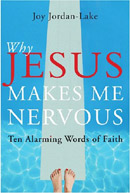
Why Jesus Makes Me Nervous: Ten Alarming Words of Faith by Joy Jordan-Lake (Paraclete Press)

Joy Jordan-Lake, former Baptist chaplain of Harvard University, shares personal stories of warmth and pain, drawing out deep observations of spiritual significance.

Each of the 10 chapters comments on an important biblical word such as “resurrection,” “community,” “blessedness” and “forgiveness”—concepts taught in seminary classrooms but more meaningfully understood as they have moved from antiseptic abstractions to vivid reality through the “refining fires of real life” experience and encounters with people. Whether describing what it’s like to be a transplanted southerner in Boston or directing a feeding ministry for the homeless, Jordan-Lake’s writing is sprinkled with humor and profound hope.

In the book’s foreword, Tony Campolo reminds us of the importance of story in the Old and New Testaments. God speaks and acts through stories—history. Campolo states, “In the end, all theologies are simply commentaries on the stories.” With this in mind, Jordan-Lake’s personal stories serve as earthy, modern-day reflections on strong theological words that express the grand story of God who continues to encounter us, leaving us a little unsettled, but hopeful.

Greg Bowman, minister to students

First Baptist Church, Duncanville

Connecting Women: A Relational Guide for Leaders in Womens Ministry by Linda Lesniewski (Baker Books)

The title, Connecting Women, can be read two ways. “Connecting” describes women who themselves serve as connectors in women’s ministries. But “connecting” as a verb expresses the sense of women’s ministry—connecting women with God, the church, other women and the world. Linda Lesniewski, women’s minister at Green Acres Baptist Church in Tyler, does both by offering practical advice for exploring, expanding and extending women’s ministry in the church.

Lesniewski divides her step-by-step guide into four multi-chapter sections: “Sharing God’s Vision for Women,” “Heading Forward in Faith,” “Enjoying Fruitful Leadership” and “Proclaiming His Message.” Each chapter begins with an appropriate Scripture and the description of a woman, moves through several pages of practical guidance and closes with reflection. The book also contains nearly 40 pages of helpful appendices, reference notes and an extensive bibliography.

Whether beginning a women’s ministry, building on traditional missions organizations, or breathing freshness into an already successful operation, Connecting Women provides thoughtful assistance born of experience.

Kathy Robinson Hillman, former president

Woman’s Missionary Union of Texas, Waco


News of religion, faith, missions, Bible study and Christian ministry among Baptist churches, in Texas, the BGCT, the nation and around the world.


Russell joins Standard staff as marketing director

Posted: 5/09/08

Russell joins Standard staff as marketing director

By Ken Camp

Managing Editor

Brad Russell, vice president for university relations at Baptist University of the Américas, has joined the Baptist Standard staff as marketing director.

Russell, 44, will maintain the overall advertising program and develop a marketing strategy for the Standard, including promoting new resource content, products and services that will become available through the Standard’s growing online edition.

Brad Russell

“In addition to professional expertise, Brad brings a creative mind, a heart for ministry and a love for Texas Baptists,” Editor Marv Knox said. “We feel blessed to have him working with us in this vitally important role.”

Russell joined Baptist University of the Américas in 2005 as director of communications and moved into the vice president’s position last year. He also taught as adjunct professor of missions.

Prior to joining the BUA staff, Russell created the rebranding strategy in cooperation with the executive staff when the school’s name changed in 2003.

Russell was founding pastor of The Springs Church of San Antonio, and he served previous pastorates at First Baptist Church in Gonzales and Edna Hill Baptist Church, near Dublin.

Before he entered vocational ministry, he worked in advertising with the Atkins Agency and the Pitluk Group in San Antonio and Parr Advertising in Austin.

Russell earned a doctor’s degree in evangelism and missions in a multicultural context from Austin Presbyterian Theological Seminary. He holds a master’s degree from Southwestern Baptist Theological Seminary and a bachelor’s degree in advertising from the University of Texas at Austin.

He has held numerous positions in denominational service at the associational, state and national levels, including terms on the Baptist General Convention of Texas committee on committees and committee on Baptist integrity, as well as the Christian Life Commission’s council of consultants.

He and his wife, Kenda, have three children—Madyson, 13; Aaron, 10; and Alyssa, 8.


News of religion, faith, missions, Bible study and Christian ministry among Baptist churches, in Texas, the BGCT, the nation and around the world.


Baptist Briefs

Posted: 5/09/08

Baptist Briefs

Texas Baptist volunteers honored for Scout activity. The Association of Baptists for Scouting awarded the Silver Good Shepherd Cross and Staff to three Texas Baptists—James and Dorothy Gebhart of Mission, members of Trinity Baptist Church in McAllen; and Inez Eggers, former administrative assistant at Plymouth Park Baptist Church in Irving. The award denotes a minimum 50 years service to children, youth and families through churches and Cub Scout, Boy Scout, Explorer or Venturing units.


Baptists launch ministry for Caribbean immigrants. A group of Baptist ministers has launched a fellowship to minister to former residents of the Caribbean now living in English-speaking countries. According to the Baptist World Alliance, the fellowship has been discussed since at least 1993. Delroy Reid-Salmon, pastor of Grace Baptist Chapel in the Bronx, is president of the new Caribbean Diaspora Baptist Clergy Association.


Georgia pastor to be VP nominee. Bruce Barber, pastor of First Baptist Church in Roanoke, Va., announced he plans to nominate John Connell, senior pastor of Calvary Baptist Church in Savannah, Ga., for first vice president of the Southern Baptist Convention. Connell has been senior pastor at Calvary since 2003. He previously served churches in Muscle Shoals, Ala.; Hammond and Ferriday, La.; Atlanta; and Brunswick, Ga. In the Georgia Baptist Convention, Connell has been chairman of the Committee on Order of Business, the Resolutions Committee and the strategy team for Cooperative Missions Champions. He has been a trustee of Brewton-Parker College in Mount Vernon, Ga., including a term as the board’s vice chairman. He served on the Southern Baptist Convention Tellers Committee in 1996 and 2007.


SBC 2nd VP nominees announced. A Dakota Baptist denominational executive and a Georgia evangelist will be nominated for second vice president of the Southern Baptist Convention. Fred MacDonald, pastor of Westside Baptist Church in Rapid City, S.D., announced he will nominate Jim Hamilton, executive director-treasurer of the Dakota Baptist Convention, and Rusty Newman, pastor of First Baptist Church in Snellville, Ga., said he will nominate Brian Fossett, a vocational evangelist from Dalton, Ga. Hamilton has led the Dakota convention since Jan. 1, 2004. Prior to that, he was pastor of First Baptist Church in Sellersburg, Ind., four years. Hamilton has served as president of the Baptist conventions in Indiana and Alaska and chaired the Executive Committee of the Alaska Baptist Convention. He also has served on the SBC Committee on Nominations. Fossett is president of the Conference of Southern Baptist Evangelists and immediate past-president of the Conference of Georgia Baptist Evangelists. A member of Liberty Baptist Church in Dalton, Fossett has served as a member of the North American Mission Board’s National Evangelism Strategy Taskforce.


SBC baptisms lowest in two decades. The number of people baptized in Southern Baptist Convention-affiliated churches fell for the third straight year in 2007 to the convention’s lowest level since 1987. According to LifeWay Christian Resources’ Annual Church Profile, baptisms in 2007 dropped nearly 5.5 percent to 345,941, compared to 364,826 in 2006. Membership in Southern Baptist churches fell from 16,306,246 in 2006 to 16,266,920. On the other side of the ledger, the number of SBC-related churches grew by 1.1 percent to 44,696; primary worship attendance increased slightly to 6.15 million; and total mission expenditures topped $1.3 billion.


News of religion, faith, missions, Bible study and Christian ministry among Baptist churches, in Texas, the BGCT, the nation and around the world.


Cartoon

Posted: 5/09/08

News of religion, faith, missions, Bible study and Christian ministry among Baptist churches, in Texas, the BGCT, the nation and around the world.


DOWN HOME: Her world grows & also shrinks

Posted: 5/09/08

DOWN HOME:
Her world grows & also shrinks

We’re breathing easier at our house these days. Molly, our youngest daughter, returned home after studying in Europe for a semester.

Back when I was in college, I thought “suffering for Jesus” as a summer missionary in Colorado was pretty exotic. I never dreamed of spending a semester overseas.

But Baylor University’s international studies program figured large when Molly evaluated where to go to college. And thanks to scholarships and variations in tuition, she wound up studying at the University of Maastricht in the Netherlands for not much more than the cost of a normal semester in Waco. So, her dream became a reality.

Joanna and I watched from afar. Through the semester, we traded instant messages online and even talked through Skype, a telephone program that works on my laptop computer. We monitored Facebook for new pictures of our darlin’ daughter in exotic places.

The quality of studying overseas multiplies the more students travel and experience various cultures and societies. Maastricht filled the bill for Molly, our family’s world citizen.

A few days after they arrived in the Netherlands, the entire Baylor group took a trip to Istanbul, Turkey. OK, I was nervous, but my prayer life picked up.

Once the semester started, the kids went to school four days a week and traveled during long weekends. Truth be told, I probably enjoyed hearing about Molly’s journeys about as much as she enjoyed actually taking them.

Every Sunday, I awaited news from her destinations—Prague, Berlin, The Hague, Bruges, Amsterdam, some little town in eastern France, Interlaken, Paris. Some parents live vicariously through their children’s athletic or musical prowess. Me, I just got a kick out of hearing where my kid visited over the weekend.

When their studies ended, the students spent a month backpacking over Europe. So, the variety and pace of reports quickened—Edinburgh, Glasgow, Dublin, Porto, Lisbon, Madrid, Barcelona, some little town in southern France, Cinque Terra, Pisa, Florence, Rome, Athens, Santorini.

When she got home, Molly showed us pictures. We spent an entire evening on the couch, reliving her semester, trip by trip. I inadvertently revealed my low-browness when I acknowledged my jealousy peaked at the wrong time—not when she saw the “Mona Lisa” or visited St. Peter’s Basilica, but when she sledded down the Swiss Alps at night.

The world became both larger and smaller for Molly this semester. She experienced a dizzying array of complex cultures but also got to know real human beings in strange and far-off places.

I thank God Molly got to see so much of the world. And I thank God for bringing her home.

News of religion, faith, missions, Bible study and Christian ministry among Baptist churches, in Texas, the BGCT, the nation and around the world.


EDITORIAL: Why can’t we all disagree agreeably?

Posted: 5/09/08

EDITORIAL:
Why can’t we all disagree agreeably?

You probably aren’t surprised to learn we get a lot of mail here at the Baptist Standard. For generations, Baptists have interpreted their foundational doctrines—soul competency and the priesthood of all believers—to embrace a corollary: the right to write a letter to the editor. That’s good. Soul competency and individual priesthood affirm God’s grace in the life of each Christian. So, we expect to learn from each other as grace works in our lives. And even when we read letters with which we disagree, at least we learn about others’ perspectives. At the Standard, we also value letters to the editor because we value our fellowship with the believers who write them.

knox_new

An occupational hazard of being a newspaper editor is receiving mail from people who think you’re (a) dumb, (b) mistaken, (c) doing a crummy job, (d) preparing to roast in hell or (e) all of the above. Readers never see the majority of those letters, because people who set out to prove points (a) through (e) usually blow past the Standard’s 250-word limit before they even get warmed up. Then, by the time I offer to publish a condensed letter, they’ve calmed down and don’t feel compelled to condemn me to a fate worse than death.

While I hate to admit it, I’m lousy at predicting what will set readers off. (One exception: Anything about worship music generates tons of mail.) When I fret, nothing happens. Then, when an “innocuous” edition comes out, the letters pour.

Those are the weeks when friends offer sympathy, but I tell them I’ve got it easy compared to pastors. Readers can take me to task, but they live elsewhere, and I worship in the company of my friends. But a pastor gets criticism and then has to stand in the pulpit on Sunday and see the faces of the folks who are after him. Now, that’s a challenge, and it’s a pity more people don’t appreciate how hard it is.

Lately, I’ve been increasingly bothered by a trend in letters to the editor, church relationships and public discussion in general. We can’t disagree agreeably.

Theoretically, people should be able to express different opinions and still get along. In practice, however, cordial disagreement is the exception rather than the rule. Confronted with a contrary opinion, people go from placid to mad faster than you can shout, “You’re an idiot!”

Denies our heritage

Across society, this reflects a dangerous breakdown of civility. In the church, it undermines unity. Among Baptists, it denies our heritage.

Civility glues democracies together. That’s why our haste to anger and inability to remain civil imperils the nation. For example, witness the rampant partisanship of Congress. Incivility impedes our lawmakers’ ability to find solutions to our worst problems.

The night before he was crucified, Jesus prayed that the church, his followers, might be unified. Jesus clearly saw Christian unity as the outward testimony of his mission to express God’s love to a hurting world. His logic is simple: How will the world know God loves them if Christians can’t love each other? Yet when Christians fight each other and congregations split apart, the world doesn’t see a symbol of God’s love, but just another group whose practices are like worldly organizations, only more vicious. Our incivility belies our witness.

Value disagreement

Baptists, of all Christians, ought to value disagreement. Remember soul competency and the priesthood of all believers? For 399 years, Baptists have been champions of religious dissent—not, as some may think, because we like to argue, but because we believe God entitles each person to an opinion. And when we’re at our Baptist-best, even when we disagree, we listen for the voice of God in the one who vocalizes another opinion.

May we be free to speak, quick to hear and slow to judge. If Baptists lead the way to civil disagreement, our nation will be stronger, our churches healthier and our witness more credible.

News of religion, faith, missions, Bible study and Christian ministry among Baptist churches, in Texas, the BGCT, the nation and around the world.


New HPU lectureship weds evangelism to ethics

Posted: 5/09/08

Jimmy Allen (2nd from left), David Sapp (2nd from right) and Richard Jackson (right) delivered the inaugural Currie-Strickland Distinguished Lectures in Christian Ethics at Howard Payne University. Gary Elliston (center, back) endowed the lectures in honor of David Currie (left) and in memory of Phil Strickland, whose widow, Carolyn, attended the event.

New HPU lectureship weds evangelism to ethics

By Ken Camp

Managing Editor

BROWNWOOD—Evangelism and ethics both grow out of a vibrant relationship with the God who is love, speakers told participants at the inaugural Currie-Strickland Distinguished Lectures in Christian Ethics at Howard Payne University.

People cannot fully come to know God apart from the Bible, but they cannot really know the Bible apart from God, said David Sapp, pastor of Second-Ponce de Leon Baptist Church in Atlanta, Ga.

“If God breathed it, how can we possibly understand it apart from knowing him?” Sapp asked.

Proper understanding of Scripture and application of its teachings in daily life require disciples to seek the mind of God, he said. Sapp suggested three themes that help Christians interpret Scripture—love, covenant and conquest of fear.

“Love is key to understanding the mind and heart of God,” he said.

But determining the most loving thing to do in the midst of any circumstance proves difficult, he acknowledged. Consequently, many Christians retreat to a rule-based ethic and treat the Bible as a “moral and ethical encyclopedia” from which they pluck isolated verses—usually ones that reinforce their own opinions and prejudices, he added.

God demonstrated his love through covenant relationships, and covenant serves as an interpretive key for reading Scripture, Sapp noted.

“Without commitment, there is no covenant,” he said. “Covenant commitment is an obligation, not just of contract, but of relationship.”

Covenant finds its expression in community, Sapp noted. In the Old Testament, God established covenant with Israel as a people, not strictly with individuals. While the New Covenant has more individual expression, he observed, it still offers invitation to enter into a larger community as part of the kingdom of God.

“Sin is social and not just personal,” he said.

Much sin grows out of fear, and “defeat of fear is part of the agenda of God,” Sapp said. “Much of our sin has its genesis in fear. Fear is fertile soil for evil.”

Both ethics and evangelism express God’s love, said Richard Jackson, director of the Jackson Center for Evangelism and Encouragement and pastor emeritus of North Phoenix Baptist Church in Phoenix, Ariz.

“Evangelism is born in the heart of a God of love,” Jackson said. From the earliest passage in Genesis and throughout the Bible, Scriptures testify to God’s loving pursuit of spiritually lost men and women.

“Jesus Christ didn’t come to heal the sick, or he would have healed them all. He didn’t come to feed the hungry, or he would have fed them all,” Jackson said. “He came to seek and save the lost. He healed the sick and fed the hungry because of who he is.”

Likewise, Christians today evangelize because Christ gave them that assignment, he said. Christians meet needs and seek justice because of who they are.

“Because Jesus lives in me, I will reach out to help those who are hurting,” he said.

Evangelism and ethics—“winning people to Jesus and wanting people to act like it”—bring Baptists together, noted Jimmy Allen, former denominational executive and recent coordinator of the New Baptist Covenant celebration in Atlanta.

Allen recalled his experiences as pastor of First Baptist Church in San Antonio, leading a church with a historic commitment to missions and evangelism to recognize ethical challenges and injustices in their own community.

At the downtown San Antonio church, Allen noted, people already possessed the necessary desire. They just needed to be challenged.

“A church will follow the vision of its pastor if the pastor has a passion for it,” he said.

But in some churches, he added, members must be shaken from their complacency and challenged to look beyond the four walls of the church building to see community needs.

“The moribund church never looks outside its windows except to see if the grass is mowed,” he said.

Gary and Molli Elliston of Park Cities Baptist Church in Dallas established the Currie-Strickland lectures in honor of David Currie, executive director of Texas Baptists Committed, and in memory of Phil Strickland, longtime director of the Baptist General Convention of Texas’ Christian Life Commission.


News of religion, faith, missions, Bible study and Christian ministry among Baptist churches, in Texas, the BGCT, the nation and around the world.


IN FOCUS: Hopeful conversations across Texas

Posted: 5/09/08

IN FOCUS:
Hopeful conversations across Texas

It has been a privilege for me to travel throughout much of Texas during the last month and see God at work in many of our churches and institutions.

I had the opportunity to meet with more than 1,000 of our pastors and numerous leaders of our institutions. I have been on the campuses of several of our universities, met with more than 90 percent of our directors of missions, been engaged in conversations with some of our Baptist Student Ministry directors and interns, and preached in several of our churches. I was privileged to attend the annual Woman’s Missionary Union of Texas meeting, the Hispanic preaching conference and the minister of education retreat. In each situation, there was a spirit of optimism and a desire to work together in our kingdom assignment.

Missions, evangelism and discipleship (through Sunday school or other small groups) were at the heart of the conversations. Questions were raised about what we need to do to better reflect the ethnic diversity of Texas and how to allow Texas Baptists 35 years old and younger to become more involved in the leadership of our churches. A strong loyalty to our schools and agencies was expressed from alumni and families who had been directly affected by BGCT partners.

Some misconceptions were addressed. Our recent reduction of budget led to the belief that giving through the BGCT Cooperative Program was declining. Fortunately, that is not true. At the end of April, our gifts through the Texas CP were slightly ahead of last year. The majority of BGCT operating funds comes from two sources—Cooperative Program giving from BGCT churches and investment income from funds provided over the years through faithful Texas Baptists. The 2008 BGCT budget called for an increase in CP giving of about $3.4 million, or 8.5 percent. It also projected the use of $6.8 million in investment funds, which is $1.9 million beyond the level called for by a new state regulation that went into effect this year. As a result, we anticipate BGCT budget income about $5.3 million less than what was projected. I’m hopeful the trend of increased giving will continue so we can approach the 2009 budget realistically and hopefully.

Another misconception is that we give to the Cooperative Program. Russell Dilday reminded the Future Focus Committee that we give through, not to, the Cooperative Program. Churches determine how they choose to support missions and ministry and then channel the gifts through the BGCT. As a Texas Baptist family, we decide how these dollars need to be directed for our kingdom work.

A new initiative, Texas Hope 2010, has been shared in these meetings. It is our desire to share the hope of Christ with every person in Texas within their own language and context by Resurrection Sunday 2010. This is the most important assignment we have as Texas Baptists. It will take all of us to fulfill this challenge. Let’s equip our children, youth and adults to begin to pray, care and share so that the lost of our state will experience the love of Christ.

News of religion, faith, missions, Bible study and Christian ministry among Baptist churches, in Texas, the BGCT, the nation and around the world.