Texas Tidbits_41904

Posted: 4/16/04

Texas Tidbits

Hardin-Simmons faculty president elected. Ronald Smith, senior theology professor in the Logsdon School of Theology, has been elected faculty president at Hardin-Simmons University in Abilene. Smith has been on the Hardin-Simmons faculty since 1979. Other new faculty officers are Donathan Taylor, associate professor and head of the history department, as vice president, and Allyn Byars, associate professor of physical education and director of the aerobics and human performance lab, as secretary.

Donaldson named Wayland VP. Wayland Baptist University has named Betty Donaldson vice president for institutional advancement. She will oversee development and fund-raising for the university, as well as the alumni services and communications/public relations offices. Donaldson earned both her undergraduate degree and a master's degree in education administration from Wayland. She was vice president of Learning Bridges Educational Company in Arizona and has served in administrative posts with several school districts.

HBU offers workshop. Houston Baptist University and the Christian Association for Psychological Studies will present a workshop on ethical and risk management concerns in Christian psychotherapy April 23 on the HBU campus. Randolph Sanders of New Braunfels, executive director of the Christian Association for Psychological Studies, will be the featured speaker. For more information, contact (281) 649-3000, ext. 2316, or rnero@hbu.edu.

Convocations yield new Baptist Men's groups. After the first three Hispanic Baptist Men regional training convocations in Dickinson, Tyler and Fort Worth this spring, 14 new Baptist Men chapters have been started in Texas Baptist Hispanic churches, and men in 17 other churches have announced commitments to begin chapters, said Eli Rodriguez of Dallas, coordinator of the convocations. Organizers of the regional training events are challenging laymen to organize Baptist Men chapters in 100 Hispanic churches across Texas by the end of this year. The next regional training event will be April 24 at the Baptist University of the Americas in San Antonio.

Performance marathon set at UMHB. The University of Mary Hardin-Baylor Conservatory will present a 13-hour "perform-a-thon" April 24. The on-campus event includes 125 solo performances featuring piano, voice, strings, French horn and organ, along with 130 ensemble performers in five choirs and three orchestras.

Baylor makes wireless computing list. Baylor University is one of only three Texas universities named in Intel Corporation's "Most Unwired College Campuses" survey that ranks the top 100 schools for wireless computing access. Baylor made the list at No. 32, while the University of Texas was rated third and Trinity University in San Antonio 74th. Baylor's "AirBear" wireless network covers more than 90 percent of the university's academic buildings, as well as commons areas in residence halls and outdoor locations. AirBear is free to Baylor students, faculty and staff with a valid Bear ID and password and allows them to connect their laptop computers to the Internet without being tied to an office, a computer lab or residence hall room.

Scholarship endowed at Wayland. The family of Marilyn Mansdoerfer has endowed a scholarship in her memory at Wayland Baptist University. It will benefit junior or senior young women preparing for teaching careers in Christian schools, with primary consideration given to those planning to teach preschool.

Baylor opera director bound for Armenia. Richard Aslanian, opera director at Baylor University and artistic director of the Lyric Opera of Waco, has been invited to Armenia as the first American guest conductor at the Armenian National Opera. With the assistance of Baylor's Center for International Education, Aslanian will travel to Armenia in May to conduct "La Traviata" by Giuseppe Verdi.

News of religion, faith, missions, Bible study and Christian ministry among Texas Baptist churches, in the BGCT, the Southern Baptist Convention ( SBC ) and around the world.


TOGETHER: Texas Baptists offer hope, God’s love_41904

Posted: 4/16/04

TOGETHER:
Texas Baptists offer hope, God's love

Because of Jesus Christ's life, death and resurrection, Christians want to offer hope and the love of God everywhere. Three stories illustrate how Texas Baptists are seeking to do just that.

On April 4, quiet streams became raging floods all around Piedras Negras. Pastor Israel Rodriguez called Dexton Shores, director of Texas Baptist River Ministry, for help. He said, “I knew Dexton would get the word to the rest of Texas Baptists.” Dexton left San Antonio as soon as he could load a truck with blankets, clothes and drinking water. He sent word to Texas Baptists as well. Tuesday afternoon, Bluebonnet Baptist Association's Texas Baptist Men feeding unit crossed the border with a water purification system.

CHARLES WADE
Executive Director
BGCT Executive Board

Because Texas Baptist Men, led by Leo Smith, have a servant spirit and respect the people with whom they work, doors swing open wherever they go. Guadalupe Morales, wife of the governor of the state of Coahuila, was impressed with the range of services Texas Baptists were providing and their willingness to work under the direction of Mexican officials. Due to her influence, Texas Baptist volunteers were invited to the hardest-hit neighborhood at Villa de Fuente.

The Baptist General Convention of Texas has entered a partnership with the National Baptist Convention of Mexico, and this has provided the opportunity for us to know one another better and celebrate our friendships in Christ. This also allowed effective and coordinated response when the unexpected happened.

You can help these ministries do their work and provide for the needs of people devastated by these floods through gifts designated “Piedras Negras Relief,” to Texas Baptist Men and/or Texas Baptist River Ministry at 333 North Washington, Dallas, 75246-1798.

Rick Davis, director of our Center for Strategic Evangelism, tells about a young couple who moved to a new home. As other new homes were built, they took home-baked cookies to their neighbors, told them they were glad to have them in the neighborhood and promised to pray for them. Some were grateful. Others seemed skeptical.

Late one evening, a call came. A young couple–living together but not married–had experienced a personal tragedy and asked if the Christian couple would pray for them. “I didn't know whom else to call,” the man said. “I don't know anyone else who prays.”

People need our love and prayers. They are all around us. Watch for ways you can be the presence of Christ to someone you will see today.

Recently, we welcomed 65 new Texas pastors and spouses to a retreat in Dallas. Tim Studstill, director of the Center for Music and Worship, met a pastor from a new church in Houston who needed some kind of instrument his church could use in worship. Tim referred the need to Bill Ingram, who communicated the need to the Singing Men of Southeast Texas. A day later, a good small organ was made available.

The pastor reported to Bill Ingram that they had used the organ, and his people are thrilled. Bill wrote to say it feels really good to be the “middle man” in helping connect people who have needs to those who have a resource.

Every Christian has the privilege of being a “middle man” (or woman). We know where the resource truly is!

We are loved.

News of religion, faith, missions, Bible study and Christian ministry among Texas Baptist churches, in the BGCT, the Southern Baptist Convention ( SBC ) and around the world.


Former Texas Baptist pastor and new bride commit lives, love to reaching New England_41904

Posted: 4/16/04

Former Texas Baptist pastor and new bride
commit lives, love to reaching New England

By Marv Knox

Editor

CHELSEA, Vt.–H.B. Graves popped two questions when he proposed marriage to Jo Maddox.

Of course, he asked if she would marry him. He also asked if she'd leave Texas and help him start a church in New England.

That's why the newlyweds–she in her 60s and he in his early 70s–honeymooned in Vermont. They went looking for a place to invest their lives.

H.B. and Jo Graves share God's love with people in New England as Mission Service Corps volunteers.

Their journey started when Graves, a retired pastor widowed for the second time, picked up the Baptist Standard and learned about a new missions venture.

“I read about Impact Northeast in the Standard, and I was touched,” he recalled.

Impact Northeast is a ministry partnership that links six state Baptist conventions in the South–including the Baptist General Convention of Texas–with the five Baptist conventions that cover the Northeast.

Eager to learn more, Graves traveled from his home in Knox City to the 2000 BGCT annual session in Corpus Christi, where he attended a breakfast for people interested in partnership missions.

“Two representatives from New England talked about their work,” he said. “Right there, I committed myself.”

That decision impacted another set of choices they were about to make.

“I talked to Jo about it, and I asked her, 'When we get married, will you come to New England?'” he reported.

She's a widow of a church planter, and missions runs in her blood too. So, she said yes to marriage and yes to missions.

See Related Article:
Retired Texans coordinate missions volunteers in Vermont

They decided New England sounded like the perfect place to honeymoon in September 2001. Why not get used to marriage while seeking a place of service?

On that trip, they met Terry Dorsett, director of missions for Green Mountain Baptist Association, which encompasses Vermont.

“The minute I walked in and introduced myself, it clicked,” Graves said of their relationship.

The Graveses returned to East Randolph, Vt., in 2002, and he served as interim pastor there for six months. But one tour of duty was not enough, not for a couple who have given their lives to churches.

Graves, 74, has been a pastor since he was 17, and mostly served Texas Baptist churches. He retired from Gilliland Baptist Church in Knox City. He lost two wives to cancer, 20 years apart.

Mrs. Graves served alongside her first husband, Jack Maddox, who was pastor of churches in Indiana, Oregon, Texas and Utah. His last pastorate was Gillespie Baptist church, west of Munday. The Graveses have known each other more than 35 years.

After six months in East Randolph, they felt God leading them back to Vermont. They returned to Chelsea, a shire town or county seat, with a population of about 3,000 people and only one other church, in April 2003.

They had a hard time finding a meeting place but last November signed a lease on a former plumber's shop that had been filled with junk and abandoned for 30 years. “It had sawdust knee-deep,” she reported.

They've worked hard to clean up the building, and other Vermont churches have donated furniture. Now, First Branch Baptist Fellowship's home looks more presentable and inviting week by week.

But the Graveses acknowledge finding and outfitting a building have been the easy parts of starting this ministry.

“This is a hard place; response is minimal,” Graves noted. “In this area, you can hardly visit (with people about the gospel). They'll turn you off.”

According to Graves' study, 97 percent of the population of the Northeast–from the District of Columbia to the Canadian border–is unchurched.

“Nine of every 10 people you meet are lost or unchurched. There are a lot of churches here, but the mindset is 'just be good.' Universalism (the belief that all people eventually will go to heaven) is set up here.,” he said.

“So, the work is slow. What you have to do is get to know these people. If they know you and trust you, the doors will open.”

The Graveses have been “cultivating” their mission field, practicing what they call “relational fellowship evangelism.” They have written the names of about 30 people on a list of candidates for Christianity, and they've worked hard to get to know them, to earn the right to explain why faith in Jesus Christ is eternally important.

“Some are ripe for the gospel,” Graves said. “I've had one baptism. That's like 100 in Texas.”

The Graveses plan to stay in Vermont until September. But that won't end their work. Back home in Texas, they'll be liaisons for Dorsett, helping to recruit others to spread the gospel in New England.

“We'll be looking for retirees,” Graves said. “That's the biggest need–people to get in these churches and be encouragers.”

News of religion, faith, missions, Bible study and Christian ministry among Texas Baptist churches, in the BGCT, the Southern Baptist Convention ( SBC ) and around the world.


Retired Texans coordinate missions volunteers in Vermont_41904

Posted: 4/16/04

Retired Texans coordinate missions volunteers in Vermont

By Marv Knox

Editor

MONTPELIER, Vt.–Johnnie and Lahoma Loar may not look the part, but they're expert jugglers.

They keep volunteers at Green Mountain Baptist Association–which covers the entire state of Vermont–in just the right location, rotating and effective.

That's crucial in New England, where indigenous Baptist ministry is relatively young and weak, according to Green Mountain Director of Missions Terry Dorsett.

Johnnie and Lahoma Loar, former Fort Worth residents, coordinate missions volunteers in Green Mountain Baptist Association, which covers the entire state of Vermont.

Dorsett raves about the retired couple from Wedgwood Baptist Church in Fort Worth, who have committed themselves to ministry through the all-volunteer Mission Service Corps program.

“We couldn't do what we do without Johnnie and Lahoma,” Dorsett insisted.

Last year, the Loars managed the ministry of 1,000 Baptist volunteer mission workers in Vermont. They coordinated the ministries of all types of groups, from youth choirs to retired senior adults, keeping tabs on links and logistics through the phases of each endeavor.

Right now, they're gearing up for at least that many volunteers this year.

“We've heard from states all over the South, from people who have heard about the need for Jesus here,” Mrs. Loar reported. “We're working with 40 to 45 groups this summer and fall.”

Those mission teams from Texas and other states will conduct backyard Bible clubs, Vacation Bible Schools, concerts, prayer walks and other ministries throughout Vermont.

“They'll be doing anything that will get the message of Jesus out,” she said. “God's word is getting out up here. We saw 54 professions of faith (in Christ) from missions teams last year.”

The Loars have loved Vermont since a vacation in 1984, when the beauty of its mountains first mesmerized them. They pondered what they should do after he retired from Montgomery Ward and she retired from the chaplains' office at All Saints Hospital.

But God used a couple of major events to place them in the middle of their ministry.

See Related Article:
Former Texas Baptist pastor and new bride commit lives, love to reaching New England

First, a gunman stormed their church and killed seven worshippers on a Wednesday evening in September 1999, causing them to search even more diligently for God's plan for their lives in retirement.

“After the Wedgwood shooting, we said, 'What now, Lord?'” she recalled. “We had discussed how we would spend our retirement years. It never occurred to us to sit down and do nothing.”

But before they developed an answer, they looked death in the face.

In March of 2000, doctors diagnosed Loar with breast cancer, among relatively few males who contract the disease each year.

“Johnnie had 43 lymph nodes removed, and 42 were malignant. The doctors told us this wasn't good,” she recalled.

But their faith remained strong as he received six months of chemotherapy and 37 radiation treatments, and he recovered splendidly.

Looking back, they see God at work. Their response to the Wedgwood tragedy appeared in a book on the shooting at about the time they discovered his cancer.

“So many prayed for us,” she said. “People were praying for us and rejoicing that we had been spared (at Wedgwood). They prayed for another reason, but God used it as a prayer covering in our time of need.”

As his strength grew, they repeated their prayer, “What now, Lord?”

The answer came through friends of friends who were recruiting participants for Mission Service Corps.

The Loars prayed about five ministry opportunities in New England. “Vermont was the cream that rose to the top,” she said.

They contacted Jim Wideman, then director of missions for Green Mountain Association and now executive director of the Baptist Convention of New England, who recruited them to come and help him.

They arrived the first time in May 2001 and stayed five months. They returned in 2002 and stayed six months. Then they came back in February 2003 to stay two years. They actually plan to stay until at least October 2005 and hope to extend their ministry “if God continues to give us the physical grace,” she said.

They kept returning because of their commitment to “the Lord's work” in the Green Mountain State, Loar said.

“Vermont is home to 650,000 people. That's less than the population of Fort Worth, where we're from,” he observed. “Most people live in small villages, and they're fairly isolated. Vermont-ers are independent.”

That independence makes them resistant to the gospel, he added, noting most of the state's residents aren't receptive to direct evangelistic approaches.

“We're praying about that,” he said. “And we're focusing on servant evangelism.”

That ministry involves meeting needs people know they have and, over time, developing relationships that will provide opportunities for sharing the gospel.

For example, the Loars connected a youth group from a church in the South to an 80-year-old woman whose home hadn't been painted in 40 years. She couldn't afford to pay for the paint job, but the Baptist teens did it anyway.

“We let her know there is a group of people in this town who love her, who are motivated by the love of the Lord,” Loar said.

As fast as the Loars can juggle volunteers and resources, more needs appear.

That's why their greatest need is prayer, Mrs. Loar said. “We obviously need really committed prayer.”

“We also could use some retired help,” he added. That would be folks like them, who are willing to go to Vermont and invest themselves, for a few weeks or a few years.

They also need funds for renovating more housing to accommodate the volunteers who decide God wants them to work in Vermont, he said, noting Texas churches can connect with Vermont churches and form ongoing ministry relationships.

And Baptists don't necessarily have to travel all the way to Vermont to provide tangible help, she said.

“People can take on a responsibility as simple as forming a 'sunshine club' to adopt a pastor and his family up here–to commit to pray for them, to encourage them, to remember their birthdays,” she said.”They're isolated, and they work hard. They survive six-month winters and then flooded basements in the spring. It helps just to know people think of them, pray for them and love them.”

For more information about ministry opportunities in Vermont, contact the Loars at (802) 229-9903 or jolaloar@aol.com.

News of religion, faith, missions, Bible study and Christian ministry among Texas Baptist churches, in the BGCT, the Southern Baptist Convention ( SBC ) and around the world.


Video terminals could open door to Texas casinos, CLC says_41904

Posted: 4/16/04

Video terminals could open
door to Texas casinos, CLC says

By Ferrell Foster

Texas Baptist Communications

Texas Gov. Rick Perry wants to introduce a new level of gambling in the state, and a Baptist legislative expert says it is opening the door to casino-type gaming.

The governor's school finance proposal includes support for video lottery terminals at Texas's horse racing tracks and on land owned by Native American tribal groups.

Perry's plan calls for the machines to generate $2 billion over the next three years. That estimate is based on a projection of 18,000 machines being made available to the public.

Suzii Paynter, director of citizenship education and public policy for the Christian Life Commission of the Baptist General Convention of Texas, said the machines are much more than lottery terminals. A player can access an electronic version of virtually any casino game, including slot machines.

If the VLT plan is approved, Paynter said “racinos” will be coming to Texas. “Slot barns” containing 1,000 to 5,000 video slot machines will sprout at the state's 10 racetracks and on tribal lands.

“The VLT proposal opens the door in Texas to Class 3 gambling,” Paynter said.

In Texas, gambling is divided into three classes. Classes 1 and 2 cover social games, bingo, the state lottery and parimutuel gambling. Class 3 refers to all other gambling.

Paynter said VLTs are bad for two primary reasons–the addiction that comes with it and its role as a gateway to other forms of gambling.

A study by the gambling commission in Louisiana showed 30 percent of all gambling revenues come from pathological addiction, she said.

“The social costs are very high,” Paynter said. “It brings with it addiction, bankruptcy and crime. In this industry, addiction is not incidental; it's essential to the business.”

Video slots also have a “cannibalizing effect” on the consumer economy, she said. “All the money that goes into a gambling machine comes out of the consumer economy.” Video gambling doesn't create new wealth or products nor have the multiplying effects of other industries.

They will create a few jobs but not many and not high wages, Paynter said. In fact, 20 percent of the money will leave the state, some going to “offshore” enterprises, she noted.

“This also would be a community rip-off,” said Phil Strickland, director of the CLC.

“For every dollar the state collects in revenue, our communities will pay $3 to take care of the social consequences.”

Introducing VLTs in Texas will require a constitutional amendment, and that will require two-thirds of the Legislature to approve it being placed on the November general election ballot.

Legislators cannot pass the buck and say that putting it on the ballot is just letting the people decide, Paynter said. “A vote for a constitutional amendment is a vote for gambling.”

Strickland said stopping this “huge, well-funded gambling lobbying effort will require people who want decent funding for public education, without the problems of gambling, to contact their legislator immediately.”

News of religion, faith, missions, Bible study and Christian ministry among Texas Baptist churches, in the BGCT, the Southern Baptist Convention ( SBC ) and around the world.


Buckner signs on as first strategic partner with WorldconneX network_41904

Posted: 4/16/04

Buckner signs on as first strategic
partner with WorldconneX network

By Ken Camp

Managing Editor

DALLAS–Buckner Orphan Care International has become the first “strategic partner” with WorldconneX, the missions network created by the Baptist General Convention of Texas.

Leaders from Buckner Baptist Benevolences–parent organization of the international orphan care ministry–and the missions network recently signed an agreement linking the two entities in global missions.

Buckner and WorldconneX agreed to provide each other resources and help to place volunteers in international missions service.

WorldconneX Leader Bill Tinsley and Buckner President Ken Hall sign an agreement making the child care and family services agency the new mission network's first strategic partner. (Russ Dilday Photo)

Buckner will pay a monthly fee to WorldconneX for consulting services, networking opportunities and volunteer recruitment. Buckner Care International serves children living in orphanages in Russia, Romania, China, Kenya and Guatemala.

WorldconneX already is working with Guatemalan Baptists, the Baptist University of the Americas, Baylor Health Care System and Buckner to develop a missions project in Guatemala involving church leadership development, health care ministries and services to children and families, said Bill Tinsley, network leader for WorldconneX.

Tinsley and Buckner President Ken Hall both pointed out the 125-year-old child and family service organization and the fledging missions network share common values and vision.

“WorldconneX exists to connect God's people for God's vision,” Tinsley said.

The partnership with Buck-ner presents an ideal “first learning experience” for the network as it seeks to create new connections with Baptist and evangelical partners for Buckner, he said.

“This is a big step for us–moving beyond the start-up phase toward implementation,” Tinsley added.

By June 1, WorldconneX should be “ready to assist churches and individuals with connections to help them move to the front line of missions,” he said.

Hall expressed appreciation for the WorldconneX leadership team's ability to respond quickly, dynamically and flexibly to emerging missions opportunities.

The WorldconneX approach “is the ministry model of the future, not only for Buckner, but for all missions-minded Christians,” he said. “We believe the WorldconneX way of doing missions is the way of the future, and we want to be on the ground floor of what they are building.”

Hall, who also serves as BGCT president, pointed out the money the convention provides for WorldconneX is not enough to build a missions network, nor is it intended to be the only funding stream for WorldconneX.

Hall said he will encourage other Texas Baptist agencies and institutions to follow Buckner's lead in paying for the services WorldconneX can provide, adding that “dollar for dollar,” the fees paid to WorldconneX are a bargain for his organization.

WorldconneX will use its developing network of international connections to “help Buckner find new places of service as we seek to broaden our aid to children in desperate situations around the globe,” he said.

Russ Dilday of Buckner ontributed to this report.

News of religion, faith, missions, Bible study and Christian ministry among Texas Baptist churches, in the BGCT, the Southern Baptist Convention ( SBC ) and around the world.


Christian band goes backwards down under_41904

Posted: 4/16/04

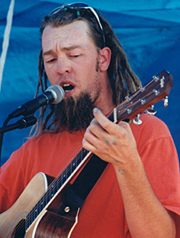
Zuigia band members Salem Posey (left), Greg Howle (center) and Clinton Staj perform at an outdoor concert. The group will move to Australia in August to perform in the public schools as part of the educational system's religious education classes.

Christian band goes backwards down under

By Jonathan Petty

Wayland Baptist University

PLAINVIEW–A conversation with an Australian pastor helped Clinton Staj understand he and the other members of his musical group were planning to do things backwards down under.

Christian bands in Australia often play in pubs to reach non-Christians. And like their secular counterparts, they want a “paying gig” so they can earn enough money to go to the United States, the pastor explained.

“You are coming to Australia to make no money, to play to school children and teenagers before they ever get to the pub. You guys are doing it exactly backwards,” he said.

Greg Howle of Zuigia

But taking the gospel to Australian schoolchildren through music is the mission Staj and the other members of Zuigia believe God has given them.

And doing things differently is nothing new for the band. Since Staj and a couple of other students formed the group in a Wayland dorm room, Zuigia has reached across barriers with an alternative folk style and message that attracts listeners of all ages.

Now, after months of praying and planning, the three Wayland graduates–Staj of New Mexico, Greg Howle from Hawaii and Salem Posey of Brownfield–hope to reach a new audience in Australia.

The band took the name Zuigia (Zoo-ee-zha) from a song Staj wrote describing a place where nobody is judged by appearances and everyone can experience God's love.

Band members planned on a limited run as graduation and careers began to pull them apart. “We did what we thought would be our last concert in May of 2001, after Salem graduated,” Staj said. “We said the band was over unless God wanted it together, and we couldn't see how that would happen.”

But as the summer passed, the group began to feel called toward a musical mission field. The desire became so strong that they decided to reform Zuigia.

The band rehearsed, performed and worked on a CD while trying to determine where their call was leading them.

“We asked God, 'Do you want us here, or do you want us somewhere else?' We just started praying, and God started opening doors toward Australia,” Posey said.

Staj already had a trip to Australia scheduled. While he was there, he stayed with pastors and missionaries who began to outline a plan for Zuigia's missions work.

“They could see why God was leading us there,” Staj said.

Australian public schools teach religious education classes, opening a world of opportunity to a group geared toward ministering to youth, he noted. The state contracts the class out to a group called Scripture Union, which Staj compared to the Gideons.

Clinton Staj and a couple of other former Wayland Baptist University students will take their unusual brand of alternative folk music to Australia as a mission outreach.(Esther Gonzalez Photo)

“They said what they need is a band that can go around to schools,” Staj said. “We can go into the public schools and tell them anything we want. We can tell them the plan of salvation, our testimonies, how to become a Christian. We can pray with them and lead them to the Lord.”

Staj said what astounded him was the fact that of the hundreds of children they will reach each day, fewer than 5 percent have had any contact with a church.

“The first time they hear the words 'Jesus Christ' will be from our lips on stage. To me that is extremely humbling.”

Zuigia's plans seem to have been mapped out, except for finances. The group is working in cooperation with Scripture Union and has received help from the Texas Partnerships Resource Center at the Baptist General Convention of Texas. But there is no organizational funding for the band's living expenses on the mission field.

But once again, band members say they have seen God's hand at work.

Zuigia released its first CD in February. It was two years in the making, but the band borrowed no money and incurred no debt to finance it.

All proceeds from the sales of the CD will help fund the trip overseas. The band hopes to move in August 2004.

Also, pastors in West Texas voted to use money from the Gordon Benson Memorial Fund to purchase the band's plane tickets to Australia at a cost of roughly $7,500.

The fund was set up in memory of Benson, pastor of First Baptist Church in Halfway, who was killed in an automobile accident last year. Zuigia also has received donations and love offerings from churches where they have performed.

“God is providing for us to get there in really humbling ways,” Posey said.

“Doors that we didn't even knock on have been opened.”

But the band still needs money to ship its sound equipment and to secure medical insurance and transportation in Australia.

The group will have religious worker visas, meaning they are not allowed to hold jobs in Australia. Therefore, they will be living off funds raised and donated in the States.

Zuigia has been registered with the IRS as a non-profit organization with tax-exempt status. Donations may be sent to Zuigia International, c/o David Howle, 105 SW 9th St., Plainview 79072. For information on booking Zuigia for a concert, visit the band's website at www.zuigia.com.

News of religion, faith, missions, Bible study and Christian ministry among Texas Baptist churches, in the BGCT, the Southern Baptist Convention ( SBC ) and around the world.


Cybercolumn for 4/19 by Berry D. Simpson: The right guy_41904

Posted: 4/16/04

CYBERCOLUMN:
The right guy

By Berry D. Simpson

At lunch, during a conversation about career choices and ministries and teaching the Bible and leading discussion groups and spiritual theories and what comes next in our lives, Art asked: “You once said that you’re always one book away from having all the answers. Have you found that book yet? Have you figured out the answers?”

I said: “No, but it doesn’t bother me as much as it used to. I’ve decided that searching for answers is more important than the answers themselves.”

Berry D. Simpson

It occurred to me that for most of my adult life, at least my disciple years, which includes college, I was driven to find all the right answers. I thought that was my job. I read books and studied the Bible and went to seminars and learned all I could so I could be a better teacher and help people. Having something to share was my prime motivation, and I worked hard to keep my supply of facts and principles well-stocked.

After we finished lunch, I walked across the street toward my office and thought about our conversation. It occurred to me, in the middle of the street, that through the years my motivation had changed. I wasn’t trying so hard anymore to learn all the right answers. Nowadays, my motivation was to be the right guy. I still read books and study the Bible and go to seminars and learn all I can, but I do it so that I can be a better, more godly, man. Right answers versus right guy.

At first, I wasn’t sure the change was good, since it sounded so selfish. Where I used to be motivated to help other people, now I just wanted to work on my own heart. Was I moving in the right direction?

And then, of all places, as I walked up the stairs to my floor, it was as if I got a fresh gift of grace from God. He said to me: “Don’t worry about this so much. You are a more effective teacher nowadays than you were back then—you are affecting more people in a deeper way.” Well, I was stopped breathless, and not from the stair climb, but because this was a big insight for someone like me.

I thought, this explains why I am more content with not knowing the full path of my life. I used to worry about that, but in fact, it now scares me to know too much. I’m afraid if I know too many answers I’ll decide I can handle my life without God’s help. I need the uncertainty and tensions of trying to figure out my path and purpose. It’s what gives me the energy to keep seeking after God. The search is more important than the answers. Answers may satisfy my mind, but the search molds my heart.

I thought about all those Bible verses I memorized when I was in college—we were coached to memorize verses so we could answer questions and counsel people and be better ministers, always ready to whip out a verse on the quick draw. But not once in the past 25 years have I had the opportunity to rattle off a Bible verse to answer someone’s question or meet an intellectual objection. No, as it turned out, the strength of all my memorization was not in teaching other people the answers, but in changing my heart. I may have learned and reviewed verses to know more facts, but the process of learning changed who I was. It changed my character. And so, all those years of self-discipline were less about finding the right answers and more about becoming the right guy. Who knew?

And I realized why it’s been so hard for me to explain what I learned from a Promise Keepers rally or from the Wild at Heart Boot Camp, or even from a solitary backpacking weekend in the Guadalupes. So many times I’ve come back telling everyone what a great time I had and how God spoke to me, yet unable to articulate exactly what God said or what I learned. I remember looking back through pages of seminar notes so I would have an answer, but it seldom helped. I often wondered if I was wasting time seeking God if I couldn’t state clearly what I found.

However, there in the stairwell of my office building, it all started coming together in my mind. I had pursued spiritual experiences, read books, studied and taught the Bible, not to find answers, but to let those experiences change me and mold me. It was about my heart, not about facts.

Well, I must say, the search isn’t over. I’m still looking for that one book that will finally explain it all and solve all my questions, but when I find it, I doubt I’ll be able to say much about it. However, I will be a changed man.

Berry Simpson, a Sunday school teacher at First Baptist Church in Midland, is a petroleum engineer, writer, runner and member of the city council in Midland.

News of religion, faith, missions, Bible study and Christian ministry among Texas Baptist churches, in the BGCT, the Southern Baptist Convention ( SBC ) and around the world.


Cybercolumn for 4/12 by Jeanie Miley: A necessary task in changing times_41904

Posted: 4/12/04

CYBERCOLUMN:
A necessary task in changing times

By Jeanie Miley

On my way to work, I made my customary turn onto a back street, only to discover that still one more street is “under repair,” delaying my arrival back at my office by 20 minutes.

I spent that 20 minutes going over my usual routes in this city, Houston, trying to think of one part of my usual traffic pattern that isn’t “under repair.” I failed, and the sad thing is that the biggest road upheaval is going to be “under repair” for at least three years! Between my house and the places I go on a daily basis, there will be traffic snarls and delays for three years.

Jeanie Miley

Sometimes, I feel that life on the streets and roads of my city reflects the larger world in which I live and move. It seems that what I used to rely on as “stabilizers” in my life are also in transition, under repair, and, in some cases, under new management or under all new construction!

We are, indeed, riding the rapids of change at a breakneck speed. That which we used to count on to be there for us may or may not be there for us today, but if it is, it is likely that it will be there in a different form.

Banks and telephone companies change names over night, and then, again. Hospitals are in a constant flux, trying to keep up with technology and the demands of patients and their challenging new diseases. Education at every level is being challenged to keep up with the times, and yet, before educators can learn one method, that method runs out of time.

As a friend said to me when my favorite meat market was bought out by a chain, “Honey, that which you thought was nailed down has come undone.”

In the midst of the chaos, one would hope that one’s church would be the stable and stabilizing force, but, much to our chagrin, even that hallowed part of our lives is in transition. What we thought was permanent and unchanging in our religious lives is being challenged by the new, the different and what may feel to be the strange by those of us who are the staunch protectors and fervent defenders of the status quo, the establishment and the havens of rest.

“Adjust! “ demands a funny-looking creature hand-painted on a plaque I bought on vacation, and I look at him and smile, for his wise counsel seems a little more compassionate and understanding than the sometimes hostile, “Get over it!” I hear when I’m up against that which I cannot change and, often, do not understand and am resisting.

The important thing to do for those of us who navigate the challenging roads of life is to keep our own cars in repair, stay conscious while we’re driving and have some soothing music or educational tapes in the car for those times when the streets and freeways become parking lots.

And the necessary tasks for those of us who are still up and pretending to run our lives is to be intentional, consistent and tender in the care of our own souls. Transitional times are times to draw near to the Source. When the outer forms are shifting and the foundations of our lives are trembling, the most important thing of all is to take care of one’s own inner life, to stay awake at the wheel of life and to surrender to the creative, transforming, liberating Power of the One who does, after all, hold the entire world in his hands.

Jeanie Miley is an author and columnist and a retreat and workshop leader. She is married to Martus Miley, pastor of River Oaks Baptist Church in Houston, and they have three adult daughters. Got feedback? Write her at Writer2530@aol.com .

News of religion, faith, missions, Bible study and Christian ministry among Texas Baptist churches, in the BGCT, the Southern Baptist Convention ( SBC ) and around the world.


Commentary by Megan Wiliford: America’s strongest foundation_41904

Posted: 4/12/04

COMMENTARY:
America’s strongest foundation

By Megan Williford

When separation of church and state arises for discussion, more often than not, strong opinions are voiced quickly. One must ask several questions: What exactly does separation of church and state mean? What were the Founding Fathers’ intentions when creating the First Amendment’s free exercise and establishment clauses? Where does the line between separation of church and state begin? How long is it? And most importantly, where does it end?

America was founded under Judeo-Christian principles, and I believe the foundation, the solid ground laid before us with every possibility for freedom, liberty and the right to happiness, lies in the trust and faith in the church. In addition, I also believe that due to this solid ground instilled by our Founding Fathers, America is the greatest nation in the world.

Where does the line between separation of church and state begin? How long is it? And most importantly, where does it end?

Patrick Henry, one of the most radical Christians among the founders and famous for his speech where he shouted, “Give me liberty or give me death,” once said, “It cannot be too often repeated, or too strongly emphasized, that America was not founded by religionists, nor on any religion, but by Christians, on the gospel of Jesus Christ.”

America was founded upon Judeo-Christian principles, and although not all of the founders were Christian—in fact, I believe many of them were not—they believed Christian principles and the word and commandments of God were holy and morally correct.

The most important concept in American life is freedom, one we so often take for granted. It is with these majestic words that the Bill of Rights begins, “Congress shall make no law respecting an establishment of religion, or prohibiting the free exercise thereof.” That is a statement of freedom. A statement conceived from a group of men whose only intention was to establish a successful, free nation. The Bill of Rights ensures the freedom of religion and gives everyone the right to practice any religion of their choice, or even to practice no religion at all.

However, with all of these freedoms, the founders came to the realization America was going to need some boundaries, thus the separation of church and state was born. According to the Supreme Court’s interpretation of the establishment clause in Everson vs. Board of Education, neither a state nor federal government can set up a church. Neither can pass laws that aid one religion, aid all religions or prefer one religion over another. Neither can force nor influence a person to go to or remain away from a church against his will or force him to profess a belief or disbelief in any religion. No tax in any amount large or small can be levied to support any religious activities or institutions, whatever they may be called or whatever form they may adopt to teach or practice religion.

Now, one cannot imagine a more ridged wall of separation, but constitutional scholar Laurence H. Tribe says: “As to other substantive rights (speaking of property, speech and petition), the Constitution establishes what is essentially a benchmark, a boundary, a line that government may not cross. But with respect to religion, the Constitution fixes no such single dividing line”.

In quoting this, my point is that, yes, separation of church and state does exist, and has for almost the entire duration of this country, and for good reasons, but there fails to be strict guidelines as to what constitutes separation. The lack of guidelines brings about the issues such as the Ten Commandments being displayed in courtrooms, “One nation under God” being said in the Pledge of Allegiance, and prayer in front of public audiences. These principles are part of what makes the United States of America what it is. They were instilled by our Founding Fathers and should remain a part of this country.

Furthermore, it is my personal belief that the prosperity and enormous success of the United States is due to the strong Christian principles and faith in God the foundekrs built this nation upon. In June of 1787, 81-year-old Benjamin Franklin said when speaking of the constitution: “I have lived, sir, a long time, and the longer I live, the more convincing proofs I see of this truth—that God governs in the affairs of men. And if a sparrow cannot fall to the ground without his notice, is it probable that an empire can arise without his aid?”

What Franklin said over a century ago is absolutely true. An empire cannot arise and prosper without the aid of God, and has America risen? Although that is a matter of opinion, I would find it hard to accept the belief that America has not developed into one of the most powerful, populous and prosperous nations in the world. America seems to have more of everything. Planes, cars, stop signs, television stations, actors, producers, the list could go on forever. This country also has more money and power than most as well as a superior military.

I give credit not only to the Founding Fathers for instilling the Christian principles in not only the Constitution, but society as well. But more importantly, I give credit to God.

Additionally, I am not the only one who looks to God for guidance. Our current president of this wonderful nation, George W. Bush, said on Sept. 14, 2001, a few days after the crisis of 9/11: “Today, we feel what Franklin Roosevelt called the warm courage of national unity. This is a unity of every faith, and every background. On this national day of prayer and remembrance, we ask almighty God to watch over our nation and grant us patience and resolve in all that is to come. We pray that he will comfort and console those who now walk in sorrow. We thank him for each life we now must mourn and the promise of a life to come. God bless America.”

Although the law emphasizing the separation of church and state is of huge stature and importance, one must not get so caught up in the legalities that we neglect the principles and values this country was founded upon. We must keep in our minds what 2000 Democratic vice presidential candidate Sen. Joseph Lieberman said in a “faith and values” speech at Notre Dame University: “The Constitution promises freedom of religion, not freedom from religion. We are after all not just another nation, but one nation under God.”

Megan Williford is a student at Texas A&M University and grew up attending Tallowood Baptist Church in Houston.

News of religion, faith, missions, Bible study and Christian ministry among Texas Baptist churches, in the BGCT, the Southern Baptist Convention ( SBC ) and around the world.


First African-American graduate of Southwestern Seminary still preaching at 100_41904

Posted: 4/08/04

First African-American graduate of
Southwestern Seminary still preaching at 100

By George Henson

Staff Writer

FORT WORTH—One hundred-year-old Eugene Florence has seen plenty of change in his lifetime, but the gospel of Jesus Christ and his heartfelt desire to preach it have not wavered at all.

Florence still preaches, drives his car and works in his garden in the Stop Six neighborhood of inner-city Fort Worth. Maybe the secret of his relative vigor lies in the fact he was born Feb. 29, 1904, so he has had only 25 birthdays.

While Florence's ministerial career has been a long one, it took awhile to get started. He was ordained at age 32 at New Home Baptist Church, a country church in East Texas.

"I wish I would have answered the call sooner—I believe I was called when I was 18 years old. But I didn't, and I got into some things that were wrong and had to spend a few days before I came to myself," he said.

Eventually, finances forced Florence from rural East Texas to Fort Worth.

"Everything was so poor in East Texas, even the land, so I couldn't make a living out there, so I came out here," he recalled.

In 1943, he began taking classes at Southwestern Baptist Theological Seminary, but because African-Americans were not allowed to attend classes during the day, he started a long stretch of night school.

Florence recalled the advice he received: "They're giving some night classes out there (at the seminary). You won't get everything, but what you get will help you."

"So I went out there two nights a week for eight years and never missed a class," he said.

Roy Cotton, a consultant with the Church Multiplication Center of the Baptist General Convention of Texas, said: "The man is a walking, talking living legend. He went to Southwestern before 'coloreds' could attend. But the Lord had called him to preach, and he wanted a seminary education.

"He was the first of two African-Americans to graduate from Southwestern with a diploma in theology in 1951. I saw pictures of him receiving the diploma as the Fort Worth newspaper article read in 1951 regarding the two colored graduates: 'They received diplomas same as the ones the white students received.'"

During that time, Florence was preaching at Mount Ebo Baptist Church near Granbury. He spent the bulk of his ministry as pastor of Saint John's Baptist Church in Decatur, where he was pastor 29 years. All the while, he commuted from his home in Fort Worth.

The education he received in seminary allowed him to be a more effective pastor, Florence said.

"I gained the knowledge of how a build a sermon each week—how to make an outline and then preach from it,"he said.

While he still enjoys preaching, many Sundays now find him in a pew at New Mount Calvary Baptist Church in Fort Worth.

"If I would just go and let people know I wanted to, I could preach every Sunday somewhere. But I don't want anybody to think I'm in it for the money, so I sometimes just go and listen to someone else preach," he said.

He does feel, however, that his preaching skills have stayed sharp.

"I stay with my thought or subject now, but when I first started I got off and went off through the woods and everywhere else. Now I stay with my subject and always end up with Christ. You end up with Christ, and no one can be disappointed," Florence said.

News of religion, faith, missions, Bible study and Christian ministry among Texas Baptist churches, in the BGCT, the Southern Baptist Convention ( SBC ) and around the world.


Buckner marks 125 years of ministry to children, families and the elderly_40504

Posted: 4/02/04

The population of the Buckner Orphans Home grew dramatically in the early part of the 20th century, with entire family groups of children accepted as residents. The children pictured were representative of orphans from the Great Depression.

Buckner marks 125 years of ministry
to children, families and the elderly

DALLAS–The vision for Buckner Baptist Benevolences began 125 years ago in the heart of R.C. Buckner and his love for “widows and orphans.” Today, it touches points around the globe.

Burdened by a deep concern for the weak and vulnerable, Buckner–a Baptist preacher and editor–traveled Texas to campaign for the creation of an orphans' home. He found an ally in Texas Baptist deacons. After a series of letters, he called for the formation of a Texas Baptist Deacons Convention.

See related articles:
Buckner honors BGCT, Park Cities, orphans' home alumnus
Buckner marks 125 years of ministry

At the deacons' meeting in Paris, Buckner sponsored a resolution to begin an orphans' home as soon as $2,000 could be raised, and those present named him fund-raising agent for the project. Under the shade of a spreading oak tree, Buckner passed a hat, putting the first dollar in himself. When the collection was counted, it totaled $27.

Buckner's Shoes for Orphan Souls humanitarian aid drive, expects to net its 1 millionth pair of new, donated shoes in 2004. The shoes are sent to children in more than 30 countries.

By the end of 1879, Buckner had collected $1,200, which he supplemented with a personal bank note. On April 9, 1879, a charter was filed with the secretary of state, and in December of the same year, Buckner rented a small cottage in East Dallas to care for the first three orphan children.

Within two years, Buckner had purchased 44 acres six miles east of Dallas, where Buckner Children's Home still operates today. Gradually adding land and property, the home owned more than 500 acres by the turn of the century. The home became almost entirely self-sufficient with its own school, farming operation, bakery, laundry and eventually its own radio station.

But even from those earliest days, the vision of R.C. Buckner was far beyond just the accumulation of land and the building of structures to house the homeless. His was a vision for helping children and families put together the broken pieces of their lives.

Today, Buckner Children and Family Services seeks to strengthen individuals and families through services ranging from parenting classes for incarcerated women to residential treatment for abused and neglected children to extensive non-residential services.

Buckner's vision also included care for senior adults. In the early days, row houses on the edge of the Buckner campus provided a place to live for retired pastors and missionaries who served as grandparents for the children living at the home.

The first “official” retirement community opened in 1954 with the Mary E. Trew Home in Dallas.

Buckner Benevolences now is one of the largest and most diversified private social care agencies of its kind in the nation, serving about 70,000 people each year.

Under the leadership of Ken Hall, the organization's fifth president, Buckner is expanding its ministry to children, families and senior adults.

Buckner Orphan Care International meets the needs of orphaned children around the world, with current programs in Botswana, Bulgaria, China, Guatemala, Kenya, Latvia, Mexico, Romania and Russia.

Through Buckner Orphan Care International's Shoes for Orphan Souls shoe drive campaign, more than 950,000 children in the United States and 30 countries have received new shoes, socks and shoelaces.

News of religion, faith, missions, Bible study and Christian ministry among Texas Baptist churches, in the BGCT, the Southern Baptist Convention ( SBC ) and around the world.