HBU breaks ground for academic center
Posted: 1/29/08
HBU breaks ground
|
Posted: 1/29/08
HBU breaks ground
|
Posted: 1/30/08
| Mamo Ishida, acting director of the master of education in higher education program at Dallas Baptist University, visits with international students at the North Texas school. He served several years as assistant director of the international students program, and next fall he will head the school’s new program in East Asian studies. |
By George Henson
Staff Writer
DALLAS—God must have a sense of humor.
Mamo Ishida believes God used his desire to stay away from a Christian university to bring him to Dallas Baptist University—because he “didn’t know what ‘Baptist’ meant.” More importantly, Ishida found a saving faith in Jesus Christ that he now shares with other students from around the world.
When Ishida first thought about studying in the United States so he could learn English, Texas was the only destination he considered.
“The only city I knew about in the South was Dallas because of the John F. Kennedy assassination,” he said.
The first school in the area he considered was Texas Christian University in Fort Worth. But he and his parents agreed he should not attend a Christian school because his family was not Christian.
 |
| Mamo Ishida |
The next school on the list was Dallas Baptist University.
“That sounded OK to us because we didn’t know what ‘Baptist’ meant. From the first day, though, I knew that DBU was the kind of school my parents had warned me about,” he said with a broad grin and a twinkle in his eye.
The thing that caught his attention early was all the praying that went on among students on the campus, especially before meals.
“I had never seen people praying before outside of a temple or a shrine,” Ishida said. “It was my first time to see people who really had religion have an impact on their life.”
Ishida’s family has a Shinto shrine in their home and also a box that commemorates their ancestors. Most people in Japan don’t have a real attachment to any religion, he said.
“I would say people are confused in Japan. When children are born, they take them to a Shinto shrine. When they marry, some choose a Christian church. When they die, they use Buddhist rituals. Really, most of the time, they ignore all religion,” he said.
While he was struck by all the praying and how it seemed to be an integral part of the lives of Christians on campus, he was not immediately attracted to it.
“My first reaction was, no way was this going to be a part of my culture, of my life,” Ishida said. “I had a big culture shock coming to America and another level of culture shock with Christianity being everywhere I looked.”
Since his primary purpose was to learn English, he wanted American friends. And since they regularly went to a weekly Bible study, he did, too.
“I went to be with my friends,” he said.
Ishida told everyone he was not a Christian and did not believe the Bible, but his friends encouraged him to read the Bible to at least know what it said.
In one chapel service, he heard the song As the Deer, based on Psalm 42. During that song, Ishida found himself crying.
He stopped as quickly as possible and hid it from his friends, because he didn’t want them to think he was ready to accept Christ as Savior. Later, however, he tried to decipher what had prompted the tears.
“I realized that I was feeling like that deer—that I was in need of something to satisfy a need in my soul,” he said. “I also thought that maybe God is real if he can make me cry and touch my soul.”
That was the first time he had considered the possibility God existed, he said.
During Christmas break, Ishida went home with a classmate to Houston. While there, he really started to yearn for something Japanese. He had a great desire to read Japanese, but the only book he had brought with him written in Japanese was an English-Japanese Bible he had received through DBU’s intensive language study program.
“I started reading about this Jesus whose birth was such a big thing to everyone,” he recalled.
In February 1996, at one of the weekly Bible studies he attended, he again was asked—as he was at the end of every session—if he wanted to accept Christ as his Savior.
“This time, I said, ‘Yes,’ and everyone was so surprised. I was surprised, but God had changed my life,” he said.
Since that time, Ishida has become a fixture on the DBU campus. For several years, he worked as assistant director of the international students program, helping the students adjust to America and becoming their advocate as necessary.
He has earned a master’s degree in higher education and is acting director of the master of education in higher education program.
Next fall, he will lead a new program in East Asian studies that will educate American business students in East Asian history and culture to prepare them for business in the region. He also serves as a recruiter in Japan to bring other students to DBU. He also teaches a Sunday school class for international students at South Park Baptist Church in Grand Prairie.
About 500 international students attend DBU—about 50 of them Japanese. Of the Japanese students, few—if any—are Christian when they come to America, he said. But DBU has a reputation for being a safe place for Japanese families to send their children because of its strong family-type support system.
On trips back to Japan, Ishida always makes time to visit with his father, mother, brother and sister. None is a Christian yet, but he said they are very curious. And he always is happy to answer their questions.
“There are very few Christians in Japan. I don’t remember ever meeting one. If I had not come to DBU, none of my family would have heard about Christianity from someone they know. DBU is a blessing from God,” Ishida said.
Posted: 1/30/08
By Douglas Todd
Religion News Service
VANCOUVER, British Columbia (RNS)—Angry, violent reformers and terrorists would have arisen out of the Middle East whether Islam had been born or not, a former top CIA official has written.
“A world without Islam would still see most of the enduring bloody rivalries whose wars and tribulations dominate the geopolitical landscape,” Graham Fuller, the CIA’s former head of long-term strategic planning, writes in the cover story of this month’s issue of Foreign Policy magazine.
Fuller, 69, who lives in semi-retirement north of Vancouver, says in the article a terrorist attack on the U.S. like that launched on Sept. 11, 2001, probably would have occurred even if the Muslim religion never had existed.
“If not 9/11, some similar event like it was destined to come,” Fuller, an adjunct professor at Simon Fraser University, argues in his opinion piece, titled “A World Without Islam.”
Islam provides a convenient scapegoat for those trying to explain the origins of terrorism, he writes.
“It’s much easier than exploring the impact of the massive global footprint of the world’s sole superpower,” said Fuller, who spent most of his career with the CIA in Muslim countries, advising top U.S. government officials.
“In the bluntest of terms, would there have been a 9/11 without Islam? … It’s important to remember how easily religion can be invoked when other long-standing grievances are to blame. Sept. 11, 2001, was not the beginning of history.”
It’s too comfortable for Western observers to ignore a long history of Western colonialism in the Middle East while blindly identifying Islam as the key source of global tension, he writes.
If Muhammad had never founded Islam in seventh-century Arabia, Fuller writes, the Middle East likely would have become dominated by Eastern Orthodox Christianity, which has had a history of violent conflict with the West and the Roman Catholic Church, including during the Crusades.
“Today, the U.S. occupation of Iraq would be no more welcome to Iraqis if they were Christian. The United States did not overthrow Saddam Hussein, an intensely nationalist and secular leader, because he was Muslim. … Nowhere do people welcome foreign occupation and the killing of their citizens at the hands of foreign troops.”
He notes the “principal horrors” of the 20th century “came almost exclusively from strictly secular regimes: Leopold II of Belgium in the Congo, Hitler, Mussolini, Lenin and Stalin, Mao and Pol Pot. It was Europeans who visited their ‘world wars’ twice upon the rest of the world—two devastating global conflicts with no remote parallels in Islamic history.”
Posted: 1/30/08
By Leann Callaway
Special to the Baptist Standard
SAN ANGELO—“Change” may be the buzzword of the moment among presidential candidates, but youth communicator Kevin Kirkland has spent the last five years telling students, “Jesus Christ is the only catalyst that exists for change in a lost world.”
Before he established an itinerant ministry in 2003, Kirkland served as a student minister. During that time, he sensed God calling him to develop a ministry that taps into young people’s desire to make a difference.
| Kevin Kirkland |
“Since surrendering my life to God’s call, he has given me a real passion for students. I believe them to be the most passionate and incredible group of people on earth, and I truly believe that revolution starts with them,” Kirkland said.
“My ministry and preaching is intentionally relational, and my expectation for students is extremely high. I am not an entertainer or professional speaker. I am simply a sinner saved by grace, qualified by a supernatural call and extremely compelled by Christ’s love to see the world come to a saving knowledge of Jesus Christ.”
Kirkland, a member of PaulAnn Baptist Church in San Angelo, keeps a busy schedule with speaking engagements across the country, including what he calls Katalyst Weekends.
“Katalyst Weekends are not designed to be an in-depth study of just one particular topic, but to prompt students to take an honest look at whether or not they have truly given their life over to Jesus,” he said.
During Katalyst Weekends, Kirkland creatively communicates the gospel and spends time investing in the lives of students and adults. One of his most memorable mo-ments took place during a small gathering in New Mexico when a parent’s life was changed.
“A couple of years ago, my team and I were at a Katalyst Weekend in a tiny—and I mean tiny—town in New Mexico,” he recalled. “On Saturday, we held an adult conference for parents of teenagers and community leaders. As we were starting the conference, a man came in the back door who looked like he had literally ridden his horse to the church. He sat in the back row, and from the look on his face, I figured he was not too happy about the challenge that I was putting before the adults.”
After the conference, Kirkland asked the host pastor about “the cowboy in the back row,” and he said the man’s family was falling apart at the seams.
The next morning, the man returned and sat in the same spot on the back row.
“About the third verse of the invitation song, the cowboy in the back row stood up and began to walk to the front,” Kirkland re-called.
“I was still a little nervous about his approach because I could literally hear his spurs clicking back and forth as he walked. With tears in his eyes, he came all the way to the front row and then made a deliberate, right turn and quickly knelt at the feet of his two young boys. In a moment of incredible humility, he grasped his two sons and pulled them close to himself.
“I have no idea what he said, but I know that God heard him. My heart was never the same. … God spoke to me right there in that moment. I was in the middle of nowhere, and there were no fancy posters on the wall with my name listed as the keynote speaker, but God found us. He heard the cries of a broken man, and he answered them. It was an awesome moment, and I live to see it more and more.”
In addition to Katalyst Weekends and other speaking engagements, Kirkland is leading a weekly Bible study for college students. Later this year, Kirkland’s ministry will open the Mattaw Children’s Village—an orphanage in Kitale, Kenya.
“Two of our past college team members are living there full-time, heading up the construction and ministry of Mattaw,” Kirkland said. “It is our dream that one day, we will play a huge part in not only housing the 1.9 million orphans of Kenya, but also discipling them to be strong, righteous followers of King Jesus.”
Kirkland says his favorite part of this ministry is making an impact on lives for the glory of God.
“I can’t get over the look on a young man’s face when he accepts Jesus as his Lord and Savior or the sound of hundreds of students worshipping in one accord the God who loves them,” he said.
“I love to see families healed, to see young people become passionately in love with Jesus, and I love long van rides with college students who are hungry for the things of God. I cannot think of anything better than seeing the reality of the cross radically change the reality of the lost.”
Posted: 1/30/08
Applause & ‘amen’
Applause has become the modern equivalent of “amen” (Jan. 7). Surely any spontaneous show of appreciation in praise of the Lord and/or his handiwork would be a welcome “noise” to God.
| • Jump to online-only letters below |
| Letters are welcomed. Send them to marvknox@baptiststandard.com; 250 words maximum. |
 “Ultimately, it is Muslims who must excise the scourge of radicalism from Islam. From within. We can help by behaving like the generous, just and benevolent society moderate Muslims once considered us to be.” Oliver “Buzz” Thomas Minister and lawyer, commenting on hopes for bridging religious divides (USA Today/RNS) “I’m going to stick to the things that make it critical for me to be president of the United States. I have deep convictions about who goes (to heaven) and who doesn’t, but as far as who makes that decision, it isn’t me; it’s God. I’m going to leave that up to him.” “I ask in the name of Jesus Christ that my sins are forgiven, that my family is protected and that I am an instrument of God’s will. I’m constantly trying to align myself to what I think he calls on me to do. And sometimes you hear it strongly and sometimes that voice is more muted.” “We have been conducting doctrinal frisks and theological GI-tract exams of our candidates, and we have to remember that these candidates are not running for president of the seminary, and they're not running for pastor-in-chief. They're running to be commander in chief at a time of global war on terrorism.” |
Whether I choose to utter “amen,” applaud or offer a glowing smile in appreciation of praiseworthy efforts seems to miss the point in the worship experience, as God and worship touch each of us so personally and individually.
Perhaps I’m missing Richard Berry’s point (Jan. 7), but, for one, I’ll continue to worship where I feel my spirit is unfettered by extraneous “rules” or processes.
Travis Hunley
Plano
TV news & free press
Your editorial on a free press (Jan. 21) should be required reading for Constitution students. However, it missed a point of criticism about the national TV news media.
Anyone wanting news from TV is out of luck. Illustration: The president of the United States is visiting our NATO allies. To get a 20-second video showing him meet with a head of state, I had to watch 15 minutes of commentary on the Michael Jackson trial and two minutes of an aerial video of a car driving down a highway pursued by police, and another minute of the alleged car thief running through neighborhoods. Nor do I understand how “militants or insurgents” can set off a bomb that murders people in a market place.
Our current TV free press has questionable priorities and values best described with the word “tabloid,” not liberal.
All freedoms come with limitations and responsibility. Our TV free press is not just imperfect, but severely broken.
If you believe otherwise, then the Baptist Standard should have articles about Britney Spears to attract a younger audience. She dominates the national TV news—and supermarket checkout stands.
Fred Rosenbaum
Gainesville
Churches & taxes
Sen. Chuck Grassley needs to add an incisive question to his inquiries into televangelists and mega ministries/churches.
Each of them must register as a nonprofit corporation in order to maintain its tax-exempt status. Laws specify property owned by a nonprofit corporation cannot have a personal name or family on the deed of ownership. If that is not true, it ought to be!
Public offered business are owned by the corporation unless it goes private; but no private company/ministry/church should be able to qualify for nonprofit status.
Cyrus B. Fletcher
Baytown
What do you think? Send letters to Editor Marv Knox by mail: P.O. Box 660267, Dallas 75266-0267; or by e-mail: marvknox@baptiststandard.com.
Posted: 1/30/08
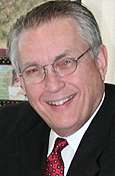
As I write this last column, the names and faces of so many of you come to my mind. I cherish the times of worship I have shared in our churches and the strong ministries and testimonies the churches have in our Texas cities and communities.
I want to thank my family—Rosemary, our four children, their four spouses and our 10 grandchildren—for their loving encouragement. Rosemary has loved her opportunities to encourage pastors’ wives across Texas. Her love for them and her ability to help them laugh and rejoice in their calling always amazes me. She is a gracious gift from God to me.
 |
| Executive Director BGCT Executive Board |
I always will be thankful for the encouragement and wise counsel of my predecessor, William Pinson, as he has responded to my questions and requests. His continued involvement in the work of communicating our Texas Baptist heritage is an important service he continues to give to us.
Three wonderful women served with me as executive administrative assistants; Doris Tinker, Janice Coley and Myla McClinton each served with distinction. Doris continues to work with Dr. Pinson, Janice served faithfully until her health forced her to retire, and Myla, with her smile, loving spirit and tenacious attention to her assignments, has generated great appreciation and respect from all who seek help from my office.
All our staff have cherished the opportunity to serve Christ and the churches. They have given themselves faithfully to their assignments. I give thanks and tribute to them all. I especially thank David Nabors and Ron Gunter for their service as CFO and COO during the reorganization of our structure.
Chris Liebrum became my key associate in helping shape the new Executive Board and the work of convention committees. He has carried out innumerable special assignments. Don Sewell has served as liaison with Baptist partnerships around the world and kept Texas Baptists connected to the Baptist World Alliance and mission opportunities.
The presidents of our convention—Clyde Glazener, Robert Campbell, Ken Hall, Albert Reyes, Michael Bell, Steve Vernon and Joy Fenner; the chairs of the Executive Board—Rudy Sanchez, Brian Harbour, John Ogletree, Bob Fowler and John Petty have brought distinctive gifts and passion to their service, and Texas Baptists have been blessed greatly.
I am grateful to the Baptist Standard, Marv Knox, editor, for giving us the opportunity to visit with you through this column. I have treasured the opportunity to visit with you in this way. Ken Camp and, now, Ferrell Foster have been gifted in editing my column for the available space.
The leaders of our institutions, associations, camps and partner entities all know of my admiration and appreciation for them. The members of boards, committees and study groups through these eight years are appreciated deeply.
Jan Daehnert will serve us well during the interim. His experience and love for our staff and our churches will be a great blessing to us. And I commend to you Randel Everett, who has been nominated to be the next executive director.
Thousands upon thousands of Texas Baptists have given generously, prayed earnestly and believed without ceasing that God would do exceedingly great things for and through our work together in the BGCT. For all of you, I give thanks to God and pray that God will continue to bless and encourage you.
We are loved.
Charles Wade is executive director of the Baptist General Convention of Texas Executive Board.
Posted: 1/29/08
By Vicki Hewitt
South Texas Children’s Home
BEEVILLE—J.D. Gomez, a 17-year-old boy in the care of South Texas Children’s Home, died Jan. 25.
Gomez was discovered unconscious in the shower and did not respond to CPR administered by several staff members at the children’s home. The sheriff’s department and emergency medical service personnel arrived quickly, but Gomez did not regain consciousness.
Gomez, an athlete at Pettus High School, left school with a fever and respiratory symptoms three days before his death. On Jan. 23, he was taken to the doctor in Kenedy and began taking prescribed medication to treat an infection.
He had remained home from school Friday morning and had awakened to take a shower when he apparently passed out, children’s home officials said.
“All signs of this tragic event indicate that Gomez’s death is health related,” said Todd Roberson, president and CEO of South Texas Children’s Home. “We are deeply saddened by his death, and our hearts go out to this child’s family, the house parents, our caseworkers and others who have been involved in this child’s life.
The local justice of the peace ordered an autopsy, as is typical in this type of instance, Roberson noted.
“We know that staff did everything they could do to revive J.D. We also believe staff followed proper protocol and procedures for dealing with a child’s illness and seeking the proper medical treatment for that illness,” he said. “Right now, we are working hard to help our campus community deal with the shock of this sad news.”
Residents and staff of South Texas Children’s Home assembled about 1:30 on Jan. 25 when Greg Huskey, Boothe Campus administrator, announced Gomez’s death.
“We’re family,” Huskey said, “and we wanted to be the ones to tell you this news before you heard it from others.”
Mark Childs, vice president of childcare at STCH, invited the children and staff to ask questions and to talk with a houseparent, caseworker, or any staff member to get the help they needed to deal with the loss.
“We don’t have a lot of answers right now,” Childs said. “But we trust God. This is a tough time, but we’ll get through this together.”
Caseworkers and counselors were on hand to offer comfort and counsel.
South Texas Children’s Home has also offered counseling assistance to the Pettus Independent School District, and district Superintendent Tucker Rackley offered his support to the children’s home.
South Texas Children’s Home has been meeting the needs of children and families in South Texas since 1952 and never had a situation of this nature during that time, Roberson noted.
“There is a very close family atmosphere,” he said. “Children in our care live in a cottage, or house, with a couple who serve as house-parents. The cottages function much like any family would, with meals being prepared in the cottages and the family planning activities together. The children attend public school, local churches, and participate in extracurricular activities. It’s going to be very hard for everyone to deal with this sad news. Funeral arrangements are pending at this time.”
South Texas Children’s Home is a multi-service organization offering basic dependent childcare, emergency care, family counseling services and international/humanitarian efforts. It is a licensed childcare facility regulated by the Texas Department of Family and Protective Services. It is also an affiliate of the Baptist General Convention of Texas and is governed by a board of 24 volunteer directors. STCH does not accept state or federal funds for operation, and relies solely on the generosity of individuals, churches, businesses, foundations and other organizations for funding.
Posted: 1/29/07
BaptistWay Bible Series for February 3
• Mark 10:32-45
Christ Church, Rockwall
This is the third time Jesus has tried to tell the disciples there is going to be a fatal finish to his ministry when they get to Jerusalem. Here, Jesus describes what is going to happen to the Son of Man in more specific detail—they will mock him, spit upon him, flog him and kill him—and after three days he will rise again (Mark 10:34).
Brothers James and John are unfazed by all Jesus is saying to them. They still are lobbying Jesus for seats at the head table at the feast of the coming kingdom of God. They want Jesus to promise them that when the red carpet of the kingdom of God is finally rolled out, they will look spiritually fashionable rubbing elbows with the celebrity Christ. The contrast is striking between what Jesus says right before the dense disciples ask, “Jesus, would you do us a favor?”
James and John may have had no clue what they were saying when they told Jesus they were able to drink the cup he drank. It is the cup of suffering that Jesus would have to drink. He would be the only one who could stomach the bitter flavor of suffering he endured on the cross. Even Jesus would be tempted to push the cup away in the Garden of Gethsemane (14:36). Jesus understands there is no other way to fulfill the will of the One he called Abba but to drink the cup of suffering.
As Jesus knows, his glory is anything but glorious. As the disciples defined what was glorious, Jesus asks them a question that suggests glory is not about usurping honor. To share the glory as Jesus defines it is to serve and sacrifice for the good of others. According to Jesus, the ones who are great in the kingdom of God are the ones who are servants, not masters. Servants are deacons who are less concerned about positional influence and more concerned about personal influence. S
eems James and John were preoccupied with positional power more associated with a hierarchical structure of a corporate power. Though Jesus could have made a claim to positional power based on his status with God, his personal influence came through humbly serving the humble, hungry and hopeless people who he met in his life.
For those who like to take control and be in charge, Jesus offers an alternative model of leadership. When we become preoccupied with our status in society or even our status in the church, Jesus offers a better way. Rather than become concerned about projecting an image of power and influence, Jesus challenges us to practice serving others so their lives can be influenced for good. When we are worried about being recognized for who we know or what leadership role we have in the church, Jesus seeks to set the record straight: Whoever wishes to be first among you must be slave of all. For the Son of Man came not to be served but to serve (vv. 44-45).
Jesus refocuses our attention on what matters most. When we settle for less than what Christ calls for, he disturbs our comforts. A 16th century prayer of Sir Francis Drake echoes the lofty call of servant leadership. It’s implications for the servants and the ones being served:
“Disturb us, Lord, when we are too well pleased with ourselves, when our dreams have come true because we have dreamed too little, when we arrived safely because we sailed too close to the shore.
Disturb us, Lord, when with the abundance of things we possess we have lost our thirst for the waters of life; having fallen in love with life, we have ceased to dream of eternity and in our efforts to build a new earth, we have allowed our vision of the new Heaven to dim.
Disturb us, Lord, to dare more boldly, to venture on wider seas where storms will show your mastery; where losing sight of land, we shall find the stars.”
When Jesus tells us the last shall be first and the greatest shall be servant of others, he is not concerned with our comforts or our conveniences. He has a way of telling us inconvenient truths. Here are a few of them: Give to everyone who begs from you. “I was hungry and you fed me, thirsty and you gave me something to drink, naked and you clothed me, sick and in prison and you visited me. … Inasmuch as you did it to the least of these, you did it to me” (Matthew 25:35-40). “The Spirit of the Lord is upon me, because he has anointed me to bring good news to the poor” (Luke 4:18). “Sell your possessions and give aid to the poor” (Luke 12:33). “When you give a banquet invite the poor” (Luke 14:13).
All of these texts are texts that have to do with the biblical practice of serving others and doing justice. They have to do with right relationships with God and with each other that is the hallmark of Jesus’ own practice of justice. There are a wide range of ideas about justice and it certainly would be difficult to decide on a simple definition on which all people everywhere could agree.
However, the biblical notion of justice defined as right relationships with God and each other comes closest to a definition through the ways Jesus cared for the people around him. The works that Jesus did the church is called to do. Whatever practices it takes to establish right relationships under the law of Christ’s love are practices that have to do with justice.
By his deeds of justice, Jesus shapes an entire community that gives witness to an alternative to the dog-eat-dog, me-first, materialistic assumptions of world order. Jesus was counter cultural in the way he thought and lived his life. The church is called to do the same in a way that will lead to the transformation of individuals and communities.
Doing justice in this way means we are the hands and feet of Christ in the world. Doing justice means living like God has something to say about the ways we treat people, even people who may be different than ourselves; in the ways we give witness to the kind of kingdom Jesus came proclaiming. This is the secret to greatness.
Posted: 1/29/08
Bible Studies for Life Series for February 10
• Galatians 1:6-9, 11-12; 3:1-9
First Baptist Church, Gatesville
If you are a fan of alliteration you will love February’s lessons: The Motive, The Message, The Messenger, and the Model. These lessons attempt to answer the questions surrounding the gospel; why, what, who, and how. All focus on delivering the gospel to the world and should build on one another to form a coherent whole. Individually the lessons should cause us to examine our perspective and participation in each segment of the church’s mission. Together the lessons should help us to form a foundation for sharing the gospel locally and globally.
Each of Paul’s letters addresses a problem or problems in the local church. Usually it takes a little time to get to the specific problem about which he is writing, but not with Galatians. Paul gets to the heart of the matter in the very first verse, “ – sent not from men nor by man, but by Jesus Christ and God the Father who raised him from the dead…” Paul’s introduction is similar to his other introductions, but he emphasizes the point that there is no authority other than God who has sent him. He follows this with a quick summation of the gospel, “Grace and Peace to you from God our Father and the Lord Jesus Christ, who gave himself for our sins to rescue us from the present evil age…”
It is evident from Paul’s introduction that the problem in the churches in Galatia did not concern the manner in which the gospel was to be lived out, or of church order. The problem in Galatia centered on the gospel itself; would the Galatians trust in Christ for their salvation, or would they abandon the faith? Is Jesus alone sufficient for salvation or is it necessary to trust in Jesus and obey the law? For Paul, the second answer negated the gospel, “…for if righteousness could be gained through the law then Christ died for nothing!” To answer the question of salvation with Christ and the law would be to abandon the gospel altogether.
First and foremost the gospel is centered in Christ. Paul takes this so seriously that he declares that if men or angels preach a gospel other that the all-sufficiency of Christ let them be eternally condemned. The word that Paul uses is anathema which means accursed. In this case he intends it to be understood that those who preach a gospel contrary to the one he preached should be accursed by God. Paul does not use this language lightly, the very heart of the Galatians salvation is at stake and Paul will not abandon them to the folly of this false teaching.
For the gospel to include anything other than the life, death, and resurrection of Christ denies that salvation is solely a work of God. That salvation is wholly at God’s initiative and by God’s power is a consistent teaching throughout the New Testament, it is not unique to Galatians. Paul’s gospel was good news and the primary reason that it was good news was that it did not come from a human agent. Paul says that, “I received it by revelation from Jesus Christ.” I don’t know that anyone other than Paul could make the statements concerning salvation in Galatians with the same authority. In his own life, salvation came literally through Christ on the road to Damascus. There was no human intermediary who lead Paul to Christ. Christ literally came to him, he knows first hand that salvation is purely the work of God in and through Jesus.
Salvation is a gift received by faith. Paul laid out two options before the Galatians: Did you receive the Spirit out of the workings of the law or out of the hearing of faith? Paul makes an important point in this section: The Spirit comes only by the hearing of faith. We come to faith through the work of the Spirit in our lives pointing to the sufficient work of Jesus in his life, death, and resurrection. As we believe the good news of the gospel, the Spirit takes hold of our lives and brings us into a new and powerful relationship with God.
Very few of us would ever claim that anything other than Jesus is necessary for salvation. However, that is not the case after our salvation. Paul makes the point in chapter 3, “After beginning with the Spirit, are you now trying to attain your goal by human effort?” The Christian life begins and ends with faith. Our lives begin with Christ by grace through faith and we live out the whole of our lives by grace through faith. Too often, grace is set aside in the church and we pile expectations upon one another that none of us could ever hope to attain. We seem to expect our salvation to be by grace but to live up to that salvation by our own strength, nothing could be farther from the truth. We are saved by grace and we live our lives by the power of that same grace.
Posted: 1/22/08
By John Hall
BGCT Communications
DALLAS—The Baptist General Convention of Texas Executive Director Search Committee will nominate Randel Everett to be the convention’s next executive director.
The former president of the John Leland Center for Theological Studies in Arlington, Va., and senior pastor of First Baptist Church in Newport News, Va., will be nominated as the next BGCT executive director during the convention’s next regular executive board meeting Feb. 25-26 in Dallas.
| Randel Everett |
Current BGCT Executive Director Charles Wade is set to retire Jan. 31. William Jan Daehnert already is serving as interim BGCT executive director.
Ken Hugghins, chairman of the search committee, said Everett met the criteria of an executive director who could lead the convention in this crucial time in which Texas Baptists appear segmented and financial issues recently caused the convention to lay off 29 people.
"As the committee listened to Texas Baptists and talked with excellent leaders and candidates across our state, a description of the kind of leader Texas needs emerged,” Hugghins said. “Randel Everett matches that description and more. He will communicate across the spectrum of Texas Baptists, the generations of Texas Baptists, the many affinity groups of Texas Baptists and focus the kingdom commitment of Texas Baptist churches, institutions, and convention servants."
Under Everett’s leadership, the Leland Center was accredited by the Association of Theological Schools and grew to serve about 200 students in more than 12 countries.
Prior to serving at the Leland Center and First Baptist Church, Everett, 56, was pastor of Columbia Baptist Church in Falls Church, Va. for five years. The congregation is one of the largest Baptist churches in the Washington, D.C., area with more than 3,000 members. It regularly is one of the top giving churches to the Baptist General Association of Virginia. It started five churches that serve different non-English speaking groups.
Everett, who was born in Arkansas and grew up in Fort Worth, also served as senior pastor of First Baptist Church in Pensacola, Fla., 1992-1996. The congregation of more than 5,000 members became involved in the Baptist World Alliance under his leadership.
Everett was pastor of First Baptist Church in Benton, Ark., 1984-1988.
Everett has pastored three Texas Baptist churches – University Baptist Church in Fort Worth, Inglewood Baptist Church in Grand Prairie and First Baptist Church in Gonzales. He also served as assistant minister of missions at First Baptist Church in Dallas.
Everett earned a doctoral degree from Southwestern Baptist Theological Seminary, a master’s degree from Southwestern Seminary and a bachelor’s degree from Ouachita Baptist University. He also holds an honorary doctorate from the University of Richmond.
The executive director nominee has extensive denominational experience, having served in Baptist associations, state conventions and with the Baptist World Alliance. He was chairman of the BWA’s education and evangelism commission 2000-2005 and served in several other capacities with the BWA.
He was moderator of Peninsula Baptist Association, a member of the National Ministry Partners Study Committee for the Baptist General Association of Virginia, a member of the Virginia association’s budget committee, a trustee at Florida Baptist College and president of the Arkansas Baptist State Convention Executive Board.
Everett served as a member of the BGCT Executive Board 1978-1979.
He has been a guest chaplain for the U.S. Senate and House of Representatives, a teacher at the Pentagon Bible study. He also has led more than 30 evangelism conferences.
Posted: 1/25/08
Bible Studies for Life Series for February 3
• Luke 15:1-2, 11-24
First Baptist Church, Gatesville
Why bother? That is the question posed to us today. Why bother trying to witness? Why bother telling someone about Jesus?
It is a question that at first might offend us. “Well, because without Jesus they will spend an eternity separated from God in hell!” And we would be right, but if we look at our situation more closely, I would bet that “Why bother?” is a question we need to take seriously.
When was the last time you led someone to the Lord? How many people are you praying for who don’t know Christ? If we can’t immediately answer those questions then we need to take the question, “Why bother?” very seriously.
Jesus makes the point very clear in Luke 15. In each parable, he raises the stakes a little higher. In the first parable, he asks, “Which of you would not leave the 99 sheep and go after the lost sheep when you found it?” If Jesus had given them the opportunity to answer, the Pharisees and the teachers of the law would probably have replied, “No, I might look for a little bit, but I wouldn’t put any great effort into it.” Why would they, they have 99 others to look after, what is going to happen to them? Besides, one sheep doesn’t matter than much to them.
In the next parable, Jesus raises the stakes a little more. “Suppose a woman has 10 silver coins and loses one. Doesn’t she light a lamp, sweep the house and search carefully until she finds it?” The Pharisees and the teachers of the law would probably answer in the same negative fashion. They might look for a little while, but one coin is not going to break them, there is more where that came from. It is not like 10 coins are all that they have, they will make more money.
Finally Jesus goes all in. “There was a man who had two sons.” You can replace sheep and coins, you can’t replace sons. You can recover from losing one percent of your herd, or ten percent of your bank account, but your children, that is another matter altogether.
You know the story, the youngest son took his inheritance and squandered it on wine, women and song. When the money was gone he found a job feeding pigs, there would have been few jobs worse for a Jew than feeding pigs. Then the son, “came to his senses,” and returned, vowing to beg his father to let him be a hired hand. But the father saw him coming and ran to him, restoring him to his full status as his son
But Jesus wont’ let it rest at that, the father wants both sons, he won’t settle for the loss of either. The older son is furious that the father will even speak to the younger son after all he has done. At the same time, he is furious because the younger son has been given everything, and he is afraid there will be nothing left for him. The father absolutely is as steadfast in refusing to let the older son go as he was in searching for the younger son.
So we return to the question, “Why bother?” The most obvious answer to the question is because it matters to God. Each parable illustrates the joy of God over one sinner who repents. All we have to do to answer this question is to look at the lengths to which God has gone to redeem his people. It is the story of the whole Bible, the crux of which is God’s incarnation in Jesus, his life, death and resurrection on our behalf. Why bother? Because our salvation matters enough that God would send his only son to die for us.
The second answer to the question is we bother because people matter. We only put effort into those things that matter, those things that are of nominal importance receive little, if any, of our attention. God has declared we are worth his effort and his love. People matter, regardless of their race, plight or gender.
Each of us has been the son who squandered his inheritance and was eagerly welcomed back into the family. We know the incredible grace God has lavished on us and the absolute joy that comes from that grace. The problem comes when we start to think we have achieved something outside of God’s grace. That is when we become the older brother and would deny God’s grace to those whom we don’t deem worthy. Our salvation and everything that comes from it is purely by the grace of God.
Karl Barth made the statement, “has not the work of this divine messenger and ambassador (Christ) actually ceased in the blind alley of the church as an institution of salvation for those who belong to it?” If the only people to whom we offer salvation are those that we know, then we have ceased doing the work of Christ.
Why bother? Because this is the work of Christ in this world. If we claim the name of Christ as his people then we must be a part of his work in his world else we bring the name into disrepute.
Posted:1/25/08
Explore the Bible Series for February 3
• Genesis 18:20-26, 19:12-16
First Baptist Church, Petersburg
In his work titled The Apology, the early church leader Tertullian sought to defend the beliefs and practices of the young church to the rulers of the Roman Empire. According to Tertullian, one of the most often expressed comments about the church by those outside the church was, “Look at how much they love each other.”
Acts 2:42-47 also indicates the early church was characterized by genuine care and concern for one another among the members. Throughout its history, the church has excelled in caring for its members. When one member is in need, the whole body rallies to meet the need.
Often, however, this same level of care is not extended to those outside the church. Believers know the unbelieving world needs to hear the gospel and will contribute money toward that end. Without explicitly saying it, church members have asked that unbelievers change before extending their full caring acceptance.
But the Bible teaches that God desires that Christians do more to reflect God’s compassion to all people. Jesus taught us to love even our enemies and pray for those who persecute us (Matthew 5:43-48). As we look at Abraham’s experience with Sodom and Gomorrah, we can learn how to truly care for others.
Acknowledge the reality of God’s judgment (Genesis 18:20-21)
In Genesis 18, Abraham demonstrated hospitality toward three guests whom he somehow recognized as messengers sent by God. During their time together, the visitors reassured Abraham that God’s promise of a son would be fulfilled within the following year.
Before they parted from Abraham, they told him God was planning to punish the cities of Sodom and Gomorrah for the seriousness of their sin. God had heard the cries of the victims of their oppression and injustice and had come to aid the innocent and test the guilty.
Many people over the years, and particularly today, do not like to think about God in terms of wrath and judgment. They question how a God of infinite love and compassion could possibly punish or condemn people he created. Many churches, either explicitly or by their silence on the subject, also seem to deny the reality of divine judgment.
Yet the Bible is clear that God’s holiness cannot allow sin within his creation to go unpunished, and God’s judgment on sinful humanity does not diminish his love for those guilty of sin. If we are to truly care for those beyond the walls of the church, we must first recognize that anyone who has not surrendered his or her life to God lives under divine condemnation and will be judged. We must remember the fact that each of us at one time stood in that position and allow that knowledge to motivate us to lead them to salvation.
Offer intercessory prayers (Genesis 18:22-26)
The Bible states that as soon as the visitors left, Abraham began to pray to God on behalf of the people of Sodom and Gomorrah. He began to plead with God to turn from his anger and spare the cities. The urgency of his prayers may be reflected in his bargaining with God concerning what it would take for God to refrain from his judgment.
How often do people within the church today look at the sin of various groups within the light of God’s judgment and say they are getting what they deserve. Far from praying that God might remove the judgment, the attitude seems to be a desire for God to hasten his judgment on “them.”
Yet time after time, the Bible indicates God does not enjoy or even desire to punish anyone. The fact that God expresses a willingness to spare all of the people if as few as ten righteous ones could be found demonstrates this. 2 Peter 3:9 clearly states that God desires that no one should perish under judgment, but all should come to repentance.
It is good for believers to pray for God to meet the practical needs of fellow believers. Yet we should never forget to also pray for the salvation of those outside the church regardless of who they are. It is a vital part of what it means to genuinely care for them.
Observe God’s compassion (Genesis 19:12-16)
When the divine messengers had arrived in Sodom and confirmed the wickedness of the people, they pronounced God’s judgment on the cities. They then informed Lot and his family about the impending destruction and gave them instructions on how to escape.
One of the common threads that runs throughout the Bible is the continuing existence of a remnant of faithful people within the larger sinful community. Just as God must punish the community for its sin, God always promises to protect and rescue those who remain faithful. This does not mean that they will completely escape the effects of the judgment.
Lot’s daughters left the city as widows because their husbands refused to believe. Yet the faithful know that their lives are in the hands of a God who loves them and is more than able to protect and sustain them. As each believer is faithful to genuinely care for others and pray for their physical and spiritual needs, we will have our own faith reassured and our relationship to God strengthened as we witness the ways God answers those prayers by pouring his wealth of compassion into their lives.
