
Archives
-

Around the State
Posted: 11/16/07
Around the State
• N.T. Wright, the bishop of Durham Cathedral in the Church of England and a leading New Testament scholar, will be the featured speaker at a pastors and church leaders retreat at the Laity Lodge Retreat Center Nov. 25-27. Wright is the first speaker in a series made possible by a $500,000 grant from the M.D. Mathews Foundation of Houston. For more information, call (830) 792-1210.
• East Texas Baptist University will hold a “Shadow Day” for high school seniors and college transfer students Nov. 29-30. Visiting students will have the opportunity to spend the night in the dorm, socialize with current students, visit with professors and attend classes. There also will be an activity on Thursday evening. Pre-registration is required, and a $15 nonrefundable fee must be paid. For more information, call (800) 804-3828.
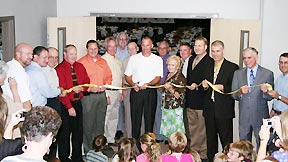
First Church in Sanger held a ribbon-cutting ceremony to mark the opening of its family life center. The 21,000-square-foot facility also will be used for education space as well as the headquarters of a sports ministry. A full-service kitchen also is one of the building’s components, and it was used to feed 500 people at the building’s dedication banquet. The church recently called Jeff Dooley as minister of education and activities to maximize the building’s ministry capabilities. The facility cost $1.7 million. E.L. McNeal is pastor. • Howard Payne University will hold a “Southern Gospel Christmas” concert Dec. 18 at 6:30 p.m. Featured guests will be the Melody Boys Quartet from Little Rock, Ark. Tickets are $10 per person. Seating is limited, so advance tickets are strongly encouraged. For more information, call (325) 649-8006.
• The University of Mary Hardin-Baylor recognized several people during homecoming activities. Kay Anderson, who taught at the university 30 years and continues to volunteer as the museum curator, received the Distinguished Alumnus Award. Siblings Rick, George, Cecilia and Lynda Solis received the Parker Award, given to a multimember alumni family.
11/16/2007 - By John Rutledge
-
Book Reviews
Posted: 11/16/07
Book Reviews
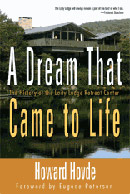
A Dream That Came to Life: The History of the Laity Lodge Retreat Center by Howard Hovde (Smyth & Helwys)
Laity Lodge Director Emeritus Howard Hovde paints a wonderful picture of a place described as “like going to heaven without having to pass through the Pearly Gates.” Hovde shares background stories of the Holdsworth and Butt families that united through the marriage of Mary Holdsworth to Howard E. Butt Sr., founder of the HEB grocery company. Together, they created a nonprofit foundation to “help meet needs of families, children and the community.” The foundation eventually purchased a 1,900-acre ranch near Leakey for children to enjoy. Their oldest son, Howard Jr., expanded the dream to include a retreat center where lay people could learn about “integrating faith and love into everyday living.”
What are you reading that other Texas Baptists would find helpful? Send suggestions and reviews to books@baptiststandard.com. Hovde intersperses philosophy, organization and history with interesting stories of people who influenced the direction of Laity Lodge. For good measure, he adds heart stories of those influenced by the center, including author Madeleine L’Engle (A Wrinkle in Time) and The Message translator Eugene Peterson, who wrote while staying at Laity Lodge. A valuable appendix, including leadership tips, poems and a list of significant books, completes the work.
Inspiring stories turn what could be a dry history into a quick read.
11/16/2007 - By John Rutledge
-
Baptist Briefs
Posted: 11/16/07
Baptist Briefs
IMB stats show growth. The International Mission Board’s annual statistical report covering calendar year 2006 includes a summary of church-growth indicators reported by Southern Baptist missionaries and their overseas Baptist partners. The report noted 25,497 new churches, 12,856 new outreach groups, 609,968 baptisms, about 9.86 million church membership, 4.6 million in Bible study, 567,413 new Christians in discipleship training and more than 1.26 million total church members in discipleship training. The statistics were released during the International Mission Board trustees’ recent meeting in Springfield, Ill.
Virginia schools reach agreement. The John Leland Center for Theological Studies, a moderate Baptist seminary in Arlington, Va., and Hampton University, an African-American college in Hampton, Va., have reached a degree-granting agreement for undergraduate students. The agreement allows Leland students who have completed the seminary’s diploma in theology program to count all of their 48 hours of credit toward a bachelor’s degree in religion from Hampton.
11/16/2007 - By John Rutledge
-
N.C. Baptists expel gay-affirming Charlotte church
Posted: 11/16/07
N.C. Baptists expel
gay-affirming Charlotte churchBy Norman Jameson
N.C. Biblical Recorder
GREENSBORO, N.C. (ABP)—North Carolina Baptists expelled Myers Park Baptist Church in Charlotte from their statewide group because the church accepts gay members into leadership.
The Baptist State Convention of North Carolina Executive Committee ruled Nov. 12 that the church was not in compliance with membership articles. While convention messengers voted overwhelmingly to hear an appeal by Myers Park the next day, they voted similarly to reject it.
11/16/2007 - By John Rutledge
-
-
2nd Opinion: A young Baptistâs reason to remain
Posted: 11/16/07
2nd Opinion:
A young Baptist’s reason to remainFive years ago, while studying at Texas A&M University, I took a job as the youth minister of a small Baptist church in the Conroe area north of Houston. Having been born and raised in a large Bible church, I entered the Baptist world relatively oblivious to the situation I was getting myself into. Needless to say, it was not long after I began to identify myself as a Baptist that I became aware of the stigma associated with that name; stigma, may I add, that was well-deserved.
I was a young Baptist minister living in a time when the leaders of my denomination were more concerned with the sexual orientation of Disney characters than the fact that roughly 7,000 children were dying of malnutrition each night. I was embarrassed that my denomination chose to use its resources to defend archaic scientific theories and remove women from leadership positions rather than to let justice roll on like a river, and I was enraged by the pettiness of it all.
It was a time when a small number of powerful leaders had so corrupted the word “Baptist” that a large number of churches found it necessary to strike it from their name, keeping their denominational affiliation secret in order to maintain some level of credibility. And it was a time when I was willing to do the same.
But although I felt hurt by the actions of some contemporary Baptists, what compelled me to stay within the denomination was the legacy left by Baptists of the past. These were men and women who shared a conviction that the freedom to work out one’s faith was more important than the transmission of right doctrine, and they believed that social concern was an integral part of that faith. They organized themselves so that each body of believers was free to choose its own path, answering only to God. They had a high view of the Holy Spirit’s power to direct the church without their assistance, and they refused to be restricted by any creed or statement of faith.
11/16/2007 - By John Rutledge
-
DOWN HOME: Agnostic & editor agree on thanks
Posted: 11/16/07
DOWN HOME:
Agnostic & editor agree on thanksSometimes, it’s downright weird how people with widely divergent worldviews can come down in the same place.
But here I am, right beside A.J. Jacobs.
He’s the author of a best-selling book, The Know-It-All. I’ve been accused of knowing practically nothing.
He’s an editor-at-large for a hoity-toity men’s magazine, Esquire. I’m the editor of a Baptist newspaper 99.9999999 percent of the readers of Esquire never heard of.
11/16/2007 - By John Rutledge
-
EDITORIAL: Differences, defamation & grace
Posted: 11/16/07
EDITORIAL:
Differences, defamation & graceA thoughtful reader recently sent me a letter lamenting the landslide of personal attacks and the torrent of abusive language that characterize Baptist life these days. He specifically cited the tone of several blogs. But he also could have pointed to many church business meetings, e-mail and telephone gossip about individuals and events in the Baptist General Convention of Texas, occasional pronouncements by outsiders about our convention, and far too many Baptist dinnertables where “roast preacher” is served up as if it were a local delicacy.
The problem, friends, is a growing inability to disagree agreeably. People no longer seem to understand they can disagree with each other without being angry at each other. They stumble over the concept of honest disagreement expressed in a spirit of goodwill.
I understand this phenomenon all too well. Almost every week, I hear from people who have severe problems with disagreement. They generally fall into two categories. One group seems to love disagreeing, and hostility gets their juices flowing. They relish a good fight. The other group absolutely detests fighting and just wants everybody to get along. Problem is, they’re so conditioned by the other crowd that they now think disagreement equals fighting. So, they dysfunctionally avoid expressing honest differences for fear of fighting. Both groups can’t seem to comprehend that people, especially Christians, can disagree passionately and yet continue to love one another, care for each other, pray for the other.
Multiple factors account for this, but I blame talk radio. Call it the “Limbaughization” of America. Talk radio hosts practice “ritual defamation,” explains former Texas pastor Bruce Prescott. It’s a calculated political strategy—“defamation in retaliation for the real or imagined attitudes, opinions or beliefs of the victim, with the intention of silencing or neutralizing his or her influence, and/or making an example of them so as to discourage similar independence.” They also like it because it’s good for ratings. Americans have become so coarse and desensitized they’re titillated by the pain and humiliation of others. Call it talk radio for a generation who grew up on The Texas Chainsaw Massacre and Friday the 13th. Many bloggers unwittingly (or maybe not) have picked up on this. After all, outlandish rhetoric drives up the hits. Never mind if the tone is so extreme it casts doubt upon the truthfulness of the content.
11/16/2007 - By John Rutledge
-
-
Faith Digest
Posted: 11/16/07
Faith Digest
Black Baptist prof told to choose college or church. Professor Denise Isom loves her work at Calvin College and her Grand Rapids church, Messiah Missionary Baptist. But her employer has told she must choose one or the other. The Calvin board has refused to exempt Isom from a rule that requires professors to attend a congregation with ties to the Christian Reformed Church. The issue sparked a student “prayer protest” and discussion about how the church-membership policies may hurt diversity on campus. Isom, an assistant professor of education since 2003, is black and her research focuses on race and education. She told the board she finally found what she was looking for at the predominantly black Messiah Missionary Baptist.
Religious activists lobby for changes in farm bill. Religious leaders led by the Bread for the World advocacy group have refused to endorse subsidies for large farm operations and demanded that senators pass an agriculture bill that supports small farmers, as well as the nation’s poor. The $288 billion farm bill, reauthorized every five years, has come under attack this year from an array of groups for its large commodity payments, subsidizing production of wheat, rice, corn, cotton and soybeans. According to the Washington-based Environmental Working Group, $164.7 billion in commodity payments were made between 1995 and 2005—and 10 percent of subsidy recipients received 73 percent of the money. The group voiced support for several proposed amendments—one seeking a $250,000 yearly cap on commodity payments to farmers; another cutting commodity payments and offering free revenue insurance for all farmers, with savings redirected to nutritional support programs.
11/16/2007 - By John Rutledge