Hospital chaplains minister in the workplace

Posted: 11/16/07

Hospital chaplains minister in the workplace

By Jessica Dooley

Communications Intern

HARLINGEN—The workplace can be tough for someone going through a crisis. To help employees cope with difficulties at work and at home, some South Texas employers have opened their doors to spirituality in the workplace, and hospital chaplains have new avenues of service.

Joe Perez

Chaplains from Valley Baptist Health Systems in Harlingen minister to several businesses in the area. They make rounds twice a month to banks, insurance companies, auto dealers and medical-related businesses.

“Businesses in the Valley and across the country are beginning to recognize that faith is a key component of reaching the heart of many employees,” said Joe Perez, vice president for pastoral services at Valley Baptist Health Systems said. “By affirming and addressing an employee’s spiritual needs, they will have more of the employee.”

Through Valley Baptist’s “Values Partners” program, businesses not only receive visits from chaplains, but also have access to licensed professional counselors and social workers—a distinction from most national chaplaincy programs.

See Related Articles:
Have we gone too far in the race for parenthood?
Neurotheology opens doors for scientific study of belief
Consesus lacking on end-of-life issues
Ethicists in quandary over surrogacy
• Hospital chaplains minister in the workplace

The chaplains’ mission is not to coerce or convert employees but to build relationships with employees by listening, praying and offering spiritual care in times of need.

“Chaplaincy is different than your local pastor coming out. A chaplain is broader. The role is not to lead but to walk with. It’s pastoral in nature,” Perez said.

Businesses in the area have found the program “very supportive” because it “builds trust in local business and provides a resource for times of struggle,” Perez added.

Most employees use chaplains when a family member or close friend is hospitalized. They ask if chaplains can visit their loved one in the hospital. When one business found out an employee had been murdered, the chaplains and counselors were there to provide support and debriefing sessions.

“Chaplains are good about going in the middle of trouble.” Perez said. “Sharing is therapeutic.”


News of religion, faith, missions, Bible study and Christian ministry among Baptist churches, in Texas, the BGCT, the nation and around the world.


Consensus lacking on end-of-life issues

Posted: 11/16/07

Consensus lacking on end-of-life issues

By George Henson

Staff Writer

BROWNWOOD—When it comes to some of life’s hard questions, answers aren’t any easier for Christians than they are for other people—including questions concerning end-of-life issues.

See Related Articles:
Have we gone too far in the race for parenthood?
Neurotheology opens doors for scientific study of belief
• Consesus lacking on end-of-life issues
Ethicists in quandary over surrogacy
Hospital chaplains minister in the workplace

A universal consensus on topics such as euthanasia and physician-assisted suicide does not exist, said John Ferguson Jr., assistant professor of political science at Howard Payne University’s Douglas MacArthur Academy of Freedom and author of Point/Counterpoint: The Right to Die.

“There’s not one Christian view, and there’s not even just one Baptist view. A lot of Baptists differ in their views on the topic and where these lines of differing opinions should be drawn,” Ferguson said. “Some would argue that it is a very Christian thing to support a right to die if it will alleviate pain.”

As Ferguson points out in his book, however, the Southern Baptist Convention approved in 2001 a resolution castigating euthanasia. The strongly worded resolution read: “The messengers to the Southern Baptist Convention meeting … affirm our belief that every human life, including the life of the terminally ill, disabled or clinically depressed patient, is sacred and ought to be protected against unnecessary harm; and be it further resolved, that we find legalized euthanasia immoral ethically, unnecessary medically and unconscionable socially.”

Ferguson’s book, written primarily for a secular audience, tries to provide both sides of the argument—not supplying an answer, but offering the fuel necessary to power the engines of thought.

“I see a lot of students who are very interested in these topics, and they tend to have a very reflexive reaction because of the views they’ve heard from others. They haven’t given enough thought to these issues to make them their own,” Ferguson said.

As a teacher, he often thought of students while writing his book that offered divergent viewpoints.

“It’s a very personal situation, but a lot of undergrads who have never had to deal with a loved one in this situation have very stringent views. But if they have seen a loved one go through a lengthy or painful death process, they are more open to seeing other viewpoints,” he said.

The situation gets much more complicated when Christians are elected to office and start to make public policy based on their personal beliefs of what is right or wrong. Ferguson pointed to the machinations of the legislature and judicial bodies in the Terri Schiavo case as an example of how bad things can get.

When Christians become convinced they are right and all others are wrong in such cases, “it doesn’t show the gentler side of Christianity for those on either side of the issue,” he pointed out.

Ferguson discovered the difficulty of finding an easy answer as he researched the subject before he wrote his book.

“I criticize students for not seeing more than one viewpoint, but this is one subject I hadn’t thought very deeply about. I discovered that this is a question where there are no quick, easy answers,” he said.

He doesn’t posit one viewpoint as better concerning the right to die in the book and will not now. But he reached one conclusion while writing the book: It’s important to put into writing one’s wishes concerning whether to continue life when there is little hope for recovery—and do it long before a crisis occurs.

“The problems that arise in this area are because people don’t think about it in advance, and it puts tremendous burdens on families and divides families as they try to choose their course,” Ferguson said. “Everyone needs to have written instructions for their family to follow.”

Ferguson also advised churches to be careful dealing with right-to-life issues in Sunday school lessons and sermons.

“The church is to be a place of healing, and these right-to-life Sundays can be very divisive and hurtful to families who have had to make very difficult decisions,” he said.


News of religion, faith, missions, Bible study and Christian ministry among Baptist churches, in Texas, the BGCT, the nation and around the world.


Have we gone too far in the race for parenthood?

Posted: 11/16/07

Have we gone too far
in the race for parenthood?

By Hannah Elliott

Associated Baptist Press

NEW YORK (ABP)—In Brazil, a 51-year-old woman gave birth to her own twin grandchildren. She used embryos from her 27-year-old daughter, who had tried for four years to conceive.

In January, a Texas-based “human embryo bank” announced prospective parents could choose pre-created embryos based on photos, family histories and medical reports of the people who donated the sperm and eggs.

Many conservative evangelicals say fertility clinics have crossed the line and started “playing God” in the race for parenthood.

And some career-minded young women have frozen their eggs to use them later in life when they are established professionally but when middle age may prevent them from conceiving the old-fashioned way.

They’re all choices made with the help of science for one goal: To have children. But how far is too far in the race for parenthood?

Many conservative evangelicals say fertility clinics have long since crossed the line and started “playing God.”

Southern Baptist heavyweights have condemned embryonic stem cell research as a “sad and pathetic” assault on human dignity. And most Christian scholars say having children at any cost is not biblical.

But as medical journals report infertility has reached epidemic proportions, the race to “cure” it continues to accelerate.

Medical professionals define infertility as the inability to conceive after one year of unprotected sex, although—since the success rate of conceiving in a normal cycle is only 16 percent—as many as 10 percent of otherwise fertile couples also are unable to conceive in the first year.

See Related Articles:
• Have we gone too far in the race for parenthood?
Neurotheology opens doors for scientific study of belief
Consesus lacking on end-of-life issues
Ethicists in quandary over surrogacy
Hospital chaplains minister in the workplace

Environmental toxins, sexually transmitted diseases, abortion, stress, cancer and certain chemicals or medications all are known causes of the condition, which affects 3.5 million couples nationwide.

How to regulate the nation’s 400 fertility clinics is a debate in itself, and laws vary by state. Federal law mandates labs analyzing semen obey quality control and training standards set in 1988, but labs handling eggs are exempt from those standards.

Many fertility doctors say it’s condescending to assume the government must protect women seeking to conceive. On the contrary, they say, women often volunteer for even experimental research if they believe it could produce children.

But Christian infertility support groups say professional and ethical standards are easily ignored at fertility clinics. Ethicists say context determines a lot.

“No clear ethical line exists when it comes to fertility treatments,” said Jonathan Tran, a Baylor University ethics professor. “Rather than ethics not being able to keep up with technology, it’s more the case that technology creates its own ethics.”

The most prevalent assisted reproductive technologies are in vitro fertilization, artificial insemination, and gamete donation. IVF is the most popular, with more than 1,000 women undergoing the procedure each week, according to the Washington Post.

During IVF, the woman injects herself with hormones to induce egg production. The eggs are retrieved from her uterus, fertilized in a lab and the most viable of them returned. Success rates for each attempt vary from 25 and 50 percent, with costs ranging from $4,000 to $20,000 for each try.

As director of the National Embryo Donation Center, Jeffrey Keenan warns his patients that fertility treatments can cause multiple pregnancies, and some doctors advise “selective reduction” of the embryos. Not all embryos survive the thaw after storage, and mothers must be ready to determine the fate of unused embryos, he adds.

More than 400,000 unused embryos exist in fertility clinics nationwide—a major point of contention for groups critical of IVF. Most of the embryos are under the control of those who donated them and still are trying to create a family.

Embryo adoption in particular has become a much talked-about solution for what to do with unused embryos. Congress has devoted more than $3 million to promote “embryo adoption,” but fewer than 100 babies have been born using the method.

Proponents like the Snowflakes Frozen Embryo Adoption Program and Embryos Alive say embryo adoption presents an ethical solution for saving what they call “snowflake children.” Critics say the adoptions aren’t legal and could create a market for frozen human embryos.

In a Boston Globe column, Susan Crockin, a reproduction and adoption lawyer, said that forcing “adoption frameworks” onto frozen embryos elevates one religious doctrine—conservative Christianity—over others.

“Changing the vocabulary to blur the distinction between four- to eight-cell embryos and born children—by naively or intentionally using terms like ‘embryo adoption,’ ‘pre-born children’ or ‘microscopic Americans’ and those who create them ‘parents’—is not only legally wrong, but … bad public policy,” she wrote.

Stephen Grabill, a theologian at the Acton Institute for the Study of Religion and Liberty, also is wary of embryo adoption, albeit from a different perspective.

“At this point, what is the relevant moral difference between (IVF) and embryo adoption?” he asked. “Have the embryos lost in unsuccessful thawing and transfer attempts been treated properly as individually unique and personal beings created in God’s image? Can any form of technology that instrumentalizes life, regardless of the ultimate use to which it is put, be morally satisfying?”

Parental age limits pose another ethical dilemma for the $3-billion fertility industry. Is it fair for a child to be born to a 50-year-old mother who may not live to see her graduate from college?

Keenan, who is Catholic, said he doesn’t pursue infertility options for women older than 45 or for couples whose combined age is more than 100.

Catholics like Keenan and Orthodox Jewish groups long have been the most influential and consistent voices in the debate about infertility. Many view sex as a natural act in marital life, the overflow of which is children.

Similarly, many evangelicals believe the “unitive” function of marriage should remain connected to its procreative function.

“What it does is it violates the integrity of marriage,” Tran said. “Marriage by its nature binds two people together.”

Michele Shoun of Baptists for Life agreed.

“Using donated sperm does seem to violate the sanctity of marriage,” she said via e-mail. “When a couple marries, they accept one another for better or worse, in sickness and in health. Using donated sperm bypasses the seriousness of the vow.”

What’s more, Tran said, the use of medical procedures to select gender or eye color, for example, profoundly changes the doctor-patient relationship.

“Now the context of medical practice is fundamentally one of capitalism,” Tran said. “Doctors and patients have entered a consumer-provider relationship where the consumer should be able to buy whatever they want.

“It turns into a really bizarre world in which you’re basically picking an egg donor in the same way that our graduate program would choose who to accept.”

A counterbalance to that “bizarre world” should be the church, which has so far failed to teach Christians what the Bible says about infertility, Tran said.

The New Testament themes of the church as God’s family and of Gentiles’ adoption into that family demonstrate that childlessness is not a sign of disfavor from God, he said. In fact, the desire to bequeath genetic traits and a surname through bloodlines has pagan—not early Christian—origins, he added.

“Adoption is the primary metaphor for our relationship with God,” Tran said. “Gentiles are in there by adoption. That should give us pause.”


News of religion, faith, missions, Bible study and Christian ministry among Baptist churches, in Texas, the BGCT, the nation and around the world.


Ethicists in quandary over surrogacy

Posted: 11/16/07

Ethicists in quandary over surrogacy

By Hannah Elliott

Associated Baptist Press

NEW YORK (ABP)—The Church of England recently issued a statement identifying organ donation—even by living donors—as a Christian duty motivated by compassion and a mandate to heal. But what about donating a womb for nine months?

Surrogacy—when a woman agrees to gestate and give birth to a child for others to raise—has ethicists, religious scholars, scientists and even feminists pondering the ramifications of such an arrangement.

See Related Articles:
Have we gone too far in the race for parenthood?
Neurotheology opens doors for scientific study of belief
Consesus lacking on end-of-life issues
• Ethicists in quandary over surrogacy
Hospital chaplains minister in the workplace

Most agree procreation is a privilege, not a fundamental human right. But consensus on what should happen legally, morally and physically after procreation is years—if not decades—away.
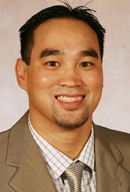
Jonathan Tran

Jonathan Tran, an assistant professor of ethics at Baylor University, believes while most couples may agree it is a privilege to bear children, they’re willing to pay—or do—just about anything for that privilege. That’s where the ethical dilemmas come in.

“It’s a result of capitalist notions of entitlement,” Tran said. “Doctors simply become practitioners using those technologies to give the consumer whatever they want.”

Inevitably, the question of who should bear children—and by what methods—remains deeply divisive.

Traditional surrogacy combines a surrogate’s egg with the biological father’s sperm, but embryo transfer surrogacy is increasingly common, which uses an embryo created from gametes of both biological parents. The first American baby conceived via such an arrangement was born in 1986.

Groups like Baptists for Life and the National Council for Adoption do not support surrogacy; others especially are opposed when it is used to produce children for homosexual couples. Most Catholic leaders, staunch in their objection to procreation that doesn’t involve sex, also have spoken against the practice.

“I just can’t go along with surrogacy,” said Jeffrey Keenan, director of the National Embryo Donation Center and longtime reproductive specialist. “It just sounds to me to be a bad idea for a woman to carry a pregnancy and then give it up, even though she enters into it with that forethought and knowledge. I don’t agree with surrogacy myself and certainly don’t advise it.”

Some ethicists, especially on Catholic and evangelical fronts, say that—at best—surrogacy undermines the intimacy of marriage. At worst, they say, it’s tantamount to adultery.

Keenan, who is Catholic, said the idea of “an additional party in the marital relationship” can be harmful to an otherwise strong marriage. Others say separating the act of sex from actually conceiving children causes frustration, confusion and isolation between spouses.

“Essentially, it makes marriage a type of business partnership where having sex or not having sex becomes a project for the couple,” Tran said.

Perhaps surprisingly, Catholics, evangelicals and feminists agree on one aspect of surrogacy: It has the potential to dehumanize, or even enslave, women. These critics say splitting half-siblings and “selling” babies should be banned. They say it is paternalistic for rich people to buy the rights to a low-income surrogate’s womb—that if an hourly rate is computed for her pregnancy, she earns much less than minimum wage.

While it is illegal in the United States to sell human eggs, most surrogate mothers make thousands of dollars for their peripheral troubles. Nationwide, the going rate hovers around $20,000 to carry one child, plus $5,000 per additional child. The amount doesn’t include legal fees, doctor bills, medications or incidental expenses like maternity clothes.

Michele Shoun of Baptists for Life said she would not go so far as to characterize surrogacy as “slavery,” but the fact that it’s a paid service means it’s not a celebration of life, either.

“It’s a transaction in which a child is bought and sold, and there are many problems with that,” she said via email. “It’s also one more symptom of ‘freedom of choice’—a dubious proposition if ever there was one.”

Fertility clinics receive no government funding and therefore are under no federal oversight, although Congress recently passed a law that requires them to start collecting some data on clients. Still, Shoun and others say, questionable ethical practices—by doctors trying to give women the best odds of getting pregnant—can be prevalent.

Couples believe they can control fertility procedures so “nothing outside the bounds is done, but I have a hard time trusting the fertility clinics,” Shoun said. “Much of fertility assistance is tainted.”

State laws vary when it comes to surrogacy. New Jersey, New Mexico, Oregon and Washington allow surrogacy. Laws in Nevada, New Hampshire, Tennessee, Texas, Utah and Virginia permit surrogacy for married couples only. Illinois, Indiana, Louisiana, Massachusetts, Nebraska, New York and North Dakota technically prohibit surrogacy agreements—but loopholes exist. Michigan law prohibits compensated surrogacy. It is legally unclear whether surrogacy is permitted in Maryland, Missouri, Ohio, Pennsylvania, South Carolina and Wisconsin. For all other states, no legal provision exists for or against surrogacy.

In states that allow surrogacy, contracts define parenthood, adoption, visitation rights and anonymity clauses. Lawyers help parents predetermine what happens in the event of a miscarriage, whether to “selectively reduce” embryos if a large number of them become viable in the uterus, and what to do if the fetus develops a birth defect and neither the surrogate nor the biological parent wants the child.

What is more, advocate groups like Resolve argue governments should not interfere with the veritable “wild west” frontier of surrogate parenting. They say banning it could create an underworld market much worse than the existing system.

Surrogate mothers themselves say surrogacy gives them a sense of confidence and fulfillment in doing a humanitarian act.

A three-year study of 200 potential surrogates applying to The Surrogate Mother Program of New York seemed to back the claim that “although money is a motive for many surrogates, it is not their primary motive.”

“Almost all (surrogates) report a variety of emotional reasons for undertaking surrogacy, and many of these can be grouped together under the heading of wishes to enable parenthood, to feel self-actualized, and to enhance their identity,” Betsy Aigen, founder of Childbirth Consultation Services, wrote in the study overview.

“It is, for these women, a particularly female experience related to the experiences and meaning of biological functioning and motherhood.”

The 1996 study found that, contrary to popular perceptions that surrogate mothers are uneducated, rural and poor, the average is Caucasian with decent education and income.

“Most of them are parents who know what the experience of bearing a child is about,” Aigen wrote. “There is nothing to indicate that they are naive, passive dupes who are desperate and susceptible to exploitation.

“Being a surrogate is a life experience that allows some women real success in altering their emotional state in a direction they desire and fulfilling ideal images of themselves.”

At its heart, the debate may indeed be primarily about the definition of true motherhood and personal fulfillment for woman.

And while science continues to present new options in the quest for parenthood, the progress is a testament to what some see as God-given intellect and ingenuity. Even some conservative ethicists are asking, “If we have the proper technology, why not use it?”

It may take a generation or two to find out.


News of religion, faith, missions, Bible study and Christian ministry among Baptist churches, in Texas, the BGCT, the nation and around the world.


Senate probes finances of six TV ministries

Posted: 11/16/07

Senate probes finances of six TV ministries

By Adelle M. Banks

Religion News Service

WASHINGTON (RNS)—A prominent U.S. senator is seeking financial information from some of the biggest names among evangelical TV ministries following complaints from the public and news reports of possible money mismanagement.

Sen. Chuck Grassley, R-Iowa, the top-ranking Republican on the Senate Finance Committee, gave the six ministries until Dec. 6 to turn over the records.

“The allegations involve governing boards that aren’t independent and allow generous salaries and housing allowances and amenities such as private jets and Rolls Royces,” Grassley said.

The senator sent letters to two Texas-based ministries—Kenneth Copeland Ministries of Newark and Benny Hinn Ministries in Grapevine. He also demanded financial accounting from Joyce Meyer Ministries in Fenton, Mo.; Bishop Eddie Long of New Birth Missionary Baptist Church in Lithonia, Ga.; Creflo Dollar Ministries in College Park, Ga.; and Randy and Paula White of Tampa, Fla.

Ken Behr, president of the Evangelical Council for Financial Accountability, called the re-quest “quite unusual” and “almost unprecedented.” He said none of the six ministries targeted are members of his Winchester, Va., organization, but he expects it will prompt others to get their houses in order.

“I think it’s a wake-up call for everybody that financial accountability, transparency (and) proper accounting processes are important,” Behr said.

The Whites, who recently divorced, acknowledged in a statement they had received the letter.

“We find it unusual, since the IRS has separate powers to investigate religious organizations if they think it’s necessary,” they said. “So we find it odd that the IRS did not initiate this investigation.”

Meyer’s ministry posted a statement on its website, saying: “Joyce Meyer Ministries is committed to financial transparency. We are diligently working on the presented requests and will continue to take the necessary steps to maintain our financial integrity.”

Long’s ministry also issued a statement saying he intends to “fully comply” with the request. “New Birth has several safeguards put in place to insure all transactions are in compliance with laws applicable to churches.” Responses from other ministries could not be immediately obtained.

Information requested by Grassley included:

• Audited financial statements from 2004-2006.

• Names and addresses of board members.

• Detailed explanations of compensation paid to ministry leaders.

• Payments to ministry leaders not reported as income to the Internal Revenue Service on Forms W-2 and 1099.

• Statements for credit cards used by ministry leaders for ex-penses paid by their ministries.

• Lists of vehicles owned or leased by ministries for the benefit of their leaders.


News of religion, faith, missions, Bible study and Christian ministry among Baptist churches, in Texas, the BGCT, the nation and around the world.


Texas Tidbits

Posted: 11/16/07

Texas Tidbits

WMU Foundation names Texans to leadership roles. Patsy Meier, a former medical missionary to Nigeria and member of First Baptist Church in El Paso, was elected to the Woman’s Missionary Union Foundation board of trustees. Trustees elected James Westbrook, a layman from First Baptist Church of Richardson, as vice chairman. Other Texas Baptists on the board are Sylvia DeLoach and Joy Fenner, both from Garland.


Baylor ER expansion campaign raises $11 million. The Baylor Health Care System Foundation announced it has raised more than $11 million to help fund the expansion of the Baylor University Medical Center at Dallas emergency department. The building project will expand the emergency department to 78,000 square-feet and increase the hospital’s capacity to treat patients requiring trauma care.


Baylor regents OK new centers. Baylor University’s board of regents approved creation of an Academy for Teaching and Learning and the Keston Center for Religion, Politics & Society. The academy will promote scholarship in teaching and learning through research in interdisciplinary teaching environments and learning outcomes measurement, and it will create additional avenues to integrate faith and learning. The Keston Center at Baylor will provide students and faculty—as well as scholars from other institutions—access to a comprehensive collection of books and research materials related to religious persecution under communism. This past summer, Baylor acquired the complete archive and library of Oxford’s Keston Institute, the primary organization involved in monitoring and documenting religious affairs in the communist world during the Soviet period.


Young named BCFS division’s senior executive director. Jim Young, former prison chaplain and pastor who served more than seven years as director of community ministries for the Baptist General Convention of Texas, has been named to the newly created position of senior executive director of the health and human services division at Baptist Child & Family Services. Young will oversee a system of 25 social service ministries in Texas. He is a graduate of Texas A&M University and Southwestern Baptist Theological Seminary.


Royal Ambassadors seek memorabilia for centennial. The Royal Ambassadors missions organization marks its 100th anniversary next May, and Texas Baptist Men is seeking to record its history. Keith Mack, state director for RAs and Challengers, wants to collect copies of old photos and other memorabilia that can be displayed during the centennial observance. He also hopes to discover the oldest living former RA in Texas and the first church in Texas with an RA chapter, as well as record memories of RAs from its early years. Contact Mack at (214) 828-5354, keith.mack@bgct.org or keith.mack@texasbaptistmen.org.


Correction. Two photos in the Nov. 5 print edition of the Baptist Standard were incorrectly credited to the wrong photographer. The photographs of Gary Morgan on page 2 and Bob Fowler on page 8 were by Eric Guel.


News of religion, faith, missions, Bible study and Christian ministry among Baptist churches, in Texas, the BGCT, the nation and around the world.


TOGETHER: Reflection rightly leads to thanksgiving

Posted: 11/16/07

TOGETHER:
Reflection rightly leads to thanksgiving

The celebration of Thanksgiving Day is not, strictly speaking, a religious holiday, such as Christmas and Easter. But this holiday taps into some of the deepest spiritual emotions a human being can feel.

There is no emotion more powerful in convincing the heart and mind of the reality of God than the sense of gratitude that wells up in the heart when we feel warmly blessed and embraced by goodness.

wademug
Executive Director
BGCT Executive Board

More than one father has stood in speechless wonder as his new baby has been placed in his arms and suddenly been overwhelmed by a sense of gratitude. And after you express joyful thanks to your dear wife and appreciation to others, there are still emotions of amazement and gratitude that can only be directed to God.

When one looks into the night sky or marvels at the beauty of a breathtaking view, we are drawn into a contemplation of the mystery of creation, and we breathe a prayer of thanksgiving, almost involuntarily, to the God who brought such beauty into being.

There always is plenty to complain about, but a little time of reflection, of being quiet in the presence of God, almost always draws from us thanksgiving rather than complaint.

We are brought to our knees in humility when we hear people who have sustained great loss and known great grief speak with conviction about their gratitude to God for how he has seen them through the trials and sustained them as they face an uncertain future.

I felt gratitude last week as Phil Strickland was honored posthumously by the T.B. Maston Foundation with its Christian Ethics Award. No person has done more to help our convention speak clearly and effectively in the public square regarding moral and ethical issues than Phil. I gave thanks to God for Phil’s deep passion for prayer and for doing the will of God, for being obedient as God led him to speak truth to power and to advocate on behalf of children and families.

Rosemary and I were back at our alma mater, Oklahoma Baptist University, for our 45th class reunion last weekend. The Bison Glee Club celebrated its 70th anniversary and the alumni gathered in honor of the legendary Dean Warren Angell, who founded the Glee Club. As you might imagine, the music was varied, interesting, and lovingly and masterfully performed.

Several of our Texas Baptist ministers of music were trained by Dean Angell and were there to sing in the concert. They sang a black spiritual that prepared me for this year’s thanksgiving season: “My Lord taught me to rise up. And I ain’t going to let him down!”

Then they lifted their voices to sing: “O Love That Will Not Let Me Go.” Sing these lines with me as we get ready for Thanksgiving: “I trace the rainbow through the rain, and feel the promise is not vain that morn shall tearless be.”

As the hymn “O Sacred Head, Now Wounded” states, “Lord, let me never, never outlive my love to Thee.”

We are loved.


Charles Wade is executive director of the Baptist General Convention of Texas Executive Board.


News of religion, faith, missions, Bible study and Christian ministry among Baptist churches, in Texas, the BGCT, the nation and around the world.


Storylist for 11/19/07 issue

Storylist for week of 11/19/07

TAKE ME TO: Top Story |  Texas |  Opinion |  Baptists |  Faith & Culture |  Book Reviews |  Classifieds  |  Departments  |  Bible Study


Have we gone too far in the race for parenthood?


No executive director nominee likely before year's end

Churches, volunteer receive LifeCall missions recognition

Couple offers hard-to-place children a family where everyone fits right in

New book probes poetry's power to stir the soul

Singer/songwriter shares life story through music

On the Move

Around the State

Texas Tidbits

Bioethics in Science and Medicine
Have we gone too far in the race for parenthood?

Neurotheology opens doors for scientific study of belief

Consesus lacking on end-of-life issues

Ethicists in quandary over surrogacy

Hospital chaplains minister in the workplace


N.C. Baptists expel gay-affirming Charlotte church

Baptist Briefs


It's a bird, it's a plane, it's …a superhero in a burqa?

Senate probes finances of six TV ministries

Ministers want Ohio to become ‘Political Sleaze-Free Zone'

D.C. congregation gives homeless a ride to church

Christian leaders urge compassion in debate regarding immigration

JEZEBEL: Did the Bible's bad girl get a bad rap?

Faith Digest


Book Reviews


Texas Baptist Forum

Classified Ads

Cartoon

Around the State

On the Move


EDITORIAL: Differences, defamation & grace

DOWN HOME: Agnostic & editor agree on thanks

2nd Opinion: A young Baptist's reason to remain

Texas Baptist Forum

RIGHT or WRONG? Stuffing the temple

TOGETHER: Reflection rightly leads to thanksgiving


BaptistWay Bible Series for November 18: Live like this

Bible Studies for Life Series for November 18: 20/20 vision

Explore the Bible Series for November18: Show compassion and love to those in need

BaptistWay Bible Series for November 25: Welcome Christians with whom you disagree

Bible Studies for Life Series for November 25: Make up your minds

Explore the Bible Series for November25: On mission

Previously Posted:
Former pastor returns money to congregation; church agrees to give funds to BGCT

Arkansas Baptists narrowly reject opening on communion, baptism

Belmont and Tennessee Baptists reach settlement, end lawsuit

Nigeria mission trip takes volunteer far outside her comfort zone

Buckner volunteers help Valley woman receive dying wish

Laura Bush affirms faith-based youth programs

IMB attorney says board has power to suspend Burleson

IMB trustees censure Burleson, bar him from board activities

TBM mobilizes disaster relief team to meet needs in southern Mexico

Survey reveals lack of knowledge about First Amendment

Missouri convention rejects candidates backed by fundamentalist group

Foreclosure narrowly averted on former Windermere acreage

BWA leader urges U.S. Baptists to cooperate

Convention Wrapup: First woman BGCT president elected, budget approved


See articles from the previous 11/05/07 issue here.


BaptistWay Bible Series for November 25: Welcome Christians with whom you disagree

Posted: 11/16/07

BaptistWay Bible Series for November 25

Welcome Christians with whom you disagree

• Romans 14:1-21

By Andrew Daugherty

Christ Church, Rockwall

Welcome those who are weak in faith, but not for the purpose of quarreling over opinions (14:1). The Apostle Paul anticipates the question of how to coexist with people of different opinions and how to live among those who share dissenting convictions. If you did not already know who Paul was writing to, you might suppose he was addressing a group of Baptists.

One of my favorite responses to the question, “What about being Baptist do you appreciate most?” comes from one of my friends and mentors Bill Leonard. Being a scholar and Baptist historian, he provides a short and snappy answer: “the messiness,” he says.

Of course, by messiness, he means diversity. This diversity comes as part of our conviction as Baptists that faith, if it is to be genuine, cannot be coerced by any person, institution or government over against another’s individual conscience. That is to say if faith is to be heartfelt, it must be free. Since Baptists are a “non-creedal people,” theological convictions may vary among congregations who share the name Baptist. Yet what all Baptists have in common involves living in the general tensions between the individual and the community; between conscience and dissent.

Seems Baptists are in basic agreement with Paul that God alone is judge of conscience. In this passage, he helps the Romans negotiate the divergent practices of those who keep kosher diet laws (the weak in faith) and those who believe in eating anything.

Apparently the different practices are not substantial to the point that Paul says “this group is right” and “this group is wrong.” Rather than referee what practices are in and what practices are out, Paul instructs the Romans that what matters is the sense of perspective one has, whether one eats meat or one eats vegetables only. He admonishes them to refrain from despising or passing judgment on each other, for God has welcomed both of them (v. 3).

The primary concern is not if someone eats meat or abstains from eating meat. The real question is whether either practice is done “in honor of the Lord” to give thanks to God (v. 6).

Many Christians take up sides in the cultural debates of our own day. According to Paul’s instruction, however, whatever position a group or a person takes may be of less importance than the attitudes and actions that support that particular position. Rather than despise and pass judgment on those who share different opinions and practices, Paul directly reminds the Romans it is God who all human beings are finally answerable.

It is the height of arrogance and self-righteousness to anoint oneself the arbiter of God’s judgment for those with whom they disagree. Paul warns against imposing one’s understanding of certain Christian practices on another when it comes to matters of secondary importance.

How to determine what are matters of secondary importance is debatable, yet even debate over this question leads us away from Paul’s primary concern: to reserve judgment to God and refrain from despising another.

Of all places, shouldn’t it be within Christian congregations where we can vigorously debate and respectfully discuss the leading issues of our time? Our collective “need to be right” must take a backseat to our collective “need to be in right relationship” to each other. What makes this especially difficult, however, are the ways in which we close ourselves off from what is different from us; whether that is the way others look, or how they talk, or the way they think.

We have gone to great lengths to build our own modern towers of Babel; to build barriers that divide us. Culturally, we are conditioned for it. We divide people into red states and blue states; we label each other a Democrat or Republican, gay or straight. We ask, “do you have a gun or don’t you; do you support Jews or Palestinians; are you for us or against us?”

Then, we reflect what’s modeled in the media by making a sport of our differences. Suddenly, our differences give us reasons to shout at each other while we try to win arguments instead of taking the time to actually listen to someone who may have a different opinion or perspective than our own.

Though Baptists have developed a reputation of being fussers and fighters, amidst our messy theology and different spiritual practices, the evidence that supports a conviction of someone who is a Baptist and a Christian is announced in a popular hymn of the church, “They’ll Know We Are Christians By Our Love.”

As we conclude our study of Romans, it may be well to provide a final perspective of what Paul meant from author Garry Wills: “Religion took over the legacy of Paul as it did that of Jesus—because they both opposed it. They said that the worship of God is a matter of interior love, not based on external observances, on temples or churches, on hierarchies or priesthoods.

“Both were at odds with those who impose the burdens of ‘religion’ and punish those who try to escape them. They were radical egalitarians, though in ways that delved below and soared above conventional politics. They were on the side of the poor and saw through the rich. They saw only two basic moral duties—love of God and love of the neighbor. Both were liberators, not imprisoners—so they were imprisoned. So they were killed. Paul meant what Jesus meant, that love is the only law.”

News of religion, faith, missions, Bible study and Christian ministry among Baptist churches, in Texas, the BGCT, the nation and around the world.


Bible Studies for Life Series for November 18: Make up your minds

Posted: 11/16/07

Bible Studies for Life Series for November 25

Make up your minds

• Matthew 7:13-29

By Steve Dominy

First Baptist Church, Gatesville

In this final section of the Sermon on the Mount, Jesus makes explicitly clear that his teaching is to be applied to this life. The Sermon on the Mount is not an exposition of what life will be like when the kingdom of God is fully realized; it is the way that Jesus’ disciples are to live now. It is a picture of the ethic by which we live as citizens of God’s kingdom on this earth.

If there were any question about that, surely this section would put them to rest. Each scenario Jesus describes illustrates the obedience expected of his disciples.

Robert Frost beautifully wrote of the choice a traveler had to make: “Two roads diverged in a yellow wood, and sorry I could not travel both and be one traveler. Long I stood and looked as far as I could to where it bent in the undergrowth; … Two roads diverged in a yellow wood, and I, I took the one less traveled by, and that has made all the difference.”

It is the same choice Jesus says we must make—to choose the narrow way or the broad path that leads to destruction.

While this is a multiple choice exam, there is no option that reads, “All of the above.” Jesus says that there are only two ways, hard and easy; two gates, broad and narrow; two crowds, large and small; that end in two destinations, destruction and life. This was no more popular in Jesus’ day than it is now. No one likes to be confronted with the necessity of a choice, but Jesus will not allow us to escape it.

Eternal life will not be found by following the crowd but by a deliberate decision. Jesus experienced this in his own life and ministry, and John tells us there was a time when many of his disciples turned back and no longer followed him.

R.T. France says of this passage: “True discipleship is a minority religion.”

False prophets were not a new category to Jesus. We see them several times in the Old Testament, and Jesus seems to have regarded the Pharisees and the Sadducees in the same light. Jesus called them “Blind leaders of the blind.”

Paul encountered them throughout his ministry, most notably confronting them in Galatians and Second Corinthians. The Galatians have turned from the gospel originally presented to them to a “different gospel.” So serious is the false teaching of these pseudoprophets that Paul says, “… if we, or an angel from heaven, should preach to you a gospel contrary to what we have preached to you, he is to be accursed!”

Jesus does not leave us in the dark in trying to determine the validity of these false prophets and their teaching. He says, “You will know them by their fruits.” The fruits are not specified, but the idea is clear that their lives must mirror their teaching. There are a couple of questions we must ask: Is this teaching consistent with the revelation of God in Jesus? Is this consistent with the teaching of the New Testament?

Evidently the ethical nature of Jesus’ warning here carries with it the idea that false teachers are trying to build their own following rather than exhorting people to follow Christ.

Obedience is implicit in the first two scenarios of this section. In the last two, obedience is made explicit. Matthew 7:21: “Not everyone who says to me ‘Lord, Lord,’ will enter the kingdom of heaven, but he who does the will of my Father who is in heaven.”

Salvation always shows evidence of its work in a person’s life. When we are marked with the presence of the Holy Spirit, our lives begin to change, and there is evidence of God at work in us.

When I was finishing seminary, a revival came to town. It was the talk of the campus and many of the churches in the area. But there was something that just didn’t feel right about it to me. The best piece of advice I got when I asked if it was valid was, “Well, let’s just see what change comes from it.” We cannot come into the presence of God and walk away unchanged.

Since we have been studying the Sermon on the Mount, we need to take into account what Jesus already has taught in applying this passage. We need to start with ourselves. Before we start to look for obedience in someone else, we need to examine our own obedience and see just how short we fall. Jesus tells us here that he desires obedience in relationship. It all begins with that relationship with Jesus. We are not obedient out of fear, nor because we are trying to attain God’s approval by our good works. We are obedient because we love the Lord and desire to please him. Obedience is first and foremost built on relationship.

Jesus concludes the sermon with the story of the two builders. It is again the story of obedience, “… everyone who hears these words of mine and acts on them … .” Jesus insists neither a verbal profession nor an intellectual knowledge of him, though both are necessary, can be a substitute for obedience. This is not to suggest that we enter the kingdom by good works. The whole New Testament teaches salvation is purely by the grace of God through faith. It is to say that those who truly respond to the gospel will be obedient and express their faith through good works.

News of religion, faith, missions, Bible study and Christian ministry among Baptist churches, in Texas, the BGCT, the nation and around the world.


Explore the Bible Series for November25: On mission

Posted:11/16/07

Explore the Bible Series for November 25

On mission

• Matthew 27:35-37, 45-50; 28:5-10, 18-20

By Travis Frampton

Hardin-Simmons University, Abilene

Do you have a favorite movie? If you’re like me, it’s hard to come up with just one. But if pressed on the matter, I would have to say that one of my all-time favorites is Citizen Kane.

Released in 1941, this film was nominated for eight Academy Awards and won the award for best screenplay. The person who played the leading role also wrote, produced and directed the film—the 25-year-old cinematic prodigy Orson Welles.

The movie begins with the death of an elderly Charles Foster Kane, played by Welles. Kane, a newspaper tycoon and the wealthiest man on earth, has just died in his extravagant mansion called Xanadu. According to one of his attendants, the old man’s last dying word was “Rosebud.” I’m not going to tell you what Rosebud means, but I will tell you that the reporter assigned to this project spends the whole movie trying to discover that meaning. I encourage you, if you’ve never seen the movie, to see it. It has a profound and unexpected ending.

Are a person’s last words—a person’s dying words—the most important words that person says? Probably not. But very significant, nonetheless, especially to those left behind to remember the deceased.

In this lesson, we will take a look at Jesus’ dying words as recorded in Matthew, and incidentally, also in Mark’s account. In these two Gospels, Jesus utters only one sentence from the cross: “‘Eloi, Eloi, lama sabachthani?’—which means, ‘My God, my God, why have you forsaken me?’” (Matthew 27:46; Mark 15:34).


Do you remember these lines?

“Father, forgive them, for they do not know what they are doing” (Luke 23:34).

“I tell you the truth, today you will be with me in paradise” (Luke 23:43).

“Father, into your hands I commit my spirit” (Luke 23:46).

“Dear woman, here is your son … (and to his disciple) here is your mother” (John 19:26-27).

“I am thirsty” John (19:28).

“It is finished” John (19:30).

With all these memorable lines for Jesus to utter, why do Matthew and Mark have only “My God, my God, why have you forsaken me?” In Luke and John, Jesus says much more while he is on the cross, but in Matthew and Mark, Jesus utters only one sentence—just one. So it must be important and significant, especially for those who remain after him, for those who remember him.

What would it feel like to spend your whole life dedicated to one thing and only one thing, to be ultimately at the end, enduring a humiliating death, mocked by those who hate you and misunderstood by those who loved you?

Have you ever been misunderstood? Perhaps these last dying words as recorded in Matthew and Mark were directed to the Jews around him—those closest to him (his disciples and followers) as well as those against him (the chief priests, officials, and scribes). Surely there was much more to say to them than just one sentence. Much more than even, perhaps, Luke and John have recorded. Maybe these words did say much more than what they meant on the surface. Perhaps they could have been an entire sermon. We know of Jesus’ Sermon on the Mount; could “My God, my God, why have you forsaken me?” be called the Sermon on the Cross?

Finish these lines:

Take me out to the …

Oh, Beautiful, for …

I pledge allegiance to the flag …

Get your motor runnin’ …

ABC, it’s easy as …

Oh, Lord, it’s hard to be …

Holy, holy, holy, …

In the beginning …

Jesus loves me this I know …

The Lord is my shepherd …

Just as many of you would be able to finish most—if not all—these lines, Jesus’ last words would have called a famous Hebrew hymn to the mind of almost every Jewish person witnessing his crucifixion.

Many Christians have memorized Psalm 23, “The Lord Is My Shepherd.” Look at Psalm 22, however. What are the first lines there? “My God, my God, why have you forsaken me?” Matthew and Mark are calling one of the psalms to mind by having Jesus say just one sentence on the cross, the opening sentence to Psalm 22. Notice the striking parallels between the psalmist’s problems and Jesus’.

“My God, my God why have you forsaken me? Why are you so far from saving me, so far from the words of my groaning? My God, I cry out by day, but you do not answer, by night, but I find no rest” (Psalm 22:1-2).

“I am scorned by everyone, despised by the people. All who see me mock me; they hurl insults, shaking their heads. ‘He trusts in the Lord,’ they say, ‘let the Lord rescue him. Let him deliver him since he delights in him” (Psalm 22:6-8).

“Do not be far from me, for trouble is near and there is no one to help. … I am poured out like water, and all my bones are out of joint. … My mouth is like a potsherd, and my tongue sticks to the roof of my mouth. … Dogs surround me, a pack of villains encircles me; they pierce my hands and my feet. All my bones are on display; people stare and gloat over me.” (Psalm 22:11-17).

“They divide my clothes among them and cast lots for my garment” (Psalm 22:18).

Yet the psalmist, and Jesus for that matter, does not lose hope in God. Even though the one afflicted feels God has forsaken him, he continues to make his appeal to the Lord.

“But you, Lord, do not be far from me. You are my strength; come quickly to help me. … I will declare your name to my people; in the assembly of the Lord I will praise you. You who fear the Lord, praise him! All you descendants of Jacob, honor him! Revere him, all you descendants of Israel! For he has not despised or scorned the suffering of the afflicted one; he has not hidden his face from him but has listened to his cry for help” (Psalm 22:19-24).

If one reads Psalm 22 in conjunction with Matthew’s account of Jesus’ crucifixion and the subsequent Great Commission, one could suggest that Matthew’s ending fulfills the last sentences of Psalm 22 (vv. 30-31): “Posterity will serve him; future generations will be told about the Lord. They will proclaim his righteousness, declaring to a people yet unborn: He has done it!”

As in Citizen Kane, the last words are very significant in understanding something about the person who uttered them. Jesus quoted verbatim from Psalm 22. His audience would have been very familiar with that psalm and most likely would have made some connections with it.

We can make this psalm our own as well; in reading it, studying it and memorizing it, we remember with the Roman centurion that he is the Son of God—the resurrected Lord! It is this good news, then, that God delivered his Son through death—along with the fact that God does not forsake those who are suffering—that gives reason for all to “go and make disciples of all nations, baptizing them in the name of the Father and of the Son and of the Holy Spirit” (Matthew 28:19).


Discussion questions

• From this saying on the cross what can we learn from Jesus when we suffer or feel forsaken?

• Do you have favorite verses that you recall in times of difficulty?

• Why do you think that Matthew included just one saying from Jesus on the cross?

• Do you remember the dying words of a loved one that are particularly meaningful for you?

News of religion, faith, missions, Bible study and Christian ministry among Baptist churches, in Texas, the BGCT, the nation and around the world.


Christian human rights lawyer reports persecution in China

Posted: 11/02/07

Christian human rights lawyer
reports persecution in China

HONG KONG—As the 2008 Beijing Olympics approaches, Chinese Christians are facing heightened levels of persecution as authorities seek to keep dissidents away from international media, according to a Christian attorney in Beijing.

Christian human rights lawyer Li Heping reports he was kidnapped and tortured nearly six hours Sept. 29, and two other Beijing Christian activists have been held under house arrest since Oct. 1.

Li, who has a reputation for defending cases involving Christians arrested for underground house-church activities, is a partner of Beijing Global Law Firm and also serves as an editorial board member of the journal Chinese Law & Religion Monitor.

He described his ordeal in a statement to the international community titled “May the Light of Rule of Law Shine on China—Personal Statement from Attorney Li Heping on Being Beaten.”

Li reported being kidnapped, interrogated and tortured by four men who claimed to be members of the Beijing State Security Bureau.

After severely beating him and shocking him with electric batons for several hours, Li said, the men warned him to leave the city with his family. He asserted the men then put a black head-cover on him and released him in a wooded area in Xiaotangshan in Beijing’s Changping District.

Meanwhile, Beijing house church activists Liu Fenggang and Pastor Hua Huiqi remained under house arrest, despite being released in July and February after serving three-year and six-month imprisonments, respectively.

Hua was told his 77-year-old mother has been serving a two-year sentence as a result of his activism. He has learned his mother recently was beaten severely, denied medical care and imprisoned.

On Oct. 4, Hua issued a letter titled “Pray for the Chinese Police.” In it, he called on the international community to pray for the Chinese leadership and police to “soften their hearts and release my ailing mom so that the gospel can spread in China freely.”

According to Amnesty International, abuses against human rights activists—including religious dissidents—have escalated in the run-up to the 17th Communist Party Congress and the Beijing 2008 Olympics.

They claim Li is one of several human rights lawyers and legal advisers who have been subjected to arbitrary detention and torture or mistreatment.

Some have been imprisoned. Others have been placed under tight police surveillance in their own homes.

The organization says that such events contradict official promises to improve human rights before the Olympics.

Bob Fu, president of the China Aid Association, based in Midland, has asked fellow Christians to pray for Chinese Christians who are persecuted for their faith and to advocate on their behalf through letter-writing.

“The brutal act of state terrorism against attorney Li and the two pastors sent a chilling signal to all the peaceful rights defenders in China,” he said.


News of religion, faith, missions, Bible study and Christian ministry among Baptist churches, in Texas, the BGCT, the nation and around the world.