TBM volunteers offer relief after tornadoes in Franklin and Alto

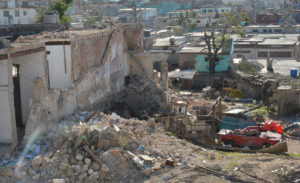
Texas Baptist Men deployed disaster relief volunteers on Palm Sunday after an EF-3 tornado destroyed 55 homes in Franklin and two tornadoes ripped through Alto.

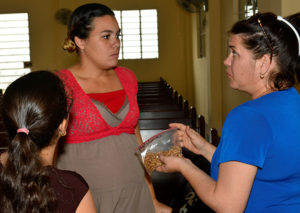
TBM sent emergency food-service teams, chainsaw crews, heavy equipment operators, volunteers to staff laundry and shower units and distribute boxes, chaplains, damage assessors and incident management teams to the affected areas.

Within the first 24 hours after arriving, Baptist volunteers already had logged 1,365 volunteer hours, made 135 personal contacts, completed eight chainsaw jobs, prepared more than 300 meals and distributed a dozen Bibles.

Volunteers are being housed at First Baptist Church in Franklin and Hilltop Baptist Church in Alto.

The ministry to tornado survivors during Holy Week followed a disaster relief mission to Tennessee, where TBM disaster relief workers contributed about 6,700 volunteer hours to assist people recovering from floods.

The TBM incident management team coordinated work in the area around Adamsville, Tenn., working in partnership with Baptist disaster relief crews from Tennessee, Kentucky, Mississippi and Alabama.

Collectively, TBM and its ministry partners in Tennessee prepared 2,372 meals, tore out damaged drywall and flooring from 57 homes, logged 193 heavy equipment hours, provided access to more than 500 showers, washed 294 loads of laundry and distributed 1,624 boxes for flood survivors to collect and store their reclaimed belongings.

They distributed 70 Bibles, made more than 700 personal contacts and recorded 15 professions of faith in Christ.

To contribute financially, send a check designated “disaster relief” to Texas Baptist Men, 5351 Catron, Dallas, TX 75227, call (214) 275-1116 or click here.


Bumpus becomes second-generation state WMU president

GRAHAM—Woman’s Missionary Union of Texas elected Earl Ann Bumpus of Graham as president five decades after her mother, Cleota Lenert, was elected president of Florida WMU.

“I wish she were here to see it,” Bumpus said. Lenert died on Jan. 28 at age 94, nine and a half weeks before her daughter’s election.

Sandy Wisdom-Martin (right), executive director-treasurer of national Woman’s Missionary Union, prays for newly elected WMU of Texas officers (from left) Secretary Susan Morgan from Tallowood Baptist Church in Houston, Vice President Elida Salazar from First Baptist Church in Carrizo Springs and President Earl Ann Bumpus from First Baptist Church in Graham. Also pictured (behind the officers) is Donna Trusty of Dublin, chair of the Texas WMU nominating committee. (Texas Baptist Communications Photo)

Last fall, when members of the Texas WMU nominating committee initially talked to her about serving as state president, Bumpus was careful not to discuss it with anyone other than her husband, but she did mention the possibility to her mother.

Bumpus recalled her mother’s response: “Oh, Texas is a big state.”

She reminded her mother Florida is not exactly small, either, and Lenert managed to serve well.

In January, recognizing her mother’s time was drawing to an end, Bumpus debated whether to let her know about the nominating committee’s decision to present her as their choice for state WMU president.

Her election “was not a done deal, because a nomination from the floor could be made,” said her husband Mark, pastor of First Baptist Church in Graham. He noted Joy Fenner’s election as Texas WMU president 10 years ago followed her nomination from the floor.

During the final week of Lenert’s life, “she was communicating primarily in ways other than verbally” and was in “excruciating pain,” he said. Nevertheless, when Bumpus finally told her mother about the upcoming nomination, Lenert said, “I am overjoyed.”

Lifelong influence of WMU

Bumpus noted she cannot remember a time growing up when she didn’t know about WMU and the importance of missions education.

“I started as a Sunbeam,” she said, recalling the WMU-sponsored program for preschoolers that predated Mission Friends.

Bumpus fondly remembered her father making posters for her mother to use in WMU programs and their family trips to the Southern Baptist conference centers, Glorieta and Ridgecrest, for weeks devoted to missions education.

Because of her mother’s influence, Bumpus also grew to know other state and national WMU leaders.

During her time as a student, she spent a summer working as an intern at the national WMU office in Birmingham, Ala., and lived in the home of Carolyn Weatherford, then executive director-treasurer.

At one point, Bumpus was debating whether she felt a greater calling to missions education or to collegiate ministry through Baptist Student Union, and she talked to Weatherford about the decisions she faced.

“She told me, ‘You probably can do more WMU and missions education work through student work than you can do student work through WMU,” Bumpus recalled.

She went on to serve as assistant BSU director at Baylor University, where she met her future husband, who was a recent Baylor graduate. Subsequently, Bumpus has been involved in missions education in each of the churches her husband has served as pastor—in Pearl, Troy, Mineral Wells, San Angelo and Graham—as well as at the associational and state levels.

Emphasis on communication, reconnecting

In her new role as Texas WMU president, Bumpus hopes to make an impact on the rising generation of young women, just as earlier WMU leaders influenced her life.

“Communication is the No. 1 thing,” she said. “So many don’t know about WMU, or what little they know is colored by negative impressions from years past. They don’t realize there are a lot of different ways to be involved in missions and missions education.”

Bumpus looks forward to having a platform to promote the Mary Hill Davis Offering for Texas Missions and all the ministries it helps to support.

“If I could, I would talk about Texas Baptist missions constantly,” she said.

Bumpus wants to see a greater number of Texas Baptist churches promote and collect the offering, and she hopes a greater number of individuals will contribute to it.

“There are so many ministries that are funded by the Mary Hill Davis Offering, and if people are not giving, the allocations to those ministries have to be cut,” she said.

Bumpus also hopes Texas WMU will reconnect with women who have been involved in some capacity in the past but have grown inactive. The organization needs them, and they need what WMU can offer, she added.

“WMU is so intertwined with my life, and it all goes back to my mom,” she said.


Online petitioners square off on Baylor LGBT policy

WACO—More than 2,700 members of the “Baylor Family”—including students, alumni, major donors and former regents—have signed an open letter asking Baylor University to recognize LGBTQ student organizations.

Outcry over a speech sponsored by the Baylor chapter of Young Americans for Freedom sparked the online letter to President Linda Livingstone and Vice President for Student Life Kevin Jackson.

“We ask that the university reconsider its exclusion of student organizations that are designed to provide a community for individuals in the lesbian, gay, bisexual, transgender, questioning (LGBTQ) and allied community,” the letter states.

In turn, that appeal prompted an opposing online petition titled “Save Baylor Traditions,” which urges the university to “stand strong and refuse to abdicate the traditional Christian values for which it has historically stood.”

“The purpose of this petition is to keep Baylor from changing a policy which would in all likelihood result in it losing its status as a traditional Christian institution, thereby stripping it of that which sets it apart,” the petition states.

Baylor policy

Baylor’s statement on human sexuality says: “Baylor University welcomes all students into a safe and supportive environment in which to discuss and learn about a variety of issues, including those of human sexuality. The university affirms the biblical understanding of sexuality as a gift from God. Christian churches across the ages and around the world have affirmed purity in singleness and fidelity in marriage between a man and a woman as the biblical norm. Temptations to deviate from this norm include both heterosexual acts outside of marriage and homosexual behavior. It is thus expected that Baylor students will not participate in advocacy groups which promote understandings of sexuality that are contrary to biblical teaching.”

The university’s student conduct policy also states that Baylor “expects that each Baylor student will conduct himself or herself in accordance with Christian principles as commonly perceived by Texas Baptists.”

Controversy began to swirl when the Baylor Young Americans for Freedom invited Matt Walsh, a writer for Daily Wire, to speak April 9 on “The War on Reality: Why the Left Has Set Out to Redefine Life, Gender and Marriage.” His scheduled appearance prompted an earlier online petition urging that “harmful hate speech” be kept off the Baylor campus.

Call for change

The subsequent open letter calling for a change in policy regarding student organizations included the preface: “We are not protesting Matt Walsh coming to Baylor University. We are using his invitation to speak as an opportunity to achieve long overdue change to the university’s exclusion of LGBTQ student groups.”

The letter asserts Baylor “continues to deny applications for student organizations that would serve as a community for LGBTQ students, such as the Baylor Sexual Identity Forum, to be official campus groups.”

The letter acknowledges “that allowing our LGBTQ students and their allies to organize official student organizations would represent significant change for Baylor University’s current practices.”

However, petitioners insist policies allowing dancing on campus and permitting African-American students to enroll also represented major changes.

“As members of the Baylor family who love Baylor and believe in its future, our request is simple: let us not have that unfortunate chapter in Baylor’s history repeat itself, requiring us to look back in a few years and realize that we were on the wrong side of an issue of basic compassion and human dignity,” the online letter states.

When asked to comment, a Baylor spokesperson simply responded that “the university is aware of the letter.”

Call to maintain traditional position

The competing “Save Baylor Traditions” online petition asserts if the university chartered an LGBTQ organization, it would “be going against the official position of the Baptist General Convention of Texas.”

On several occasions, the BGCT has gone on record affirming a traditional view on marriage and biblical sexual ethics. Messengers to the 2016 BGCT annual meeting approved a motion declaring “any church which affirms any sexual relationship outside the bonds of marriage between one man and one woman be considered outside of harmonious cooperation” with the convention.

“It is certainly within the best interest of the university to abide by traditional Christian principles and remain in good standing with the BGCT,” the online petition states. “If this is unacceptable to some, they are free to associate themselves with a school which more closely aligns with their position.”


Plano church’s partnership supports church planting in Mexico

PLANO—A North Texas church’s longstanding partnership with a Baptist pastor and hospital administrator in western Mexico undergirds a church-starting movement in the southern Mexican state of Chiapas.

The relationship began about 20 years ago when Don Sewell, who directed partnership missions for the Baptist General Convention of Texas, contacted Wayne Stevenson from First Baptist Church in Plano.

Early in his ministry, Sewell had served as minister to youth at First Baptist in Plano, where he became acquainted with Stevenson, an engineer, entrepreneur and philanthropist.

Significant visit to Guadalajara

Omar Nicolas is administrator of Hospital Mexico Americana and pastor of Tercera Iglesia Bautista in Guadalajara, Mexico. (Photo courtesy of Craig Curry)

Sewell, a former missionary to Mexico, invited Stevenson to accompany him to Guadalajara, where he introduced him to Omar Nicolas, administrator of Hospital Mexico Americana and pastor of Tercera Iglesia Bautista.

Sewell now directs the Joel T. Allison Faith in Action Initiatives at Baylor Scott & White Health in Dallas, and Baylor regularly donates medical equipment and provides other assistance to the Baptist hospital in Guadalajara.

Stevenson and Nicolas developed a deep and abiding friendship, and the Plano layman began to support the bivocational Mexican Baptist pastor’s work—not only at the hospital and his congregation in Guadalajara, but particularly the churches Tercera Iglesia Bautista began planting.

“His father had been a Baptist minister in Chiapas, and he convinced me to take a trip with him down there,” Stevenson recalled.

Nicolas grew up in Chiapas—an area in South Mexico long dominated by a hybrid blend of Roman Catholicism and indigenous folk religion—and was familiar with its people and culture. As a result, his efforts to start churches and train pastors in the region met with more success than most previous attempts.

Growing movement to start churches

After Stevenson learned more about the opportunities in Chiapas, he worked with Jerry Carlisle, then pastor at First Baptist in Plano, and leaders of the congregation’s missions committee to support work in Chenalhó, where Nicolas helped plant a church and start a seminario—a training and equipping center for pastors.

Worshippers gather at the original building used by the Baptist church in Chenalho, Mexico. (Photo courtesy of Jerry Carlisle)

“There were about seven members at the church in Chenalhó then. They met in one room, about 12 by 15 feet, with one light bulb hanging from the ceiling,” Stevenson recalled.

However, the church’s members had secured a plot of land on a hill that they cleared and leveled with hand shovels to prepare a building site. First Baptist in Plano provided the $3,000 in building materials the church needed, and members constructed a building.

“A few months later, they called us to invite us to the building dedication,” Stevenson said. “The church had more than 100 in attendance that day, and they baptized 17 people in a creek.”

Later, when the church outgrew its facility, the congregation built another sanctuary capable of seating about 300 and converted the earlier building into classrooms for the pastor training center.

That center trained ministers who served in about a dozen churches Tercera Iglesia Bautista in Guadalajara started in villages throughout Central and South Mexico.

Planting a church in San Cristóbal

Miguel Santiz Hernandez, who grew up in the area and attended the training school Nicolas founded, started a church at his home in San Cristóbal—a strategically placed colonial-era city that previously lacked a strong evangelical presence.

Assembled for the dedication of a Baptist church building in San Cristobal, Chiapas, with the church’s pastor, Miguel Santiz Hernandez, are (left to right) Pastor Craig Curry and layman Wayne Stevenson from First Baptist Church in Plano; Don Sewell, director of Faith in Action Initiatives at Baylor Scott & White Health; Bill Arnold, president of the Texas Baptist Missions Foundation; and Omar Nicolas, administrator of Hospital Mexico Americana and pastor of Tercera Iglesia Bautista in Guadalajara. (Photo courtesy of Craig Curry)

When the congregation outgrew the pastor’s home, First Baptist in Plano and Tercera Iglesia Bautista in Guadalajara helped purchase property for a worship center.

“My first trip to Chiapas, the church had obtained property, but it was just dirt,” said Craig Curry, who became pastor at First Baptist in Plano three years ago.

An architect donated his services, and the members of the congregation in San Cristóbal provided labor for the church building. Donors channeled more than $100,000 through the Texas Baptist Missions Foundation to support the church construction project in San Cristóbal.

In February, Curry, Stevenson and Sewell—along with Bill Arnold, president of the Texas Baptist Missions Foundation—attended the dedication service for the church building in San Cristóbal, joined by about 400 others.

“During the two and a half hour service, Pastor Miguel told about his mother’s dream of a church” in San Cristóbal, Curry recalled. Choked with emotion, the pastor was unable to continue, noting his mother died a short time before she saw her prayers answered.

Curry wants to see First Baptist continue its relationship with the church in San Cristóbal by providing the congregation the equipment and supplies it needs to care for infants and toddlers, as well as supporting Nicolas in varied aspects of his work.

“This is a picture of cooperation,” Curry said. “Omar Nicolas is the catalyst for a church planting movement in Chiapas, and Baylor Scott & White helps his hospital in Guadalajara. First Baptist in Plano, the Texas Baptist Missions Foundation and others helped provide funding in San Cristóbal, and members of the church there did the construction. It shows what we can do when we work together.”

With additional reporting by Editor Eric Black.


Ronnie Floyd elected SBC Executive Committee president

The Southern Baptist Convention’s Executive Committee chose Ronnie Floyd, former SBC president and Arkansas megachurch pastor, as its new president.

Members of the Southern Baptist Convention Executive Committee gather around Ronnie Floyd and his wife, Jeana, after his election as the agency’s president and chief executive officer. (Photo / Ken Camp)

During a called meeting at a hotel at Dallas-Fort Worth International Airport, the SBC Executive Committee voted 68-1 to elect Floyd, 63, as its seventh chief executive.

Floyd has been senior pastor of Cross Church in northwest Arkansas for 33 years. During his time at the multi-campus church, which grew out of First Baptist Church in Springdale, Ark., it reported baptizing more than 22,000 people and starting 148 other churches.

Evangelical adviser to Trump

He has served on President Trump’s informal council of evangelical advisers and was appointed president of the National Day of Prayer Task Force in 2017.

Asked at a news conference following his election whether he plans to continue to serve with the Trump evangelical advisory group, Floyd explained he never endorsed Trump for office. Rather, he agreed to serve on an advisory council during the presidential campaign to advise Trump about issues of concern to evangelical Christians, noting specifically sanctity of life, dignity of life and religious liberty, he said.

After Trump was elected, Floyd said, he has been part of “a few experiences—not very many” consulting with the president by phone along with other evangelical leaders. Floyd noted he was involved in one Oval Office visit, where he was one of two people invited to pray for Trump.

“That was the only time in my life I’ve been in the Oval Office. … I want to make this really clear, if that had been Hillary Clinton elected, if she would have asked me to the Oval Office, I would have been glad to have gone,” he said.

In his new role at the Executive Committee, Floyd emphasized he would be “glad to meet with any president” to pray, offer counsel and call attention to issues of concern to evangelical Christians.

‘Ready to lead on Day One’

At his news conference, Floyd also stressed he will “continue to think like a pastor” as he leads the SBC Executive Committee.

“I will champion pastors,” he said. “I will champion local churches.”


Ronnie Floyd, newly elected president of the Southern Baptist Convention’s Executive Committee, is shown in this 2016 file photo holding a news conference as SBC president. (BP file photo)

Mike Stone, chair of the SBC Executive Committee, praised Floyd as “a trusted voice of experienced leadership” who “will be ready to lead on Day One” as the agency’s chief executive.

Floyd was chair of the SBC Executive Committee in 1995-97 when the convention adopted the Covenant for a New Century strategic plan that reduced the number of SBC entities from 19 to 12.

Later, he also chaired the SBC Great Commission Resurgence Task Force, which revised the ministry assignments of the International Mission Board and the North American Mission Board.

Floyd succeeds Frank Page, who stepped down in March 2018 after acknowledging a “morally inappropriate relationship.”  D. August “Augie” Boto has served as interim president since April 2018, and Boto named Jimmy Draper as “Executive Committee ambassador”—essentially his liaison to churches.

Racial reconciliation

Steve Swofford, pastor of First Baptist Church in Rockwall and chair of the SBC Executive Committee’s presidential search committee, announced Floyd’s nomination in a letter emailed to Executive Committee members, calling him “no stranger to any of us.”

Ronnie Floyd, newly elected president of the Southern Baptist Convention’s Executive Committee, and his wife Jeana of 42 years have two sons and seven grandchildren. (BP file photo)

“He has been a leader in racial reconciliation and has a stellar record of bringing together brothers and sisters from all generations, all races and all walks of life to work in harmony for kingdom purposes,” Swofford wrote.

“We firmly believe he is the man God has uniquely prepared and gifted to lead our Executive Committee at this challenging time in our nation’s and our denomination’s history.”

Floyd was born in Gonzales, earned his undergraduate degree from Howard Payne University and received his Master of Divinity and Doctor of Ministry degrees from Southwestern Baptist Theological Seminary. His Texas pastorates include First Baptist churches in Cherokee, Milford, Palacios and Nederland.

When he was SBC president, Floyd and Jerry Young, president of the historically black National Baptist Convention U.S.A., Inc., coordinated a November 2015 meeting of 10 Southern Baptist pastors and 10 National Baptist pastors to discuss ways to promote racial reconciliation.

Floyd also presided over the 2016 SBC annual meeting when messengers adopted a resolution renouncing the display of the Confederate battle flag.


Politics—difficult but not inherently dirty, panelists agree

AUSTIN—A former White House insider and a Texas Baptist pastor with a long track record of public service agreed Christians have a responsibility to become politically engaged and to advocate for the common good.

“Politics matters” because elected officials deal with “great issues of moral consequence,” Michael Gerson, syndicated columnist and former top aide to President George W. Bush, told a Texas Baptist gathering. And politics matter most to people who are denied justice, he asserted.

“Politics can be difficult business but not dirty business,” Gerson said. “It actually impacts people’s lives at a fundamental level. It’s a noble pursuit. … It can embody moral purpose.”

Gerson and Michael Evans, pastor of Bethlehem Baptist Church in Mansfield and president of the Baptist General Convention of Texas, participated in a panel discussion during a Christian Life Commission Advocacy Day event at Woodlawn Baptist Church in Austin. Ferrell Foster, director of ethics and justice with the Texas Baptist CLC, moderated the dialogue.

Evans, who has served on his local public school board and on a community college board, recalled speaking frequently at public hearings prior to pursuing public office.

However, he realized about 15 years ago he could make the greatest difference for the common good by helping to craft policies, not just critique them.

“I learned if I became an elected official, I could do more than just talk,” he said.

‘Advocate for the least and the lost’

Evans affirmed the role of the Christian Life Commission in speaking to moral issues and challenging Texas Baptists to advocate for those who otherwise would go unheard.

“I appreciate being part of a body that has the courage to advocate for the least and the lost,” he said.

At the same time, he urged Texas Baptists to “leverage” their diversity and encourage people from varied racial and ethnic groups to speak from their distinct perspectives.

Challenging times offer opportunities for “individuals who allow themselves to be used by God to be a prophetic voice,” Evans said.

Speaking broadly about evangelicals in the United States, Gerson raised concern about those whose views about issues in the public square are determined more by party affiliation and political orientation than by distinctively Christian principles.

“It is so easy to be a tool in the power games of others rather than an authentic voice—a critical and prophetic voice—that is determined from a set of assumptions about the moral influence and impact of Christian faith,” he said. “The question is: What is driving what? I’m afraid politics is driving too much and morality driving too little.”

Evans emphasized the importance of “allowing truth to stand against hypocrisy” and living by “a true moral compass.” He stressed the importance of keeping Christ central and understanding who Christ is.

Looking at the economy, Gerson characterized it as a “mixed bag,” with some areas experiencing growth while others struggle. He identified the lack of social mobility in the United States—the inability of Americans to advance socio-economically—as a significant problem.

Evans voiced agreement, saying, “We still find ourselves in a place where we have individuals who are caught on an island of hopelessness.”

Find hope in ‘unexpected coalitions’

Gerson voiced hope in the possibility of building “unexpected coalitions” that transcend party lines around issues such as efforts to eradicate human trafficking, AIDs and hunger.

In spite of the difficult and divisive atmosphere in political life today, it is neither as bad as it could be or as bad as it has been, he added.

“The divisions are deep and real, but they are not unprecedented,” Gerson said.

He pointed to the birth of the Civil Rights Movement in the African-American church as a picture of how Christian faith can shape society positively.

“Sometimes the people who need justice are the carrier of the ideal itself,” Gerson said.

Africans came to the United States as slaves and adopted the religion of their masters. In time, their ancestors demonstrated an understanding of Christianity far beyond that of their oppressors, he noted. And in the process, ancestors of slaves enabled the nation to “save its soul” by reclaiming the vision of its founding documents, he concluded.

“That’s the best moral story outside the Bible, as far as I’m concerned,” Gerson said.


Gerson calls for a hopeful alternative to polarized culture

AUSTIN—Polarization, confirmation bias and dehumanization damage public life, syndicated Washington Post columnist and social observer Michael Gerson told a Texas Baptist Christian Life Commission gathering in Austin.

However, Christians can offer a hopeful alternative through a commitment to the common good grounded in the conviction that all people are made in the image of God, said Gerson, former speechwriter and policy adviser to President George W. Bush.

Gerson, keynote speaker at the CLC Advocacy Day conference at Woodlawn Baptist Church in Austin, said politicians he knows “complain about a political atmosphere more toxic than any they can remember.”

Polarized Americans self-segregate

Polarization grows out of a culture in which people live in “increasingly homogenous political communities in silos of the mind,” Gerson said.

Americans self-segregate politically, culturally and geographically, “and our views of people in the opposing camp become increasingly more negative,” he observed.

“The result is the careful weaving of cocoons,” Gerson said, noting an increasing number of people in the United States who live in “cultural bubbles” where they cannot imagine how anyone could live differently or think differently they do.

“The politics of polarization can win an election but wreck democracy,’ he said.

Resisting polarization begins with a change in attitude, Gerson insisted, calling for Christians to understand and love both those who are inside and those who are outside their group.

A polarized culture leads to confirmation bias that affects how people view reality, he added. Citizens in a polarized nation not only seek out information that confirms their preconceived ideas, but also interpret information through a lens that distorts facts to fit into their pre-existing ideas.

“Group commitments become more powerful than reason itself,” he said.

An antidote to this malady, Gerson asserted, is the willingness to “call out your own side.” While few are persuaded when people with opposing views criticize each other for distorting facts, “it is different and powerful to police your own,” he said.

“The hardest thing is to confront confirmation bias in ourselves,” Gerson acknowledged. “All of us have a tendency to see an enemy when we really need a mirror.”

Moral polarization demands a spiritual solution

The ultimate destination of a polarized society gripped by confirmation bias is dehumanization, and that can lead to violent acts, he said.

“There is no denying dehumanization has become part of our public discourse,” Gerson said, confessing his fear that the ideals that shaped the nation’s founding could be replaced with different and lower principles.

“There may be structural reasons, but there aren’t structural answers for moral polarization,” he said. “The answer will be spiritual—not in the sense of piety but in the sense of mutual grace. There is only one force that than overcomes moral polarization, and it is empathy.”

Religion traditionally has been a source of healing and truth, but it also can fall prey to embracing fear of those who are different, he asserted. Gerson—a conservative evangelical Christian—pointed to the danger of evangelicals becoming too closely identified with “one populist nativist party.”

“The predominant narrative of white evangelicals is tribal rather than universal,” he said. “The very thing that should repel evangelicals—the dehumanization of others—is sometimes what seems to fascinate and attract them. …

“Pro-life arguments are discredited by an association with misogyny. Arguments for religious liberty are discredited when we say Muslims shouldn’t have any religious rights. Arguments for family values are discredited by nativist disdain for migrant families. And the ultimate harm here is to the reputation of faith itself.”

Failure in moral formation

This represents not only a failure of Christian leadership, but also “a failure of the Christian church in the moral formation of its members,” Gerson asserted.

“It would be helpful for Christian political engagement to at least have some roots in Christian ideals,” he said.

Christian political engagement should begin with “a certain anthropology—a transcendent view of human rights and dignity” grounded in the belief that all people are created by God and loved by God, he insisted.

While there is no specifically Christian position on how to ensure border security, for instance, “religious leaders have a solemn moral duty to oppose the dehumanization of migrants,” Gerson said.

If Christians truly believe each person bears the image of God, then “cruelty, bullying and oppression are cosmic crimes,” he added.

Christian approach to political engagement

A distinctively Christian approach to social engagement should be characterized by a deep commitment to the common good and should take seriously the concept of the kingdom of God, Gerson said.

“The nature of the kingdom determines how it is properly advanced,” he said. “You can’t advance a vision of liberation by oppressing the conscience of others. You can’t advance a vision of human dignity by dehumanizing others. You can’t advance a vision of peace with violent and demeaning language. …

“The proper role of Christians in politics is not to Christianize America. It is to demonstrate Christian values in the public realm.”

Christians who seek to be socially engaged need to “remember our history and recover our heroes,” he said.

Noting “the ability of compassion and generosity to break down walls of contempt,” Gerson pointed to the example of African-American religious leaders during the Civil Rights Movement and members of Emanuel African Methodist Episcopal Church in Charleston, S.C., after a mass shooting perpetrated by a white supremacist.

“Christians gain influence in our culture—real, lasting influence—when we act like Jesus,” Gerson said.

A ‘difficult but not impossible’ moment

In an interview after his keynote address, Gerson emphasized the role of the church in rebuilding the “shared sense of common purpose” in a polarized society.

“The moment is difficult, not impossible,” he said. “The bonds of our country are frayed, not broken. But we need healing influences, and the church should be one of those influences.”

The church must take seriously its teaching role not only by imparting doctrine, but also providing a moral and ethical foundation for its members, he asserted.

“We have 2,000 years of reflection on how Christians should act when they leave the doors of the church,” Gerson said.

Churches can help followers of Christ learn “the framework of values that Christians should bring to public life,” he said.

Christians also benefit from friendships with people who are genuinely seeking answers but hold different views, he noted.

“Out of this community of minds, people are changed,” he said. “They see first of all that people with different views are human beings, not just cut-out figures in a morality play. They’re actually human beings that need to be loved in practical ways.”


Who supports daily fantasy sports? It’s anybody’s bet

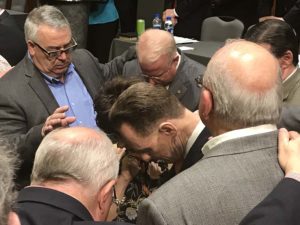
AUSTIN—Cue the Broadway cast recording of Hamilton. At the Texas Capitol, it’s “The World Turned Upside Down” in terms of figuring out Republican and Democratic positions on legalization of paid daily fantasy sports businesses.

Special session ends without passing most hot-button bills
BGCT Photo / Kalie Lowrie)

Some things have remained constant in Austin. Rep. Richard Peña Raymond, D-Laredo, still wants to see fantasy sports classified as games of skill, rather than as games of chance prohibited by Texas law. He introduced a bill to that effect in 2016.

Raymond introduced that legislation even after Attorney General Ken Paxton issued an opinion on Jan. 19, 2016, stating his beliefs that “a court would conclude that participation in paid daily fantasy sports leagues constitutes illegal gambling.”

Daily fantasy sports sites permit players to pay a fee to enter a game in which they create a fantasy sports team using real professional athletes. The athletes’ performance in various statistical categories determines how a fantasy league team fares. The fantasy player wins or loses money accordingly, with the sponsor site claiming a percentage.

Paxton drew a distinction between commercial daily fantasy sports operations and “traditional fantasy sports leagues … where no person receives any economic benefit other than personal winnings and the risks of winning or losing are the same for all participants.”

This session, Raymond has introduced HB 1544, which stipulates that “an individual who pays money or other consideration to participate in a fantasy sports contest is not placing a bet for the purposes of application of an offense” under the state’s penal code.

Bipartisan support claimed

While Raymond’s previous attempt to declare daily fantasy sports legal failed to gain traction, this year he claims bipartisan support for the measure.

During a March 12 hearing on HB 1544 before the House Licensing and Administrative Procedures Committee, Raymond said: “I can’t remember the last time that I could stand up and say I appreciated the Republican Party of Texas and the Democratic Party of Texas for both putting in their platforms that they support this legislation.”

Actually, the Republican Party of Texas platform includes two planks on gambling. On the one hand, the platform unequivocally says, “We oppose the expansion of gambling.” However, it also includes the statement Raymond referenced, which says, “We support action by the Texas Legislature clarifying existing state law without attaching new taxes or fees to the fantasy sports industry, which would grow the size and scope of government.”

‘It’s just trickery’

Rob Kohler, consultant with the Texas Baptist Christian Life Commission, wonders how state Republican leaders could have agreed to the seemingly contradictory positions.

“I think some folks have been tricked. I don’t know who tricked them, but it’s a scheme,” Kohler said. “It’s just trickery, and there’s no place for it.”

Ironically, while the state’s Democratic Party has gone on record in support of Raymond’s proposal, it is not included in the party platform. Manny Garcia, executive director of the Democratic Party of Texas, called the difference “just a technicality in phrasing.”

“The Texas Democratic Party’s executive committee passed a resolution in support of Rep. Raymond’s legislation,” Garcia wrote in an email.

When asked if a resolution by the party’s executive committee carried the same weight as a platform approved by delegates to the state convention, he replied: “Both are a representation of our values. Neither is binding to elected officials.”

In spite of a Republican attorney general’s opinion that participation in daily fantasy sports constitutes illegal gambling, Sen. Lois Kolkhorst, R-Brenham, introduced SB 731, a companion bill to Raymond’s proposal in the House.

Kolkhorst did not respond to an email asking how SB 731 could be reconciled with her party’s stated opposition to expansion of gambling.

Skill or chance?

Texas Republican Party Chair James Dickey offered his rationale.

“The resolution is the definition of gambling as participating in games of chance—contests where knowledge/experience/insight/information have no impact. Rolling the dice or selecting a card or spinning a wheel are purely games of chance—as are lotteries,” Dickey wrote in an email.

“There are other situations, though, where dollars paid could result in higher than dollars returning that are not completely dependent on chance: investing in the stock market or real estate, for example. There is of course an element of chance in any effort, but knowledge and experience play a significant role as well.

“The party’s resolution is that fantasy sports is a similar situation—it’s impossible to predict whether or how someone will be injured, but it’s not all impossible to have knowledge about which players are better, or more likely to perform better under certain circumstances. Therefore, since knowledge and insight and experience have an ability to change the probability of outcomes in this activity, it is by definition not gambling.”

Rodger Weems, chair of Texans Against Gambling, rejected that assertion.

“The people of Texas and their legislature must not be fooled by bills that purport to ‘clarify’ the legal status of daily fantasy sports,” Weems said. “Daily fantasy sports needs no clarification because it is clearly illegal. Period. The plain language of the law says so, and an opinion from the Texas attorney general says so.

“If proponents of this bill think they can shortcut the difficult process of expanding gambling in Texas, they are mistaken. The Texas Constitution makes gambling expansion difficult for a reason.”


Waco Baptist family helps meet needs in Cuba

WACO—Weeks after a tornado ripped through a densely populated section of Havana, a Cuban Baptist seminary continues to deliver much-needed assistance to storm survivors, thanks in large part to ministry spearheaded by a Waco Baptist family.

Cuban state media reported a category F4 tornado that hit Havana Jan. 27 claimed six lives and damaged more than 3,500 homes in its seven-mile-long path. (Photo courtesy of L.M. Dyson family)

Cuban state media reported the category F4 tornado, which passed less than two miles south of Havana’s historic downtown district Jan. 27, claimed six lives and damaged more than 3,500 homes in its seven-mile-long path.

In the storm’s immediate aftermath, more than 200,000 lacked access to water. Many people were without electricity at least three days, and even residents whose homes were not seriously damaged lost all their frozen and refrigerated food.

Peter Dyson, a member of First Woodway Baptist Church in Waco, contacted leaders at Havana Baptist Theological Seminary to find out if everyone there was safe and if the seminary had been hit.

Linking resources to needs

Dyson’s father, L.M., a retired business professor at Baylor University, has helped Cuban Baptists for the last two decades, linking stateside resources to ministry needs on the island nation.

The Dyson family delivered water purifiers to Cuba. (Photo courtesy of the L.M. Dyson family)

Peter Dyson learned the seminary escaped any major damage. Recognizing the downtown school was strategically positioned for ministry to tornado survivors, he asked if the seminary might be able to establish feeding stations for displaced people. Seminary officials were willing to make their personnel and facility available, but they questioned whether they had enough food and other resources to minister effectively.

So, L.M. Dyson contacted national Woman’s Missionary Union. The WMU Foundation’s HEART Fund—Humanitarian Emergency Aid for Rebuilding Tomorrow—provided a $3,650 grant for a generator and bulk food to help the downtown Havana seminary meet community needs.

Later, WMU also approved a $3,500 Pure Water, Pure Love grant to purchase water purification systems.  Green Acres Baptist Church in Tyler, First Woodway Baptist Church in Waco and Olmito Baptist Church, between Harlingen and Brownsville, also contributed financially.

Blessings International, an Oklahoma-based ministry, donated 150 lbs. of medicine valued at $5,000.

Delivering supplies

Pregnant women received much-needed prenatal drugs. (Photo courtesy of L.M. Dyson family)

Eight days after the tornado hit, Dyson’s wife, Doralyn, and their daughter, Dawn Henry, traveled to Cuba to deliver the donated ministry supplies—including two tires for the seminary’s van.

“We got every bit of it—including all the medicine—through customs with no trouble. The hand of God was on it,” Doralyn Dyson said.

In addition to a variety of antibiotics and other drugs needed to fight the spread of disease after the natural disaster, they also delivered much-needed prenatal drugs for pregnant women and pediatric medicine.

Personnel at Havana Baptist Theological Seminary established four feeding stations after a tornado hit their city. (Photo courtesy of L.M. Dyson family)

Havana Baptist Theological Seminary personnel prepared and served two meals a day for more than a week, meeting the immediate needs of their neighbors.

In the weeks that followed, members of the seminary community and other Baptists in Havana donated items people affected by the tornado would need. Then they began an ongoing community outreach ministry, fanning out from the seminary to deliver the donated goods.

“The Christians pulled together,” Doralyn Dyson said. “They don’t have much to begin with, but they took their own clothing and household items—the little they had—and shared with those who had nothing.”

Lives changed

Christians donated their own clothes and household items to meet the needs of their affected neighbors. (Photo courtesy of L.M. Dyson family)

A few weeks after her initial trip after the tornado, she returned with her son, Peter, to deliver additional supplies—not only in Havana, but also to a Baptist nursing home, a camp in Western Cuba and to Christians in Santa Clara, where First Woodway Baptist has an ongoing ministry relationship.

On her second trip, she recalled when her driver stopped to visit a family who had been the recipient of the seminary’s community outreach ministry. Her escort talked with a man in the courtyard outside his house and learned he had just prayed with a pastor who led him to faith in Christ.

“The pastor was taking out two bags of Santeria idols from his house,” she said, referring to an Afro-Cuban folk religion that melds Catholic veneration of saints with indigenous spiritism.

Donated water filters have made a significant difference in the lives of people who have received them, said Rodosvaldo Rodriguez, a professor at Santa Clara Baptist Seminary. (Photo courtesy of L.M. Dyson family)

‘Everybody is very healthy’

On her second trip, she also delivered additional water filters. Last year, Cuban Baptist disaster relief workers—who had been trained by Texas Baptist Men—taught 400 Baptist pastors and church leaders how to use the water purification systems, which they distributed in their own communities.

The water filters have made a significant difference in the lives of people who have received them, said Rodosvaldo Rodriguez, a professor at Santa Clara Baptist Seminary.

“The filter that you brought and gave to each of my family has been a blessing to us,” he said, adding his life before gaining access to purified water was “miserable” and characterized by “very frequent fits” of gastro-intestinal problems.

“Then one day you showed up with the filters. My life changed dramatically,” he said. “I began to drink purified water, and I haven’t had any more fits. Then I got to the conclusion that it was the water I had been drinking that caused all that.

“Furthermore, my daughter had just given birth to a baby girl and had to buy bottled water. Not anymore. Everyone is drinking purified water—even his baby boy who is one month and a few days old. Everybody is very healthy.”


Baptists join call to increase public school funding

AUSTIN—A Baptist pastor from Houston joined teachers and administrators at a March 11 rally on the steps of the Texas Capitol, urging lawmakers to increase funding for public education.

Ogletree 150
John Ogletree

Schoolteachers and preachers alike plant “seeds of hope” in young lives, said John Ogletree, pastor of First Metropolitan Church in Houston and school board president for the Cypress-Fairbanks Independent School District.

“You plant seeds of hope in our children,” Ogletree told public educators before offering an invocation at the rally. “You plant these seeds no matter the socio-economic background; no matter the race, creed or color; no matter the dysfunction that they’ve come from in their homes; no matter whether they have limited abilities, physically or emotionally or intellectually. You still do the job and plant seeds of hope.”

Ogletree, who serves on the board of the Pastors for Texas Children advocacy group, noted the challenges public schoolteachers face, but encouraged them to remain hopeful.

“We urge you to remain diligent, remain patient, but whatever you do, remain confident, because we will win this fight,” he said, as reported by EthicsDaily.com. “I’m here to tell you that the seeds of hope that you plant will one day produce a harvest of hope that we’ll see all across this state from the children that you educate.”

Among the governor’s emergency items

In his biennial State of the State address Feb. 5, Gov. Greg Abbott named school finance reform, teacher pay raises and property tax relief as emergency items for the Texas Legislature.

“Texas must recruit and retain the best and brightest teachers to educate our students. This session, we must pay our teachers more,” Abbott told legislators.

In response, lawmakers in both the Texas Senate and the state House of Representatives have introduced bills addressing school finance reform and pay increases for public schoolteachers.

SB 3, introduced by Sen. Jane Nelson, R-Flower Mound, authorizes $4 billion over two years, providing $5,000 annual pay raises for full-time classroom teachers and school librarians. The bill passed unanimously in the Senate.

SB 4, filed by Sen. Larry Taylor, R-Friendswood, offers money for teacher merit pay, as well as incentives for districts to improve third-grade reading performance. It also provides funds for full-day pre-kindergarten and increases funding for low-income students.

HB 3, filed by Rep. Chair Dan Huberty, R-Houston, chair of the House Public Education Committee, and supported by Speaker Dennis Bonnen, R-Angleton, provides $6.3 billion for public education and $2.7 billion for property tax reform.

‘Called to pursue the common good’

Kathryn Freeman 150
Kathryn Freeman

Kathryn Freeman, director of public policy for the Texas Baptist Christian Life Commission, particularly expressed appreciation to Huberty and Bonnen for their efforts “to reform the broken school finance system.”

“HB 3 invests $9 billion into the future of Texas through an investment in our public school children. We are called as Christians to give special attention to the poor and vulnerable, so we are pleased HB 3 targets resources to children most at-risk for failing to obtain a high school diploma, such as students with learning disabilities and living in poverty,” Freeman said.

“The vast majority of Texas school children will attend a Texas public school. As Christians called to pursue the common good, we support HB 3 because we believe it is a step toward ensuring all children—even those in impoverished neighborhoods—have access to quality neighborhood schools.”

‘A step in the right direction’

In a public statement released the day of the rally for public education in Austin, Pastors for Texas Children likewise expressed support for HB 3.

“While still short of what our children need, $9 billion is a significant step in the right direction,” said Charles Foster Johnson, founding executive director of Pastors for Texas Children.

Charles Foster Johnson 140
Charles Foster Johnson

“A budget is an intrinsically moral document, not merely a financial one. We pray that our Texas House and Senate will produce a final school finance plan that puts our children, and the ones who teach them, in the place of highest priority where they belong.”

In a March 12 email, Johnson noted Texas remains about $40 billion behind in funds required “to bring us to the middle of the pack nationally in per pupil funding,” but both the House and Senate bills represent real progress.

While both call for teacher pay raises and include plans for full-day pre-kindergarten classes, he pointed to two significant differences.

“First, the House version does not tie their funding to performance outcomes on standardized tests, like the Senate version does. Second, the Senate version makes some of the pay increases for teachers contingent upon ‘merit’—this is, the academic performance of their students,” he wrote.

“We disagree on our provision [of funds] having strings attached. We will seek to reconcile these two versions into a plan that funds our schools without conditions. It’s our moral duty to do so, especially when we are so far behind.”


Lack of dynamism creates decadence, Ross Douthat asserts

WACO—If Western civilization is mired in decadence, it has less to do with orgies and overindulgence than with sterility and stagnation, conservative Catholic commentator Ross Douthat told a Baylor University crowd.

Douthat, author and New York Times columnist, participated in a public dialogue about “Decadent Societies” moderated by Alan Jacob, distinguished senior fellow at Baylor’s Institute for Studies of Religion.

Flagrant sin and moral depravity are symptomatic of decadence but do not define it, Douthat suggested. While some view a decadent society as one that has failed or faces imminent failure, he sees a society’s decadence and its failure as related but not identical.

“Decadence creates certain vulnerabilities to failure but is not synonymous with failure,” he said.

‘Drift, stagnation and repetition’

Instead, Douthat considers a decadent society as the opposite of a dynamic society. “Drift, stagnation and repetition”—as opposed to dynamism, creativity and originality—characterize a decadent society, he asserted.

The 150-year period from 1825 to 1975 represented a time of dynamic technological change that coincided with revolutionary change in morality, exploration and artistic expression, he observed.

While there is not necessarily a cause-and-effect relationship between economic, technological, moral and artistic dynamism, he believes “some suggestive correlation” exists.

“I don’t think it’s crazy to suggest that there are feedback loops” of creative energy, he said.

‘Simmering discontent’

For most of the last four and a half decades, Western society has appeared “stuck” in a sustainably decadent phase, endlessly repeating without resolving essentially the same arguments, Ross Douthat (right) observed. (Photo / Ken Camp)

A century and a half of dramatic technological advancement created an “expectation of change,” but “the promise that tomorrow will be better than today” failed to materialize significantly in the last four and a half decades, he asserted.

Consequently, Western society is burdened with “the costs of modernity”—including a lack of grounding in tradition—“without its promised benefits,” Douthat said.

“What you’re left with is a simmering discontent,” he said.

The post-World War II era of expansion, particularly the 1960s and early 1970s, marked the last great dynamic period in the United States, he said, pointing to the Apollo space program as its defining symbol.

While not all the “moral revolutions” that occurred in that time had positive outcomes, the creative energy of the era is undeniable, he noted.

‘The stability of the grave’

Dynamism carries an element of danger, whereas decadence offers stability, he asserted.

“It is a stability that is kind of sterile … like the stability of the grave,” he said.

The most pervasive technological advance since the mid-1970s—the Internet—seems to offer both “perpetual stimulation” and the “perpetual illusion of activity,” he suggested.

“It’s possible that the Internet is just play-acting” that leaves users “over-stimulated to the point of numbness,” he said.

On the other hand, it could set the stage for destabilizing change, he added. History will determine whether social media and the Internet generate real change and reflect reality or just offer a substitute for it, he noted.

‘Desire for something better’

For most of the last four and a half decades, Western society has appeared “stuck” in a sustainably decadent phase, endlessly repeating without resolving essentially the same arguments, Douthat observed.

“Even if people have a sense of moral imagination, if they become frustrated with the institutions, that moral imagination curdles,” he said.

Ironically, both Alexandria Ocasio-Cortez’s Green New Deal democratic socialism and Donald Trump’s “Make America Great Again” populism reflect a visceral reaction against decadence, Douthat asserted.

In different ways, both appeal to the idea that the United States “used to do big things” and reflect a desire to “get back to that,” he noted.

“As a conservative, I think there are deep moral problems with the left’s vision. As a Christian, I think there are deep moral problems with Donald Trump’s vision,” he said.

However, both reflect the “desire for something better,” he added.


Court weighs competing arguments in Peace Cross case

WASHINGTON, D.C.—Advocates on both sides of a case involving a 40-foot cross on government land agreed the Supreme Court appears open to considering different tests to recognize unconstitutional government establishment of religion.

However, they drew different conclusions about whether the high court would create a new doctrine to guide lower courts’ interpretation of the First Amendment clause, “Congress shall make no law respecting an establishment of religion.”

The Supreme Court listened to oral arguments Feb. 27 related to The American Legion v. American Humanist Association, a case focused on the Peace Cross in Bladensburg, Md. The Latin Cross was dedicated in 1925 to honor veterans from Prince George’s County who died in World War I.

The Fourth Circuit U.S. Court of Appeals ruled the cross is an unconstitutional endorsement of Christianity, but appellants argued it should be viewed as a war memorial that does not constitute government establishment of religion.

An often-cited test regarding the Establishment Clause draws from the Supreme Court’s 1971 opinion in Lemon v. Kurtzman. The so-called “Lemon test” says a law must have a secular purpose, not primarily promote or restrict religion, and not create “excessive entanglement” with religion.

‘Coercion test’ proposed

The American Legion, arguing in support of the Bladensburg cross, asserted the Supreme Court instead should apply a coercion test—asking whether a challenged act involving the state coerces citizens into supporting or participating in religious activity. As a “passive display,” the Bladensburg cross does not coerce behavior, the attorney asserted.

Baptist Press reported Kelly Shackelford, president and chief counsel of the First Liberty Institute, asserted the coercion test is consistent with the Constitution and the intent of the nation’s founders.

Russell Moore 150
Russell Moore

The founders “didn’t want the government coercing anyone with regard to their religion,” Shackelford told Baptist Press. “They wanted people to be free in exercising their faith, and that should be the guiding principle.”

Russell Moore, president of the Southern Baptist Convention’s Ethics & Religious Liberty Commission, sounded a similar note, calling the effort to remove the Bladensburg cross an “attempt to amend the Establishment Clause to mean what (James) Madison did not write.”

“As we submitted in our brief to the court, maintaining a nearly century-old memorial is hardly an official declaration in law for Christianity.”

‘A hot bench’

In a podcast, Baptist Joint Committee for Religious Liberty Executive Director Amanda Tyler and General Counsel Holly Hollman discussed their impressions based on oral arguments in the cross case.

holly hollman200
Holly Hollman

“It was a hot bench from the very beginning,” Hollman said, explaining members of the Supreme Court asked frequent and penetrating questions to lawyers who presented arguments.

Hollman acknowledged many people—including some judges—critique the Lemon Test as “unworkable or complicated or confusing.”

“That’s part of why, I think, the bench was so aggressive” in its questioning, she said. “They were trying to figure out: Do we need a new test? Is there a new test? Under what test should this cross stay or go? And what will be the effect on all the other cases?”

At one point, Justice Neil Gorsuch asked if it is “time for this court to thank Lemon for its services and send it on its way.” Justice Brett Kavanaugh noted the court has not applied the Lemon test in some of its most important First Amendment rulings, and he asserted that “the lower courts need some clarity.”

However, while the justices questioned the Lemon Test, Tyler added, “They didn’t seem to be gravitating toward any better alternative.”

Shackelford agreed the justices were looking carefully at which test or tests could be applied, but he voiced hope the court would provide a more definitive answer.

“One thing that was probably the most clear of the day is how confused and troubled the law is right now, and that the justices are all aware of that, and that they’re ready to do something about that,” he told Baptist Press.

“They obviously were going back and forth with how to do that, but I think it’s clear they know something needs to be done and the law needs to be clarified.

“That gives us a lot of hope, because No. 1, if we clear things up, we can stop a lot of these attacks upon veterans memorials and religious symbols across the country.”

Can the cross lack religious content?

In their podcast, Hollman and Tyler disputed the assertion that removal of the Bladensburg cross from public land would endanger crosses on graves in military cemeteries or result in the wholesale scouring of religious symbols from every public place.

They focused primarily on the danger of the assertion that Christianity’s most prominent and sacred symbol could be viewed as a secular display—and they pointed out at least some members of the Supreme Court acknowledged that argument.

When Neal Katyal, former principal deputy solicitor general in the U.S. Department of Justice, argued a 40-foot cross lacked religious content and had an objectively secular meaning, Justice Sonia Sotomayor immediately raised questions, Hollman noted.

Sotomayor quoted from a brief the Baptist Joint Committee filed in conjunction with the American Jewish Committee, Central Conference of American Rabbis, Evangelical Lutheran Church in America, General Synod of the United Church of Christ and the Stated Clerk of the General Assembly of the Presbyterian Church (U.S.A.).

The brief, written by Douglas Laycock, who holds endowed chairs both at the University of Texas and the University of Virginia, argued that Christians view the cross as the most sacred symbol of their faith.

‘Deeply offensive’ assertion

In a public statement issued after the oral arguments, Hollman expanded on that topic.

“The cross matters to us as Christians. It has a powerful, specific meaning that is central to our faith. Non-Christians also recognize the specific meaning of the cross, which is why we stand with them in saying no, the cross is not a universal symbol of sacrifice,” she said.

“The cross symbolizes the story of the resurrection of Jesus Christ, a story not shared outside of Christianity. …

“Whatever its intentions, the government’s claim that the cross simply stands for valor to commemorate war dead does not ring true. For Christians who think seriously about the events and message that the cross represents, the government’s claim is deeply offensive. Christians should reject that claim and the short-term perceived gain of preserving a prominent government-sponsored symbol of our faith.”