Review: Global Reset

Global Reset: Do Current Events Point to the Antichrist and His Worldwide Empire?

By Mark Hitchcock and Jeff Kinney (Thomas Nelson)

The 2020s rolled out a season of global anxiety. Pandemic furor receded, yet aftershocks rippled out in sociological upheaval. Bible scholars Mark Hitchcock and Jeff Kinley track winds of global change with a biblical lens: Russia invading Ukraine, technological tracking in China, American government gorging on power, swelling hyper-inflation—all creating updrafts of alarm and speculation.

The authors write prolifically on end times, with almost 70 books combined. Global Reset presents answers to the questions that may keep us up at night, including: Does COVID-19 mark the beginning of end-time events?

Information packs their slim volume of easy reading. Fifteen pages of endnotes support the book’s sometimes alarming assertions, especially: “As of 2021, the official ‘Doomsday Clock’ was set to 100 seconds to midnight.” Dramatic prose will lead some to categorize such rhetoric as “tabloid geopolitics” or “evangelizing fear.” Yet, the authors anchor their propositions in biblical exegesis and seminary credentials.

In anxious times, Global Reset provides a succinct analysis of biblical prophecy from shifting world horizons. Two storm-chasing pastors of prophetic events seek to strengthen faith in a God who controls the future as dark clouds roll in.

Sandra M. Graham, graduate student

Dallas Theological Seminary


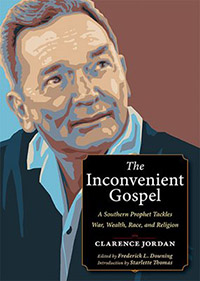
Review: The Inconvenient Gospel

The Inconvenient Gospel: A Southern Prophet Tackles War, Wealth, Race and Religion

By Clarence Jordan, edited by Frederick L. Downing (Plough Publishing)

One reviewer described The Inconvenient Gospel as “what drinking from a fire hydrant would be like if a fire hydrant occasionally spewed fire.”

This little book does pack some heat. Known by many in the mid-20th-century American South as an integrationist agitator, Clarence Jordan went toe to toe with the likes of the Ku Klux Klan and its Baptist pastor enablers. Commenting on the Ten Commandments while with students at Goshen College, he charged both the Klan and those Baptist pastors supporting it with violating the second commandment by creating a “God” who blesses their racism.

Jordan’s language is straightforward. He doesn’t beat around more than about one bush. His personal anecdotes create immediate connection with blue-collar workers and people who work the land. For example, his telling of Jesus entering Jerusalem on a donkey is informed by his own experience plowing behind mules. His psychological analysis of the Gadarean demoniac—which Jordan conjoins with the prodigal son story—places us in both men’s shoes.

Jordan was incisive. He calls balls and strikes on the seductions of money and military might. On other matters, such as his idea of Jesus’ masculinity? Well, he was, as they say, a man of his time.

He also was funny. Not only is this collection of Jordan’s thoughts peppered with heat; it also is sprinkled with humor, the kind of sugar that helps the medicine go down. Jordan digs at segregationists, Republicans and the Confederacy with wicked wit. His interaction with a Klansman inspires nervous laughter, but laughter nonetheless.

Whether you agree or disagree with Jordan about such things as social justice and Jesus’ foreknowledge, one has to grant he knew how to communicate with everyday people. More well-intended spiritual leaders could use that gift. Reading this book is a good introductory lesson.

Eric Black, executive director/publisher/editor
Baptist Standard


Connect360: Standing Firm in the Faith

  • Lesson 13 in the Connect 360 unit “Hunger for Holiness: Living Pure in an Impure World” focuses on 1 Peter 5:7-14.

The first step in going through spiritual attack is to cast our anxieties onto God. Anxieties pull us in many directions, and Satan loves to capitalize on that when we are anxious and vulnerable. So, to take that weapon out of Satan’s hand, we need to entrust our anxieties to God. Throw them onto God and ask the Lord to do what is best in our lives. Many of Peter’s teachings in these verses are Peter bearing witness to things Jesus taught the disciples.

Jesus had much to say about not being anxious, but rather to trust God to provide what we need (see Matthew 6:25-34). Anxieties and worries are self-defeating. We are to cast our concerns and worries onto God. Have you ever thrown a baseball to someone else? Once you throw it, the ball is no longer your concern. Throw your worries to Jesus and leave them there.

Peter then reminded us of another mindset that can help us withstand the spiritual attacks of Satan. Peter was telling us in 5:7 to embrace the truth that God cares for you. Oh, how we need to camp in that truth. Do you believe God cares for you? In everything that God did in sending Jesus to save us, God is shouting to us: “I care! I love you! You are valuable to me!”

This truth is so important for us anytime we are encountering the lies of Satan, particularly when Satan tells us, “God doesn’t care about you.” Satan always undermines God’s love and care for us. In Satan’s dialogue with Adam and Eve, he implied that God was cheating them of something they deserved, and therefore God did not really care about them.

Whenever something really bad or painful happens, what is the first thought Satan injects into our minds? It is: “God does not care about me. If God cared about my life, this would not have happened.”

So, before you get in any fiery ordeal or battle with the devil, solidify this truth as a core value in your life: God cares for you (5:7). Then since God cares for you, cast every struggle onto him, be it large or small, for he cares for you. Throw it to God in prayer, and then like the baseball, leave it there.

Next Peter told us to be alert (sober), knowing we have an adversary who is a voracious lion, always on the prowl, looking for any signs of vulnerability or weakness that he can take advantage of so he can devour us. As a believer, we are not in danger of losing eternal life; we are in danger of being chewed up, wounded, or turned into a wounded animal that will lash out at God or other believers and inflict wounds on fellow believers.

So, the threat is real. Peter was warned that Satan wanted to thresh him like wheat being beaten to pulp between stones. Peter then warned others, be on the alert. We have an enemy lurking about, seeking opportunities to gobble us up.

To learn more about GC2 Press and the Connect360 Bible study series, or to order materials, click here.


Explore the Bible: I Will Raise

  • The Explore the Bible lesson for Dec. 18 focuses on John 2:11-25.

Jesus is on the cusp of his first miracle, his first public revelation of who he is. At his mother’s request, he turns water into wine for the wedding guest. The honor of the wedding hostess is intact, the guests are happy, the servants are in awe, and the evening closes with joy for the new couple.

But for Jesus, the curtain has been pulled back. This miracle places him on a path that leads to only one place. Jesus takes a few days to enjoy his earthly family before his steps take him away from his mother, his siblings and his anonymity. Jesus turns his face to Jerusalem, the city that kills its prophets and stones God’s messengers.

 “Jesus went up to Jerusalem” (2:13). This simple sentence is the magnificent fulfillment of the prophets of old (Malachi 3:1-2). Jesus appears in his temple and his actions point to who he is and what he is here to do.

What Jesus does in Jerusalem

Jesus comes into Jerusalem, the city of God. He enters into the temple of the Most High. According to the Gospel of Luke, Jesus has come to the temple before as a boy. Possibly many times as a young man. But, today is different. Jesus is entering the temple in authority. Jesus is fulfilling the words of Malachi; he comes “like a refiner’s fire” (Malachi 3:2)

Jesus acts on his zeal for the Temple

Jesus’ actions at the temple are a direct result of what he finds when he enters the sacred ground. The outer court, which should be reserved for the Gentiles to come near to the Lord, was now teeming with shopkeepers and moneychangers providing sojourners with their Temple provisions. Instead of quiet prayers from Gentiles, he finds money exchangers. Instead of reflective men and women from among the nations, he finds loud peddlers of animals.

With zeal, he chases away the marketeers that encroached upon the worshipers. The zeal of the Lord is so profoundly displayed that day that the disciples reflected upon Jesus’ fulfillment of Psalm 69:9 at this moment. John hints at what is becoming more and more obvious to the reader and the Jews: the advent of the Messiah is here.

Jesus’ actions at the temple are viewed as scandalous by the Jews. A common theme is introduced to the reader at this point in the narrative. Authority. It is presented in their questions: “What sign can you show us to prove your authority to do all this?” (John 2:18). Note, the Jews did not question the morality of his actions, but the source of his authority to do such an action. In Jesus’ zeal for the Lord’s house of prayer, he has unveiled a status for himself that is beyond their expectation.

Jesus reveals himself as the Temple

Jesus’ response to the request for a sign to prove his authority is profound, “Destroy this Temple, and I will raise it again in three days” (John 2:19). The Temple where Jesus is standing when he makes this statement is the center of the Jewish sacrificial system. The Temple complex is a magnificent structure that dominated the skyline of Jerusalem as planned and bankrolled by Herod himself. When Jesus says “this temple,” the Jews assume he is referencing the Herodian Temple that stood before them.

The pattern of presenting a saying of Jesus, a misunderstanding of it by those around him, and an explanation is common throughout the Gospel of John. Here Jesus is not talking about the building. Rather, he is talking about himself.

As the manifestation of the Word of God (John 1:14), Jesus is now the fulfillment of the embodiment of the glory of God. The Temple in all its importance and glory is now relegated to a shadow of the real Temple that has now come: Jesus.

Jesus prophesies his resurrection

What sign does Jesus present for his authority? If the Temple is his body, then the statement “I will raise it again” (2:19) is a reference to his bodily resurrection after his crucifixion. John clears up the misunderstanding and explains to the reader what the disciples only understood in light of the resurrection (2:22).

Apparently, the meaning behind his words was misunderstood even by his disciples that day. The resurrection was such a profound experience it clarified all that had been hidden to them prior.

Here at the beginning of John’s Gospel, Jesus is pointing to the profound culmination of his work on earth. He will die and be resurrected on the third day. This will be the only “sign” of his authority the Jews will be granted.

Jesus demonstrates his authority

Jesus continues to perform miracles and demonstrates his authority among the people, and many are drawn to him and are interested in his work. It is clear these beginning interests are not of the most devoted type. Jesus is not deceived by their shallow interest. John points the attention of the reader to one of his God-man traits: Jesus needs no one to tell him the hearts of men. He knows.

Matt Baird is assistant professor of Christian ministry and director of the graduate program in the School of Christian Studies at East Texas Baptist University.


Connect360: Dress for Success

  • Lesson 12 in the Connect 360 unit “Hunger for Holiness: Living Pure in an Impure World” focuses on 1 Peter 5:1-6.

The main thrust of today’s passage is instruction on humility and leadership within the church. Even though Peter is writing to the elders (pastors) of the church, do not skip this section of Scripture because you are not a pastor. Biblically, all Christians are priests, called to serve by God (see 1 Peter 2:9-10). Further, God gives at least one spiritual gift to each believer, to be used for the common good of the whole church (see 1 Corinthians 12:7).

Each one of us is both a leader and a follower. We follow Jesus, and we pass on to others what we have learned (2 Timothy 2:2), thereby making disciples of Jesus wherever we go (Matthew 28:19-20).

Having said this, some specific instructions given in 1 Peter 5:1- 4 address the pastors or elders of the church. In 5:5-6, Peter expanded the application of much of this passage to apply to “all” in the church. So, we will examine what this passage specifically means for church leaders, and then make application of these truths to all our lives as well.

Peter exhorted the elders to remember that they are serving God in all their decisions and interactions (5:2). Sometimes, we get sidetracked into thinking that the task of leaders is to please the people. But the leader’s first responsibility is to obey Jesus. The flock is God’s flock (5:2). We don’t belong to ourselves, we have been bought with a price, so we are to glorify God through our lives, which are his (1 Corinthians 6:20).

Once we realize God is the primary One we serve, it is also important that we serve one another. As members of one body, we help the body function better when we serve each other. Peter called himself “a fellow” elder and witness to the sufferings of Christ. In Jesus we are connected to each other and should treat each other with dignity and mutual respect. In Matthew 20:25-28, the disciples were maneuvering to see who would be the greatest in God’s kingdom. Jesus put a stop to it, then taught them that the greatest in the kingdom of God is the one who serves all the others.

Elders, pastors and all other church leaders must realize that while they carry out functions of leadership, they are still sheep at heart. To Jesus, we are all sheep who need to be humbly following him, the Great Shepherd. (See 5:2.)

To learn more about GC2 Press and the Connect360 Bible study series, or to order materials, click here


Explore the Bible: Come and See

  • The Explore the Bible lesson for Dec.11 focuses on John 1:40-51.

The Gospel of John moves from a prologue picturing Jesus as the eternal Word made flesh (1:1-18) to the ministry of John the Baptist (1:19-34). The Baptist, as no surprise to the reader, deflects any notion that he is the messiah. Instead, he references Isaiah 40:3 (1:23) and points to another who will come after him, “the strap of whose sandal I am not worthy to untie (1: 27).”

Upon seeing Jesus, the Baptist declares him to be the “lamb of God, who takes away the sin of the world (1:29).” The story moves to the calling of Jesus’ first disciples (1:37-51). While most of Jesus’ ministry will occur in Galilee, these first disciples are called by Jesus as an outworking of the Baptist’s own ministry in Judea. The first two are not identified (more than likely John and James). Andrew finds Simon, who after following Jesus is given the name of Peter.

Jesus’ ministry moves to Galilee and with it the calling of the next two disciples. The first to hear and follow Jesus in Galilee is Philip. Philip, in turn, becomes the instrument for Nathanael’s addition to this early group of disciples. Philip serves John’s readers as a model for bringing another to Jesus. What is to be learned from Philip?

Philip followed Jesus

First, Philip followed Jesus. The fact that Philip followed Jesus and truly believed Jesus was the one, “of whom Moses in the Law and also the prophets wrote” (1:45), is not to be overlooked. Philip’s later presentation to Nathanael of Jesus is portrayed in John as more than a sale’s pitch by a disinterested salesman. Instead, John notes the eventual bringing of Nathanael to Jesus first begins with Philip’s own realization of who Jesus is and the decision to follow for himself.

Philip found Nathanael

Second, Philip found Nathanael. This is not the first occurrence of someone coming to Jesus due to the invitation of another, as previously seen in Andrew bringing his own bother Simon (1:40-41) to discover who Jesus is. However, Philip’s invitation reaches beyond the familial tie that defines Andrew’s search for Simon. Philip looks for a friend. John is not concerned with where Philip found Nathanael. What is important to John is the intentionality of Philip’s actions. His “finding Nathanael” is not an accident.

Philip tells Nathanael about Jesus

Third, Philip informs Nathanael that Jesus is the one for whom they have been waiting and longing. Note the clarity and simplicity in the statement made by Philip in presenting the news about Jesus. Jesus is presented to Nathanael: (1) as the fulfillment of Scripture and (2) from the perspective of Philip’s own personal experience. Both serve as a model for John’s readers. Both the objectivity of who Jesus is and the subjectivity of Philip’s own faith in Jesus offer a balanced approach.

Nathanael’s initial response is one of disbelief. Using humor, Nathanael makes the pointed statement, “Can anything good come from Nazareth?” Such a remark highlights both the insignificance of Nazareth in the first-century Galilean landscape and the refusal of Nathanael to believe Jesus could be the Messiah.

Philip responds with ‘Come and See’

Fourth, when he receives resistance from Nathanael, Philip responds with the words,
“Come and see.” Worth noting is how Philip did not respond: (1) with anger or judgment, (2) with a “bait and switch” suggestion, (3) with a well-thought-out rebuttal to the Nazareth comment or even (4) surrender to Nathanael’s initial resistance. Philip’s words cut through the distraction of lesser talking points to the simple low-risk invitation.

Philip relied on his faith in who he believed Jesus to be to win the day. This response eventually leads Nathanael to experience Jesus for himself. Philip believed Jesus was the Messiah and Nathanael would believe it, too, if only he could meet Jesus for himself. A simple invitation to “come and see” proves enough for Nathanael. Philip simply operated as the vehicle of investment and straightforward invitation.

Nathanael experiences Jesus for himself

When Nathanael did in fact “come and see” Jesus, he was not disappointed. In fact, he was left in awe of Jesus’ supernatural ability. Nathanael came to “see” Jesus and discovers all along Jesus could “see” him. John suggests Jesus sees both his character (1:47) and detailed situation (1:48). His conclusion about Jesus is to make a confession of his own with the words, “Rabbi, you are the Son of God. You are the King of Israel (1:49).”

Philip’s decision, insistence to share his revelation with Nathanael, a clear presentation of Jesus, and simple invitation resulted in Nathanael being added to the 12 disciples who would follow Jesus throughout his ministry. The power of one who found a friend and beckoned him to “come and see” proved a model worth imitating for John’s readers.

Matt Baird is assistant professor of Christian ministry and director of the graduate program in the School of Christian Studies at East Texas Baptist University.


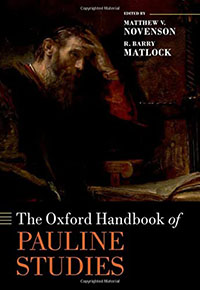
Review: The Oxford Handbook of Pauline Studies

The Oxford Handbook of Pauline Studies

By Matthew Novenson and Barry Matlock, editors (Oxford University Press)

The Oxford Handbook of Pauline Studies is a comprehensive summary of the many facets of early 21st-century academic study of the apostle Paul and his influences. The fact the summary is a book of nearly 800 pages tells the breadth and depth of Pauline studies.

The Handbook is composed of five parts: Paul the Person, Paul in Context, Pauline Literature (both inside and outside the Protestant canon of Scripture), Pauline Theology and Approaches to Paul. Articles address Paul’s history and the cultures he navigated; the early church; the composition and nature of Paul’s letters; Paul’s view of Christ, salvation, grace and justification; and contemporary topics such as politics, sexuality and gender.

Many articles are accessible and illuminating to the general reader. Others are technical or pertain to specifically academic concerns. Among the 40 contributors from around the world, which interestingly do not include N.T. Wright, are two Baylor University scholars—Bruce Longenecker and Todd Still. Their respective chapters are representative of the whole.

Longenecker examines the economic system of the Graeco-Roman world—in particular, patronage—and how it impinges on Paul’s instruction to churches. His study provides valuable—if even a little speculative—context for Paul’s collection for the church in Jerusalem and his concerns about how the Corinthian church observed the Lord’s Supper.

Still, in a decidedly guild-specific article, traces the history of and significant contributors to the social-historical and social-scientific study of Paul. He notes subsequent chapters develop some of the conclusions of those two interdisciplinary studies.

Though most contributors hail from the United Kingdom and United States, of particular interest are the articles by scholars working and teaching outside the more well-established centers of Pauline studies in Western Europe and North America.

For example, Paul Trebilco, at the University of Osago in New Zealand, considers Paul’s ability to move between the contexts of Judaism and the Graeco-Roman world. This is interesting coming from a context in which Christians are trying to communicate the gospel between the English-speaking colonial context and that of the indigenous Māori in New Zealand.

“Handbook” is a misleading descriptor for a large, hardback reference book, not something one would throw in a backpack to study at a coffee shop. As such, this handbook is not the sort of resource a pastor might use to preach through 1 Corinthians, for example, but it does provide important background for all those sermons a pastor will preach on Paul’s letters.

Eric Black, executive director/publisher/editor
Baptist Standard


Explore the Bible: In the Beginning

  • The Explore the Bible lesson for Dec. 4 focuses on John 1:1-14.

Magnificent. Beautiful. Striking. All words that could describe the opening 14 verses of the first chapter of the Gospel of John. Matthew, Mark and Luke do not approach the telling of Jesus’ life and ministry like John.

Matthew begins with a genealogy. Mark supplies a title and a quote from the prophets. Luke provides his reader with his research and writing method to ensure a trustworthy account of Jesus.

In striking contrast, John composes an overture that stands among the most beautiful works of literature in the ancient world. This aesthetic approach stands in distinction from the other Gospels introductory material.

In the prologue, John invites the reader to consider the beauty and otherness of Jesus, a stunning invitation to interpret the rest of the narrative. John as a writer is distinctive, but John’s purpose is not to showcase his own unique abilities in writing, but the unique Word and Light for which he loves and invites others to love as well. Simply stated: the “unique” John presents a “unique” Jesus.

Jesus’ unique beginning

The first words of John are to be read as an overt reference to the first words of the Bible: “In the beginning, God created the heavens and the earth.” (Genesis 1:1) In so doing, John chooses to place the beginning of Jesus’ story not in Bethlehem or Nazareth, but before all existence.

Before creation there was God. Jesus’ “beginning” in John is unique because, like God the creator, it was really no “beginning” at all. Jesus, unlike every other man, does not only trace his roots to only a place or a date, but also to eternity past.

Jesus’ unique identity

It is in this context John presents the very first image of who Jesus is. He is the Word. The Greek word used here is logos.

This is a term that has a background in both the Old Testament and secular literature. While Greek philosophers Heraclitus, Philo and Plato, all contribute to the shaping of the term, it is primarily the Old Testament for which John relies. In Genesis 1, God speaks all of creation into existence.

John’s point is clear: Jesus is equated with God who created all things. The unique Word of God is eternal and creator.

The second image employed by John is that of light. A reader of both the Old Testament and the observer of the natural world can appreciate John 1.

Light is the first creative act of God in Genesis 1. When the Israelites are led out of Egypt journeying through the desert, the presence of the Lord is manifested in a cloud by day and a pillar of fire by night. The Psalms also speak of the word of God as highlighted by Psalm 119:105, “Your word is a lamp unto my feet and a light unto my path.”

However, one does not need a vast knowledge of the Old Testament to understand the simple point John is making: Light is the means by which humanity sees the world. C. S. Lewis states in The Weight of Glory, “I believe in Christianity as I believe that the Sun has risen, not only because I see it but because by it, I see everything else.” For John, Jesus is the light not only of those connected to Israel’s past, but also much like the sun, the illuminating source for all of humanity. Even though Jesus is the light, he was vastly misunderstood by his very own. (John 1:9-11)

The final image for John is that of flesh. The culminating point of the entire prologue is when the miracle of all miracles is declared: the Word became flesh. The immaterial became material. What is eternal was thrust into the temporal timeline of corruption and decay.

John does not suggest that the Word “appeared” to be clothed in flesh like the exchanging of a garment, but rather became flesh. This, of course, is John’s unique portrayal of what Matthew and Luke depict in their stories of Jesus’ birth.

Jesus’ unique counterpart

John agrees with Matthew, Mark and Luke in depicting John the Baptist as second in importance only to that of Jesus. John 1:7-8 defines the Baptist’s role as that of a witness to the true light. Noted in this brief description of the Baptist is the confusion of whether the Baptist was in fact the light himself. John is clear that the Baptist is not the light but the unique witness to the Light.

Jesus’ unique mission

Jesus is also unique in his mission. It is in fact, a mission that can only be accomplished by Jesus, the Word made flesh. For John, Jesus’ mission is to 1) dwell among humanity in a presence never known before, 2) bring all of those who believe in his name into the family of God through a spiritual birth, and 3) to fully embody the Father’s glory.

This mission will define the entire Gospel of John. And it is this mission that John beckons the reader to see for themselves. All are invited to witness the signs of Jesus and believe upon the Light of the world, the Word made flesh and to see in Jesus the glory of God, “full of grace and truth.”

Matt Baird is assistant professor of Christian ministry and director of the graduate program in the School of Christian Studies at East Texas Baptist University.


Connect360: Rejoice in Suffering

  • Lesson 11 in the Connect 360 unit “Hunger for Holiness: Living Pure in an Impure World” focuses on 1 Peter 4:12-19.

It is important for us to realize whose suffering we are experiencing. First Peter 4:13 says that to the same degree we share in Christ’s sufferings, we are to keep rejoicing during that suffering. The sufferings are Christ’s sufferings, which we share in from time to time.

If we love Jesus and are persecuted for reminding people of the reality and presence of God, then we are blessed (4:14) because the Spirit of God’s glory and presence rests upon us. His presence and glory can be seen in our lives, so we rejoice that we are reminding people of Jesus (4:12-13).

When Jesus walked among us, Satan tested Jesus and moved some people to attack him to try to prevent God’s kingdom from spreading. Now that Jesus has physically ascended into heaven, Jesus lives within believers and works through us, continuing the growth of God’s kingdom. Therefore, Satan continues to attack Jesus by attacking his representatives. It should not surprise us. It means we are making a difference for Jesus and His kingdom.

Shared suffering

Notice another great truth in 4:13. This truth is that to the degree you share the sufferings of Christ, and keep on rejoicing, you will also share in Christ’s glory at his return, rejoicing with exultation.

The Greek word translated “share” is koinoneo, meaning to share one another’s life and experiences. So, when we suffer with Christ during our lifetime, we will proportionately share in his glory at his revelation—this is, his glorious return. Therefore, we keep on rejoicing because the glory at his return will make any suffering seem like nothing (Romans 8:18).

However, in 4:15-17, Peter reminded us that if we are suffering as a result of sins or crimes, we ourselves commit, then such suffering is of our making as a consequence of our actions. Such suffering will produce shame rather than glory at Christ’s return. In this suffering there is nothing blessed, nor to rejoice about. It is self-induced suffering, and further it gives Christ a bad reputation.

But if we suffer for being a good representative of Jesus, then our witness becomes a source of blessing and joy. In such a case, rather than complaining or quitting, we should instead keep on being a witness and keep on rejoicing, because we are being allowed to share in the sufferings of Christ, and therefore later will share in the glory of Christ.

To learn more about GC2 Press and the Connect360 Bible study series, or to order materials, click here.


Review: A Good and True Story

A Good and True Story:

Eleven Clues to Understanding Our Universe and Your Place in It

By Paul M. Gould (Brazos Press)

Too often, books on Christian apologetics appear to be aimed toward offering ammunition for arguments. Even ones that take a less confrontational approach still seem like they are intended to “prove” the existence of God or the truthfulness of the Bible. Sometimes, it almost appears their authors are determined to strip away all the mystery from an encounter with God and negate the need for faith.

Paul M. Gould of Palm Beach Atlantic University takes a different approach. Instead of trying to convince someone who is antagonistic toward Christianity they are wrong, he begins with the notion that everyone asks a basic question, “Who am I?” More than identity, everyone wants to know his or her life has purpose and meaning.

So, Gould offers helpful trail markers to guide a person on the journey of discovery that leads to theism—belief in a personal Supreme Being worthy of worship. Of course, he concludes, the quest to discover meaning and purpose finds its ultimate fulfillment in a relationship with the God who is revealed in Jesus Christ. At the end of the journey, we discover God was the One who left the trail markers that led us to our true home.

In an accessible style marked by good humor, Gould maps out a trail guided by nature, human experience and—in the end—divine revelation. He offers Christianity as “the best possible story” to explain who we are, why we are here, and where we find purpose. He proposes the gospel is the “good and true story.”

Join him on the journey.

Ken Camp, managing editor

Baptist Standard


Explore the Bible: Hope Found

  • The Explore the Bible lesson for Nov. 27 focuses on Micah 7:1-10, 18-20.

This prophetic book ends true to the rest of its form—moving back and forth between judgment and hope for restoration. That fluctuated pattern is not random. Rather, it displays that both are sure. God promises to both judge the people for their sins and to restore them to God, each other, and their centers of worship and living.

God is Judge and Redeemer. These are two, unseparated parts of God’s character.

God takes the sins of his people seriously. When we read Micah 7, we understand why.

God is Judge

Micah is speaking to a society riddled with systemic injustice. He cannot find a single righteous person (Micah 7:2). The leadership allowed the desire for bribes to dictate their decrees (7:3). The leadership is like a thorn or brier to those whom they rule over—inflicted with small, constant, and numerous cuts. Finally, they are told not to trust each other, because there was vengeful enmity between friends, neighbors and family members alike (7:5-6). Micah describes a suspicious and corrupt society.

God promises to judge these people living in this way. Why? God will judge our sins for his glory and our good. It is not good that societies will perpetuate this sort of corruption. It is not good to let greed be the ethos of a civilization’s leadership, and glory is due to the Lord for being righteous and holy.

Yet, God’s righteousness and holiness do not mean he is distant and uninvolved. In all holiness, God speaks to us, comes to us, and works to make us new. In all righteousness, God desires the same for humanity and such a desire leads him directly to us.

God promises to judge sins, not because he is cruel and distant, exacting and unfair. Rather, God judges the sins of humanity because God is holy and seeks the same for us. God is righteous and wants the same for his people. God judges sins for his glory and our good.

God is Redeemer

God is Judge and Redeemer. God coming to make us holy and righteous is itself an act of redemption. Part of our redemption is the Lord making plain to us we are in need of redemption. Israel was a nation far from God and the ways of God. By naming the sins of the people and showing them the seriousness of their sins, God was working to redeem his people.

God will redeem us by coming to judge us for our sins, but God also redeems us by ensuring the hope of a good and gracious future. God gives hope to those he is working to redeem. The hope for Israel and the hope for us is the promise of God’s good future.

We are encouraged to wait for the Lord (7:7). One of the most faithful things we can do is wait on the Lord’s promises. The Lord promises to hear his people (7:7), defeat the powerful enemies who have harmed and help his people captive (7:16), and to bring light into darkness (7:8-9). A time is coming for Israel when their sins will be judged, but God ultimately will bring about a time when he will bring light into the darkness, bring hope for the hopeless. Finally, God made promises to their ancestors from long ago. The Lord will keep those promises (7:20).

The past and the future interpret the present. God made promises of hope to his ancestors long ago and those promises remained for Israel. God told the people to wait. Wait on the promises of the past, but also wait on the promises of a good future.

We need to be reminded

The final night Jesus reclined with his 12 disciples, he took bread and cup and told them to remember. Jesus told his disciples to remember the body broken for them and the blood shed for them. Jesus told them whenever they gather, they should remember his sacrifice.

Human beings are forgetful. We altogether do not remember or we, more often, change the past to fit our present wishes. Jesus tells his disciples to remember the moment in history when Jesus Christ of Nazareth sacrificed for the world.

Further, throughout Christ’s teachings, he spoke to his disciples about his promise to come again. He said he did not know when it would happen, the day or time, but he assured his followers he would return. In the meantime, the disciples were to be just that, followers of Christ on earth. In the meantime, they were told to remember his sacrifice and live as people of the resurrection.

The Cross judged humanity for our many sins and was the means for our redemption. We wait expectantly and faithfully for Christ to come again so we may know redemption completed.

The past and the present interpret the future. The Cross and Resurrection are our redemption, but we wait for Christ to come again. Our hope is in the One who came to us at a particular moment in history, died in the body, and resurrected so that we might live and wait for his return with all hope. Our hope is in Christ Jesus of Nazareth.

The God who died, resurrected and promises to come again is at work in this world presently pardoning sins, forgiving transgressions and delighting in mercy (Micah 7:18). Look to God’s actions in the past, wait faithfully for him to come again, and know he always is at work for our redemption.

Maddie Rarick is pastor of Meadow Oaks Baptist Church in Temple, Texas.


Connect360: Love Covers All

  • Lesson 10 in the Connect 360 unit “Hunger for Holiness: Living Pure in an Impure World” focuses on 1 Peter 4:1-11.

When everything we know is coming to an end, Peter called us to pray and prioritize love. He used the Greek word agape, which means a gracious, sacrificial love. This Christlike love is the foundation and covering of our lives. Sacrificial love protects, sustains, strengthens and “covers over a multitude of sins” (4:8).

What did Peter mean by the statement in verse 8, “love covers a multitude of sin?” Was Peter referring to God’s love for the believer in the time of judgment? Or was Peter admonishing the believer to love others, even unbelievers, as the judgment approaches? There are many differing views regarding this verse, but it is plain to see that forgiveness was Peter’s focus.

Christlike, sacrificial love reaches past sin and offenses in order to transform hearts. This love does not pay back evil for evil or insult for insult but proclaims God’s blessing for all who are far away.

Offering undeserved and unwarranted love is not the same thing as ignoring sin but, instead, understanding two wrongs do not make a right. The writer of Proverbs encouraged this kind of love long before Peter. “Hatred stirs up conflict, but love covers all wrongs” (Proverbs 10:12). Peter trusted that as the end draws near, God will handle judgment. It is God’s people who exemplify lives covered by a love so gracious that it has changed the way we speak, serve, and care for others.

Hospitality is a practical expression of this sacrificial love in the life of the believer as we relate to others. Hospitality, or welcoming the stranger, has long been a hallmark of God’s people. (See Genesis 18; Leviticus 19:33-34; Hebrews 13:2.) Peter added believers should serve in this way without complaining.

A grandfather once said regarding his grandchildren, “We love to see our little angels come to visit, and we love to see those little devils go home.” Hospitality can get wearisome in the best of circumstances. Caring for others without grumbling, on the other hand, is a visible act of sacrificial, Christlike love.

To learn more about GC2 Press and the Connect360 Bible study series, or to order materials, click here.