Connect360: History in the Making

  • Lesson 13 in the BaptistWay Press Connect360 unit “Faith Under Fire” focuses on Daniel 11:1-45.

By comparison, no other prophetic material contained in the Old Testament is of the same nature as this highly detailed prediction about coming kings and clashing kingdoms. Most broadly, Daniel 11:1-35 covers the time period from the Persians to the terrifying reign of Antiochus IV Epiphanes. Given the uncanny accuracy of the details of the events, many scholars refuse to receive Daniel 11 as prophetic. Put plainly, they believe no one living in the sixth century B.C. (Daniel’s day) could predict the particulars of events happening in the second century B.C. Such scholars point to a type of literature (genre) from the broader ancient Near East in which detailed prophesies actually were written after the fact, but read as if they were looking toward the future.

It seems quite questionable, however, to discount Daniel 11 simply because of its precision. Rather than holding Daniel 11 in suspicion because of its pinpoint accuracy, we could conclude that the God who gave the vision knows the future as fully as he knows the past.

Cosmic conflict

The cosmic conflict described in verses 40-45 is nothing less than the time of the end (v. 40). The battle ultimately ends with the destruction of the Antichrist (v. 45) and the resurrection of the saints in 12:2. Earlier in this chapter, the king of the south represented the Egyptian leader and the king of the north the Syrian king. In the larger eschatological context, however, these kings symbolize nations and confederations that exist in the last days. The king of the north has become the ultimate Antiochus IV Epiphanes, the Antichrist. He will enter Israel, “the Beautiful Land” (v. 41; cf. 8:9; 11:16). The countries that escape the conflict have, perhaps, already aligned themselves with the evil ruler or simply do not stand in his path (v. 41).

Ultimately, it seems impossible to try to pinpoint the exact nations involved in this climatic conflict. All such speculation most likely will prove to be wrong. We are wiser to focus on the larger aspects of the conflict and realize that, in the end, the ultimate evil one will find no help in the final battle (v. 45). We have already learned that “the little horn” will be judged when the Lord comes to set up his kingdom (7:11, 26-27), and Paul has said “this man of lawlessness will be destroyed by the splendor of the Christ’s coming” (2 Thessalonians 2:8). At the end of this chapter, the trials purify the people of God. And, yet, God’s people will ultimately be delivered.

The pinpoint accuracy of the prophetic vision in Daniel 11 calls us to confess that God is never surprised. All events, including the movements of kings and kingdoms, have “played out” as he expected (maybe even directed). Ultimately, God’s people will be purified but protected, as the evil one (the Antichrist, personified in Antiochus IV Epiphanes) who stands against the Christ will “come to his end, and no one will help him” (v. 45). Just as the vision already has accurately captured centuries of conflict between kings and kingdoms (vs. 1-35), it will also be completely accurate about the ultimate end of the evil one, the one who opposes Christ. God’s purified people will be victorious.

Based on commentary written by Howard Batson, pastor of First Baptist Church in Amarillo, as condensed by Stan Granberry, marketing coordinator for BaptistWay Press.

To learn more about BaptistWay Press and the Connect360 Bible study series, or to order materials, click here.   


Explore the Bible: Reach

  • The Explore the Bible lesson for May 31 focuses on Romans 15:14-21, 30-32.

In my first summer youth ministry experience, in the mid-1970s in Odessa, I remember one painful experience with regard to “evangelism.” Somehow or another, I became incredibly distraught over an incident, the specifics of which are now forgotten. I had attempted to lead a person to Christ without success. I was so very worried about their eternal future because they had not verbalized their commitment to Christ to me.

What I do remember is that, when I got back to the church, I ran into an older staff member. I told him about my struggle. He saw the distress on my face.

Just barely this side of scolding, he reminded me that it was not my job to “save” anyone. All I had to do was be as faithful to Christ as possible and leave the saving to Holy God. I cannot remember his exact words, but I never have forgotten the power of them. Though I did not know it at the time, his few words altered the course of my ministry, even my life, to this very day.

There is simply no way to describe the profound impact that is the result of trusting God for everything.

We all have memories that bring pain, even in our attempts to be faithful to Jesus. The Apostle Paul almost certainly had them. Yet, nearing the end of his life, he chose to focus on what he had also done that he hoped was good.

He uses those memories to encourage fellow believers to try to accomplish the same. Then, he makes a commitment. “I will not venture to speak of anything except what Christ has accomplished through me” (v. 18). That is a profound statement!

‘Jesus, my soul’s in your hands’

As far back as memory serves, I had been taught to believe I was responsible for influencing others to believe as I did, and therefore, be saved. I even once heard a famous pastor/evangelist publicly say to those gathered to hear him in a church sanctuary, “If those of us in this room don’t tell the lost about Jesus, they will go to hell.”

Tracing that logic to its ultimate end, it means the vast majority of humanity ever born was born for the sole purpose of going to hell.

At that moment, a fellow pastor leaned over and said to me, “I don’t believe that.”  Neither does this preacher-boy. Over the years I have come to believe there is not one thing about that evangelist’s statements that is anywhere close to the truth, much less biblical.

After preaching a typical sermon on evangelism one Sunday, I came to the end of the sermon and said this: “We’d probably say “Amen” to my sermon on the basics of evangelism. Yet, what does it tell us about what we truly believe that, once we leave this service, we’ll all go eat lunch and go home and take a nap. If we truly believe what I asked, how could any of us take time to sleep or eat without fearing that someone who is hell-bound will not hear of Jesus because we did not personally tell them?” It was very quiet in the sanctuary.

Quoting the prophet Isaiah, Paul proclaims, “‘Those who were not told about him will see, and those who have not heard will understand’” (v. 21).

The country singer, Kris Kristofferson, sings, “Why me, Lord”?” The song includes a much-repeated phrase: “Lord help me, Jesus. My soul’s in your hands.” I was skeptical when I first heard them. Then, I researched his spiritual journey. As it turns out, he speaks of a moment in a worship service in which he simply trusted Jesus. Mine is not to judge his genuineness or anyone else’s, for that matter. The man publicly asked Jesus to take hold of his soul. The song is his profession of faith. What more is needed?

Ask the thief on the cross who, in his dying moments, asked Jesus to remember him in the afterlife. Jesus promised to do so. There was no repeating the verbiage of someone walking him through the “plan of salvation” much less promising that, if he repeated the presenter’s words, he would be saved. There was no public repentance of sin, no walking the aisle nor public profession of faith nor any baptism—only the promise of Jesus not to forget him.

If Jesus remembers us when he comes into his kingdom and, if as Paul stated, even those who have never heard of him will come both to see and understand, what should be our take-away?

There is so very much hope in Paul’s words. Could it be that God’s true “plan of salvation” is so much grander and broader than we could possibly imagine?

This is one Jesus-follower who certainly hopes so.

Glen Schmucker is a writer and blogger in Fort Worth. He has served as a Texas Baptist pastor and as a hospice chaplain.  


Connect360: The Power of Prayer

  • Lesson 12 in the BaptistWay Press Connect360 unit “Faith Under Fire” focuses on Daniel 10:1-21.

While some of the Jews already had returned to their homeland, some speculate that Daniel, now well past his physical prime, was too old to make the long and arduous journey. Also, he must have felt that he had some unfinished business to care for the people of God remaining back in Babylon.

In Daniel 10:5-6 looking upward, Daniel beholds “a certain man dressed in linen… .” The identity of this “man” has been the subject of endless speculation. Some see nothing less than a visit from a pre-incarnate Christ Jesus himself. Others, however, simply identify him as Gabriel, the messenger who appears in Daniel’s other visions (8:16; 9:21).

Before we come to any conclusion about the identity of this character, let’s examine the detailed description from the writer of Daniel.

  1. “Dressed in Linen”
  2. “His waist was girded with a belt of pure gold of Uphaz.”
  3. “His body was like beryl.”
  4. “His face had the appearance of lightning.”
  5. “His eyes were like flaming torches.”
  6. “His arms and feet like the gleam of polished bronze.”
  7. “The sound of his words like the sound of a tumult.”

Given this description of a glittering, gold being with a fierce face, fire-like eyes and thunderous speech, one question rivets the reader: Who is this “man”? While many scholars simply identify him as an angel (usually Gabriel) sent to deliver the message to Daniel, it seems more likely that the being before Daniel was none other than God, most likely in the person of the Messiah. The often-selected option of Gabriel seems unlikely, as Daniel previously encountered him (9:21) and had done so without any great fear.

From the New Testament, we find a portrait of the Christ painted with similar language in Revelation 1:11-16:

“I was in the Spirit on the Lord’s day, and I heard behind me a loud voice like the sound of a trumpet, saying ‘Write in a book what you see, and send it to the seven churches: to Ephesus and to Smyrna and to Pergamum and to Thyatira and to Sardis and to Philadelphia and to Laodicea.’ Then I turned to see the voice that was speaking with me. And having turned I saw seven golden lampstands; and in the middle of the lampstands I saw one like a son of man, clothed in a robe reaching to the feet, and girded across His chest with a golden sash. His head and His hair were white like white wool, like snow; and His eyes were like a flame of fire. His feet were like burnished bronze, when it has been made to glow in a furnace, and His voice was like the sound of many waters. In His right hand He held seven stars, and out of His mouth came a sharp two-edged sword; and His face was like the sun shining in its strength.”

Given the obvious and overwhelming likeness of Daniel’s vision with other visions of God/Christ in Scripture, it is difficult to discount the probability that much more than an angel is intended by the theophany-like description of the mysterious “man dressed in linen.”

In Daniel 10:7-9, we are reminded of the episode in Acts 9 where Paul’s companions did not fully share his experience of an encounter with the resurrected Jesus. They, however, both heard a sound and stood speechless. The men with Daniel, likewise, did not see the vision. Nonetheless, they sensed a great power, as they fled in fear. Having fully experienced the encounter, Daniel himself fainted, with his face buried in the ground.

Additionally, the near deathlike experience of Daniel in response to encountering the divine being makes it hard to conclude that the “man dressed in linen” is anyone else other than God in the person of the Christ. Remember John’s response to his encounter with the cosmic Christ, “…And when I saw Him, I fell at His feet as a dead man” (Revelation 1:17).

Based on commentary written by Howard Batson, pastor of First Baptist Church in Amarillo, as condensed by Stan Granberry, marketing coordinator for BaptistWay Press.

To learn more about BaptistWay Press and the Connect360 Bible study series, or to order materials, click here.    


Explore the Bible: Accepting

  • The Explore the Bible lesson for May 24 focuses on Romans 14:1-12.

As of this writing, the COVID-19 virus still has a death grip on this nation, even the world. Its devastating effect on our global economy is nothing short of mind numbing. Some businesses have decided to reopen, while others have chosen to remain closed. We are each left to wonder what social risks are worth taking and which are not.

One particularly devastating impact of the virus has been the loss of community worship. We worship online for now. Thank God for the technology that makes that possible. At our church, one joyful discipline of worship is the passing of the peace, one to another, with a handshake or a hug. It is not possible to hug online. We miss our communities of faith. Our passing of the peace could easily be expressed in the profound words first written by Jeremiah Rankin in 1882. “God be with you till we meet again.”

This isolation from friends and faith community has become quite painful, especially with no end in sight. It also has been instructive.

That very separation and social isolation has revealed how deeply divided our nation has become. Only history will ultimately reveal all the causes of our nation’s deep divides.

The divide is political, theological, socio-economic and on and on. It once seemed that only another Great Depression or, God forbid, another World War that threatens our very freedom might draw us together. Only time will tell if that is what it will take to make us all build bridges to one another.

What are ‘disputable’ matters?

This passage from Romans seems as though written for this very hour, which, through the Providence of God, it has been. In the first verse of this chapter, we are instructed to “Accept him whose faith is weak, without passing judgment on disputable matters.”

Unpacking the meaning of those words, which the Apostle Paul attempts to do in the following verses, might be easier to accomplish for us if we read the verse from the end back to the beginning. It involves the discernment of each individual and community about what matters most and what does not. Which issues are always and forever “disputable?” What are the moral absolutes over which we are willing to sacrifice everything?

As an extremely passionate preacher boy, everything mattered absolutely all the time to me. Without even realizing it, I looked down on others of different denominational and religious persuasions, even perceiving some as hell-bound because they lived or believed differently. The circle of my acceptance was very small, tight and virtually impenetrable.

With time, my judgment of others has circled back around to haunt me. I shudder at the thought of those I left out of my life and my disobedience of the Christ-given command to love one another.

None of us can possibly go back and undo or redo the past. We can learn from it and, in our maturing, broaden the circle of our love and understanding to include and even bless those whose faith is not a mirrored reflection of our own.

Again, this demands thoughtful mercy and love. It means a willingness to have a conversation with Jesus and with our fellow believers about those issues which are disputable and which are not.

For example, none of us would argue Jesus is Lord, the Son of God and our Savior. Does that mean, however, that only Baptists believe it most sincerely? Is there room in our love for those who want to discuss more deeply what that tenet of our faith means and how to live according to it?

In our marriages, most of us learn that there are very few things worth fighting over. If we do not learn that, we pay a terrible price. The more we love, the shorter that list grows.

In our home, after an argument over this or that, we will decide that the issue of argument is so insignificant that, for the sake of our love and commitment, it is a disputable matter on which we don’t have to agree in order to love each other.

Learn to accept others

According to this text, the most singularly important factor in creating unity among ourselves is our willingness to “accept” others, even those who are still stumbling with the first steps of a new faith.

It means a willingness to live with one another “without passing judgment” on matters that simply are not central to the gospel.

One late mentor once listened patiently as, in my earliest ministerial years, I harped on and on about a particular doctrinal matter. When I finished my harping the only thing he said in response was, “Oh?”

He did not agree with me, of course. He also was not willing to place that doctrinal matter ahead of our brotherhood in Christ. That one-word answer set me off on a trail of study and learning I might have never taken. It also taught me how to respond to others with whose faith I did not have much in common.

Maybe, if nothing else, this current pandemic will be equally instructive. Maybe it will cause us to all look deeply within and become honest with ourselves about what truly matters and what does not.

If so, this heartbreaking pandemic might serve at least one good purpose as it teaches us how to build bridges to one another instead of irrelevant walls that only separate us.

Glen Schmucker is a writer and blogger in Fort Worth. He has served as a Texas Baptist pastor and as a hospice chaplain.  


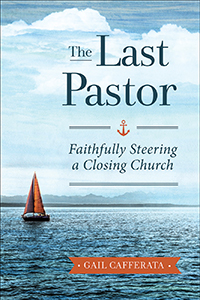
Review: The Last Pastor

The Last Pastor: Faithfully Steering a Closing Church

By Gail Cafferata (Westminster John Knox Press)

There is a lot of speculation about how many churches may have to close due to the pandemic. This book’s arrival is impeccably timed! But the book was written without knowing we would be in this unique time. So, it serves a critical need right now, as well as the ongoing need in normal times for when churches come to the end of their life cycle.

The Last Pastor is written by a pastor who went through closing a church herself. Now, more than two decades later, she takes us through the story of 130 pastors in churches that found closing to be the best option. The pastors are from mainline churches, but the applications are easily transferrable to Baptist life. Cafferata uses her sociologist skills to take an honest look at the many complicated issues involved in closing churches.

Readers will be engaged by the frequent sailing metaphors used to introduce many chapters. The author then weaves together stories, and conversations, to reveal what closing a church is like. We see things from the pastors’ viewpoints and from members’ viewpoints. It becomes obvious this is something a church—and pastor—should not be doing without assistance. Thus, a three-way partnership is needed between pastor, church and denomination. Any one of these can disrupt a healthy closure. All three working together can be used by the Holy Spirit to redeem the situation. In fact, while she names the difficulties pastors and church members go through, the author also demonstrates that, overwhelmingly, pastors and members found themselves unexpectedly blessed by their church’s closing.

So, if your church is near the end, The Last Pastor will help you to: initiate the conversation (Cafferata found laity do so 60 percent of the time); look at the skill sets needed in leadership; be aware of the negative reactions that will surface; find the silver linings for pastors and church members; and consider the ultimate ways the church might “live on” through a number of opportunities that come with closing. In other words, this book can help you move on with your heads held high.

Karl Fickling, coordinator

Interim Church Services

Baptist General Convention of Texas


Review: When Narcissism Comes to Church

When Narcissism Comes to Church:

Healing your community from emotional and spiritual abuse

By Chuck DeGroat (InterVarsity Press)

This publication caught my attention for a couple of reasons. First, Chuck DeGroat noted his personal experience of encountering those with Narcissistic Personality Disorder. Second, DeGroat found a higher rate of people suffering from this in church planting situations. My ears perked up, because the church we are affiliated with is serious about planting churches. It is a plant from a similar church, and church starting is in its DNA. Additionally, looking at the contemporary Christian scene and political scene, we have a front row seat to narcissism at work. When I ran the mental health department for a prison, I also saw this personality up front and personal while working with offenders and staff. I also began to understand other folks in whose orbit I found myself through my years of ministry and counseling who probably suffered from debilitating narcissism.

DeGroat’s perspective and work are anchored in humility and grace. He identifies those in the news who most likely suffer from NPD, but moves on to ask, “What shapes this personality disorder?” Some reoccurring themes appear in his book. He speaks of the power of shame and how NPD is an attempt to cover, placate and deflect the brokenness. Add insecurity, which attempts to cover for a lack of confidence but shows arrogance instead. He also mentions again and again a “lack of curiosity.” All of this could be identified as NPD being a “shame-based identity.”
DeGroat uses the Enneagram as a foundation for his consideration of the issues related to narcissism. While I am not versed in this test, it has some appeal in the business and Christian world. DeGroat considers these categories: heart types as shame-based; head types as anxiety-based; and gut body types as anger-based. Building on insights from the personality types and his own wounds and experience, he offers grace to those who have suffered from the abuse of a narcissistic person/leader/spouse.

DeGroat not only explores the inner life of the narcissist but also sheds some light on those parts of us broken and yet unredeemed. Erik Berne’s transactional analysis—developed in the 1960s—talked about the child, parent and adult in each of us. It suggests there are parts of us that are flawed, broken and painful—perhaps rooted in childhood through experience or perception. Childhood trauma is profound, deep and lifelong for many. The child does not have the coping skills an adult can learn and use. The narcissist’s outer shell is designed to deflect the inner pain, failings and trauma.

This book has value because it may introduce a person to someone in his or her orbit who is a narcissist. It also extends grace and challenge to us to face those facets of our inner life still untouched by the grace of Christ. In our rush to be righteous, we often decide what is acceptable brokenness and what is not. The truth is that broken is broken. As individuals and churches, we should give each other grace as we ask God’s grace to heal us.

Michael Chancellor, counselor

Round Rock 


Explore the Bible: Citizens

  • The Explore the Bible lesson for May 17 focuses on Romans 13:1-14.

One of the most heart-wrenching and life-changing experiences for my wife, Nancy, and me happened when we participated in a Buckner International mission trip to work with Eastern European orphans in Riga, Latvia, and St. Petersburg, Russia.

The children were aged from preschool to twelfth grade. Almost to a person, they were “social orphans.” That meant their parents were still alive, but they were alcoholics, no longer capable of caring for their children. The Latvian government, once part of the Soviet Union, had taken the children and placed them in the care of orphanage

In Latvia, orphans were second-class citizens. Fully 80 percent of the young girls would find meaningful employment impossible, which meant their consignment to a life in the world of sex slavery.

Every morning, a pile of washed clothes was dumped in the middle of the dormitory floor. After that, it was each child for himself or herself. They’d rush the pile, grab what they thought could wear and what they hoped would provide adequate protection from the weather, some of the most brutal on the European continent.

Color and style coordination were luxuries orphans could not afford. The orphans took what was offered them and what they could grab before anyone else did. No one ever accused this writer of being a clothes horse but, in the presence of those orphans, I looked like I had just come from the cover of a GQ magazine.

Good citizenship

As the Apostle Paul nears the end of penning this fabulous guidebook for Christian thinking and living, the book of Romans, it is interesting that he provides the reader with something of a civics lesson. Of all things, Paul is insistent that our witness to this world often begins and ends with the ways in which we commit to live as good citizens of the world we presently inhabit.

Though Paul doesn’t outright say it, the clear moral absolute intertwined in his writing is that we will not be able to speak of an earthly realm unless we are good citizens of this one.

Most nonbelievers will not be able to see how we behave when we are around mostly Christians at church. They only will be able to observe what they see of our behavior when we are out, living in the same world they inhabit.

No human has authority over another human without at least the tacit approval of another. In this particular case, the only people who have authority over those of us who have followed Christ are those Christ has authorized to do so

If we want to bear effective witness to this world, we must play by the same rules to which our fellow citizens are bound. If nonbelievers observe us making a mockery of civil law, on what basis could we possibly hope to speak to them of the law of eternal love?

Business people who serve as deacons in their local church but then take advantage of others in their workday worlds are not speaking highly of Christ.

‘Put on’ the Lord Jesus Christ

In the last verses of this passage, we are not instructed to literally dress as Jesus did. Simple sandals and cloth robes long ago ran their fashion half-lives into the ground. Perhaps the one exception might be the costumes used for actors/actresses in the annual church Easter pageant.

In fact, we are meant to put on Christ, clothe ourselves in the wardrobe of love, hope, faith, kindness and so on (see 1 Corinthians 13).

As often happens in Scripture, an answer to one question raises even more. Is Paul recommending blind obedience to all civil law no matter how badly it might violate the laws of God? Is there not a time for civil disobedience if remaining obedient to earthly laws requires disobedience to God?

That is not a question this text answers. There are certainly times for civil disobedience. Ask any of the great mothers and fathers of our faith. Be sure to study Dietrich Bonhoeffer, Abraham Lincoln and Martin Luther King Jr., all of whom practiced civil disobedience but also paid for their lives doing so.

Then, again, we should be lifetime students of the life, the wardrobe, of Jesus and place on ourselves every piece of clothing he finally ended up wearing to the cross.

Glen Schmucker is a writer and blogger in Fort Worth. He has served as a Texas Baptist pastor and as a hospice chaplain.  


Connect360: The Beginning of the End

  • Lesson 11 in the BaptistWay Press Connect360 unit “Faith Under Fire” focuses on Daniel 9:23-27.

The 490 in this passage is symbolic, because it represents a complete release from evil for God’s people. While every interpreter sees symbolism in the number, many interpreters also believe the 490 years are to be taken as literal calendar years. These interpreters, however, face a maze of options, making the actual dates involved difficult to pinpoint. Put another way, the literal interpreters do not even come close to agreeing on a starting point and, thus, ending point of the 490 years, as there are many choices for the starting date—and ending date—of the period.

The dates are less than certain. And “fixing” the calculation seems confusing at best and manipulating the math at worst. Therefore, it seems best to see the numbers as symbolic, the ultimate Jubilee covering the period from 538 B.C.—the date of Cyrus’ decree that the Jews may return to the land—until the second coming of Christ, when all is accomplished for Christ’s kingdom. Old Testament scholar John Goldingay summarizes it best: “… the attempt to interpret as chronology figures that are not amenable to any consistently literal interpretation may be misguided… .” None of the literal interpretations are completely convincing, and the fact that Old Testament scholars themselves cannot agree should lead everyone to humility in approaching the passage. Literal or symbolic, however, the 490 years represents the accomplishment of Christ’s kingdom—all that matters in the end.

God will take care of it all

The reason that the ultimate Jubilee is celebrated is because God will accomplish all that needs to be accomplished during the seventy sabbaticals (490-year period). These accomplishments are described as (a) the finishing of transgression; (b) the end of sin; (c) the atonement for iniquity; (d) the bringing of everlasting righteousness; (e) the sealing up of vision and prophecy; and (f) the anointment of the most holy (v. 24).

The first three actions describe the eradication of evil. They recall the content of Daniel’s prayer, where he used multiple words to acknowledge Israel’s sin before God—sinned, committed iniquity, acted wickedly, rebelled and turned aside from the commandments (v.5). God’s answer, communicated through Gabriel, is that God will take care of the sin, as atonement will be accomplished. The last three actions are positive in their culmination of everlasting righteousness, the approval of prophecy (seal of approval), and the anointing of “the holy,” either a place (the temple) or a person (the Messiah).

Taken together, “vision and prophecy” is most likely a reference to “prophetic vision.” So, Gabriel was revealing to Daniel how Jeremiah’s words (Jeremiah 25:11-12) ultimately would be “sealed” or “confirmed.” “To anoint the holy” (literally holy of holies) is likely a reference to a person and not a place. It could be translated “most holy one.” In fact, no anointing is ever reported of Solomon’s temple nor the temple rebuilt under Ezra.

Remember, Jesus is, by definition, the “Anointed One” (Messiah or Christ). He is, in fact, anointed as both priest and king (cf. Zechariah 6:13; Psalm 110:4; Matthew 27:11; Hebrews 4:14-15; 5:6). Jesus, moreover, was the true temple, one that would be torn down (crucifixion) and rebuilt in three days (resurrection, John 2:18-22; cf. Matthew 26:61; Mark 14:58). The early temple is a foreshadowing of Jesus, the true temple, as he ultimately becomes the locus of God’s presence, glory, revelation and the ultimate source of sacrifice.

Based on commentary written by Howard Batson, pastor of First Baptist Church in Amarillo, as condensed by Stan Granberry, marketing coordinator for BaptistWay Press.

To learn more about BaptistWay Press and the Connect360 Bible study series, or to order materials, click here.   


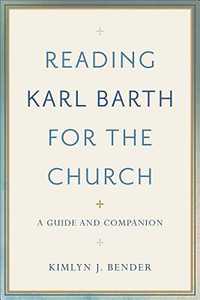
Review: Reading Karl Barth for the Church

Reading Karl Barth for the Church: A Guide and Companion

By Kimlyn J. Bender (Baker Academic)

For ages, book lovers have held to the maxim: “Don’t judge a book by its cover.” Kimlyn Bender, a professor at Baylor University’s Truett Theological Seminary, means to turn this nugget of sage advice on its ear with his latest book, Reading Karl Barth for the Church. In fact, he emblazoned the distinguishing feature of his book right on its cover. This book is “for the church.”

Karl Barth’s theology has enjoyed a resurgence among conservative seminarians, as well as 20-something and 30-something Christian intellectuals. Despite this renewal, most of the secondary Barth literature clearly has the academy as the target demographic. Bender sets himself and his book apart from this trend by clinging to Barth’s perception of his own work. Barth considered himself, even in his teaching career, a pastor. When he wrote, Barth wrote for the church. Bender simply follows suit.

Bender makes his objective clear. He hopes to introduce Barth’s theology to his readers and begin to help the reader think about their own theology with the same depth of engagement. Each chapter of Bender’s book corresponds to a section of the first volume of Barth’s Church Dogmatics. Bender brings his wealth of insight and research from his time at the Center for Barth Studies at Princeton Theological Seminary to this current volume. Each chapter provides what Bender describes as a guided tour through Barth’s original text. In these sections, he removes common obstacles to reading Barth for both the novice and theological student alike. After each “tour” concludes, Bender adds his own insightful commentary, in which he restates Barth’s point in more modern language and links that point to the current state of the church. Bender’s desire for this volume to serve the church comes through as he concludes each chapter with a “questions for reflection” section clearly meant to aid a small-group study.

I found Bender’s insights into Barth’s theology—specifically the structure of Barth’s call and response to his own questions, as well as the questions of other theologians—especially moving. Bender plainly handles Barth and the mountains of secondary literature in a way that creates a clearly defined path to follow. In fact, one of the book’s many strengths lies in Bender’s ability to write based on his own authority, reducing the need for pages overflowing with footnotes. Bender writes a well-organized and linear commentary to the Church Dogmatics on visually clean pages that prove a welcome respite from Barth’s own looping and symphonic style. Despite Bender’s best efforts, the novice may find some passages remain elusive, but that probably owes more to the original subject matter than to any flaw in Bender’s writing.

If you always wanted to read Barth, or if—like so many of us—you tried and failed to read Barth with any comprehension, then I encourage you to judge Bender’s book by its cover. Bender provides a vehicle to ask why interest in Barth has remained secluded from the church, and perhaps even cause some to question why they stayed away from Barth in the first place. He reminds us Barth never meant his writings for the academy. Rather, Barth wanted to present a “full and comprehensive account of the Christian faith … written for the universal church” (p. 31). Bender captures that desire for the church and provides her with a tremendous resource and link back to one of her greatest theologians.

J.R. Watkins, student

Dallas Theological Seminary 


Review: The Gift of One Day

The Gift of One Day: How to Find Hope When Life Gets Hard

By Kerry and Chris Shook (WaterBrook)

Every person, every family and every church will face a time when life becomes almost too hard to bear. Kerry and Chris Shook, co-founders of Woodlands Church near Houston, share their family’s difficult journey in The Gift of One Day: How to Find Hope When Life Gets Hard. In the introduction, the couple wisely reveal the outcome of the story. Knowing what will happen makes the ending less sad, but that knowledge doesn’t lessen the tears or the lessons garnered.

The first child born to the Shooks’ middle son and daughter-in-law lived just one day: “One sunset. One sunrise.” Kelli and Josh Shook announced their pregnancy with great anticipation. At 20 weeks, ultrasound revealed kidneys that could not function apart from his mother without a medical near-miracle. The couple named their son Jude Samuel, meaning: “Praise! The Lord has heard.”

With faith and eyes on God’s goodness, the grandparents impart 14 lessons their family learned. Among them: hard isn’t the opposite of good; when nothing makes sense, just obey; everyone needs help, including you; and the number of your days is unrelated to the impact of your life. Jude’s impact continues in his Christmas stocking filled with gifts for others, in the witness of his parents to those who have also lost a child, and in the knowledge that God does not waste tears.

The Gift of One Day closes with the birth of Jude’s little sister Mary Love—love because of God’s promise in the second verse of Jude from The Message: “…open your hearts, love is on the way!” That’s God’s message and the message of the book.

Kathy Robinson Hillman, former president

Baptist General Convention of Texas

Waco


Review: On the Bright Side

On the Bright Side: Stories about Friendship, Love, and Being True to Yourself

By Melanie Shankle (Zondervan)

Somewhere between decoding the current fashion trends at Target and allowing a child to make and learn from their mistakes, wisdom and hope spring forth in On the Bright Side: Stories about Friendship, Love, and Being True to Yourself, leaving readers laughing, crying, and biting their lips.

Melanie Shankle allows readers to travel through her mishaps, first as a child of the 1980s working at a record store and continuing with her 462-step anti-aging routine at nearly age 50. The book is filled to the brim with personal stories and life lessons about how looking through the lens of “the bright side” can change our perspective and remind us of what really matters.

A Southeast Texas girl and graduate of Texas A&M University, Shankle is delightfully forthcoming, drawing her followers in with “cat in the freezer” tales of epic proportions. One reading likely will entice you to re-read it and buy it for all your friends.

Each chapter opens with pithy quotes taken anywhere from the Bible to Gianni Versace. She leads into Chapter 5, “Believing in Ever After,” by quoting her husband: “Marriage is kind of like being a member of a street gang. You pretty much have to die to get out easily.” This type of relatable humor weaves its way throughout all 16 chapters. Shankle also uses biblical illustrations to point us to the God who turns what the enemy meant for evil into something good.

At a mere 213 pages, this book is well suited for a day at the beach, or a Dallas-to-Atlanta flight, or—during these days of stay-at-home orders—sitting in the bathtub hiding from your kids. Shankle finishes each chapter by highlighting things on her own bright side list—from seeing an Amazon package on her front doorstep to the more pressing matter of watching her child do the right thing when she doesn’t know mom is paying attention.

Light on spirituality, heavy on heart and humor, On the Bright Side comes highly recommended for a little pick-me-up while hunkered down with your “quaran-team.” You’ve never laughed so hard from your back porch.

Brooke Young Sparks, student

Dallas Theological Seminary 


Review: Killing a Messiah

Killing a Messiah: A Novel

By Adam Winn (IVP Academic)

In Killing a Messiah, Adam Winn has created a compelling fictional narrative of the events leading to Jesus’ crucifixion. Like all historical fiction, he combines fact and fiction, which he addresses in a concluding note.

Winn’s cast of characters—both biblical and fictitious—are involved in a grand conspiracy that wraps in all sides. The priesthood, Pilate, militant zealots, a shop owner and families close to these people all are involved.

Part of what makes Winn’s narrative a page-turner is how he tells the story from the perspective of the main cast members. Though he writes in third-person throughout, the reader gets the sense of being closer to the characters than being a mere observer. Winn draws the reader in to the characters, making each one relatable in a way the brisk biblical narratives don’t. As a result, the reader can imagine his or her own complicity in the events.

One might wish for a more robust treatment of Jesus’ resurrection and the events surrounding it as they relate to the priestly establishment and the Roman presence in Jerusalem. For Christians, this is the most exciting part of the entire story. After such an engaging lead up to Jesus’ crucifixion, the last chapter is anticlimactic. Perhaps a sequel is in order.

Acknowledging his novel could be taken as adding to the biblical narrative, Winn is careful to explain his approach in a concluding note. He lists questions skeptics ask about the historicity of the biblical accounts of Jesus’ crucifixion. He also explains the plausibility for the kind of conspiracy he envisions in his novel, and it certainly is plausible.

Winn, assistant professor in the College of Christian Studies at the University of Mary Hardin-Baylor, includes another concluding note on anti-Semitism and his efforts in Killing a Messiah to combat it. The importance of his message in these last few pages warrants careful reading.

Eric Black, Editor

Baptist Standard