Explore the Bible: God Commissions

• The Explore the Bible lesson for Jan. 6 focuses on Numbers 27:12-23.

Have you ever attended a funeral service that made you think about your life, family and future? Did you change due to the experience? Did you become a better spouse, son, daughter, etc.? How long did that change last? I have attended many funerals and—in every single one—I have left with the urgency to do something or change something in my life. And to be honest with you, that change doesn’t last long.

When Moses was confronted with the reality about his death, he decided to do something remarkable about it. Moses could have relaxed, or he might have asked God for a personal request. Instead, he decided to set aside his personal agenda for the benefit of the people.

Facing Death (Numbers 27:12-14)

The author of the book of Hebrews reminds us all people are destined to die once (Hebrews 9:27). It doesn’t matter who you are, one day you will perish. This passage tells us that it was Moses’ turn to face his fate, as his brother Aaron did (20:22).

When Aaron died, God called him and his son Eleazar alongside with Moses, to go up into a mountain. This same pattern is repeated in this episode, but this time, with a different character. God instructed Moses to go up a mountain in the Abarim range so Moses could see the Promised Land. I can’t imagine being at the top of this mountain, seeing the land that God promised Abraham years ago and not being able to enter it. After all Moses went through with the people in the wilderness, God remained faithful to the judgment he pronounced earlier. Moses saw the land before he was “gathered to his people”—a phrase that indicates someone being reunited with the people that have died before them. Its common use can be seen in passages such as Genesis 15:15; 35:29 and 49:29.

Moses’ death was the fulfillment of God’s judgement declared in Numbers 20:12. Moses and Aaron did not trust God enough to honor him as holy before the Israelites. And now, Moses faced the consequences of his actions.

Looking to the Future (Numbers 27:15-17)

This passage highlights one important point—the heart of a true leader. Moses had one final request, not seeking his own benefit but the benefit of the people. He asked the Lord, the God who gives breath to all living things, to appoint someone over the community. This is what servanthood is all about. This act of “caring for others” demonstrates the true quality of a leader is to prepare the next generation of leaders. For a Christian, it means investing in others for the sake of the church and the gospel. How are you or your church preparing the next generation of leaders?

Moses was preoccupied about Israel’s future. He wanted to make sure the people had a leader—someone who could represent them before the Lord and lead them into the Promised Land, a leader who could protect them like a shepherd. Shepherds and sheep were used as a metaphor elsewhere in the Bible. The decisive metaphor of a shepherd was used by Jesus when he told his followers: I am the good shepherd (John 10:14). Moses finished his life caring for the people. Are you and your church living with a future in mind?

God Provides (Numbers 27:18-23)

In the previous section, we experienced Moses’ character and attitude towards the future. He died knowing God had a plan for the people. In this last section, God gave Moses his final instructions.

Moses took Joshua, son of Nun, and laid hands on him. The NIV translation adds a particular epithet about Joshua, spirit of leadership, to emphasize that Moses’ successor was a person well qualified for the job. Joshua stood before the priest and the entire community, just as Aaron stood before Moses and Eleazar and later Moses stood before God.

The next episode is an echo of what happened to Aaron before he died. When Moses, Aaron and Eleazer went up to Mount Hor, Moses removed Aaron’s garments and put them on his son Eleazar (20:26). This event accentuated the passing on of the baton of leadership and responsibility before the Lord. When Joshua stood before the assembly and the Lord, God told Moses: “give him some of your authority…”. Try to picture this scene in your mind. Moses is pouring, providing, investing (ESV translation) some of his power on Joshua. Sometimes I wonder why God allowed Moses to give him only “some” of his power, particularly taking into consideration that the task ahead was not a walk in the park.

God did not abandon his people. He commissioned a clever leader to take his people into the Promised Land. Who are you investing in? Who is the next Joshua who will lead when you’re gone?

Jaime Cortez is discipleship pastor at First Baptist Church in Athens, Texas.     


Connect360: The Perfect Storm    

Lesson 4 in the BaptistWay Press Connect360 unit “Miracles: The Transforming Power of Jesus” focuses on Matthew 8:23-27

On most any airplane trip, it’s easy to tell the seasoned travelers from the rookies. Those who fly often appear relaxed and unconcerned, settling into their seats with earbuds, books or electronic devices. Some sleep through much of the flight, not bothering to rouse themselves even if the plane hits heavy turbulence. Inexperienced fliers, on the other hand, often seem nervous. They gasp, grip their armrests, and glance around uneasily at every bump or unfamiliar sound. The difference between the two groups is a sense of perceived danger. Experience has taught frequent travelers to trust the aircraft and its crew. Those without such background tend to focus on potential hazards instead of present comfort.

For Jesus and his disciples, boats offered an accessible alternative to walking between cities. It seems to have been a restful mode of transportation for Jesus, away from the pressing crowds, for the Bible tells us that Jesus slept in the boat (Matthew 8:24, Mark 4:38). In much the same way that today’s airline passengers relax during their flights, Jesus laid down to rest with no thoughts of a potential threat from the waters.

When a squall hit, the disciples panicked. The experienced fishermen among them knew what could happen if a boat capsized far from land. They had no recourse but to turn to Jesus for help.

Faith … but only a little

There is a clear divide in the disciples’ faith at this point. They had seen Jesus override natural law by healing incurable diseases. Though still infants in their spiritual understanding, they accepted his claim to divine connection. For that reason, his followers turned to Jesus for salvation at the point of peril.

At the same time, the disciples were uncertain how far they could trust Christ’s power. Had their faith been strong, the disciples would have stopped with “Save us!” Instead, they demonstrated their uncertainty by adding a conviction of imminent death. They had some faith, but only a little. Their belief in Jesus’s ability to act was tempered by what they perceived as the reality of their situation—they were all about to die.

Although the circumstances have changed, people today still struggle with storms in their lives. Sometimes our storms can be literal hurricanes or tornadoes. But more often, contemporary believers deal with problems and tragedies that challenge their faith and beliefs. The nature of crises may change, but Christ’s ability to bring comfort and hope is the same in every situation. Although we cannot physically see him, Jesus is just as present in life struggles now as he was to the disciples on that boat in the Sea of Galilee. He stands ready to heal, sustain, encourage and infuse our hearts with hope. His presence still brings peace to the most violent storms of life if we turn to him.

Compiled by Stan Granberry, marketing coordinator for BaptistWay Press.

To learn more about BaptistWay Press and the Connect360 Bible study series, or to order materials, click here.  


Explore the Bible: God Calls

  • The Explore the Bible lesson for Dec. 29 focuses on Numbers 22:22-35.

While preparing to write this week’s lesson, I asked my children and their friend: “Do you think animals can talk?”

Perplexed, they replied, “No, animals can’t talk.”

“What about a donkey?” I asked again.

“No,” they answered.

“What about a snake?”

Then my 4-year-old daughter replied: “Snakes don’t talk. They go ‘ssss sssss,’ silly dad!”

So, I read to them the story of Balaam, eager to ignite a crucial conversation with them. As I read the story, I intentionally accentuated the conversation between Balaam and his donkey, but my kids were not interested in talking donkeys. I felt disappointed.

The story of Balaam is eccentric. People have been debating whether Balaam was a prophet from God or a foreteller, because when the Moabites came to Balaam, he asked them to stay the night and then he would report whatever the Lord answered.

When the first group came to summon Balaam, he sent them back, arguing that the Lord refused to let him go with them. Then king Balak sent other officials, more distinguished than the previous ones. This time, God ordered Balaam to go with them. “But only do what I tell you,” God said. Balaam got up the next morning, saddled his donkey and went with the officials. Everything was going smoothly until the writer introduces God into the story again. The author tells us God was furious when Balaam went with them.

Why was God angry at Balaam? Didn’t God tell him the night before that it was OK for him to go? Why did God change his mind overnight? There are a few points worth our time. First, when the second group of officials came, they offered the prophet a bigger reward. Second, Balaam followed his previous protocol and consulted God before deciding. Last, when God agreed that he could go, the author described a minor detail; he saddled his donkey. The saddling of a donkey was used for several purposes in ancient times, but the most prominent were transportation and carrying supplies. Perhaps, by saddling his donkey, Balaam intentions were to bring as many goodies as possible back with him, and this change of attitude made God angry.

Three Strikes (Numbers 22:22-27)

On his way to meet Balak, Balaam encountered the unexpected. An angel of the Lord appeared to Balaam’s donkey three times. The first time, the donkey went off the road into a field, and the prophet hit the donkey. The second time, the angel stood in a narrow pathway with walls on both sides crushing Balaam’s foot against it. Balaam hit the donkey a second time. The last time, the angel stood in in a narrower place with no room to turn around. So, the donkey laid down under Balaam, and Balaam beat it a third time.

In baseball, three strikes mean you are out. In this situation, we can see the three strikes as three opportunities God gave Balaam to see his error. His heart was blind to spiritual things. It’s interesting to note that a prophet, a foreteller, a messenger from God, could not receive this message.

Two Questions (Numbers 22:28-30)

When I read the story to my children and their friend. I felt disappointed because my expectation from them was a loud: “Wow! A talking donkey!” However, they did not react this way. This passage undoubtedly is bizarre to explain. After the third hit, God enabled the donkey to question his owner. The donkey asked him two questions. 1) What have I done to you to make you beat me three times?  2) Am I not your own donkey, which you have always ridden, to this day? Have I been in the habit of doing this to you?

Note Balaam’s inability to see beyond the obvious. Despite being considered a prophet, Balaam could not see what was happening. God gave him a message but he could not see it. The donkey, on the other hand, saw the angel and tried to communicate with the prophet by getting off the road, crushing his foot against the wall, and finally, by laying down under him. Realizing the prophet’s incompetence to recognize the signs, God used a different way to communicate with him, using Balaam’s own donkey.

One View (Numbers 22:31-35)

Finally, the Lord opened Balaam’s eyes and five things occurred: (1) he saw the angel; (2) he bowed low; (3) he fell face down; (4) he confessed his sin; and (5) he obeyed. Balaam finally understood that God’s ways were the only true ways.

When God calls us to do something he expects us to follow his plan and purpose. For Balaam, this would have cost him his life had it not been for his donkey. The consequences of not following God’s plan may be different for us, but the point is that he calls us to be truly obedient to his commands.

Jaime Cortez is discipleship pastor at First Baptist Church in Athens, Texas.


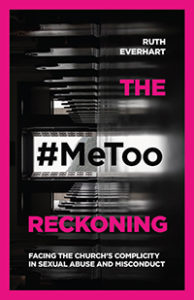
Review: The #MeToo Reckoning

The #MeToo Reckoning: Facing the Church’s Complicity in Sexual Abuse and Misconduct

By Ruth Everhart (InterVarsity Press)

Ruth Everhart writes The #MeToo Reckoning as an outgrowth of her earlier volume Ruined, the 2017 Book of the Year by Christianity Today Women. Ruined details Everhart’s survival after a sexual assault in 1978 when two armed intruders robbed, raped and brutalized her and her college housemates. As a conservative Christian college senior with a deeply religious background, she believed a woman’s sexual purity was of such importance that the rape had damaged her “beyond repair.”

As other women shared their experiences with her, the longtime Presbyterian minister combined stories with biblical narrative to pen The #MeToo Reckoning: Facing the Church’s Complicity in Sexual Abuse and Misconduct. She muses, for example, on how Bathsheba frequently has been implicated as partly responsible for David’s adultery. After all, she was beautiful. Ruth wonders what consequences Bathsheba would have faced for not complying with a king’s summons. Was she somehow complicit or not?

The author shares the continuation of her own story set against the backdrop of 2 Samuel 13, a passage that includes Tamar’s rape and quests for power. As a young seminary graduate, along with her teacher-husband and two preschool daughters, Everhart moved to a wealthy suburban church where she would be associate minister and the first female to serve on staff. A year after the long-time senior pastor laid his “holy” hands on her at her ordination, he laid his “unholy” hands on her. Often when reported, as in her case, church and denominational leaders stonewall, offer excuses or attempt to explain the actions, she noted.

The sexual abuse and misconduct survivor doesn’t shy away from tough topics like shame, purity culture, secrecy, vulnerability, clericalism and justice. After making her case, Everhart calls for individuals and churches to act. The #MeToo Reckoning isn’t an easy read, but the book offers a sobering perspective and practical path to “facing the church’s complicity in sexual abuse and misconduct.”

Kathy Robinson Hillman, former president

Baptist General Convention of Texas

Waco


Explore the Bible: God Saves

  • The Explore the Bible lesson for Dec. 22 focuses on Matthew 1:18-25; Numbers 21:6-9

Have you ever made a promise you couldn’t keep? If you ask my son about me, the answer will be “yes.” There have been plenty of promises that I could not keep, at least by his reckoning. The problem relies on my son’s interpretation of my words. Every time he wants to do something, such as going to the park, I have to be precise in the way I communicate with him. If I say “yes,” it means “yes.” If I say “no,” although it means “no,” in my son’s mind it means, “I’ll ask my mom.” If I say “maybe,” that’s an automatic “yes” in his mind. There is no way out when dealing with him.

Before the separation between God and humanity, God had a plan in mind. In Isaiah 7:14, God spoke a prophecy in regards to the salvation of mankind: “Therefore, the Lord himself will give you a sign. The virgin will conceive and give birth to a son, and will call him Immanuel.” This prophecy was fulfilled years later when Jesus was born in a manger in Bethlehem. God kept his promises. God showed his faithfulness by fulfilling the prophecies foretold hundreds of years earlier.

The Savior (Matthew 1:18-23)

In this first section in the Gospel of Matthew, the author stresses that the prophecies dealing with the Messiah were fulfilled in Jesus. In Isaiah 7:14 God spoke to the prophet about the birth of a son. This was a promise about a savior, a redeemer, a prince of peace.

Matthew tells us an angel came to visit Mary and informed her about Jesus’ birth. When Joseph learned Mary was pregnant, he decided to leave her quietly. An angel of the Lord appeared to him accentuating that Mary’s son was part of God’s salvific plan and encouraging Joseph not to be afraid.

During the time of Jesus, to be engaged to someone differed from what we know in modern days. It was a bond between two families; it was a pledge before eyewitnesses. So, Joseph wanted to protect Mary by divorcing her quietly, not knowing that the author behind all these divine events was God himself.

The Arrival (Matthew 1:24-25)

When Joseph woke up, he did everything the angel of the Lord had commanded him. Joseph obeyed the commands the angel gave him and did not consummate the marriage until the baby was born. This demonstrated Joseph’s commitment to the law, his marriage and God’s plan.

One problem of modern society is an unwillingness to wait. We live in an instantaneous world where we can get almost everything at the speed of light. Take a moment to think about all the thoughts that went through Joseph’s mind: What am I going to tell my family? What about my friends? What if they don’t believe me? What if I do something about it? The fact that he remained faithful shows his willingness to surrender to God’s plan and his will.

The Requirement (Numbers 21:6-9)

In this last section, we return to the Israelites who have traveled for days. They grew impatient and spoke against God and Moses. As a result, God sent venomous snakes among them, and many Israelites died. They came to Moses and asked him to pray that the Lord would take the snakes away from them. Moses prayed, and the Lord answered: Make a snake and put it up on a pole; anyone who is bitten can look at it and live.

This was a unique situation that required unique obedience. The author highlights three things: if anyone is bitten, they need to look up at the pole, and they will live. This was to illustrate that salvation was personal and accessible to anyone.

In John 3:14, there’s an allusion to the bronze serpent as a foreshadowing of Jesus. Jesus and Nicodemus were discussing salvation when Jesus told him just as Moses lifted up the snake in the wilderness, so the Son of Man must be lifted up, that everyone who believes may have eternal life in him. The similarities in language (the Son of Man lifted up/make a snake and put it up, everyone who believes/anyone who look at it, may have eternal life/will live) serves as a bridge that links the two passages together.

Salvation comes by looking at Jesus—the one who came and died on the cross for our sins. For the Israelites in the Old Testament, the requirement to live after they were bitten was to look up. For the people in the New Testament, the requirement was to believe in the Son of Man.

Jaime Cortez is discipleship pastor at First Baptist Church in Athens, Texas. 


Review: Dementia from the Inside: A Doctor’s Personal Journey of Hope

Dementia from the Inside: A Doctor’s Personal Journey of Hope

By Dr. Jennifer Bute with Louise Morse

Dementia from the Inside is a must-read for anyone who provides pastoral care, for family and friends of people with dementia, for those living with dementia and for anyone who needs inspiration.

Jennifer Bute, a former medical doctor in Southampton, U.K., cared for her father, a former Baptist pastor who had dementia. Bute
later had to retire from medicine after her own diagnosis with dementia. Dementia from the Inside is her account of the realities of dementia and the hope for those living with it and their caregivers.

The first two chapters are not so much about dementia as they are about God’s faithfulness to Bute, preparing her for dementia through various hardships earlier in her life. During her years with dementia, she has discovered her rich relationship with God to be even richer than it was before.

Bute was part of the pastoral leadership of her church and was able to teach them the importance of continuing pastoral visits to people with dementia. Her teaching was recorded and is available at Glorious Opportunity, along with other resources.

She tells two stories of angels who helped her in situations that would be high stress for those without dementia and traumatic for those who have it. The stories reinforce one of her central messages, which is God’s good care and faithfulness.

Resources abound in the second half of the book. Chapter five is a gold mine with three key principles for understanding people with dementia, seven common triggers for meltdowns, and several pages of practical ways pastors, family, friends and others can accommodate those with dementia. This chapter ought to be read and implemented by every church staff and leadership team or committee.

Chapter six follows with counsel for how to enable those with dementia to open up and flourish rather than shut down and close off. Chapter eight lists five ways to get those with dementia talking—ways more effective and caring than asking, “What did you do today?” or “Do you remember … ?”

Bute shares what it is like living with dementia. She has had to adopt extra measures and reminders to keep her safe and moving through her day. Rather than feeling pity for her, the reader has a sense of awe, joy and gratitude for how full life is even when it seems diminished.

Indeed, rather than pity, Bute calls for empathy, which not only helps those with dementia, but also helps the larger community.

Even if one has no personal interest in dementia, reading Dementia from the Inside will pay dividends in developing empathy, a quality all of us need to possess.

Eric Black
Editor
Baptist Standard


Connect360: Christ the Healer

  • Lesson 3 in the BaptistWay Press Connect360 unit “Miracles: The Transforming Power of Jesus” focuses on Matthew 8:14-17.

Matthew’s first-century audience was primarily Jewish, a culture where women were often considered expendable. They weren’t allowed past a certain point on temple grounds, were sometimes treated as commodities, and could be divorced and left destitute with little more than a word. Therefore, readers of that day probably didn’t expect to learn that Jesus—a rabbi and leader of men—cared so personally about an ailing woman.

This pericope  (a single coherent unit of thought in the Scripture text) is one of two miracles (see the other in 8:5–13) introducing Jesus’ ministry in Capernaum, his home base in Galilee. As was customary in the first century, families lived multi-generationally, and Peter married before becoming a Christ-follower (see also 1 Corinthians 9:5). Jesus perhaps even lived with Peter’s family when in Capernaum, since he depended on hospitality for survival (cf. 8:20), so he may have regarded Peter’s mother-in-law as a close friend or adopted aunt or mother. We know nothing else about her, from Scripture or ancient texts, but the fever may indicate she had malaria, or perhaps flu, pneumonia or intestinal disease. Regardless, it was severe. Bedridden by her sickness (8:14) and without effective treatment, death was a presumed outcome.

Jesus touched her

Jesus saw her lying there and responded in a way counter-cultural to Levitical law, just as he’d done with the leprous man in 8:1–4 as he grasped her hand, and the “the fever left her” (8:15). In a culture ignorant of germs, bacteria and microorganisms, fevers were mysterious and considered a disease in and of themselves. Therefore, for a touch to bring instant healing was astonishing and evidence of God at work. However, that wasn’t all; she “got up and waited on him.” Jesus’ healing was instant and thorough. Her response to get up and serve not only proved complete healing but was likely an expression of gratitude.

Jesus has authority and power over illness, demonic influence and nature. The heart of the gospel is this: sin maimed the perfect world God created, and Jesus is the only way it can find redemption. The work of the cross is far greater than healing from sickness. Though Isaiah’s prophecy promised the Messiah would heal physical ailments, it did not guarantee cures for everyone in this lifetime, but the new covenant assures us all we will find healing in the age to come.

Compiled by Stan Granberry, marketing coordinator for BaptistWay Press.

To learn more about BaptistWay Press and the Connect360 Bible study series, or to order materials, click here.  


Explore the Bible: God Requires

  • The Explore the Bible lesson for Dec. 15 focuses on Numbers 20:1-13.

In March, my son asked me for a wristwatch. He was in third grade, studying the concept of time. So, I figured it would be appropriate to buy him one. But before heading to the store, I told him we should search for one of my unused watches in the house, and he agreed. We didn’t have to look too long before we found one. To my surprise, he liked it. It filled my child with excitement. Every day, when he returned from school, he said, “Papa, guess what time it is.” And I had to pretend I was clueless about the time so he could tell me.

Four months later, our family joined a mission trip to South Dakota. We left a few days early to take a mini-vacation in Colorado. I set up my GPS on my phone and headed to our new adventure. My son was sitting right behind me and could see the dashboard and the phone giving me directions. Shortly, my son realized that the GPS on the phone, besides giving me the coordination to my destination, it also gave me an estimated time of arrival.

This is where our nightmare began. He noticed how long it would take to get to my friend’s house in Lubbock, where we were spending the night. He looked at his watch and did the math.

Have you seen the movie, Are We There Yet? That was my life for the next eight hours. At first, I thought it was funny. My son would say, “Papa, we only have 7 hours and 30 minutes left.” Five minutes later, he announced, “Papa, we have 7 hours and 25 minutes left.” He recited the same formula for hours until I grew tired. I tried to use blandishments to convince him to stop looking at his watch, but it didn’t work. I tried to ignore him, but I failed. Finally, exasperated and furious, I said to my son, “If you look at your watch again and remind me how much time we have left until we arrive, I will take your watch off your wrist and I will throw it out the window.” There was absolute silence for the next three and a half hours.

The Timing (Numbers 20:1-5)

Miriam, Moses’ and Aaron’s sister had died. According Numbers 17:11, 14 and 16, “If you touch a dead body, you will be unclean for seven days… If someone dies in a tent while you are there, you will be unclean for seven days… If you touch the body of someone who was killed or who died of old age, or if you touch a human bone or a grave, you will be unclean for seven days.”

We are uncertain how long the people waited after Miriam’s death before gathering in opposition to Moses and Aaron. We don’t know if the people congregated as a family for a period of mourning, but what we do know is of their unhappiness with their leaders. Imagine the Israelites asking Moses and Aaron: “Have you finished mourning yet? Because we are thirsty, and there’s no water here.”

The Direction (Numbers 20:6-8)

Moses and Aaron went to the entrance to the tent of meeting and fell face down, seeking God’s direction. The Lord’s presence appeared and gave Moses specific instructions. These great leaders faced unceasing opposition from the people. Since the day they left Egypt, the people had done nothing but complain and grumble against their leadership skills. We know “the people disobeyed and tested God ten times” (Numbers 14:20-23). Whether that’s a literal amount or figurative, the people never ceased to test the Lord.

The Frustration (Numbers 9-11)

The instructions God gave Moses and Aaron were clear, “Speak to the rock.” But out of exasperation and anger, Moses hit the rock twice. Life can be complicated. Have you ever been in a similar situation where you have dishonored God with your disobedience? How did you feel?

God expects us to honor him in all aspects of our lives. When Moses and Aaron sought God’s guidance, he gave them crystal clear instructions which they did not execute.

The Fallout (Numbers 20:12-13)

In previous chapters we have read of people being punished for their actions. In Numbers 16:31, “the ground split apart and swallowed the household, and all associated with Korah.” When “Miriam and Aaron began to talk against Moses because of his Cushite wife, for he had married a Cushite,” Miriam became as white as snow with leprosy (Numbers 12).

Now, the consequences were upon the two leaders, Moses and Aaron. This act of disloyalty caused them and the people their ticket into the promised land. God holds his people accountable. Many might think God was being strict with Moses when he told him, “You will not bring this community into the land I give them.” However, this was to show them the cost of disobedience and distrust. Moses and Aaron, despite being great leaders, died before entering the promised land. God will hold us accountable for our actions.

Jaime Cortez is discipleship pastor at First Baptist Church in Athens. 


Review: Heart of a Heroine

Heart of a Heroine: Knowing Your Identity and Destiny in Christ By Understanding Yourself

By Nancy Albao (Westbow Press)

When a Bible teacher with a psychology degree combines the two disciplines, interesting reading is sure to follow. While the title suggests a female-targeted audience, the text itself applies to anyone. Nancy Albao contrasts some of today’s popular psychology doctrines with those of the Bible to clarify for Christians what God is saying about such beliefs.

For instance, concerning self-esteem, popular psychology says: “Know what you want and ask for it. You deserve your dreams to come true.” It sounds good, but Nancy Albao gives Scripture references to show that God knows more about what is good for us than we do, and in his infinite love can step in to protect us from our unwise requests. Popular psychology says: “Reward yourself when you succeed. No one else will.” This book reminds us God is the one who truly rewards and does so perfectly.

Aside from several distracting typographical errors, Heart of a Heroine presents an important message in an enjoyable way. Albao addresses the self-image, the self-will and the effects of materialism in America today while directing the reader to Christ.

Alice Thomas

Conroe


Review: Girls’ Club

Girls’ Club: Cultivating Lasting Friendship in a Lonely World

By Sarah, Sally and Joy Clarkson (Tyndale)

Sally Clarkson—author, speaker and co-founder of Whole Heart Ministries—joins with her adult daughters Sarah and Joy to invite women to “discover the gift of friendship” through the pages of Girls’ Club: Cultivating Lasting Friendship in a Lonely World.

The Clarksons moved 17 times, six of them internationally, as their family grew. Sally Clarkson began weekly Girls’ Club meetings to ease loneliness and to have fun, share spiritually and develop lasting friendships with her daughters. In the introduction, each woman provides her perspective on the club and its impact on “the goodness and power of women’s friendship” that helps “make light in the darkness.”

In what could be disjointed but instead flows seamlessly, Sally, Sarah and Joy Clarkson take turns penning the chapters. Each begins with a friendship quote or Scripture. The women fill the pages with poignant memories, personal stories and pertinent advice—Sally as the wise mother, Sarah as a new mom and recent Oxford graduate, and Joy as a 20-something doctoral student at St. Andrews University.

Topics encourage seeking and developing Girls’ Club-type relationships and include commitment, faithfulness, hospitality, embracing “the capaciousness of womanhood” and “dating your friends.” Sally notes the “deepest friendships are formed through … serving others side by side,” citing Jesus and his disciples. Joy shares about mean-girl drama and the “comparison trap” that creates winners and losers rather than companions. Sarah illustrates qualities of friendship with women she admires.

Although Girls’ Club contains general principles, the Clarkson women write the book for women and offer real-world advice on cultivating female friendships rooted in God’s love. The volume closes with powerful words every woman needs to hear: “You are beloved. Now go love someone else.”

Kathy Robinson Hillman, former president

Baptist General Convention of Texas

Waco


Connect360: A Leper and the Touch of Jesus

  • Lesson 2 in the BaptistWay Press Connect360 unit “Miracles: The Transforming Power of Jesus” focuses on Matthew 8:1-4.

What made this leper willing to approach Jesus? He was confident Jesus could heal him; the question remained if Jesus would. Jesus’ authority over disease was undeniable in this man’s mind, but like many of us, he wondered if Jesus would demonstrate mercy to exercise that power on his behalf. What seed of faith was planted which took root and bore fruit in his life? Standing far off in the distance, had he heard Jesus teach: “Ask, and it will be given to you … For everyone who asks receives.” (7:7–8)? Was that the catalyst for the hopeful faith he exhibited?

This man had faith and courage. Terrified shrieks likely echoed in his ears as he reached the crowd, making his way toward Christ while people shrank away from him. Many probably ran away in fear. Did his eyes strain only ahead, so he wouldn’t behold the horrified looks or risk making eye contact with those desperately trying to avoid him? According to Levitical law, he should have had torn clothes, an uncovered head, and held his hand over his lips, crying out, “Unclean! Unclean!” as he trudged toward Jesus (Leviticus 13:45). Were there jeers and catcalls reminding him he was not supposed to be among wholesome people? In that moment of panic, did anyone in the crowd remember Jesus had recently said: “Treat people the same way you want them to treat you” (Matt. 7:12)?

Doing the impossible

However, what seemed impossible—being cleansed and reinstated to society—was not an impossibility with Jesus (Matt. 19:26). The man was so convinced of this truth he risked everything to come before the Rabbi, even calling him “Lord,” a term which didn’t necessarily affirm Jesus’ divinity but certainly acknowledged him as God’s messenger. However, it’s doubtful he got close enough to touch Jesus, so he wouldn’t risk making the popular teacher unclean.

Uncleanness didn’t faze Jesus. While others backed away, he reached forward, answering the man’s question verbally and physically. Extending his hand and touching him, Jesus said, “I am willing; be cleansed” (8:3). His action likely sent shockwaves through an onlooking crowd. Ceremonially clean people did not reach out to touch those who were unclean; to do so meant defilement, invited ostracism and probably questions about one’s sanity.

While Jesus could have simply spoken healing over the man, he chose to touch someone who had likely not experienced the pleasure of loving human contact in a long time. What a blessing! Jesus’ words, “I am willing,” expressed his desire to heal and his willingness to touch the man. Miraculously, the leprosy was immediately cleansed, proving Christ’s power over sickness and that the man’s faith was well-placed.

Compiled by Stan Granberry, marketing coordinator for BaptistWay Press.

To learn more about BaptistWay Press and the Connect360 Bible study series, or to order materials, click here.  


Connect360: Overcoming Temptation

  • Lesson 1 in the BaptistWay Press Connect360 unit “Miracles: The Transforming Power of Jesus” focuses on Matthew 4:1-11.

Satan began two of his temptations by saying, “If you are the Son of God” (4:3). In Greek, the word if is less uncertain than it appears in English; it’s better translated surely. Satan wanted Jesus to feel the need to affirm his identity, suggesting Surely you are the Son of God, (with a tinge of sarcasm, I suspect), indeed, you have the right to satisfy your own needs and desires, regardless of God’s expectations.

Thus, Satan appealed to the most basic physical need: hunger. Knowing Jesus’ power as God, he suggested Jesus turn stones into bread simply by speaking it. However, fasting was God’s will (desire for that situation) for Jesus, and yes, even hunger. For Jesus to command bread from stones would have been a good thing for his well-being but would have led him outside God’s will for his incarnational experience.

The choice to obey God

Jesus had to choose: succumb to his physical desires or please the Father; exploit his power to avoid discomfort or submit to God’s plan of suffering. Jesus did not feel a simple “I-had-to-work-through-lunch-today” hunger. He desperately needed and deserved food. Though fully God, Jesus was also fully human. He knew hunger’s pangs better than most of us by that point in his forty-day experience.

Human desire is a strong force. To resist such a basic need required miraculous will-power and self-control provided by the Spirit (Galatians 5:22–23). Jesus later proclaimed, “My food is to do the will of Him who sent Me and accomplish His work” (John 4:34), so he chose obedience, even suffering, trusting God would supply his needs at the right time and in the right way (cf. Philippians 4:19).

To combat his enemy, Jesus quoted Deuteronomy 8:3: “Man shall not live on bread alone, but on every word that proceeds out of the mouth of God” (4:4). His reply is our example. We, too, are instructed in Ephesians 6:17 to use “the sword of the Spirit, which is the word of God.” Scripture is our offensive weapon against Satan’s attacks, and it is the supernatural intervention we need when enticed to sin.

Compiled by Stan Granberry, marketing coordinator for BaptistWay Press.

To learn more about BaptistWay Press and the Connect360 Bible study series, or to order materials, click here.