Reviews: Tim Tebow and a new study Bible
Know Who You Are: Live Like It Matters
By Tim Tebow with A.J. Gregory (WaterBrook)
Readers will recognize sports icon Tim Tebow as Heisman Trophy-winning football player at the University of Florida, former NFL quarterback and now an outfielder with the New York Mets. Tebow shares his heartfelt journey of loving Christ, no matter the cost.
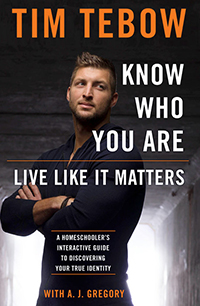 Tebow’s message, “The only identity worth having—is found in Jesus Christ,” is seen throughout the pages of Know Who You Are: Live Like It Matters. As he shares his successes and failures, readers are drawn into the events of his life. Tebow journeys back to his childhood and introduces his parents, emphasis the significance of family.
This book is intended to speak to the heart of homeschoolers. Even so, being more than 60 years old and stepping out of my comfort zone with a new adventure, I was encouraged and reminded identity is from Christ and not from this world.
The author guides readers through 36 lessons. Each begins with a Bible verse and concludes with the opportunity to journal thoughts, feelings and opinions. The interactive guide is set up in four parts with nine lessons each.
It is a great resource for discovering or confirming our identity in Christ. In a world searching for significance, readers are reminded our identity is from Christ and Christ alone.
Bobbie Bomar-Brown
Nederland, Colo.
CSB Study Bible
Edited by Edwin A. Blum and Trevin Wax (B&H Publishing Group)
Think of the CSB Study Bible, featuring Holman’s Christian Standard Bible translation and extensive notes, as a multi-purpose encyclopedia.
 This Bible includes study notes, maps, charts, word studies, illustrations and photos. It also has introductions to the books of the Bible, timelines and essays on major biblical and theological issues. Finally, it includes a concordance to the Christian Standard Bible.
One note to readers: The font for the scripture is 9.5. The peach-notes on each page are a bit smaller.
Because it has so many helpful features, this hardcover Bible is very thick and heavy. It is designed for personal study at home or in an office. It’s not the kind of Bible most worshippers would carry with them to church. However, as a resource Bible, it has it all.
Skip Holman, minister of discipleship
Northeast Baptist Church
San Antonio
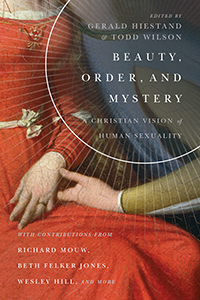 Evangelicals often are criticized—fairly—for being known more by what we are against than by what we are for. This tendency especially is pronounced in current cultural conversations regarding sexuality and gender. Evangelicals—myself included—hold strong opinions on the topics, but we tend to have a hard time articulating a reason for these opinions beyond “this is what Scripture teaches.” This isn’t a bad answer per se, but it presents two problems. First, many in our society don’t accept the Christian Scriptures as authoritative. Second, we don’t all read the Scriptures in the same way or have the same interpretations of important passages. For this reason, further dialogue is needed on these issues beyond a simple appeal to biblical texts.
 David Platt, who wrote the book’s foreword, tells how when Platt taught a seminary class, he asked one of his students, Gallaty, to pray with him. Platt now is president of the Southern Baptist Convention’s International Mission Board, and Gallaty is disciplemaking pastor of Long Hollow Baptist Church in Hendersonville, Tenn., and president of
  From there, the Emmy-winner offers engaging lessons ranging from “busyness is not next to godliness” and “time to rethink Sabbath” to “kindness really is contagious” and “powered by prayer.” He sprinkles in personal stories, relatable examples, relevant research, and appropriate Scripture, concluding each chapter with “God’s Take” and “A Dose of Grace.” Personal black-and-white photos complement the text.
 Many churches have no process for supervising ministry staff. They tried it, but it wasn’t worth the relational friction it caused. Other churches have no one who knows how to provide supervision or evaluations, so they never even try.
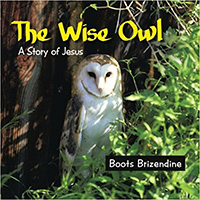 In this wonderful children’s picture book, author Boots Brizendine shares the birth of Jesus in a unique way—from the viewpoint of an owl. Readers meet Mary and Joseph as they enter the stable in Bethlehem, and through the eyes of the barn owl experience the wonder of the Christ child’s birth.
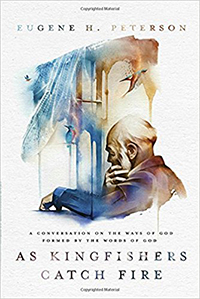 For nearly three decades, members of Christ Our King Presbyterian Church in Bel Air, Md., enjoyed a rare privilege. Week by week, they listened to wordsmith Eugene Peterson preach. Over his 29 years as the congregation’s founding pastor, those worshippers undoubtedly heard some of the most skillfully crafted sermons delivered in the past generation. In the process, they learned what God had to say to them as a specific group of Christ-followers in their unique context. Peterson has described the sermons as a collaborative effort—an ongoing conversation between the pastor and his people, as they collectively listened for a word from God.
 Author Max Elliot Anderson quickly grabs young readers’ attention with his main character, Kurt Benson. The 11-year-old’s exuberant personality adds to the story. His neighborhood friend has been burglarized, so he rushes off to his summer job at a doggie/cat kennel and shares the news with his two best friends, Riley and Jordan. This sets the stage for the drama throughout the pages of Anderson’s novel.
 Many Americans know Liddell only as the hero of Chariots of Fire, the 1981 Academy Award-winning motion picture best known for its stirring theme song. The movie focused on how Liddell, a devout Christian, refused to violate his principles regarding Sabbath-keeping by competing on a Sunday at the 1924 Olympics in Paris
  In her latest book, writer, speaker, conference leader and media personality Liz Curtis Higgs encounters The Women of Easter, just as she previously examined The Women of Christmas. While Jesus’ mother appears in both titles, Mary of Bethany and Mary Magdalene play prominent roles in the Easter story.
 Author Max Elliot Anderson does a wonderful job creating three lively characters in his novel, Lost Island Smugglers. Sam Cooper, an 11-year old Christian boy, often relocates because of his dad’s job. The latest move lands the family in Florida. Sam makes two new friends at church—Tony, an instigator, and Tyler, a follower. Young readers will identify easily with the peer pressure challenges the boy’s face.
 Many of the writers—such as Karen O’Dell Bullock from B.H. Carroll Theological Institute, David Holcomb from the University of Mary Hardin-Baylor, Melody Maxwell from Howard Payne University, Kelly Pigott from Hardin-Simmons University and Doug Weaver from Baylor University—will be familiar to Texas Baptists. So will some of their subjects, such as George W. Truett, T.B. Maston and Herschel Hobbs, along with William Carey, Adoniram Judson and Lottie Moon. Expect to gain new insights about and appreciation for some of these well-known Baptist figures.
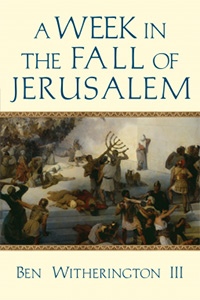 Ben Witherington’s A Week in the Fall of Jerusalem is a cross between a New Testament textbook and a novel. The book presents a fictional account of various biblical and extra-biblical characters fleeing Jerusalem during the destruction of the city by the Roman army in A.D. 70. The story is largely incidental, serving as a means to orient readers to the world of the first Christians. Frequent set-apart boxes provide historical and cultural details about Palestine in the first century, often with accompanying pictures.
 Abandoned Faith is exhaustive and highly researched. It begins with “From Christianity to Atheism” and concludes with “Jesus is the Key.” The authors move from “What Went Wrong?” and “Forces Shaping Our Sons and Daughters” to “Steps to Mend and Move Forward” and “Winning Back Your Millennial Child.”
  As if in response to that conundrum, To the Cross offers fresh, biblical insights into familiar stories. Each chapter is a sermon Wright preached to his congregation at All Souls Church in London, beginning with the Last Supper and concluding with Jesus’ final words from the cross.
 Fishing and camping outdoors in the national parks of western America is the backdrop for We Stood Upon Stars, a collection of essays that reads like pithy prose poems. Written by Roger W. Thompson, a successful entrepreneur and adventurer, it is a memoir of a father of pre-teen sons who attempts to implant in them his Christian faith, along with his love, understanding and reverence for nature’s magnificence.
  Comparing the lack of a relationship with Christ to being in the upside-down image and world, Smith guides readers through the correct steps to get to the right-side-up world and relationship.
 He did more than answer all my questions. He inspired me to rethink how I answer the uncomfortable questions. And he reminded me of the profound mystery that all questions don’t have an answer.
 Walter Brown was at the Naval Air Station in Jacksonville, Fla., when a pastor from his hometown of New Orleans introduced him to Christ as his Savior during a long-distance phone call. After completing his service in the U.S. Navy, Brown became an insurance agent/broker and a Bible teacher.
 The author covers three main areas.