Review: Anything But Ordinary

Anything But Ordinary: Finding Faith That Works When Life Doesn’t

By Stephanie Morales-Beaulieu (Word Alive Press)

God has a way of making the ordinary extraordinary. In Stephanie Morales-Beaulieu’s Anything But Ordinary, she pens an autobiographical biography of her father and her family Finding Faith That Works When Life Doesn’t.

The story begins at the end with a funeral on Aug. 24, 2009. In flashforwards and flashbacks, readers experience Stephanie’s mother Kathy’s surprising journey to faith, her Filipino father Jesse’s astonishing turn to Christ, their unlikely call to ministry, and finally 60-year-old Pastor Jesse Morales’ heartbreaking 15-month losing battle to ALS.

Kathy’s life had been plagued by poor choices, especially after her family moved to the Philippines and later at the University of British Columbia, where she admittedly majored in partying. She married Jesse Morales, a mechanic and Filipino immigrant, but her emptiness continued until a divine encounter in August 1984 changed her life for the better but her marriage for the worse. In 1986, after Kathy quit trying to save Jesse, the father of three came to Christ in another God-orchestrated event.

As with everything in Jesse’s life, he was “all in” and began leading others to salvation. Henry Blackaby, the family’s interim pastor, offered to mentor Jesse and wasn’t surprised when God called him to seminary. By 1994, he was Pastor Jesse and, with Kathy, he led and planted churches, shared the gospel and worked as a mechanic.

In 86 brief, raw, honest chapters that each begin with a date and a Scripture, Stephanie details how God continually worked in her parents’ lives and in those of their four daughters. When the terminal ALS diagnoses came, Jesse clearly heard his Lord say: “You do your part. I’ll do mine.” His part was trusting and sharing Jesus to the end.

Ultimately however, the story isn’t about Stephanie’s earthly father but about the heavenly Father. It’s about how faith shaped and continues to shape her family and her life as a speaker and church planter, and indeed, all of us.

Kathy Robinson Hillman, former president

Texas WMU and Baptist General Convention of Texas

Waco


Review: The Love Stories of the Bible Speak

The Love Stories of the Bible Speak: Biblical Lessons on Romance, Friendship, and Faith

By Shannon Bream (Fox News Books)

God fills the Bible with love stories of all kinds—joyous and joyless, functional and flawed, fleeting and eternal. In The Love Stories of the Bible Speak: Biblical Lessons on Romance, Friendship, and Faith, media personality and attorney Shannon Bream uses those narratives to offer a biblical view of romantic love and abiding friendship with happy or not-so-happy endings.

Some might consider the volume a Bible study while others will read it as a series of short stories or use the 12 chapters in monthly devotionals. Regardless, the New York Times best-selling author divides the accounts into two themes. “Romantic Love” explores the relationships of Solomon and his Song of Solomon bride, Samson and Delilah and Samson’s parents, Adam and Eve, Joseph and Mary, Esther and Xerxes, Ruth and Boaz, and David and Abigail. David naturally bridges to “Friendship Love” with David and Jonathan; Shadrach, Meshach and Abednego; The Friendships of Paul; Job and His Friends; and Jesus and John. The ending emphasizes God’s unconditional love for us, and a broad index augments the volume.
The writer generously quotes Scripture passages in their entirety with Bible references, which makes the title easy to read on-the-go or as an audiobook performed by the author with clear expression and gentle nuance. Bream also shares pertinent personal anecdotes and offers glimpses of her own heart and life.

Although Bream’s earlier best-sellers, The Women of the Bible Speak and The Mothers and Daughters of the Bible Speak, express distinctively feminine points-of-view, Love Stories appeals to both men and women. However, Bream hasn’t lost her ability to draw lessons applicable to today while remaining true to biblical context. The Love Stories of the Bible Speak would make an excellent wedding, anniversary, birthday or just-because friendship gift, but beware of the honest passion displayed in scriptural accounts of romantic relationships.

Kathy Robinson Hillman, former president

Texas WMU and Baptist General Convention of Texas

Waco


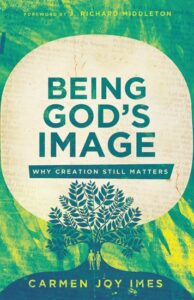
Review: Being God’s Image

Being God’s Image: Why Creation Still Matters

By Carmen Joy Imes (InterVarsity Press)

Author Carmen Joy Imes purposefully writes about “being” God’s image rather than “bearing” God’s image. Bearing is something we do; being is what we are inherently.

Imes’ writing style is so engaging and accessible, readers will be swept along effortlessly on a rapid journey through the biblical narrative, seeking to answer a basic question: What does it mean to be human? Beginning in the beginning—the first three chapters of Genesis—and moving all the way through to the vision of restored and redeemed creation in Revelation, Imes emphasizes the image of God as central to humanity’s identity and purpose.
She even makes a provocative—but rather convincing—assertion about Jesus. She insists Jesus revealed the glory of God because he was fully divine, but Jesus revealed the image of God because he was fully human. As the New Adam and the ideal human, Jesus was what God created humanity to be—living without sin in unbroken fellowship and unhindered communion with the Creator.

Imes has little patience for ethereal visions of disembodied spirits floating on clouds. She insists the biblical vision for humankind is much more firmly grounded and earthy. It focuses not only on human flourishing, but also on the flourishing of all God’s creation. It is a vision centered on Christ’s Resurrection. After all, she insists, the Resurrection is what makes the Incarnation a permanent reality rather than only an event in the past. It validates our own embodiment and God’s plan for redeeming fallen creation.

Each chapter ends with a “Digging Deeper” list of resources for further study, both books and videos. The book concludes with a discussion guide, making it well-suited to small-group study.

InterVarsity Press releases Being God’s Image on May 30. It’s not too early to order a copy in advance.

Ken Camp, managing editor

Baptist Standard


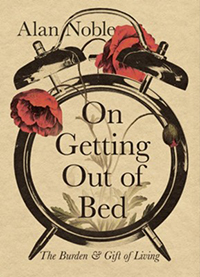
Review: On Getting Out of Bed: The Burden & Gift of Living

On Getting Out of Bed: The Burden & Gift of Living

By Alan Noble (InterVarsity Press)

Life can be hard under any circumstances. For those who experience mental health issues, it can be overwhelming. Sometimes, it demands tremendous courage just to get out of bed in the morning.

Author Alan Noble understands what that means, based on personal experience. Noble, a professor at Oklahoma Baptist University, describes the decision to get out of bed as essentially “the decision to live.” In spite of panic attacks, depression or other maladies, another day of life is worth the risk.

In this brief-but-significant book, Noble provides a biblical and theological foundation for the simple act of getting out of bed. He presents it as a witness to others. To the degree that a person has the agency to choose, that person’s decision to get out of bed is a testimony to the goodness of God. To continue living when suffering is certain is a powerful affirmation of creation and of the Creator, Noble insists.

Noble offers no simplistic solutions or easy answers. He honestly acknowledges the tension in living between the reality that mental illness limits personal agency and the awareness it does not absolve a person of exercising whatever agency he or she possesses. Each person still has some degree of responsibility—both to rely on others and care for others.

The publisher releases On Getting Out of Bed April 18. Consider pre-ordering a copy today. Somebody you know needs it.

Ken Camp, Managing Editor

Baptist Standard 


Review: Around the Table

Around the Table: Gathering People Together and Building Relationships

By Christy Ogden (Independently published)

Tables play important roles. The communion table occupies a prominent place in worship. Families and friends share meals around the table as “the heart of the home.” Tables offer places for homework, games and conversation, and there’s no one-size-fits-all. Christy Ogden, author of Around the Table, understands and reveals how to intentionally use your table for Gathering People Together and Building Relationships that change the world.

Using personal experience, the minister’s wife, nurse and mother of five shares her journey and lessons learned through her family’s tables. The book begins with thoughts by Christy’s dad about her growing up table and the values he and her mom sought to instill, including waiting for family supper each evening until Dr. Sudan completed hospital rounds.
The Waco native takes the reader through her first married table with high-school sweetheart Jordan, an antique refinished by not-then-famous Clint Harp. She continues with the couple’s first “big kid” purchase, a table shared by hundreds of people, their third “stone of remembrance” as church planters in Michigan, and their new table built by Christy’s dad from Jordan’s family lumber.

In each life stage, Christy details table takeaways. Offer a seat at your table even when you may think your home or food isn’t good enough. Start with just one person or two. Invite those who are lonely or need love and encouragement. Intentionally train children around the table. Include their friends. Prioritize uninterrupted meals and conversation, especially with teens and pre-teens. Allow each person to share, sometimes using table questions. Develop holiday traditions around the table. Always, always offer hope, and remember how God uses tables in the Bible.

In short, Christy Ogden’s Around the Table provides personal illustrations, heartfelt stories, practical ideas and a biblical foundation to motivate Christians to foster relationships and welcome others to the Lord’s table through theirs. A quick read, the book makes a great gift for those serious about using their homes to spread Christ’s love.

Kathy Robinson Hillman, former president

Texas WMU and Baptist General Convention of Texas

Waco


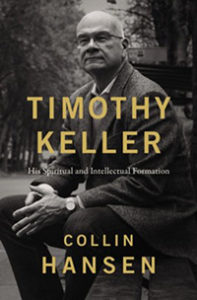
Review: Timothy Keller: His Spiritual and Intellectual Formation

Timothy Keller: His Spiritual and Intellectual Formation

By Collin Hansen (Zondervan)

Timothy Keller is one of the most influential Christian leaders alive today. Through his best-selling books, prominent pastorate and The Gospel Coalition, Keller has influenced millions around the world. Collin Hansen, vice president for content and editor in chief of The Gospel Coalition and longtime colleague of Keller’s, dives into the influences behind the influencer.

The product of German Protestant and Italian Catholic families, Keller was curious, skeptical, incisive, bookish and socially awkward. He blossomed during his time with InterVarsity at Bucknell University, where his preaching and Bible reading were shaped. The lay-led structure of InterVarsity later influenced the shape of Redeemer Presbyterian Church—the church Keller planted in New York City—as much as Young Life formed the liturgy and discipleship of that church.
During his time at Gordon-Conwell Theological Seminary, Keller left behind his Arminian commitments in favor of neo-Calvinism. Hansen contends most of Keller’s theological positions were formed by the time he graduated from Gordon-Conwell in 1975. Even so, Keller continued to study and learn throughout his ministry, right up until he retired from Redeemer Church in 2017.

Keller always seemed to be near the heart of evangelicalism, especially its Calvinist expression. R.C. Sproul was not only a significant influence, but he also performed the Kellers’ wedding. Elisabeth Elliot—widow of famed missionary-martyr Jim Elliott—was key to Tim and Kathy’s formation at Gordon-Conwell. Other influences include Francis Schaeffer and his L’Abri model, Martin Lloyd-Jones, Jonathan Edwards, John Stott and C.S. Lewis, with whom Kathy Keller—Tim’s wife—had an interesting relationship.

Hansen claims Timothy Keller is not intentionally biographic, but his thorough account of Keller’s influences reveals a considerable amount of his subject’s biography. He assembled his narrative from first-person interviews with Keller and his family, as well as with free access to Keller’s personal notes.

Though the book is divided into four parts respective to periods of time, the narrative’s chronology is not as clear cut. Hansen’s account often reads like a stream of consciousness. A reader expecting a strict chronology may feel bounced around and find the jumping back and forth in time distracting.

Though they already may know many of the influences behind the influencer—since he’s not particularly secretive about them—Timothy Keller fans will appreciate Hansen’s efforts. Those who aren’t as familiar with Keller will want to read the book to gain insight into who is shaping so many young Christians.

This forthcoming book from Zondervan is due out Feb. 7.

Eric Black, executive director/publisher/editor
Baptist Standard


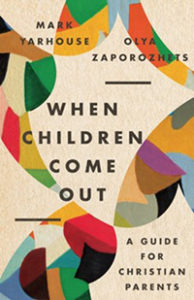
Review: When Children Come Out

When Children Come Out: A Guide for Christian Parents

Mark Yarhouse and Olya Zaporozhets (IVP Academic)

According to a 2021 Gallup poll, less than 5 percent of Boomers and Generation X, respectively, identify as LGBT+. By contrast, more than 10 percent of Millennials and more than 20 percent of Generation Z identify as such. Clearly, a person coming out as lesbian, gay, bisexual or transgender is and will be a much more common experience, including in Christian families. A book like When Children Come Out: A Guide for Christian Parents seems timely.

Mark Yarhouse, professor of psychology at Wheaton College, has researched and written on sexuality and gender identity for many years. He and coauthor Olya Zaporozhets have collaborated on other projects, such as Costly Obedience: What We Can Learn from the Celibate Gay Christian Community.

The intended audience is the parent who wants to maintain relationship with a child who comes out, who wants to demonstrate unconditional love for that child, who does not want to be reactive or guided by fear and anger, and who is willing to accept the disclosure for what it is—a statement of identity. For parents who want to know they’re not alone, the book almost functions like a support group, though it is not meant as a substitute for one.

When Children Come Out is built on previous research that informs Yarhouse’s and Zaporozhets’ approach to parents’ concerns about their own responsibility for and response to their child’s sexual and/or gender identity. As with previous books, Yarhouse leads with description, which may frustrate parents eager for prescription. He and Zaporozhets relay what parents—most of whom hold or held traditional views of sexuality—say about what it was like when a child came out; what questions and feelings they had about themselves, their child and God; their experience seeking help; and what they experienced as they incorporated this new knowledge about their child into their lives.

When the authors do prescribe, they do not tell the reader what to think about sexuality. Instead, they relay what words and actions Christian parents said were helpful. The final chapter addresses churches through the same lens. As such, the prescription is largely experience-based, as opposed to Scripture-based.

The authors do not advocate trying to change a person’s sexual identity. Rather, they believe it best for parents to come to terms with what their children disclose. They make clear accepting a child’s sexual identity is not the same thing as affirming or agreeing with it. Without advocating for or rejecting affirmation, they view acceptance as necessary for maintaining parents’ relationship with their children.

Wherever a person stands on the matter of sexual identity, the fact growing numbers of people identify as LGBTQ+ means every parent—and church—should prepare for the possibility of a child coming out. They should ask themselves: What do I believe about sexuality, and why? What relationship do I want with my child, and why? When Children Come Out can be a resource for working through some of these questions.

Eric Black, executive director/publisher/editor
Baptist Standard


Review: The Baker Expository Dictionary of Biblical Words

The Baker Expository Dictionary of Biblical Words

Edited by Tremper Longman III and Mark L. Strauss (BakerBooks)

The Baker Expository Dictionary of Biblical Words combines some features of a concordance, lexicon and typical Bible dictionary, all rolled into one accessible volume. More than 40 biblical scholars help provide context and meaning of biblical words, from “abandon” to “zeal.”

The volume actually includes three dictionaries. In the first, writers explore words from English versions of the Scripture, examining the varied Old Testament Hebrew and New Testament Greek words from which they are translated. The second is a Hebrew-English dictionary, and the third is a Greek-English dictionary. In the latter two sections, the entry for each Hebrew or Greek word includes two numerals—one corresponding to the numbering system developed by James Strong for his well-known exhaustive concordance of the Bible and the other related to a more recent numbering system developed by Edward W. Goodrick and John R. Kohlenberger III. Entries vary in their usefulness with regard to revealing various shades of meaning.

One obvious drawback of the approach used in this volume is the simple fact that modern Bible readers use a wide variety of English translations. So, the starting point for a word study will vary from one reader to another. For example, if someone is trying to examine the words translated “effeminate” and “homosexual” in the New American Standard Bible version of 1 Corinthians 6:9, neither of those English words appear as an entry in this reference work. Instead, a reader must look at the entries for “sexual immorality” and “prostitute” to find any assistance.

The Baker Expository Dictionary of Biblical Words is not geared toward scholars with a firm grasp of biblical languages. Rather, it provides a simple-but-versatile tool for serious students of Scripture, lay Bible teachers and busy ministers working from an English translation of the Bible. It’s not an all-purpose tool, but it never hurts to have one more implement in a toolbox.

Ken Camp, managing editor

Baptist Standard


Review: The Gift of Empathy

The Gift of Empathy: Helping Others Feel Valued, Cared for, and Understood

By Joel P. Bretscher and Kenneth C. Haugk (Stephen Ministries)

Authors Joel Bretscher and Kenneth Haugk believe everyone needs empathy, and they are convinced it is a gift everyone can give. Granted, some people are more naturally empathetic than others. However, their experience and their research have taught them everyone can learn the necessary skills to practice empathy.

In The Gift of Empathy, Bretscher and Haugk offer practical guidelines to help readers learn how to become more empathetic. They explain empathy as a two-step process. First, seek to look at circumstances from the perspective of another person and understand what they are feeling. Next, express your understanding of those feelings to that other person.

As the authors explain it, empathy is liberating and life-giving both to the recipient and the giver. It frees from isolation the person who is receiving empathy, letting them know they are heard and someone cares enough to want to understand them. And it frees the giver from the pressure of trying to “fix” another person’s problem or offer wise words of advice.

The Gift of Empathy not only includes simple, easy-to-understand principles to apply, but also offers true-to-life examples of various situations in which empathy can be life-changing.

This easy-to-read book would be a helpful aid to ministers, deacons, small-group leaders, caregivers, parents of all ages, children of aging parents—anyone who wants to make meaningful connections with other people.

Ken Camp, managing editor

Baptist Standard


Review: The Old Testament and God

The Old Testament and God: Old Testament Origins and the Question of God

By Craig G. Bartholomew (Baker Academic)

Nobody can fault Craig Bartholomew for placing the bar too low in terms of goal-setting. He wants to do for Old Testament studies what N.T. Wright has done for New Testament studies. In The Old Testament and God—the first book in a projected four-volume project—he is off to a promising start.

In this hefty volume, Bartholomew sets out the rationale for a new paradigm in Old Testament studies, audaciously beginning with the notion that the living God revealed himself through word and deed to the people of Israel. Contrary to some schools of thought that assert serious Old Testament scholarship requires a singular focus on the human dimension, Bartholomew dares to see the Old Testament as a collection of writings primarily about God and his divine actions. He seeks to break down the dividing wall between theological studies and Old Testament studies.

Belief in divine revelation does not mean Bartholomew naively thinks the Old Testament emerged in a cultural vacuum. He devotes about 40 percent of this 500-plus-page volume to an exploration of ancient Near Eastern world views—Egyptian, Sumerian, Hittite, Assyrian, Babylonian, Aramean, Phoenician, Canaanite and Persian. While noting the similarities between the Old Testament and the various other ancient Near Eastern religious writings, he points to what he calls “the Mosaic distinction”—a radical monotheism that rejected all neighboring deities as false idols.

Bartholomew offers substantive insights for serious students of the Old Testament.

Ken Camp, managing editor

Baptist Standard


Review: Flood and Fury

Flood and Fury: Old Testament Violence and the Shalom of God

By Matthew J. Lynch. (InterVarsity Press)

The problem of violence in the Old Testament defies easy answers. Author Matthew Lynch of Regent College in Vancouver, Canada, proposes no simple solution, but he offers helpful guides for Christians as they read the Old Testament.

Lynch recommends the creation account in Genesis 1-2 as an interpretive lens to view everything that follows in the Hebrew Scriptures. Violence has no part in God’s original design. Scripture points to humanity’s sinful rebellion against God’s plan as the cause of violence. The New Testament ends with a vision of a new heaven and new earth, where peace and wholeness—shalom—prevail. The prickly part lies between the beginning of Genesis and the conclusion of Revelation.

Flood and Fury specifically examines two troubling Old Testament narratives—the Great Flood and Joshua’s conquest of Canaan. In the former, God drowned all of creation, with the exception of one human family and representative pairs of animals. In the latter, Joshua heeded God’s command to totally destroy all who inhabit Canaan—men, women, children and livestock.

Lynch offers an alternative way of reading the story of Noah and the Great Flood. He focuses on how humankind’s sin grieved God—a reaction that sets the God of the Bible apart from the gods of other ancient flood stories. God took the creation humanity already had ruined and restored it to the “useful formlessness” of Genesis 1 to provide a fresh start, Lynch asserts.

Turning to the conquest of Canaan, Lynch frames the book of Joshua as a continuation of the Exodus narrative—a story of God’s liberating activity more than a war story. He suggests the commands to kill every living being in Canaan be taken just as literally as Jesus’ instruction to pluck out one’s eye or cut off one’s hand to avoid sin. In other words, view them as hyperbole to make a point. The people of God were to have nothing to do with Canaanite idolatry and pagan worship.

Lynch acknowledges violent stories in the Old Testament present a problem for disciples of the Prince of Peace. Rather than offering a one-size-fits-all solution, Lynch points to abiding principles that enable committed Christ-followers to grow in faith as they grapple with problematic passages. Like Jacob, we are called to wrestle with a God whose ways are higher than our own. That’s a struggle even the most dedicated peacemaker can embrace.

Flood and Fury goes on sale Feb. 28. Order your copy now. You’ll be glad you did.

Ken Camp, managing editor

Baptist Standard


Review: Global Reset

Global Reset: Do Current Events Point to the Antichrist and His Worldwide Empire?

By Mark Hitchcock and Jeff Kinney (Thomas Nelson)

The 2020s rolled out a season of global anxiety. Pandemic furor receded, yet aftershocks rippled out in sociological upheaval. Bible scholars Mark Hitchcock and Jeff Kinley track winds of global change with a biblical lens: Russia invading Ukraine, technological tracking in China, American government gorging on power, swelling hyper-inflation—all creating updrafts of alarm and speculation.

The authors write prolifically on end times, with almost 70 books combined. Global Reset presents answers to the questions that may keep us up at night, including: Does COVID-19 mark the beginning of end-time events?

Information packs their slim volume of easy reading. Fifteen pages of endnotes support the book’s sometimes alarming assertions, especially: “As of 2021, the official ‘Doomsday Clock’ was set to 100 seconds to midnight.” Dramatic prose will lead some to categorize such rhetoric as “tabloid geopolitics” or “evangelizing fear.” Yet, the authors anchor their propositions in biblical exegesis and seminary credentials.

In anxious times, Global Reset provides a succinct analysis of biblical prophecy from shifting world horizons. Two storm-chasing pastors of prophetic events seek to strengthen faith in a God who controls the future as dark clouds roll in.

Sandra M. Graham, graduate student

Dallas Theological Seminary