Review: The Inconvenient Gospel
The Inconvenient Gospel: A Southern Prophet Tackles War, Wealth, Race and Religion
By Clarence Jordan, edited by Frederick L. Downing (Plough Publishing)
One reviewer described The Inconvenient Gospel as “what drinking from a fire hydrant would be like if a fire hydrant occasionally spewed fire.”
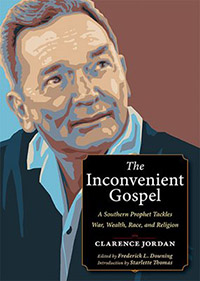 This little book does pack some heat. Known by many in the mid-20th-century American South as an integrationist agitator, Clarence Jordan went toe to toe with the likes of the Ku Klux Klan and its Baptist pastor enablers. Commenting on the Ten Commandments while with students at Goshen College, he charged both the Klan and those Baptist pastors supporting it with violating the second commandment by creating a “God” who blesses their racism.
Jordan’s language is straightforward. He doesn’t beat around more than about one bush. His personal anecdotes create immediate connection with blue-collar workers and people who work the land. For example, his telling of Jesus entering Jerusalem on a donkey is informed by his own experience plowing behind mules. His psychological analysis of the Gadarean demoniac—which Jordan conjoins with the prodigal son story—places us in both men’s shoes.
Jordan was incisive. He calls balls and strikes on the seductions of money and military might. On other matters, such as his idea of Jesus’ masculinity? Well, he was, as they say, a man of his time.
He also was funny. Not only is this collection of Jordan’s thoughts peppered with heat; it also is sprinkled with humor, the kind of sugar that helps the medicine go down. Jordan digs at segregationists, Republicans and the Confederacy with wicked wit. His interaction with a Klansman inspires nervous laughter, but laughter nonetheless.
Whether you agree or disagree with Jordan about such things as social justice and Jesus’ foreknowledge, one has to grant he knew how to communicate with everyday people. More well-intended spiritual leaders could use that gift. Reading this book is a good introductory lesson.
Eric Black, executive director/publisher/editor
Baptist Standard
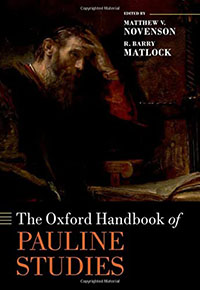 The Handbook is composed of five parts: Paul the Person, Paul in Context, Pauline Literature (both inside and outside the Protestant canon of Scripture), Pauline Theology and Approaches to Paul. Articles address Paul’s history and the cultures he navigated; the early church; the composition and nature of Paul’s letters; Paul’s view of Christ, salvation, grace and justification; and contemporary topics such as politics, sexuality and gender.
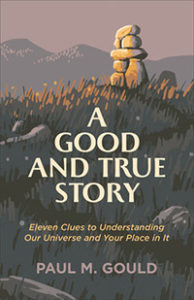 Paul M. Gould of Palm Beach Atlantic University takes a different approach. Instead of trying to convince someone who is antagonistic toward Christianity they are wrong, he begins with the notion that everyone asks a basic question, “Who am I?” More than identity, everyone wants to know his or her life has purpose and meaning.
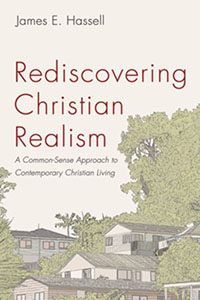 Hassell introduces Christian Realism by defining reality as “what is,” contrary to Rene Descartes and Immanuel Kant, both of whose influential philosophies developed out of profound suspicion of reality. Hassell also differentiates between legalistic and relativistic branches of American Christianity, placing Southern conservatives in the former and Northern liberals in the latter.
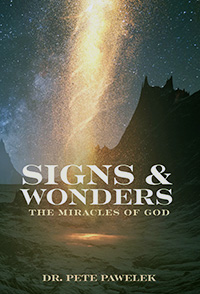 Signs and Wonders is an eight-week curriculum designed with the whole church in mind. Alongside the book, Pawelek makes available a full set of resources for sermons and group studies, downloadable from his website—
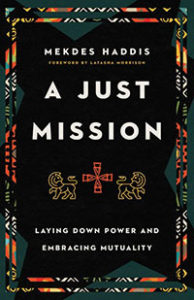 Haddis grew up in Addis Ababa, Ethiopia, and immigrated to the United States to attend college and pursue ministry. Alongside her Ethiopian and African roots, she was introduced to Western culture and Western Christianity at a young age. Short-term and paternalistic missions are a key feature of that Christianity.
 Lament is not always silent, and the response to it cannot be silent always. Natasha Sistrunk Robinson makes that point powerfully clear in her introduction. She likens the more than two dozen writers—all women of color—to the “most skillful” of the “wailing women” the Lord called for through the prophet Jeremiah (Jeremiah 9:17-18). These women know lament so thoroughly that they are instructed to teach the younger women “how to wail” and lament.
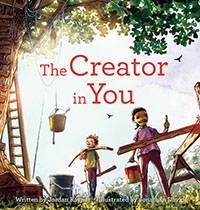 Beautiful illustrations span the inside covers and stretch to the edges of each two-page spread. Rhyming poetry delivers a gently powerful sermon-story that not only is God the creator in us, he made us to be creators with him. Bright colliding stars and lights accompany the words, “He grabbed a big brush and painted the stars and dressed up the sky with Saturn and Mars.” As two children look over buildings, water, birds and clouds, the message is clear. In six days, God “created a lot, there are so many things that He simply did not—like bridges and baseballs, sandcastles and s’mores.” So “God asked us to create and fill the planet with more.”
 As a foundational principle, Jamieson and Wittman begin with this statement: “Holy Scripture presupposes and fosters readers whose end is the vision of Christ’s glory, and therein eternal life. Biblical reasoning must be ordered to this same end” (p. 3). From that starting point, the authors identify six additional principles with which few—if any—historically orthodox Christians could disagree. Based on those seven principles, they present 10 helpful rules to guide the reading and interpretation of Scripture. Along the way, they illustrate the principles and rules as they exegete specific biblical passages.
 Clearly meant to be absorbed one at a time, each devotional begins with an encouraging Scripture before personal stories, illustrations, examples and reflections apply the passage to the daily world of women. Simple yet thought-provoking questions follow, and each two-page entry closes with a comforting prayer. In the narratives, the wife and mother of three honestly shares her own struggles and how God has given her “fighting words” from the Bible at every turn. Additionally, she recommends committing the verses to memory.
 Miller lays out his intent with the book from the beginning: “This is a book about the historical development, key beliefs, and political, cultural, and theological implications of Christian nationalism.” His research, with excellent documentation, delves deeply into the various aspects of Christian nationalism. Miller approaches the topic fairly, by allowing the words and writings of those who support the concept of Christian nationalism to help define the meaning of the term and movement.
 In The Good and Beautiful You: Discovering the Person Jesus Created You to Be, James Bryan Smith helps us to see how these two truths shape our self-understanding.