Book Reviews: Deeper into the Word

Deeper into the Word: New Testament by Keri Wyatt Kent (Bethany House)
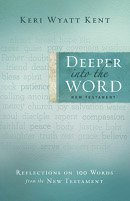
Speaker and author Keri Wyatt Kent has produced an excellent resource for your personal Bible study. Deeper into the Word: New Testament will prove to be a welcome tool for personal Bible study and preparation to teach or share God’s word.

Kent has chosen 101 words referencing several translations. She sheds light on these words from the historical setting, the context and practical usage, and she adds some theological insights. Using phonetic spelling makes any reader comfortable in reading and using these words.

The author ties a variety of references to each word and its basic teaching, which gives windows of insight. She uses her talents as a speaker to illustrate each word through songs or a variety of biblical truths.

Kent has added an appendix filled with helpful websites that give the reader further study helps. She also has added a Greek index showing each reference to a word used in her book.

Deeper into the Word is a handy reference you will use often. The book is well-written, easy-to-read and an instant help. This book will give any student of the Bible a greater appreciation of the settings, meanings and the beauty of the Greek language. I hope you enjoy this book as much as I have.

Leo Smith

retired executive director

Texas Baptist Men

Alvin


Half the Church: Recapturing God’s Global Vision for Women by Carolyn Custis James (Zondervan)

Author Carolyn Custis James thoughtfully pens Half the Church. She paints vividly disturbing pictures of girls and women in today’s world and relates heart-wrenching stories of female trafficking, abuse, honor killings, genocide and sex-selective abortions.

Against that backdrop, James juxtaposes the excitement of a Chinese man who exclaims, “We don’t have to have daughters anymore!” with the Chinese proverb, “Women hold up half the sky.”

The author laments that in the Western church, one in four women has been victimized by physical or verbal abuse. She asks, “Do our teachings and, more significantly, our practices measure up to the gospel’s view of women, or are we selling Jesus and his gospel short because we aren’t fully valuing and mobilizing half the church?”

James reminds the reader God created fe-males in his image. Without disclosing personal convictions, she emphasizes looking not at “disputed passages” but at “undisputed examples.” She points out unlikely female leaders—Miriam, Deborah, Priscilla, Phoebe and Rahab—who are not simply sidebars in Scripture. She carefully examines the evolution of Ruth and Naomi and the “blessed alliances” formed by Esther and Mordecai and by Mary and Joseph.

The author offers no easy answers. Instead, she focuses on God’s kingdom strategy that both women and men must serve, so the whole church can function most ef-fectively. James says: “God is shaking his daughters awake. … His vision for us is affirming and raises the bar for all of us. …We have work to do. … May we be remembered as a generation who caught God’s vision, faced our fears and rose up to serve his cause.”

Don’t read this book if you want less.

Kathy Robinson Hillman

former president

Woman’s Missionary Union of Texas

Waco


Amy Inspired: A Novel by Bethany Pierce (Bethany House)
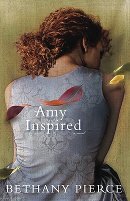
In her first novel, Amy Inspired, Bethany Pierce lets 29-year-old Amy Gallagher tell her own story. The saga opens with “one more” of the college writing teacher’s rejections.  Egotistical English professor Adam breaks up with her in the cafeteria.  As soon as she returns home, Amy compulsively catalogs the rejection in a notebook filled with failed relationships and failed submissions.

However, everything changes when roommate Zoe brings another stray to Amy’s neat, orderly garage apartment. Eli, an unemployed, doesn’t-care-how-he-looks artist, temporarily crashes with the two. Suddenly, Amy’s everything-in-its-place world grows messy.

Amy comes down hard on an indifferent student only to discover her attitude comes from tragedy. The unavailable Eli evokes feelings beyond friendship. The inexperienced Zoe sells a major story that Amy is surprised to learn is about her and her incessant checklists and to-do lists.

As she explores the depth of her faith and her capacity for relationships and success, Amy learns valuable lessons related to jealousy, prejudice, paralyzing perfectionism and the power of presence. But has she learned them well enough to risk rejection one more time? Pierce allows Amy to write her own ending. Or is it a beginning?

Kathy Robinson Hillman former president

Woman’s Missionary Union of Texas

Waco
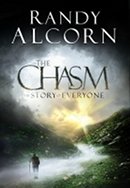


Book Reviews: The Chasm

The Chasm, A Journey to the Edge of Life by Randy Alcorn (Multnomah Books)

The Chasm is a quick-read allegory depicting the choices one makes throughout a lifetime. The book is written from a Christian perspective and abounds with symbolism from Satan as a deceiver to Christ the Redeemer.

Nick Seagrave is the main character who stood at the chasm and saw Charis, the city of light. He meets Joshua and is invited to join a group of travelers. Satan appears as a warrior who befriends Nick but then becomes the attacker in a battle for his soul. Christ is seen as a woodcutter who cuts down a tree and then offers his own life to become the bridge spanning the chasm between humanity and eternity.

The book is well written, with action and characters that draw the reader into the storyline. A non-Christian may miss some of the symbolism.

Great illustrations are powerful and add to the drama of the storyline.

Randy Alcorn weaves the story in such a manner that readers can see the choices and consequences of the characters’ decisions and then will feel compelled to contemplate their own choices and subsequent consequences. As an added bonus, the author has added chapter questions to help readers look into the symbolism of the book and explore their own Christian walk.

If you enjoy a good allegory, then The Chasm is a book to read.

Leo Smith, retired

executive director

Texas Baptist Men

Dallas


Bible: The Story of the King James Version, 1611-2011 by Gordon Campbell (Oxford)

This year marks the quatercentenary of the King James Version of the Holy Bible. In Bible: The Story of the King James Version, 1611-2011, Leicester University professor Gordon Campbell traces the history of the elegant and beautifully poetic translation of Scripture.

Campbell explains the efforts and sacrifices—some-times with their lives—of those who believed nonclergy, including women, should be able to read the Bible in their language. The author painstakingly details the myriad of scholars and meticulous process involved in translating and editing the King James Version. He describes various editions, including “The Wicked Bible” and “The Breeches Bible.”

Later chapters trace the influence of the Authorized Version through the 17th, 18th 19th, 20th and early 21st centuries. Campbell discusses such issues as the inclusion of the Apocrypha and the effect of the King James Version on literature. The author reminds readers the embargo of Bibles prior to the Revolutionary War led to their printing in America, and he decries today’s trend of the Bible being owned but not read. An extensive index, list of translators and revisers, and bibliography complete the book. In short, the author includes everything you ever wanted to learn about the King James Version but didn’t know to ask.

While Campbell’s history reflects scholarly research, he has penned a clear and concise volume that demonstrates the value of the King James Version of the Bible, not just for its beautiful words but for how its words changed the world through God’s word.

Kathy Robinson Hillman,

former president

Woman’s Missionary Union of Texas, Waco


The Gospel of John: When Love Comes to Town by Paul Long Metzger (InterVarsity Press)

How could anybody of a certain age resist a commentary on John’s Gospel with a subtitle taken from a song written by U2’s Bono and most famously performed by B.B. King?

As professor of Christian theology and the theology of culture at Multnomah Biblical Seminary, Paul Long Metzger knows both the New Testament and pop culture quite well. He draws deeply from that reservoir of knowledge for this commentary, the first in the “Resonate” series launched by InterVarsity Press. The expressed intent of the series is to offer a line of relevant commentaries that are biblical, theological, cultural and personal. Metzger succeeds admirably in blending popular culture, personal reflection and solid biblical theology.

One drawback of Metzger’s approach is that including pop culture references on practically every page quickly dates the book. At times, it wears a bit thin—like a middle-aged high school teacher trying too hard to prove to his students how cool he is by showing he knows more about their music and favorite movies than they do.

Metzger has not written a commentary for the ages, but he definitely has written one that resonates for the moment. Enjoy it while you still can.

Ken Camp, managing editor

Baptist Standard

Dallas


Book Reviews: Generous Justice

Generous Justice by Timothy Keller (Dutton)

Like nowhere else, grace and justice converge in the heart of God. Christians see this interplay in God’s story of redemption, in Christ’s incarnation and—ultimately—in the heart of the forgiven.

In Generous Justice, Pastor Timothy Keller of Redeemer Presbyterian church in Manhat-tan attempts to remove the issue of justice from the political arena in order to let it pervade the hearts of believers. To that end, he succeeds.

Throughout Generous Justice, Keller argues that a person’s experience with the incredible grace of God ought to lead to radical ministry to the downtrodden. Keller argues, “To the degree that the gospel shapes your self-image, you will identify with those in need.” Rather than enumerate statistics meant to guilt the reader, Keller employs careful biblical analysis of both testaments in order to reveal God’s disposition to the broken, poor and oppressed.

In Generous Justice, Keller challenged my understanding of the Christian responsibility to the poor. Many 20-somethings like me value justice in theory but rarely commit to doing justice to those less fortunate. Keller’s short and powerful treatment on the theology, composition and enactment of justice issues a gracious urging away from self and toward others.

Adam Wood, associate minister of music

Shiloh Terrace Baptist Church

Dallas


What Would Bonhoeffer Say? by Al Staggs (Parson’s Porch Books)

Al Staggs is an itinerant performance artist who has been dramatically interpreting Dietrich Bonhoeffer, Walter Rauschenbusch, Oscar Romero, Clarence Jordan and Thomas Merton for decades. He’s a theologian who, like Bonhoeffer, first made his way in ministry as a pastor. Staggs later was called to live out a larger role on behalf of the soul of the church by bringing to life these important shapers of the 20th century church.

It’s the right time for Staggs to bring forward a book that raises Bonhoeffer’s questions of conscience in light of the world’s complicated issues at the turn of the millennium. To hear Bonhoeffer from his time, one is startled to learn that the issues of pre-war Germany are strikingly similar to those of the American church two generations removed.

For most Baptists, the book might operate as “Bonhoeffer for Baptists,” as Staggs continuously references the struggles of Baptist life over issues of freedom and conscience. Bonhoeffer—like most Baptists—struggled with how the church should relate to the world in a contentious time. He struggled with racism and the agonizing questions of how one could support his country as a form of patriotic nationalism in the face of Hitler’s solution to the Jewish problem of Europe.

This book will challenge the Baptist preference of piety over God’s preference for the poor and the issues of social justice. The book covers an important field of questions without providing simplistic answers. A group that is not afraid to ask the hard questions and who would appreciate the struggle of finding answers would benefit by attending to Bonhoeffer’s life and the heritage of his writings.

Keith Herron, pastor

Holmeswood Baptist Church

Kansas City, Mo.


Book Reviews: Soul Print

Soul Print: Discovering your divine destiny by Mark Batterson (Multnomah)

Your fingerprint differentiates you from every other person, but it is only skin deep. Author Mark Batterson sees your soul print as who God made you to be now, as well as who you are destined to become. This print is the “truest reflection of God’s image,” Batterson writes, and it is past, present and future tense.

Soul Print takes readers on a journey through defining moments in the life of King David. The book is written using five acts and a closing. The first, “Holy Confidence,” shows how young David faced the Philistine giant Goliath without King Saul’s armor but only with his proven slingshot. David chose to be who God made him—his soul print—rather than rely on other alternatives. David’s soul print is further exposed through the remaining chapters, climaxing in an account that exposed David’s blind spot and sin with Bathsheba. But in the final chapter, the author points out David was not defined by his sin.

Discussion questions for each chapter make the book a great study for church groups. Enjoy the journey through Soul Print, and perhaps God will move you into the process of finding all he has on his heart for you.

Leo Smith, retired executive director

Texas Baptist Men, Dallas


While We’re Far Apart: A Novel by Lynn Austin (Bethany House)

Why does God allow terrible things to happen to his people? Why should the faithful pray when he doesn’t answer? Why do “good” Christians commit terrible acts?

Lynn Austin examines those questions in her novel While We’re Far Apart. Set during World War II, the five-time Christy award-winner tells the story through the eyes of three inter- twined characters. Twelve-year-old Esther Shaffer doesn’t understand why God let her mother die or her father volunteer for the army. The Shaffers’ neighbor, Jacob Mendel, no longer prays since his wife died, his Jewish family has been “lost” in Europe, and he’s accused of arson.  Quiet, unobtrusive Penny Goodrich, who grew up next door to Esther’s father, still has a crush on him. When he needs someone to move to his apartment and care for Esther and her younger brother, Goodrich volunteers against the advice of her unloving parents.

The author doesn’t shy away from the horrors of war or the prejudices of people. Instead, she uses them to teach forgiveness, truthfulness and unconditional love. Ultimately, Esther and the others learn that, as in the Old Testament story of Queen Esther, God may be the unseen character, but he’s ever-present, working in the lives of his children. 

Kathy Robinson Hillman, former president

Woman’s Missionary Union of Texas, Waco


Retreating with God: Searching for the Heart of God in the Beat of Life by Berry Simpson (Stonefoot Media)

Berry Simpson’s life focuses on three great loves—God; his family, including wife, Cyndi, and their children; and outdoor adventure. Those loves permeate his latest book, Retreating with God, based upon his solo backpacking trips in Guadalupe Mountains National Park.

Simpson’s writing bespeaks his background as a petroleum engineer. It’s structured and systematic, exhaustively chronicled, and always focused on locating and exploring details that define the difference between living for self and living for God. Retreating with God is a two-part travelogue—into the splendor, grandeur, wildness and danger of Texas’ desert mountain range, and into the heart of a Christian husband, father and Bible teacher who constantly asks what difference following Jesus makes in the real world.

Simpson, a deacon at First Baptist Church in Midland, is a former online columnist for the Baptist Standard, and you can find his blog at www.journalentries.org. His book particularly appeals to backpackers, folks who love far West Texa, and men who want to grow in their relationship with Christ.

Marv Knox, editor

Baptist Standard, Dallas


Book Reviews: The Hole in Our Gospel

The Hole in Our Gospel by Richard Stearns (Thomas Nelson)

“We have embraced a view of our faith that is far too tame,” writes Richard Stearns, CEO of World Vision U.S. “We have, in fact, reduced the gospel to a mere transaction involving the right beliefs rather than seeing in it the power to change the world.” That creates a hole in the gospel—a gap between Christians’ focus on faith as “fire insurance” and the grim reality of the world’s here-and-now poverty.

Stearns calls upon Christians to take up Jesus’ cause to create his kingdom “in earth as it is in heaven.” That means not only telling people about Jesus, but also combating violence, poverty, injustice, disease, corruption and suffering. Stearns’ gospel is good news for the whole person—physically as well as spiritually.

That’s what you might expect from the CEO of World Vision, the relief agency that fights AIDS and hunger. But Stearns’ book tracks his own faith journey from the Ivy League, to big business, to mud huts in Africa. It’s a compelling tale.

This book is effective because of its scale. Global AIDS and poverty are mammoth problems. They’re so big, we want to quit. But Stearns shows how incremental, personal action can make a significant difference. And close the hole in the gospel.

Marv Knox, editor

Baptist Standard

Dallas

The Good and Beautiful God by James Bryan Smith (InterVarsity Press)

Over the years, Baptists have been well known for our pursuit of excellence in evangelism, missions, fellowship, discipleship and worship. One of those areas, discipleship, has grown stale in many congregations, which I believe has led to weakening in each of the other vital areas of life in our Christian walk. The relatively recent renewal in Baptist life in the centuries-old pursuit of spiritual formation has the potential to reignite those in whom the zeal for constant renewal and rebirth into Christ-likeness has been dampened or starved for fuel.

This book, the first in a series of three, is a masterwork for any Christian who really wants to pursue abundance as promised in Scripture. The format is designed for groups to move together through one chapter each week and includes a different and useful “Soul-Training” practice for each chapter. We have recently moved two groups through this book who now are going into the second, The Good and Beautiful Life. A new group, facilitated by one who has just finished, is now starting this first book. The group dynamic adds immensely to the member’s application of the content, but an individual reader would be blessed as well.

Topics in this book include: God is good, God is trustworthy, God is generous, God is love, God is holy and God is self-sacrificing. The writer covers each topic using the words of Jesus himself rather than repeating what we may think we know based on our own life experience and the opinions of others. Smith has determined, and rightly so, that no one knows God better than Jesus, so why should we not hear from the ultimate authority?

I have observed that every individual, whether a new believer or seasoned veteran, has given testimony of a new joy in their journey as a result of this book. The content is sound, inspiring and enlightening. The author includes plenty of real-life examples, so the reader feels engaged and a part of the author’s experiences.

This book and the two that follow will fill a large gap in the life of any believer. This is also a great place to start any new Christian so they will begin their walk by knowing “the God that Jesus knows,” which is the theme of the book. I highly recommend this book without reservation to anyone who desires to pursue the fullness of relationship with our loving God.

Jerry Barker, pastor

Calvary Baptist Church of Oak Cliff

Dallas


Book Reviews: Living by the Word of God

Living by the Word of God by Davis Byrd (Parson’s Porch Books)


Davis Byrd has written a deeply personal yet broadly practical book of theological reflection. Living by the Word of God is “an expression of my personal un-derstanding of God’s word and my faith that that is built upon that word … an effort to give voice to my faith so I may more fully understand it myself.”

Byrd’s book defies easy categorization. You might call it a systematic theology, because Byrd, an architect, certainly is systematic. And yet the book is not as comprehensive as the typical systematic theology. It’s more of an experienced theology—worked out over a lifetime of thinking about God and the Bible in the circumstances of life.

I found two aspects of this book particularly attractive.

First is its innate integrity and humility. Byrd writes as if he were involved in an open, ongoing discussion with the reader about the things that matter most in his life—in every life. He doesn’t claim to have all the answers, but he obviously loves seeking them, discussing them, holding them up to the light.

Second is its engagement with the larger Chris-tian community. Byrd exposes readers to Christendom’s great thinkers. His bibliography alone is worth the price of his book.

Marv Knox, editor

Baptist Standard

Dallas


The Thorn by Beverly Lewis (Bethany House)

Many know Beverly Lewis as the “queen of Amish fiction.” In her first novel, she wrote about the Shunning of her Mennonite grandmother. Although the novelist has penned nearly 90 books since, including children’s stories, the Christy Award winner’s staple remains the “bonnet-romance.” 

In The Thorn, Lewis provides glimpses into “plain” lives that revolve around family, friends, and faith. With help from her grandmother, 20-year-old Rose spends her days caring for her Mamm, who was paralyzed 11 years earlier in a buggy accident. She feels abandoned because her sister Hannah, “Hen,” marries outside the faith. 

Rose finds release riding horses with her friend Nick. The bishop and his wife adopted the non-Amish boy from a troubled home, and most agreed all he brought was trouble. Her father fears Rose and Nick will marry. The bishop fears they won’t.

Following Nick’s departure, Rose faces her own decisions as she attends Sunday hymn-sings. There, she catches the eye of Silas Good who proposes in the traditional way, waiting to lip-kiss until marriage.

The Thorn offers a chaste romance filled with complicated relationships, personal reflection and devastating dilemmas, some of which await resolution in the second book of The Rose Trilogy. And along the way, readers learn the value of simpler lives and the difficulty of living in the world without being of the world.

Kathy Robinson Hillman,

former president

Woman’s Missionary Union of Texas

Waco


Mobilizing Men for One-on-One Ministry by Steve Sonderman (Bethany House)


Steve Sonderman writes from 20 years experience working with men at Elm Creek Church in Milwaukee, Wisc., and beyond. That experience has equipped him to pen this practical, no-nonsense guide that will help any aspiring leader find his way.

Men need relationships with men—a point the author strongly emphasizes. He bases this on the second chapter of 1 Thessalonians, and he points to keys the Apostle Paul wrote that will make any man an effective leader of men if put into practice.

The author believes the main things men are looking for in a leader they will follow is that he be spiritual, relevant and challenging. A spiritual leader must hone his skills, such as the art of listening and asking good questions.

This book is filled with practical wisdom and guid-ance for a man aspiring to be a leader of men. Sonderman concludes God has put each of us right where he wants us to be and surrounds us with men who desperately need us and want us to invest in them.

This book will challenge you and equip you with the knowledge and tools for a ministry that will bless you and others. If you have a heart for men, read and practice what Sonderman has written.

Leo Smith, executive director

Texas Baptist Men

Dallas


Book Reviews: Have a Little Faith: A True Story

Have a Little Faith: A True Story by Mitch Albom (Hyperion)

My wife rarely insists I must read a book, but Have a Little Faith was the exception. Before that, I heard hear laughing and occasionally sniffing as she occupied her typical-evening spot on the loveseat, reading. When she finished, she passed it on to me. I’m glad she did.

Mitch Albom tells the story of two very different clergymen—Albert Lewis, his childhood rabbi, and Henry Covington, the African-American pastor of a barely-hanging-on church in inner-city Detroit. It’s a story about resilience and perseverance and faith. It’s a story about abiding love.

The story takes eight years to tell, but it begins with a simple, yet daunting, request: “Will you do my eulogy?” the aging, ailing rabbi asks the young sportswriter. As the tale is told, Albom walks alongside his old friend, the rabbi, and his new friend, the preacher. Before it’s ended, he writes that eulogy and very nearly pens a requiem for the Detroit congregation.

Albom, best known for his prior book, Tuesdays with Morrie, polishes the tiny details of his friends’ lives until they glow—which is what you’ll be doing when you close this lovely book.

Marv Knox, editor

Baptist Standard

Dallas

Jesus Manifesto by Leonard Sweet and Frank Viola (Thomas Nelson)


The church should be more than purpose-driven or cause-driven; it should be person-driven—the person of Jesus Christ, according to popular authors Leonard Sweet and Frank Viola. The subtitle of their latest book spells out its lofty goal—“Restoring the Supremacy and Sovereignty of Jesus Christ.” To see Jesus Christ as a social activist or moral philosopher is to shortchange him. Instead, Christians should recognize him as all-sufficient Lord of the universe.

Too many churches today suffer from “Jesus deficit disorder,” the authors assert. Social justice, moral behavior and orthodox doctrine all have value, but they should not be at the center of the church’s identity. Christianity is all about Christ—nothing more and nothing less. The life of the church should be the life of Christ.

Furthermore, the individual Christian’s life should be more than aspiring to imitate Christ, Sweet and Viola insist. The believer should not wear a veneer of Christ-likeness; Christ should indwell the believer and exercise lordship over every aspect of life. Sweet and Viola write in an approachable, easy-to-read style, but resist the temptation to breeze through this book. Instead, take the time to let its insights soak in.

Ken Camp, managing editor

Baptist Standard

Dallas

Back on Murder by J. Mark Bertrand (Bethany House)

In Back on Murder, J. Mark Bertrand pens a gripping mystery within a mystery.  Unexplained to the reader, veteran detective Roland March has been moved from homicide to mundane, on-the-way-out tasks within the Houston Police Department while his relationship with his wife crumbles. His boss temporarily puts him “back on murder” when March discovers overlooked evidence at a shoot-out.

About the same time, Donna Mayhew reports her teenaged daughter missing. Her father, a prominent Houston megachurch pastor, died several years earlier in a plane crash, but her mother continued his ministry at Cypress Community Church. The more Roland March investigates, the more his experience tells him the incidents are connected. Together with Cypress Church member Theresa Cavallo, March attempts to connect the dots. But those efforts lead them into danger and a scandal that shakes the upper echelon of the Houston Police Department. Along the way, the detective learns the power of forgiveness as he observes people who live their faith under difficult circumstances.

Kathy Robinson Hillman, former president

Woman’s Missionary Union of Texas

Waco


Book Reviews: Permission to Speak Freely

Permission to Speak Freely: Essays and Art on Fear, Confession, and Grace by Anne Jackson (Thomas Nelson)

Author Anne Jackson opened a floodgate when she asked a simple question on her blog (FlowerDust.net): “What is the one thing you feel you can’t say in church?” She received hundreds of responses, from Christians and non-Christians alike. And her experiment in digital confession got picked up on an atheist website and went viral—globally viral.

Permission to Speak Freely presents scores of answers to Jackson’s question. It’s shaped by the narrative of her own struggle to speak freely to fellow Christians about her less-than-perfect life. She’s candid about her own addictions and struggles and invites readers to join her in the chorus of the broken-yet-redeemed.

The question Jackson asked “came from places in my own heart and life where I was afraid to say something inside a church or to other Christians,” she acknowledges. “Fear had kept me silent, had overruled confession, and I needed to know I wasn’t alone.”

So, Jackson wrote a courageous book about faith and confession and soul-healing.

Marv Knox, editor

Baptist Standard

Dallas

A Door Set Open: Grounding Change in Mission and Hope by Peter L. Steinke (Alban Institute)

Peter Steinke knows church systems. He masterfully leads congregations, church consultants and intentional interims in finding and addressing the real issues within churches. Now, he presents possibly his best work by helping us examine a crucial issue for today’s church: knowing and doing its mission.

Steinke uses real-to-life case studies, solid biblical theology and inspirational thoughts in this three-part book. First, he proves there is a crisis. “If 1950 were to return, my congregation would be ready,” is a testimony that is painfully relevant in many churches.

And while we easily can see where a church is losing touch, Steinke exposes the normal, but unhelpful, reactions that typify church responses. For instance, many churches look for a “magical” formula. They then try the steps offered in a popular book or from a trusted consultant, thinking erroneously that they will “fix” their church.

Steinke demonstrates how anxiety feeds emotional reactions that trigger dysfunctional choices. He gives the reader hope, however, that the challenges can be overcome.

Next, Steinke takes a look at changing the mission within a church. His approach is gentle and not overwhelming, realistic and not idealistic, unifying and not divisive, biblical and not gimmicky. He hopes to lead the reader to understand that “either the church is missional, or it is not the church,” which means the church must be about loving, serving, preaching, teaching, healing and freeing. Steinke does not address this subject in a vacuum of piety, however. Instead, he looks at changing a church’s understanding of mission while addressing the real challenges of personalities, resistance and anxiety.

The final section nicely summarizes the rest, while offering very practical ideas for personal and collective steps in reducing anxiety, finding the mission and staying on course. A Door Set Open will help any church trying to find what God is calling them to next.

Karl Fickling, director

BGCT Pastorless Church Team

Dallas


Book Reviews: Evidence for God

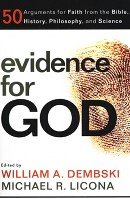
Evidence for God by William A. Dembski and Michael R. Licona (Baker Books)

Evidence for God collects 50 articles that argue for our Christian faith in today’s diverse world. The editors assembled these articles to challenge students and others who would like to investigate biblical and spiritual truth. Philosophy, Jesus, the Bible and science are the subject matter for each of the authors. Readers are challenged by intellectuals to explore basic Bible truths from various perspectives. Each short essay is well documented in philosophy, science and the Bible and will challenge any reader to a deeper truth.

This book is a good resource in Christian apologetics for the serious Bible student or for anyone who would like to ease into apologetics. Articles from science reveal how life is the product of a divine designer. Articles from philosophy reveal the designer to be eternal and good—the One who came to earth in the person of Jesus.

This book will stimulate your desire to know the truth. Expect to use it time and again to stimulate your mind and strengthen your beliefs.

Leo Smith, executive director

Texas Baptist Men, Dallas

Green Like God: Unlocking the Divine Plan for Our Planet by Jonathan Merritt (Faith Words)

Sustainability and “green” have become buzz words. Unfortunately, many political conservatives, including some Christians, view the environmental movement as a liberal cause and engage only minimally in creation care. In Green Like God, Jonathan Merritt traces his complete change of heart.

The Liberty University and Southeastern Baptist Theological Seminary graduate starts his story with the revelation in a seminary class that destroying creation is “similar to tearing a page out of the Bible.” Merritt shares his findings after reading Scripture from the perspective of God’s creation. Further research into the condition of God’s world led Merritt to become a leading Christian voice for saving creation in spite of heavy criticism.

The under-35 writer fills the pages of Green Like God with Scriptures, stories, statistics and solutions. Merritt makes a powerful case that caring for the earth is part of God’s plan and the responsibility of every person, especially Christians. He uses a heart-wrenching example of millions who die annually simply because of unsafe drinking water. He concludes with appendices containing tips, resources and extensive source notes.

In the introduction, Merritt writes: “I’ve fallen in love with our green God. My prayer is that you will do the same while reading this book.” If you’re like me, it’s a safe bet you will.

Kathy Robinson Hillman, former president

Woman’s Missionary Union of Texas, Waco


Reinventing Youth Ministry (Again): From Bells and Whistles to Flesh and Blood by Wayne Rice (IVP Books)

This book is part Wayne Rice autobiography, part Youth Specialties/National Youth Workers Convention history and part philosophy of youth ministry—all wrapped into one.

Rice, veteran youth pastor and cofounder—with the late Mike Yaconelli—of the youth ministry resource company Youth Specialties, shares the ups, downs and memorable highlights of his innovative involvement in the relatively young history of youth ministry.

If the reader can overlook the many typos and grammatical errors throughout the book—surprising for an IVP publication—he or she will laugh along with Rice, cringe with him, and applaud him and his cohorts as he shares his influential story.

Youth workers, parents and pastors will be moved and challenged by the words of wisdom Rice intersperses throughout the narrative and by his calling to continue the reformation of ministry to today’s teenagers and their parents.

Greg Bowman, minister to students

First Baptist Church, Duncanville


Book Reviews: Everything Christmas

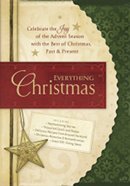
Everything Christmas by David Bordon and Tim Winters (WaterBrook)

Bordon and Winters obviously mean the word “everything” in the title of their gift to the holiday genre, Everything Christ-mas.  Their book contains a bit of everything, from apple pie and applesauce cinnamon ornaments to wassail and Christina Rossetti’s “What Can I Give Him?”

The authors divide their volume into 24 Advent entries, labeled December 1-24. For Christmas Day, they share the first two chapters of Luke from the Message translation of the Bible. The final page invokes a “Post-Christmas Prayer” for the “peace, justice and hope of this holy season” to last all year.

Recipes, poems, stories, sayings, Scripture, carols, gift-giving suggestions and decorations all find their way into the book. Some are familiar. Many are not. Some offer humor. Others explain Christmas dinner celebrations in various countries and detail holiday traditions. Lest the reader get lost, a healthy index serves as a great guide.

Everything Christmas contains some-thing for everyone and would be a wel-comed gift, particularly if accompanied by the prom-ise to enjoy a craft, recipe or story with the recipient.

Kathy Robinson Hillman, former president

Woman’s Missionary Union of Texas, Waco

Stories Behind the Greatest Hits of Christmas by Ace Collins (Zondervan)

Stories Behind the Greatest Hits of Christmas marks the publication of another of Ace Collins’ “Stories Behind the …” series. Once again, Collins has research-ed and penned a winner. He arranges the songs in “almost chronological order,” beginning with “O Come, All Ye Faithful,” concluding with “Christmas Shoes,”  and adding as a climactic note “Silent Night.”

The author describes in detail the composer, lyricist and creation of each of the 34 hits.  He mentions vari-ous artists who brought the songs to life and details their rise to holiday “hit” status. The researcher also dispels myths related to a few and tells remarkable stories of how others were written during dark, difficult days, such as “I’ll Be Home for Christmas” in World War II and “Let There Be Peace on Earth” in the Korean War.

Some of the six-page entries will elicit smiles, like “Silver Bells.” Others will touch deep inside, such as “Do You Hear What I Hear.” But most will evoke Christmas memories and serve as springboards for sharing personal stories of holidays past. 

Add Collins’ latest to your stash of holiday books for reading and sharing. Pull it out when you hear one of the songs to learn the story “behind the greatest hits of Christmas.”

Kathy Robinson Hillman, former president

Woman’s Missionary Union of Texas, Waco

Encountering Heaven and the Afterlife by James L. Garlow & Keith Wall (Bethany House Publishers)

Garlow and Wall have done a masterful job in handling delicate material about the afterlife. They approach their subject around three premises. First, they see the division between the physical and spiritual worlds to be paper thin. Second, they seek to dispel fear with knowledge. Third, the journey between these worlds shows the magnificence of God.

The stories center on themes of angels, demons, heaven, hell, deathbed visions and more.

The appearance of Moses and Elijah at the Transfiguration of Christ, the resurrection appearance of Jesus and the reference in Hebrews to the great cloud of witnesses are biblical references.

The authors close out their work by sharing five observations based on the stories they tell. First, the living person was surprised by the appearance. Second, there was no fear. Third, the appearance reduced the fear of death. Fourth, the appearance brought healing. And finally, the appearance was a one-time event.

Enjoy the fascinating accounts. You will be blessed and stretched.

Leo Smith, executive director

Texas Baptist Men, Dallas


Book Reviews: A Simple Christmas

A Simple Christmas by Mike Huckabee (Penguin)

This book is not solely about the story of that first Christmas, even though the title may lead to that conclusion. In reality, beginning with the birth of Jesus Christ with his humble but sincere beginning of the gift that God gave the world, the chapters in this book relate stories from the life of former Arkansas Gov. Mike Huckabee. These experiences, from his childhood to the present day, are written in a quite unique way centering around these key words—patience, loneliness, family, traditions, crisis, hope, stability, limitations, transitions, faith and rewards.

There is no doubt readers will readily relate to the emphasis and stories included because they are so down to earth and similar to many people’s Christmas experiences. While being a short book, it is an easy but very enjoyable read. It would make a great gift, especially for a Christian family.

Ed Spann, retired dean

College of Fine Arts

Dallas Baptist University


Three Wise Cats: A Christmas Story by Harold M. Konstantelos and Terri Jenkins-Brady (Berkley Books)

Cat lovers Harold Konstantelos and Terri Jenkins-Brady, who between them own 10 of the furry pets, have spun a tale from the feline point of view. In Three Wise Cats: A Christmas Story, wise Ptolemy sees a bright star in the night. The astronomer’s cat remembers prophecies he heard as a kitten and summons Abishag, Kezia and Ira. 

The elderly Siamese explains that the tabby and two black cats must travel far and follow the star to meet the King of Kings. He teaches them to navigate using the heavens and sends them to fulfill the prophecy of “the three finding the one.”

The evil rat Asmodeus sneaks out to follow the bold Ira and the females—steady Abishag and kind but vain Kezia. On their journey to see the Messiah, the small band encounters danger, disaster, excitement and the unexpected. Magi Kaspar, Melchior and Balthazar become their traveling companions.

The three cats at last find the Christ Child and give the only gift they have. The King of Kings touches them and forever changes their lives and their futures. To tell more would ruin the surprise and the joy of a book that cleverly weaves the Christmas story with life lessons.

Kathy Robinson Hillman, former president

Woman’s Missionary Union of Texas, Waco


One Simple Act: Discovering the Power of Generosity by Debbie Macomber (Simon & Schuster)

Many readers recognize Debbie Macomber as a master storyteller and best-selling author. Others remember her from the 2009 Hallmark Channel Christmas movie Mrs. Miracle starring Doris Roberts and James Van Der Beek. But in One Simple Act: Discovering the Power of Generosity, she ventures into new territory—nonfiction.

Macomber moves beyond fictional stories of ordinary women in small towns to true stories of the power of generous living. She freely shares lessons learned and ideas for doing small things that matter. Each of the 17 chapters begins with Scripture, offers stories built around a central concept such as “The Art of Listening” or “The Practice of Hospitality,” continues with a discovery, and concludes with a list of simple acts related to the theme. The book ends with questions for the reader and descriptions of the author’s favorite charities.

Macomber manages to include a myriad of concrete and creative ideas appropriate for various ages and stages in life. For example, one elderly widow played hymns by phone to the “sick and despondent.” Any reader would benefit from One Simple Act, but Christians who seek to live a missional lifestyle can turn Macomber’s suggestions into opportunities to share their faith.

Kathy Robinson Hillman, former president

Woman’s Missionary Union of Texas, Waco


Book Reviews: Loving Beyond Your Theology

Loving Beyond Your Theology: The Life and Ministry of Jimmy Raymond Allen by Larry McSwain (Mercer University Press)

The book is an excellent model for needed biographies of a previous generation who charted new territory in social ethics. Jimmy Allen earned his doctorate in Christian ethics from famed T.B. Maston at Southwestern Baptist Theological Seminary. Throughout his distinguished career, he headed the Texas Baptist Chris-tian Life Commission, led First Baptist Church in San Antonio, served as president of the Southern Baptist Convention and directed the SBC Radio-Television Commission. He remains an elder statesman of the Baptist movement.

Larry McSwain pulls together details of Allen’s life, drawing upon personal interviews with Allen, interviews of those close to him across the span of his ministry, news stories and personal papers.

One suggestion—read the first chapter, “The Story of a Prophetic Priest,” and chapter 11, “New Geography, New Ministries, New Leadership,” as you begin to explore this book. The two chapters form the parentheses between which the rest of the story evolves.

Allen’s friends will enjoy this book as they remember themselves in and around some of the contexts McSwain covers.

Those who never have heard of Allen will find themselves discovering some good things that went on among Baptists in the last several decades because of Jimmy Allen.

Bill Tillman

T.B. Maston Chair of Ethics

Logsdon Seminary

Abilene

Apparent Danger: The Pastor of America’s First Megachurch and the Texas Murder Trial of the Decade in the 1920s by David Stokes (Bascom Hill Books)

J. Frank Norris appears in Texas and Baptist history as a colorful and controversial character—political activist, architect of the original megachurch and the first preacher to own both a newspaper and radio station.

Intelligent, charismatic and a gifted orator, Norris entered Baylor to study for ministry. As a student, he bore major responsibility for the resignation of President Oscar Henry Cooper and seemingly developed an appetite for taking on the powerful. After graduating from Southern Baptist Seminary as valedictorian, Norris made a brief stop in Dallas before moving to the pulpit at First Baptist Church in Fort Worth.

Fiercely anti-Catholic and unashamedly anti-liquor, Norris wielded power. Some believed he skirted the law. He was indicted but acquitted of arson and refused to pay taxes on nonreligious church income. Involvement in city politics ultimately led him to shoot and kill the unarmed Dexter Elliot Chipps in his church office on July 17, 1926. Reporters from around the country flocked to the trial in what most thought would yield an easy conviction.

In Apparent Danger, David Stokes meticulously draws a portrait of Norris. He focuses on the events that led up to that fateful moment and the trial that ultimately diminished Norris’ influence. Stokes chooses the title from the legal doctrine “apparent danger” that was frequently used in early Texas as an effective murder defense.

Apparent Danger doesn’t read like history. Instead, Stokes has made history read like a dramatic and intriguing mystery.

Kathy Robinson Hillman, former president

Woman’s Missionary Union of Texas

Waco


Five Ministry Killers and How to Defeat Them by Charles Stone (Bethany House Publishers)

Charles Stone pulls back the curtain on the real-life struggles of God’s servants that seem oblivious to most church members in his book, Five Ministry Killers and How to Defeat Them. Stone uses studies from Barna Research, LifeWay Research and Christianity Today to set forth what he sees to be the ministry killers pastors need to beware of.

Stone becomes transparent as he describes his own struggles with these ministry killers and how he has learned to cope. He has filled each chapter with illustrations, dialogue with pastors, humor and probing questions for the reader to ponder.

The value of this book is that the author has been there. He not only shares the ministry killers, but also very clearly sets forth a way to defeat each one.

One highlight is his dialogue with his wife, Sherryl. Her insights and counsel are well worth your careful attention.

Ministry Killers will en-courage, en-lighten and strengthen each person who reads it. I highly recommend this as a book for every minister, minister’s wife and family to read and keep as a reference for your journey in serving our Lord.

It will bless you and equip you to recognize and defeat the ministry killers that you will face.

Leo Smith, executive director

Texas Baptist Men

Dallas