NASHVILLE (BP)—A group commissioned to study cooperation in the Southern Baptist Convention will use subgroups to study Southern Baptist documents and processes, as well as gathering insights from local, state and national sources.
Psalm 77 will serve as background for guidance in the process, said Chair Jared Wellman, pastor of Tate Springs Baptist Church in Arlington, in the 20-member cooperation group’s first online update.
An emphasis is placed on verse 11, he wrote, which reads, “I will remember the deeds of the Lord; yes, I will remember your wonders of old.”
“This verse underscores the theme of finding hope and solace in God by reflecting on His faithfulness and power, even in the midst of present difficulties,” Wellman stated.
“The website is simple, featuring just a few pages: a contact page, a page displaying the names and faces of the group, and a page for Southern Baptists to access updates related to our work on their behalf,” Wellman told Baptist Press.
“Additionally, we have included the motion’s text on the landing page, and we are closely following its wording to guide our efforts, as it reflects the language adopted by the messengers.
“Our aim is to keep everyone well-informed about our work and direction so that they can be prayerfully prepared for June 2024.”
An ad hoc group comprising those from the first two groups will reach out to Southern Baptists on the local, state and national levels for feedback on the topic of cooperation.
“Those groups will meet regularly,” the update said. The full group will then reconvene “to bring recommendations that have been thoroughly studied.”
The Cooperation Group will use a four-stage approach in bringing its final recommendations in Indianapolis:
Research (September-December)
Recommendations (January-March)
Refinement (April-May)
Resolution (June).
All updates will be communicated through the website.
The cooperation group’s formation grew out of a motion at the SBC annual meeting in New Orleans calling for the study of what it means for churches to be “in friendly cooperation on questions of faith and practice.”
Pastors fight for legal residency after visa rule change
October 4, 2023
GORDON (BP)—Albert Oliveira came to the United States from Brazil in 2010 on a student visa, graduated from Southwestern Baptist Theological Seminary, began serving as pastor of a growing church, married and started a family.
The Oliveira family have little chance of legally remaining in the U.S. past February 2024, having already exhausted more than three of the five years their R1 visa will be active. (Photo via BP)
But he and his wife, a German citizen, would need green cards to remain in the United States and allow Oliveira to continue his pastorate at First Baptist Church in Gordon.
In the middle of their application journey in April, the U.S. government unexpectedly changed the rules and effectively added years to their wait. The R1 nonimmigrant religious worker visas he and his wife hold will expire before they can even apply for green cards under the new process.
“Now we’re just trapped in a limbo,” Oliveira told Baptist Press.
The Oliveiras and their American-born toddler have little chance of legally remaining in the U.S. past February 2024, having already exhausted more than three of the five years their R1 visa will be active.
“It’s just a longer wait that exceeds what we are allowed to stay here legally. Attorneys themselves say we would have to leave the country at the end of the five years,” Oliveira said. “Basically, the whole religious worker category is useless. You’d have to go to another category to even have a chance of staying in the U.S.”
Caught in the middle when rules changed
Oliveira and his family are among thousands. Churches, ministries and attorneys are advocating for change.
The U.S. government issued 6,300 nonimmigrant religious visas in 2018 before the COVID-19 pandemic when applications slacked, and issued 5,900 in 2022, the American Immigration Lawyers Association reported.
“What is really disappointing to us is the egregious nature of it, is that they provided no advance notice to people,” said Sharvari Dalal-Dheini, director of government relations for the lawyers’ association. “… [T]hings changed overnight, significantly.”
For years, a limited number of immigrant visas have been available annually, with a per country limit of 7 percent of the total allotment. Only a portion of the total visas are reserved for religious workers, described as EB-4 (employment-based category 4) applicants.
In March 2023, the U.S. government deemed it had been allotting immigrant visas incorrectly for seven years to residents from El Salvador, Honduras and Guatemala in a way that created lengthy backlogs for applicants from the three countries known as the Northern Triangle.
The change would be corrected the next month, the government said, resulting in the creation of severe backlogs for religious workers and others in the EB-4 category from all countries.
Dalal-Dheini expects the change to create an 11-year backlog for the most recent EB-4 applicants in a line she described in July as 105,267 applicants long and growing. Until recently, the EB-4 category for all countries except Mexico and the Northern Triangle had been current, she said.
The change “without sufficient notice is unlawful and must be immediately rectified,” Dalal-Dheini said in a July 31 letter to Secretary of State Anthony Blinken and Secretary of Homeland Security Alejandro Mayorkas.
In the letter, the AILA advocated a range of administrative fixes to the problem, including granting deferred action for some applications, eliminating certain waiting periods, extending employment authorization for certain applicants, and codifying protections for special immigrant juveniles who are also included in the EB-4 category.
“It creates a lot of stress and anxiety for people who are here and thought they had a plan, not only for the religious workers themselves, but the people they serve,” Dalal-Dheini said. “There are a number of people who are impacted, and I know the religious groups in the community have gotten active.”
Lawsuit filed
In April, the Society of the Divine Word joined a multi-denominational group of about 20 churches, missions and religious denominations in challenging the change. Suing the U.S. Citizenship and Immigration Services, plaintiffs claimed violations of the Establishment Clause and the Free Exercise Clause of the First Amendment, the Religious Freedom Restoration Act, the Immigration and Naturalization Act, and other missteps.
The plaintiffs said they exercise and advance their religious beliefs by employing foreign-born ministers and international religious workers, and requested a summary judgment, but the district court in Northern Illinois instead dismissed the case July 23.
Short of leaving the country, Oliveira sees only one option available—applying for a visa under a different category, EB-2 (employment based second preference). Among requirements in the EB-2 category is the stipulation that employers pay a certain minimum salary, a requirement which Oliveira said might be a burden for some churches.
“I do believe that it does hurt the religious freedom because the church is independent, and we shouldn’t be at the mercy of the government to tell how long their pastor should be, and who their pastor should be, or how much they should be making,” Oliveira said.
“The church is growing. It’s healthy, and the gospel is being shared. And the church really is feeling burdened that they (might lose) the pastor that has been part of such a journey with them.”
Since Oliveira began serving First Baptist Gordon in 2022, Sunday worship attendance has grown from around 20 to more than 150, he said. The church has hired an attorney to help Oliveira through the visa application process.
“It has caused our church much burden financially. It has caused me a lot of emotional burden because I’m here, not knowing where to go [in the] next year and a half,” he said. “My wife is from one country, I’m from another, and my son is from this country. So wherever we go, we’re going to have to figure out the immigration of that country.”
The Oliveiras would prefer to stay put.
“I love this country,” he said. “This is a second home for me, my wife, and a first home for our son. But my perception is that the people are silent about those that are trying to come to the U.S. legally.”
Lifeway Worship website to continue for another year
October 4, 2023
BRENTWOOD, Tenn.—After meeting with church music leaders for multiple listening sessions, Lifeway Christian Resources announced the decision to continue operating lifewayworship.com for another year.
“Lifeway exists as a ministry partner for the local church. We are committed to churches and their leaders to support the ways God is using them,” said Ben Mandrell, Lifeway president and CEO.
“The listening sessions we held with worship leaders and music directors gave us invaluable feedback in understanding the benefit lifewayworship.com provides for their ministry. As a result, we will continue updating the website for another year, including the production of new music through September of next year.”
Brian Brown, director of Lifeway Worship said it is important for churches to understand that the resources currently on the website will not go away.
“Everything we’ve created for the past 15 years will remain available to churches,” he said.
In July, Lifeway announced it would shut down the website that provides arrangements, charts, sheet music and other music resources for church worship. Churches were given until Aug. 31 to purchase new music and until Sept. 30 to download all their content.
In response to concern from ministry leaders, however, Lifeway made the decision to postpone the shutdown.
“While we originally made the difficult decision to discontinue lifewayworship.com with prayerful consideration, we should have invested more time to listen to church leaders, provide more notice of the impending change, and partner with those who rely on this tool every week,” Mandrell said at the time.
Ten worship leaders from Texas Baptist churches and several others joined Tom Tillman, director of music and worship for Texas Baptists, for a listening session in Dallas with three executives from Lifeway regarding the future of the lifewayworship.com website. (BGCT Photo)
As part of that commitment, Lifeway hosted four listening sessions in Georgia, North Carolina, Kentucky and Texas. In those meetings, Brown, Scott Arvay, senior vice president and chief revenue officer, and Carol Pipes, director of communications, heard from music ministers and worship leaders from those four states, as well as surrounding states.
“We were very pleased with the listening sessions as each one allowed for open and honest dialogue about the unique role Lifeway Worship plays in serving worship leaders. It was so encouraging to hear how important of a role it plays in many aspects of the leader’s responsibilities, including discipleship of those that serve on their teams,” said Arvay.
After hearing from users of the website, Arvay said Lifeway recognized this is a ministry issue for worship leaders and not just a technology or tool challenge.
“Lifeway’s ability to compose worship music note by note in keys that are singable by the congregation allows the leader to involve more of the church in worship ministry, especially classically trained musicians. Or simply put, Lifeway Worship is their curriculum,” he said.
“Additionally, we left inspired as we heard stories of Lifeway Worship serving as the key resource that helped leaders find unity between those at odds over traditional versus modern worship styles.”
Arvay said the organization will continue discussing ways to come alongside churches in their worship and music ministry.
“Over the next year, Lifeway will work closely with worship leaders to develop a holistic strategy on how we can best serve their needs, including the place lifewayworship.com plays,” he said.
NASHVILLE (BP)—The recent elimination of five Southern Baptist Convention Executive Committee staff positions—including two related to ministry among Hispanics and Asians—prompted letters from ethnic leaders.
Prior to Sept. 13, Luis Lopez directed Hispanic relations and mobilization, and Peter Yanes led Asian American relations and mobilization.
The California Southern Baptist Convention first reported the letters from the National Hispanic Baptist Network and a group of 18 Asian American church leaders.
‘Unhelpful’ and ‘short-sighted’ decision
The National Hispanic Baptist Network expressed “disappointment” at the elimination of Lopez’s position.
“We believe that the decision to eliminate this position is unhelpful, short-sighted, and leaves Hispanic Baptists with no representation on the Executive Committee as well as the Board of trustees (again),” the letter said. “This represents a step backwards in our communication and collaboration when we should be moving forward together to reach and disciple the lost in the U.S. and beyond (including the more than 52,000,000 lost Hispanics in the U.S.).”
The letter from National Hispanic Baptist Network Executive Director Bruno Molina included statements from Pete Ramirez, executive director of the California Southern Baptist Convention; Emanuel Roque, Hispanic Multicultural catalyst for the Florida Baptist Convention; and Jesse Rincones, executive director of Convención Bautista Hispana de Texas.
The network delivered the letter—which included a request for an in-person meeting—to Executive Committee Interim President and CEO Jonathan Howe.
“This is devastating news for the over 3,000 Hispanic Baptist congregations in the SBC,” Rincones said. “I fear that the loss of Luis Lopez as the Associate Vice President for Hispanic Relations does not convey being ‘fully committed’ to relating with a fellowship that, if it were a state convention, would rank 4th largest.”
Ramirez said the Executive Committee’s decision to remove Lopez and Yanez from their positions “has left our partnering ethnic family with a deep sense of discouragement.”
“Their work is invaluable and made a positive impact in building unity throughout our SBC family, especially among groups of various languages and cultures,” Ramirez said.
“With a void in these important positions, where only diverse leadership can understand and minister to these specific differences, I’m not sure the EC will be able to fulfill this vital initiative.”
2011 work group study cited
Both groups cited a messenger-approved 2011 Executive Committee workgroup study analyzing ethnic involvement in Southern Baptist life.
That study originated from a 2009 motion by Paul Kim, pastor emeritus of Antioch Baptist Church in Cambridge, Mass., and ultimately led to a final report affirmed by the Executive Committee prior to the 2011 SBC annual meeting in Columbus, Ohio.
The letter signed by 18 Asian Baptist leaders said eliminating the positions opposed the mandate of the 2011 report.
“Ethnic fellowships value the SBC because of its emphasis to fulfill the Great Commission,” said Francis Chung, California Southern Baptist Convention Missions Initiative Team leader. “However, we hope that as we reach the nations and become more diverse, our leadership will reflect that diversity in our convention. It’s not that we need the leadership to look like us, rather, our leaders would understand the complexities and needs of the entire convention.
“The leadership of the SBC doesn’t look like us but what is even more concerning is that it does not understand nor represent the ethnic fellowships well.”
Howe points to budget constraints
The Executive Committee faced “several painful decisions” due to “current budget constraints,” Howe told the reporter from the California Southern Baptist Convention.
“Thankfully, these budget constraints affect only the EC and not the already-established networks of Korean, Chinese, Vietnamese, Hispanic, Brazilian, Laotian, Hmong, Native American, and other ethnic Southern Baptists who are taking the name and fame of Christ to their countrymen and beyond,” Howe said.
“Their vital work serves as a reminder that we are truly better together, and these ethnic fellowship groups represent the best of what we all strive for: a steadfast commitment to reaching all tongues and tribes with the Good News of Jesus Christ.”
Howe said it is impossible to ignore an ongoing budget crisis that has resulted in “painful” cuts to personnel and operations budgets.
“Over the past two years, we have spent nearly $10 million more than was budgeted and are on the verge of depleting our financial reserves as we continue to respond to the sexual abuse crisis across the Convention,” he said.
“Even with the recent personnel and operational cuts, the EC still does not have a balanced budget and will have to draw from reserves again in 2024.
“Unfortunately, it is unknown how long the EC will be facing these budgetary restrictions, but this is the reality in the present as well as for the foreseeable future.”
The Executive Committee has faced a significant financial downfall since 2021, due to the ongoing legal fees and investigation costs related to addressing sexual abuse.
Bearing costs for salaries previously shared
In November 2019, then-Executive Committee President and CEO Ronnie Floyd announced the addition of three full-time staff positions focused on increasing engagement among ethnic groups.
Julio Arriola quickly filled the first of those positions as Lopez’s predecessor over Hispanic relations and mobilizations. Yanes joined the following month. Charles Grant was named to oversee African American relations and mobilization in August 2020. All three positions were jointly funded by the Executive Committee and the North American Mission Board.
In December 2019, Willie McLaurin came on board in the newly created position of Executive Committee vice president for Great Commission Relations and Mobilization.
McLaurin’s role, which began the following January, called on him to “implement Cooperative Program and stewardship education, work to strengthen relationships and promote increased giving among Southern Baptist churches, develop strategies to strengthen relationships with multiple demographic groups within the SBC and provide oversight and assistance to the executive directors of church relations and mobilization for Hispanics, Asian Americans, African Americans and of church affiliations.”
In November 2021, NAMB shifted away from the partnership. Arriola became director of Send Network Southern Baptist Convention of Texas, a NAMB-funded role. Ashley Clayton, the executive director of church affiliation, whose position also was jointly funded by NAMB, moved to a church mobilization role with NAMB’s Send Network.
This meant NAMB and the Executive Committee went from equally sharing the cost of four positions to now each retaining responsibility for two, a budget-neutral impact.
In March 2022, McLaurin, who by then was interim Executive Committee President, hired Lopez to fill the vacant position for Hispanic mobilization, now fully funded by the Executive Committee.
Going forward, Grant will serve under the title of associate vice president for Convention Advancement and Relations.
“Significant gains in collective synergy, new fellowships and growth have been achieved among the Asian and Hispanic networks,” Grant told Baptist Press. “I am grateful to hear from both the Asian Collective leaders and the National Hispanic Baptist Network leaders concerning their heartfelt expressions about the recent EC staffing changes.
“Although the restructuring has caused pain, I am thankful for their willingness to dialogue about how to continue the momentum created by the partnership with the Executive Committee. I look forward to listening, learning and discovering ways to leverage opportunities to partner for strengthening diversity in the SBC and advancing the kingdom of God.”
In a statement to Baptist Press, Howe said that “diversity of representation and leadership is an integral part for the future of the Southern Baptist Convention—especially in our trustee system.”
Trustees are not selected by entities, Howe noted, but are received through a nominations process that requires approval of Southern Baptists at annual meetings.
Future discussions and efforts led by Grant with ethnic leaders will focus on how best to serve those communities.
Howe expressed his gratefulness to the International Mission Board and NAMB, as well as seminaries and state conventions with staff members “focused on mobilizing all ethnicities.”
“We are committed to partnering with them to continue to reach, elevate and mobilize Southern Baptists of all ethnicities and backgrounds,” he said.
With additional reporting by Managing Editor Ken Camp.
Líderes étnicos responden a las eliminaciones de personal de la SBC, piden transparencia y conversaciones
October 4, 2023
FRESNO, Ca – Dos cartas enviadas al Comité Ejecutivo de la Convención Bautista del Sur por parte de grupos de liderazgo hispanos y asiáticos expresan preocupación e insatisfacción por la decisión del CE de eliminar dos roles de vicepresidente asociado, ocupados por Peter Yanes y Luis López, del personal de la SBC .
Las cartas fueron en respuesta a un artículo de Baptist Press fechado el 13 de septiembre , que detalla las luchas financieras que obligaron al comité a eliminar cinco puestos de tiempo completo y dos trabajadores subcontratados. Yanes y López fueron incorporados al personal del CE para movilizar a los bautistas asiáticos e hispanos, respectivamente, para el Comité Ejecutivo de la CBS.
La primera carta, enviada por la Red Nacional Bautista Hispana (NHBN), que representa a más de 3.300 iglesias, expresaba “decepción” por la eliminación del cargo de López, mientras que la carta de los líderes asiáticos, fechada el 20 de septiembre, expresaba “profunda preocupación”. consternación y decepción” por la eliminación de ambos cargos étnicos de vicepresidente asociado.
Según la carta, firmada por 18 líderes bautistas asiáticos, esta decisión se tomó en oposición a la moción de 2011, que “tenía como objetivo llegar a varios grupos étnicos… posteriormente fue reafirmada, votada y asignada recursos presupuestarios”. Las etnias de la iglesia representadas en la carta asiática incluyen camboyana, laosiana, filipina, vietnamita, birmana, coreana, hmong, china y tailandesa.
Tres líderes hispanos, entre ellos Emanuel Roque, Catalizador Multicultural Hispano de la Convención Bautista de Florida; Jesse Rincones, Director Ejecutivo de la Convención Bautista Hispana de Texas y Pete Ramírez, Director Ejecutivo de la Convención Bautista del Sur de California, hicieron declaraciones en su carta, que fue entregada al Presidente Interino Jonathan Howe.
Ramírez dijo: “Con un vacío en estos puestos importantes, donde sólo un liderazgo diverso puede comprender y ministrar estas diferencias específicas, no estoy seguro de que el CE pueda llevar a cabo esta iniciativa vital”.
La carta hispana señaló que con la destitución de López, los hispanos ahora no tienen representación en la SBC, incluida la Junta Ejecutiva.
“En nombre de nuestras más de 3,300 iglesias, la NHBN quisiera expresar su decepción por la eliminación del puesto de Vicepresidente de Relaciones y Movilización Hispana… Creemos que la decisión de eliminar este puesto es inútil, miope y deja a los bautistas hispanos sin representación en el Comité Ejecutivo ni en la Junta Directiva (nuevamente). Esto representa un paso atrás en nuestra comunicación y colaboración cuando deberíamos avanzar juntos para alcanzar y discipular a los perdidos en los EE. UU. y más allá (incluidos los más de 52.000.000 de hispanos perdidos en los EE. UU.)”.
Ambas cartas piden acción por parte del Comité Ejecutivo. Los líderes hispanos piden al CE que “se reúna con nosotros en persona para establecer un camino a seguir más constructivo y fructífero que resulte en la expansión del Reino de Dios y la edificación de su Iglesia”.
Los líderes asiáticos dijeron: “Les imploramos que consideren soluciones alternativas que tomen en consideración y no obstaculicen el trabajo significativo que Dios está haciendo para unir y movilizar a nuestras comunidades asiáticas hacia el cumplimiento de la Gran Comisión como parte de la CBS. Nuestra ferviente esperanza es que el futuro sea testigo de mayores esfuerzos en comunicación y transparencia hacia las iglesias asiáticas y asiático-americanas en sus procesos de toma de decisiones”.
Francis Chung, líder del equipo de Iniciativa de Misiones para la Convención Bautista del Sur de California, dice que esta cuestión va más allá de la representación étnica. “Las comunidades étnicas valoran la CBS por su énfasis en cumplir la Gran Comisión. Sin embargo, esperamos que a medida que lleguemos a las naciones y nos volvamos más diversos, nuestro liderazgo refleje esa diversidad en nuestra convención. No es que necesitemos que el liderazgo se parezca a nosotros, sino que nuestros líderes entiendan las complejidades y necesidades de toda la convención”.
Chung continuó: “El liderazgo de la SBC no se parece a nosotros, pero lo que es aún más preocupante es que no comprende ni representa bien a las comunidades étnicas”.
El presidente de la Convención de California, Victor Chayasirisobhon , está de acuerdo con Chung en que estas preocupaciones van más allá de la simple representación. “Nuestra convención es toda una familia y si una parte de nuestra familia está sufriendo debido a una decisión que se tomó, entonces es muy importante que los escuchemos. No se trata sólo de personas que caminan como yo o se parecen a mí… se trata de entendernos y amarnos unos a otros de una manera que honre a Dios y nos haga más eficaces para servirle”.
Según Chayasirisobhon , “ Yane y López trabajaron duro y lograron grandes avances en reunir grupos de iglesias -iglesias que a menudo permanecían en sus propios territorios- para servir a Dios juntos, lo que hizo que la familia fuera aún mejor”.
Cuando se le preguntó sobre las perspectivas de la decisión de la CE de eliminar las dos posiciones étnicas, Chayasirisobhon añadió: “Es una pena que todo esto recaiga en un vicepresidente asociado que ahora está a cargo de una tarea que ya era demasiado grande para los tres que teníamos. Es más importante que nunca acompañar al hermano Charles Grant para ayudar a lograr la resolución presentada originalmente por el hermano Paul Kim hace tantos años”.
Añadió: “Tengo la esperanza de que nuestra familia nacional de la CBS pueda unirse para ayudar a inspirar confianza en nuestras iglesias hispanas y asiáticas de que todavía importan y continúan teniendo algo más que un asiento temporal en la mesa”.
Al momento de escribir esta historia, el presidente de la SBC, Bart Barber, y Charles Grant, vicepresidente asociado para el avance y las relaciones de la convención, han programado una reunión con el Dr. Bruno Molina, director ejecutivo de la NHBN, el Dr. Jesse Rincones y el Dr. Daniel. Sánchez, Profesor Emérito Distinguido del Seminario Teológico Bautista Southwestern, a finales de esta semana, así como una reunión adicional con Jonathan Howe en noviembre.
Howe le dijo a CSBC: “Debido a las limitaciones presupuestarias actuales, el Comité Ejecutivo de la SBC se ha enfrentado a varias decisiones dolorosas en las últimas semanas. Afortunadamente, estas restricciones presupuestarias afectan sólo a la CE y no a las redes ya establecidas de coreanos, chinos, vietnamitas, hispanos, brasileños, laosianos, hmong, nativos americanos y otras etnias bautistas del sur que están llevando el nombre y la fama de Cristo a sus hogares. compatriotas y más allá. Su trabajo vital sirve como recordatorio de que realmente somos mejores juntos, y estos grupos étnicos de compañerismo representan lo mejor de lo que todos buscamos: un compromiso firme de alcanzar a todas las lenguas y tribus con las Buenas Nuevas de Jesucristo”.
Ramírez está animando a todos los Bautistas del Sur a participar cuidadosamente en las conversaciones más importantes. “Estamos en días difíciles como familia. El personal del CE se vio obligado a tomar decisiones difíciles y no es momento de que el liderazgo interino resuelva estos problemas. Esta es una temporada para reunirnos para involucrarnos y colaborar en vías de avance para que, con suerte, en cuatro meses, nuestro recién elegido Presidente del Comité Ejecutivo de la CBS pueda desarrollar una estrategia para liderar a toda la familia en la obra del reino a la que todos hemos sido llamados”.
TBM volunteers overcome obstacles in Turkey
October 4, 2023
“Flexibility” often is a watchword for international missions teams, and a Texas Baptist Men rebuilding team working in earthquake-devastated Turkey put that principle to work in September.
Things were “somewhat as expected,” said team member Chris Taylor from Lucas. But “flexibility was key” as the team ended up building a large, four-section steel structure for a church. It will function as a family life center.
“God definitely put together the right team,” said Taylor, who was the most experienced welder on the team.
The TBM team also included three engineers—Kevin Sievert, Jim Scroggin and Joe Fuller. They designed the steel frame once the team arrived and they learned specifics of the need, Taylor said.
A TBM rebuilding team worked with raw steel in Turkey, cutting it into needed lengths and welding it together. (TBM Photo)
Robert Watson, who led the group, said of the engineers, “They could look at that stuff and make it work.”
“We went to the steel yard and ordered the raw steel,” Taylor said. Once delivered, the TBM team cut the steel into the needed lengths.
“Nothing was prefabbed, just long lengths of steel,” Taylor said. “Every single piece of that steel was cut on site and welded together.”
Dan Sell and Scroggin built jigs to mass produce what was needed, he added. And others in the 11-person team fulfilled different roles.
“Everybody was working really hard,” Taylor said.
“It was a great team,” Watson noted.
Prior to building the church structure, the team finished a family housing unit begun by a team from Brazil. After that, the team started on the church template and design, Taylor said.
Long, hot days but no complaints
The late-summer heat, faulty equipment and lack of daytime electricity created challenges for the team.
“People worked 10 to 12 hours a day,” and they took cold showers, Watson said. “But I don’t remember any person complaining on the whole trip.”
Robert Watson and his wife, Mindy, are former missionaries, having served 27 years in Nepal and India. They both made the trip to Turkey.
“We’re kind of used to difficult situations, but this trip was hard,” Mindy Watson said. “It was hot, and most of the time we did not have electricity.”
Authorities turned on the power at night, and Mindy Watson and Kelley Smithson arose early each morning to do the team’s laundry. They also provided meals for the team even though there was no daytime electricity.
Two TBM rebuilding teams have worked this year in Antakya, which was a bustling city of 400,000 people before the January earthquake. The first TBM team built temporary homes in April, and Robert Watson was part of that team, as well.
“On the first trip, all of the buildings were still there in piles of rubble,” Watson said. Now, the city is “further along in the clean-up process.”
“More shops are open, and some commerce is going on,” he added. “It will be a long recovery, but you could see progress this time.”
The newly constructed church building designed by the TBM team was built in four sections bolted together to function as one facility for the church, Taylor said.
“It’s sitting on paving stones,” he said. “We built metal feet so it’s a foot or so off the ground” to enable straps underneath when they are eventually moved to the church’s permanent location. At that time, the four sections can be unbolted and moved to its new concrete foundation and welded together.
The Watsons and Taylor wished they could have had more contact with local residents. But “for this particular project,” Taylor said, “we were a vessel to show God’s love physically to these people. … It was just our actions that God used.”
“Even though it was a hard trip, it was a good trip,” Mindy Watson said.
TBM teams with NC in response to Hurricane Idalia
October 4, 2023
LIVE OAK, Fla.—Emma Jean Jordan of Wellborn, Fla., huddled in the bathtub of her trailer home as a tornado spawned by Hurricane Idalia swept over her roof.
Jordan, who lives alone on her rural property, mostly recalls “being scared. I came back to the bathroom and stayed there because it literally felt like my whole house vibrated up when I heard the choo-choo sound” of the tornado.
She acknowledged she wasn’t quite alone. Huddled with her in the tub were her two prized Belgian Malinois.
“I had my girls with me,” she said.
She said God also was with her during the harrowing event.
“The only thing I could do was I called out to the Lord and trusted him,” she said.
When the storm cleared, she and her dogs emerged from their shelter to find a tree piercing the roof of her guest bedroom and water pouring in the hole.
“I realize it could have taken my whole house,” she said. “It could have taken the room I was hiding in. I was grateful because I knew other people had it worse. I said, ‘Thank you, Lord, that I survived this.’”
Like many area residents, Jordan doesn’t carry home insurance or have the funds to pay for tree-clearing or roof repair services. With no means to pay for removal of the tree from her home or to repair her roof, she relied on the only resource she had: “I prayed.”
The answer came a few days later in the form of Texas Baptist Men’s Collin County Chainsaw Unit, an experienced team of volunteer chainsaw and skid-steer operators.
Emma Jean Jordan thanks TBM chainsaw team member Adelina Lewis, a member of Antioch Church in Dallas, for providing tree-removal services at her home. (TBM Photo / Russ Dilday)
“These folks were an answer to prayer,” she said, pointing to the team of 13 pulling the tree free of her home in pieces and providing a temporary cover on her roof. “I saw a phone number (on a sign) … near First Baptist Church offering to help. Something told me to call it.”
Jordan called the TBM volunteers an answer to her prayers. “They are the difference of me not dying of black mold (from further water damage). I can’t afford to pay, so this means a lot to me.”
TBM arrived to help
When Idalia had passed, officials rated it as the most powerful hurricane to hit Florida’s Big Bend region since the 1896 Cedar Keys hurricane. Four people died in Idalia-related incidents in Florida and Georgia. Early estimates placed insured losses at $2.2 to $5 billion.
Assessors from North Carolina’s Baptists on Missions had been staged just north of the affected area as Idalia roared through and were early on the scene to assess and coordinate with Florida and federal officials.
Members of TBM’s Collin County Chainsaw Unit are briefed on the day’s docket of clearing fallen trees surrounding—or on—homes in the aftermath of Hurricane Idalia. The group joined members of North Carolina’s Baptists on Mission to offer help, hope and healing to the small northern Florida town of around 7,000. (TBM Photo / Russ Dilday)
After assessing the on-ground needs, they called TBM disaster relief leaders for assistance. TBM responded with chainsaw teams, man-lift towers, heavy machinery, an asset protection team and chaplains.
The North Carolina team brought chainsaws, a feeding team, chaplains, children’s workers and a laundry/shower unit.
Art Brandenburg served as team leader for TBM’s Collin County chainsaw team. Brandenburg, a member of Hunters Glen Baptist Church in Plano, said the biggest need for his team was the removal “of the tops of trees where the limbs are broken.”
“Around here (Live Oak, Fla.), those trees are pretty high, and they cannot get to them. They’re over their houses or their cars, their entryways, and they just need help getting those down,” he said.
But in addition to making residents’ homes safe, Brandenburg and his team noticed a pattern in the survivors they’d helped that reflected the economics of the area they were serving.
“This lady we’re helping now and the last lady where we were just seemed to be in the vulnerable set,” he observed. “This lady is widowed. The last one was divorced and alone.
“There are a lot of elderly people we’ve worked with that don’t have a lot of money. They can’t hire people to come out and fix their homes. They will try to hire people, but they just can’t afford them. They have nobody else to call on to help, and the people they do call either can’t or won’t.”
He called the Collin County team members “a really experienced team.”
“We have multiple people that can operate in the lift, several trained climbers and really good ground people, experienced on chainsaws. They’re very efficient and they all work well together, so we’re able to get a lot of things accomplished,” he said.
By Sept. 15, the team and another TBM relief chainsaw team had completed 2,500 hours of service for 32 homes and led two people to Christ.
Sharing hope, sharing Christ
Team member Gary Monroe, a member of Bounds Baptist Church in Powderly, said the group is “probably one of the premier chainsaw teams in Texas. Most of us have worked together for many, many years. I started in 2013 and met most of these people not too long after that.”
The team witnessed—and witnessed to—survivors with amazing stories.
“They appreciate (our work) so much. There was a lady a couple days ago who we’d taken some trees out of her backyard, and so Art went to hand her a Bible,” Monroe said.
“She said, ‘I got plenty of Bibles so I don’t need that Bible.’ And Art says no, this is a special Bible, and he flipped it open and showed her the signatures from the team who had served her and she fell apart. It was just something to see. It was a very moving moment. It was incredible.”
Adelina Lewis and her husband Jim served as part of the chainsaw ground team. The couple, members of Antioch Community Church in Dallas, are veteran TBM chainsaw team members.
Lewis agreed with Monroe. Many chainsaw stories become stories of faith shared.
At one home, she said, the team had followed their GPS to a rural home that had called for help.
“As we drove in, we could start to see immediately there’s a lot of damage to trees, a lot of big limbs, tops of the trees bent down, broken, lots of hangers. We call them widow-makers,” she said.
“The house was OK, but they had two young daughters. They were very excited to see us because all these hangers and trees were over their playground equipment. The girls couldn’t come out and play because it was so dangerous.
“They were really needing a lot of help. They’d already had two teams come out and say: ‘We can’t do it. We don’t have the equipment for this type of work. It’s too high for us.’”
The family had little hope anyone could do what was required, and the father of the family was out of work after hurting his knee.
Lewis said the team told the young family “that we came all the way from Texas because God brought us here and God led us to come specifically to your house today.”
Taking care of Georgia Baptist volunteers
While the TBM chainsaw teams served in Florida, members of the TBM asset protection and electronic support team deployed just over the state line to hard-hit Valdosta, Ga., protecting equipment and teams working in an unsafe area of town there.
Fred Stover, who led the asset protection team of three, said his group’s “mission here is to be the hands and feet of God” and “to keep our people and our equipment safe.”
“We’re taking care of Georgia Baptist Disaster Relief volunteers, and we are watching over them as they sleep at night and their equipment is sitting in the parking lots,” he said.
Ed Dameron, left, and Doug Smith, members of the TBM Electronic Support unit, test the camera monitors inside the unit’s electronic security trailer, which contains Wi-Fi, a camera bank and connectivity to remote cameras located around the trailer. The unit provided the system to monitor a parking area for responders from multiple Baptist state conventions responding to damage from Hurricane Idalia. (TBM Photo / Russ Dilday)
Stover, a member of Taylor Valley Baptist Church in Temple, has a background in law enforcement. He said the TBM team was called in “because there has been some looting, and there has been some individuals who’ve not been law-abiding citizens and taking advantage of a bad situation. So, they’re really concerned for the safety of the people here.”
The asset protection team was assisted by the TBM electronic support unit. Members Doug Smith and Ed Dameron set up the electronic support trailer that houses a built-in video tower and monitoring station, provides high-speed Wi-Fi to responders, and can broadcast video to Asset Protection team members.
“We’re setting up security cameras for Asset Protection so they can keep an eye on the site at night,” said Smith, a member of Lake Pointe Church’s White Rock campus in Dallas. “They’ve had some issues in the area, and the Georgia team doesn’t have a system like this, so we came over to set this one up and let them use it.”
Fellow unit member Ed Dameron, a member of Prestonwood Baptist Church in Plano, said the value in providing asset protection to other Baptist men’s groups is often “peace of mind for deployed teams.”
“They commented last night how relieved they are that we’re here to provide them asset protection. This camera system provides the asset protection team the opportunity to see what targets or what threats are out there before (the target) can even see it,” he said.
Growing SBC churches most likely found in New England
October 4, 2023
BRENTWOOD, Tenn.—Looking for a Southern Baptist church? You’re most likely to find one in the South. But if you want to find a growing Southern Baptist church, try the Northeast.
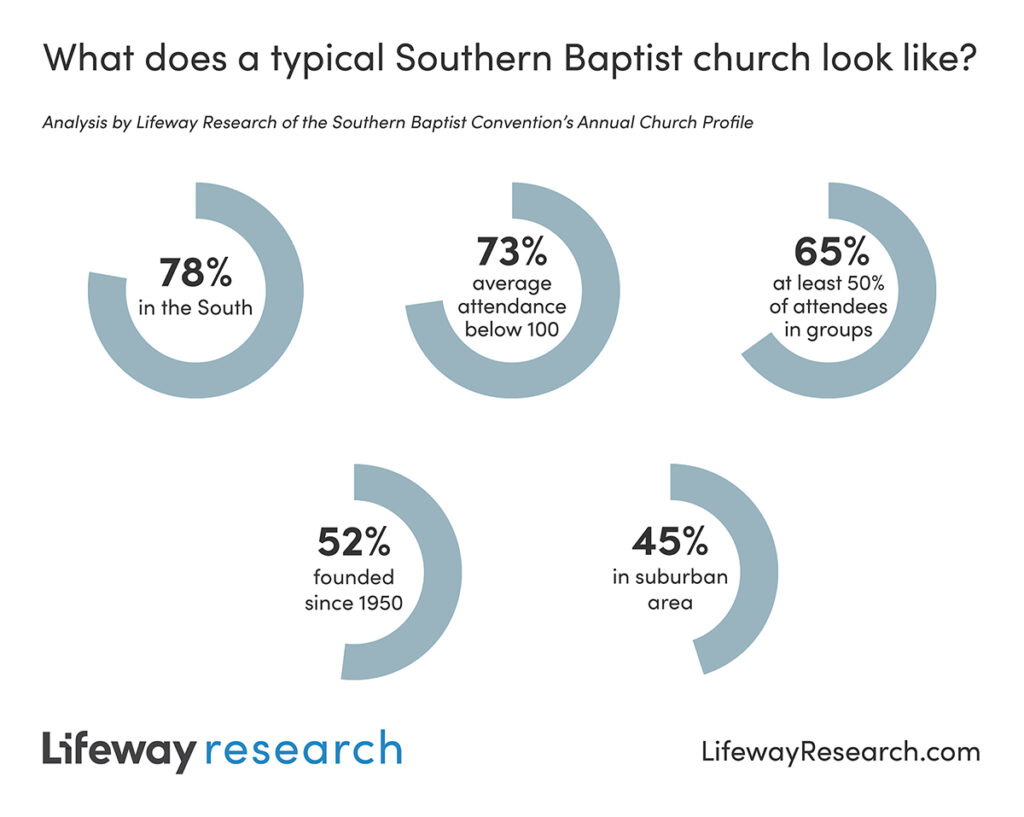
Lifeway Research’s analysis of the Annual Church Profile completed by Southern Baptist churches revealed the Southern Baptist Convention is made up of mostly smaller churches dotting the southern United States.
Still, more than 1 in 5 churches are outside of the South. And the only region where Southern Baptist churches are growing numerically is in New England. Additionally, churches started since 2000 are the most likely to be currently growing.
Scott McConnell, executive director of Lifeway Research, noted the SBC is growing in the least Protestant region of the U.S.
“While it’s easiest to achieve high percentage growth in areas with fewer Southern Baptists to begin with, the growth is a sharp contrast to numerical declines throughout much of the country,” he said.
The Southern Baptist Convention mostly reflects its name, as 78 percent of its churches are in the South. Far fewer are in the Midwest (10 percent), West (9 percent), Northeast (3 percent) or U.S. territories (less than 1 percent).
Not quite half (45 percent) of churches are in suburban areas with a population of at least 2,500 but less than 50,000. The remaining percentage are split between urban areas (28 percent) with at least 50,000 in population and rural places (27 percent) with less than 2,500.
Churches in the Northeast and West are more likely than those in the other regions to be in urban areas, while churches in the Midwest and South are mostly in rural and suburban places.
Most Southern Baptist churches (52 percent) were founded since 1950, including 23 percent started since 2000. Another 21 percent began between 1900 and 1949, while 27 percent trace their founding to before the 20th century.
The newest group of churches, those founded since 2000, make up an increasingly larger percentage of all Southern Baptist churches, climbing from 19 percent of churches in 2017 to 23 percent in 2022.
“Southern Baptists are the most prolific starter of new churches, but older churches continue to close at a slightly faster pace,” said McConnell.
Almost 3 in 4 churches (73 percent) have an average worship service attendance below 100, including 46 percent who have fewer than 50 for a typical service. One in 5 (19 percent) are between 100 and 249, while 5 percent average between 250 and 499. And 3 percent usually have at least 500 for their weekend worship service.
Churches in the Northeast (53 percent), Midwest (55 percent) and West (53 percent) are more likely than those in the South (43 percent) to have an average worship service of fewer than 50 attendees.
The SBC increasingly is comprised of the smallest churches. From 2017 to 2022, the percentage of Southern Baptist churches that were below 50 in worship attendance grew from 36 percent to 45 percent of the convention.
For most Southern Baptist churches, most of their worship attendees are also in a Sunday school class or small group Bible study. Still, 35 percent of churches have fewer than 50 percent of those who gather for worship also participating in a small group.
Almost 2 in 5 churches say their participation rate runs between 50 percent to 74 percent. Slightly less than 1 in 5 (18 percent) report 75 percent to less than 100 percent are involved in a small group. Around 1 in 10 (9 percent) have 100 percent or more involvement.
The smallest churches, those with fewer than 50 in attendance for a worship service, are the most likely to have 25 percent or less of their congregation involved in small groups (21 percent). They are also among the most likely to have at least 100 percent participating (10 percent).
An increasing number of Southern Baptist churches have few small group participants. From 2017 to 2022, the percentage of churches that had fewer than 25 percent of their worship service attendees involved in a small group jumped from 5 percent to 16 percent, a 219 percent increase.
A 2022 Lifeway Research study found the average U.S. Protestant church had 44 percent of attendees involved in a small group, down from 50 percent in 2008.
“Declines in Sunday School and small group participation is not a short-term problem. It also does not bode well for the future,” McConnell said. “Having a higher percentage of your attendees attending small groups each week is one of four measures that predict higher worship attendance five years down the road.”
The most recent Annual Church Profile of the SBC highlighted continued membership decline since 2006, falling to 13,223,122, the lowest number since 1978. The analysis comparing 2017 and 2022 indicates declines in most types of churches with occasional areas of membership and attendance growth.
Membership in Connecticut, Maine, Massachusetts, New Hampshire, Rhode Island and Vermont churches together grew by 1 percent from 2017 to 2022. Every other area saw a numerical decline for Southern Baptist churches.
The regions with the smallest declines were the Mid-Atlantic—New Jersey, New York and Pennsylvania—which fell 5 percent, and the East South Central—Alabama, Kentucky, Mississippi and Tennessee—which dropped 7 percent.
Every other area had a double-digit percentage decrease over the past five years, with the largest decline happening in the Pacific region—Alaska, California, Hawaii, Oregon and Washington—which fell 22 percent.
“The West has the most churches with declining membership. And the Pacific portion of the West has the most dramatic declines among reporting churches,” McConnell said. “California churches had particularly low reporting on the ACP in 2022, making their numbers less reliable.”
8 of 10 SBC churches plateaued or declining
Grouping churches according to their percentage change in membership since 2017 gives a picture of which types of churches are most likely to be growing and which must overcome the trends surrounding them.
Those who saw an increase in total membership of 10 percent or more are classified as growing, a decrease of 10 percent or more are considered declining and those in between are plateaued.
Overall, 18.5 percent of Southern Baptist churches are growing, 42.5 percent are plateaued and 39 percent are declining.
Newer Southern Baptist churches are more than twice as likely to have grown than churches started before the 21st century. More than 2 in 5 of those founded since 2000 are growing churches (42 percent).
The younger the grouping a church falls into, the less likely they are to be plateaued, ranging from 52 percent of those founded before 1900 to 22 percent of those founded since 2000. Churches founded in the 20th century are the most likely to be declining—45 percent of those started between 1950 and 1999 and 39 percent of those that began between 1900 and 1949.
Specific analysis was conducted on churches started within the past five years. At least two-thirds of Southern Baptist churches founded in those years are either plateaued or growing.
Within the 2017-2021 time frame, the longer a church has existed, the more likely it is to be a growing congregation. For those founded in 2021, 33 percent experienced at least 10 percent growth by 2022, while 2 in 3 churches planted in 2017 (67 percent) are currently growing.
The largest churches are the most likely to have grown. More than a quarter of churches with an average attendance of 500 or more (26 percent) report a membership increase of more than 10 percent in the past five years. Those churches are also among the least likely to have declined (35 percent).
Churches in larger population areas do not automatically equal growth. Southern Baptist churches in urban areas are the most likely to have grown since 2017 (22 percent), but those churches are also the most likely to have declined (46 percent).
In fact, the likelihood of a church growing and declining increases moving from a smaller population grouping to a larger one. While rural churches are the least likely to have grown (16 percent), they are also the least likely to have declined (35 percent).
Similar extremes are also found in the regions of the country. Southern Baptist churches in the Northeast (36 percent) and the West (29 percent) are the most likely to have grown, but they are also the most likely to have declined (46 percent and 47 percent respectively). Churches in the South (45 percent) and Midwest (40 percent) are the most likely to have plateaued.
“It is increasingly difficult for a church to see growth today,” McConnell said. “Southern Baptists have never had more declining churches and fewer growing churches than we see today. As the majority of churches decline, they have fewer resources to invest in ministry. But the God who gave past growth is no less capable today.”
This analysis was based on data reported on the Annual Church Profile in 2022 and 2017. The ACP is an annual statistical census of Southern Baptist congregations conducted cooperatively by local associations, state conventions, and Lifeway Christian Resources. Around 7 in 10 Southern Baptist churches (69 percent) reported at least one item on the 2022 ACP.
North Carolina children’s home president misused funds
October 4, 2023
THOMASVILLE, N.C.—Michael C. Blackwell, longtime president and CEO of the Baptist Children’s Homes of North Carolina, retired from his post effective immediately following an independent financial review revealed multiple instances of misuse of the organization’s funds.
An announcement from the children’s home Sept. 19 said its board of trustees reached an agreement with Blackwell earlier in the day for him to retire. Blackwell has been on a leave of absence since May 26.
“Both parties have agreed that moving in the direction of new leadership is in the best interest of the organization and its mission of ‘sharing hope … changing lives,’” the announcement said.
“While the outcome of this review was disappointing, the action taken by the trustees clearly prioritizes that the integrity of the BCH mission and, most importantly, our commitment to the children and families we serve comes first,” Gayla Freeman, chair of the BCH executive committee, said.
“It is our hope that this is the first step in rebuilding trust with our supporters, partners and N.C. Baptists who have faithfully stood with us to minister to the needs of the most vulnerable while showing them God’s unconditional love.”
Freeman added that the misuse of funds was “not systemic” but was “isolated to the former President/CEO.”
The review involved a forensic accountant’s assessment of specific organizational expenditures by Blackwell and “the findings substantiated multiple instances of misuse directly conflicting with both BCH policies and Blackwell’s fiduciary duties.”
Among the findings were Blackwell’s use of a specific accounting code for personal expenses. Over the past 14 years, Blackwell directed more than $300,000 in donor funds to that account. Investigators also found he used his corporate American Express card for personal expenses, including stays at a luxury resort, and that he asked a donor to purchase a brand-new Nissan Altima for his wife in 2022.
“Dr. Blackwell directed [Donor Redacted] gifts away from their purpose of supporting BCH’s general operations to benefit himself, and he was not fully transparent with donors,” the Schell Bray summary states.
In an email statement sent to some Baptist State Convention of North Carolina leaders as well as the Biblical Recorder about three hours after the children’s home announcement was made public, Blackwell said that he “had never deliberately done anything to bring harm to this ministry that is so deeply personal to me.”
Blackwell said he shared that sentiment with members of the board of trustees when he was invited to meet with them during a special called meeting held in closed session on Sept. 13.
In his statement, Blackwell acknowledged the existence of a “special Discretionary Fund” and said he “never stepped outside the original, established parameters and purpose of the Fund.”
‘No deliberate misuse of funds’
Blackwell added that at some point he “did determine that some charges were, indeed, personal. I made note of those and reimbursed BCH for those charges.”
“There was no intentional misuse of funds,” he added.
In a follow-up interview with the Biblical Recorder, Blackwell reiterated the claims he made in his statement.
“There were some misunderstandings, [but] there certainly was no deliberate misuse of anything, ever on my part,” Blackwell said. “I love BCH, and I always will.”
Blackwell also said the decision to retire was his.
“I retired on my own,” Blackwell said. “That was my decision.”
Under terms of the separation, Blackwell has agreed to reimburse the children’s home in full for the funds that were identified. Additionally, he will pay the appropriate amount of applicable taxes.
Blackwell’s final compensation will consist only of that which is required by law and organizational policy regarding accrued vacation and sick time, the statement said.
The review also determined the children’s home bylaws, as currently written, give the president/CEO position too wide a margin of financial authority.
Freeman said the children’s home board is in the process of developing a plan for updating and strengthening governing structures to establish the degree of oversight that is essential for an organization of the children’s home size and scope.
The announcement also said a search committee would be formed “in the coming weeks” to identify a new executive leader for the organization.
Chief Operating Officer Keith Henry and Executive Vice President for Development Brenda Gray, who have shared presidential responsibilities since Blackwell’s leave began in May, will continue to lead the organization in the interim.
Blackwell, 81, is the longest-tenured president in Baptist Children’s Homes history, having led the organization for nearly 40 years. A native of Gastonia, N.C., Blackwell became the eighth president of Baptist Children’s Homes July 1, 1983.
‘Disheartening and appalling’
In a statement to the Biblical Recorder, N.C. Baptist Executive Director-Treasurer Todd Unzicker praised trustees for commissioning the financial review and commended them for “taking swift action upon receiving the audit’s results.”
“It was disheartening and appalling to read a summary of actions that occurred under Dr. Blackwell’s leadership,” Unzicker said. “Transparency is the currency of trust for N.C. Baptist churches, and this report clearly demonstrates that the actions of Dr. Blackwell not only represent a lack of transparency, but also a misappropriation of cherished missions dollars.
“As heartbreaking as these actions are, it encourages me to see BCH trustees move toward a change in executive leadership and seek full restitution.”
Unzicker pledged assistance to the Baptist Children’s Homes in the days ahead and called on N.C. Baptists to join him in praying for the its ongoing ministry.
“N.C. Baptists stand ready to assist BCH in the days ahead as they work to change their policies and set a new direction,” Unzicker said. “Please join me in praying for wisdom for them in the days ahead.”
The Baptist Children’s Homes of North Carolina was established in 1885 as a single orphanage in Thomasville. BCH has grown from its inaugural location into one of the southeast’s largest child care organizations, located in 35 communities in North Carolina, South Carolina and Guatemala.
The nonprofit organization, which is fueled by charitable funding provided by churches and donors, offers help and hope to children, families, single mothers, expectant mothers, adoptive families, college students, intellectually and developmentally disabled adults and aging adults.
Baptist Press contributed to this report.
SBC Executive Committee remains leaderless
October 4, 2023
NASHVILLE, Tenn. (RNS)—The Southern Baptist Convention’s Executive Committee lost another leader before he could even get started.
Meeting in Nashville, trustees from the Executive Committee had hoped to approve retired Kentucky pastor Dan Summerlin as interim president and CEO. But during an executive session Sept. 19, trustees learned Summerlin had withdrawn as a candidate.
Louisiana pastor Philip Robertson said Summerlin had come to the conclusion that “at this particular time, this job just might be a little bit more than he could handle.”
During a news conference, Robertson read a statement from Summerlin.
“Upon further reflection it has become evident that what is best for the convention and for my family is to withdraw my name from consideration at this time,” Summerlin said in the statement.
Summerlin would have been the committee’s sixth leader in the past five years and his withdrawal marks the second time this year that a nomination for leader of the Executive Committee has fallen apart.
In May, a search committee had nominated Texas pastor Jared Wellman, a former committee chair, as the permanent president. But a vote on Wellman failed the same month.
The committee has been without a permanent leader for two years, ever since former Arkansas megachurch pastor Ronnie Floyd resigned as CEO and president after a fierce battle over how to conduct an investigation into the SBC’s handling of sexual abuse.
Willie McLaurin had been serving as interim CEO but resigned last month after admitting he had falsified his resume. The fraud was discovered while McLaurin was being vetted as a candidate for the permanent role.
No planned legal action against McLaurin
Robertson, chair of the committee, reported after an internal investigation, trustees had decided to take no legal action against McLaurin at this time.
Willie McLaurin resigned as interim president and CEO of the SBC Executive Committee after confessing he lied about his educational background on his resume. (BP File Photo)
“Based on the findings from the internal investigation, while it is clear that Willie McLaurin engaged in both academic and professional fraud during his tenure with the Executive Committee, no evidence was found of financial wrongdoing or direct harm to the Executive Committee,” according to a committee statement.
The committee also reached a confidential separation agreement with McLaurin. Robertson declined to discuss any details of the agreement, including possible financial compensation, citing human resources concerns. He did say that in general, separation agreements can be helpful in cases like this.
Robertson also told trustees the officers had adopted a new vetting process for leaders, including verifying academic credentials, past employment and military service, and any professional licenses.
Oklahoma church ousted for racist conduct by pastor
After an extended executive session, Robertson also announced Matoaka Baptist Church, Ochelata, Okla., had been “deemed not in friendly cooperation with the convention based on a lack of intent to cooperate in resolving concerns regarding discriminatory behavior on the basis of ethnicity.”
Earlier this year, photos of the pastor of Matoaka Baptist Church in blackface and impersonating the late Ray Charles reportedly surfaced, prompting outrage. According to television station KTUL, the pastor defended the photos and was unapologetic.
The SBC removed a Georgia Baptist church for similar reasons in 2018.
Despite the troubles of the Executive Committee—and the uncertainty over its leadership—the tone of the meeting was markedly different from earlier meetings that had been characterized by tension and sometimes open conflict.
Unified in spite of challenges
Both Robertson and SBC President Bart Barber said at the news conference the trustees seemed united in their desire to work together and address their current challenges. Barber called it the “most unified meeting in some time.”
Barber added that many Southern Baptists have experienced complicated leadership transitions at their local churches—and that affects how they view the Executive Committee.
“Sometimes you go through difficult times,” he said. “Sometimes you have more problems than you have in a usual period of time. It doesn’t mean that you quit.”
In other business, trustees declined a request that they explore the possibility of holding the denomination’s 2028 annual meeting on the island of Maui. The request, made by a local church messenger during the 2023 annual meeting to loud applause, was deemed impractical.
Instead, plans call for the meeting to be held that year in Indianapolis.
They also discussed the possibility of selling the committee’s office building at 901 Commerce Street in Nashville. That area of the city is undergoing a major redevelopment—with construction traffic currently making it difficult for the trustees to meet at that location.
Adam Wyatt, the Mississippi pastor who chairs the finance committee, said selling the building is being discussed and the committee is working with a listing agent. But selling off the building doesn’t solve the committee’s fiscal problems, he said.
“It’s the only asset we have,” Wyatt said. “And getting rid of the only asset we have when we still have long-term challenges that we can’t quite quantify is something that we also have to consider.”
Any proceeds from a sale would also have to be split with other SBC entities, who own a stake in the building.
Trustees also approved a new code of conduct for the committee, prompted in part by public conflict among trustees in recent years over how to respond to the denomination’s abuse crisis.
The code of conduct required members to be a “role model in judgment, dignity, respect, speech, and Christian living” and to “maintain a biblical lifestyle at all times.” The code also requires members to refrain from criticizing the committee on social media—although trustees struck a clause that would have barred them from criticizing committee leaders on social media.
Johnny Hunt lawsuit claims pastor’s sin is a private matter
October 4, 2023
NASHVILLE, Tenn. (RNS)—In mid-2010, not long after his term as Southern Baptist Convention president ended, Johnny Hunt took time off for his annual vacation.
He planned to return to the pulpit at First Baptist Church in Woodstock, Ga., in early August. But just before his first Sunday back, Hunt announced he was taking a leave of absence, citing his health and a sense of exhaustion.
What no one knew at the time was that Hunt had another reason for his leave.
On July 25, 2010, while vacationing in Florida, Hunt had kissed and fondled another pastor’s wife in what his attorneys would later call a “brief, consensual extramarital encounter.”
Then Hunt spent more than a decade covering the incident up.
Without telling his congregation—or the millions of Southern Baptists he had represented as their president—Hunt went through a secret restoration process that included counseling sessions with the woman he had fondled and her husband. He then returned to the pulpit.
For a dozen years, no one was the wiser. Hunt retired from First Baptist Church in 2019 and took on a new role as a senior vice president for the SBC’s North American Mission Board. He continued his busy and often lucrative career as a preacher and public speaker.
Then, in 2022, an investigation into how SBC leaders dealt with the issue of abuse was released, and his name was included in the report.
Over the course of their inquiry, investigators from Guidepost Solutions, the firm hired by the SBC, had heard about Hunt’s misconduct and learned the woman involved in the incident—who has not been named publicly—described it as a sexual assault and as not consensual.
“We include this sexual assault allegation in the report because our investigators found the pastor and his wife to be credible; their report was corroborated in part by a counseling minister and three other credible witnesses; and our investigators did not find Dr. Hunt’s statements related to the sexual assault allegation to be credible,” investigators from Guidepost concluded.
‘Marital infidelity was nobody else’s business’
When the report became public, Hunt first denied it and claimed the incident was consensual. He resigned from NAMB, went through another restoration process, then made a defiant return to the pulpit earlier this year.
This past spring, Hunt filed suit against the Southern Baptist Convention’s Executive Committee and Guidepost, claiming they had ruined his life by revealing his misconduct and including him in an abuse report.
The heart of Hunt’s claim of invasion of privacy and defamation was summed up in a recent filing by his attorneys. Hunt’s sins, they wrote, were a private moral failing that should have been kept confidential.
“Pastor Johnny was not the president of the SBC or a member of the Executive Committee at the time of the incident,” they wrote in a memorandum, opposing the denomination’s attempts to have the case dismissed. “He was merely a private citizen whose marital fidelity was nobody else’s business.”
That claim raises a series of questions.
Can a pastor’s sins ever really be private? Can a pastor who has made a living urging others to follow a morality code then claim his own failings are no one else’s business? And was the harm done to Hunt’s reputation primarily due to his own acts—both the misconduct and the subsequent coverup?
George Freeman, executive director of the Media Law Resource Center and a former assistant general counsel for The New York Times, said Hunt’s claim to privacy will likely go nowhere in court.
Hunt is undoubtedly angry and embarrassed that his personal failings have been publicized, which is understandable, Freeman said. But as a religious leader who was outspoken about family values and ethical living, his wrongdoings are a matter of public concern, especially in the wake of the #MeToo movement.
“That’s life,” Freeman said. “That’s not a lawsuit.”
Claims it was a moral failing, not a crime
In their court filings, Hunt’s attorneys also claim Hunt’s inclusion in a report about abuse could have led readers to think he had committed a crime rather than a moral failing.
“By using this incorrect term and then featuring the information about Pastor Johnny in their public report that otherwise focused on criminal conduct, the Defendants created the false impression that Pastor Johnny is an accused sex criminal, even though Defendants now concede—as they must—that the allegations against him do not fit the definition of a crime,” they wrote in opposing a motion to dismiss the suit.
Lawyers for the SBC argued the Guidepost report did not accuse Hunt of a crime, saying nothing in the report stated that the incident involved a minor.
“The Guidepost Report simply reported its investigation into a report of sexual assault against Plaintiff, who was the immediate past president of the SBC at the time, brought to the Guidepost investigators by an SBC pastor and his wife,” attorneys for the SBC wrote.
The former SBC president’s defamation claim could have some merit if the allegations against him are proven false.
But even then, Freeman said, Hunt, a prominent evangelical leader and speaker, would likely qualify as a public figure—making the defamation claim harder. Especially since he had long made public statements about morality, including his signature on the Nashville Statement, a 2017 statement by evangelical leaders that rejects both same-sex marriage and any extramarital sexual activity as sinful.
Hunt would also have to prove the Executive Committee and Guidepost knew the allegations were likely false and still published them. That’s a harder argument to make, given that the woman involved in the incident, who has not been named, insists it was not consensual.
“You have to prove that there was actual malice,” Freeman said. “And that will be hard to do.”
Hunt’s attorneys did not respond to requests for comment. A spokesman for Guidepost Solutions also declined to comment.
“Because litigation is ongoing, we have no further comment beyond our filings,” Scarlett Nokes, special counsel for the Executive Committee, told RNS in an email.
‘You can’t have it both ways’
Christine Bartholomew, a law professor at the University at Buffalo School, said Hunt’s public statements about morality undermine his claim of invasion of privacy.
“You can’t have it both ways,” she said. “You can’t publicly take a position on something and then say, ‘If it applies to me— hold up, it’s completely private.’”
Bartholomew said Hunt seems to be claiming a kind of personal version of clergy-penitent privilege in this case. Confessions made to priests or other clergy are considered confidential—and confidentiality at times has led church leaders not to report abuse or misconduct.
“Just because you’re going to have to answer to your Maker doesn’t mean you’re absolved from any public discussion of your misconduct,” she said.
If Hunt’s argument were to prevail, Bartholomew said, no church or religious group would be able to publicize misconduct by leaders. And even if Hunt did not break criminal law, his conduct may have broken civil laws.
Hunt’s defamation claim will depend on the facts and whether he can prove the claims made in the Guidepost report are false. Even then, he will have to prove that those allegedly false statements—and not his own misconduct—caused him harm, she said.
Robert Callahan, a Texas attorney who has represented survivors of clergy misconduct and abuse, also said Hunt’s claim of invasion of privacy likely will fail. He said the defamation claim may survive attempts to dismiss the case.
But Hunt’s legal filings likely undermine the defamation claim as well.
“He had to admit that he had participated in disqualifying behavior,” Callahan said.
The outcome of Hunt’s lawsuit could also impact future attempts to address clergy misconduct and abuse. For years, fear of lawsuits kept Southern Baptist leaders from taking any steps to address abuse, and churches had long avoided making public statements about clergy misconduct for fear of being sued.
Legal worries have also slowed the SBC’s “Ministry Check” website, a database of abusive clergy. Southern Baptists approved the development of the site in June of 2022, but more than a year later, no names of abusive pastors currently appear on the site, not even those who were convicted of crimes.
The Executive Committee has also faced fiscal woes due to the ongoing legal costs related to the sexual abuse crisis and investigation. In February, the SBC leaders announced the committee’s financial situation was unsustainable after using $6 million in reserves to pay legal bills. Last week, the committee laid off five full-time staffers and two contractors due to fiscal challenges.
Barber urges SBC to remember and learn from history
October 4, 2023
NASHVILLE, Tenn. (RNS)—The fall meeting of the Southern Baptist Convention’s Executive Committee began with prayer, some hard news and calls for unity after years of turmoil and change.
Those attending also got a history lesson about how the denomination overcame a crisis a century ago, with the hope that lessons from the past could inspire unity in the present.
“When all the dozens of reasons to throw in the towel and abandon our one sacred effort were easy to find, we chose instead to search hard for reasons to lean in and cooperate harder,” SBC President Bart Barber told the Executive Committee trustees.
Meeting in a hotel ballroom a few miles from the committee’s offices, about 80 trustees—the body that oversees the day-to-day governance of the SBC—gathered for the first time in person since the committee’s leader resigned after admitting he had faked his resume.
Willie McLaurin, who was serving as the Executive Committee’s interim president and CEO, resigned Aug. 17 after a committee vetting him as a candidate for the permanent position discovered the fraud. McLaurin was the fourth person to lead the Executive Committee since 2018, and the third to step down amid controversy.
His departure was followed by news last week that five staffers and two contractors had been laid off due to the committee’s troubled finances.
‘A cost to doing the right thing’
Jonathan Howe, who has filled in as temporary interim leader since McLaurin’s departure, told trustees the committee’s reserves had dropped from nearly $14 million two years ago to about $4 million today. The committee will need to draw on additional reserves to balance its budget this year.
Committee members also learned this week retired Kentucky pastor Dan Summerlin had been nominated to replace Howe as interim president and CEO, but he withdrew his name from consideration.
The search for a permanent leader—now nearly 2 years old—continues, with the search committee hoping to identify a candidate by February 2024. The committee is also expected to discuss an internal investigation into McLaurin’s tenure, likely in executive session.
Since 2019, the SBC has been reckoning with political divides, fights over doctrine, leadership failures and a sexual abuse crisis.
Members of the committee have been divided over how to respond to the ongoing crisis, with some warning a transparent investigation into SBC leaders’ management of sexual abuse might lead to financial ruin and others quitting in protest.
Howe gave a nod to some of the challenges the committee has faced in his report and to the recent layoffs.
“There is a cost to doing the right thing,” Howe said.
Howe also called for trustees to band together to act with humility to fulfill their mission, reminding them they serve the denomination’s churches, from the smallest rural congregation to the largest megachurch.
“We serve the Southern Baptist Convention,” he said. “It does not serve us.”
Update on Ministry Check database of abusers
Oklahoma pastor Mike Keahbone gave an update from a task force charged with implementing a number of reforms meant to address sexual abuse in the denomination. Chief among those reforms is setting up a “Ministry Check” database of abusive pastors.
Work on that database continues, but no names have been added to it so far. Keahbone said no date had been set yet for when names would be added but added he hoped it would be soon. He also said the volunteer task force is committed to making SBC churches safer for everyone.
Along with the work on the database, Keahbone said the task force has partnered with state conventions on abuse prevention tools. They are also searching for an entity that can oversee abuse prevention on a permanent basis.
“We will not retreat from this fight,” he said.
Looking back a century
Barber, pastor of First Baptist Church in Farmersville, closed the evening with a call for Southern Baptists to rise above their current troubles. He began his report by promising not to preach. Instead, he gave a history lesson to trustees, reminding them of the denomination’s troubles in the 1920s and 1930s.
At that time, he said, Southern Baptists faced financial crisis, doctrinal divides and failed leadership, including a pair of leaders who embezzled more than a million dollars from the convention’s two missionary boards.
Southern Baptists, he said, also faced a political crisis. After winning the battle to ban alcohol with the passage of the 18th Amendment in 1919, they faced a backlash against Prohibition, only to see the Democratic Party, which they then supported, nominate New York Gov. Al Smith, who was both Catholic and “an imbiber,” Barber said.
In the 1930s, the Great Depression derailed a major campaign to fund missions and one of the SBC’s prominent seminaries was set to close when a last-minute infusion of cash saved it, said Barber, who called the era “the moment of our deepest despair.”
When all seemed lost, Baptists created what is now known as the Cooperative Program, a shared mission funding program, and the statement of faith, known as the Baptist Faith and Mission, to bind them together.
Today, with Baptists once again facing division, financial woes, political turmoil, doctrinal divides and a crisis of leadership, Barber called on his fellow SBC leaders to once again overcome those challenges with a common mission.
“We do not lack money. We do not lack planning. We do not lack opportunity,” Barber said. “God help us, what we lack is inspiration.”
Barber, who recently appointed a “cooperation group” to help the SBC move forward, asked his fellow trustees to stop following those who want to tear things down and instead work together.
“The dream of cooperation carried us through the 1920s and 1930s, and it will carry us through the 2020s too,” he said.
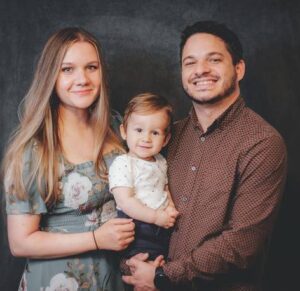



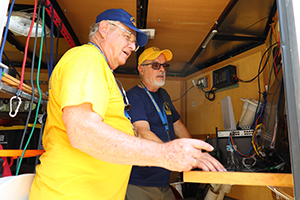
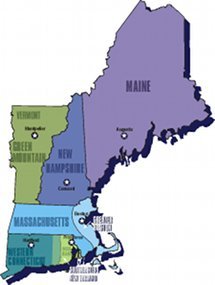 Still, more than 1 in 5 churches are outside of the South. And the only region where Southern Baptist churches are growing numerically is in New England. Additionally, churches started since 2000 are the most likely to be currently growing.