Baptist Women in Ministry reflect on SBC women

DALLAS—Baptist Women in Ministry, a national organization committed to advocating for the full affirmation of women in ministry in Baptist life, met soon after the close of business on the first day of the Southern Baptist Convention annual meeting.

Under the shadow of another slate of attempts to restrict female ministers in the SBC, the group gathered at a Methodist church around the corner from the convention center housing the convention.

They heard a conversation between BWIM Executive Director Meredith Stone—who also serves as interim preaching pastor in a Baptist church in Texas—and Beth Allison Barr, history professor at Baylor University, pastor’s wife and best-selling author of The Making of Biblical Womanhood and Becoming the Pastor’s Wife.
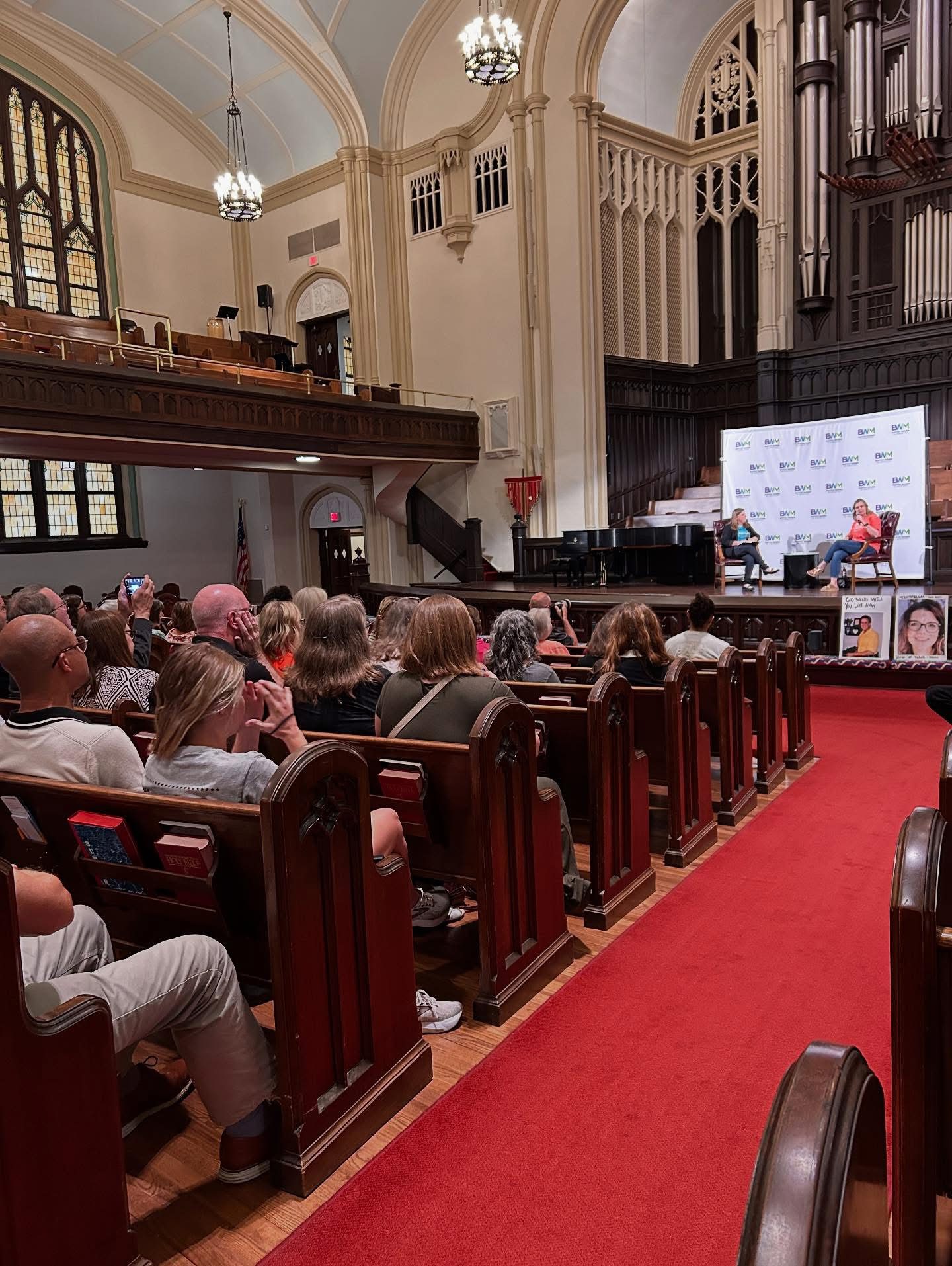
BWIM hosted a conversation to reflect on the state of women in the SBC on June 10. (Facebook Photo)

Both Stone and Barr had attended the Pastors’ Wives and Women in Ministry Luncheon, held at the convention earlier in the day, and the SBC business sessions.

Barr noted while she’d been to local and state meetings of Baptists, it was her first time to attend an SBC annual meeting in person. However, she has researched the meetings and Southern Baptist history related to women in ministry extensively.

Giving her impression of the event as a historian, Barr said she found it “fascinating” to watch the messengers conduct the business of the meeting and to observe the banter.

As a pastor’s wife, she said she saw it as “somewhat hopeful,” pointing out that for some time she’s thought, if anyone might save the SBC or help it evolve into something else, “it’s going to be women and pastors’ wives.”

But she also noted, as someone who “believes God does not limit ministry calling by gender,” the meeting was “depressing.”

“It’s one thing to read the words of men standing up and … questioning what women can do in the church, and it’s another thing to hear them do it from a microphone on the floor and have the whole row behind you start clapping,” Barr said. “That is something else entirely.”

The women addressed a motion made from the floor of the SBC annual meeting calling for a task force to clarify what Southern Baptists believe women can do, “all the way down to ‘can they teach mixed Sunday school classes.’”

They noted the motion read like a lengthy list Wayne Grudem wrote in the late 1990s itemizing more than 80 things women can or cannot do in church.

Jared Long of Georgia made the motion, calling for a study committee to draft a potential standalone confessional statement for consideration at the 2026 annual meeting.

His motion is distinct from the Law Amendment—a failed constitutional amendment that would have barred from the SBC any church with a female pastor.

Long’s motion calls for a standalone document on women in Southern Baptist ministry that would “bring clarity to the role of women in ministry leadership within and beyond the local church.”

He called for the document to serve as a “theological and pastoral resource,” building on prior convention action and the 2000 Baptist Faith and Message.

Long requested the document to offer “clear, Scripture-based positive and negative affirmations, addressing but not limited to the biblical definition and responsibilities of a pastoral office; what distinguish[es] the [office] of a pastor from other ministry roles and the nature of a chaplain …; whether woman may teach mixed-gender classes, or preach under pastoral authority …”

He also called for the document to answer “whether women may serve as entity presidents, trustees, seminary professors, endorsed chaplains or denominational leaders.”
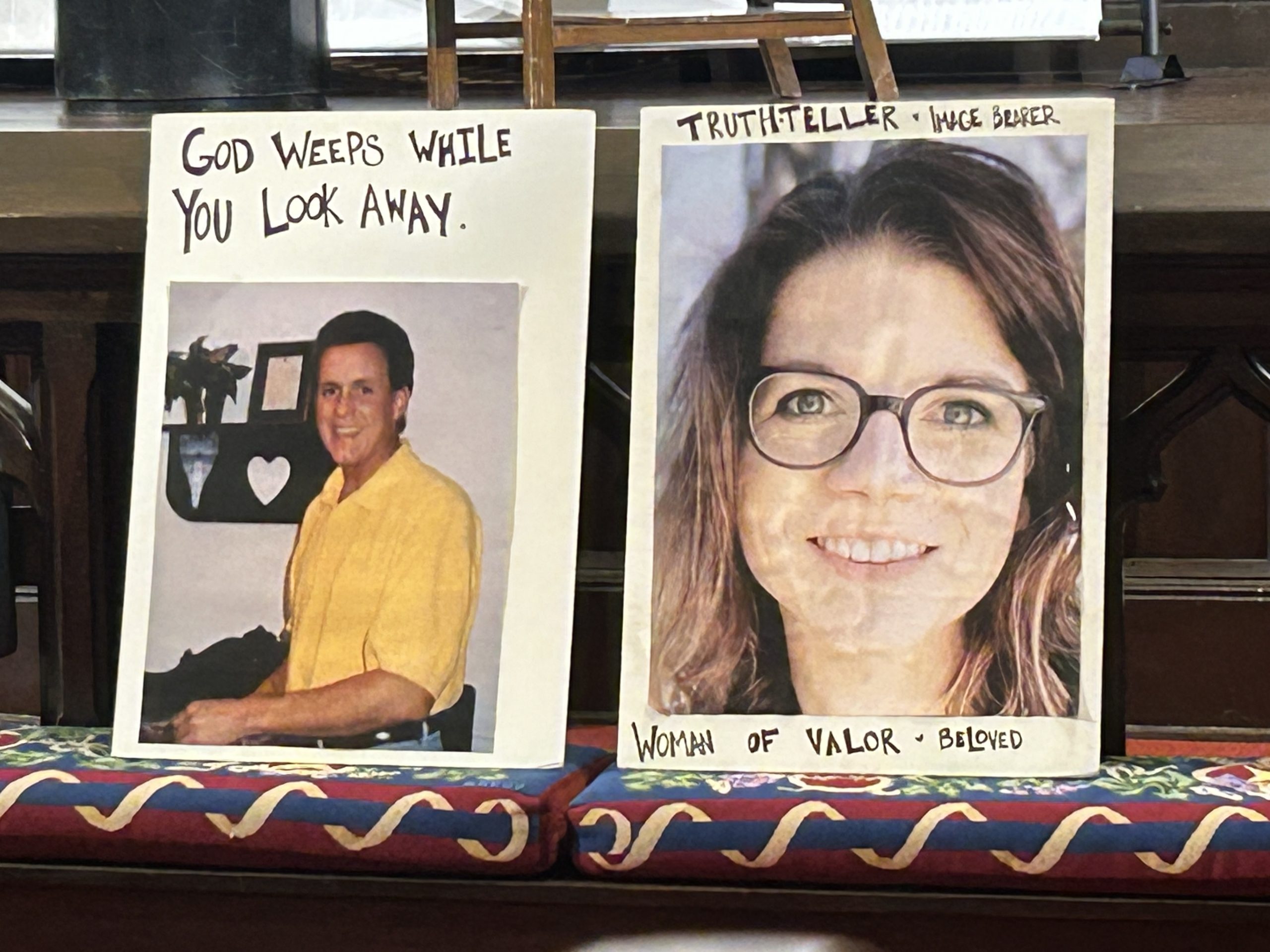
Placards displayed on the altar that were held outside the convention center to remind SBC annual meeting participants of two prominent sex abuse victims who recently died, Duane Rollins and Jen Lyell. Part of the conversation centered around their loss and sexual abuse in the convention. (Photo / Calli Keener)

And, he said, the document also should address “the roles of women on the mission field—including the appropriateness of serving as single team leaders or in positions of spiritual authority and related questions concerning women’s leadership in formal ministry contexts.”

Barr observed, “It was shocking to hear somebody on the floor start reading that out loud—as if this was reasonable—and that was really shocking to me.”

In some ways, she said, her experience at the Pastors’ Wives’ Luncheon was similar to the luncheons and other Southern Baptist programs and events for women she researched for her book.

Historical background of the Ministers’ Wives luncheon

“It really started out [as] a conference for pastor’s wives that grew into the focus on the lunch and the tea and then grew into a program. And now that program is kind of separated into two parts, where they have the pastors’ wives and women in ministry conference and then they have the pastor’s wives’ lunch.”

She explained the programs were started in the 1940s and 1950s to encourage pastors’ wives in ministry, because ministerial wives at the convention were commenting on how difficult the job was—being thrown into a position—being expected to do things at the church with no understanding of the expectations and that they weren’t necessarily prepared for.

So, SBC women began the luncheons to have a place to encourage other women, “and that’s what I saw today at the Pastors’ Wives luncheon,” Barr said.

The luncheon program was about taking mental health seriously and encouraging pastors’ wives to take care of themselves—which was exactly what they needed to hear, Barr noted, “and I found that really encouraging.”

It reflects the same culture she saw in the archives, where the luncheon is a place to encourage women in a really challenging position.

Stone said she realized something being at the luncheon and conference.

“When you think about the Southern Baptist Convention a lot—what’s going on there—you forget sometimes about the faces and people,” she said.

Being there was a reminder of “how deeply women in the Southern Baptist Convention want to follow Jesus and want to be faithful,” and, Stone said, she wants them to find freedom.

Barr agreed with the observation that thinking about the Southern Baptist Convention can make it easy to “forget about the women who are honestly just wanting to serve God,” but live in a space where they “haven’t been taught they can do something beyond.”

The women sat with a “delightful” young woman who serves as the leader of the youth ministry at her church at the luncheon, and they said they had a great time with her.

SBC women are doing the best they can with what they have, Barr asserted, but she hopes to “expand their horizons about what is possible in the kingdom of God.”

A striking change

Stone observed the women who spoke at the conference spoke of the ministry work they were doing in reference to a husband or father.

“It was always in reference to a man,” where the women didn’t have agency or independence, she noted.

Stone asked Barr what she thought it might do to a woman to live that way, without autonomy, where they didn’t talk about what they were doing, but only what their husband was doing.

Barr said Stone pinpointed a “striking difference” between the historic women’s conferences and the one they attended. Those early luncheons were designed for women to share about and celebrate the independent ministry of women.

The founding women emphasized they weren’t concerned with “who your husbands were.” The luncheons were about the women.

For most of its history, the Willie Dawson Award—essentially the SBC pastor’s wife of the year award, she explained—was given for the ministry the recipient was doing, either in her church or at a state or national level.

The award itself had started out as the Mrs. J.M. Dawson Award but quickly was changed to the Willie Turner Dawson Award.

Even when the wife of a prominent convention minister in the 1990s complained about not having received the honor, the president of the luncheon’s response was: “I’m sorry she was offended, but what we do here is recognize women for what women do, not for what their husbands do.”

Barr noted this shift clearly shows “what complementarian theology does to the psyche of women.”

“When you have lived in a space where you are taught that your value and what you are called to do centers around men—that’s the definition of patriarchy, it centers men— … [and] to put her husband always above herself, it effects the way that women think of themselves,” Barr asserted.

The women discussed concerns they’d observed with SBC actions this year, as well as identifying theological inconsistencies and additional changes and historical fallacies damaging to women that the SBC has embraced over time.

Some of these are covered in Barr’s published books, and others will be in her next release.


Effort to compel greater SBC transparency fails

DALLAS—Southern Baptist Convention annual meeting messengers approved a new business and financial plan for convention entities, rejecting an amendment that would have required a level of financial transparency comparable to IRS Form 990 disclosures.

Messengers approved a business and financial plan recommended by the SBC Executive Committee that emphasizes trustee governance of the convention’s institutions and agencies.

‘Transparency builds trust’

Rhett Burns, pastor of First Baptist Church in Traveler’s Rest, S.C., introduced a motion to amend the proposed plan.

Burns’ amendment would have required Form 990-level financial disclosures—including the salaries of top executives—to the SBC-at-large within six months of the end of each fiscal year.

However, his amendment would not have required entities to file Form 990 with the IRS. It also included an exemption allowing an entity to withhold information that would endanger the lives or safety of international missionaries.

In addition to executive compensation, disclosures would have included amounts paid to attorneys, top contractors and information about any conflicts of interest.

“Trust is the foundation of our cooperation, and transparency builds that trust,” said Burns, a former IMB missionary.

While audits provide internal accountability, they do not provide external transparency to messengers and churches, he noted.

Send the wrong signal about federal oversight

Jeff Iorg, CEO of the SBC Executive Committee, spoke against the amendment, saying the convention “fought an extensive legal battle to establish that we have First Amendment protections from such invasive reporting as is required by the 990.”

“We stand today and assure you we are not trying to hide behind this ruling, but we are instead defending that ruling and upholding that ruling and wanting to stand within it,” Iorg said.

“Voluntarily offering that kind of information sends a signal that we find ourselves in some way subject to the federal government oversight, which none of us want to have.”

Iorg also said the level of reporting the amendment would require would release information the messengers lack the power to change and “set up legal conflicts.”

However, Burns and other messengers who favored the amendment noted Woman’s Missionary Union—an SBC auxiliary organization—routinely files an IRS Form 990, as do Baptist universities and other nonprofit organizations.

“The standard for our work should not lag behind sister Baptist institutions and certainly not lag behind secular nonprofits,” Burns said.

Warning against unintended consequences

John Piwetz from Crossroads Baptist Church in Elizabethtown, Ky., warned against unintended consequences.

“Transparency sounds like a good thing, but I’m sure all of you can think of countless times when discretion was preferable to transparency—when sharing additional information actually caused more problems, rather than solving them,” Piwetz said.

He pointed to actions taken in 2021, when convention messengers called on the SBC Executive Committee to waive attorney-client privilege as part of a move toward transparency related to the SBC sexual abuse investigation.

That action led legal counsel to resign, invalidated SBC insurance policies and opened the convention up to “massive legal monetary liabilities,” he said.

“Did we end up getting more information from the Executive Committee? Yes. But did we unintentionally cost ourselves millions of dollars in the process? Yes, we did that, too,” he said.

‘If we can do it, so can the SBC’

One messenger who spoke in favor of the amendment said information about the salaries of top executives is not provided to all trustees of all entities but only to those who serve on a board’s finance committee.

However, another messenger opposed to the amendment said that was not the case at the agency where he serves as a trustee.

Other messengers called on SBC entities to provide the same level of financial transparency as churches that provide detailed financial information to their members and as other nonprofit organizations provide.

Josh Abbotoy from Midway Baptist Church in Cookeville, Tenn., identified himself as a “Harvard-trained lawyer” who operates a small nonprofit organization.

“We prepare a 990. If we can do it, so can the SBC,” he said.

In addition to approving the new business and financial plan, SBC messengers approved 10 other recommendations from the Executive Committee.

Those recommendations included a $190 million Cooperative Program budget for 2025-26. Messengers also authorized a $3 million special allocation for legal costs related to investigations into how the SBC handled sexual abuse claims.


Amendment barring women pastors falls short again

DALLAS—Once again, a constitutional amendment barring any church with a female pastor from the Southern Baptist Convention failed to reach the required two-thirds threshold of approval at the SBC annual meeting.

Messengers voted 3,421 to 2,191—60.74 percent to 38.90 percent—in favor of a motion to “clarify” only churches with male pastors are considered in “friendly cooperation” with the SBC.

However, since amendments to the SBC constitution require two-thirds approval at two consecutive annual meetings, the measure failed.

Juan Sanchez, senior pastor of High Pointe Baptist Church in Austin, made the motion to amend Article 3 of the convention’s constitution by adding as a qualification an SBC church: “Affirms, appoints or employs only men as any kind of pastor or elder as qualified by Scripture.”

The wording is identical to an amendment Mike Law, pastor of Arlington Baptist Church in Arlington, Va., introduced at the 2023 SBC annual meeting, where messengers granted it the required level of approval.

Last year, however, messengers voted 5,099 to 3,185—61.45 percent to 38.38 percent—in favor of the amendment, falling short of the required two-thirds affirmative vote.

‘Future guidelines for the Credentials Committee’

Speaking in favor of the motion, Sanchez said the constitutional amendment is needed to “provide future guidelines for the Credentials Committee” as they rule whether a church is eligible to be affiliated with the SBC.

The proposed amendment would bring the constitutional requirement consistent with the 2000 Baptist Faith & Message, he noted.

Sanchez insisted the purpose is not to place unnecessary restrictions on service by women in church but to “free them to minister in appropriate roles.” He noted his church has a female children’s ministry director, and both men and women serve as deacons.

However, the church’s website identifies the congregation as “elder-led” and “congregationally governed,” and all of the elders pictured on the site are men.

In response to concerns the amendment could prompt litigation, Sanchez said, “There always will be legal concerns.”

While it is wise to seek the counsel of lawyers, he said, Southern Baptists are governed by the Bible, not by attorneys.

However, Executive Committee CEO Jeff Iorg said while he shares the same views as Sanchez about the pastoral role being limited to men, he pointed to legal risks.

When doctrinal guidelines are included in the convention’s constitution, it moves from being a matter determined by pastors and theologians to one decided “by attorneys and insurance companies.”

While Iorg failed to persuade a majority of messengers, Sanchez failed to persuade the required two-thirds majority, and the amendment failed.


SBC affirms resolution on gender, marriage and family

DALLAS—Messengers to the Southern Baptist Convention in Dallas voted to affirm all eight resolutions brought to the floor—with some debate—but with only one amendment, deemed friendly.

“Restoring Moral Clarity through God’s Design for Gender, Marriage and the Family” drew the greatest notice ahead of the annual meeting, raising concerns beyond the SBC.

Several outlets reported the results of the vote yesterday, homing in on its call to end gay marriage by overturning Obergefell v. Hodges.

Yet SBC messengers saw little cause for discussion on the resolution, with only two messengers suggesting changes.

The wide-ranging resolution touched on issues ranging from same-sex marriage and “transgender ideology” to commercial surrogacy and defunding Planned Parenthood.

It states: “God created the world with order, meaning, and purpose, revealing through both Scripture and creation enduring truths about human life, marriage, sexuality, and the family.”

It also says: “Our culture is increasingly rejecting and distorting these truths by redefining marriage, pursuing willful childlessness which contributes to a declining fertility rate, ignoring and suppressing the biological differences between male and female, encouraging gender confusion, undermining parental rights, and denying the value and dignity of children.”

Citing concerns about not just girls but his own sons also potentially having to contend with transgender teammates in their locker rooms, Scot Myers of Texas offered an amendment to the resolution.

The original language said, “the normalization of transgender ideology—especially the participation of biological males in girls’ sports and the medical transition of minors—represents a rebellion against God’s design” and inflicts unjust harm on children.

Myers suggested wording be added to indicate biological girls in boys’ sports also is harmful.

This amendment was deemed friendly, and the resolution passed with the amended wording.

Messengers raised no additional concerns about any other pieces of the lengthy resolution.

Resolution on chemical abortion

A resolution “On Standing Against the Moral Evils and Medical Dangers of Chemical Abortion Pills” cites Scripture that teaches all human life is sacred and notes the SBC consistently has affirmed the sanctity of “preborn life” and opposed all forms of abortion.

Dean Scoular of Missouri sought to expand the language of the resolution to add a “resolved” to be more specific about which human lives should be protected.

He suggested adding wording that would call “for laws, including the United States Constitution” and state constitutions to protect all human life as sacred, including the elderly and humans with special needs.

The committee affirmed the spirit and letter of his amendment, but felt the resolution as written encompassed the concerns, and the amendment failed.

Drew Kingma of Texas sought to amend the resolution to make a stiffer statement on the moral evil of abortion by adding a call for individuals who’ve funded, engineered or willfully participated in any type of abortion to “confess and repent of the sin of murder,” and to put their faith in Jesus who will forgive all sinners, including murderers.

The committee acknowledged the spirit of his amendment was distinct from the wording of the resolution, yet they contended the content of the amendment already was reflected in the resolution as written and deemed the amendment unfriendly. The resolution passed without amendment.

A resolution “On the Harmful and Predatory Nature of Sports Betting,” garnered some debate. Matt McCraw of Florida offered an amendment to soften the language of the resolution to change the designation of gambling as “sin.”

David Crowther of Kansas, who presented the resolution, responded with the committees’ position. The amendment was deemed in conflict with the spirit of the resolution and therefore unfriendly, Crowther said.

Crowther advised McCraw and the messengers that Southern Baptists throughout their history “have been outspoken about the ‘sin’ of gambling,” and Southern Baptists never have made allowances for gambling for recreational purposes.

Despite the primer, a number of messengers agreed with McCaw that the sinfulness of gambling was debatable by voting in favor of amending the wording of the resolution. However, the amendment failed to gain enough support, and the resolution passed as written.

A resolution on banning pornography passed without discussion or dissent.

Resolution on religious freedom

A resolution about international religious freedom had an amendment proposed—to remove the word “undue” from the first RESOLVED and then add the words “or coercion.” The line in question would read: “… to practice their religious convictions without undue interference (or coercion) from civil power.”

The committee explained their position that removing the word “undue” might imply there never would be a situation where civil interference might be appropriate. Baptists never have held the position that religious freedom is an absolute right in all circumstances, the committee said.

The committee on resolutions stood by the wording they noted had been drawn from the Baptist Faith & Message 2000, deemed the amendment unfriendly, and it failed—but not before Casey Stark of Louisiana spoke in favor of the amendment.

“God has either given us” religious freedom and the ability to seek and know him, “or he has not,” he asserted. Baptists long have insisted individuals have a religious right to seek God without government influence or coercion, he said.

“On top of that,” Stark noted, “there’s a rising nationalism that would seek to have a Christian prince dictate Christian thought.

“We rely on the power of Jesus Christ alone to transform and save lives. We are not interested in government coercion or power of any kind,” Stark asserted.

After a little more discussion, the question was called and the resolution passed as originally proposed.

Resolutions on appreciating the city of Dallas, on commemorating the 100th anniversary of the Cooperative Program, and a resolution honoring the centennial anniversary of the Baptist Faith and Message and the 25th anniversary of its 2000 version, were presented individually and passed with little to no discussion.

Andrew Walker of Kentucky served as chair of the committee on resolutions. The committee brought eight resolutions to the floor in Dallas. Thirty-four additional resolutions were proposed to the committee but not brought out for consideration.

Authors of some resolutions not selected by the committee to be brought to the floor sought suspensions of the rules to bring out the declined resolutions. None of these bids was successful.

The full text of resolutions presented at the SBC annual meeting in Dallas can be found here.


Southern Baptists defeat motion to abolish the ERLC

DALLAS—Southern Baptists defeated a motion to do away with the Ethics & Religious Liberty Commission, the Southern Baptist Convention’s moral concerns and public policy agency.

Willy Rice (left) of Calvary Baptist Church in Clearwater, Fla., introduced a motion to abolish the Ethics & Religious Liberty Commission. (Photo by Marc Ira Hooks / The Baptist Paper)

Messengers to the SBC annual meeting in Dallas voted 3,744 (56.89 percent) to 2,819 (42.84 percent) on June 11 to reject a motion introduced by Willy Rice of Calvary Baptist Church in Clearwater, Fla., to abolish the ERLC.

Rice called his motion a “wake-up call” to the agency.

“Why bring a motion to abolish the ERLC? Because this is how we save it,” Rice told the SBC annual meeting on June 11.

SBC Bylaw 25 requires a majority vote at two consecutive annual meetings to abolish any convention entity.

“It gives that entity time to hear the concerns of our churches, pursue meaningful reform and return with a renewed mission,” he said.

Without citing specifics, Rice raised concern about “outside progressive advocacy groups” providing financial support to the ERLC.

“Facts are stubborn things, and the evidence is clear. And the trust is broken,” Rice said.

The Center for Baptist Leadership has asserted the Open Society Foundations—founded by George Soros—funded the National Evangelical Forum. The National Evangelical Forum, in turn, helped create the Evangelical Immigration Roundtable, of which the ERLC is a member.

The ERLC acknowledges it works with multiple coalitions, including the Evangelical Immigration Roundtable, but it has denied any financial links.

“The ERLC has never taken any funding from George Soros or Soros-related entities. In addition, the ERLC has never received any money from the EIT or given money to the EIT. There are no financial ties whatsoever between the ERLC and EIT,” the ERLC stated on its website.

Effort to defund Planned Parenthood emphasized

Richard Land, a former president of the ERLC, spoke in opposition to abolishing the agency. Land citing ERLC influence on public policy, such as the House-approved measure to “defund the evil and infamous organization known as Planned Parenthood.”

“It would be particularly tragic” to do away with the ERLC at this pivotal time, he insisted.

“We have more opportunity right now to influence public policy in our nation’s capital than we have had in my lifetime,” Land said.

The president and a majority in the House and Senate are “sympathetic to what we as Southern Baptists are trying to do to turn back the barbarians at the gate in our culture,” he asserted.

Earlier in the day, current ERLC President Brent Leatherwood in his report to the SBC also mentioned defunding of Planned Parenthood as evidence of how some of Southern Baptists’ public priorities are advancing at the national level.

After Leatherwood presented his report, ERLC trustee Jon Whitehead asked what assurance Southern Baptists have that the agency will promote only those policies that reflect the will of churches.

Leatherwood said the ERLC uses a “decision-making matrix” in determining public policy priorities. Each potential issue is judged in terms of whether it is rooted in Scripture, reflective of the Baptist Faith & Message, and responsive to the will of SBC messengers, as reflected in adopted resolutions, he said.


Southern Baptists commission 58 new IMB missionaries

DALLAS—Southern Baptists celebrated 58 newly appointed International Mission Board missionaries during the opening session of the Southern Baptist Convention annual meeting.

Throughout the sending ceremony, missionaries took the stage to talk about their calling and thank those who are supporting their Great Commission task.

“It’s so good to be with you today as we gather, together, to do many important things,” IMB President Paul Chitwood said. “But perhaps none so important as this—to send 58 new IMB missionaries to pursue lostness around the world.”

Missionaries, he said, are sent and supported, first and foremost, by their local churches, “but make no mistake—they are also sent by us, here in Dallas, Texas.”

Chitwood continued, “This is a moment where we have the privilege to celebrate their going, commission them to join God in his mission, and commit to support them in every way.”

How Southern Baptists’ support matters

To illustrate the importance of Southern Baptist support of missionaries, Chitwood cited three recent examples. The first was a young missionary mother whose cancer treatments in Houston begin this week. Her medical needs are covered by giving through the Cooperative Program and Lottie Moon Christmas Offering.

Just four days before the commissioning, a missionary family wrote with thankfulness for training that protected them when 12 men with machetes entered and robbed their home. The missionaries remained calm and felt the presence of the Holy Spirit, they said.

Southern Baptists provided that vital security and safety training for the missionaries and their five children, Chitwood noted.

Earlier this year, a volunteer group was jailed in a restricted access country and detained for two days. Through God’s protection, the group was released and arrived home safely, Chitwood reported.

Because of Southern Baptist support, the IMB has resources for a highly trained incident response team ready to move on behalf of missionaries and volunteers at a moment’s notice.

“Southern Baptists, we’re not just sending missionaries but preparing them to endure the difficulties they face on the field,” Chitwood said.

The new appointees are joining more than 3,500 IMB missionaries and their families currently serving in 155 countries.

Those missionaries heading to regions hostile to the gospel or missionary presence appeared behind a screen for the public event to protect their identities. Four couples spoke in their first languages of Italian and Korean, while English translations ran on the screens. Missionaries expressed gratitude for the prayers and generosity of Southern Baptists.

Former Journeymen among appointees

Among the 58 missionaries participating in the Sending Celebration, 11 were former Journeymen. The IMB recently recognized the 60th anniversary of the program, which has become a strategic pipeline for career missionary service.

The program was created for young Southern Baptists between the ages of 21 and 29 to serve two-year missionary terms. More than 6,500 young adults have served in the Journeyman program in the past six decades.

Lauren Ulmer, Zack and Courtney Newsome and Bridget Davis were among the missionaries in Dallas who served as Journeymen before making long-term commitments to service overseas.

Ulmer knew she was called to missions after she went on a volunteer trip to Costa Rica with Southside Baptist Church in Live Oak, Fla., which is her sending church. She wasn’t sure where she would go until a semester position with IMB in Quebec opened for her the winter of 2019.

The Florida native didn’t have any winter clothing, but Southside Baptists came through for her.

“They rallied around me, gave me a winter coat and helped me raise funds for all the winter things that I would need,” Ulmer said.

“Two months later in January 2019, I’m showing up to Quebec, in the midst of the coldest months, ready to do university ministry and hospitality ministry.”

After her short-term service, Ulmer returned to Quebec as a Journeyman, serving from 2019-21. She said these were challenging years, but she relied on the Lord, her ministry team in Quebec and the consistent support from Southside. In those hard days, Ulmer appreciated the emails and letters she received from Southside.

“Someone would send the verse I needed to read or a prayer voice message I needed to hear,” she said. “My church inspired me and reminded me I wasn’t serving alone.”

Means much to have a church’s support

Zack and Courtney Newsome served as a Journeymen couple before answering the call to long-term service. They served as Journeymen from 2017-19, and through the two-year term, they realized they were called to be full-time missionaries.

“As Journeymen, we were able to see a church planted and see this church grow and reach Muslims,” Zack said. They look forward to serving with the IMB in Panama.

The Newsomes met while attending Murray State University and were influenced by Hardin Baptist Church in Hardin, Ky.

“It was in this church, under the leadership of my college pastor, Chris Lawrence, that I bore the most fruit,” Zack said.

The Newsomes are also grateful for their sending church, NorthWoods Church in Evansville, Ind., where Zack served as student pastor.

“NorthWoods gave us that encouragement of, ‘Hey, we’ll support you,’” Courtney said. “Serving internationally, it means so much to have the support of a church, knowing they love us.”

Bridget Davis said the two years of her Journeyman experience went by faster than she thought it would go. “It sounds like a long time, but it’s not,” she said.

She served in Sub-Saharan Africa with IMB missionary Kathy Shafto who had a big influence on her life. “Kathy taught me about seeing opportunities to speak the truth of God’s word into the people’s lives and how to be strong and gentle at the same time.”

Bridget and her husband Jude will be serving in Germany with a missionary team with whom they already have made connections. Through their sending church, First Baptist Church of Rogers, Ark., the Davises took a short-term mission trip to Germany to serve with current IMB missionaries with whom First Baptist Church in Rogers has a partnership.

“We are going there because we got to see what it was like as a family to live there and serve there,” Bridget said. “I’m really thankful for the opportunities that our sending church has given us. They have been so supportive and have helped us work through our calling to missions.”

Jude said he also appreciates the support of First Baptist in Rogers, as well as the church he attended when he was in college, College Heights Baptist Church in Plainview.

He said College Heights “gave me a great foundation, encouraged my pursuit of doing mission work, which was the beginning of when I realized God was calling me. This church helped me realize that missions isn’t just something you do; it’s who you are.”

Chitwood closed the celebration by urging continued commitment to send more missionaries to the nations. During a time of responsive reading, attendees voiced their commitment.

“We pray for you, that God would open doors to share the mystery of the gospel with those who have never heard,” said the nearly 10,000 church messengers in attendance. The sending celebration ended with a time of prayer, during which Chitwood invited messengers to gather around missionaries.


Lyell deposition revealed details of alleged abuse

CAUTION: This report contains sensitive descriptions of sexual abuse.

DALLAS (RNS)—In early April, Jennifer Lyell, a former Christian publishing executive, sat for a deposition in a defamation lawsuit filed by her once mentor and professor David Sills.

There she detailed alleged sexual and spiritual abuse by Sills in graphic detail—and insisted he had coerced her into sexual acts without her consent, and then asked her to join him at family meals afterward.

Abuse survivor and former Lifeway vice president Jennifer Lyell died June 7. She was 47.

“But he always knew that I never, ever wanted any instance,” she said in an excerpt from her April 10 deposition. “And I always, always tried to stop it.”

Lyell died June 7 after suffering a series of strokes. She was 47. A few weeks before she died, her lawyer filed excerpts of her deposition in a federal court as part of a legal battle over discovery in the defamation lawsuit.

Attorneys for Sills had filed a motion to compel discovery of a number of things, including notes from Lyell’s counseling sessions. Lyell’s lawyers argued those notes were privileged and should not be turned over.

Deposition provides details of alleged abuse

The excerpts from Lyell’s deposition, filed as part of the response to the discovery requests, revealed additional details about the alleged abuse by Sills. In excerpts from the deposition, Lyell describes being forced to perform sexual acts despite telling Sills no.

“I resisted—attempted to resist verbally, physically squirming, reasoning, no, all these things,” she said in her deposition, adding Sills would often corner her and not allow her to get away.

The conflict over discovery is the latest chapter in the legal battle between Sills and leaders of the Southern Baptist Convention.

Sills, a former seminary professor, claimed SBC leaders defamed him by including his name in a report on the issue of sexual abuse published in 2022. Sills has admitted to misconduct but claimed it was consensual and denied in court documents that he was abusive.

Lyell, a former vice president of Lifeway, also was named in the lawsuit. In 2019, she went public with her allegations against Sills. But few details of the abuse had been revealed until the May 20 court filing.

Along with abuse, Lyell also described spiritual manipulation by Sills—a longtime missionary and seminary professor—saying she was made to feel as if she somehow tempted Sills into sexual activity.

Lyell’s deposition recounts coercion

According to Lyell’s deposition, Sills often coerced her into sexual activity while she was visiting his home, and while family members also still were in the house.

Sills, a family friend and surrogate father figure, would go from being encouraging and parental to abusive and back again, Lyell alleged in her deposition, claiming that not long after forcing her to perform sex acts, Sills would lead his family and Lyell in prayers at the dinner table.

Following a sex act, Sills allegedly would tell her to repent for what she had done—warning her that once she repented, she never could tell anyone about what had happened.

“And then he had rules, such as that after you repent, because of 1 John 1:9, that you can never speak of whatever you’ve repented of, or that’s blasphemous. And so, I was stuck without a way to figure out how to navigate the, all of the confusing and seemingly conflicting dynamics.”

In the deposition excerpts, Lyell said that at first, she blamed herself, saying something “broken” in her was causing Sills to act in an abusive manner. She eventually realized he wanted the sexual activity and she was not causing him to sin, according to the deposition excerpts.

Attorneys for Sills did not respond to a request for comment. A mediation session in the Sills lawsuit in late April failed to reach a resolution earlier this spring.

Court documents also mentioned claims of alleged sexual misconduct involving another woman who had sought spiritual counsel from Sills for her troubled marriage. Sills’ lawyers are attempting to block her from being deposed.

“Plaintiffs moved to prohibit the deposition of that witness, who is expected to testify that David Sills took advantage of her vulnerability after she and her husband came to him for counseling concerning their marriage and manipulated her into giving him oral sex,” according to a document filed by Lyell’s lawyers.

SBC still dealing with lawsuits

Lyell’s death and the excerpts from her deposition come at a time when the Southern Baptist Convention is in Dallas for its annual meeting. During that meeting, SBC messengers will have to vote on how to pay ongoing legal bills from a sex abuse crisis, including Sills’ lawsuit.

The Sills lawsuit is one of three suits, filed by Southern Baptist leaders accused of alleged abuse, against the nation’s largest Protestant denomination.

Over the past four years, the Executive Committee, which oversees the Southern Baptist Convention’s business between annual meetings, has spent more than $13 million in legal fees, depleting most of its reserves.

The committee took out a $3 million loan and put its Nashville headquarters up for sale.

SBC messengers asked to approve $3 million

Now the Executive Committee has asked messengers to approve a $3 million allocation from the denomination’s Cooperative Program, which funds national ministries and overseas missions for the nation’s largest Protestant denomination.

Jeff Iorg, president of the Executive Committee, told committee members in a meeting on Monday there is “an end in sight for these high legal costs.”

“We are not there yet,” he said. Iorg also told SBC leaders he hopes the lawsuits will be concluded soon.

“While many have joined me in lamenting this action,” Iorg said, referring to the allocation request submitted to the messengers, “I also believe most leaders understand the need for it and will support it.”

An investigation by the U.S. Department of Justice, which led to about $2 million in legal fees, recently concluded with no charges filed.

In March, a federal judge dismissed most of the charges in a defamation lawsuit filed by former SBC President Johnny Hunt. The Hunt lawsuit and the Sills suit have cost more than $3 million to defend.

The SBC is also appealing a ruling by a Tennessee judge in a defamation case filed by Preston Garner, a worship leader and teacher, who says the denomination’s Credentials Committee told a church where he’d been hired about allegations of abuse at a former congregation. That disclosure cost Garner his job.

The SBC has sought to have the suit dismissed, saying the courts have no jurisdiction over what is an internal religious debate. So far, Tennessee courts have disagreed.

Lyell’s name was not mentioned during the Executive Committee’s June 8 meeting nor at a panel on abuse sponsored by the committee later that day. In 2022, the Executive Committee apologized to Lyell for running a news story that referred to her allegations of abuse as an affair.


Clint Pressley reelected as SBC president

DALLAS—Messengers to the Southern Baptist Convention annual meeting in Dallas elected a slate of officers, reelecting Clint Pressley, pastor of Hickory Grove Baptist Church in Charlotte, N.C., to a second term as president.

Michael Criner, senior pastor of First Baptist Church in Rockwall, nominated Pressley, saying, “Clint Presley loves being a Southern Baptist … and has represented us so well.”

“Clint Pressley has earned our trust for another year as our president,” Criner said.

Pressley was elected 5,567 (92.64 percent) to 408 (6.79 percent) over David Morrill of Applewood Baptist Church in Wheat Ridge, Colo., writer and publisher of the Protestia website.

Chris Cunningham, pastor of Hillcrest Baptist Church of Big Spring, nominated Morrill, calling him “a soldier for the truth.”

Daniel Ritchie, a North Carolina vocational evangelist and author, was elected first vice president of the Southern Baptist Convention. (BP File Photo)

Daniel Ritchie, a North Carolina vocational evangelist and author, was elected first vice president.

Ritchie received 5,409 votes (87.84 percent), while Larry Helms, pastor of Fort Lawn Baptist Church in Fort Lawn, S.C., received 722 votes (11.72 percent). Out of 6,158 votes, 27 (0.44 percent) were disallowed.

Craig Carlisle, director of missions for Etowah Baptist Association and president of the Alabama Baptist State Convention, was elected second vice president.

Craig Carlisle, director of missions for Etowah Baptist Association and president of the Alabama Baptist State Convention, was elected second vice president of the Southern Baptist Convention. (BP File Photo)

Carlisle received 3,765 votes (56.46 percent), while Tommy Mann, pastor of Highland Terrace Baptist Church in Greenville, received 2,057 votes (30.85 percent), and Christopher Rhodes, pastor of Dover Baptist Temple in Dover, Ohio, received 806 votes (12.09 percent). Forty votes (0.6 percent) were disallowed.

Jim Gatliff, director of missions in Hunt Baptist Association, nominated Mann. Highland Terrace Baptist is dually aligned with the Southern Baptists of Texas Convention and the Baptist General Convention of Texas.

Messengers to the annual meeting reelected by acclamation Don Currence, administrative pastor at First Baptist Church in Ozark, Mo., as registration secretary and Nathan Finn, professor at North Greenville University in South Carolina, as recording secretary.


SBC panel discusses sexual abuse prevention solutions

DALLAS—To continue conversations addressing sexual abuse within churches, the Southern Baptist Convention Executive Committee sponsored a panel discussion on abuse response and prevention during the SBC annual meeting June 9 in Dallas.

The panel discussion on “Safeguarding the Next Generation” featured Olivia Littleton, Jeff Dalrymple, Lynne Little, Matt Espenshade and moderator Courtney Reissig.

Littleton is a team supervisor for One More Child, an anti-trafficking group. Dalrymple serves with the SBC Executive Committee as director of abuse prevention and response.

The conversation began with the question: “Why are we still talking about this?”

“I think the worst thing that we can do is hide and act like this doesn’t affect everyone,” Espenshade said. “This affects not just Christian communities, but camps and schools and public institutions. It’s everywhere, and it’s pervasive.”

‘Biblical mandate to continue this conversation’

Little, a Christian educator, said, “Every child is the thumbprint of God.”

“We have a biblical mandate to continue this conversation because the reality is that the statistics are staggering,” she said, “We continue this conversation because we have a continuing aggressive culture towards abuse of our children. There are increased avenues of access to our children. Misconduct is on the rise and yet our safeguards aren’t keeping pace.”

Dalrymple pointed to societal issues.

“I think also we see the sexualization of our culture and the prevalence of promiscuity and pornography in virtually every aspect of society, and that’s infiltrated the churches. So, our churches need to continue to preach the good news of Jesus Christ, call people to repentance [and] call people to discipleship,” Dalrymple said.

During the discussion, the panel shared the statistic from the Centers for Disease Control that 1 in 7 children are abused and/or neglected.

“One in seven is one too many,” Reissig said. “And Jesus is a good shepherd who goes after the one. He cares about the one.

“And if that’s the one who is abused, our stories and abuse happening in churches in particular tell a story about Christ that is not true. And we don’t want that for our children, and we don’t want that for our Christian witness.”

The conversation also included advice on how to equip yourself and what signs to be aware of as a leader within a Christian community and as a parent.

Topics discussed also included online predator activity through social media, AI, online gaming and explicit acts of extortion.

‘Everybody has a role to play’

The speakers encouraged parents to be more aware of their children’s online activity, as well as be in consistent conversation with their kids in order to develop their ability to discern.

Espenshade, a Tennessee pastor who served 24 years with the FBI, emphasized the need for governance, training, policy and improved response.

“Everybody has a role to play and everybody has to be educated on what to look for,” Espenshade said. “It comes down to training and mindset. You have to have good governance and good training in letting people know what to look for. You have to have good response plans in place.

“Grooming happens, and they [groomers] are master manipulators … building trust with kids, trying to isolate them from other people, gradually pushing boundaries with those kids so that they start to think about things differently and isolating those from the ones that truly care about them.

“Also, in church particularly, we often mistake someone’s spiritual reputation and think that equals safety … Their position doesn’t equal spiritual integrity.”

As the conversation on equipping continued, Littleton expressed the importance of reporting even if you suspect abuse of a child is taking place rather than expecting someone else to.

 “There is no ‘somebody else’ on your team. I never met anyone named ‘somebody else,’” Littleton said.

“So, when you say somebody else is going to make that call … that person is you. And wouldn’t you rather have made the call to report and have been wrong, than to have not made the call and abuse is missed. So, take the chance, report it.

“There are experts that will then take the ball and carry it from here. But we have the first step that we need to report it and pass it on. And hopefully you’re wrong … hopefully there is not abuse, but we’d rather make the call and be wrong than to have missed an opportunity to intervene in a child’s life.”

Other recommendations from the panel included required mandatory training and reporting policies, background checks and proper response to mitigating trauma in the event that abuse takes place.

The SBC also provides resources on sexual abuse prevention through their website as well as resources from GuideStone, Lifeway and associated state conventions.


WMU celebrates 130 years of Annie Armstrong Offering

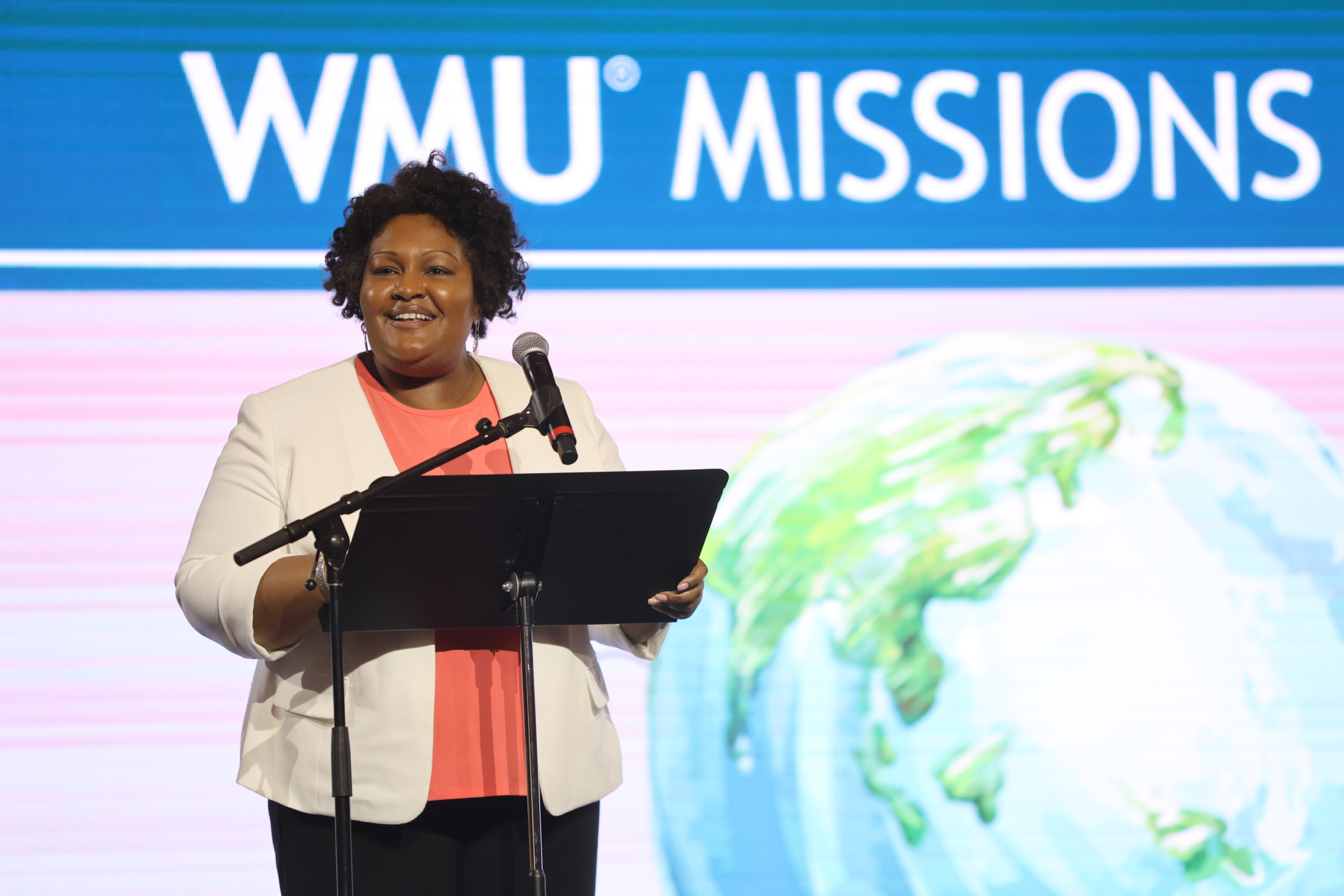
DALLAS—“Missions is not a monthly meeting,” noted WMU Executive Director Sandy Wisdom-Martin, adding, “It is how we live our lives.”

Southern Baptist women at the National WMU Missions Celebration honored 130 years of the Annie Armstrong Easter Offering, 60 years of the Journeyman missions program and 30 years of the WMU Foundation.

They also awarded the 25th Dellanna O’Brien Award for women’s leadership development to Julia Ketner, retired executive director of Arkansas WMU.

Texas Baptist churches and partners participated in the celebration.

Drummers from the Africa Fellowship of Dallas drummed and sang the call to worship. Youth Dancers from Texas Kachin Baptist Church of Fort Worth performed a welcome dance. And, Savion Lee, Royal Ambassador coordinator for Texans on Mission, offered a theme interpretation.

WMU Executive Director Sandy Wisdom-Martin and president Connie Dixon, pictured left to right at the WMU Missions Celebration in Dallas. (Photo / Van Payne / The Baptist Paper)

In her president’s address, Connie Dixon said the past year had been filled with physical challenges related to knee surgeries, which had kept her home, grounded from her usual ministry activities.

She said even though she recently wrote a book “on finding joy in the struggle, “she was “struggling with seeing past [her] current realities.”

However, she said, a phrase she noted shows up 44 times in the King James Version of the Bible, “but God,” had helped her move through her struggles.

“But God,” is present in Genesis 8 when God remembered Noah. It appears in Joseph’s story in Genesis 50 where Joseph said, “You intended to harm me, but God intended it for good.” And in Matthew’s Gospel, Jesus notes, “but with God all things are possible.”

“But God” also was evident in the 1800s when women weren’t allowed to attend the Southern Baptist Convention meetings as messengers or serve on committees, Dixon noted. “But God, in 1888, placed in the hearts of our visionary leaders to start WMU.”

Drummers from the Africa Fellowship of Dallas drummed and sang the call to worship at the WMU Missions Celebration. (Photo / Van Payne / The Baptist Paper)

In 1895 the average woman had little income, yet the Home Mission Board asked the fledgling organization to help raise $5,000 anyway. WMU was the only group to contribute 100 percent of its pledged amount to the $75,000 campaign. “But God,” Dixon said.

In 1965, at a pivotal time in American history, the Journeyman program was established to send individuals who were investigating a calling to missions abroad for two years of service.

The times were challenging, “but God” has used Journeymen, with more than 6,000 having served through the program since its institution and more than 1,000 of those becoming career missionaries, she said.

Then, in 1995, the WMU Missions Foundation was formed. Not everyone wanted to have a “foundation of our own, but God has used the WMU Foundation.”

Dixon noted grants and scholarships of more than $19 million have been awarded since the foundation began. God continues to use WMU today, she asserted.

Dixon’s year was hard, but she said God used her difficulties to teach her and grow her. Dixon concluded: “God’s heart is for the nations. God’s heart is for each and every one of us to grow closer to him.”

She challenged WMU members to “stay faithful to their mandate of making disciples of Jesus who live on mission.”

Celebrating Annie Armstrong

WMU leaders from around the world took turns telling why they consider it a joy to be part of the WMU family, and leaders from around the country took turns telling the story of Annie Armstrong.

annie armstrong250
Annie Armstrong

From the Southern Baptist Convention Home Mission Board’s request for Armstrong’s help raising funds and exceeding their $5,000 goal that would establish the Annie Armstrong Easter offering to her cooperation with Lottie Moon toward missions and missions support, the organization celebrated Armstong’s contributions to WMU and missions.

Several speakers highlighted Armstong’s commitment to minister to people in the greatest need, without regard for status, race or cultural background.

They noted she played a crucial role in the health of the SBC in the late 19th and early 20th centuries, even though women were not permitted to attend or serve as messengers at Southern Baptist Convention meetings during those years.

Wanda Lee, SBC WMU executive director and president emerita, noted the Lottie Moon Offering for international missions, begun when Armstrong was leader of the WMU, “has brought in $5.6 billion for the international missions effort of Southern Baptists,” and the offering bearing Armstrong’s name has raised “almost $2.2 billion for North American missions.

Augusta “Gus” Smith, executive director of Native American LINK and director of Native Praise, spoke about Armstrong’s work among Native American women in Oklahoma. (Photo / Van Payne / The Baptist Paper)

Augusta “Gus” Smith, executive director of Native American LINK and director of Native Praise, spoke about Armstrong’s work among Native American women in Oklahoma.

Smith noted Armstrong welcomed the first delegation of two Native American women to the SBC WMU meeting in 1896.

Armstrong rallied to support women and children in Native American Territory, making five visits to serve in Oklahoma beginning with the first 4,000 mile, 40-day trip in 1900 by horseback, train and carriage “in the hopes of unifying work in the territory.”

“In Ohio, I played on that rock Annie used in mounting her horse on her visit,” Smith recalled.

She observed the changing ways her people have been named by others in her lifetime—as “American Indian, Native American and Indigenous, to name a few.”

Additionally, Smith noted, they’ve been portrayed as “Redskins, Injuns, Indian-givers, squaws, and even our country’s Declaration of Independence refers to our people as ‘merciless savages.’”

Smith said there is still much work to be done in educating others about her people, including the fact their traditional regalia is not a “costume.”

But Armstrong valued and wanted to understand the people she was serving, Smith said, noting the effort Armstrong began continues to offer support for the Christian witness of Native Americans, including her own pastors.

Smith asked the broader WMU to pray for Native American Christians. “Trust remains a huge issue among our people because of the atrocities and the forced removal our ancestors faced,” when “so-called Christians” didn’t always “live or love like Jesus.”

Leaving a legacy

WMU of Texas Executive Director Tamiko Jones speaks at the WMU Missions Celebration at the SBC annual meeting in Dallas. (Photo / Van Payne / The Baptist Paper)

Wisdom-Martin in her executive director’s address spoke about leaving a legacy for future generations of WMU. She told how this year’s Dellanna O’Brien award recipient had poured into her spiritually and how she in turn, had invested in a younger woman, who’d invested in a younger woman and so on. Faithful women also had poured into Ketner before she poured into Wisdom-Martin.

“I want you to see that the missionary influence spans geography, and it spans generations. Think of all the people that have poured into you,” she said.

Women who never bore children physically in that line can be great-great grandmothers in the faith who meet spiritual grandchildren in heaven one day, she mused.

“That’s how you leave a legacy for generations,” Wisdom-Martin said. “For us to be together around the throne, someone has to share the good news.”

Noting the mission is urgent and should be prioritized, Wisdom-Martin urged the women of the WMU not just to focus on the corporate mission of the organization, but to make sure they are doing enough personally to share the gospel.

She said God is working on her. She has committed to share a copy of the Gospel of John with 100 people between Easter this year and Easter next year, despite her initial reluctance to take on the task.

“Who is [God] laying on your heart to tell about him?” she asked.

Make a commitment to tell them, Wisdom-Martin urged, and “be committed to telling the good news until you draw your dying breath.”

Connie Dixon of New Mexico was re-elected to serve as president, and Lisa Thompson of Georgia was elected to succeed Shirley McDonald of Texas as recording secretary.


Abuse survivor and former Lifeway VP Jennifer Lyell died

(RNS)—Jennifer Lyell, an editor and author whose promising career in Christian publishing was derailed when she accused a former Southern Baptist leader of abuse, died June 7. She was 47.

“Jennifer passed gently into the arms of her Redeemer, surrounded by loved ones,” said her friend Rachael Denhollander, who said Lyell had suffered “a series of massive strokes, leading to her becoming unconscious sometime Monday afternoon. She was found Thursday evening after missing a medical appointment.”

For much of her adult life, Lyell had been a Southern Baptist success story. She came to faith at 20 at a Billy Graham crusade, went to seminary, dreamed of becoming a missionary, taught the Bible to young women and children and became a vice president at Lifeway Christian Resources.

At Lifeway, she worked on about a dozen New York Times bestsellers, according to a biography from her time at Lifeway.

By 2019, she was one of the highest-ranking women leaders in the nation’s largest Protestant denomination.

Lyell had gone into publishing reluctantly, after her desire to be a missionary went unfulfilled.

“Eventually, I’m always convicted of the reality that my life is not my own. It was bought at an incomprehensible price,” she said in a 2009 profile published by Southern Baptist Theological Seminary, where Lyell had earned a master of divinity degree.

Reported 12 years of abuse

While at seminary in 2004, the 26-year-old Lyell met David Sills, a professor in his late 40s who became her mentor and a surrogate father figure, welcoming her into his family. Sills was also president of Reaching & Teaching International Ministries, a missionary nonprofit.

In 2018, Lyell told her bosses Sills allegedly had used force and his spiritual influence to coerce her into nonconsensual sexual acts over the course of 12 years. Sills admitted to misconduct and resigned from his seminary post and as president of the nonprofit, but no details were made public.

But when Sills found a new job with another Christian ministry the next year, Lyell went public with her allegations of abuse, telling her story to Baptist Press.

Rather than portraying her claims as abuse, the Baptist Press article said Lyell had had “a morally inappropriate relationship” with a seminary professor. That story later was retracted, and Baptist Press apologized.

But the damage was done. Lyell was labeled a temptress and adulteress who led a Christian leader astray. She was showered with hate, with pastors and churches calling for her to be fired.

A prominent activist journalist published an account alleging Lyell had been less than truthful and arguing Sills had been denied a chance to return to ministry. Lyell eventually left her job at Lifeway amid the turmoil.

“We are saddened to hear the news of the passing of Jennifer Lyell. Lifeway sends our prayers and deepest sympathies to Jennifer’s family and friends,” Lifeway spokesperson Carol Pipes said in a June 8 statement.

“It takes years and years to recover from trauma, and no one should be in the position of having to explain it to the whole public while they’re still trying to do that,” Lyell told Religion News Service in a 2021 interview, in which she said she regretted coming forward.

Led to Guideposts investigation

Controversy over the Baptist Press story, as well as other accusations that SBC leaders had mishandled abuse cases, led the denomination to order a major investigation into the Southern Baptist Convention Executive Committee’s handling of abuse.

A 2022 report published by the investigative firm Guidepost Solutions found the SBC had mistreated survivors and long sought to downplay the problem of abuse in the denomination, leading to a series of reforms.

The report, however, led to more trouble for Lyell. Sills sued the SBC and its leaders after the Guidepost report appeared, saying they had conspired to make him a scapegoat and asserting he was “repentant and obedient.” He also sued Lyell.

Lyell never backed down from her account. Earlier this year, in a deposition, she detailed the alleged abuse and how the Bible had been used to silence her for years.

“I do not need to be under oath to tell the truth—and there are no lies that will shake my certainty of what is true,” she said in a social media post when the suit was filed.

Lyell had rebuilt her life after leaving Christian publishing, attending law school and finding a new career. But like many adult women who accuse male spiritual leaders of abuse, she continued to be viewed with suspicion.

Her death comes as reforms in the SBC protocols on abuse have slowed and one of the major planned reforms, a database to track abusive leaders, appears to be stalled permanently.

Still, Lyell never relented, said fellow survivor Tiffany Thigpen.

“She inspired me. She encouraged me,” Thigpen said. “She made me feel better about myself than I thought I deserved. And when I tried to deflect her words, she’d stop me and say: ‘No, stop. I need you to hear me.’”

Megan Lively, another abuse survivor, said her friend was “much more than the awful things that happened to her.” In a text to RNS, Lively noted that Lyell, who loved the music of Rich Mullins and the “West Wing” television show, was a Sunday school teacher and author of The Promises of God Storybook Bible for kids.

“She was one of the smartest and generous people I will know. She loved her Savior and is now at peace,” Lively said in a text.

Lyell is the second prominent SBC abuse survivor to die in recent months. In May, Duane Rollins, whose allegations of abuse against Texas judge and Southern Baptist leader Paul Pressler helped spark a major reckoning with abuse in the nation’s largest Protestant denomination, died after years of illness.

Lyell remained a person of deep faith. A quote from the C.S. Lewis book The Lion, the Witch and the Wardrobeadorns a pair of paving stones in her front lawn. The quote explains how Aslan the lion, a Jesus-like figure in the book, had come back to life, in a story that parallels Easter.

“When a willing victim, who has committed no treachery was killed in a traitor’s stead … the Table would crack and death itself would start working backwards.”


SBC to vote on plan emphasizing trustee governance

NASHVILLE (BP)—The newly proposed business and financial plan going before Southern Baptist Convention messengers for a vote next week aims to offer clarity while leaning on trustee governance of SBC entities, said Executive Committee President Jeff Iorg.

SBC Executive Committee President and CEO Jeff Iorg gives an address to Executive Committee members, Feb. 17. (BP Photo / Brandon Porter)

“Those entity leaders have been involved in creating the new plan and support its adoption,” he said. “Most comments from pastors and lay leaders have been positive, with those who raise questions usually wanting clarification for how the new plan enhances transparency.”

That issue in particular rests on the belief in a system of governance initiated with the SBC’s Constitution and as old as the convention itself.

“Boards of Managers,” as that document described modern-day trustees, “will be necessary for carrying out the benevolent objects [the SBC] may determine to promote.”

Bypass the trustee system?

“Some who are calling for greater transparency want to bypass or redefine the trustee system—demanding more information be disclosed, more decisions made publicly, and with accountability to a task force or special committee,” Iorg asserted.

“These demands ignore the legal, ethical and practical demands of entity leadership in today’s challenging legal and media environments.”

Methods outside of the trustee system in recent years amounted to “public governance,” where publicized information led to messenger decisions on the annual meeting floor, he said.

Those steps of “bypassing board governance and defying legal counsel” had some unintended consequences.

“While the trustee system has its weaknesses, its overall track record is far superior to other approaches,” Iorg insisted.

Transparent to whom?

“The proposed plan rests on the conviction that Southern Baptists demand transparency to their elected trustees—not public disclosure of all information. We have identified 14 ways in the new plan that require more specific reporting by trustees on entity operations. These will be reported in an annual report to Southern Baptists by each entity.”

In addition to reinforcing dependence on trustee governance, the proposed plan promotes consistency with SBC governing documents, updates requirements on key issues as well as legal and accounting language and provides more specific reporting mechanisms than the current one, Iorg said.

It remains a “living document” that can be amended as needed. Although it will not be amended, per se, at the Executive Committee meeting preceding the 2025 SBC annual meeting next week in Dallas, one editing correction will be noted in its final recommendation, he said.

Per the demand of Southern Baptists, trustees receive access to information about their entity to make vital decisions and do this “not as an alien force inflicted on us by an outside authority,” Iorg said. “They are our colleagues and friends.”

Trustees are selected through a process that originates with the SBC president.

In succession:

  • That person appoints two individuals from each state or regional convention to make up the SBC Committee on Committees.
  • That group then also appoints two persons from each state or regional convention to form the SBC Committee on Nominations.
  • The SBC Committee on Nominations provides names of potential trustees for all SBC entities.

Messengers give the final vote of approval at the SBC annual meeting.

Iorg: Confidentiality ‘essential’

Iorg cited the confidentiality afforded to Golden Gate Theological Seminary’s board as “essential” to the school’s successful rebranding to Gateway Seminary and relocation 400 miles southward along the California coast.

An oppositional group had prevented an earlier move through “picketers, public attacks, legal actions and political maneuvering,” he said.

The school’s board worked for more than a year and ultimately approved approximately $150 million in real estate transactions, plus moving expenses and other aspects connected to the rebranding.

Closed-door meetings brought extra layers of transparency among board members in much the same way church deacons and elders conduct business, Iorg said, to be “an SBC board functioning at its finest.”

The proposed business and financial plan accents the transparency afforded to messenger-approved Southern Baptists serving in those roles, Iorg said.

“Boards do their most important work behind the scenes. They handle tough issues, make personnel decisions, debate financial expenditures and make choices based on information they—and often no one outside the board—have available to them,” he said.

“They listen to attorneys, accountants, consultants, executives and other experts who advise them. Their decisions are based on the information they have, not the information they publicly disclose. And, no matter how controversial, they are legally bound to base their decisions on what’s best for their entity—not what the public response may be.”