SBC to vote on plan emphasizing trustee governance

NASHVILLE (BP)—The newly proposed business and financial plan going before Southern Baptist Convention messengers for a vote next week aims to offer clarity while leaning on trustee governance of SBC entities, said Executive Committee President Jeff Iorg.
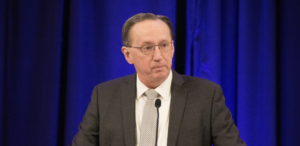
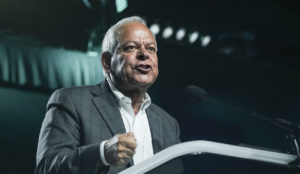
SBC Executive Committee President and CEO Jeff Iorg gives an address to Executive Committee members, Feb. 17. (BP Photo / Brandon Porter)

“Those entity leaders have been involved in creating the new plan and support its adoption,” he said. “Most comments from pastors and lay leaders have been positive, with those who raise questions usually wanting clarification for how the new plan enhances transparency.”

That issue in particular rests on the belief in a system of governance initiated with the SBC’s Constitution and as old as the convention itself.

“Boards of Managers,” as that document described modern-day trustees, “will be necessary for carrying out the benevolent objects [the SBC] may determine to promote.”

Bypass the trustee system?

“Some who are calling for greater transparency want to bypass or redefine the trustee system—demanding more information be disclosed, more decisions made publicly, and with accountability to a task force or special committee,” Iorg asserted.

“These demands ignore the legal, ethical and practical demands of entity leadership in today’s challenging legal and media environments.”

Methods outside of the trustee system in recent years amounted to “public governance,” where publicized information led to messenger decisions on the annual meeting floor, he said.

Those steps of “bypassing board governance and defying legal counsel” had some unintended consequences.

“While the trustee system has its weaknesses, its overall track record is far superior to other approaches,” Iorg insisted.

Transparent to whom?

“The proposed plan rests on the conviction that Southern Baptists demand transparency to their elected trustees—not public disclosure of all information. We have identified 14 ways in the new plan that require more specific reporting by trustees on entity operations. These will be reported in an annual report to Southern Baptists by each entity.”

In addition to reinforcing dependence on trustee governance, the proposed plan promotes consistency with SBC governing documents, updates requirements on key issues as well as legal and accounting language and provides more specific reporting mechanisms than the current one, Iorg said.

It remains a “living document” that can be amended as needed. Although it will not be amended, per se, at the Executive Committee meeting preceding the 2025 SBC annual meeting next week in Dallas, one editing correction will be noted in its final recommendation, he said.

Per the demand of Southern Baptists, trustees receive access to information about their entity to make vital decisions and do this “not as an alien force inflicted on us by an outside authority,” Iorg said. “They are our colleagues and friends.”

Trustees are selected through a process that originates with the SBC president.

In succession:

  • That person appoints two individuals from each state or regional convention to make up the SBC Committee on Committees.
  • That group then also appoints two persons from each state or regional convention to form the SBC Committee on Nominations.
  • The SBC Committee on Nominations provides names of potential trustees for all SBC entities.

Messengers give the final vote of approval at the SBC annual meeting.

Iorg: Confidentiality ‘essential’

Iorg cited the confidentiality afforded to Golden Gate Theological Seminary’s board as “essential” to the school’s successful rebranding to Gateway Seminary and relocation 400 miles southward along the California coast.

An oppositional group had prevented an earlier move through “picketers, public attacks, legal actions and political maneuvering,” he said.

The school’s board worked for more than a year and ultimately approved approximately $150 million in real estate transactions, plus moving expenses and other aspects connected to the rebranding.

Closed-door meetings brought extra layers of transparency among board members in much the same way church deacons and elders conduct business, Iorg said, to be “an SBC board functioning at its finest.”

The proposed business and financial plan accents the transparency afforded to messenger-approved Southern Baptists serving in those roles, Iorg said.

“Boards do their most important work behind the scenes. They handle tough issues, make personnel decisions, debate financial expenditures and make choices based on information they—and often no one outside the board—have available to them,” he said.

“They listen to attorneys, accountants, consultants, executives and other experts who advise them. Their decisions are based on the information they have, not the information they publicly disclose. And, no matter how controversial, they are legally bound to base their decisions on what’s best for their entity—not what the public response may be.”


Southwestern Baptist Theological Seminary finds its path

FORT WORTH (RNS)—For much of the past decade, Southwestern Baptist Theological Seminary in Fort Worth has been making headlines for all the wrong reasons.

Once the nation’s largest seminary, and one of six Southern Baptist seminaries, the school has been a center of controversy since the 2018 firing of its former president, Paige Patterson, for mishandling a claim of sexual abuse by a female student at a previous job.

Since then, the school has ousted a second president, who then sued the school; admitted to overspending its budget by $140 million; fought in court with ex-employees over a foundation that supported the school; dealt with a Department of Justice investigation; and experienced internal board conflict over declining enrollment and fiscal crisis.

From financial crisis to ‘genuine stability’

David Dockery is president of Southwestern Baptist Theological Seminary in Fort Worth. (Photo courtesy of Southwestern Seminary)

By the time David Dockery, a soft-spoken but well-respected Baptist leader, was named the school’s interim president in 2022, the school was out of cash.

“In September of 2022, we had $4.2 million of short-term debt with the credit line maxed out, and wondering if we were going to be able to navigate our way even through that particular academic year,” Dockery told RNS in a recent interview.

Today, the school is in a place of “genuine stability,” according to Dockery, 72, who dropped the interim from his title in 2023.

Enrollment is up, the school has paid off its short-term debt and has $10 million in cash on hand. More importantly, perhaps, the trustees and school administration are on the same page.

“The spirit on campus is positive, and people are encouraged about the direction of the seminary,” Dockery said.

Solid ‘track record’ of handling crisis

“I’m not surprised at all that Southwestern has stabilized under him,” said Barry Hankins, a Baylor University historian. “He just has a track record of being able to do that.”

Before coming to Southwestern, Dockery was president of Union University in Jackson, Tenn., and Trinity Evangelical Divinity School outside Chicago. And besides a reputation as a solid scholar, according to Hankins, he had a history of effective leadership, including dealing with crisis.

In 2008, a devastating tornado hit Union, causing $40 million in damage, destroying most of the dorms and leaving much of the campus covered in rubble. Dockery helped rally the campus, got students back in classes within a few weeks and started to rebuild.

During the recovery, Dockery said he learned some essential lessons, such as the importance of community prayer, clear communication and working together. Union also committed itself to what Dockery called an “essential mindset”—focusing on its most important tasks.

“Our response was a team effort, led by a group of seasoned administrators who were all deeply committed to Union, who knew and trusted each other, and almost all of whom had worked together at Union for at least ten years,” he said in an email.

“We understood each other’s strengths and weaknesses and worked harmoniously and seamlessly together.”

Addressed the campus culture

It also helped that there was no one to blame for causing the crisis—which was not the case when Dockery took over at Southwestern. Most of the senior leaders were new to their roles. Trust was hard to come by, and there was little unity on campus. That has made rebuilding harder.

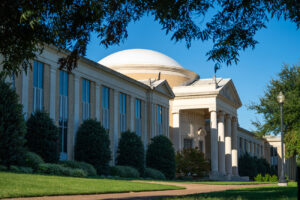
Southwestern Baptist Theological Seminary in Fort Worth (BP File Photo)

“Not everyone was cheering for us because there was confusion both on campus, among the board, and among constituents as to what had happened and why it had taken place,” he said.

Early on, Dockery set out to address the campus culture. He and other leaders organized weekly prayer meetings and set out core values, designed to help create what he called a “grace filled” work culture. Dockery also borrowed from his time at Union in getting people to work together on the essentials.

He said that the weekly prayer meetings have helped build trust—as did holding open meetings with faculty and staff each semester to share information and answer questions.

“We asked everyone across the campus to set aside personal agendas, to cease working in silos and to work together as collaboratively as possible for the overall good of the institution,” he said.

Ed Stetzer, dean of Talbot School of Theology at Biola University, called the turnaround at Southwestern “remarkable.”

“Southwestern was once the largest seminary in the world, but just a few years ago people were unsure it would make it,” Stetzer said.

“David Dockery has consistently had the confidence of Southern Baptists, and he’s used his influence to bring Southwestern back from the brink and into the future.”

Put financial controls in place

Along with addressing the culture at Southwestern, Dockery also helped put in place a new policy manual for the board, which included more oversight of the school’s finances by the school’s board of trustees, something that had been lacking in the past.

(Southwestern Baptist Theological Seminary Photo)

In 2023, the trustees issued a report detailing two decades of fiscal mismanagement, including the $140 million operating deficit. According to the report, Southwestern ran an average deficit of $6.67 million each year from 2002 to 2023. That mismanagement resulted in sanctions from its accreditor, the Southern Association of Colleges and Schools.

The new manual puts more controls in place, said Dockery, who credited board member John Rayburn for leading that process.

In 2022, the school finished $9 million in the red, Dockery said. This year, the school will break even and is awaiting word of whether the sanctions from its accreditor will be lifted.

Fixing the school’s finances also meant selling off some of the seminary’s property. In 2023, the school sold a 20-acre property for about $14 million, which helped eliminate its debt.

Southwestern retains considerable assets, including a $160 million endowment and more than 150 acres of property. The challenge now, Dockery said, is to use those assets well.

Seeking to build a sustainable future

The school currently has a head count of 650 in its master of divinity program. Counting part-time and full-time students, they add up to 346 full-time slots, according to data from the Association of Theological Schools.

The school’s largest program is a master’s program with 1,018 students, with a full-time equivalent of 420, whereas its doctor of ministry program has 308 students and an FTE of 92.

The school had its largest graduation since 2002, with 415 students this May. Southwestern also announced that it had revised its Master of Divinity program so it can be completed in less time.

Now that the school is stable, the next task is to make sure the school has a plan for a sustainable and healthy future.

“We have ongoing work to do to be in a place of what I would say is institutional health and flourishing, and so we’re working toward those ends,” he said.


SBC appeals lawsuit to Tennessee Supreme Court

NASHVILLE (BP)—The Southern Baptist Convention and other defendants lost an appeal in a Tennessee district court but have appealed to the Tennessee Supreme Court.

The case, Preston Garner et. al. v. Southern Baptist Convention et. al., regards an inquiry made by the SBC Credentials Committee in the course of following up on a confidential report made to the SBC’s abuse hotline.

Preston Garner, a longtime worship pastor and school music teacher, and his wife Kellie filed suit in 2023 against the SBC, Guidepost Solutions, the SBC Executive Committee, the SBC Credentials Committee and Executive Committee staff member Christy Peters, who serves as the SBC’s committee relations manager.

The Garners are alleging defamation/libel and slander, defamation by implication, invasion of privacy and loss of consortium.

The SBC and others named in the lawsuit have argued for dismissal of the suit, asserting the case falls under the ecclesiastical abstention doctrine, which holds a court cannot resolve disputes that involve religious doctrine.

They also assert the case falls under the Tennessee Public Participation Act, which provides protection against legal action that is “based on, relates to, or is in response to that party’s exercise of the right to free speech, right to petition, or right of association.”

In January 2024, Blount County (Tenn.) Judge David Duggan denied the defendants’ motion to dismiss, ruling that neither the ecclesiastical abstention doctrine nor the Tennessee Public Participation Act applied in the case.

The defendants appealed, and in January of this year, the Tennessee Court of Appeals agreed with Duggan in part and disagreed in part.

It agreed the ecclesiastical abstention doctrine does not apply. However, it also said, “We conclude that the trial court erred in finding that the TPPA does not apply to this case and reverse that portion of the judgment.”

The defendants appealed to the Tennessee Supreme Court March 10.

What led to the lawsuit

The SBC’s abuse hotline, maintained by Guidepost Solutions, received a report in 2022 from a woman claiming Garner had sexually abused her 12 years prior when he was serving as interim pastor of Englewood Baptist Church in Rocky Mount, N.C. Guidepost relayed the information to the SBC Credentials Committee.

On Jan. 7, 2023, Peters sent a letter on behalf of the Credentials Committee to Everett Hills Baptist Church in Maryville, Tenn., where Garner was then employed as worship pastor.

The letter informed the church that the committee had “a concern regarding the relationship between Everett Hills Baptist Church in Maryville, Tennessee, and the Southern Baptist Convention. Specifically, the concern is that the church may employ an individual with an alleged history of abuse.”

The letter asked questions about Everett Hills’ hiring practices and about Garner’s current employment status there and asked the church to respond within 30 days.

At the time the letter was sent, Garner also was employed as a music teacher at The King’s Academy, a Christian school. He had recently resigned from Everett Hills and was set to take another position at First Baptist Church of Concord, Tenn.

He claims the letter and subsequent fallout caused First Baptist Concord to withdraw its offer of employment and caused The King’s Academy to suspend him and ultimately terminate his employment.

How the SBC Credentials Committee works

The SBC’s Credentials Committee, which was repurposed into a standing committee in 2019, is tasked with considering questions that arise as to whether a church is in “friendly cooperation” with the SBC per criteria spelled out in the SBC Constitution.

One of the ways a church can be found not in friendly cooperation is to act “in a manner inconsistent with the convention’s beliefs regarding sexual abuse.”

According to SBC.net, “The Credentials Committee may make inquiries of a church, but may not exercise any authority over a church through an investigation or other process that would violate Article IV of the SBC Constitution.”

The committee makes judgments based on its inquiries and can recommend that the SBC Executive Committee deem a church “not in friendly cooperation.” Such action has been taken by the Executive Committee based on the recommendation of the Credentials Committee several times the past few years.


Rollins, who sued Pressler for sex abuse, has died

(RNS)—Gareld Duane Rollins, whose lawsuit accusing a powerful Southern Baptist leader of abuse sparked a crisis in the nation’s largest Protestant denomination, died May 23.

“The abuse he suffered by those touting their religion is unimaginable,” said Michael Goldberg, an attorney for law firm Baker Botts, which represented Rollins. “This could not have happened if not for supposed good people keeping quiet. There are no innocent bystanders.”

News of Rollins’ death was first made public by journalist Robert Downen, who had covered Rollins’ lawsuit against Texas judge Paul Pressler, an influential Southern Baptist Convention lay leader, for years.

Downen, a senior writer for Texas Monthly, said Rollins, who had long suffered from health issues and was in his late 50s, had been in hospice care the last time the two had talked. Still, his death came as a shock.

“His life was cut short just as he was freeing himself from the thing that had defined him for so long,” Downen said.

The two had met by happenstance. Downen had been working at a courthouse as a reporter for the Houston Chronicle when he came across a notice about a filing in Rollins’ lawsuit against Pressler. It would lead to years of reporting about the case and abuse in the SBC.

Downen said Rollins was a person of deep faith, which sustained his long battle to recover from abuse. His story also was complicated. Rollins had dealt with addiction for years and had served time in prison, and few people believed his story of abuse at the hands of a powerful faith leader.

But he shared his story with Downen, starting in 2019.

“He really trusted me—when there were all the reasons in the world to be totally distrustful,” Downen said.

Alleged continued abuse and cover-up

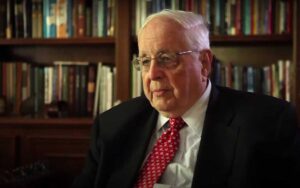
Paul Pressler in a video from 2015. (Video screen grab via RNS)

In 2017, Rollins sued Pressler, who died in 2024, alleging years of sexual abuse by the judge, who had been Rollins’ mentor and Bible study teacher. Rollins also alleged that church leaders knew of the abuse and covered it up to protect Pressler’s reputation.

During that lawsuit, Rollins revealed he had sued Pressler in 2004, claiming Pressler assaulted him at a hotel room, and he said Pressler had agreed to pay $450,000 to settle the suit.

Rollins sued for a second time after Pressler reneged on the settlement, alleging the judge had begun sexually abusing him as a teenager.

“According to Rollins’s suit, Pressler began molesting him after they met at a Bible study group led by Pressler,” reads a description of the abuse allegations in a Texas appeals court ruling.

“Pressler told Rollins that the sexual abuse was divinely sanctioned but needed to be kept secret because only God would understand it.”

By the time Rollins came forward with abuse allegations, the civil statute of limitations had run out and his lawsuit was dismissed by a lower court.

But the Texas Supreme Court overruled in 2022, after Rollins’ lawyers successfully argued that trauma from abuse had suppressed Rollins’ memories for years.

The lawsuit, which was settled in 2023, undermined much of the mythology that had grown around Pressler during the so-called conservative resurgence in the Southern Baptist Convention.

Pressler was one of the key architects of the resurgence and was long known as a GOP activist who railed against what he saw as the moral decay of America.

Pressler long claimed he left a Texas Presbyterian church where he’d been a youth leader to return to help the SBC save itself from liberals. But documents filed in the lawsuit revealed Pressler had been fired from the church after a teenager accused him of abuse.

Documents also revealed First Baptist Church in Houston had warned Pressler in 2004 to stop his habit of naked hot tubbing with young men after one of them accused Pressler of sexual misconduct. Other young men also alleged abuse by Pressler as the lawsuit made its way through the courts.

Prompted the ‘Abuse of Faith’ investigative report

Rollins’ lawsuit inspired Downen and other reporters from the Houston Chronicle and San Antonio Express-News to launch “Abuse of Faith,” an investigation that found hundreds of cases of abuse in the SBC.

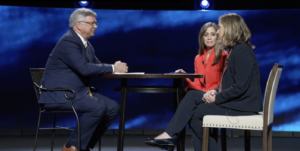
In a video interview, Marshall Blalock (left), chairman of the SBC’s Abuse Reform Implementation Task Force, talked with Samantha Kilpatrick (right) of Guidepost Solutions about the organization’s new Faith-Based Solutions division. Heather Evans (center), a counselor and member of the previous Sexual Abuse Task Force, joined the conversation.(Screen Grab Image)

That opened the door for the denomination’s 2022 Guidepost report, which found SBC leaders had tried to downplay the severity of abuse in the SBC for years—and had mistreated survivors who came forward.

That report led to a series of reforms meant to address abuse in the SBC, and to SBC leaders apologizing to abuse survivors.

Over the Memorial Day weekend, abuse survivors and advocates paid tribute to Rollins.

“Duane was the courageous survivor who brought truth to light about the many crimes and abuses of the infamous Paul Pressler,” wrote activist and abuse survivor Christa Brown in commenting on Rollins’ passing on her Substack.

“He did it at enormous personal cost and despite decades of unfathomable suffering. We all owe Duane a debt of gratitude. Truth matters.”

Downen said Rollins had often wanted to give up during his long legal struggle but persevered because he knew the power his story could have.

“Duane did not come forward because he wanted a reckoning in the Southern Baptist Convention. He came forward because he needed to, and he wanted justice after a lifetime of trauma,” Downen said.

“His story shows how simply doing the right thing can have profound impact on people across the world.”


Former SBC president Jack Graham wants to defund ERLC

PLANO (BP)—Former Southern Baptist Convention President Jack Graham said he believes the Ethics & Religious Liberty Commission should be defunded.

Graham, pastor of Prestonwood Baptist Church in Plano, made the comments on X—the platform formerly known as Twitter—the day after 10 former SBC presidents released a letter expressing their support for the commission.

Saying he’d been asked multiple times, Graham posted: “Since I’ve been asked multiple times … no, I do not support the ERLC and believe the organization has been the single most divisive entity of the SBC since the days of Russell Moore. I believe it should be defunded. I’m sure this is the reason I was not asked to sign this letter. … I’ve been clear on this for a decade.”

Moore left the helm of the ERLC in May 2021.

In 2017, Prestonwood Baptist Church conducted an internal study to evaluate Cooperative Program giving. In February of that year, the church said it would escrow Cooperative Program funds during the study citing “various significant positions taken by the leadership of the Ethics & Religious Liberty Commission.”

Later that year, the church announced it would resume giving “without designation.”

A quote from a December 2016 Wall Street Journal article points to Graham’s frustration: “There was a disrespectfulness towards Southern Baptists and other evangelical leaders, past and present,” Baptist pastor Jack Graham said of Mr. Moore’s denunciations of Mr. Trump and some of his supporters. “It’s disheartening that this election has created this kind of divisiveness.”

Graham was announced last week as a member of the advisory board to President Trump’s Religious Liberty Commission.

10 other former presidents want ERLC to continue

In the letter released May 22, 10 other former SBC presidents said the ERLC “for decades” has “steadfastly defended our Southern Baptist commitment to religious liberty.”

The letter also highlights the ERLC’s work in areas of importance to Southern Baptists, such as promoting life, marriage and family and opposing Roe v. Wade, pornography and transgender ideology.

The leaders acknowledged a diversity of opinion among the group but a common desire for the commission to continue.

“Our opinions about the past decade of work at the ERLC are as diverse as those of the broader body of Southern Baptists,” it says. “Some of us have been enthusiastic supporters of the ERLC. Some of us have been vocal critics. However, we remain unconvinced by the case for discontinuing the ERLC.

“And just as our diverse coalition can find unity in opposing the abolishment of the ERLC, we hope that the messenger body can unify to oppose any such motion, too.”

On an April 30 episode of the Baptist21 podcast, Southern Baptist Theological Seminary President Al Mohler saidhe “has grave doubts about the utility of the ERLC. And it’s not just about the current moment.”

The Southern Baptist Convention is set for June 10-11 in Dallas.


Former SBC presidents want to keep ERLC alive

(RNS)—A group of 10 former Southern Baptist Convention presidents have weighed in on a debate over the denomination’s controversial ethics and public policy arm.

In an open letter, the 10 former presidents—some of whom have been critics of the SBC’s Ethics and Religious Liberty Commission—acknowledged the agency has been controversial and can do better. But, they said, that’s no reason to shut the ERLC down.

“Every entity—including the ERLC—should be open to critique and committed to improvement,” the presidents wrote. “But there is a difference between refinement and eradication. A sledgehammer is not the tool for adjusting a mirror.”

Former SBC presidents at mic in 2023 are (left to right, from #2 sign) Bryant Wright, Ed Litton, James Merritt, Steve Gaines and JD Greear. They joined former SBC presidents Bart Barber, Fred Luter, Tom Elliff, Jim Henry and Jimmy Draper in signing an open letter saying the Ethics & Religious Liberty Commission should not be disbanded or defunded. (Photo by Van Payne/The Baptist Paper)

The letter, first published by The Baptist Paper, an Alabama-based publication that covers Southern Baptists, was signed by the denomination’s four most recent past presidents—Texas pastor Bart Barber, Alabama pastor Ed Litton, North Carolina pastor JD Greear and Tennessee pastor Steve Gaines.

Other former SBC presidents joining them were Louisiana pastor Fred Luter, retired pastor Bryant Wright, Georgia pastor James Merritt, along with Tom Elliff, who also led the SBC’s International Mission Board; retired Florida pastor Jim Henry; and Jimmy Draper, who led Lifeway, the SBC’s publishing arm.

The ERLC has survived three votes to disband or defund the entity—which weighs in on social issues and public policy—since the beginning of the Donald Trump era. A vote last summer appeared to have the support of about a quarter of the messengers to the SBC’s 2024 annual meeting in Indianapolis.

Critics of the ERLC—who say the commission is out of touch with the beliefs of local church members and lacks close ties to the Trump administration—have engaged in an online public relations war over the agency’s reputation and effectiveness.

Rhetoric heats up online prior to SBC in Dallas

The online rhetoric over the ERLC has heated up as the 2025 SBC annual meeting—set for June 8-11 in Dallas—draws nearer.

In their letter, the ex-presidents say they have listened to the ERLC’s critics. While some of the former presidents share their concerns, they do not believe those concerns warrant shutting down the agency.

“Those of us who would have some measure of critique for the priorities or tactics of the ERLC still believe in the importance of its existence and in its mission,” they wrote. “If this were not the case, we would not have such strong feelings about wanting it to get its mission right.”

James Merritt, who was SBC president from 2002 to 2004 and currently pastors Cross Pointe Church in Duluth, Ga., told Religion News Service Southern Baptists still need to have a voice in the public square, and the ERLC fills that role.

“I just think it’s an extremely important responsibility on our part that the largest Protestant evangelical denomination in the country have a presence and a voice in Washington, D.C.,” he said.

He also said the ERLC’s leadership is aware of concerns raised by critics and is trying to address them.

Things would be different, he said, if the ERLC were ignoring critics.

The ERLC has been controversial in the past, in large part because the agency often weighs in on public policy and thorny ethical issues like immigration, sexuality and abortion.

Groups like the Center for Baptist Leadership have criticized the ERLC for joining with other anti-abortion groups in opposing legislation calling for women who have abortions to be jailed. Critics also have been angered by the ERLC’s support for immigration reform—even though Southern Baptists have supported such reforms in the past.

Much of the current controversy over the ERLC dates back to the tenure of Baptist ethicist Russell Moore, who led the ERLC from 2013 to 2021. Moore was popular with Southern Baptists at first but clashed with some SBC leaders—including former SBC Presidents Frank Page and Jack Graham—when he criticized Donald Trump.

The agency also has experienced internal conflict. Last summer, the chair of the agency’s board of trustees announced ERLC President Brent Leatherwood had been ousted after he praised former President Joe Biden for ending his reelection bid. The next day, the trustee chair was removed and the board announced Leatherwood had not been fired.

Concerns ‘will be answered by the messengers’

Current SBC President Clint Pressley, pastor of Hickory Grove Baptist Church in Charlotte, told RNS earlier this month he is aware of criticism of the ERLC but said local church messengers will decide the agency’s fate.

“I think those concerns about the ERLC will be answered by the messengers,” Pressley told RNS earlier this month. “I can’t do anything about the ERLC.”

At least one pastor has announced plans to make a motion to impose guidelines on the ERLC during the upcoming annual meeting. Critics are expected to make a motion to shut down the agency as well. The SBC’s constitution and bylaws call for two votes to shut down an agency.

The SBC presidents argued reforming the ERLC is a better outcome than abolishing it.

“If the goal is reform, then we urge Southern Baptists to use the means already available—electing presidents, speaking with trustees, and working through the process in good faith,” the SBC presidents stated.


Love for all compels ministry to help resettle Afrikaners

RALEIGH, N.C. (RNS)—The 12-foot by 30-foot storage unit in a Raleigh, N.C., suburb is crammed full of chairs, tables, mattresses, lamps, pots and pans.

Most of its contents will soon be hauled off to two apartments that Welcome House Raleigh is furnishing for three newly arrived refugees.

It’s a job the ministry, which is a project of the Cooperative Baptist Fellowship of North Carolina, has handled countless times on behalf of newly arrived refugees from such places as Afghanistan, the Democratic Republic of the Congo, Syria and Venezuela.

But these two apartments are going to three Afrikaners, whose status as refugees is—according to many faith-based groups and others—highly controversial.

‘We don’t get to discriminate’

Last week, Marc Wyatt, director of Welcome House Raleigh, received a call from the North Carolina field office of the U.S. Committee for Refugees and Immigrants asking if he could help furnish the apartments for the refugees, among the 59 Afrikaners who arrived in the United States last week from South Africa, he told RNS.

Marc and Kim Wyatt have served as missionaries for the Cooperative Baptist Fellowship for nearly 30 years. Now they run Welcome House Raleigh, a ministry of the Cooperative Baptist Fellowship of North Carolina. (Courtesy Photo)

It was a common request for the ministry that partners with refugee resettlement agencies to provide temporary housing and furniture for people in need.

At the same time, the request was challenging. After thinking about it, consulting with the Welcome House network director and asking for feedback from ministry volunteers, Wyatt said, “Yes.”

“Our position is that however morally and ethically charged it is, our mandate is to help welcome and love people,” said Wyatt, a retired Cooperative Baptist Fellowship missionary who now works for CBF North Carolina.

“Our holy book says God loves people. We don’t get to discriminate.”

He recognized Afrikaners are part of a white ethnic minority that created and led South Africa’s brutal segregationist policies known as apartheid for nearly 50 years. That policy, which included denying the country’s Black majority rights to voting, housing, education and land, ended in 1994, when the country elected Nelson Mandela in its first free presidential election.

Faith groups wrestle with whether to help Afrikaners

Like Wyatt and Welcome House, many faith-based groups now are considering whether to help the government resettle Afrikaners after the Trump administration shut down refugee resettlement for others.

The Episcopal Church recently chose to end its refugee resettlement partnership with the U.S. government rather than resettle Afrikaners. Presiding Bishop Sean Rowe said his church’s commitment to racial justice and reconciliation, and its long relationship with the late Anglican Archbishop Desmond Tutu, made it impossible for the church to work with the government on resettling Afrikaners.

In January, in one of his first executive orders, President Donald Trump shuttered the decades-old refugee program, which brings people to the United States who are displaced by war, natural disasters or persecution. The decision left thousands of refugees, many living in camps for years and having undergone a rigorous vetting process, stranded.

But then Trump directed the government to fast-track the group of Afrikaners for resettlement, saying these white farmers in South Africa are being killed in a genocide, a baseless claim. The order left many refugee advocates who have worked for years to resettle vulnerable people enraged.

“Refugees sit in camps for 10, 20 years, but if you’re a white South African Afrikaner, then suddenly you can make it through in three months?” asked Randy Carter, director of the Welcome Network and a pastor of a CBF church. “There’s a lot of words I’d like to attach to that, but I don’t want any of those printed.”

‘The call to welcome is not always easy’

Carter said he respects and honors the Episcopal Church’s decision not to work with the government on resettling the Afrikaners, even if his network has taken a different approach.

“The call to welcome is not always easy,” Carter said. “Sometimes it’s hard.”

At the same time, he said, it’s important resettlement volunteers keep in mind that the ministry opposes apartheid and racism, both in the United States and abroad, and is committed to repentance and repair.

The North Carolina field office for the U.S. Committee for Refugees and Immigrants resettlement group also recognized how fraught this particular resettlement is for its faith-based partners.

“In our communication with them, we said: ‘Look, we know this is not a normal issue. You or your constituencies may have reservations, and we understand that. That should not affect our partnership,’” said Omer Omer, the North Carolina field office director for the agency. “If you want to participate, welcome. If not, we understand.”

No shortage of online comments

Wyatt got nearly two dozen comments on his Facebook post in which he announced his decision to work with the refugee agency in resettling the Afrikaners. Nearly all wrote in support of his decision.

“I’m up sleepless pondering this,” acknowledged one person.

“Complicated, but the right call,” wrote another.

The U.S. Committee for Refugees and Immigrants did not release the names of the three Afrikaners who chose to settle in Raleigh, a couple and a single individual. Other Afrikaners chose to be resettled in Idaho, Iowa, New York and Texas.

Secretary of State Marco Rubio suggested last week more Afrikaners are on the way. The Trump administration argues white South Africans are being discriminated against by the country’s government, pointing to a law potentially allowing the government to seize privately held land under certain conditions.

Since the end of apartheid, the South African government has made efforts to level the economic imbalance and redistribute land to Black South Africans that had been seized by the former colonial and apartheid governments.

Wyatt, who has been running the Welcome House Raleigh ministry for 10 years, providing temporary housing and a furniture bank for refugees, and now asylum seekers, said he has settled the matter in his mind.

“My wife and I have come to the position that if it’s not a full welcome, just like we would with anybody else, then it’s not a welcome,” he said.

“If we don’t actually seek to include them into our lives like we would anybody else, then we’re withholding something and that’s not how we understand our holy book.”


Craig Carlisle to be nominated for SBC 2nd vice president

BIRMINGHAM, Ala.—Alabama pastor Jared Cornutt has announced his intention to nominate Craig Carlisle for second vice president of the Southern Baptist Convention in June when the convention meets in Dallas.

Carlisle, director of missions for Etowah Baptist Association in North Alabama, is currently serving his second one-year term as Alabama Baptist State Convention president. He is a member of First Baptist Church Gadsden, Ala.

“Dr. Carlisle has been many things in my life: my pastor, my mentor, and one of my closest friends,” said Cornutt, pastor of North Shelby Baptist Church in Birmingham.

Cornutt said when he was in college and sensed a call to vocational ministry, he drove to Gadsden from Tuscaloosa to meet with Carlisle.

“He was the first person I told and the first person I sought wisdom from,” Cornutt said. “That day in February of 2011, Craig made me a promise: he would be my biggest supporter and help me however he could.”

‘A pastor to pastors’

Fourteen years later, Carlisle is still doing that, Cornutt said.

“But what’s remarkable is this—my story is not unique,” he said. “There are countless pastors across Alabama and beyond who could say the same.

“Craig Carlisle is a pastor to pastors. Every month, he faithfully prays for hundreds of ministers by name. He answers the late-night calls. He gives generously of his time and wisdom. He walks with pastors through their highest joys and their lowest valleys.”

Carlisle also has revitalized the historic School of the Prophets conference and has gone out of his way to make bivocational ministry a priority in his association and the state, Cornutt said.

‘Believes in the Southern Baptist Convention’

“Also under his leadership, many churches have increased their support of the association or have begun to support the association when they previously were not,” he said.

Carlisle chaired the state convention’s Sexual Abuse Task Force and was instrumental in founding the Alabama Young Pastors Network. Currently he is a trustee for the SBC Executive Committee.

“Craig Carlisle is humble, gracious, kind, generous, concerned and loving,” Cornutt said. “He believes in the Southern Baptist Convention and in the mission of our churches. Not only that, he also believes in the pastors who lead those churches.”

Carlisle said he is honored to be nominated for this role.

“I love Southern Baptists. I’m grateful for what God is doing through us in these days,” he said. “I’m humbled that some would consider me a candidate for this position. It would be an honor to serve our convention.”

During the 2024 Annual Church Profile year, First Baptist Church in Gadsden received $1,538,073 in total undesignated receipts and gave $131,232 (9.84 percent) through the Cooperative Program.

The church gave $15,467 to the Annie Armstrong Easter Offering, $35,189 to the Lottie Moon Christmas Offering and reported 285 in average worship attendance and five baptisms, according to the ACP information provided by the church.

So far, one other nominee for second vice president has been announced—Tommy Mann, pastor of Highland Terrace Baptist Church in Greenville, who will be nominated by Jim Gatliff, associational missionary for Hunt Baptist Association.

This article originally appeared in The Alabama Baptist. Baptist Press contributed to this report.


BWA president emphasizes the priesthood of believers

The priesthood of believers not only serves as a doctrinal distinctive for Baptists, but also operates as a guiding principle for daily living and for “being the church,” Baptist World Alliance President Tomás Mackey told a gathering at Dallas Baptist University.

“It holds a distinctive and central place in Baptist ecclesiology, not merely as a doctrine that is stated, but as a living conviction that shapes the church’s identity, mission and structure,” said Mackey, a longtime Baptist leader in Argentina.

“The priesthood of believers of all believers is not just a doctrine. It is a way of life.”

Mackey spoke May 15 at the third annual Lecture Series on Baptist Distinctives, sponsored by the Center for Baptist History and Heritage at DBU.

Singular and plural

Baptists believe both in the priesthood of each believer individually and in the priesthood of all believers collectively, he emphasized.

“The term ‘the priesthood of the believer’ emphasizes the biblical truths of individual responsibility and soul competency. And the term ‘the priesthood of all believers’ highlights that Christians collectively form a holy priesthood,” he said.

“For Baptists, the priesthood of all believers is more than a Reformation doctrine or a Baptist distinctive. It is a way of being the church,” he said.

Drawing lessons from the doctrine

Mackey pointed to four lessons Baptists draw from the doctrine.

  • All believers have direct access to God.

Quoting Baptist theologian E.Y. Mullins, he said, “All believers have equal access to the Father’s table, the Father’s ear and the Father’s heart.”

“Each individual is competent and responsible to respond personally to God without coercion or the need for any intermediary,” Mackey said, citing Mullins.

“Baptists hold that every believer is called, gifted and responsible for actively living their faith within the church and in the world.

“Each person has a God-given ability to know and follow God’s will. Each person can and should read and interpret the Bible for himself or herself without relying on religious officials to dictate what they should believe.”

  • The church is a priestly community.

“The New Testament refers to the holy priesthood of the whole people of God who are responsible for serving him through their spiritual gifts,” Mackey said.

“Baptists understand worship, preaching, the ordinance of communion and witness as congregational acts carried out by the entire church. The church is not governed by a select clergy class but by the Spirit-led discernment of the whole congregation.”

Ministry is the “shared calling of the entire church,” he said. “Leadership is responsible and accountable both to God and to the congregation.”

  • Every believer is a priest.

“Baptists insist that all who believe in Jesus as Lord and Savior are believer-priests,” he said.

Mackey emphasized Christ’s priestly role as providing the foundation for believers’ role as priests.

“We must be Christ-centered,” he stressed.

The doctrine of the priesthood of believers “grounds all Christian ministries in Jesus’ saving work,” he said. As churches make decisions, they must seek to know “the will of the great High Priest.”

  • Christians are called to be priests to the world.

The doctrine of the priesthood of believers overcomes artificial divisions between the sacred and the secular, Mackey said. It affirms daily work as a vocation in which believers live out their mission, calling and giftedness, he noted.

All believers have the responsibility to “represent Christ in the world,” Mackey said.

“Every believer is a missionary,” he said.

Mackey noted potential risks if the priesthood of believers is misunderstood and misapplied.

It can lead to an “overemphasis on individual autonomy.” It can “undermine the unity of the church.”

And it can be used to “dismiss or undervalue the role of ordained leaders” in the church, he said.

Implications derived from the doctrine

However, the benefits derived from the priesthood of believers far outweigh its risks, Mackey noted.

“The priesthood of believers emphasizes the value of every individual and the equal worth of every person in the eyes of God,” he said.

The priesthood of believers has broad implications for human rights and religious liberty, because it emphasizes “the dignity of the individuals in making moral and spiritual decisions without external coercion,” Mackey said.

The doctrine also has social implications as Christians make their voices heard in the public square, he added.

“The priesthood of believers encourages the church to become agents of change in society,” he said.

“The priesthood of believers advocates for a unified and purposeful community that reflects the values of justice, peace and equality.”

Because Baptists believe in the priesthood of believers, they have a responsibility not just to enlist church members but to make disciples who will serve both within the church and in the world, Mackey said.

He particularly stressed the importance of discipling the rising generation of Christian believers.

“In many parts of the world, we are losing the young people,” Mackey said.

Baptists have a responsibility to “train young priests who will use their vocations as instruments of God to serve in the contemporary culture,” he said.


Johnny Hunt/SBC trial on hold for now

NASHVILLE (BP)—In an order issued May 12, Judge William L. Campbell Jr. announced the jury trial in the lawsuit brought by Johnny Hunt against the Southern Baptist Convention and others has been canceled. The trial was set to begin June 17.

Campbell stated his decision was “due to the parties’ pending motions to reconsider.”

Johnny Hunt, a longtime megachurch pastor in Georgia, was named in the Guidepost Solutions report on sexual abuse in the SBC, which alleged Hunt had sexually assaulted another pastor’s wife in 2010. Guidepost, a third-party investigation firm, found the claims credible. (BP File Photo)

The judge issued a summary judgment last month dismissing all but one count in the lawsuit. That lone count concerned a 2022 social media post by then-SBC President Bart Barber, pastor of First Baptist Church in Farmersville, about the allegations against Hunt.

Hunt, a former SBC president, prominent Georgia pastor and North American Mission Board vice president, was seeking more than $100 million, claiming lost salary and speaking engagements, reputational harm and emotional distress.

The case stemmed from Guidepost Solutions’ report in May 2022, which was the result of an independent investigation requested by Southern Baptists at the 2021 SBC Annual Meeting to look into allegations of mishandling cases of sexual abuse within the convention.

An incident involving Hunt and a younger pastor’s wife was discovered during Guidepost’s investigation and included in its report.

In his initial summary judgment, Campbell wrote Guidepost’s report did not intentionally single Hunt out but addressed issues of public concern.

The report “… relates to broad issues of interest to society at large, rather than matters of purely private concern,” he wrote.

“Specifically, the issues the Report highlights—allegations of sexual abuse involving clergy members and how allegations of such abuse were handled—are matters of public import.”

He also wrote a jury could not find “that Guidepost failed to act with reasonable care” in its investigation and Hunt had failed to provide evidence of “mental and emotional injuries.”

The court will set a new trial date and pretrial filing deadlines by a separate order, Campbell wrote.


Can the Ethics and Religious Liberty Commission survive?

(RNS)—During their annual meeting in Dallas next month, Southern Baptists will sing, bless missionaries, pass a budget, listen to sermons and engage in lively debate about a host of issues.

Among those issues: what to do with the Southern Baptist Convention’s Ethics and Religious Liberty Commission.

For nearly a decade, the ERLC has been a source of controversy as the SBC has navigated the cultural and political divides of the Trump era.

While Southern Baptists, like many evangelicals, have been strong supporters of President Donald Trump in the voting booth, some of the president’s policy decisions and personal conduct have clashed with Baptist ethics and beliefs.

That’s left the ERLC, which speaks to ethical issues and public policy debates, occasionally at odds with the denomination’s 12.7 million members, leading to three attempts to disband or defund the agency over the past decade.

President says ERLC fate not up to him

Pastor Clint Pressley stands for a portrait in his office at Hickory Grove Baptist Church in Charlotte, N.C.(RNS photos/Yonat Shimron)

Clint Pressley, president of the Southern Baptist Convention, said he has spoken to a number of Southern Baptists about the ERLC—including Pastor Jack Graham of Prestonwood Baptist Church in Plano, a past critic of the agency.

Some like what the agency is doing, he said. Others don’t.

While he suspects there will be a motion to close the agency at the denomination’s annual meeting in June, Pressley said the future of the ERLC is not up to him. Even if he had concerns about it, he has no power to make a decision. Instead, that power rests with church representatives known as messengers.

“I think those concerns about the ERLC will be answered by the messengers,” said Pressley, pastor of Hickory Grove Baptist Church in Charlotte, N.C. “I can’t do anything about the ERLC.”

Pressley added that his role as chair of the SBC’s annual meeting means he cannot take sides in any debate over the ERLC.

Online dialogue about ERLC heats up

In recent months, both the ERLC and its critics have engaged in an online public relations war over the agency’s reputation and future.

The Center for Baptist Leadership, a startup activist group with ties to American Reformer magazine, has run a series of articles, podcast episodes and social media posts critical of the ERLC, primarily for its stances on immigration reform and lack of close ties to the Trump administration.

The ERLC has promoted its ties to House Speaker Mike Johnson, a former ERLC trustee, and its support for defunding Planned Parenthood, as well as its opposition to gender-affirming care for minors and “radical gender ideology.”

“The ERLC team has been diligently working to advocate for Southern Baptist beliefs in the public square while also providing meaningful resources that help our churches navigate today’s cultural challenges and gospel opportunities,” Scott Foshie, chair of the ERLC’s trustees, told RNS in an email.

“Southern Baptists have supported an ethics and public policy entity for over a hundred years. We need an effective, responsive ERLC now more than ever.”

Discontent dates back several years

Discontent with the ERLC has been festering for years—and much of it dates back to the tenure of former ERLC President Russell Moore, who led the agency from 2013 to 2021.

A popular figure at first, Moore faced intense backlash from Trump allies such as Graham, a former SBC president and megachurch pastor, when he refused to back Trump’s first run for presidency and criticized him instead.

In 2017, Prestonwood and about 100 other churches withheld their donations to the SBC’s Cooperative Program in protest of Moore’s action. A pair of leaders of the SBC’s Executive Committee also clashed with Moore over his criticism of Trump.

While Moore resigned in 2021, tension over the ERLC has remained a constant in SBC life. The agency has also faced internal conflict. Last summer, a former ERLC chair announced the agency’s president, Brent Leatherwood, had been fired after a social media post praising then-President Joe Biden. The following day, that chair was ousted and the entity’s board announced Leatherwood was still on the job.

There have been three votes to defund or disband the ERLC since Trump took office the first time. All of them have failed, but between a quarter and a third of messengers at the 2024 annual meeting appeared to support closing the agency. The SBC’s rules require two votes in successive annual meetings to shut down an entity such as the ERLC.

Consider where ERLC fits into overall mission

Randy Davis, executive director of the Tennessee Mission Board, told Religion News Service in an interview he still believes the ERLC plays a helpful role for Southern Baptists. He said the ERLC, for example, had worked closely with Tennessee Baptists on issues such as sexuality and gender. Tennessee Baptists, like the ERLC, support a state law that bans gender transition surgery for minors.

Davis doesn’t think the convention floor is the best place to decide the future of the ERLC. Instead, he’d rather a commission be set up to discuss the SBC’s ministry as a whole—and where the ERLC fits into that mission.

“I think Southern Baptists would appreciate that kind of careful collaboration and consideration, rather than being divided on the floor of the convention,” he said.

The ERLC set up a church engagement office after the vote at the 2024 SBC meeting—and encouraged staff to abide by a set of guidelines in deciding what issues the entity should speak to.

“We have sent surveys requesting feedback, hosted pastor calls, led groups of pastors to meet with elected leaders in D.C., and intentionally attended events where pastors and other ministry leaders were gathered,” Miles Mullin, an ERLC vice president, said in an email.

Mohler has ‘grave doubts’ about ERLC usefulness

Al Mohler, a former ally of Moore and the ERLC and president of the SBC’s largest seminary, is now among those who have doubts about the entity’s future.

Mohler, a former “Never Trumper” turned supporter of the president, told a popular SBC podcast recently that he had “grave doubts” about the usefulness of the ERLC—and that having an entity that addresses controversial cultural issues is “a risky proposition.”

“Other entities and the churches themselves have grave doubts about the utility of the ERLC,” Mohler told the “Baptist 21” podcast last month. Mohler added as the head of an SBC entity, he could not lead any effort to disband the ERLC.

Pastor Andrew Hebert of Mobberly Baptist Church in Longview said he’d like to see the ERLC limit itself to speaking only about issues that are directly addressed in the denomination’s statement of faith—the 2000 Baptist Faith & Message—or in recent resolutions passed at the SBC’s annual meeting.

He outlined that proposal in a recent article on The Baptist Review, a website that discusses SBC issues and theology. Those boundaries, he said, could help the ERLC from stepping on land mines.

Hebert admits his solution isn’t perfect. For example, the SBC has passed a series of resolutions on immigration that call for both border security and humane treatment of immigrants—praising churches that assist immigrants and refugees—as well as calling for “a just and compassionate path to legal status.”

Yet the ERLC has been criticized for its involvement in immigration reform—as well as for refusing to back legislation that would jail women who choose abortions.

The ERLC will deal with some controversy, Hebert said. But he hopes for the most part, the ERLC will speak on issues where Southern Baptists have a “broad consensus.”

Something has to change for the ERLC to continue, he said.

“I think the writing is on the wall that there is a trust and credibility issue,” he said. “My motion is an attempt to provide a solution without defunding or disbanding the ERLC.”


Forced out at Myers Park, Boswell starts new church

CHARLOTTE, N.C. (RNS)—Nearly six months ago, Pastor Ben Boswell gave a sermon begging members of his Charlotte, N.C., church not to give up after Donald Trump’s election.

“We may not have been able to stop the darkness from coming,” he told members of his church on Nov. 10. “But that does not mean the fight is over. It has only just begun.”

Two weeks after giving that sermon, he was forced to resign as senior pastor of Myers Park Baptist Church. But just as he urged his flock not to give up the fight, he is now following his own advice.

On June 1, Boswell, 44, will give his first sermon at a new Baptist church he is founding with the support of dozens of his former members.

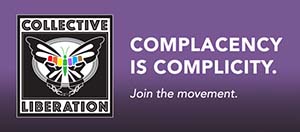
The logo for the new Collective Liberation Church features a butterfly breaking free of chains locked around its legs. Boswell promises in a promotional website video to build a church committed to “dismantl[ing] systems of oppression and creat[ing] justice, equity, and freedom for everybody—for all people.”

For Boswell, who has a 15-year-old adopted Black daughter, a big piece of that project is becoming anti-racist.

He is proud to advocate for diversity, equity and inclusion, even as the government has shut down DEI efforts in federal offices and pressured businesses and universities to do likewise. He stands for the rights of LGBTQ+ and Indigenous people. He wants expanded economic opportunities for the poor.

“I think the church needs to find itself in deeper and deeper solidarity with the people the empire is specifically targeting and harming: Palestinians, immigrants, transgender people, women in need of reproductive care, people of color,” he said. “I could just go on.”

The new church, with an inaugural service on June 1 on the campus of Union Presbyterian Seminary, is expected to bring together a mix of people.

Its newly appointed associate pastor, Rodney Sadler, a professor of Bible at Union Presbyterian Seminary and director of the seminary’s Center for Social Justice and Reconciliation, is Black.

“We are presenting a welcoming, inclusive, broad-based, justice-oriented, love-focused congregation at a time when our nation is going through intense division, divisiveness and fomenting hatred,” said Sadler. “We want to be a witness to a different way of being.”

Over the past nine years, Boswell led one of the city’s most progressive white churches. Myers Park Baptist, a tall steepled church, was an early leader in the city’s racial integration efforts. It split off from the Southern Baptist Convention in 1998 and has long been committed to LGBTQ+ inclusion.

Focused on racial justice at Myers Park

Boswell, who became senior pastor in 2015, dedicated his pastorate to racial justice and to increasing the church’s nonwhite ranks to about 20 percent.

The Sunday after Trump was first elected in 2016, Boswell invited prominent pastor and progressive activist William J. Barber II to preach a sermon on race.

During Boswell’s time at Myers Park, he developed an anti-racism training called “Confronting Whiteness,” also the name of his book and a conference. Some 1,000 people have participated in those conferences, and Boswell has trained 100 facilitators to continue the work.

Monica X. Thompson, a psychotherapist who moved from New York City to Charlotte two years ago, attended the Confronting Whiteness conference and within a week joined Myers Park Baptist.

“I was not a churchgoer at all,” Thompson said. “But I was really inspired by the work of the Confront Whiteness conference, and I was like, oh, so there’s a church that’s a part of it.”

Thompson has since quit Myers Park and is now on the leadership team of Collective Liberation Church. She said she was put off by the church’s decision to let Boswell go.

“Many times when people are going against systems of oppression, they tend to be removed forcefully outside of whatever system they’re working in, so it was really disheartening,” Thompson said.

Myers Park attendance declined significantly

Publicly, church leaders said Boswell’s removal had nothing to do with politics or his preaching. Two weeks after his passionate sermon decrying Trump’s election, and four days before Thanksgiving, the deacon board called a meeting over Zoom and voted to ask Boswell to resign.

In a recording of the meeting obtained by RNS, Chairwoman Marcy McClanahan defined the problem as declining membership and revenues. Attendance at Myers Park had shrunk to 150 from a high of 350 before Boswell arrived, she said. She was also hearing dissatisfaction from church staff about his leadership.

But another deacon hinted at an underlying problem with Boswell’s preaching.

On the recording, Robert Dulin is heard saying: “A lot of these people left the church … in the last few years. If any of you talked to them, you heard the same thing over and over again: I’m tired of being indicted because I’m white. I’m tired of being banged over the head every week about immigrants and LGBTQ, and I just want to come to church and be encouraged. … I think what we need is 80 percent comfort and 20 percent social justice.”

The vote to ask for Boswell’s resignation was 17-3.

‘More than enough work for all of us’

Tim Emry, one of the three dissenting deacons who has since resigned to join Collective Liberation, said the older deacons were increasingly feeling uncomfortable with Boswell’s critique of whiteness.

“They didn’t want to transform the core of the church because they believed they are liberal and progressive and accepting of all. So why do we need to change?” said Emry, a white man married to a Black woman.

“We’re the good white people, right? We want different people to come in, but we want them to learn how to do it our way.”

Boswell, a graduate of Duke Divinity School and St. Paul School of Theology, said he never imagined starting a new church. But people around him gradually convinced him he should try.

Six months after his firing, his old church supports his efforts.

“We wish him success on his new endeavor as I’m sure he wishes us continued success in our efforts,” wrote Scott Crowder, the new deacon board chair, in an email. “There are many ways to fight injustice and help underserved and overlooked communities—there is more than enough work for all of us!”

The first service for Collective Liberation will be in the afternoon, at 4 p.m., so as not to conflict with those attending morning church services elsewhere but still interested in checking out the new church.

The congregation will be affiliated with both the American Baptist Church, a historically Black denomination, and with the Alliance of Baptists, a small progressive denomination of about 140 congregations.

But as much as Boswell wants to be strategic and accommodating in shaping his new church, he is clear that he will not deviate from his critique of what he calls “American Empire.”

“A lot of folks will imagine you only say what the congregation has ears to hear,” Boswell said. “I have come from a different way of thinking.”

Instead of compartmentalizing social justice as just one of many offerings within the church, he wants to make it the heart and soul.

“When we compartmentalize (social justice), we kind of make it into the stepchild or the forgotten part of what it means to follow Jesus, when actually it’s the core of what it means. Justice is primary. If any of those other things take the place of justice, we’ve lost the gospel.”