Pandemic heightens need for job training ministry

CIRCLEVILLE, Ohio—VJ Sanchez doesn’t mince words when she describes the significance of Christian Women’s Job Corps and Christian Men’s Job Corps in the life of a local church or community.

“I believe that every community should have a Christian Women’s/Christian Men’s Job Corps because of the great need across the United States,” she said. “Why would you not have a Christian Women’s and a Christian Men’s Job Corps where you can reach out to the real needs of the people in your community?”

Sanchez, CWJC/CMJC consultant for the State Convention of Baptists in Ohio, has been involved more than 20 years with the program coordinated by national Woman’s Missionary Union. But this year’s coronavirus pandemic has added increased urgency to her mission.

Noting that many Christian Job Corps sites have had to put classes on hold or shift to online instruction, she acknowledged that “this COVID thing has really challenged us, as it has everyone.”

However, she quickly added, “I see it as an opportunity to reach out to people who are in need and give them some hope because for many of them, the world’s coming to an end in their eyes.”
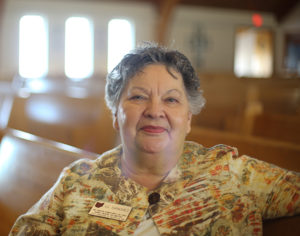
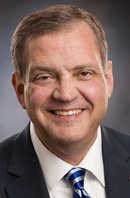
VJ Sanchez, Christian Women’s/Christian Men’s Job Corps consultant for the State Convention of Baptists in Ohio, has been involved with Woman’s Missionary Union’s Christian Job Corps for more than 20 years. Describing CWJC/CMJC as “a place where we come alongside people who are in need,” she said working with the participants in the program is “the most amazing work that I’ve ever been involved in.” (WMU photo by Pam Henderson)

Christian Women’s Job Corps and Christian Men’s Job Corps are designed to equip participants for life and employment through such training as high school equivalency diploma preparation, English-as-a-Second-Language classes, computer skills and job readiness skills coupled with Bible study and personal mentoring. Many sites also offer practical life skills in such areas as money management, personal relationships, parenting and nutrition/cooking classes.

Sanchez said churches that incorporate Christian Job Corps into their ongoing ministries “are able to reach out to the community around them,” simultaneously sharing the love of Christ while equipping participants with vital life skills and pre-employment training.

In her role as a statewide consultant, Sanchez helps provide training and assistance to five Christian Job Corps sites across Ohio. She also serves as the women’s director of Metro Columbus Christian Job Corps and as a CWJC/CMJC national trainer.

Describing Christian Job Corps as “a place where we come alongside people who are in need,” Sanchez said many participants enter the program “not knowing that their greatest need is Jesus.”

In fact, “most of the folks who come to us do not have a relationship with God and actually they are angry with God or they think God hates them,” she reflected. “My response to that is, ‘Let’s see what your Creator says about you.’ We open the Scriptures … and honestly, it has to be the Holy Spirit that just opens their eyes, and they believe.”

Providing tools for success

Bernadette Hocking is the executive director of The Trellis CWJC in Circleville, Ohio, one of the five sites Sanchez serves. Hocking actually began as a CWJC participant and then became a mentor and assistant director before being named executive director in 2018.
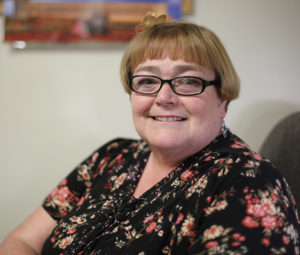
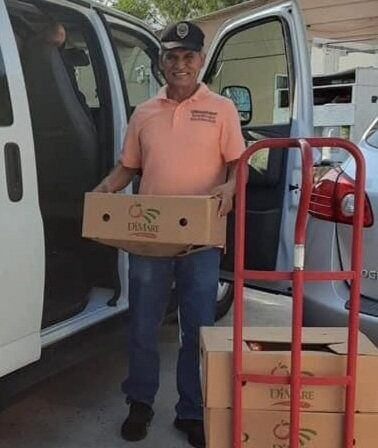
Bernadette Hocking, a former Christian Women’s Job Corps participant and mentor, has served since 2018 as executive director of The Trellis CWJC in Circleville, Ohio. Describing The Trellis as “a support system for the women to grow,” she said the program is designed to provide participants support, structure and skills for success. (WMU photo by Pam Henderson)

As a single mom with limited computer skills when she entered the program, Hocking said her path of CWJC participation, volunteering and leadership “was like the next step in my life. … It just was a natural transition that I went through with the program.”

Hocking said many of the women they serve are coping with mental health issues, addictions and even suicidal thoughts when they first come to The Trellis. Their experience in CWJC “makes a huge difference because they get the acceptance here that they don’t get a lot of other places,” she added. “We see a lot of change in our women.

“I think that God had prepared me for this ministry throughout my life, throughout everything that I went through in my life,” Hocking shared. “Just knowing where the ladies have been, I can relate to them and just want to help them out, pick them up and give them the tools so they can succeed in life.”

Watching participants blossom

Karen Baucum took a far different route to her involvement in CWJC, but the results have been similar.

“I took sort of a backwards path,” she recalled, starting out as a CWJC office volunteer and board member. After suffering two strokes a couple of years ago that affected her fine motor skills, Baucum asked the former director about enrolling as a CWJC participant to assist with her therapy. She said the director’s immediate response was, “I think that would be a great idea.”

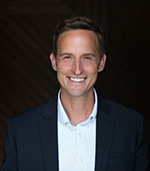
Karen Baucum, a board member for The Trellis CWJC, also enrolled as a participant in the program. She said her involvement has helped her gain “tremendous insights about the program” while also providing her the opportunity to serve as a liaison between the participants and the board. (WMU photo by Pam Henderson)

Baucum said classes in computer skills, art and nutrition/cooking all helped her improve her motor skills. “Plus, I got to see a different aspect of the program because being on the participant side, I got to see what the girls were actually experiencing,” she said. “It’s really worked well to be a liaison between the participants and the board, and I’ve gained tremendous insights about the program as well.”

CWJC “is such a tremendous outreach to the women in our community. We can offer them so much and so many of the women in our area are strapped economically,” Baucum said. “They find out that we really are here to help them and to offer support in a safe place. … It’s just been incredible to watch how the girls grow and blossom.”

Becoming the person God intends

As Sanchez works alongside Hocking, Baucum and others to enhance and expand Christian Job Corps sites across Ohio, she admits they face a daunting task. While the Circleville program is holding onsite classes this fall with social distancing, masks and other safety precautions, most of the other sites in the state are looking toward relaunching classes next spring either online or in person.
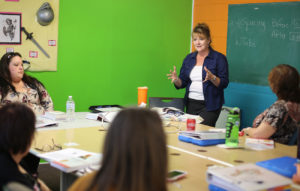
CWJC volunteer Angie Smith led participants in a Boundaries class about personal development and relationship issues prior to the coronavirus pandemic. After cancelling classes in the spring, classes resumed this fall with social distancing, masks and other safety protocols. (WMU photo by Pam Henderson)

“I really would like to see us come into the classroom” if that’s a realistic option, Sanchez said. “Many of these people are isolated anyway. There’s something about being able to see one another and just be in fellowship with one another. It really helps.”

Reflecting on the long-term impact of Christian Women’s Job Corps and Christian Men’s Job Corps, Sanchez said their overall goals remain unchanged even amid the pandemic.

“We give them the tools to be able to be self-sufficient,” she explained, as well as “resources that will assist them in becoming the whole person that God intends them to be.

“When they find out their purpose in life, they realize that they are of value and that they can do many things that they thought they couldn’t do,” she concluded. “It’s the most amazing work that I’ve ever been involved in.”

To view a related video, click here.   


Churches prioritize responsible outreach during a pandemic

MADISON, Tenn.—Sergio Arce knocked on the door of a home close to the church where he is pastor, northeast of Nashville, Tenn. Arce wasn’t expected and didn’t know if anyone was home.

As a man walked to the door, Arce and the two church members with him took a few steps back to ensure social distancing. The trio wore masks because of the COVID-19 pandemic and carried Evangecubes, a small, visual tool for sharing the gospel.

“Hi, my name is Sergio. This is Jennifer. This is Jermaine,” Arce said as the door opened. “We’re from Madison First Baptist Church and are out seeing how we can be praying for our community. Is there anything we can be praying for you about?”

The man was quick to answer.

“They found my brother’s body last Friday,” he said, recounting a recent storm that caused his brother to be swept away by the current of the nearby Cumberland River.

As their conversation continued, the three church members were able to pray and share the gospel with their new acquaintance. He made his profession of faith in Christ on his doorstep.

“This is why we do it,” Arce said.

Seeking new faces

Churches around the country are wrestling with the issue of how to re-engage regular churchgoers whose attendance has trailed off during the pandemic. In September, LifeWay Research found most pastors said their congregation had less than 70 percent of their pre-COVID crowds.

But while a focus on re-engagement with former attenders is needed, Arce and other church leaders believe it’s just as important to be strategic about reaching new faces in the community.

“If there’s ever been a time when people are struggling, it’s now,” he said. “As we do neighborhood outreach, people are telling us God has been trying to get their attention, trying to tell them something.”

Brenda Ford welcomes neighborhood families to a trunk-or-treat event at Madison First Baptist Church. Pastor Sergio Arce said the church, which was recently replanted, has made community engagement a top priority. (Sergio Arce Photo)

Arce believes a pandemic shouldn’t put a pause on outreach. Instead, he insists, it should serve as a catalyst to meet people in responsible ways in times of need.

“There are always going to be more needs than any one church can possibly address, but each church has exactly who they need right now to do what God wants them to do,” said Arce, whose church has around 50 members, many of whom are senior adults.

“Getting into the community allows us to understand what the local needs are and how the Lord can use those needs as a bridge to connect people to the gospel.”

Arce’s church is a replant that has made community engagement a priority—doing door-to-door visits every Sunday afternoon, serving local apartment residents every Wednesday, and hosting a targeted outreach event each month. For October, the church hosted a trunk-or-treat event in its parking lot. This month, they’re blessing first responders in the local community, and the church is planning a Christmas-themed local outreach event in December.

“Putting up a welcome banner outside the church isn’t enough,” Arce said. “It’s not about ‘y’all come.’ We have to get out and meet people.”

Outreach and church planting during a pandemic

More than 400 miles away, church planting resident Josh Elliff collects pop-up tents from different neighborhoods around The Summit Church in Little Rock, Ark.

Don Bates (left) and Jim Lanius from The Summit Church in Little Rock, Ark., move a table that will be stocked with candy, Bibles, hand sanitizer and other supplies to engage with neighbors who will be out on Halloween. (Josh Elliff Photo)

The week prior, the church had encouraged members to look for ways to leverage Halloween for the gospel by engaging their neighbors who would be out and about with kids. For church members who were interested, the church provided tents, folding tables, yard games, prizes and bottled water. They also supplied members with bags branded with the words, “We’re glad you’re our neighbor,” which were stuffed with hand sanitizer, invite cards, king-size candy bars and Bibles from LifeWay.

Prior to the event, the church had also taken families through “3 Circles” evangelism training.

“The idea with the games and tents was to slow families down enough that kids could play and parents could talk to one another,” said Elliff, a fourth-generation pastor. “The hope was not just to bless people with candy, but to let them know their neighbors are believers who care about them.”

The Summit Church aims to do an intentional outreach project like this at least quarterly, but Elliff says local engagement is an everyday practice they want to train their people for—even amid a pandemic.

“What daily life rhythms can we leverage for the gospel?” Elliff asks. “While we want to equip our people with opportunities for organized outreach, we also want to equip them to be locally engaged in reaching their neighbors every day.”

Elliff said the pandemic hasn’t slowed down his plans to plant a church. He’s considering planting in the North Denver community in Colorado and recently made a trip to survey the area. He hopes to launch the church next year.

“In some ways, the pandemic has made me more excited to plant because people are looking for connection and hope now more than ever,” he said. “A lot of people are aching for real authenticity. I’m excited to see how that’s fleshed out in the church in the coming year.”

Outreach tips in an overwhelming season

Although only 2 percent of churches say they’ve had to cut an outreach ministry due to COVID, many pastors report pandemic-related difficulties including personal exhaustion and concern about the safety and well-being of members. This has understandably made evangelism harder to prioritize in the church.

Arce and Elliff are familiar with these challenges but offer the following tips to encourage church leaders who long to participate in fulfilling the Great Commission through local outreach.

  • Start with prayer and only do God-initiated projects.

“It sounds simple, but the larger the church, the easier it is to do a lot of stuff that’s not God-initiated,” said Elliff. “If we’re not personally pursuing the Lord to seek his leading, then we’ll have nothing to give anyone.”

Likewise, before Arce’s church began doing door-to-door outreach, he took members through a 40-day prayer emphasis keying in on themes from the Bible study “Return to Me” by Claude King.

“Working with the Tennessee Baptist Convention, we assigned every family with 15 addresses in the local radius of our church,” said Arce. “Our families began regularly praying for the people at these addresses before we ever engaged them in person.”

  • Identify how your church and community are unique and recognize that your church doesn’t have to reach everyone.

“The Lord has called and equipped you to where you are for a reason and has brought the people in your church around you for a reason,” Elliff said. “Recognize that every church has its own DNA and its own passions.

“You don’t have to be a huge church with a lot of resources. You can be a church of 50 with people who like to sew and knit and meet the needs of the sewing and knitting community where you are. Or your church can connect with unchurched people who have a passion for board games in your community. Focus on whatever is unique to where you are.”

  • Be consistent, and don’t make assumptions.

“You can’t just do outreach once or twice and say, ‘Well, that didn’t work,’” said Arce. “You’ve got to keep it up. It takes a while to say hello to a community.

“Also, don’t make the assumption that outreach is sidelined because a pandemic is going on and that people won’t want to engage with you,” he said. “People will open their door if you knock on it.”

  • Join in where Christ already is working.

“Often in church culture we try to build stuff and invite people to come to us. But what’s usually more effective is joining in where the Lord is already working and where He’s opening doors,” Elliff said.

“Find a school. Find a community project. Get involved with your local government, sports and civic clubs. You don’t have to build a new outreach ministry. Find out what’s already happening around you and get involved.”


Priorities established to fight sex abuse in next year

NASHVILLE (BP)—Southern Baptist churches, entities and leaders will continue to receive guidance in the year ahead from a convention partnership leading the fight against sexual abuse.

The Sexual Abuse Advisory Group and the Ethics & Religious Liberty Commission released Nov. 11 the priorities for the next year in the effort to prevent sexual abuse and care for survivors. The document outlines the resources the partners will make available in a multi-faceted endeavor that began more than two years ago in response to reports of abuse among Southern Baptist churches and entities.

“We recognize the need for a widespread change and understand that a cultural shift takes years of effort,” the document states.

The advisory group and commission pledged to raise awareness and train churches how they can help prevent sexual abuse and “make churches safe for survivors.”

“When it comes to the moral witness of the people of Jesus Christ, there should be no greater priority than standing up to the depravity of sexual abuse within the church,” said ERLC President Russell Moore. “The Sexual Abuse Advisory Group is committed to calling churches to integrity on these matters and equipping churches on how best to do so.”

Priorities include:

  • Promote the Caring Well Challenge, a year-long, eight-step effort that began in 2019. In its first year, more than 1,000 churches participated in the challenge, which was relaunched in September.
  • Develop new resources, including guides on recruiting Vacation Bible School workers and camp counselors, as well as updated versions of instructions on reporting abuse and responding to disclosures of abuse.
  • Advocate at the federal and state government level for laws and regulations that will safeguard children and hold perpetrators accountable.
  • Create a series of “white papers” on state policy issues, including mandatory reporting and statute of limitations. The first white paper, published Oct. 30, offers guidance on enacting state laws to protect churches and other nonprofits from civil liability when they report sexual abuse allegations to a former employee’s current or potential employer.
  • Continue to make available videos from the ERLC’s 2019 Caring Well Conference and a recommended calendar for viewing the talks and questions for discussing them.

“This is not the end of our work on this subject, but only the beginning,” the document states. “We will continue to advance this important work, supported by Southern Baptists because we must do everything we can to protect the vulnerable and care for the survivors among us.”

Travis Wussow, ERLC’s general counsel and vice president for public policy, said: “Through our work over the last two years, we recognize that while we have taken important steps forward, there is much left to be done. As Southern Baptists, we must continue to push forward in order to prevent the pain and devastation abuse creates and to help those who have experienced abuse find healing through the power of the gospel.

“Over the next year, the ERLC, in partnership with the advisory group, will continue our efforts to prepare churches, promote convention-wide action and protect the vulnerable through public policy advocacy.”

SBC President J.D. Greear established the advisory group shortly after his 2018 election. In cooperation with the ERLC, the group of experts in a variety of fields received input from hundreds of people, including abuse survivors and their advocates, law enforcement officials, counselors, pastors, denominational leaders and lawyers.

Other resources already produced by the SAAG and ERLC include:


Surge prompts some churches to return to online-only worship

MESQUITE (BP)—A surge in new COVID-19 cases has some churches returning to online-only worship as many churches continue meeting onsite.

“This Sunday we will be online. We’ll be totally online,” said Terry Turner, senior pastor of Mesquite Friendship Baptist Church in Mesquite. “We’ve actually had a few weeks of indoor service, where we actually come together and we social distance. … Now that we’re back in the red zone (of COVID-19 case numbers) here in Texas, we have suspended our services, and we’re doing strictly online.”

A one-day rise of 121,890 new COVID-19 cases nationwide on Nov. 6 is the highest to date in the United States since the pandemic began, the Johns Hopkins Coronavirus Resource Center reported.

At 969,605 cases, Texas has surpassed California as the state with the highest number of cumulative cases. Texas’ cumulative COVID-19 death toll of 18,909 is second only to New York’s 33,657, Johns Hopkins reported.

El Paso a hot spot for virus

In the COVID-19 hotspot of El Paso, Immanuel Church has closed its school for a couple of weeks but continues onsite worship, Pastor J.C. Rico said.

“I would say here in the city, it’s about 50/50,” Rico said of El Paso Baptist Association’s 100 or so churches. “There are some that just have continued online. There are some that did go back to live, and a small percentage have just gone online again. … I would say about 40 percent of the churches here in El Paso are going live” in person.

El Paso reported 1,049 COVID-19 patients hospitalized Nov. 6, with 311 in intensive care units and 177 on ventilators, the City of El Paso reported.

Cielo Vista Baptist Church in El Paso returned to online-only worship Oct. 25, Lead Pastor Larry Lamb said in a video posted to Facebook.

“[I]f you live in El Paso you know the COVID cases have gone extremely high, a lot of COVID cases. So, out of protection for our community, our church community, we’re going to suspend our live weekend services until further notice,” he said in an Oct. 25 video.

“But we will be on Cielo Vista Church online every week. … We just pray for the pandemic to stop, we pray for healing, and we pray for the lives of people to be nourished also by truth but also in great health. So that’s why we want to protect our church family as much as we can. Stay safe, and do all the things we’re required to do.”

African American community hit hard

Mesquite Friendship Baptist Church is a member of Dallas Baptist Association of about 500 churches. Dallas County lists the COVID-19 risk level in the red zone, advising people to “Stay Home, Stay Safe.” The county has a cumulative total of at least 99,761 cases and 1,127 cumulative deaths, with 868 new cases reported Nov. 5.

Turner said his church has had deaths among its membership and among its extended church family including relatives and friends, but declined to provide a specific number.

“Among African Americans, the COVID-19 has had its highest impact, and we’ve seen a lot of that within our membership and their families,” Turner said. “We’ve had members who have passed from it, and then we’ve had members who have had family members that have passed from it.”

He referenced the church’s first member to die of the virus, a participant in the church’s health care ministry who died after contracting the virus in her professional work as a nurse.

“She was very, very committed to our ministry and our church,” he said. “And yet, at the same time, she was a nurse. and contracted it as a nurse.

“Our sensitivity to what COVID is doing is really at a high alert within our church and within our ministry, because we’ve seen so much of it. … Our members are as committed to supporting the church and to the ministry as they were before COVID-19 hit us,” both financially and spiritually.

Turner said he is monitoring the virus to determine when to resume onsite worship, but has no definite plans at this point.

Dallas Baptist Association Associate Director Scott Coleman said much of what he knows of churches’ current worship plans is anecdotal. An online survey conducted three weeks ago, Coleman said, drew responses from 50 churches, about 10 percent of the congregations in the association. One church was meeting in a parking lot.

“Exactly two-thirds were meeting in person, observing social distancing rules,” Coleman said. “We had … right at a quarter that were meeting virtually. … Only a few, about 7 percent, were still not meeting at all.”


Border pastors continue adapting ministry to immigrants

Despite COVID-19, pastors who form the backbone of Fellowship Southwest’s ministry to immigrants adapt to an ever-changing refugee flow and escalating needs of vulnerable people.

Lorenzo Ortiz leads El Buen Samaritano Migrante, a ministry that operates two shelters in Nuevo Laredo, plus one in Saltillo.

Lorenzo Ortiz comforts immigrants torn apart by trauma and despair in Nuevo Laredo, just across the Rio Grande from Laredo. Thousands of immigrant families languish under the Migrant Protection Protocols, widely known as the “Remain in Mexico” policy, which requires them to wait south of the border as they seek asylum in the United States.

Continuous postponement of their asylum hearings has caused immigrants who live in tent camps and shelters in Mexico to confront constant uncertainty.

“I’m working with moms who have risked their lives and their children’s lives, extorted by cartels, to cross to the United States,” Ortiz said. “Moms are crossing illegally or sending their children because the (border-crossing) bridges have not reopened, and immigration court hearings have not resumed due to the pandemic.”

Ortiz leads El Buen Samaritano Migrante, a ministry that operates two shelters in Nuevo Laredo, plus one in Saltillo, deeper into Mexico. In addition to protecting asylum seekers from Central and Latin America, the shelters also provide food to many Mexicans, who pass through their doors after being deported from the United States.

“We serve from 100 to 150 deported Mexicans every day,” Ortiz said. “Some of them have lived 30 to 40 years in the United States and are deported because they don’t have any documents.”

The U.S. Border Patrol increasingly is deporting undocumented immigrants who have lived in the United States for decades, he reported.

“They tell me they don’t know anyone in Mexico. They have families in the United States. They have U.S. citizen children, too,” Ortiz said.

Families are being separated, and cartels are extorting and kidnapping immigrants, especially at bus stops, he said. Fellowship Southwest has supported Ortiz’s ministry more than two years and recently helped purchase a van that enables him to keep immigrants safe and off the streets.

Working with immigrants in Matamoros

Near the Gulf of Mexico, Pastor Eleuterio González is trying to keep pace with U.S. Border Patrol’s daily expulsions of immigrants through the Gateway International Bridge between Brownsville and Matamoros, Mexico.

Eleuterio González and his church, Iglesia Valle de Beraca, feed and protect more than 1,600 immigrants living in the Alberca Chavez shelter in Matamoros.

“They are deporting a lot of people—way too many people,” González said. “Mexican authorities have lost control of this.”

Supported by Fellowship Southwest, González and his church, Iglesia Valle de Beraca, feed and protect more than 1,600 immigrants living in the Alberca Chavez shelter in Matamoros. They also minister in camps, where thousands of refugees live in tents.

Recently, three children showed up unaccompanied, and González searched for their parents in the massive tent camp near downtown Matamoros that is home to more than 4,000 immigrants.

“Matamoros does not have the capacity to help all migrants at this rate,” he said. “People are tired. Coronavirus is spreading, and there is already emotional and physical exhaustion.”

Across the border from Matamoros, pastors Rogelio Pérez of Iglesia Bautista Capernaúm in Olmito and Carlos Navarro of Iglesia Bautista West Brownsville continue to assist González’s ministry by providing clothing, food and essential items. Pérez and Navarro have adapted their ministries to assist González in Matamoros, ever since the Mexican and U.S. governments agreed to stop nonessential crossings at the border in March.

“I just received bags with new personal hygiene items and masks, and I am going to send them to Eleuterio González in Matamoros,” said Pérez, who—with the help of Iglesia Bautista Capernaum—feeds about 600 people in Olmito and surrounding communities.

Navarro is ready to reopen IBWB’s immigrant respite center that was shut down by the city in March due to the coronavirus pandemic. Once the respite center opens, it will complement González’s ministry in Matamoros.

Shelters due to reopen in Piedras Negras

Meanwhile, 320 miles northwest, Pastor Israel Rodríguez of Primera Iglesia Bautista in Piedras Negras plans to reopen a shelter—one of the church’s two shelters—he was forced to close in May. “There’s been an increase in migrants coming to Piedras Negras,” he said. “It seems to me that within the next few days, we are going to have to reopen the other shelter.”

Pastor Israel Rodríguez (center) of Primera Iglesia Bautista in Piedras Negras plans to reopen a shelter—one of the church’s two shelters—he was forced to close in May.

Rodríguez—who houses 48 people in the only open shelter in the city—said the government allows him to operate as long as he takes appropriate hygiene precautions to avoid the spread of COVID-19.

Several immigrants who live in the shelter have been baptized, he added.

“Last Sunday we baptized 14 people in our church, and five of them were migrants,” he said.

Network prepares for winter

About 500 miles northwest of Piedras Negras—across from El Paso in Ciudad Juarez—Pastor Rosalío Sosa is preparing for winter.

“We are installing heaters in the shelters,” Sosa reported. “With the heaters, we can move migrants to the outdoor tents in Palomas.”

Pastor Rosalío Sosa operates Red de Albergues para Migrantes—the Migrant Shelter Network—14 shelters in the state of Chihuahua, most of them in Ciudad Juarez, but also as far away as Palomas, about 100 more miles west into the desert.

Sosa operates Red de Albergues para Migrantes—the Migrant Shelter Network—14 shelters in the state of Chihuahua, most of them in Ciudad Juarez, but also as far away as Palomas, about 100 more miles west into the desert. Sosa plans to expand the Palomas shelter to deal with the increasing number of refugees there. Last month, the shelter served 1,436 immigrants expelled by the U.S. border patrol.

In Tijuana, close to the Pacific Ocean, Pastor Juvenal González labors to encourage and comfort pastors and immigrants alike.

“Due to the coronavirus, churches can’t meet at their full capacity,” González said. “The pastors don’t know what will happen to their congregations. But there is a new harvest—many Haitians.”

González—who oversees three shelters in Tijuana, where around 120 immigrants live—reported a church in Sinaloa comprised of 200 Haitians. “There are many Haitians being baptized,” he noted.

Despite spiritual victories, families from Central America who are under the “Remain in Mexico” policy are desperate, González said. “They are weary.”

Still, the need is so dire, González wants to do more. “It makes me sad that I can’t help more,” he lamented. “But I thank God we can be the hands and heart of Christ in the midst of all that’s happening.”

Elket Rodríguez, an attorney and minister, is the Cooperative Baptist Fellowship’s immigrant and refugee specialist. He lives on the U.S.-Mexico border, in Harlingen and works with CBF Advocacy, CBF Global Missions and Fellowship Southwest. He and Israel Rodríguez are not related; neither are Eleuterio González and Juvenal González. 


National WMU board approves reduced budget

BIRMINGHAM, Ala. (BP)—The board of national Woman’s Missionary Union approved a 2020-21 budget for the missions organization that is down about $1 million from its $5.8 million 2019-20 budget.

The board learned 12 WMU staff members opted to accept the voluntary retirement offer announced by the organization in early August.

Both developments came as a result of a decline in sales due to COVID-19.

The 12 employees who accepted the retirement offer are “valued friends and colleagues (who) made countless contributions to our work over the years and will be greatly missed,” said Julie Walters, corporate communication manager for national WMU.

Current personnel at national WMU stands at about 40 staff members.

Walters explained that the 2020-21 budget was “adjusted based on anticipated expenses and projected revenue.”

Even with a decrease in staff members and budget, WMU leaders remain focused on the organization’s “mission of making disciples of Jesus who live on mission,” Walters said.

“Next steps include serving churches well and supporting pastors, providing more missional resources for individuals and families and exploring modifications to our business model,” she said. “Through WMU’s missions discipleship, leadership development and compassion ministries, we will seek to advance our current level of kingdom impact in every state and 39 countries.

“We are grateful for many who are coming alongside us to help—state WMU leaders, executive board members, independent contractors, volunteers. It is inspiring to see so many actively using their passion to serve God and serve others through WMU.”

National WMU is not a part of the Cooperative Program allocation budget and receives no funds from the Annie Armstrong Easter Offering or Lottie Moon Christmas Offering. National WMU is supported through the sale of magazines and products and from investments and charitable contributions through the WMU Foundation.

In late August, the WMU Foundation gave national WMU a $45,000 grant in an effort to help offset the loss for 2020 through pandemic.


Vietnamese Baptist Church burns amid Philadelphia unrest

PHILADELPHIA (BP)—The Vietnam Baptist Church in Philadelphia building was burned Oct. 27 during the second night of unrest in the city after the police shooting of a Black man.

Pastor Philip Pham received a call Tuesday night from a church member whose friend had seen the flames and seven fire trucks surrounding the church.

“I have no idea why they attacked our church,” Pham said. “They burned it from the roof. They threw flammable chemicals on the roof and [flames] burned through the roof” and down through the rest of the building. He said the facility is a “total loss.”

Of primary concern to Pham were three hard drives. Since before purchasing the building in 2005, Vietnam Baptist Church has served as something of a community center each weekday, providing help with immigration paperwork, taxes and even marriage counseling.

More than 15 years’ worth of information about hundreds of clients is on hard drives kept at the church. Pham said when he got the call about the fire, he immediately began praying that the data would be spared.

“I prayed right away: ‘God, please protect the hard drives,’” Pham recalled. “Other stuff can be recovered. But those files will never be recovered.”

When firefighters finally let him in after the blaze was extinguished, Pham said he was amazed.

“I saw the routers and modems and things surrounding the hard drives all burned, melted,” he said. “But that piece of hard drive, no harm. No harm at all. Just two feet above that, all melted. … That is amazing how God knows our needs and answers our prayers. He is an almighty God. He granted our prayer.”

The church is meeting mostly online due to strict pandemic-related restrictions in the city, Pham said. On Oct. 28, he was calling

Fire destroyed almost all of the church’s technological equipment. Miraculously, just two feet below the melted modem in this photo, three hard drives remained untouched by the flames (Photo from Pastor Philip Pham)

nearby schools to find a place to host the church’s leadership team as they broadcast its next livestream worship service.

“Remember us in your prayer in time of need like this,” he requested. “The church members here need encouragement. The majority of us have very strong faith in Christ, but a minority, a few new believers, they need their faith to grow. Pray for their faith to take deep root in the love of God so they can be steadfast in him. Not focus on the problem, but focus on Jesus. Please remember us in your prayers.”

Peter Yanes, executive director of Asian American relations with the SBC Executive Committee spoke with Pham shortly after the fire and prayed over the phone with church members as they gathered at the charred remains of their building.

Yanes said he was “compelled to reach out right away and find out more of the heartbreaking incident” after seeing videos Pham posted to social media Tuesday night.

“You can sense the heartfelt frustration and concern,” Yanes said of church members’ reaction to the fire. “I have encouraged [Pham] and prayed with his family that God has a higher purpose of them rising to the occasion with a testimony of hope in Christ Jesus.”

The turmoil in Philadelphia, sparked by the shooting of Walter Wallace Jr. by police, has at times seen violence and looting and led to a clash between demonstrators and officers at police headquarters, The Associated Press reported. It is not known if Vietnam Baptist Church is the only incident of arson.

One of three hard drives containing irreplaceable information that was spared by fire (Photo from Pastor Philip Pham).

According to AP, police—who were sent to Wallace’s home on Monday after his brother called 911—said Wallace ignored multiple demands to drop a knife he was holding and that when he advanced toward the officers, they opened fire. Wallace’s family maintains they had placed the emergency call because of Wallace’s mental state and had requested medical assistance and an ambulance.

In light of the violence in his city, Pham encouraged youth pastors to stress to young people the words of James 1:20: “The anger of man does not bring about the righteousness of God.”

“You cannot use your anger and be justified,” he said. “I would like to bring this message to all the young people.”

Pham said some of his church members are afraid because of the violence and looting, but he is encouraging them to keep an eternal perspective.

“So many things we don’t know, but God knows, so just trust God,” he said he told them. “Just do right. Don’t copy [those who practice violence], but do what the Bible says and what he wants us to do. Love them and pray for them that they may know Christ, that the Holy Spirit may convict them and they may seek God.”


Ministry takes gospel to Spanish-speaking dairy workers

PORTALES, N.M.—Foundations of Faith—Fundamentos de Fe—views the dairy farms scattered across eastern New Mexico and West Texas as a fertile mission field.

Melissa Lamb, president of New Mexico Woman’s Missionary Union, and her husband, Beau, a New Mexico pastor, are among volunteers who help Foundations of Faith minister to primarily Spanish-speaking workers at the dairies.

Stanley Jones (left), founder of Foundations of Faith dairy ministry, visits with Foundations chaplains A.B. Najera (center) and Arturo Villa at one of the dairy farms where they minister to the primarily Spanish-speaking workers. (WMU photo by Trennis Henderson)

They serve alongside longtime dairy owners Stanley and Valerie Jones, who founded and lead Foundations of Faith, and chaplains A.B. Najera and Arturo Villa, who regularly visit workers at dairies throughout the region.

Foundations of Faith’s primary goal is to help dairy workers and their families “build strong lives on the foundation of faith in Jesus Christ,” according to the ministry’s website.

The ministry also sponsors English-as-a-Second-Language classes to help workers gain or increase fluency in English.

As she blends her missions involvement in WMU and Foundations of Faith, Melissa Lamb said, “WMU’s passion and desire to do missions first to spread the gospel just goes so well with what Foundations of Faith does.”

Since she and her husband grew up in New Mexico, she added, “We were excited to come alongside the ministry just because missions is our heart, and rural agriculture ministry has always been a big thing for us.”

Tailgate outreach makes spiritual impact

Najera and Villa, who also lead Spanish-language churches in the area, befriend dairy workers at 40 to 45 dairies by handing out soft drinks and bottled water from the tailgate of their pickup truck each week. They also take time to ask if the workers or their families have any prayer requests or personal needs.

Stanley Jones, the founder of Foundations of Faith, talks with dairy workers as part of a worker appreciation event held at one of several dairy farms in the region. Foundations’ primary ministry goal is to help dairy workers and their families “build strong lives on the foundation of faith in Jesus Christ.” (WMU photo by Trennis Henderson)

In addition to holding regular Bible studies at several dairies such as W Diamond and Grande Vida, Foundations of Faith hosts worker appreciation events every few weeks during the workers’ shift changes. The rallies, complete with lunches ranging from cookouts to pizza, typically attract larger crowds to hear the chaplains’ gospel messages.

Since being launched in 2015, Foundations of Faith has recorded more than 500 professions of faith in Christ, including 124 last year and more than 170 so far this year, even amid the challenges of the COVID-19 pandemic.

Many of the dairy workers “are real hungry for the word” of God, Stanley Jones explained. Affirming that the chaplains’ commitment to building personal relationships with the workers “is really making a huge difference,” he said the spiritual response is “amazing.”

Villa noted a large percentage of the workers “don’t have time to go to church because they work 12 hours, and they go home and eat dinner and go to sleep, and the next day they do the same thing.” That is a primary motivation for leading Bible studies onsite at the dairies, he explained.

Among the workers involved in the weekly Bible studies, those sessions “are what they call church,” Jones agreed. “We’re just taking church to them.”

Many hear the gospel for the first time

“All of our services at the dairies run for about 15 minutes,” noted Beau Lamb, pastor of First Baptist Church of Santa Rosa, N.M. “Could you imagine going to a church service that was only 15 minutes long out in the hot or the cold or whatever it might be?”

Foundations of Faith chaplain A.B. Najera baptizes a dairy worker who recently professed faith in Jesus Christ. Since its founding in 2015, Foundations of Faith has recorded more than 500 salvations among dairy workers who come to the region primarily from Central America. (Photo courtesy of Melissa Lamb)

With many of the dairy workers originally from Mexico, Guatemala, Honduras and other Central American countries, Lamb said, “It’s amazing to see them travel thousands of miles to come up to hear the good news, quite possibly for the first time in their lives. It’s so overwhelming at times just to see how gracious God is to give us this opportunity to share the love of Christ with them.

“Our guys do an amazing job of sharing God’s word,” he added, emphasizing that it has “blessed us to see that there are so many people willing and ready to accept the good news.”

As workers pray to receive Christ as their Savior, Foundations of Faith provides each of them a Bible in Spanish, English or even Kiche, the heart language of many of the Guatemalan workers. The chaplains also give them a small packet of information that includes a “first steps” discipleship booklet, a list of nearby Spanish-language churches and the chaplains’ contact information.

Reaching workers and their families

Another key aspect of Foundations of Faith’s dairy ministry involves the ESL classes that Melissa Lamb coordinates and leads alongside a group of volunteer teachers. Often enrolling up to 25 dairy workers and family members, the English classes combine Bible stories, language study and fellowship.

Foundations of Faith chaplain Arturo Villa shares a Bible and other resources with a worker at one of the ministry’s dairy-based evangelistic outreach events. (WMU photo by Pam Henderson)

“We learn a verse each week in English, and then we do a Bible story,” she explained. “Oftentimes, we’ll have one of our Spanish speakers read it in Spanish first, and then we’ll read the story in simple English words.”

Recalling a recent lesson from Proverbs 3:5 on “Trust in the Lord with all your heart,” she said, “We’ve been talking about how it’s hard to learn English, it’s hard to learn a new language, but you can trust that God will help you.”

Along with its dairy ministry focus, Foundations of Faith has expanded to provide Bible studies wherever needs and opportunities arise, including a peanut mill and a nursing home.

Jones said he is hopeful that Foundation’s ministry strategy can be duplicated to reach workers in food processing plants, factories and warehouses across the nation.

“I think there could be a lot of good come out of this if we can just get it out there as a model of showing what we’re doing,” he said. “You don’t just have to take it to dairy farms. It can go to all different places.”

Beau Lamb noted that keys for local churches or mission groups interested in ministering to unreached workers and their families include prayer, funding and identifying ministry needs. Next steps include “the boldness to walk through that door and to trust that Christ is going to lead you to the right spot to share the right thing at the right time.”

“It’s almost hard to believe at times as a small-town pastor to see so many people come to Christ at one time,” he shared. “That ignites a fire that has really encouraged our local churches to be involved and to share and to give.”

“There are so many other groups that could do something very similar to what we’re doing,” Melissa Lamb added.

Reflecting her missions heart for unreached language groups all across the United States, she concluded: “God has brought them to America. We can share the gospel with them.”

To view a related video, click here.


Hearing set for Riley Foundation lawsuit

FORT WORTH (BP)—A temporary injunction hearing in a lawsuit filed by Southwestern Baptist Theological Seminary and Baylor University against a charitable foundation is scheduled for Dec. 2 after a judge granted the plaintiffs’ motion for expedited discovery.

Additionally, two Southwestern trustees have been suspended in connection with their involvement with the charitable foundation.

(Baylor University Photo)

In the suit, filed Sept. 8 in a Tarrant County district court, Southwestern and Baylor allege some members of the board of the Harold E. Riley Foundation, which was set up solely to benefit the schools, led a “secret coup” in an “attempt to seize control of the Foundation and its assets”— altering the foundation’s purpose, stripping the schools of their rights and status as beneficiaries and misappropriating assets worth millions.

Defendants include the Riley Foundation and Mike Hughes, the foundation’s president. The office of the Texas attorney general, which has oversight authority of charitable organizations, has been observing the proceedings in the lawsuit, including hearings, with the option to become an official party.

Two trustees suspended for ‘misconduct’

Two Riley Foundation trustees—Charles Hott and Thomas Pulley—also are members of Southwestern’s board of trustees and have been suspended from the seminary board by its officers because of “trustee misconduct.”

During a regularly scheduled meeting Oct. 19, Southwestern’s board of trustees affirmed the officers’ decision, calling it “consistent with the seminary’s governing documents and parliamentary authority and not inconsistent with the Southern Baptist Convention’s governing documents.” The trustees also affirmed and expressed “full support” for the seminary’s action in filing the lawsuit.

Pulley, a banker from Colleyville, did not respond to a voicemail. Hott, who serves as chief investment officer for the Riley Foundation, told Baptist Press in a text message: “I was denied the ability to tell the whole Board of Trustees the truth. One must ask what the 3 officers are so afraid of?”

When the lawsuit was filed, Hott denied any wrongdoing, telling Baptist Press “virtually every allegation in the complaint by Southwestern and Baylor are completely false, without merit.”

Governing documents changed

The lawsuit stems from an alleged meeting in June 2018 at which the schools claim Riley Foundation trustees improperly restructured the foundation’s governing documents.

August Boto

The lawsuit also claims the Riley Foundation board is attempting to “seize control” of the board of directors of Citizens Inc., a publicly held insurance company whose stock forms the primary asset of the foundation.

The Riley Foundation filed suit Sept. 2 to force Citizens to seat five directors, including Riley Foundation trustees Augie Boto, Hott and Hughes. The attempt to seat directors of Citizens initially included former Southwestern President Paige Patterson.

According to the Riley Foundation’s complaint, Patterson resigned from the attempt to be seated on the Citizens board Sept. 1. According to the schools’ lawsuit, positions on the Citizens board of directors are compensated annually in excess of $100,000.

Hughes is a former Southwestern vice president under Patterson. Boto is the former executive vice president of the SBC Executive Committee. He served as its interim president from 2018-19.

Established with seminary and Baylor as sole beneficiaries

Harold Riley, who died in 2017, was a major donor both to Southwestern Seminary and Baylor. He set up the charitable foundation in 2002. It is funded with shares from Citizens Inc., the Texas-based insurance company he founded in 1969. Citizens, which is publicly traded on the New York Stock Exchange, is valued at more than $300 million.

The Riley Foundation was set up with Southwestern and Baylor as sole beneficiaries. Each school was granted three members on the foundation’s board, giving the schools’ combined representation a majority of the 11-member board.

Upon Riley’s death, assets including more than 1 million shares of Citizens were transferred to the foundation. According to the foundation’s 2018 tax documents, payouts to the two schools that year totaled $298,800.

In a meeting in June 2018, the board was downsized and the schools’ right to appoint board members was eliminated. The foundation’s tax status was changed from a public charity to a private foundation. The lawsuit alleges that the meeting was conducted illegally—without a quorum and without input from either school.

‘Self-appointed rogue leadership’

When the suit was filed in September, Southwestern President Adam W. Greenway, who succeeded Patterson, described the Riley Foundation board members involved in the restructuring as “self-appointed rogue leadership,” saying Southwestern believes the foundation board members “are attempting to undermine and overturn Mr. Riley’s expressed directives and are in violation of their fiduciary duties.”

Baylor President Linda Livingstone described the lawsuit as “necessary to return Mr. Riley’s gift to his original donative intent.”

Boto told Baptist Press in September the lawsuit’s claims were “absurd,” adding the “entire (foundation) board is committed to supporting the ongoing work of both (Southwestern and Baylor) for as long as possible, as well as possible. That was what Harold Riley wanted. We’ll stay true to that assignment.”

Relieve schools of ‘burden’ to appoint trustees

In a response opposing the plaintiffs’ motion for expedited discovery, the defendants asserted a quorum for a meeting June 11, 2018, when the restructuring occurred, and that the changes “did not alter (the foundation’s) purpose in any way, as it continues to operate exclusively for Baylor and Southwestern, who are and will continue to be the exclusive recipients of the Foundation’s charitable grants.”

The response included letters sent to Southwestern Interim President Jeffrey Bingham and Livingstone, Baylor’s president—sent in July and August 2018, respectively—in which Hughes wrote that the foundation’s board had determined the board was “too large to act efficiently and effectively” and that the original requirement that Southwestern and Baylor appoint three foundation board members each “is not necessarily in the best interests of Baylor and Southwestern.”

Hughes wrote that the Riley Foundation board had reduced its size from 11 to a maximum of five and removed “the burden on Baylor and Southwestern to maintain the appointment of certain members of the Foundation’s Board of Trustees.”

Hott, Pulley and Hughes remained on the foundation board when it was reduced to five, as did Hance Dilbeck, executive director of the Baptist General Convention of Oklahoma. Dilbeck, who resigned from the board in the summer of 2020, declined comment to Baptist Press.

In response to Southwestern trustees’ Oct. 19 affirmation of the seminary’s action in filing the lawsuit, Greenway said: “While we continue to pray and hope for a just resolution of this difficult matter, we are determined to honor the clearly stated intent of Mr. Riley in establishing the foundation that bears his name exclusively to support two educational institutions that were near and dear to his heart.”


LifeWay agrees on terms of sale for Ridgecrest

NASHVILLE (BP)—LifeWay Christian Resources has reached an agreement to sell Ridgecrest Conference Center and Summer Camps to the Ridgecrest Foundation.

The two groups plan to complete the transfer of the North Carolina property and ministries by the end of 2020. Terms of the agreement were not announced.

Ben Mandrell

“God has answered our prayers by providing a potential owner who loves the ministries of Ridgecrest and wants to see the legacy of those ministries continue,” said LifeWay President and CEO Ben Mandrell. “From the beginning of this process, our intention was to find a buyer that would continue to offer a Christian conference center environment and the operations of the boys and girls camps.

“We’re thankful God has brought us the right steward for Ridgecrest’s future. I love this group’s heart for ministry and their desire to provide a place for spiritual transformation and discipleship.”

The newly formed Ridgecrest Foundation is an independent, nonprofit ministry created by individuals “who are passionate about the mission of the conference center and camps and are committed to supporting the ongoing ministries of Ridgecrest,” Mandrell said.

Next chapter for conference center

Representatives of the foundation expressed their appreciation for LifeWay and their excitement about the next chapter of Ridgecrest.

“We are incredibly grateful for LifeWay’s faithful stewardship of Ridgecrest Conference Center and Summer Camps over the past 100-plus years, and we have tremendous respect for LifeWay leadership’s integrity and approach during this process,” said Steve Little, a representative of the Ridgecrest Foundation, who lives in N.C.

“We feel honored and blessed to continue Ridgecrest’s God-glorifying legacy from LifeWay and to be faithful stewards of the impactful ministries of Ridgecrest Conference Center, Camp Crestridge for Girls, and Camp Ridgecrest for Boys into the future,” said Robin Thompson Parish, also of N.C.

“God began laying the foundation for this transition more than 40 years ago, connecting people who are passionate about the ministries of our summer camps and conference center,” said Art Snead, executive director of Ridgecrest.

“Both LifeWay and the Ridgecrest Foundation have approached this process in a God-honoring way, fully recognizing that Ridgecrest ultimately belongs to the Lord.”

Snead will stay on as president and CEO.

Ridgecrest Conference Center hosts guests throughout the year for various events involving churches, Christian associations, other ministries, families, and individuals. In addition, Camp Ridgecrest for Boys and Camp Crestridge for Girls offer two-week sessions full of adventure and discipleship for 1st through 10th graders during the summer months.

Working with the Ridgecrest Foundation, LifeWay plans to continue using Ridgecrest Conference Center for future events including student camps, CentriKid and the Black Church Leadership and Family Conference.

“God has used Ridgecrest to impact countless lives for more than a century,” Snead said. “I’m thankful we will continue to provide purposeful hospitality at our conference center and amazing summer programs at our camps for years to come.”

Sale allows LifeWay to focus on ‘core ministry’

LifeWay announced in April the intention to sell Ridgecrest citing changes in organizational strategy, rising costs and uncertainty due to COVID-19 as reasons for the transfer of the ministries and property.

During an April 23 board meeting, LifeWay trustees authorized a recommendation for the organization’s executive team to pursue viable options for the sale of the property and operations of its camps and conference center.

“The decision to sell Ridgecrest will ensure its future and allow LifeWay to focus on our core ministry,” Mandrell said. “Ridgecrest is well-positioned for future success under new stewardship, and we are working together with the Ridgecrest Foundation toward a strong ministry future—both in the short term and in the long term.”

Snead agreed.

“With the guidance and support of the Ridgecrest Foundation,” he said, “I believe our conference center and summer camps will impact many more lives for God’s glory in the future as we continue our current operations and explore new ministry opportunities.”


Seminary retains building names but vacates chair

LOUISVILLE, Ky. (BP)—Trustees of Southern Baptist Theological Seminary unanimously voted Oct. 12 not to remove the names of the school’s founders from several campus buildings. But trustees embraced steps to lament the institution’s historic ties to racists, vacating an endowed chair named after an especially controversial 19th-century benefactor and providing up to $5 million in scholarships for African American students over the next few years.

Trustees declared the Joseph Emerson Brown Chair of Christian Theology, which has been held by President Al Mohler, to be vacant. Brown, a governor of Georgia in the mid-19th century, made an investment of $50,000 in the 1870s to rescue the seminary financially.

But even then, Brown was a controversial figure for continuing to use Black convict labor—a functional continuation of race-based slavery—long after emancipation.

“We must ask whether any name is wrongly commemorated in our institutional life,” Mohler said, adding: “We do not get to choose a history, but we do bear responsibility for who we commemorate and why.”

Trustees considered but declined a call from several individuals within the Southern Baptist Convention to remove the names of founding president James P. Boyce and founding faculty members John Broadus, Basil Manly Jr., and William Williams, all of whom held slaves prior to emancipation. The four founded the seminary in 1859 in Greenville, S.C. Several buildings on Southern’s campus bear their names, including Boyce College, the James P. Boyce Library and Broadus Chapel.

‘Burden of history and blessing of heritage’

Mohler said the challenge was to recognize both “the burden of history and the blessing of heritage,” and added the trustees had the responsibility of “the stewardship of the present moment.”

albert mohler130
Al Mohler

“Other sincere and faithful believers might well make other decisions in fulfillment of this stewardship,” Mohler wrote in an official report to the board of trustees. “We respect that fact and respect those faithful believers who may have decided the issues otherwise.”

Clint Pressley, chairman of trustees and senior pastor of Hickory Grove Baptist Church in Charlotte, N.C., said the decisions weren’t easy. But Pressley said the trustees’ actions provide Southern Seminary a way forward in dealing with issues of its past.

“This school is about the gospel, and the gospel is about forgiveness, redemption and moving forward,” Pressley said. “Today, we saw the gospel shine a light on decision-making. Tough decisions were made, God-honoring decisions, and it provided a way forward.”

‘Deal honestly with their sin’

Mohler said the seminary is “not going to erase our history in any respect or leave our history unaddressed.”

“We’re trying to do what is right for a Christian institution,” he said. “I’m incredibly thankful to this board of trustees for its careful deliberation of these issues and its unanimity in supporting Southern Seminary in dealing honestly with the burden of history and dealing respectfully with the blessing of a heritage.

“We stand in conviction on the great truths of the Christian faith and in confessional agreement with our founders. Their theological orthodoxy and Baptist confessionalism are an invaluable inheritance, and we stand with them in theological conviction, period. But we deal honestly with their sin and complicity in slavery and racism.

“We are seeking to respond to the moral and theological burden of history by being a far more faithful institution in the present and in the future than we’ve been in the past, and in this central respect we acknowledge a special debt to African American Christians.”

The trustees’ actions Monday reflected a continuing desire to reckon with the seminary’s past and followed a report released by the school in 2018 “on Slavery and Racism in the History of The Southern Baptist Theological Seminary,” a historical document that detailed the founders’ slave-holding.

Trustees approved several other motions:

  • Mohler was elected to a newly created chair, named the Centennial Chair of Christian Theology.
  • Southern Seminary will continue to express lament over the sinful dimensions of its legacy—including slavery and racism—and pledged to be an ever more faithful servant of the body of Christ in the education of faithful Christian ministers.
  • Beginning with the 2022-23 academic year, Southern Seminary will set aside $1 million of endowed and restricted funds as an endowment to assist qualified Black students at the seminary through the Garland Offutt Scholars Program, honoring the legacy of the seminary’s first African American full graduate. Additionally, the seminary will set aside $1 million for this fund every three years until a goal of $5 million is reached.

“We hope to assist in the development of African American pastors and theologians and scholars and leaders by means of this historic new initiative,” Mohler said. These funds will be in addition to the current scholarship and student aid programs of the seminary.

Leadership pledged to become more faithful in telling the seminary’s story, and the founders’ story with accuracy and biblical witness. The 2018 report on slavery and racism in Southern’s history is a starting point.

‘That’s how human nature is’

“There is always more to learn about how to tell our story most faithfully,” Mohler said.

David Gray, a trustee and senior pastor of First Baptist Church of Garrettsville, Ohio, said the trustees’ treatment of such a difficult issue was exemplary.

“What happened today is a demonstration of the grace of God, where men who were definitely flawed, did something very good in starting this seminary,” Gray said. “But they also did some things that were very bad. That’s how human nature is. All of us have sinned and fallen short of the glory of God. But God makes use of even sinners.”

Trustees also received reports from the seminary’s audit committee and financial board, approved several faculty sabbaticals and approved the direction of the school’s upcoming quality enhancement plan.

‘They defined the school theologically’

In explaining the decision not to remove the founders’ names, Mohler said their legacy was far more than their names. Boyce provided the founding vision and leadership for Southern Seminary. Broadus championed conservative hermeneutics and biblical preaching. Manly penned Southern’s confession of faith, the Abstract of Principles. And Williams was a faithful professor of church government.

“They did not just establish the school, they defined the school theologically,” Mohler explained.

Mohler said without the founders, who made great sacrifices when it appeared the Civil War might force the seminary’s closure, there would be no Southern Seminary.

In his official report to the trustees, he said retaining the building names is consistent with the way Scripture handles the legacy of leaders who simultaneously are saints and sinners. He said the Bible is honest about the sins of Abraham and King David, yet also extols them as great men of the faith, with Scripture calling David “a man after God’s own heart.” Moses killed an Egyptian, yet the Bible puts him among “men of whom the world was not worthy” (Hebrews 11:37).

“Surely this is the pattern of honor that we should see throughout history, and especially the history of the church,” Mohler wrote. “The church, beginning with the apostles, has been led by pastors, taught by preachers and nourished with the blood of the martyrs. Every one of these human beings is, as a believer in Christ, both saint and sinner. Our task is to honor the saintly without condoning, hiding or denying the sinful. We have not done this well in the past. We must do better in the present and be more faithful in the future.

“We must be clear in our heartbreak and horror in the face of racism and racial supremacy.”

Mohler also said, “part of the burden of history (is) we must be clear in our embrace of the priceless legacy left us by those who founded this institution and sacrificed so that it would survive—who defined our convictions and laid foundations for theological faithfulness. This is the blessing of heritage.

“To be human is to see this mixture in humanity. To be Christian is to see it with biblical clarity. To be faithful as a Christian is to see it in ourselves.”

Mohler added: “The history of the Southern Baptist Theological Seminary and the Southern Baptist Convention are one and the same. We share the same founders, the same commitment to biblical truth and the same denominational vision. We share the same burden and the same blessing. Our name is our story, and we are inseparable from the Southern Baptist Convention.”

Jeff Robinson, director of news and information at The Southern Baptist Theological Seminary, contributed to this report.


NAMB trustees pass significantly reduced budget

ALPHARETTA, Ga.—Trustees of the Southern Baptist Convention’s North American Mission Board passed a $99.8 million operating budget for 2021—down about 20 percent from the previous year—at their Oct. 5-6 meeting.

Even so, trustees celebrated God’s provision and Southern Baptist faithfulness during a year marked by a pandemic, economic uncertainty and social unrest. Most trustees attended the meeting in person with social distancing at NAMB’s building in Alpharetta, while some participated online.

When the COVID-19 virus sent the United States into a lockdown just as most churches normally would have been collecting the Annie Armstrong Easter Offering, NAMB stopped promoting the offering, NAMB President Kevin Ezell noted.

However, giving continued as churches found creative ways to continue supporting the offering. He called the $49.3 million given in 2020 “the greatest Annie Armstrong Offering” in history.

“It was not the largest. But it was the greatest,” Ezell said.

“The faithfulness of Southern Baptists is absolutely incredible and to me, never demonstrated better than giving almost $50 million in the midst of an unpromoted Annie Armstrong offering in the midst of a pandemic,” he said.

Trustees unanimously passed the $99.8 million operating budget for fiscal year 2021, down from the $124,230,000 budget originally approved for 2020. Early on in the COVID-19 pandemic, NAMB instituted budgetary freezes and cutbacks designed to keep missionaries on the field.

Ezell outlines priorities for 2021

In his president’s report, Ezell outlined three areas of priority focus for NAMB in 2021: collegiate evangelism, Hispanic church planting and Send Relief national mission trips.

Ezell told trustees that with more than 21 million college students in North America and more than 5,300 college campuses, college students are among the top 10 unreached people groups in North America.

He outlined for trustees the projected growth of America’s Hispanic population over the next 40 years. In 2016, the Hispanic population in the United States was 57 million. By 2030, it is expected to jump to 74 million and then 111 million by 2060, far outpacing the growth of any other ethnic group.

“We are very excited about putting a good deal of emphasis on our Hispanic church planting, and the reason we are doing it is the demographic projections,” Ezell said. “We are trying to get ahead of the growth.”

Ezell also presented plans for Send Relief national mission trips that will take place each month in different cities throughout North America beginning in fall 2021.

The goal of the mission events is to bring hundreds of volunteers to a city to focus on meeting needs and sharing Christ in communities, schools and churches. Send Relief will work with state Baptist conventions, local associations and churches to coordinate events.