Baptist author produces novel in American Sign Language

Missouri Baptist author George Joslin of Springfield has produced what may be the first American Sign Language-only novel.

ASL novel on DVD

Titled A Deaf Man's Gospel, the novel is only available in American Sign Language (ASL) on DVD, rather than in print format. According to Joslin, his novel may be the first created just for the Deaf in ASL.

"Many stories have been recorded, but not a full-length novel like this," Joslin explained. "Many things have been translated into ASL from English, but this was created in ASL."

The biblical fiction starts with the story of the deaf man Jesus healed in Mark 7:31-35, and adding some incidents from the other gospels.

"The fiction is that the deaf man Jesus healed, named Benjamin, is added to the gospel stories. The book portrays the observations and experiences of this deaf man," he added.

"This is a book created by a deaf man — me, presented in ASL by a deaf man — Tim Bender — for deaf people. We have added voice to the DVD so hearing friends and family can enjoy this book along with the deaf," Joslin said.

The idea formed when Joslin began to ask himself questions as he read the biblical account: Who was this deaf man? Who brought him to Jesus? What was it like to be deaf at the time Jesus was on earth? What happened to this man after he was healed?

The Bible does not provide the man's name, his hometown or the names of those who brought him to Jesus. Because the work is fiction, Joslin chose to name him Benjamin and placed him in Capernaum, near the place where Jesus healed him. Joslin decided Nicodemus and his brother, Abner, Benjamin's father, could have led Benjamin to the Lord.

The author based his assumptions about Benjamin's life on what is common in the Deaf community today and what is known about the way of life in Jesus' time. In the book, Joslin suggests the man met many of the people portrayed in the New Testament, and that he became a follower of Jesus.

Binder serves as pastor of a church for the Deaf in Louisville, Ky. Buddy Burgess, a hearing man and pastor of a Virginia Baptist Deaf church in Richmond, Va., did the voiceover.

Other Baptists also were part of the project. Southern Baptist evangelist Howard Baldwin of Multi-Media Evangelism Inc. handled technical aspects. Let's Sign, owned by Edith Booth of Jackson, Miss., is the distributor.

Joslin is the author of two other novels, A Life After Deafness and A Terp on the Line, and numerous non-fiction books on teaching American Sign Language and interpreting for the Deaf. Individuals interested in the two-DVD A Deaf Man's Gospel may contact Joslin at gjoslin@mchsi.com .


Churches seek to minister to Boomers

Jan. 1 not only marked the beginning of a new year, but also saw the first Baby Boomers turn 65 years old. And congregations face the evolving challenge of finding ways to minister with and to them.

Boomers—born between 1946 and 1964—comprise the largest generation in U.S. history at 78 million strong, and they don’t approach growing older in the same way their parents did.

“Boomers were a generation of change,” noted Mark Seanor, minister to experienced adults at First Baptist Church of Huntsville, Ala. “They don’t want what their parents do in ministry.”

Many Boomers want to keep working past retirement, but in areas of interest and to make a difference. They want to stay young and are searching for productive and meaningful purpose, notes Amy Hanson in Baby Boomers & Beyond: Tapping the Ministry Talents & Passions of Adults Over Fifty.

Boomers often are characterized as people on a personal quest who seek self-actualization and self-discovery throughout life, explained Frank Fain, director of educational services for The Baptist Home system for older adults in Missouri.

Norma Abbott from First Baptist Church in Browning, Mo., shows off a string catfish she caught at Lake Mary.

As older adults, members of this generation are more energetic, healthier and still want to change the world, Fain added. “They want their life to matter. … Older Boomers in particular … don’t want to serve the institution not just for the institution’s sake. They want to serve … to make a difference in the world.”

The differences between Boomers and the generation before them mean churches should rethink the way older adult ministry is done—beginning with the name. Boomers don’t want to be called senior adults, and churches have responded by using terms such as second half, 55-plus, older adult and emerging adult ministry. Some churches are shifting from a SAM—senior adult ministry—focus to BAM—Boomer adult ministry.

But Boomer ministry must be more than simply a name change. Churches must recognize Boomers are distinctively different, Fain said.

Ruth Ann Short, an emeritus missionary to Nigeria, was featured in the Missouri Department of Transportation’s “No MOre Trash” publicity campaign last year. She participates in the Adopt-a-Highway project while she logs an average of 10,000 steps per day. As she picks up trash, she prays for the households and businesses along the roads and for litterbugs.

Boomers still are the “me generation,” Keith Lowry, adult consultant for the Baptist General Convention of Texas, said. “Effective ministry will have to deal with that, but (it) also takes advantage of the tremendous gifts and talents they bring.”

Churches may find they need to divide older adults for some activities and projects. “I realized Boomers are not going to consider themselves as senior adults … and I stopped fighting to merge them,” explained Melissa Fallen, associate pastor for senior adults and pastoral care at Huguenot Road Baptist Church in Richmond, Va.

“I see an opportunity for the church … to help Boomers … make this time meaningful,” she added.

If the church doesn’t, Boomers likely will look elsewhere for meaning. “They want to be involved in specific causes,” noted Ken Kessler of the Baptist General Association of Virginia. “The key word to me is ‘engage.’ Engage them instead of just having them sit back.

“The church has to take the opportunity … to engage them in meaningful ministry … or they are going to flee and find meaningful places to serve.”

As congregations minister to Boomers, they should start by talking with them and with all older adult groups.

Steve Whisler became senior adult minister at Second Baptist Church in Springfield, Mo., last August. He admits he still is formulating how to tackle the Boomer issue without older members feeling abandoned. He believes conversation is the place to start.

Alan Fowler and Dwayne Gibson of Richmond, Va., work on a shed renovated into a clubhouse for ministry partners in Charlotte, N.C.

“Get to know and be known among the senior adult population,” he said. “We did a survey just to see what service people were interested in, and we’re using the survey results as one more listening tool.”

He has talked with nearly every Bible study class teacher and director to understand needs and to hear others’ opinions. “I didn’t know where to begin until I listened and assessed,” he said. “You can’t come in with a plan. How do you know what to do until you listen and assess?”

Education is another key. Educate the church about older adult needs and desires. Help emerging and older adults understand one another.

Allow Boomers to determine their ministry. “It must be grassroots,” Fain explained. “Boomers are saying, ‘This ministry is for us and is going to be done by us.’”

Mark Seanor in Alabama added churches need to develop awareness among members and leaders about the Boomers and their differences. Even though some Boomers have been included in older adult ministry for 10 years—the oldest turned 55 in 2001—“There is still a long way to go,” he said.

The ministry needs to become a priority, Seanor added. “You need to listen to them and work with them and develop ministry from within.”

A conference to address the uniqueness of Boomer ministry will be held at Baylor University next fall.


What makes ministry to older adults more effective?

Ministry to older adults must take many forms, depending upon the make-up of the group a church is trying to reach. As the U.S. population ages, congregations will have even more opportunities to engage older adults.

Richard Martin, newly retired, organizes books as part of a free one-day clinic for the community in Richmond, Va. (PHOTO/Courtesy of Huguenot Road Baptist Church in Richmond, Va.)

While their programs will have different looks and flavors, experts suggest congregations can adopt some common attitudes that help make ministry to older adults vibrant and meaningful:

• Recognize a one-size-fits-all program will not meet the needs and desires of a broad age range. Many congregations have older adults from 55 years old through 100 or beyond. Churches may need to offer two or even three groups to provide a place for everyone.

• Let the ministry develop from the grassroots, but provide a coordinating team or committee and trained leaders.

• Eliminate the word “senior” from ministry and staff titles. Experienced adults, 55-plus ministry, emerging adults, “second half” ministry, encore and other names are gaining popularity.

• Know your people. Talk with them and listen to them. Pray with them. Minister with and for them, rather than to them. Get to know them and let them get to know you.

•Balance the ministry. Some-times ministry to older adults focuses on fellowship. While they need and want fellowship, many—particularly younger members—want service opportunities as well. Take advantage of each individual’s talents, skills and gifts.

•Offer educational opportunities through small groups, special events and short-term seminars. Many older adults, especially younger ones, often focus on health, family, financial and retirement issues.

•Consider ministry by life stages, rather than by chronological age. Many experts and congregations are recognizing several factors determine an older adult’s needs and concerns. Not everyone reaches the same stage at the same time. Perhaps they married later in life. Many are juggling the needs of aging parents and children. Others are facing health issues.

• Remember that graying hair doesn’t mean an individual is a Christian. According to several studies, about half the Boomer generation claims to attend a church or synagogue.

“The Boomers are the most educated generation,” noted Frank Fain, director of educational services for The Baptist Home system for older adults in Missouri. “They want to learn, and that may be the most effective way to outreach.”

James Craver, associate pastor at First Baptist Church in Allen, has a passion for evangelism among 55-plus adults.

He provides an evangelism seminar a couple of times each year and encourages ministry participants to pray for and minister to five non-Christians.


Challenge for churches: How to care for caregivers

As churches minister to the most elderly and infirm among members, some also seek ways to serve their caregivers—often family members—who often labor around the clock.

Members of the "Classic 55-plus" ministry at First Baptist Church in Allen assemble layettes as a service project for a local organization, Real Options for Women. (PHOTO/Courtesy of First Baptist Church in Allen)

Frank Fain, director of educational services for The Baptist Home system for older adults in Missouri, offered these tips.

• Provide a support group—a place for caregivers to express their feelings and to talk about their needs.

• Provide counseling or direct caregivers to available counseling, if needed. Sometimes people need help to deal with the emotional, mental and physical toll caring for loved ones can take.

• Teach families, deacons, caregivers and others who minister with older adults how to communicate effectively with the elderly and to treat them with respect.

• Offer educational events for caregivers. Draw from local experts at your state’s department on aging, hospice, hospital or government agencies.

• Develop a caregiver section in the church media center. Many Baptist state conventions have an adult consultant or specialist or can point the church to resources.

The Baptist General Convention of Texas is developing resources and soon will have a website in place specifically for caregivers.

Care facilities—such as The Baptist Home in Missouri and Buckner Retirement Services in Texas—also can suggest resources. Find out what local resources are available as well.

• Develop a caregiver respite ministry to give individuals a break to shop, run errands or relax. Also consider providing res-pite on Sunday mornings to allow caregivers to worship.

• Partner with local hospice organizations. Perhaps staff members would be willing to be hospice chaplains. Find out what needs other older adults in your group could help meet.

• Take the Lord’s Supper to the homebound and their caregivers.

• Include caregiver ministry as part of care for the homebound. First Baptist Church in Allen provides Keep in Touch ministry to make sure homebound members receive weekly contact from the church. The ministry assists caregivers by helping meet some of the homebound members’ needs.


No single size or shape fits ministry to all older adults

Pretend for a moment a congregation has called you as youth minister and includes all individuals from 3 to 30 years old as your group. What is your reaction?

James and Una Grubbs sort and package Christmas cards for The Baptist Home Auxiliary to sell at homecoming. They reside in the assisted living section of The Baptist Home at Chillicothe, Mo. (PHOTO/Courtesy of The Baptist Home)

Most people wouldn’t expect a youth worker to deal with such a broad range of ages, citing physical, emotional and mental differences. Even so, congregations often expect a minister for older adults to effectively bridge a 30-year, 40-year and even 50-year gap among its members.

What images do the words “senior adult” evoke? An 80-year-old, gray-haired woman who enjoys a monthly potluck lunch and a guest speaker? A crotchety old fellow who complains about the music or the young people or the building project? Or an active and engaged retiree who is seeking meaning in his or her last chapter of life?

Church and denominational leaders are beginning to understand older adults cannot be categorized as a single unit, and a one-size-fits-all ministry will not meet needs.

“As we get older, our differences increase,” declares Amy Hanson in her book Baby Boomers & Beyond: Tapping the Ministry Talents & Passions of Adults Over Fifty. “The bottom line is that we can’t fool ourselves into thinking a potluck luncheon will appeal to everybody who is older—and the reality is, it probably never did.”

The overall U.S. population continues to age, partly because the most populous generation—Baby Boomers—are aging and because of lower birth rates among the generation that followed. Church ministries must change to meet needs across generations

Many congregations include three generations, according to Frank Fain, director of educational services for The Baptist Home, a three-campus system for older Baptists in Missouri.

The civic or hero generation comprises individuals 86 and older. Sometimes referred to as the “slow-go” or “no-go” group, they often receive pastoral care. The adaptor or silent generation, often called the “artist cohort,” includes ages 66-86. About 42 million strong, the “go” group likes to take trips and do activities together. Baby Boomers, also called the “idealist cohort,” is the “too-busy-to-go” group.

“The church has to realize it is dealing with a broad age group with many different needs. They may have someone who is 100 and a 55-year-old who just lost his job,” Fain said. “They must recognize that they must minister to all.”

Hanson points out age can be measured four ways—chronological, functional, psychological and social—and encourages churches to steer away from basing all its ministry to adults along chronological age.

First Baptist Church of Huntsville, Ala., takes a four-pronged approach, said Mark Seanor, minister to experienced adults. Ministry to the first three groups is based on retirement.

Their “builders” group is composed of those who are almost retired and who are either building toward retirement or who may not retire. The “explorers” are those who have just retired and who want their experience to continue to have significance. The “pillars” are retired and are beginning to face more physical changes. The ministry’s fourth group includes the homebound and their caregivers.

Programming and ministry with and to each group center on members’ needs and desires and provides ways for each to use their skills and gifts.

James Craver, associate pastor at First Baptist Church in Allen, concentrates on providing opportunities for members of the 55-plus ministry to use their life experiences, regardless of age.

“About 90 percent of our group is under 80. They’re still active and don’t consider themselves seniors,” he said. “We have a 92-year-old who sees senior adults as those in the nursing home.”

The church provides day and evening activities and events. “We center more on thinking patterns rather than age,” Craver said.

That includes service opportunities. When a member suggests possible ministries or projects, he asks the individual to pray about it. If the member still feels strongly, then he or she is in charge and finds help.

The church’s 55-plus ministry conducts full worship services in area care facilities.

The Worship Together ministry began four years ago when one facility’s administrator noticed residents who wanted to attend church but couldn’t sit for long periods. She asked if the Allen church would provide worship.

The ministry began with four volunteers and one care home. Now nearly 100 church members, including youth, serve in four facilities.

“You cannot do senior adult ministry even like you did it five years ago,” Craver said.


Religious persecution more prevalent, more severe in Muslim countries

WASHINGTON (RNS)—The New Year’s Day massacre at a Coptic church in Egypt. Christian converts facing the death penalty in Afghanistan. Swastikas painted on a Jewish synagogue in Venezuela.

As the headlines deliver fresh stories of the persecution of the faithful, two recent reports by watchdog groups and a new book take a fresh look at the persistence of religious intolerance worldwide, with Muslim-majority nations facing particular criticism.

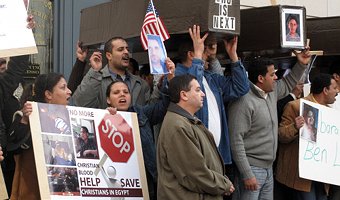
More than 1,000 Coptic Christians demonstrated in downtown Nashville against the shooting deaths of six Coptic Christians and other instances in Egypt of violence and persecution against their ancient Christian community. (PHOTO/Baptist Press/Art Toalston)

“Religious persecution is not only more prevalent among Muslim-majority countries, but it also generally occurs at more severe levels,” Roger Finke and Brian J. Grim write in their new book, The Price of Freedom Denied, published by Cambridge University Press.

Finke and Grim drew on annual reports by the U.S. State Department to conclude that religious persecution plagues all regions of the globe.

Studying 143 countries, they found:

• In 86 percent of countries, people were physically abused or removed from their homes based on their religion.

• High levels of government restrictions on religion were found in 78 percent of Muslim-majority nations, compared to 10 percent of Christian-majority nations and 43 percent of other nations.

But nothing inherent in Islam makes Muslim-majority countries poor guardians of religious freedom, Finke said, and Muslims themselves often are victims of religious intolerance.

“As Westerners, we view Muslims as targeting us or other Christians. But when you look within these countries, much of the persecution is Muslim on Muslim,” said Finke, a sociologist of religion at Penn State.

“It’s a battle over what type of Shariah law should be enacted, or who holds the reins of power in government.”

Open Doors, a California-based evangelical group that defends Christian rights globally, also cites Muslim-majority nations as particularly hostile in its recent list of the most dangerous countries in which to practice Christianity.

While North Korea tops the list for the ninth consecutive year in the Open Doors report, eight of the top 10 offenders are Muslim-majority nations. North Korea is followed by Iran, Afghanistan, Saudi Arabia, Somalia, Maldives, Yemen, Iraq, Uzbekistan and Laos.

Open Doors President Carl Moeller said he particularly is concerned about increasing violence against Christians in Iraq and Afghanistan. Iraq broke into the top 10 for the first time, up from No. 17, and showed the most dramatic deterioration for Christians.

“These are countries we sought to bring freedom to, and they don’t enjoy the most basic freedom we have in our country—religious freedom,” said Moeller, whose group devised a 50-question survey to rank countries.

A new report focusing on the most vulnerable religious communities in the world was released by the non-denominational First Freedom Center. In “Minority Religious Communities At Risk,” the Richmond, Va.-based group identifies groups threatened with extinction within a decade.

They are, according to First Freedom, Orthodox Christians in Turkey, Jehovah’s Witnesses in Eritrea, Jews in Arab lands, Jews in Venezuela, Nazarene Chris-tians in Somalia, Masalit Muslims in Sudan and Sabian Mandeans (a Christian sect) in Iraq.

Relying on the State Department’s religious freedom reports and other sources, First Freedom, like Open Doors, calls attention to the growing violence against religious minorities in Iraq and Afghanistan.

The group’s president, former Ambassador Randolph Bell, said the report bolsters his view that protecting religious freedom must be integral to U.S. peacekeeping operations.

“Whenever we try to stabilize situations in countries like Afghanistan, Iraq, Somalia or Nigeria, if we do not take into account the rights of religious minorities, peace will not last,” Bell said.


News Elsewhere:

Copts say Egypt regime change trumps Islamist fears (02/02/11)

An Egyptian Coptic Orthodox church source said the church will advise Copts not take part in the latest protests, but will not stop those who insist on taking to the streets.

Unrest in Egypt: Terry Mattingly wonders why media haven't mentioned the Copts in reference to the latest protests in Egypt.


Faith Digest

Moral climate poor, Americans say. Three out of four Americans grade the country’s moral climate at a “C” or below, according to a recent poll. The Public Religion Research Institute/Religion News Service poll found Americans older than 65 (46 percent) are more likely than adults under 35 (25 percent) to grade the country’s moral climate with a “D” or an “F.” The poll found that half of Americans rate the country’s moral climate as the same as other industrialized nations; 22 percent thought it was better; and 24 percent thought it was worse. The PRRI/RNS Religion News Poll was based on telephone interviews of 1,006 U.S. adults between Jan. 13 and 16. The poll has a margin of error of plus or minus 3 percentage points.

British YWCA drops Christian affiliation. The British branch of the YWCA has dropped “Christian” from its official name because it “no longer stood for what we are or what we do,” the women’s charity has announced. After 155 years, the Young Women’s Christian Association will now be known as Platform 51, the charity said in an announcement carried on its website. The organization said its new name “more accurately represents what we are or what we do—51 percent of people are female, and girls and women use us as a platform to have their say.” According to the Daily Mail newspaper in London, the name change underscores a growing rift between the charity’s members in England and Wales and the global YWCA. The newspaper quoted YWCA spokeswoman Sylvie Jacquat at the organization’s headquarters in Geneva as saying none of the YWCA’s other 124 branches around the world are contemplating a similar change.

Religious leaders praise new Cuba policy. Faith leaders with long-term ties to Cuban organizations hailed a change in White House policy that reduces limits on religious travel to the island nation. The White House announced Jan. 14 President Obama had directed changes that include permitting religious organizations to sponsor trips through a general license. The administration also will create a general license that permits remittances to religious institutions in Cuba that support religious activities. Michael Kinnamon, general secretary of the National Council of Churches, called the change “an important first step toward more just and open relations between the U.S. and Cuba.”

–Compiled from Religion News Service


Application of ethical principles changing, biomedical ethicist insists

WACO—At least three factors increasingly will shape applied biomedical ethics in the 21st century—globalization, transformative new scientific advances and recognition of human limitation and finitude, according to Baruch Brody, director of the Center for Medical Ethics and Public Policy at Baylor College of Medicine .

“I believe ethical principles are universally true and hold for all people at all times. I reject any form of ethical relativism. However, the application of these universal principles changes,” said Brody, who serves both as a biomedical ethic professor at Baylor College of Medicine and as a professor of humanities in the philosophy department at Rice University.

Brody spoke Jan. 19 at Baylor University in Waco at a presidential symposium—one in a series marking the first year of Ken Starr’s time as president of the Baptist-affiliated school.

Global communication, international commerce and ease of travel affect how ethical decisions about scientific research and medical treatment are made, he observed. Distribution of resources, limits placed on research by one nation but not by other countries and conflicting cultural standards all present challenges—as well as the simple question of which country bears the cost of research and development.

“How do we share God’s single world with others who are equally his children?” he asked.

Scientific advances growing out of a fuller understanding of human genetic composition also present ethical questions, whether regarding early diagnosis and treatment of disease at the cellular level or related to the potential for regenerative medicine, where natural biological processes are used to replace damaged tissue, he noted.

“If we are stewards of our bodies, what are the moral obligations to test” for a genetic disposition toward specific diseases, such as Huntington’s and Alzheimer’s, he asked. “What is the physician’s responsibility? Should patients have to opt out of genetic testing? Or should they have to opt in?”

Finally, life-altering scientific advances underscore the need for humility—“recognition of human limitations and our inevitable finitude,” Brody said.

For example, as medical science offers the potential to extend life, people must wrestle with questions about what gives life meaning, he said. Likewise, they must count the cost.

“New medical advances almost always carry with them greater medical expenditures,” he said. “On the one hand, we value human life and want it prolonged and improved. On the other hand, we do not have an infinite pool of resources.”

While ethical people recognize the preciousness of human life as a moral value, they also seek to balance it with other values, he noted.

“As we hold to unchanging universally valid principles, factors such as these may cause us to adopt a more nuanced understanding and application of our values,” Brody said.


Iron sharpens iron: Mentoring offers support

While a seminary degree can be an important component of a pastor’s toolbox, relationships with other pastors can be just as important—if not more so, according to some Texas Baptists who work with students preparing for vocational ministry.

Tim Skaggs (left), pastor of Coggin Avenue Baptist Church in Brownwood, has mentored three Howard Payne University ministry students—(left to right) Chase Woodhouse, Paul Deetz and Evan Henson. (PHOTO/George Henson)

But the mentoring relationship need not wait for graduation, and its genesis may be better suited before that first full-time position has been attained, they insist.

“It provides them with a support system,” said Don Williford, interim dean of Logsdon Seminary at Hardin-Simmons University in Abilene.

“They know there are people they can call when they face situations they have uncertainty about.”

For instance, when a pastor or staff member considers a change in ministry location, it can be comforting to have the voice of experience whispering in one’s ear, he noted.

Williford lacked that type of interaction when he was a student at Southwestern Baptist Theological Seminary years ago, he noted.

“When I had struggles in the local church, I had little to fall back on,” he said.

“My time in seminary prepared me well for doctrinal issues and those sorts of things, but for those things that pop up from time to time, I was largely on my own,” he recalled.

Mentoring constitutes a key part of the program at Baylor University’s Truett Theological Seminary, amounting to 12 hours of the degree program, said Robert Creech, director of pastoral ministries for the seminary.

Students choose a mentor in the field of ministry they plan to pursue, and they spend a full semester working with that person. The program presents a list of ministry competencies each student is to engage in during the semester.

The student not only meets weekly with his mentor, but also meets monthly with a lay committee.

{youtube}-gTQSG9ooEY{/youtube}

In addition, each student has about 2,000 pages of books and articles to read and respond to during the semester as part of the mentoring experience.

In each of his classes, Creech said, he stresses the importance of every minister finding a mentor during the first three months on the field when he or she secures a first full-time position.

The program at Truett helps them become accustomed to that type of relationship, he said.

“Having that kind of relationship provides a confidence that I can do this, and I’m not in it all by myself. I have people I can fall back on,” Creech said.

Often, a reverse-mentoring takes place as an added benefit, because the mentor is exposed to new ways ideas and perspectives, said Tim Skaggs, pastor of Coggin Avenue Baptist Church in Brownwood, who has mentored three Howard Payne University ministry students.

“It’s challenged my own way of thinking,” he said. “It’s forced me to evaluate why do I have a quiet time, why do I preach the way I preach, and in general, why do I do the things I do,” he said.

Skaggs tries to maintain a two-prong approach. On the one hand, he tries to cover some of the nuts-and-bolts of ministry—how to manage staff, how to run a staff meeting, how to make a hospital visit, how to relate to deacons, and how to conduct a baptism and the Lord’s Supper.

He tries to convey there is more than one way to do all those things, but how they are done will reveal the pastor’s personality—for good or ill.

The other part of the equation is more personal.

“I ultimately want to impress upon them the importance of the family. The church is not the top of your ministry list—your family is. If you win your community for Christ but lose your family, you’ve lost,” he said.

Skaggs also tries to impress upon the young ministers the importance of taking care of their own spiritual conditions and the value of spiritual rest.

Creech echoed that concern.

“There is so much to ministry that isn’t head knowledge. And one thing these mentoring relationships provide is an opportunity to wade out into deeper waters, but to know that you are safe, you have support,” he said.


Tiny heart touches the hearts of thousands

NASHVILLE, Tenn.—While getting ready for release of their fifth album, the Christian rock band Sanctus Real narrowed down possible selections for album titles and asked fans to vote for their favorite title. They overwhelmingly selected Pieces of a Real Heart to reflect songs written about forgiveness, hope and redemption.

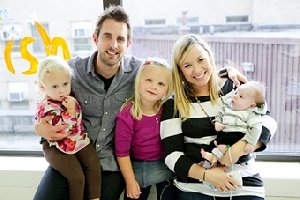
After 10 weeks in the hospital, it was a joyous homecoming as Matt and Sarah Hammitt finally were able to bring Bowen home.

Little did the band realize the deeper meaning that title would assume in the coming months, as the small heart of Bowen Hammitt, son of lead singer Matt Hammitt and his wife, Sarah, captured national attention and opened doors to share Christ’s love.

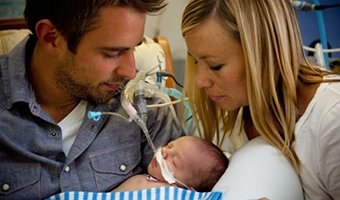
Bowen was born Sept. 9 with a serious and rare heart defect, Hypoplastic Left Heart Syndrome. In babies with HLHS, the left side of the heart cannot pump blood, so the right side must supply both the lungs and the body. Without surgical intervention, the condition is fatal.

“Any parent would say that watching your child go through something like this is much worse than going through it yourself,” Matt Hammitt said. “You want to take their place, but you can’t. That’s been the most difficult part for me.”

Just four days after his birth, Bowen underwent his first operation, as a shunt was inserted into his heart. 

Bowen Hammitt, whose name means “small, victorious one,” is battling a life-threatening heart defect and will undergo another surgery in February.  In a season filled with heartache and hope, his parents remained committed to leading others to Christ while sharing a powerful message about Christ’s unfailing love.

After several hours waiting beside Bowen’s bedside in intensive care, his parents went to their nearby hotel room for some rest. A few hours later, the phone rang at 2:13 a.m., alerting the Hammitts to return immediately to the hospital. By the time they arrived, doctors and nurses frantically were trying to save Bowen’s life. The medical staff finally resuscitated him after several attempts.

In the weeks that followed, Bowen—whose name means “small, victorious one”—also battled an infection and other complications. To keep their family and friends updated, the Hammitts set up a website called “Bowen’s Heart.” Thousands of people around the world began sending messages of encouragement while committing to pray for Bowen. 

Thanksgiving week marked a joyous and tear-filled homecoming, as the Hammitts finally brought their 10-week-old son home to meet his two sisters. In February, Bowen is scheduled to undergo another surgery. 

{youtube}NZVjKrmvYYQ{/youtube}

The Hammits’ unwavering faith throughout this trial has provided countless opportunities to share the gospel, including during a segment on ABC World News.

“We thank God for the gift of waking up at home this morning with baby Bo-wen at our bedside,” Matt Hammitt said. “We’ve been praying so long for these moments. Taking care of Bowen at home will in-clude a lot of work and lack of sleep, but having our family together is worth it.

“When bad things come your way, you can either be angry or bitter—or you can let them shape, mold and teach you lessons about life. It’s our desire that people will be encouraged as they see that we have been brought closer to Christ through this trial, and he is the ultimate source of comfort and strength. By bringing others to Christ during a time of struggle, we want to lift up the body of Christ and further the work of the kingdom, in all things giving glory to God along with praise and thanksgiving.”


Life coaching makes its way into churches

MURFREESBORO, Tenn. (ABP)—Career coaching has been around in the business field for decades. More recently, it spun off a concept of life coaching. Now, the coaching concept is starting to make its impact in churches.

Ircel Harrison

Most experts credit Benjamin Karter, a former football coach turned motivational speaker, as one of the originators of the personal coaching field. As coaching began to be viewed as having a broader application than just leadership training for business executives, Karter’s background in athletics prompted speeches focused on mentoring, role modeling and helping people identify and then pursue life goals.

Today, a “life coach” is a person who provides general guidance and support seeking to improve others’ professional and personal lives.

Ircel Harrison, an associate with Pinnacle Leadership Associates in Lexington, S.C., said coaching is different from therapy and counseling, both of which require a high level of knowledge and should be left to experts. It’s closer to mentoring and consulting, except those relationships connote more of a teacher-learner dynamic where one partner imparts experience or expertise on the other.

Coaching, he said in an interview, is more a matter of self-discovery. The “elevator speech” he uses is “to help people discover their growing edge and then live into it.”

“The whole coaching idea is that most of us already know what we need to do; we just need to find a way to do it,” Harrison said.

Coaching involves a formal relationship that helps people develop structures of accountability. “People grow best in accountability structures,” he said.

No caption submitted

People choose whether to be accountable in various walks of life, Harrison said. They become accountable to an employer or business in order to earn a living and join Alcoholics Anonymous or Weight Watchers because they want to change their habits and lives.

In churches, however, accountability too often is viewed as a dirty word, Harrison said. Since retiring as coordinator of the Tennessee Cooperative Baptist Fellowship at the end of 2008, he has worked with Pinnacle President Mark Tidsworth to develop a program called Disciple Development Coaching.

“People connect to a church when they are engaged, when they are growing, when they are very honest that they have certain needs and those needs are being met,” Harrison said. “One way that happens is through growth, and growth comes through accountability.”

Structures of accountability already exist in groups like Sunday school classes, where members encourage and support one another in small-group settings, Harrison said. The difference with coaching, he said, is it is more formalized, and the coach learns some basic skills in listening, setting goals and maintaining accountability structures.

A former campus minister, Harrison always invested a lot of his time on student discipleship, typically with group studies of books like Richard Foster’s Celebration of Discipline.

While they have similar goals, Harrison said, traditional discipleship and coaching use different methods.

“The thing that for me differentiates peer coaching from a lot of the traditional discipleship is most of the discipleship programs I have been a part of have been more of a mentor-student type of dynamic, and usually a pretty structured curriculum kind of approach,” he said.

“This approach is much more: ‘OK, help me identify what I need to do in my life, and then I’m going to go out there and find resources. I might even go to my pastor and ask him for a list of resources.’”

One byproduct of the approach is it makes the ministers of the church more resource providers than experts about religion.

“What we have tried to do is say if you have a need and can verbalize that, instead of telling you what to do, we encourage you to brainstorm about possibilities of what you can do for yourself,” Harrison said.

He noted he “really didn’t know much about it” before entering the coaching field. Over the past two years, he has coached 12 people—mostly ministers and most utilizing long-distance meetings by phone.

He is seeking to implement coaching principles with lay people in his congregation, First Baptist Church in Murfreesboro, Tenn., and believes it also has application in church staffs where the lead pastor relates to other staff as a coach and not just as a supervisor.

“Quite honestly, it’s one of those things where not everybody is going to want to do this,” he acknowledged. “It’s for folks that think: ‘I’d like to be more intentional about certain things, whether it’s my spiritual life, my marriage or my work in the community. I need a peer who will stand along beside me and encourage me in the right direction.’”


Academy for Spiritual Formation blends learning, discipline, community

NASHVILLE, Tenn. (ABP)—Growing up in a Baptist church and later working part-time as a youth minister, Johnny Sears always believed his faith had to go deeper than a set of beliefs or activities.

“How do we take prayer from being another thing on the to-do list and make it a way of life?” Sears pondered in an interview. “That’s really in my mind what it’s all about, and it all flows from that.”

Johnny Sears

Attending classes part-time at Baptist Seminary of Kentucky, Sears learned about contemplative spirituality practiced by individuals like Thomas Merton, a Trappist monk in Kentucky who wrote 70 books before his death by an electrocution accident in 1968 at age 53.

Interest in the subject led Sears to withdraw from seminary to enroll in the Academy for Spiritual Formation, a two-year covenant-learning environment combining academic training and experience in spiritual disciplines offered by Upper Room Min-istries. In July, he took over as the academy’s director.

Started 27 years ago, the academy is part of Upper Room, an ecumenical division of the United Methodist Church’s General Board of Discipleship founded in 1935. He admits a 35-year-old Baptist layman with an engineering degree and no plans to enter full-time ministry might not seem a logical choice.

On the other hand, “the Baptists that I’ve seen and talked to that go through it, we all just kind of get into it and have this epiphany,” he quickly added. “We just fall in love with it.”

The academy enrolls a community of about 50 people plus faculty who go through the program together. Over the course of two years, they are offered a total of 16 courses and meet in a retreat setting for five days four times a year.

Sears, who fully intended to re-enter seminary but during his two-year hiatus decided he no longer desired a ministry degree, said the commitment in some way mirrors the seminary experience. It’s a huge obligation of both time and money, for example, and both aim for an outcome of spiritual transformation.

On the other hand, Sears said, he found the approach more holistic than seminary, which while incorporating both head and heart, still tilts more toward the intellectual side.

“You have the experiential, you have the intellectual, you have the social and you even have the institutional piece of it, too,” he said. It’s what his former professor Glenn Hinson called the “four-legged stool” for balanced spirituality.

One of the gifts of the academy, Sears said, is the sense of community that develops.

“It will be such an odd mix of people each time,” he said. “People come from all walks of life. The academy is typically a mixture of lay and clergy.”

“It tends to skew a little older,” he added. “I’m trying to work on that and get younger people in, but that time and money commitment is difficult. Lots of times it’s not until you’re in those later stages of life that you really can manage to do this.”

That community gets broken up into smaller groups of seven or eight who get together every night for every session for about an hour and a half.

“It’s not just a discussion group,” he said. “It’s a time to be with one another and to journey together and share lives. It’s sort of a group spiritual direction in a sense. … Over the course of two years, that can become very intimate.”

On top of that is a “daily rhythm” of the eight sessions.

“You start each day in worship and morning prayer,” he said. “You have Eucharist every day. You close with night prayer. So the day is framed in prayer and worship. You have times of silence, extended periods of silence, during the day. You have the academic aspect of it, but all of those things work together.”

Sears said the academy isn’t some sort of “fringe group” promoting a New Age spirituality that says, “I’m spiritual, but I’m not religious.” It’s highly ecumenical, he said, but it works within the institutional church as an extension instead of replacing it.

Sears said he thinks one reason Baptist participants find the academy so rewarding is the way they worship often doesn’t include as much of the contemplative side, and they traditionally are so action-oriented they can lose connection to the “deeper well” of spirituality.

“That’s not to say that we’re just navel gazing and we’re going to sit around a pray while the world goes to hell,” he said. “I genuinely think that if you have that deep connection to God that you can’t avoid being thrust into the social issues of the day.

“We tend to fall off on one side or the other as a totally individualistic me-and-Jesus sort of experience, or we emphasize the social activism kind of aspect. The problem with that is getting burned out, and you’re trying to do it all on your own. You become bitter and angry and all those kinds of things. Really, that activism has to come from this place of being rooted in Spirit, and then it’s out-flowing that.

“We’re not the ones that are really driving this bus,” he continued. “I’m not going to do this on my own. This needs to come from some place transcendent, and I need to be attuned to that. That is the only way that my ministry is really going to have an impact.”

One thing the Baptist tradition brings to the table, Sears said, is the “voluntary principle” of religion.

“We’re not going to be coerced,” he said. “That is something that is needed, not an obstinate independence, but an ability to challenge the status quo and not be coerced into a certain pattern and certain way.”