Faith Digest: New religious emojis on the way

In addition to smiley faces, high heels and frogs, Unicode is rolling out a new batch of 250 emojis, among them a set of religious icons. praying hands200Unicode is the character coding system that gives a unique number for every character, allowing different companies to have access and support for universal emojis—pictographs that originated in Japanese electronic messaging. The new emojis will feature three types of crosses, the dove of peace and the Om symbol, a mystical Sanskrit sound of Hindu origin. They will join an emoji cast that includes an angel and a devil. The new emojis will be available with the Unicode 7.0 update, but that doesn’t mean users will have them right away. Companies such as Apple, Microsoft and Google have to decide which emojis they want and how they’ll look before customers have the option to use them.

Pope condemns racist attitudes toward immigrant children. Pope Francis waded into the controversy of the wave of unaccompanied minors arriving at the United States-Mexico border, calling for an end to racism against migrants and pushing the United States to offer greater protection for young children entering the country illegally. pope francis mug200Pope Francis“Many people forced to emigrate suffer, and often, die tragically,” the pope said in a message sent to a global conference in Mexico. “Many of their rights are violated, they are obliged to separate from their families and, unfortunately, continue to be the subject of racist and xenophobic attitudes.” The Argentine pontiff said a different approach is needed to tackle what he called a “humanitarian emergency” as growing numbers of unaccompanied children are migrating to the United States from Central America through Mexico. “I would also like to draw attention to the tens of thousands of children who migrate alone, unaccompanied, to escape poverty and violence,” the pope said. “They are increasing day by day. This humanitarian emergency requires, as a first urgent measure, these children be welcomed and protected.” The pope’s letter was sent to the Mexico-Holy See Colloquium on Migration and Development and presented by the papal nuncio to Mexico, Archbishop Christophe Pierre. The Vatican secretary of state, Cardinal Pietro Parolin, also attended the conference.

Americans view Jews and Christians warmly. A new Pew Research survey finds adults in the United States feel most warmly about people who share their religion or those they know as family, friends or co-workers. Americans give their highest scores to Jews, Catholics and evangelicals on a zero-to-100 “thermometer” featured in the survey, “How Americans Feel about Religious Groups.” They’re nestled within a few degrees of each other—Jews, 63; Catholics, 62; evangelicals, 61. In the middle of the chart are Buddhists at 53, Hindus at 50 and Mormons at 48. Trending to the chilly negative zone are atheists at 41 and Muslims at 40. Pew found, perhaps unsurprisingly, people rate their own groups higher than others. Still, the groups’ overall average scores are pulled down by those who don’t share these faiths. Catholics give themselves an 80 score while non-Catholics give them a 58. Evangelical Christians score 79 with people who called themselves “born-again” or evangelical, but only 52 with others. White evangelicals give their highest warmth score to Jews, 69. However, all that warmth is not reciprocated. Jews gave evangelicals overall a much cooler score of 34. White evangelicals are leery of other non-Christians and downright chilly toward nonbelievers. They rank Buddhists at 39, Hindus at 38 and atheists draw 25—the lowest score of any group. Similarly, atheists give evangelicals overall a rating of 28. The survey was conducted between May 30 and June 30 with a nationally representative panel of 3,217 randomly selected adults—2,849 people answering the survey online and 368 responding by mail. The margin of error is plus or minus 2.2 percentage points.

Church of England approves women bishops. After 20 years of turmoil and heated debate, the General Synod of the Church of England said “yes” to women bishops. The first could be named by the end of the year with the appointment of at least three additional women sometime in 2015, senior church officials said. The General Synod is the three-tier governing body of the Church of England, and it is made up of bishops, clergy and laity. At a meeting in York, the General Synod gave final approval to legislation introducing the changes by the required two-thirds majority. Overall, the Synod voted 351-72 on the measure. Ten abstained.


Faith Digest: Cross on Mount Soledad can stay for now

The decades-long battle over a cross erected on public land in California will drag out even longer now that the Supreme Court declined to hear the case. The court said the case first must go to the 9th U.S. Circuit Court of Appeals before the high court will consider it. mount soledad sign300The conflict in Mount Soledad Memorial Association v. Trunk, is over a 43-foot cross that sits atop Mount Soledad on public land in San Diego. The cross was erected in the 1950s and later became a veterans’ memorial. A veterans’ group that maintains the cross asked the Supreme Court to let it leapfrog over the 9th Circuit after a lower federal court ruled last December the cross should come down. The Mount Soledad cross has a long history of legal wrangling. The first challenge came in 1989, before the land surrounding it became a veterans’ memorial. In December, a federal court in San Diego ruled the cross should come down because it violates the First Amendment’s Establishment Clause and promotes one religion—Christianity—over others. But the same court granted a stay, allowing the cross to remain until the veterans had a chance to appeal. The decision by the Supreme Court to send the case back to a lower court could mean the case will last at least another two to three years.

Vatican financial watchdog signs accord. In its latest bid to tackle corruption and increase transparency, the Vatican’s financial watchdog signed a bilateral accord to exchange information with its counterpart in the United States. Officials with the financial information authority announced it endorsed the agreement with the Office of the Comptroller of the Currency, an independent body in the U.S. Treasury Department responsible for regulating and supervising domestic and foreign banks. It marks the latest example of the authority’s efforts to build international cooperation and prevent a repeat of the corruption scandals that have engulfed the Vatican bank, known as the Institute for Religious Works. The announcement came less than a month after Pope Francis dismissed the five-man board of the financial watchdog in a controversial move that underscored his hard line on cleaning up Vatican finances. The Vatican watchdog expects further agreements with financial supervisors and regulators around the world as it strengthens its own regulatory infrastructure in the fights against money laundering and financing terrorism.


Religious liberty under attack—or not

An overreaching federal government threatens religious liberty, some Americans assert. A secular culture that values political correctness over truth imperils freedom of religion, others insist. Or maybe the perceived threat depends on perspective.

courtney kreuger130Courtney Krueger“I would suspect that a Muslim family subjected to endorsements of Christianity in public settings might view those as threats to their religion,” said Courtney Krueger, pastor of First Baptist Church in Pendleton, S.C.

A recent Public Religion Research Institute poll found a majority—54 percent—of Americans believe religious liberty is being threatened in America, up from 39 percent two years ago. 

Republicans are twice as likely as Democrats—80 percent vs. 40 percent—to say religious liberty is threatened, the poll shows. Eight out of 10 white evangelicals—83 percent—believe religious liberty is being threatened in the United States today, compared to 55 percent of Catholics and 53 percent of white mainline Protestants.

Brent Walker, executive director of the Baptist Joint Committee for Religious Liberty, agrees threats to religious liberty exist, “although they are sometimes overstated for political reasons or to stir up fund-raising opportunities,” he said.

brent walker mug130Brent Walker“Some people, generally on the far left, don’t think we should have any accommodation of religion and believe any attempts to relieve burdens on the exercise of religion impermissibly establish religion,” Walker said, pointing to tax exemptions and exempting churches from antidiscrimination laws as examples.

“Others, on the far right, want their religion protected but ignore the effect it would have on the rights of third parties or how it could result in a true establishment of religion.”

The reality of increasing religious pluralism in the United States—not genuine animosity toward Christianity—prompts some Christians to feel as if their faith somehow is being pushed to the margins, Krueger noted.

“When government seeks to appropriately apply the establishment clause of the first amendment to the Constitution, it may feel to many adherents of Christianity that government has suddenly become hostile to Christianity,” he said. “I do not sense a hostility from government toward Christianity.”

Rather, government properly is seeking to avoid establishment of religion by “promoting one religion over another or any religion over unbelief,” he added.

Chad Chaddick, pastor of Northeast Baptist Church in San Antonio, polled members of his church council to determine if they believe religious liberty is threatened in the United States.

“Assuming perception is reality,” he said, the answer must be a resounding “yes.”

chad chadwick130Chad ChaddickA public school music teacher said she was told she could not include religious songs in a concert. Retired military personnel talked about restrictions on chaplains. Others mentioned public places where spoken prayers “in Jesus’ name” were barred.

Chaddick does not share some of his members’ concern that state-sponsored prayer has been removed from public schools, for example. However, he perceives a real threat to religious liberty from a different source—the popular sentiment that religion is a strictly private matter and a civil religion that exalts toleration, expands the understanding of human rights and embraces a materialistic view of the world.

“This loose civil religion is serving a very religious function in helping shape the moral values of the nation. Furthermore, the nation—through its public institutions and its government powers—is establishing this civil religion as the religion of the nation,” he said.

“In the face of this civil religion, it is socially acceptable to discriminate against sectarian religions, including Christianity, by the suppression of religious views and by the ridicule of religious views—at least as they are expressed in the public spheres of life.”

Cultural analyst Jim Denison likewise points to ways contemporary American culture extols the virtue of tolerance but deals intolerantly with some religiously based views.

jim denison speaking425Jim Denison, president of the Denison Forum on Truth and Culture. (Campbellsville University Photo by Nicholas Osaigbovo)A Colorado baker who refused to bake wedding cakes for same-sex couples was ordered to make them and undergo sensitivity training, the founder of the Denison Forum on Truth and Culture noted. A U.S. Army Reserve training presentation referred to evangelical Christians as “religious extremists” alongside al-Qaeda, Hamas and the Ku Klux Klan, he added.

“If you believe homosexual activity is forbidden in Scripture and is therefore wrong, you are clearly on the wrong side of public opinion and can expect growing restrictions on your freedom of speech and religious convictions. If you want to express your faith publicly, you can expect opposition and discrimination in some parts of our country,” Denison said.

If threats to religious liberties exist—whatever their source—rather than wage culture war, several Baptists insisted the best approach involves presenting a consistent, loving Christian witness.

“Baptist-type Christians must strive to love all people, and particularly those on the margins of society—those who have found the civil religion empty and uncaring in its tacit approval of human selfishness,” Chaddick said.

“To those who are broken, the gospel is indeed good news. In loving the broken, the forgotten, the marginalized, Baptist-type Christians will need to give up any sense that our work, our faith or our organizations will somehow achieve a level of social acceptability or accolade.

“I suspect that the pendulum of public opinion will continue to swing as it will, and when enough of society is broken beyond the repair of our manmade religion, then a majority of people will find hope in the one place where hope has always existed—the faithful mercy of God.”

American Christians in the 21st century should consider the example of Christians in the first century, Denison noted.

“Early Christians had far fewer religious freedoms than we enjoy today. … Yet they ‘turned the world upside down’ (Acts 17:6) and launched the largest spiritual movement in human history,” he said.

“How did they do it? They demonstrated their faith by their love. … They did not mount a culture war but gave their lives to a movement of subversive service and grace.”

True Christian love means standing for the rights of people with whom Christians disagree and applying the Golden Rule, Krueger insisted.

“We should continue to ensure the religious freedom of everyone, especially of those who do not share our faith,” he said. “I can think of no greater witness.”


Do majority Baptists speak up for religious minorities?

When Baptists constituted a minority sect in America, bold spokesmen such as John Clarke, Obadiah Holmes and James Ireland took courageous stands for religious liberty, historians agree. Baptists like John Leland led in calling for separation of church and state and demanding liberty of conscience for all people.

But in communities where Baptists and other evangelicals predominate, do their modern spiritual descendants demonstrate the same commitment to speaking up for religious minorities?

brad bull99Brad BullWhen the shoe is on the other foot, are Baptists willing to speak up for nonbelievers or followers of non-Christian religions who object to religious displays on government property?

When they do, it can be a lonely place, said Brad Bull, whose opposition to a Ten Commandments display in Knox County, Tenn., set off a firestorm locally more than a dozen years ago. At the time, Bull served as associate pastor of youth and young adults at Cumberland Baptist Church in Knoxville.

Originally, he attended a public hearing regarding a resolution to authorize prominent placement of the Ten Commandments at the courthouse just to monitor the situation. Prior to the meeting, he privately expressed his concerns to a county commissioner, who later unexpectedly called on him to speak to the issue.

“I was motivated by what I learned in seminary and from my reading of Baptist history. Beyond that, it’s like I told a county commissioner at the time: ‘I have a neighbor who is Buddhist. Another neighbor is Muslim. They pay taxes in the county just like I do.’ I just saw what I did as an issue of fairness,” Bull said.

ten commandments311He never anticipated the fallout. After the Knoxville newspaper and a local radio station reported his opposition to the resolution, his wife, Connie, nearly lost her job teaching Spanish and music as part of a cooperative for home-school students.

After the parents of a couple of her students objected to her husband’s comments, the church where she taught classes threatened to cease making its facility available. The cooperative placed her on leave for two weeks until the matter could be resolved.

After a three-hour meeting in which Bull fielded questions about his theology and his politics, all the parties involved finally agreed to disagree about the Ten Commandments display. A few days later, the Bulls joined several of the individuals involved in that meeting for dinner after a Christmas concert.

Looking back, Bull said, he not only felt he “went out on a limb” where many fellow Baptists failed to join him, but also believed some Baptists in the community were “shaking the tree.”

“I don’t have any regrets about the stand I took. My regret is for Baptists in general,” Bull said. “There’s a lot of lip service paid to separation of church and state and a lot of lip service offered to sacrifice, but there’s a whole lot of hypocrisy, myself included. That saddens me.”

courtney kreuger130Courtney Krueger, pastor First Baptist Church in Pendleton, S.C.Baptists need to honor their heritage by standing for religious liberty—and the principle of church-state separation that protects freedom of religion, said Courtney Krueger, pastor First Baptist Church in Pendleton, S.C.

“As a Baptist Christian, I believe that we Baptists have a heritage and therefore a responsibility of promoting the separation of church and state,” Krueger said. “We must remind ourselves and others that inappropriate entanglements between church and state tend to harm both.”

In 2011, the Wisconsin-based Freedom from Religion Foundation responded to a complaint by an anonymous resident of Henderson County in East Texas, and they called on commissioners to remove a nativity scene from the courthouse lawn in Athens. The nativity was part of a display sponsored by Keep Athens Beautiful, and it also included secular holiday scenes.

Some East Texas Christians joined in a public rally supporting the nativity display, but Baptists among them voiced varied reasons for the support they offered.

nathan lorick rally bp425Nathan Lorick, pastor of First Baptist Church in Malakoff, joined in a public rally supporting a nativity display on the courthouse lawn in Athens in 2011. (BP Photo by Jerry Pierce)Nathan Lorick, pastor of First Baptist Church in Malakoff, a Southern Baptists of Texas-affiliated congregation, insisted he wanted to protect his children from an increasingly secularized society that marginalizes or vilifies Christianity.

“My kids are young, and it’s worth fighting to restore fundamental Christian beliefs we were founded on for my kids’ future,” he said.

Lorick questioned how one local resident and an organization across the country could compel an East Texas county to reverse a longstanding tradition—particularly, he said, when evangelical Christians have a strong presence in Henderson County.

Kyle Henderson, pastor of First Baptist Church in Athens, a Baptist General Convention of Texas-affiliated congregation, posted a statement on his church’s website framing the issue in terms of free speech, and he emphasized the need to stand in support of unpopular minority voices.

nativity rally bp424An estimated 5,000 people crowded the Henderson County Courthouse lawn on Dec. 16, 2011, to show support for a privately owned nativity scene displayed on the courthouse square. A Wisconsin-based atheist group had demanded its removal and threatened legal action. Signs such as the yellow one in the photo were prominently displayed at the rally. Three Southern Baptist pastors were among the speakers. (BP Photo by Jerry Pierce)“Majority rule can be a terrible thing,” Henderson said. “That is why we have the Constitution and the legal system, to protect the rights of all people. We should not stand up because we have the majority and can intimidate others, but we should stand up because we believe every citizen has the right to freely express their opinion.

“We will need to defend our elected officials when they allow free speech to appear on the courthouse lawn, especially if it is a message with which we do not agree. … We will need to affirm the rights of all people, so we will not lose our rights to speak the truth.”

Too often, Baptists and other Christians respond reflexively and allow partisan political rhetoric to shape their responses to complex issues, rather than thinking critically about them, Krueger observed.

“I do wonder if a response would not be to ask that any using such rhetoric apply the Golden Rule to whatever situation or issue they are commenting on,” he suggested.

“If they would be willing to truly consider the ideas and situations of the ‘other,’ it might help them understand rather than simply attack another point of view.”

brent-walker-speaking350Brent Walker, executive director of the Baptist Joint Committee for Religious Liberty.Brent Walker, executive director of the Baptist Joint Committee for Religious Liberty, echoed the sentiment.

“We need to understand there is ‘room for play in the joints,’ to quote the U.S. Supreme Court itself, between the two religion clauses in the first amendment. Not everything is either barred by the establishment clause or required by the free exercise clause. Both clauses need to be taken seriously, but not so rigorously that one swallows up the other,” Walker said.

“We need to worry as much about the liberty of others as our own—what a Christian thing to do—and acknowledge and embrace the religious pluralism that we have in this country. … We should always look out for the rights of the minorities—majorities can generally take care of themselves—and keep the Golden Rule in mind, a completely fair and evenhanded principle that all citizens should be able to rally around.”


Faith Digest: Atheists offer invocations at public gatherings

The Supreme Court decision handed down in May allows sectarian prayers of all kinds at public meetings. Nonbelievers already have offered secular invocations—essentially calls for inclusion aimed at elected officials rather than directed to a deity—at meetings in Pennsylvania and Illinois, and atheist groups in Florida have asked for a chance at the lectern. On July 15, Dan Courtney, a member of the Atheist Community of Rochester, will deliver the invocation at a council meeting in Greece, N.Y., the town at the center of the court decision.

Pope urges Mafia to repent. Pope Francis is calling for Italy’s organized crime groups to give up “the adoration of evil,” telling members of the Mafia they are excommunicated from the Catholic Church. pope francis300Pope Francis told Mafia members they “are excommunicated” from the Catholic Church. (RNS / Creative Commons image by Christoph Wagener)The pope ventured into the heartland of the country’s most powerful Mafia to issue the Vatican’s strongest attack on organized crime since the late Pope John Paul II attacked the Sicilian Mafia in 1993. “Those who in their lives follow this path of evil, as mobsters do, are not in communion with God. They are excommunicated,” the pope told tens of thousands who gathered to celebrate Mass in the town of Sibari. Francis’ determination to challenge organized crime groups provoked warnings he could become a Mafia target. One of Italy’s top prosecutors, Nicola Gratteri, who investigates the Mafia, said the pope had created a “revolution” in the church and was at risk of Mafia retribution because of his desire to get rid of cronyism and corruption.

Presbyterians vote to allow gay marriage. The Presbyterian Church (USA) voted at its general assembly in June to allow gay and lesbian weddings within the church, making it among the largest Christian denominations to take an embracing step toward same-sex marriage. By a 61-39 percent vote, the general assembly of the 1.8 million-member denomination voted to allow pastors to perform gay marriages in states where they are legal. Delegates, meeting in Detroit, also approved new language about marriage in the church’s Book of Order, or constitution, altering references to “a man and woman” to “two persons.” This change will not become church law until a majority of the 172 regional presbyteries vote to ratify the new language. But given the lopsided ratio of the vote, approval is expected. Under the new rules, pastors who do not want to preside over gay weddings are not obligated to, and the change applies only in the 19 states and the District of Columbia where same-sex civil marriage is legal.

Presbyterians use divestment to pressure Israel. The Presbyterian Church (USA) voted to divest church funds from three American companies it cited for profiting from the oppression of Palestinians within Israel’s occupied territories. The 310-303 vote of the church’s general assembly in Detroit marks a victory for divestment supporters both within and without the 1.8 million-member PCUSA, now the largest American church to embrace divestment as a strategy to pressure Israel to return occupied territories. The divestment resolution targeted companies divestment supporters say supply electronic and earth-moving equipment that help Israel violate Palestinian rights. Presbyterians in support of the resolution described it as a long overdue stand on behalf of Palestinians suffering under the occupation, which began in 1967 when Israel pushed back attacks from neighboring countries. “After a decade of corporate engagement with Caterpillar, Hewlett-Packard and Motorola Solutions, these companies have failed to modify their behavior and continue to profit from Israeli human rights abuses and nonpeaceful pursuits,” said Walt Davis of the Israel/Palestine Mission Network, a pro-divestment group within the church. Rick Jacobs, head of the Union for Reform Judaism, the largest branch of Judaism in North America, spoke to the assembly, warning a divestment vote would be taken as a sign the church has aligned itself with voices in the “boycott/divestment/sanctions” movement who vilify Israel and even question its right to exist.


How dying churches can find new life

FRANKLIN, Tenn. (RNS)—For years, a handful of members of Hillview Baptist Church in Franklin, Tenn., prayed their pews would be filled with worshippers.

In early June, those prayers finally were answered, as more than 300 people gathered for a Sunday morning service.

But the pews were gone. So were the traditional hymns. And a new sign outside the church now bore the name “Conduit Church.”

darren tyler130A few weeks earlier, the congregation of Hillview had voted to merge with Conduit, a 4-year-old nondenominational church. At the time, Hillview had dwindled to less than two-dozen members, and was on the verge of shutting down.

“They were tired,” said Darren Tyler, pastor of Conduit. “And they knew their strategy wasn’t working.”

Instead of closing down, Hillview became one of a small but growing number of struggling evangelical congregations who’ve found new life by teaming up with a larger church. The mergers allow small churches to reinvent themselves and bigger ones to extend their reach.

The arrangement met a need for both congregations.

Hillview had a building but few people.

Conduit had people but no building.

The church had been meeting in a local high school since its founding. But the school board policy put a time limit on how long a church could rent.

“The clock was ticking,” said Tyler.

As part of the merger, Hillview gave up ownership of the building—which had a $150,000 mortgage. Just before the first joint worship service, a friend of Conduit Church came forward and paid off the building.

The process was a bit like dating. Tyler and Jim Gosney, Hillview’s pastor, met for coffee first, followed by a meeting of leaders from both groups. The whole process took about two months.

Gosney remains on staff, and the church plans to build an exhibit that highlights Hillview’s heritage.

“I don’t want their history to disappear,” said Tyler of the church founded in the 1980s.

Mergers may offer new life for many smaller congregations, which have been hit hard by the changing demographics of American congregations.

Most U.S. churches are small—under 100 people. But the majority of church attenders now go to a big church, according to the National Congregations Study. That leaves thousands of churches with buildings but few worshippers.

In some cases, those churches have chosen to join bigger multisite congregations, like Edmond, Okla.-based LifeChurch.tv.

The church has 18 locations, known as campuses, around the country. Five of the campuses were created as a result of mergers, said Bobby Gruenewald, a pastor and innovation leader at LifeChurch.

It’s not an easy process, he said.

“If you are wondering what will change—everything will change,” he said. “We are not making a hybrid. A church that is going to become part of what we are doing is going to have to change.”

That means giving up property, independence and often the church structure. In most cases, the church staff also changes.

Most of the congregations that merged with LifeChurch.tv were smaller and struggling. Some were in danger of closing down.

“They didn’t want the church to just disappear,” he said. “They wanted to reach more people.”

david raymond425David Raymond of ChurchFuture, a consulting firm in Minneapolis.David Raymond of ChurchFuture, a consulting firm in Minneapolis, often works with mainline Protestant churches considering mergers. In this type of merger, two or more small churches unite rather than consolidating with a larger franchise.

“They are typically in sharp decline,” he said. “They can’t keep going.”

Most of the churches he works with are small—about 70-75 people. All their attention is focused on survival, so they have little energy to reach out to their neighbors or serve their community.

“When you have that few people, you are chewing up everybody’s resources just to keep the Sunday school running and the lights on,” he said.

Raymond starts by asking the struggling church to think strategically about its ministry. He often asks, “What can we do to reach out and serve more people in your community?”

“I always put it to the congregation this way,” he said. “This is your church. This is your choice. Do you want the church to close? Or do you want to try something new?”

Craig Pederson, pastor of Grace Lutheran Church in Minneapolis, said a merger can jumpstart a church’s ministry.

His church was formed in 2007 after three small churches decided to close down and pool their resources. Those older three churches had a total of 600 members, Peterson said, but few people showed up for services.

The churches were stuck, he said, with little hope for the future.

A seed has to die to have new life.

Opening a new church gave them a chance to begin with a clean slate. As part of the restart, the churches formed a separate nonprofit called Grace Center for Community Life in northeast Minneapolis, which is housed in a converted school.

Today Grace Lutheran has about 200 active members, said Pederson. They meet in the Grace Center for worship service on Sunday, sharing the space with three other churches—a Hispanic Pentecostal congregation, a startup Lutheran church, and a Seventh-day Adventist congregation of immigrants from Ethiopia. The center also rents space to two charter schools, a food pantry, a child-care center and other neighborhood programs.

Still, he said, there was a lot of pain in the process. Watching a church you love shut down is hard, he said, as is saying goodbye to a church building, which often is filled with powerful memories.

But a merger can get a church out of survival mode and get the congregation focused on the future. That’s a good thing, he said.

“A seed has to die to have new life,” Pederson said. “That’s hard to hear for some churches. But it’s in the Bible.”


Faith Digest: Religious giving down as philanthropy improves

The new Giving USA report shows a slight downturn for churches and other religious organizations against an improving charity landscape. American individuals, groups, foundations and corporations gave $335 billion in 2013—a 3 percent increase from 2012, adjusted for inflation. It’s the fourth consecutive year in which giving rose after taking a beating during the recession that officially ended in 2009. But religious groups saw donations drop 1.6 percent from 2012 to 2013. That contrasts to healthy jumps in education (7.4 percent), the arts and humanities (6.3 percent) and environmental and animal groups (6 percent), according to the study, which Giving USA produced with the Indiana University Lilly Family School of Philanthropy. Still, the religious sector continues to collect a greater proportion of total charitable giving—31 percent—than any other, the report shows. The next-largest share of the philanthropic pie went to education, with 16 percent of donors’ dollars. The Giving USA study drew on many government and private groups for data, including the Internal Revenue Service and the U.S. Census Bureau.

Many Americans don’t want atheist in-laws. A new Pew Research survey shows Americans divided when someone in the family picks a nonbeliever to marry. Atheists are the most unwanted future relative, by far. Nearly half—49 percent—of Americans say they would be unhappy if a member of their immediate family picked an unbeliever for a spouse. atheist inlaws425Respondents most likely to be upset are Americans who identify themselves as “consistently conservative” (73 percent); Protestants (64 percent), including 77 percent of white non-Hispanic evangelical Protestants; Republicans or those who lean that way (59 percent); and Roman Catholics (55 percent). By contrast, only 9 percent overall said they would be upset by the prospect of a relative wedding a “born again” Christian. The questions were part of a comprehensive look at polarization in U.S. society. The overall survey, conducted from January through March 2014, was of 10,013 people, but only about a third were asked the marriage questions. The margin of error for that portion of the survey is plus or minus 2 percentage points.

Regional UCC votes to boycott Redskins. The United Church of Christ for the mid-Atlantic region passed a resolution asking its 40,000 members not to buy game tickets or wear any souvenir gear of the Washington NFL club until it changes its embattled team name.The resolution, which also calls on the team to change its name and refrain from using American Indian imagery, passed unanimously at the UCC’s Central Atlantic Conference in Dover, Del. The UCC has nearly 1 million members nationwide and more than 5,100 congregations, including 185 in its mid-Atlantic region of Washington, D.C., Maryland, New Jersey, Delaware and parts of Virginia and West Virginia. The Protestant denomination is headquartered in Cleveland and has been active in protests against the Cleveland Indians’ Chief Wahoo mascot.


Political polarization challenges U.S. churches

Not that long ago in America, a pastor could raise significant social matters of the day and correlate them to Scripture, all without offending most folks in the pews, Rob Nash recalled.

mosaic missions camp425Staying focused on what matters most — including engaging communities like this Mosaic church community garden summer camp in Clayton, N.C. — can help overcome internal ideological divisions, pastors say. (ABP / Mosaic Facebook photo)“As late as the ’60s and into the ’70s you could take on some of these issues from the pulpit and people didn’t tend to get their dander up about it,” said Nash, an associate dean and professor of missions and world religions at Mercer University’s McAfee School of Theology, in Atlanta.

Just how radically that’s changed became obvious recently when the Pew Research Center released a study on political polarization in America. It found Americans increasingly are identifying with political views on the far right or far left, and that the center constantly is shrinking.

The trends uncovered by the survey help explain why much of American preaching today, except in churches at the ideological and theological extremes, is muted when it comes to the hot-button topics of the day, like immigration and health care reform, Nash said.

“There’s been a great silencing of the pulpit on these issues that are significant and need to be addressed,” he said. “I think it’s causing us to compromise our ability to proclaim the word of God in these contexts.”

rob nash130Rob NashSome Baptist pastors say they’ve felt the tug to avoid difficult political and social subjects, but have pushed through by promoting cultures of tolerance and respect for those of differing viewpoints in their congregations.

But the Pew poll suggests that can be an increasingly tall order in many American houses of worship.

Gap widening

For example, the survey found the negative views Republicans (43 percent) and Democrats (38 percent) have of each other have increased greatly in recent years. The survey of 10,000 adults also found the percentage of Americans who associate only with like-minded people is huge—63 percent for conservatives and 49 percent for liberals.

The survey also reported lifestyle trends associated with the two increasingly isolated camps. For example, conservatives generally like to live in homes with lots of space between them and neighbors, while liberals like smaller homes, closer together and located near stores, restaurants and schools.

That so many Americans have self-segregated along political and ideological lines isn’t surprising in a two-party political system and a media culture that focuses on conflict, said Paul Froese, associate professor of sociology and a research fellow with the Institute for Studies of Religion at Baylor University.

paul froese130Paul FroeseThat’s why the Pew poll isn’t a surprise. But Froese said it is surprising to learn how the American division by political ideology seems to be dictating lifestyle and aesthetic choices—such as the kinds of neighborhoods and homes to live in, he said.

“You can piggyback onto that a whole host” of other choices, such as, “‘I should dress like this, I should drive this kind of car and drink this kind of drink,’” he said.  “You can build an entire identity around it.”

And another choice influence by that dynamic is what kind of church to belong to, he added.

“These liberal/conservative identities map onto religious stuff, too, such as denominational types and the language that is going to come up in churches.”

Starkly contrasting interpretations

It’s why liberal and conservative churches may read the same biblical passage on a given Sunday morning but interpret, preach and talk about it in starkly contrasting ways, Froese said.

The implications of the polarization described in the poll indicate a likely continuing slide in social civility due to the resulting isolation between groups with differing beliefs.

“The conservative looks at the liberal and thinks they’re completely nuts, and visa versa,” Froese said. “They don’t understand each other because there’s so little interaction.”

brandon hudson100Brandon HudsonChurch is a natural place for that kind of pairing off to occur, said Brandon Hudson, pastor of Crosscreek Baptist Church in Pelham, Ala.

“I think homogeneity, by and large, is the norm on Sunday mornings,” Hudson said. “There is something powerful about wanting to be with people just like you.”

He said it’s not so much an American trait but likely in human DNA.

“But it’s exacerbated by the Internet, or the digital age.”

The online world means people can isolate from each other via the web instead of having to physically move away. “So we are with people who are just like us, whether we are really with them or not.”

Churches must be vigilant not to succumb to the draw toward uniformity by nurturing and defending an environment that puts God and worship first and then makes it safe for people to disagree on issues secondary to that, Hudson said.

That work must be done by ministers and laypeople alike, he added.

A temptation to ‘fundamentalism’

“It’s really difficult to hold space for others who are dissimilar, and I think the temptation is to be fundamentalists on whatever end of the spectrum you are on,” he said.

But it’s a necessary risk to take if people from the neighborhoods surrounding churches are ever going to be drawn into a relationship with the Christians inside the buildings.

“There are a bunch of people who don’t care about your ideology or your church,” he said. “If we really are the church in the community … we have to be open to the possibility that those outside have valid opinions.”

andy hale130Andy HaleChurch should be a place where participants are united in the essentials and are free to celebrate their differences. But getting there can be pretty messy, said Andy Hale of Mosaic, a Baptist congregation in Clayton, N.C.

Mosaic is made up of members with a variety of political and ideological perspectives but agree on the need to be of service to the community around the church.

“We have found a way to work through those,” he said of the philosophical differences. But it’s not an easy process.

 “It didn’t come without some difficult conversations with each other, and that’s not to say we haven’t lost people who aren’t OK with that,” he said.

It’s worth the effort because the resulting church culture is one that fosters relationships, Hale said.

But he added that’s an issue the wider church is going to have to grapple with.

“We just live in a day and age when people think it’s more productive to separate from those they don’t agree with,” Hale said.


Faith Digest: Evangelical support for immigration reform declines

Majorities of every religious group except for white evangelical Protestants support a path toward citizenship for undocumented immigrants, according to a poll from the Public Religion Research Institute and the Brookings Institution. The poll shows support for immigration reform among white evangelicals has seen an 8-point drop over the past year, to 48 percent. Among white mainline Protestants, 58 percent are supportive, a proportion topped by minority Protestants at 62 percent, Catholics at 63 percent and religiously unaffiliated Americans at 68 percent. The poll of 1,538 adults, supported by the Ford Foundation and the Carnegie Corporation of New York, was conducted between April 7 and 27 and has a margin of error of plus or minus 3.3 percentage points.

One American in five describes Bible as ancient fables. America could be experiencing a decline of literalism and the rise of secularism, according to one interpretation of a recent Gallup Poll. open bible300The poll, which measured Americans’ beliefs about the Bible, found 28 percent of Americans believe the Bible is the literal word of God—close to the lowest point ever found in the survey. About 40 percent of Americans said the same thing in the late 1970s. Meanwhile, about one in five Americans views the Bible in secular terms, described in the poll as ancient “fables, legends, history, and moral precepts recorded by man.” This was up from 10 percent in the late 1970s. About half—47 percent—of Americans continue to say the Bible is the “inspired” word of God not to be taken literally, which has remained relatively stable over time. Overall acceptance of the Bible as being the “inspired” or “actual” word of God is about the same percentage of Americans identifying themselves as Christian—76 percent. At the same time, the 21 percent of Americans who view the Bible in more secular terms closely mirrors the 22 percent who identify with another religion or no religion.

Majority supports contraception requirement. A new poll reveals more than six in 10 Americans say publicly held corporations should be required to provide employees with health insurance plans that include no-cost contraception coverage, with smaller majorities saying the same for privately held corporations and small business. The Public Religion Research Institute poll found majority support for requiring publicly held corporations (61 percent) and privately owned corporations such as Hobby Lobby (57 percent) to provide contraception coverage at no cost to their employees. In addition, most Americans said religiously affiliated hospitals (56 percent) and religiously affiliated colleges (52 percent) should be covered by the mandate. The poll found less support (51 percent) for applying the mandate to privately owned small businesses; 53 percent oppose applying the mandate to all institutions, including churches and houses of worship, while 42 percent said it should apply to them.

Senate approves prayer plaque for World War II monument. The U.S. Senate by unanimous consent passed a bill to include a prayer plaque at the National World War II Memorial in Washington, D.C. President Franklin Delano Roosevelt delivered the prayer to be included on the plaque during a radio broadcast. Millions of Americans heard Roosevelt’s prayer on the morning of the D-Day invasion, the Allied push into Europe that eventually led to the end of the conflict. “O Lord, give us Faith,” the prayer reads in part. “Give us Faith in Thee; Faith in our sons; Faith in each other; Faith in our united crusade.” It concludes: “Thy will be done, Almighty God.” The U.S. House will have to approve the bill, known as the World War II Memorial Prayer Act of 2013, before it heads to President Obama’s desk for his signature. But political pundits say there is little doubt the House will approve the measure since it passed a similar version of the bill last year.


Faith Digest: Hot-button behaviors more acceptable

Americans are showing more tolerance for a range of behaviors, with sex between unmarried adults, medical research on stem cells from human embryos, and doctor-assisted suicide all showing record highs and increases in “moral acceptability” from last year. sex logo350The Gallup poll’s annual “moral acceptability” scale has been conducted since 2001 and charts shifting cultural attitudes on a number of hot-button social issues. In the 2014 list, Gallup researchers said 12 of the 19 categories reflected “levels of moral acceptance that are as high or higher than in the past.” The latest research shows 90 percent of Americans polled see birth control as “highly acceptable.” Behaviors deemed “largely acceptable” include divorce (69 percent); sex between an unmarried man and woman (66 percent); embryonic stem cell research (65 percent); gambling (62 percent); the death penalty (61 percent); buying and wearing clothing made of animal fur (58 percent); having a baby outside of marriage (58 percent); gay or lesbian relations (58 percent); and medical testing on animals (57 percent). Behaviors termed “conscientious” include doctor-assisted suicide (52 percent) and abortion (42 percent). The 2014 figures were based on 1,028 phone interviews with adults in all 50 states and the District of Columbia. The poll has a margin of error of plus or minus 4 percentage points.

Court puts to rest Murfreesboro mosque dispute. The U.S. Supreme Court declined to hear a case involving a dispute over construction of the Islamic Center in Murfreesboro, Tenn. The four-year conflict over construction of the mosque, which opened in 2012, brought national attention to the Bible Belt city of 112,000 about 30 miles south of Nashville. Hundreds marched in protest after Rutherford County officials approved plans for the mosque in 2010. islamic center murfreesboro350View of the Islamic Center of Murfreesboro, Tenn. (RNS Photo courtesy of Saleh M. Sbenaty, via Wikimedia Commons)Televangelist Pat Robertson labeled the Islamic center a “mega mosque” and claimed Muslims were taking over Murfreesboro. An arsonist set fire to construction equipment on the building site. Mosque opponents eventually filed a suit against Rutherford County, seeking to block construction of the worship space. Mosque foes claimed local officials failed to give adequate notice of a meeting where plans for the mosque’s construction were approved. Initially, a local judge ruled for the mosque foes and ordered a halt to mosque construction. But a federal court quickly overruled that decision, paving the way for the mosque to open in 2012. A state appeals court also later overturned the lower court decision.


Moviegoers want faith-based films; Hollywood delivers

NASHVILLE, Tenn.—Hollywood movies with biblical themes continue to drive sales at the box office in 2014.

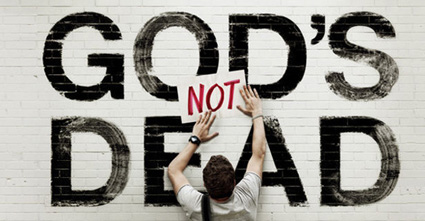
son of god400Scene from the movie “Son of God.”Four faith-based films already have earned more than $50 million each in ticket sales this year, according to Boxofficemojo.com. Those movies—Noah, Heaven is for Real, Son of God and God’s Not Dead—are among the top 20 grossing films of 2014.

And movie audiences may want more, a survey of 1,054 Americans from Nashville-based LifeWay Research shows. Researchers found more than half of Americans—56 percent—say they wish there were more movies with Christian values.

“Faith-based movies are no longer a niche,” said Scott McConnell, director of LifeWay Research. “It’s smart economics—if you make a film that appeals to that audience, they will show up.”

gods-not-dead-movie425More than half of Americans—56 percent—say they wish there were more movies with Christian values, according to a LifeWay survey.Movies with an explicitly Christian message—like God’s Not Dead—have done especially well. The independent film was made for $2 million and has earned more than $59 million at the box office. That’s more than high-budget projects like Muppets Most Wanted or the critically acclaimed The Grand Budapest Hotel.

Kris Fuhr, founder of Moviegal Marketing, said Christian movie fans want films with a clear presentation of faith. That’s been true in the past for features like Fireproof and Courageous, as well as more recent movies like Son of God.

“When you have a movie where the title is almost a doctrinal statement—the audience will come out,” she said. “People want their faith to be affirmed.”

noah400Noah, Heaven is for Real, Son of God and God’s Not Dead are among the top 20 grossing films of 2014.Films with a more subtle faith message may not do as well, Fuhr added.

In the survey, LifeWay Research asked Americans to respond to the statement: “I wish there were more movies that reflected Christian values.” Respondents who go to church weekly are most likely to agree (91 percent). Those who never go to church (18 percent) are least likely to agree.

Self-identified born-again, evangelical or fundamentalist Christians are more likely to agree (84 percent) than other Americans (45 percent). Americans who live in the Midwest (62 percent) and South (63 percent) also are more interested in more Christian films than those in the Northeast (48 percent) or the West (44 percent).

Two-thirds of middle-aged and older Americans agree, including those 45 to 54 (63 percent), 55 to 64 (66 percent), and 65 and older (65 percent). Americans under 30 (43 percent) are least interested in more films with Christian values.

The online survey of adult Americans was conducted March 25. Researchers invited a sample of an online panel representing the adult population of the United States to participate. They weighted responses by region, age, ethnicity, gender and income to reflect the population more accurately.

The completed sample is 1,054 online surveys. The sample provides 95 percent confidence the sampling error from this panel does not exceed plus or minus 3.1 percent. Margins of error are higher in subgroups.


Faith Digest: Atheists lose court battle with IRS

A federal court dismissed three atheist groups’ suit against the IRS, in which they accused the tax agency of discriminating against nonreligious nonprofits. American Atheists and its co-plaintiffs argued tax-filing requirements for nonprofit atheist groups are unfairly tougher than they are for religious nonprofits. reason rally250David Silverman, president of American Atheists, addresses the Reason Rally on March 24, 2012, on the National Mall in Washington, D.C. (RNS photo by Tyrone Turner)They contended churches and other religious organizations should have to meet the same standards other nonprofits meet in disclosing information on their donors, employee salaries and other details about the organization. The court found the atheists had no standing to bring the suit, in part because American Atheists could have applied to the Internal Revenue Service for designation as a religious organization but never had. It’s only speculation that the IRS would reject the application, the court wrote; in fact, the IRS has granted nontheistic groups status as religious nonprofits in the past. After the U.S. District Court in Kentucky handed down its decision, American Atheists President David Silverman pledged to “keep fighting.”

UN criticizes Vatican on sexual abuse. A United Nations panel blasted the Vatican for failing to respond adequately to the child sexual abuse scandals that have swept the Catholic Church but stopped short of saying the Holy See had violated U.N. treaty obligations on torture. The report by the U.N. Committee Against Torture released in Geneva expressed strong concerns about the failure of church officials to report abuse charges to police, to stop the transfer of clergy accused of abuse or to offer adequate compensation and rehabilitation to victims. Nevertheless, the panel’s criticism was far more muted than a scathing February report from the U.N. Committee on the Rights of the Child that asserted the Vatican had fostered “impunity” for abusers. The Vatican said the panel recognized it “made many serious and substantial reforms on its procedures” and the Holy See’s moves “to institute reforms to prevent sexual abuse, and to compensate and facilitate the care and healing of the victims of sexual abuse.” Even so, the U.N. panel stressed the need for the Vatican to do more—to take “effective measures” to monitor individuals under its control and “stop and sanction” anyone accused of abuse. It also said police must be notified of abuse cases, and the Holy See should ensure that victims receive the “fair, adequate and enforceable right to compensation.”