How much should we pay the pastor?

It may be one of the most uncomfortable—and sometimes contentious—questions in congregational life: How much should we pay our senior pastor?

Ministers struggle between commitments to a self-sacrificial calling on the one hand and providing for their families on the other. Congregations want to attract capable leaders and keep them, while grappling with declining contributions and tight budgets. And personnel and pastor-search committees find a bewildering array of charts, comparisons and suggestions for ministerial compensation.
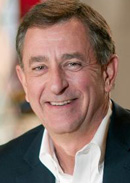
bill wilson130Bill Wilson“It would be almost impossible to use a meaningful number that could be universally applied,” said Bill Wilson, president of the Center for Congregational Health, citing the wide range of church sizes and financial health, as well as demographic and cultural contexts and ministers’ years of service.

Many refer to surveys by the National Association of Church Business Administration and Christianity Today’s Compensation Handbook for Church Staff, both updated regularly. But a Google search on the subject yields endless links—some the results of scientific polls, others a collection of anecdotes.

National averages in those surveys range widely—from about $83,000 (not including benefits such as health care insurance and retirement contributions) to about $112,000. But national averages often are less decisive for personnel committees than factors closer to home.

“Many of them simply assume that what they have budgeted from their last minister will suffice,” said Wilson. “When they do a study, they are often surprised by ‘sticker shock,’ especially if they have had a long-tenured staff member. Most ask denominational headquarters to help with this,” or organizations like the National Association of Church Business Administration.

“A few tie it to what local teachers make, or what their cousin in Toledo makes at his church,” he added.
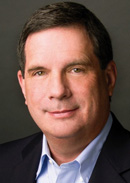
thom rainer130Thom RainerAnother common approach is to estimate the average income of families in a church and use that as a basis for the pastor’s compensation, LifeWay Christian Resources President Thom Ranier said in a recent blog post.

Tom Nelson, an evangelical pastor and writer for the Gospel Coalition, noted in many suburban contexts, a pastor’s salary is placed in the same range as the local public high school principal.

Other dynamics play a role. A church’s size and its income are critical, for obvious reasons. But so is education. The Compensation Handbook for Church Staff suggests pastors with a master’s degree earn 10 to 20 percent more than those with a bachelor’s degree, and a doctorate adds another 15 percent on top of that.

And then there’s gender. Female pastors earn about 20 percent less than male pastors with similar levels of experience and education, according to MMBB Financial Services, formerly the American Baptists’ Ministers and Missionaries Benefit Board. And their annual salary increases are about 28 percent less.

Data in the most recent Compensation Handbook indicates the gender pay gap extends to all paid positions in churches. Male employees generally are paid almost 30 percent more than women in similar positions.

“This particular bit of data really baffles me,” Marian Liautaud, an editor for Christianity Today’s church management team, said in an interview with the Christian Post.

The fact that some churches believe there are biblical restrictions on women serving in some leadership roles doesn’t explain the numbers they’ve studied, Liautaud said, because the pay gap between men and women also is evident in “business-oriented positions,” such as the executive pastor position, she told the Post. “It’s a little disconcerting,” she said.

molly marshall144Molly Marshall“There is an element of exploitation,” said Molly Marshall, president of Central Baptist Theological Seminary in Shawnee, Kan. “Women are anxious to serve as pastors. So, they will not negotiate for fair pay. Further, churches who call women are often strapped financially and in decline. Women enter these situations with knowledge that compensation will be meager.”

Church polity also impacts the size of pastors’ salaries. According to a Duke Divinity School study, connectional churches—such as Presbyterian or Lutheran—pay their pastors more than congregational churches, such as Baptist or United Church of Christ.

Although connectional churches often have wealthier members than congregational churches, the Duke study found centralized denominational decision-making just as decisive in keeping pastor salaries higher. By contrast, salaries in self-governing congregations largely are driven by market forces and by supply and demand, the study discovered. In the nation’s largest churches, the free market actually reverses the pattern, and pastor salaries in congregational churches begin to surpass those of connectional ones.

“To attract entrepreneurial clergy, some very large churches are paying entrepreneurial salaries,” the authors of the study wrote.

The bottom line, Ranier said: “Churches that do not do their homework on pastoral compensation tend to underpay their pastors.”

Getting it right—or coming close to it—can be critical to a church’s ability to retain qualified leadership. Ranier acknowledged what often is unspoken—some pastors leave churches because of pay issues.

“You will not likely hear a pastor announce in his resignation that he is leaving because of financial pressures,” Ranier wrote. “The reality is that, for a number of pastors, the issue of compensation is a major push from one church to another, or from the church to a secular vocation. It’s not that the pastor is in his job for the money; it’s that the compensation for his vocation is insufficient to meet his family’s needs.”

Those realities may be responsible for a recent reduction in the stigma historically associated with financial negotiations between a pastoral candidate and a search committee. It’s still “a fine line to walk,” said Wilson, but benefit boards like MMBB Financial Services now provide guides to negotiating pastor compensation.

“Ministers know that transitions are the primary time for making salary adjustments,” Wilson said. “The only real raise most clergy ever get (above cost of living) is when they move. Thus, it is important to negotiate up front if you think there is something missing or inadequate in the package. Congregations often hold back on an offer in the expectation that a counter offer will need to be made. I think that’s unfortunate, but it seems to be normative.”

That said, caution is in order, Wilson added.

“Aggressiveness is never a good thing when it comes to compensation,” he said. “Assertiveness is OK, up to a point. If a congregation senses that a minister is mercenary, they will back away—and should. It’s a fine line between being forthright and being overly concerned with dollars.”



Faith Digest: ‘Burka Avenger’ defends education for girls

New Muslim superhero an education warrior. Pakistan’s new animated television series, Burka Avenger, features a female Muslim teacher disguised in a tight black outfit with a cape and ninja-style head cover who throws heavy books and sharp pens at men who oppose education for girls. The fictional show coincides with the real life of Malala Yousafzai, the teenage Pakistani student who was shot in the head in an unsuccessful bid to kill her because she spoke out in support of girls’ education. The show broadcasts in the Urdu language, but it offers a 2-minute 10-second trailer in English on YouTube. It airs on Geo Tez, part of the GEO network, on Sunday evenings in Pakistan.

Christian ethicist Elshtain dies at 72. Christian ethicist Jean Bethke Elshtain, a jean bethke elshtain130Jean Bethke ElshtainUniversity of Chicago scholar who publicly defended American involvement in the war in Iraq on just war principles and shaped national conversations on war and peace, died Aug. 11 at age 72. She had two heart attacks in 2012 and had another cardiac incident earlier this summer that led to her death. Elshtain, who served as a visiting distinguished professor of religion and public life with Baylor University’s Institute for Studies of Religion, regularly wrote and lectured on ethics, politics and religion. She was raised Lutheran but converted to Catholicism later in life. She held a long list of academic accomplishments, including being chosen to deliver the prestigious Gifford Lectures at the University of Edinburgh, joining previous lecturers like Karl Barth and Reinhold Neibuhr.

Assemblies of God defy denominational decline. At the recent Assemblies of God General Council meeting, the denomination touted its formula for defying the seemingly irreversible decline of other religious groups—contemporary music, arts and high-tech quality communication, and outreach to young people, immigrants and ethnic minorities. The denomination reported a 1.8 percent increase in membership in the United States, to 3 million adherents. Globally, the gain was 1.5 percent, to 66 million, making it the world’s largest Pentecostal group. “We have been flexible when it comes to culture—music, dress, pulpit attire—while remaining consistent on that which has not changed, which is doctrine,” said George O. Wood, the newly re-elected general superintendent, who also is chairman of the World Assemblies of God.


D.C. church recalls real butler as quiet man of steady faith

WASHINGTON (RNS)—Eugene Allen served eight presidents as a White House butler, and his legendary career inspired Lee Daniels’ The Butler, a new film starring Oprah Winfrey, Jane Fonda and a host of A-list Hollywood talent.

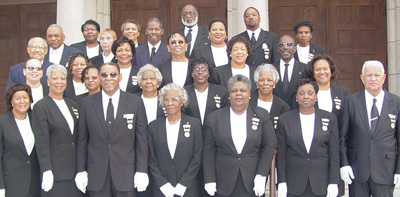
butler groupshot400Eugene Allen, the man who inspired “Lee Daniels’ The Butler,” is pictured in this 2006 photo from the 126th anniversary program of his church’s usher board. He is the farthest left person in the third row from the front. (RNS Photo courtesy of Greater First Baptist Church in Washington, D.C.)But members of The Greater First Baptist Church knew the man who died in 2010 by other titles—usher, trustee and humble man of quiet faith.

“The attributes that made him a great butler made him a great usher,” said Denise Johnson, an usher at the predominantly black Washington, D.C., church where Allen was a member six decades.

Those qualities were both external—black suits and white gloves—and internal—a dignified, soft-spoken manner.

On a recent Sunday, parishioners recalled Allen as a peacemaker, someone who never raised his voice.

His devotion to service extended far beyond the public and private rooms of the White House to the doorways and kitchen of his church. In African-American churches, the usher fills a special role, and the congregation bestows the title only on highly regarded members. Allen joined others to open doors to visitors, distribute fans and pass offering plates. He also would roll up his sleeves and help prepare fish and chicken at church fund-raising dinners.

butler oprah400Terrence Howard and Oprah Winfrey in a scene from “Lee Daniels’ ‘The Butler.’” (RNS Photo courtesy The Weinstein Company)“He was not only a servant there,” Robert Hood, an associate minister, said of Allen’s White House work. “But he was also a servant doing the work of the Lord.”

In the new movie, Allen is portrayed as the fictional Cecil Gaines (Forest Whitaker), married to Gloria (Winfrey). The movie spans his personal journey from segregation to integration, during which he tended to keep his mouth shut about the goings-on inside the White House, as well as the civil rights struggles roiling the nation.

Church members recalled that Allen, like the fictional Cecil Gaines, was fairly reticent.

“He loved that job, was committed to it,” said fellow trustee Dolores Causer of his White House job serving eight presidents. “But he never really would discuss anything other than to say he loved his work and he enjoyed each and every one of them.”

butler poster200The writer of the four-page obituary in Allen’s funeral program, however, gained some insights into his thoughts about working with presidents:

• Harry S. Truman was “hands down, the best-dressed president.”

• He considered Dwight Eisenhower’s decision to send troops to enforce school desegregation in Little Rock, Ark., “an especially admirable act.”

• Lyndon Johnson’s action on civil rights “would be the jewel in his crown,”

he said.

• “He was much grieved by (Richard) Nixon’s demise and ultimate resignation.”

• He “failed to see the pratfall … humor in the Saturday Night Live impersonations of (Gerald) Ford, calling him the best athlete in the White House in his time.”

• “In the last year of his life, Eugene admitted that another young couple (the Obamas) had indeed entered the White House who possessed the Kennedy magic.”

Allen acknowledged he was especially fond of the Reagans, who invited him—in real life and in the movie—to a state dinner before he retired in 1986.

butler ushers400Deacon Williams Daniels, left, and Deacon Edward Banks, right, carry Communion trays down the aisle at The Greater First Baptist Church in Washington on Aug. 4, 2013. (RNS photo by Adelle M. Banks)“He often talked about how nice they were to him,” recalled church member Marion Washington, who knew Allen when he was promoted to maitre d’.

In the movie, Cecil and Gloria Gaines are portrayed as a Christian couple with a devotion to the Bible.

Director Lee Daniels, a Philadelphia native who grew up in the oldest black Episcopal church in the country, said it was important for the movie to include religious elements. He fought to include a scene depicting a church fund-raiser for the Freedom Riders in which a choir sings “Woke Up This Morning With My Mind Stayed On Freedom.”

“You can’t tell a story about the civil rights movement without the gospel and gospel music,” he said. “You just simply can’t. It’s impossible.”

Wil Haygood, who wrote the 2008 Washington Post story that first brought Allen’s story to light, said more than chance allowed him to bring public attention to Allen’s otherwise private career.

“There was a higher force that led me to Mr. Allen’s front door,” said Haygood, who made dozens of calls before tracking down Allen. “He had a landline. If he would have had a cell phone, I would have never found him.”

Now, he said, after Allen worked quietly behind the scenes while presidents from Truman to Reagan were in the limelight, the roles are reversed.

“To me, in a way, it’s almost biblical. The last shall be first,” said Haygood. “He’s not working in the White House theater, serving popcorn. He’s the star on the big screen.”


Facebook fundraising scams target Christians

NASHVILLE (BP)—Rick Warren is among the latest Christian leaders targeted by phony Facebook pages using his name to bilk money from supporters.

Criminals have established more than 200 fake Facebook pages soliciting funds supposedly in memory of Warren’s son, Matthew, who committed suicide in April, Warren tweeted to his Twitter followers. The pastor of mega Saddleback Church in Lake Valley, Calif., reported he had shut down 179 of the pages as of Aug. 6.

facebook logo250To make matters more confusing, Saddleback actually is seeking donations for the church’s Matthew Warren Fund for Mental Health under the umbrella of the New Horizons Foundation of Colorado Springs, Colo.

Warren established the fund for mental health sufferers in April after his son’s suicide. Criminals followed suit with scams, although no complaints have surfaced indicating individuals gave money through the fake appeals.

Christians can avoid social media scams by investigating such solicitations before making contributions, said LifeWay Research President Ed Stetzer, whom criminals have twice targeted on Facebook, most recently this year.

“The biggest issue is that these scams don’t work if you don’t give money,” Stetzer said. “If someone asks you for money via a Facebook message, be skeptical. Check it out.

“In my case, I would never send someone a Facebook message asking for money. So, if you get such a message, you need to ask, ‘Is this normal?’”

Phony Facebook pages

Phony Facebook pages look almost identical to official pages, but can often be discerned as fake, said Marty Duren, LifeWay’s manager of social media strategy.

“First and foremost, they ask for money,” Duren said. “Second, there is usually a far fewer number of ‘likes’ on the page than you might expect for a celebrity or well-known leader. Third, the main pictures—cover and profile—are usually stolen from the actual page.”

But their existence indicates some level of success, Duren said.

“I would guess, like the ‘Nigerian Prince’ email scams, there is some success at bilking people out of money,” he said. “If there were none, people would stop doing it. However, I do not know of specific data.”

Report as suspicious

Every Facebook page has a settings menu that accepts reports of suspicious pages, and Facebook will remove such pages after several complaints.

“Generally, everything one intends to put on the Internet should be treated as if it will be there forever,” Duren said. “However, pages and links that are removed will generally rotate out of search engine reach over time.”

Like Stetzer, Duren advises against giving money through Facebook.

“Don’t give,” Duren said. “You cannot stop a fake page from popping up or trying to convince you (to make) a financial gift. Almost no credible leaders will make financial appeals through Facebook pages. The best rule of thumb is, ‘Don’t give through Facebook.’”


Duck Dynasty’s Uncle Si talks faith

NASHVILLE (BP)—Viewers and ducks have a hard time resisting the call of the Robertson family, the stars of Duck Dynasty, the hit A&E television show that returns with season four this month.

Si Robertson—“Uncle Si” to fans—has a propensity for stretching the truth during his stories on the reality TV show. But he gets serious when he talks about what Christ can do and the reason he and the rest of the Robertson clan have found success.

sci cology book250“A lot of people say, ‘Hey, God doesn’t have a sense of humor.’ Yes, he does. God has a great sense of humor. Look at me. Look at Phil. Look at Willie. Look at Jase,” Robertson said with a laugh, referring to other members of the Robertson family. “God has taken four guys that look like five miles of muddy road and made them famous in the TV world.”

Robertson—whose book, Si-cology 1: Tales and Wisdom from Duck Dynasty’s Favorite Uncle, will be released Sept. 3—has no doubts about the source of his family’s success—in business or on television.

“The Almighty is the one who has made this a success,” he said.

The show, following the exploits of the Robertson family and their duck call manufacturing operation in Louisiana, has been a blockbuster for A&E. The season finale in April drew a record 9.6 million viewers. In the most coveted demographic of 18- to 29-year-olds, it topped every show on cable and broadcast.

A video interview released by LifeWay last spring with Duck Dynasty patriarch Phil Robertson went viral with almost 4 million views.

While Si Robertson has experienced God in his success, he also sees God as present during difficult moments.

“I wonder when people run into bad times, when they go to the doctor and they find out, ‘I’m dying of cancer,’ and they don’t believe in God, who do they turn to?” he asked.

“We are all mortal. We are all going in that grave,” he continued in the first of two short video interviews at LifeWay.com. “There ain’t but one way you gonna beat it.”

Robertson sees the gospel as the most important thing in his life.

“Like Phil always tells them, ‘If you’ve got something to offer me better than I just shared with you, I’m all ears,’” Robertson said. Jesus “beat the grave, and he promises you that since he beat it, if you believe in him, he’ll make you beat it.”

In the second two-minute video, Robertson gives his own apologetic for believing in the resurrection of Christ—spring.

“In the winter, things are dead and dull, but then there is an explosion of life,” he said. “That’s what (God) promises people who believe in his Son. That’s what all the Robertsons are banking on.”


Families renew faith after loved ones ‘visit’ heaven

WASHINGTON (RNS)—Eva Piper considered herself a shallow Christian until the accident that revitalized her faith and turned her Baptist pastor husband, Don Piper, into the best-selling author of 90 Minutes in Heaven.

“It wasn’t until Don’s accident that I really opened myself up to a really honest relationship with the Lord,” said Eva Piper, who says she’s embarrassed to recall her superficial faith.

eva piper200In A Walk Through the Dark, Eva Piper writes about life after her husband said he visited heaven. Her book comes nine years after publication of her husband’s book, which spent more than five years on The New York Times’ best-seller list.

While the survivors’ tales of visiting the Pearly Gates have been a boon for publishers, they’ve also had a more direct impact on spouses and parents. For the family members, life—and faith—changes nearly as much as it did for the loved ones they nearly lost.

Don Piper was hit by a semi-truck while driving home, and paramedics pronounced him dead at the scene. But 90 minutes later, he said, he was prayed back to life by a fellow pastor.

Eva Piper’s book, which is more of a practical guide for caregivers, recalls her frustration with her husband’s disappointment at being brought back to earth and long nights spent beside hospital beds asking God, “Why?”

The niche genre of “to-heaven-and-back” books has hit bookshelves with surprising regularity—and success—in recent years. The popular book Heaven Is for Real is being adapted into a movie, coming out in 2014.

Todd and Sonja Burpo, the parents whose 4-year-old son, Colton, is the subject of Heaven Is for Real, have their own book out, Heaven Changes Everything, about the impact their son’s near-death experience had on their lives. The original book has sold more than 7.5 million copies after 22 printings.

Writer Paula Black has recounted her husband Dale’s trip to heaven following a plane crash he survived at age 19. She intersperses her narrative with questions she asked her husband, ones she thought a reader would ask.

walk in darkbook200“We haven’t felt like it was the right time to do anything with it, but we probably will at some point,” Paula Black said of the as-yet-unpublished book. “That’s because it’s impacted me so much.”

Her husband wasn’t initially interested in being “one of those people” writing about something that can’t be proven. But eventually, she said, it had such an impact on her he finally agreed to include it in his 2010 book, Flight to Heaven.

“It has completely transformed my faith,” said Paula Black, who didn’t hear about her husband’s trip to heaven until 40 years after the fact.

She said his experience allowed her to grasp the concept of “God is love,” which took on a new reality and depth after he told her about heaven. Raised Christian, Paula Black said talking with her husband about his experience brought substance to her faith and enriched Scripture.

“It changed my understanding of who God is,” she said. “I had a saving relationship through Jesus, but it brought it so much alive.”

Her husband originally planned to write a book about surviving a “nonsurvivable crash,” but when Paula Black found out he’d been to heaven, she said that had to be in his book. “It has defined you,” she told him. “Heaven changed you.”

23 Minutes in Hell

Both wives said their husbands’ accounts made heaven more real for them. The same is true for Annette Wiese, whose husband, Bill Wiese, penned 23 Minutes in Hell in 2006.  She said she had never given much thought to hell before the book.

“I never realized how important the decision of faith is to that degree and impact,” she said. She believed her husband’s vision right away, “because I knew his character.”

Despite the positive approaches and renewed faiths of these wives, critics have worked to dispel firsthand afterlife accounts.

Proof of Heaven

Esquire magazine recently reported on Eben Alexander—author of Proof of Heaven—as a man looking to reinvent himself in the wake of a rocky neurosurgery career. Oliver Sacks, a noted neurologist, recently dissected the scientific explanation for out-of-body and near-death experiences that lead to religious epiphanies in The Atlantic.

“While it is understandable that one might attribute value, ground beliefs or construct narratives from them, hallucinations cannot provide evidence for the existence of any metaphysical beings or places,” Sacks wrote. “They provide evidence only of the brain’s power to create them.”

Eva Piper said she’s received a scattering of negative emails and notes, “but far less than I imagined.” Most people, she said, “really, really want to know about heaven. They want to know that there’s a better place than where we’re living now.”


Faith Digest: 50th for ‘I have a dream’ speech

Bells rings for 50th anniversary of MLK speech. The King Center is urging communities around the world to participate in a bell-ringing ceremony to help commemorate the 50th anniversary of Martin Luther King Jr.’s “I Have a Dream” speech. King Center officials say they have reached out to all 50 governors and to cities across the globe, asking them to participate in the bell ringing at 3 p.m. Aug. 28. “My father concluded his great speech with a call to ‘let freedom ring,’ and that is a challenge we will meet with a magnificent display of brotherhood and sisterhood in symbolic bell-ringing at places of worship, schools and other venues where bells are available from coast to coast and from continent to continent,” said Bernice King, King’s daughter and CEO of the King Center. The King Center and the 50th Anniversary Coalition will host a seven-day celebration in the nation’s capital marking the 50th anniversary of the March on Washington. King’s riveting speech was the keynote event of that march. The King Center is asking communities that wish to participate to submit a brief description of their bell-ringing event to website@thekingcenter.org.

Study shows minorities most likely to favor longer lives. Black Protestants and Hispanic Catholics are the most likely religious groups to say “radical life extension”—living to age 120 or more—longevity study344would be good for society, according to a new Pew Research Center study. The speculative “Living to 120 and Beyond” survey comes against the backdrop of U.S. Census Bureau projections that suggest by 2050, one in five Americans will be 65 or older, and more than 400,000 will be 100 or older. Researchers found four in 10 Americans, including 54 percent of black Protestants and 44 percent of Hispanic Catholics, say radical life extension would be “good for society.” Among religious groups, white Catholics showed the least support, at 31 percent. The frequency of a person’s worship attendance had little bearing on views of radical life extension. However, people who believe in life after death were more likely—43 percent—to say treatments that extend life would be a good thing than those who don’t believe in an afterlife—37 percent. The Pew survey was based on phone interviews conducted from March 21-April 8 among 2,012 American adults and had an overall margin of error plus or minus 2.9 percentage points.

Ambassador to Vatican named. The U.S. Senate confirmed former Catholic Relief Services head Ken Hackett as the next ambassador to the Vatican. Hackett replaces Miguel Diaz, a theologian, and he gives President Obama an experienced voice on social justice in Rome, where Pope Francis has made caring for the poor a priority. No opposition was expected, since Hackett has strong ties to both parties. For five years, he served on the board of former President George W. Bush’s Millennium Challenge Corporation, and he is reported to be close to Denis McDonough, Obama’s chief of staff, whose brother is a priest.

Ethicist to oversee religious engagement for State Department. Secretary of State John Kerry tapped ethicist Shaun Casey to lead the U.S. State Department’s new Office of Faith-Based Community Initiatives. Casey is a professor of Christian ethics at Wesley Theological Seminary in Washington and advised President Obama’s campaign and other Democrats on outreach to religious voters. Since 2001, the White House has had a similar office—the Office of Faith-based and Neighborhood Partnerships—which has been headed by a succession of directors with strong religious credentials. The current head of the White House office, Melissa Rogers, former general counsel to the Baptist Joint Committee for Religious Liberty, welcomed Casey as a public servant who understands the “potential for religious communities to spark both positive and negative movements.”


When small churches merge with large ones

Are the nation’s burgeoning church merger and multisite movements byproducts of larger congregations preying on smaller ones? Do big churches pressure small ones into relinquishing buildings and land in exchange for survival?

In some circles, that’s called “steeple-jacking.” But it’s also a myth about a trend that’s already eclipsed the American megachurch phenomenon, said Jim Tomberlin, the author of Better Together: Making Church Mergers Work.

multisite map400A consultant who facilitates church mergers, Tomberlin dismissed the predatory view of the process. Many money- and member-strapped congregations voted against merger—even at the risk of extinction, he countered.
“I have discovered you are not going to force a small church to do anything,” he said. Mergers that fail usually do so “because somebody doesn’t want to give up control.”

Put aside egos and logos

Tomberlin is the founder and senior strategist of the merger consulting firm MultiSite Solutions. Negative stereotypes about mergers and the related multisite church movement result from a years-long, painful learning process experienced by pastors, lay leaders and congregations who put pride and emotions before gospel values, he said.

tomberlin300Jim TomberlinBut the recent recession coupled with sliding church attendance pushed an increasing number of congregations to seek spiritually beneficial solutions to financial realities, Tomberlin and other experts report.

The resulting merger and multisite phenomenon is occurring across the denominational spectrum, including Baptists of every stripe. The biggest bar to progress usually is pride and a reluctance to let go of tradition.

“There is a huge win-win if people can put aside their egos and their logos,” Tomberlin said.

Two sinking ships

Before, church mergers were relatively rare and usually involved two struggling congregations united in response to declines in finances, attendance and relevance.

But those arrangements usually didn’t last too long, said John Muzyka, senior director of Service Realty, a Texas-based real estate firm that specializes in working with religious groups seeking to purchase, sell, rent or merge.

“Sometimes, two sinking ships just makes a faster sinking ship,” he said.

Church-to-church deals can go wrong many ways, and at the heart of most failures is a tendency to cling to the past on one part and lack of communication on the other, Muzyka said.

Deals unravel, for example, when some members protest because they and their children were married or baptized there, he said. Those feelings often trump concerns about the building’s continued use, through sale or merger, for ministry.

“Missional thinking is, ‘I want to be able to put the dollars in ministry instead of struggling to survive to keep an emotional tie in this,” Muzyka said.

But he recently found congregations more willing to put the missional before the emotional, and often in ways that enable them to remain on property over which they relinquish control.

“Mergers are a trend right now,” Muzyka said. And “most of the mergers I see are multisite people coming along side” struggling churches.

A shared future

Statistics support that observation and Tomberlin’s statement that it’s outstripping the megachurch movement.

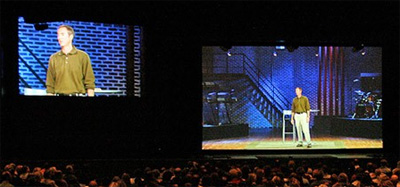
video preaching400An estimated 5,000 multisite churches exist in the United States, compared to 1,650 megachurches, according to figures provided by MultiSite Solutions. More than 6 million people attend multisite churches in North America, where 75 of the 100 largest congregations have multiple campuses.

In cases where campuses were created from mergers, the weaker or “following” church approached the larger or “lead” church after experiencing years of decline, Tomberlin said. Most of the time, the property of the following church simply is deeded over to the larger one, and most or all of the members merge into the larger body.

The most successful transitions occur when the following church enters the process willing to surrender its identity, if necessary, to ensure its facilities continue to be used in a way that serves God.

“A synergy … comes with these kind of mergers that are more mission-driven versus more survival-driven,” Tomberlin said. “It’s more about embracing a shared future together.”

Still, even when both parties are well-intentioned, the process can implode if neither is clear about its desires and intentions, Muzyka added.

“That can result … in some hurt feelings,” Muzyka said. “I’ve heard horror stories.”

The true heroes

Horror stories were exactly what Senior Pastor Travis Collins wanted to avoid when his three-campus church in Richmond, Va. received the keys to “aging and dying” New Covenant Baptist Church.

New Covenant’s interim pastor approached Collins at Bon Air Baptist Church about the possibility of some sort of merger.

“They gave us their facilities, the money they had in the bank and all their resources,” he said.

New Covenant’s roughly 45 members understood if the deal went through, New Covenant no longer would be New Covenant, Collins said.

“This is going to be different, the worship will be different, the culture will change, the feel, the atmosphere—this is going to be a completely different place. We said that from the beginning.”

Communication doesn’t guarantee a lack of stress or pain in such situations, he added.

New Covenant members were concerned about Bon Air’s intentions with one of its full-time employees and two part-timers paid with stipends, Collins noted. All were let go, he said.

“That was hard for us, and it was hard for them,” he said. “But it did not turn out to be a deal breaker.”

Nor did the name change: What will officially become Bon Air’s fourth campus on Sept. 8—with a soft opening on Aug. 18—will be known as “Bon Air Baptist @ The Villages,” in reference to its Richmond neighborhood.

The credit for the new campus goes to the 30 or so New Covenant members and their interim pastor, Collins said, because they put aside tradition to ensure their church remained a place of ministry.

“The heroes of the story are not the Bon Airs. The heroes of the story are the New Covenants,” Collins said.

Those are the kinds of stories Muzyka said he hears more than any other.

“Back in the day, mergers had that look of this one church swallowing up another,” Muzyka said. “But it really is about: How can these churches accomplish their visions together?”


Shariah 101: What is it and why do states want to ban it?

WASHINGTON (RNS)—North Carolina lawmakers recently approved a bill to prohibit judges from considering “foreign laws” in their decisions, but nearly everyone agrees “foreign laws” really means Shariah, or Islamic law.

North Carolina now joins six other states—Oklahoma, Arizona, Kansas, Louisiana, South Dakota and Tennessee—to pass a “foreign laws” bill. A similar bill passed in Missouri, but Gov. Jay Nixon vetoed it, citing threats to international adoptions.

sharia ny protest400Anti-Shariah demonstrators rally against a proposed mosque near Ground Zero in New York. (RNS Photo courtesy Asterio Tecson)The bills all cite “foreign laws” because two federal courts have ruled that singling out Shariah—as Oklahoma voters originally did in 2010—is unconstitutional.

So what’s the big deal with Shariah?

Many Americans think of Shariah as an Islamic legal system characterized by misogyny, intolerance and harsh punishments. Some anti-Islamic activists warn Muslims are trying to sneak Shariah into the American legal system in ways that do not reflect U.S. legal principles or beliefs.

Many Muslim Americans insist Shariah is essential to belief, and any harsh punishments or unconstitutional aspects associated with Islamic law either have been exaggerated, abrogated or are superseded by American law.

Muslims around the world have varying views about what Shariah entails, and its role in personal and public life. So what exactly is Shariah? Here are five facts that might help make sense of this complex and often misunderstood term.

What is Shariah?

Shariah is an Arabic word that literally means “a path to be followed” and also commonly refers to “a path to water.” The term is broad, encompassing both a personal moral code and religious law.

There are two sources of Shariah—the Quran, which many Muslims consider to be the literal word of God, and the “Sunnah,” the divinely guided tradition of Islam’s Prophet Muhammad.

The interpretation of Shariah is called fiqh, or Islamic jurisprudence. Because fiqh is man-made, it can be changed. Shariah, for many Muslims, is divine and cannot be changed.

Some Muslims use the term “Shariah” to apply to both the injunctions in the Quran and Sunnah, and the interpretation of the Quran and Sunnah. Islamic law consists of Shariah and fiqh.

What does Shariah cover?

While often thought of as a legal system, Shariah covers personal and collective spheres of daily life, and it has three components—belief, character and actions. Only a small portion of the action component relates to law. In fact, only about 80 of the Quran’s 6,236 verses are about specific legal injunctions.

The belief component of Shariah commands Muslims to believe in God, the angels, prophets, revelation, and other metaphysical and physical aspects of the faith.

In terms of character, Shariah commands Muslims to strive for traits like humility and kindness, and to avoid traits such as lying and pride.

Actions include those relating to God, such as prayer, fasting and pilgrimage, as well as actions relating to other humans, such as marriage, crime and business.

Some actions relating to other humans can be regulated by the state, while actions relating to God, as well as belief and character, are between an individual and God. Nevertheless, some Muslim-majority countries have criminalized violations of the belief, character and action components of Shariah.

Who is qualified to issue rulings on Shariah?

Shariah was systematized between the eighth and 10th centuries, about 200 to 300 years after Muhammad claimed he received his first revelation. Many people believe by the end of the 10th century the core components of Shariah had been exhaustively debated. That said, changes in Islamic society force scholars to look at Shariah anew, with new interpretations expressed in fatwas, or religious edicts, and legal opinions.

Interpreting Shariah is done by jurists known as fuqahaa, who look at the practicality of both time and place regarding how a ruling can be applied. In places where Shariah has official status, it is interpreted by judges known as qadis. Fiqh interpretations divide human behavior into five categories—obligatory, recommended, neutral, discouraged and forbidden.

Over the centuries, Islamic legal analyses and opinions were compiled in books judges used in deciding cases. Secular courts and Shariah courts coexisted in Islamic lands, with the Shariah courts often taking responsibility for family law matters. With the arrival of European colonization, many of these legal opinions were codified into civil law.

Where is Shariah the law of the land?

Jan Michiel Otto, professor at the Leiden University Law School in the Netherlands, divides legal systems of Muslim countries into three categories—classical Shariah systems, secular systems and mixed systems.

In countries with classical Shariah systems, Shariah has official status or a high degree of influence on the legal system. It covers family law, criminal law and, in some places, personal beliefs, including penalties for apostasy, blasphemy and not praying. These countries include Egypt, Mauritania, Sudan, Afghanistan, Iran, Iraq, the Maldives, Pakistan, Qatar, Saudi Arabia, Yemen and certain regions in Indonesia, Malaysia, Nigeria and the United Arab Emirates.

Mixed systems are the most common in Muslim-majority countries. Generally speaking, Shariah covers family law, while secular courts will cover everything else. Countries include Algeria, Comoros, Djibouti, Gambia, Libya, Morocco, Somalia, Bahrain, Bangladesh, Brunei, Gaza Strip, Jordan, Kuwait, Lebanon, Malaysia, Oman and Syria.

In several Muslim-majority countries, Shariah plays no role—Burkina Faso, Chad, Guinea, Guinea-Bissau, Mali, Niger, Senegal, Tunisia, Azerbaijan, Kazakhstan, Kyrgyzstan, Tajikistan, Turkmenistan, Uzbekistan, Albania, Kosovo and Turkey.

Some countries have Islamic family law courts available for their Muslim minorities—Eritrea, Ethiopia, Ghana, Kenya, Tanzania, Uganda, India, Israel, Singapore, Sri Lanka, Thailand and the United Kingdom.

In the United States, there are no Islamic courts, but judges sometimes consider Islamic law in their decisions. For example, a judge may recognize the validity of an Islamic marriage contract from a Muslim country in order to grant a divorce in America.

Some Islamic scholars argue true Islamic belief cannot be coerced by the state and therefore belief in Shariah should only come from the individual and not be codified by the state.

Does Shariah really prescribe harsh punishments like stoning adulterers?

Yes, but experts in Islam insist many of these punishments have been taken out of context, abrogated or require a near-impossible level of evidence to be carried out. For someone to be convicted of adultery, for example, there must be four witnesses to the act, which is rare. The Quran also prescribes amputating the hands of thieves, but not if the thief has repented.

Other Shariah scholars say such a punishment system can only be instituted in a society of high moral standards and where everyone’s needs are met, thereby obviating the urge to steal or commit other crimes. In such a society, the thinking goes, corporal punishments would be rarely needed.

That said, corporal punishments have been used by Islamic militant groups in places like Afghanistan, Somalia and Syria, and governments in Iran, Saudi Arabia and the Aceh state in Indonesia.


Redemption found on Blue Mountain

NASHVILLE, Tenn.—With his most recent album, Blue Mountain, singer/songwriter Brandon Heath uses stories about fictional characters in Appalachia to drive home messages about God’s unfailing love, forgiveness and grace.

By taking a creative approach to share the gospel, Heath hopes these songs spark conversations with non-Christians. Heath wrote the song “Jesus in Disguise” as a reminder of the unexpected ways Christ works in the midst of struggles and in varied settings. 

blue mountain400“Jesus isn’t always in the obvious,” Heath said. “But from busy city streets to the rural roads of Blue Mountain, Jesus is always there to be found. You just have to know what to look for and be willing to look for it.”

Heath developed the theme for this project after a friend mentioned an interesting comparison found in the C.S. Lewis book, Letters to an American Lady

“My friend was talking about how he read that some people are like blue mountains,” Heath said. “That’s kind of a funny thing, but if you look at mountains in the distance, they are kind of blue and hazy. He said some people are like that, because you’re always from a distance to them. Once you get up close to them, you’ll see they’re just like everyone else. I love that thought, and the inspiration started flowing from there.”

During concerts, Heath challenges audiences to step out of their comfort zone, reach out and make a difference to people in need. His concerts have helped raise awareness for missions organizations such as Food for the Hungry, International Justice Mission, Young Life, Blood:Water Mission and Restore International.

“Hopefully, people are not only connecting to the music, but also the message behind it,” Heath said. “I want people to realize that if they place their faith in Christ, they will be delivered from their old life, given a new lease on life and a fresh start to lead the kind of life that God wants his children to lead—with our lives glorifying him.”

Since 2008, Heath has sponsored an annual benefit concert, “Love Your Neighbor,” which gathers musicians for a night of music and supports needs in Nashville. The event has raised more than $140,000 for community needs.

“I think the longer I get to know the character of Jesus, the more compassion I have for others,” Heath said. “It is one thing to have compassion and quite another to act on it. Most times, it starts with the people around you.”

With music reflecting life-changing truth, Heath remains grounded on a firm foundation and focused on delivering music with a powerful message that changes lives for God’s glory. 

“I love hearing stories about how the songs have impacted people in unexpected ways and how they have responded by finding redemption and restoration through a relationship with Christ.”


Wrath of God verse roils hymnal group

NASHVILLE, Tenn. (ABP)—The wrath of God has become a point of contention since a new Presbyterian hymnal passed on “In Christ Alone” for theological reasons.

“Why do many Christians shrink from any thought of the wrath of God?” Keith Getty, who co-wrote the hymn—one of the most popular songs used today in churches across the United States and elsewhere—with British songwriter Stuart Townend in 2001, posted on the Getty Music website.

The Irish-born Getty, who now lives in Nashville, Tenn., with his wife, Kristyn, endorsed a First Things article by Baptist theologian Timothy George contending God’s love is inseparable from God’s wrath.

God’s love not ‘squishy’

“God’s love is not sentimental; it is holy,” said George, dean of Samford University’s Beeson Divinity School. “It is tender, but not squishy. It involves not only compassion, kindness and mercy beyond measure—what the New Testament calls grace—but also indignation against injustice and unremitting opposition to all that is evil.”

presby hymnal250George’s article came in response to an April Christian Century article describing “controversial issues” that confronted the Presbyterian Committee on Congregational Song as it worked on a new hymnal titled “Glory to God,” due out this fall.

Bringle, a professor at Brevard College in North Carolina, said the committee had concluded three-and-a-half years of quarterly meetings when disagreement arose in January 2012.

The group had voted for “In Christ Alone,” a song from the contemporary Christian canon, but altered a lyric from “as Jesus died/the wrath of God was satisfied” to “Till on that cross as Jesus died/the love of God was magnified.”

An email debate

When the authors refused to authorize the change, which they considered too great a departure from their original words, the committee debated by email whether to include the song with the original lyrics or remove it from the list.

“People making a case to retain the text with the authors’ original lines spoke of the fact that the words expressed one view of God’s saving work in Christ that has been prevalent in Christian history—the view of Anselm and Calvin, among others, that God’s honor was violated by human sin and that God’s justice could only be satisfied by the atoning death of a sinless victim,” Bringle said.

“While this might not be our personal view, it was argued, it is nonetheless a view held by some members of our family of faith; the hymnal is not a vehicle for one group’s perspective but rather a collection for use by a diverse body.”

“Arguments on the other side pointed out that a hymnal does not simply collect diverse views, but also selects to emphasize some over others as part of its mission to form the faith of coming generations,” she said. “It would do a disservice to this educational mission, the argument ran, to perpetuate by way of a new (second) text the view that the cross is primarily about God’s need to assuage God’s anger.”

A losing vote

The final vote was six in favor of inclusion and nine against, giving the requisite two-thirds majority to the no votes. “The song has been removed from our contents list, with deep regret over losing its otherwise poignant and powerful witness,” Bringle said.

George, who as a church history professor at Southern Baptist Theological Seminary in the 1980s was an early advocate of a resurgence of Calvinism in the Southern Baptist Convention, said the debate is part of a recent trend of treating God’s wrath as something shameful and best left in the closet.

“The result is a less than fully biblical construal of who God is and what he has done, especially in the redemptive mission of Jesus Christ,” George said.

“The full New Testament teaching about the cross involves both expiation, which means providing a covering for sin, and propitiation, which means averting divine judgment,” he wrote. “The semantic range of the Greek words hilasmos/hilasterion includes both meanings. That is why the wrath of God cannot be brushed out of the story without remainder.”

Gospel Coalition confessional statement

Getty has been featured at national conferences of the Gospel Coalition, a group of churches concerned about movements among evangelicals they believe depart from historic beliefs and practices. The group’s confessional statement includes a belief that “by his incarnation, life, death, resurrection and ascension, Jesus Christ acted as our representative and substitute.”

“He did this so that in him we might become the righteousness of God: on the cross he canceled sin, propitiated God, and, by bearing the full penalty of our sins, reconciled to God all those who believe,” the statement says.

“We believe that Christ, by his obedience and death, fully discharged the debt of all those who are justified,” it continues. “By his sacrifice, he bore in our stead the punishment due us for our sins, making a proper, real and full satisfaction to God’s justice on our behalf.”

The hymnal panel said the next Presbyterian collection of hymns and songs will be published amid different conditions than those that molded previous ones.

“It will be used by a church many of whose members have not had lifelong formation by Scripture and basic Christian doctrine, much less Reformed theology,” said a statement on the Presbyterian Hymnal Project website. “It is meant for a church marked by growing diversity in liturgical practice. Moreover, it addresses a church divided by conflicts but nonetheless, we believe, longing for healing and the peace that is beyond understanding.”


Rick Warren returns to pulpit after son’s April suicide

LAKE FOREST, Calif. (BP)—Rick Warren, pastor of Saddleback Church in Lake Forest, Calif., returned to the pulpit July 27 for the first time since his son’s suicide.

Warren, author of the bestseller The Purpose Driven Life, had taken a 16-week absence after Matthew Warren, 27, took his life in April following a long struggle with mental illness.

matthew warren130Matthew WarrenHis death brought an outpouring of support for the Warren family, including from Frank Page, president of the Southern Baptist Convention’s Executive Committee and a former SBC president, who lost his 32-year-old daughter Melissa to suicide in 2009.

‘Heart is broken’

“My heart is broken as I’ve heard the news about Rick Warren’s son,” Page said via Twitter the day after Matthew Warren’s death. “Please pray. Unfortunately, I understand that which they experience now.”

Warren took the pulpit at the Saturday evening service to a standing ovation, thanking Saddleback staff, members, his family and local pastors who supported him.

“In the middle of all that intense pain, Kay and I … and our entire family, we’ve all felt the favor of God on our lives because of your prayers,” he said.

Warren, with comments from his wife, Kay, preached the first message in a new sermon series titled, “How to Get Through What You’re Going Through.”

When asked how he and his family are getting through this time, Warren said, the answer rests on three truths that never change.

God ‘grieves with us’

The first one is life doesn’t make sense, but people can have peace because they know God is with them and loves them, he said. God grieves with us, and he wants to take pain and turn it around as a means to help others who are suffering in the same way.

“He wants to use it as your life message and your life mission,” Warren said.

He acknowledged he still does not understand why his son’s mental illness never was healed or why he died, but having an explanation is not the point.

“I would rather walk with God with all my questions unanswered than to have all my questions answered and not have him in my life,” he said.

The second truth is everything on earth is broken, but people still can have joy because God is good and has a greater plan, he said. Nothing works perfectly in this world, and sin is wearing people down. But they still can rely on God.

God’s plan is good

“His plan is bigger than the problem you’re going through, and it’s a good plan,” he said.

Kay Warren took the platform to explain how she could choose joy even when her hopes were crushed by Matthew’s death. The third truth, she said, is life is a battle, but people can have hope because there’s more to the story.

During her son’s mental illness, she built up hope that God would heal him, she recalled, and she believed he would. After Matthew’s suicide, all the things she had used to give her hope seemed to mock her, and she had to figure out what to do when the outcome was not as she expected.

“What I know about God prevents me from concluding that he is a fake or a phony or a tease, and what I know about myself prevents me from concluding that my faith wasn’t strong enough,” she said.

An enormous mystery remains, she said, but she is content to leave her questions unanswered until she sees Jesus, because she knows he never has forsaken her or her family.

‘Hope is alive’

“Hope may not look the way that I thought it would, but hope is alive in us because we know,” she said.

Warren returned to the stage, telling the congregation he comforts himself by knowing that even though Matthew’s life on earth was full of suffering, he is in his heavenly Father’s arms.

Warren announced just as Saddleback fought to remove the stigma from having HIV/AIDS, the next fight will be to remove the stigma from mental illness.

“If you struggle with a broken brain, you should be no more ashamed than someone with a broken arm,” Warren said. “It’s not a sin to take meds. It’s not a sin to get help. You don’t need to be ashamed.”