


WASHINGTON (BP)—The United States Supreme Court ruled June 27 a Texas law requiring age verification for adult websites is constitutional.
The law in question, Texas House Bill 1181, requires websites to verify users are at least 18 years old if at least one-third of their hosted content is considered “harmful to minors,” such as pornography.
The Texas law additionally requires websites to include a warning describing the harmful medical and societal effects of pornography consumption.
The bill—authored by Rep. Matt Shaheen, R-Plano, and sponsored in the Texas Senate by Sen. Angela Paxton, R-McKinney—which passed in June 2023, does not apply to internet service providers, search engines or social media sites.
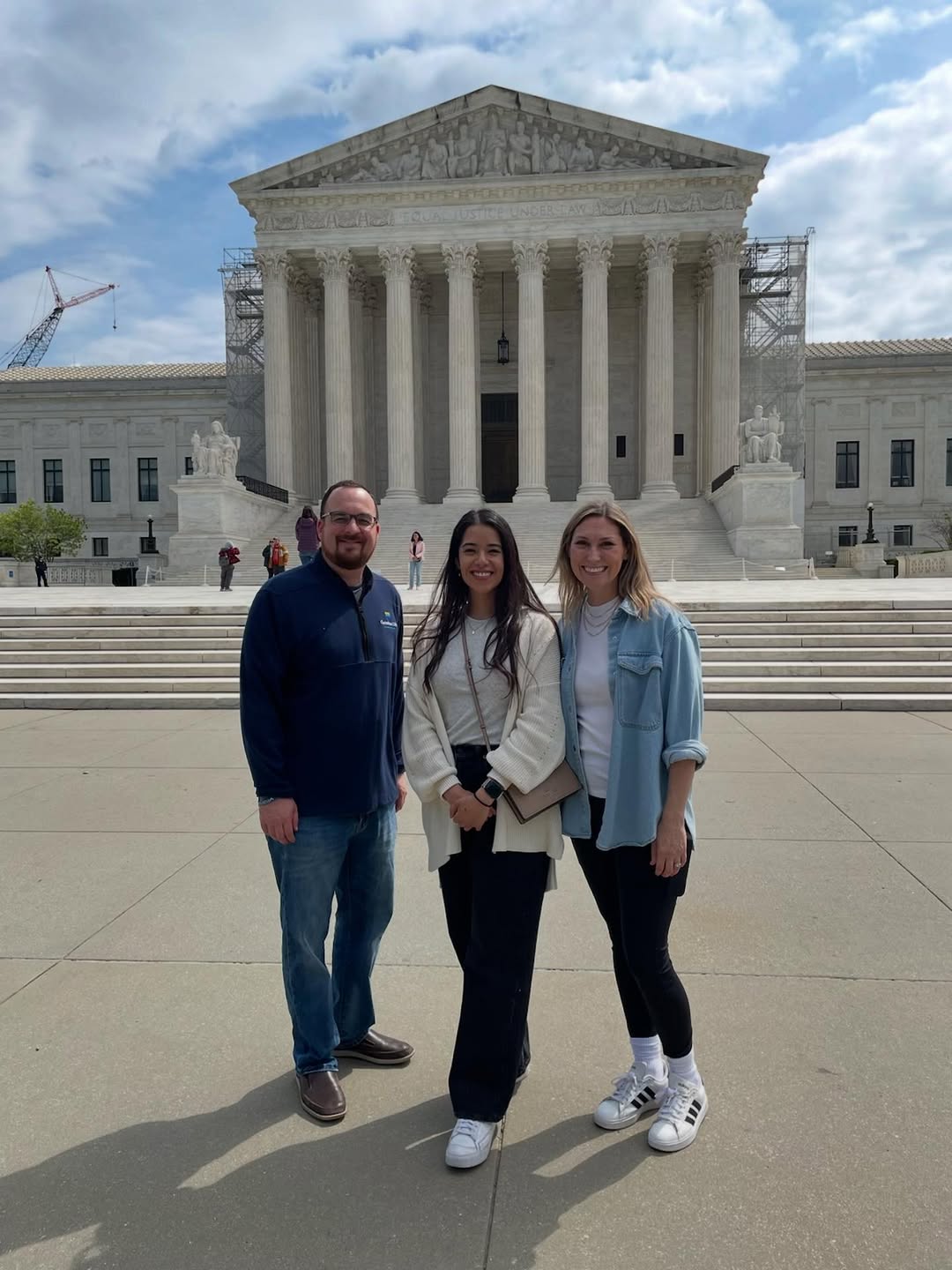
Texas Baptists’ Christian Life Commission expressed approval of the court’s decision on social media, noting it, “protects from harm a group of the most vulnerable Texans—children. This is a significant victory for our state.”
Violators of the law face penalties of up to $10,000 per day or $250,000 if a violation leads to a minor accessing sexual content.
The legislation is one of 20 such laws passed in various states aimed at protecting minors from pornography.
Background
The case, Free Speech Coalition v. Paxton, involved an adult industry trade organization, a group of pornographic websites and other plaintiffs suing the state of Texas to prevent the law from taking effect. Texas Attorney General Ken Paxton was named as the defendant in the case.
The challengers, who filed suit just a month after the bill was passed, argue the law places a burden on adults’ access to content they believe is protected by First Amendment free speech.
Sign up for our weekly edition and get all our headlines in your inbox on Thursdays
After a federal district court granted the group’s preliminary injunction, the Texas Attorney General’s office appealed the ruling, and the injunction was vacated by the 5th Circuit Court of Appeals.
The challengers then came to the Supreme Court in April 2024 asking it to intervene. The High Court declined to stay the injunction, letting the law take effect, but later announced in Oct. 2024 that it would take up the case. Oral arguments in the case were heard Jan. 15.
The Supreme Court’s ruling was dependent upon how it determined whether a user’s First Amendment rights have been violated.
The choice is between two methods or tests of interpretation known as the “rational basis” review or the “strict scrutiny” test.
The rational basis method, used by the lower court in its decision, looks at whether or not the law is rationally related to a legitimate government interest.
Conversely, strict scrutiny review is the most demanding tier of judicial review.
The challengers argued the strict scrutiny method should be applied in this scenario, which would mean it is up to the government to demonstrate that age verification is the least restrictive way to protect minors from harmful content.
The Supreme Court’s 6-3 decision rejected the strict scrutiny argument, saying the Texas law only has an “incidental” effect on free speech.
“The First Amendment leaves undisturbed States’ traditional power to prevent minors from accessing speech that is obscene from their perspective,” the decision stated.
“That power includes the power to require proof of age before an individual can access such speech. It follows that no person—adult or child—has a First Amendment right to access such speech without first submitting proof of age.”
The Supreme Court ultimately determined neither party’s argument as to the level of review was appropriate, settling on an in-between level of review known as intermediate scrutiny.
Justice Clarence Thomas delivered the court’s opinion. Justice Elena Kagan filed a dissenting opinion and was joined by Justice Sonia Sotomayor and Justice Ketanji Brown Jackson.
Baptists respond to the ruling
“We celebrate the Supreme Court’s ruling today, which affirms the right of states to adopt and enforce restrictions, such as age verification requirements, that protect minor children from being exposed to harmful sexual content,” said John Litzler, Texas Baptists’ CLC director of public policy.
“Passed in 2023, House Bill 1181 is a good law that is designed to protect children from the dangers of online pornography, which is both destructive and ubiquitous,” he continued.
Litzler noted Texas Baptists joined with the Southern Baptist Convention and the Southern Baptist Convention of Texas to advocate for the constitutionality of HB 1181 before the Supreme Court.
“Today’s ruling is a win for children and families in Texas and other jurisdictions that have passed similar legislation,” he said.
Brent Leatherwood, president of the SBC’s Ethics and Religious Liberty Commission, called the Texas law “common sense,” and spoke to the impact the High Court’s ruling will have on similar laws around the country.
“Combatting the porn industry on behalf of kids is constitutional. That’s the takeaway from today’s decision upholding a common-sense law that protects children from harmful pornographic materials,” Leatherwood said.
“Age-verification requirements are an entirely appropriate and constitutional tool in a digital age. Moreover, they represent the bare minimum we should expect in a nation that wants its youngest generations protected from a predatory and dehumanizing industry.
“Upholding this law opens an avenue for other states and the federal government to develop smart policies that create a healthier online environment—an environment that prioritizes the family and respects human dignity. We urge lawmakers to do so swiftly.”
The ERLC filed an amicus brief in the case in Nov. 2024 alongside the Baptist General Convention of Texas and the Southern Baptists of Texas Convention.
The brief appealed to the 2001 SBC resolution “On The Plague Of Internet Pornography” and the Baptist Faith and Message 2000 to illustrate Southern Baptists’ stance on the dangers of pornography, especially for minors.
“As originally understood, the First Amendment existed primarily to protect political speech and speech on matters of public concern,” the brief states.
“It has been understood from the beginning of the Republic that States have broad discretion to use their police-power authority to protect minors from such expression. The Constitution has long given State policymaking a wide berth in this regard.”
Additionally, nearly 60 lawmakers from 15 of the states where laws are in effect jointly filed an amicus brief in support of the Texas law and by extension their own.
Ohio, Indiana and 22 other states also filed a brief in the case, where they noted that pornography is not constitutionally protected because it is considered obscene to minors and adults under previously established Supreme Court standards.
Louisiana, a signer of both briefs, was the first state to successfully implement an age-verification law for adult websites.
The law, which went into effect at the beginning of 2023, was written by Louisiana Republican representative Laura Schlegel, who is also a licensed professional counselor and certified sex addiction therapist.
Schlegel said protecting minors from obscene content is not just a “compelling legal interest,” but should be “a compelling, bipartisan issue at every kitchen table in this country.”
With additional reporting by Calli Keener.






We seek to connect God’s story and God’s people around the world. To learn more about God’s story, click here.
Send comments and feedback to Eric Black, our editor. For comments to be published, please specify “letter to the editor.” Maximum length for publication is 300 words.