Doug Adair to La Pryor Baptist Church in La Pryor as pastor.
Brandon Hudson resigned as senior pastor of First Baptist Church in Abilene.
Jonathan Wells to New Hope Baptist Church in Aubrey as worship and communications minister.
Spring break student volunteers are ‘missional for life’
April 10, 2024
During spring break, 199 student volunteers from 10 churches completed 11 construction projects through Bounce student disaster recovery, a ministry of Texas Baptists.
Projects included hanging drywall and insulation, painting, installing flooring, demolition and other miscellaneous construction in Houston and Katy.
Residents there continue to recover from the devastating effects of Winter Storm Uri in 2021 and Hurricane Harvey in 2017.
David Scott, director of Bounce, estimated the student volunteers—known as “bouncers”—contributed 2,640 hours of labor over two work days.
Though the results largely were tangible, some transcended the temporal. During their service at multiple sites across town, students recorded 16 spiritual conversations, nine gospel presentations and one decision to follow Christ.
Cultivating a love for missions
Scott noted the importance of seeing young people grow in missions when serving others beyond the church’s walls.
“The thing for me is seeing those kids, seeing that love for missions and ministry cultivated in their lives,” Scott said. “That’s the big win.”
“We have the opportunity to create kids that are going to be missional for life,” he said. “The opportunity to be missional is all around you.”
Palmer Jones, youth minister at First Baptist Church in Stockdale, similarly described the importance of instilling a heart for missions in his students.
“We have so many hearers of the word but not doers,” he said. “I want my youth ministry to be marked by that, by doers.”
While it was initially difficult to recruit students for service over spring break, Jones noted it was just the right time for his group to serve.
“I’m convicted that serving Christ rarely comes with convenience,” he said. “Rather, it is sacrificial. If you give God just three days of your spring break, God is going to bless that.”
Jones saw his students give up their comforts to help others in need.
“I want to teach these students you are going to have to give things up to follow Christ,” he said. “Christ is worthy of that sacrifice.”
Bouncers tallied 42 acts of kindness in Houston and Katy, and additional groups will return to the city later in the year to complete more projects.
Student disaster recovery and church planting trips are scheduled for June and July. Student disaster recovery trips will visit Lake Charles, La., and Mora County, N.M. Student church planting trips will take place in Fort Worth and Seattle, Wash.
Summer trips will include mission work, Bible study time, and worship and speakers each evening. The trips are purposefully pre-packaged so student leaders can focus on their students and serving others.
On the final night of First Baptist Stockdale’s Bounce trip, before heading back home, Jones told his students the mission experience would always stand out.
“You will never forget this trip because what you have done is eternal,” Jones said. “It is kingdom work.”
Obituary: Claude Willis Jacks
April 10, 2024
Claude Willis Jacks Jr., former Texas Baptist pastor and associational director of missions, died April 8. He was 98. He was born Nov. 5, 1925, in Belton to Claude and Viola Jacks. He attended Texas A&M University until he was drafted into the U.S. Army during World War II. He was assigned to 19th Infantry Regiment, 24th Infantry Division, Mindanao, Philippine Islands, and was wounded in June 1945. He returned to action, serving until the end of World War II in the southern islands of Japan in the army of occupation. Jacks was the recipient of a Bronze Star and a Purple Heart. After he completed his military service, he surrendered to the gospel ministry and attended the University of Mary Hardin-Baylor and Baylor University. He married Delma Garner on Aug. 25, 1947. He earned a Master of Divinity degree and a Master of Theology Degree from Southwestern Baptist Theological Seminary in Fort Worth and was ordained to the ministry in 1948. He was pastor of First Baptist Church in Floresville, First Baptist Church in Cotulla, First Baptist Church Heights in Houston and First Baptist Church in Odem. He served 12 years as director of missions for the Blanco and Coastal Bend Baptist Associations in Beeville, ministering to 125 congregations and being involved in starting 40 churches. After he retired in 1992, he and his wife served as international missions volunteers in Trinidad, West Indies, Philippines, Zambia, Zimbabwe, Belgium, England and China. He was a member of First Baptist Church in Katy. He was preceded in death by his wife of 73 years, Delma Garner Jacks, and a grandson, Kristopher Kervin. He is survived by daughters Claudia Flora and Melanie Hilburn, sons Jeff Jacks and Kevin Jacks, six grandchildren, 19 great-grandchildren and nine great-great-grandchildren. Family visitation will be held from 6 p.m. to 8 p.m. on April 15 at the Schmidt Funeral Home Grand Parkway Chapel in Katy. Memorial gifts can be made to the Delma Garner Jacks Scholarship at the University of Mary-Hardin Baylor.
Congreso challenges students to find identity in Christ
April 10, 2024
WACO—Texas Baptist leader Julio Guarneri challenged young people at Congreso 2024 to recognize their identify as individuals whom God loves unconditionally and is calling to be part of his redemptive plan.
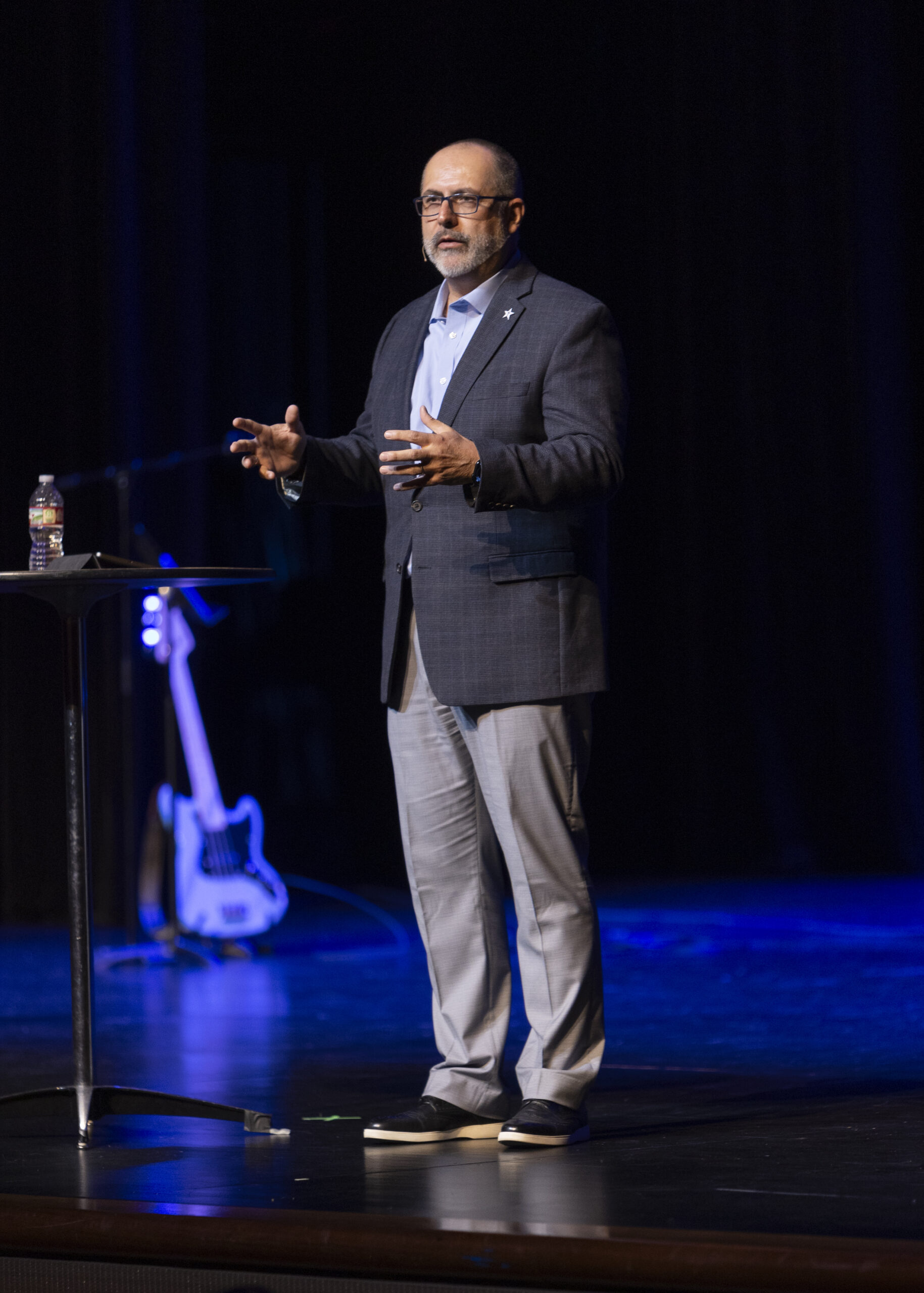
“Congreso, I came to tell you that your identity is in Christ. You are loved, you are forgiven, and you are called,” said Guarneri, executive director of the Baptist General Convention of Texas.
More than 1,500 students and leaders from across the state and beyond attended the three-day conference organized by the Texas Baptists’ evangelism team and held at Waco’s Extraco Events Center. Drawing from 1 Timothy 1:15-16, the theme for this year’s event was “¿Quien Soy Yo?” (Who Am I?).
‘You are loved by the Father’
“Congreso, I came to tell you that your identity is in Christ. You are loved, you are forgiven, and you are called,” said Julio Guarneri, executive director of the Baptist General Convention of Texas. (Photo / Texas Baptists)
Guarneri told students they are not defined by their sin or religious performance but by God’s unconditional love for them.
“Often the world teaches that we are either our successes or our failures,” he said. “Today, I want to tell you that you are not your failures or your accomplishments. You are not the things that the world wants to measure you by.
“I came tonight to tell you that you are loved by the Father. That’s who you are.”
Guarneri pointed to Christ’s perfect atoning work on the cross and the freedom available to students because of it.
He encouraged students to recognize they not only are saved from something, but also saved for something—God’s eternal purpose of redeeming the world to himself.
Guarneri, who committed his life to ministry at Congreso 42 years earlier, urged attendees to pray and seek out the purpose God has for their lives.
“God’s purpose doesn’t end with him forgiving us and giving us a new identity. God’s purpose for us extends beyond ourselves, so that others can experience God’s love and forgiveness,” he said.
He closed by encouraging students to take what they learned at Congreso and go out into their communities.
“Whatever happens here is not just going to stay here. It’s going to make a difference in our communities and into eternity,” he said.
Commitments to Christ made at Congress
Long billed as one of the largest Hispanic youth evangelism conferences in the United States, Congreso 2024 marked 60 years of training and equipping students through worship, fellowship and ministry.
With an emphasis on biblical teaching, discerning God’s call and the importance of higher education, the three-day weekend saw 49 students give their lives to Christ and 28 respond to the call to ministry.
In addition to the main sessions, students attended workshops on topics including apologetics, mental health and personal evangelism. Age-specific guidance including a “Pathways to College” course was offered to older students.
As part of their emphasis on higher education, Congreso organizers gave away 20 scholarships to students who demonstrated outstanding academic performance.
Congreso Coordinator David Gonzalez, joined by Texas Baptists en Español Director Rolando Rodriguez, recognized former Congreso coordinators who were instrumental in supporting the event throughout its 60-year history.
Three former coordinators—Frank Palos, Gus Reyes and Gabriel Cortés—were introduced. Guarneri prayed over the honorees, whose ministry represented 30 years of Congreso leadership.
Gonzalez concluded Congreso by calling his wife and 15-month-old son onstage.
Reflecting on his own time at Congreso as a teenager, he challenged students to think about how they would be spiritual leaders in the future, saying he had no idea as a student that he one day would be leading the event.
“No matter what age God has called you, you’re never too young,” Gonzalez said. “You’re going to be the spiritual leaders who are going to lead my son one day.”
Pastors sign declaration opposing religious nationalism
April 10, 2024
WASHINGTON (RNS)—A group of Christian pastors, theologians and scholars signed a declaration committing the signers to preaching on “real moral issues” ahead of the 2024 election and opposing what the group calls “religious nationalism.”
The document defines religious nationalism as a political movement it says is exploiting “traditional values” to undermine democracy.
“This distorted religious nationalism has persuaded many well-meaning Christians to focus on a narrow set of divisive cultural wedge issues while ignoring the real moral issues that are at the heart of our Scriptures and tradition,” the declaration reads.
The New Haven Declaration of Moral & Spiritual Issues in the 2024 Presidential Election is one of the outcomes of Yale Divinity School’s first Public Theology and Public Policy Conference, which concluded April 9.
The declaration states “we love this nation,” before taking on what it describes as a “political movement (that) has co-opted our faith tradition.”
“We repent of not doing more to preach and teach against this misuse of our faith, and we pledge to proclaim in word and deed a public theology that is good news for all people,” it reads.
The declaration then calls on pastors to launch “a season of preaching the moral issues of living wages and union rights, healthcare and ecological justice,” among other issues.
Address inequality and injustice
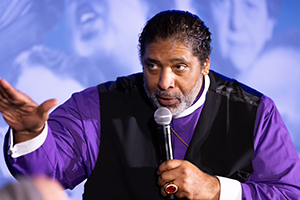
William J. Barber II is the founding director of the Yale Center for Public Theology and Public Policy. (Courtesy Photo via RNS)
William J. Barber II, founding director of the Yale Center for Public Theology and Public Policy, said he hoped the conference helped educate pastors about the issues the Bible prioritizes—societal inequality and injustice.
“The very things that the prophets and that Jesus put at the center as primary are not being heard in the pews in this country,” Barber said. “And that is a deficit that we believe is a form of pastoral malpractice.”
Barber, noted for his anti-poverty activism, retired from the pulpit of his Goldsboro, N.C., church last year to devote his time to training future pastors.
He may be best known for organizing the Moral Mondays movement as a protest against cuts to unemployment benefits, health care funding and voting rights in his home state. In February, he met with Vice President Kamala Harris to talk about issues surrounding the plight of the poor.
Among the initial signers of the declaration are Pastor Jacqui Lewis of New York City’s historic Middle Church; Shane Claiborne, an activist with the Red Letter Christians; Bishop Yvette Flunder of the Fellowship of Affirming Ministries; and Willie James Jennings, a Yale Divinity School professor and theologian.
Another signer, Teresa Hord Owens, president of the Christian Church (Disciples of Christ), who attended the conference, said she would encourage pastors in her denomination of 3,000 congregations to sign the declaration as well.
“I think as Christians we have to really understand what the roots of our tradition are and not allow those things to be distorted or misused for purposes that really fly in the face of what we believe,” Owens said.
She said she believed voter apathy is the result of political candidates not addressing the issues that are important to so many people, such as jobs, wages and economic anxiety.
The conference featured a range of academic experts on Christian nationalism, including Philip Gorski and Anthea Butler. Participants also were invited to watch a new documentary on the rise of Christian nationalism called “Bad Faith.”
But the bulk of the conference was devoted to helping pastors and other Christian leaders better understand the issues Barber cares about most—poverty, racism, voting rights, criminal justice, health care.
“Christian nationalism glorifies hating, almost disdaining, others when our Christian teaching from Scripture calls us to embrace our neighbor and it doesn’t decide who our neighbor is,” Barber said. “It calls us to love everyone with the love of God.”
Around the State: Wayland students ‘Serve Plainview’
April 10, 2024
More than 50 Wayland Baptist University students, along with some faculty and staff, assisted a dozen nonprofit organizations during Serve Plainview, the university’s annual day of community service. Santa Fe Terrace, an assisted living facility, planned a full day of activities, including wheelchair races and other events for residents. Volunteers assisted with a yard sale at Compassionate Care Pregnancy Center. At Christian Manor Apartments, a senior residential community, students helped residents with laundry, while other volunteers visited with residents of BeeHive Homes of Plainview or called bingo games at Prairie House Living Center. Other projects included cleaning up a vacant lot for the City of Plainview, indoor and outdoor work at Wee Care Center, and sorting clothes at Crisis Center of the Plains and Salvation Army. Students and other volunteers restriped the parking lot at Hale County Senior Center and helped with a clean-up project at Unger Memorial Library.
Stephen Gaukroger presented the George H. Gallup, Jr. Distinguished Lecture at Dallas Baptist University. (DBU photo)
Stephen Gaukroger, former president of the Baptist Union of Great Britain, prolific author, and founder of Clarion International, presented the George H. Gallup, Jr. Distinguished Lecture at Dallas Baptist University. During a March 25 luncheon with DBU faculty and staff, his lecture—“Does the Future Have a Church: Gospel Transformation in the 21st Century”—addressed the church’s significant impact on the world. Gaukroger believes the church has a therapeutic role in the world, and he said culture, politics and spirituality as a society are connected directly to the strength of the local church. Gaukroger said the Bible is clear when it says the gates of hell never will prevail against the church, and the gospel will prevail amidst all trials and persecution. “The future will have a church,” Gaukroger concluded. “We don’t know what it will look like, but it will be strong if we look to the Bible and Jesus and equip people with the power of the Holy Spirit.”
HPU student organizations and alumni groups hosted booths at the Spring Family Reunion. Pictured here is the Hispanic Alumni Association hosting the cookie booth. (HPU photo)
Howard Payne University celebrated its fourth annual Spring Family Reunion on March 23. The event’s festivities included music, games, food, a 5K run/walk and an outdoor vendor market, which featured handmade crafts from alumni, personnel and students. Yellow Jacket Preview, a prospective student event, also was held in conjunction with the reunion that morning. “We were thrilled with the response to the HPU Spring Family Reunion again this year,” said Kalie Lowrie, assistant vice president for alumni relations. “This is a growing tradition on our campus, which continues to draw more alumni, students and friends together for a great experience.” More than 150 runners, walkers and participants joined the Alumni Virtual 5K from four countries and 26 cities, using #HPU5K to tag photos on social media to connect with the day’s event. More than 60 participants ran or walked the 5K on the HPU campus, including student groups such as the women’s basketball team. Howard Payne’s Stinger Spectacular fall event—which will include Homecoming, Yellow Jacket Preview and Family Weekend—is scheduled Oct. 18-19. The schedule of events will be released in June and registration will open in August.
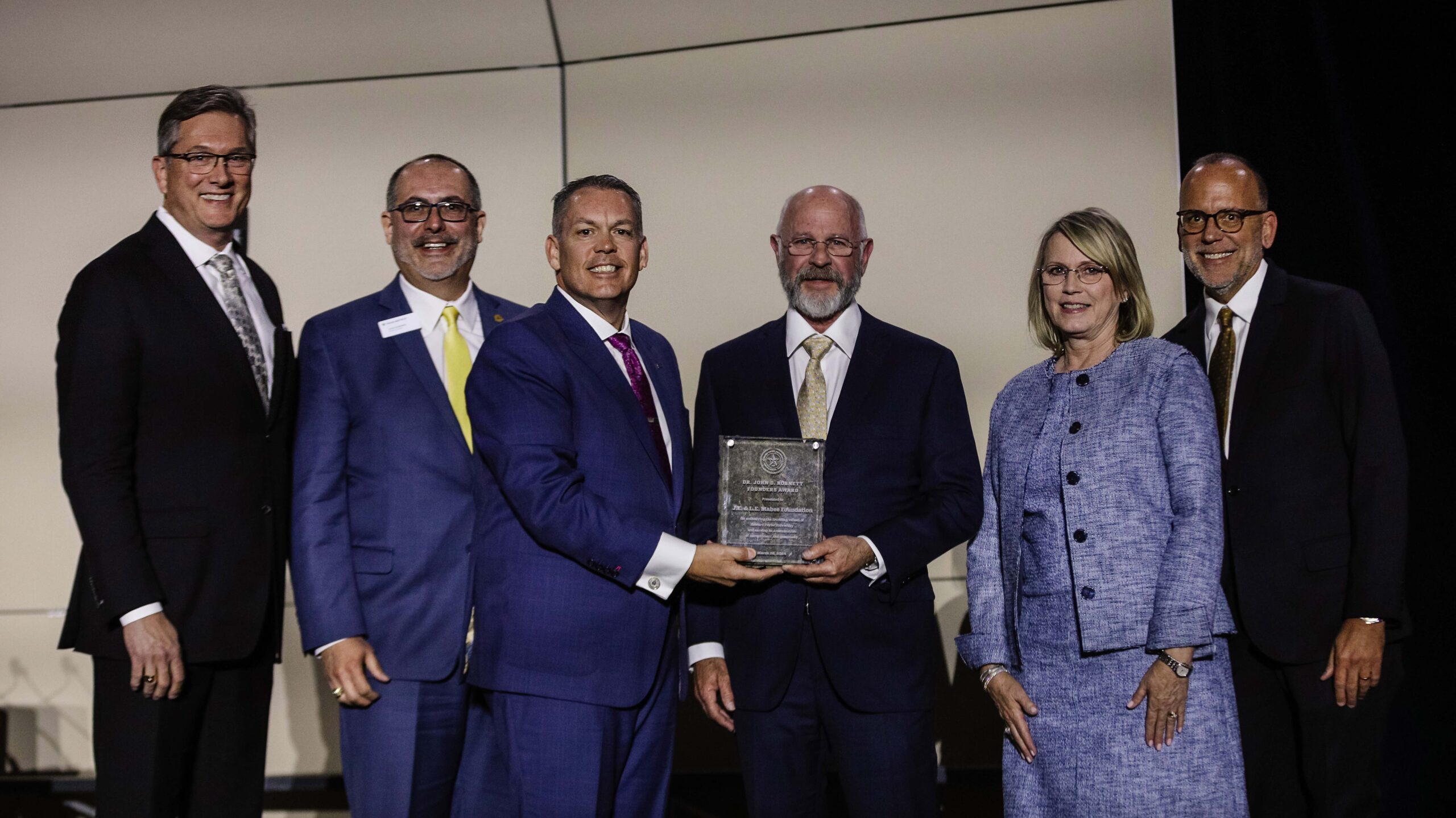
Pictured from left are Ronny Marriott, BGCT president; Julio Guarneri, BGCT executive director; Cory Hines, HPU president; John Maybee, family member and board chairman of J.E. & L.E. Mabee Foundation, his wife Gayla Mabee; and Mike Goeke, J.E. & L.E. Maybee Foundation executive director. (HPU photo)
Howard Payne University recently hosted the second annual Robnett Founders Dinner, honoring the J.E. & L.E. Mabee Foundation of Midland as the recipient of the 2024 Dr. John D. Robnett Founders Award. The Robnett Founders Dinner was established to honor an individual or organization making a major impact on the university and furthering its work in students’ lives. Proceeds from the dinner each year, named in memory of John David Robnett, a founder of HPU, benefit a major project at the university. Student scholarships were the focus project for this year’s event. Several members of the Robnett family attended. Since its formation in 1948, the Mabee Foundation has made grants totaling over $1.5 billion. Normally limited to capital expenditures and the purchase of major medical equipment, in honor of the 75th anniversary of its founding, the Mabee Foundation awarded $75 million in special grants, many of which went outside its normal capital and challenge grant focused scope. Included in these special grants was a $1 million grant to HPU to endow the J.E. & L.E. Mabee Foundation Endowed Scholarship. The keynote speaker for the event was K. Michael Conaway, who retired from Congress in 2021 after serving eight terms as U.S. Representative from District 11 in West Texas.
Julio Guarneri (Michael A. Tims/HCU photographer)
Julio Guarneri, executive director of the Baptist General Convention of Texas, preached on “Hope and the Holy Spirit” at Houston Christian University’s April 3 convocation. Guarneri recounted his calling to ministry at a Congreso event held on HCU’s campus when he was a high schooler. He referenced Acts 2:1–11 to show how the event of Pentecost revealed God is a promise-keeper, a problem-solver and a path-maker. By sending the Holy Spirit, God kept his promise—canceling Babel’s curse of division through the Spirit’s unity in diversity—opening the pathway to reconciliation with God through the Holy Spirit’s work in believers.
The Houston-Lantrip Center at Hardin-Simmons University will host an Autism Acceptance Celebration April 13 from 9 a.m. to noon. This is a free community event to celebrate the neurodiverse. All are welcome and encouraged to attend. There will be face painting, a dance party, a bubble tent, a sensory station and a bounce house. For more information, contact Rachel Goulet at rachel.goulet@hsutx.edu or 325-670-1836
Anniversary
75th for Grace Temple Baptist Church in Waco. Buddy Sipe is pastor. A celebration is scheduled from 10 a.m. until noon on April 14. Former pastor David Brown is the guest speaker.
Small change sparks San Antonio church revitalization
April 10, 2024
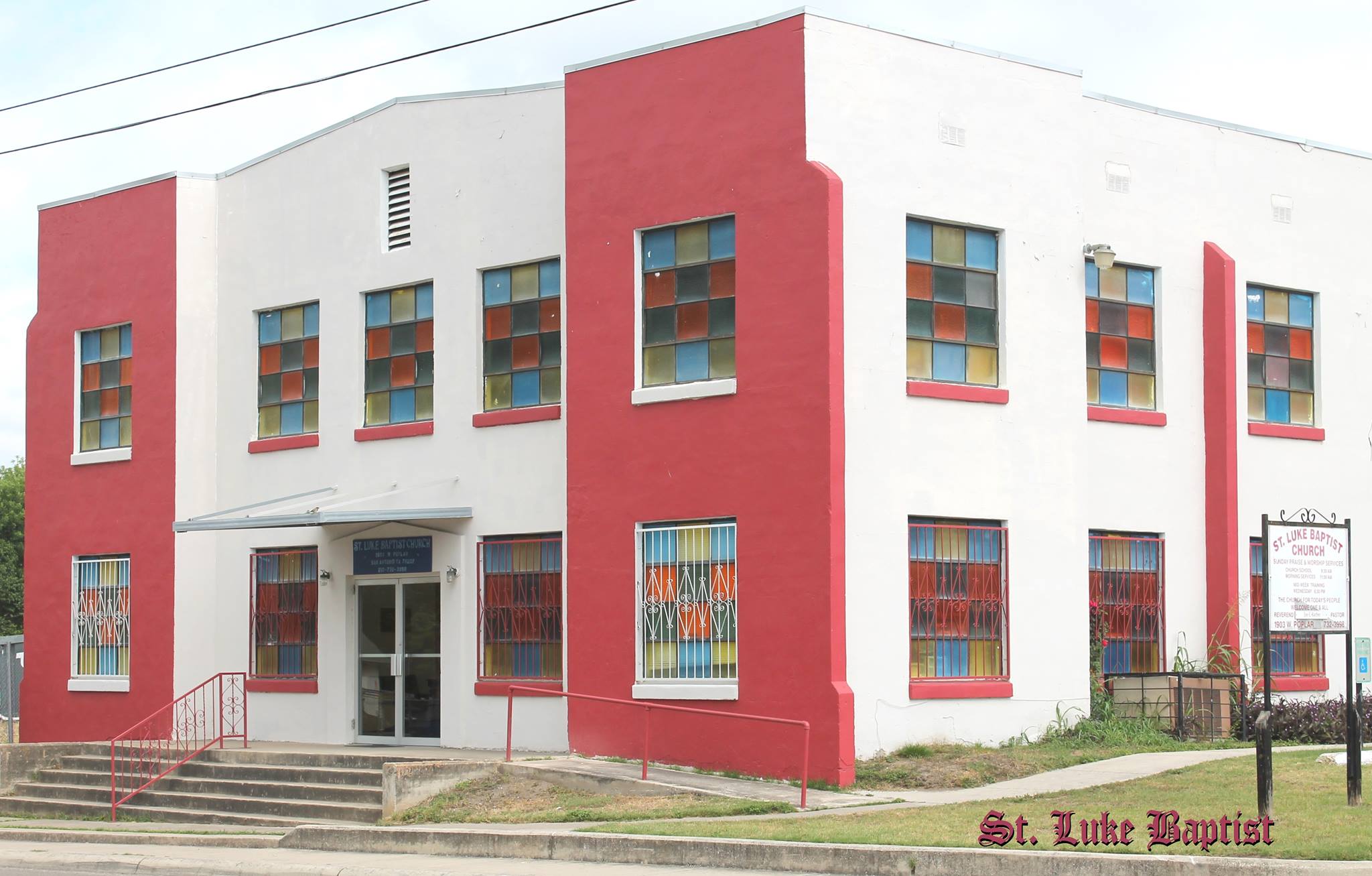
SAN ANTONIO—Despite a history spanning 102 years on the west side of San Antonio, St. Luke Baptist Church’s future had begun to look bleak.
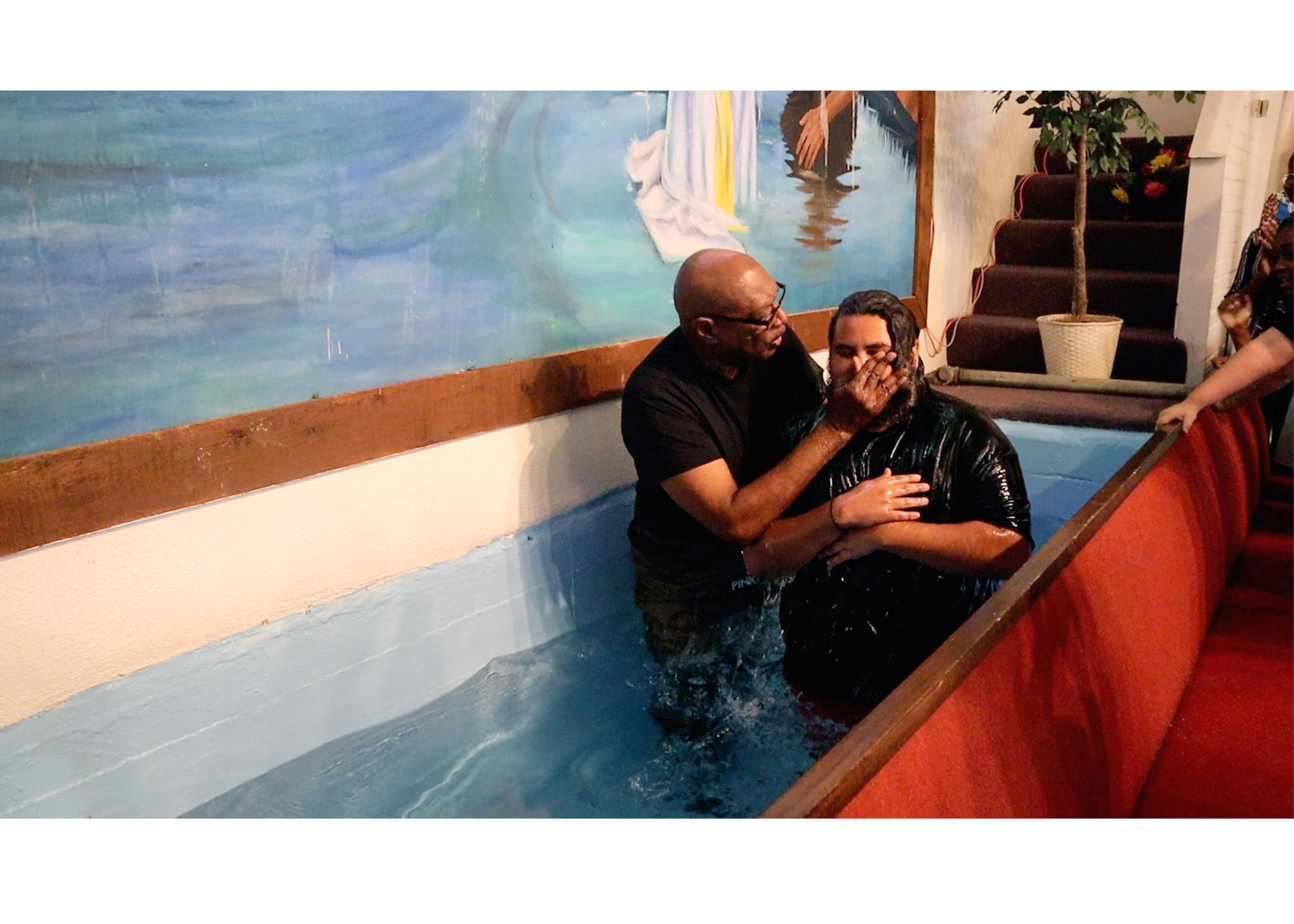
One of twenty recent baptisms at St. Luke Baptist Church. (Courtesy photo)
But then God’s grace, diligence and one small change led to a remarkable 20 weeks of baptisms and renewed vibrancy for this historic, African American congregation.
When Joe Barber answered the call to pastor St. Luke 18 years ago, the demographics of the neighborhood around the church already were beginning to change. Members started noticing the shift, but they didn’t realize it was going to have as big an impact as it did, Barber said.
St. Luke was able to keep going until COVID-19, Barber said.
The church already was experiencing gradual decline, as members either died or quit coming to church like they used to. Even so, the congregation remained committed to being who they always had been—a traditional African American church.
Pandemic necessitated changes
But during the pandemic, the decline the church had been experiencing became so pronounced, making changes to meet the needs of its surrounding community was no longer optional.
It became clear the congregation would have to find ways to meet the needs of the people near them to continue to be a church, Barber said. Post-pandemic attendance dwindled to only 20 to 25 members who regularly attended.
The majority of the members they once had did not live in the area anymore.
“Why would they want to drive 45 minutes to go to church, when they could attend a church five minutes from where they are now?” Barber pointed out.
Barber had begun praying and seeking ways to support the ministry of St. Luke even before the losses brought on by the pandemic.
He had resorted to seeking grants as a means to support the ministry of the church, when the number of bodies in the pews had shrunk too low to sustain them. And “that’s not a good place to be,” he said.
Unwilling to give up on St. Luke, Barber continued looking for support and guidance. He joined a cohort in the San Antonio Baptist Association, which helped him discern the best way to bridge the gap between the church and its community would be increasing its social ministries.
No matter how a community changes, “a meal is something that you can always reach people with,” Barber said.
So, outreach began with feeding the community. Additionally, St. Luke began to host clinics, which are vital in an area with minimal access to medical resources.
Fears stood in the way
Poverty, homelessness and substance abuse have become concentrated in the area around St. Luke, which led many church members to move away. The ones who remained became fearful of the changes taking place around them, Barber said.
St. Luke Baptist Church in San Antonio. (Courtesy Photo)
Not just fearful of increasing threats to safety, but nervous about potential threats to their identity as an African American congregation, he added. For 102 years their church has embodied the values, worship style and emphases characteristic of African American Baptists.
The congregation wanted to know: Could they remain who they have been, retaining their hallowed identity, when the culture around them has grown more diverse. And that question stood in the way of change, Barber said.
It’s a concern for African American congregations any time they are part of a multicultural group, Barber said—the fear they will be cast aside or their way of doing things will be minimized, not respected or completely diminished.
African American worship style is central to their identities because it belongs solely to them. It’s part of what makes them unique, Barber said.
His congregation was concerned, initially, that reaching out to the community, which is no longer predominately African American, might cost them this identity.
If they ceased to be an African American church, it would be a loss not only to its members, but to long-term African American residents of the area around St. Luke, who remember all the church has meant to the community through the years.
While the area around the church historically had been predominately African American, as these residents moved out, they were replaced by a largely Hispanic population.
But by January of 2023, Barber’s concern—that if the core group of elders in the congregation died, the church would have to shut its doors—led St. Paul to begin implementing change.
‘How do we turn this thing around?’
Barber talked to Oza Jones, director of Texas Baptists’ African American Ministries, about the condition of the church and asked, “How do we turn this thing around?”
Jones suggested Barber participate in Pave, a Texas Baptist strategy designed to help pastors customize church revitalization for their congregation’s context.
Barber found a blueprint he could use right away. And the congregation “could do this while we learn the other stuff,” Barber said.
Pave gave him a model his congregation could use immediately, with minimal training and without pushing a lot of change on his traditional congregation. Other support he’d received was more long term in focus.
Barber keyed in on one piece of the Pave church revitalization strategy—moving baptisms to the middle of the worship service and videoing the testimony of the candidates for baptism to show the congregation.
This baptismal piece would provide a “shot in the arm” to be able to see improvements now.
Once St. Luke had one baptism—the first one in years—videoed it and shared it in the way Pave recommended, the baptismal waters continued to be stirred for the next 20 weeks.
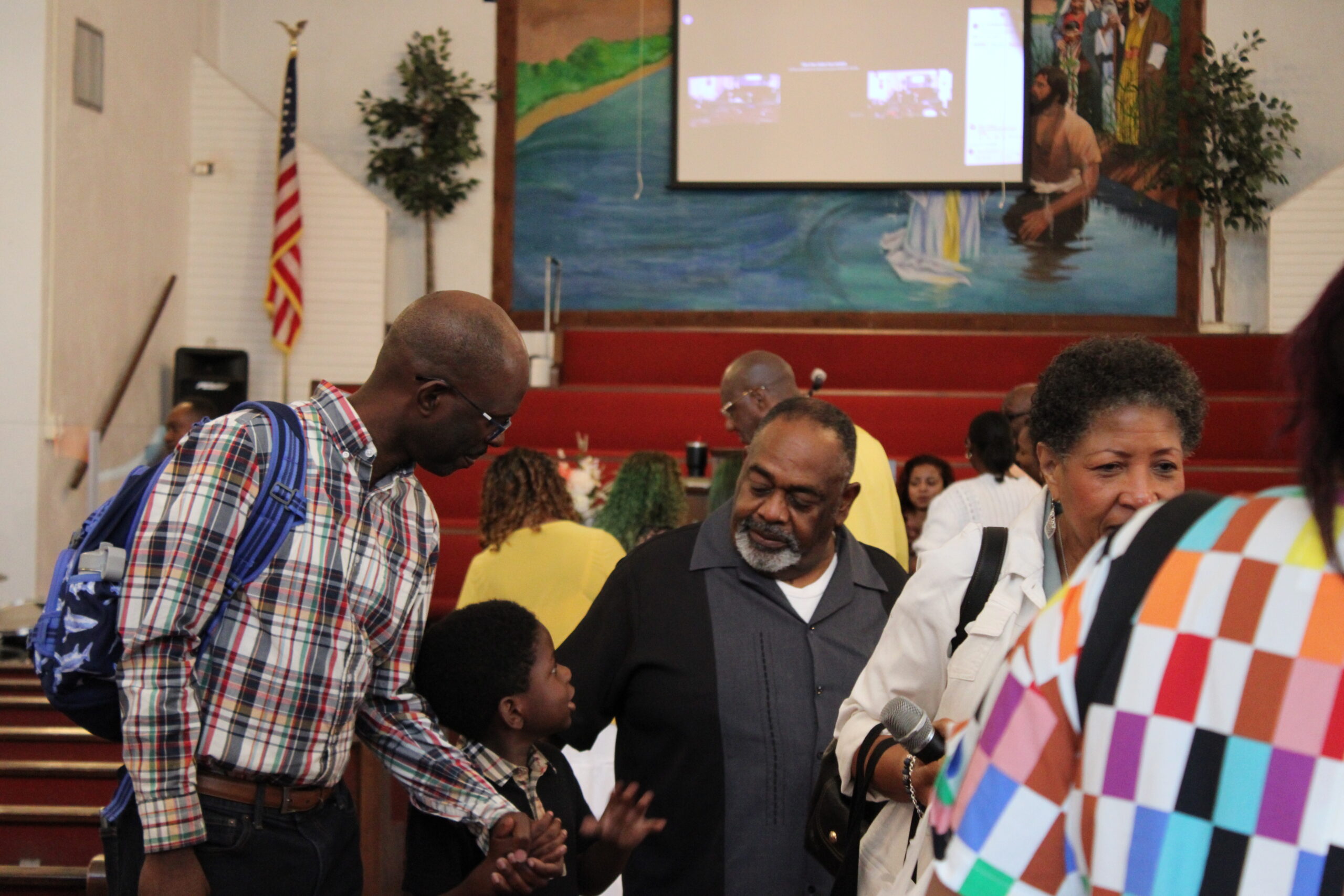
(Courtesy photo)
Yet, the challenge now, with these 20 new members, is discipleship. To succeed, Barber said he needs to grow leaders to help with that responsibility. Barber is the only minister on staff right now, and he is bivocational.
But it’s a good problem to have, Barber said, remaining hopeful about the future of St. Luke—which now runs 50 to 75 in regular attendance.
St. Luke learned something else when the congregation began to welcome people from different cultural backgrounds into their still predominantly African American church.
Members discovered they didn’t lose anything. They found that their new members have more in common with them in their daily struggles than they ever guessed.
They’re unique in their experiences, Barber said, but their stories are not that different.
They could “hold onto their African American history and that struggle” and identify with the struggle of their new Hispanic members—celebrating together God’s continuing work on the west side of San Antonio and in their communities.
Global religious freedom able to draw bipartisan support
April 10, 2024
Elected officials who differ on most issues broadly agree about the importance of global freedom of religion and belief, two former ambassadors-at-large for international religious freedom asserted.
Sam Brownback and Rabbi David Saperstein discussed bipartisan strategies to advance international religious freedom during an April 8 livestreamed forum originating from Pepperdine University in Malibu, Calif.
“I believe the religious freedom movement is the most important human rights movement right now on the planet,” said Brownback, who appeared in person at the event sponsored by Pepperdine’s Caruso School of Law Sudreau Global Justice Institute and the Pepperdine School of Public Policy.
“The human rights project has been in decline for 15 years. We’ve been losing ground for 15 years. But here is a movement that’s getting more and more of the religious community engaged. … We talk about a common human right—my right to believe as my soul dictates. We believe in religious freedom for everybody everywhere all the time.”
Hindu nationalism in India, conflict between Christians and Muslims in Nigeria, genocide in Myanmar and China’s use of technology to oppress religious dissent illustrate the need for freedom-loving people to “push back against oppressive systems,” he said.
Saperstein, who joined the forum via Zoom, similarly underscored the urgency of protecting freedom of conscience and religious freedom.
He noted significant differences in the United States over competing claims of religious liberty and civil rights domestically—including differences he and Brownback have over religious exemptions regarding LGBTQ rights and abortion.
Sam Brownback (center) and Rabbi David Saperstein (right, on screen) discussed bipartisan strategies to advance international religious freedom during an April 8 livestreamed forum originating from Pepperdine University in Malibu, Calif. (Screen Capture Image)
However, he pointed to remarkable consensus and “strange bedfellow bipartisan coalitions” that have emerged to address international religious freedom—largely because the examples of religious oppression globally are so egregious.
“We are talking about people who are victimized by genocide, who have seen themselves torn from their own lands and ethnically cleansed—who are arrested, convicted, sentenced to death, tortured or serving long prison terms simply because they worship God in a way different from how the controlling powers in any given country see it,” said Saperstein, director emeritus of the Religious Action Center of Reform Judaism.
“The egregiousness of the manifestations of religious persecution, oppression and discrimination that exist across the globe prick the conscience of every person who cares about human rights—who cares about human dignity—whatever their political persuasion.
“So, I think the nature of that repression and the character of that persecution is the single greatest driving force to mobilize people from different partisan backgrounds, different ideological backgrounds and different religious backgrounds to stand together.”
Looking particularly at genocide—the most egregious example of a human rights violation— Brownback noted its religious nature. Historically and currently, religious minorities most often are the targets of genocide, he asserted.
“If you want to protect against genocides, and if you want to say that ‘never again’ means anything, you’ve got to protect religious minorities,” he said.
Shared commitment, different strategies
Tactically, bipartisan cooperation on international religious freedom is possible because it intentionally excludes domestic issues that would “turn it into a punch fest” and divide politicians along partisan lines, Brownback observed.
“It you want to build a tall organization and a broad alliance, you’ve got to keep a narrow focus,” he said.
Saperstein emphasized he views freedom of conscience—of which religious freedom is a key component—as foundational, but he also sees it as inextricably tied to other human rights.
“I don’t think that you can fight for religious freedom narrowly if you exclude fighting for other human rights as well,” he said. “If you don’t have freedom of speech, you can’t have freedom of the pulpit.
“If you don’t have freedom of the press, you can’t have the right to print your holy books, to print your textbooks, to run your radio stations and your television stations and your newspapers and your magazines.
“If you don’t have the fundamental right of association, you do not have the ability to get together in community for celebrations and to worship the way that you want.”
Saperstein agreed other concerns should be tested by whether they advance or divert attention from the cause of enhancing freedom of religion, but he rejected the idea of an exclusive focus.
“For me, it is a broader agenda of religious freedom within human rights that is the secret to success in these efforts. It will help broaden the coalition that is fighting for religious freedom,” he said.
Brownback said he supports a broad human rights agenda, but a decade and a half of trying to advance the broad agenda resulted in “losing ground.”
So, he suggested a more concentrated effort focusing on religious freedom as the “cornerstone” around which other human rights protections can be built.
“If you get this one set right, you can build the others,” he said.
Furthermore, he noted, 80 percent of the global population claims some religious faith, creating the potential for a shared commitment to protecting religious freedom.
Saperstein agreed freedom of conscience—practiced by most as freedom of religion—provides the “bedrock” for other human rights, even though it often has been neglected.
Historically, he noted, passage of the International Religious Freedom Act grew out of a recognition most government human rights initiatives, courts, international organizations and academics gave “short shrift” to religious freedom.
When questioned why religious freedom merited special attention, Saperstein said, “From my liberal standpoint, I said, ‘It’s an affirmative action program.’”
Looking at international trends toward authoritarianism and autocracy, Saperstein again affirmed the importance of affirming religious freedom within a broad context.
“I don’t believe you win the battle for religious freedom without winning the battle against autocracy and for democracy and for human rights across the globe,” he said.
Questions surround killing of Kachin Baptist minister
April 10, 2024
Unanswered questions continue to surround the violent death of a Baptist minister in northern Myanmar’s Kachin state.
Masked gunmen shot and killed Nammye Hkun Jaw Li, who was at one time a leader in the Kachin Baptist Convention and was active in the Pat Jasan community-based anti-drug campaign.
Since the military regime seized control three years ago, Myanmar has become “the world’s largest opium producer” and “a hub for transnational organized crime,” the United Nations Security Council heard in an April 4 briefing.
Varied accounts of minister’s death
Most sources—but not all—agree the shooting occurred March 18 in a village of Mogaung township, and Nammye Hkun Jaw Li, age 47, died of gunshot wounds. He is survived by his wife and three children.
In the most widely circulated account of the killing, Radio Free Asia reported three gunmen stormed the minister’s computer shop, shooting him twice in the abdomen and once in the head.
The March 19 Radio Free Asia account of the attack—subsequently picked up by other news outlets—reported Nammye Hkun Jaw Li was “active in anti-military protests” and said sources close to his family called the killing a targeted attack.
Other news sources offer a slightly different account of the killing.
The Chindwin News Agency identified Nammye Hkun Jaw Li as “a former Christian pastor” who was “known for his activism among members of the Kachin Baptist Convention.” Chindwin reported he was “gunned down in his home,” adding he was murdered “in cold blood in broad daylight.”
Democratic Voice of Burma English News reported Nammye Hkun Jaw Li was shot five times by an unknown group of masked gunmen who entered a computer shop within his home in Lan Kkwa village of Namti in Moguang Township.
Eleven Media Group in southern Myanmar offered a different report, identifying Nammye Hkun Jaw Li as a 40-year-old “former pastor of the Kachin Baptist Convention” who was shot by “three unidentified assailants on a motorcycle.” Unlike all other accounts of the shooting, Eleven Media Group reported the attack occurred shortly before 2 p.m. on March 11.
‘Crisis in Myanmar’
A spokesperson for 21Wilberforce, a human rights organization focused on international religious freedom, called the killing of Nammye Hkun Jaw Li “a tragedy.”
“Whether he was murdered because of his faith, his leadership in the community or both, Pastor Jaw Li is one of hundreds of thousands who have died or been displaced due to increased violence from the civil war in Myanmar,” the 21Wilberforce spokesperson said.
“The situation in the country continues to deteriorate. We are praying for Pastor Jaw Li’s family and the country. We stand in solidarity with the international community calling for attention to the crisis in Myanmar.”
While details about Nammye Hkun Jaw Li’s death remain murky, nobody questions violence has plagued Myanmar since the February 2021 military coup, and much of it has been directed toward ethnic and religious minorities.
In multiple instances, the Burmese military—known as the Tatmadaw—and its affiliates have targeted churches, ministers and Christian-majority communities.
Pastor Cung Biak Hum was shot dead in the Chin state of Myanmar. (Facebook Photo / Asia Pacific Baptists)
In September 2021, the Burmese military shot and killed Baptist Pastor Cung Biak Hum. At the time, the pastor was attempting to help a church member extinguish a fire after the man’s home was set ablaze during military attacks.
In 2022, the Baptist World Alliance general council adopted a resolution condemning the military coup in Myanmar that has led to “a campaign of terror and violence.”
“Since the coup, the military has terrorized communities in Kachin, Karen, Kayah State, Chin State and Sagaing Region by burning villages, destroying churches, and detaining pastors and religious leaders,” the resolution stated.
Hkalam Samson, past president and former general secretary of the Kachin Baptist Convention in Myanmar was detained by the Burmese military junta in December. On Good Friday 2023, he was sentenced to six years in prison. (CSW Photo)
Last year at this time, a Burmese court in Myitkyina sentenced Pastor Hkalam Samson, former president of the Kachin Baptist Convention, to six years in prison on charges of unlawful association, defaming the state and terrorism. Samson was a critic of human rights abuses by the ruling military regime.
In remarks to the United Nations Human Rights Council last September, High Commissioner Volker Turk condemned atrocities committed by the ruling military regime in Myanmar as “inhumanity in its vilest form.”
Noting more than 4,100 deaths at that time caused by the military and its affiliates, Turk said the military regime should be brought before the International Criminal Court.
In an April 4 U.N. Security Council briefing, several speakers addressed the humanitarian crisis in Myanmar and called for an end to the military regime’s “ongoing atrocities and human rights abuses.”
“We are horrified to hear continuing reports of village burnings, torture and beheadings, and other brutal acts committed amid the conflict,” U.S. Ambassador Robert Wood told the Security Council.
Wood noted Burmese military airstrikes on civilians “increased five-fold” in the past five months.
“This is in addition to the airstrikes, shelling and arson by the regime that have destroyed homes, schools, health care facilities and places of worship since the military illegally took power three years ago,” Wood said.
On the same day as the Security Council briefing, the U.N. Human Rights Council adopted a resolution calling on U.N. member states to refrain from the export, sale or transfer of jet fuel to the Burmese military.
El ministerio español de Bear Creek atrae multitudes
April 10, 2024
Cuando la Iglesia Bear Creek en Katy lanzó oficialmente su ministerio en español en 2018, la iglesia no anticipó el nivel de crecimiento que vería en los próximos años.
Hoy, el ministerio está casi lleno en “La Corte”, el lugar donde se lleva a cabo el servicio en español los domingos a las 11 a.m.
“Sé la luz de Cristo donde estés y sé intencional al compartir el evangelio”, dijo Iván García, pastor principal del ministerio en español.
La historia del Pastor García
García nació y creció en Santa Clara, Cuba, en una familia que no creía en Dios.
Durante la Revolución Cubana, hubo tensión entre las iglesias y el gobierno. Los misioneros se vieron obligados a regresar a sus países de origen. Los estudiantes del seminario bautista fueron obligados a trabajar sin paga en unidades militares.
El gobierno cerró algunas iglesias. Muchos pastores y líderes laicos emigraron a otros países.
Durante la década de 1990, hubo un gran renacimiento en las iglesias. En 1992, García, de 13 años, visitó la Primera Iglesia Bautista en su ciudad natal. Anteriormente había asistido a la iglesia católica en secreto. Un joven de 14 años, ahora adulto y sirviendo como pastor, compartió el evangelio con García, quien se convirtió al cristianismo.
A los 17 años expresó interés en el llamado de Dios a ser pastor. Recibió ayuda de su pastor y mentores.
Después de completar su servicio militar obligatorio, sirvió en la iglesia como misionero. Esto le dio la oportunidad de predicar y visitar la congregación. Después de un año, asistió al seminario Bautista en La Habana, Cuba, para recibir educación teológica. Allí conoció a su esposa, Yanexy, quien también era egresada de ese seminario. Los dos han estado casados 23 años y tienen tres hijos: Lauren, Leidi y Jacob.
García sirvió como pastor en Cuba durante 15 años y finalmente llegó a los Estados Unidos en 2013. Sirvió en Fort Worth siete años y finalmente llegó a Houston en 2021 para servir en Bear Creek. Su primer domingo fue el 27 de junio de 2021 y la asistencia promedio en ese momento fue de 123.
Bear Creek en Español
Bear Creek lanzó oficialmente su ministerio en español el Domingo de Pascua de 2018, después de celebrar servicios mensuales a partir del septiembre anterior.
Hoy en día, la asistencia promedio es de alrededor de 340 personas cada domingo. Cada semana, visitan invitados por primera vez. En 2023, 566 invitados por primera vez asistieron al ministerio en español.
En los primeros 11 domingos de 2024, 106 invitados primerizos visitaron la iglesia y bautizaron a 11 nuevos creyentes. ¿Qué ha contribuido a este crecimiento?
“La fidelidad de la gente aquí en Bear Creek” es clave, dijo García. “Se mantuvieron fieles durante la pandemia y creo que Dios honró esa fidelidad. También vivimos en la oración y vivimos en lo que Dios puede hacer de manera sobrenatural”.
La iglesia está entusiasmada con el crecimiento que ha visto en el ministerio en español. El problema es la capacidad del espacio actual. Durante los últimos seis años, el ministerio ha estado funcionando como una iglesia portátil.
Cada semana, los miembros se reúnen en el gimnasio, instalando sillas y equipos para convertir el espacio deportivo en un espacio de adoración. Varios domingos, más de 350 personas se reunieron para adorar en un gimnasio que sólo tiene capacidad para 350 personas.
Planes de crecimiento
Para permitir que el ministerio siga creciendo, la iglesia busca ampliar el área de la Corte en 3000 pies cuadrados, lo que aumentaría la capacidad a entre 650 y 700 personas. La remodelación también incluiría un área de escenario permanente, reduciendo la cantidad de trabajo cada domingo para montar y desmontar para el servicio.
“Nuestro objetivo no es simplemente llenar esta sala con gente, sino salir de estos muros y compartir a Cristo con otros donde estén”, dijo García. “Con el tiempo, queremos suministrar múltiples servicios de adoración en español, no solo uno”.
Bear Creek en Español es una congregación diversa, con fieles de 20 países hispanos de todo el mundo, además de personas de Ucrania, China y Brasil.
García cree que la iglesia está plantada en un área geográfica estratégica. Personas de todo el mundo vienen a Houston.
“Nuestra misión es alcanzar a todos para Cristo, sin importar el idioma que hablen. Esta es la visión que siempre comparto con la congregación”, dijo García. “Dios está haciendo algo único aquí en Houston. Tenemos una gran oportunidad de llegar a personas de todo el mundo”.
Merits of Patterson case argued before appeals court panel
April 10, 2024
NEW ORLEANS (BP)—Nearly a year after its original dismissal, attorneys argued the merits of a lawsuit against Southwestern Baptist Theological Seminary and Paige Patterson, the school’s former president, before a three-judge appeals court panel April 3.
Plaintiff “Jane Roe” filed suit against Patterson and the seminary in 2019, claiming negligence, violation of privacy and defamation. She alleges she was sexually assaulted at gunpoint on at least three occasions in late 2014 and early 2015 by “John Doe,” a student with a criminal history, who also was employed as a plumber by the school.
Claims against both parties were dismissed April 6 of last year by the U.S. District Court for the Eastern District of Texas, but Roe appealed.
Ultimately, she seeks a jury trial on the facts of the case. Due to the sensitive nature of her allegations, many of the case’s documents have been sealed.
Focus on claims of defamation and negligence
In the April 3 hearing, Roe’s attorney, Sheila Haddock, focused her argument on two of her client’s claims—a defamation claim against Patterson and a negligence claim against Southwestern Seminary.
The defamation allegation comes from statements made in defense of Patterson after Roe’s sexual assault claims came to light. Patterson’s handling of the incident was one of the issues considered by Southwestern Seminary trustees prior to his termination in 2018.
In the weeks following Patterson’s departure, his supporters released and distributed information attempting to explain and/or defend his actions.
Roe maintains that some of the claims in those documents—including allegations she made false statements and had consensual sex outside of marriage—are defamatory toward her.
In court, Haddock argued some of the documents’ authors, including Sharaya Colter, wife of longtime Patterson aide Scott Colter, were acting as “agents” of Patterson in writing and disseminating the articles.
In his rebuttal, Patterson’s attorney, Travis Jones, said there was no evidence Patterson authorized any parties to make public statements on his behalf. He also asserted most of the assertions in the documents do not constitute “defamation per se.”
“The record evidence is that there’s no evidence tying Dr. Patterson to any of these alleged defamatory statements,” Jones said. “Nothing occurred within the scope of the agency relationship.”
With regard to the negligence charge against the seminary, attorney Brian Rutherford said none of the evidence submitted shows seminary officials could have foreseen Doe would commit sexual assault against Roe. He also argued the school followed its normal admission and hiring procedures with regard to Doe.
Finally, Rutherford said, since Patterson’s employment at Southwestern Seminary had ended prior to the dissemination of the alleged defamatory material, his client, the seminary, should be dismissed from those claims.
In her closing arguments, Haddock urged the judges to allow the case to proceed to trial.
“There are disputed fact issues even within just the testimony that was offered in support of a defendant’s motions for summary judgment,” she said. “And this court has told us that in cases like that, summary judgment is simply not appropriate.”
‘Jesus’ in sign language premieres in Arlington
April 10, 2024
ARLINGTON (BP)—A new version of the Jesus Film, performed in American Sign Language (ASL) by deaf actors and crew members, premiered April 4 at the Deaf Missions Conference in Arlington.
A broader release of the film portraying Jesus’ life is in the works, Deaf Missions has said, but details have not been announced.
Joseph Josselyn, producer and director of “Jesus (A Deaf Missions Film),” explained in ASL the importance of the movie in presenting the gospel to the Deaf community.
“Jesus is signing, all the actors are signing, because the cast is deaf. The Deaf community will see this and have that instant connection,” Josselyn, who is himself Deaf, signed in a YouTube video before the film’s production.
“Language isn’t a barrier anymore. They can be fully immersed into the story. The message of the gospel can impact their lives.”
Already, the Jesus Film has been produced in 2,100 languages since its 1979 English premiere, and it holds the Guinness Book of World Records for being translated in more languages than any film.
Importance of connection
Cru Ministry partnered with Deaf Missions to produce the newest version of the Jesus Film, designed to minister to deaf individuals in the United States and other nations where ASL is used.
While there is no universal sign language, ASL is used by more than half a million deaf and hard-of-hearing individuals in the United States, and also in Canada and other countries. Globally, 70 million deaf individuals use one of 300 sign languages, World Federation of the Deaf reports.
Viewing spoken language films with the speakers accompanied by a sign language interpreter provides deaf viewers a limited experience, Josselyn said.
“Deaf people, including myself, often watch movies where the actors are speaking and we have to rely on the captions. Because of this, we don’t have that same connection with the film that a hearing person would,” he said in the video.
“If the Deaf community sees a film that’s done entirely in sign language, they’re captivated, regardless of the topic of the film. There’s that natural connection of a shared language.”
The International Mission Board, which has used earlier versions of the Jesus Film in its global ministry, considers the approximately 70 million deaf people in the world an unreached people group.
Most culturally Deaf individuals, whom IMB number at 80 million globally, have almost no access to Scripture in their heart language and have never seen the name of Jesus signed in their language.
Translating more than 300 Bible stories into various sign languages, IMB shared the gospel in 2022 with 2,261 deaf individuals, garnered 122 professions of faith among deaf people, baptized 97, planted 14 new churches and trained 60 individuals for leadership in ministry to the Deaf community, according to imb.org/deaf.
Watch the official trailer for “Jesus (A Deaf Missions Film)” here. Updates on an anticipated broader release, including church licensing and other viewing options, will be posted on Deaf Mission’s social media accounts.
 Claude Willis Jacks Jr., former Texas Baptist pastor and associational director of missions, died April 8. He was 98. He was born Nov. 5, 1925, in Belton to Claude and Viola Jacks. He attended Texas A&M University until he was drafted into the U.S. Army during World War II. He was assigned to 19th Infantry Regiment, 24th Infantry Division, Mindanao, Philippine Islands, and was wounded in June 1945. He returned to action, serving until the end of World War II in the southern islands of Japan in the army of occupation. Jacks was the recipient of a Bronze Star and a Purple Heart. After he completed his military service, he surrendered to the gospel ministry and attended the University of Mary Hardin-Baylor and Baylor University. He married Delma Garner on Aug. 25, 1947. He earned a Master of Divinity degree and a Master of Theology Degree from Southwestern Baptist Theological Seminary in Fort Worth and was ordained to the ministry in 1948. He was pastor of First Baptist Church in Floresville, First Baptist Church in Cotulla, First Baptist Church Heights in Houston and First Baptist Church in Odem. He served 12 years as director of missions for the Blanco and Coastal Bend Baptist Associations in Beeville, ministering to 125 congregations and being involved in starting 40 churches. After he retired in 1992, he and his wife served as international missions volunteers in Trinidad, West Indies, Philippines, Zambia, Zimbabwe, Belgium, England and China. He was a member of First Baptist Church in Katy. He was preceded in death by his wife of 73 years, Delma Garner Jacks, and a grandson, Kristopher Kervin. He is survived by daughters Claudia Flora and Melanie Hilburn, sons Jeff Jacks and Kevin Jacks, six grandchildren, 19 great-grandchildren and nine great-great-grandchildren. Family visitation will be held from 6 p.m. to 8 p.m. on April 15 at the Schmidt Funeral Home Grand Parkway Chapel in Katy. Memorial gifts can be made to the




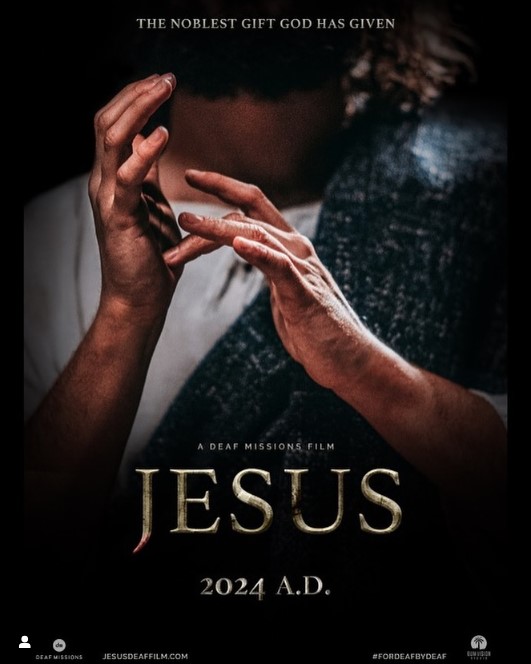 Joseph Josselyn, producer and director of “Jesus (A Deaf Missions Film),” explained in ASL the importance of the movie in presenting the gospel to the Deaf community.