Voddie Baucham Jr. dies at 56

(RNS)—Voddie Baucham Jr., a conservative Black pastor, author and seminary leader known for advocating for restricting women’s roles in the church and critiquing what he saw as “woke” influence on Christianity, has died at 56.

“We are saddened to inform friends that our dear brother, Voddie Baucham Jr., has left the land of the dying and entered the land of the living,” the Founders Ministries announced Thursday (Sept. 25).

Baucham had been leading the ministry’s new seminary in Florida.

“Earlier today, after suffering an emergency medical incident, he entered into his rest and the immediate presence of the Savior whom he loved, trusted and served since he was converted as a college student,” the announcement said.

A graduate of Houston Christian University, Southwestern Baptist Theological Seminary and Southeastern Baptist Theological Seminary, Baucham pastored churches in Texas for years before moving to Zambia in 2015 to lead a missionary seminary there.

He returned to the United States in 2021 after dealing with serious health issues.

Earlier this year he was named president of Founders Seminary under the auspices of the Founders Ministries, a nonprofit with ties to Southern Baptists.

“What a privilege it is to invest your life in training the next generation of pastors. And that’s what this is about,” Baucham said in a video announcing the new school.

“We’re committed to training men with sharp minds, warm hearts and steel spines.”

A lion in the pulpit

Tom Buck, pastor of First Baptist Church in Lindale, Texas, called Baucham “a dear friend, a faithful brother and a lion in the pulpit.”

Buck said he was devastated to hear the news of Baucham’s death. The two had found common cause in conservative theology but also were friends.

“He was kind, he was generous, he was just a faithful brother,” Buck said.

Buck said despite his renown as a preacher, Baucham was the same person in the pulpit or talking one to one.

“There was no pretense about him,” said Buck. “He loved the Lord. He was a godly man behind closed doors as well as in public. He was kind and generous.”

Georgia pastor Mike Stone, a former candidate for president of the Southern Baptist Convention, praised Baucham as “just a stalwart for truth and his loss to the body of Christ could not be overstated in this hour,” Stone told Religion News Service.

SBC and CRT

In recent years, Baucham had become allied with a group of conservative pastors who believed the SBC was experiencing a liberal drift.

He ran for president of the SBC’s pastor conference, an influential gathering that occurs in the days before the denomination’s annual meeting, in 2022, but lost the race to North Carolina pastor Daniel Dickard.

Baucham’s 2021 book, Fault Lines, made USA Today’s bestseller list, peaking at No. 7. The book critiqued critical race theory as unchristian and the leading edge of a “looming catastrophe” in evangelical Christian churches.

Baucham recently gave a lecture about standing up for Christian values in American culture at New Saint Andrew’s College, a school founded by the conservative pastor Doug Wilson in Moscow, Idaho.

Baucham quoted from the New Testament’s First Letter of Peter:

“Always be prepared to give an answer to everyone who asks you to give the reason for the hope that you have. But do this with gentleness and respect.”

As a seminary professor, he told students winning arguments was not enough, gentleness was not weakness and they needed to respect their opponents.

“May it never be they don’t hear you because you actually are sinful in your presentation,” he said, that “you actually are unkind, disingenuous—because then all of a sudden, the rest of your argument loses its sting.”

An announcement of Baucham’s death cited Psalm 116: “Precious in the sight of the Lord is the death of his saints.”

Baucham is survived by his wife, Bridget, whom he married in 1989, their nine children and several grandchildren.


Singletary steps down as dean of Baylor social work school

Jon Singletary will cease to be dean of Baylor University’s Diana R. Garland School of Social Work, effective Oct. 15.

In a Sept. 25 announcement to Baylor faculty and staff, Provost Nancy Brickhouse wrote Singletary notified her earlier in the week “of his decision to step down from his leadership role” in the Garland School.

“As many of you are aware, these are incredibly difficult times for professionals in the field of social work, and Jon felt the need to step away to take better care of himself, as well as to dedicate more time to his family,” Brickhouse stated.

“Following a sabbatical, Jon intends to return to the faculty and focus on interdisciplinary research and approaches to tackling the growing crisis of mental health in our country.”

Luci Ramos Hoppe, clinical associate professor and director of the undergraduate social work program, will serve as interim dean, Brickhouse said, noting she will announce a national search for Singleton’s successor in late spring 2026.

Center of controversy over grant

While the provost’s announcement makes no mention of it, controversy swirled around the Diana R. Garland School of Social Work this summer.

On June 30, the School of Social Work announced a $643,401 grant awarded to Baylor’s Center for Church and Community Impact. The grant from the Eula Mae and John Baugh Foundation was to focus on the study of “disenfranchisement and exclusion of LGBTQIA+ individuals and women” in churches.

On July 9, Baylor President Linda Livingstone issued a statement saying Singletary and principal investigator Gaynor Yancey “voluntarily offered to rescind their acceptance of this grant on behalf of the School of Social Work and return all associated funds to the Baugh Foundation.”

“We recognize that this situation has caused concern and confusion for many within the Baylor Family and among our broader community of churches, partner organizations, and supporters,” Livingstone stated.

“This has been a learning opportunity for many involved in this situation, and we aim to work alongside our college and school leaders, faculty, and research community, particularly during these challenging times for higher education.”

Served nine years as dean, one as interim dean

Dr. Jon Singletary

Singletary was named dean of the Garland School of Social Work in May 2016 after serving a year as interim dean.

He succeeded the school’s founding dean and namesake, Diana R. Garland, who died in September 2015 of pancreatic cancer.

Singletary joined Baylor’s School of Social Work faculty in 2003, serving as director of the Baylor Center for Family and Community Ministries from 2005 to 2011.

He was associate dean for baccalaureate studies from 2011 to 2014 and associate dean for graduate studies from 2014 to 2015.

Singletary has held the Diana R. Garland Endowed Chair in Child and Family Studies since 2010, conducting research on community, family and congregational life.

Before joining the Baylor faculty, he was pastor of Richmond Mennonite Fellowship in Richmond, Va.

He earned his undergraduate degree from Baylor, a Master of Social Work degree and Ph.D. from Virginia Commonwealth University, and a Master of Divinity degree from the Baptist Theological Seminary in Richmond.


SBC Executive Committee takes up messenger motions

NASHVILLE (BP)—Southern Baptist Convention Executive Committee members addressed referrals from messengers to the 2025 SBC annual meeting at their Sept. 22-23 meeting.

The Executive Committee adopted a recommendation to form a task force to study resources for special-needs ministry available to Southern Baptist churches.

A related motion to add a Disability Sunday to the SBC calendar was declined but with the request for the newly formed task force to consider the suggestion.

At the recommendation of Executive Committee officers, members declined to file a countersuit against former SBC President Johnny Hunt.

A motion to attempt to recover legal fees incurred defending a suit brought by Hunt in 2023 was referred to the Executive Committee in June.

The Executive Committee learned Lifeway campers donated their largest missions offering since 2017 this summer. Lifeway Interim President Joe Walker presented checks totaling more than $690,000 to International Mission Board President Paul Chitwood and North American Mission Board President Kevin Ezell during the meeting.

Committee members also heard from Executive Committee President Jeff Iorg and SBC President Clint Pressley.

“My dream tonight is that Southern Baptists will recommit to cooperation in all its messy splendor and focus on our overarching mission of getting the gospel to the nations rather than being preoccupied with lesser issues,” Iorg said.

Pressley also called for unity and cooperation in his address, calling for Southern Baptists “to actually think the best of each other.”

“What a good thing when someone extends the benefit of the doubt,” he said.

Relationship severed with Houston church

The Executive Committee approved a recommendation brought by the SBC Credentials Committee to “formally recognize the discontinued relationship” of Fountain of Praise in Houston.

The church has not reported financial participation with the SBC for at least the last 10 years and demonstrated a “lack of intent to cooperate to resolve a question of faith and practice,” the committee said.

Fountain of Praise’s website lists Mia K. Wright, wife of pastor Remus E. Wright, as a co-pastor of the church, putting the church out of alignment with the SBC Constitution, which says “the office of pastor is limited to men as qualified by Scripture.”

At the suggestion of the Convention Missions and Ministry Standing Committee, the Executive Committee declined to amend the SBC Constitution to disallow SBC entity employees or contract workers to serve as trustees, claiming the SBC Bylaws already prohibit such conflicts of interest.

In compliance with a revised version of the SBC Business & Financial Plan passed by messengers in June, Executive Committee members each signed a conflict of interest form Sept. 22.

In response to a motion requesting all SBC entities to “report on actions taken to elevate qualified biblical leaders from diverse backgrounds,” the Executive Committee listed several ways it already is active in this regard, including the work of its office of convention partnerships.

“Additionally, the Executive Committee has, since 2011, reported on its efforts to increase ethnic participation and ethnic leadership in the Convention in its Annual Ministry Report,” the recommendation states.

“Finally, the Executive Committee now publishes a dashboard of reporting data in the
SBC Annual regarding ethnic participation on trustee boards, committees, and standing committees.”

In other business, the Executive Committee:

  • Declined to form a study committee to clarify women’s roles in ministry leadership.
  • Approved a request from NAMB to form Send Relief Puerto Rico, Inc., a nonprofit subsidiary, to make it easier for the people of Puerto Rico to contribute directly to Send Relief.
  • Declined to establish an auxiliary to support and minister to pastors’ wives.
  • Approved appointments of new members to various standing committees.
  • Recommended a change to SBC Bylaw 19 to extend the time for notification of the makeup of the SBC’s Committee on Committees from 45 to 60 days prior to the SBC annual meeting.
  • Declined to amend SBC Bylaw 20 to limit amendments to resolutions as printed in the daily Bulletin at the annual meeting.
  • Declined to recommend changes to the SBC ID assignment process, which currently allows for campuses of existing churches to obtain their own SBC ID numbers.
  • Approved New Orleans as the proposed host city for the 2034 SBC annual meeting.
  • Approved a $12,068,300 SBC Executive Committee and SBC operating budget for 2025-2026.
  • Declined to recommend a change to the Business and Financial plan, because the motion requesting the change referred to the previous version of the plan.
  • Allocated distributions from the estate of Raymond Cutright to the Montana Southern Baptist Convention through 2030, in accordance with the desires expressed in Cutright’s will.
  • Received as information that Executive Committee officers approved various amendments to the personnel policies manual and retirement plan.


Executive Committee declines to sue Johnny Hunt

NASHVILLE (BP)—The Southern Baptist Convention Executive Committee at their Sept.23 meeting weighed the potential merits and risks of filing countersuits in cases involving what it considers fraudulent claims of responsibility.

The Executive Committee considered a motion presented at June’s SBC annual meeting instructing the SBC’s legal counsel to countersue former SBC President Johnny Hunt to recover legal fees incurred defending a suit Hunt filed against the SBC.

In the suit, Hunt claimed the SBC ruined his reputation by including him in a report on sexual abuse and making public a private moral failing.

The Executive Committee officers made a recommendation to decline to sue Hunt, which the larger body affirmed—but not unanimously.

Look at the benefit of filing a suit

Dani Bryson, a Tennessee attorney and Executive Committee member, came forward prior to the vote to express “some pause that we would pass this through with no discussion.”

“I understand the recommendation to decline,” she said. “I can see both sides of the issue.” However, she added, “I think there is some merit in our committee considering this moving forward.”

One legal strategy recommended “vigorously defend[ing] the Executive Committee by all legal means,” said Bryson, adding that she was paraphrasing. “… I think we should look at the cost-benefit of countersuing here.”

That step would not primarily be a financial one, she explained.

“I don’t think that is a ground on which to make a decision here. I think there is a moral cost-benefit in standing up for what is right,” she said. “And I think that has merit here beyond financial benefit.”

Many referrals from the SBC Credentials Committee dealing with churches that fail to align with the SBC’s “faith and practice” stem from “churches that do not deal with these problems,” Bryson said, and “there is no small potential for future lawsuits.”

“I think we, in our fiduciary capacity, need to look at standing up for the Executive Committee and for the SBC to discourage those future suits, if there is no merit,” she said.

‘No idea how long this matter will take to resolve’

Executive Committee member David Sons asked for clarification on the status of the Hunt lawsuit, the only ongoing part of which relates to a social media post by former SBC President Bart Barber.

“We have no idea how long this matter will take to resolve,” Executive Committee President Jeff Iorg said. “So, to decide not to decide today is not to put it off until [the] February [Executive Committee meeting]. We may be delayed for two or three years. It’s simply to leave it open-ended.”

Iorg called on Robert Pautienus, Executive Committee counsel, to explain two other issues.

Filing would “be governed by Tennessee law,” he noted.

“So, it’s not a countersuit; it’s a new lawsuit,” he said. “You cannot file a lawsuit until all the legal matters are done … [so] what’s in the motion could not be done.”

Second, Pautienus added, future lawsuits would be considered a “malicious prosecution claim, which generally are not very easy to maintain because you have to show there was zero merit. In other words, a judge has to believe there was zero basis to file anything. Those are hard to maintain and [legal costs] would be paid by the hour.”

For those reasons, as well as the fact that nothing could be filed before the resolution of the Hunt case, he recommended not to file anything.

Call to consider 1 Corinthians

The discussion included 1 Corinthians 6’s instructions on lawsuits among believers. Executive Committee member Harold Philips said the passage prompted him when he was in Maryland to advise his then-state executive, Will McRaney, against bringing a lawsuit against the North American Mission Board. An appeals court recently ruled in NAMB’s favor in the case.

“We (the SBC) have yet to pick up a hammer and go after somebody,” Philips said. “If we let the Lord handle it, he’ll fight for us.”

Iorg expressed “profound reservations about violating 1 Corinthians 6 and suing any other believer for any purpose in a civil manner.”

“I’m not saying it can’t be done,” he said. “… [The SBC] has not taken aggressive action … in this matter. And I just have profound reservations about doing so at any time.”


Sills drops lawsuit against Jennifer Lyell estate

NASHVILLE (BP)—Michael David Sills and his wife Mary no longer are seeking damages against the estate of the late Jennifer Lyell in a lawsuit stemming from Lyell’s accusation of sexual abuse against Sills.

“Plaintiffs elected to not proceed with claims against the decedent’s estate,” attorneys for the Sills said in a Sept. 12 filing in the U.S. District Court for the Middle District of Tennessee.

The Sillses’ counsel has spoken with Lyell’s father, according to the court filing, who said an estate had not been opened for Lyell since her June death from a stroke.

Sills, a former Southern Baptist Theological Seminary professor, and his wife contend in the 2022 lawsuit that he never abused Lyell or forced himself on her.

Abuse survivor and former Lifeway vice president Jennifer Lyell died June 7. She was 47.

The Sills family continues to accuse the Southern Baptist Convention, the SBC Executive Committee and eight individuals and entities related to the SBC of “defamation, conspiracy, intentional infliction of emotional distress, negligence, and wantonness concerning untrue claims of sexual abuse.”

In addition to the SBC and its Executive Committee, remaining defendants are former SBC presidents Bart Barber and Ed Litton, Lifeway Christian Resources, former Lifeway executive Eric Geiger, former SBC Executive Committee Interim President Willie McLaurin, former SBC Executive Committee Chairman Rolland Slade, Southern Baptist Theological Seminary and its president Albert Mohler, Solutionpoint International, Inc. doing business as Guidepost Solutions and Guidepost Solutions, LLC.

Defendants filed motions Sept. 19 for summary judgment in the lawsuit, the majority consistently stating that the plaintiffs “fail to establish any evidentiary support for their claims of tortious conduct,” according to court documents.

Various documents related to the motions were sealed, including motions for summary judgment filed on behalf of Guidepost Solutions, LLC, and various related motions filed by attorneys for Mohler and Southern Seminary.

The Sills family continues to accuse defendants of “making an example out of SBC member and employee David Sills who, without controversy, had admitted to an affair with Lyell and willingly accepted the SBC requirement that he depart from his position at the Seminary.”

The Executive Committee formally apologized to Lyell on Feb. 22, 2022, for “its failure to adequately listen, protect, and care for Jennifer Lyell when she came forward to share her story of abuse by a seminary professor.”

In addition, the Executive Committee acknowledged “its failure to report Ms. Lyell’s allegations of non-consensual sexual abuse were investigated and unequivocally corroborated by the SBC entities with authority over Ms. Lyell and her abuser.”


Missions leader Herb Pedersen dies at age 83

Herbert Lee “Herb” Pedersen, longtime Texas Baptist pastor and missions leader, died Sept. 15. He was 83.

Herb Pedersen was born Dec. 15, 1941, in a two-bedroom house in Hartville, Mo., to Roy and Geneva Pedersen.

He met the love of his life, Barbara Gail Holman, at an A&W Root Beer drive-in more than 63 years ago. The two were married Aug. 4, 1962, in Mountain Grove, Mo., and began a lifelong journey of love, ministry and family.

After graduating from Southwest Baptist College in Bolivar, Mo., Pedersen went on to earn his master’s degree and doctorate from Southwestern Baptist Theological Seminary in Fort Worth.

During his more than six decades in ministry, he was the pastor of several churches in Missouri, as well as First Baptist Church in Kennedale and more than 20 years at First Baptist Church of Oak Cliff in Dallas.

During his time at First Baptist Church of Oak Cliff, he led the congregation to become a Key Church in Texas Baptists’ Mission Texas church-starting initiative.

While leading the church, he made thousands of hospital visits and drove a church bus hundreds of miles for mission trips, youth camps and ski excursions. He also managed a construction company, Diversified Homebuilders.

Led Texas Baptists’ missions division

At the invitation of Baptist General Convention of Texas Executive Director William M. Pinson Jr., Pedersen joined the BGCT staff as director of the missions division of the State Missions Commission.

The same “spirit of cooperation” and leadership by example that he demonstrated as a pastor characterized his work at the BGCT, Pinson said.

“His innovative, indefatigable, cooperative leadership style once again set an example for others,” he said.

When he left the BGCT staff, Pedersen returned to the pastorate, leading two congregations in Midlothian—Mountain Peak Community Baptist Church and then Longbranch Community Baptist Church, where he served until his retirement.

He served in a variety of roles at Dallas Baptist University, as an adjunct professor of New Testament and member of the DBU board of trustees, as well as the contractor who oversaw construction of the president’s home and drove the bulldozer creating water features on the DBU campus.

He received an honorary doctorate from DBU in 1983, and the university named the Barbara and Herb Pedersen Residential College in the couple’s honor.

“Along with a host of others, I thank God for his gift of Herb Pedersen to our lives,” Pinson said. “He was my pastor, coworker and friend for decades, and during all those years, he remained steadfastly committed to serving the Lord Jesus Christ whether in his role as pastor, husband, father, denominational worker, university trustee, encourager, friend or whatever.

“A creative and hard-working disciple of Christ, heaven is more populated because of his diligent ministry.”

He was preceded in death by his brothers Gerald and Garry.

He is survived by his wife Barbara Gail Pedersen; daughter DeeDee Bailey and her husband Darryl; daughter Angie Cagle and her husband David; daughter Beth Savage and her husband Denny; six grandchildren; and six great-grandchildren.

In lieu of flowers, memorial gifts can be made to the Herb and Barbara Pedersen Endowed Scholarship Fund providing scholarships to Christian ministry and education students at Dallas Baptist University.


Families file suit over Ten Commandments displays

More than a dozen Texas families filed a lawsuit in U.S. District Court on Sept. 22 seeking to stop their school districts from displaying a state-prescribed version of the Ten Commandments in public school classrooms.

The suit maintains the mandated displays violate the First Amendment to the U.S. Constitution. It further asserts the state’s main interest in requiring the classroom Ten Commandments displays is “the imposition of religious beliefs and tenets on public-school children.”

Plaintiffs in Cribbs Ringer v. Comal Independent School District are asking the court to declare the law mandating the Ten Commandments displays violates the Establishment Clause and Free Exercise Clause of the First Amendment.

They also are seeking a temporary restraining order and preliminary injunction that would require their districts to remove any classroom Ten Commandments displays and refrain from hanging new ones pending resolution of the suit.

In addition to Comal ISD, other school districts named in the suit are Georgetown, Conroe, Flour Bluff, Fort Worth, Arlington, McKinney, Frisco, Northwest, Azle, Rockwall, Lovejoy, Mansfield and McAllen.

“The displays will pressure students, including the minor-child Plaintiffs, into religious observance, veneration, and adoption of the state’s favored religious scripture,” the lawsuit states.

“The displays will also send the harmful and religiously divisive message that students who do not subscribe to the Ten Commandments—or, more precisely, the specific version of the Ten Commandments that SB 10 requires—do not belong in their own school community, pressuring them to refrain from expressing any faith practices or beliefs that are not aligned with the state’s religious preferences.”

Earlier ruling affected 11 other districts

On Aug. 20, U.S. District Court Judge Fred Biery issued a preliminary injunction in Rabbi Mara Nathan, et al, v. Alamo Heights Independent School District, et al, blocking classroom Ten Commandments displays in 11 school districts.

Biery ruled SB 10, which took effect Sept. 1, violates both the Establishment Clause and the Free Exercise Clause of the First Amendment and “crosses the line from exposure to coercion.”

Texas Attorney General Ken Paxton appealed the ruling and filed a motion asking the U.S. Court of Appeals for the Fifth Circuit to hear the case en banc—with all active judges of the court involved, rather than a three-judge panel.

“The Ten Commandments are a cornerstone of American law, and that fact simply cannot be erased by radical, anti-American groups trying to ignore our moral heritage,” Paxton stated.

“There is no legal reason to stop Texas from honoring a core ethical foundation of our law, especially not a bogus claim about the ‘separation of church and state,’ which is a phrase found nowhere in the Constitution.”

State-approved version of the Ten Commandments

SB 10—approved in the regular session of the Texas Legislature and signed into law by Gov. Greg Abbott on June 21—requires a donated poster or framed copy of the Ten Commandments at least 16 by 20 inches to be displayed in every Texas elementary and secondary school classroom.

At the time he signed the bill, Abbott posted on social media: “Signed a law to put the Ten Commandments in Texas classrooms. Faith and freedom are the foundation of our nation. If anyone sues, we’ll win that battle. Just like when I defended the Ten Commandments Monument on Texas Capitol grounds at SCOTUS.”

The state-approved language of the Ten Commandments is an abridged version of Exodus 20:2-17 from the King James Version of the Bible.

Plaintiffs pointed out Jews, Catholics and Protestants number the commandments differently, and their wording varies. So, they asserted, the required language favors the Protestant approach as the state-sanctioned version.

The plaintiff families represent a variety of religious backgrounds—Christian, Jewish, Hindu and Baha’i, as well as humanist and nonreligious.

Families want to guide children’s spiritual formation

Plaintiff Kristin Klade stated: “As a devout Christian and a Lutheran pastor, the spiritual formation of my children is a privilege I take more seriously than anything else in my life. … I address questions about God and faith with great care, and I emphatically reject the notion that the state would do this for me.”

The families are represented by Americans United for Separation of Church and State, the American Civil Liberties Union of Texas, the American ACLU and the Freedom From Religion Foundation.

“Our Constitution’s guarantee of church-state separation means that families—not politicians—get to decide when and how public-school children engage with religion,” said Rachel Laser, president and CEO of Americans United.

“Multiple federal courts, including in Texas, have been clear: Ten Commandments displays in public schools violate students’ and families’ religious freedom. These displays must be removed.”

Charles Foster Johnson

Charles Foster Johnson, founding executive director of Pastors for Texas Children, voiced hope the courts will agree with the call to halt the mandated classroom Ten Commandments displays.

“Pastors for Texas Children is pleased that parents all over Texas are pushing back on these unjust laws that violate the God-given religious liberty of everyone,” Johnson said.

“All true faith is voluntary. It neither needs nor benefits from the endorsement of government. In fact, it suffers from it.

“This state needs to get back to the true conservatism that has fashioned the Texas spirit—limited government and local control that honors the ‘liberties and rights of the people,’ as the Texas Constitution so beautifully puts it.

“Just because current Texas politicians want to use religion to further consolidate their political power, doesn’t mean they can disregard God’s law and American law. God is not mocked by them. We pray the courts will shut this down quickly.”


Nigerian Christians afraid to gather as attacks mount

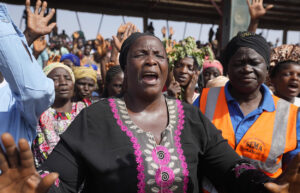
LAGOS, Nigeria (RNS)—Ruth Abah, 28, no longer walks to her local church, St. Paul’s, which now lies in ashes. Instead, the mother of two locks her doors and prays with her children, fearful the next attack could come at any moment.

On Aug. 11, suspected Fulani herdsmen stormed the compound of the Catholic church in the village of Aye-Twar, in central Nigeria. They set the church, rectory and parish offices ablaze, along with vehicles and other property. Earlier raids had already forced the parish’s 26 outstations to shut down.

The latest assaults have sent the remaining residents fleeing into the bush, leaving the parish grounds and surrounding community eerily deserted.

The destruction of St. Paul’s is a stark sign of how attacks by Fulani “jihadists,” who champion Islam but are disavowed by many Muslims, is hollowing out once-thriving Christian communities across the region.

Known as Nigeria’s “food basket,” Benue State has become a center of the violence that has left thousands dead this year.

“I used to be in church every Sunday, singing in the choir,” Abah said in a phone interview. “Now I keep the doors locked. If I hear voices shouting at night, I pray silently. If they see me walking to church with a Bible, they could kill me.”

Grim picture of violence toward Christians

A new report by the International Society for Civil Liberties and Rule of Law, known as Intersociety, paints a grim picture. In the first seven months of 2025 alone, Islamist groups killed 7,087 Christians and abducted 7,800 others because of their faith.

Victims of a gunmen attack pray for peace at the internal displaced camp in Bokkos, north central Nigeria, Wednesday, Dec. 27, 2023. (AP Photo/Sunday Alamba)

The country now sees an average of 30 Christians killed every day, making Nigeria the most dangerous place in the world to be a Christian.

Emeka Umeagbalasi, lead researcher and chair of Intersociety, described the situation as a “brutal massacre” of “defenseless Christians” and warned that unchecked killings and abductions are wiping out entire communities.

Nigeria, Africa’s most populous nation with more than 236 million people, has been plagued by Islamist violence for more than a decade, particularly in its northern and central regions.

The insurgency began with Boko Haram, an extremist Islamist group that launched an armed campaign in 2009 to establish a caliphate and enforce a strict interpretation of Shariah.

The group gained international notoriety in 2014 after abducting 276 schoolgirls from Chibok, sparking the global #BringBackOurGirls campaign.

Though weakened by military offensives, Boko Haram splintered, and its more brutal faction, the Islamic State West Africa Province, continues to carry out mass killings, kidnappings and church burnings.

Christians, who make up about half of Nigeria’s population, have borne the brunt of the violence, especially in the region called the Middle Belt, where Muslim herders and largely Christian farming communities clash over land and resources.

Armed Fulani militias—some linked to jihadist groups—increasingly target villages, pastors and churches, displacing communities and leaving farmlands abandoned.

“The attacks are strategic,” said Peter Akachukwu, a security analyst in Lagos. “Targeting Christians sows fear, displaces communities and opens up land for occupation. It destabilizes the state and undermines faith in government protection.”

Afraid to gather for worship

Across Nigeria’s Middle Belt and northern states, congregations at Sunday services are shrinking.

Families who once filled pews now pray quietly at home, afraid of becoming the next victims. Some travel long distances to find safer congregations; others have stopped attending altogether.

Pastor Emmanuel Ochefu, who leads a small Pentecostal church outside Makurdi in Benue State, said in a phone interview that attendance has dropped by more than half this year.

“People call me during the week asking if the service will be safe, if the roads are clear,” he said. “Some decide to stay home rather than risk being kidnapped or attacked. I preach hope, I preach courage, but fear is stronger than my words right now.”

To keep worship alive, Ochefu has shortened services, started holding them earlier in the day and shifted some meetings to private homes. He sends recorded sermons and Bible verses by phone to members too scared to attend.

“But church is meant to be together,” he said. “You can’t hug someone through a phone.”

An assault on faith

Church leaders say the Aug. 11 assault was not just an attack on property but an assault on faith itself.

The Nigeria Catholic Diocesan Priests’ Association condemned the attack as “barbaric” and “an attack on the Church,” saying it led to the “desecration and destruction of the Parish Church, the Parish Secretariat, the Father’s House and many other valuable items.”

They urged the government to rebuild the parish and its outstations and to deploy security forces to protect vulnerable communities, warning that continued inaction could lead to more deaths and displacements, further weakening Christian presence in the region.

The violence is reshaping what it means to be Christian in Nigeria. Believers now hide crosses, avoid public prayer and strip Christian symbols from their cars and homes.

“If I stopped being Christian, maybe my life would be easier,” Abah said. “But I cannot. My mother taught me this faith, and my children sleep under crosses. Faith is everything, but faith is heavy now.”

The Nigerian government insists the violence is driven by ethnic and land-use conflicts rather than religion alone, but human rights groups argue Christians are targeted specifically for their faith and are urging stronger protections, faster response times and accountability for perpetrators.

For now, pastors like Ochefu keep showing up, even if only a handful gather.

“Even if just 10 people come next Sunday, I will preach,” he said. “The church is not just a building. As long as one believer remains, there is hope.”


Around the State: HPU celebrates 135 years of student experience

Howard Payne University celebrated 135 years of the student experience in recognition of the first day of classes held in Brownwood Sept. 16, 1890. The morning began with 135 minutes of prayer from 7:45 a.m. to 10 a.m., which led into a chapel service for Encounter Week. Alumni, faculty, staff, students and friends were invited to utilize a prayer guide during that time to reflect on God’s faithfulness in the past, pray for the current student body and administration, and look to the future of what God will do.

Baylor University’s Truett Theological Seminary announced an all-time enrollment record for the fall 2025 with 476 students enrolled in for-credit, graduate-level classes at the school. It represents an increase of more than 18 percent over last year, which underscores a sustained four-year trend of fall-to-fall enrollment growth. According to statistical data provided by Truett’s Office of Student Services, Truett Seminary enrolled 117 students in the Doctor of Ministry (DMin) program this term. Truett Seminary also reported an 11 percent increase in Master of Divinity (MDiv) enrollment as compared to last year. Todd Still, dean of Truett Seminary, said that Truett Seminary is “committed to theological education for the long haul.”

“Truett Seminary is committed to theological education for the long haul, both ‘in season and out of season. Yet, we are thrilled regarding the record-shattering enrollments, both in the entering class as well as in overall headcount, we are enjoying this fall. This continues an upward enrollment trend for Truett and is attributable to any number of factors, including the good work and good will of so many. We are grateful for the strategic opportunity and sacred stewardship of preparing in increasing numbers God-called men and women for gospel ministry in and alongside Christ’s Church by the power of the Holy Spirit,” Still added.

Houston Christian University announced record-breaking enrollment for the fall 2025 semester, with 954 freshmen, up from 701 in fall 2024 and a 6 percent increase in new transfer students. New data from the Council for Christian Colleges and Universities confirmed “30 evangelical colleges and universities showed significant year-over-year enrollment increases in 2024.”

Preacher and retired seminary professor Joel Gregory will be the featured speaker at Parakaleo Leadership and Calling Conference at Wayland Baptist University Monday, Sept. 29. Breakout sessions will address student ministry, evangelism, discipleship, technology in worship and caring for those facing difficult issues. A special track will guide high school and college students exploring a call to ministry. Registration is at 8 a.m. and the conference runs from 9:30 a.m. to 4:30 p.m. on Wayland’s Plainview campus. The $20 registration includes lunch from Weekends BBQ. Scholarships are available and admission is free for students.

Houston Christian University students Logan Henderson and Lyssa Ann Buerano were awarded national Delta Mu Delta International Business Honor Society scholarships. Delta Mu Delta scholarships are highly competitive with only around 50 awarded nationally each year based on academic excellence, character, leadership, and the quality of the application.

Howard Payne University will celebrate seven individuals for their accomplishments and service during Homecoming, Oct. 10-11. The honorees for 2025 are Trey Oakley, distinguished alumnus; Marshal McIntosh, outstanding young graduate; Donnie Auvenshine, medal of service; Tim Whetstone, grand marshal; Joanne (Cunningham) Crawford, coming home queen; Salome Guzman, José Rivas distinguished service award; and Candy Smith, JAM faithful servant award.

Hendrick Medical Center rededicated its Millard Jenkens Chapel on Sept. 15. Jenkens had the vision of what a mission-driven healthcare institution could be. The chapel’s four art glass windows were a gift from First Baptist Church of Abilene, where Jenkens served as pastor. The rededication included a new plaque outside the chapel.

Hardin-Simmons University invites the community to experience Legacy of the West, a new exhibition at the Ira M. Taylor Memorial Gallery that celebrates the enduring spirit of the American frontier. The exhibition is from Sept. 15 to Oct. 9. Timed with HSU’s annual Homecoming, the exhibition brings together six Texas artists—Jack Moss, David Godfrey, Matt Rush, Gary Ward, Bob Penny and Charlie Bullock—whose paintings, drawings and bronze sculptures pay tribute to the grit, grace and grandeur of Western life.

Wayland Baptist University student Joslyn Salazar of Lubbock recently was recognized as a recipient of a $4,000 scholarship from the Texas Society of Certified Public Accountants, South Plains Chapter. Salazar, an accounting major, was honored during the chapter’s Sept. 16 meeting held at the Texas Tech University McKenzie Merket Alumni Center in Lubbock.

Cottonwood Creek Church in Allen framed remote home builds in their parking lot for transportation to families in the Rio Grande Valley Saturday, Sept. 20. The home build is a part of Buckner’s Healthy Housing Program. Church members built a four-bed, two-bath home for a family of seven, and a three-bed, one-bath home for a family of four.


BGCT board approves church insurance expansion

The Baptist General Convention of Texas Executive Board approved plans to expand its church property and liability insurance program beyond Texas Baptist churches.

BGCT Associate Executive Director Craig Christina announced a “soft launch” of the insurance program in October for 241 churches that participated in an initial feasibility study when Texas Baptists began exploring creation of such a program.

Based on the business principle of “strength through volume,” he anticipates the insurance program will be opened to all churches affiliated with the BGCT or the Southern Baptists of Texas Convention by early November.

Within several months, he said, it will expand beyond Texas to “like-minded churches from other denominations and nondenominational networks.” The program will follow the same doctrinal guidelines for inclusion Guidestone Financial Services follows.

Greater volume will provide the needed “strength, value and sustainability” for the insurance program, Christina said.

While it will make insurance as available and affordable as possible for all churches, churches that give in an undesignated manner to the BGCT will qualify for additional “deeper discounts” of 1 percent to 5 percent, Christina said.

‘Committed to keeping costs low’

“This is your church’s insurance program,” he emphasized. “We are committed to keeping costs low. We are committed to maintaining low premiums.”

After major insurance carriers left the Texas market, many churches either were unable to renew their policies or had to absorb steep premium and deductible increases.

In response to previous action by the Executive Board last September and a motion approved at the BGCT annual meeting last November, the board in February authorized investing up to $12 million from undesignated investment funds in an insurance program to fund the necessary insurance reserve.

When the BGCT committed to make insurance affordable for churches, legal experts advised Texas Baptists to create the two nonprofit entities separate from the BGCT to provide “layers of separation” to protect the state convention.

Initially, Texas Baptist leaders anticipated churches contracting with Texas Baptists Risk Management to receive coverage through the Texas Baptists Indemnity Program.

However, Christina reported he and other leaders discovered that, due to differences in state rules and regulations, churches would be served best by a captive insurance company based in South Carolina. As they looked for partners, they also learned about Artex, a national risk solutions provider.

Establish Covenant Solutions

So, acting on authority granted by messengers to Texas Baptists’ 2024 annual meeting, BGCT executive leaders have taken steps to establish a South Carolina-based captive insurance company, Covenant Solutions.

Covenant Solutions, in turn, will work directly with a new national insurance company, King’s Cover, that will provide underwriting for churches.

The board authorized the Texas Baptists Indemnity Program board of directors to consider transferring up to $12 million to capitalize Covenant Solutions’ insurance reserve.

Texas Baptists’ Executive Board elected Christina as president, GC2 Network Director Sergio Ramos as vice president and BGCT Chief Financial Officer Ward Hayes as secretary-treasurer.

The BGCT Executive Board also elected the board of directors for Covenant Solutions: Christina as chair, Ramos as vice chair and Hayes as secretary, along with Dennis Young, pastor of Missouri City Baptist Church; David Bowman, executive director of Tarrant Baptist Association; and Ann West of Artex as a South Carolina representative.

Budget recommended for 2026

The Executive Board voted to recommend a $37.5 million total Texas budget for 2026, an increase from the $36.7 million budget adopted for 2025. The proposed budget will be presented for approval to messengers at the BGCT annual meeting, Nov. 16-18 in Abilene.

The total budget includes a $36 million net Texas Baptist budget, up from the $35.16 million in the 2025 budget. It depends on more than $28 million in Texas Cooperative Program giving from churches and an anticipated $7.98 million from investment income. It also projects $1.48 million in additional revenue from conference and booth fees and product sales.

An anticipated $1.1 million in worldwide missions giving will allocate $850,000 to international missions and partnerships and $250,000 to North American missions and partnerships.

The Executive Board also elected officers for the next year: Suzanne Liner of First Baptist Church in Lubbock as chair, and Keith Warren, executive pastor of North Side Baptist Church in Weatherford as vice chair.

Executive Board Disciplinary Committee created

At the recommendation of the BGCT Sexual Abuse Task Force Implementation Committee, the board approved a policy creating an Executive Board Disciplinary Committee.

The committee will address any allegations that an Executive Board member has violated the BGCT code of ethics. Members of the disciplinary committee are the board’s chair and vice chair, along with the BGCT associate executive director.

The policy establishes an appellate process and names an appellate committee consisting of all members of the disciplinary committee along with the BGCT president, first vice president and second vice president.

The board also approved revisions to policies related to the Family Medical Leave Act, background investigations and harassment.

For the second consecutive meeting, the board went into a brief executive session.

In other business, the Executive Board approved enlisting the Batts Morrison Wales & Lee accounting firm to conduct the independent financial audit for 2025.

Filling vacancies

The board also filled board, council and commission vacancies by electing:

  • Charles Whiteside of First Baptist Church in Kilgore to the East Texas Baptist University board of trustees.
  • Maggie Pepper of First Baptist Church in San Angelo, Corbin Couch of First Baptist Church in Burleson, Jill Larson of The Heights Baptist Church in Richardson, Jennifer Clements of Park Cities Baptist Church in Dallas, Deborah Woods of First Baptist Church in Farmers Branch and Heather Fairman of First Baptist Church in Anna to the Institutions Audit Council.
  • Sylvia Villareal of Cliff Temple Baptist Church in Dallas, Fernando Rojas of Azle Avenue Baptist Church in Fort Worth and Jeremy Johnston of First Baptist Church in Hallsville to the Hispanic Education Council.
  • Sharon Darwin of First Baptist Church in Dallas, David Mahfouz of First Baptist Church in Warren and Betty Booth of First Baptist Church in Tyler to the Baptist History and Distinctives Council.
  • Paul Kim of Forest Community Church in Plano, Jerry Ramirez of First Baptist Church in Lubbock, Bill Brian of First Baptist Church in Amarillo, Bill Bevill of First Baptist Church in Corpus Christi, D.M. Edwards of First Baptist Church in Tyler, David Paul of Sugar Land Baptist Church in Sugar Land, Charles Whiteside of First Baptist Church in Kilgore and Carla Robinson of Park Cities Baptist Church in Dallas to the Texas Baptist Missions Foundation Council.
  • Reagan Miller of Lakeshore Drive Baptist Church in Hudson Oaks and David Goddard of First Baptist Church in Temple to the GC2 Press Advisory Council.
  • Austin Lambert of First Baptist Church in Sherman and John Wheat of Trinity Baptist Church in Kerrville to the Baptist Student Ministry Council.
  • Steve Bezner of Houston Northwest Baptist Church and Kevin Lintz of University Baptist Church in Fort Worth to the Christian Life Commission.
  • Jim Browning of First Baptist Church in Floresville; Amy Hall of Madison Heights Baptist Church in Madison Heights, Va.; Ken May of First Baptist Church in Stephenville; Ben Sprouse of Memorial Baptist Church in Staunton, Va.; and David Cross of Westgate Memorial Baptist Church in Beaumont to the Chaplaincy Endorsement Council.
  • Rolando Aguirre of Park Cities Baptist Church in Dallas to the Affinity Ministries Council.
  • Charlie Nassar of Top Rail Cowboy Church in Greenville and Chris Maddux of the Cowboy Church of Ellis County in Waxahachie to the Western Heritage Council.
  • Joseph Adams of First Baptist Church in Mount Pleasant, René Maciel of First Woodway Baptist Church in Waco and Wisdom Asita of First African Baptist Church in Fort Worth to the Missions Funding Council.


Baptist women in ministry gather to refill

With “You Can’t Pour from an Empty Cup” as their theme, Texas Baptist Women in Ministry gathered at The Crossing Baptist Church in Mesquite to discuss stress and burnout.

Organizers planned the event to help ministry leaders and guests grasp the importance of self-care through quiet time with God, art, community service and appointments with licensed professional counselors.

Speaker Judy Jarratt, executive director and dean at the Wayland Baptist University Lubbock campus, said rest, communication and relationships with others within and outside of the church is key to overcoming stress and burnout.

Jarratt acknowledged a feeling of loneliness as a woman who preaches, teaches and serves within the local church.

“When we talk about loneliness, women in ministry—just that leadership role is lonely. Being a woman in a leadership role has its own loneliness. But I assert that men in ministry are also lonely and face many of the same problems. So, connections are vital,” Jarratt said.

Connection and support are vital for leaders and the men and woman who serve within various ministries within the church, she said.

“There needs to be connection with the leader and the members of the congregation. The congregation should support, encourage and be there for the minister,” Jarratt said.

“But the minister or leader also needs people outside of the church for connection. They need to be involved in the community. It is important to be recognized in the community as a leader so that maybe they are involved with a school or chamber of commerce.”

Loneliness comes due to high expectations from others within the church and in the community, Jarrett said.

She described the differences between stress and burnout, describing burnout as “a defense characterized by discouragement” and stress as “over-engagement” and that burnout is “demoralization” and stress as “a loss of fuel and energy.”

“Do what you can do,” Jarratt said. “Talk to your leaders. Ask them: ‘How can I serve?’ and ‘How can I help take the load off what you’re doing?’ If you have a talent, a skill, let the leaders know. They can’t just know that.”

Attendee Pat Jackson, member of Mount Calvary Baptist Church in Athens said she planned to share what she learned with her congregation.

“It gave me some thoughts that I don’t have to do everything on my own, so I will take a lot of this to heart and put it to work and make things work better for us,” Jackson said.


Baylor workshop focuses on faith, disability and culture

WACO—Amy Julia Becker, author and speaker on faith, disability and culture, challenged ministry leaders, volunteers and education professionals to think differently about disabilities and the church.

Becker addressed reimagining family life and church life with disability at the Sept. 17-18 conference sponsored by the Baylor Center for Developmental Disabilities.

In one presentation, Becker highlighted Jesus’ parable of the wedding feast and the parable of the great banquet in Luke 14.

“He’s not saying you should do this for the sake of charity or justice. He’s saying you should do this because you will be blessed if you do,” Becker added.

“And I think just as that first part of the parable is giving us a different way of thinking, Jesus here again is giving us a different way of thinking and being, a different posture of the heart towards one another. And it’s one that is a way of blessing instead of a way of hate.”

Disability is a natural aspect of the human condition, Becker said. Humans are limited, vulnerable, needy, dependent creatures, but humans also are gifted, filled with possibility, inherently valuable and beloved by God, she asserted.

“What we get consistently throughout Scripture is this proclamation that we are gifts that God has created for his purpose,” Becker said.

“We are invited to understand and live out a different anthropology than what we get in our world, which is all about status and hierarchy and who is on top and who is not.”

Becker—author of To Be Made Well, White Picket Fences, Small Talk and A Good and Perfect Gift—created the “Reimagining Family Life with Disability” workshops. She also hosts a podcast, “Reimagining the Good Life.”

“It has been such a delight to be here,” Becker said.

“I have always loved speaking and writing and reading about theology and about the Bible. And yet, the disability piece was completely foreign to me until I was two years into seminary, and our oldest daughter was born and diagnosed with Down syndrome, which really just caused a personal, spiritual crisis for me,” she said.

She called her first book, A Good and Perfect Gift, “a spiritual memoir about what it took to receive my daughter as a gift and to see her that way.”

“That not only transformed the way I saw people with disabilities, but the way I saw humans,” she said. “Instead of seeing humans as separate people—some of whom are gifted and some of whom are needy—expands my world into all the humans I encounter having something to offer and something they might need from me.”

While on campus at Baylor, Becker took questions from attendees that spanned how to engage churches in inclusivity towards disabled individuals and ways to invite individuals with special needs to speak up and engage in church activities.

She provided resources for churches such as Baylor Collaborative on Faith and Disability, WITH Ministries, Hope Heals, Disability Ministry Network, and Western: Center for Disability and Ministry to assist in outreach and learning about people who are disabled.

Jason Le Shana, program director for Baylor Collaborative on Faith & Disability, said Becker’s presentations on the church and disability helped those attending understand how to see disabilities from a biblical perspective.

Families were invited during workshops to reimagine their family lives to see disability as a blessing and something to celebrate, to make room for lament where needed and to take delight in family members who have disabilities.

“Amy Julia Becker is a thought leader and a trusted resource on these topics of disability and family life and church,” Le Shana said.

“She talked about acknowledging the scripts and picture of disability society gives us and invites us to a more gospel-centered reality around disability—to imagine disability, not according to the scripts of the world as tragic or somehow a burden or inspiration only, but as humanity and as people who are loved by God and have a lot to contribute.”

The center is continuing research in the intersection of faith, culture and disability to serve churches and leaders.

“Our center has been doing this kind of faith and disability work for about a year and a half, Le Shana said.

“Our goal is to be a hub for new research on congregational life and disability, on theological perspectives around disability and in doing that in a space where there’s not a lot of work out there.”

Research examining pastoral perspectives on disability and disabled adults and faith also is ongoing.

“Our dream and our vision is to become a trusted resource for congregations, for families in the intersection of disability and faith,” she said.