Russian Baptists continue to meet after building sealed
August 26, 2025
The Russian Supreme Court in Moscow is scheduled Aug. 28 to hear the appeal of an unregistered Baptist church in Kurganinsk whose building was sealed by government officials in May.
In response to a court order issued last October, bailiffs sealed the building on May 16 and denied members access to the Council of Churches Baptist “house of prayer” unless the church submitted to state registration.
However, three months after authorities sealed the building, Baptists continue to meet outside their facility to pray and worship, an Oslo-based news service focused on international human rights and religious freedom reported.
Forum 18 quoted a Baptist in Kurganinsk who “witnessed church members young and old praying on their knees, right on the pavement” outside the building.
Judge Vitaly Yakonov asserted religious activities by the Council of Churches Baptist community in Kurganinsk created “a threat to the security of public interests, national security [and] public order, as well as the rights and interests of an undefined circle of persons involved in the activities of the group through illegal missionary activity,” Forum 18 reported.
Pastor Aleksandr Chmykh unsuccessfully appealed the October judicial ruling both in regional court in November and at the 4th Cessational Court in Krasnodar in May.
Baptists in Kurganinsk continued to meet for worship services and other gatherings, prompting bailiffs to fine the pastor 50,000 rubles for failing to fulfill the court’s demands.
Courts impose prohibitions on religious activity
Russian courts have imposed similar prohibitions on several other Council of Churches Baptist communities, and prosecutors are seeking to bar religious gatherings by at least three other congregations, according to Forum 18.
In the last 20 months, five unregistered Baptist churches in Russia—mostly in the Krasnodar region—have faced lawsuits or had their activities prohibited by authorities, the news service reported.
Council of Churches Baptists formed in the 1960s in opposition to Soviet religious restrictions, such as government regulation of sermon content, pastoral appointments and religious instruction of children.
Since the collapse of the Soviet Union, Council of Churches Baptist—numbering about 2,500 congregations—have asserted the Russian Constitution, the 1997 Religion Law and international human rights law provide them the right to meet for worship without government involvement and state registration.
Council of Churches Baptist congregations often meet in private homes—or houses of prayer—on private land.
Alleged ‘illegal missionary activities’
The U.S. Commission on International Religious Freedom cited the government’s closing of the Baptist house of prayer in Kurganinsk for alleged “illegal missionary activities” in its July report, “Russia’s Persecution of Religious Groups and FoRB Actors.”
Russian authorities continue to perpetrate “particularly severe violations of religious freedom against a range of religious groups and freedom of religion or belief actors,” the commission report said. Violations cited include closing houses of worship, as well as assaulting, arresting and even torturing religious leaders.
Russian courts in 2024 considered 431 cases of religion law violations—many related to alleged “illegal missionary activities”—resulting in fines totaling more than 4.7 million rubles (more than $58,000), the report said.
Since 2017, the U.S. Commission on International Religious Freedom has recommended Russia be named a Country of Particular Concern for engaging in “systematic, ongoing and egregious” religious freedom violations. The U.S. Department of State designated Russia as a Country of Particular Concern in 2021, 2022 and 2023.
In its latest annual report, the commission not only urged the State Department to continue to designate Russia as a Country of Particular Concern, but also impose targeted sanctions on Russian government agencies and officials responsible for religious freedom violations.
Gallup poll reveals Americans’ views on moral issues
August 26, 2025
NASHVILLE (BP)—Americans don’t see much wrong with using birth control or getting a divorce, but few support extramarital affairs or human cloning.
The latest poll results from Gallup spell out what activities U.S. adults view as morally acceptable and which ones are seen as immoral.
Most Americans believe birth control (90 percent), divorce (75 percent), sex between an unmarried man and woman (68 percent), having a baby outside of marriage (67 percent), gay or lesbian relations (64 percent), gambling (63 percent), human embryonic stem cell research (63 percent), buying or wearing animal fur clothing (61 percent), the death penalty (56 percent), and doctor-assisted suicide (53 percent) are morally acceptable.
U.S. adults are more divided on abortion (49 percent morally acceptable versus 40 percent morally wrong) and medical testing on animals (47 percent morally acceptable versus 47 percent morally wrong).
Fewer Americans say sex between teenagers (41 percent), changing one’s gender (40 percent), pornography (35 percent), cloning animals (34 percent), polygamy (21 percent), suicide (21 percent), cloning humans (8 percent), and married men and women having an affair (8 percent) are morally acceptable choices.
Generally more permissive
The moral views of Americans are not static, however. Many have shifted over the more than 20 years Gallup has conducted this poll. Mostly, Americans have grown more permissive.
Only medical testing on animals has seen a sustained, significant decline in the percentage of adults who view it as morally acceptable. In 2001, 65 percent of Americans said it was morally acceptable. Now, just 47 percent support it.
The percentage of those who view the death penalty as morally acceptable also has dropped, but the dip has been smaller and less sustained over the past three decades—63 percent in 2001 to 56 percent in 2025.
Support for changing one’s gender also fell this year, but it only has been asked in the past four years. In 2021, 46 percent believed it was morally acceptable. In 2025, 40 percent still agree. A 2016 Lifeway Research study of Americans found only 35 percent believed it was morally wrong for an individual to identify with a gender different than the sex they were born.
A 2021 Lifeway Research study of U.S. Protestant pastors found 72 percent say it’s morally wrong to identify with a gender different from your birth sex, and 77 percent say it’s morally wrong to change the gender you were born with through surgery or taking hormones.
On the other hand, Gallup found numerous activities have become more socially acceptable in America since 2001, including divorce (59 percent to 75 percent), sex between an unmarried man and woman (53 percent to 68 percent), gay or lesbian relations (40 percent to 64 percent), and suicide (13 percent to 21 percent).
Other activities were first asked about more recently, but they have also seen growth. Since 2002, support for both having a baby outside of marriage (45 percent in 2002 to 67 percent in 2025) and medical research using stem cells obtained from human embryos (52 percent in 2002 to 63 percent in 2005) has increased.
The percentage of Americans who believe polygamy is morally acceptable has tripled since 2003—from 7 percent to 21 percent. More people are also accepting of sex between teenagers (32 percent in 2013 to 41 percent in 2025).
Some approval ratings remain stable
Other activities have had more stable levels of approval since Gallup first asked. Since 2012, birth control has only wavered plus or minus two points from 90 percent.
Buying and wearing clothing made from animal fur has stayed near 60 percent. Gambling has stayed mostly in the 60s. Support for the death penalty has been around 60 percent.
Approval of doctor-assisted suicide has stayed around 50 percent. Those who approve of pornography have hovered somewhere around 30 percent to 40 percent.
The percentage who support cloning animals has stayed mostly in the 30s, while cloning humans and married men and women having an affair have hovered around 10 percent.
Abortion has been more volatile than the other issues. Those who find it morally acceptable have stayed mostly in the 40s, but it has fluctuated from anywhere between 36 percent and 54 percent over the past two decades.
Generational differences noted
Younger adults, ages 18-34, are often more permissive than their elders. Around 3 in 10 (31 percent) say polygamy is acceptable, compared to 10 percent of those 55 and older.
Most (55 percent) are OK with changing one’s gender, while just 35 percent of older Americans support the practice.
Americans under 35 also are more supportive of gay or lesbian relations, abortion, sex between an unmarried man and woman, sex between teenagers, pornography, buying or wearing animal fur clothing, cloning animals, cloning humans, having a baby outside of marriage, divorce, suicide, gambling, doctor-assisted suicide and the death penalty.
Meanwhile, they are less in favor than those 55 and older of human embryonic stem cell research, birth control, married men and women having an affair, and medical testing on animals.
Water Impact ministry sees God move in Peru
August 26, 2025
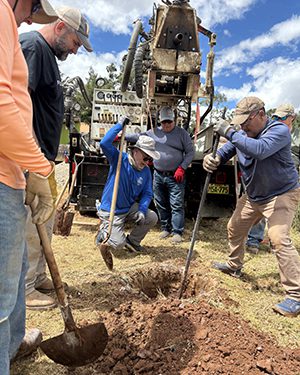
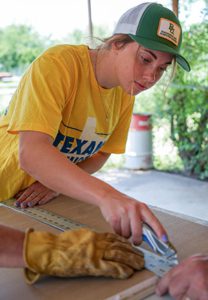
Texans on Mission is not only bringing fresh water and good hygiene practices to people in the Andes Mountains of Peru, but also bringing the gospel, with 46 professions of faith recorded during an August mission trip.
“We have moved our efforts in Peru from the Amazon River basin to the mountains because of various logistical challenges that surfaced along the river,” said Mitch Chapman, director of Texans on Mission Water Impact. “Now we are seeing God really move through our work.”
Texans on Mission volunteers serve on a Water Impact trip to Peru, where they brought fresh water, good hygiene practices and the gospel to people in the Andes Mountains. (Texans on Mission Photo)
Texans on Mission drilling efforts in Peru have produced one successful well in the Andes, and the August team began work on a second well for another community with residents scattered throughout the mountainside.
The dry season lasts six to eight months in the Andes. Springs dry up, and pond water becomes “nasty,” said Julio Campos of Gateway Church in Justin, one of the Texas leaders in the work in Peru.
“The pond water is all they have to drink unless they walk or get to other water sources, in some cases two to four hours down the mountain and back during the dry season.”
Water Impact identified increasing opportunities in the area and began working in the region in January, but the mountains create challenges.
The mountain faces are, in places, “sheer straight up and very close to each other,” requiring multiple roadway “switchbacks all the way up the mountains,” Campos said.
Still, the first Texans on Mission well struck water at 80 meters in Capulipampa.
The August mission team divided into two groups—one to drill a new well in Llimbe and the other heading to Capulipampa to do evangelistic work.
Women receptive to the gospel
The evangelism team had planned to work with children—telling Bible stories, distributing Gold-to-Gold gospel bracelets, playing games and singing. It turned out the women of the community were open to learning through Bible study, which diverted some of the team’s efforts.
Delia Lozuk of Alice, former missionary to Venezuela, teaches a Bible study to women in the Andes Mountains of Peru during a Texans on Mission Water Impact trip. (Texans on Mission Photo)
Team member Delia Lozuk of Alice “ministers like no one I’ve ever seen,” Campos said. “Ministry to women is her forte.”
On the first day, 10 to 15 mothers brought their children to be part of the activities, Campos said. By the end of the day, Lozuk “got a Bible study going on” with even more women.
Team member Rhonda Dodson said about 40 women ended up participating in the two days of Bible study led by Lozuk, and 30 of them eventually made professions of faith in Christ.
Paul Lozuk of Alice, a former missionary to Venezuela, uses a Gold-to-Gold gospel bracelet to present the Christian plan of salvation to a young man in Peru during a Texans on Mission Water Impact trip. (Texans on Mission Photo)
She and her husband Paul are former missionaries to Venezuela, and both speak Spanish.
“My wife Delia has an extraordinary anointing with women,” and especially with “these people that are descendants of the Inca,” Paul Lozuk said.
He explained people living in the Andes are a distinctive group.
“They are short of stature and extremely strong,” walking long distances at high altitude, he said. They also dress in traditional clothing, and “the women don’t talk too much to the men, especially foreigners,” he added.
The cultural preference for women to communicate with other women opened the door for ministry in the Andes.
Making Bibles available
“One thing I understand,” Delia Lozuk said. “There is no doubt that these people from Peru really do need Jesus as their Lord and Savior, and most do not have a Bible.”
Local pastor Alex Miranda had boxes of New Testaments, so the team handed them out. “He had enough for every single person, every woman,” she said, and copies of the complete Bible were ordered for distribution.
“The people were very hungry for the word” of God, said Dodson, a Texans on Mission Water Impact employee who was on her first mission trip. “When we were in Capulipampa, the ladies’ request was for Bibles. So, of course, we’re going to get them Bibles.”
The Bible studies took on the form of a conversation, Delia Lozuk said. The women living in the Andes were “hungry for something, and I asked them, in the middle of just having small conversations, about the Bible, about the word of God. I was trying to put everything I could in there so they could get a little bit of a taste of what I was trying to say.”
A ‘God-appointed time’
She saw the trip to Peru as being a “God-appointed time for me. … I didn’t know I was going to minister to women.” She went only as an interpreter, but “something happened the first day” as more and more women gathered.
“Women are very hungry, but we don’t know, because they don’t speak with the men for some reason,” she said. “They’ve heard about a Savior, but they don’t know the Bible.
“I’m thinking, ‘What the heck are you doing, Delia?’ But it’s not my show; it’s God’s show.” So she did another unexpected thing; she gave the women homework—Scripture to read so they can discuss it together sometime in the future.
With an expectation of a return trip, Lozuk promised to “literally give them a little nugget about every single book in the Bible” to whet their appetite for additional Bible study.
Six of the women attending the meetings stood up with excitement when asked if anyone had given their lives to Christ. By the end of the two days, all of the others had professed faith in Christ.
‘God just took control’
“It was my impression that God set all this up,” and the team “just walked into it,” Delia Lozuk said. “God just took control, and that’s really what happened. … God did this through us.”
The drilling of the second well and the evangelistic outreach did not occur in a vacuum of ease. Campos said he asked in his daily devotionals with the team for “God to show up.”
When luggage and a passport were lost, the group prayed. No matter the difficulty, Campos said the theme of the trip became, “just ask”—ask God for help. And each time, the prayers were answered.
With the success of the well drilling and the women’s ministry, Campos said the mission trip “went fantastic.”
Chapman said: “The well we drilled in Capulipampa laid the foundation for all that happened evangelistically on the trip. And now, with the second well in Llimbe, we are continuing to pursue our vision of bringing clean, sustainable water to as many people as possible while sharing the gospel of Jesus Christ to people in need of both.”
Discipleship a priority without a plan for many churches
August 26, 2025
BRENTWOOD, Tenn.—Pastors have a lot of thoughts about discipleship, but they aren’t sure it’s happening in their churches.
In the first part of the State of Discipleship study from Lifeway Research, U.S. Protestant pastors shared their understanding of what discipleship means and how it best occurs.
“Making disciples was the Great Commission Jesus gave his followers before he returned to heaven,” said Scott McConnell, executive director of Lifeway Research.
“This biblical priority warrants that church leaders regularly take a careful look in a mirror to see the state of discipleship in their congregations. This study provides a view of the state of discipleship across all Protestant churches in the U.S.”
In general, pastors have a vague satisfaction with the discipleship happening at their churches but no real way of determining if that is valid. Half (52 percent) are satisfied with discipleship and spiritual formation in their churches, but only 8 percent strongly agree.
Similarly, 52 percent have an intentional plan for discipling individuals in their congregations and encouraging their spiritual growth.
Additionally, 7 in 10 (71 percent) believe there are ways to measure discipleship in a congregation. Despite their current satisfaction and belief in measurements, however, just 30 percent say their churches have specific methods for measuring discipleship, including only 5 percent who strongly agree.
Pastors identify key concepts
When asked about discipleship, pastors volunteered varying key concepts. They’re most likely to say spiritual growth or discipline (12 percent) and Bible study and reading or Scripture memorization (10 percent) are components of discipleship.
Some point to mentoring or meeting one on one (7 percent), teaching/training (6 percent), prayer (6 percent), making disciples (5 percent) and groups (5 percent).
One in 25 pastors mention relationships (4 percent), accountability (4 percent), obedience or following Jesus (4 percent), equipping believers (4 percent), sanctification or becoming more Christlike (4 percent) and community (4 percent). Slightly fewer say discipleship involves time (3 percent) and serving (3 percent).
Other aspects of discipleship specified by pastors include Bible knowledge or literacy (2 percent), evangelism or outreach (2 percent), application (2 percent), maturity (2 percent), leadership (2 percent) and commitment (2 percent).
Fewer say doctrine (1 percent), Great Commission (1 percent), intentionality (1 percent), multiplication (1 percent), the gospel (1 percent), strengthening or iron sharpening iron (less than 1 percent) or fellowship (less than 1 percent). Additionally, 1 percent of U.S. Protestant pastors say they don’t know.
“In one sense, discipleship simply brings intentionality to following Jesus Christ, but it quickly becomes complex when we consider the many ways we need to walk in obedience and how to encourage these in a local church,” McConnell said.
“The variety of ways that pastors describe key elements of discipleship illustrates there are multiple paths but also highlights the need for a framework for thinking through how a church is approaching discipleship.”
Different priorities
With pastors having many of those components of discipleship in their minds, it’s no wonder they often have different priorities and plans for spiritual growth among the people in their congregations.
Pastors are split on what best describes the first priority of activities included in their church’s plan for discipling people. Almost half (46 percent) say they are more focused on biblical knowledge, while 38 percent focus on relationship and encouragement. Fewer say their plan prioritizes equipping and “how-to” (9 percent) or experience and service (5 percent).
Around 9 in 10 Protestant pastors (89 percent) say they use sermons during the weekly worship service as at least one approach to discipleship and encourage the spiritual development of adults in their congregations.
Most churches also use adult Sunday School classes (69 percent), adult small group Bible studies (62 percent), women’s groups or classes (57 percent) and pastor-led teaching times like Sunday or Wednesday evenings (54 percent).
Fewer point to men’s groups or classes (45 percent), study groups or classes for all adults (42 percent) or mentoring or coaching relationships (31 percent). Around 1 in 7 (14 percent) specifically use accountability groups.
A third of pastors (33 percent) say the weekly sermon is the most important for their adult discipleship ministry. Almost 1 in 6 say adult small group Bible study (18 percent) or adult Sunday School (18 percent) is top priority for their congregations.
One in 10 (10 percent) highlights the pastor-led teaching times outside of Sunday morning. Fewer mention mentoring (7 percent), study groups for all adults (6 percent), accountability groups (2 percent), men’s groups (2 percent) or women’s groups (1 percent).
“Ninety-nine percent of churches have at least one approach they use to disciple adults in their congregation, and on average, churches use more than four methods,” McConnell said.
“Discipleship is clearly important to churches. Pastors are not saying they’re trusting a program, but they recognize they must have systems to encourage spiritual development.”
Decentralized approach
Among churches that have a discipleship plan, it might not be unified throughout their ministries to men, women, students, children and other groups.
Pastors with a plan are split between having each ministry develop its own plan for discipling individuals (50 percent) and having a single discipleship plan that all ministries take part in (45 percent). Another 5 percent aren’t sure.
Not every church has targeted discipleship programs for various groups within the congregation. Two in 3 pastors (66 percent) say their churches have a specific program for the spiritual growth of women. Slightly fewer (61 percent) say the same about men.
Most churches have targeted discipleship programs for middle and high school students (57 percent) and elementary age children (57 percent). Around a third target young adults (36 percent) and preschoolers (34 percent) with discipleship programs.
One in 5 (21 percent) do so for college-age adults. Almost 1 in 7 (14 percent) say they don’t have targeted spiritual growth programs for any of these groups.
“Among all Protestant churches, more than a quarter have decentralized discipleship plans for ministries, less than a quarter have a single discipleship plan for their whole church, and around half do not have an intentional discipleship plan,” McConnell said.
“Healthy churches have a plan for discipleship. Clearly, the first step for encouraging spiritual development is developing an intentional plan to do so. And the elements and scope of those plans can vary greatly.”
Importance of relationships
However churches seek to help their people grow spiritually, pastors believe that growth will happen best with other people involved. Almost all (95 percent) say discipleship is not completed in a program but in a relationship.
Most believe that disciple-making relationships must include physical presence. Only 22 percent believe discipleship can be as effective virtually as in-person, while 3 in 4 (75 percent) disagree.
With that, 7 in 10 U.S. Protestant pastors believe discipleship is best accomplished one-on-one or in groups among no more than five people. Specifically, 2 in 5 (40 percent) say it’s best in small groups of two to five believers, while 29 percent place the emphasis on one believer discipling another one-on-one. Another 17 percent say discipleship is best accomplished in small groups of six to 25 believers.
Few say the right number for discipleship is an individual believer on their own (2 percent) or in a large group of more than 25 (1 percent). One in 10 (11 percent) aren’t sure.
“There is a clear discrepancy in the discipleship thinking of many pastors,” McConnell said. “Seven in 10 say discipleship is most effective with close relationships, but a third say their large group sermons are the top discipling ministry of their church.
“While preaching is definitely a biblical activity required of pastors that can encourage sound doctrine and unity, good discipleship requires just as much intentionality in relational approaches to discipleship.”
The survey of 2,620 Protestant pastors was conducted Sept. 10-30, 2024. Analysts weighted the results by region, church size, and denominational category to reflect the population more accurately. The completed sample is 2,620 surveys, providing 95 percent confidence the sampling error does not exceed plus or minus 2.05 percent. Margins of error are higher in sub-groups.
Pastors at conference address racism in their churches
August 26, 2025
NORCROSS, Ga. (RNS)—As Josh Clemons, the executive director of OneRace, an anti-racist Christian organization, kicked off its racial reconciliation conference, he compared efforts to clean the church from the sin of racism to an ancient Japanese art practice, kintsugi.
The centuries-old method consists of mending broken pottery by welding pieces with liquid gold. Once repaired, the new ceramics are embellished by shining golden cracks, proudly displaying what once were flaws.
Similarly, congregations that reckon with racial divides and engage in bold efforts to dismantle racism in the church end up embellished and more unified, he explained.
Josh Clemons (Courtesy Photo)
“Our racial past is marred and scarred,” Clemons told Religion News Service. “It’s steeped in racism and ethnocentrism and cultural divide. The church is often on the wrong side of that conversation. We believe that the church should show up credibly in these conversations.”
The Aug. 14 conference, themed “Change the story, redeeming race, reconciliation and the mission of the church,” invited faith leaders to engage in discussions on race from a gospel-centric perspective.
Five years after George Floyd’s murder at the hands of a Minnesota police officer, which shocked the country and prompted a racial reckoning in American society and the church, much of the conference’s discussions noted how the momentum spurred in 2020 progressively has faded.
In total, 402 faith leaders, from 18 states, attended the event hosted at Norcross’ Victory Church, a megachurch 20 miles north of Atlanta. According to OneRace’s data, 42 percent of participants were white, 42 percent Black, 5 percent Asian and 5 percent Latino.
In panels and small group sessions, guest speakers, including Christianity Today COO Nicole Martin and National Association of Evangelicals President Walter Kim, discussed topics ranging from ways to clear theology from racist bias to the challenges that come with leading multiethnic congregations.
‘Speak less to foolishness’
The political context—as the Trump administration rolls back diversity, equity and inclusion commitments and undermines efforts to teach Black history—was front and center in discussions.
As race-related issues become increasingly polarizing, Clemons urged attendees to remain steeped in the work of racial reconciliation and “speak less to foolishness and more to the faithfuls.”
Reminiscing over the support he received from white congregants after Floyd’s murder, Pastor Albert Tate of Fellowship Monrovia in California noted how few voices mounted to denounce current blows at DEI and the erasure attempts of Black history.
“As a Black man, my tears weren’t ignored,” he said of the general reaction to Floyd’s killing. “I didn’t have my white siblings in the Facebook comment section questioning whether it was wrong. We all knew it was wrong. What’s hurtful and discouraging is the silence of my white siblings watching the dismantling and not saying anything.”
Still, nearly 10 years after OneRace’s creation and despite the political shifts affecting its efforts, the organization remains dedicated in its attempts to absolve congregations from the sin of racism. The group’s priority, explained the 37-year-old director, is to remain helpful to those still passionate about the cause.
“Are the folks as loud as they once were? Are there as many? No. Have we seen a falling away? Yes. Is that challenging? Yes. But that isn’t a reason for retreating,” Clemons said.
Clemons led the attendees in prayer. Seated around tables in the church’s main chapel, participants bowed their heads as he encouraged them to listen with open hearts and minds.
Call to conduct courageous conversations
The first panel, about the “11 o’clock hour” still being the most segregated hour in America, a reference to Martin Luther King Jr.’s 1960 speech on segregated churches, featured Pastor Lee Jenkins of Eagles Nest Church in Roswell, Georgia; former Fellowship Bible Church Pastor Crawford Loritts, also of Roswell; and World Relief’s Liliana Reza, as well as Martin of Christianity Today and the NEA’s Kim. All shared insights on how racism shows up in theology but also in church life.
As he shared closing remarks, Jenkins, who leads a nondenominational Black church, urged attendees to beware of any theology “that still preaches difference, separation and anxiety.”
Another panel touched on the consequences of initiating discussions about race in churches. Drawing on their own experience, speakers encouraged attendees to become comfortable with ruffling feathers when engaging in racial reconciliation efforts from the pulpit.
OneRace aims to engage faith leaders in such discussions throughout the year. Created amid the 2016 anti-racism protests, the organization seeks to train “reconcilers” or faith leaders trained on race-related issues in their ministry.
The training events, meant for faith leaders and local churches, cover the history of racism in the U.S., the role the church has played in enforcing white supremacy and how to improve racial equity and identify solutions to rid churches of racist bias.
One training, Reconciliation 301, invites participants to reflect on their own racist behaviors. The “Southern Justice experience” takes faith leaders to Alabama’s historic sites. After visiting Selma’s Edmund Pettus Bridge, where peaceful activists demanding civil rights were beaten in 1965, the training cohorts go to Birmingham’s 16th Street Baptist Church, where four Black girls died in a bombing orchestrated by Ku Klux Klan members in 1963.
And starting this year, OneRace added another training to its offerings. In partnership with World Relief, the “Southern Border Experience: San Diego & Tijuana” takes faith leaders to the U.S.-Mexico border to observe border issues and meet activists advocating for migrants’ rights.
Speakers address reality of fatigue
The conference also served as an occasion for faith leaders to discuss the fatigue that comes with tackling race-related issues in their congregations.
Dennis Rouse, the 67-year-old founding pastor of Victory Church, formerly Victory World Church, a nondenominational megachurch with multiple Georgia locations, shared candidly about losing touch with white Christian friends when he established the multiethnic congregation in the 1990s. Still, the desire to create a truly unified church surpassed those challenges.
“If you’re going to be a true Christian, you can’t hold prejudice in your heart against another people,” he said before urging leaders to rely on God when feeling discouraged by the work.
Similarly, Loritts, who became pastor of Fellowship Bible Church in 2005, when the congregation was majority white, reflected on the fatigue that comes with being perceived as a “token” and “sellout,” as the Black pastor of a white congregation.
Though multicultural congregations embody the unifying message of the gospel, Christians shouldn’t fixate on multiethnic congregations as a “strategy” or a “brand,” he said.
“I didn’t come to Fellowship as a racial experiment,” Loritts said. “I came to do the Lord’s work.”
The speakers also noted the importance of multiethnic churches representing the congregations’ diversity in leadership, pastoral staff and worship teams.
Not about taking sides politically
At the core of OneRace’s approach to racial reconciliation is rejecting political etiquette, which many speakers drew attention to throughout the day. Though the movement centers racial justice, it is adamant about not taking sides politically.
Derwin Gray, founding pastor of Transformation Church in Indian Land, South Carolina, and author of the 2022 book “How to Heal Our Racial Divide,” urged leaders to preach boldly on issues—even if it means antagonizing “Democrats and MAGA.”
The AND Campaign, a nonpartisan civic organization that invites Christians to transcend partisan polarization, is a OneRace partner and sent representatives to the conference. AND Campaign Director Justin Giboney said from the stage that racism has wrongfully become politically polarizing for Christians.
“The race debate in much of the church has become a battle between those blind to the sin of racism and those who believe racism and sexism are the only sins,” he said.
Kim, of the NEA, told RNS that racism is not a political issue but a sin that “breaks the heart of Jesus” and that it has been a challenge for the church for millennia.
The conference also drew attention to similarities between how the church has handled racism and how it handles anti-immigrant hatred.
Reza, director of U.S./Mexico border engagement for World Relief, a Christian humanitarian organization, urged attendees not to turn a blind eye to the fate of Latino Christian communities impacted by the federal government’s crackdown on immigration.
Noting the hurt racism has caused Black Christian communities mirrors the experiences of Latino Christians who feel abandoned by fellow Christians now, Reza implored attendees to stand in support of those communities.
“We, I, need you all to be the church,” said Reza, as she shed tears. “Black brothers and sisters, do not turn a blind eye.”
Samaritan’s Purse assists Gaza Humanitarian Foundation
August 26, 2025
(RNS)—After struggling for months to find partners to help them deliver aid to Gaza, the embattled Gaza Humanitarian Foundation has picked up a collaborator—Samaritan’s Purse, the international Christian disaster relief organization headed by Franklin Graham.
Since July 26, Samaritan’s Purse has sent eight relief flights for Gaza carrying 169 tons of supplemental food packets that have been distributed through the Gaza Humanitarian Foundation’s four Gaza-based hubs.
In addition, Samaritan’s Purse has sent a medical team of six nurses and paramedics to provide first aid treatment at these distribution sites, a spokesperson for the organization confirmed.
The Gaza Humanitarian Foundation is a private, Israel- and U.S.-backed project staffed by U.S. security contractors and funded with $30 million in U.S. tax dollars, with a matching commitment from Israel. It was created to displace the United Nations’ various humanitarian relief efforts, which Israel has prevented from functioning.
But since the Gaza Humanitarian Foundation began its operations in mid-May, more than 1,400 unarmed Palestinian civilians have reportedly been killed by Israel Defense Forces while seeking food aid at or near the foundation’s distribution sites, known as Safe Distribution Hubs, located in remote militarized zones.
Aid groups and governments around the world have condemned the operation and accused it of violating humanitarian standards and putting civilians at risk at a time when the region is experiencing mass starvation.
Some faith-based groups skeptical about GHF
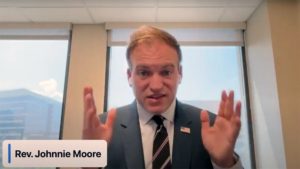
Johnnie Moore speaks about the Gaza Humanitarian Foundation during a July 22 Zoom appearance sponsored by the American Jewish Congress and the World Zionist Organization. (Video screen grab)
Gaza Humanitarian Foundation Chairman Johnnie Moore, a prominent evangelical and a onetime faith adviser to President Donald Trump, has pleaded with various international aid groups to join the effort.
Many faith-based aid groups, such as Catholic Relief Services, have expressed deep skepticism of the foundation and its methods and have rejected collaborations with it.
But Ken Isaacs, vice president of programs and government relations for Samaritan’s Purse, said his organization, based in North Carolina, said he was satisfied with Gaza Humanitarian Foundation operations.
“I visited several Gaza Humanitarian Foundation sites and was impressed with how they were secured and the professionalism of the GHF staff,” Isaacs said. “They are working in a very difficult situation, and I am grateful that Samaritan’s Purse has the opportunity to collaborate with GHF and other partners. We want to help as many people as we can.”
Israel’s nearly two-year war of retribution against Hamas in the Gaza Strip has killed 62,000 people and earned it international censure across the world, with leading human rights organizations concluding that Israel is engaged in a genocide.
In early March, Israel cut off all aid for Gaza, a move that Israeli officials said was taken to pressure Hamas into making concessions in ceasefire talks. That cutoff ended in May, when the Gaza Humanitarian Foundation began a limited distribution of aid in Gaza.
Distribution of aid problematic
It may have been too late. International observers said starvation had set in. The Gaza Health Ministry has said that at least 271 people, including 112 children, have died of starvation to date.
International observers say that not enough aid is being allowed in and that the distribution system is deeply flawed and unable to reach the poorest people who desperately need it.
“They call them secure distribution sites,” said Alex de Waal, executive director of the World Peace Foundation at Tufts University and the author of a book on mass starvation. “Well, the people aren’t secure. A lot of them get killed. But the rations aren’t secure either.
“No voluntary agency would ever hand out food in this way. You simply don’t know who’s coming to get it and people are getting multiple boxes because they’re strong. The strongest get the most.”
On Aug. 7, Mike Huckabee, the U.S. ambassador to Israel, announced a U.S. plan to expand aid distribution operations in Gaza to as many as 16 points. But since then, Israel announced its plan to invade Gaza City, the most populous city in the strip, forcing hundreds of thousands of residents to once again uproot themselves.
It’s not clear whether the expanded sites will be opened during a full-scale military incursion of the type the government of Israel has now approved.
This is not the first time Samaritan’s Purse has provided aid in this conflict. After the Oct. 7, 2023, Hamas attack on Israel, Samaritan’s Purse pledged 42 ambulances to Magen David Adom, Israel’s national emergency medical service. Of those, 22 have already been provided. A spokesperson added, “We anticipate being able to do more in the future.”
Focus on the Family founder James Dobson dies at 89
August 26, 2025
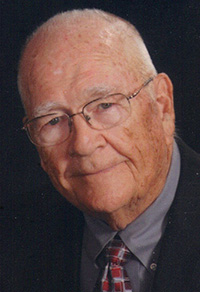
(RNS)—James C. Dobson, a psychologist who advocated a “family values” brand of conservative Christian morality on his popular radio shows and in his bestselling books, died Aug. 21. He was 89.
“Dr. Dobson was a pioneer—a man of deep conviction whose voice shaped the way generations view faith, family and culture,” said Gary Bauer, senior vice president of public policy at the Dr. James Dobson Family Institute.
“His bold leadership, integrity and compassion helped equip countless families to thrive in a world of shifting values. He was a mentor, a counselor and a steady voice of truth in turbulent times.”
A child psychologist by training, Dobson founded Focus on the Family in 1977 to promote conservative views on parenting, defending thespanking of children as a means of discipline.
The nonprofit, based in Colorado Springs, Colo., became hugely influential, first among evangelical Christians and then among a broader public thanks to his internationally syndicated radio programs.
Dobson was heard on more than 4,000 North American radio stations and his show was translated into 27 languages in more than 160 countries, according to the website of the institute.
His parenting precepts were further outlined in Dare to Discipline, a book first published in 1970, and its many sequels. Dobson ultimately wrote more than 70 books.
Gained political influence
As Dobson’s popularity with cultural conservatives grew, political leaders sought him out. In the 1980s Dobson regularly was invited to the White House to consult with President Ronald Reagan and his staff. In 1985, Dobson was appointed to Attorney General Edwin Meese’s Commission on Pornography.
In 1983, Dobson and Bauer started the Family Research Council in Washington to advocate for pro-family policies.
Franklin Graham of Samaritan’s Purse, who said Dobson died after a brief illness, hailed Dobson’s almost five decades of ministry.
“Dr. Dobson was a staunch defender of the family and stood for morality and Biblical values as much as any person in our country’s history,” Graham, a son of evangelist Billy Graham, wrote in a Facebook post. “His legacy and impact for Jesus Christ will continue on for generations.”
Dobson’s unflinching conservatism rankled some Republican leaders at the height of his influence. During the 1996 presidential campaign, for instance, Dobson warned that any attempt to water down the anti-abortion plank in the GOP platform would result in widespread defection from Republican ranks by evangelical voters. He also objected to suggestions that the party’s presidential nominee, Bob Dole, choose a running mate who backed abortion rights.
But Dobson’s mark on conservative thought and evangelical Christian politics continues to this day. In 1994, he was one of the co-founders—along with evangelical figures such as Bill Bright and D. James Kennedy—of the Alliance Defense Fund, a legal organization now known as Alliance Defending Freedom.
The ADF at one point employed Mike Johnson, who has since become U.S. House speaker, and it was a key proponent of the Dobbs v. Jackson Women’s Health Organization case, which resulted in the overturning of Roe v. Wadein 2022.
“The world has lost a mighty voice for truth and an incredibly influential servant of Christ today,” said Kristen Waggoner, ADF CEO, president and chief counsel. “Dobson’s bold leadership and commitment to the gospel shaped the lives of so many and will continue to do so many years after his passing.”
Child rearing and political themes
A Shreveport, La., native, Dobson grew up in Texas and Oklahoma, the son of an evangelist and pastor in the Church of the Nazarene. After graduating from a Nazarene college in California, Dobson earned a doctorate in child development from the University of Southern California. He then joined the pediatric faculty of USC’s medical school, where he taught for 14 years.
Dobson left academia in 1976, and the next year he launched Focus on the Family, beginning from a two-room suite in Arcadia, Calif. As Dobson’s radio show and the organization swelled in popularity, he increasingly became a force among conservative opinion-makers.
Dobson eventually moved the organization to Colorado Springs, a conservative, largely Republican, city, where he built an international organization with a staff of more than 1,300 employees.
In addition to the radio show, the center attracted 200,000 visitors a year and opened an $8.5 million welcome center where films, videotapes and books espousing Dobson’s worldview could be purchased.
In addition to discussions of child rearing, conservative political themes quickly became a staple of the radio show.
Discussing the state of higher education, for instance, Dobson said on one episode, “State universities are breeding grounds, quite literally, for sexually transmitted diseases, including HIV, homosexual behavior, unwanted pregnancies, abortions, alcoholism and drug abuse.”
Yet, unlike prominent televangelists such as Pat Robertson, who ran unsuccessfully for president, and Jerry Falwell, a longtime conservative activist, Dobson initially focused on the power of persuasion and his listening audience, which at one time swelled to an estimated 200 million in 95 countries.
Unlike religious conservative activists such as Bauer, who would run for president as a Republican, and onetime Christian Coalition leader Ralph Reed, Dobson spoke less often to the secular media, an institution he blamed in part for what he deemed society’s moral decay.
“What is tragic and yet curious about the period between 1965 and 1975 is that the radical left had virtually no organized opposition. The media was entirely sympathetic towards its point of view,” said an authorized biography, Turning Hearts Toward Home, written by Focus on the Family official Rolf Zettersten.
Controversial view on spanking
But on his radio shows, Dobson easily switched from political topics to cultural and religious-based ones, always centering his concern on how Americans were raising their children.
“There is nothing more important to most Christian parents than the salvation of their children,” he once said. “Every other goal and achievement in life is anemic and insignificant compared to this transmission of faith to their offspring.”
Many of Dobson’s teachings about child rearing, on spanking in particular, were questioned at the time, and even younger evangelicals have pushed back on his thinking in recent decades.
“Dobson taught people, spank your kid, but sit them down and put them on your lap and hug them,” therapist Krispin Mayfield said in 2024 about Dobson. This combination of pain and affection, Mayfield told Religion News Service, can shape how children view parents and authority figures and can impact their view of God.
The Freedom From Religion Foundation, which countered Dobson’s statements and actions for decades, criticized his stance on spanking when he was appointed in the 1990s to a federal child welfare commission: “James Dobson deserves a ‘Time Out,’ not political favors.”
In reaction to his death, the foundation said in a posting on X: “James Dobson’s legacy isn’t ‘family values’—it’s intolerance. He blamed mass shootings on LGBTQ rights & abortion and reduced marriage to a sexist bargain. FFRF will keep fighting the Christian nationalism he championed.”
Left Focus on the Family in 2009
Dobson left Focus on the Family in 2009—some reports at the time said he was pushed out—and launched the Dr. James Dobson Family Institute and “Family Talk,” a new nationally syndicated radio broadcast.
“One of the common errors of founder-presidents is to hold to the reins of leadership too long, thereby preventing the next generation from being prepared for executive authority,” Dobson said in a statement when his resignation was announced.
Dobson last recorded a broadcast in March and it aired in April, according to the public relations agency representing his family and the institute.
Dobson also turned his energy toward the imaginary, supporting an “Adventures in Odyssey” radio drama series with Focus on the Family and co-authoring the 2013 dystopian novel Fatherless, in which parents of more than two children are pejoratively dubbed “breeders,” reflecting the anti-family sentiments he sought to counter.
“In 1977 I founded what became a worldwide ministry dedicated to the preservation of the home,” he told RNS shortly after the novel was published.
“That effort placed me in one cultural skirmish after another, unwittingly confronting forces much darker than I knew. I don’t pretend to comprehend what occurs in the unseen realm. But I know that we all live in what C.S. Lewis called ‘enemy-occupied territory.’”
He is survived by his wife of 64 years, Shirley Dobson.
EDITOR’S NOTE: The 7th paragraph was edited after the article first was posted to correct a date.
Federal district judge blocks Ten Commandments mandate
August 26, 2025
A federal district judge in San Antonio blocked implementation of a law mandating the display of a prescribed version of the Ten Commandments in every Texas public school classroom.
(Bigstock Image)
U.S. District Court Judge Fred Biery issued the preliminary injunction Aug. 20 in Rabbi Mara Nathan, et al, v. Alamo Heights Independent School District, et al.
Biery ruled SB 10, due to take effect Sept. 1, violates both the Establishment Clause and the Free Exercise Clause of the First Amendment and “crosses the line from exposure to coercion.”
Texas Attorney General Ken Paxton called the Ten Commandments “a cornerstone of our moral and legal heritage” and “a reminder of the values that guide responsible citizenship.” Paxton said the state will appeal the court’s “flawed decision.”
SB 10—signed into law by Gov. Greg Abbott on June 21—requires a donated poster or framed copy of the Ten Commandments at least 16 by 20 inches to be displayed in every Texas elementary and secondary school classroom.
Law stipulates state-approved language
The state-approved language of the Ten Commandments is an abridged version of Exodus 20:2-17 from the King James Version of the Bible.
Opponents of SB 10—and plaintiffs in Rabbi Nathan v. Alamo Heights—pointed out Jews, Catholics and Protestants number the commandments differently, and their wording varies. So, they asserted, the required language favors the Protestant approach as the state-sanctioned version.
In addition to Alamo Heights ISD, the legal action also names the North East, Lackland, Northside, Austin, Lake Travis, Dripping Springs, Houston, Fort Bend, Cypress Fairbanks and Plano school districts in the San Antonio, Austin, Houston and Dallas metro areas as defendants.
Plaintiffs represent a broad cross-section of families from a variety of religious traditions—including Jewish, Protestant, Hindu and Unitarian Universalist families—as well as atheists and agnostics.
Austin pastor among plaintiffs
James Griffin Martin, pastor of First Baptist Church in Austin, and his wife Abigail are among the plaintiffs, along with Mara Richards Bim, a justice and advocacy resident and candidate for ordination at Royal Lane Baptist Church in Dallas.
In summarizing the Martins’ objections to the mandated display of the Ten Commandments, Biery wrote: “The Martins believe that scripture, including the Ten Commandments, must be taught—especially to children—within the context of a family’s church and particular faith tradition. Learning about and navigating scripture within the context of their faith is critical to ensuring that their children’s understanding of religious texts aligns with the Martins’ Baptist teachings, religious beliefs, and values.”
In presenting the Martins’ position, Biery also stated: “Baptist faith tenets oppose the imposition of religious doctrine in schools and counsel instead that it be taught at church and within the family. Indeed, separation of church and state is a core Baptist principle and one of the Four Fragile Freedoms of the Baptist tradition.”
In his decision, Biery compared SB 10 to a similar Louisiana statute, which was struck down by the Fifth Circuit Court of Appeals as unconstitutional.
“The Texas and Louisiana statutes require the display of the same specific version of the Ten Commandments in public school classrooms,” Biery wrote.
Biery rejected the school districts’ motion to dismiss the plaintiffs’ First Amendment claims. In his decision, he quoted statements by Texas legislators that made clear the religious purpose behind SB 10. He also determined the plaintiffs “sufficiently stated their Establishment Clause and Free Exercise claims.”
Judge offers rationale for blocking SB 10
In granting the preliminary injunction, Biery stated, SB 10 “impermissibly takes sides on theological questions and officially favors Christian denominations over others.”
The classroom displays of the Ten Commandments “are likely to pressure the child-plaintiffs into religious observance, meditation on, veneration, and adoption of the State’s favored religious scripture, and into suppressing expression of their own religious or nonreligious backgrounds and beliefs while at school,” Biery wrote.
The school districts failed to meet the burden of strict scrutiny by demonstrating a “compelling interest” in infringing on a constitutional right and doing so in a “narrowly tailored” manner, he determined.
“There are ways in which students could be taught any relevant history of the Ten Commandments without the state selecting an official version of scripture, approving it in state law, and then displaying it in every classroom on a permanent basis,” Biery wrote.
In conclusion, he added: “Ultimately, in matters of conscience, faith, beliefs and the soul, most people are Garbo-esque. They just want to be left alone, neither proselytized nor ostracized, including what occurs to their children in government-run schools.
“Even though the Ten Commandments would not be affirmatively taught, the captive audience of students likely would have questions, which teachers would feel compelled to answer. That is what they do.”
Plaudits from advocates for church-state separation
Plaintiffs in the case were represented by Americans United for Separation of Church and State, the American Civil Liberties Union, the ACLU of Texas and the Freedom from Religion Foundation.
Lead plaintiff Rabbi Mara Nathan welcomed the ruling, saying, “Children’s religious beliefs should be instilled by parents and faith communities, not politicians and public schools.”
Rachel Laser, president and CEO of Americans United for Separation of Church and State, also applauded the judicial decision.
“Today’s decision will ensure that Texas families—not politicians or public-school officials—get to decide how and when their children engage with religion,” Laser said.
The decision sends “a strong and resounding message across the country that government respects the religious freedom of every student in our public schools,” she added.
Holly Hollman
Holly Hollman, general counsel and associate executive director of the Baptist Joint Committee for Religious Liberty, affirmed the federal court decision.
“This ruling affirms a core constitutional principle: public schools cannot be used by the government to impose religion on children,” Hollman said.
“Faith is most deeply formed in families and religious communities, not by state mandates. Government-imposed displays of sacred texts risk coercing students into religious practice and undermine the religious freedom of every family.
“We urge Texas officials to respect this ruling and the First Amendment’s promise that all children can attend public schools without pressure to adopt a state-endorsed faith. Religious liberty is strongest when the government stays neutral in matters of religion, leaving these sacred choices where they belong; with parents, communities, and individuals.”
Victory for religious freedom protections
John Litzler, public policy director for Texas Baptists’ Christian Life Commission, affirmed the importance of the Ten Commandments—and the importance of protecting the religious freedom of all people.
John Litzler
“We believe the Ten Commandments to be a divine revelation from God to his people, and we strive for all people, including Texas school children, to know and embrace God’s truth. However, today’s ruling echoes many of the same concerns we discussed with legislators as they sought to pass this legislation,” Litzler said.
“Specifically, posting religious texts in public schools, whether from the Christian faith or another religion, can infringe on student’s religious freedoms. SB10 picks winners and losers, even from faith traditions that hold the Ten Commandments sacred, by elevating a particular Protestant version of the text while excluding Jewish and Catholic versions.
“It can be a slippery slope to allow the government to decide which religious teachings from various faiths are required to be displayed in public schools. The court’s ruling is in line with U.S. Supreme Court precedent regarding the Ten Commandments and religious freedom, and it follows a recent opinion from the United States Court of Appeals for the 5th Circuit addressing a law in neighboring Louisiana that is very similar to SB10.”
Paul Brandeis Raushenbush, president and CEO of the Interfaith Alliance, called the ruling “a victory for the Constitution, for Texas families, and for true religious freedom.”
“Public schools should never be used to impose one religious viewpoint on all students,” Raushenbush said.
“By rejecting SB10 as a violation of the First Amendment, the court ensures that public schools remain places where every student belongs, regardless of their and their families’ particular religious belief. And that the home and house of worship be the location for religious instruction, not outsourcing that sacred responsibility to the public school.
“As a pastor, a parent of children in public school, and an American, I applaud the court for defending the constitutional promise of religious freedom for all.”
Charles Foster Johnson
Charles Foster Johnson, founding executive director of Pastors for Texas Children, offered a word to the Texas lawmakers who supported the Ten Commandments displays in public schools
“All this Ten Commandments legislation is about one thing and one thing only: politics,” Johnson said. “It has nothing to do with moral or spiritual uplift. It is an attempt to use the public institutions of our community and neighborhood schools to advance a narrow political agenda.
“If the Texas Legislature worked half as hard on keeping the Ten Commandments as they do on flashing them around for political power, Texas would be a much better state.”
Singing Men of Texas mark 50th anniversary
August 26, 2025
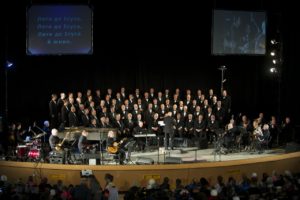
AUSTIN—The Singing Men of Texas celebrated their 50th anniversary Aug. 15 with a concert at Riverbend Centre in Austin.
The concert featured 360 singers and orchestra members, with representatives from all six regional chapters, and welcomed 1,840 attendees.
Musical selections ranged from “I’ll Fly Away,” arranged by Michael Lee, to “How Great Thou Art,” arranged by Dan Forrest.
The Texas Country Boys—a small ensemble originally formed in 2015 for an evangelistic concert tour across Ukraine—provided pre-concert music. The group returned to tour along the eastern border of Ukraine in 2017.
The Texas Country Boys perform at events across the Dallas/Fort Worth area, presenting a variety of musical genres: old-school country, new country, jazz, blues, top 40, gospel, and praise and worship.
50 years of glorifying God through music
Sam Prestidge
Sam Prestidge, who served the Baptist General Convention of Texas as state music director from 1960 to 1994, established the Singing Men of Texas in 1975.
The Singing Men of Texas exist to glorify God through music, proclaim the gospel of Jesus Christ, and provide an opportunity for Christian growth, inspiration, fellowship and mission service, organizers said.
Tom Tillman, director of music and worship for Texas Baptists, welcomed attendees to the concert. He read a State of Texas resolution from the Texas House of Representatives recognizing the Singing Men of Texas’ anniversary and their “dedication to musical excellence, their commitment to sharing the gospel and their faithful service.”
Tillman recognized special guests who attended the concert: Lisa Prestidge Phillips, daughter of Sam Prestidge, and Jackson Dyer, 2025 Prestidge Endowment Scholarship recipient and Hardin-Simmons University senior.
‘Joy of worshipping together’
Tillman also recognized charter members of the Singing Men of Texas: Robert Bailey, Don Blackley, Larry Caudle, Jim Clayman, Nathan Cook, Ron Davis, Wayne Gadman, Jim Holcomb, Bill Ingram, Jack Jones, Joe Jones, Ed Miller, Larry Shields, Vaughn Tatum, Tim Timmons and Dan Turner.
Turner said “the greatest thing” about the musical group is the community cultivated within it.
“There are many things about Singing Men that changed my ministry that were so effective, and [they] came from other ministers of music,” Turner said.
“The singing was great, but the sharing was especially important, of what other guys were going through and ideas that they had. The greatest thing [about Singing Men of Texas is] the association with all those men. Those that are still here and those that have gone before us have blessed my life immeasurably.”
He said celebrating 50 years of singing with SMOT means celebrating “a lot of memories” and “the joy of worshipping together with men [who are] committed to that.”
History of gospel outreach
Throughout its history, Singing Men of Texas have participated in outreach efforts across Texas and the United States. The group traveled to Australia, Brazil, Canada, Mexico, Eastern and Western Europe, China and Spain, performing concerts tours and conducting personal evangelism in the surrounding communities.
In 2017, the Singing Men of Texas presented concerts in eastern Ukraine, and more than half of the 12,000 who attended made recorded commitments to Christ. (File Photo courtesy of Singing Men of Texas)
In 1982, 82 men across chapters traveled to Brazil for a 14-day tour where they performed concerts in nine cities, kicking off in Salvador at the Brazilian Baptist Convention annual meeting. They recorded a worship album on this trip.
An album was also recorded on a mission trip to Australia in 1985. The North Central chapter recorded their album “Let God Be Praised and Glorified” that same year.
In 2010 and 2012, Singing Men of Texas participated in “four separate evangelistic projects at the invitation of the Ukraine Baptist Union,” where they saw a combined 8,870 faith decisions made.
According to a support raising letter from Tim Studstill, former director of music and worship at Texas Baptists, in May 2012, in each concert the Singing Men of Texas “sang for nearly an hour, and then Texas Evangelist Michael Gott presented a clear gospel message… [and] every person who attended was offered a free CD with music by the Singing Men and a message by Michael Gott, as well as a free Russian/English New Testament.”
According to a November 2012 article, “the evangelistic concert series” that year “recorded 4,305 decisions for Christ.”
“Everywhere we went, the presence of the Holy Spirit, the preached word and the prayers of those back home drew hundreds to Christ,” Studstill wrote. “We were blessed to be vessels of that message and a part of what God is doing in Ukraine.”
In addition to serving on missions around the world, Singing Men of Texas have performed at venues and events such as the Southern Baptist Convention annual meeting, the Morton H. Meyerson Symphony Center in Dallas and Carnegie Hall in New York City.
At the anniversary concert in Austin, the Singing Men of Texas sang original compositions, hymns and contemporary worship songs to celebrate the 50 years of proclaiming Christ through music.
Proceeds from the concert will support the Prestidge Endowment Scholarship Fund, a scholarship awarded annually to a student preparing for full-time music and worship ministry at a Baptist university.
Homeland Security uses the Bible to promote ICE
August 26, 2025
WASHINGTON (RNS)—In a video posted to its X account July 28, the U.S. Department of Homeland Security warned “EVERY CRIMINAL ILLEGAL ALIEN IN AMERICA” that the U.S. Border Patrol’s special operations group was coming to hunt them down.
The promotional video also quoted an unexpected religious reference—the Bible.
The 40-second clip shows Border Patrol agents in tactical gear seemingly preparing for an operation as a verse from the Book of Proverbs fades into the screen. “The wicked flee when no man pursueth; but the righteous are bold as a lion,” reads the text from Proverbs 28:1.
The soundtrack features the opening monologue of “The Batman” movie from 2022, with actor Robert Pattinson declaring, “They think I’m hiding in the shadow, but I am the shadow.”
The video received 37,000 likes and had been shared about 9,000 times as of Aug. 19, but it irked some X users who were surprised to see a religious text quoted in the governmental agency’s communications.
It is one of many posts by the agency since June across Instagram, Facebook and X quoting Scripture or invoking religious imagery to promote its efforts to arrest and deport immigrants.
Agency seeking to recruit ICE employees
The agency’s apparent turn to Scripture comes as it seeks to recruit U.S. Immigration and Customs Enforcement employees, whose agents are pivotal in the Trump administration’s forceful immigration crackdown. The ads connect the agency’s mission to arrest and remove immigrants with a divinely ordained mission.
The agency’s framing of Scripture encapsulates how some Trump administration leaders embrace Christian nationalism, said Guthrie Graves-Fitzsimmons, vice president of programs and strategy at Interfaith Alliance.
“I think you see that across the administration, it is not an attempt to reconcile their policies with Christian teaching. It’s just sort of taking a bulldozer to Christian teaching and then sprinkling Bible verses on top,” he said.
“We have this really growing sense that the Trump administration is trying to promote Christianity and use Christianity as a defense for its authoritarian actions, and that flies in the face of our religious freedom tradition in the United States.”
Puts ‘religious facade on the most unreligious of activities’
Though it invokes the Bible to support its actions, the agency is embattled in multiple lawsuits filed by religious groups, including Christians, over federal agents arresting immigrants on properties used by houses of worship, Graves-Fitzsimmons said.
He described what he called the “cognitive dissonance of ICE going into houses of worship to make immigration arrests, while then using the Bible in this inappropriate way to recruit agents and to put a religious facade on the most unreligious of activities.”
Faith groups fighting the administration’s immigration policies also argue their religious values inform their efforts.
In February, the Episcopal Church, along with several Christian and Jewish groups, sued the Trump administration for rescinding the policy that prevented immigration arrests at houses of worship. Sean Rowe, presiding bishop of the Episcopal Church, called the DHS videos “deeply troubling.”
“Weaponizing Proverbs and Isaiah, our sacred Scripture, in service of ICE recruitment is a level of grotesque that would have seemed unfathomable eight months ago,” Rowe told RNS.
The videos, he said, are consistent with the Trump administration’s embrace of Christian nationalism. Church leaders are called to resist this brand of Christianity, Rowe said.
“This twisting of Scripture to target the most vulnerable, to target immigrants, is antithetical to any kind of Christianity that I or our church would recognize,” he said.
Noem cites Bible verses
On July 7, the agency posted a different video on X—one subsequently deleted —showing Border Patrol agents at work with DHS Secretary Kristi Noem.
In the background, a voice says, “Here’s a Bible verse I think about sometimes. Many times. It goes ‘Then I heard the voice of the Lord saying ‘Whom shall I send and who will go for us?’ I said, ‘Here am I, send me,’” quoting a portion of Isaiah 6:8.
The video, which is still on the agency’s Facebook account, repurposes a biblical passage in which the Prophet Isaiah expresses his readiness to serve as God’s messenger to the people of Judah and Israel.
In another video, announcing the U.S. Coast Guard’s Force Design 2028, a plan that aims to protect the country from attacks of “nations and criminals that seek to sabotage infrastructure,” Noem is seen addressing Coast Guard officers at a command station in Bahrain.
She says: “We all know that Scriptures tell us that without a vision, the people perish. You are people who are stepping into a time of consequence. You will be people of significance,” quoting a portion of Proverbs 29:18.
DHS videos also summoned religious imagery, specifically “manifest destiny” paintings that promote the idea that American colonists received a divine mandate to expand across North America.
On July 14, DHS posted Morgan Weistling’s 2020 painting “A Prayer for a New Life,” showing a white pioneer couple holding an infant as a prairie expands behind them. The post’s caption urged viewers to remember their “homeland’s heritage.”
And on July 23, the agency posted John Gast’s 1872 painting “American Progress,” which allegorizes the concept of manifest destiny, depicting a blond woman floating through the sky and holding a schoolbook as scores of pioneers follow her, running after Native Americans fleeing.
In early August, the agency announced it lifted the age limit for ICE agents and offered new hires a maximum signing bonus of $50,000, student loan forgiveness options and enhanced retirement benefits. The hiring package was made possible by the large federal budget bill passed in July.
The agency said on Aug. 12 it had received more than 100,000 applications and celebrated the dedication of “patriotic Americans who want to join ICE and help remove the worst of the worst criminal illegal aliens from the United States.”
DHS didn’t respond to an RNS request for comment.
Attendance drops, fear rises in D.C. immigrant churches
August 26, 2025
WASHINGTON (RNS)—The first weekend after President Donald Trump federalized the Washington, D.C., police force and deployed National Guard troops on the city’s streets, leaders of immigrant churches described lower than average attendance, anxious WhatsApp groups and escalating fears.
On Aug. 17, an usher for the evening Mass at the Shrine of the Sacred Heart in Washington’s Columbia Heights neighborhood was detained by federal officials just three blocks away from the church while walking to worship.
Emilio Biosca Agüero, a Capuchin Franciscan and pastor at the church, said the man is among several parishioners currently in detention, including a man in marriage preparation and another in confirmation class. Some, he said, had been detained on their way to the church for catechetical classes over the past few weeks.
The parish’s WhatsApp chats have been filled with immigration agent sightings and warnings to parish members, the priest said.
“The people who participate at Sacred Heart are hardworking, resilient, law-abiding and devout, placing their trust in God and hoping that U.S. laws will take into account their contribution to improving this country,” Biosca said of his parish, where each weekend, there are six Spanish Masses, two English Masses and a Mass each in Portuguese, Vietnamese and Haitian Creole.
Concern had been growing even before the federal takeover, Biosca said. He estimated Mass attendance the past two weekends has fallen about 20 percent, from a typical level of 2,500 people to fewer than 2,000.
Growing sense of fear and outrage
A number of D.C.-area faith leaders who, like Biosca, serve immigrant-heavy congregations, described a growing sense of foreboding, fear and outrage among their communities as masked federal agents and uniformed soldiers have become a regular sight on the streets.
National Guard troops patrol Union Station in Washington, DC, on Saturday, August 16, 2025. President Trump has deployed the DC National Guard and multiple Federal agencies into the Capital as part of a controversial large-scale crimefighting effort. (Photo by Aaron Schwartz/Sipa USA / Via AP Images)
Trump announced Aug. 11 he planned to flood the city with federal agents and National Guard troops in order to crack down on what he described as a city overrun by violent crime and homelessness.
The move was spurred by an incident earlier this month involving the alleged beating of a former Department of Government Efficiency staffer. Trump has dismissed data showing dramatic reductions in violent crime in the city as “fake,” insisting instead that the city is “totally out of control.”
The president later announced he was federalizing the D.C. police force, deploying scores of agents from various federal agencies, and deploying the local National Guard—with service members from other states slated to be deployed this week.
In practice, immigration detentions have made up the largest category of arrests that have been made since the takeover, totaling over 40 percent of arrests in the first 10 days.
At least one church canceled worship services due to increased presence of immigration enforcement officials, whose efforts are now bolstered by enhanced information-sharing with local D.C. police—a break from past policies in the district that discouraged police cooperation with the agency.
Church cancels Sunday worship service
Yoimel González Hernández—rector at St. Stephen and the Incarnation, an Episcopal church just blocks from the Shrine of the Sacred Heart—announced in a public Facebook post he was calling off worship.
“I never thought I had one day to cancel Sunday worship because it is not safe for our Latino siblings to come to church. But here we are,” he wrote in the post, which has been shared nearly 200 times.
“The federal occupation of DC, with the help of Congress and other authorities, is not keeping our streets and communities safe. They are disappearing people without due process and infringing their rights.”
In an additional comment beneath the post, the rector said 10 U.S. Department of Immigration and Customs Enforcement vehicles were parked near the church on Sunday, even as the church’s “Loaves and Fishes DC” feeding program was handing out food.
Church officials declined to comment, but a group of unmarked agents was seen that same day in a parking lot behind St. Stephen’s. A local told RNS the lot is used by another church across the street, Trinity AME Zion Church.
According to footage and reporting posted by Zeteo reporter Prem Thakker, the agents were confronted by a group of frustrated residents who urged them to leave, with one local shouting: “You’re in a church parking lot! Get out!”
Representatives for Trinity AME Zion did not respond to requests to confirm the ownership of the lot or comment on the situation.
Some families running out of food
Multiple faith leaders told RNS the weekend felt like the early days of the COVID-19 pandemic, with some immigrant families hiding at home, avoiding church and stockpiling food to avoid going out in fear of deportation.
Now, some people are starting to run out of food, said Julio Hernandez of the interfaith immigration-focused group Congregation Action Network.
Hernandez, a Baptist minister, said people told him, “You’re always constantly waiting for a knock at the door for who’s going to come and take me away.”
“We have reports of families not knowing where relatives are. We don’t know if they’re detained, if they’re hiding.”
They’re not appearing in the ICE system, he said, and the community is also afraid of “bad actors who will come masked and harass people and hurt them.”
Anthony Parrott, co-lead pastor of The Table Church, said his congregation already has seen disruptions due to the police presence. Some worshippers have attended services at the church’s satellite location away from downtown, he said, and others have organized training events for how best to respond to police actions as bystanders.
Faith leaders denounce federal actions
The efforts follow a series of public condemnations by religious leaders, including local clergy, of the federal takeover of D.C. police. A group of bishops, rabbis and pastors signed a joint statement denouncing the influx of law enforcement, declaring “fear is not a strategy for safety.”
“From the White House, the president sees a lawless wasteland,” the statement read. “We beg to differ. We see fellow human beings—neighbors, workers, friends and family—each made in the image of God.”
Signers included Mariann Budde, the Episcopal bishop of Washington, and an array of Jewish, Methodist, Lutheran and Presbyterian leaders in the city.
Hernandez of the Congregation Action Network joined other faith leaders, including Latino Christian National Network’s Carlos Malavé, in a vigil outside immigration court in Sterling, Va., instructing attendees to wear white following the tradition of the mothers of the disappeared movement in Argentina’s military dictatorship of the 1970s and 1980s.
The group demanded the release of those abducted, detained and disappeared; an end to National Guard participation in deportations; and the opening of court hearings to the public for transparency.
“There’s a lot of fear right now,” Hernandez said.
Many faith leaders aren’t speaking out “because they’re concerned about the impact on their own communities,” he said. “There are people who in the first Trump administration showed up on the streets with us and now who refuse to go out because the fear is so real,” including Black leaders afraid of police brutality.
“I believe we’re sending people to death sentences” when the U.S. deports them to dangerous homelands or third countries, he said.
Hernandez said he was drawing on the example of the Berrigan brothers, two Catholic priests and anti-war activists during the Vietnam War, to ask himself, “What are we willing to risk at this moment to save lives?”
“This is a time for faith communities and community organizations and labor on all levels to start speaking out because what is happening right now is unjust and unacceptable,” Hernandez said.
Baylor group takes time before school to help flood victims
August 26, 2025
WACO—A new semester is on the horizon for college students, faculty and staff across the country, but a group from Baylor University wanted to do something tangible to help others in need before classes start.
Mark Magers, a Baylor University alum, serves with BearAid in San Angelo under the leadership of Texans on Mission. (Photo / Chad Warner / Baylor University)
Four students, 17 faculty and staff members, and one alumnus from Baylor spent a day alongside Texans on Mission volunteers rebuilding homes in flood-devastated San Angelo.
“We care deeply about being able to serve when we can and to help our neighbors in need, and there certainly has been lots of that as a result of the July Fourth storms,” said Molly Simpson, assistant director for service at Baylor and a member of the San Angelo team.
Baylor’s disaster relief group is called BearAid, and they worked in two houses cutting and hanging sheetrock and insulation after being quickly taught what to do by Texans on Mission volunteers.
“They gave us some training at each site and we got to work,” Simpson said.
‘Baylor answered the call to serve’
Sabrina Pinales, director of missions and discipleship with Texans on Mission, worked alongside the BearAid team.
“We are so thankful that Baylor answered the call to serve with Texans on Mission,” she said.
Baylor University student Alyssa Carrol serves with BearAid in San Angelo under the leadership of Texans on Mission. (Photo / Chad Warner / Baylor University)
“Volunteers are essential in rebuilding a community after a disaster,” and the Baylor group has been “a tremendous blessing to families impacted by the recent flooding,” Pinales said.
Sarah Walker, senior coordinator for service at Baylor, said BearAid had already “started to explore what it would look like to partner with Texans on Mission to do some work together this fall” and realized there was “a short window of time before our semester begins that we could take some faculty and staff” to San Angelo.
“We hope this can lead to more opportunities for cooperation … in the upcoming semester and beyond,” Walker said. “We have a really solid group of students who care a lot about other people and want to serve others.
“I’ve been working with the BearAid leadership team to talk through what that could look like to do some future trips with Texans on Mission this fall, such as day trips or weekend trips.”