Supreme Court lets stand religious charter school decision

WASHINGTON (BP)—The U.S. Supreme Court could not find five votes for either side in an appeal that would have established the first state-supported religious charter school in the nation, the court announced.

(Lightstock image)

The 4-4 split, made possible by Justice Amy Coney Barrett’s recusal, allowed to stand the lower court’s decision that it would be unconstitutional for St. Isidore of Seville Catholic Virtual School in Oklahoma City to be established with public funds.

“The judgment is affirmed by an equally divided Court,” the court said in its ruling May 22, with no further explanation of which justices would affirm or deny the appellants’ request. “Justice Barrett took no part in the consideration or decision of these cases.”

The court heard oral arguments in the matter April 30, when St. Isadore of Seville Catholic Virtual School, the Oklahoma Statewide Charter School Board and others appealed the Oklahoma Supreme Court’s June 2024 ruling.

In the appeal, the petitioners said they were denied the benefit of opening a charter school “for no reason other than that they are religious,” according to documents filed with the court.

The Archdiocese of Oklahoma City and the Roman Catholic Diocese of Tulsa had sought since 2022 to establish the school. The application first was blocked in April 2023, with the Oklahoma Statewide Virtual Charter School Board citing a problem with the application. But a second application was approved two months later.

State Attorney General Gentner Drummond appealed the decision to the State Supreme Court, successfully overturning the school board’s ruling.

“Under Oklahoma law, a charter school is a public school. As such, a charter school must be nonsectarian,” the Oklahoma Supreme Court said in its June 2024 ruling the Supreme Court left in place. “However, St. Isidore will evangelize the Catholic faith as part of its school curriculum while sponsored by the State.

“This State’s establishment of a religious charter school violates Oklahoma statutes, the Oklahoma Constitution, and the Establishment Clause. St. Isidore cannot justify its creation by invoking Free Exercise rights as a religious entity.”

Advocates, opponents weigh in

St. Isidore of Seville School had gained support from Oklahoma Gov. Kevin Stitt, attorneys general from a dozen states, and legal advocacy groups including Becket, Alliance Defending Freedom and First Liberty Institute.

“We are disappointed, but the result of this 4-4 decision with no opinion is that the fight against religious bigotry will continue in Oklahoma and across the country,” said Hiram Sasser, executive general counsel for Plano-based First Liberty. “We will not stop until we can bring an end to religious discrimination in education.”

Holly Hollman

In contrast, Holly Hollman, general counsel for the Baptist Joint Committee for Religious Liberty, said the court’s deadlock “means an important principle remains intact: the government cannot operate a religious school, nor can it directly sponsor, promote or pay for religious education.”

“The Oklahoma decision rightly affirmed that charter schools are public schools. And public schools are where we’ve shown the greatest clarity about religious freedom: they don’t conduct religious exercises, compel prayer, or make students feel excluded based on their beliefs,” Hollman said.

“Instead, they reflect the true promise of pluralism—where students can learn about diverse faiths and prepare to participate in a shared democracy.

“This outcome helps preserve that promise. And it ensures that our public institutions remain open to all, not captured by any one religious mission.”
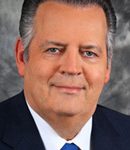
richard land130
Richard Land

Richard Land, former president of the Southern Baptist Ethics & Religious Liberty Commission, cautioned against the use of public funds to establish religious charter schools, regardless of the denomination or faith endorsed.

“Let me be clear that I would oppose a ‘Baptist’ charter school just as vehemently as I oppose a Catholic charter school,” Land wrote in a March 21 article for Baptist Press. “Indeed, I would oppose it because I am a Baptist and I believe in separation of church and state.”

With additional reporting by Managing Editor Ken Camp.



Memorial Day Flag Relay brings healing and gospel

MOBILE, Ala. (BP)—First in Fallujah, Iraq, then in Djibouti, Africa, and finally Mobile, Ala., the Memorial Day Flag Relay has been bringing encouragement and healing to active-duty servicemen, veterans and their families for 20 years.

It also has pointed the way to Christ.

Retired U.S. Navy Rear Admiral Endel Lee, Southern Baptist Navy chaplain, highly decorated naval officer, pastor and former New Orleans Baptist Theological Seminary faculty member, helped found the flag relay.

It began at Camp Fallujah in 2005, while Lee served with the 8th Communications Battalion, 11 Marine Expeditionary Force.

Open door to gospel conversations

A flag relay in an active combat zone proved fruitful in many ways.

“I was very intentional about [gospel conversations] and using that example of freedom to point to the ultimate sacrifice of Jesus,” Lee said.

As he often repeats: “Thousands have died for our freedom, but only one has died for our souls.”

Remembering one Marine’s remark that the relay “should be done in America,” Lee brought the idea home to Mobile. This year, the annual Memorial Day Flag Relay in Mobile marks its 17th year.

In all correspondence regarding the flag relay, Lee’s signature includes John 15:13 as a connection point to Jesus’ ministry and daily service to others.

In Mobile, the flag relay, known as “Remember 2 Remember,” covers a 22-mile trek from an active-duty Coast Guard station to the USS Alabama battleship housed in Mobile Bay.

Runners carry two flags—the U.S. flag along with a white flag with the insignia of each branch of the service—and board the WWII battleship at the end to “touch” the USS Alabama’s flag.

During the relay, Mobile community members often pull their cars over to the side of the road, at times standing at attention with hands over their hearts as runners pass.

“That’s pretty incredible to see,” Lee said.

Hundreds of active-duty personnel, veterans, disabled veterans, family members, friends and supporters have participated in the relay. In some years, the flag relay has ended at military installations as far away as Biloxi, Miss., or Pensacola, Fla.

Afterwards, the U.S. flag carried during the relay is presented to a local family of a veteran in honor of a loved one lost while serving. The presentation is private and often emotional, Lee said.

One family lost a son in Afghanistan weeks before the first Memorial Day Flag Relay in Mobile. Lee recounted that receiving the flag “meant the world” to the mother. Lee explained the mother told him that day her greatest fear was people would not remember her son and his sacrifice.

“The purpose of the race is to remember, but it also becomes a healing event,” Lee said, adding: “It has been for me.”

A time for healing

Deployed to Iraq while serving on faculty at New Orleans Baptist Theological Seminary, Lee returned home to New Orleans in 2005, two weeks before Hurricane Katrina flooded the seminary campus and his family’s home.

“I didn’t have time to process [my time in Iraq] before experiencing a different kind of loss,” Lee said. He served as chaplain during the rescue and recovery efforts for the U.S. Coast Guard in the aftermath of Hurricane Katrina.

Later deployments saw Lee in combat regions again in Afghanistan and in Djibouti, Africa. There he ministered to those facing danger and experiencing post-traumatic stress responses.

Lee remembered the Camp Fallujah Memorial Day Flag Relay and the impact it made and helped organize flag relays in other locations, including at camp in Djibouti, Africa, in 2013.

“That is probably what drove me to take what we had seen, the inspiration, the healing there in Fallujah that day as people were able to get involved and talk about some of their feelings, their memories, and their losses, and continue this back home,” Lee said.

Teams of two ran from sunrise to after sunset at the Camp Fallujah Memorial Day Flag Relay, clocking 101 kilometers—about 63 miles—and handing off the relay flags to the next team at 15-minute intervals.

As word spread through the camp that day, others asked to join in, while some runners asked to run a second leg. By the relay’s end, about 180 runners had participated.

Daniel Guiffreda, now a chaplain with the Air National Guard in Belle Chasse, La., served in Fallujah as Lee’s religious program specialist. Guiffreda noted the relay’s impact on active-duty personnel who grieved friends lost in combat.

“The relay gave them a way to honor that memory,” Guiffreda said. “[Those lost] weren’t just forgotten, but people were actually remembering them. That is just one part of the healing process for people.”

Healing in the church

Guiffreda said veterans often feel disconnected and out of place after returning home but sees this as an opportunity for church ministry.

In his own church, Guiffreda said he has discovered veterans who remained silent through the years despite their own “pretty significant experiences” while serving. Guiffreda noted the importance of events such as the Memorial Day Flag Relay.

“The appreciation [active-duty military members] feel brings a level of comfort,” Guiffreda said. “I think it validates not only their current service but it makes them feel like the loss that others have experienced has not gone unnoticed, that it is not worthless, and that keeps them from feeling that what they experienced was in vain.”

When Lee speaks of the freedom won by those serving the nation, he links to John 8:31-36 and the true freedom found in Christ.

As he points to Jesus’ example of serving others daily in his ministry, he often tells of a young friend, Adam Brown, a Navy Seal who was killed in action in 2010. Lee recounted how Brown made daily sacrifices of his own comfort to ensure Lee’s safety as they served together in Afghanistan.

Lee has served as chaplain to different branches of the military in various roles, including in the days following Sept. 11, 2001. “Daily sacrificing” for others is modeled by first responders as well as military personnel, Lee said, adding that taking the time to honor those who have served is a sacrifice of time and effort.

“Even participating in an event (such as the flag relay) is a way of ‘laying down your life’ in a way that shines light and good,” Lee said.

For Lee, remembering the sacrifice of those in military service makes for a clear and quick reminder to others of the ultimate sacrifice of Christ.


Persecuted Vietnamese Highlanders seek freedom

An East Texas-based organization that played a key role in securing the release and resettlement of the Mayflower Church—persecuted Chinese Christians detained in Thailand, who eventually relocated to Texas—hopes to do the same for Vietnamese Christians in a similar situation.

Freedom Seekers International has worked more than two months to help free members of the Vietnamese Highlands Montagnard Christian Church from immigration detention centers in Thailand.

After supporters of Freedom Seekers International provided bail payments, 26 of The Highlanders were released in early May following 73 days in detention. (Courtesy Photo)

To escape religious persecution, members of the church fled Vietnam on foot in 2019, entering Thailand without passports or other documentation to seek the protection of the United Nations High Commissioner for Refugees.

“And like the Mayflower Church, their journey to an immigration detention center in Thailand was for the same reasons, persecution because their home government did not want them to worship Jesus, followed by arrest by the Thailand immigration police due to illegal residence in Thailand,” wrote Tim Conkling, a Taiwan-based missionary with Asia Mission Partners and founder of Connecting Families.

Rounded up during a prayer meeting

Sixty-four members of the Vietnamese Highlands Montagnard Christian Church gathered on Feb. 24 in a house to pray for the family of one of their members whose mother died in Vietnam.

Tim Conkling, a Taiwan-based missionary with Asia Mission Partners and founder of Connecting Families, visits with some of the released members of The Highlanders. (Photo courtesy of Connecting Families)

“When the group prayed, Thailand immigration police arrived at the scene and broke up the prayer meeting,” wrote Conkling, a missions partner with Freedom Seekers International. “The police arrested all of the church members and then took them to prison for processing.”

Several adults who already had bail release papers from a previous detention were released, along with some of the children in the group.

Forty-eight members of the church—including three pregnant women, one of whom later gave birth—eventually were processed into the Suan Phlu Bangkok Detention Center and the Bang Khen Immigration Detention Center.

The Center for Asylum Protection in Thailand advocated on behalf of “The Highlanders,” as the group has become known. After supporters of Freedom Seekers International provided bail payments, 26 of The Highlanders were released in early May following 73 days in detention.

Ten Highlanders still detained

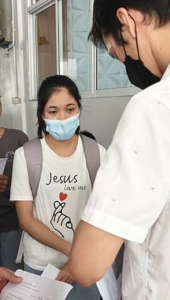
Iris, a member of the Vietnamese Highlands Montagnard Christian Church, wore a shirt expressing her faith in the love of Jesus, but her eyes showed the stress of 73 days in detention. (Photo courtesy of Connecting Families)

Conkling helped the released members of the Vietnamese church—including another dozen released after the first group—relocate to rented single-family dwellings in a suburb of Bangkok.

He took the two pregnant women who had been detained to a hospital for prenatal exams. He also took another woman to the hospital who had been suffering from constant headaches and vomiting.

“There are still 10 refugees in the International Detention Center in Bangkok,” Conkling reported on May 22. “All are adults and have their UNHCR cards, so they are recognized as refugees by the United Nations.

“Three will be released next week, and three have been denied bail release due to unresolved issues with the Vietnam government. The remaining four will be released sometime in the future, but we are not certain of the date.”

Advocating for admission to the U.S.

In the meantime, Deana Brown, founder and CEO of Freedom Seekers International, is working to persuade U.S. government officials to allow The Highlanders to relocate to Texas.

The same East Texas organization that housed the Mayflower Church until they relocated to Midland has committed to provide lodging for The Highlanders, said Brown, a former Southern Baptist missionary.

“I’m confident that churches will help with other support—ESL, securing jobs, getting kids in school, teaching them to drive, connecting with medical facilities—everything that FSI did with the Mayflower Church,” she said.

Brown already has secured the support of Rep. Nathaniel Moran, R-Tyler, who was part of a bipartisan effort to obtain Priority-1 visas with the U.S. Refugee Admissions Program for members of the Mayflower Church in 2023.

Both she and Conkling are optimistic Secretary of State Marco Rubio, who was part of the effort to help the Mayflower Church when he was serving in the Senate, will respond favorably to The Highlanders.

“Secretary of State Marco Rubio has been given authority to let in refugees on a case-to-case basis,” Conkling wrote.

“Because Secretary Rubio was actively involved in protesting the Thailand government returning the Uyghurs to China, we feel like he will be possibly favorably disposed to considering this church’s case.”

In early February, Thailand forcibly deported 40 of the 350 Uyghurs who fled China in 2014 and had spent a decade in a Thai detention center. Rubio protested the action and offered the refugees political asylum before they were returned to China.

When the Thai government did not accept the offer, the United States imposed sanctions on the particular Thai governmental officials involved in the deportation.

Reasons to admit Highlanders outlined

Conkling outlined reasons The Highlanders meet the criteria for admission to the United States:

  • “Their persecution histories have been recorded and vetted by the UNHCR, and they were granted refugee status because of religious persecution against Christians. Had the present U.S. administration not curtailed the State Department’s Welcome Corp program, these Christian refugees would have been sponsored to come legally to the United States.”
  • “They are in constant danger in Thailand, and neither the UNHCR nor the U.S. government is in a position to protect them from the same fate as the Uyghur refugees.” Some members of the church have expressed fear of being abducted by members of the Vietnamese secret police and being forcibly deported to Vietnam.
  • “Their documented persecution in Vietnam arises for Christian religious reasons, as well as historical association with assisting U.S. troops during the Vietnam War.”
  • “Freedom Seekers International has already secured housing for the group, should they be allowed to come to the U.S., and would accept the responsibility to raise the additional sponsorship funds needed for their relocation, just as they successfully did with the Mayflower Chinese Church refugees in 2023.”

Both Conkling and Brown encouraged Christians in the United States to contact members of the Senate and House of Representatives to advocate on behalf of members of the Vietnamese Highlands Montagnard Christian Church.

“If the Lord works out the details,” Brown said, she hopes to fly to Thailand in early June to spend time with The Highlanders and connect with ministry partners who are helping them.

While The Highlanders remain in Thailand, they are not permitted to work. Conkling said concerned Texas Baptists who wish to donate to their support in the interim can do so online through Connecting Families by clicking here.

Brown added Christians can support The Highlanders now and in any future relocation by donating here.


Former SBC presidents want to keep ERLC alive

(RNS)—A group of 10 former Southern Baptist Convention presidents have weighed in on a debate over the denomination’s controversial ethics and public policy arm.

In an open letter, the 10 former presidents—some of whom have been critics of the SBC’s Ethics and Religious Liberty Commission—acknowledged the agency has been controversial and can do better. But, they said, that’s no reason to shut the ERLC down.

“Every entity—including the ERLC—should be open to critique and committed to improvement,” the presidents wrote. “But there is a difference between refinement and eradication. A sledgehammer is not the tool for adjusting a mirror.”

Former SBC presidents at mic in 2023 are (left to right, from #2 sign) Bryant Wright, Ed Litton, James Merritt, Steve Gaines and JD Greear. They joined former SBC presidents Bart Barber, Fred Luter, Tom Elliff, Jim Henry and Jimmy Draper in signing an open letter saying the Ethics & Religious Liberty Commission should not be disbanded or defunded. (Photo by Van Payne/The Baptist Paper)

The letter, first published by The Baptist Paper, an Alabama-based publication that covers Southern Baptists, was signed by the denomination’s four most recent past presidents—Texas pastor Bart Barber, Alabama pastor Ed Litton, North Carolina pastor JD Greear and Tennessee pastor Steve Gaines.

Other former SBC presidents joining them were Louisiana pastor Fred Luter, retired pastor Bryant Wright, Georgia pastor James Merritt, along with Tom Elliff, who also led the SBC’s International Mission Board; retired Florida pastor Jim Henry; and Jimmy Draper, who led Lifeway, the SBC’s publishing arm.

The ERLC has survived three votes to disband or defund the entity—which weighs in on social issues and public policy—since the beginning of the Donald Trump era. A vote last summer appeared to have the support of about a quarter of the messengers to the SBC’s 2024 annual meeting in Indianapolis.

Critics of the ERLC—who say the commission is out of touch with the beliefs of local church members and lacks close ties to the Trump administration—have engaged in an online public relations war over the agency’s reputation and effectiveness.

Rhetoric heats up online prior to SBC in Dallas

The online rhetoric over the ERLC has heated up as the 2025 SBC annual meeting—set for June 8-11 in Dallas—draws nearer.

In their letter, the ex-presidents say they have listened to the ERLC’s critics. While some of the former presidents share their concerns, they do not believe those concerns warrant shutting down the agency.

“Those of us who would have some measure of critique for the priorities or tactics of the ERLC still believe in the importance of its existence and in its mission,” they wrote. “If this were not the case, we would not have such strong feelings about wanting it to get its mission right.”

James Merritt, who was SBC president from 2002 to 2004 and currently pastors Cross Pointe Church in Duluth, Ga., told Religion News Service Southern Baptists still need to have a voice in the public square, and the ERLC fills that role.

“I just think it’s an extremely important responsibility on our part that the largest Protestant evangelical denomination in the country have a presence and a voice in Washington, D.C.,” he said.

He also said the ERLC’s leadership is aware of concerns raised by critics and is trying to address them.

Things would be different, he said, if the ERLC were ignoring critics.

The ERLC has been controversial in the past, in large part because the agency often weighs in on public policy and thorny ethical issues like immigration, sexuality and abortion.

Groups like the Center for Baptist Leadership have criticized the ERLC for joining with other anti-abortion groups in opposing legislation calling for women who have abortions to be jailed. Critics also have been angered by the ERLC’s support for immigration reform—even though Southern Baptists have supported such reforms in the past.

Much of the current controversy over the ERLC dates back to the tenure of Baptist ethicist Russell Moore, who led the ERLC from 2013 to 2021. Moore was popular with Southern Baptists at first but clashed with some SBC leaders—including former SBC Presidents Frank Page and Jack Graham—when he criticized Donald Trump.

The agency also has experienced internal conflict. Last summer, the chair of the agency’s board of trustees announced ERLC President Brent Leatherwood had been ousted after he praised former President Joe Biden for ending his reelection bid. The next day, the trustee chair was removed and the board announced Leatherwood had not been fired.

Concerns ‘will be answered by the messengers’

Current SBC President Clint Pressley, pastor of Hickory Grove Baptist Church in Charlotte, told RNS earlier this month he is aware of criticism of the ERLC but said local church messengers will decide the agency’s fate.

“I think those concerns about the ERLC will be answered by the messengers,” Pressley told RNS earlier this month. “I can’t do anything about the ERLC.”

At least one pastor has announced plans to make a motion to impose guidelines on the ERLC during the upcoming annual meeting. Critics are expected to make a motion to shut down the agency as well. The SBC’s constitution and bylaws call for two votes to shut down an agency.

The SBC presidents argued reforming the ERLC is a better outcome than abolishing it.

“If the goal is reform, then we urge Southern Baptists to use the means already available—electing presidents, speaking with trustees, and working through the process in good faith,” the SBC presidents stated.


Obituary: Jimmie Nelson

Jimmie L Nelson, longtime Baptist pastor and seminary professor, died May 14. He was 97. He was born Feb. 11, 1928, in Wichita Falls to Izetta Mansfield and was adopted by Wallace and Nettie Nelson. He spent most of his childhood in Borger, where he graduated from high school and where he worked in the oil fields through his college years. He graduated from Borger High School in 1945 and from Baylor University in 1949. As a high school senior, he was called to the gospel ministry and enrolled at Baylor University. During college, he met Dolores Lee Cate, also from Borger, one weekend when he was visiting back home. They married June 25, 1950. During his time at Baylor, he served Lovelace Baptist Church in Hillsboro as pastor. After completing his undergraduate degree from Baylor in 1949, he attended Southwestern Baptist Theological Seminary in Fort Worth, where he earned a Bachelor of Divinity degree in 1952 and a Doctor of Theology degree in 1961. He was pastor at Oak Grove Baptist Church in Fort Worth, Colonial Hill Baptist Church in Snyder and First Baptist Church in Deer Park. Returning to Southwestern Seminary, he served as the director of field education in the School of Theology, was associate dean for the Doctor of Ministry program, and was professor of preaching 27 years. He also continued to serve as interim pastor at various churches through his lifetime. During his time at the seminary, he served three year-long sabbatical stints as a pastor of European Baptist churches in The Netherlands, Germany, Switzerland and Spain. He also taught and preached in Japan, Trinidad, Brazil, the Ivory Coast and Romania. He also served as an adjunct professor at the Canadian Baptist Seminary in Calgary several semesters. The Nelsons were longtime members of First Baptist Church in Burleson, and he served the church as interim pastor twice. For many years, he led a men’s Bible study at the Petroleum Club in Fort Worth. He also loved his seminary friends who were part of a 42 club who met regularly to play dominoes and enjoy each other’s company. In his last years in Burleson, he became a part of a breakfast club that met every Monday morning in a local café. In 2022, he moved into a senior living community in Lubbock to be near his daughter and her family. In Lubbock, he continued to be involved with the local pastors group as well as First Baptist Church of Lubbock. When he was 91, he rode the zipline at Palo Duro Canyon, just so he could keep pace with his friend Bernie Wilson, originally of Snyder. He was preceded in death by his wife of 53 years, Delores. He is survived by son Stephen Nelson and his wife Robin of Paonia, Colo.; son J. Alan Nelson and his wife Susan of Waco; daughter Julie Cate Nelson Couch and her husband Robert of Lubbock; five grandchildren; and three great-grandchildren. Visitation will be held from 4 p.m. to 6 p.m. on June 1 at the Mountain Valley Funeral Home in Joshua. A funeral service is scheduled at 10 a.m. June 2 at First Baptist Church in Burleson.


Bill requiring air conditioning in Texas prisons passes House

The Texas House passed May 16 a bill requiring prisons to have air conditioning by the end of 2032.

Lawmakers passed 79-39 House Bill 3006 by Terry Canales, D-Edinburg. If the Legislature or the federal government allocates funding, it will require the installation of climate control in phases to be completed by the end of 2032. The bill now will face its last hurdle in the Senate.

“The bill targets key housing units and medical spaces, kitchens, and administrative offices in state prison facilities to ensure the most critical spaces are temperature-controlled,” said Rep. Eddie Morales Jr., D-Eagle Pass, a co-sponsor of the bill, told lawmakers.

The bill mandates the Texas Department of Criminal Justice purchase and install climate control systems to ensure temperatures are maintained between 65 and 85 degrees in certain areas. The installation will occur in three phases, capped at $100 million per phase, and completion is set for 2028, 2030 and 2032.

However, advocates are only a little bit hopeful the bill survives the Senate and even if it does, they worry the phased process will take too long.

“People are being hurt and tortured by the Texas heat and it’s simply not good enough to have a phased-in approach. We have the funding. Just get it done as quickly as possible,” said Erica Grossman, a Colorado attorney, who represents inmates who are suing Texas over its lack of air conditioning in state prisons.

This session, four prison heat-related bills filed by House members have been referred to the House Corrections Committee: HB 1315, HB 2997, HB 3006 and HB 489. However, Canales’ bill was the only one to make it out of committee.

Officials from the Texas Department of Criminal Justice, which oversees the state’s 101 prison facilities, asked lawmakers for $118 million over the next biennium to install air conditioning in about 11,000 units. Even if lawmakers grant that request, millions more will be needed to get to the at least $1.1 billion the TDCJ says will be needed to fully air condition its prisons.

Since the House Corrections Committee wrote in its 2018 interim report to the Legislature that TDCJ’s heat mitigation efforts were not enough to ensure the well-being of inmates and the correctional officers who work in prisons, lawmakers have tried to pass bills that would require the agency to install air conditioning. None of those bills made it to the governor’s desk.

Slow progress

During that time, TDCJ slowly has been installing air conditioning. The department also has added 11,788 “cool beds” and is in the process of procuring about 12,000 more.

The addition is thanks to $85.5 million state lawmakers appropriated during the last legislative session. Although not earmarked for air conditioning, an agency spokesperson said all of that money is being used to cool more prisons.

Still, about two-thirds of Texas’ prison inmates reside in facilities that are not fully air conditioned in housing areas.

Indoor temperatures routinely top 100 degrees Fahrenheit, and inmates report oppressive, suffocating conditions in which they douse themselves with toilet water in an attempt to cool off. Hundreds of inmates have been diagnosed with heat-related illnesses, court records state, and at least two dozen others have died from heat-related causes.

“For years, there has been a huge understaffing crisis in the Texas prisons, a crisis that will not be fixed until there is air conditioning. I encourage anyone who questions these bills to spend five minutes in one of these prisons. Officers are suffering along with the inmates,” Grossman said.

“Texas will be spending millions of dollars either way: They will be paying lawyers and settlements to the people they hurt and kill, or they could finally just fix the problem,” Grossman added.

The pace at which the state is installing air conditioning is insufficient, U.S. District Judge Robert Pitman wrote in a 91-page decision in late March. The lack of system-wide air conditioning violates the U.S. Constitution, and the prison agency’s plan to slowly chip away at cooling its facilities—over an estimated timeline of at least 25 years—is too slow, he wrote.

Sen. Joan Huffman, a Houston Republican who chairs the Senate Finance Committee, said in an emailed statement the supplemental appropriations bill will include the $118 million TDCJ requested to fund approximately 11,000 new air-conditioned beds. It also will include $301 million to construct additional dorms—which the prison agency requested to accommodate its growing prison population—and those new facilities all will be air-conditioned.

An internal investigation also found TDCJ has falsified temperatures, and an investigator hired by the prison agency concluded some of the agency’s temperature logs are false.

Citing that report, Pitman wrote: “The Court has no confidence in the data TDCJ generates and uses to implement its heat mitigation measures and record the conditions within the facilities.”

Ways to help

John Litzler, Texas Baptists’ CLC Public Policy director, has been advocating for HB 3006, hoping to help get temperature controls in Texas prisons into law this legislative session.

As of May 22, the bill has yet to be assigned to a committee in the Senate, and that’s “not a good sign,” he said.

Texas Baptists and others who are concerned about humane conditions for all Texas prisons still can make a difference, he noted.

Two actions could help, Litzler said. First, concerned individuals can “call the lieutenant governor’s office and ask that HB 3006 be assigned to a Senate committee, so it can be set for a hearing.” That number is (512) 463-0001.

Litzler suggested it also might help to call the offices of Sen. Huffman and Rep. Greg Bonnen, R-League City, who chairs the House Appropriations Committee. Sen. Huffman can be reached at (512) 463-0117 and Rep. Bonnen at (512) 463-0729. Litzler urged callers to ask these legislators to put “every available dollar they can put into the appropriations bill for that purpose.”

With additional reporting by Calli Keener.


Renewed vision helps Waco church reach next generation

WACO—Over the past 12 years, revitalization and a renewed vision at Highland Baptist Church in Waco have served as the catalyst to help bring revival among their community and a desire to reach “a new and next generation with the gospel.”

“Highland is 102 years old, but it is filled each Sunday with 18- to 25-year-olds,” said Pastor John Durham.

Since Durham began serving at Highland in 2013, the church has seen tremendous growth, as it strategically shifted its efforts toward reaching this demographic.

“Revitalized churches are the wave of the future if the American church is going to continue to reach others for the gospel,” Durham said. “Highland has grown from 1,400 to 4,400 in 11 years, and the major growth has taken place with middle school, high school, college students and young families.

“Some decisions had to be made to reach a new and next generation. Some of the decisions were common sense, but others were difficult to make and navigate.”

The church set a goal of creating a healthy church that is multigenerational and multinational, Durham explained.

“Some of the strategies toward that goal included being very intentional about forming a sense of family and warmth and hospitality, celebrating the different nationalities of members at Highland, putting a high value on authenticity and accessibility of leadership and then dialing down stoicism and formality and dialing up a high view of Scripture, corporate prayer and expressive worship,” he said.

Durham notes the church now has 61 nationalities represented in its membership. He also said that this year the church is on track to baptize 150 people, and the vast majority of those are in the 15- to 25-year-old range.

Love for Waco, love for students

As someone who grew up in Waco and graduated from Baylor University, Durham holds two things close to his heart—the Waco community and college students. He returned to his hometown after serving for almost 12 years as the senior pastor at First Baptist Church in Irving. Before that, he served for 10 years as the student pastor at First Baptist Church in Houston.

“That age window of 18 to 25 is so formational,” Durham said. “Students and young adults are making decisions on faith, friendship, calling, scriptural authority, local church priority and what is real.

“If that demographic can move beyond faith information into Christ-honoring transformation, you will see another great awakening in our nation. And if prayer, evangelism and passion for Jesus are indicators of awakening, I believe we are on the threshold.”

The years between age 18 and age 25 were “formational” for Durham as a Baylor student and young student pastor, he noted.

“So of course, as a church we want to invest a lot of resources, love, support and discipleship into that generation,” he said. “On a given Sunday morning at Highland, about one in three worshippers are in that age range of 18 to 25, so about 1,500.

“And when you add in our preschool ministry, kids ministry, shine ministry for kids with special needs, middle school ministry and high school ministry, that is closer to 2,200 people under the age of 25 on a Sunday morning. That is exciting.”

Unity, prayer and a sense of expectation

While reflecting on the changes he has seen in Waco through the years, Durham is encouraged and sees renewed opportunities to reach the community with the gospel.

“There is a spiritual condition of unity and prayer and expectation that is very new,” he said. “When I talk to those who have been around for decades here, they sense it and agree that there are some undercurrents of spiritual renewal here in Waco that is based on prayer movements and unity movements and new converts to Christ.”

Before beginning to preach three services on Sundays, Pastor John Durham of Highland Baptist Church in Waco gathers weekly with a group of 80 to 100 men to pray at 8 a.m. The majority of the men are college age. (Submitted photo)

Before beginning to preach three services on Sundays at 8:40 a.m., 10 a.m. and 4 p.m., Durham gathers weekly with a group of 80 to 100 men to pray at 8 a.m. The majority of the men are college age.

The church is intentional in its community outreach, Durham said, building a Wellness Center to address neighbors’ needs.

The Wellness Center provides urgent care for medical needs and assessment, ESL classes, birthing classes, citizenship classes, finance classes, computer training and more. The center has resulted in salvations, church connections and new friendships with Highland Baptist’s community.

The center is for “outreach to the people God has put around our church,” Durham said.

‘A place for help and hope’

“It is a place of help and hope. We really wanted to draw basically a 1-mile circle around our church campus and begin to feel the responsibility of caring for those families and people,” he said.

“I would love to see Highland continue to use our Wellness Center as a launching place for continued and increased ministry. I believe we have just begun to consider all the ways we can leverage this building and the hundreds of volunteers to love, reach, serve and share Jesus with our neighbors.”

Durham also noticed increased unity among the churches in the surrounding area over the past few years.

“The city of Waco has experienced some incredible unity within the churches,” he said. “Monthly prayer gatherings, city events, events for colleges and more have all come out of partnerships between the churches. There are about 60 churches who take biblical stands together, who come together for Last Thursdays where the leaders gather to pray for the city and revival.

“For almost two years now, a group of Christians, pastors and leaders across Waco will meet at a different church on the last Thursday of the month and pray for three things: revival in our city, unity of believers across our city and for spiritual awakening and salvation for Generation Z, those who are in middle school through young adults.

“I believe that has been the catalyst for growing churches in our city, hundreds of baptisms, salvations across our city, and of course, the reality that churches are wanting to support one another and cheer one another on.”


Texas RAs challenged to raise funds for Kenyan churches

A Kenya pastor and a Texas deacon drove through Tharaka County northeast of Nairobi and realized there was only one Baptist church to serve the county of almost 400,000 people.

Twelve years later, there are 47 Baptist churches in the county, and 25 of them have buildings in which to meet. The Texas deacon has led in building all 25 structures, and more are needed.

The Kenya Challenge, as the church-building effort is called, is this year’s Texas Royal Ambassadors mission project. Boys attending RA camps around the state this summer will learn about the effort and raise money for building more churches, with the effort concluding at the annual RA Campout and Missions Mania on Nov. 8-10.

Sam Dunkin, a deacon at McDade Baptist Church, east of Austin, began going to Kenya in 1995 as part of a Southern Baptist International Mission Board effort. He continued to go and build churches after IMB stepped away.

The Kenya Challenge is not an official nonprofit or formal organization. It’s an effort centered around Dunkin’s commitment to a group of Baptist churches led by Linus Ngaine, the Kenyan pastor who in 2013 identified the need in Tharaka County.

Seven church buildings planned this year

Dunkin, who gives his age as “just 82,” plans to build seven church structures in Kenya this year, and each will cost about $4,000. Money raised by Texas RAs and their churches will go toward those costs, which will continue into 2026.

Savion Lee, Texas RA coordinator, said he chose The Kenya Challenge as this year’s mission project because God “just kind of laid on my heart.”

“Sam has been a faithful servant there in Kenya over these past number of years,” Lee said, and he offers regular progress reports to RA and Challengers groups throughout the year.

In the early days of Dunkin’s work in Kenya, three RA camp “state staffers” went on mission projects to the East Africa country, Lee said. Now, those men are missionaries serving overseas.

Dunkin also has maintained consistent yearly involvement in Alto Frio Baptist Camp, which is about 200 miles from Dunkin’s home and church in McDade.

He also leads training in varied outdoor skills at the state RA Wilderness Camp and Leadership Training Camp.

‘Work with others in sharing Christ’

As Dunkin talks about the varied things he does in Texas and Kenya, it becomes obvious he likes to work with people. There are the camp staffers and attendees in Texas, and in Kenya there are Ngaine, other pastors and a team of workers who build the church structures.

“I now have a crew that can put up one (church) in two days,” Dunkin said. The tin buildings are all the same—20 feet by 40 feet, roofed and walled with a double door, single door and five windows,” Dunkin said. “It’s plumb. It’s square. It’s beautiful.”

Each building also has a dirt floor. Dunkin leaves the floor for church members because the process of pouring and finishing the concrete creates a sense of ownership.

“I do not name the churches and don’t finish them,” he said. “I want them to take possession. … It will be their building.”

Lee said Dunkin’s church-building effort fits into the pledge all RA boys learn. One phrase of the pledge says they will “learn how to carry the message of Christ around the world.” Another says RAs will “work with others in sharing Christ.”

Those two lines of the pledge point RAs toward opportunities through their local churches and missionaries, “which help further the gospel of Christ around the world,” Lee said.

“Sam is working with others to share Christ in Kenya, and Texas RAs are working with Sam in that effort to carry the message of Christ around the world.”


Texans on Mission respond after Gordon tornado

GORDON—When an EF-1 tornado hit Gordon, damaging the community’s only school, canceling classes for the week, and affecting dozens of homes in the area, Texans on Mission assessors were on site the next day.

The following day, chainsaw and temporary roofing teams rolled in to begin helping families recover from the damage.

Mark Randall is the disaster relief volunteer coordinator for the Rolling Timbers Disaster relief chainsaw team. (Screen Capture Image)

The Rolling Timbers Disaster Relief chainsaw team began removing a huge tree from the roof and yard of a home, one of an expected 15 families Texans on Mission volunteers have identified for help, said Mark Randall, disaster relief volunteer coordinator for Rolling Timbers.

“The tornado kind of came from the west-northwest, and it kind of crossed town,” Randall said, “Most of the damage is at the football field. It pretty much flattened their equipment room, their weight room and tore up the bleachers.

“There are a lot of trees on the ground, and we’re working on the ones that are on the homes first, so that people can get a temporary roof put on.”

As a Texans on Mission temporary roof crew arrived, a chainsaw crew was “trying to clear the stuff off the roofs, so they can get up there, so the homeowner doesn’t have any more damage than they already have,” Randall said.

“I would say the estimate on the number of jobs, including temporary roof, would be about 15. When it takes two to four hours for each job, that’s quite a bit of work.

“And if you think about that, that’s that many homes and that many people that we get to come in contact with, and that’s what we’re here for.”

The homeowner is a local saddle maker. The volunteer team assessed his home, then went over to his saddle shop to discuss their work and pray with him.

“He said he felt it was unbelievable that we just showed up, but he’s very thrilled that we’re here,” Randall said.

‘We’re going to make it secure’

Across town, Texans on Mission volunteers Gary Emory and Mike Pickel began replacing metal roofing sheets on survivor Sassy Vicchio’s home in preparation for temporary tarping. The two are part of a team that mixed volunteers from Georgetown and Cross Plains.

Gary Emory (left) from First Baptist Church in Georgetown helps reattach roof panels. (Texans on Mission Photo / Russ Dilday)

Emory, a member of First Baptist Church of Georgetown, and Pickel a member of Crestview Baptist Church in Georgetown, were carefully attaching the blown-off panels 15 feet up on the roof. Heat waves already were shimmering in the morning sun.

 “The house has three panels ripped off,” Emory explained. “We’re trying to replace what we can, and then we’re going to make it secure. And then we’re going to come back over it with a tarp to try and keep it dry until they can get permanent panels back up here that are watertight.”

Vicchio looked up to the pair as they were working, grateful for the help.

“This is such a blessing,” she said. “Y’all are a godsend, and I am so thankful right now, because I was devastated and not quite sure what I was going to do.”

She said the family still is recovering emotionally from the storm.

“It was very scary—very loud,” she said. “We heard a lot of tin rattling, and thank God that was it. The house right behind us was destroyed.”

Standing in her front yard, she was surrounded by the effects of the tornado’s violent winds. Tubular framing and roofing from a carport 200 yards away were wrapped in her cottonwood tree and surrounded the house.

Aledo couple serves together to offer hope

Volunteer Tom McMillan, a member of Parker County Cowboy Church in Aledo, is part of the chainsaw relief effort, along with his wife, Lorrie. (Texans on Mission Photo / Russ Dil;day)

Volunteer Tom McMillan, a member of Parker County Cowboy Church in Aledo, is part of the chainsaw relief effort, along with his wife, Lorrie. He said he felt compelled to respond “to help people in need.”

“There’s a lot of people, when something like this happens … they don’t know where to start,” McMillan said. But “we show up,” and suddenly they discover a gleam of hope, he said.

While directing highway traffic around her husband Tommy’s skid steer, Tanya Prosise, a member of Stonewater Church in Granbury said they instantly responded when the call came needing the skid steer to remove debris from homes.

“And I always come with him. I’m part of the package,” she said.

She said she wants Gordon to know others care for them in tough times.

“We have it in our hearts to go and do and help for disaster relief,” she said. “I think they’re overwhelmed with the support. They just can’t believe that people come from other communities to help.”

Texans on Mission show community ‘we care’

Pastor Albert Oliveira of First Baptist Church in Gordon saw the tornado, its after-affects and the response as a potential time for “restoration” in the town.

“I know that for a lot of the victims, it’s scary. It brings a lot of sense of unknown, but it also brings people together,” he said.

Some residents who barely talked to each other before the disaster have called to ask, “Hey, are you OK?” Others who didn’t know each other are now “inside their neighbors’ homes helping them,” Oliveira said.

He said he sees the storm as “an opportunity for the churches to be there and not only preach we’re the hands and feet of Jesus, but be the hands and feet of Jesus.”

Texans on Mission is part of the restoration, showing the community “we care,” he said.

“I was talking to somebody earlier in the office about how awesome it is that we have a God that doesn’t just care for the big city, doesn’t just care for the big guys, doesn’t just care for the rich, doesn’t just care for the high-status,” he said.

“But we have a God that will send people like Texans on Mission to take care of this small town without caring if there’s a lot of people to vote, without caring that there’s a lot of people to give recognition, to pay, to make the big news.”

Instead, he noted, Texans on Mission offer the ministry of presence, showing up and saying, “We’re going to serve you guys because you need it, and we’re going to serve because we can.”


Around the State: At ETBU move-out, students give

As East Texas Baptist University students packed up everything from their dorm rooms at the close of the semester, a new initiative invited them to give with purpose. Made New, a service project launched by students in the Service-Learning and Humanities class in partnership with the student organization Amigos Unidos, turned cast-off belongings into blessings for the broader East Texas community. Over four collection days, students donated gently used items that otherwise would have ended up in campus dumpsters. The donations were given to two local nonprofit organizations, Hope’s Closet and Treasures, which serve Marshall residents with compassion and dignity. The idea was sparked by assistant professor of Spanish Blanca Jenkins, who noted how quickly dumpsters filled during student move-out. With that observation and a class goal of lasting impact, students responded with a solution that met material needs, modeled environmental stewardship and strengthened community partnerships.

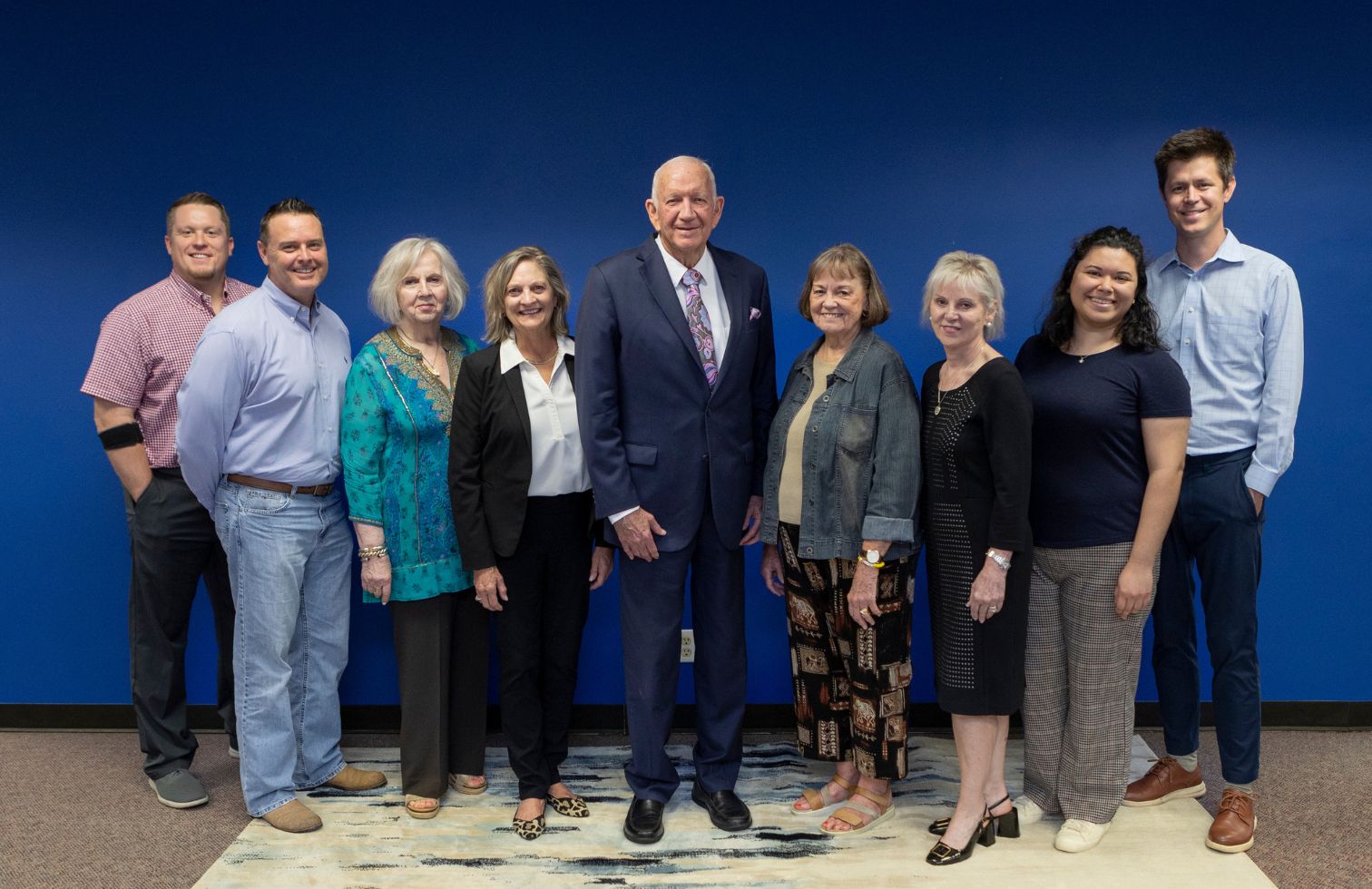
Pictured, left to right: Blake Swanson, Mark Gaus, Sharon Saunders, Carol Lavender, Robert Sloan, Jane Marmion, Nancy Brownlee, Denisse Roman and Aaron Diehl. (Photo / Michael A. Tims, creative director)

Houston Christian University has received a $5,000 donation from the Linda R. Dunham Dean’s Development Council, supporting the construction of the Smith Engineering, Science and Nursing Building. Carol Lavender, dean of the Linda R. Dunham School of Nursing, and members of the Dean’s Development Council, led by Jane Marmion, presented the check to HCU President Robert Sloan, May 8. The $60 million, 71,000-square-foot, multi-disciplinary facility will offer cutting-edge learning spaces, advanced laboratories and the latest technology in the fields of engineering, science and nursing. The Smith Engineering, Science and Nursing Building is slated to open in the fall of 2026.

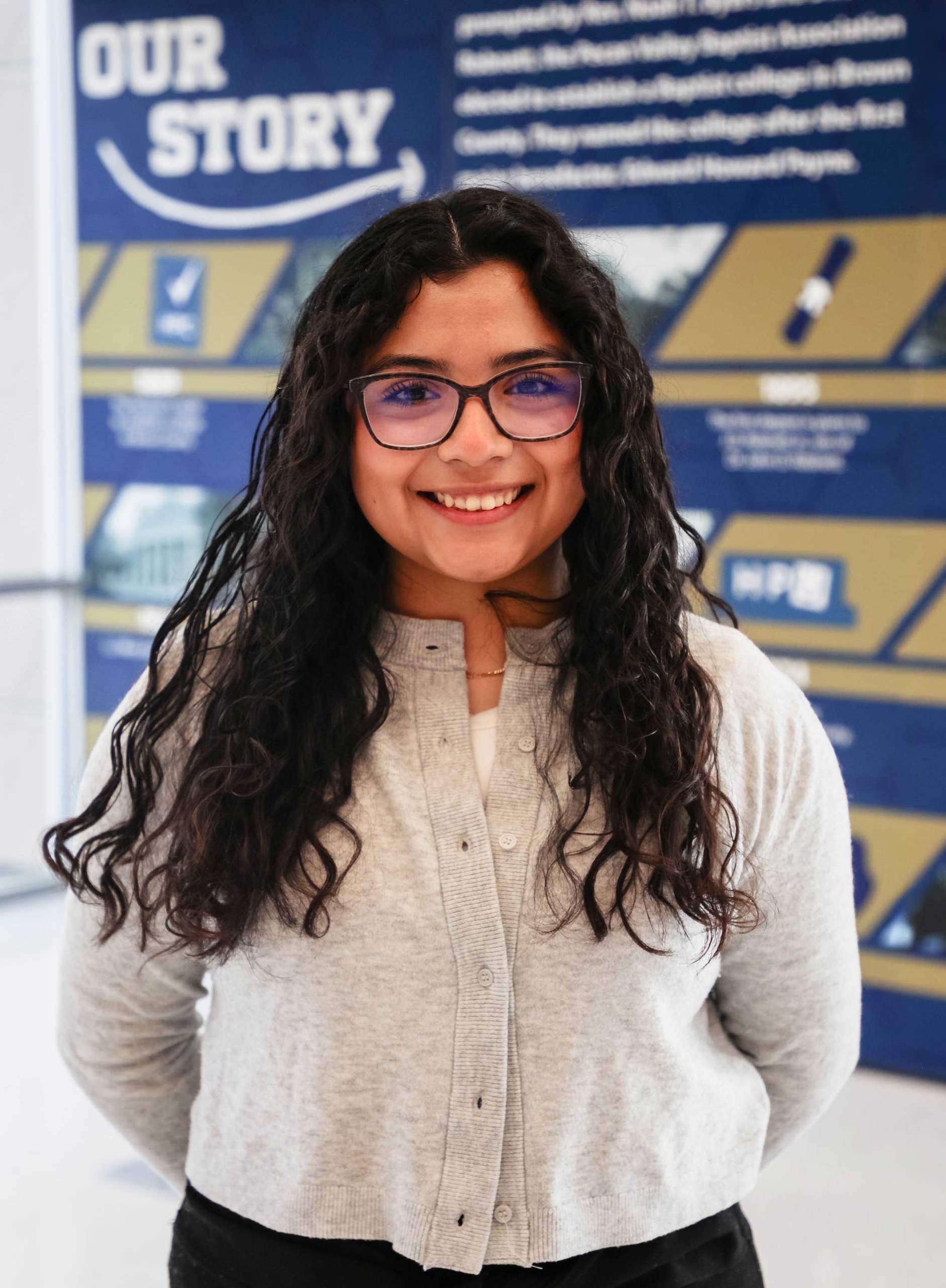
Howard Payne University student Magaly Cervantes recently became the third HPU student accepted to the Joint Admission Medical Program.(HPU Photo)

Howard Payne University student Magaly Cervantes, biomedical science major from Brownwood, recently became the third HPU student accepted to the Joint Admission Medical Program, which helps prepare undergraduate students for medical school. Her internship this summer will take place at Texas Tech University Health Sciences Center School of Medicine. The Joint Admission Medical Program is a state-funded initiative involving a partnership of 68 undergraduate universities and 13 Texas medical schools. The program provides Texan students with academic and financial support through scholarships, summer internship experiences, dedicated mentoring and comprehensive preparation for the Medical College Admission Test. After graduation, Cervantes plans to attend medical school.

The University of Mary Hardin-Baylor recently announced three outstanding chemistry students for the 2024-2025 academic year. Shane Melick, a double major in chemistry and mathematics from Oro Valley, Ariz., was recognized as the American Institute of Chemists awardee. This award recognizes leadership ability, character, scholastic achievement and advancement potential in the chemical professions. It includes a one-year membership with benefits in the institute. The Outstanding Senior Chemistry Major Award, based on high scholastic achievement in chemistry and service to the department, was presented to Amber Dickey of Frisco. The Freshman Chemistry Achievement Award was presented to Landon J. Fortson, a chemistry major from Houston. This award is based on outstanding work in General Chemistry I and II.

A total of 119 Wayland Baptist University students received degrees during commencement exercises May 17. Wayland President Donna Hedgepath conferred degrees, assisted by Carole Harbison, secretary of the Wayland board of trustees. Cindy McClenagan, vice president of academic affairs, presented the candidates for graduation. Recognized as Highest Ranking Seniors were Dawson Jade Mailey of Brownfield, Benjamin Hagen Lübker of Nordby, Denmark, and David Snellgrove of Plainview. Seven students graduated Summa Cum Laude, five graduated Magna Cum Laude, and six students graduated Cum Laude. Degrees awarded included one doctoral degree, 23 master’s degrees, five accelerated bachelor’s-to-master’s degrees, 89 bachelor’s degrees and one associate degree. Graduates hailed from 37 Texas cities and represented 14 other states and one U.S. territory. Twenty international students representing 14 countries were among the graduates.

Baylor University Provost Nancy Brickhouse announced David M. Szymanski has been selected as dean of Baylor’s nationally ranked Hankamer School of Business, effective May 27. Szymanski will succeed Sandeep Mazumder, who is set to become president of Berry College in Georgia on July 1. Szymanski previously served as president of the University of North Florida, dean of the University of Cincinnati Carl H. Lindner College of Business and on the faculty at the Mays Business School at Texas A&M University. A first-generation college graduate, Szymanski earned his B.A. in economics with honors at the University of North Carolina-Asheville, where he was a full scholarship student-athlete in basketball and tennis. He went on to earn an M.A. in economics from Vanderbilt University and his M.B.A. and Ph.D. in business administration from the University of Wisconsin-Madison.

ETBU announced the launch of a comprehensive brand refresh. (ETBU Image)

East Texas Baptist University President J. Blair Blackburn announced the launch of a comprehensive brand refresh. The updated brand reflects ETBU’s commitment to academic excellence, spiritual development and community impact while enhancing consistency and recognition across university communications. Central to the refresh is the introduction of the ETBU Shield. This new brand mark draws inspiration from the cupola atop the Great Commission Center in the heart of ETBU’s campus. The ETBU Shield serves as a symbol of faith, learning and tradition. Long-standing symbols such as the University Seal, ETBU Spirit logo and Texas Tiger logo will remain active and prominent, continuing to represent the university’s legacy in academics, athletics and student life. For more information about the ETBU Shield and brand guidelines, visit etbu.edu/branding.

Baylor University announced a significant gift from Harmon and Lea Kong of Southern California that created the Kong Family Endowed Presidential Fund for Student Care and the Kong Family Endowed Fund for Faculty Development. The funds give Baylor’s leadership the flexibility to meet current needs while providing enduring, dedicated resources to support long-term goals and initiatives for future generations of Baylor leaders. The Kong Family Endowed Presidential Fund for Student Care will be used at the discretion of Baylor President Linda A. Livingstone to provide strategic care for Baylor’s students. Such support can range from providing scholarships to help ensure a Baylor education is within reach for all students to awards that facilitate university initiatives focused on student success and well-being and provide hospitality for interaction between students and the president. The Kong Family Endowed Fund for Faculty Development will give Baylor Provost Nancy Brickhouse key resources to support and provide faculty development opportunities. Harmon Kong is the co-founder of Apriem Advisors, a wealth management firm based in Southern California serving multi-generational families. The Kongs previously supported Baylor University through a gift in 2019 that established an endowed Chair in Global Leadership within Baylor’s Diana R. Garland School of Social Work. They currently serve on the President’s Leadership Council and the Diana R. Garland School of Social Work board of advisers.


Ordination

Josh Campbell to the ministry at Crestview Baptist Church in Georgetown, where he is discipleship pastor.


Obituary: James Edward Tye

James Edward Tye of Allen, longtime Baptist missionary to Ecuador, died May 16. He was 89. He was born Feb. 21, 1936, in Jones, Okla., to Robert Cook Tye and Sylvia Leticia Goodner Tye. He married Shirley Ann Bynum on Dec. 14, 1956, in Oklahoma City. The Tyes served 29 years in Ecuador as Southern Baptist missionaries, proclaiming the name of Jesus to the Ecuadorian people and Quichua people. Upon their retirement in 1999, they continued to serve in Love County, Okla., by assisting with the Hispanic community there, and serving on staff at Eastside Baptist Church in Marietta. He was a volunteer chaplain for the Love County Fire Department and sang and played in the orchestra for the Singing Churchmen of Oklahoma. He also was the owner of Tye Piano Service, tuning and repairing pianos across Southern Oklahoma and North Texas. After their move to Allen in 2020, the Tyes became members at Allen Heights Baptist Church, and they started a Bible study at Springwood. He was preceded in death by four sisters and a brother. He is survived by his beloved wife, Shirley Tye of Allen; daughter Jeana Dixon and her husband Clark of St. Charles, Mo.; son Mark Tye and his wife Shirley of Kingwood; son Scott Tye and his wife Kristi of Allen; son Tim Tye and his wife Kristi of Allen; 12 grandchildren; and four great-grandchildren. A memorial service will be held at 2 p.m. on May 23 at Allen Heights Baptist Church in Allen. In lieu of flowers, the family suggests donations to the International Mission Board at www.imb.org/generosity/give-now. 


Love for all compels ministry to help resettle Afrikaners

RALEIGH, N.C. (RNS)—The 12-foot by 30-foot storage unit in a Raleigh, N.C., suburb is crammed full of chairs, tables, mattresses, lamps, pots and pans.

Most of its contents will soon be hauled off to two apartments that Welcome House Raleigh is furnishing for three newly arrived refugees.

It’s a job the ministry, which is a project of the Cooperative Baptist Fellowship of North Carolina, has handled countless times on behalf of newly arrived refugees from such places as Afghanistan, the Democratic Republic of the Congo, Syria and Venezuela.

But these two apartments are going to three Afrikaners, whose status as refugees is—according to many faith-based groups and others—highly controversial.

‘We don’t get to discriminate’

Last week, Marc Wyatt, director of Welcome House Raleigh, received a call from the North Carolina field office of the U.S. Committee for Refugees and Immigrants asking if he could help furnish the apartments for the refugees, among the 59 Afrikaners who arrived in the United States last week from South Africa, he told RNS.

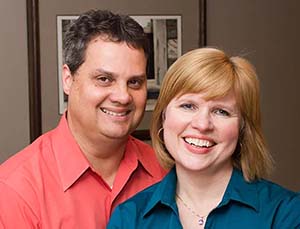
Marc and Kim Wyatt have served as missionaries for the Cooperative Baptist Fellowship for nearly 30 years. Now they run Welcome House Raleigh, a ministry of the Cooperative Baptist Fellowship of North Carolina. (Courtesy Photo)

It was a common request for the ministry that partners with refugee resettlement agencies to provide temporary housing and furniture for people in need.

At the same time, the request was challenging. After thinking about it, consulting with the Welcome House network director and asking for feedback from ministry volunteers, Wyatt said, “Yes.”

“Our position is that however morally and ethically charged it is, our mandate is to help welcome and love people,” said Wyatt, a retired Cooperative Baptist Fellowship missionary who now works for CBF North Carolina.

“Our holy book says God loves people. We don’t get to discriminate.”

He recognized Afrikaners are part of a white ethnic minority that created and led South Africa’s brutal segregationist policies known as apartheid for nearly 50 years. That policy, which included denying the country’s Black majority rights to voting, housing, education and land, ended in 1994, when the country elected Nelson Mandela in its first free presidential election.

Faith groups wrestle with whether to help Afrikaners

Like Wyatt and Welcome House, many faith-based groups now are considering whether to help the government resettle Afrikaners after the Trump administration shut down refugee resettlement for others.

The Episcopal Church recently chose to end its refugee resettlement partnership with the U.S. government rather than resettle Afrikaners. Presiding Bishop Sean Rowe said his church’s commitment to racial justice and reconciliation, and its long relationship with the late Anglican Archbishop Desmond Tutu, made it impossible for the church to work with the government on resettling Afrikaners.

In January, in one of his first executive orders, President Donald Trump shuttered the decades-old refugee program, which brings people to the United States who are displaced by war, natural disasters or persecution. The decision left thousands of refugees, many living in camps for years and having undergone a rigorous vetting process, stranded.

But then Trump directed the government to fast-track the group of Afrikaners for resettlement, saying these white farmers in South Africa are being killed in a genocide, a baseless claim. The order left many refugee advocates who have worked for years to resettle vulnerable people enraged.

“Refugees sit in camps for 10, 20 years, but if you’re a white South African Afrikaner, then suddenly you can make it through in three months?” asked Randy Carter, director of the Welcome Network and a pastor of a CBF church. “There’s a lot of words I’d like to attach to that, but I don’t want any of those printed.”

‘The call to welcome is not always easy’

Carter said he respects and honors the Episcopal Church’s decision not to work with the government on resettling the Afrikaners, even if his network has taken a different approach.

“The call to welcome is not always easy,” Carter said. “Sometimes it’s hard.”

At the same time, he said, it’s important resettlement volunteers keep in mind that the ministry opposes apartheid and racism, both in the United States and abroad, and is committed to repentance and repair.

The North Carolina field office for the U.S. Committee for Refugees and Immigrants resettlement group also recognized how fraught this particular resettlement is for its faith-based partners.

“In our communication with them, we said: ‘Look, we know this is not a normal issue. You or your constituencies may have reservations, and we understand that. That should not affect our partnership,’” said Omer Omer, the North Carolina field office director for the agency. “If you want to participate, welcome. If not, we understand.”

No shortage of online comments

Wyatt got nearly two dozen comments on his Facebook post in which he announced his decision to work with the refugee agency in resettling the Afrikaners. Nearly all wrote in support of his decision.

“I’m up sleepless pondering this,” acknowledged one person.

“Complicated, but the right call,” wrote another.

The U.S. Committee for Refugees and Immigrants did not release the names of the three Afrikaners who chose to settle in Raleigh, a couple and a single individual. Other Afrikaners chose to be resettled in Idaho, Iowa, New York and Texas.

Secretary of State Marco Rubio suggested last week more Afrikaners are on the way. The Trump administration argues white South Africans are being discriminated against by the country’s government, pointing to a law potentially allowing the government to seize privately held land under certain conditions.

Since the end of apartheid, the South African government has made efforts to level the economic imbalance and redistribute land to Black South Africans that had been seized by the former colonial and apartheid governments.

Wyatt, who has been running the Welcome House Raleigh ministry for 10 years, providing temporary housing and a furniture bank for refugees, and now asylum seekers, said he has settled the matter in his mind.

“My wife and I have come to the position that if it’s not a full welcome, just like we would with anybody else, then it’s not a welcome,” he said.

“If we don’t actually seek to include them into our lives like we would anybody else, then we’re withholding something and that’s not how we understand our holy book.”