Truett Seminary student explores ethics at Auschwitz

WACO—Ministers and medical practitioners in Nazi Germany enabled the Holocaust not because they abandoned professional ethics and moral codes but because they redefined them, a student from Baylor University’s Truett Theological Seminary concluded after her time at Auschwitz.

Julia Wallace was one of 13 seminary students—Baptist, Lutheran, Mennonite, Catholic, Jewish and Muslim—who studied alongside medical students as part of the Fellowships at Auschwitz for the Study of Professional Ethics. She is the fourth Truett Seminary student chosen to participate.

The two-week intensive program in Germany and Poland not only included a tour of Auschwitz, location of the largest extermination camp established by the Nazi regime, but also a conversation with a Holocaust survivor and visits to the German Resistance Memorial Center, the Topography of Terror Museum, the Euthanasia Museum and the Memorial to the Murdered Jews of Europe.

The interdisciplinary program explored how professionals in Germany—considered among the top in their fields internationally—enabled and sometimes advanced Nazism. Seminar leaders led participants to apply the lessons they learned to contemporary ethical issues.

‘Professional ethics gone wrong’

“It was a study in professional ethics gone wrong,” said Wallace, who is pursuing dual degrees from Truett Seminary and Baylor’s Diana R. Garland School of Social Work.

Julia Wallace reviews notes from the two weeks she spent in Germany and Poland as part of the Fellowships at Auschwitz for the Study of Professional Ethics. (Photo / Ken Camp)

She noted the experience reminded her of the words of an Old Testament prophet: “Woe to those who call evil good and good evil, who put darkness for light and light for darkness, who put bitter for sweet and sweet for bitter” (Isaiah 5:20).

In part, clergy under the Nazi regime began to redefine good when they started to redefine God in nonbiblical terms, Wallace observed.

“I think it is a powerful reminder that good must be rooted in God’s revelation to us, since he is the source of goodness,” she said.

In turn, other professionals began to exalt what they saw as the collective good over the individual good, she added. For example, medical professionals justified experimentation on unwilling human subjects by pointing to potential advances in scientific research.

Balance competing values

Participants in the two-week study also talked about the challenges professionals face when confronted with competing values, such as security and freedom or forgiveness and accountability.

They discussed how religious leaders could balance those values when faced with issues such as the immigration debate in the United States or the treatment of perpetrators of sexual abuse who confess their offenses and seek restoration, Wallace noted.

The Nazi regime seized on existing anti-Semitism in the general population and stoked the fires of hatred to advance its ideology, she learned.

“Genocide doesn’t begin with killing. There is a gradualism. It doesn’t happen overnight,” she said.

Failure to speak up for victims

Within the context of growing anti-Semitism, many ministers told worshippers what they wanted to hear, she observed.

“They catered to the congregation rather than being prophetic voices,” Wallace said.

Some ministers feared financial repercussions if they went against the wishes of their congregants, she added. Others in hierarchal denominations felt a duty to obey their superiors, even when the established church became increasingly identified with the Nazi state.

“Some wanted to climb the ladder of success and associate with the powers that be,” she said.

Ministers who conformed to the expectations of their congregations, their peers and their superiors lacked the courage to stand as “one dissenting voice” in part because they never practiced the spiritual discipline of solitude, she noted.

Other ministers simply said, “It’s not my job to speak out” on politically sensitive issues, she observed, pointing out the continuing challenge clergy face in that regard.

“How do you speak from the pulpit about politics? It’s a balance for the minister who does not want to become a political pundit but also does not want to be completely silent about important issues,” she said.

Willfully blind

When churches become too closely identified with a particular political perspective, worshippers—particularly in today’s mobile society—may simply select a congregation that will reinforce their opinions rather than challenge them to follow God’s direction, she observed.

“The church can become an echo chamber, when people choose to go to a church where everybody sees things as they do,” Wallace said.

Ministers who claimed they did not know about the horrors of Nazism intentionally chose not to look, she learned. They willfully turned a blind eye to what should have been readily observable, and they made the decision to do nothing.

“We talked about how there are not just sins of commission but also sins of omission. Passivity is also a sin,” she said.

Wallace, who grew up as the child of Baptist missionary parents in South Africa, reflected on how memories of a nation that was struggling to emerge from Apartheid shaped her own commitment to racial justice. She noted the importance of remembrance—acknowledging complicity in institutionalized sin and accepting the demands of restorative justice before reconciliation can occur.

Fear or love?

Many ministers in nations under Nazi control failed to challenge congregants to recognize their responsibility to those whom they viewed as “the other,” instead focusing only on those who were like themselves, she said.

“Is a decision based on fear or on love? How are we to love those around us? As Christians, we are not to love only our own people but all people,” Wallace said. “We are not called just to care for our own.”

Christians who saw the Jews as outsiders who rejected Christ failed to stand with them and speak up for them, she noted.

“We have to stand up for the religious liberty of others, recognizing freedom of conscience is a God-given right,” Wallace said. “We should not just stand up for our own but for all people.”

The example of Nazi Germany offers a cautionary lesson not only regarding the danger of the church becoming too closely tied to the state, but also Christians valuing their national identity more than their allegiance to God, she observed.

“God’s kingdom is supreme and cannot be equated with any single nation-state,” she said.


Obituary: Michael Joseph Estep

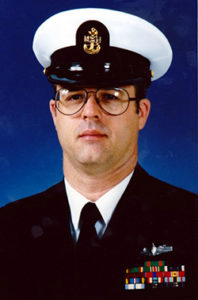
Michael Joseph Estep, senior pastor of First Baptist Church in Marlin, died July 21 after a battle with cancer. He was 65. Estep was born July 4, 1953, in Wichita, Kan., to Phyllis Jean and Phillip Joseph Estep. He married Kathryn Louise Gassett in Honolulu, Hawaii, Sept. 21, 1974. She preceded him in death Sept. 28, 2016. He married Letitia Parrott in Athens Nov. 20, 2017. Estep joined the U.S. Navy in 1972. He was a Vietnam veteran and served on numerous ships in the Persian Gulf, Mediterranean Sea and South Pacific. He retired as a chief petty officer after more than 21 years, having earned numerous citations, ribbons, medals and badges. He was a teacher at the Juvenile Correctional Facility in Mart. He served as post commander for the American Legion Post 31 in Marlin and was chaplain of the American Legion Riders. He was an accomplished artist in oils, pencil and charcoal, and he was a motorcycle enthusiast. He is survived by his wife of eight months, Letitia, and her four daughters and three grandchildren; his children, Terri and Lee Michael Estep, Cora Day and Mario Padilla; four grandchildren; his mother, Phyllis Chapman; and three sisters, Linda Briscoe, Cindy Clinefelter and Cheryl Estep.


Pence threatens Turkey over detained American pastor

WASHINGTON (RNS)—Vice President Mike Pence used a State Department summit of foreign ministers and religious leaders to call on Turkey to release U.S. Pastor Andrew Brunson and threatened the country with sanctions if it did not.

“If Turkey does not take immediate action to free this innocent man of faith and send him home to America, the United States will impose significant sanctions on Turkey until Pastor Andrew Brunson is free,” the vice president said July 26, the day after the North Carolina clergyman was released from jail and placed under house arrest.

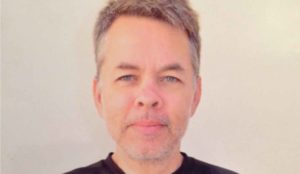
Andrew Brunson (Photo / World Witness)

Turkey’s official Anadolu news agency said Brunson was allowed to leave jail after 1 1/2 years because of “health problems.” The 50-year-old has lived in Turkey for 23 years and has served as pastor of Izmir Resurrection Church.

Pence asked “believers across America” to pray for Brunson, who has been charged with “dividing and separating” the majority-Muslim country as he spread his Christian faith.

“To President Erdogan and the Turkish government, I have a message on behalf of the president of the United States of America: Release Pastor Andrew Brunson now or be prepared to face the consequences,” Pence said.

Pence’s remarks about Brunson drew several rounds of applause. Ralph Reed, one of several informal evangelical advisers to President Trump in attendance, stood and applauded.

The same day, Trump tweeted: “The United States will impose large sanctions on Turkey for their long time detainment of Pastor Andrew Brunson, a great Christian, family man and wonderful human being. He is suffering greatly. This innocent man of faith should be released immediately!”

Turkey’s foreign minister responded in a tweet: “We will never tolerate threats from anybody. Rule of law is for everyone; no exception.”

Turkey did not send representatives to the three-day Ministerial to Advance Religious Freedom, which drew about 350 government officials, religious freedom advocates and others from more than 80 nations.

Exploring ways to reduce global religious persecution

The Ministerial to Advance Religious Freedom, billed as a first-ever gathering of its kind at the State Department, aimed to develop “concrete ways” to reduce religious persecution across the globe, according to its organizers. Among the victims of religious persecution and their relatives who spoke at the summit were Brunson’s daughter Jacqueline Furnari and a Uighur Muslim who has moved from China to the United States to leave a region where his people are “living in horror.”

Pence, who spoke more than half an hour, said 83 percent of the world’s population live in a nation where some religious practice or belief is banned or threatened.

He cited the Nicaraguan government of President Daniel Ortega “virtually waging war on the Catholic Church,” the torture of Tibetan Buddhists in China, forced abortions and the outlawing of the Christian Bible in North Korea, and Russia’s imprisonment of Jehovah’s Witnesses.

Pence noted some free societies, such as those in Europe, are also sites of religious intolerance.

“Just 70 years after the Holocaust, attacks on Jews, even on aging Holocaust survivors, are growing at an alarming rate,” he said.

New initiatives highlighted

Pence, along with Secretary of State Mike Pompeo, listed several new initiatives to continue the goals of the summit, which will become an annual event.

Pence said the United States is launching a Genocide Recovery and Persecution Response Program, under which the State Department and the U.S. Agency for International Development will help persecuted individuals and households.

“Americans will help the victims of ISIS reclaim their lands, rebuild their lives, and replant their roots in their ancient homelands, so that all religions can flourish once again across the Middle East and the ancient world,” he said, drawing applause.

Pompeo, who introduced Pence, also addressed the rebuilding of religious communities in Iraq that have been devastated by the self-identified Islamic State, also known as ISIS. He said his department will provide an additional $17 million to help remove land mines from the area around the Iraqi city of Nineveh, adding to the $90 million already spent in the country this year.

Other initiatives include a leadership program that would bring those on the “front lines of religious freedom issues” to the United States; a workshop, planned for October, to support private/public partnerships defending religious freedom; and regional conferences to the summit in several countries.

Pence also announced a new International Religious Freedom Fund to assist persecuted religious minorities, and he asked other nations to join the United States in supporting it. A ministerial document describing the fund said the U.S. government would cover its personnel and administrative expenses, leaving all other donations for activities such as awareness campaigns and initiatives for conflict prevention.

Personal religious reflections

Both Pence and Pompeo reflected on their own faith as they repeatedly pledged the administration would be committed to the rights of people of all faiths.

“My own faith is of the greatest importance to me personally,” said Pompeo. “As an American, I’ve been blessed with the right to live out what I believe without fear of persecution or reprisal from my government. I want everyone else to enjoy this blessing too.”

He added: “The United States advances religious freedom in our foreign policy because it is not exclusively an American right. It is a God-given universal right bestowed on all of mankind.”

Pence concluded his remarks by pointing out that a verse from the Book of Leviticus from the Hebrew Bible—“Proclaim liberty throughout all the land, and unto (all) the inhabitants thereof”—is carved into the Liberty Bell.

“As the Bible tells us, ‘Where the spirit of the Lord is, there is liberty,’” Pence said. “So freedom always wins when faith in him is held high.”


Greear announces sexual abuse study group

DURHAM, N.C. (BP)—Southern Baptist Convention President J.D. Greear announced he will form a Sexual Abuse Presidential Study Group in partnership with the Ethics & Religious Liberty Commission.

The group—whose members will be announced later—will be a “working study group” with “fluid” membership, according to Greear’s office. It will include outside experts, denominational leaders and local church pastors who will advise Greear “on issues related to sexual abuse, sexual assault, domestic violence and related subjects,” according to a public statement issued by his office.

“The group’s purpose will be to consider how Southern Baptists at every level can take discernable action to respond swiftly and compassionately to incidents of abuse, as well as to foster safe environments within churches and institutions,” the release stated.

The group will study how Southern Baptists are engaging issues related to sexual abuse and “develop recommendations in consultation with relevant SBC entities on strategies and resources for ministering to victims and protecting people and churches from predators,” according to the public statement.

‘Refuge for the hurting … safe haven for the oppressed’

“How we as a convention of churches care for abuse victims and protect against vile predators says something about what we believe about the gospel of Jesus Christ,” said Greear, pastor of The Summit Church in Raleigh-Durham, N.C. “Our churches should be a refuge for the hurting and a safe haven for the oppressed.

“Over the next year, I look forward to hearing from this group and partnering with our churches, state conventions, local associations, seminaries and national entities to determine what we can do to equip churches to minister effectively and stand guard against any who would seek to prey on the vulnerable.”

Mandate from SBC messengers

Messengers at the 2018 Southern Baptist Convention annual meeting in Dallas, Texas. (Photo by Matt Miller / Baptist Press)

The study group stems from actions of messengers to this year’s SBC annual meeting in Dallas.

Messengers adopted a resolution condemning abuse in all its forms and encouraging “leaders in our churches and Southern Baptist Convention entities to be faithful examples, through their words and actions, and to speak against the sin of all forms of abuse.”

ERLC Executive Vice President Phillip Bethancourt made a motion calling on the newly elected SBC president to appoint a task force to “assess issues related to sexual assault, sexual abuse, domestic violence, and connected subjects; develop recommendations in consultation with relevant SBC entities on best practices for ministering to victims and protecting people and churches from predators; and report its findings to the messengers of the 2019 SBC annual meeting in Birmingham, Ala.” The motion was referred to the ERLC.

A motion by Oklahoma pastor Wade Burleson that the ERLC study resources to help churches protect themselves from sexual predators also was referred to the ERLC.

Russell Moore 150
Russell Moore

ERLC President Russell Moore affirmed the need for a sexual abuse study group.

“Sexual assault and sexual abuse are satanic to the core, and churches should be the ones leading the way when it comes to protecting the vulnerable from predators,” Moore said. “Thankfully, every Southern Baptist pastor I know cares deeply about these issues.

“We as a denomination, though, owe it to our pastors and churches to come together and provide the very best resources and recommendations possible to address this crisis. That’s exactly what an advisory council like this is able to do, and I am eager to work alongside this group in any way possible to serve our churches and minister to those in our pews who have suffered abuse.”


IMB President Platt initiates sexual abuse investigations

RICHMOND, Va. (BP)—David Platt, president of the Southern Baptist Convention’s International Mission Board, announced he has initiated two “thorough, outside, independent” investigations into the mission board’s handling of any past sexual abuse allegations and into its policies of zero tolerance for such abuse.

david platt130
David Platt

Platt also issued a public apology to Anne Marie Miller, who alleged sexual abuse by an individual who subsequently became an IMB missionary yet was not reported to authorities following a 2007 IMB inquiry into the matter.

Platt spoke with Miller before releasing the statement publicly, according to an IMB spokesperson. Miller subsequently sent an affirmation of Platt’s actions.

‘Extremely disturbing’

“Many facets of this situation are extremely disturbing,” Platt said of charges filed against Mark Aderholt for sexual assault of a child under 17 stemming from a 1996-1997 relationship when he was 25 and of the 2007 IMB investigation.

Aderholt, who later served at two Arkansas churches and with the South Carolina Baptist Convention, was arrested July 3 in Fort Worth and released on bond.

Platt stated he is “commencing a thorough, outside, independent examination of IMB’s handling of past actions—including this case and any other similar situations. In addition, I am commencing a thorough, outside, independent examination of IMB’s present policies to ensure that our current commitment to zero tolerance for child abuse, sexual abuse, and sexual harassment is completely and consistently enforced across IMB today.

“Further, I am presently in conversations with leaders of other churches and ministries, particularly within the SBC, to establish practical ways we can and must prevent situations like this in the future,” Platt stated. “Any attempts to minimize, ignore, cover up or overlook child abuse, sexual abuse, or sexual harassment are absolutely intolerable, and we must take action together now to ensure safety and support for every person employed or affected by a church or ministry.”

‘Contributed to such hurt and pain’

Addressing Miller, Platt stated: “I want to publicly apologize for the pain and hurt that Anne Miller has specifically suffered in this situation. I will not presume to know the variety of other emotions and challenges that she, those around her, and others who have walked through similar situations have experienced. Further, I want to apologize for various ways we in the IMB have contributed to such hurt and pain through our response to this point.

“In addition, I want to publicly thank Anne Miller for the courage she showed in approaching IMB in 2007, and the courage she is showing even now. I realize the actions I have outlined above cannot remove her hurt and pain, or the hurt and pain of others who have experienced similar situations. But I am committed to doing all that I can so that her courage, and the courage of others like her, will prevent hurt and pain among others in the future.”

‘Finally have an ally’

Miller, in a response emailed to Baptist Press, said: “I am grateful for David Platt’s immediate and thorough response upon his return from Africa today. His apology and the action of obtaining third-party investigations into my case and all other similar cases demonstrates his commitment to not tolerating sexual abuse or misconduct in any capacity.

“Furthermore, the conversations happening in the IMB and in convention leadership encourage me that abuse survivors will finally have an ally in the church as we pursue healing. It’s my prayer that past and present survivors receive the support we need and the policies which result from these changes will prevent future victims from becoming so. I am excited and hopeful for the future of the SBC and am thankful for the many voices who are encouraging and inciting change along the way.”

Platt concluded his statement asserting: “We must do better. In the IMB. In the SBC. In any church and any ministry, we must do everything we can to protect children and adults from abuse and harassment, and we must do everything we can to hold anyone who is guilty of these things fully accountable.”

Platt, at the outset of his statement, recounted he had “just returned from the last couple of weeks in sub-Saharan Africa” and had met “immediately with IMB trustee leaders.”

Because there is an ongoing criminal investigation “with which IMB is committed to full cooperation,” Platt said, “it is wise, for the sake of everyone involved, for me to refrain from commenting on specific details in this case.”


Guenther named president at San Marcos Baptist Academy

SAN MARCOS—The San Marcos Baptist Academy board of trustees named Brian Guenther as the school’s president, effective Aug. 1.

Guenther, who has served as the academy’s interim academic dean since May, will succeed Jimmie Scott, who is retiring as president and will move into a new role as president emeritus.

Scott will assist with the new president’s transition while working in the academy’s development office through Dec. 31.

“After a prayerful interview process, the board of trustees has selected a man that many in the San Marcos and Texas Baptist community already know and respect,” said Clay Sullivan, chair of the board of trustees. “Dr. Guenther is incredibly well prepared to lead students and staff, and we are very confident in him as our new leader.”

Sullivan said Guenther “has a definite love for and a calling to the academy and its future.”

Before he was named interim academic dean, Guenther served three years as associate academic dean for the academy’s lower and middle schools.

He worked previously at the Master’s School of San Marcos, serving eight years as head of school and three years as music teacher and chaplain.

He also was a teaching pastor for River Stone Community Church in San Marcos from 2004 to 2011 and served five years as a youth and worship pastor at First Baptist Church in Kingsland. He is a member of First Baptist Church in San Marcos.

A certified superintendent, principal and teacher, Guenther received his doctorate in education, educational leadership and administration from the University of Mary Hardin-Baylor. He earned a Master of Arts degree in Christian higher education administration from Dallas Theological Seminary and a bachelor of music degree in music education from UMHB.

He is president of the Accreditation Commission of the Texas Association of Baptist Schools.

“Dr. Guenther will have some big shoes to fill as he follows President Scott,” Sullivan said. “Mr. Scott has committed an enormous portion of his life to SMBA, and the students and staff, no matter their position, have been blessed by his guiding hand.  He has chosen to retire from the position of president, but his love and care for the school will last forever.”

San Marcos Baptist Academy, founded in 1907, is an accredited college preparatory school affiliated with the Baptist General Convention of Texas.


Discuss religion when treating young adults with mental illness

WACO—A majority of young adults with severe mental illness—bipolar disorder, schizophrenia or major depression—consider religion and spirituality relevant to their mental health, according to a new study from Baylor University.

Holly Oxhandler, associate dean for research and faculty development in Baylor’s Diana R. Garland School of Social Work, served as lead author on the study, published in the journal Spirituality in Clinical Practice.

Researchers examined data from 55 young adults, ages 18-25, with serious mental illness who had used crisis emergency services. Of the 55 young adults interviewed, 34 “mentioned religion or spirituality in the context of talking about their mental health symptoms and service use with little-to-no prompting,” researchers wrote.

The sample for the study was racially diverse and gender-balanced. Not all of those interviewed considered themselves religious, as 41 percent answered “other,” “I don’t know” or “none” when asked their religious preference.

God viewed as source of comfort and support

However, researchers found religion and spirituality emerged as a unique way in which this sample was able to make sense of their difficult life situations and mental health struggles.

“Not only did these young adults struggle with serious mental illness, but they had also experienced extreme adversity—including abuse, poverty, homelessness, addiction, near-death experiences, loss and an overwhelming lack of access to medical and mental health services,” researchers wrote.

“Yet, many attempted to explain, make sense of or organize their circumstances through their religious/spiritual perspective and talked about God as a source of comfort and support.”

The young adults expressed both positive and negative views of God, prayer and support from religious and spiritual communities. Regardless of their views, Oxhandler explained, the important thing to note is that they’re talking about these topics—something social workers and counselors traditionally often are not equipped or trained to assess or discuss.

Mental health providers need to understand role of religion

“It’s the elephant in the room,” Oxhandler said of discussions of religion and spirituality. “If we continue to ignore it, we’re ignoring a huge component of peoples’ lives that may be tied to the clinical issue.”

Such discussions can help drive subsequent treatment options, Oxhandler said.

“As mental health care providers discern what mental health services to provide or coping strategies to recommend, it’s especially important they understand the role of religion/spirituality in the lives of the vulnerable young adults they serve,” she said.

Researchers also found those surveyed described using positive religious coping, negative religious coping or experiences, discussed their relationship with God or a higher power and unpacked the role of their support systems and faith.

Positive religious coping included prayer, reading religious texts, support from their religious and spiritual communities and identifying religious and spiritual meaning in difficult situations.

Some cited negative religious experiences

Negative religious coping or experiences included having a negative experience with a religious organization not being supportive or receiving hurtful messages from the religious community.

“Those who discussed their relationship with God or a higher power discussed God providing a sense of comfort or protection, accepting them for who they are or positively intervening in their lives,” Oxhandler said.

“Among those who unpacked the role of their support systems and faith, they often described family and friends referencing religion or God for support, and some even offered recommendations for others struggling with mental illness that involve religion and spirituality.”

Some of those interviewed said they found the mention of God or religion by family and friends less than helpful. For example, a 22-year-old white female with no religious identification mentioned in her interview that a family member “tries to tell me that going to church will be better for me because it will help me find peace, and it really does quite the opposite.”

Researchers noted nearly all participants who reported negative experiences with religion and spirituality also reported utilizing positive religious and spiritual coping or having a positive relationship with God.

Such complexity highlights the importance of including religion and spirituality during the initial assessment with a client, Oxhandler said.

“It’s critical that mental health care providers be well equipped and trained to assess for the complex role of religion and spirituality in the lives of young adults with serious mental illness, recognizing that it could appear to be a tremendous source of support and resilience and/or a source of pain and discomfort, if even a part of their lives at all,” she said.


Around the State: ETBU team serves in Peru; Baylor named as a great place to work

Members of the East Texas Baptist University Singers performed at public schools in Peru. (ETBU Photo)

Representatives from East Texas Baptist University traveled to Peru as a part of the Global Study and Serve Program in early July. Cary Hilliard, chair of the ETBU board of trustees; Tom Webster, dean of the School of Performing Arts and Communication; and Angela Webster, children’s minister at First Baptist Church in Longview, led the group. The University Singers performed and ministered at public schools, community centers and medical facilities. The ETBU team partnered with Camino de Vida, a multi-site church that has served in the capital city of Lima 29 years. Students joined in outreach efforts to deliver more than 2,000 bread rolls and 55 gallons of coffee to guards, patients and family members at a hospital. The group also distributed Spanish Bibles and assembled wheelchairs for 40 disabled individuals, gave necklaces with crosses to women at the Casa Gracia shelter, and volunteered at an orphanage for special-needs children and a nursing home.

For the seventh time, Baylor University attained Honor Roll status as a “Great College to Work For,” according to The Chronicle of Higher Education. The results are based on a survey of employees at 253 colleges and universities. Only 84 institutions achieved “2018 Great College to Work For” recognition, with 42 named to the Honor Roll as the standouts in their size categories. Baylor is included in the large university category with 10,000 or more students. Baylor was cited in 11 categories—collaborative governance; compensation and benefits; confidence in senior leadership; facilities, workspaces and security; job satisfaction; professional/career development programs; respect and appreciation; supervisor/department chair relationship; teaching environment; tenure clarity and process; and work/life balance.

Bill Harden, an alumnus of Hardin-Simmons University, has returned to the Abilene school as director of bands. Harden will lead both the HSU Cowboy Band and the Concert Band. Since 1998, he has been band director at Odessa High School. He has been a bassoonist with the Midland-Odessa Symphony Orchestra since 1988. He earned his undergraduate degree from HSU and his master’s degree from the University of Cincinnati.

The Prison Entrepreneurship Program, a nonprofit organization that provides mentorship and education to incarcerated men, received the Community Partner of the Year Award at Dallas Baptist University. In accepting the award, Bryan Kelly, chief executive officer of the Prison Entrepreneurship Program, noted 73 DBU faculty and students had ministered in prisons through the program. He also reported 100 percent of inmates who complete the program are employed within 90 days of being released.

The Texas Board of Nursing unanimously approved Howard Payne University’s proposal to offer the pre-licensure Bachelor of Science in Nursing degree. HPU is authorized to admit incoming students declared as nursing majors as early as the fall 2018 semester. These students will subsequently undergo a process to gain admission to the university’s School of Nursing during the spring semester of their sophomore year. If admitted to the program, students will start coursework toward their bachelor’s degree in nursing the following semester. In addition to incoming first-year students, transfer students and HPU upperclassmen may enroll as nursing majors with plans to apply to HPU’s School of Nursing during the latter portion of their sophomore year.

Anniversary

150th for First Baptist Church in Dallas. Robert Jeffress is pastor.


Adoption agency protection moves forward in Congress

WASHINGTON (BP)—Legislation to prohibit government from discriminating against adoption and foster care agencies over their religious or moral convictions has taken an initial step toward potential passage in Congress.

The House of Representatives Appropriations Committee included the Child Welfare Provider Inclusion Act in a spending bill it approved July 11.

The committee first passed the measure as an amendment to the Labor, Health and Human Services and Education funding bill in a 29-23 vote. The panel then forwarded the amended version of the bill in a 30-22 roll call.

The proposal, H.R. 1881, would bar the federal government—as well as any state or local government that receives federal funds—from discriminating against or taking action against a child welfare agency that refuses to provide services in a way that conflicts with its religious beliefs or moral convictions, such as placing children with same-sex couples.

If enacted, the legislation would require Health and Human Services to withhold 15 percent of federal funds from a state or local government that violates its ban.

ERLC chief voices support for measure

The Southern Baptist Convention’s Ethics & Religious Liberty Commission and other advocates for the bill have called for a federal solution to a growing pattern of some state and local governments requiring adoption and foster care agencies to place children with gay couples or shut down such services.

ERLC President Russell Moore expressed gratitude for the committee’s support for the measure.

“Protecting the rights of those who are dedicated to caring for the most vulnerable among us only ensures that more children have access to the love and support they so desperately need,” Moore said. “This is precisely what the Child Welfare Provider Inclusion Act would do.

“Far too many children are waiting, right now, either for adoption or foster families. Our government must not stand in the way of those seeking to care for them.”

The Child Welfare Provider Inclusion Act “would not only guarantee faith-based child welfare agencies are not discriminated against, but would further the goal of seeing vulnerable children united with loving families,” Moore said.

The ERLC included enactment of the Child Welfare Provider Inclusion Act as a priority in its 2018 legislative agenda and organized a July 3 letter with nearly 70 signatories that urged the Appropriations Committee to add it to the Labor, HHS and Education bill.

Division in states regarding child welfare agencies

Nine states have laws that require child welfare agencies to place children with same-sex couples in adoption, foster care or both, according to Reuters News Service. They are California, Maryland, Massachusetts, New Jersey, Nevada, New York, Oregon, Rhode Island and Wisconsin.

Meanwhile, nine other states have enacted measures that protect the right of agencies to abide by their religious or moral convictions in adoption and foster care—Alabama, Kansas, Michigan, Mississippi, North Dakota, Oklahoma, South Dakota, Texas and Virginia.

The division in the states and threats to agencies in some jurisdictions call for federal action, the ERLC and its allies said in the July 3 letter.

“Given the heavy investment of the federal government in child services and the woefully inconsistent territory across the states, we believe this problem justifies a federal solution,” they wrote.

In an apparently barrier-breaking decision July 13, a federal judge in Philadelphia ruled the city can require adoption and foster care agencies it has contracts with to place children with gay couples, according to NBC News. The decision is the first of its kind by a federal court, NBC reported.

Catholic Social Services had brought suit after Philadelphia’s Department of Human Services stopped cooperating with CSS and Bethany Christian Services because they refused to place children in same-sex homes.

In another case, Catholic Charities of Fort Worth has been sued for declining to place children with a same-sex couple.

Rep. Robert Aderholt, R-Ala., who introduced the Child Welfare Provider Inclusion Act as an amendment to the funding bill, said after its adoption his goal was “to encourage states to include all experienced and licensed child welfare agencies so that children are placed in caring, loving homes where they can thrive. We need more support for these families and children in crisis, not less.”

Aderholt is co-chairman of the House Coalition on Adoption.

LGBT rights group criticizes action

Meanwhile, the Human Rights Campaign—the country’s largest political organization advocating for LGBT rights—criticized the committee’s action.

“Any Member of Congress who supports this amendment is clearly stating that it is more important to them to discriminate than it is to find loving homes for children in need,” said David Stacy, director of government affairs at the Human Rights Campaign.

The ERLC-led coalition letter pointed to the pressure brought on the adoption and foster care system by the opioid epidemic among adults.

“Now is an especially terrible time to reduce the capacity of state governments to efficiently place children in safe, loving homes,” the letter stated.

In addition to Moore, the letter’s signers included Chris Palusky, president, Bethany Christian Services; Albert Reyes, president, Buckner International; Daniel Nehrbass, president, Nightlight Christian Adoptions; David Nammo, executive director, Christian Legal Society; Penny Nance, president, Concerned Women for America; Kelly Shackelford, president, First Liberty Institute; David Christensen, vice president, Family Research Council; and Joseph Kurtz, chairman, U.S. Catholic Conference of Bishops Committee for Religious Liberty.


Prayer Force intercedes for first responders

MARSHALL—David and Claudie Maxine King learned the importance of intercessory prayer firsthand during their 30 years as Baptist missionaries. Now they want to involve other Christians in praying for first responders who serve in harm’s way for the common good.

For most of their time with the Southern Baptist Convention’s Foreign Mission Board and its successor, the International Mission Board, the Kings were based in Beirut, Lebanon, where he taught at Arab Baptist Theological Seminary. That included the time of the civil war in Lebanon, from the mid-1970s until they moved to Cypress in 1987.

“There were times when mortar shells were falling on the seminary campus,” King recalled. “During those years, we lived while over 100,000 people died violent deaths all around us.”

No guarantees, but plenty of support

Of course, King noted: “There are no guarantees. Nobody can tell God what he has to do. We must submit to his will.”

Still, throughout the time they were in danger in Lebanon, the Kings not only felt supported by Baptists who followed the Woman’s Missionary Union prayer calendar and prayed for them on their birthdays, but also about 2,000 prayer partners in the United States who received their newsletter.

“God answered our prayers and theirs for us, even though some of our dear friends lost their lives in spite of their faith in Jesus,” King said. “It reminds us of Acts 12:1-5, where we read that James was beheaded by Herod, who had Peter arrested and expected to execute him, too.

“Peter was kept in prison, but the church was earnestly praying to God for him. As a result, the Lord sent his angel to work miracles to deliver Peter. Like Peter, we were privileged to have God’s people pray for us during our crisis years.”

‘Draw a curtain of prayer’ around first responders

In recent years, King, a member of First Baptist Church in Marshall, has served on the board of directors of the Marshall Prayer Force—an interdenominational ministry that encourages Christians to pray for law enforcement officers and firefighters.

“We have a deep appreciation for the first responders who go out every day to provide our safety,” he said. “We need to draw a curtain of prayer around them and offer all the support we can give them.”

Dee Farmer

Dee Farmer, a member of First Baptist Church in Jefferson, launched the Marshall Prayer Force soon after the terrorist attacks on Sept. 11, 2001. The local network has grown to 700 Christians from about 30 East Texas churches who commit to pray for first responders.

Farmer contacted leaders of the Marshall Police Department, the Marshall Fire Department, the Harrison County Sheriff’s Department and the Texas Department of Public Safety, asking for the permission of individual first responders to pray for them by name.

“Our prayer focus is for the safety of the one being prayed for, as well as the family at home,” Farmer said. “We pray God will grant the first responder wisdom in every decision-making situation, along with supernatural self-control. We also pray they have unhindered transition from all the physical and emotional demands of the job into a peaceful, happy and prosperous family time.”

Farmer believes the model the Marshall Prayer Force developed can be replicated in communities throughout Texas and around the country. So, the ministry is sponsoring a training conference Sept. 11 at the Marshall Convention Center. Cost is $50. For more information, click here.


Athens church changes to reflect community and kingdom

ATHENS—Kyle Henderson, pastor of First Baptist Church in Athens, believed his congregation needed to look more like its community and more like the kingdom of God.

That commitment led church leaders to follow a new path to help the congregation become more diverse.

A few years ago, Henderson recognized the church’s lack of ethnic and racial diversity.

“We were only the First Baptist Church of white Athens,” he said.

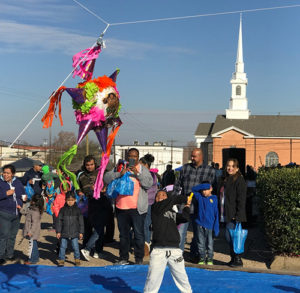
A child swings at a piñata during the bilingual Three Kings’ Day celebration at First Baptist Church in Athens. (Photo / Kyle Henderson)

In a city where Hispanics are the largest minority group and represent about 30 percent of Athens’ population, Henderson understood the church needed to begin with that group.

Committed to diversity and outreach

In the beginning, First Baptist set three goals—to become diverse in their worship team, demonstrate diversity in hiring new staff and reach the unreached groups around the church, Henderson said.

One of those unreached groups consists of second- and third-generation Hispanics, Henderson explained.

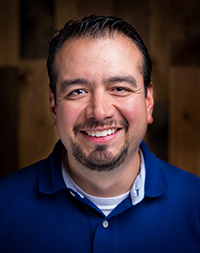
Juan Moreno is bilingual pastor at First Baptist Church in Athens (Photo / Steve Gowan)

Juan Moreno, the bilingual pastor of First Baptist, joined the church’s ministry team last year. Now, nearly 20 percent of the church staff is Hispanic.

Moreno serves the congregation bivocationally, also working as a fifth-grade teacher.

First-generation Hispanics supported First Baptist’s focus on second-and third-generation Hispanics because they wanted their children to connect with the church, Moreno noted.

The ministry primarily uses English rather than Spanish, but everything is presented from the perspective of the Hispanic culture, he said.

Breaking down old paradigms

The church as a whole recognizes the positive impact of its ministry among Hispanics, but the congregation realized it had to break down old paradigms to promote unity, Henderson noted.

“We have had to ask, ‘How can we be more like each other?’” he noted.

Kyle Henderson (left), pastor of First Baptist Church in Athens, poses with Reynaldo Zavala and a four-legged friend during the bilingual Three Kings’ Day celebration at the church. (Photo / Cindy Henderson)

Staff members at First Baptist memorize Bible verses in Spanish together, and English speakers attend the bilingual service.

“People of the English service come to me and call me ‘hermano,’” Moreno said.

Moreno occasionally preaches in the English worship service, and Henderson sometimes preaches in the bilingual service.

People who normally attend the English-language services and people who participate in the bilingual services worship together four to six times a year, Henderson said.

First Baptist wants to go against the division prevalent in much of society, Henderson said.

“For people of all cultures to see this type of love and unity has been so refreshing,” he said.

Increased understanding

Before the congregation could achieve that unity, worshippers had to understand some of what others experience, Moreno said.

As some Hispanic families experienced difficulties with immigration, non-Hispanic church members grew to understand more about those issues, and some even changed their opinions about the immigration system, he added.

First Baptist in Athens became more ethnically diverse by focusing on a simple goal—to look more like what they hope for, Moreno and Henderson agreed.

“There is not a course you can take on how to do this. But we want the church to represent the future today,” said Henderson, noting the church has made “Se Mañana, Today” (Be Tomorrow, Today) its mission.


Central Texas religious leaders form immigration network

WACO—More than 30 religious leaders and community organizers from all over Central Texas met at Baylor University’s Diana R. Garland School of Social Work to take the first steps in building a network of support for families separated by and affected negatively by the United States’ immigration policies.

At the July 18 meeting, representatives from multiple Waco-area churches began conversations with participants from organizations such as Greater Waco Legal Services, Waco Immigrants Alliance and the Catholic Charities of Central Texas. The group explored practical ways to help with the crisis at the border and beyond.

Passion to protect families

Pastor Jaime McGlothlin of Valley Mills United Methodist Church shared her passion for working to protect families and children.

“I am so grateful for the ways we are working together knowing they are relying on us, brothers and sisters in Christ, to support them,” she said.

McGlothlin wrote a letter to Rep. Bill Flores (R-Bryan) in late June when the Attorney General’s Zero-Tolerance Policy captured national attention for separating families charged with the misdemeanor crime of crossing the border to seek asylum.

When she asked other local pastors to sign her letter, she ended up with almost 75 signatures and a rally with more than 200 people who joined to deliver the letter.

Later that week, President Trump signed an executive order shifting his policy, which would stop separating families, but would still send them to detention centers for seeking asylum.

After other gatherings and conversations, a group of Baylor faculty and local pastors asked religious leaders from all around the region to gather to hear updates about immigration policy and practice and to learn how to support children and families at the border.

Group explores pitfalls of immigration system

Anali Gatlin Looper, director of Waco’s chapter of American Gateways, an immigration legal services entity, described what has been happening to families and children who are immigrants in Texas and the overwhelming maze and “pitfalls” of the U.S. legal immigration system.

Victor Hinojosa, Baylor Honors College faculty member, presented his research to help the local leaders understand what has been happening in Central America to force families to flee the region and why so many have sought asylum in the United States.

Jon Singletary, dean of the Garland School of Social Work, helped to host the event. He expressed his gratitude for religious leaders across faith traditions who want to work together to offer care and compassion for their neighbors.

“Brothers and sisters in Christ whom we have served on mission trips and with whom we worship as part of the global church trust that the faith community in the United States practices hospitality in welcoming strangers, so they come to us seeking God’s grace. How will we respond?” Singletary asked.

The gathering of diverse Christians and other faith leaders is a welcome sign in working together to demonstrate God’s love, some participants agreed.

“I invite the congregations and the people of Central Texas to understand and hear the deep and abounding grace and love of God at work in these families’ lives, through their struggles and their stories,” said Kent McKeever, founder of Greater Waco Legal Services.

The emerging network is planning other educational events on the Baylor campus for the fall as well as partnerships with organizations directly serving children and families seeking to be reunited at the border.