Pence says U.S. embassy to move to Jerusalem in 2019
January 24, 2018
JERUSALEM (USA Today)—Vice President Mike Pence announced the U.S. embassy in Israel will move from Tel Aviv to Jerusalem in 2019.
Pence made the announcement Jan. 22 at the Knesset, the Israeli parliament.
Israeli Prime Minister Benjamin Netanyahu thanked Pence for standing up for the “truth” and supporting Israel at the United Nations. He said the United States and Israel have a “shared destiny.”
President Trump’s decision to recognize Jerusalem as the country’s capital last month was one of the most historic in Israel’s history, Netanyahu said.
“America has no greater friend than Israel, and Israel has no greater friend than the United States of America,” he said.
Palestinians and Arab Israelis boycotted Pence’s visit after Trump broke with decades of U.S. policy by announcing the embassy move.
Arab lawmakers were told to leave Israel’s parliament for heckling Pence at the beginning of his speech.
Israel sees Jerusalem as its “eternal” capital and Palestinians claim east Jerusalem as the capital of their future state.
Other nations, including the United States, established their embassies in Tel Aviv in an attempt to stay neutral. Previous U.S. presidents have said the decision on Israel’s capital must come from a negotiated agreement between the Israelis and Palestinians.
Gregory Korte of the Associated Press contributed to this report. Distributed by Religion News Service.
SBC added as defendant in Pressler lawsuit
January 24, 2018
HOUSTON (BP)—The Southern Baptist Convention has been added as a co-defendant in a lawsuit accusing retired Texas state judge Paul Pressler of sexual abuse.
A Jan. 12 amendment to a suit originally filed last October claims the SBC, among other defendants, had a “duty to exercise reasonable care so as to control” Pressler, who helped engineer what its proponents call the “conservative resurgence” within the convention.
Pressler denies the allegations by plaintiff Gareld Duane Rollins, who claimed Pressler sexually abused him repeatedly between the late 1970s, when Rollins was 14, and 2004.
Rollins’ petition, filed in Texas state district court, alleges he was enrolled in a young adult Bible study which Pressler led at First Baptist Church in Houston and later served as Pressler’s office assistant.
Pressler, 87, was a justice on the Court of Appeals of Texas, 14th District, and a member of the Texas state legislature. He also served the SBC in various volunteer capacities.
Other defendants in the lawsuit—all of whom have denied Rollins’ allegations that they facilitated and concealed the abuse—include Southwestern Baptist Theological Seminary, its president Paige Patterson, Pressler’s wife Nancy, First Baptist Church in Houston, Pressler’s former law partner Jared Woodfill and the Woodfill Law Firm.
The suit demands more than $1 million in relief from the defendants collectively, claiming the alleged abuse contributed to Rollins’ life of substance abuse and crime.
The suit alleges the SBC:
Made “minors sexually available to Pressler.”
“Fraudulently misrepresented and continued to misrepresent material facts concerning the safety of children” at cooperating churches.
“Had actual or constructive knowledge” of Pressler’s alleged conduct and “concealed” it.
Continues, with others, “to assist Pressler through obstruction of justice.”
In other developments, Pressler filed a Dec. 21 motion asking Harris County district judge R.K. Sandill to dismiss Rollins’ suit because the statute of limitations expired on its claims of abuse, the last of which allegedly occurred more than a decade ago.
A hearing on that motion is scheduled Feb. 23.
Southwestern Seminary and Patterson filed a motion to separate themselves from other defendants and move the case against them to Tarrant County, where the seminary is located. A hearing on those motions was canceled Jan. 17 and has yet to be rescheduled, according to the Harris County District Court.
Pastor de Laredo ministra a inmigrantes y deportados
January 24, 2018
LAREDO—Lorenzo Ortiz, el pastor de Iglesia Bautista Emmanuel en Laredo, cree que Dios abrió sus ojos para ver las necesidades de otras personas y eso lo llevo a ministrar a inmigrantes en la frontera del sur de Texas y Tamaulipas.
Desde el 2017, Ortiz a ministrado a inmigrantes—primero empezó trabajando con gente que había viajado desde Cuba hasta Nuevo Laredo y recientemente con inmigrantes indocumentados de México que han sido deportados de Estados Unidos.
El trabaja con el apoyo de su familia—principalmente el de su hija, Ruth, y su hermana Micaela—así como el de su iglesia y otras congregaciones en Laredo y Nuevo Laredo.
Ministrando a Cubanos en Nuevo Laredo
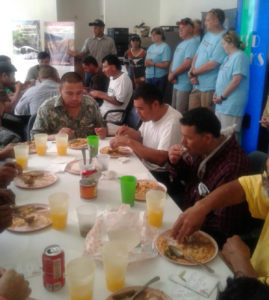
Inmigrantes cubanos recibieron alojamiento en la Iglesia Bautista Emmanuel en Nuevo Laredo. Muchos se quedaron ahí por casi cinco meses. (Foto/Lorenzo Ortiz)
Un entrenamiento evangelístico dado por Texas Baptists hace algunos años en Laredo, abrió los ojos de Ortiz para ver otras formas de compartir las buenas nuevas.
Cuando el presidente Obama termino la póliza de ‘pies secos, pies mojados,’ la cual le daba residencia a cualquier persona cubana que llegara a tierras estadounidenses, muchos cubanos decidieron entrar a Estados Unidos por medio de la frontera con México.
Una docena de iglesias en Nuevo Laredo dieron alojó a cubanos en sus santuarios y les dieron desayuno y almuerzo todos los días. Ortiz orquesto el trabajo con esas iglesias, las cuales incluyen cuatro iglesias bautistas.
Atendiendo a inmigrantes deportados
Últimamente, Ortiz hace su ministerio con inmigrantes indocumentados mexicanos, quienes han sido deportados de Estados Unidos.
“Laredo es la frontera por donde sale el 60 por ciento de los inmigrantes deportados, y ese numero va a incrementar,” dijo Ortiz.
“Ya lo que pasamos aquí son situaciones donde se nos dificulta proveer comida y hospedaje a las personas que están aquí.”
Mas de 150 deportados llegan a Nuevo Laredo cada día, y les puede tomar un par de días en encontrar una manera de regresar a casa, remarco Ortiz.
La mayoría de la iglesias en Nuevo Laredo que trabajaron con inmigrantes cubanos ahora ayudan con los inmigrantes deportados. Las iglesias trabajan con mas de 300 deportados cada día, Ortiz dijo.
Ortiz encuentra alojamiento para inmigrantes, ayuda a que los deportados obtengan documentos, y los conecta con agencias para que puedan regresar al estado de donde vinieron.
Evangelismo encarnacional
El pastor Lorenzo Ortiz, su hija, Ruth Ortiz, y miembros de First Baptist Church de Missouri City, se juntan a orar por la comida que fue dada a inmigrantes deportados. (Foto/Micaela Ortiz)
Pero el ve que su servicio es mas que una acción social. El ve esto como un evangelio encarnacional—el estar con personas en su sufrimiento, en su búsqueda por esperanza y su deseo por justicia.
“Hay una gran diferencia entre compartir el evangelio solo con palabra y lo que es vivir sus experiencias,” Ortiz dijo. “Hay un impacto, a diferencia de solo dar información.”
Así como las personas han dejado sus hogares, sus familias y posesiones con la ilusión de encontrar mejores oportunidades, Ortiz dice que la iglesia tiene que entonces imitar a Cristo y caminar con la gente en su búsqueda de esperanza.
Ministerio del Rio se ha comprometido a dar fondos de asistencia y donar accesorios de cocina para que la iglesias tengan mas facilidad en preparar los alimentos que sirven. First Baptist Church de Missouri City, cerca de Houston, también da ayuda financiera a este ministerio.
Pero las congregaciones cerca de la frontera todavía necesitan mas ayuda, especialmente si el numero de deportados va a incrementar, Ortiz dijo.
Centros de detención en Laredo
El ministerio empieza cuando los que van a ser deportados llegan a uno de los centros de detención en el área, Laredo Processing Center y Rio Grande Processing Center—los cuales son operados por compañías privadas.
En un reporte publicado a mediados de diciembre, la oficina del inspector general del Departamento de Seguridad Nacional notó varios problemas en cuatro de las cinco facilidades en donde se hicieron inspecciones inadvertidas.
Aunque el Laredo Processing Center obtuvo buenos resultados en la inspección, hubo otras que fueron citadas por el trato inapropiado que se daba a reclusos y la demora con la que se daba atención medica—una de esa facilidades esta localizada en Georgia y operada por la compañía que maneja Laredo Processing Center, CoreCivic.
GEO Group, la compañía que maneja Rio Grande Detention Center, tiene varias demandas en su contra por el supuesto maltrato a prisioneros en el centro que esta en Colorado y denuncias de derechos civiles respecto a el abuso en otros de sus centros.
En el reporte del año pasado, la oficina del inspector general recomendó al Servicio de Inmigración y Control de Aduanas (ICE, por sus siglas en ingles) aumentar su vigilancia en los centros de detención y dar mas atención a los operativos de esos centros, después de las quejas que han dado los grupos de derechos del inmigrante y los detenidos.
“CoreCivic esta comprometido a proveer un ambiente seguro, humanitario y apropiado para los que has sido puestos bajo nuestro cuidado, mientras también damos soluciones rentables a los desafíos que nuestros socios en el gobierno enfrentan,” dijo Jonathan Burns, el director de asuntos públicos de la compañía. “Trabajamos cerca de nuestros socios en ICE para asegurar el bienestar de los detenidos en nuestros centros de detención, los cuales tienen un contrato con ICE.”
Los administradores de servicio de ICE, quienes trabajan de tiempo completo en los centros, “tienen acceso total en las facilidades y con los detenidos, y se reportan independientemente al cuartel general de ICE,” añadió Burns.
Ortiz hablo de haber escuchado reportes de los detenidos en Rio Grande Detention Center en los que hablan del maltrato que sufren ahí. GEO Group, no respondió a Baptist Standard cuando fue contactado al respecto.
“Se sienten rechazados”
Inmigrantes deportados reciben paquetes de higiene en Nuevo Laredo (Foto/Micaela Ortiz)
Después de que ICE deja a los deportados en la frontera, ellos cruzan a Mexico y van al Instituto Tamaulipeco para los Migrantes. En la agencia estatal, Ortiz les ayuda con ropa, paquetes de higiene, y a encontrar una manera de regresar a casa.
“Cuando cruzan la frontera, ellos se sienten arruinados. Ellos se sienten rechazados,” dijo Ortiz.
Muchas veces, el significado de regresar al estado de donde salieron es regresar a nada, Ortiz noto. Sus familias ya no están ahí, ya no tienen hogares, y regresan como extranjeros.
“La iglesia tiene que ser responsable por lo que pasa en la comunidad,” Ortiz enfatizo. “La iglesia tiene que dar soluciones a los problemas de la gente.”
Si las personas se sienten en la oscuridad, la iglesia es responsable de darles la luz de Cristo, el insistió.
Las necesidades son muchas, y un escaso numero de iglesias están buscando responder con recursos limitados, menciono Ortiz. Pero las congregaciones confían que Dios engrandecerá sus esfuerzos, el añadió.
“Dios es el que siembra, y Dios es el que da crecimiento,” el dijo.
Ortiz desafío a otras congregaciones a involucrase mas en el ministerio a deportados.
“Solo tienen que salir y mirar la necesidad que esta alrededor de ellos,” el dijo.
Mientras la iglesia se acerca mas a Dios, también se acerca mas a las necesidades de otros, dijo Ortiz. El recalco las palabras de Jesús en Mateo 25 como su guía—el ministerio tiene que ser a los mas vulnerables, las personas con las que Cristo se identifica.
“Nos damos cuenta que Dios no esta trabajando en nuestros ministerios, pero que nosotros estamos trabajando en el ministerio de Dios,” Ortiz dijo.
Obituary: Dale Gore
January 24, 2018
Dale Lee Gore of Grand Prairie, former pastor and associational director of missions, died Jan. 18. He was 83. Gore was born Aug. 22, 1934, to Leola and Basil Gore in Corpus Christi, where he grew up and graduated from Roy Miller High School. At Howard Payne College in Brownwood, where he earned his undergraduate degree, he was editor of the school newspaper and was involved in the Life Service and Missions organizations. He also met and married his wife of 63 years, LaVerne Dennis Gore, at Howard Payne. He served as minister of music at churches in Uvalde, Hillsboro and Brownwood. After his graduation from Southwestern Baptist Theological Seminary, he was pastor of Baggett Creek Baptist Church in Comanche County, First Baptist Church in Whitewright, First Baptist Church in Goldthwaite, Trinity Baptist Church in Sherman and First Baptist Church in Denison. He was director of missions for Grayson and Austin Baptist associations. After retiring from associational missions, he served Elm Grove Baptist Church in Belton as pastor. He served on the Baptist General Convention of Texas Executive Board, the Texas Baptist Children’s Home board and the Howard Payne University board of trustees. He received the Distinguished Alumni Award from Howard Payne in1988. He was preceded in death by two infant children, Bob David and Melinda Lee, and a brother, Don Gore. He is survived by his wife; two sons, Dennis and his wife Bobette of Grand Prairie and Jeffrey and his wife Donna of Coleman; daughter Jane Cluck and her husband Marty of Dallas; nine grandchildren; four great-grandsons; and two sisters, Sue Ann Roesing of Waco and Janice Thomas of Austin.
Some navigate divide between March for Life and the Women’s March
January 24, 2018
WASHINGTON (RNS)—In 2017, Kristen Day was one of relatively few women to attend both the record-breaking Women’s March, whose organizers voiced strong support for abortion rights, and the March for Life, an anti-abortion gathering a few days later.
This year, the pro-life Democrat only returned to one of them, saying she didn’t “feel welcome” at the Women’s March.
Day, executive director of Democrats for Life of America, explained her decision was the result of a “bad experience” at last year’s Women’s March. As the demonstration drew to a close, a marcher accosted her, she said. The marcher disliked her sign, which read “Pro-life for the whole life.” The attacker allegedly began yelling and banging on her car until police eventually intervened.
Day, a Catholic, opposes abortion but touts liberal views on other issues—a position she says increasingly is tenuous in today’s polarized political climate.
Even so, she said, “a lot of Democrats” who support minimum wage increases, maternity leave and immigration reform also believe “that life begins in the womb.”
Some pro-life Democrats motivated by faith
Yet political strategists still grapple with how to engage Day and other pro-life Democrats, many of whom root their anti-abortion position in their religious faith. And as Democrats express hope of sweeping the U.S. House and Senate this November at the hands of an energized progressive base, it’s unclear whether the party will muster robust engagement of this subgroup, or if doing so is even in their interests.
The number of Democrats who are ambivalent about abortion—or even outright opposed to it—is sizable. A 2017 Pew Research survey reported 22 percent of Democrats believe it should be illegal in all or most cases.
According to 2014 polling data provided to Religion News Service by the Public Religion Research Institute, 24 percent of that group are black Protestants; white evangelical Protestants and Hispanic Catholics account for 14 percent each; 12 percent are religiously unaffiliated, and the rest are small slivers of various religious groups such as white mainline Protestants, Jews, Muslims and others.
Controversial in some circles
But these numbers don’t answer the question of what progressives can do to accommodate this group, or if doing so would be a boon at the ballot box.
Erica Sackin, director of political communications for Planned Parenthood Action Fund, says headline-grabbing controversy obscures an energized progressive electorate galvanized around what she called a “mainstream political belief”—namely, that most Americans believe abortion should be legal in all or most cases, a claim backed by data from Pew Research.
“At the end of the day, everybody has different personal feelings about abortion,” she said, noting Planned Parenthood has its own religious advisory board. “What people across the board can agree on is that it’s not the government’s job to make that decision for people.”
Nevertheless, the Democratic Party remains embroiled over the issue. Tensions came to a head last July, when Democratic Congressional Campaign Committee Chair Ben Ray Luján declared there would be no “litmus test” on abortion for Democrats seeking office in 2018. The line outraged NARAL Pro-Choice America President Ilyse Hogue, who described it as “an ethically and politically bankrupt strategy.”
It also appeared to contradict Democratic National Committee Chairman Tom Perez, who said in April that “every Democrat” should support abortion rights, adding, “That is not negotiable and should not change city by city or state by state.”
Luján’s comments echo those of other prominent progressives, however. House Minority Leader Nancy Pelosi, D-Calif., said in April “of course” it’s possible to be a Democrat and hold anti-abortion views, and Sen. Bernie Sanders, I-Vt., endorsed an anti-abortion Democrat in Nebraska.
“We have got to appreciate where people come from and do our best to fight for the pro-choice agenda,” Sanders told NPR. “But I think you just can’t exclude people who disagree with us on one issue.”
Heartland values
According to Day, the back-and-forth may be less about what the majority of Americans think and more about efforts by Democrats to win back conservative parts of the country. She pointed to a 50-page report released in January and co-authored by three-term U.S. Rep. Cheri Bustos, D-Ill.
The report, “Hope From the Heartland: How Democrats Can Better Serve the Midwest by Bringing Rural, Working Class Wisdom to Washington,” notes liberal-leaning Americans in Midwestern rural areas often express anti-abortion views. Former Ohio state Rep. Nick Barborak reportedly told the authors if Democrats expel anti-abortion Democrats, “We might as well write off eastern Ohio.”
PRRI data suggests this assessment would resonate with at least some of the party faithful. According to PRRI’s 2014 poll, 35 percent of Democrats in the South believe abortion should be illegal in all or most cases, as do 27 percent of Democrats in the Midwest.
But looking ahead toward the midterms, the real question is whether anti-abortion Democrats in these regions prioritize the issue as much as their Republican counterparts. Planned Parenthood’s Sackin cited the recent U.S. Senate race in Alabama as evidence they do not: After all, Democrat Doug Jones, who advocated for abortion rights, defeated Republican Roy Moore, who was strictly anti-abortion, in deeply red Alabama.
Moreover, she noted, some pollsters argue abortion only played a minor role in the election, as Alabama voters who cast their ballots solely on the issue were overwhelmingly Republicans and never “gettable” voters for Jones in the first place.
Day read the results differently. She argued Jones never would have beaten an anti-abortion candidate in the heavily evangelical Christian state were it not for the numerous allegations against Moore of inappropriate behavior toward teen girls.
Regardless, Day isn’t giving up her fight anytime soon. She said she’s considered leaving the Democratic Party in the past but always was brought back by phone calls and messages of encouragement from people across the country.
“There are (millions of) pro-life Democrats out there who want me to fight for them, and bring the party back to life—in two senses of the word,” she said.
Longtime evangelist Luis Palau announces cancer diagnosis
January 24, 2018
WASHINGTON (RNS)—Christian evangelist Luis Palau, who has preached across the globe for five decades, says he has late-stage lung cancer.
“Everything is ready and if the Lord wants to take me home in the next few months or two years or whatever it is, I’m ready,” Palau, 83, said in a video recorded with his sons Kevin and Andrew and uploaded to YouTube.
The Argentine-born preacher, who moved to Oregon in his 20s and is based in the Portland area, said he noticed symptoms in November but thought they might indicate pneumonia until doctors ran tests.
“Just this week it was clearly confirmed. Stage 4 lung cancer,” he said in a statement posted Jan. 18 on the Luis Palau Association website. “As you can imagine, this isn’t news we were expecting or hoping for. Yet our trust in the Lord remains rock solid.”
Palau said he currently feels “fine” and is full of energy and asked for prayers as he and his family face treatment decisions he expects will limit his preaching and traveling schedule.
But he said he remains confident in the longevity of his ministry, which includes his son Kevin as president, son Andrew as an evangelist and son Keith on the development team.
Palau and his team have preached in hundreds of cities, from Washington to London to his native Buenos Aires. His ministry has put a new spin on more traditional crusades, incorporating extreme sports on the National Mall in 2005 and including concerts and service projects in a monthslong “CityFest” in New York that culminated with tens of thousands of people at a Central Park evangelistic rally in 2015.
“You have to keep constantly renovating yourself, rethinking, reapplying,” if you want to be a successful evangelist in the digital age, he told a reporter before CityFest.
His ministry estimates he has spoken to 30 million people in 75 countries. Palau, author of dozens of books, also has been featured in radio broadcasts in English and Spanish on 3,500 radio outlets in 48 countries. In November, the ministry announced plans to release a feature-length film about Palau’s life and legacy in theaters in October 2018 in North America, South America and Spain.
“And as long as I have breath (I’m praying that will be many more years) I will preach,” he said in the statement. “I will raise high the banner of biblical evangelism. I will do my part. And I’m praying you continue to do yours as well
Buckner partners with Texas Rangers Foundation to strengthen families
January 24, 2018
DALLAS—Buckner International and the Texas Rangers Baseball Foundation entered a partnership to strengthen families in West Dallas by expanding opportunities for boys and girls who use the Texas Rangers MLB Youth Academy.
More than 3,000 student athletes have worked out at the youth academy at the Mercy Street Sports Complex since its official ribbon-cutting ceremony in December, Rangers TV broadcaster Dave Raymond said.
Buckner will establish a satellite Family Hope Center at the academy, where West Dallas families and the larger area can benefit from a variety of programs.
Buckner operates 26 Family Hope Centers throughout Texas and in a half-dozen other countries. Services typically include parenting education classes, job skills training, financial empowerment courses, family counseling and spiritual enrichment.
Albert Reyes, president and CEO of Buckner International, describes how the Family Hope Center at the Texas Rangers MLB Youth Academy in West Dallas will help strengthen families. (Buckner Photo / Aimee Freston)
“Our goal at Buckner is to protect children by strengthening families, and this partnership gives us the perfect opportunity to fulfill that mission,” said Albert Reyes, president and chief executive officer of Buckner International.
During a Jan. 17 dedication ceremony at the facility, Reyes called to mind an iconic scene from Field of Dreams and pointed to way simply playing catch can strengthen family ties.
“Baseball has a way of bringing people together like nothing else on the planet,” Reyes said. “We will be using baseball as a way of strengthening families.”
Love for baseball can draw families to the facility where “there are opportunities to expand their vision and their experiences broader than just the field” of play, said Ken Hall, former Buckner CEO and now a member both of the Buckner International board of directors and the Texas Rangers Foundation.
“One of the visions of this initiative was to be able to reach into families in this community … and seek to make a difference in the lives of boys and girls who come through here, to help them with all the other kinds of empowerment opportunities offered here,” Hall said.
Pitcher Cole Hamels, representing The Hamels Foundation, emphasized the impact the Texas Rangers MLB Youth Academy will have on giving educational opportunities to boys and girls in West Dallas. (Buckner Photo / Aimee Freston)
The 17-acre sports complex includes five outdoor fields and a training center with an indoor practice field, exercise facilities and classrooms.
The Texas Rangers MLB Youth Academy not only offers children and teenagers year-around baseball and softball instruction and playing opportunities, but also provides access to tutoring and mentoring programs, healthy lifestyle classes, drug- and gang-prevention programs and college preparation courses.
“This is a facility that can house a lot of wonderful events, bringing the community together,” said Rangers pitcher Cole Hamels. The Hamels Foundation contributed significantly to the four classrooms at the youth academy.
“Just the way this has turned out has blown our minds,” Hamels said. “We know it is going to reach a lot of individuals.”
Waco Hispanic church expands reach by embracing liturgy
January 24, 2018
WACO—Primera Iglesia Bautista in Waco, the city’s oldest Hispanic organization of any kind, understands the importance of taking risks and trying new approaches—even if some of those “new” practices actually are ancient.
Emmanuel Roldan first visited Primera Iglesia Bautista during his last semester at Baylor University’s Truett Theological Seminary. He planned to remain in Waco after graduation, and he was looking for a church home.
“I wanted to hear Spanish in a congregation and learn from someone in the community,” Roldan said.
Roldan’s arrival attracted the attention of church members. The congregation had been declining in attendance for years, and it had been a long time since anyone new had shown up to worship with them.
Pastor Armando Virgen had served Primera more than 50 years, and he planned to retire soon.
‘Willing to try new things’
Roldan asked just one question: “Are you willing to try new things?”
Members of the 109-year-old congregation said, “Yes.”
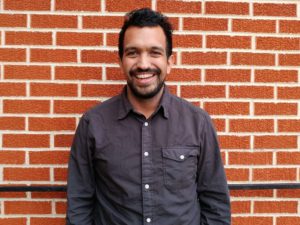
Emmanuel Roldan, a graduate of Baylor University’s Truett Theological Seminary, is pastor of Primera Iglesia Bautista in Waco. (Photo / Adrian Moreno)
At Truett Seminary, Roldan had learned about—and grown to appreciate— liturgical practices shared by many Christians for nearly two millennia, such as observing Advent, Lent and the rest of the church calendar.
The ancient Christian traditions Roldan brought to Primera helped to bring more diversity to the church—not only in terms of ethnicity, but also with respect to denominational backgrounds.
The church mostly is home to second- and third-generations Hispanic-Americans, and many are fluent in both English and Spanish. However, the congregation also includes a few first-generation immigrants, so there was some cultural diversity already.
Some of the students Roldan worked with when he was a chaplain at Baylor University started attending the church, and they brought friends with them.
Some did not grow up in the Baptist tradition, so they can relate more easily when they see the church using the liturgical calendar or reciting prayers together in unison.
“It has been good to continue the relationships I’ve made at Baylor,” Roldan said.
Open to change
He credited both the congregation for its openness to change and Virgen, the former pastor who remained at the church as a member, who “made the transition very easy.”
Primera draws between 50 and 80 worshippers each week, and members are involved in ongoing community ministry. They provide food at the monthly parent-and-teacher meetings at Indian Spring Middle School, because they know parents are more likely to attend when food is provided. The church also provides breakfast for teachers during STAAR testing—the state assessment of academic readiness.
On Wednesday nights, the church’s youth group goes to Waco High Lofts to lead a backyard Bible school along with Baylor Missions, part of the university’s office of spiritual life.
While the church is trying new things and working in the community, there is still a lot to learn, Roldan stressed.
Lessons in biblical principles
The church offers one bilingual worship service on Sundays. Even though many of its congregants are bilingual, some speak only Spanish, and new members are arriving who speak only English.
Taking the time to participate in one language and simply hear others participate in another language is a lesson for the church, Roldan said.
“This is a model for what it looks like when different cultures come together,” he said.
Roldan believes the approach Primera takes in worship teaches important lessons to those who participate.
“It takes more time (for a bilingual worship service), but in a way it is training us in bearing with one another,” he said. “It teaches patience, and it shows us there are people other than us. It teaches that we are not worshipping alone.”
BWA protests new Bolivian law
January 24, 2018
WASHINGTON—The Baptist World Alliance joined other Christian groups in protesting a new law in Bolivia that could make proselytizing illegal and put those who do it at risk of prosecution and imprisonment.
In a letter to legislators in Bolivia, BWA General Secretary Elijah Brown expressed concerns “that the ambiguity of these laws could lead to unintended restrictions on religious freedom and to the direct persecution of churches and individuals of faith.”
Elijah Brown
Brown noted his concerns were not only for Baptists “but for all who might find themselves unable to live according to the dictates of their conscience.”
In a translation by Evangelical Focus, a Europe-based news and opinion website, the offending law declares: “Whoever recruits, transports, deprives of freedom or hosts people with the aim of recruiting them to take part in armed conflicts or religious or worship organizations will be penalized seven to 12 years of imprisonment.”
Religious liberty advocates fear the law could ban public preaching and punish the mere act of inviting someone to a Christian or other religious event.
Evangelical Focus asserts the new law collides with the country’s constitution. Article 4 of the Bolivian constitution reads: “The state respects and guarantees the freedom of religion and spiritual beliefs, according to their worldviews. The state is independent of religion.”
In his letter, Brown expressed hope “that freedom of religion and expression will be strengthened” and said Baptists are praying “for the ongoing wellbeing of the country.”
He also made the BWA available to Bolivian government and other authorities for further dialogue on the issue.
The BWA has two member organizations in Bolivia, the Baptist Convention of Bolivia and the Bolivian Baptist Union, with about 50,000 members in more than 300 churches.
Internet use may prompt religious ‘tinkering’
January 24, 2018
WACO—Internet use may decrease the likelihood of a person affiliating with a religious tradition or believing only one religion is true, a Baylor University study reveals.
That may be because Internet use encourages religious “tinkering,” said Baylor sociologist and researcher Paul K. McClure.
“Tinkering means that people feel they’re no longer beholden to institutions or religious dogma,” he said. “Today, perhaps in part because many of us spend so much time online, we’re more likely to understand our religious participation as free agents who can tinker with a plurality of religious ideas—even different, conflicting religions—before we decide how we want to live.”
For example, while many Millennials have been influenced by their Baby Boomer parents when it comes to religion, the Internet exposes them to a broader array of religious traditions and beliefs. It may encourage them to adjust their views or experiment with their beliefs—perhaps adopting a less exclusive view of religion, McClure said.
His study—“Tinkering with Technology and Religion in the Digital Age”—is published in the Journal for the Scientific Study of Religion.
The study also examined television viewing and found that it was linked to religion, but in a different way—lower religious attendance and other religious activities that take time. However, lower religious attendance of TV viewers may be because some are ill, injured, immobile or older and incapable of taking part, and some may simply watch television to pass the time, McClure noted.
In 2010, when this survey was first conducted, people were spending more time on average watching television, but that has changed today as more people spend time online or on their smartphones instead, McClure said.
“Both TV and the Internet require time, and the more time we spend using these technologies, the less time we have to participate in religious activities or with more traditional communities,” he said.
In his research, McClure analyzed used data from Wave III of Baylor Religion Survey, a survey of 1,714 adults nationwide ages 18 and older. Gallup Organization administered the surveys, with a variety of questions, in fall 2010.
In the data analyzed by McClure, participants were asked:
How often they took part in religious activities, among them religious attendance, church socials, religious education programs, choir practice, Bible study, prayer groups and witnessing/sharing faith.
How much they agreed on a scale of one to four with two statements: “All of the religions in the world are equally true,” and “All around the world, no matter what religion they call themselves, people worship the same God.”
How many hours a day they spent surfing the Internet and how many hours they spent watching TV.
What religious groups they were affiliated with, including a category of “none.”
The analysis also took into account such variables as age, race, gender, education, place of residence and political party. While those factors had varying impact on religious beliefs, despite the differences, “the more time one spends on the Internet, the greater the odds are that that person will not be affiliated with a religion,” McClure said.
While the Internet is nearly 26 years old, 87 percent of American adults use it, compared with before 1995, when fewer than 15 percent were online, according to a 2014 report by the Pew Forum Internet Project.
Internet’s impact debated
Sociologists debate how Internet use affects people.
“Some see it as a tool to improve our lives; others see it as a new kind of sociocultural reality,” McClure said.
Scholars point out that the Internet may corral people into like-minded groups, similar to how Google customizes search results and advertisements based on prior search history. Additionally, many congregations—about 90 percent, according to previous research—use email and websites for outreach, and more than a third have both an Internet and Facebook presence.
Other scholars have found that when people choose ways to communicate, some often choose a less intimate way, such as texting rather than talking.
A moving target
Sociological research about the impact of the Internet is difficult for scholars because its swift changes make it a moving target, McClure noted.
“In the past decade, social networking sites have mushroomed, chat rooms have waned, and television and Web browsing have begun to merge into one another as live streaming services have become more popular,” McClure said.
His study has limitations, such as measuring only the amount of time people spent on the Internet, not what they were doing online, McClure said. But the research may benefit scholars seeking to understand how technologies shape religious views.
“Whether through social media or the sheer proliferation of competing truth-claims online, the Internet is the perfect breeding ground for new ‘life-worlds’ that chip away at one’s certainty,” McClure said.
Around the State: DBU holds MLK Day Unity Walk
January 24, 2018
Pastor Bertrain Bailey from St. John’s Missionary Baptist Church in Dallas, recites Martin Luther King Jr.’s “I Have a Dream” speech. (DBU Photo / Ryan Crisman)
Dallas Baptist University faculty, students and guests participated in the second annual Martin Luther King Day Unity Walk across the university campus Jan. 15. The walk began at the Collins Learning Center, where Jay Harley, vice president for student affairs, addressed the crowd, reminding participants of the unity Christ brings. When the group arrived at the cross that stand between the Mahler Student Center and the Patty and Bo Pilgrim Chapel, DBU President Adam Wright spoke, and student Tamerick Brazzell led the DBU Gospel Choir in singing “Lift Up Every Voice and Sing.” Bertrain Bailey, pastor of St. John’s Missionary Baptist Church in Dallas and a DBU trustee, closed the event by reciting King’s “I Have a Dream” speech and leading the crowd in prayer.
Steve Massey
Steve Massey was named vice president of the Texas Baptist Missions Foundation. Massey worked in various roles in the corporate world before transitioning into full-time ministry. He served six years as vice president of development at Buckner International. Most recently, he was vice president of development at e3 Partners/I Am Second. He holds a Bachelors of Business Administration degree from the University of North Texas.
Processed with VSCO with c1 preset
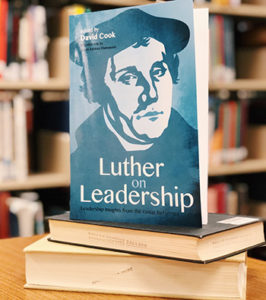
Seven faculty members at Dallas Baptist University and an alumnus marked the 500th anniversary of the Reformation by compiling a book, Luther on Leadership. David D. Cook, assistant professor of leadership at DBU, edited the book, which explored Martin Luther’s leadership characteristics and examined his contributions to theology, law, politics, economics and education. Contributors were Mark Cook, Justin Gandy, Jack Goodyear, Jay Harley, Brent Thomason and Michael Whiting from the DBU, along with alumnus Erik Gronberg.
Retirement
Terry Bertrand from First Baptist Church in Arlington after 21 years as associate pastor of administration there.
Obituary: Roy Guy “Dick” Camp
January 24, 2018
Roy Guy “Dick” Camp, longtime Texas Baptist pastor and associational director of missions, died Nov. 23. He was 96. Camp was born Sept. 2, 1921, in Eastland County. He earned degrees from Texas Wesleyan University and Southwestern Baptist Theological Seminary. His student pastorates included two churches near Brady and Retta Baptist Church in Burleson. He was the first pastor of Westview Baptist Church in Spring Branch, which began as a mission of West End Baptist Church. He next was pastor of First Baptist Church of Alvin, where he served until he became director of missions of Galveston Baptist Association. In retirement, he was a chaplain and worship leader at two assisted living facilities. He was preceded in death by his wife of 69 years, LaVerne Camp; his sisters, Elaine Delashaw and Enise Behrman; and his brother, Lofton Camp. He is survived by his brother, Joe Camp and his wife Catherine of Vancouver, Wash.; his sons and daughters-in-law, Dale and Martha Mannahan Camp of Pearland and Doug and Paula Weston Camp of Spring; four granddaughters; and 14 great-grandchildren.


 Dale Lee Gore of Grand Prairie, former pastor and associational director of missions, died Jan. 18. He was 83. Gore was born Aug. 22, 1934, to Leola and Basil Gore in Corpus Christi, where he grew up and graduated from Roy Miller High School. At Howard Payne College in Brownwood, where he earned his undergraduate degree, he was editor of the school newspaper and was involved in the Life Service and Missions organizations. He also met and married his wife of 63 years, LaVerne Dennis Gore, at Howard Payne. He served as minister of music at churches in Uvalde, Hillsboro and Brownwood. After his graduation from Southwestern Baptist Theological Seminary, he was pastor of Baggett Creek Baptist Church in Comanche County, First Baptist Church in Whitewright, First Baptist Church in Goldthwaite, Trinity Baptist Church in Sherman and First Baptist Church in Denison. He was director of missions for Grayson and Austin Baptist associations. After retiring from associational missions, he served Elm Grove Baptist Church in Belton as pastor. He served on the Baptist General Convention of Texas Executive Board, the Texas Baptist Children’s Home board and the Howard Payne University board of trustees. He received the Distinguished Alumni Award from Howard Payne in1988. He was preceded in death by two infant children, Bob David and Melinda Lee, and a brother, Don Gore. He is survived by his wife; two sons, Dennis and his wife Bobette of Grand Prairie and Jeffrey and his wife Donna of Coleman; daughter Jane Cluck and her husband Marty of Dallas; nine grandchildren; four great-grandsons; and two sisters, Sue Ann Roesing of Waco and Janice Thomas of Austin.



 Roy Guy “Dick” Camp, longtime Texas Baptist pastor and associational director of missions, died Nov. 23. He was 96. Camp was born Sept. 2, 1921, in Eastland County. He earned degrees from Texas Wesleyan University and Southwestern Baptist Theological Seminary. His student pastorates included two churches near Brady and Retta Baptist Church in Burleson. He was the first pastor of Westview Baptist Church in Spring Branch, which began as a mission of West End Baptist Church. He next was pastor of First Baptist Church of Alvin, where he served until he became director of missions of Galveston Baptist Association. In retirement, he was a chaplain and worship leader at two assisted living facilities. He was preceded in death by his wife of 69 years, LaVerne Camp; his sisters, Elaine Delashaw and Enise Behrman; and his brother, Lofton Camp. He is survived by his brother, Joe Camp and his wife Catherine of Vancouver, Wash.; his sons and daughters-in-law, Dale and Martha Mannahan Camp of Pearland and Doug and Paula Weston Camp of Spring; four granddaughters; and 14 great-grandchildren.