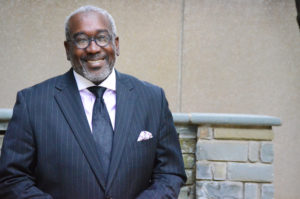
Bryan pastor nominee for second term as BGCT 2nd VP

BRYAN—Jim Heiligman, pastor of First Baptist Church in Bryan, will be nominated for a second one-year term as second vice president of the Baptist General Convention of Texas at Texas Baptists’ annual meeting, Nov. 12-14 in Waco.

Heiligman brings to the elected position a deep love for local-church ministry, said René Maciel, BGCT past president and community life pastor at First Woodway Baptist Church in Waco, who announced his intention to nominate Heiligman.

‘A good shepherd’

“Jim is a great friend who loves the church,” said Maciel, who served on staff with Heiligman at First Baptist Church in Castroville. Heiligman was pastor, and Maciel—then president of Baptist University of the Américas—was worship leader.

“He loves the people of his church,” Maciel said. “He is the kind of person who can meet you one time, and the next time he sees you, he will ask about all your family by name. He is a good shepherd.”

Jim Heiligman, 38, hopes to continue to use the second vice president’s office as a platform to urge other young ministers to take a more active role in the BGCT.

Heiligman characterized the last year as “a wonderful learning experience” that provided him a close look at the breadth and scope of Texas Baptist ministries.

“It has allowed me to see what we as Texas Baptists are doing in advancing the kingdom of God,” he said. “I have been able to witness firsthand the difference Texas Baptists are making in the world.”

Encourage young ministers

Heiligman, 38, hopes to continue to use the second vice president’s office as a platform to urge other young ministers to take a more active role in the BGCT. He also wants them to lead their churches to support the Cooperative Program unified budget and the ministries it makes possible.

“I want to challenge and encourage young pastors to be more involved in Texas Baptist life,” he said. “I want to see them recognize the kingdom influence of Texas Baptists.

“Too many ministers in my generation don’t see the value and relevance of Texas Baptists, and that breaks my heart.”

Heiligman has been pastor of First Baptist Church in Bryan since June 2014. Previously, he served nearly six years as pastor of First Baptist in Castroville.

He also was youth pastor at First Baptist Church in Moody, Central Baptist Church in Jacksonville and First Baptist Church in Charlotte, and he was a summer youth intern at First Baptist Church in Holdenville, Okla.

Heiligman earned his undergraduate degree from Texas A&M University in 2004 and his Master of Divinity degree from Baylor University’s Truett Theological Seminary in 2009.

He and his wife, Courtney, have two children, Clarke and Camille.


Mineola congregation partners with flood-damaged church in Dickinson

DICKINSON—The devastation sustained by Pine Drive Baptist Church in Dickinson can be summed up with one word: Total.

“We’ve got a sanctuary,” Pastor Ted Duck said. “Then we have a separate building that’s a gymnasium/activity center. Then we have a Christian school, which is where our offices are. We got 51 inches of water. It wiped out everything we have—everything.”

God meets needs

Everything except the congregation’s trust in God. In the wake of the storm, God continues to meet the church’s needs in remarkable ways, Duck noted.

Congregations from across Texas and scattered across the United States have donated money, materials and time to help the church rebuild and recover.

Many times Duck isn’t even sure how groups and churches hear about Pine Drive Baptist Church’s needs. Leaders simply call. A tractor-trailer rig filled with supplies is scheduled to arrive soon from New Jersey.

“Pine Drive Church is in great shape,” Duck said. “It’s the facilities that need some work.”

Build a relationship

Recently, First Baptist Church in Mineola committed to walk alongside Pine Drive Baptist Church through its long-term recovery. The two congregations were connected through Texas Baptists’ Church2Church Partnership effort, which brings together congregations wanting to help other churches affected by Hurricane Harvey.

“It’s not that close, but we have a lot of people who have friends and family on the coast. We know those personal stories,” said Sarah Neely, who is on the East Texas church’s missions committee. “As a whole, the church wanted to do something in the areas that are being overlooked.”

First Baptist Church wanted to do more than just send money or supplies for general relief.

“We thought that the Church2Church Partnership would be better because you could build a relationship and help in an area,” said Elizabeth Burnett, chairwoman of the Mineola congregation’s missions committee.

The East Texas church is helping with resources, volunteers and prayer. A partnership gives the entire congregation a chance to get involved in the recovery effort. Members already have given money. They’re collecting furniture. Even the children in the church are collecting toys for families who lost theirs in the storm.

“As a missions committee it’s very rewarding for us to see the results of the mission work,” Neely said. “Because it’s a long-term relationship, you get to see the difference you make.

“With our little experience in disaster relief, we realized this is a better model. We get to focus our efforts in one area and see the impact we will have.”

Help with facility and with church members’ needs

First Baptist Church is looking forward to serving Pine Drive Baptist Church and serving with them.

“When I talked to the pastor, not only is the church damaged, 80 percent of the membership is displaced,” Burnett said. “Hopefully, we can help not only with the church’s needs, but with members as well.”

Through congregations like First Baptist Church in Mineola, God is blessing immensely, Duck said. Pine Drive Baptist Church hopes to improve its facilities through the rebuild so it can better serve its community.

“The help means everything to us,” Duck said. “The most important thing is when I’m reporting to people what people have given from Texas, Missouri, Tennessee and others, they’re going to know that God is providing.

“It’s really exciting to see God moving. That’s what they need to see. They’re the church. It’s First Baptist Mineola. It’s First Baptist College Station. It’s Galilee Missionary Baptist Church in Sanger. It’s Central Baptist Church in Deer Park. It’s Cana Baptist Church in Burleson. It’s First Baptist Church in Coushatta, La. It’s Glen Meadows Baptist Church in San Angelo.”

To learn more about how to partner with a church affected by Hurricane Harvey, visit Texas Baptists’ Harvey Response page and click on Church2Church Partnerships.


Annual meeting: Texas Baptists called to ‘live compelled’

WACO—Texas Baptists will celebrate their call to “Live Compelled” at the Baptist General Convention of Texas annual meeting in Waco, Nov. 12-14.

“In the Bible, our New Testament ancestors were compelled by the Spirit, compelled to preach and compelled to contend for the faith,” said Danny Reeves, BGCT president and pastor of First Baptist Church in Corsicana. “However, the most striking proclamation came from the Apostle Paul in 2 Corinthians 5:14. Paul wrote, ‘For Christ’s love compels us.’ That’s how we still feel.

“As Texas Baptists, Christ’s love compels us to serve him, to love him, to seek and save the lost with him, and to be on mission because of him. I’m looking forward to our hearts being renewed and challenged as Texas Baptists gather.”

The three-day event begins Sunday evening, Nov. 12, with African-American, Hispanic and cowboy church worship rallies.

Will Mancini

The keynote speaker at the annual meeting is Will Mancini, church strategist and author of God Dreams and Church Unique.

Delvin Atchison

Delvin Atchison, director of Texas Baptists Great Commission team, will preach the annual meeting sermon.

Reeves will deliver the president’s address, and BGCT Executive Director David Hardage will present his annual report.

Worship leaders include the First Woodway Baptist Church in Waco choir, directed by Gary Rhodes; the praise band from First Baptist Church in Brenham, directed by Charles Covin; and One Voice, an ensemble group from the University of Mary Hardin-Baylor.

Hour-long workshops Monday and Tuesday will focus on current issues and ways Texas Baptists can partner together and serve alongside BGCT institutions.

Topics include “Caring for the Least of These,” “The Art of Persuasion: Preaching for a Decision,” “The Great Commission Church,” “I Was Thirsty” and “Church Strengthening.”

Workshop leaders include Jimmy Dorrell, executive director of Mission Waco; Joel Gregory, professor of preaching at Baylor University’s Truett Theological Seminary; Ray Still, senior pastor of Oakwood Baptist Church in New Braunfels; and Mickey Lenamon, executive director of Texas Baptist Men.

Online registration for Texas Baptist churches is available until Nov. 1. Churches will need their BGCT ID# to register, and the person registering messengers must be the pastor, church secretary or an authorized church staff member. For assistance, call toll-free 1-888-244-9400.

For up-to-date information including schedule, speakers and business items, click here.


Christians outnumber Muslim refugees to U.S. in last 15 years

WASHINGTON (RNS)—Muslim refugees to the United States, whose numbers have recently increased, have been far outpaced by Christians refugees over the last decade and a half.

As the Trump Administration continues to enforce a travel ban affecting six Muslim-majority and other countries, a Pew Research Center report tracking the influx of displaced people finds 47 percent of refugee arrivals in fiscal 2017 were Christian and 43 percent were Muslim.
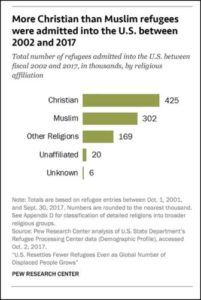
In the previous fiscal year, a record number of Muslim refugees were admitted. Pew noted 46 percent of refugees entering this country were Muslim, compared with 44 percent who were Christians.

“Even with the recent rise in the number of Muslim refugees, far more Christian than Muslim refugees have been admitted into the U.S. since fiscal 2002,” writes Phillip Connor, a senior researcher with Pew, in the new report.

In that 15-year period, almost 425,000 Christian refugees crossed U.S. borders, making up 46 percent of refugee arrivals. In comparison, 33 percent, or slightly more than 302,000, of admitted refugees were Muslim.

Almost 170,000 refugees of other religions entered at the same time, including about 55,000 Hindus (mostly from Bhutan) and about 50,000 Buddhists (mostly from Burma and Bhutan). In addition, more than 20,000 with no religious affiliation, mostly from Vietnam and Cuba, entered the United States between the fiscal years of 2002 and 2017.

In those 15 years, Christian arrivals represented nearly two dozen branches of Christianity, such as Armenian Christian and Ukrainian Orthodox. Those of non-Christian and non-Muslim faiths included Hare Krishnas and Zoroastrians.

Researchers found, overall, the United States is resettling fewer refugees even as the global number of displaced people is on the increase. If projections remain on track, the percentage of refugees admitted will be “lower even than the share admitted in 2001 and 2002, in the wake of the Sept. 11 terrorist attacks,” Connor said.

The Pew findings were based on analyses of reports from the U.N. High Commissioner for Refugees and the State Department.


Homecoming mum tradition gives way to hurricane relief

HOUSTON (BP)—Flood-soaked cardboard boxes of homecoming mums are among the debris lining the sidewalks and street curbs of many houses in the suburban Kingwood neighborhood north of downtown Houston.

For longer than people can remember how it started, high school students present their homecoming dates with a chrysanthemum bedecked with ribbons, glitter and other mementos. Texas students spend millions each year on these high school keepsakes varying in size from four inches to a foot in diameter, with price tags of $50 to $300.

Usually, these mums are a sure sign that high school football season is in full swing. But this year, the once-bustling hallways of Kingwood High are silent. The school is just one of the many damaged by flooding from Hurricane Harvey. It is not likely to reopen its doors this academic year; nine months or more of repair and rebuilding are in its future.

Three hundred miles to the north, students who normally would be placing orders for their own homecoming mums are instead going online to donate to hurricane relief. They plan to wear buttons and custom T-shirts as a replacement for the traditional mum.

Mums for Harvey

The Mums For Harvey hurricane relief fundraising idea originated at Crossroads Community Church near Van Alstyne.

Pastor Shawn Kemp said he certainly isn’t opposed to the homecoming mum tradition, but he believes at least a portion of the money families spend on mums can be used to help people affected by the hurricane and its massive flooding in Houston and Southeast Texas.

“This is an opportunity to take a beautiful Texas tradition and honor it by giving it new meaning,” Kemp said, noting the importance of students seeing opportunities to sacrifice “in order to meet other Texans’ needs.”

Kemp noted he and other Mums for Harvey organizers do not expect students to give up the tradition completely, but perhaps to “scale down” what they would usually do so a portion of that money can be used to help survivors of the hurricane and flooding.

“Some students won’t have a home at all this year,” he said.

Partnering together with the Collin Baptist Association Church Network, Crossroads Community Church launched a website which facilitates students to give to hurricane relief through the network’s disaster relief partnerships.

‘Better ways to spend that money’

Linda Smith of Wylie made her donation to Mums for Harvey when her granddaughter Jenna, a junior at Wylie High School, told her it was something they should do. So, she made two donations, one for Jenna and another for her to give to a friend.

“It really hit with the conversations that Jenna and I have been having,” Smith said. “She has been concerned about the other kids in the high schools in Houston and what is going on in their lives. She wanted her mum money to go to help.”

Giving and receiving mums is “a fun tradition,” Smith said, but she added: “There are a lot of better ways to spend that money. I give my granddaughter credit for recognizing that.”

Karen Rankin, who read about Mums for Harvey through a Facebook post, called it “the most ‘Texas’ a fundraiser has ever been.”

A Brownwood native who now lives in Las Cruces, N.M., Rankin said, “The first time I realized (the homecoming mum) was just a Texas thing was when we moved out of state in my junior year of high school.”

Kemp hopes students from across the state will participate in the opportunity to take an old tradition and give it a new twist.

“This is a chance for Texans to show the rest of the country how we respond when other people in our state are hurting,” he said. “We take care of our own. And that sense of caring extends to our teenagers as well.”

Marc Ira Hooks is associate director of missions for Collin Baptist Association/Church Network, as well as a photographer and former missionary to Eastern Europe.


Supreme Court dismisses travel ban challenge

WASHINGTON (RNS)—The Supreme Court dismissed a major challenge to President Trump’s travel ban on majority-Muslim countries because it has been replaced by a new version, sending the controversy back to the starting block.

The ruling Oct. 10 is a victory for the Trump Administration, which had asked the court to drop the case after Trump signed a proclamation Sept. 24 that replaced the temporary travel ban on six nations with a new, indefinite ban affecting eight countries. That action made the court challenge moot, the justices ruled.

“We express no view on the merits,” the justices said in a one-page order.

Clean slate

The decision effectively wipes the record clean in the U.S. Court of Appeals for the 4th Circuit, one of two federal appeals courts that had struck down major portions of Trump’s travel ban. That case began in Maryland.

A separate case from the 9th Circuit, based in California, remains pending because it includes a ban on refugees worldwide that won’t expire until later this month. But the Supreme Court is likely to ditch that case, which began in Hawaii, as well.

The challengers in both cases already have renewed their lawsuits in the lower courts, starting the legal process anew. In Maryland, a federal district court has scheduled a new hearing for next week.

But the new travel ban and the Supreme Court’s order vacating the 4th Circuit appeals court judgment puts the administration in a somewhat stronger position, at least for now.

The 4th Circuit case was brought by the International Refugee Assistance Project, which argued that banning travel from six majority-Muslim countries violated the First Amendment’s guarantee of freedom of religion.

Sotomayor dissents

Justice Sonia Sotomayor dissented from the court’s action. She would have dismissed the case but in a way that would have preserved the appeals court ruling against the ban, rather than vacating it.

Under its original schedule, the court would have heard the case Oct. 10, but the court had delayed oral argument after Trump replaced his earlier order. The new version followed a three-month review of immigration procedures.

The latest travel ban targets five countries included in two previous versions—Iran, Libya, Somalia, Syria and Yemen—as well as Chad, North Korea and Venezuela. Unlike the earlier bans, it treats some countries and types of travelers, such as students or tourists, differently than others.

The administration told the justices the new ban is “based on detailed findings regarding the national security interests of the United States that were reached after a thorough, worldwide review and extensive consultation.”

The ban’s challengers argued the case against the last version should go forward because many of the same travelers and their families are adversely affected—not just for 90 days, but indefinitely.

The American Civil Liberties Union, which brought the 4th Circuit challenge on behalf of the refugee group, had said charges of anti-Muslim discrimination still applied “despite some new window dressing”—a reference to the addition of North Korea and Venezuela.

Hawaii, which brought the 9th Circuit challenge, warned the justices elements of the earlier ban still could be revived, since Trump has said he wants a “much tougher version.”

This article originally appeared in USA Today and was distributed by Religion News Service.


Around the State: Maston Foundation honors Paynter; Parkway Place residents help employees after Harvey

Wendell Griffen, circuit judge and pastor of New Millennium Church in Little Rock, Ark., delivers the keynote address at the T.B. Maston Foundation’s awards dinner in Dallas. (Photo / David Clanton)

Suzii Paynter received the Christian Ethics Award from the T.B. Maston Foundation at its biennial awards dinner, Oct. 6 at Dallas Baptist University. Paynter is executive coordinator of the Cooperative Baptist Fellowship and former director of the Texas Baptist Christian Life Commission. Wendell Griffen, circuit judge of the 5th Division, 6th Judicial District for the State of Arkansas, and pastor of New Millennium Church in Little Rock, delivered the keynote address on “Prophetic Answers for Our Divisive Time.” Griffen challenged Christian to recognize they are part of “God’s big work” in the world, and God calls his people to “speak a different language” that is courageous, liberating and inclusive.

Parkway Place, a Buckner Retirement Services community in Houston, was unharmed by Hurricane Harvey. However, 31 employees of the senior living community lost nearly all their possessions. So, residents collected donations of money, clothing and cleaning supplies for them. They raised more than $17,000 to divide evenly between each employee.

Baptist Temple in San Antonio will celebrate its Highland Park Community Assistance Network ministries Nov. 19. Ferrell Foster, director of ethics and justice with the Texas Baptist Christian Life Commission, will preach in the 10:55 worship service. An open house will follow, and guests are invited to tour the network’s thrift store, client choice food pantry and community garden. Jorge Zayasbazan is pastor at Baptist Temple.

The University of Mary Hardin-Baylor will dedicate the Sue & Frank Mayborn Performing Arts Center Oct. 13. The ceremony begins at 1 p.m. in front of the new building on the corner of North Pearl St. and West Martin Luther King Jr. Ave. in Belton. A brief program will include remarks by Randy O’Rear, UMHB president, and Ted Barnes, dean of the College of Visual & Performing Arts. Following a prayer of dedication and the ceremonial ribbon cutting, the university will offer tours of the 40,725-square-foot facility. The $20 million building was completed debt-free.

John Ford (center) turns soil at the groundbreaking ceremony for the John and Nita Ford Village at Dallas Baptist University. With him are (left to right) Gary Witherspoon, Lee Roy Mitchell, Chancellor Gary Cook, President Adam Wright, Greg Ammons and Raymond Harris. (DBU Photo / Ryan Chrisman)

Dallas Baptist University broke ground for the John and Nita Ford Village Sept. 21. The 20-acre Ford Village will house about 500 future DBU students who will be involved in DBU’s first residential college. The first phase of building begins this fall with construction of a two-lane car bridge over O’Guinn Creek to access the land and the initial buildings of the residential college. John Ford long has been a leader in the North Dallas and Collin County business community and helped to establish DBU’s annual Tom Landry Leadership Award, which honors community leaders in Collin County and Arlington. Nita Ford has served 16 years on the DBU board of trustees and remained an active member of the DBU Women’s Auxiliary Board as well. She was honored with the Ruth Award in 2006, and he was awarded an honorary Doctor of Humanities degree in 2011.

Hardin-Simmons University’s “Lights, Camera, Free Ride” contest offers an incoming student a chance to win a one-year full tuition, room and board scholarship to the university. Prospective students create short videos to enter the contest, celebrating their “#going2HSU” decision and showcasing their dreams, expectations and reasons for selecting HSU. The grand prizewinner will receive a tuition, room and board (shared campus residence hall room and campus meal plan) scholarship, not including miscellaneous student and course fees for the 2018-19 academic year. The scholarship is valued at up to $40,000. The runner-up will receive an on-campus, shared residence hall room and campus meal plan, valued at up to $10,000, for the 2018-19 academic year. Up to 25 honorable mention winners may be awarded a $1,000 one-time scholarship to attend Hardin-Simmons University for the 2018-2019 academic year. The contest entry period ends Dec. 7. Online voting will take place Dec. 8 through Jan. 31. Winners will be announced at the Winter Preview event on Feb.17, 2018. See full contest entry information and official rules here.

At Volunteer Villages set up at churches along the Texas Gulf Coast, Texas Baptist Men volunteers are coordinating churches groups that are helping with recovery and rebuilding after Hurricane Harvey. Through the Volunteer Villages, workers have provided about 27,000 volunteer hours. TBM volunteers continue to serve in nine sites, providing disaster relief and recovery in partnership with Baptist volunteers from about two dozen other states. Through Oct. 8, they contributed more than 237,000 volunteer hours and made about 19,000 personal contacts. They have prepared more than 1.4 million meals, delivered more than 47,000 boxes for survivors to use, provided access to 20,000 showers and washed more than 12,000 loads of laundry. Heavy equipment operators have logged more than 1,000 hours. Volunteers completed mold mitigation in about 900 water-damaged homes. They have presented the gospel more than 1,100 times, distributed more than 4,700 Bibles and recorded 215 professions of faith. To contribute financially to TBM disaster relief, click here or send a check designated “disaster relief” to Texas Baptist Men, 5351 Catron, Dallas 75227.


On the Move: Cheatheam and Rake

Bob Cheatheam to Builders Baptist Church in Merkel as pastor.

Greg Rake to Calvary Baptist Church in Abilene as pastor.


Federal judge strikes down clergy housing allowance

MADISON, Wisc. (BP)—A federal judge in Wisconsin has ruled the U.S. tax code’s ministerial housing allowance is unconstitutional.

Unlike a previous attempt by the same judge to strike down the housing allowance, the latest ruling by U.S. District Judge Barbara Crabb could be upheld on appeal to the Seventh U.S. Circuit Court of Appeals in Chicago, said Mississippi College law professor Matt Steffey, law professor at Mississippi College.

The judge appears “bound by existing law to decide the case this way,” Steffey said. “The way the U.S. Supreme Court has interpreted the Establishment Clause” to forbid preference of religion over non-religion “dictates to a lower court, which must follow the existing Supreme Court precedent to arrive at this decision.”

Crabb’s Oct. 6 ruling eventually could be overturned by the U.S. Supreme Court if a majority of its justices are willing to change the high court’s longstanding interpretation of the First Amendment’s establishment clause, which is “possible,” Steffey said.

Codified as part of a 1954 law, the ministerial housing allowance permits ministers to exclude for federal income tax purposes a portion or all of their gross income as a housing allowance. The Internal Revenue Service has interpreted the law broadly to include religious workers of various faiths.

The benefit saves ministers an estimated $800 million annually, according to Christianity Today.

Favors religion over irreligion

Crabb ruled the ministerial housing allowance violates the Constitution’s establishment clause, which bans government-established religion, “because it does not have a secular purpose or effect and because a reasonable observer would view the statute as an endorsement of religion.”

As evidence of the law’s intent to favor religion over irreligion, Crabb quoted its congressional sponsor, Rep. Peter Mack, as stating during a 1953 hearing on the ministerial housing allowance, “In these times when we are being threatened by a godless and anti-religious world movement, we should correct this discrimination against certain ministers of the gospel who are carrying on such a courageous fight against this.”

In 2013, Crabb similarly ruled the ministerial housing allowance unconstitutional. But the Seventh Circuit overturned her decision, ruling the plaintiffs—the Freedom From Religion Foundation—lacked standing to sue.

The foundation is a plaintiff once again in the current lawsuit, arguing the IRS has violated the U.S. Constitution by refusing to permit its leaders to claim the ministerial housing allowance. This time, Crabb wrote in her 47-page opinion, the organization and its leaders have satisfied the appeals court’s requirements to attain legal standing.

Clergy need to live near where they serve

The Becket Fund for Religious Liberty, a conservative nonprofit legal group that represents some defendants in the case, argues Crabb’s ruling is in error.

“For nearly 100 years, pastors, rabbis, imams and other faith leaders—whose jobs require them to live close to their church or in an underserved community—have been eligible for the parsonage allowance,” a statement from Becket said.

“This tax provision ensures that faith leaders … receive the same tax treatment as other employees who must live in the communities they service—like military service members, teachers and overseas workers.”

“We have monitored this case and its predecessor cases closely and will seek as part of a long-standing coalition of ministerial benefit boards to file a friend-of-court brief on appeal at the appropriate time,” said O.S. Hawkins, GuideStone Financial Resources president.

“The housing allowance, far from being a government endorsement of religion, as Judge Crabb contends, actually removes government from the equation. Were it not for the housing allowance, the government would be imposing a tax on religious employers and their employees that is not imposed on non-religious employers.”

Regarding a potential Supreme Court reversal of Crabb’s ruling, “There are three justices who have expressed a willingness to read the establishment clause as permitting laws to prefer religion over non-religion,” Steffey said.

Associate Justice Neil Gorsuch has not been on the bench long enough to reveal his view on the issue, though it is possible he could side with housing allowance proponents, Steffey said. Associate Justice Anthony Kennedy likely would cast the deciding vote on the issue, he said.

No immediate effect on ministers

Churches “should be concerned,” but “it’s not a DefCon 1 situation that requires immediate action,” Steffey said, referencing the U.S. military’s highest state of alert. “But churches should follow this litigation.”

GuideStone advised ministers to consult the entity’s annual tax guide, available at GuideStone.org/taxguide, and its housing allowance information, available at GuideStone.org/housingallowance, to ensure they are properly documenting housing allowance and reporting it appropriately on their income tax returns.

“We continue to live and minister in a world that is increasingly hostile to religious life as compared to the world in which many of us grew up,” Hawkins said. “Rather than discouraging us, we seek to continue to serve as an advocate for hundreds of thousands of pastors and other ministers we have the privilege to serve.”

Crabb ordered both sides to submit briefs by the end of October on whether the plaintiffs should receive “additional relief.”

GuideStone officials said they anticipate a final judgment before the end of the year, which likely will be stayed while the case is appealed and have no immediate effect on ministers.


San Juan pastor serves meals, shares gospel after Maria

SAN JUAN, Puerto Rico (BP)—Hungry and thirsty two weeks after Hurricane Maria decimated Puerto Rico, a teenaged girl approached as Southern Baptist church planter Johnny Baez was serving beans, rice and filtered water.

“I’m hungry, and I don’t have nothing at home,” she told Baez. “And I just start walking to see if I find something to eat.”

Baez persuaded her to accept a meal at his church plant, Iglesia Bautista de la Familia Santurce—the Baptist Church of the Family in Santurce. The girl thought she was poorly dressed and had been too “embarrassed … to go inside a church,” Baez said.

Her story is only one in the community of Santurce, one of San Juan’s poorest. The island remains devastated after Hurricane Maria struck Sept. 20 with a wind force just shy of the 157-mph Category 5 storm ranking. While the official death toll from Maria is 36, funeral directors there say the death count might include dozens more.

‘Desperate to have food’

Pastor Felix Cabrera, a member of the Hispanic Baptist Pastors Alliance leadership council, has been in San Juan since Sept. 30 to help. Send Relief leaders and volunteers from the Southern Baptist Convention’s North American Mission Board began arriving Oct. 8.

“We are desperate to have food in our churches to start serving hot food in the communities,” Cabrera said.

In cooperation with the Hollywood, Fla.-based Come Over Ministry, an international church planting outreach led by Colombian native Martin Vargas, the Hispanic Baptist Pastors Alliance helped supply 12 power generators for churches. Vargas recruited Banyan Air Service and other private jet companies to transport the generators, Cabrera said.

“Unfortunately, right now we have other generators for churches, elderly homes, and food and water stuck in Fort Lauderdale,” Cabrera said. “But we haven’t found jets to transport these to Puerto Rico.”

Cabrera estimates as of Oct. 9, electricity has been restored for only 12 percent of the population.

Disparity between metro and rural areas

“We have two types of Puerto Rico—area metro and the rest of the island,” he said. “Area metro is returning to … normal, but the rest of the island is without electricity, water, food, medicines, etc. People are trying, they are working hard to move forward,” said Cabrera, pastor of Iglesia Bautista Central (Central Baptist Church) in Oklahoma City, Okla. The church’s church planting network has birthed two churches in Puerto Rico among 30 internationally.

“After Hurricane Maria, my people are like the people of Israel,” Cabrera said. “The remnant there in the province who had survived,” he quoted Nehemiah 1:3, “is in great trouble and shame. The wall of Jerusalem is broken down, and its gates are destroyed by fire.”

Cabrera, working with Vargas and Southern Baptist churches there, hopes to open temporary Help and Hope Centers in 12 churches to serve hot dinners.

“Many of our churches suffered damage. Many of our pastors lost or have damages at their homes,” Cabrera said. “Their church members are in great need, and many in our communities are waiting to see the church to rise up and serve those in need.”

On Oct. 9, Baez’s church plant in Santruce was the only Southern Baptist church offering hot meals. Open since Oct. 1, the church hoped to serve 500 meals in its first week, Baez said.

Adapting to adversity

Residents are skilled in adapting to adversity, Baez said, and feel blessed to eat one meal a day.

“They feel blessings because you know at least they are alive, and remember this was a hurricane that hit the whole island. It’s not a corner of this island that is not destroyed or affected,” he said, his sentence stopped by his own sudden tears.

“But we are alive—we are alive. God protected lives. They (survivors) say we don’t have food, but at least we are alive.”

Working without government assistance, Baez receives small donations of beans and rice from survivors. A donated two-gallon water filter makes hydrant water potable.

“Everybody’s waiting on the donations that come from the United States, but we don’t receive it yet,” said Baez, who grew up in Puerto Rico. “But people in Santurce are not eating, eating bread one time a day and no water.”

To buy food at the few supermarkets that have reopened, residents must stand in line as long as four hours to make purchases limited to small portions, Baez said. Waiting in the supermarket lines takes Baez away from the feeding ministry, where he also is able to offer the hope of the gospel.

“I think the best way to provide food was asking everybody to give a little bit, a little bit, and that’s the way we do it,” said Baez, working with a multidenominational group of area pastors.

“And we get people from everywhere. Pastors … come from far away to bring me rice, three pounds, five pounds, and that’s how we are doing now. They go to the supermarket, they buy a little bit, then they bring it and we cook it.”

“Little by little,” Baez noted, communities will get the help they need.


Religious exemption for employers expanded


WASHINGTON—The Trump Administration expanded the exemption for employers who cite moral or religious objections to providing their employees insurance coverage for birth control—including drugs that may induce abortions.

Representatives of some religious groups, including the presidents of two Baptist General Convention of Texas-affiliated universities that had challenged the birth control mandate, praised the announcement.

Others expressed concern the rule changes and particularly a related Department of Justice memorandum dealing with multiple religious liberty issues will continue to spark controversy.

Birth-control mandate

The Health and Human Services mandate of the Affordable Care Act—also called Obamacare—required employers to provide employees all Food and Drug Administration-approved preventive birth-control methods, including emergency drugs commonly known as the “morning-after pill” and the “week-after pill.”

Medical experts hold different views about whether the drugs prevent fertilized eggs from implanting in the womb or whether they simply delay ovulation, but some religious groups see them as equivalent to abortion.

In 2014, the Supreme Court ruled the Affordable Care Act could not require private corporations, such as the family-owned Hobby Lobby retailer, to offer insurance coverage for birth control methods they believed caused abortions.

The new rule expands that exemption to include other entities on the basis of religious beliefs, and a companion rule protects organizations and small businesses on the basis of moral convictions apart from religion.

Russell Moore, president of the Southern Baptist Convention’s Ethics & Religious Liberty Commission, called the action “a crucial step in the preservation of religious liberty.”

“The government has no business whatsoever forcing citizens to subsidize the destruction of human life and the exploitation of families and communities,” Moore said in a written statement to Baptist Press, news service of the SBC Executive Committee.

“More still, the contraceptive mandate revealed the audacity of a state that believed it could annex the human conscience, which is why I have long opposed it as an unlawful overreach asking citizens to choose between obedience to God and compliance with the regulatory state. A government that can pave over the conscience of some can steamroll over dissent everywhere.”

Two Texas Baptist schools respond

Five years ago, Houston Baptist University and East Texas Baptist University filed a lawsuit challenging the birth control mandate, asserting it required them to provide “abortion-causing drugs.”

The new HHS rule announced Oct. 6 is “a victory for common sense,” said Eric Rassbach, deputy general counsel for Becket, the religious liberty law firm that represented HBU and ETBU.

A federal judge in Texas ruled in 2013 the mandate violated the schools’ religious liberty rights, but the 5th U.S. Circuit Court of appeals overturned that decision in 2015. (http://www.ca5.uscourts.gov/opinions/pub/14/14-10241-CV0.pdf)

However, Becket officials noted the new HHS rule aligns with several Supreme Court decisions, including last year’s ruling in Zubik V. Burwell.

“We are glad the government has finally listened to the Supreme Court,” HBU President Robert Sloan said. “Our missions has always been driven by our faith, and all we have ever wanted was to live out that faith in every aspect of what we do.”

ETBU President Blair Blackburn likewise praised the new rule.

“We are thankful that HHS has seen the light and issued this new rule,” Blackburn said. “Our goal is to provide excellent Christ-centered education while remaining true to our Baptist beliefs. This case is at the core about protecting the constitutionality of our institution’s religious liberty to follow the tenets of our faith rooted in God’s truths.”

The Affordable Care Act exempted religious organizations such as churches from the mandate, but the exemption did not originally extend to faith-based institutions such as hospitals and universities that are open to the general public.

Later, the Obama Administration added a provision that allowed employees of such institutions and organizations to receive the mandated coverage through a third party insurance provider.

Some religious organizations—including GuideStone Financial Services of the Southern Baptist Convention—filed suits asserting a provision requiring them to let the government know in writing of their decision to opt out made them complicit in providing abortion-causing birth control methods.

GuideStone President O.S. Hawkins praised the new HHS rule as “good news for all Americans who value the importance of religious liberty in our nation.”

Attorney General memo causes concerns

In addition to the HHS rule changes, Attorney General Jeff Sessions also issued on Oct. 6 a Department of Justice memorandum regarding federal law protections for religious liberty.

The memo—which not only deals with the birth control mandate but a variety of religious liberty matters—likely will prompt further controversy, said Holly Hollman, general counsel for the Baptist Joint Committee for Religious Liberty.

“In large part, the guidance restates much settled law, though with a decided tilt toward concerns of free exercise, giving short shrift to the government’s duty to avoid no-establishment concerns,” she said.

“In a couple of areas, the guidance will exacerbate controversy. The guidance treats complicated legal issues, such as the definition of ‘substantial burden’ on religious exercise and the interplay between religious autonomy and government funding, in an overly simplistic way.”

Barry Lynn, executive director of Americans United for Separation of Church and State, offered a pointed critique of the Sessions memo. He particularly singled out language that he insisted gives federal government workers the right to use their religious beliefs as a reason to discriminate against or deny services to certain people.

“Anyone who cares about civil rights, fairness and equality has to pay attention right now,” Lynn asserted. “Treating one faith or one group of people as second-class citizens threatens the religious freedom that protects us all.

“Religious freedom doesn’t give anyone the right to use religion as an excuse to harm others. But today the Trump Administration is giving the Religious Right exactly what it wants. The guidance is a roadmap for how to discriminate against most anyone, including women, LGBTQ people and religious minorities.”


North Texas megachurch’s decision spurs talk of trends

HIGHLAND VILLAGE (BP)—The decision of a Dallas-area megachurch to transition its six campuses into autonomous churches illustrates what some see as a trend in the multisite model.

Still, analysts who study multisite ministry say it remains a viable missions and evangelism strategy for healthy churches.

Matt Chandler, pastor of The Village Church, announced Sept. 24 the church’s five campuses will all become autonomous congregations by 2022 to maximize the “capacity to contextually reach the city of Dallas with the gospel of Jesus Christ.”

The Village Church—which has draws about 11,400 in attendance—previously transitioned one campus to an independent congregation in 2015, Christianity Today reported.

“We’re all a bit anxious right now … because the church’s current ministry model really is beautiful, and God has done some stunning and spectacular things,” Chandler, president of the Acts 29 church-planting network, said in a video. “We’re just compelled that there are better days ahead.”

In addition to congregational autonomy, the transition will entail moving to onsite preaching all the time at former satellite campuses rather than video messages by Chandler 38 to 40 Sundays per year.

The transition is driven by The Village Church’s commitment to local ministry and church planting, Christianity Today reported

Tennessee church makes transition

Multisite churches in Nashville and Kansas City have adopted a similar strategy.

Over the past year, Nashville-area Long Hollow Baptist Church in Hendersonville, Tenn., transitioned three of its four satellite campuses to autonomous churches. Pastor Robby Gallaty cited a desire to “develop and deploy” localized pastors as a motivation for the transition.

Previously, Gallaty delivered the sermon at satellite campuses via video while other elements of the service were conducted onsite.

The discipleship model at Long Hollow is to “develop and deploy people to be disciples who make disciples,” Gallaty said. “I felt like we were replicating every position but the senior pastor, the preaching pastor at the church” and therefore not fully executing the discipleship strategy.

Each campus pastor needed the freedom to lead through his preaching and cast a vision for contextualized local ministry, Gallaty explained.

Long Hollow still has one satellite campus 15 minutes from its main campus, and Gallaty plans to “rotate back and forth between the campuses” and preach live.

“I’m hearing more and more pastors” speak of converting satellite campuses into autonomous churches, Gallaty noted.

Kansas City church at ‘a fork in the road’

In Kansas City, Mo., Lenexa Baptist Church announced in August plans to transition three campuses to autonomous churches.

“We’re at a fork in the road,” Pastor Chad McDonald told the congregation in a sermon. “We can hold (and) control” the campuses, “or we can release them and unleash them for the glory of God.”

Lenexa’s campuses, McDonald explained, were birthed from a desire to help struggling churches revitalize. Now that three campuses, which began as partnerships with declining congregations, are able to sustain themselves financially and in terms of leadership, it makes sense to commission them as independent churches, he said.

A fourth campus will become a church plant, with continuing financial and leadership help from Lenexa, said McDonald, who is conducting a doctor of ministry research project at Midwestern Baptist Theological Seminary on the multisite model as a means of church revitalization and church planting.

McDonald hopes unleashing thriving satellite campuses as autonomous churches “will become a trend.”

“Certainly, what The Village Church and Matt Chandler are doing will go a long way in driving this as a trend, and I praise God for their faithfulness and example,” McDonald said via email.

“I believe that this method of bringing churches in and unleashing them back out is one of the best methods for church planting and revitalization, and I pray it grows in popularity and pervasiveness in our denomination.”

Trend? Not so fast

Scott McConnell, executive director of LifeWay Research and author of a 2009 book on multisite churches, said while “there have been several examples of multisite churches making campuses independent churches … overall, we do not see this as a trend.” The number of multisite churches in America is not declining, he said.

“Multisite is a tool,” McConnell said in an email. “It is not a goal or a destination. It is still an effective tool for healthy churches to use to reach more people in more places. When factors that made multisite make sense change (such as leadership changes), then it is something the church should reevaluate.

“Many multisite churches start campuses and help plant churches. So it is not an either/or decision.”

Rick Wheeler, lead missional strategist for the Jacksonville (Fla.) Baptist Association, has advised about half a dozen churches considering the multisite model. Among them was Shiloh Metropolitan Baptist Church, a predominantly African-American congregation, which adopted a struggling, predominantly white church as a satellite campus in 2015.

“Multisite is going to be one of many church multiplication strategies that churches are going to continue to use to extend their reach in a community or across a region,” Wheeler said.

The multisite model is “not a good idea” when “you’re just trying to grow,” Wheeler said. “You have to have a sense of calling to a particular community, a particular people group that you’re trying to reach. All of the churches I know that have gone multisite successfully made a considerable effort to understand from a missionary standpoint the people that they were trying to reach in this new community where they were entering.”

Interest in the multisite model remains high, Wheeler said, noting representatives of about 20 churches in the Jacksonville Association attended a luncheon on the topic earlier this year.

The multisite model “is something that’s not going to go away,” Wheeler said.