Mark Lowry stays true to ‘Humble’ beginnings in Texas

By Leann Callaway / Special to the Baptist Standard

HUMBLE—With a unique gift of communicating biblical truths through music and storytelling, Grammy Award-winning recording artist and comedian Mark Lowry desires to connect with audiences of all ages.

“I want people to leave the shows knowing that God is crazy about them,” he said. “It’s mainly Christians who are attending these shows, and hopefully, they are bringing friends who don’t know the Lord. I want people to hear about the Lord in a way that is attractive and leads them to want a personal relationship with him.”

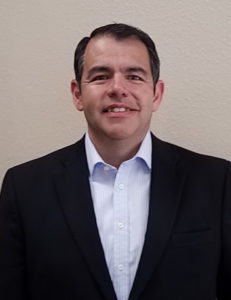
Mark Lowry

For more than 20 years, Lowry sang baritone with the Gaither Vocal Band and served as the comedic sidekick on Bill Gaither’s live concert tours and best-selling “Homecoming” video and television series.

In spite of the success, Lowry focuses on shining the spotlight on Christ and stays true to his “Humble” roots in Texas.

“I started singing in church when I was 4,” Lowry said. “Back then, my family went to Berean Baptist Church in Humble, and we started going there after the pastor led my grandfather to the Lord. When I was 11, I recorded gospel music for a couple of years. Then, my voice changed and ended all that for a while.”

As a student at Liberty University, Lowry initially focused on pursuing a business degree, but he felt God calling him into music ministry.

“I actually tried everything I could do to avoid going into this ministry, but it became so clear that the Lord was opening doors and calling me to pursue music ministry,” he said.

“The humor came along by accident, really. I had to do something between the songs when people were staring at me. Back then, you needed a few seconds in between songs for the sound guy to change the soundtrack. Since those few seconds of silence can be nerve-racking, I would tell stories about my life. When I heard people start laughing, I knew they were listening. I did that for eight years during the early 1980s, and I would sing in 200 churches a year. Then Bill Gaither came along, and that changed everything.”

Lowry joined the Gaither Vocal Band and signed a solo recording contact.

He also gained national recognition as the co-writer of the Christmas classic, “Mary, Did You Know?” The song has been recorded more than 400 times by artists as varied as Pentatonix, Reba McEntire, CeeLo Green, Michael English, Kenny Rogers, Sandi Patty and Rascal Flatts.

With his music and message, Lowry desires to connect audiences to God’s unfailing love and grace, which is the theme for his newest album, What’s Not To Love?

“If you listen to the album from the beginning to the end, it sets the tone about the goodness of the Lord and takes you on a journey about his love,” Lowry said. “If there’s ever a time in our country when God’s love is needed to be shown, it’s now.”

Throughout his musical journey, Lowry says he has learned valuable lessons, including realizing God’s plans are far greater than he ever could imagine and there is still a story to be told.

“A few years ago, I went through a burn-out period and went away for two years,” he recalled. “One thing I’ve learned is when the plane is out of gas, it’s coming down. You can either land it or crash it, but it’s coming down. A lot of people will crash and run away. But I’ve learned through the years, it’s better to face the music, land the plane, get off the road and get refreshed.

“I really didn’t think I would have new material, so I went away for a while. It was during that time that the Lord gave me some new songs and new things to talk about. I’ve learned that you have to pace yourself throughout this journey so you don’t crash.

“It’s funny because just when I was about to retire again, the Lord dropped all these songs in my lap. God has been reminding me not to worry about what comes next, because he is taking care of the details and that he created me for this purpose. The plan is just to keep telling people that God is crazy about them.”


Obituaries: Roger W. Hall and Robert Perry Kite

Roger Warren Hall, former treasurer and chief financial officer for the Baptist General Convention of Texas, died Sept. 23 in Enterprise, Ala. He was 73. Hall was born Oct. 9, 1943, to Ralph and Nadine Young Hall and grew up in Missouri. He served in Vietnam as a captain in the U.S. Army with logistics and military intelligence. Eight months of his service was at Chu Lai, where he commanded a company of 220 men and briefed a two-star general twice daily on troop movements. He earned his undergraduate degree from Southwest Missouri State University in Springfield and graduated summa cum laude from Midwestern Baptist Theological Seminary in Kansas City with his Master of Divinity degree. Hall was a certified public accountant and ordained both as a minister and a deacon. He was treasurer of the Missouri Baptist Convention, vice president of financial affairs at Midwestern Baptist Theological Seminary and vice president of development at Southwest Baptist University in Bolivar, Mo. He served nearly two decades as BGCT treasurer and CFO. During his time in that role, giving to the Cooperative Program unified budget increased 12.5 percent and BGCT assets, including endowments and capital assets, grew 216 percent to more than $164 million. He was elected to multiple consecutive terms as recording secretary for the BGCT and vice president of finance for Texas Baptist Men, chaired the Baptist Standard board of directors and served on the boards of numerous non-profit ministries. In retirement, he served in administrative roles at Dallas Baptist University, Cowboy Church of Ellis County and First Baptist Church in Waxahachie. He was awarded honorary doctorate degrees from DBU and Southwest Baptist University. He is survived by his wife, Donna Hall of Enterprise; daughter Tracy Lyn Hall-Ross of Springfield, Mo.; daughter Leslie Diane Mynatt and her husband Michael of Enterprise; four grandchildren; a brother, John Hall of Rolla, Mo.; and a sister, Sue Snodgrass of Springfield, Mo. A memorial service was held Sept. 27 at Hillcrest Baptist Church in Enterprise, Ala. Another memorial service will be at 10 a.m., Oct. 6, at First Baptist Church in Midlothian. A graveside service will be held at the National Cemetery in Springfield, Mo. In lieu of flowers, the family requests memorial contributions to the Acts 1:8 missions offering at Hillcrest Baptist Church in Enterprise or to Texas Baptist Men disaster relief.

Robert Perry Kite, a deacon emeritus at South Garland Baptist Church in Garland, died Sept. 22. He was 91. He was born Aug. 27, 1926, in Bells and grew up in Bells and Palestine. He enlisted in the U.S. Navy in World War II. He was a small boat coxswain on the U.S.S. LST-1040 in the Philippines and Okinawa, and he earned four medals for meritorious service. After the war, he worked for Earnheart Funeral Home in Whitewright. He graduated from the Dallas Institute for Mortuary Science, attended Austin College in Sherman and received an undergraduate degree from Southeastern State University in Durant, Okla. He was named dean of the Dallas Institute in 1953, and he was appointed its president in 1963, a position he held until his retirement in 1992. He was twice president of the National Association of Colleges of Mortuary Science and for two years was chairman of the American Board of Funeral Service Education. He was a charter member of South Garland Baptist Church, where he served as a deacon chair, Sunday school director, trustee, greeter and member of various committees. He is survived by his wife of 67 years, Thelma; his daughter, LeAnn Hampton, and her husband, Jeff; and numerous nieces and nephews.


State officials urge FEMA funding for houses of worship

WASHINGTON (RNS)—Texas officials wrote President Trump urging him to follow up on his tweeted endorsement of federal disaster relief for churches after Hurricane Harvey.

“Regrettably, due to a FEMA policy whose terms predate your administration, the same churches that are playing an instrumental role in the recovery effort cannot receive disaster relief funding to rebuild their own buildings,” wrote Gov. Greg Abbott and Texas Attorney General Ken Paxton in a Sept. 20 letter to the president.

In a Sept. 8 tweet, Trump said, “Churches in Texas should be entitled to reimbursement from FEMA Relief Funds for helping victims of Hurricane Harvey (just like others).”

Citing that statement, the Texas officials told him: “We couldn’t agree more, and we write to propose that your view is consistent with federal law and constitutional standards.”

The Federal Emergency Management Agency’s Public Assistance Program and Policy Guide lists among “ineligible services” provided by private nonprofits “religious activities” that include worship and religious instruction.

“Churches have opened their doors to feed, shelter, comfort and rebuild their communities—even hosting FEMA operations in the process—but this policy has made those very same churches ineligible for assistance because their primary use is, by nature, religious,” Abbott and Paxton wrote. “That should change.”

They cited the Supreme Court’s recent decision in Trinity Lutheran Church of Columbia v. Comer as justification for a policy change in which the president could include houses of worship under the definition of eligible “private nonprofit facility.”

In June, the high court ruled 7-2 in favor of a Missouri church that claimed religious discrimination after it was refused state funds to improve its playground.

The Texas officials’ letter follows a Sept. 4 lawsuit filed by three churches in the state that were damaged by Hurricane Harvey. They are challenging the current FEMA policy, which “explicitly denies equal access to FEMA disaster relief grants for houses of worship solely because of their religious status,” according to the lawsuit.

“The churches are not seeking special treatment; they are seeking a fair shake,” it states.

Maggie Garrett, legislative director of Americans United for Separation of Church and State, wrote in a blog post reacting to the suit that houses of worship are eligible for government loans to help them rebuild and for government reimbursement for services provided at the request of local officials, such as providing shelter due to a storm. But her organization opposes changing FEMA’s current rules.

“Here’s the bottom line: The government is not in the business of building churches, synagogues and mosques—even after a terrible disaster,” she wrote. “That is at the core of the First Amendment, and we must stand by it in good times and in bad.”


Conditions in Puerto Rico complicate Baptist relief efforts

ALPHARETTA, Ga. (BP)—Hurricane Maria knocked power out for nearly the entire population of Puerto Rico, leaving the island’s infrastructure devastated and complicating Southern Baptist disaster relief ministries.

Initial reports estimate it will take months before services can be restored completely.

The Federal Emergency Management Agency asked Southern Baptist disaster relief on Sept. 21 to send teams to the island to start serving up to 200,000 meals a day.

Sam Porter, national director for disaster relief at the Southern Baptist Convention’s North American Mission Board, worked with state Baptist disaster relief leaders to mobilize a response.

Within three hours, “We had kitchens capable of feeding 100,000 meals a day committed to be driven to Florida, packed onto boats and shipped to Puerto Rico,” Porter said.

Initially, his office hoped to have volunteers in Puerto Rico by Sept. 25.

However, he soon learned the extent of damage in Puerto Rico made the situation extremely volatile, temporarily complicating Southern Baptists’ ability to get to the island and work there.

‘The whole world is watching’

When Irma smashed through the Atlantic and the Caribbean a week and a half earlier, the damage sustained in Puerto Rico was severe, but the island avoided a direct hit.

A Southern Baptist disaster relief kitchen from Alabama had been diverted from Puerto Rico to the U.S. Virgin Islands at the request of officials because of the damage sustained there. That unit, along with another, will serve 5,000 meals a day in the Virgin Islands.

“The whole world is watching what’s happening with these historic storms,” Porter said. “Our response will tell Puerto Rico and the Virgin Islands that ‘Southern Baptists care about you.’”

When conditions allow it, the goal is to have between six and 10 kitchens sent to Puerto Rico, Porter said. Between 200 and 300 volunteers will be required to operate the kitchens and serve the meals.

Volunteers ‘tired and weary’

Porter said volunteer fatigue is a significant concern right now, in the wake of Hurricanes Harvey and Irma.

“A lot of our teams are tired and weary. We really need more Southern Baptists to step up in a big way in the next month,” he said.

David Melber, vice president of Send Relief at NAMB, noted Southern Baptists will provide support packages to pastors of Baptist churches in the U.S. Virgin Islands and Puerto Rico. The packages will include generators, food, water, financial resources and additional items as needs continue to be made known.

“Our desire is to affirm the position of the local church in all the response areas,” Melber said. “Our goal is to get the local church positioned to be the pillar in the community. We also want to make sure local pastors are supported and empowered to lead their churches.”


Pillowcase ministry offers comfort to foster children in Beaumont

BEAUMONT—For foster children who frequently move from home to home, having an item to keep along the way can make them feel at home, which is important when coping with intense emotions.

In 2011, Belinda Gibson and Clarice Miller believed every child in Buckner’s Children’s Village in Beaumont should have something to call their own. So, they decided to give each child a handmade pillowcase with his or her name on it.

“I believe that it is God’s will to do this,” Gibson said. “Getting something with their name on it can make them feel special and give them a sense of belonging.”

Gibson and Miller, both members of First Baptist Church in Groves, started the ministry, making each pillowcase in their homes.

Unique designs

Rhonda Robichau, gift officer for Buckner in Beaumont, sends them the names and ages of every child who comes into the Children’s Village. Immeditely, the two seamstresses pray for each child.

“Following prayer, our Lord reveals in our minds what kind of design to sew onto each pillowcase,” Gibson said.

“No pillowcase is alike. We take a picture of every pillowcase to make sure no design is duplicated.”

To the children, these are more than pillowcases. This is a unique way to say, “This is my bed,” the women noted. The children show their gratitude for the pillowcase ministry by sending them written stories and thank you letters.

One day, Gibson stopped by the Children’s Village for a brief visit, but she was not expecting all the children to recognize her. They ran to her, thanking her.

One of the children recently had arrived at the Children’s Village and had not yet received a pillowcase.

“Will my pillowcase come soon?” she asked.

Something special

That’s when Gibosn learned how important the pillowcases were to the children.

“Rhonda told me there was a little girl who was so tiny, she would cuddle up inside of her pillow case and use it as a sleeping bag while she watched TV,” Gibson said.

Not only are the pillowcases special to the children, they are special to their creators, as well. It is something they do to fulfill God’s will and show the children they care about them.

“Making these pillowcases became special to us very quickly,” Miller said. “Kids are very important to me. I’ve been looking for a way to help children, and God showed me this is it.”

Since they started the pillowcase ministry, the two women have sewn 540 pillowcases and plan to start making blankets for the infants in the Children’s Village. They hope the pillowcase ministry will plant seeds of hope, enable the children to sense God’s presence and recognize his redemptive purpose for their lives.

“We are going to continue doing this until the Lord tells us to stop,” Gibson said. “And even then, I hope someone will take over and continue what we started.”

Odufa Atsegbua served as a summer intern with Buckner International.

EDITOR’S NOTE: This article originally was published Sept. 27, 2017. It was revised Oct. 5, 2017 to clarify and correct several items.


Huffman provides shelter and hope in midst of recovery

HUFFMAN—Soon after darkness fell and waters rose as Hurricane Harvey made landfall, Christians came together to offer Texans a glimmering beacon of hope.

Mike Martin, pastor of First Baptist Church of Huffman, made several visits around his community before heavy rains hit. He stopped at the local volunteer fire department and told them the church wanted to help. Within an hour, the fire department contacted him and asked if the church could be used as a shelter.

Church rallies to meet needs

By the time the storms arrived in Huffman, northeast of Houston, church members had gathered blankets, water and clothing for the hundreds of people from their community who showed up to the church doors seeking shelter from the storm.

First Baptist Church in Huffman transitioned from serving as a shelter to operating as a distribution center for emergency supplies after Hurricane Harvey. (Photo courtesy of Mike Martin)

By Sunday night, Aug. 27, the Harris County Sheriff’s Department made First Baptist in Huffman into not only a shelter, but also a temporary headquarters.

The water continued to flow for the next 24 hours, as volunteer firefighters and civilians began going into neighborhoods to rescue people from their homes and bring them to the church.

“People were coming off of boats, waist-deep in water,” Martin recalled.

Along with hundreds of people, the church also sheltered about 100 animals. Even though the church building sustained significant damage from the weather, members did not give a second thought to helping others.

“People needed the help, the safety and the hope that our church gave them on those first nights. There was such a great need, that we had to be a shelter,” Martin said. “God’s people responded to our needs from all over the country.”

First Baptist received supplies and assistance from other churches as the congregation provided neighbors food and shelter.

“Those first two nights, I watched as hero after hero did their part—whether it was cooking in the kitchen or going out into the waters,” Martin said. “I saw all denominations and races come together. It was a time of disaster and tragedy, but our community and churches and schools came together to shelter over 600 people.”

Serving as a distribution center

After four days as a shelter, the church began transporting the flood victims to a stadium in Houston that offered better facilities and more resources. At that point, First Baptist transitioned from a shelter to a distribution center.

As a drive-through distribution center for emergency supplies, First Baptist Huffman served about 500 cars a day for two weeks. (Photo courtesy of Mike Martin)

First Baptist continued to feed hot meals to people in their community. Meanwhile, as a drive-through distribution center for bottled water, groceries and cleaning supplies, the congregation served about 500 cars a day for two weeks.

In mid-September, a care team from the church went out into the community, surveying neighborhoods to assess the physical, emotional and spiritual needs of the people, Martin said.

“Since many in our community do not have flood insurance, we’re partnering individual homeowners that suffered from the hurricane with willing churches to help rebuild their homes,” he said. “We can’t remodel Houston, but we can help them with labor and materials as we’re able to.”

While all of this is happening, Martin and volunteers from his congregation worked feverishly to refurbish their church from the storm’s damage in order to get their Sunday school program up and running again.

Showing love and sharing faith

First Baptist is working not only to help rebuild the town, but also the people living in it. Church leaders held countless spiritual conversations with storm survivors, many of whom made new or renewed commitments to Christ.

Clearly, God was making something beautiful out of a disaster, Youth Pastor Josh Campbell observed.

“Through the heartbreak and pain, everyone had this hope in the midst of despair, because of what Christ had done for them. Even through all of this, God’s still good and he’s going to fix things, whether that means building houses or mending relationships,” he said.

First Baptist in Huffman did not wait for instructions or direction to meet needs in their community. Instead, as they made themselves available, God rescued lives and saved souls through their efforts. The tragedy became a platform for the church to tell people about the love of Jesus.

“There are a lot of pastors right now in the Houston area that have worked tirelessly in their communities. I would encourage the churches to remember these ministers and remember their churches in prayer,” Martin said.

“The love of God’s people here in Texas for me and my church is evident just by the outpouring of people reaching out. I just want to say ‘thank you’ to Texas Baptists and my friends.”

For more information on how to help people affected by Hurricane Harvey, visit http://texasbaptists.org/harvey-response.


BUA posicionada para afrontar nuevos retos, dice nuevo presidente

SAN ANTONIO—La visión que los bautistas en Texas tenían para la escuela que ahora se conoce como Universidad Bautista de las Américas (BUA, por sus siglas en inglés) ha cambiado desde su creación en 1947—esto no es un retroceso, sino una inversión.

Hace sesenta años, los bautistas en San Antonio fundaron la escuela para enseñar a México-Americanos que buscaban servir en el ministerio. Ahora BUA prepara a personas de diferentes antecedentes para servir a Cristo en contextos multiculturales.

La institución que la Asociación Bautista de San Antonio creo como el Instituto Bíblico Mexicano Bautista tomó otros nombres al pasar de los años. En el 2003 se convirtió oficialmente en BUA, cuando también empezó a ofrecer licenciaturas.

BUA ofrece cinco licenciaturas y un título asociado.

Pero para Abraham Jaquez, hay cosas nuevas que están empezando en la escuela.

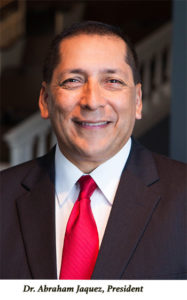
Hace un mes que Jaquez se convirtió en el octavo presidente de BUA. El antes había servido como director executivo de los servicios de Buckner para infantes y familias en Dallas.

“Nuestra meta es educar a estudiantes bilingües y de dos culturas,” Jaquez dijo.

Un significativo segmento de la población en Texas ha sido ignorado—jóvenes hispanos que tienen que decidir si continúan su educación o ayudan a sus familias económicamente, él dijo.

BUA existe para proveer una oportunidad a los estudiantes quienes, “por una variedad de razones no pueden continuar sus estudios,” Jaquez dijo.

La meta es entrenar a “pastores hispanos para que tengan la oportunidad de estudiar y las herramientas que la educación da,” el agregó.

Muchas iglesias hispanas han tenido que depender de ministros que no tenían la educación necesaria, Jaquez observó.

Cerca del 60 por ciento de los hispanos que trabajan en las iglesias en Texas, fueron estudiantes de BUA, una buena muestra del trabajo de una universidad que ha existido por 14 años. Pero Jaquez insiste que BUA todavía tiene mucho que aprender.

Jaquez sabe que vienen muchas pruebas, y que BUA está preparada para enfrentarlas. San Antonio y Austin están creciendo—se están expandiendo una hacia la otra para convertirse en la siguiente metrópolis de Texas.

Con la presencia de la Convención en San Antonio, Jaquez cree que BUA va a estar posicionada estratégicamente para convertirse en un eje del ministerio hispano en Texas.

Pero el enfoque no solo es con los hispanos.

Como se ha visto recientemente, los colegios con carreras de dos años han crecido, y muchos ven la necesidad de universidades con más bajos costos en Texas. BUA es reconocida como una de las escuelas más económicas del estado, y Jaquez entiende porque más y más jóvenes quieren una escuela que les haga creer que “la educación superior es posible.”

Este semestre, 238 estudiantes se inscribieron en BUA, y Jaquez quiere estar disponible a ellos y conectar con sus necesidades. Es por eso que él y su familia viven en el campus, dijo Jaquez.

BUA recibe a estudiantes internacionales—no solo de América Latina, pero también de otras partes del mundo. Así que Jaquez y el resto de la facultad de BUA reconoce que la educación que proveen es una inversión para las iglesias en todas partes del mundo.

Ya sea en Texas, México, o Sudáfrica, BUA quiere “proveer trabajadores para las iglesias alrededor del mundo,” y esto se hace por medio de la educación que se da a los estudiantes que vienen de esos lugares, Jaquez dijo.

La interacción con las iglesias no puede solo empezar hasta que los estudiantes se gradúen, Jaquez agregó. BUA se tiene que asociar con las iglesias, para que los pastores ayuden a formar y guiar a los jóvenes, y se pueda confiadamente recomendar a BUA a aquellos que están pensando en su futuro.

BUA desea ser la escuela para las personas que quieran ser líderes en las iglesias que los necesitan, Jaquez dijo.

“Veo ese deseo en sus corazones,” él dijo. “Solo queremos ayudar a desarrollar su perspectiva bíblica y teológica.”


La Convención hace cambios para atender nuevas necesidades

El trabajo de la Convención General Bautista de Texas con los hispanos existía antes que la Convención Hispana Bautista de Texas estableciera sus oficinas con un director executivo siete años atrás. La Convención, un nombre que muchos usan para referirse a la Convención Hispana, quería hacer mucho más para responder a las necesidades que había, dijo el director executivo, Jesse Rincones.

Rincones ve a BGCT como una organización líder en el ministerio para hispanos. De hecho, él ve a BGCT como un modelo que otras convenciones Bautistas pueden seguir cuando se trata de hacer trabajo que conecte con los hispanos.
Aun así, existían vacíos que se tenían que llenar, dijo Rincones. Cuando la Convención empezó a actuar como socio independiente de BGCT hace siete años, Rincones piensa que se dio el mejor paso que se pudo haber dado después de 50 años de relación.

En los años ‘60s, bautistas del estado, tanto los anglos como los hispanos, creían que se había desarrollado buen trabajo en Texas. Existía la Academia en el Valle, y el Instituto Mexicano Bautista en San Antonio.

Pero para que el trabajo de los hispanos en Texas avanzara, los líderes de lo que antes era la Convención Mexicana Bautista de Texas decidieron entrar bajo el liderazgo de BGCT. Así, BGCT y la Convención firmaron el Acuerdo de Unificación de 1963.

El acuerdo sí ayudó a los hispanos bautistas en Texas de muchas maneras, pero no era un acuerdo sin errores, Rincones clarificó.

La estructura de Convención tenía problemas, ya que los presidentes eran elegidos por un periodo de dos años, con la posibilidad de reelección por un tercer año. Pero los presidentes eran ya pastores que ahora tendrían “dos trabajos de tiempo completo,” Rincones dijo.

“Tampoco había fondos para cubrir los viajes de los presidentes, ni para que ellos se comunicaran con las iglesias,” agregó.

Cuando la junta anual llegaba, los presupuestos que ya habían quedado hacían muy difícil que los presidentes pudieran proponer nuevas metas.

BGCT y la Convención revisaron el Acuerdo de Unificación tres veces después de que se hizo en 1963. Finalmente en el 2010, Rincones dijo, miembros del comite se dieron cuenta que las circunstancias habían cambiado.

Algunos proponían que Convención regresara a lo que era antes de 1963, una organización independiente con poca relación con BGCT. Otros sugirieron que continuara bajo BGCT, en el departamento de Ministerios Hispanos.

Rincones veía una tercera opción.

El reconocía que si los presidentes de Convención no podían encontrar fondos para viajar y comunicarse con las iglesias, entonces ese trabajo no funcionaria. Y aunque se pudieran presentar nuevas metas, no existirían los recursos para alcanzar esas metas.

Traería menos resistencia quedarse donde estaban y simplemente ir a las iglesias cada año y decirles que no había dinero para cubrir los costos de los programas que ellas habían sugerido. Pero Rincones sabía que una opción que se veía más difícil era también la mejor opción.

“Teníamos que ir a las iglesias y decirles, ‘si ustedes quieren llevar a cabo ésta iniciativa, entonces van a tener que dar los fondos para poder hacerlo,’” dijo Rincones. Para que eso pasara, la Convención tenía que hacerse su propia entidad.

En el 2010, la Convención celebró su centenario, y en muchas maneras, también celebró su nuevo nacimiento. Ya no era un departamento de BGCT, pero tampoco era una organización sin relación con BGCT. La Convención era ahora un socio de BGCT.

El censo del 2010 reportó que el 52 por ciento de las personas de 18 años y menos está en Texas, y el 49.3 por ciento de ese total son jóvenes hispanos. Eso va con un crecimiento del 39 por ciento en hispanos jóvenes de 18 años y menos, mientras que los anglos disminuyeron por un 7.4 por ciento.

Rincones pudo ver la necesidad de más trabajo con iglesias hispanas, y eso no era nada nuevo. El recuerda cuando era joven y notaba que en muchas iglesias hispanas no se tenía la misma calidad de trabajo que en las iglesias anglas

“Tenía la carga al ver que los jóvenes hispanos no recibían la misma atención por la circunstancias en las que estaban, o porque las iglesias no sabían cómo hacer ministerio con ellos,” dijo Rincones.

Seis de cada 10 Mileniales (jóvenes adultos que se hicieron mayores de edad alrededor del año 2000) y miembros de la Generación Z (la generación que viene después de los Mileniales) son hispanos, y muchos de ellos no han asistido a los servicios de iglesia en los domingos.

Los Hispano-Bautistas de Texas tienen que invertir en estos grupos ahora, Rincones insistió.

Conferencias como “Shine! Girls!” para jóvenes y niñas latinas, el programa de Liderazgo Joven Latino, y las becas que Dallas Baptist Universtity y East Texas Baptist University ofrecen a estudiantes hispanos, muestran la visión que la Convención tiene para el futuro. El seminario, Truett Theological Seminary de Baylor, ofrece ya también una beca, y está aceptando aplicaciones hasta el 15 de Octubre.

La Convención ofrece también a jóvenes líderes la oportunidad de desarrollar otras prácticas. Tres de los cinco miembros de la mesa directiva de la Convención son jóvenes latinos.

Ahora no es el tiempo para que las iglesias pierdan a otra generación de líderes hispanos, solo porque “no sabían cómo ministrar a esa generación,” Rincones dijo.

El ministerio hispano incluye a los de primera generación, quienes tal vez solo hablen el español. Pero la barrera del idioma desaparece cuando se trata de la segunda y tercera generación de hispanos. Rincones dice que las iglesias que quieran trabajar con hispanos tienen que ver a la cultura y no tanto el lenguaje.

Esos elementos culturales que distinguen a hispanos entre otros bautistas son el fuerte sentido de familia, y la preferencia de una alabanza vibrante.

En lugar de confiar en anticuados modelos de ministerio, las iglesias que quieran trabajar con hispanos tienen que entonces deshacerse de viejas ideas y usar modelos nuevos, dijo Rincones.

“Antes había misiones de 40 años que tenían una relación co-dependiente con las iglesias que patrocinaban esas misiones,” Rincones dijo. Pero cada decisión importante que se tenía que tomar en la misión, tenía que ser aprobada primero por la iglesia patrocinadora.

Calvary Baptist Church en McAllen ofrece un mejor modelo, Rincones reconoció. Rolando Aguirre, presidente de la Convención, sirve como pastor de Calvary en español.

“Con este modelo, los pastores de las iglesias de habla hispana son igualmente parte del equipo, y comparten los mismos recursos con el resto de la iglesia,” Rincones dijo.

Siete años después de que la Convención obtuviera su propia identidad, Rincones todavía tiene que explicarles a las iglesias qué es la Convención. Muchos ven a la Convención como un departamento de BGCT. Otros saben que la Convención y BGCT no son lo mismo, pero también hay quienes necesitan entender que las dos convenciones necesitan actuar como socias que buscan ayudar y asistir a las mismas iglesias.

“Nuestra iglesias van a ser más bendecidas cuando la Convención y BGCT trabajen juntas,” Rincones dijo. Eso se ve en el mensaje que Rincones da cuando visita a una iglesia: “No hay mejor inversión que en los ministerios de BGCT, así que ofrenden al Programa Cooperativo.”

La meta de la Convención es ayudar a que las iglesias hispanas crezcan más fuertes, y para que eso sea posible, se requiere de un compañerismo con BGCT, Rincones concluyó.


Around the State: BUA students serve; TBM volunteers continue providing disaster relief

Baptist University of the Americas students participated in the Set Apart Tour this summer, working on missions projects in multiple cities. (BUA Photo)

A dozen Baptist University of the Américas students served during the summer, either on the school’s mobile missions team or its worship missions team. Eight students participated in the “Set Apart Tour,” working in several cities to help lead Vacation Bible School or youth rallies, as well as preach, teach and work on construction projects. Four student musicians led worship and taught Sunday school classes at small-membership Hispanic churches in several Texas and Mexico cities. Congregations where the two teams ministered included Riverside Baptist Church in Fort Worth, First Baptist Church in Caldwell, First Baptist Church in Elmendorf, Alliance Church in Lubbock, Belen Baptist Church in Dilley, and Iglesia Bautista Galilea in Matamoros, Mexico, as well as Baptist Temple, Trinidad Baptist Church, Joshua House of Worship, Life Church and New Beacon Hill Church in San Antonio.

Texas Baptist Men volunteers continue to serve in 22 sites along the Texas Gulf Coast, providing disaster relief in partnership with Baptist volunteers from more than two-dozen other states. Through Sept. 19, they contributed more than 146,000 volunteer hours and made about 14,000 contacts. So far, they have prepared about 885,000 meals, delivered more than 42,000 boxes for survivors to use to reclaim and store their belongings, provided access to 13,000 showers and washed about 8,000 loads of laundry. Volunteers provided care for more than 900 children in shelters, completed mold mitigation in about 400 water-damaged homes and completed an equal number of chainsaw jobs. They have presented the gospel more than 800 times, distributed more than 3,300 Bibles and recorded 145 professions of faith. To contribute financially to TBM disaster relief, click here  or send a check designated “disaster relief” to Texas Baptist Men, 5351 Catron, Dallas 75227.

Worshippers participate in the Great East Texas Hymn Sing at East Texas Baptist University. (ETBU Photo)

More than 200 worshippers participated in the Great East Texas Hymn Sing at East Texas Baptist University Sept. 15. Worship leaders included Tim Ervin, Zachary Ervin, Bill Ingram, Dale Perkins, Stacy Perkins, Andrew Pressley, Tracy Speed and Tom Webster, along with the ETBU University Chorus and University Singers.

The Department of Education awarded Baylor University an annual $232,265 grant for five years to implement the Ronald E. McNair Post-baccalaureate Achievement Program. Named for NASA astronaut Ronald E. McNair, who died on the Space Shuttle Challenger, the McNair Program cultivates and prepares low-income, first-generation and underrepresented students in science, technology, engineering and mathematics fields for doctoral programs. As part of the program, students will conduct research with faculty mentors in the summer, present at conferences, participate in Graduate Record Examination preparation courses and receive assistance with graduate school applications. Baylor’s grant funding will support 25 to 30 students each year with substantial mentoring and community building along the way.

“Messenger for Peace” is one of the works on display at the University of Mary Hardin-Baylor.

“A Square Foot of Peace: An Invitational Exhibition Celebrating International Day of Peace” is on display in the lobby of the Baugh Center for Visual Arts on the University of Mary Hardin-Baylor campus Sept. 20 to Oct. 20. Helen Kwiatkowski, UMHB art professor, curated the exhibition in support of the International Day of Peace, Sept. 21. She invited artists to create 12”x12” works that reflected their thoughts about peace. For more information, email hseals@umhb.edu.

East Texas Baptist University’s theater department begins its season Sept. 28 with a performance of Lucas Hnath’s The Christians. The production will conclude Oct. 1. All performances will take place in the Baker Auditorium of the Ornelas Spiritual Life Center. The production features an ETBU student cast and will be directed by Traci Ledford, theater department chair. Admission is $10.

Retirement

Duane Perkinson after 48 years in fulltime ministry at churches in Arkansas, Oklahoma and Texas and 20 years as pastor of Central Baptist Church in Burkburnett. He served three terms on the Baptist General Convention of Texas Executive Board and is moderator of Wichita Archer Clay Baptist Association. A reception is scheduled Sept. 30, 2 to 4 p.m. in the family life center at Central Baptist Church in Burkburnett. He preaches his final sermon as pastor at Central Baptist Oct. 1.


Despite Harvey’s horrors, survivors experience God’s grace

HOUSTON—Survivors of Hurricane Harvey have experienced God’s grace in the aftermath of one of the worst natural disasters in U.S. history.

“Harvey was one big, bad storm, but so many good things have come out of it,” said Panha Mey, pastor of Cambodian Baptist Church of Houston.

The congregation has ministered to Cambodian refugees in nearby Rosharon, where the hurricane flooded nearly the entire community.

“We’ve seen neighbors talking to neighbors, churches working with churches,” Mey said. “That’s the redeeming work of Christ.”

Angels followed after storm’s devilish blow

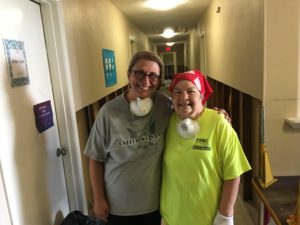
Ana Garcia, community ministries leader at Templo Bautista de South Houston, and Joyce Deffern from First Baptist Church in Abilene work together on Hurricane Harvey recovery. (Photo courtesy of Ana Garcia)

Ana Garcia, a community ministries leader at Templo Bautista de South Houston, knows Harvey dealt a devilish blow to the Texas Gulf Coast. But she’s sure she’s seen angels following in his path.

Cambodian Baptist and Templo Bautista, both located near Hobby Airport southeast of downtown Houston, have helped with Cooperative Baptist Fellowship-sponsored recovery projects conducted by volunteers from upstate churches.

Members from Broadway Baptist Church in Fort Worth, DaySpring Baptist Church in Waco, First Baptist Church in Austin and Park Cities Baptist Church in Dallas conducted a variety of disaster recovery chores the week of Sept. 10. Then volunteers from First Baptist Church in Abilene followed on their heels.

Templo Bautista and its members felt Harvey’s wrath, Garcia reported.

“The church suffered between five and six inches of water in our buildings,” she said. “We had just passed all the inspections to operate a daycare—after a year and a half—and it opened two weeks before Harvey hit. We had to shut it down.

“We also had 23 families from our congregation who were affected in varying degrees. All had to muck-out their homes.”

Upstate volunteers tackle dirty jobs

The congregation’s first priority was to help those families, and they also wanted to begin repairing the church buildings, Garcia said. So, they were delighted when Baptist sisters and brothers from other parts of the state arrived to help.

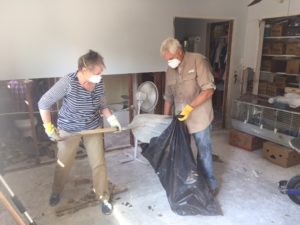
Volunteers scrape up and remove soaked flooring from a flood-damaged building. (Photo / Courtesy of Dan Freemyer)

David Deoluseo, pastor of Templo Bautista, and Butch Green, a CBF field personnel based in Houston, surveyed the damage. Green, who is coordinating CBF recovery work in the Houston area, initially dispatched the volunteers to help pull out carpets, remove content and cut out sheetrock from several flooded homes. Then they set out to do the same work inside the church facility, she said.

The volunteers’ efforts supported the work of exhausted Templo Bautista members, whose energy had been depleted by attempting to save both homes and church buildings, Garcia said.

What did the presence of volunteer workers mean? “Angels,” she said. “They are angels.

“The first time (church members worked on the church), we had 44 people from our own church. The next time, we had 22. Some of these people had even higher water in their homes than we had in our church. So, to have someone come from another town, another city and just put hands to the work—to say, ‘Tell me where I can work and what I can do,’—it was like answered prayers.”

Cambodian Baptist Church members also appreciated assistance from their upstate sisters and brothers, Mey added. He learned about severe flooding experienced by a community of Cambodian refugee farmers in rural Rosharon, south of Houston, halfway to the coast.

“We went to visit the people in the community, and one of them took us around,” he said. “That’s when we realized the magnitude of the problem. The whole community got hit. About 95 percent got water in their homes.”

The flooding dealt a devastating blow to the farmers, who raise water spinach, a common Asian vegetable, as a cash crop, he reported.

Giving shelter

Baptist volunteers provide tents to offer temporary shelter to families who are rebuilding their homes after Hurricane Harvey. (Photo / Courtesy of Dan Freemyer)

Even though some of the farm families’ homes had been condemned, they continued to live in them, fearful of loss if they abandoned their property. So, their new Baptist friends provided tents for temporary—or, unfortunately, longer-term—housing.

Members of Cambodian Baptist Church and the upstate volunteers pitched tents in the displaced families’ yards.

The group of a dozen volunteers from Broadway, DaySpring, First Austin and Park Cities “ended up being ideal size for the work that Butch had lined up,” noted Dan Freemyer, director of community ministries at Broadway and organizer of the trip. It also was an ideal inaugural group for Baptist Temple, an Anglo congregation in The Heights area of Houston, which provided volunteer lodging in its facilities.

And the trip provided a blessing unrelated to Harvey and disaster relief, Freemyer said.

“We had folks from Broadway, DaySpring, FBC Austin, Park Cities and Baptist Temple working, praying, eating, drinking, lodging and talking together,” he explained. “While our congregations represent varied perspectives and positions on issues in Baptist life which we were able to discuss openly, we ended the trip talking mostly about how we can partner together for ministry projects.

“We cooperated successfully in ministry with folks in tremendous need, joyfully celebrated our Baptist identities, and enjoyed engaging fellowship in spite of—or maybe even because of—our differences.”

CBF response to Hurricane Harvey will continue for months. To volunteer to help—or to record a need—visit the Harvey response website: http://www.cbf.net/harveyvolunteer/.


Convención changes to meet changing needs

En Español aqui.

Texas Baptist work among Hispanics predated the Hispanic Baptist Convention of Texas establishing its own office with an executive director seven years ago. But the Convención wanted to do more to meet needs and respond to opportunities, the group’s chief executive officer noted.

Jesse Rincones, executive director of the Hispanic Baptist Convention of Texas

Jesse Rincones, executive director of Convención, views the Baptist General Convention of Texas as a national leader in Hispanic ministries. In fact, he sees the BGCT as the model other state Baptist conventions follow when it comes to ministry that connects with Hispanics.

Even so, gaps needed to be filled, Rincones said. When Convención began to relate to the BGCT as a freestanding partner seven years ago, it marked the next logical step in a progression nearly 50 years in the making, he noted.

Unification Agreement of 1963

In the early 1960s, Anglo and Hispanic Texas Baptists alike recognized good work had developed in the state, such as Valley Baptist Academy in Harlingen and the Mexican Bible Institute in San Antonio.

But for Baptist work among Mexican-Americans in Texas to advance, leaders saw the wisdom in allowing what was then called the Mexican Baptist Convention of Texas to come under the guidance of the BGCT. So, the BGCT and Convención signed the Unification Agreement of 1963.

The Unification Agreement served Hispanic Texas Baptists well in some respects but certainly not flawlessly, Rincones noted.

The structure of Convención was problematic since presidents of the organization were elected for a two-year-term, with a chance to be re-elected for a third year, he observed. Elected officers were pastors who “basically had two full-time jobs,” Rincones said.

“There was also no funding to cover for the president’s travel expenses, or to send reports to communicate with churches,” he added.

By the time the next annual meeting rolled around, budgets already had been set, making it difficult for presidents to achieve any goals they might have had in mind, he observed.

The BGCT and Convención revised the Unification Agreement three times since 1963. When committees from Convención and the BGCT met to revise it once again in 2010, Rincones said, most members realized the agreement did not apply to the circumstances anymore.

A third way—partnership

Some suggested Convención go back to its pre-1963 status as an independent body that had little to do with the BGCT. Others wanted Convención to fall under BGCT Executive Board staff direction within Texas Baptists’ department of Hispanic ministries.

Rincones saw a third way.

He recognized unless Convención presidents could fund their own travel and communication, the job was not going to ever perform well. And even if the presidents successfully presented their goals, funding would not exist to move forward their agendas.

The path of least resistance would have been to maintain the status quo and continue going back to Hispanic churches each year, telling them there was no funding to cover the costs of a program, he realized. But Rincones believed a more difficult course offered a better option.

“We had to go back to our people and say, ‘OK, if you want to do this initiative or this project, then we need to fund it,’” Rincones said. For that to happen, Convención had to become its own entity.

In 2010, Convención celebrated its 100th year anniversary, and in many ways, it began its rebirth as well—as neither a department within the BGCT organizational structure, nor as a separate entity unrelated to the BGCT. Instead, Convención now works as a partner with Texas Baptists.

The next generation

The 2010 Census reported 52 percent of the U.S. population growth among persons under age 18 came from Texas, and Hispanics in Texas comprised 49.3 percent of that sub-group. That represented an increase of 39 percent of Hispanics ages 18 and under in Texas, while Anglos in that category declined 7.4 percent.

Rincones could see the need for more work to be done for Hispanic churches, but that was nothing new. He saw it when he was young and noticed the work in many Hispanic churches did not match the quality of work done in Anglo churches.

“I had the burden of seeing young Hispanic teens not get the same quality just because of their circumstance, or because a church does not know how to minister to them,” Rincones said.

About six out of 10 Millennials (young adults who came of age around the year 2000) and members of Generation Z (the rising generation who followed Millennials) are Hispanic, and many of them long have been missing from Sunday morning worship services, he noted.

Hispanic Texas Baptists must invest in that group right now, Rincones insisted.

Conferences like “Shine! Girls” for Latina teens and girls, the Young Latino Leadership Program, and the scholarships that Dallas Baptist University and East Texas Baptist University offer Hispanic students show Convención’s vision for the future. Baylor University’s Truett Theological Seminary recently announced it also has launched a Hispanic Texas Baptist scholarship and is accepting applications through Oct. 15.

Convención also is offering young leaders hands-on experience to develop their skills. Three out of five of Convención’s board members are young Latino officers.

Now is not the time for churches to lose generations of Christian Hispanic leaders just because “we did not know how to minister to that generation,” Rincones asserted.

New models for ministry

Hispanic ministry also involves working with first-generation Hispanics who may only speak Spanish. But the language barrier in ministry disappears among second and third generation Hispanics, Rincones noted, adding churches need to consider culture rather than language as the defining element.

Cultural traits that distinguish Hispanic Baptists include a strong sense of family and vibrancy in worship, he observed.

But instead of relying on outdated approaches to ministry, churches that want to work with the Hispanic population need to consider throwing away the old playbook and using new models, he said.

“Before, you had 40 year-old missions that had developed co-dependent relationships with their sponsoring churches,” Rincones said. Any major decisions involving the mission required the approval of the sponsoring congregations.

Calvary Baptist Church in McAllen offers a better model, Rincones asserted. Rolando Aguirre, president of Convención, serves as the pastor of the church’s Spanish congregation, Calvary en Español.

“In this model, you see that these pastors are an equal part of the staff, and the congregations share the same resources with the rest of the church” Rincones said. “The Spanish ministry is the church.”

Seven years after Convención gained its own identity, Rincones still finds himself having to explain it to churches. Many see Convención as a department of the BGCT. Others know Convención and BGCT are separate, but those individuals need to understand the two conventions are partners who seek to assist and help the same churches.

“Our churches are going to be most blessed when Convención and Texas Baptists are strong partners,” Rincones said. That can be seen in the message Rincones first delivers when he visits a church: “There is no better place to invest than the ministries of Texas Baptists, so give to the Cooperative Program.”

Convención’s goal is to help Hispanic churches grow stronger and healthier, and that that will be possible only if there is a strong partnership with Texas Baptists, Rincones insisted.


BUA strategically positioned to meet challenges, new president says

En Español aqui.

SAN ANTONIO—The vision some Texas Baptists had for the school now known as Baptist University of the Américas has changed since its creation in 1947—not a reversal but an expansion.

Sixty years ago, Baptists in San Antonio founded the school to train Mexican-Americans for ministry. Today, BUA prepares people from varied backgrounds to serve the cause of Christ in a multicultural context.

The institution San Antonio Baptist Association created as the Mexican Baptist Bible Institute went through several name changes through the years. It became Baptist University of the Américas in 2003, when it began offering bachelor’s degrees.

Just beginning

BUA now offers five Bachelor of Arts degrees and one Associate of Arts degree. But for Abraham Jaquez, new things are just beginning at the school.

Last month, Jaquez became the eight president of BUA. He previously was executive director for Buckner Children and Family Services in Dallas.

“Our goal is to educate bilingual and bicultural students,” Jaquez said.

A significant segment of the population in Texas has been ignored—young Hispanic Texans who must choose between education and providing financial support for their families, he observed.

BUA exists to provide an opportunity to students who “for a variety of reasons may not be able to attend other schools,” Jaquez said.

And its goal is to train “Hispanic pastors who had the time to study and have the tools that education provides,” he added.

Many Hispanic churches have relied on ministers who lacked the necessary education or preparation, he observed.

Still a lot to learn

About 60 percent of the Hispanic staff in churches across Texas attended BUA—a hopeful sign for a school that has been a university just 14 years. But Jaquez insists BUA still has a lot to learn.

Jaquez knows challenges are on the way, and BUA can be prepared to meet them. San Antonio and Austin are growing—expanding toward each other to form the next Texas metropolis.

With the presence of Convencion in San Antonio, Jaquez believes BUA is strategically positioned and poised to be a great partner as a hub for Hispanic ministry in Texas.

But its focus is not solely on Hispanics.

As evidenced by the rise of two-year colleges, a growing number of Texans recognize the need for affordable education. BUA is rated as one of the most affordable universities in Texas, and Jaquez understands more and more young people need a school that strives to make them believe that “higher education is possible.”

This semester, 238 students are enrolled at BUA, and Jaquez wants to be close to them and connect with their needs. That’s why he and his family live on campus, he noted.

Investment in churches globally

BUA receives many international students—not only from Latin America, but from other parts of the world. So, Jaquez and the rest of the faculty and staff at BUA recognize the education they provide as an investment in churches around the globe.

Whether it is in Texas, or in Mexico, or in South Africa, BUA wants to “provide church staff and leaders around the world,” by educating students who come from those places, Jaquez said.

Interaction with churches must not wait until students graduate, Jaquez added. BUA must partner with churches so pastors who are already mentoring and guiding young leaders can confidently recommend BUA to those seeking guidance about their future.

BUA wants to be a school for people who want to become leaders of churches that need leadership, Jaquez said.

“I see the desire in their hearts,” he said. “We just want to help them develop their own biblical and theological worldview.”