McLeod honored for service in intentional interim ministry

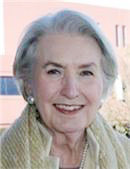
DALLAS—Jimmy McLeod, intentional interim pastor of Park Central Baptist Church in Dallas, received the 2015 Maples/Williamson/Daehnert Award from the Texas Baptist Intentional Interim Ministry Network.

McLeod is the seventh recipient of the award, given annually to pastors who have completed intentional interim ministry training and have shown exemplary leadership, vision and mentoring in their churches and with ministers.

pastor church connection350“Dr. McLeod has demonstrated his unique gifts in encouragement, unifying congregations and mentoring leaders,” said Karl Fickling, interim ministry coordinator for the Baptist General Convention of Texas. 

Members of the Intentional Interim Ministry Network are pastors who have completed more than 80 hours training in the intentional and traditional interim process and five months of field education.

McLeod’s interest in intentional interim ministry dates to 2005, when he was trying to discern God’s plan in his next season of life, after he served more than 40 years in ministry. 

Through a friend, he learned about intentional interim ministry. In 2010, after completing training requirements, he began serving as an intentional interim pastor at Emmanuel Baptist Church in Weatherford.

“It is my heart’s passion,” said McLeod, who also is a licensed professional counselor. “I saw a way that in this new season of my life, I could help people and churches heal and learn how to deal with things more healthily and really become a healthier part of the body of Christ.”

Guiding churches through a self study process

From examining a church’s history to helping a church envision its future, intentional interim pastors are trained to guide congregations through a self-study process to identify problems before launching a search for a new full-time pastor. 

“The real significance in intentional interim ministry is that it allows the church to slow down, to pause, to reassess where they are and then to get the help they need from a trained pastor,” McLeod said.

An intentional interim pastor arrives as a non-anxious presence into an anxious situation and helps churches identify and address issues, he added. Then, the intentional interim pastor can help the church gain a fresh vision for the future.  

Preparation for the new pastor

Intentional interim ministry “gives an opportunity to give the church an identity of who they are and who God has called them to be,” McLeod said. “Then they can take a look at the blockages. When the next pastor comes, he doesn’t have to deal with all that. The church can embrace him, and he can then enjoy that new vision God gave them.”

About 110 ministers are part of the Intentional Interim Ministry Network. For more information about interim ministry, click here or contact Karl Fickling at karl.fickling@texasbaptists.org.


BGCT messengers elect officers, adopt budget

FRISCO—Texas Baptists elected by acclamation the president of a Hispanic school, a first-generation Ethiopian immigrant pastor and the pastor of a historic county-seat First Baptist Church as top officers of the Baptist General Convention of Texas.

At the BGCT annual meeting in Frisco Nov. 8-10, messengers also acted on a $38 million total budget and collected $5,354 in an offering for refugee relief in Lebanon. 

deeproot livinglegacy425And in one of the few actions at the annual meeting that generated questions from the floor, messengers approved a resolution on integrity and honesty, focused particularly on plagiarism by pastors.

The annual meeting drew 936 messengers and 445 visitors. The 2014 annual meeting in Waco drew 1,240 messengers and 515 registered visitors

Texas Baptists elected as president Rene Maciel, president of Baptist University of the Américas, who completed a one-year term as BGCT first vice president. 

Jerry Dailey, pastor of Macedonia Missionary Baptist Church in San Antonio, nominated Maciel. Dailey cited Maciel’s service at Hardin-Simmons University, at Baylor University and its Truett Theological Seminary and in congregational leadership roles.

In each instance, Dailey said, “he made it better because he was there.”

BGCT messengers elected Bedilu Yirga, pastor of Ethiopian Evangelical Baptist Church of Dallas, as first vice president and Danny Reeves, pastor of First Baptist Church in Corsicana, as second vice president. 

They also re-elected Doug Powell from First Baptist Church in Garland as registration secretary and Bernie Spooner from Plymouth Park Baptist Church in Irving as secretary of the corporation.

Budget approved

At the recommendation of the BGCT Executive Board, messengers approved a $35.42 million budget base, compared to $35 million for 2015. It relies on $31 million in Cooperative Program receipts from churches—down about $900,000 from the 2015 budget. 

The budget anticipates $4.42 million in investment income, compared to $2.6 million from investments and $500,000 from individual donors this year. The $1.32 million increase is available primarily due to invested proceeds from the sale of the former Baptist Building to Baylor University’s Louise Herrington School of Nursing. The BGCT Executive Board staff offices moved to leased space in a building at Rambler Park, near Presbyterian Hospital in North Dallas, two and a half months ago.

Including revenue from the North American Mission Board, conference and booth fees, product sales and other miscellaneous sources, the BGCT anticipates a total budget of $37,996,806 next year—an increase of $212,509 over 2015.

Texas Baptists also voted to continue to divide undesignated receipts in the same manner as in recent years, with 79 percent allocated for BGCT and 21 percent for worldwide causes. Each church determines the recipient or recipients of its worldwide giving. 

As recommended by the BGCT Executive Board, messengers approved $1.47 million for Texas worldwide missions initiatives and partnerships, unchanged from the 2015 budget.

Resolution on intergity

Messengers approved after discussion a resolution on integrity and honesty. While the resolution ranged from students cheating on tests to “America’s celebration of success and prosperity (that) can promote a win-at-all-cost mentality,” it particularly focused on pastors who plagiarize sermons.

“The Internet provides innumerable resources that can lead to temptations to plagiarize in information-intensive professions, such as education and the ministry,” the resolution stated.

While pastors are  “motivated to share the Good News of Christ,” they may face “temptation toward dishonesty and lack of integrity in sermon preparation,” the resolution continued.

The statement called on ministers to “hold themselves to the highest standards in regard to church financial administration, sermon preparation, holy relationships, and church and personal marketing.”

It also encouraged congregations to “grant pastors adequate time to permit the Holy Spirit to lead in the preparation of messages our Lord has for their congregation.”

Questions mostly concerned the motivation behind the resolution. Moises Rodriguez of San Antonio, chair of the resolutions committee, confirmed concerns about sermon plagiarism prompted it, and he noted the BGCT had not addressed the issue in at least 25 years.

Messengers approved without discussion resolutions of appreciation to all involved in relocating the BGCT Executive Board staff offices, to convention officers and staff for their work during the last year, and to First Baptist Church in Frisco, Parkway Hills Baptist Church in Plano and the city of Frisco for their role as hosts to the BGCT annual meeting.

Other business

In routine business, messengers to the annual meeting:

• Approved Waco as the site of the annual meetings in 2016, 2017 and 2019. When Baylor University purchased the former Baptist Building, one condition of the sale was that the university would help underwrite the annual meeting five times. The 2018 meeting will be a “family gathering” in Arlington during the summer, building on the success of the first meeting of that kind in San Antonio two years ago.

• Elected a dozen Texas Baptists to serve on committees, more than 30 to serve on the BGCT Executive Board and about 100 to serve on the boards of affiliated ministries and institutions.

• Authorized a constitutional change that renames the Committee on Convention Business as the Committee on the Annual Meeting.

EDITOR’S NOTE: The article was revised after it originally was posted to seek to clarify the budget presentation.


Baptist Briefs: ERLC honors civil rights leader

John Perkins, civil rights leader and community organizer, received the John Leland Religious Liberty Award from the Southern Baptist Convention’s Ethics & Religious Liberty Commission. ERLC President Russell Moore presented the award to Perkins at Mount Helm Baptist Church in Jackson, Miss. Perkins, 85, was a leader in the school desegregation movement in Mississippi. With his wife, Vera, he founded various ministries that focus on Christian community development, justice and reconciliation.

BWA women’s leader to retire. Patsy Davis, executive director of the Baptist World Alliance women’s department, will retire Dec. 31, 2015, after 17 years at that post. Previously, Davis was a Southern Baptist International Mission Board missionary 21 years, serving as general secretary of the National Woman’s Missionary Union of Venezuela. 


Texas Tidbits: BGCT to honor top Cooperative Program giving churches.

Texas Baptists will honor nine churches at the Baptist General Convention of Texas annual meeting in Frisco for their giving to the Cooperative Program unified missions budget. Five churches will be recognized for top giving in categories based upon church size—Green Acres Baptist Church in Tyler; First Baptist Church in Grapevine; First Baptist Church in Canyon; First Baptist Church in Wheeler; and First Baptist Church in Charlotte. The BGCT will recognize four churches for top giving among ethnic congregations—Cornerstone Baptist Church Killeen in Harker Heights; Chinese Baptist Church in Houston; Iglesia Bautista Stonegate in Alice; and Vietnamese Baptist Church in Houston. 

Prestonwood sells satellite campus in Dallas. Four years after announcing bold plans to return to its Dallas roots, Prestonwood Baptist Church of Plano closed its Dallas campus, which is being sold to a nondenominational charismatic megachurch. Robert Morris, founding pastor of the 36,000-member Gateway Church in the Dallas/Fort Worth metropolitan area, announced Oct. 17 the purchase of the campus, its sixth, near I-635 and Hillcrest Road in Dallas. Prestonwood, a Southern Baptist Convention megachurch led by former Southern Baptist Convention President Jack Graham, purchased its Dallas campus in 2011 for a reported $18 million. It held its final service there Oct. 18.

Baylor regents OK golf practice facility. Baylor University’s board of regents approved the first phase of a planned golf practice facility near campus for Baylor’s nationally recognized men’s and women’s golf teams. Regents announced the golf practice facility will be named in honor of Billy Williams and his family of Naples, Fla., who provided a multimillion dollar gift for the project. The practice facility will be located on a 14-acre site on University Parks Drive next to the Willis Family Equestrian Center and will include an on-site practice course, a driving range and a clubhouse. Fundraising for the project is ongoing. In 2013, Williams and his wife, Elaine, provided the lead gift for the Williams Family Soccer and Olympic Sports Center, which opened this fall and houses Baylor’s soccer program and other Olympic sports. They also previously established two endowed athletic scholarships at Baylor.


Around the State: Thanksgiving feast at Howard Payne University

Howard Payne University will be the site for the Brownwood area’s 32nd annual community Thanksgiving feast. It will be held from 11 a.m. to 1 p.m. Nov. 26 at HPU’s Mabee University Center. Last year, more than 2,000 meals were served on campus and through the home-delivery program. Howard Payne’s food service staff members devote their holiday to preparing the meals, and volunteers from the university and community make deliveries. Volunteers can arrive at 10:30 a.m. for assignments.

East Texas Baptist University will hold its fourth annual Tiger Invitational Debate Tournament, Nov. 13-14. About 150 debaters from a six-state region are expected to compete.

operation christmas childlogo200Operation Christmas Child’s national collection week is Nov. 16-23. Anyone can drop off a gift-filled shoebox to send to a child oversees. The Samaritan’s Purse ministry global goal for 2015 is to reach 11 million children in need. To find a nearby drop-off location, click here.

Twelve current and former Hardin-Simmons University graduate and undergraduate students from Logsdon Seminary and School of Theology programs attended the Parliament of World Religions during an international gathering in Salt Lake City attended by more than 10,000 people from 80 nations and 50 faiths.

Abilene-Callahan Baptist Association presented awards at its annual meeting. Bill and June Dent, members of First Baptist Church in Abilene, were named volunteers of the year for their work with the association’s social ministries. Broadview Baptist Church in Abilene was named church of the year. Richard Darden of Shining Star Fellowship in Abilene was named pastor of the year, and Jimmy Gilbreath of Builders Baptist Church in Merkel was named bivocational pastor of the year. Dennis Byram, music minister at First Baptist Church in Baird, was named staff member of the year.

Anniversaries

T. Wayne Price, fifth, as pastor of First Baptist Church in Refugio, Nov. 7.

Cockrell Hill Baptist Church in Dallas, 100th, Nov. 15. Former pastor Steven Leatherwood will be the guest preacher. Music featuring the choir, the Hispanic praise band and Carol West on the harp. A luncheon requiring reservations will follow. The cost is $15 per person or a maximum of $45 per family. To make reservations, call (214) 384-8253. Ed Cole is pastor.

Moses Vaca, 10th, as pastor of Primera Iglesia Bautista in Cameron.

Randy Tumlinson, fifth, as pastor of McDade Baptist Church in McDade.

Phil Hassel, fifth, as pastor of Independence Baptist Church in Brenham.

Retiring

Clif Abshier, after 46 years of ministry, the last 20 as pastor of First Baptist Church in Bishop. He previously served at South Texas Children’s Home, First Baptist Church in Mathis, First Baptist Church in Uvalde, High Plains Baptist Hospital in Amarillo, Parker Baptist Association in Weatherford and the Baptist General Convention of Texas. He began preaching 52 years ago at Amelia Baptist Church in Beaumont.

Ordained

Caleb Park to the ministry at the Korean Church of Waco.


On the Move: Peter Allen

Peter Allen to New Hebron Baptist Church in Waskom as pastor.

Justin Green to First Baptist Church in Big Spring as minister to children from First Baptist Church in Belleview, Fla.

Jake Rhoton to South Garland Baptist Church as student ministry leader.

Paul Sands to First Baptist Church in Woodway as pastor.

Dan Sledge to New Covenant Baptist Church in Waskom as pastor.


Obituaries: Garrett, Kuenstler, West, Villanueva, Pool

Myrta Garrett, 90, Oct. 3 in Nacogdoches, where she moved in May. Baptized at age 10 at First Baptist Church in Garrison, she spent her life in Christian service. After graduation from Southwestern Baptist Theological Seminary, she was director of the Baptist Student Union at Sam Houston State University from 1946 to 1948.Myrta Garrett In 1948, she married James Leo Garrett Jr., and they immediately went to Princeton Theological Seminary, where he did graduate work and she was secretary to the librarian. In 1949, they moved to Fort Worth, where he joined the Southwestern Seminary faculty. She was active at Gambrell Street Baptist Church in Fort Worth, serving as Woman’s Missionary Union president. They later spent 14 years in Kentucky while her husband taught at Southern Baptist Theological Seminary. When he joined the Baylor University faculty in 1973, she served six years as a public school librarian in Waco. When they returned to Southwestern in 1980, she became the seminary’s serials librarian and later director of technical services. She was active at Broadway Baptist Church in Fort Worth, and served on its pastor search committee. The Garretts then became charter members of Candleridge—now Meadowridge—Baptist Church, where she directed the children’s ministry and served as a deacon. She was preceded in death by her brothers, John and George Latimer. She is survived by her husband of 67 years; sons, Jim, Robert Paul; four grandsons; and two great-grandsons.

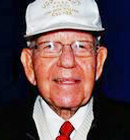
Truett Kuenstler, 88, Oct. 11 in Haskell. A graduate of Hardin-Simmons University and Southwestern Baptist Theological Seminary, he served 11 years as chaplain at Hendrick Medical Center in Abilene.truett kuenstler130Truett Kuenstler He was pastor of Roberts Baptist Church in Haskell County, Roane Baptist Church in Roane, First Baptist Church in Claytonville, First Baptist Church in Jayton and First Baptist Church in Rochester, where he was named pastor emeritus. He was a member of Paint Creek Baptist Church in Haskell. He was preceded in death by his sister, Mary Lou Sandefur. He is survived by his wife of 68 years, Laverne; daughters, Nanette Ashby Leann Ellis; brother, Roddy; three grandchildren; and three great-grandchildren.

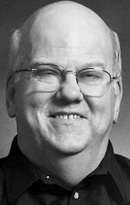
tommy west130Tommy WestTommy West, 68, Oct. 27 in Georgetown. A graduate of Howard Payne University, he began his ministry at Memorial Baptist Church in Temple. He served six Baptist churches almost 40 years in a variety of roles—education, administration, single adults, senior adults and students. In 2005, he joined the staff at Crestview Baptist Church in Georgetown as single adult minister. He is survived by his daughters, Denise Salcedo and Alison Peterman; sister, Judy West; and five grandchildren.

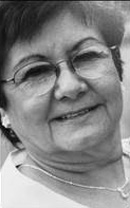
Emma Villanueva, 72, Nov. 2. emma villanueva130Emma VillanuevaShe was a member of First Baptist Church in Kenedy, where she was active in the Woman’s Missionary Union. She was preceded in death by her brothers, Jesus, Isaias and Bernabe Garza. She is survived by her husband of 48 years, Rey; daughters, Rae Anne and Rayleen; sisters, Rebecca Ocanas and Mary Ann Garcez; brothers, Daniel and Elijio Garza; and one granddaughter.

Marsha Pool, 74, Nov. 3 in Dallas. She taught mathematics at Dallas Baptist University 49 years and in 2004 was the first member of the school’s faculty to be designated a master teacher. marsha pool130Marsha PoolFrom 1994 until 2003, she was associate dean of the College of Natural Sciences and Mathematics, and she twice was recognized as DBU’s Professor of the Year. She was a longtime member of First Baptist Church in Duncanville, where she directed a tutoring clinic and helped many prepare for the exam for a general educational development certificate. She was preceded in death by her husband of 43 years, Wayne, in 2013. She is survived by her sons, Lee and Gary; brother, Buddy Williams; and five grandchildren.


Texas Baptists respond to Syrian refugee crisis in Lebanon

Texas Baptists continue to work with ministry partners in Lebanon to make life more bearable for Syrian refugees and provide educational opportunities for refugee children—including learning about Jesus.

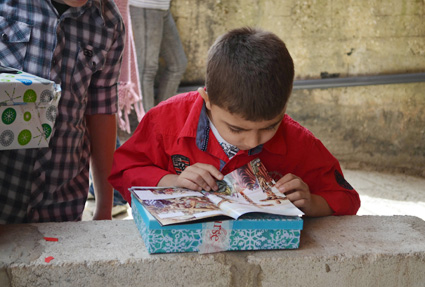
lebanese syrian boy425In Lebanon, a refugee boy from Syria reads as part of an educational program supported by Texas Baptists.Last year, Texas Baptists gave more than $17,000 to help Syrian refugee families in Lebanon. Combined with gifts from other partners, Texas Baptists’ donations helped buy 4,375 blankets, 1,235 mattresses, 200 stoves and 535 fuel vouchers, along with illustrated children’s Bibles, for Syrian refugees, working through the Lebanese Society for Education and Social Development.

“Our mission is to empower the church through educational and social ministry. The distribution to families is all done by the churches in Lebanon,” said Nabil Costa, executive director of the society. 

His organization chooses to “stay in the background” so the predominantly Sunni Muslim refugees recognize Christian churches as their benefactors, he noted.

“Grace and sacrifice are at the center of our faith,” he said. “These people see the difference. As Christians, we cannot help but love them, regardless of who they are.”

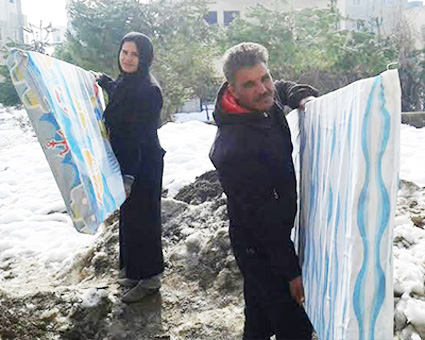
lebanese winter425Texas Baptist donations help provide winter survival supplies for refugees in Lebanon.The United Nations High Commissioner for Refugees reports about 1.08 million registered Syrian refugees in Lebanon, but Costa estimates the total number is closer to 1.5 million—between one-fourth and one-third of Lebanon’s population.

He succinctly describes conditions in the refugee camps: “In a word—terrible.” 

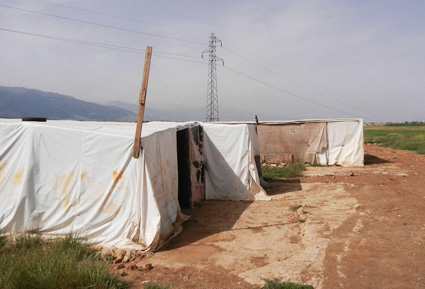
Refugees live in flimsy tents that offer little protection from bitter winter wind. Many possess only the thin clothing they wore when they escaped from Syria. While the U.N. High Commissioner for Refugees provides enough food for their survival, the distribution process strips the people of their dignity, he said.

“They are humiliated,” Costa said. “They do not feel loved or respected. … Our No. 1 job as Christians is to love them. We pray for them and let them know we have a heart to care for them.”

Children appreciate the illustrated Arabic Bibles the society provides, and many of their parents—who are looking for ways to occupy their time in the refugee camps—also read them. A significant number have accepted Christ as Savior, and many attend church, he noted.

But receipt of winter survival gear or other assistance does not depend on how the refugees respond to Christianity, he emphasized.

lebanese refugee tent4251.08 million registered Syrian refugees are in Lebanon, many living in tents like these.“We do our job and show them love. However they respond, we know the Holy Spirit is at work,” he said.

In addition to providing winter gear, Costa’s organization wants to do more to give refugee children enhanced educational opportunities.

“We are working with students with special needs,” he said. “Some have behavioral issues and need counseling. There are 300,000 Syrian students in Lebanon. Many need to learn life skills and social skills.”

Costa hopes Texas Baptists not only will respond to the immediate needs of the refugees this winter, but also will consider sponsoring refugee children. For $300 a month, a Texas Baptist family could provide the clothing, food and school supplies for a Syrian child, he noted.

In terms of winter supplies, $578 provides a family with three blankets, two mattresses, one stove and fuel vouchers for four months, and $248 provides two blankets, one mattress, one stove and fuel vouchers for a month. As little as $68 can buy four blankets and a mattress.

“Now is the right time to live out our practical Christianity,” he said. “Now is the right time to show people our love by giving to help truly needy people, regardless of their race or religion.”

To learn more or to contribute to refugee relief, click here.

EDITOR’S NOTE: The second paragraph was edited after the article originally was posted to clarify the information.


God can heal creation, environmental scientist tells Wayland chapel

PLAINVIEW—If God’s people take seriously their responsibility as stewards of creation and change their behavior, God still can heal damaged land with dwindling resources, an environmental scientist told students, faculty and guests at Wayland Baptist University

David Foster, professor of biology and environmental science at Messiah College and vice chair of the Au Sable Institute of Environmental Studies board of trustees, spoke at a chapel service during Wayland’s annual Creation Care Week emphasis.

Foster labeled creation care “this ancient thing that is part of our faith that we are rediscovering.”

Dominion assumes responsibility

Citing the first chapter of Genesis in the Old Testament, Foster said God gave humankind dominion over the earth. Responsibility to care for creation comes with dominion, he insisted.

“God left us in charge, and one day he’s going to come back and ask us for it,” he said. “We serve creation, and it serves us.”

Foster compared creation care to the biblical principle of Sabbath. In the Old Testament, the Sabbath was a period of rest through which not only people, but also the land and its resources were replenished. Farmers rotated crops or did not plant them at all as the land rested. 

Periods of inactivity allowed the resources and animals to replenish, he said. It also allowed time for the poor to regain some of what they had lost, as land ownership returned to its original people, families or tribes.

God establish Sabbath rest for the land as a way to bring heaven on Earth, he said.

“We go to church and we pray, ‘Thy kingdom come, thy will be done on Earth as it is in heaven.’ Do we really mean that?” he asked.

Hope for healing

At a time when it is easy to feel hopeless about the state of creation, dwindling resources and the ways humans are hurting the earth, Foster insisted there still is hope. God promised if his people will change, he will heal that land, he noted.

“Not if everyone changes, but if his people change,” Foster clarified. 

If God’s people change and care for creation, then the land will be healed and made complete through Jesus Christ, he said.


More Americans reject religion, but believers firm in faith, Pew study shows

WASHINGTON (RNS)—Americans as a whole are growing less religious, but those who say they belong to a religion are, on average, just as committed to their faiths as they were in the past—and in certain respects, even more so.

The 2014 U.S. Religious Landscape Study, released by the Pew Research Center, also shows nearly all major religious groups have become more accepting of homosexuality since the first landscape study in 2007. 

The new study may provide some solace to those who bemoan the much-reported rise in America of the “nones”—people who claim no religious affiliation.

“People who say they have a religion—which is still the vast majority of the population—show no discernible dip in levels of observance,” said Alan Cooperman, director of religion research at Pew.

“They report attending religious services as often as they did a few years ago. They pray as often as they did before, and they are just as likely to say that religion plays a very important role in their lives. On some measures, there are even small increases in their levels of religious practice.”

More religiously affiliated adults, for example, read Scripture regularly and participate in small religious groups than did so seven years ago, according to the survey. And 88 percent of religiously affiliated adults said they prayed daily, weekly or monthly—the same percentage that reported such regular prayer in the 2007 study.

Nine in 10 believe in God

“We should remember that the United States remains a nation of believers, with nearly nine in 10 adults saying they believe in God,” said Gregory A. Smith, Pew’s associate director of research,  

That said, overall, belief in God has ticked down by about 3 percent in recent years, driven mainly by growth in the share of “nones” who say they don’t believe in God. But even among Christians, 98 percent of whom say they believe in God, fewer believe with absolute certainty—80 percent in 2007, compared to 76 percent in 2014.

Now 77 percent of adults surveyed describe themselves as religiously affiliated, a decline from the 83 percent who did so in Pew’s 2007 landscape study.

Pew researchers attribute these drops to the dying off of older believers, as well as a growing number of Millennials—people born between 1981 and 1996who claim no religious affiliation.

The researchers also found as religiosity in America wanes, a more general spirituality is on the rise, with six in 10 adults saying they regularly feel a “deep sense of spiritual peace and well-being,” up 7 percent since 2007. Also increasing: the number of people who experienced a “deep sense of wonder” about the universe, which also jumped 7 percent.

These trends make sense, said Andrew Walsh, a historian of American religion at Trinity College in Hartford, Conn., in that religious affiliation in America today is “increasingly shaped by individual choice and less by inheritance from a family or community.”

‘Still spiritual’

Although the current social climate, especially for young adults, allows Americans to choose not to affiliate with a religious institution, Walsh said, many “are still spiritual in some ways.”

He noted one sign—the proliferation of yoga studios throughout the nation. Most enthusiasts of the meditative practice, which combines breathing and physical postures, are not looking to convert to Hinduism, Walsh said, but they may nevertheless find the activity spiritually gratifying.

Cooperman cautioned, however, against concluding such spirituality is replacing more traditional kinds of religious experiences, such as attending religious services.

“On the contrary, the people in the survey who express the most spirituality are the people who are the most religious in conventional ways,” he said. “And the respondents who are the least attached to traditional religion, including the ‘nones,’ report much lower levels of spiritual experiences.”

Attitudes towards gays

More striking numbers in the study describe changing Christian attitudes toward gay Americans. Although the new landscape survey is not the first to document such change, it shows in detail how dramatically members of a broad swath of denominations—even those that officially oppose homosexual behavior—have shifted in their views.

The number of evangelical Protestants, for example, who said they agreed that “homosexuality should be accepted by society” jumped 10 percent between the 2007 and 2014 studies—from 26 percent to 36 percentThe increase for Catholics was even steeper, from 58 percent to 70 percent. For historically black Protestant churches, acceptance jumped from 39 percent to 51 percent.

“Despite attempts to paint religious people as monolithically opposed to LGBT (lesbian/gay/bisexual/transgender) rights, that’s just not the case and these numbers prove that,” said Jay Brown, head of research and education at the Human Rights Campaign Foundation, the national gay rights group.

“There’s growing support of LGBT people and our families, often not in spite of people’s religions but because the very foundation of their faith encourages love, acceptance and support for their fellow human beings.”

The religiously unaffiliated showed the highest rate of acceptance of gay Americans at 83 percent.

On abortion, attitudes held steady, as has been the case since the Supreme Court made abortion a constitutional right in 1973. The study shows 53 percent of Americans believe abortion should be legal in all or most cases, with views within denominations shifting little since the first landscape study.

Other findings

Other findings from the study include:

• A minority of Jews—40 percent—and the vast majority of Muslims—90 percent—say they do not eat pork, the consumption of which is forbidden by Jewish and Islamic law. Hinduism does not allow beef to be eaten, and nearly seven in 10 Hindus (67 percent) say they do not eat it.

• Nearly nine in 10 Americans say religious institutions bring people together and strengthen community bonds, and 87 percent say they play an important role in helping the poor and needy.

• Women are more prayerful than men, with 64 percent saying they pray every day, compared with 46 percent of men.

•  Regarding evolution, more than 62 percent of Americans say humans have evolved over time, while about a third (34 percent) say humans always existed in their present form.

• Six in 10 adults, and three-quarters of Christians, believe the Bible or other holy Scripture is the word of God. About 31 percent—and 39 percent of Christians—believe it should be interpreted literally.

The 2014 U.S. Religious Landscape Study interviewed 35,071 Americans, and has a margin of error of plus or minus less than 1 percentage point. The portion of the survey released Nov. 3, which focuses on beliefs and practices, is the second of two parts. The first, released in May, found the nation is significantly less Christian that it was seven years ago.


Loving acts earn a hearing for the gospel, Metaxas tells DBU audience

DALLAS—Christians not only should engage the culture in authentic and engaging ways, but also lead with loving and caring acts that provide an opening for them to present the gospel, author and cultural analyst Eric Metaxas told professionals in medicine, business, religion and education during a leadership lecture at Dallas Baptist University.

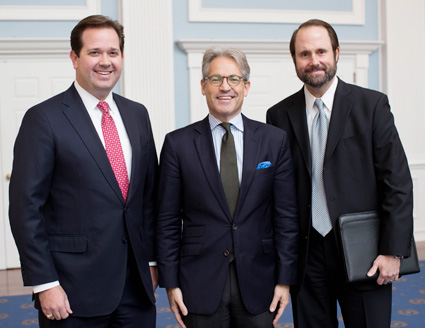
metaxas wright denison425Cultural analyst and author Eric Metaxas (center) is welcomed to Dallas Baptist University by Adam Wright (left), vice president and dean of the Gary Cook School of Leadership, and Jim Denison, founding president of the Denison Forum on Truth and Culture and senior fellow of the Institute for Global Engagement at DBU. (Photo / Brittany Partain)“We have to live our faith in a real way,” Metaxas said. “That’s the No. 1 thing we can do. If we demonstrate our love for others, that communicates something that is very, very important.”

Humble and loving acts—not irrefutable logical arguments—earn Christians a hearing for their faith, he insisted. 

“I think that it is important for us to understand that even though the Bible is logical and our faith is logical, at the end of the day, it isn’t about logic. It’s about the Holy Spirit,” he said. “Sometimes we have to understand that for someone to even listen to the logic or to whatever we have to share, it is going to take an act of love and an attitude of humility.  

“Being sensitive is a form of love. You are not going to change the truth, but you are going to change how you communicate if you really love them and want to reach them.”

Institute for Global Engagement Leadership Lecture Series

Metaxas, whose biographies of Dietrich Bonhoeffer and William Wilberforce remained on the New York Times bestseller lists several weeks, spoke on the DBU campus as a part of the inaugural Institute for Global Engagement Leadership Lecture Series. DBU’s Institute for Global Engagement sponsored the event.

Metaxas recently launched a daily radio show that highlights his practical engagement of Christian truth with the culture. He delivered the keynote address at the 2012 National Prayer Breakfast in Washington D.C.

In addition to the leadership lecture, Metaxas also spoke to the DBU student body in chapel, presenting his Christian testimony. 

“The Lord wants to speak to each of us,” Metaxas told the students. “And he does so in a variety of ways.”

Established in the summer of 2014, the Institute for Global Engagement is a joint effort between DBU’s Gary Cook School of Leadership and the Denison Forum on Truth and Culture. The institute provides programs and events that bridge the gap between academics and professional life, attempting to provide thoughtful and practical Christian engagement in the public sphere.

Metaxas a ‘model’ for institute

“When we began looking toward what the IGE could mean and these types of lectures could accomplish, we wanted to begin with somebody who would capture and would model as an example all that the IGE intends to be,” said Jim Denison, founding president of the Denison Forum on Truth and Culture and senior fellow for the institute. “So, we began with Eric Metaxas. He was not only our first choice; he was our only choice.”

Adam Wright, vice president and dean of the Gary Cook School of Leadership, noted university leaders felt privileged to have Metaxas on campus.

“Eric Metaxas is the type of voice we want to bring to campus for these events—a voice that helps to bring the power of the gospel to bear on the daily work of our lives,” Wright said.


Baptist presidents lead racial unity event in Mississippi

JACKSON, Miss. (RNS)—In an effort to foster racial unity among Christians, leaders of America’s two largest Baptist groups—one mostly white and the other predominantly black—met with pastors in Mississippi Nov. 4 for a “Conversation on Race in America.”

Leaders of the Southern Baptist Convention and the National Baptist Convention, USA, expressed concern over racial tensions after the unrest in cities such as Ferguson, Mo., and Baltimore and the shooting deaths of members of Emanuel African Methodist Episcopal Church in Charleston, S.C.

Jerry Young, president of the National Baptist Convention, USA, said he anticipated the discussion in Jackson, Miss., would inspire specific steps for addressing racial reconciliation in the country.

Practical ways to move forward

“I hope that all of it in some way will result in some very practical ways in which the church can move forward with this issue and also help to influence the culture,” said Young, whose denomination claims 7.5 million members.

Young and SBC President Ronnie Floyd were joined by 10 pastors from their respective denominations for a conversation that preceded an annual luncheon of Mission Mississippi, a Christian organization that has worked for more than two decades to address racism, which its leaders believe hinders evangelism.

“I would hope ultimately that we’re not going to get in a room and rehash the past. That’s not what our goal is,” said Floyd, whose denomination claims 15.5 million members. “But it is to raise the church’s role in leading the way in racial unity and to try to find ways that we can help as the church in this crisis moment in our country relating to that.”

Fostering relationships

Neddie Winters, president of Mission Mississippi, hopes efforts in his state to foster relationships among Christians of different denominations and races—through picnics, prayer sessions and dialogues—can be replicated in other states.

“Learning how to do that and come together will certainly minimize and hopefully alleviate incidents like we’ve had in the past,” he said.

Floyd and Young met when they spoke briefly at an August worship service in Mississippi called “Stronger Together,” which brought together the choir of First Baptist Jackson and the Mississippi Mass Choir to demonstrate Christian and racial unity after the “Emanuel Nine” killings.

Young called it “an absolutely electrifying experience.” Floyd wrote that it was “an incredible night, one of my most memorable as president of the Southern Baptist Convention.”

Needs ‘intentional attention’

Church historian Bill Leonard of Wake Forest University Divinity School said the joint work of the two Baptist leaders is an indication of “a growing recognition that healing or moving beyond racial divisions needs continued and intentional attention. A concern for greater diversity and a recognition that they need each other may be strong incentives for moving in these directions.”

Although they are not yet certain what steps they will take, the leaders of the event said they hope to be able to move beyond existing racial tension and take action to reduce it.

“There are so many people who say, ‘What in the world can we do?’” Young said. “We’re hopeful and prayerful that God will use this not as an event but as a movement.”