Holiness, not ‘quick fix for gayness,’ goal of ministry, speakers say

NASHVILLE, Tenn. (BNG)—The goal of ministry to gays and lesbians isn’t to make them heterosexual but to make them holy, three speakers told a Southern Baptist Convention-sponsored conference on the gospel and homosexuality.

Rosaria Champagne Butterfield, a former college English professor who described her journey from a liberal, lesbian feminist to a full-time mother and pastor’s wife in her 2013 book Secret Thoughts of an Unlikely Convert, addressed the Oct. 27-29 conference on “The Gospel, Homosexuality and the Future of Marriage.”

The Bible’s understanding of sexuality is “the best-kept secret on the planet, sadly even among Christians,” she insisted.

Not everyone designed for marriage

“When we as Christians call one another to sexual holiness, we are not saying that the answer is heterosexual marriage,” Butterfield said. “We acknowledge that marriage is God’s design, but we acknowledge that not everyone is designed for marriage.”
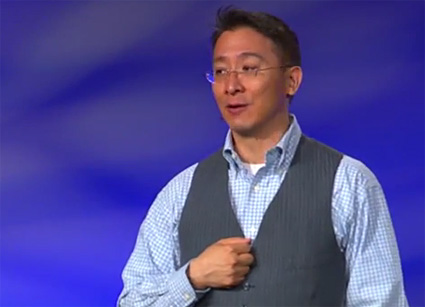
christopher yuanb 425Christopher YuanChristopher Yuan, co-author of his own prodigal son-type memoir titled Out of a Far Country: A Gay Son’s Journey to God. A Broken Mother’s Search for Hope, recounted bad choices that landed him in prison on drug charges and a diagnosis of HIV-positive. After accepting Christ through reading the Bible in prison, he said, his transformation began slowly with his deliverance from drugs.

“The last thing that I was holding on to that I didn’t want to let go was my sexual identity, my sexuality,” he said. “As I read the Bible, it was so clear to me that God loved me unconditionally, and I also came across some passages in the Bible that seemed condemning of that core part of who I thought I was, my sexuality.

“So I went to the prison chaplain, asking his opinion, and to my surprise the chaplain told me that the Bible does not condemn homosexuality. He gave me a book explaining that view.”

Yuan said he took the book “in much curiosity” and in hope of finding biblical justification for celebrating his same-sex orientation.

“From a human perspective, I had every reason in the world to accept what that book was claiming, to justify the way I had lived, but God’s indwelling Holy Spirit convicted me that those assertions just did not line up with the word of God,” Yuan said. “I couldn’t even finish that book, and I gave it back to the chaplain.”

Turning to the Bible

Yuan then turned to the Bible, figuring if there were questions and debate about the six passages most frequently used to condemn homosexuality there must also be passages that would seem to bless a monogamous gay relationship.

“I read it cover-to-cover several times. I couldn’t find anything,” he said.

“So, a decision had to be made—either abandon God and pursue a gay relationship by allowing my desire for a relationship to dictate how I lived, or abandon pursuing a monogamous gay relationship by delivering myself from my desires and my sexuality and live as a follower of Jesus Christ. My decision was clear and obvious. I chose God.”

“I realized my sexuality shouldn’t be the core of who I was,” Yuan continued. “I told myself before that God loved unconditionally, but he doesn’t want me to change. But I realize now after reading the Bible that unconditional love is not the same thing as unconditional approval of my behavior.

“My identity should not be grounded only in my sexuality. My identity is not gay, homosexual or even heterosexual for that matter. But my sole identity as a child of the living God must be in Jesus Christ alone.”

Butterfield, a former tenured professor of English at Syracuse University, lived in a series of monogamous lesbian relationships before she converted to Christianity in 1999. She made that decision after reading the Bible cover-to-cover for a book project critiquing the Religious Right.

From a literary perspective, Butterfield said “it was hermeneutically shocking” to discover a unified message throughout Scripture “that God deals differently with people when people deal differently with God.”

“I was blown away by the democratization of original sin and the free gift of the gospel,” she said.” And most of all, my total undoing was to realize that I had thought I was on the side of righteousness and goodness and kindness and compassion, and it was my total undoing to realize that not only was it Jesus I had been persecuting the whole time, but it was my Jesus, my prophet, my priest, my savior, my king and my friend.”

When Christians talk about chastity or dealing with sexual temptation, they don’t mean repression or slapping people on the wrist, Butterfield said.

“We’re talking about acknowledging and loving the image of God in someone else deeply enough to be sacrificial with what he wants,” she said.

Christianity not a ‘quick fix for homosexuality’

Christianity isn’t a quick fix to homosexuality or any other temptation, she said. To this day, she said, she prays daily, “Lord, how has original sin distorted me, and how is indwelling sin manipulating me?”

“I’m no different now than then,” she said. “You’re no different than I am. These are our questions, and if we could share those instead of pretending we’re all cleaned up, we might have a powerful witness for what the gospel can do in a sexually broken world.”

Jackie Hill Perry, a Christian rapper who credits her faith for helping her to resist lust for other women and now is married and eight months pregnant, said during a panel discussion she doesn’t care much for people with same-sex attraction who agree homosexual activity is a sin and remain celibate self-identifying as a “gay Christian.”

“I don’t like it,” she said. “It’s like, ‘I’m a blaspheming Christian.’”

“I don’t know how one title that represents that I glorify God can be coupled with a title of sin that God hates,” Perry said. “It’s just weird. I feel like I would want to be titled in a way that truly represents that God gets all the glory in my life.”

Marriage crisis predated gay marriage, conference speakers say

NASHVILLE (BP) —The crisis in marriage preceded the rapid rise of legalized same-sex unions, and the church faces a daunting challenge in addressing it, speakers told 1,300 participants at a Southern Baptist conference on the issue.

Southern Baptist and other Christian leaders addressed a gamut of related issues at the Ethics & Religious Liberty Commission’s national conference, “The Gospel, Homosexuality and the Future of Marriage.”

erlc al mohler425Heterosexuals, not gays, started the erosion of traditional marriage, Al Mohler told conference participants. (ERLC Image)A capacity crowd gathered at the Opryland Resort and Conference Center in Nashville at a time when court rulings have cleared the way for the legalization of gay marriage in 35 states, the percentage of never-married Americans is at a record high, cohabitation has become the default position of many adults and divorce remains a problem in the culture and church.

The crisis regarding the biblical, traditional definition of marriage as a permanent union of a man and a woman began “with the heterosexual subversion of marriage,” said Al Mohler, president of Southern Baptist Theologial Seminary.

“The divorce revolution has done far more harm to marriage than same-sex marriage will ever do,” Mohler said.

Heterosexuals “showed how to destroy marriage by making it a tentative, hypothetical union for so long as it may last, turning it only into a contract” that produced a “consumer good,” he said.

“By the time the moral revolution on same-sex relations arrived on the scene, most of the moral revolution had already happened,” he said.

The church now is in a position of being “a moral minority,” Mohler said.

“We are accustomed to ministry from the top side in the culture, not from the underside,” he said. “We are accustomed to speaking from a position of strength and respect and credibility. And now we are going to be facing the reality that we are already, in much of America, speaking from a position of a loss of credibility.”

Other speakers pointed to the victory of romantic love over all other forms of love in the American mind as a major reason for the marriage crisis.

“I think we as a culture have already redefined marriage to a large extent,” said Trevin Wax, managing editor of The Gospel Project at LifeWay Christian Resources and a popular blogger.

The culture moved away from a “common-good” understanding of marriage to the view of the institution as a romantic, sexual relationship between two consenting adults who want to commit to one another and have the government’s approval, he said.

During the same panel discussion on millennials and marriage, cultural commentator John Stonestreet, a fellow of the Chuck Colson Center for Christian Worldview, asserted: “Same-sex marriage is not the root of any problems. It’s the fruit of missing what the point of marriage actually is. It’s time to rebuild marriage. Stop talking about defending it and start rebuilding.”

Sherif Girgis, who cowrote a book arguing for the traditional view of marriage, said cultural indicators demonstrate why the issue is so important.

A matter of social justice

“Every aspect of the common good depends on a strong marriage. This is Matthew 25 stuff,” Girgis said, referring to Jesus’ words about ministry to the “least of these” in his teaching on the final judgment.

“It is a matter of social justice. That’s why your congregation should care about it. That’s why we can’t give this up or think that it’s just a matter for the church. We owe it to the least of these to make sure that, wherever possible, our culture gives them the best shot at being reared by the love of the man and woman who gave them life.”

Other speakers encouraged conference participants to think and act biblically toward those with whom they differ on issues related to sexual morality.

“We need to recognize that even though we disagree with the gay rights movement on many things, including sexual morality, including the definition of marriage, there are some human dignity issues involved,” ERLC President Russell Moore said.

“And we also need to recognize that we have gay and lesbian persons created in the image of God who are treated with indignity and really with evil and wickedness in many places in the world.”

‘Tone’ has hurt witness

Kevin Ezell, president of Southern Baptists’ North American Mission Board, said during a panel discussion, “The one thing that’s hurt our witness most is the tone” with which it has been conducted. That has “brought on some of the condemnation not on what we’ve said,” but how it has been said, he told the audience.

Glenn Stanton, director for global family formation studies at Focus on the Family, urged conference participants to develop genuine friendships with people who disagree with them.

“The great divider between us and them—and I hate to use that term …—is not sexuality,” Stanton said. “The great equalizer is our sin. The great equalizer is our need for repentance and new life in Christ.”

Friendship “is not a means to an end,” he said. “It is an end in itself. And as those relationships develop, then we can share the truth about our life, and it comes up naturally.”


SBC ethics chief denounces reparative therapy for gays

NASHVILLE, Tenn. (RNS)—Southern Baptist leader Russell Moore denounced reparative therapy, saying the controversial treatment that attempts to change a person’s sexual orientation has been “severely counterproductive.”

Faithful Christian living demands obedience to biblical teaching, not automatic release from same-sex attraction, said Moore, president of Southern Baptists’ Ethics & Religious Liberty Commission.

moore rosario425Russell Moore interviews Rosaria Butterfield at the ERLC conference on “The Gospel, Homosexuality and the Future of Marriage.” (ERLC Image)He spoke to a group of journalists covering the ERLC’s national conference, “The Gospel, Homosexuality and the Future of Marriage.”

“The utopian idea if you come to Christ and if you go through our program, you’re going to be immediately set free from attraction or anything you’re struggling with, I don’t think that’s a Christian idea,” Moore said. “Faithfulness to Christ means obedience to Christ. It does not necessarily mean that someone’s attractions are going to change.”

Evangelicals had an “inadequate view” of what same-sex attraction looks like, Moore said.

“The Bible doesn’t promise us freedom from temptation,” he said. “The Bible promises us the power of the Spirit to walk through temptation.”

Moore gave similar remarks to an audience of 1,300 people at the conference. The same morning, the conference featured three speakers who once considered themselves gay or lesbian.

Moore joins a chorus of psychologists and religious leaders who have departed from the once-popular therapy.

In 2009, the American Psychological Association adopted a resolution urging mental health professionals to avoid reparative therapy. Since then, California and New Jersey have passed laws banning conversion therapy for minors, and several other states have considered similar measures.

Earlier this year, the 50,000-member American Association of Christian Counselors amended its code of ethics eliminating reparative therapy and encouraging celibacy instead.

sherif girgis425Traditional marriage advocate Sherif Girgis. (ERLC Image)John Paulk, a former spokesman for the ex-gay movement, apologized in 2013 for the reparative therapy he used to promote. Earlier this year, Yvette Schneider, who formerly worked for groups such as the Family Research Council, Concerned Women for America and Exodus International, published a “coming out” interview calling for bans on reparative therapy. In addition, nine former ex-gay leaders have denounced conversion therapy.

“There were utopian ideas about reparative therapy that frankly weren’t unique to evangelicalism,” Moore said. “That was something that came along in the 1970s and 1980s about the power of psychotherapy to do all sorts of things that we have a more nuanced views about now.”

Some pastors, like John Piper, a respected Minneapolis preacher and author, still encourage the possibility of change for those who have same-sex attractions.

Exodus International, one of the most prominent ex-gay ministries shut down in 2013. While other ex-gay groups such as Restored Hope Network still exist, many religious leaders are now encouraging people with same-sex attraction to consider celibacy.

“The idea that one is simply the sum of one’s sexual identity is something that is psychologically harmful ultimately,” Moore said. “And I think also we have a situation where gay and lesbian people have been treated really, really badly.”

The ERLC is working with parents of those who are gay and lesbian, Moore said.

“The response is not shunning, putting them out on the street,” he said. “The answer is loving your child.”

christopher yuan425Moody Bible Institute professor Christopher Yuan. (ERLC Image)For years, gay evangelicals had three options—leave the faith, ignore their sexuality or try to change. But as groups such as Exodus became unpopular, a growing number of celibate gay Christians have sought to be true to both their sexuality and their faith.

A newer question among some Christians is whether those with same-sex attraction should self-identify as gay.

In his address, traditional marriage advocate Sherif Girgis plugged the website Spiritual Friendship, intended for Catholics and Protestants who identify as gay and celibate. Some Christians are debating whether identifying as gay or having a same-sex orientation is itself unbiblical.

“It’s not the way I would articulate it, because I think it puts on an appendage to a Christian identity,” Moore said. “So, I don’t see them as enemies who are trying to be destructive. I just don’t think it’s the best way to approach it.”

Rosaria Butterfield, a former lesbian who rejects the “ex-gay” label and the movement behind it, said Christians should not use “gay” as a descriptive adjective. Moore interviewed Butterfield, whose address at Wheaton College generated protests earlier this year, during the conference.

“There is no shame in repentance, because it simply proves that God was right all along,” Butterfield told Moore.

Another conference speaker and Moody Bible Institute professor Christopher Yuan teaches a more traditional message of celibacy for those who, like him, are attracted to the same sex. He shuns labels, but he believes more younger Christians are self-identifying as gay and celibate.

“I’m kind of label-less,” Yuan said before his address. “I think I’m a dying breed, though.”


Ethicist David Gushee changes views on same-sex relationships

NEW YORK (RNS)—Baptist ethicist and theologian David Gushee has changed his views on gay rights and same-sex relationships.

Gushee, a professor of Christian ethics at Mercer University, a Baptist-rooted school in Georgia, plans to announce he now affirms same-sex relationships in a speech to The Reformation Project conference, a gathering of pro-lesbian/gay/bisexual/transgender Christians in Washington, Nov. 8.

gushee book changing200David Gushee’s new book is based loosely on a series of articles Gushee published with Baptist News Global—formerly Associated Baptist Press.“I do join your crusade tonight,” Gushee’s prepared remarks say. “I will henceforth oppose any form of discrimination against you. I will seek to stand in solidarity with you who have suffered the lash of countless Christian rejections. I will be your ally in every way I know how to be.”

The journey to his current position has been a long and winding one, Gushee says. During the first two decades of his academic career, he maintained a traditional view of sexuality and “hardly knew a soul who was not heterosexual.” As he worked on issues such as torture and climate change, his attention was drawn to other issues—slavery, segregation, defamation of Jews, subjugating women—for which some Christians once cited Scripture for their entrenched positions.

Then in 2008, his younger sister, Katey, came out as a lesbian. She is a Christian single mother, and she had been hospitalized periodically for depression and a suicide attempt. It made him realize “traditionalist Christian teaching produces despair in just about every gay or lesbian person who must endure it.”

A former student wrote Gushee his teachings had contributed to the painful struggle of understanding his sexual identity. Scientific data suggesting same-sex attraction is a naturally occurring form of human diversity sent Gushee back to the Bible. Years later, he concluded the Bible doesn’t actually teach what he previously assumed.

“It took me two decades of service as a married, straight evangelical Christian minister and ethicist to finally get here,” his speech says. “I am truly sorry that it took me so long to come into full solidarity with the church’s own most-oppressed group.”

New book outlines Gushee’s case

Gushee also has penned a book that makes a biblical and philosophical case for LGBT affirmation. The volume, titled Changing Our Mind: A Call from America’s Leading Evangelical Ethics Scholar for Full Acceptance of LGBT Christians in the Church, will be released by David Crumm Media prior to the speech. The book is based loosely on a series of articles Gushee published with Baptist News Global—formerly Associated Baptist Press—exploring the topic.

Going forward, Gushee hopes the book will become part of the growing body of resources and research that makes a case for Christian acceptance of LGBT relationships—but he also is making himself available to the movement itself. Among his top priorities—providing help for families trying to understand their gay and lesbian children, as well as materials for college and youth pastors.

While other pro-LGBT Christian activists—including Justin Lee of the Gay Christian Network and Matthew Vines, author of God and the Gay Christian—have been dismissed in some circles as wet-behind-the-ears youngsters without formal theological training, Gushee, 52, is a scholar with strong credentials.

His Christian ethics textbook, Kingdom Ethics, written with the late Glen Stassen, is widely respected and was named a 2004 Christianity Today book of the year.

Association with CBF already ended

Some media reports identified him as theologian-in-residence for the Cooperative Baptist Fellowship, a coalition of 15 theological schools, 150 ministries and 1,800 Baptist churches nationwide.

However, CBF Executive Coordinator Suzii Paynter explained her organization contracted with Gushee to “create written materials outlining the biblical and theological basis for advocacy in each of the CBF mission communities.”

“As theologian-in-residence, his work has been limited to advocacy issues related to CBF mission communities—hunger, education, payday lending, immigration, criminal justice. He was not contracted by CBF to comment or work on LGBT issues,” she said.

Gushee completed the assignment prior to his Dec. 31 deadline, and his contractual relationship with CBF ended, she explained.

“CBF does not issue official positions on homosexuality or other social issues, because it violates the Fellowship’s mission as a network of individuals and churches. CBF values and respects the autonomy of each individual and local church to evaluate and make their own decision regarding social issues like homosexuality,” Paynter said.

“In seeking to follow the theme of Romans 15 and other New Testament Scripture commending Christians to unity within a large family of faith, CBF is important in providing a place where the tension is recognized and spoken in honest dialogue and yet fellowship remains.”

Change surprising ‘but not unexpected’

The organization’s leaders “were surprised” by the articles he wrote for Baptist News Global and by his leadership in The Reformation Project’s conference, she noted.

Even so, Gushee’s change of heart on LGBT issues is not entirely unexpected, some observers insisted. He has parted company with many fellow evangelicals on a number of issues.

Conservative colleagues, including Al Mohler, president of Southern Baptist Theological Seminary, where Gushee taught in the 1990s, may see his change of heart as treasonous. While Mohler said the decision is “tragic and causes me real grief,” the two have had ongoing disagreements dating back to Gushee’s time on the Louisville, Ky., campus.

“It was clear early on that he and I, and he and Southern Seminary, were moving in different directions, and those who’ve been watching David’s trajectory will see this as a logical conclusion,” Mohler said. “He’s now placed himself outside of employability at the previous institutions where he taught.”

That other institution is Union University, a conservative Baptist college in Tennessee where Gushee was a professor from 1996 until 2007. David Dockery, who served as president of Union during that time, said he was saddened by Gushee’s defection but declined additional comment.

Mohler: Gushee is ‘late to the party’

While Mohler acknowledged Gushee’s influence, especially among more progressive evangelicals, he doesn’t believe Gushee’s switch presents any new challenges to the conservative cause.

“David is not saying anything new, and he’s a little late to the party,” Mohler said. “When you look at the figures who are making arguments for same-sex marriage and relationships, there is an expanding literature that is as much as 20 years old.”

Gushee disagrees, saying many scientific studies on sexuality are new, as is using LGBT suffering as a logical starting point for the conversation. But he doesn’t expect this to change the minds of Mohler and other conservatives. He only hopes that those further to the right will help end the bullying of LGBT persons, stop using harmful rhetoric and resist laws punitive against sexual minorities.

In the end, Gushee says he doesn’t think much about the backlash headed his way from his newfound opponents.

“I still love Jesus and read the Bible and pray every morning, and I don’t really care what they say,” he said. “I’m willing to let God and history be my judge.”

See Related Article:
David Gushee’s Gay-Switch, Biblical Scholarship, and Slanted Reporting (From The Christian Post)


Nominations to be voted on at BGCT annual meeting

The following information is provided in compliance with the bylaws of the Baptist General Convention of Texas. Nominations to be considered by messengers to the BGCT annual meeting, Nov. 16-18 in Waco, are presented by the Committee on Committees, Committee to Nominate Executive Board Directors and the Committee on Nominations for Boards of Affiliated Ministries.

Report from the Committee on Committees

Committee on Nominations for Boards of Affiliated Ministries

2017 Term

Carmen Estrada, First Baptist Church, El Paso

Brian Hill, First Baptist Church, Littlefield

Linda James, First Baptist Church, Palestine

Frances Jordan, The Fort Bend Church, Sugar Land

Helen Reese, First Baptist Church, Cuero

2016 Term

Heather Thielemann, First Baptist Church, Brenham

2015 Term

Al Childs, Park Cities Baptist Church, Dallas

Kay Smith, First Baptist Church, Ballinger

Committee to Nominate Executive Board Directors

2017 Term

James Freeman, Trinity Baptist Church, Harker Heights

Virginia Kreimeyer, Austin Baptist Church, Austin

Laura Shirey, First Baptist Church, Canton

Steven Young, The Cross Church, Tyler

2015 Term

Doug Simon, Inglewood Baptist Church, Grand Prairie

Report from the Committee to Nominate Executive Board Directors

New Executive Board Director Nominees

2017 Term

Howard Anderson, Singing Hills Baptist Church, Dallas

Donald Bean, Calvary Baptist Church, Nederland

Donna Burney, First Baptist Church, Woodway

Buford Duff, First Baptist Church, Levelland

Michael Evans, Bethlehem Baptist Church, Mansfield

Zelma Irons, Colonial Hills Baptist Church, Snyder

Annette Miller, First Baptist Church, Lewisville

Dana Moore, Second Baptist Church, Corpus Christi

Gene Payne, Eastern Hills Baptist Church, Garland

Jimmy Reynolds, Trinity Baptist Church, Mt. Pleasant

Directors to be Nominated for Second Term

2017 Term

Troy Allen, First Baptist Church, College Station

Betty Arrell, Austin Baptist Church, Austin

Kenneth Barnes, Gambrell Street Baptist Church, Fort Worth

Alfredo Benavides, Iglesia Bautista Stonegate, Alice

Nathan Buchanan, First Baptist Church, Mineral Wells

John Crowe, River Bend Baptist Church, Fulshear

Chuck Crowson, First Baptist Church, Lufkin

Pam Davis-Duck, First Metro Church, Houston

Doug Diehl, Crossroads Baptist Church, San Antonio

Wendy Frizzell, Southern Oaks Baptist Church, Tyler

Mike Harkrider, First Baptist Church, Boerne

Stephen Jackson, Central Baptist Church, Carthage

Grant Lengefeld, First Baptist Church, Hamilton

Mark Neeley, First Baptist Church, Mineola

Larry Post, Sugar Land Baptist Church, Sugar Land

Richard Rogers, University Heights Baptist Church, Huntsville

David Russell, First Baptist Church, Amarillo

Vernon Stokes, First Baptist Church, Midland

Mary Valerio, Primera Iglesia Bautista Kinwood, Houston

Bedilu Yirga, Ethiopian Evangelical Church, Garland

Directors to be Nominated to Fill Vacancies

2016 Term

Charles Greenfield, First Baptist Church, Monahans

Patsy Cochran, First Baptist Church, Gonzales

2015 Term

Xiomara Martinez, First Baptist Church, El Paso

Report from the Committee on Nominations for Boards of Affiliated Ministries

Baptist University of the Americas

2017 Term

Joseph Brake, Trinity Baptist Church, San Antonio

Luis Campos, South Main Baptist Church, Houston

Ruben Chairez, Primera Iglesia Bautista, Del Rio

Van Christian, First Baptist Church, Comanche

Rhoda Gonzales, North Dallas Family Church, Dallas

Elizabeth Hanna, Calder Baptist Church, Beaumont

Jesse Rincones, Alliance Church, Lubbock

2016 Term

Dora Fast, First Baptist Church, Cotulla

Baylor University

2018 Term

Joel Allison, Park Cities Baptist Church, Dallas

Linda Brian, First Baptist Church, Amarillo

Jennifer Elrod, Memorial Drive Baptist Church, Houston

Dallas Baptist University

2017 Term

Charles Frazier Jr., Park Cities Baptist Church, Dallas

Charles Ku, First Baptist Church, Lewisville

Herbert Pedersen, Longbranch Community Church, Midlothian

Patsy Smith, Woodland Heights Baptist Church, Bedford

Buena Stevenson, First Baptist Church, Plano

Joan Trew, Agape Baptist Church, Fort Worth

Cherry Williams, First Baptist Church, Arlington

East Texas Baptist University

2017 Term

David Chadwick, First Baptist Church, Center

Harold Cornish, First Baptist Church, Marshall

David Higgs, First Baptist Church, Henderson

Susan Livingston, First Baptist Church, College Station

David Rice, Crossroads Baptist Church, Marshall

Jana Sims, Crossroads Baptist Church, Marshall

Hardin-Simmons University

2017 Term

Louise Jones, First Baptist Church, San Angelo

Ann Bryant Lindsey, Columbus Avenue Baptist Church, Waco

Laura Moore, Pioneer Drive Baptist Church, Abilene

David Morgan, Trinity Baptist Church, Harker Heights

Karen Muñoz, Pioneer Drive Baptist Church, Abilene

Jud Powell, First Baptist Church, Abilene

Guinn Smith, Pioneer Drive Baptist Church, Abilene

2015 Term

George Newman, Pioneer Drive Baptist Church, Abilene

Houston Baptist University

2017 Term

Josh Guajardo, Trinity Baptist Church, Katy

Howard Payne University

2017 Term

Robert Carter, River Bend Church, Austin

Dwayne Grooms, First Baptist Church, Brownwood

Ronny Marriott, First Baptist Church, Temple

Milton McGee, First Baptist Church, Henderson

Roy Robb, First Baptist Church, San Angelo

David Robnett, Coggin Avenue Baptist Church, Brownwood

Candy Smith, First Baptist Church, Richardson

San Marcos Baptist Academy

2017 Term

Billy Belcher, First Baptist Church, Baytown

Scott Collins, The Crossing Baptist Church, Mesquite

Jimmie Scott, First Baptist Church, San Marcos

Joseph Sullivan, First Baptist Church, San Marcos

2016 Term

Rob Kessler, First Baptist Church, Palacios

University of Mary Hardin-Baylor

2017 Term

Travis Burleson, First Baptist Church, Salado

JoAn Dillard, First Baptist Church, Belton

Robert Galligan, Calvary Baptist Church, McAllen

Mike Harkrider, First Baptist Church, Boerne

Glenn Hodge, First Baptist Church, Salado

John Messer, First Baptist Church, Belton

Jack Phelps, Crestview Baptist Church, Georgetown

Mary Priest, First Baptist Church, Salado

Don Ringler, Taylor’s Valley Baptist Church, Temple

Ernest Roberts, First Baptist Church, Decatur

Dean Winkler, First Baptist Church, Temple

Wayland Baptist University

2017 Term

David Foote, Southcrest Baptist Church, Lubbock

Bruce Julian, First Baptist Church, Perryton

Marc McDougal, Oakwood Baptist Church, Lubbock

Rose Mediano, Alliance Church, Lubbock

Lonny Poe, Sunset Canyon Baptist Church, Dripping Springs

2015 Term

Sally Walker, First Baptist Church, Arlington

Valley Baptist Missions/Education Center

2017 Term

Othal Brand Jr., Calvary Baptist Church, McAllen

Raul Hernandez, Yorktown Baptist Church, Corpus Christi

Randy Johnson, First Baptist Church, Richardson

Jim Perkins Jr., Madison Hills Baptist Church, San Antonio

Baptist Community Services

2017 Term

Arthur Garner, Trinity Baptist Church, Amarillo

Robert Gibson, Second Baptist Church, Amarillo

Henry Hamilton, Paramount Baptist Church, Amarillo

Charles Jones, Hollywood Road Baptist Church, Amarillo

Baptist Health Foundation of San Antonio

2017 Term

Alice Gong, First Chinese Baptist Church, San Antonio

Muriel Rhoder, Calvary Baptist Church, San Antonio

Frank Scott, Alamo Heights Baptist Church, San Antonio

Toby Summers, Trinity Baptist Church, San Antonio

Baptist Hospitals of Southeast TX

2017 Term

D’Lana Barbay, First Baptist Church, Port Neches

Jeff Dyson, Calder Baptist Church, Beaumont

Gary Rothenberger Jr., Calvary Baptist Church, Beaumont

2015 Term

Greg Dykeman, Calvary Baptist Church, Beaumont

Buckner International

2017 Term

David Hennessee, Trinity Baptist Church, San Antonio

Children at Heart Ministries

2017 Term

Julie Christianson, Crestview Baptist Church, Georgetown

Lloyd Ferguson, First Baptist Church, Austin

Hal Harris Jr., Hyde Park Baptist Church, Austin

Ruthie Herber, Central Baptist Church, Round Rock

Calvin Lee Jr., First Baptist Church, Round Rock

Thomas Norris, First Baptist Church, Woodway

Ed Rogers, First Baptist Church, Georgetown

Hendrick Medical Center

2017 Term

Diane Leggett, First Baptist Church, Abilene

J.V. Martin, First Baptist Church, Sweetwater

Joe Melson, Pioneer Drive Baptist Church, Abilene

Janet O’Dell, Wylie Baptist Church, Abilene

David Scott, Southwest Park Baptist Church, Abilene

Mike Woodard, Southwest Park Baptist Church, Abilene

Hillcrest Health System

2017 Term

Loretta Oliver, Greater New Light Baptist Church, Waco

South Texas Children’s Home Ministries

2017 Term

Jean Culli, First Baptist Church, Beeville

Flo LeBlanc-Stovall, Minnehula Baptist Church, Goliad

Karol Peters, University Baptist Church, Houston

Sherry Sigmon, Shearer Hills Baptist Church, San Antonio

Dot Youngblood, First Baptist Church, Mineral Wells

Valley Baptist Legacy Foundation

2015 Term

Jack Abbott, First Baptist Church, Harlingen

Arnie Gonzales, First Baptist Church, Rio Hondo

Vern Stenseng, First Baptist Church, Harlingen

Baptist Church Loan Corporation

2017 Term

Dennis Tucker Jr., Calvary Baptist Church, Waco

Baptist Foundation of Texas

2017 Term

Robert Fowler, South Main Baptist Church, Houston

John Minton, First Baptist Church, Tyler

Harold Preston, First Baptist Church, Abilene

Baptist Standard

2017 Term

Jon Beilue, First Baptist Church, Amarillo

Meredith Pinson-Creasey, South Main Baptist Church, Houston

2015 Term

Charles Risinger, First Baptist Church, Longview


Baptist Briefs: New Baptist Covenant receives $1 million gift

The San Antonio-based Eula Mae and John Baugh Foundation has pledged $1 million over four years to support a movement spearheaded by former President Jimmy Carter to unify U.S. Baptists across racial, geographical and theological lines. hannah mcmahan130Hannah McMahanThe grant will help the 7-year-old New Baptist Covenant movement shift from large meetings to “covenants of action,” where two or more churches from different Baptist traditions come together to address a pressing need in their community. Hannah McMahan, New Baptist Covenant coordinator, said the movement plans to nurture 100 covenants of action nationwide over the next four years. The inaugural New Baptist Covenant celebration January 2008 in Atlanta attracted more than 15,000 Baptists from various traditions. A second national meeting in 2011 was beamed via satellite to locations around the country. The next New Baptist Covenant summit is scheduled Jan. 14-15, 2015.

BWA reaffirms South African meeting site. The 21st Baptist World Congress will take place in Durban, South Africa, as planned July 22-26, 2015, and the Baptist Women’s Leadership Conference will precede it, meeting July 18-21 in Johannesburg. BWA leaders reached the decision to stick to the previously announced schedule and locations after broadly canvassing BWA regional secretaries and other Baptist leaders worldwide, in light of the spread of Ebola in West Africa and international concern about travel to parts of the African continent. “The decision to adhere to the schedule for the 21st congress represents an effort to express our solidarity with the Baptist community in Africa,” an official statement released by BWA said. “It is also a sign of our faith in the power of the sovereign God with whose help the tide of destruction in the three named countries in Western Africa can be turned back. We look forward to the day when, like South Africa, Liberia, Sierra Leone and Guinea will be Ebola-free.”


Pastor reminds Dallas leaders of challenges faced by fiancée of Ebola fatality

DALLAS—When Dallas civic and faith community leaders gathered to talk about how the city successfully weathered the Ebola crisis, one Baptist pastor urged them to remember the continuing challenges that confront the fiancée of the one person in North Texas who died from the virus.

“We’re discovering people are finding more reasons to say ‘no’ than to say ‘yes’” to Louise Troh and her family, said George Mason, pastor of Wilshire Baptist Church.

Troh, a member of Wilshire, was engaged to marry Thomas Eric Duncan, who died from Ebola Oct. 8 at Texas Health Presbyterian Hospital in Dallas.

‘Not all roses’

“It’s not all roses here,” Mason told the governmental and religious leaders who met at Park Cities Baptist Church in Dallas for a final update on the city’s Ebola response.

Troh, her 13-year-old son and two nephews who lived with them endured a 21-day isolation period when medical personnel monitored them to see if they developed the Ebola virus. They lost their apartment, and officials who decontaminated it burned all their possessions.

The Catholic Diocese of Dallas provided short-term housing for Troh and her family during their three weeks in isolation. But when friends at Wilshire Church tried to find them permanent housing, they faced repeated roadblocks, Mason reported. Landlords in the Vickery Meadows area of northeast Dallas where she had lived 14 years refused to rent to her.

Wilshire Church may have found a solution by purchasing a condominium for Troh and her family, he continued.

“Members of our church agreed to buy it and rent to her,” Mason said. But even that plan faces hurdles, such as homeowner association covenants, as well as the need to provide Troh with furnishings and other living supplies.

Celebrated cooperation

Mason’s comments contrasted with most presenters on the panel, who celebrated the cooperation governmental and religious leaders demonstrated when Duncan first was diagnosed with Ebola and later when two nurses tested positive for the virus.

Mayor Mike Rawlings reported the second group of people in contact with Duncan cleared 21 days of monitoring with no evidence of the Ebola virus, and the final group considered at risk end their period of isolation Nov. 7.

“Thank God for this city, where we used science and sensibility, where we used facts and not fear, in making decisions,” he said.

In contrast to the one fatality from Ebola, Rawlings reminded the group 18 people in Dallas County died of West Nile virus in 2012, and more than 20 women were killed by their husbands or boyfriends this year.

“Domestic violence is much more a scourge to this city than Ebola,” he said.

County Judge Clay Jenkins acknowledged some parents in his children’s school ostracized them and his wife after he visited Troh. But he applauded Paul Rasmussen, his pastor at Highland Park United Methodist Church, who “walked my family to school.”

Prayer for those ‘in fear’

While Jenkins praised the “health care heroes” who provided care for Duncan at Texas Health Presbyterian Hospital, he also requested prayer for those “who don’t understand the science” and respond in fear.

“If we want to demonize anything, let’s demonize the terrible disease—not anyone for their reaction to it,” he said.

Mason joined in thanking city and county officials for the way they handled the Ebola incident. Even so, he reminded participants at the gathering of the impact unreasonable fear continues to have on one family.

“It’s easy to celebrate the good that happened. Only one person died. Only one family was completely dispossessed. But that family has no place to live yet. And we as a church are going to stay with them. We are committed to seeing them through this,” Mason said.

“There’s some serious loss here—loss of life, loss of possessions and, to some degree, loss of reputation. … We need to restore the lost and repair the broken. When people get whole, the community gets whole.”


Christ’s ‘love’ command inspires action and advocacy

Some Christians provide shelter for the homeless or food for hungry people. Others engage in social activism or public policy advocacy.

What’s love got to do with it? Everything, many who are involved in those efforts insist. It’s all about fulfilling the Jesus’ command to love one’s neighbor as oneself.

Sometimes, dramatic needs inspire dramatic responses.

On a cold winter night in 1987, two homeless men froze to death on Troost Avenue in Kansas City, Mo., a major north-south street that historically divided the predominantly white west part of town from the largely African-American east side.

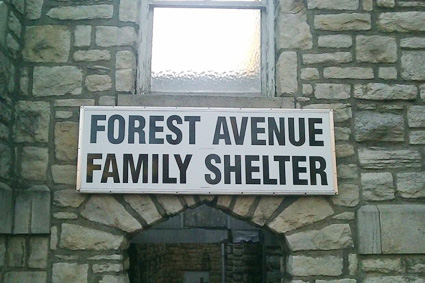
forest avenue shelter sign425A Baptist church in Kansas City, Mo., opened its educational building to homeless people as a shelter.For Pastor Ken Smith at nearby Forest Avenue Baptist Church, the death of the two men marked the tipping point that spurred his church to action. Already, he had been wrestling with knowledge that some of their congregational food pantry’s clients slept in the church parking lot.

“It was a moody blue Monday, and I prayed, ‘Lord, what are we doing to do with this building you’ve given us?’” he recalled.

Love for neighbors, as Jesus commanded, required a dramatic response. Smith—who had been at Forest Avenue about three years—led the church to open its educational building to homeless people as a shelter, beginning with 50 cots and 50 blankets.

Initially, the shelter welcomed single men and couples. In time, Forest Avenue Family Shelter  narrowed its focus, developing into an emergency facility for single women, mothers with children, battered women and victims of human trafficking.

“We’ve rescued a lot of women from trafficking and prostitution over the years,” Smith said.

The shelter houses about 32 guests on an average night, but Forest Avenue is seeking to add beds and lockers to expand capacity to 48 clients.

While the shelter meets the needs of women and children, the church’s soup kitchen primarily attracts men—typically 30 to 40 on most Sunday evenings.

“We had to move it to another part of the church because we were serving some of the pimps in the soup kitchen whose girls were in our shelter,” Smith said.

The shelter depends entirely on a volunteer staff and on donations, since it accepts no city, state or federal money.

“All the staff are ladies who came through the shelter and who have been saved, discipled and become church members,” Smith said. “Our focus is not just on providing shelter but on growing women as disciples.”

Jesus said, ‘Love your neighbor as yourself.’

In the last three decades, Forest Avenue Church has transitioned several times—from predominantly white to mostly African-American to a 50/50 mix that represents the changing urban neighborhood. After years as an aging congregation, the church is beginning to attract young families who have moved to the area.

Even so, Smith does not see turning half a church’s facility into a homeless shelter as a particularly good model for church-growth strategy—unless God calls a church to do it.

“I would not recommend anybody do this unless God calls them,” he said. “It’s not the way I would have chosen to grow a church. … We did it because God said do it.”

Sometimes, love demands making unselfish choices.

Love for neighbors means Christians should engage in public policy advocacy for the common good and develop their own church-based ministries to meet needs directly, said Christian ethicist and theologian Roger Olson.

roger olson300Roger OlsonChristians in representative democracies should apply pressure to government “to build a strong safety net for the truly needy—especially children and the indigent—and to encourage employment,” said Olson, the Foy Valentine professor of Christian ethics and theology at Baylor University’s Truett Theological Seminary.

“There will always be people who fall through the cracks of even the best government welfare programs, and churches should build their own safety nets for those in their congregations and neighborhoods.”

Creation of a church-based social safety net requires churches to make unselfish decisions in regard to budget, he noted.

“I think that ideally a church should strive to spend one-third of its income on itself, one-third on missions/evangelism and one-third on physical relief for the hungry and homeless,” Olson said.

“That’s pretty idealistic, but I don’t see anything in the New Testament that encourages churches to spend most of their income on buildings, equipment and salaries. I see a lot there about missions and evangelism and about helping the poor.”

Sometimes, love requires changing unjust systems.

Christians not only need to offer immediate relief to urgent needs, but also to look seriously at the root causes of injustice, said Charles Foster Johnson, co-pastor of Bread Fellowship in Fort Worth.

“People of faith are good at giving a person food when they are hungry. But systemic questions make us uncomfortable, ” Johnson told participants at a breakout session during the recent Together at the Table Hunger and Poverty Summit at Baylor University.

The Texas Hunger Initiative —a project within the Baylor School of Social Work, launched in partnership with Texas Baptists’ Christian Life Commission—sponsored the summit in conjunction with Feeding Texas and the U.S. Department of Agriculture Food & Nutrition Service Southwest Regional Office.

charles foster johnson130Charles Foster JohnsonLove for one’s neighbor requires Christians to seek to change the circumstances that create poverty and hunger, he insisted. Education—more than any other single factor— enables many people to achieve socio-economic mobility, said Johnson, executive director of Pastors for Texas Children, an advocacy group to recruit Christian leaders to support quality public education for all children in the state.

Johnson began advocating for children in public schools six years ago when Suzii Paynter, then executive director of Texas Baptists’ Christian Life Commission, invited him to work in Austin with the Coalition for Public Schools.

In serving with the coalition—focused on opposing the privatization of public schools and efforts to divert public money toward private education—Johnson grew passionate about the need to provide every child in the state access to quality public education. Rather than concentrating efforts in Austin during legislative sessions every two years, he became convinced children’s interests would be served better by mobilizing ministers around the state.

“We want to connect every Texas church to a public school,” he explained.

The coalition emphasizes the importance of building relationships between congregations and schools in their communities. As church leaders build friendships with school principals, they discover specific ways to help their schools—provide weekend backpacks filled with nutritious food for low-income students, offer after-school mentoring, collect school supplies or whatever a school needs to serve its students, he explained.

“We want to empower schools for the common good in every community,” Johnson said.

Sometimes, love for one’s neighbor demands prophetic action.

Jeff Hood, a North Texas minister with Baptist roots, serves as a spiritual adviser to several men on death row.

jeff-hood bw300Jeff HoodEarlier this year, Hood walked 200 miles from the Polunsky Unit in Livingston—where death row prisoners are incarcerated—to the Texas Capitol in Austin.

He wanted to call attention to more than 500 people the state has executed in the last 38 years and pray for the end of capital punishment.

Along the way, when asked the reason for his pilgrimage, he answered: “I’m a Christian. I don’t believe you can love your neighbor as yourself and execute him.”

Sometimes, love inspires unlikely coalitions.

Like many congregations, Northeast Baptist Church in San Antonio responds to many people who seek help paying their bills. But one in particular captured the attention of Pastor Chad Chaddick—a woman who took out a $700 payday loan, had paid $1,800, but still owed $700.

It seemed so unjust to him—so contrary to love for neighbors. So, Chaddick went to Austin to testify before the Senate Business and Commerce Committee and the House Investments and Financial Services Committee to support Texas Baptist Christian Life Commission-backed efforts to regulate the payday and auto title lenders.

chaddick testimony425Chad Chaddick testifying before the Senate Business and Commerce Committee on Payday Lending in 2011.Because of his involvement on the predatory-lending issue at the state level, Bryan Richardson, associate pastor at First Baptist Church in San Antonio, invited Chaddick to join a newly formed local group—Together for the City.

San Antonio’s business and civic leaders meet quarterly with church leaders. They share concerns about their city and ideas about how the public, private and religious sectors can cooperate for the common good.

The predatory-lending issue offered the group both an “early win” and a lesson learned from a failed effort, Chaddick noted. San Antonio’s City Council passed an ordinance regulating payday and auto-title loan businesses, and other cities have looked to it as a model they could adopt.

However, a plan for churches to offer short-term loans to low-income families as an alternative to payday lending proved “too difficult to do,” Chaddick confessed. But churches continue to support local credit unions’ efforts to offer small-dollar loans at reasonable rates and encourage development of other alternative models, he added.

Recognizing the value of a forum where civic, business and religious leaders could talk honestly in a nonthreatening environment, Richardson, Chaddick and others kept alive the Together for the City network. Topics have ranged from human trafficking to adult education, to refugee services and resettlement, to health care, to foster-to-adoption programs, to community gardens.

Together for the City purposely has remained loosely organized and flexible. But the group has held encouraging conversations with leaders of the San Antonio Area Foundation about funds for a related entity.

“The idea is for the foundation to help us set up an idea incubator where we can bring to fruition some of the ideas raised by Together for the City,” Richardson explained. “Ideas are bubbling to the surface. An idea incubator could direct some money to some of those things.”

Apart from the idea incubator, San Antonio already benefits from the ongoing conversations that occur in Together for the City meetings, he insisted.

“It’s a congenial atmosphere, not in the least adversarial,” Richardson said. “The biggest benefit is the growing sense of trust between churches, business and city leaders, and officials.

“It’s a pretty wonderful thing. … Nobody is dictated to, and nobody takes advantage. We are solidifying friendships, and that’s a significant foundation going forward into the future.”


Houston mayor withdraws pastors’ subpoenas

HOUSTON (RNS)—The mayor of Houston withdrew the subpoenas Oct. 29 of sermons from five pastors who opposed an ordinance banning discrimination against LGBT people.

Filed two weeks earlier, the subpoenas outraged many Christians as an affront to religious freedom.

Annise ParkerHouston Mayor Annise Parker said as important as it is to protect the Houston Equal Rights Ordinance, the subpoenas became a distraction. They were aimed at pastors active in the movement to overturn HERO through a citywide vote.

Parker, Houston’s first openly gay mayor, said she made the decision after meeting with Houston pastors and then with national Christian leaders, including National Clergy Council President Rob Schenck.

“They came without political agendas, without hate in their hearts and without any desire to debate the merits of HERO,” Parker said. “They simply wanted to express their passionate and very sincere concerns about the subpoenas.”

Erik Stanley, senior legal counsel for the Alliance Defending Freedom, called the subpoenas a “gross abuse of power.”

“We are gratified that the First Amendment rights of the pastors have triumphed over government overreach and intimidation,” he said after Parker’s announcement.

The pastors are part of a movement that collected signatures to place HERO on the ballot, in hopes city voters would reject it. Anti-HERO efforts at first focused on HERO’s guarantee—later dropped from a draft of the ordinance—that transgender people can use a men’s or women’s bathroom, depending on the gender with which they identify.

The five pastors—four men and one woman—are not among the activists who sued the city after it rejected thousands of signatures needed to place HERO on the ballot. They were, however, involved in the effort to secure signatures for the measure’s repeal. The subpoenas would have allowed the city’s legal team to peruse sermons from the pastors that dealt with HERO.

Stanley called the rejection of those signatures “arbitrary” and said the city is “bent on pushing through its deeply unpopular ordinance at any cost.”


DBU tennis team ministers in Chile

DALLAS—For members of the Dallas Baptist University tennis team, “love” means more than a way of keeping score. It’s what motivated them to spend their fall break ministering to children in Chile.

dbu tennis chile425A Dallas Baptist University student teaches tennis techniques to students from the Amazing Grace School in La Serena, Chile. (PHOTO / Brittany Harley / DBU)Team members saw God’s “amazing love in action” as they shared their faith with children at Amazing Grace School in La Serena, Chile, participants noted. Meredith Robinson, a sophomore from Rowlett, and Brandon Elliott, a freshman from Midland, both called the experience “life-changing.”

“God surpassed each and every expectation I had, grew me closer to my teammates, let me witness his amazing love in action, and blessed me with memories and lessons that will last the rest of my life,” Robinson said.

Elliott never participated in a mission trip before, and he acknowledged he didn’t know what to expect.

“Jesus took over in that school,” he said. “I am so thankful I got to go and be a part of what Jesus did in Chile.”

The trip to Chile marked the 13th mission trip sponsored by the DBU athletic department as part of its Global Sports Mission Initiative, which provides student-athletes opportunities to share the love of Christ overseas. 

Tennis clinics

The DBU team led morning devotions, taught English, presented their Christian testimonies and conducted tennis clinics. Jay Harley, dean of student affairs and spiritual life at DBU, and his wife, Brittany, trained local parents and Bible teachers on how to share their faith in Jesus with non-Christian friends, and they led two chapel services for the students of Amazing Grace School.

“Six students at Amazing Grace School accepted Christ after members of the tennis team presented the gospel,” Harley said.  “The leadership at Amazing Grace School told us they had been praying that this would be the year of spiritual harvest at their school and that God had brought the harvest with us. They also said they thought our group would do well with English teaching, but were so surprised and blessed by the spiritual component.”

Growing spiritually

Cannon Jones, a freshman from Colleyville, rejoiced not only at the number of Chilean students who professed faith in Christ, but also at the way he grew spiritually through the experience.

“Even though there was a language barrier that was frustrating at times, the kindness of the Chileans showed through,” Jones said. “I have never been so close to Christ.”


Study: Americans believe in heaven, hell, a little heresy

NASHVILLE, Tenn.—Most Americans believe in heaven, hell and a few old-fashioned heresies.  

Americans disagree about mixing religion and politics and about the Bible. And few pay much heed to their pastor’s sermons or see themselves as sinners.

chart god425A new study of American views about Christian theology from Nashville-based LifeWay Research revealed those findings and others.

Stephen Nichols, chief academic officer of Ligonier Ministries, said his Orlando-based organization commissioned the online survey of 3,000 Americans to “take the temperature of America’s theological health.”

“What comes screaming through this survey is the pervasive influence of humanism,” said R.C. Sproul, founder and chairman of Ligonier.

Researchers asked 43 questions about faith, covering topics from sin and salvation to the Bible and the afterlife. They wanted to know how people in the pews—and people on the street—understand theology.

Many Americans get the basics right, but they’re often fuzzy on the details, said Ed Stetzer, executive director of LifeWay Research.

“People like to believe in a generic Christian-ish god with cafeteria doctrines,” Stetzer said. “However, when we asked about harder beliefs—things that the church has and still considers orthodoxy—the numbers shift.”

Among the study’s findings:

Americans say heaven is a real place. But they disagree about who gets in.

Two-thirds (67 percent) of Americans believe heaven is a real place. That includes, following standard demographic categories, 9 in 10 Black Protestants (88 percent) and evangelicals (90 percent), three quarters of Catholics (75 percent) and a third of non-Christians (37 percent).

chart sin425Just under half of Americans (45 percent) say there are many ways to heaven—which conflicts with traditional Christian views linking salvation exclusively to faith in Jesus.

Catholics (67 percent) and Mainline Protestants (55 percent) are most likely to say heaven’s gates are wide open with many ways in. Evangelicals (19 percent) and Black Protestants (33 percent) are more skeptical.

About half of Americans (53 percent) say salvation is in Christ alone. Four in 10 (41 percent) say people who have never heard of Jesus still can get into heaven. And three in 10 (30 percent) say people will have a chance to follow God after they die.

Hell is a real place, too. But you have to be really bad to go there.

About six in 10 Americans (61 percent) say hell is a real place. Black Protestants (86 percent) and Evangelicals (87 percent) are most likely to say hell is real. Catholics (66 percent) and Mainline Protestants (55 percent) are less convinced.

Overall, Americans don’t seem too worried about sin or being sent to hell. Two-thirds (67 percent) say most people are basically good, even though everyone sins a little bit—an optimistic view of human nature at odds with traditional Christian teaching about human sin.

Fewer than 1 in 5 Americans (18 percent) say even small sins should lead to damnation, while about half (55 percent) say God has a wrathful side.

When it comes to faith, Americans like a do-it-yourself approach.

Most Americans (71 percent), and in particular Black Protestants (82 percent) and Catholics (87 percent), say people must contribute some effort toward their own salvation. Two-thirds (64 percent) say in order to find peace with God, people have to take the first step, and then God responds to them with grace. 

That sounds right to many people, Stetzer said, especially in our “pull-yourself-up-by-your-bootstraps” culture. But it doesn’t reflect the Christian idea that faith is a response to God’s grace.  

chart bible425Many Americans also don’t mind being disconnected from a local church. About half (52 percent) say worshipping alone or with family is as good as going to church.

Almost all (82 percent) say their local church has no authority to “declare that I am not a Christian.” More than half (56 percent) believe their pastor’s sermons have no authority in their life, while slightly less than half (45 percent) say the Bible was written for each person to interpret as they choose.

Americans believe in the Trinity. But the details don’t reflect traditional views of orthodoxy.

About seven in 10 (71 percent) Americans believe in the Trinity, the idea that one God exists as three persons—Father, Son and Holy Spirit.

But few—even those in evangelical denominations—seem to grasp the details of how Christians historically have taught the Trinity. More than half of evangelicals (59 percent), for example, say the Holy Spirit is a force—not a personal being. Ten percent are not sure, while 31 percent agree the Spirit is a person. Overall, two-thirds of Americans (64 percent) say the Holy Spirit is a force.

More than one in seven Americans (15 percent) say the Holy Spirit is less divine than God the Father and Jesus. A third (33 percent) believe God the Father is more divine than Jesus. One in five (19 percent) says Jesus was the first creature made by God. All of those run counter to Christian doctrine as found in historic creeds of the church.

Some Americans like the Bible. Others are skeptical.

About half of Americans (48 percent) believe the Bible is the word of God. Four in 10 (43 percent) say the Bible is 100 percent accurate, while a similar share of Americans (41 percent) say it’s helpful but not literally true.  

Evangelicals (76 percent) and Black Protestants (67 percent) are most likely to say the Bible is accurate. Mainline Protestants (50 percent) and Catholics (49 percent) lean toward the Bible being helpful but not literally true.

The Bible is not the only religious text Americans disagree on. About half (54 percent) disagree when asked if the Book of Mormon is a revelation from God. About 10 percent say God revealed the Book of Mormon, while another 36 percent say they are not sure.

Americans disagree about sex, God and politics.

About four in 10 (42 percent) Americans—and more than half (55 percent) of non-Christians—say churches should remain silent about politics.

Among Christian groups, Catholics (47 percent) and Mainline Protestants (44 percent) want less politics in church. Black Protestants (31 percent) and Evangelicals (26 percent) are less likely to want their church to skip politics.

Less than half (48 percent) of Americans say sex outside of marriage is a sin. Christian groups are split on the topic. Mainline Protestants (44 percent) and Catholics (40 percent) don’t see sex outside of marriage as sinful. Three quarters of Black Protestants (74 percent) and evangelicals (76 percent) believe it is.

The study’s overall results, Nichols says, show churches have a lot of work to do.

“This study demonstrates the stunning gap in theological awareness throughout our nation, in our neighborhoods, and even in the seat next to us at church,” Nichols said.

Researchers used a demographically balanced online panel for interviewing American adults. Participants completed 3,000 surveys Feb. 25 to March 5. The sample provides 95 perent confidence the sampling error from the online panel does not exceed plus or minus 1.8 percent. Margins of error are higher in sub-groups. Researchers used slight weights to balance religion and gender.


Secularism grows as more Americans turn churchless

WASHINGTON (RNS)—If you’re dismayed 20 percent of Americans are “nones”—people who claim no particular religious identity—brace yourself.

Try 38 percent, the figure religion researcher David Kinnaman calculates when he adds “the unchurched, the never-churched and the skeptics” to the nones.

david kinnaman300David KinnamanHe calls his category “churchless”—the same title Kinnaman has given his new book. By his count, roughly four in 10 people living in the continental United States are actually “post-Christian” and “essentially secular in belief and practice.”

If asked, the “churchless” would likely check the “Christian” box on a survey, even though they may not have darkened the door of a church in years.

Kinnaman, president of the California-based Barna Group, slides them into this new category based on 15 measures of identity, belief and practice in more than 23,000 interviews in 20 surveys.

The research looked at church worship attendance and participation, views about the Bible, God and Jesus, and more to see whether folks were actually tied to Christian life in a meaningful way or tied more by habit or personal history.

Ed Stetzer, president of LifeWay Research, once called nominals—people attached by name only—“survey Christians.” They don’t want to cut ties with their parents or go all the way to atheism, Stetzer said. “So, they just say ‘Christian,’ since it is the default category from their heritage.”

Kinnaman now has the numbers to back that up.

unchurched chart398“We are far from becoming an atheist nation,” he said. “There are tens of millions of active believers in America today. But the wall between the churched and the churchless is growing higher and more impenetrable as more people have no muscle memory of what it means to be a regular attender at a house of worship.”

How these people think, pray and use their time is shifting away from a faith-based perspective. As a result, a churchless or secular worldview “is becoming its own social force.”

When political scientists burrow into election results, they may find church attendance is less and less useful for predicting or evaluating political, social and cultural attitudes. If you are not around people of strong belief, there’s not a lot of spillover impact. 

Stephen Mockabee, an associate professor of political science at the University of Cincinnati, has compared church attendance to medication: “It’s not only the drug but also the dose that matters.”

The churchless come in several tribes, Kinnaman asserts. 

About a third (32 percent) still identify as Christian. They say they believe in God, but they’re wobbly on connections. Kinnaman calls them “Christianized but not very active.”

That might include Katie West of Mount Sterling, Ky., or Mike Wilson of Webster City, Iowa.

West keeps the Christian label because, she said, “I follow or at least try to follow the teachings of Christ.” She avoids religious services “unless roped into a wedding or funeral,” but considers herself “a spiritual person without looking at a Bible.”

Wilson is the paid webmaster for a Lutheran church, but he can’t recall the last time he attended a worship service or read the Bible. He checks the Christian box if asked in a survey, even though he resonates more with Buddhist and other Eastern philosophies.

“Religion is the starting point to enlightenment, but at some point you have to take that leap of faith and make your personal relationship with God exactly that—personal,” Wilson said. “So if you can find a religion that encompasses that better than Christianity, I will call myself that.”

postchristian chart425Other “tribes” among the churchless include:

• 25 percent are self-identified atheist or agnostics. Kinnaman calls them “skeptics.” And their ranks have changed in the last two decades. The percentage of women is up to 43 percent from 16 percent since 1993. Highly educated and more mainstream than before, “this group is here to stay,” he said.

• 27 percent belong to other faith groups such as Jewish or Muslim or call themselves spiritual but not religious.

• 16 percent are Christians—people with a committed relationship with Christ, Kinnaman said—who don’t go to church anymore.

Kinnaman predicts no change in direction. “The younger the generation, the more post-Christian it is, he predicted:

• Millennials (born between 1984 and 2002)—48 percent

• Gen X-ers (born between 1965 and 1983)—40 percent

• Boomers (born between 1946 and 1964)—35 percent

• Elders (born in 1945 or earlier)—28 percent

Karen King, 52, a dispatch scheduler for a local transit agency in Mount Vernon, Wash., knows her state is among the least churched in the nation. Yet among the secular crowds, there are plenty of churchgoers.

“I know because I schedule people to get to churches through Dial-A-Ride. There must be 40 or 50 churches between Mount Vernon and nearby Burlington.”

And King goes to none of them.

The granddaughter of a Presbyterian pastor, King says she hasn’t been to church for a worship service in more than 30 years. Her daughter, a millennial and a pagan, doesn’t go either.

Although King still thinks of herself as a Christian, she has stepped back from denominational brands. Instead, she says, she just tries to show love.

“I do random acts of kindness. I talk to God when I think I need to. I think I have a good connection to Mother God and Father God,” she said.