Moore: Christian radio causes people to hate Christianity

A Southern Baptist official is standing by a recent comment about Christian talk radio that prompted a network head to request he apologize or at least explain.
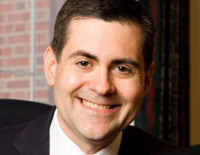
russell moore200Russell MooreRussell Moore, president of the Southern Baptist Convention Ethics and Religious Liberty Commission, used Christian radio as an illustration of Christians who condemn others without offering a reconciliation.

“I listened on the way back up here from my hometown to some Christian talk radio this week, against my doctor’s orders,” Moore said during a 50-minute speech at the ERLC Leadership Summit in Nashville, Tenn. “And honestly, if all that I knew of Christianity was what I heard on Christian talk radio, I’d hate it, too.”

“There are some people who believe that fidelity to the gospel simply means speaking, ‘You kids get off my lawn.’ That is not the message that has been given to us,” he said. “If the call to repentance does not end with the invitation that is grounded in the bloody cross and the empty tomb of Jesus, we are speaking a different word than the word that we have been given.”

Pushback from talk show host

Janet Mefferd, whose nationally syndicated show airs on 100 radio stations across the United States, was first to take offense.

“I find that really offensive, for a few reasons,” Mefferd said. “First of all, I can think of an awful lot of people in the Old Testament who were pretty darn bold preaching the truth, and God was awfully pleased with them.”

Mefferd added she doesn’t know if Moore was referring to her program, but she doesn’t know anyone in the industry who is indifferent to whether or not people are saved.

janet mefferd200Janet MefferdThe president of 95-station Bott Radio Network copied more than 70 Southern Baptist and evangelical leaders in a May 5 letter to Moore asking him to apologize for or a least clarify what he meant by his remark.

WND, formerly WorldNetDaily, reported on the dustup in a weekend story headlined “‘Nuclear bomb’ hits Christian talk radio.”

Moore appeared May 9 on the Erick Erickson Show, which airs on secular radio, and defended his comments in the context of his message that Christians who respond to sin only with condemnation without an offer to repent and believe aren’t preaching the whole gospel.

‘Doesn’t mean everybody’

“That doesn’t mean everybody who is in Christian talk radio,” Moore said. “There are just a ton of people who are doing good, gospel-centered work, but most people when they think of Christian talk radio, it’s the same thing when someone says ‘televangelist’ in the last generation, most people didn’t think of the people who were doing it right. They thought of the typical paradigm that they often hear.”

Mefferd, who says she waited to listen to Moore’s comments in context before voicing her first complaint, said if Moore feels that way he should have confined his observation to one particular “strident and obnoxious” broadcast instead of “indicting the entire industry.”

Mefferd also said she was puzzled by how Moore’s critique applies to Christian talk radio.

“Our genre is not a preaching show,” she said. “We are doing issues. We are doing news. We are telling you what’s going on out there. We’re telling you the latest legislation, the latest court battles, those sorts of things.”

‘Not preaching shows’

“They’re not preaching shows,” Mefferd said. “They always point to the Lord Jesus. We always try to preach the gospel as much as possible, or put it out there, share the word with people and share the gospel with people, but we’re not preaching shows. So I don’t know what exactly he’s expecting us to do.”

Moore’s predecessor, Richard Land, hosted a nationally syndicated talk radio program 10 years until ERLC trustees pulled the plug after comments he made on the air about the Trayvon Martin controversy were criticized as racially insensitive.

Land, now president of Southern Evangelical Seminary in Charlotte, N.C., recently launched a new daily three-minute radio program titled Bringing Every Thought Captive on local stations.



Baptist Standard earns more national awards

For the second time within a month, The Baptist Standard received national recognition from a professional communications association.

This time, the work of Baptist Standard Publishing received four awards from the national Evangelical Press Association. Earlier, the Associated Church Press honored The Baptist Standard and CommonCall with five “Best of Christian Press” Awards.

The Evangelical Press Association presented an “award of merit” for overall excellence to the Baptist Standard in the denominational digital publication category. The award specifically recognized the work of Editor Marv Knox, Managing Editor Ken Camp, Staff Writer George Henson, Webmaster John Rutledge and Marketing Director Julie Sorrels.

In the association’s “Higher Goals” competition, which recognizes individual aspects of a publication, the Baptist Standard received three awards.

Leah Allen, a communications intern who served with the Baptist Standard during summer 2013, received first place in the student writer category for her article, “Aging Dallas Church Commits Facility to Kingdom Purposes.” 

Knox’s article, “Get Ready for All those Babies,” received second place in the editorial category.

The Baptist Standard and Toolbox Studios won second place in the website design category.


Baylor Alumni Association publishes its account of dispute

WACO—Four months after Baylor University’s chief lawyer sent a letter insisting the Baylor Alumni Association “cease and desist” its use of Baylor’s licensed trademarks, the organization published an issue of the Baylor Line.

The magazine includes a lengthy cover article that purports to tell the “real story” about the longstanding dispute between the association and the university’s board of regents and administration.

baylorline332The Spring 2014 issue of the Baylor Line.“The BAA Executive Committee debated the merits of opening old wounds with a cover story that chronicles this sad history. Ultimately, we decided that it is worthwhile to provide background and context for alumni, parents, faculty and students who may have only seen or heard pieces of the story,” George Cowden III, president of the association, wrote in his column in the Baylor Line. Cowden noted the alumni association’s desire “to start a dialogue about the future” of the organization.

In an interview, he explained the association particularly wanted to facilitate discussion among its members and directors. The association’s annual meeting is May 31 in Waco.

“We wanted to answer the most-asked question asked by our members: How did we get to this point?” Cowden said.

The association did not publish the magazine—or select the topic for its cover story—to provoke a response from the university, he insisted.

“That was not our intent,” he said. “We don’t have any control over what Baylor does. We certainly hope there is not litigation. If Baylor initiates it, we will defend ourselves.”

The Baylor Alumni Association mailed the Baylor Line to about 17,000 households and emailed an electronic version to 18,000 recipients, he said.

baylor alumni voting425Members of the Baylor Alumni Association vote Sept. 7, 2013 on a proposal that would have terminated the 1993 license agreement, dissolved the BAA charter, and permanently terminated the Baylor Alumni Association name. It failed to gain two-thirds approval. (Baylor Line Photo)John Barry, vice president for marketing and communications at Baylor, said the association had not communicated to the university its plan to publish the issue, and the school “couldn’t possibly comment on something we don’t know anything about.”

The latest issue of the Baylor Line includes a detailed timeline of events in the relationship between the Baylor Alumni Association and the university, beginning in 1978 with the association filing articles of incorporation to become a tax-exempt nonprofit organization separate from the school.

Much of the 12,000-word cover article focuses on the “disintegration” of the association’s relationship with the board of regents and administration during the latter years of Robert Sloan’s tenure as university president—particularly after Baylor created its own alumni relations office and began publishing its own magazine in June 2002.

The article quotes Stan Madden, professor of marketing and director of Baylor’s Center for Nonprofit Studies, who served as vice president for university relations before leaving that post in 2003. When Sloan asked what he would do if he wanted to “get rid of the alumni association,” Madden told the Baylor Line he said, “I would do a Microsoft.”

“What Microsoft has found is that any time they have a competent competitor who has found a market and if they can’t buy them, then Microsoft has enough money to do what the competitor does but just give it away until the competitor can’t afford to do it anymore, and then Microsoft can control the market,” Madden said, according to the magazine article.

robert sloan350Former Baylor University president Robert Sloan was advised to “Microsoft” the Baylor Alumni Association out of existence by offering a similar product for free, according to a story of the controversy in the latest issue of the Baylor Line (Baylor Line Photo)Initially, the Microsoft analogy surfaced within the context of a joke, he said. Sloan reportedly was upset about material the NoZe Brotherhood of campus pranksters published in their satirical publication, The Rope, a spoof of the student newspaper, The Lariat.

“I told him once that if he could not tolerate the NoZe, he could always organize a parallel group. … That was where the discussion actually began. Later, when we were talking about the BAA, I said ‘Microsoft them,’ alluding back to that earlier discussion. I was joking when I said that, but that’s exactly what happened,” Madden told the Baylor Line.

The article includes a recital of perceived steps the university took to cut off the alumni association’s access to graduating seniors and to minimize its presence at university functions.

The Baylor Line also notes last summer, the university demolished the Hughes-Dillard Alumni Center—the alumni association’s on-campus home since 1978—to make way for a plaza leading to a pedestrian bridge connecting the main campus to the new Baylor football stadium. The university provided the association office space in Clifton Robinson Tower until early December, when the group was forced to relocate to an off-campus location in Waco.

The latest issue of the Baylor Line appears nine months after the alumni association failed by the necessary super-majority to approve a transition agreement that would have turned all alumni-engagement functions over to the school, and Baylor University terminated its licensing agreement with the organization.

baylor lines400The Baylor Line began publication in 1946. The Baylor Alumni Association has published a Spring 2014 issue in defiance of the university’s demand to stop using the Baylor name.At a meeting in Waco last September, alumni association members voted 830 to 669 to approve an agreement that would have disbanded the association, turned over all alumni activities to the university and created the Baylor Line Corporation as a separate entity. However, the measure failed because it required a two-thirds vote. The university subsequently terminated its licensing agreement that allowed the alumni association to use the Baylor name and its registered trademarks.

On Jan. 10, Charles Beckenhauer, Baylor’s general counsel, sent a letter insisting the association “cease and desist from the use of Baylor trademarks without its consent.” Beckenhauer’s letter asked the association to provide the university—by the close of business Jan. 27—its plan to stop using Baylor’s licensed marks and “reform its purpose in a manner that is in the best interests of Baylor, its students and its alumni.”

“If such a plan acceptable to Baylor is not forthcoming, Baylor will be forced to consider all options available to it,” Beckenhauer’s letter said.

On Jan. 25, the alumni association’s board of directors—meeting in executive session—granted Cowden authority to appoint a committee “to prepare proposed amendments to the constitution and bylaws to reflect the continued support of Baylor University through the publication of the Baylor Line, existing endowments, any other endowment funds that may be created by the Baylor Alumni Association in the future and other such support as the committee may deem appropriate.” Keith Starr of Tyler chairs the committee. Other members are Jack Dillard and Jim Nelson from Austin, Emily Tinsley of Houston and Tony Pederson of Dallas.


TBM disaster relief responds to Panhandle wildfire

FRITCH—Texas Baptist Men disaster relief responded to varied needs after the Double Diamond wildfire burned about 2,600 acres in the Panhandle and destroyed 225 homes around Fritch.

At its high point, the fire forced more than 2,100 people from their homes.

The shower and laundry unit from First Baptist Church in Amarillo provided service to the community and volunteers as soon as authorities opened the charred area to the public.

A six-person assessment team and a cleanout crew from Paramount Baptist Church in Amarillo expected to begin work in the area May 16.

Volunteer teams trained to remove ash planned to start serving the affected region May 19.

Chaplains were enlisted to accompany the ash-removal and assessment teams.

TBM also deployed two skid-steers and volunteers with cutting-torches to the area to remove debris.

TBM representatives helped staff a multi-agency resource center set up in Fritch by Texas Panhandle Voluntary Organizations Active in Disaster to provide wildfire victims food, short-term assistance and grief counseling.


Christian ministries help women escape sex industry

COLLEYVILLE (RNS)—The smoke, loud music and smell of perfumes trigger uncomfortable memories for Polly Wright.

polly wright300Polly Wright leads “We Are Cherished,” a ministry to sex workers in the Dallas – Fort Worth area.But Wright ignores those reminders of her past as she and a troupe of women make their way to a strip club’s dressing room to deliver gift bags filled with fingernail polish, colorful earrings and handwritten notes with messages such as “I’m praying for you.”

The bags also contain tubes of lip gloss with contact information where exotic dancers can receive help and support. A finger can cover the tiny print so a pimp or abusive boyfriend can’t see it.

“We are in there saying, ‘You are loved, valued and cherished, and you are not alone,’” said Wright, founder and executive director of We Are Cherished, a faith-based organization that regularly visits more than 50 adult entertainment venues throughout the Dallas-Fort Worth area.

Across the nation, dozens of similar ministries, such as Treasures in Los Angeles, Jewels in Salt Lake City and Beauty From Ashes in Fort Myers, Fla., provide emotional support and a potential way out for prostitutes and other sex workers.

Such organizations often partner with law enforcement authorities to identify and help the tens of thousands of women and teens who feel trapped in an X-rated industry that generates billions of dollars a year in profits.

“I use a term in this all the time—easy in, hard out,” said Sgt. Byron Fassett, who oversees the Dallas Police Department’s high-risk child-victims and sex-trafficking unit.

“They don’t want to be doing this. They want out. They just don’t know how to get out. And that takes mentoring. It takes somebody to sit there and help them and try to show them that path.”

While topless bars typically are legal businesses, a recent study commissioned by the U.S. Justice Department found “an underground commercial sex economy in America that is diverse, organized and lucrative, extending far beyond the typical street corner,” researcher Meredith Dank and colleague Kate Villarreal wrote in a blog post.

In Dallas-Fort Worth alone, illicit sex is a $99 million-a-year industry, the Washington, D.C.-based Urban Institute policy research group found.

In just seven urban areas studied, underground commercial sex represents a nearly billion-dollar industry—from a massage parlor in Seattle, to a high-end escort service in Dallas, to a makeshift brothel in California, to a clandestine Internet site, as the Urban Institute’s Dank and Villarreal described it.

The national study was the first to estimate the monetary value of the sex economy in U.S. cities and address its deep complexity, reported Dank, one of the researchers who interviewed 260 pimps, traffickers, sex workers, child pornographers and law enforcement officials.

Shining more light on the industry can motivate communities to help more victims escape the shadows of sex trafficking, the researchers said.

“We need more resources and mandates for law enforcement and service providers not only to find, arrest and convict traffickers, but also to provide services for those who want to leave the life but have few alternatives,” Dank and Villarreal wrote.

newfriends newlife425Supporters of New Friends New Life, a Dallas nonprofit that helped 700 exploited girls and women last year, point to the abuse endured by many who work in the sex industry. (RNS Photo courtesy of Katie Pedigo)In North Dallas—across the highway from Southern Methodist University and the George W. Bush Presidential Library and Museum—New Friends New Life occupies a suite in a high-rise office tower.

Last year, New Friends New Life provided access to education, job training, interim financial assistance, mental health services and spiritual support to more than 700 formerly trafficked girls and sexually exploited women and their children, Executive Director Katie Pedigo said.

The organization grew out of a grass-roots ministry that started 16 years ago when a woman in the sex industry became involved in a women’s Bible study at Preston Road Church of Christ in Dallas.

“We feel like we’re screaming it from the rooftops every day: It’s happening,” Pedigo said of sex trafficking and exploitation. “It’s happening to American girls on every street corner, every bus stop, every mall in our city, and we need to open our eyes, and we need to know it’s happening, so we can fix it and get it out of the shadows.”

In Colleyville, First Baptist Church provides a 3,000-square-foot house that serves as headquarters for We Are Cherished. Every Tuesday evening, up to 25 women meet at what they call The Cherished House to enjoy a home-cooked meal and share stories. Some of the women have left the sex industry. Others still work in it. Some bring their children, since baby-sitting is provided.

katie pedigo newfriends425Katie Pedigo has a law degree but says it’s her passion for human rights that led her to serve as executive director of New Friends New Life, a Dallas nonprofit that helped more than 700 exploited girls and women last year. (RNS photo by Bobby Ross Jr.)The Cherished House also provides a boutique, where the women pick out new and gently used outfits, shoes, purses and accessories.

Wright, a former stripper who now runs the ministry, speaks from experience after a long, rocky road of excessive drinking, drug use and “sex-for-anything-but-love,” until she converted to Christianity after marrying her husband, Rodney, 18 years ago.

Her mother-in-law, Troyce Wright, a Southern Baptist, showed her unconditional love when she did not believe she deserved it, said Wright, who recounted her experiences in the book Cherished: Shattered Innocence, Restored Hope.

Polly Wright traveled to Los Angeles to study the Treasures ministry, founded by former dancer Harmony Dust, author of Scars and Stilettos.

The two share similar backgrounds, Dust said.

“Because she was willing to face her past, to return to the places where she found herself held captive, she is in a position to bring hope to others,” Dust said of Wright. “She hasn’t just overcome the pain from her past; she is serving as a liberator, showing others the path to freedom.”

Now a 41-year-old mother of twin teenagers, Wright attributes the effectiveness of the ministry to the sincere way she approaches the women she meets in topless bars.

“We never ask a woman to leave the industry, because once you take away choice, you take away love,” Wright said. “Of course, my heart is for them to leave, … and they all know that. But that’s in their time.”

That’s what helped Lynn Stevens, who spent 17 years dancing in Dallas strip clubs, find a new path.

harmony dust300Former dancer Harmony Dust, author of “Scars and Stilettos,” praises Polly Wright for overcoming her own difficult past and “showing others the path to freedom.” (RNS Photo courtesy of Harmony Dust)Ministry volunteers listened to her story, offering encouragement instead of finger-pointing, she said.

“The Christians I had encountered in my life had pointed fingers at me and told me I was going to hell,” said Stevens, 45, who eventually quit the industry, married her high school sweetheart and moved to Columbus, Ohio, where she started a satellite branch of We Are Cherished.

And even for Wright, the road to a better life is a lifelong journey.

She still undergoes counseling to help cope with her traumatic past, which included sexual abuse as a child.

“I’m not the one to say, ‘Hey, I am awesome and amazing, and I got it all together,’” she said. “It’s still hard. It’s still a journey. God is still refining me. And I pray that he’ll always be refining me, because in that, I get strengthened in his name.”


Hispanic Catholics differ from evangelicals and from their church

WASHINGTON (RNS)—The Pew Research Center’s look at “The Shifting Religious Identity of Latinos in the United States” finds distinct differences in behavior and opinions on social issues between Hispanic evangelicals and Hispanic Catholics.

Catholics are less likely than evangelicals to:

• Attend services weekly—Catholic, 40 percent; evangelical, 71 percent.

• Pray daily—Catholic, 61 percent; evangelical, 84 percent.

morelatinos reasonschart425• Take a literal view of the Bible—Catholic, 45 percent; evangelical, 63 percent.

• Think abortion should be illegal in all/most cases—Catholic, 54 percent; evangelical, 70 percent.

• Believe people can be possessed by spirits—Catholic, 56 percent; evangelical, 80 percent.

• Identify or lean Republican—Catholic, 21 percent; evangelical, 30 percent.

And evangelicals are less likely than Catholics to:

• Favor allowing same-sex marriage—evangelical, 19 percent; Catholic, 49 percent.

• Pray to saints—evangelical, 9 percent; Catholic, 70 percent.

• Prefer a bigger government with more services—evangelical, 62 percent; Catholic, 72 percent.

• Favor church leaders speaking out on political, social issues—Catholic, 69 percent; evangelical, 61 percent.

Hispanic Catholics also are at odds with their church on several key points of doctrine and tradition.

They say the church should allow:

• Catholics to use birth control—72 percent.

• Catholics to divorce—64 percent.

• Priests to get married—59 percent.

• Women to become priests—55 percent.


More U.S. Latinos leave the Catholic Church

WASHINGTON (RNS)—A new report, “Shifting Religious Identity of Latinos,” reads like a biography of Fernando Alcantar. The Pew survey report is subtitled: “Nearly One in Four Latinos are former Catholics.” And Alcantar is one of them.

hispanics alcantar425Fernando Alcantar could be the latest Pew Research report – “The Shifting Religious Identity of Latinos in the United States” – come to life. (RNS Photo by Andrew Sutton, courtesy of Fernando Alcantar)Like six in 10 Hispanic Catholics in the United States, he was born in Mexico, where “you are Catholic as much as you are Mexican,” he said. But once he moved to California after high school, his faith journey diverged—and derailed. Today, Alcantar, 36, calls himself a humanist.

Hispanics still are a pillar of American Catholicism—fully a third of the U.S. church today. And their share is climbing with the overall growth of the Hispanic population.

More than half (55 percent) of the nation’s estimated 19.6 million Hispanics identify as Catholic, according to Pew’s report, which uses “Hispanic” and “Latino” interchangeably.

But that’s 12 percentage points below 2010, when 67 percent of Latinos surveyed said they were Catholic, the survey found.

The decline in Hispanic Catholics

“Everyone was surprised in some way by the findings, the first time the size of the decline in Hispanic Catholics has been measured in depth,” said Pew research associate Jessica Hamar Martínez.

“If both (immigration and shifting) trends continue, a day could come when a majority of Catholics in the United States will be Hispanic, even though the majority of Hispanics might no longer be Catholic,” the survey said.

According to the new survey:

• Nearly one in three Hispanics (32 percent) said they no longer belong to the major religious tradition in which they were raised (not including changes among Protestant denominations). Among foreign-born Hispanics, half switched faiths before arriving in the United States.

• 18 percent of Hispanics today claim no religious identity, up from 10 percent in 2010. “I think people were expecting the growth in evangelicals among former Catholics, but the rise of the unaffiliated was unexpected,” said senior researcher Cary Funk.

• 22 percent of Hispanics now say they are Protestant. This includes 16 percent who call themselves evangelical, up from 12 percent in 2010.

• The movement out of the Catholic Church is led by the young and middle-aged. Only 45 percent of Hispanics under age 30 are Catholic. And four in 10 (37 percent) of those young Catholics say they can imagine leaving the Catholic Church someday.

• Most—seven in 10—Hispanics who left the church for any new direction left before the age of 24. 

hispanic affiliation chart400That sounds familiar to Alcantar, of El Centro, Calif. He left Catholicism at 18 and Christianity altogether by the time he was 32. Two of his three siblings are agnostic; only one sister remains devoutly Catholic.

Among ex-Catholics who turned to another faith, Pew found many have turned to the enthusiastic worship of Pentecostal and charismatic or “renewalist” faiths that celebrate gifts of the Holy Spirit such as divine healing, receiving direct revelation from God and “a strong sense of God’s direct, often miraculous, role in everyday life.”

That rang true for Alcantar’s parents. His mother, Teresa Foucar, now is an evangelical Protestant, and his father became a deacon with an Assemblies of God church.

‘Rarely a single reason’

Among ex-Catholics, most told Pew they either “drifted away” (55 percent) or they just stopped believing in the teachings of their childhood faith (52 percent).  ”There’s rarely, if ever, a single reason,” Funk said.

Pew drew a wide range of responses to an open question on why people moved. Only 9 percent said they switched because they married someone who practiced a different religion. Just 3 percent mentioned the clergy sex abuse scandal as a reason for switching. 

Timothy Matovina, a University of Notre Dame theology professor familiar with the new survey, is skeptical the out-the-door trend can be reversed, particularly for millennials.

“Among all young people, it’s a challenge to keep them in a religion,” said Matovina, executive director of the Institute for Latino Studies. “Can we stem the tide among Hispanics? I doubt it. Can we stem the tide among non-Hispanics? I doubt it. It’s not only Catholics who are struggling. Everybody is struggling.”

American children don’t grow up with deeply embedded cultural Catholicism, Matovina observed. And even those who did—such as immigrants from Mexico, and Central and South America—need more than that to remain with the Catholic Church. 

A personal encounter with Jesus Christ

“They need a Catholicism of commitment, one based on a personal encounter with Jesus Christ that enlivens their faith and makes them stronger in this culture of religious choice that is the United States,” Matovina said. “The real story is all the switching in a pluralistic culture. The hardest switch is the first one. But then you can do it again and again with less cultural dissonance.”

Alcantar’s path illustrates Matovina’s concern. He initially was drawn to evangelical Christianity for the strong sense of community and the beautiful promise of a personal relationship with Jesus, he recalled.

He graduated from a Pentecostal college, Azusa Pacific University, switched to a nondenominational evangelical church, then went to work leading youth groups for the United Methodist Church. He did international mission work with believers of many denominations, had a Mormon girlfriend and finally landed on a pile of questions.

“The emotional connection between me and Jesus and God was finally broken. I became angry at God for all the misery, poverty and discrimination I saw in the world. I finally allowed my doubts to come to the front burner,” Alcantar said.

Allan Figueroa Deck, a Jesuit theologian at Loyola Marymount University in Los Angeles, said the findings are custom-made for Pope Francis’ mission to the church.

“Many groups reaching out to Catholics do have some level of success. But it’s not because people want to leave the church but that the church is not present to them,” he said. “Pope Francis’ reform is that the church must be totally focused on outreach. It has to go to the parks and the plazas and strip malls and be present in the workplace.” 

The Pew Hispanic survey was conducted in English and Spanish between May 24 and July 28, 2013, with 5,103 Hispanic adults, ages 18 and older. The margin of error is plus or minus 2.1 percentage points overall.


A sermon 20 years ago paved way for ministry in Cuba

CENTER—God paved the way for First Baptist Church in Center to minister in Cuba 20 years ago by softening a single heart.

Education Minister John Bender and Mike Brister, former youth minister at the church and now leader of Stepstones Ministry International, travelled to Cuba after a trip Bender made to Cuba two decades ago continued to produce spiritual fruit.

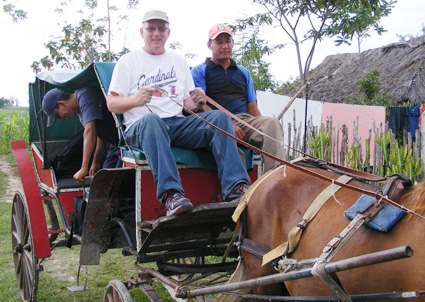
cuba bender carriage425John Bender, minister of education at First Baptist Church in Center, returned to Cuba after first preaching there 20 years ago. His church plans to help First Baptist Church in Baire, Cuba, in its program of training Christian leaders. Bender’s initial invitation to Cuba developed from his relationship with a church in Guadalajara, Mexico, even though he was new to ministry.

“I think I probably only had about four sermons,” he recalled.

While the other Americans on the team worked primarily in the city and stayed in a motel there, Bender and a Mexican pastor journeyed to a rural village. Rather than commute back and forth each day, Bender decided to stay in the village.

“I didn’t know how big a deal that was—that the American was ‘going to stay in my house.’ To me, it wasn’t anything—I was saving gas money. But to them it was huge,” he said.

‘If you died tonight, where would you spend eternity?’

He preached about 35 times that week in various house churches and Bible schools. One man attended one of those services at the persistent urging of his mother. After the service, he returned to his job as a bartender, but a short time later, he witnessed a terrible car wreck outside the entrance to the bar. When he saw the cars and the people involved, he recalled Bender asking, “If you died tonight, where would you spend eternity?”

He rushed back to his mother’s village, spoke with the pastor there and made a profession of faith in Christ.

That man, Victor Manuel, now a pastor and a national Baptist leader in Cuba, contacted Bender about 18 months ago through a pastor in Miami.

Bender invited Brister to that meeting, as well. Brister’s ministry provides training and logistical assistance to prepare churches for hands-on missions involvement.

“We work with churches to help them move either across the street or to the international setting in missions. We’re just trying to mobilize the local church for a global impact,” he explained.

A call to ministry

God began calling him to the ministry while he still was youth minister at First Baptist Church in Center, Brister said. He asked how youth could hear a call to missions service without any exposure to it. His ministry now exposes both youth and adults to missions in Tennessee, Guatemala and Haiti. Soon, Cuba apparently will be added to the list.

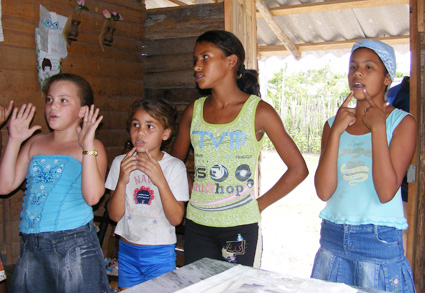
cuba happyhour425Cuban children participate in a “happy hour”—a children’s ministry First Baptist Church in Baire, Cuba, offers at several locations in its community.Stepstones not only educates churches about the biblical mandate for missions, but also trains them in cultural differences about the places they will minister, including some language training.

“The ultimate goal is to link them with a missionary they can work with, support and encourage,” Brister said.

Bender and Brister found a vibrant ministry at First Baptist Church in Baire, Cuba, where Manuel is pastor. They took part in four services with 400 to 500 people attending each, from a community of about 6,000.

The church also is engaged in children’s ministry at several locations scattered about the community each week. “He calls them ‘happy hours’—that name probably wouldn’t work here,” Bender quipped.

The church owns a camp where it conducts a retreat ministry. Bender hopes to use the camp for a leadership retreat in September, and Brister hopes to take a team of adults next February to lead a children’s camp.

Cuba restricted religious practice after the communist revolution of 1959, but Baptists maintained a presence in the country.

“The Baptist church has already been established, and they already have communication with the government. It’s a good relationship and they are growing churches,” Bender said.

A need for more training

While the government has loosened its restrictions on religion since 1992, Baptist pastors recognize the newfound freedom led to an increase in false teaching.

Consequently, they consider it imperative to provide greater training for their leaders so they can make stronger Christian disciples.

Both Bender and Brister noted surprises in their experience with churches in Cuba.

“The Cubans were more Americanized than we anticipated. Some of the songs we sang on Sunday mornings there, we haven’t even sung on Sunday morning here—Chris Tomlin and Vineyard music,” Bender said.

Cuba also is more developed than rural areas of Guatemala and Haiti, Brister added.

They were impressed by Manuel’s congregation’s ministry, as well.

“The church is doing things right. They are training leaders and putting them in position. They just need some extra encouragement,” Brister said.

Solving the problem of getting to Cuba

The greatest difficulty is travel to Cuba, the men acknowledged. Cuban documentation was easy, they said, but the U.S. paperwork is more complicated. Because of that, some choose to fly from the United States to Canada or other neighboring countries to enter Cuba, but both men said they were uncomfortable with the ethics of that workaround.

They eventually travelled to Cuba under the auspices of a U.S. ministry licensed by the American government to take volunteers there. Stepstones is in the process of securing its own license.

Cuba will be a good place for the congregation to experience international missions at a more reasonable cost than many overseas trips—about $2,000, Bender said.

“We have a Spanish mission that meets here; we have an African mission that meets here; and we have our Burmese mission, but we’re not really active with them,” he said.

“This would be one place where I think the body could go. It’s really safe. This would be a place where our congregation can know, ‘I can go across the street, but I also have a place I can go fairly cheaply, where I don’t have to be a theological student, but I can bring encouragement.’”

A year of prayer

On their trip to Cuba, Brister learned the Baire congregation had just completed a year of praying for people they knew who had not made a profession of faith in Jesus Christ.

“We had numerous people come to us after services or during the day and say: ‘I’ve been praying and I’ve been sharing Christ with some friends and family, and they’ve not yet become believers. Would you come and share with them one more time?’ That was highly encouraging to me—to see people so passionate to see their friends and family come to Christ,” Brister said.


East Texas woman’s shoebox ministry has global reach

CENTER—Bone and joint disease and arthritis have robbed Sally Smith of many of the ministries she once enjoyed, but God has given her a new way to wrap her arms around children.

“From seminary days, missions has been very close to our hearts, but God never sent us overseas,” Smith recalled.

operation christmaschild300Instead, God called Smith and her husband, Carl, to college campuses across Louisiana, where they served as Baptist Student Ministry missionaries 13 years before First Baptist Church in Center called him to be its minister of education. Now he is retired.

While she has battled health issues throughout her life, the last several years have been particularly difficult. She no longer can travel on mission trips, speak at retreats and women’s groups, or lead Bible studies.

“I have bone and joint disease, and my spine continually deteriorates, which causes horrendous pain,” she said. Three lung diseases make breathing difficult.

“I am on heavy medication, but that doesn’t come close to taking away all the pain. If I were not a believer, I would already have done away with myself, but I know he has a day and a time,” Smith confessed.

“I have only been able to make it to church services three times this year. I used to be up here all the time, but I just can’t do it anymore.”

Bringing joy to children she’ll never meet

What she can do is pack shoeboxes with toys and treats to bring joy to children she never will meet.

As a Girls in Action teacher, she led the girls in her charge to pack shoeboxes for Samaritan Purse’s Operation Christmas Child from the time the ministry started more than 20 years ago.

Smith always packed a few shoeboxes for Samaritan’s Purse, but only a few until she began sharing the experience with her grandchildren. The number escalated as her health began to decline.

In 2012, she packed 60 boxes. In 2013, that number skyrocketed to more than 500.

Last year, the Smiths traveled more than 6,000 miles for appointments with specialists. Those weren’t wasted miles, however, because she was looking for bargains on things to pack in her boxes.

She once saw a buggy of toys included in a sidewalk sale.

“When I got back in the car, I said, ‘Carl, I got each of those little toys for 33 cents,’” she recalled. “And he said, ‘But did you have to get the whole buggy?’ He’s very patient with me.”

A consuming passion

Collecting toys to fill shoeboxes for children around the world became a consuming passion and welcome diversion.

“During the nights when I can’t sleep because of the pain, this has been an emotional and mental release for me. I think I would have gone berserk if I hadn’t had something else to focus on,” Smith said.

By the end of April, she already topped last year’s total.

“They’re not sent off until the end of November, so I don’t know what the Lord has in store,” she said.

As the ministry expanded, she received help from others. Two seamstress sisters—neither of whom attends church—committed to make 500 drawstring bags for girls and 500 stuffed animals for boys. A local business gives her countertop chips to which she adds rhinestones and stickers and then strings on chains to make necklaces. Her son gives her the overruns from his silkscreen T-shirt shop to include in the boxes.

“As people find out, they want to join and help. It’s exciting to see how God is reaching out, and I have no idea where this is going, but I know he gave me that passion. The main thing is for these children to be blessed and for people who are not walking with the Lord to come closer to him,” Smith said.

The biggest obstacle she faces is paying $7 per box for shipping. Last year, several First Baptist Sunday school classes made donations to help, and those covered about half. This year, she will need even more help.

‘God has something for you’

“One of the main things I want people to know is that no matter the situation you are in, God has something for you. Though I am home most of the time, this is my ministry,” she said.

Smith is grateful God has given her a way to bless children.

“We have been overseas on mission trips, and I always loved to put my arms around the little kids,” she said. “I can’t do that anymore. So, through Samaritan’s Purse, my arms are going around them in another way.”


Baylor, BGCT boards consider Baptist Building sale

Baylor University’s board of regents and the Baptist General Convention of Texas Executive Board are considering a proposal for the university to buy the Baptist Building in Dallas.

Baylor regents were slated to vote on the matter at their May 15 meeting. Pending approval, the BGCT board’s administrative support committee will consider a detailed proposal May 19, and Executive Director David Hardage will present the proposed recommendation to the full board that evening.

texasbaptists logoDetails of the proposal will not be released until May 19, after the Baylor regents have met and information has been provided to the BGCT administrative support committee.

The BGCT office building is located adjacent to the Baylor Health Care System’s flagship campus, east of downtown Dallas.

Last year, Baylor University approached the BGCT Executive Board staff leaders about buying the Baptist Building to house Baylor’s Louise Herrington School of Nursing. The nursing school’s building on the Baptist Health Care System campus was at capacity, and several faculty members already used office space at the Baptist Building.

Messengers to the 2013 BGCT annual meeting in San Antonio granted the convention’s Executive Board and an ad hoc committee authority to consider the sale of the Baptist Building.

At the BGCT Executive Board’s February meeting, Hardage reported he received a “multifaceted” proposal from Baylor University concerning the possible purchase of the Baptist Building and expected to bring a full report to the board’s May meeting.

Texas Baptists built the BGCT Executive Board staff office building in 1988 at 333 N. Washington on land leased from Baylor Health Care System. The Executive Board used proceeds from the sale of property in downtown Dallas, combined with trust funds, to pay for construction.

Ten years later, the health care system’s board of directors voted to give the land, valued at $2.5 million, to the BGCT Executive Board. Baylor Health Care System has first right of refusal on any sale of the building, but President Joel Allison gave verbal approval to the proposed sale to Baylor last year.


Faith Digest: Religious identity tracks science skepticism

A new survey by The Associated Press found religious identity—particularly among evangelical Protestants—offers one of the sharpest indicators of skepticism toward key issues in science such as the Big Bang theory, evolution and global warming. About half (51 percent) of adults in the United States overall have little or no confidence the universe began 13.9 billion years ago with a Big Bang, compared to 77 percent among people who identify as evangelical or born-again. About four in 10 Americans overall (42 percent) doubt life on Earth—including human beings—evolved through a process of natural selection, compared to 76 percent of evangelicals. More than one-third overall (37 percent), compared to 58 percent of evangelicals, doubt the Earth’s temperature is rising “mostly because of man-made heat-trapping greenhouse gases,” and 36 percent overall, compared to 56 percent of evangelicals, doubt the Earth is 4.5 billion years old. On the flip side, most people are pretty sure the “universe is so complex, there must be a Supreme Being guiding its creation”—54 percent of all Americans and 87 percent of evangelicals. The survey of 1,012 adults, conducted March 20-24, has a margin of error of 3.4 percentage points.

Vatican urges release of kidnapped Nigerian girls. The Vatican issued an urgent appeal for the release of more than 200 Nigerian schoolgirls kidnapped by the Islamist militant group Boko Haram. boko haram400Boko Haram is responsible for more than 4,000 deaths in 2014. (RNS Photo courtesy of AK Rockefeller via Flickr)The abduction of the young girls three weeks ago was the latest instance of the “horrible forms of violence” for which the militant Islamic group has become known in Nigeria, said the Vatican’s chief spokesman, Federico Lombardi. “The denial of any kind of respect for life and for the dignity of human beings, even the most innocent, vulnerable and defenseless, calls for the strongest condemnation,” Lombardi said. Heavily armed militants abducted the girls from a boarding school in the northern town of Chibok, provoking condemnation from around the world. Eleven other girls reportedly were kidnapped from a second school. The kidnappings and subsequent threat by Boko Haram’s leader to “sell” the schoolgirls have overshadowed a meeting of the World Economic Forum that opened in the Nigerian city of Abuja. The United States, England and France dispatched teams of experts to Nigeria in a bid to help rescue the girls.

Christians see new Kenyan polygamy law as bad for families. Prominent Christian ministers in Kenya fear a new marriage law signed by President Uhuru Kenyatta will tear families apart and weaken the church and the nation. The law legalizes polygamy, allowing men to marry multiple wives in a country where they previously were permitted to have one. Parliament passed the measure in March, after an amendment was added that allows a man to take another wife without informing his existing wife. Christian leaders said the law would dilute the principle of holy matrimony. They had united to urge Kenyatta to reject the law, but with the signing this week, the clerics expressed their frustration. “If polygamy is allowed, it will open the floodgates for all sorts of separations and divorces. That will surely hurt the family institution and the country at large will suffer,” said David Gathanju, moderator of the Presbyterian Church of East Africa. Under the new law there are five types of marriages in Kenya—Christian, Islamic, Hindu, monogamous and polygamous. Kenya is predominantly Christian, with Muslims making up about 11 percent of its population, mostly along the Somali border, its coastal region, and in cities such as Mombasa. The law sets a minimum age of marriage at 18. It also allows wives a 50 percent share of the property acquired during the union, among other benefits.


CommonCall: Friends clown around for Jesus

Suzy Wall and Cherry Peach attended the Sochi Olympics in Russia not for the games, but to do what they enjoy most—sharing Jesus while clowning around.

commoncall may2014issue300The pair of clowns from Hereford have ministered at five Olympic venues—Salt Lake City, Beijing, Vancouver, London and, most recently, Sochi.

“The Russian people were just unbelievably wonderful,” said Wall, who goes by Twinkles while in her clown persona.

“They were real excited that we were there. They don’t smile a lot, and if you don’t smile at them first, you don’t get a smile at all.

“Most of the people who talked to us said they had never met an American. They would come across the restaurant, across a street—anywhere—to talk to you.”

Their trip to Sochi was much more in doubt that their previous forays to the Olympics. The organization they had worked with in the past chose not to participate, but they found another organization—Engage Sochi—through the Woman Missionary Union’s International Initiatives.

The group invited seven WMU women from across the country to join their group.

Wall’s husband, Billy, now is pastor of Avenue Baptist Church in Hereford, but for 35 years, she was a member of Frio Baptist Church in Hereford, where Peach’s husband, James, is pastor.

Their clowning experience grew out of a mission trip Frio Baptist Church took to Honduras in 2000. They traveled to Central America to repair two churches and a clinic that had been damaged by a hurricane, but while working, they noticed there was nothing for the children who lived there.

This excerpt is from an article featured in the May issue of CommonCall magazine. Read more stories like this, plus commentary, news and other resources, by subscribing here.