NASHVILLE (BP)—A defamation trial involving the Southern Baptist Convention that was supposed to begin next week has been delayed indefinitely, while another is set for 2026.
Johnny M. Hunt v. Southern Baptist Convention, et. al., has been ongoing since March 2023, when former SBC president Johnny Hunt sued the SBC, the SBC Executive Committee and Guidepost Solutions for defamation
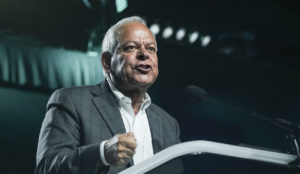
Johnny Hunt, a longtime megachurch pastor in Georgia, was named in the Guidepost Solutions report on sexual abuse in the SBC, which alleged Hunt had sexually assaulted another pastor’s wife in 2010. Guidepost, a third-party investigation firm, found the claims credible. (BP File Photo)
Hunt claimed Guidepost and the other parties used him as a “scapegoat” in an investigation of alleged mishandling of sexual abuse claims by the SBC Executive Committee.
But in a court-sponsored teleconference Oct. 31, the parties agreed to meet “after the beginning of May 2025” to “confer about trial dates.” At issue is a disagreement over whether to reopen discovery in the case.
The May 2022 report from Guidepost’s investigation included allegations from an unidentified woman who claims Hunt sexually abused her in 2010, shortly after his two-year stint as SBC president.
Hunt resigned from his position as senior vice president of evangelism at the North American Mission Board, a position he’d held since 2018, days before the Guidepost report became public.
The lawsuit has been a major contributor to the dire financial situation of the SBC Executive Committee, which has spent more than $12 million in three years on legal fees.
The contract governing Guidepost’s initial investigation stipulates Guidepost would have indemnity in any lawsuit resulting from the investigation, and the Executive Committee would foot its legal bills.
Sills suit set to go to jury in February 2026
The other trial—former Southern Baptist Theological Seminary professor David Sills’ defamation lawsuit against the SBC—will go before a jury Feb. 10, 2026, in Nashville.
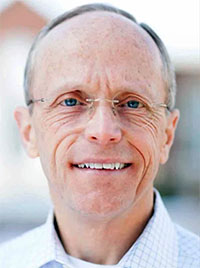
David Sills
An order from Chief U.S. District Judge William L. Campbell Jr. announced that counsel for all parties will meet on Feb. 2, 2026, for a pretrial conference to discuss the case’s undisputed facts, expert witnesses, proposed testimony, jury instruction and other issues. Campbell is the same judge presiding over the lawsuit Hunt filed against the SBC.
Sills filed suit in November 2022 alleging “defamation, conspiracy, intentional infliction of emotional distress, negligence, and wantonness concerning untrue claims of sexual abuse.”
Sills carried on a long-term sexual relationship with a former student, Jennifer Lyell. Lyell alleges the relationship was abusive. Sills claims it was consensual.
Sills was named in a May 2022 report from Guidepost Solutions based on its investigation of alleged mishandling of sexual abuse claims by the SBC Executive Committee.
Guidepost is also named as a defendant in the suit, as are Lyell, Southern Baptist Theological Seminary and its president Al Mohler, former SBC presidents Ed Litton and Bart Barber, and former SBC Executive Committee representatives Willie McLaurin and Rolland Slade.
Desperately seek God’s presence, imprisoned pastor urges
November 5, 2024
“Can God trust you?” if you are called upon to pay a social or financial price for following Jesus, an American pastor who spent two years imprisoned in Turkey asked students and faculty at Dallas Baptist University.
Andrew Brunson spoke in chapel at DBU as part of a global gathering to pray for persecuted religious minorities, Oct. 25.
Brunson and his wife Norine spent 23 years in Turkey, starting churches, aiding refugees and providing religious training. An evangelical Presbyterian, he served as pastor of Resurrection Church in Izmir, Turkey, until he was falsely accused of terrorism in October 2016.
Preparation for persecution
Almost 10 years prior to his imprisonment, Brunson said he felt compelled to begin praying for God to draw him so close to God’s heart he could “make waves.” So, he began to pray in a different way than he had before.
He and his wife had a relationship with God for years, he explained, but they became much more focused on pursuing his presence and his heart.
“God, I don’t love you with all my heart, with all my heart, soul, mind and strength, but I want to. Help me to love you more,” he prayed.
Brunson noted he wanted to pant for God like the psalmist said the deer pants for water, “but I don’t.” So, in 2007 he began to pray: “Make me thirsty. Make me hungry for you.”
As he and his wife prayed, they became hungry for more of God, and they started to long for his presence.
“And this pursuit of God began to change us,” he said. “It’s the pursuit that forms us, that shapes us. And it also positions us to receive assignments from God, including the prison assignment.”
He noted he does not believe God put him in prison, but rather that God was fully involved and intended to use the “assignment” for his purposes.
Brunson said his first year in prison he “broke emotionally, physically and spiritually.”
He noted he almost didn’t survive imprisonment, spiritually or physically. The second year was also very difficult, but in the second year, “God rebuilt my heart.”
God knew how difficult imprisonment would be for Brunson, he noted. God knew how he would break, how much he would suffer, and how close he would come to failure, yet he still went to prison.
When he was in prison, Brunson questioned why God allowed it to happen. It was after his release Brunson was able to come to view his time in prison as God trusting him with a difficult assignment.
“And that changed the way I evaluated my prison experience,” he said.
Brunson recalled thinking when he was in prison: “God, people say you don’t make mistakes, but in this case, you really did make a mistake. You chose the wrong man for this, because I can’t handle this.”
But he came to believe God knew that in his darkest, most difficult times, Brunson would turn toward God, not away from him. He believes God trusted him with this assignment because the love and intimacy they had built up would be sustained, “because love doesn’t quit.”
When Brunson initially was imprisoned, his wife was jailed, too. She was released after two weeks, at which time pastors in the United States urged her to return to the safety of the states. But she said, “I’m not leaving my husband.”
He pointed out she stayed because she loves him. Norine was the only one allowed to visit during his imprisonment. “She put herself at risk because of her love for me … So yes, a lover is willing to suffer for the one she loves. An admirer may not be so willing.”
God has many admirers and servants, but few lovers, Brunson said. “So I want to encourage you today to determine that you will be a lover of God—that you will run after his heart.”
Love fueled faithfulness
Brunson provided examples of how his love for God fueled his faithfulness in prison.
He had a Bible while he was imprisoned and noted Philippians 2:4—which refers to not looking to one’s own interests—spoke to him.
He realized he was looking to his own interests—wanting to get back to his wife and children—when he began to question whether God’s interests might be best served if he remained in prison, he said.
So, while it was a daily struggle to put the interests of Jesus above his own, Brunson made doing so his mission.
When Brunson was moved to a high security prison, his “heart was wounded toward God,” because he wasn’t seeing God’s faithfulness in prison. He didn’t feel like singing, but Brunson said he made it a daily discipline to worship God through singing despite how he felt.
“It was very precious to God,” he asserted, because the worship was an act of love toward God during Brunson’s “dark night of the soul.”
Because Christians are commanded to rejoice, Brunson also began to dance as a spiritual discipline, which he admitted was somewhat strange. But, it served as a helpful act of obedience and love for him to dance when he least felt like dancing.
Brunson said though he prayed for God’s presence, he didn’t feel it when he was imprisoned. It’s harder to find feelings of love when the sense of God’s presence is missing, he noted.
His love for God was “severely tested,” but he determined to “lay aside all the conditions” and respond even to God’s silence with simple love and devotion.
When he was placed in a solitary cell, Brunson felt he was starting to break again. But when he opened his mouth to question, “Where are you, God?” the words, “I love you, Jesus,” spilled out instead.
Then Brunson knew he had passed “the test of silence,” he said. He had passed “the test of the wounded heart.” There’s an intimacy that only comes with testing, he said.
Brunson asserted the most important thing Christians can do is love God. And they can begin to build this into their lives right now by spending time with him.
Despite how difficult his imprisonment was, Brunson noted he misses the Turkish prison conditions because “they taught him what was really important.” He said, “I miss the desperation with which I ran after him.”
“You don’t have to be unprepared,” to face persecution, Brunson noted.
Daniel 11:32 says the one who knows God will stand and take action. Get to know God well now to be ready for any future test, Brunson urged.
Brunson’s release came after two years with intense pressure and sanctions from the United States. Many around the world prayed for his release. Upon his release, he and Norine returned to the states where they run the ministry WaveStarters.
Four Gateway elders removed after pastor’s sex abuse
November 5, 2024
DALLAS (RNS)—Four elders at Gateway Church, whose senior pastor stepped down earlier this year, have been removed after the results of a law firm’s investigation of sexual abuse allegations against the pastor were announced in a sermon Nov. 3.
The removals are the latest responses by one of the country’s largest evangelical Christian churches to allegations brought by Cindy Clemishire in June that Gateway’s founding pastor, Robert Morris, 63, had molested her in the 1980s, when Morris was in his 20s and she was 12.
Soon afterward, also in June, the church retained law firm Haynes and Boone to investigate. Church elder Tra Willbanks announced on Sunday the attorneys discovered all but three elders had been aware of Morris’ history with Clemishire, now 54, and her age at the time of the alleged abuse.
“We now know that there were elders and employees at Gateway who knew before June 14, 2024, that Cindy was 12 at the time of the abuse,” church elder Tra Willbanks said. “Both groups are fundamentally wrong and simply cannot and will not be tolerated at Gateway Church.”
While Willbanks declined to identify the elders who were removed, the names of elders Jeremy Carrasco, Kevin Grove, Gayland Lawshe and Thomas Miller no longer appear on the church website, according to multiple news accounts.
‘Heartbreaking and vile’ abuse
Morris publicly acknowledged his involvement with a young woman two days after Clemishire made her accusations, and Gateway leaders acknowledged in a statement that he had confessed to “a moral failure he had over 35 years ago,” but initially said they had no idea the person involved was a child.
Clemishire has disputed that claim, saying a church leader responded to an email she sent in 2005 informing them of her age. A transcript later came to light in which Morris discussed making a payment to Clemishire in restitution.
On Sunday, Willbanks forcefully said church leaders support Clemishire.
“What happened to Cindy Clemishire was heartbreaking and vile,” he said. “We denounce sexual abuse in all of its forms, and we feel deep sorrow for those who have been victimized by such despicable actions,” he added.
The investigation’s results also prompted reforms to Gateway’s leadership structure and bylaws. Church staff will no longer serve as elders, Willbanks said.
“We must bring this level of independence and objectivity to our eldership, and it has been lacking in the years past,” he said.
In early October, some members filed a lawsuit claiming financial misconduct at the church. On Sunday, Willbanks said the church is cooperating with a criminal investigation into the claims as well, but said the church is not the subject of the investigation. He also reported Morris had made financial demands, which the church plans to reject.
Significant drop in attendance at main campus
Last year, Lifeway Research, in conjunction with the Hartford Institute for Religion Research, listed Gateway, which Morris founded in 2000, as the ninth largest church in the United States and one of the fastest growing, with about 25,000 worshippers attending every Sunday.
On Nov. 1, however, the Dallas Morning News reported attendance is down by 40 percent at the main campus in Southlake.
Morris was a member of Donald Trump’s evangelical advisory board during his 2016 presidential campaign, and in 2021 took part in an initiative to energize conservatives ahead of Trump’s 2024 run for president. Trump visited the church in 2020 during his failed reelection bid.
In 2017, Texas Gov. Greg Abbott enlisted Morris to support his push for a bill restricting access to bathrooms for transgender children.
The summer’s allegations prompted state legislators to call for changing the statute of limitations for sexual assault, harsher penalties for mandatory reporters who fail to follow up on accusations and reforming nondisclosure agreements for sexual abuse survivors.
Secular and religious advocacy organizations have been pushing for such reforms, as well as the elimination of the use of nondisclosure agreements in sexual assault cases.
State Rep. Jeff Leach, a conservative Christian who chairs the powerful Judiciary and Civil Jurisprudence Committee, told a local NBC affiliate he plans to use his pulpit to change laws to benefit survivors of sexual assault.
“As a born-again believer, I love the bride of Christ. I want to protect the church. But the church in many cases, like in the case of the pulpit at Gateway, has been defiled,” he said. “We ought to be stepping up and turning over tables and protecting victims.”
Ministry offers aid to 4,000 civilians in besieged Gaza
November 5, 2024
In spite of the challenges some humanitarian aid groups have encountered, Christian Mission to Gaza recently has provided food and clean drinking water to more than 4,000 people in the war-torn country, the former pastor of Gaza Baptist Church reported.
They include residents of Jabalia, 2.5 miles north of Gaza City, which has been under prolonged siege, Hanna Massad, founding director of Christian Mission to Gaza, stated in a Nov. 1 email to supporters of his ministry.
“These efforts are carried out under the care of Gaza Baptist Church, which continues to be a beacon of hope,” Massad wrote.
The Israeli Defense Forces announced Nov. 2 the ongoing military operation in the Jabalia area resulted in the deaths of 900 terror operatives in the past month. The following day, UNICEF reported Israeli bombs killed more than 50 children in the refugee camp adjacent to Jabalia in the previous 48 hours.
‘God’s provision shines through’
Civilians in Gaza fill jugs with pure drinking water made possible by Christian Mission to Gaza. (Photo courtesy of Christian Mission to Gaza)
In the email report, Massad said a child who received rice told him he and his family had been eating nothing but canned food for a month.
“Our stomachs are ruined from it,” he said.
Massad wrote about an encounter with an elderly woman who asked if the rice the ministry was distributing was for everyone in the camp. When he told her it was, she asked who was providing it. He explained it was offered through Gaza Baptist Church.
“May God bless them, provide for them, and grant success in all their work,” the woman reportedly told Massad.
She explained she had been a resident of Beit Hanoun in northeastern Gaza, the site of a fierce battle one year ago.
“I left behind 20 dunams [5 acres] of land where we planted strawberries every year,” she continued. “Two of my buildings were destroyed in the bombings. My children were murdered, and my husband had a stroke. I am now caring for him, and the situation is truly tragic and extremely difficult.”
Massad said she added, “Glory be to the changer of conditions, and praise be to God for everything.”
Christian Mission to Gaza has provided financial support to 278 families who have been sheltering in churches in the region, Massad stated.
“Amid challenging circumstances, God’s provision shines through, and it is with grateful hearts that we thank each of you,” he wrote to supporters of his ministry.
DBU gathering urges prayer for the persecuted
November 5, 2024
Dallas Baptist University’s Institute for Global Engagement hosted a global gathering to pray for all persecuted religious minorities, Oct. 24-25.
DBU offered the event in cooperation with Pepperdine University’s Program on Global Faith & Inclusive Societies, Christians Against all Persecution and Templeton Religious Trust.
Featured speakers who addressed the importance of working for religious freedom for all included Elijah Brown, general secretary and chief executive officer of the Baptist World Alliance; Knox Thames, author, lawyer and Capitol Hill advocate for global religious freedom; and Sam Brownback, former ambassador at large for international religious freedom.
‘Speak freedom with courage’
Elijah Brown, BWA general secretary addresses a recent ‘Praying for All the Persecuted’ gathering at DBU. (Photo / Calli Keener)
“Will the international community raise their voice for the victim?” Brown said a Baptist New Testament professor in Myanmar asked through tears, when she escaped soldiers who were going door-to-door in search of her for denouncing the military.
Religious freedom is under threat globally. People of all faiths are facing growing harassment. In Myanmar, both the growing Baptist population and Rohingya Muslims have experienced grave persecution and violence, but “we can make a difference when we speak freedom with courage,” Brown asserted.
Preaching from John 11, Brown pointed out insights into standing with the oppressed that can be gained through Jesus’ interactions with the apostles.
This story of the apostles’ apprehension about Jesus returning to Judea to raise Lazarus, under threat of stoning, shows Jesus calls his followers to go with him into the context of suffering, even when there is real risk.
The text also shows Christians are to mobilize others in standing with the oppressed. It was Thomas in John 11:16, not Jesus, who convinced the other disciples to follow Jesus toward risk.
For Christians privileged to live in places with a great deal of religious freedom, mobilizing can look like praying for the persecuted or contacting representatives, urging them to make religious freedom a priority.
Brown cited statistics showing 10 constituents emphasizing a concern is enough for a representative to view that issue as a priority.
Finally, Jesus calls us to self-sacrifice. Christians are to live, not with closed hands or open hands, but with crucified hands, Brown asserted. Approximately 20 people are killed for their faith every day.
But, Brown said, every person can take steps to aid the cause of religious freedom for all. Step one is to become more aware, such as by signing up for a monthly email update from 21Wilberforce, a human rights organization focused on international religious freedom.
Additionally, every person can pray courageously, speak out for persecuted people and give generously to support religious freedom.
Called to ‘love our neighbors’
Author, lawyer and religious freedom advocate Knox Thames explains the importance of Christian involvement in global religious freedom efforts at a DBU gathering to pray for persecuted religious minorities. (Photo / Calli Keener)
Thames explained 2 out of 3 people live in places where religious freedom is very limited. “There’s this community of suffering, and Christians are a part of it,” he said.
Thames agreed with Brown that Christians’ first response to religious freedom violations ought to be becoming more informed about religious freedom concerns.
He acknowledged the natural tendency to think of oneself first. But Scripture—John 3:16, the 400-plus times justice is mentioned in the Hebrew Bible, the parable of the Good Samaritan, and Micah 6:8—demonstrate the mandate to “love our neighbors, frankly, is more than a challenge; it’s a calling,” Thames said.
The Great Commission and the Great Commandment are not either/or, Thames reminded the audience. Rather, “we’re more effective at each when we do both.”
But, “in the religious freedom space, I think we’ve got work to do,” in serving the least of these, Thames said.
He urged Christians to be mindful of religious persecution of all faiths, not just Christians. Failure to work for religious freedom for all tarnishes the gospel message and undercuts Great Commission efforts, Thames pointed out.
Future of the religious freedom movement
Former Ambassador at Large for International Religious Freedom Sam Brownback discusses the future of the religious freedom movement at DBU’s ‘Praying for All the Persecuted’ event. (Photo / Calli Keener)
Brownback spoke about the future of the religious freedom movement. When the first Religious Freedom Act was passed under Bill Clinton, Brownback said there was “a real question whether or not he was even going to sign the bill.”
Religious people tend to be troublesome, difficult to negotiate with, and have base principles “you just can’t move them off of” he said. So, it took some nudging from Madeline Albright for the State Department to include religious freedom as a focus.
The plan was to have an emphasis inside the State Department, but also a pure entity outside the state department—United States Commission on International Religious Freedom—that would be more difficult to manipulate for political purposes.
These offices were minimally effective, in Brownback’s opinion, until the Trump administration, when Thames, Brownback and other religious freedom advocates in the State Department took advantage of an opportunity to host the “biggest religious freedom summits the State Department had ever held.”
“Those were a huge success,” Brownback said. “And, to me, that kind of launched the whole movement.” More religious freedom ambassadors were being appointed, though the U.S. State Department still had “more religious freedom staff than the whole rest of the world combined.”
Parliamentarians have become a “great way” for countries to become involved because parliamentarians can be involved as individuals, not as representative of the entire country they serve.
At first it was only the religious groups who were involved in the religious freedom movement, Brownback said. But now, democracy groups have started to realize religious groups are likely one of the best ways to get into places and work toward other democratization efforts.
The democracy groups realize, “If we can get religious freedom, we’ve got a chance at being able to build some of the rest of this stuff. And often times in these countries, the only people left that would stand up to a government are the religious people. Everybody else has left or been driven out or killed or put in prison.”
So the groups left, who can’t get out, are minority Baha’i, Muslims or Christians. These people of faith will stand up to fight back against the persecution and are good to have on the side of democracy, Brownback said.
The United States’ role in the religious freedom movement is, “we should be an organizer; we should be a facilitator; we should be putting information out; we should be an agitator pushing all these things forward; and our fingerprints shouldn’t be on everything, but we should be engaged in all of it one way or another,” Brownback said.
However, he noted, much of the time it would be better if U.S. involvement was more behind the scenes than visible.
“This is the only human rights movement (from the U.N. Declaration of Human Rights) in the world right now that’s got any juice,” Brownback noted. “Eighty percent of the world’s population is religious. Everybody’s persecuted somewhere, not everywhere, but somewhere.”
And with the global rise of authoritarianism, it has become a governmental strategy to either control/exploit religious people for the authoritarian’s purposes or to eradicate religious people altogether, he continued.
Most people aren’t activists, Brownback pointed out. It’s “pretty normal” for a movement to be limited to about 20 percent of a population. With technology available right now, it’s possible for authoritarians to identify and work to silence that 20 percent who would oppose them.
“The ability to control what people get information-wise is growing rapidly,” he noted. And the ability to deceive through technology is already becoming so difficult to detect, “if you don’t know where you sit now, you’re going to be deceived” with this technology in the hands of malevolent actors, Brownback asserted.
He repeated the urgency of getting behind “religious freedom for everybody, everywhere, all the time,” when it’s the human rights movement “that’s got juice.”
Participants at the gathering also heard from several organizations engaged in global religious freedom initiatives, persecuted Christians and from Baha’i, Yezidi, Uyghur and Latter-day Saints practitioners about persecution faced by each of their faith communities. Then, they were led in praying for all the persecuted.
Spirit of collaboration marks Serve Tour Brownsville
November 5, 2024
More than 300 volunteers from around the United States completed 33 service projects across the Rio Grande Valley as a part of the Serve Tour Brownsville in mid-October.
Hailing from 28 churches representing 11 states, volunteers served 2,303 individuals, participated in 1,011 gospel conversations and celebrated 128 professions of faith in Christ throughout the two-day missional experience in and around Brownsville.
One stop on the Send Relief Serve Tour, the service event saw the North American Mission Board’s Send Relief partner with Texas Baptists, Texans on Mission and Buckner International.
Mario Alberto Gonzalez, director of River Ministry/Mexico Missions for Texas Baptists, provided coordination leading up to and during the event.
He led a devotional at one of two “hub” churches on Saturday morning, introduced area River Ministry missionaries during a Saturday evening rally, corresponded between area leaders and event organizers, and participated in numerous service projects.
At one project in Los Fresnos, about 15 miles north of Brownsville, Gonzalez and others fed hot meals and shared the gospel with school bus drivers, janitors and other support personnel. After talking with a bus driver in his late 70s, Gonzalez said the man made a commitment to follow Jesus.
“He accepted Christ when we presented him with the gospel. He spent more than one hour talking with me,” he said.
Spirit of unity and kingdom focus
Gonzalez appreciated the spirit of unity and kingdom focus amongst the churches and organizations aiming to serve along the border.
“They were showing to us a spirit of collaboration not just with words but with actions. They were very sincere and honest,” he said.
Gonzales was also glad these churches from across the country visited and saw for themselves that the Valley is a safe place to do missions.
“I was so grateful to the churches for coming after they hear things about the border,” he said. “Brownsville is not what you are hearing in the news. Some people don’t like to come to the border, but all these people come back to their churches and say they can come to the Valley for missions.”
Several churches expressed a desire to return to partner with River Ministry/Mexico Missions in the future, Gonzalez said.
Volunteers partnered with the Baptist Student Ministries from the University of Texas Rio Grande Valley campuses in Edinburg and Brownsville to cook hotdogs, offer prayers and interact with college students on that school’s campus. That effort saw 35 people accept Christ.
Support for law enforcement, love for immigrants
The Send Relief Laredo Ministry Center, a partnership between Texas Baptists River Ministry/Mexico Missions and NAMB’s Send Relief, hosted a block party for Border Patrol and other law enforcement officers and their families. Eight individuals accepted Christ at that gathering.
Gonzalez noted that law enforcement officers along the border are sometimes overlooked.
“Many of them are Christians and are suffering also. They are just doing their work,” he said. “We need to provide support for law enforcement and, at the same time, be willing to show the love of Christ to immigrants.”
Buckner International, in partnership with Iglesia Bautista Southmost and local health agencies, provided a community health fair that provided shoes and socks for children. Organizers reported eight salvations from that event.
Three churches partnered with volunteers to host neighborhood “grill walks,” where participants distributed free food and shared their faith. Seventeen salvations were recorded across three separate events, including one entire family: a husband, wife and teenage son.
In addition to outreach events, volunteers completed projects at 15 Texas Baptists churches in and around Brownsville.
Volunteers painted classrooms at Iglesia Bautista El Buen Pastor, replaced a roof at Primera Iglesia Bautista Mexicana, installed a basketball goal and painted facilities at Olmito Community Church, replaced flooring for Iglesia Bautista Eliacim and built a community ministry patio at Iglesia Bautista Horeb.
Volunteers completed 15 projects for local schools and communities and aided three bivocational pastors.
One pastor’s wife, who was recently widowed, received a new roof as a part of the more than 1,175 construction hours worked. Gonzalez said she was grateful for the outpouring of support. At a time when she was struggling with the pain of losing her husband, Gonzalez said, she expressed her gratitude for the love and support of volunteers.
Gonzalez hopes more churches will continue to revisit mission opportunities along the border.
“We need more churches to come and help us in the border—not just in Brownsville, but in all border cities,” he said. “The churches that come are discovering people with great needs.”
Registration open for Crossover Dallas outreach
November 5, 2024
DALLAS (BP)—Registration for next summer’s Crossover Dallas evangelistic outreach emphasis is open.
Crossover, which will run from June 2 to June 8, 2025, is the annual evangelistic emphasis preceding the Southern Baptist Convention annual meeting in the host city. Events such as block parties and personal witnessing opportunities have become ingrained in the outreach effort.
Participation happens two ways. The first is hosting a Crossover event. Churches in Dallas, Denton, Collin, Hunt, Rockwall, Kaufman, Ellis, Johnson and Tarrant counties are eligible to host, in an effort to make a mark on their community.
One option for hosting is partnering with students and faculty from Southern Baptist seminaries for door-to-door evangelism. Churches also can host a multi-day event such as Vacation Bible School or a block party outreach limited to one day. Another single-day event, Harvest Sunday, would take place June 8.
The second track for Crossover registrants is to serve at an event. Southern Baptists both in the target area and outside of it are welcome to serve with local churches.
The North American Mission Board will report the number of gospel conversations, salvations, volunteers and other figures to messengers at the annual meeting. More than 185 people responded to the gospel delivered by more than 1,400 volunteers during Crossover Indianapolis in June.
“We would like to encourage churches in that target area to host an event and individuals and groups, especially if you are already coming for the annual meeting, to serve alongside these host churches,” said JJ Washington, NAMB national director of personal evangelism, who is overseeing Crossover’s planning.
Benefits for host churches include learning evangelism best practices and using the event as a catalyst for establishing an evangelistic culture in the congregation. Volunteers will gain experience in starting an evangelism movement in their own church as well as the experience of partnering with other Southern Baptists.
A cooperative effort
Washington said NAMB is working with leaders from the Southern Baptists of Texas Convention and Baptist General Convention of Texas, as well as regional and state networks. Local Baptist associations also featured prominently in Crossover’s planning.
“This is truly cooperation at its finest,” he noted.
Luis Antonio Gonzalez, Spanish pastor for Lamar Baptist Church in Arlington, is helping mobilize other Spanish-speaking churches in the area.
“We are providing resources and encouraging them to participate,” he said. “Our prayer is to develop an evangelistic culture in the churches and bring a fire to fulfill the Great Commission.”
First Baptist Church in Garland, where Greg Ammons is pastor, will host a Harvest Sunday and door-to-door evangelism.
“We’re looking at having a block party as well,” said Ammons, who is also helping mobilize churches in the area. “JJ and [NAMB Vice President for Evangelism] Tim [Dowdy] led evangelism training last week. We had a good turnout and are now signing up churches for hosting.
“We’re hoping to see a lot of people come to Jesus, to plant a lot of seeds. We want to establish an evangelism culture.”
Baylor uses sports to empower women in Pakistan
November 5, 2024
In a culture where women often are marginalized and women’s sports are not recognized, a Baylor University group found ways to empower women by using sports to teach leadership skills.
Pakistani women from varied faith traditions discovered their leadership potential through a series of sports-related activities, interactive workshops and virtual learning communities facilitated by Baylor faculty, graduate students and alumni.
Under the guidance of William Sterrett, department chair and professor of educational leadership at Baylor, and Mar Magnusen, associate professor of educational leadership, the Texans worked with schools in Pakistan to strengthen women’s leadership and coaching skills in an interfaith context.
“The Lord opened doors for us,” Sterrett said.
The U.S. State Department provided a grant for the IDEA-SPORT program—Innovating and Designing Engaging Applications in Sports Promoting Outreach, Responsibility and Teamwork—to Baylor, the University of North Carolina Wilmington and several universities in Pakistan.
The grant not only made possible a series of virtual learning experiences via Zoom, but also enabled a group from Baylor to spend time in Pakistan leading in-person workshops for women in leadership skills such as problem-solving, conflict resolution and teamwork.
Charles Ramsey (left), associate chaplain at Baylor University, moderates a panel featuring (left to right) Meredith Frey, Mar Magnusen, Brooke Ramsey, Hina Abel and William Sterrett. (Screen Grab Image)
In addition to Sterrett and Magnusen, other panelists were Hina Abel, Dissertation Fellow in Higher Education Studies and Leadership; Meredith Frey, a Master of Arts in School Leadership Fellow; and Brooke Ramsey, a Baylor graduate and head of the Grammar School at Valor Preparatory Academy in Waco.
Originally, the goal was to make a positive impact on the lives of 1,000 female students at 10 participating schools and four universities in eastern Pakistan, Sterrett explained.
The team ended up making a significant impact on more than 4,800 female students, and more than 7,000 total students—male and female—benefitted from the equipment the group delivered to schools and the learning activities they led, Sterrett reported.
Empowering women by teaching leadership skills through sports is particularly important in Pakistan, where women’s options are limited, said Abel, who grew up in Pakistan and lived in Lahore until 2019.
“Whether a woman is single or married, whether she is educated or not educated, a woman from Pakistan remains dependent upon the men in her household,” she said.
‘Women are severely marginalized’
While women make up 48 percent of the population in Pakistan, less than one-fourth of the women are in the labor force, and only 2.9 percent of women are employed in senior or mid-level management positions, Abel reported.
“Women are severely marginalized by all means in Pakistan,” she said.
When women in Pakistan become involved in sports, they are entering a traditionally male field, she added.
“Women’s sports in Pakistan are not recognized, and they are not acknowledged,” she said. Women’s sports are not televised, they do not attract spectators, and they lack the sponsors needed to secure equipment and build training facilities, she observed.
Living as a Christian in Pakistan presents its own set of challenges, said Abel, whose husband is a Presbyterian minister. Christians represent only about 1.3 percent of the total population in Pakistan, she said.
“Christians—and particularly Christian women—need to be thought of not just as marginalized, but as the underdog among underdogs,” Abel said. “There is severe suppression on so many fronts.”
Making a ‘human connection’
The trip to Pakistan marked a homecoming not only for Abel, but also for another member of the Baylor team. Ramsey and her husband Charles, associate chaplain at Baylor, lived several years in Lahore. Ramsey noted she and Abel first became friends when they lived in Pakistan.
She particularly treasured the opportunity to engage in meaningful conversations with non-Christian students during the recent trip to Pakistan, she said.
“Interfaith dialogue is possible because we’re all made in the image of God,” Ramsey said. “You find that image of God in every human person on the globe, and it’s that image of God that enables us to develop friendships and to focus on our common humanity.”
Alongside providing instruction in leadership skills, the experience in Pakistan offered informal times of relationship building with students, Ramsey noted.
By “playing, laughing and feasting together,” the students and the Baylor team made a “human connection,” she said.
The Texans learned the rules of cricket and taught the Pakistanis how to play baseball. The visitors and students enjoyed competing in soccer, badminton and table tennis, and they shared meals together.
Together, they experienced and sought to reflect “the hospitality of God,” she observed.
“It’s the call of God on all of our lives, I believe,” Ramsey said.
Screen Grab Image
America tried Christian nationalism, and it went badly
November 5, 2024
NORTH MIDDLEBORO, Mass. (RNS)—Pastor Jason Genest loves God and his church. He also loves U.S. history.
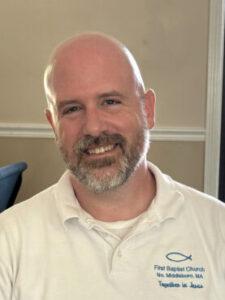
Pastor Jason Genest of First Baptist Church of North Middleboro, Mass. (RNS Photo / Bob Smietana)
That’s why he gets nervous when he hears people talk about America being founded as a Christian nation. Or wanting to make America Christian by using the power of politics.
America tried that in the past, he said. It did not go well—including for the founder of Genest’s own church.
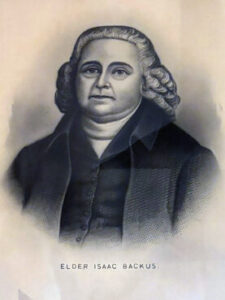
Portait of Isaac Backus at First Baptist Church of North Middleboro, Mass. (RNS photo/Bob Smietana)
First Baptist Church of North Middleboro, Mass., was founded by Isaac Backus—a champion of religious freedom in the 1700s—who often found himself at odds with leaders of the Congregational church, which at the time was the official religion of the Bay State.
So-called New Light Baptists like Backus, who were followers of the famed evangelical preacher George Whitefield—a leader of the First Great Awakening who stressed the need for personal conversion—were seen as troublemakers and threats to public order by leaders of the official church, which was essentially a state bureaucracy, Genest said.
New Light Baptists questioned social institutions, by claiming the baptisms—and sometimes the marriages—of the unconverted were invalid.
They also set up rival churches to draw worshippers away from parish churches and, more importantly, refused to pay taxes to support those parish churches. That led to government crackdowns, with some gatherings of New Light Baptists banned as illegal.
“When you get along with a state bureaucracy, it’s great,” Genest said. “When you disagree, you have problems.”
Founding era not a religious utopia
Today, as America has grown both more secular and more religiously pluralistic, there has also been a rise in Christian nationalism—an insistence that America was founded by Christians and should be run by Christians.
But the founding era was not a religious utopia, where Colonists were free to choose their faith. Instead, disputes between different kinds of Christians were fierce in the Colonies that became the United States. Those Colonies often had official churches that used government power to collect taxes, enforce doctrine and crush their rivals.
Catherine Brekus, a religious historian at Harvard, says there’s a powerful myth that the early American Colonies were founded on the idea of religious freedom.
“That is not true,” she said. “We think that religious freedom was enshrined from the beginning, and instead it was a long and hard fight.”
In the 1700s, some Christians, like Backus’ mother and brother, ended up in jail. Others found constables at the door, hauling their possessions away for back taxes—which were meant to subsidize the state church. Still others were banned from meeting altogether in so-called illegal churches.
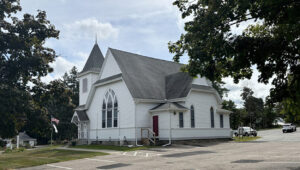
First Baptist Church of North Middleboro, Mass., was founded in 1756. (RNS photo/Bob Smietana)
Backus’ concerns about the power of government to dictate what people believed—and to punish those who disagreed—fueled his efforts to separate the church and state in Massachusetts. It became reality in 1833, nearly three decades after Backus died.
While Genest believes churches should be active in public life, that’s different from trying to mandate what people believed. When the government has that power, bad things happen, he said.
“I hate to say we use God, but I think God is often used as a means of people getting what they want,” Genest said.
Roger Williams exiled for ‘dangerous’ ideas
About 30 miles west of North Middleboro stands another First Baptist Church—also known as the First Baptist Church in America—with its own story of clashing with Christian nationalism.
This year on Oct. 13, the guest speaker at First Baptist was John McNiff, a retired national park ranger and historical reenactor who often portrays Roger Williams, the church’s founder. Williams was exiled from Massachusetts in the 1600s because of his “dangerous ideas” about religious freedom.
Among those ideas: State leaders should not use civil power to make people go to church or observe religious rules. During his talk, McNiff pointed out none of the worshippers in the service were there because the law required them to be.
“These politicians, these rulers, were compelling people to a faith that they did not believe in,” he said, drawing from Williams’ writings. “The civil sword can make a nation full of hypocrites, but not one true Christian.”
That fear of state-run religion was shaped in Williams’ childhood, said Charlotte Carrington-Farmer, a professor of history at Roger Williams University in Rhode Island.
“Williams grew up in a world of religious turmoil, where the ‘official’ state religion changed on the whim of a monarch,” Carrington-Farmer wrote in a 2021 book chapter about religious freedom and Williams, who was born in England.
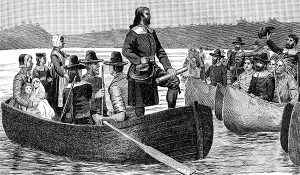
Roger Williams, founder of the first Baptist church in America and a champion of religious liberty, returns to the colonies with the charter for Rhode Island. (From a painting by C.R. Grant)
When he arrived in New England, Williams realized he had not come to a place where people were free to worship.
“When he gets to Massachusetts, he’s horrified,” said Carrington-Farmer, editor of a forthcoming collection of Williams’ writing, called Roger Williams and His World. “He’s seen the same persecution, just under a different umbrella.”
Williams became an outspoken advocate for religious freedom, often holding meetings in his home to advocate for his ideas. In particular, he believed government should have no right to enforce religious rules. That put him at odds with other Puritan leaders such as Gov. John Winthrop and clerics who felt it their God-given duty to keep their community holy.
Tired of Williams’ “diverse new & dangerous opinions,” a Boston court banished him on Oct. 9, 1635, giving him six weeks to leave—or else government officials would remove him by force. He eventually fled the state during a blizzard that winter, going to Narragansett Bay, where he founded the town of Providence and later, First Baptist.
Fear that lessons of the past have been forgotten
Carrington-Farmer said Puritan leaders had tried to avoid banishing Williams, whom they held in high esteem, and tried to get him to moderate his views. But Williams would not compromise.
Puritan leaders, she said, felt caught between a rock and a hard place. They had experienced persecution for the faith in England and wanted to create a new community that was faithful to the Bible and Christianity—which, as John Winthrop put it, would be a city on a hill.
They feared troublemakers like Williams would put that vision at risk. The Puritans believed God would punish them if they allowed sin and dissent to flourish.
Ironically, in being banished, Williams was lucky. Several decades later, Mary Dyer, Marmaduke Stephenson, William Leddra and William Robinson—all members of the Society of Friends, or Quakers—were hanged on the Boston Common for defying the power of the established church.
On a sunny afternoon in early September this year, a pair of tourists who identified themselves as descendants of Williams stopped in the church he started, to have a look. After settling them in to watch a short video about the history of First Baptist, Jamie Washam, the church’s current pastor, sat on the church stairs for a conversation about Williams’ legacy.
Washam, the pastor of First Baptist since 2015, said she worries that the hard-won lessons of Williams’ life have been forgotten.
“The story and legacy of Roger Williams reminds us that it has always been a struggle to advocate for religious liberty,” said Washam, sitting on the church steps. “We continue to fervently believe that that cost is worth it.”
She’s skeptical of the idea that voting for the right candidate will make America more Christian.
“Better legislation doesn’t make us better Christians,” she said. “Being more faithful and loving and just people make us better Christians.”
Some want Christianity restored in U.S.
Some Christians, however, worry something essential is being lost as the country becomes less religious. That’s the case for Jerry Newcombe, executive director of the Providence Forum, which has produced a series of videos about the Christian origins of the United States.
“I feel like there’s been a great deal of misinformation and forgetting,” said Newcombe, whose organization seeks to “preserve, defend and advance the Judeo-Christian values of our nation’s founding.”
While he fiercely promotes the idea that America was founded on Christianity, Newcombe admits things did not always go well—especially for religious groups that clashed with political leaders over matters of faith.
“It’s not as if everything was Shangri-la, especially if you were a nonconformist,” he said in a phone interview.
“In retrospect, we don’t agree with that,” he said. “But don’t throw God out of the whole equation.”
Other conservative Christians go much further, saying America must return to its Christian roots or perish.
Josh Abbotoy, head of American Reformer magazine and an investor who wants to rebuild a Christian America, has suggested the United States might need a “Christian Franco”—a reference to the longtime Spanish Catholic dictator—to restore Christianity to its rightful place in American society.
Others, like the National Conservatism movement, believe the government should use Christianity to shape society. During a recent Nat Con event, Al Mohler, president of Southern Baptist Theological Seminary, praised the Protestant empire that built America, saying that religious foundation must be restored.
“I want to say that I do not believe this nation and all that it represents can survive abandoning its theological roots. We will recover those roots and commitments or lose everything,” Mohler said earlier this year.
Conservative activists such as Charlie Kirk have called for a return to America’s Christian roots, praising the fact that the early Colonies had religious tests for office and were run explicitly by Christians.
“One of the reasons we are living through a constitutional crisis is that we no longer have a Christian nation, but we have a Christian form of government. And they are incompatible,” said Kirk, in advocating for an end to the separation of church and state and a return to a Christian America during an online panel discussion.
Complicated religious picture in the founding era
Douglas Winiarski, professor of religious studies at the University of Richmond and author of Darkness Falls on the Land of Light—which details the end of established churches in New England—said nostalgia for a Christian America can overlook how complicated religion was in the founding era.
He said that by the early 18th century, the Congregational church—which had descended from the Puritans—had become fairly tolerant, allowing space for dissenters as long as they paid their taxes and didn’t cause trouble.
That tolerance ended, however, with the rise of New Light Baptists and others who disagreed with the teachings of the Congregationalists and refused to submit to their authority on religious matters.
Ironically, Congregationalists, who had dominated religious life in Massachusetts and other New England states for two centuries, would learn the downside of having a state religion, with the rise of Unitarianism in the early 1800s.
Residents began electing Unitarian ministers to lead parish churches over the objections of Congregational church members, who were Trinitarians.
That led to court battles over church property, with the state Supreme Court siding with Unitarians in 1821. As a result, the Congregationalists found themselves losing the buildings and congregations they had controlled since the 1600s.
Eventually, because of the efforts of Backus and others like him, Massachusetts allowed a kind of moderated religious freedom, in which the taxes paid to the state church were diverted to other congregations—including Baptists and the breakaway Congregationalists.
But it was an uneasy peace and led to the disestablishment—the end of official status—of a state church in Massachusetts.
The archives from First Parish in Cambridge—which was an official government church from the 1600s to the early 1800s—were filled with letters from residents of that city, requesting their taxes be sent to other churches in the 1800s, said Gloria Korsman, a First Parish historian and a Harvard librarian.
At that time, the clerk of the parish church—a state church that eventually became Unitarian—was responsible for collecting taxes.
Korsman said she can’t imagine why anyone would want to go back to that time.
“I don’t know what there is to long for,” she said. “During the time of disestablishment, neighbors were against neighbors on this issue. It wasn’t like a peaceful time or a time when people were unified. There was a lot of division.”
How churches can provide respite for special needs families
November 5, 2024
Did you know the stress level of mothers who have a child with special needs has been compared to that of combat soldiers? Often, families of those with disabilities feel hidden within faith communities because they’re simply not there or not included in the activities. What can we, the church, do differently to provide times of respite for these families? How can we build relationships, offer support and provide rest?
What is respite?
Respite is a short period of relief or rest from something difficult or unpleasant. Family relationships are often strained as a result of the parents’ time being monopolized by the special care necessary for a child with a disability. Siblings of children with special needs may have little time with their parents.
Offering times of respite can be an opportunity for parents to reconnect with their other children and for spouses to spend time together. Churches can play a crucial role in providing this support and rest.
What does respite look like?
There are three approaches to respite care: group-centered, family-centered and church-centered respite. These approaches will focus on drop-off/child care, relief for the family and caregivers, and support while the child with special needs is at church.
Group-centered respite
Many families who have children with special needs struggle to find acceptance, often feeling their child does not “belong.” The church can provide that “belonging” and share God’s love with them through nights of respite.
A night of respite can be a once-a-month experience for children with special needs that gives parents a much-needed evening out. This parents’ night out provides fun activities for the kids and some free time for the adults.
What does a church need to make a “Night of Respite” a success?
Volunteer team
This team will consist of directors and coordinators who ensure the night runs smoothly, from registration to clean up. This team will need an overall director, a volunteer coordinator, a medical coordinator and an activities coordinator.
The volunteer coordinator will manage the number of attendees and the number of volunteers needed to care for the children attending the respite night.
The activities coordinator will let their creative juices flow as they plan theme activities, from bingo and scavenger hunts to crafts and photo backdrops.
The medical coordinator will know the medical needs of the children attending and lead a group of medical volunteers to meet those needs.
Insider tip: Churches typically have success finding volunteers through special education teachers, the medical field, student ministry, college partnerships and homeschool groups.
Medical plan
It’s wise to recruit, train and organize a group of professional medical personnel to volunteer their services for the respite event. Establish clear guidelines for what services the volunteer respite medical team will be responsible for based on the comfort level and expertise of those recruited—such as tube feeds, medicine administration, suctioning of airways and other services.
Intake forms
Having records of important information on each child at the respite event is essential. This record includes all pertinent information for the guest, including emergency contact information, a list of medications and any other information the parents offer. This record should stay with the child at all times.
Themes/Bible story
As a church, we seek to advance the gospel through our events and activities. A respite night should be a place where the gospel, Scripture and Bible stories are shared. Theme nights can bring a fun spin to a Bible story—such as weather night/Jesus calms the storm, Valentine’s/Jesus loves you.
Family-centered respite
The family-centered respite approach allows church members to rally around a special needs family to provide care and support. One way this has been successful is by developing a team of volunteers who play a specific role in that family’s rest and care.
What does this team look like?
Family support team member
This person assists a specific family through one of the following: monthly meal delivery, home projects, child care/respite care, transportation, child mentorship, etc. This is an ongoing volunteer role.
Respite care/child care
Parents may need an occasional break from the stresses associated with providing for a child with special needs. This break may be a simple two-hour slot for a mom to go grocery shopping or an overnight stay while a couple gets away for the weekend. This can be a consistent or sporadic volunteer role.
Prayer and encouragement
The role of prayer can mean a world of difference for a family. Acts of encouragement, such as notes, are also essential to the family’s well-being. This is an ongoing volunteer role.
Church-centered respite
A church-centered approach refers to the regular support and care provided to a child with special needs during weekly worship and small group time. This support allows families to leave their child in a children’s ministry equipped and ready to care for that child.
What can a church do on Sundays and Wednesdays during weekly services?
Sensory rooms
A sensory room is a space that provides a child with personalized sensory input that helps children calm and focus themselves to be better prepared for learning and interacting with others. Sometimes, children need a calm place to regulate. Other times, it provides a location for learning in a room with the least restricted environment.
Tip: Multiple websites help a church set up its sensory room. Fun and Function is a great resource.
Worship rooms
Some churches can attach a parent/child room to the back of the worship center to allow a parent and child to slip away during worship. This side room enables the parent to engage in worship while allowing the child the space to move and play freely.
Buddies
Not every child with special needs requires a buddy, but a buddy is an excellent way to provide kids with the extra support they need to feel safe, understood, and accepted. Those who fill the role of a buddy understand the child’s circumstances and provide appropriate support and care for that child.
What is the first step?
The first step is to simply start the conversation. What would a time of respite look like at your church? Half the battle is the church body realizing the need. Some studies show nearly half of special needs parents refrain from participating in a religious activity because their child was not included or welcomed.
These families often worry about their child making a scene, disrupting or being a burden to others. Many of these families have daily struggles and challenges. If going to church is one of those struggles, why go?
So, start the conversation today. You can do this. Be a difference maker in the lives of these families by building relationships, offering support and providing rest through times of respite.
Lauren Brown is the children and family minister at Brookwood Baptist Church in Shreveport, La. This article originally appeared on LifewayResearch.com and was republished with permission.
Nigerian pastor risks life to evangelize Muslims
November 5, 2024
PLATEAU, Nigeria (BP)—Pastor Eli Abdullah Tinau lives in the charred room that remains of his home after an attack by militant Fulani Muslims, an increasingly violent group accused of killing thousands of Christians in middle and northeastern Nigeria.
But Tinau, a Fulani Christian who converted from Islam, is committed to sharing the gospel with Fulani Muslims as a missionary and pastor of Evangelical Church Winning All in Nkiendoro, about 60 miles from Jos in the Bassa Local Government Area, International Christian Concern reported.
“I expect persecution because I am no longer of this world,” ICC quoted Tinau days before Christians worldwide mark the Day of Prayer for the Persecuted Church Nov. 3. “I hold firm to my faith in Christ.”
Militant Fulani have killed more Christians in Nigeria in the past four years than Boko Haram and the Islamic State West Africa Province combined, according to a report from the Observatory for Religious Freedom in Africa, a research, training and advocacy program promoting religious freedom on the continent.
ORFA terms the Fulani terrorist group the Fulani Ethnic Militia, which includes a mix of armed Fulani herdsmen, Fulani bandits and others.
‘Millions of people are left undefended’
For years, Christians in Nigeria have complained of attacks by militant Fulani without adequate response nor protection from Nigeria’s government.
“Millions of people are left undefended,” ORFA Senior Analyst Frans Vierhout said upon the release of the data in August. “For years, we’ve heard of calls for help being ignored, as terrorists attack vulnerable communities. Now the data tells its own story.”
The Fulani Ethnic Militia killed at least 42 percent of all civilians killed in community attacks, while Boko Haram and others combined killed 10 percent, contends the report “Countering the Myth of Religious Indifference in Nigerian Terror,” which spans October 2019 through September 2023.
Among 55,000 killed by terrorists in Nigeria in the study period, ORFA counted 30,880 civilian deaths, including 16,769 Christians, 6,235 Muslims, 154 African Traditional Religionists and 7,722 whose religion was not known.
In its 2024 World Watch List, persecution watchdog Open Doors lists Nigeria as the most dangerous place for Christians to live.
In September and October alone, Fulani militants are blamed for the deaths of at least 36 Christians in Nigeria’s middle belt, Church in Chains reported Oct. 17.
And on Oct. 26, the Fulani Ethnic Militia attacked a Benue community during ongoing peace talks, killing two, injuring one and torching several homes that had withstood previous attacks, Truth Nigeria reported Oct. 28.
The Fulani Ethnic Militia attack, the fifth on the community since June, occurred in the middle of the afternoon during a Peace and Security Meeting convened by a delegation of Fulani and representatives of Agatu Local Government Area, as well as representatives of the Igala and Ibira ethnic groups from Kogi and Nasarawa State, Truth Nigeria reported.
Many times in Nkiendoro, Tinau has come close to being a victim of Fulani militants, ICC reported. Terrorists have confiscated his livestock, robbing his family of their livelihood as he and his wife continue their education—he in seminary and she at the National Teachers Institute. The couple can afford to send only one of their daughters to school.
Tinau has seen fruit in his ministry, bringing two Fulani to Christ, ICC said.
“I will never go back to Islam,” Tinau said. “Christ has not compromised. I will not compromise. I will continue to preach and bring additional souls to Christ.”
Prayer effort spotlights Chinese house church persecution
November 5, 2024
Texas Baptists’ Intercultural Ministries is highlighting house churches in China for the upcoming International Day of Prayer for the Persecuted Church, scheduled on Sunday, Nov. 3.
A video, seven-day prayer guide and accompanying social media graphics posted to txb.org/weekofprayer highlight the severe persecution faced by Chinese house churches.
In the materials posted on the website, Minister Sue, a church planter presently serving in the Houston area, recounts her story of coming to faith in 2003 and planting her first house church in China in 2005.
She accepted Christ in the United States as an international student and then returned to China with a deep sense of calling to plant churches there. She established four house churches ranging from 50 to 80 members, though it was not allowed in the city where she lived.
On two instances, in 2014 and 2016, authorities interrupted worship services and detained worshippers, including Minister Sue. The Christians were told they needed to worship in the government church and not in house churches.
Minister Sue witnessed the imprisonment of six house church members.
“We don’t know why or what happened. We don’t know. We didn’t know. But we believe in God,” she said in the video testimony.
“I think this is what I can do for our brothers and sisters who are in prison,” she said, fighting back tears. “I also was encouraged by their faith. They are so strong. Their faith was so strong. They didn’t deny their belief. They keep on going, keep on fighting.”
Mark Heavener, director of Intercultural Ministries for Texas Baptists, spoke about the prevalence of persecution internationally and the way those instances connect back to congregations in Texas.
“I wake up some mornings with a text from one of our intercultural pastors with pictures of what happened the night before in their home country. It can be stories of refugees fleeing persecution, villages burning, friends and family killed—all for the same reason, the gospel of Jesus Christ,” Heavener said.
“What is happening around the world is felt deeply here in Texas. My heart weeps, as does Jesus. As I try to comfort our pastors, they always express, in the hope of Jesus, [the] work of the salvation of souls and God’s coming justice.”
Prayer points call for the spiritually lost in China to repent and accept salvation, for imprisoned believers to preach with confidence and strength, and for persecuted churches to preserve unity amid persecution and “grow in grace and knowledge” during dark times.
Points also call for God to provide “righteous and merciful Christian lawyers” to help persecuted churches through the country’s social justice system and to have mercy on “officers, prosecutors and judges” engaged in persecution.
Through his ministry at Texas Baptists, Heavener connects with and resources approximately 350 intercultural congregations speaking more than 80 languages. Congregants represent countries and regions including Asia, Africa, the Middle East, Eastern Europe, Haiti and Brazil, in addition to Native American and Deaf Culture churches.
Heavener estimates about two-thirds of those he serves through Intercultural Ministries are in the United States as a result of some form of persecution, religious or otherwise. Many of these individuals know loved ones who still face persecution outside of the United States, he said.
In 2023, Heavener oversaw a 30-day prayer emphasis in conjunction with the International Day of Prayer. During that emphasis, Texas Baptists pastors from Houston, Plano and Dallas shared stories of persecution faced by believers in Eritrea, Burma/Myanmar, India and the Congo. Videos and a prayer guide for those countries also are available online here.
The final prayer point, shared by Minister Sue in the video testimony, is that churches in North America would maintain a “kingdom vision” and be inspired by those suffering for their faith to “reclaim their first love, preach the true gospel, save souls and fight for the heavenly King.”