In a culture where women often are marginalized and women’s sports are not recognized, a Baylor University group found ways to empower women by using sports to teach leadership skills.
Pakistani women from varied faith traditions discovered their leadership potential through a series of sports-related activities, interactive workshops and virtual learning communities facilitated by Baylor faculty, graduate students and alumni.
Under the guidance of William Sterrett, department chair and professor of educational leadership at Baylor, and Mar Magnusen, associate professor of educational leadership, the Texans worked with schools in Pakistan to strengthen women’s leadership and coaching skills in an interfaith context.
“The Lord opened doors for us,” Sterrett said.
The U.S. State Department provided a grant for the IDEA-SPORT program—Innovating and Designing Engaging Applications in Sports Promoting Outreach, Responsibility and Teamwork—to Baylor, the University of North Carolina Wilmington and several universities in Pakistan.
The grant not only made possible a series of virtual learning experiences via Zoom, but also enabled a group from Baylor to spend time in Pakistan leading in-person workshops for women in leadership skills such as problem-solving, conflict resolution and teamwork.
Charles Ramsey (left), associate chaplain at Baylor University, moderates a panel featuring (left to right) Meredith Frey, Mar Magnusen, Brooke Ramsey, Hina Abel and William Sterrett. (Screen Grab Image)
In addition to Sterrett and Magnusen, other panelists were Hina Abel, Dissertation Fellow in Higher Education Studies and Leadership; Meredith Frey, a Master of Arts in School Leadership Fellow; and Brooke Ramsey, a Baylor graduate and head of the Grammar School at Valor Preparatory Academy in Waco.
Originally, the goal was to make a positive impact on the lives of 1,000 female students at 10 participating schools and four universities in eastern Pakistan, Sterrett explained.
The team ended up making a significant impact on more than 4,800 female students, and more than 7,000 total students—male and female—benefitted from the equipment the group delivered to schools and the learning activities they led, Sterrett reported.
Empowering women by teaching leadership skills through sports is particularly important in Pakistan, where women’s options are limited, said Abel, who grew up in Pakistan and lived in Lahore until 2019.
“Whether a woman is single or married, whether she is educated or not educated, a woman from Pakistan remains dependent upon the men in her household,” she said.
‘Women are severely marginalized’
While women make up 48 percent of the population in Pakistan, less than one-fourth of the women are in the labor force, and only 2.9 percent of women are employed in senior or mid-level management positions, Abel reported.
“Women are severely marginalized by all means in Pakistan,” she said.
When women in Pakistan become involved in sports, they are entering a traditionally male field, she added.
“Women’s sports in Pakistan are not recognized, and they are not acknowledged,” she said. Women’s sports are not televised, they do not attract spectators, and they lack the sponsors needed to secure equipment and build training facilities, she observed.
Living as a Christian in Pakistan presents its own set of challenges, said Abel, whose husband is a Presbyterian minister. Christians represent only about 1.3 percent of the total population in Pakistan, she said.
“Christians—and particularly Christian women—need to be thought of not just as marginalized, but as the underdog among underdogs,” Abel said. “There is severe suppression on so many fronts.”
Making a ‘human connection’
The trip to Pakistan marked a homecoming not only for Abel, but also for another member of the Baylor team. Ramsey and her husband Charles, associate chaplain at Baylor, lived several years in Lahore. Ramsey noted she and Abel first became friends when they lived in Pakistan.
She particularly treasured the opportunity to engage in meaningful conversations with non-Christian students during the recent trip to Pakistan, she said.
“Interfaith dialogue is possible because we’re all made in the image of God,” Ramsey said. “You find that image of God in every human person on the globe, and it’s that image of God that enables us to develop friendships and to focus on our common humanity.”
Alongside providing instruction in leadership skills, the experience in Pakistan offered informal times of relationship building with students, Ramsey noted.
By “playing, laughing and feasting together,” the students and the Baylor team made a “human connection,” she said.
The Texans learned the rules of cricket and taught the Pakistanis how to play baseball. The visitors and students enjoyed competing in soccer, badminton and table tennis, and they shared meals together.
Together, they experienced and sought to reflect “the hospitality of God,” she observed.
“It’s the call of God on all of our lives, I believe,” Ramsey said.
Screen Grab Image
America tried Christian nationalism, and it went badly
November 1, 2024
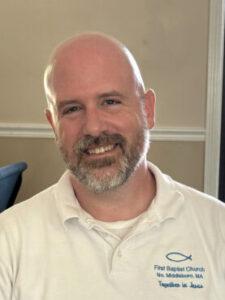
NORTH MIDDLEBORO, Mass. (RNS)—Pastor Jason Genest loves God and his church. He also loves U.S. history.
Pastor Jason Genest of First Baptist Church of North Middleboro, Mass. (RNS Photo / Bob Smietana)
That’s why he gets nervous when he hears people talk about America being founded as a Christian nation. Or wanting to make America Christian by using the power of politics.
America tried that in the past, he said. It did not go well—including for the founder of Genest’s own church.
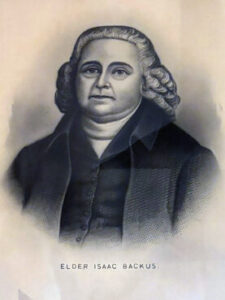
Portait of Isaac Backus at First Baptist Church of North Middleboro, Mass. (RNS photo/Bob Smietana)
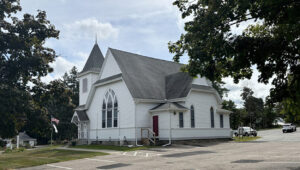
First Baptist Church of North Middleboro, Mass., was founded by Isaac Backus—a champion of religious freedom in the 1700s—who often found himself at odds with leaders of the Congregational church, which at the time was the official religion of the Bay State.
So-called New Light Baptists like Backus, who were followers of the famed evangelical preacher George Whitefield—a leader of the First Great Awakening who stressed the need for personal conversion—were seen as troublemakers and threats to public order by leaders of the official church, which was essentially a state bureaucracy, Genest said.
New Light Baptists questioned social institutions, by claiming the baptisms—and sometimes the marriages—of the unconverted were invalid.
They also set up rival churches to draw worshippers away from parish churches and, more importantly, refused to pay taxes to support those parish churches. That led to government crackdowns, with some gatherings of New Light Baptists banned as illegal.
“When you get along with a state bureaucracy, it’s great,” Genest said. “When you disagree, you have problems.”
Founding era not a religious utopia
Today, as America has grown both more secular and more religiously pluralistic, there has also been a rise in Christian nationalism—an insistence that America was founded by Christians and should be run by Christians.
But the founding era was not a religious utopia, where Colonists were free to choose their faith. Instead, disputes between different kinds of Christians were fierce in the Colonies that became the United States. Those Colonies often had official churches that used government power to collect taxes, enforce doctrine and crush their rivals.
Catherine Brekus, a religious historian at Harvard, says there’s a powerful myth that the early American Colonies were founded on the idea of religious freedom.
“That is not true,” she said. “We think that religious freedom was enshrined from the beginning, and instead it was a long and hard fight.”
In the 1700s, some Christians, like Backus’ mother and brother, ended up in jail. Others found constables at the door, hauling their possessions away for back taxes—which were meant to subsidize the state church. Still others were banned from meeting altogether in so-called illegal churches.
First Baptist Church of North Middleboro, Mass., was founded in 1756. (RNS photo/Bob Smietana)
Backus’ concerns about the power of government to dictate what people believed—and to punish those who disagreed—fueled his efforts to separate the church and state in Massachusetts. It became reality in 1833, nearly three decades after Backus died.
While Genest believes churches should be active in public life, that’s different from trying to mandate what people believed. When the government has that power, bad things happen, he said.
“I hate to say we use God, but I think God is often used as a means of people getting what they want,” Genest said.
Roger Williams exiled for ‘dangerous’ ideas
About 30 miles west of North Middleboro stands another First Baptist Church—also known as the First Baptist Church in America—with its own story of clashing with Christian nationalism.
This year on Oct. 13, the guest speaker at First Baptist was John McNiff, a retired national park ranger and historical reenactor who often portrays Roger Williams, the church’s founder. Williams was exiled from Massachusetts in the 1600s because of his “dangerous ideas” about religious freedom.
Among those ideas: State leaders should not use civil power to make people go to church or observe religious rules. During his talk, McNiff pointed out none of the worshippers in the service were there because the law required them to be.
“These politicians, these rulers, were compelling people to a faith that they did not believe in,” he said, drawing from Williams’ writings. “The civil sword can make a nation full of hypocrites, but not one true Christian.”
That fear of state-run religion was shaped in Williams’ childhood, said Charlotte Carrington-Farmer, a professor of history at Roger Williams University in Rhode Island.
“Williams grew up in a world of religious turmoil, where the ‘official’ state religion changed on the whim of a monarch,” Carrington-Farmer wrote in a 2021 book chapter about religious freedom and Williams, who was born in England.
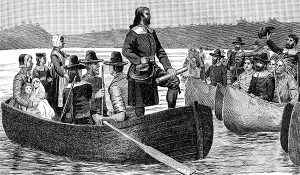
Roger Williams, founder of the first Baptist church in America and a champion of religious liberty, returns to the colonies with the charter for Rhode Island. (From a painting by C.R. Grant)
When he arrived in New England, Williams realized he had not come to a place where people were free to worship.
“When he gets to Massachusetts, he’s horrified,” said Carrington-Farmer, editor of a forthcoming collection of Williams’ writing, called Roger Williams and His World. “He’s seen the same persecution, just under a different umbrella.”
Williams became an outspoken advocate for religious freedom, often holding meetings in his home to advocate for his ideas. In particular, he believed government should have no right to enforce religious rules. That put him at odds with other Puritan leaders such as Gov. John Winthrop and clerics who felt it their God-given duty to keep their community holy.
Tired of Williams’ “diverse new & dangerous opinions,” a Boston court banished him on Oct. 9, 1635, giving him six weeks to leave—or else government officials would remove him by force. He eventually fled the state during a blizzard that winter, going to Narragansett Bay, where he founded the town of Providence and later, First Baptist.
Fear that lessons of the past have been forgotten
Carrington-Farmer said Puritan leaders had tried to avoid banishing Williams, whom they held in high esteem, and tried to get him to moderate his views. But Williams would not compromise.
Puritan leaders, she said, felt caught between a rock and a hard place. They had experienced persecution for the faith in England and wanted to create a new community that was faithful to the Bible and Christianity—which, as John Winthrop put it, would be a city on a hill.
They feared troublemakers like Williams would put that vision at risk. The Puritans believed God would punish them if they allowed sin and dissent to flourish.
Ironically, in being banished, Williams was lucky. Several decades later, Mary Dyer, Marmaduke Stephenson, William Leddra and William Robinson—all members of the Society of Friends, or Quakers—were hanged on the Boston Common for defying the power of the established church.
On a sunny afternoon in early September this year, a pair of tourists who identified themselves as descendants of Williams stopped in the church he started, to have a look. After settling them in to watch a short video about the history of First Baptist, Jamie Washam, the church’s current pastor, sat on the church stairs for a conversation about Williams’ legacy.
Washam, the pastor of First Baptist since 2015, said she worries that the hard-won lessons of Williams’ life have been forgotten.
“The story and legacy of Roger Williams reminds us that it has always been a struggle to advocate for religious liberty,” said Washam, sitting on the church steps. “We continue to fervently believe that that cost is worth it.”
She’s skeptical of the idea that voting for the right candidate will make America more Christian.
“Better legislation doesn’t make us better Christians,” she said. “Being more faithful and loving and just people make us better Christians.”
Some want Christianity restored in U.S.
Some Christians, however, worry something essential is being lost as the country becomes less religious. That’s the case for Jerry Newcombe, executive director of the Providence Forum, which has produced a series of videos about the Christian origins of the United States.
“I feel like there’s been a great deal of misinformation and forgetting,” said Newcombe, whose organization seeks to “preserve, defend and advance the Judeo-Christian values of our nation’s founding.”
While he fiercely promotes the idea that America was founded on Christianity, Newcombe admits things did not always go well—especially for religious groups that clashed with political leaders over matters of faith.
“It’s not as if everything was Shangri-la, especially if you were a nonconformist,” he said in a phone interview.
“In retrospect, we don’t agree with that,” he said. “But don’t throw God out of the whole equation.”
Other conservative Christians go much further, saying America must return to its Christian roots or perish.
Josh Abbotoy, head of American Reformer magazine and an investor who wants to rebuild a Christian America, has suggested the United States might need a “Christian Franco”—a reference to the longtime Spanish Catholic dictator—to restore Christianity to its rightful place in American society.
Others, like the National Conservatism movement, believe the government should use Christianity to shape society. During a recent Nat Con event, Al Mohler, president of Southern Baptist Theological Seminary, praised the Protestant empire that built America, saying that religious foundation must be restored.
“I want to say that I do not believe this nation and all that it represents can survive abandoning its theological roots. We will recover those roots and commitments or lose everything,” Mohler said earlier this year.
Conservative activists such as Charlie Kirk have called for a return to America’s Christian roots, praising the fact that the early Colonies had religious tests for office and were run explicitly by Christians.
“One of the reasons we are living through a constitutional crisis is that we no longer have a Christian nation, but we have a Christian form of government. And they are incompatible,” said Kirk, in advocating for an end to the separation of church and state and a return to a Christian America during an online panel discussion.
Complicated religious picture in the founding era
Douglas Winiarski, professor of religious studies at the University of Richmond and author of Darkness Falls on the Land of Light—which details the end of established churches in New England—said nostalgia for a Christian America can overlook how complicated religion was in the founding era.
He said that by the early 18th century, the Congregational church—which had descended from the Puritans—had become fairly tolerant, allowing space for dissenters as long as they paid their taxes and didn’t cause trouble.
That tolerance ended, however, with the rise of New Light Baptists and others who disagreed with the teachings of the Congregationalists and refused to submit to their authority on religious matters.
Ironically, Congregationalists, who had dominated religious life in Massachusetts and other New England states for two centuries, would learn the downside of having a state religion, with the rise of Unitarianism in the early 1800s.
Residents began electing Unitarian ministers to lead parish churches over the objections of Congregational church members, who were Trinitarians.
That led to court battles over church property, with the state Supreme Court siding with Unitarians in 1821. As a result, the Congregationalists found themselves losing the buildings and congregations they had controlled since the 1600s.
Eventually, because of the efforts of Backus and others like him, Massachusetts allowed a kind of moderated religious freedom, in which the taxes paid to the state church were diverted to other congregations—including Baptists and the breakaway Congregationalists.
But it was an uneasy peace and led to the disestablishment—the end of official status—of a state church in Massachusetts.
The archives from First Parish in Cambridge—which was an official government church from the 1600s to the early 1800s—were filled with letters from residents of that city, requesting their taxes be sent to other churches in the 1800s, said Gloria Korsman, a First Parish historian and a Harvard librarian.
At that time, the clerk of the parish church—a state church that eventually became Unitarian—was responsible for collecting taxes.
Korsman said she can’t imagine why anyone would want to go back to that time.
“I don’t know what there is to long for,” she said. “During the time of disestablishment, neighbors were against neighbors on this issue. It wasn’t like a peaceful time or a time when people were unified. There was a lot of division.”
How churches can provide respite for special needs families
November 1, 2024
Did you know the stress level of mothers who have a child with special needs has been compared to that of combat soldiers? Often, families of those with disabilities feel hidden within faith communities because they’re simply not there or not included in the activities. What can we, the church, do differently to provide times of respite for these families? How can we build relationships, offer support and provide rest?
What is respite?
Respite is a short period of relief or rest from something difficult or unpleasant. Family relationships are often strained as a result of the parents’ time being monopolized by the special care necessary for a child with a disability. Siblings of children with special needs may have little time with their parents.
Offering times of respite can be an opportunity for parents to reconnect with their other children and for spouses to spend time together. Churches can play a crucial role in providing this support and rest.
What does respite look like?
There are three approaches to respite care: group-centered, family-centered and church-centered respite. These approaches will focus on drop-off/child care, relief for the family and caregivers, and support while the child with special needs is at church.
Group-centered respite
Many families who have children with special needs struggle to find acceptance, often feeling their child does not “belong.” The church can provide that “belonging” and share God’s love with them through nights of respite.
A night of respite can be a once-a-month experience for children with special needs that gives parents a much-needed evening out. This parents’ night out provides fun activities for the kids and some free time for the adults.
What does a church need to make a “Night of Respite” a success?
Volunteer team
This team will consist of directors and coordinators who ensure the night runs smoothly, from registration to clean up. This team will need an overall director, a volunteer coordinator, a medical coordinator and an activities coordinator.
The volunteer coordinator will manage the number of attendees and the number of volunteers needed to care for the children attending the respite night.
The activities coordinator will let their creative juices flow as they plan theme activities, from bingo and scavenger hunts to crafts and photo backdrops.
The medical coordinator will know the medical needs of the children attending and lead a group of medical volunteers to meet those needs.
Insider tip: Churches typically have success finding volunteers through special education teachers, the medical field, student ministry, college partnerships and homeschool groups.
Medical plan
It’s wise to recruit, train and organize a group of professional medical personnel to volunteer their services for the respite event. Establish clear guidelines for what services the volunteer respite medical team will be responsible for based on the comfort level and expertise of those recruited—such as tube feeds, medicine administration, suctioning of airways and other services.
Intake forms
Having records of important information on each child at the respite event is essential. This record includes all pertinent information for the guest, including emergency contact information, a list of medications and any other information the parents offer. This record should stay with the child at all times.
Themes/Bible story
As a church, we seek to advance the gospel through our events and activities. A respite night should be a place where the gospel, Scripture and Bible stories are shared. Theme nights can bring a fun spin to a Bible story—such as weather night/Jesus calms the storm, Valentine’s/Jesus loves you.
Family-centered respite
The family-centered respite approach allows church members to rally around a special needs family to provide care and support. One way this has been successful is by developing a team of volunteers who play a specific role in that family’s rest and care.
What does this team look like?
Family support team member
This person assists a specific family through one of the following: monthly meal delivery, home projects, child care/respite care, transportation, child mentorship, etc. This is an ongoing volunteer role.
Respite care/child care
Parents may need an occasional break from the stresses associated with providing for a child with special needs. This break may be a simple two-hour slot for a mom to go grocery shopping or an overnight stay while a couple gets away for the weekend. This can be a consistent or sporadic volunteer role.
Prayer and encouragement
The role of prayer can mean a world of difference for a family. Acts of encouragement, such as notes, are also essential to the family’s well-being. This is an ongoing volunteer role.
Church-centered respite
A church-centered approach refers to the regular support and care provided to a child with special needs during weekly worship and small group time. This support allows families to leave their child in a children’s ministry equipped and ready to care for that child.
What can a church do on Sundays and Wednesdays during weekly services?
Sensory rooms
A sensory room is a space that provides a child with personalized sensory input that helps children calm and focus themselves to be better prepared for learning and interacting with others. Sometimes, children need a calm place to regulate. Other times, it provides a location for learning in a room with the least restricted environment.
Tip: Multiple websites help a church set up its sensory room. Fun and Function is a great resource.
Worship rooms
Some churches can attach a parent/child room to the back of the worship center to allow a parent and child to slip away during worship. This side room enables the parent to engage in worship while allowing the child the space to move and play freely.
Buddies
Not every child with special needs requires a buddy, but a buddy is an excellent way to provide kids with the extra support they need to feel safe, understood, and accepted. Those who fill the role of a buddy understand the child’s circumstances and provide appropriate support and care for that child.
What is the first step?
The first step is to simply start the conversation. What would a time of respite look like at your church? Half the battle is the church body realizing the need. Some studies show nearly half of special needs parents refrain from participating in a religious activity because their child was not included or welcomed.
These families often worry about their child making a scene, disrupting or being a burden to others. Many of these families have daily struggles and challenges. If going to church is one of those struggles, why go?
So, start the conversation today. You can do this. Be a difference maker in the lives of these families by building relationships, offering support and providing rest through times of respite.
Lauren Brown is the children and family minister at Brookwood Baptist Church in Shreveport, La. This article originally appeared on LifewayResearch.com and was republished with permission.
Nigerian pastor risks life to evangelize Muslims
November 1, 2024
PLATEAU, Nigeria (BP)—Pastor Eli Abdullah Tinau lives in the charred room that remains of his home after an attack by militant Fulani Muslims, an increasingly violent group accused of killing thousands of Christians in middle and northeastern Nigeria.
But Tinau, a Fulani Christian who converted from Islam, is committed to sharing the gospel with Fulani Muslims as a missionary and pastor of Evangelical Church Winning All in Nkiendoro, about 60 miles from Jos in the Bassa Local Government Area, International Christian Concern reported.
“I expect persecution because I am no longer of this world,” ICC quoted Tinau days before Christians worldwide mark the Day of Prayer for the Persecuted Church Nov. 3. “I hold firm to my faith in Christ.”
Militant Fulani have killed more Christians in Nigeria in the past four years than Boko Haram and the Islamic State West Africa Province combined, according to a report from the Observatory for Religious Freedom in Africa, a research, training and advocacy program promoting religious freedom on the continent.
ORFA terms the Fulani terrorist group the Fulani Ethnic Militia, which includes a mix of armed Fulani herdsmen, Fulani bandits and others.
‘Millions of people are left undefended’
For years, Christians in Nigeria have complained of attacks by militant Fulani without adequate response nor protection from Nigeria’s government.
“Millions of people are left undefended,” ORFA Senior Analyst Frans Vierhout said upon the release of the data in August. “For years, we’ve heard of calls for help being ignored, as terrorists attack vulnerable communities. Now the data tells its own story.”
The Fulani Ethnic Militia killed at least 42 percent of all civilians killed in community attacks, while Boko Haram and others combined killed 10 percent, contends the report “Countering the Myth of Religious Indifference in Nigerian Terror,” which spans October 2019 through September 2023.
Among 55,000 killed by terrorists in Nigeria in the study period, ORFA counted 30,880 civilian deaths, including 16,769 Christians, 6,235 Muslims, 154 African Traditional Religionists and 7,722 whose religion was not known.
In its 2024 World Watch List, persecution watchdog Open Doors lists Nigeria as the most dangerous place for Christians to live.
In September and October alone, Fulani militants are blamed for the deaths of at least 36 Christians in Nigeria’s middle belt, Church in Chains reported Oct. 17.
And on Oct. 26, the Fulani Ethnic Militia attacked a Benue community during ongoing peace talks, killing two, injuring one and torching several homes that had withstood previous attacks, Truth Nigeria reported Oct. 28.
The Fulani Ethnic Militia attack, the fifth on the community since June, occurred in the middle of the afternoon during a Peace and Security Meeting convened by a delegation of Fulani and representatives of Agatu Local Government Area, as well as representatives of the Igala and Ibira ethnic groups from Kogi and Nasarawa State, Truth Nigeria reported.
Many times in Nkiendoro, Tinau has come close to being a victim of Fulani militants, ICC reported. Terrorists have confiscated his livestock, robbing his family of their livelihood as he and his wife continue their education—he in seminary and she at the National Teachers Institute. The couple can afford to send only one of their daughters to school.
Tinau has seen fruit in his ministry, bringing two Fulani to Christ, ICC said.
“I will never go back to Islam,” Tinau said. “Christ has not compromised. I will not compromise. I will continue to preach and bring additional souls to Christ.”
Prayer effort spotlights Chinese house church persecution
November 1, 2024
Texas Baptists’ Intercultural Ministries is highlighting house churches in China for the upcoming International Day of Prayer for the Persecuted Church, scheduled on Sunday, Nov. 3.
A video, seven-day prayer guide and accompanying social media graphics posted to txb.org/weekofprayer highlight the severe persecution faced by Chinese house churches.
In the materials posted on the website, Minister Sue, a church planter presently serving in the Houston area, recounts her story of coming to faith in 2003 and planting her first house church in China in 2005.
She accepted Christ in the United States as an international student and then returned to China with a deep sense of calling to plant churches there. She established four house churches ranging from 50 to 80 members, though it was not allowed in the city where she lived.
On two instances, in 2014 and 2016, authorities interrupted worship services and detained worshippers, including Minister Sue. The Christians were told they needed to worship in the government church and not in house churches.
Minister Sue witnessed the imprisonment of six house church members.
“We don’t know why or what happened. We don’t know. We didn’t know. But we believe in God,” she said in the video testimony.
“I think this is what I can do for our brothers and sisters who are in prison,” she said, fighting back tears. “I also was encouraged by their faith. They are so strong. Their faith was so strong. They didn’t deny their belief. They keep on going, keep on fighting.”
Mark Heavener, director of Intercultural Ministries for Texas Baptists, spoke about the prevalence of persecution internationally and the way those instances connect back to congregations in Texas.
“I wake up some mornings with a text from one of our intercultural pastors with pictures of what happened the night before in their home country. It can be stories of refugees fleeing persecution, villages burning, friends and family killed—all for the same reason, the gospel of Jesus Christ,” Heavener said.
“What is happening around the world is felt deeply here in Texas. My heart weeps, as does Jesus. As I try to comfort our pastors, they always express, in the hope of Jesus, [the] work of the salvation of souls and God’s coming justice.”
Prayer points call for the spiritually lost in China to repent and accept salvation, for imprisoned believers to preach with confidence and strength, and for persecuted churches to preserve unity amid persecution and “grow in grace and knowledge” during dark times.
Points also call for God to provide “righteous and merciful Christian lawyers” to help persecuted churches through the country’s social justice system and to have mercy on “officers, prosecutors and judges” engaged in persecution.
Through his ministry at Texas Baptists, Heavener connects with and resources approximately 350 intercultural congregations speaking more than 80 languages. Congregants represent countries and regions including Asia, Africa, the Middle East, Eastern Europe, Haiti and Brazil, in addition to Native American and Deaf Culture churches.
Heavener estimates about two-thirds of those he serves through Intercultural Ministries are in the United States as a result of some form of persecution, religious or otherwise. Many of these individuals know loved ones who still face persecution outside of the United States, he said.
In 2023, Heavener oversaw a 30-day prayer emphasis in conjunction with the International Day of Prayer. During that emphasis, Texas Baptists pastors from Houston, Plano and Dallas shared stories of persecution faced by believers in Eritrea, Burma/Myanmar, India and the Congo. Videos and a prayer guide for those countries also are available online here.
The final prayer point, shared by Minister Sue in the video testimony, is that churches in North America would maintain a “kingdom vision” and be inspired by those suffering for their faith to “reclaim their first love, preach the true gospel, save souls and fight for the heavenly King.”
Around the State: Howard Payne celebrates homecoming
November 1, 2024
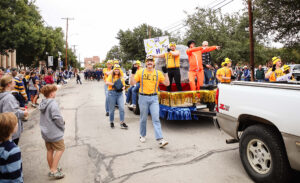
The annual homecoming parade was among the festivities during the Howard Payne University homecoming weekend. (HPU Photo)
More than 1,000 students, alumni and guests participated in homecoming weekend events at Howard Payne University, including the homecoming parade, HPU family picnic, the alumni choir concert, “Cobbler on Campus” and the homecoming pep rally. HPU’s 2024 alumni honorees were recognized during the homecoming football game. They are Lauren Browning, Outstanding Young Graduate; Robert Cuellar, Dr. José Rivas Distinguished Service Award; Steve and Carla Evans, JAM Faithful Servant Award; Loretta Houston, Coming Home Queen; Wilbert Rogers, Medal of Service; Kathy Strawn, Distinguished Alumna; and Joe Young, Grand Marshal. Also during halftime, Regan Noel and Jack Shackelford were named Homecoming Queen and King, and the titles of Homecoming Princess and Prince went to Hannah Noel and Blaine Onick.
Houston Christian University held its fall Missions Fair Oct. 23 to introduce students to opportunities to serve locally, nationally and internationally next summer. Representatives from 16 organizations, including Texas Baptists’ Go NOW Missions, were available to interact with students and share specific opportunities that might match students’ majors, interests and gifts. The fair followed Convocation, the University’s weekly campus worship service, where speaker Boto Joseph—a minister at Seven Mile Road Church in Houston—preached from Luke 10:25–37.
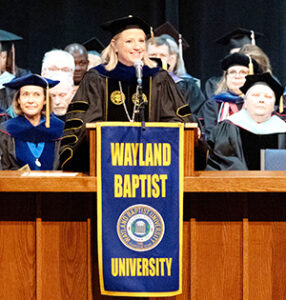
Donna R. Hedgepath presides at the Wayland Baptist University Convocation in August. Her formal inauguration as president will be Nov. 18. (WBU Photo)
Wayland Baptist University announced the inauguration ceremony of Donna R. Hedgepath as its 14th president will take place at 10 a.m., Nov. 18, in Harral Memorial Auditorium on Wayland’s Plainview campus. The public is invited to attend the ceremony, which marks the beginning of a new chapter for Wayland Baptist University as Hedgepath formally assumes leadership, following the retirement of Bobby Hall in June. Hedgepath previously served as vice president and provost at Campbellsville University in Kentucky.
Students from Baptist University of the Américas participated in a mission trip to Monterrey, Mexico, Oct. 9-13. In partnership with the youth group from Príncipe de Paz church, BUA students shared the gospel and hosted a mental health care conference. Each of the BUA students led a workshop at the conference. Accompanied by Abe Jaquez, president of BUA, Orlando Contreras, facilities coordinator and Rob Arevalo, student experience coordinator, the team also shared the gospel at Tecnológico de Monterrey.
Bruce Webb
Tommy Lent
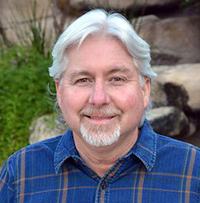
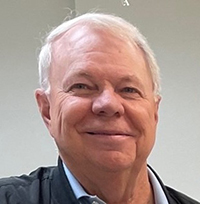
Two Texas Baptists—J.T. “Tommy” Lent Jr. and Bruce Webb—were named to the board of directors of 21Wilberforce, a human rights organization committed to international religious freedom for all people. Lent, a retired oil and gas industry executive, is a member of First Baptist Church in Marble Falls. Webb is senior pastor of First Baptist Church of The Woodlands. They began their three-year term on the board Oct. 24 and are eligible to serve a maximum of three terms.
Anniversaries
First Baptist Church in Temple celebrated 150 years, Oct. 27.
Park Cities Baptist Church in Dallas is celebrating its 85th anniversary on Nov. 3.
On the Move: Jonas, Jones and Liebrum
November 1, 2024
Bubba Jonas to Mingus Baptist Church in Mingus as pastor, after serving the congregation as interim.
Oza Jones to Texas Baptists’ Center for Ministerial Health as director of evangelism, from his previous role as director of African American Ministries in the Center for Cultural Engagement.
Cory Liebrum to the role of director of discipleship and NextGen within Texas Baptists’ Center for Church Health, from his previous role as youth and family ministry specialist with Texas Baptists.
‘I needed a miracle,’ living Christian martyr recalls
November 1, 2024
As the young Sudanese child of a Christian mother and Muslim father, Mariam Ibraheem never planned to end up in the United States one day, but God had other plans, she said.
Ibraheem addressed a Dallas Baptist University gathering to pray for all persecuted religious minorities, Oct. 24.
In 2014, Ibraheem’s imprisonment and impending death sentence drew international attention and prayer, before Christian Solidarity Worldwide and other religious freedom advocates aided in her release and eventual resettlement to the United States.
Ibraheem was born in a refugee camp in Sudan. Her father died at the camp, before she and her mother left to settle in a small town.
She described her childhood as happy, despite the difficulties. Her mother was warm and generous and well-loved in the community, even though she was a Christian, Ibraheem explained.
Though she was reared in her mother’s Ethiopian Orthodox faith, her father’s Muslim surname created problems for her down the line.
The small town they’d settled in was under Islamic sharia law. She didn’t mind honoring social customs to cover her hair and wear a long dress. But she said what the school taught about Islam didn’t sit well with her, when she looked at the kindness of her Christian mother. During Muslim prayer times tensions increased.
They decided it would be better for her to attend a Catholic school. So, Ibraheem moved to complete her studies.
A Catholic priest became her legal guardian, a requirement in order for a young woman to secure a dormitory.
The nuns at the Catholic school made an impression on her, Ibraheem said, because they were there not for their own benefit, but to serve the Lord. She said she wouldn’t describe herself as converting to Catholicism, but rather as “growing in that space where she was.”
It was a formative time in her faith. The Roman Catholic Church was open to anyone who had need, not just Catholics. Ibraheem noticed this openness.
She went on to one of the top universities in Africa to study medicine, graduating in 2010, but she never became a doctor. Doing so would have required her to become Muslim, as Christians faced discrimination and weren’t allowed to practice medicine.
Her mom died while she was away at school, but Ibraheem went back to the small town where her mother had lived. Women generally were not allowed to own a business. But townspeople helped her acquire land and set up a farm and a business at the market, she said, because they had respect for her mother.
The day her life turned upside down
She was content in that life, until her husband, an American citizen, returned to Sudan for a visit. While he was there, Ibraheem was summoned one day to the police station.
She thought maybe something had happened to one of the workers at her farm. Instead, it was her half-brothers, who she didn’t know, there to challenge her life choices. They claimed she was Muslim and charged her with committing adultery.
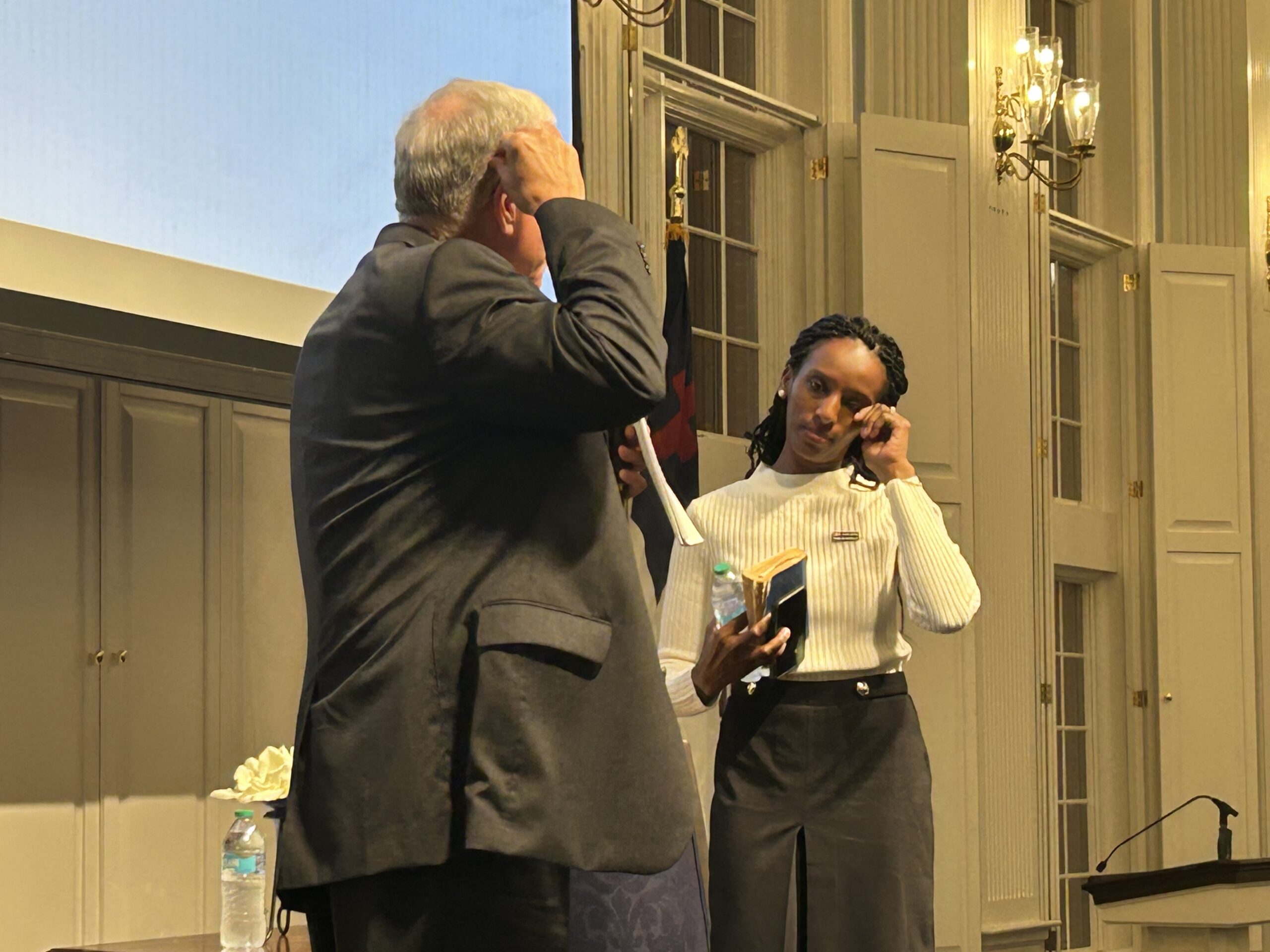
Ibraheem shows the audience the Bibile she smuggled into prison, at great cost. She took pages out to hide them as she read. (Photo / Calli Keener)
Ibraheem explained because her father was a Muslim, she was considered Muslim, and it was illegal for Muslims to marry Christians. Because she was considered illegally married, her son was considered illegitimate and under threat of being taken from her to be placed in an orphanage or with Muslim family members.
She tried to explain to the judge she was never Muslim, but the judge would not listen.
She had been advised to say “yes” to everything the judge said, but she couldn’t.
He told her she faced execution for being a Christian, when in the eyes of the law, she was Muslim, she explained. But the judge said he wanted to save her life.
She responded: “I’m already saved in Christ. He saved my life.”
In response to her perceived insolence, the judge ordered her to jail on adultery charges, Christmas Eve 2015. It was her son Martin’s first Christmas, and she had been looking forward to celebrating together as a family.
To prevent the government or her half-brothers from taking custody of her son—because it was illegal for a Christian to be his father—the toddler, Martin, went with Ibraheem to prison, but he would only be allowed to stay there until he turned 2 years old.
Ibraheem also discovered she was pregnant again during the prison intake process.
She described games she played with Martin in prison to disguise the shackles on her legs, because seeing her in chains upset him. She said she still has marks where the shackles cut into her ankles when pregnancy made her ankle swell.
She also explained people frequently were sent to her in jail to try to convince her to denounce her faith. They would threaten her with taking Martin away and putting him in an orphanage. She constantly was told all she had to do to go back home with her son was renounce her faith in Jesus.
Other inmates knew of her Christian faith due to local media coverage. They threatened to kill her and Martin. Ibraheem said she barely slept in prison, out of vigilance for their safety.
The priest who was her guardian encouraged her to remember she was none of the terrible things they were saying about her. She wasn’t there because she was an infidel or a bad person, he assured her. “You’re there because you love Christ.”
“I knew there was a purpose for what I had to go through,” Ibraheem said. She described feeling a peace no matter how things might turn out.
Death Sentence
Her refusal to recant resulted in another charge, apostasy, which carried a death sentence.
Finally, she was given three days, she said. “This is your last chance,” she said they warned her. “After that, you have to face your sentence.”
She was near the time for her baby to be born, and the sentence was 100 lashes and death by hanging.
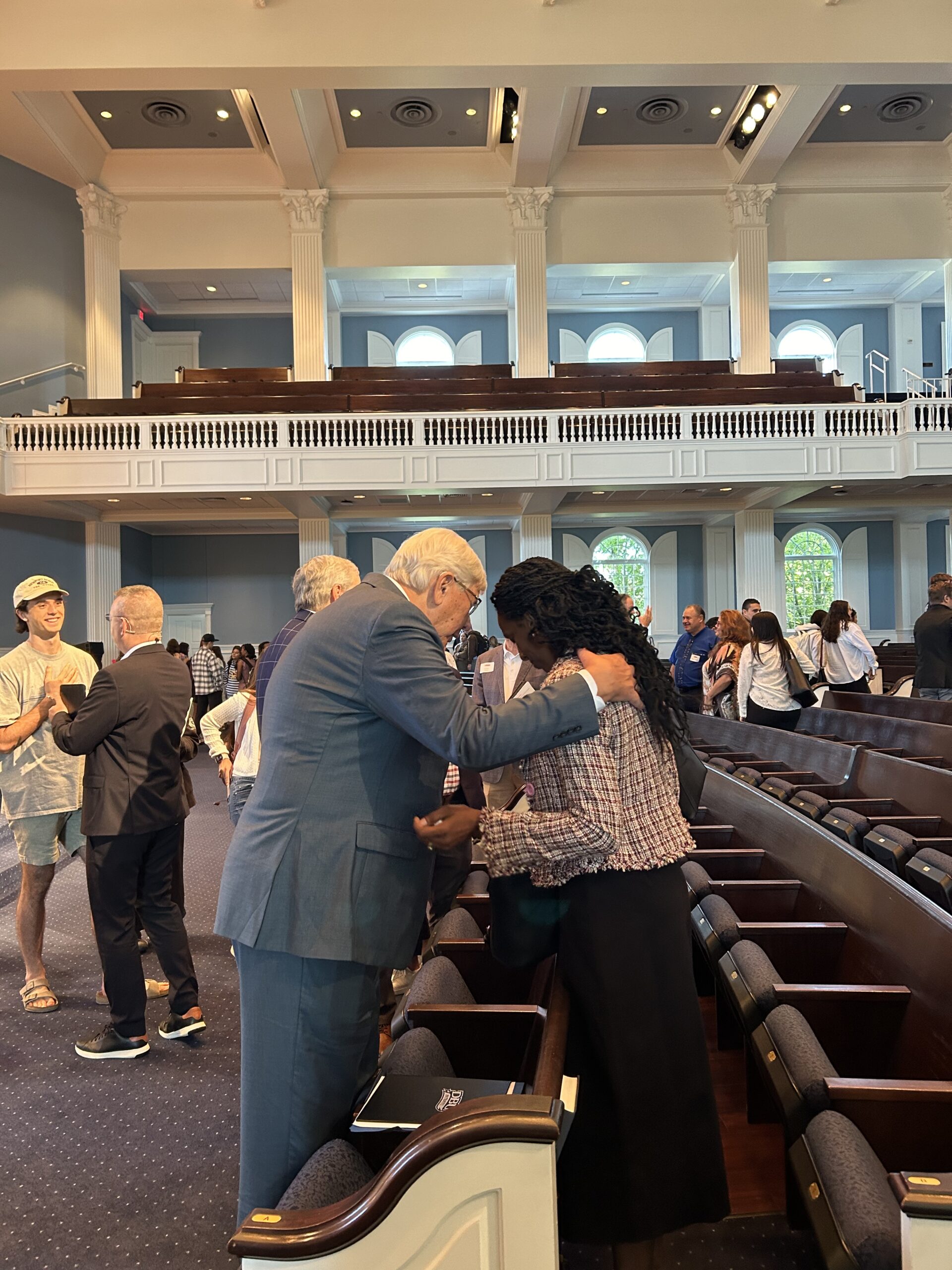
Randel Everett, senior fellow for DBU’s Institute for Global Engagement, takes a moment to pray for Ibraheem after DBU chapel services. (Photo / Calli Keener)
“I needed a miracle,” she said. “I was praying for a miracle.”
She was at peace with whatever happened. But she knew Jonah was in the belly of the fish for three days and Jesus was in the tomb for three days, so she prayed God might grant her a similar miracle, Ibraheem explained.
At court she was held in a cage, while Martin sat with her lawyers. Ibraheem recalled a crowded room and the fear on her lawyers’ faces.
But when the judge told her to stand, “I was looking into his eyes. I wasn’t scared,” she said.
“The room was very comfortable,” Ibraheem noted. And she didn’t know why, but “he was sweating. He was scared.”
When the judge read her sentence, he said because Islam is a religion of mercy and she was pregnant, her sentence would be suspended to give her two years once the baby was born.
“I got my miracle,” Ibraheem observed.
She returned to prison, where her daughter Maya was born. She received no medical care. No one believed she was in labor, so Ibraheem delivered the baby in shackles—alone except for Martin who was beside her when his sister was born.
When she was imprisoned, Ibraheem did not know about the prayers for her taking place around the world, though at times, she said, she’d felt their power.
Advocates helped gain Ibraheem’s release and her eventual resettlement to the United States, where she now lives with her family. She speaks publicly about her experience, continuing to advocate against religious persecution.
Dallas Baptist University’s Institute for Global Engagement hosted the two-day Praying for ALL the Persecuted event.
UPDATED Oct. 31, 2024, to note the host and event name.
Park Cities Baptist withdraws from SBC
November 1, 2024
Park Cities Baptist Church in Dallas—a prominent congregation situated in the affluent Highland Park/University Park area—voted to withdraw its affiliation with the Southern Baptist Convention.
During an Oct. 27 called conference, the congregation approved the motion to cut ties with the SBC “by a strong majority,” according to a public statement released by the church.
“The church appointed a lay leader committee, which studied these matters for more than nine months, outlined the various issues that led them to recommend this course of action,” the public statement from the church said.
“Although there were multiple matters raised, the concern for the autonomy of the local church and the desire to determine the timing and grace of any separation from the SBC were of paramount importance.
“As part of the motion to withdraw, the church affirmed that it is a God-glorifying, Gospel-centered, Bible-believing, theologically conservative Baptist church and that neither its doctrine nor its beliefs have changed.”
At the same time, the church reaffirmed its denominational commitment to the Baptist General Convention of Texas “and its engagement with the state convention in its missions and ministries.”
The chief executive officers of some BGCT-affiliated institutions and agencies are members of Park Cities Baptist, and its members serve in a variety of capacities on Texas Baptists’ committees and boards.
The statement from the church noted the congregation charged committees to “evaluate effective ways to work with and support specific projects” of the SBC International Mission Board and North American Mission Board.
“In all of this, we will all seek to glorify the Lord, build up the church, unify the overall Body of Christ, and proclaim the Gospel even more effectively. We move forward together as a church family to further the Gospel in the unity of the Spirit to the glory of God,” the statement from the church concludes.
Gradual distancing from SBC in recent years
Park Cities Baptist Church was organized in 1939 as a Southern Baptist church, and former pastors served in a variety of leadership roles in the national convention.
However, for at least two decades, the church’s involvement with the SBC essentially has been limited to support for its mission programs.
While the statement from Park Cities Baptist did not specify exactly what prompted the decision to withdraw from the SBC, the Southern Baptists at their annual meeting in June debated a constitutional amendment that would have barred from the SBC churches that employ female pastors.
Messengers to the annual meeting voted 61.45 percent to 38.38 percent in favor of the amendment limiting “friendly cooperation” with the SBC to a church that “affirms, appoints, or employs only men as any kind of pastor or elder as qualified by Scripture.”
Although a majority approved the measure, it failed because amendments to the SBC constitution require two-thirds approval at two consecutive annual meetings.
The website for Park Cities Baptist Church staff listing currently does not include any women who carry the title “pastor.” However, Pastor Jeff Warren has advocated for women in ministry.
“Jesus did not genderize the Great Commission, nor does God dispense spiritual gifts to his children according to sex. We must release every girl and boy, woman and man into their God-given calling, not putting parameters around anyone based on sex, ethnicity or status,” Warren wrote in an opinion article published March 21, 2023, in the Baptist Standard.
“Relegating women to specific roles—often preschool, children, youth, worship or women’s ministries—is to narrow the work of a gift-filled congregation and thus stifle the advancement of the gospel.
“Such parameters have not always been imposed on the mission field in other parts of the world. Let’s release our girls and women—called by God—to lead, proclaim, teach and preach the glorious message of the gospel to the whole wide world.”
40-year-old Arabic Church of Dallas reaches the world
November 1, 2024
A church started in 1982 as a home Bible study for Arabic-speaking immigrants celebrated its 40th anniversary Oct. 27.
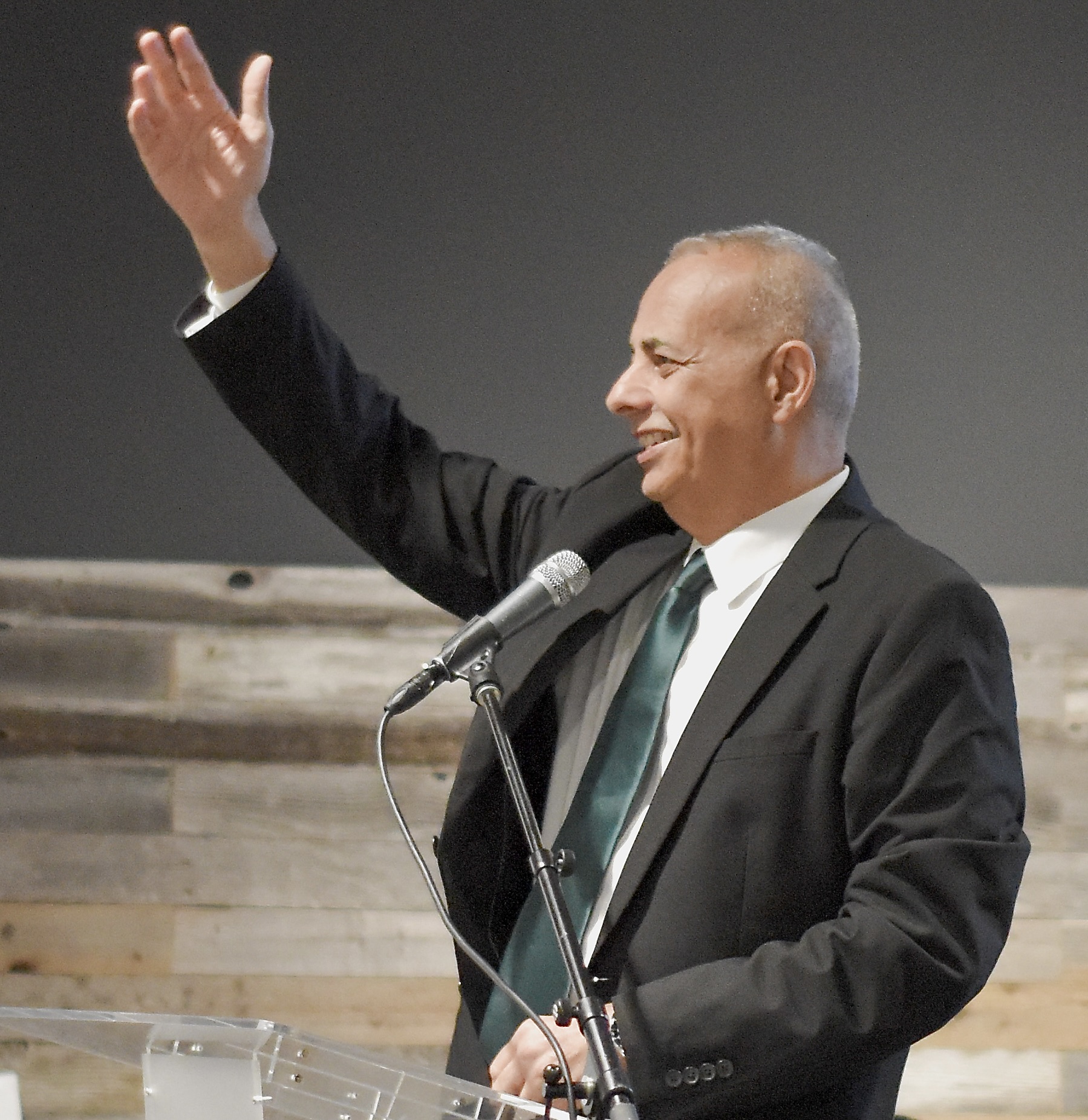
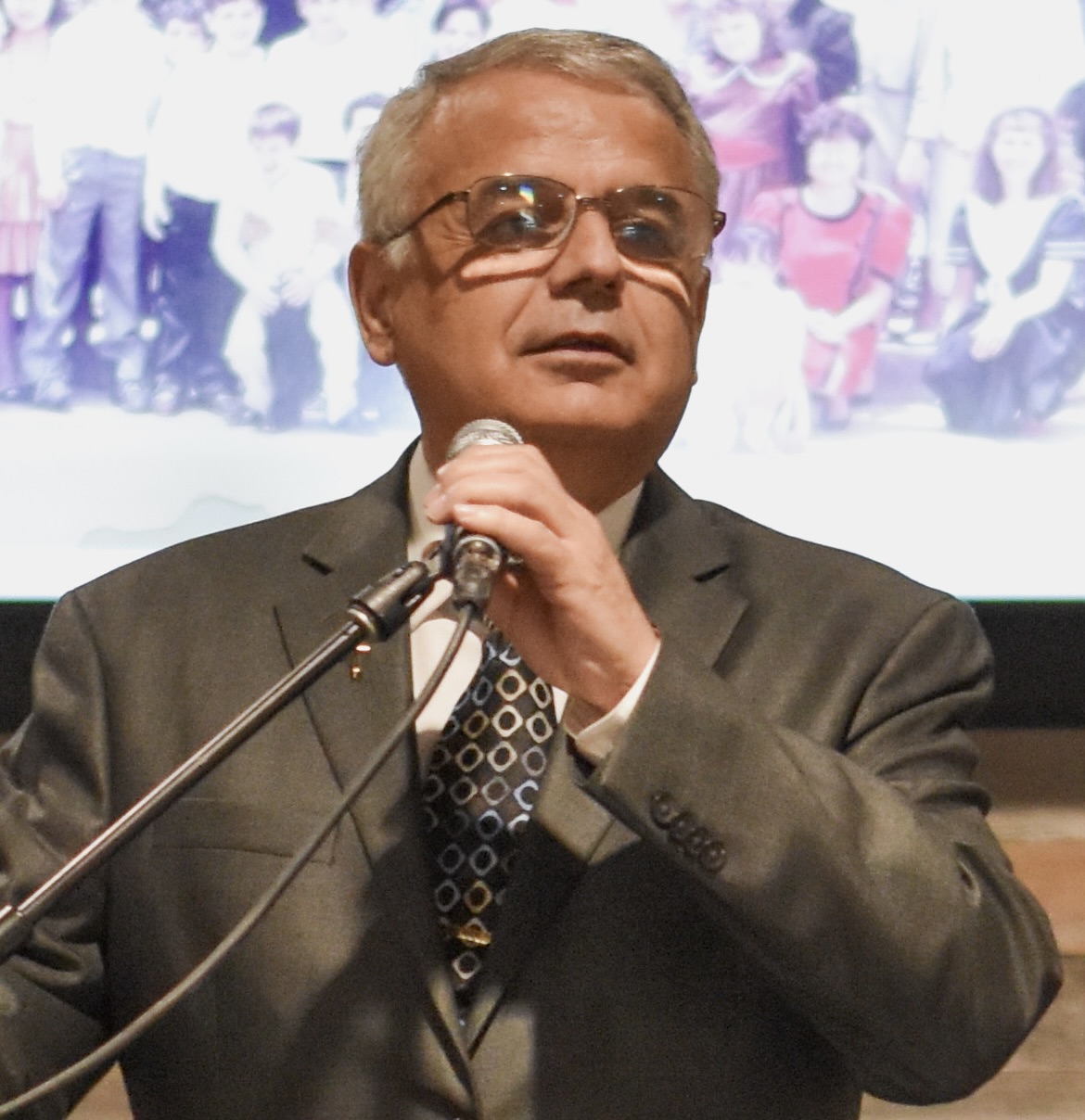
Jalil Dawood, current pastor of Arabic Church of Dallas. (Photo: Heather Davis)
When the Arabic Church of Dallas started, “there was no Arabic-speaking church in all of North Texas,” current pastor Jalil Dawood said. “The next one is 300 miles away in Houston.
“Newcomers to the United States need to feel at home at the start of their lives until they adjust. Also, they need to hear the gospel and get saved, as this great nation provides freedom to come to Christ.”
Beginnings
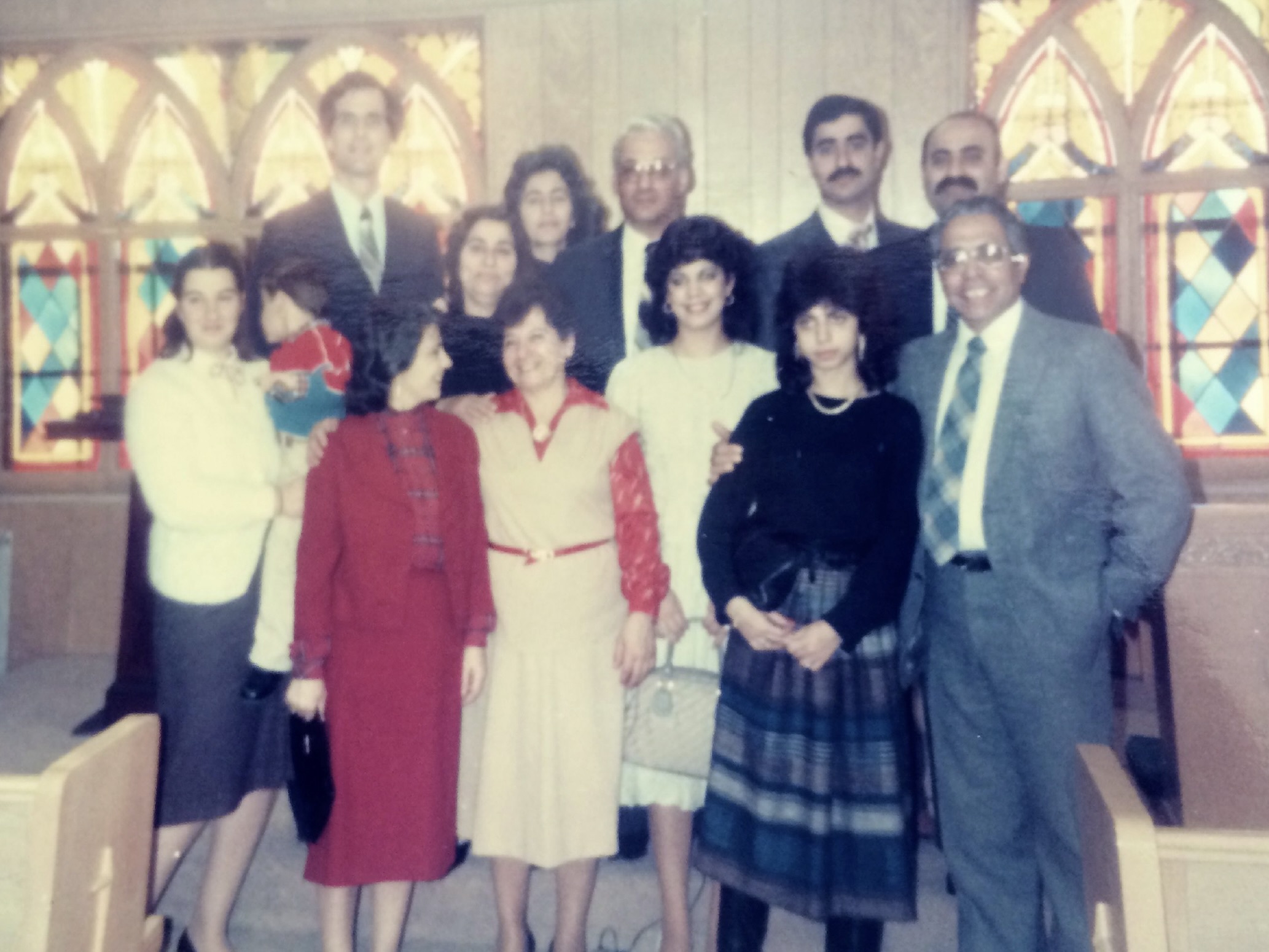
Original members of Arab Church of Dallas, with founding pastor Imad Shehadeh (back row, far left). (Photo courtesy of Imad Shehadeh)
Imad Shehadeh came to Dallas from Jordan with his family in July 1982 to study at Dallas Theological Seminary. Four of the five pastors of Arabic Church of Dallas—Shehadeh and three others—“felt that receiving theological training at an interdenominational seminary was best to prepare us for a future ministry in the Middle East.”
The Shehadehs started the Arab Bible study soon after they arrived in Dallas. The Bible study grew and needed a larger space. First Baptist Church in Dallas, where the Shehadehs were members, gave the group a Sunday school room in its facilities.
The Arab Bible study continued to grow and became recognized by the leadership of First Baptist Church.
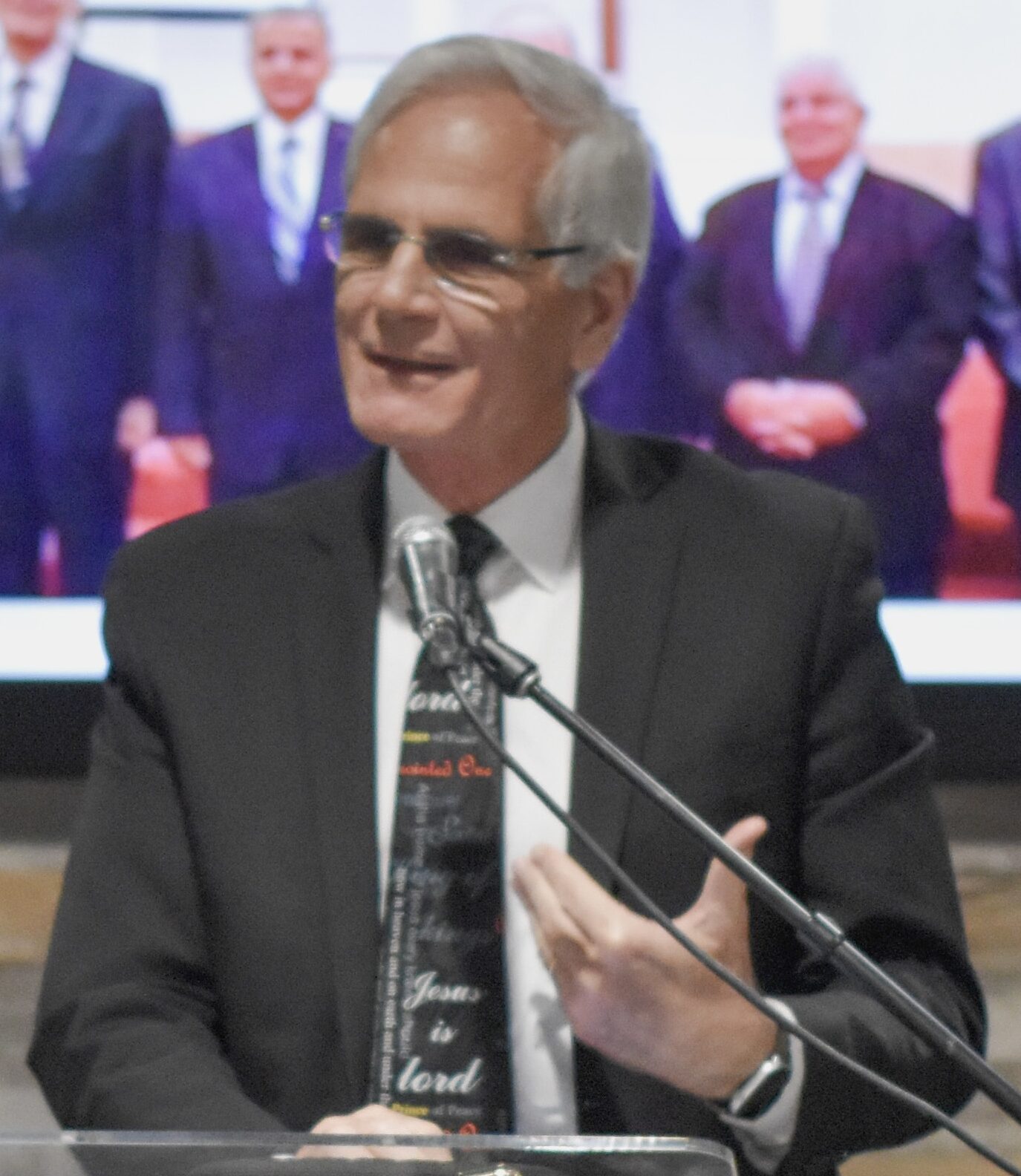
Imad Shehadeh, founding pastor of Arabic Church of Dallas and president of Jordan Evangelical Theological Seminary. (Photo: Heather Davis)
W.A. Criswell, pastor of First Baptist Dallas at the time, “felt that I should be ordained as pastor, to which the Arab believers of the Bible study agreed fully,” Shehadeh said.
After Shehadeh’s ordination in May 1984, the Arab church was “given a whole wing at First Baptist that became known as ‘The Arab Chapel.’ So, while the Arab Church started in 1982, it was made official in 1984,” Shehadeh explained. “It assumed the name ‘The Arab Church of Dallas’ when we relocated to Richardson” in 1988.
Transitions
More people of Arabic descent lived in North Dallas than near downtown Dallas. So, the church relocated north.
“We had a long dream to relocate to our own place,” Shehadeh said. “We leased a building in 1988 in Richardson, and we all contributed physically with the work of renovation, along with some professional builders supplied by First Baptist Dallas. It was a very nice facility with a worship hall, a fellowship hall and several classrooms.”
Arab Church of Dallas on Pastor Imad Shehadeh’s (center) farewell Sunday at their Richardson location. (Photo courtesy of Imad Shehadeh)
Shehadeh completed his degree at Dallas Theological Seminary in the summer of 1990 and returned to Jordan.
“It was so extremely painful to leave the Arab Church of Dallas that we planted and served for eight years. But we were fulfilling a calling from the Lord that we had to obey,” Shehadeh said.
Samir Kawar became the church’s second pastor. Two years later, the church needed to relocate again when rent was raised beyond what the church could afford.
Arabic Church of Dallas’ 30th anniversary celebration in the chapel of First Baptist Church of Plano. (Photo courtesy of Imad Shehadeh)
The Arab Church of Dallas eventually found a host and partner in First Baptist Church of Plano. When First Baptist Plano relocated in 2021 from its historic downtown Plano location to its new facility near Coit Road and the President George Bush Turnpike, Arabic Church of Dallas made the move with them.
“Muslims have built 100 mosques in the Dallas-Fort Worth area and 200 in the Houston area,” Dawood noted. “If the Lord provides, we would love to have our own building, but not for the sake of a building, but for the glory of the Lord, as a city on a hill shines for the glory of God and to those who speak Arabic.”
While Arabic Church of Dallas is similar in many ways to what Dawood called “American churches” with respect to doctrine and style of worship, they experience challenges particular to churches composed predominantly of immigrants.
“Christians from the Middle East merge with the English-speaking American churches. So, people move to churches based on their needs, especially with the second generation [of immigrants],” he said. So, attendance and membership numbers fluctuate, especially when “there are waves of refugees and immigrants from the Middle East.”
Reaching the world
A photo of the five pastors of Arabic Church of Dallas taken during the church’s 30th anniversary celebration. lLeft to right: Imad Shehadeh, Nabeeh Abbassi, Tony Malouf, Samir Kawar and Jalil Dawood. (Photo courtesy of Imad Shehadeh)
Ministry to Middle Eastern refugees and immigrants stretches beyond Arabic Church of Dallas. In 2014, Dawood—a refugee from Iraq—founded World Refugee Care to feed refugees around the world and to plant churches. The nonprofit also has “trained pastors and leaders among refugees in Australia, Germany, Turkey, Iraq, Greece [and] Holland.”
“We are working to start new works in many other different nations,” Dawood continued. “And we have training material for leadership and discipleship that can be used with any church or backgrounds.”
Churches wishing to inform, educate and train their members to reach immigrants and refugees from the Middle East or who are looking for a partner in planting churches there can learn more at World Refugee Care.
Jordan Evangelical Theological Seminary (Courtesy photo)
Shehadeh “returned to Jordan in 1990 to start a training ministry at the request of Middle East leadership. The fruit was the founding of the Jordan Evangelical Theological Seminary [in 1991], now in its 33rd year. The seminary seeks to train men and women from the 22 Arabic speaking countries of the Middle East, North Africa and Arab Peninsula.”
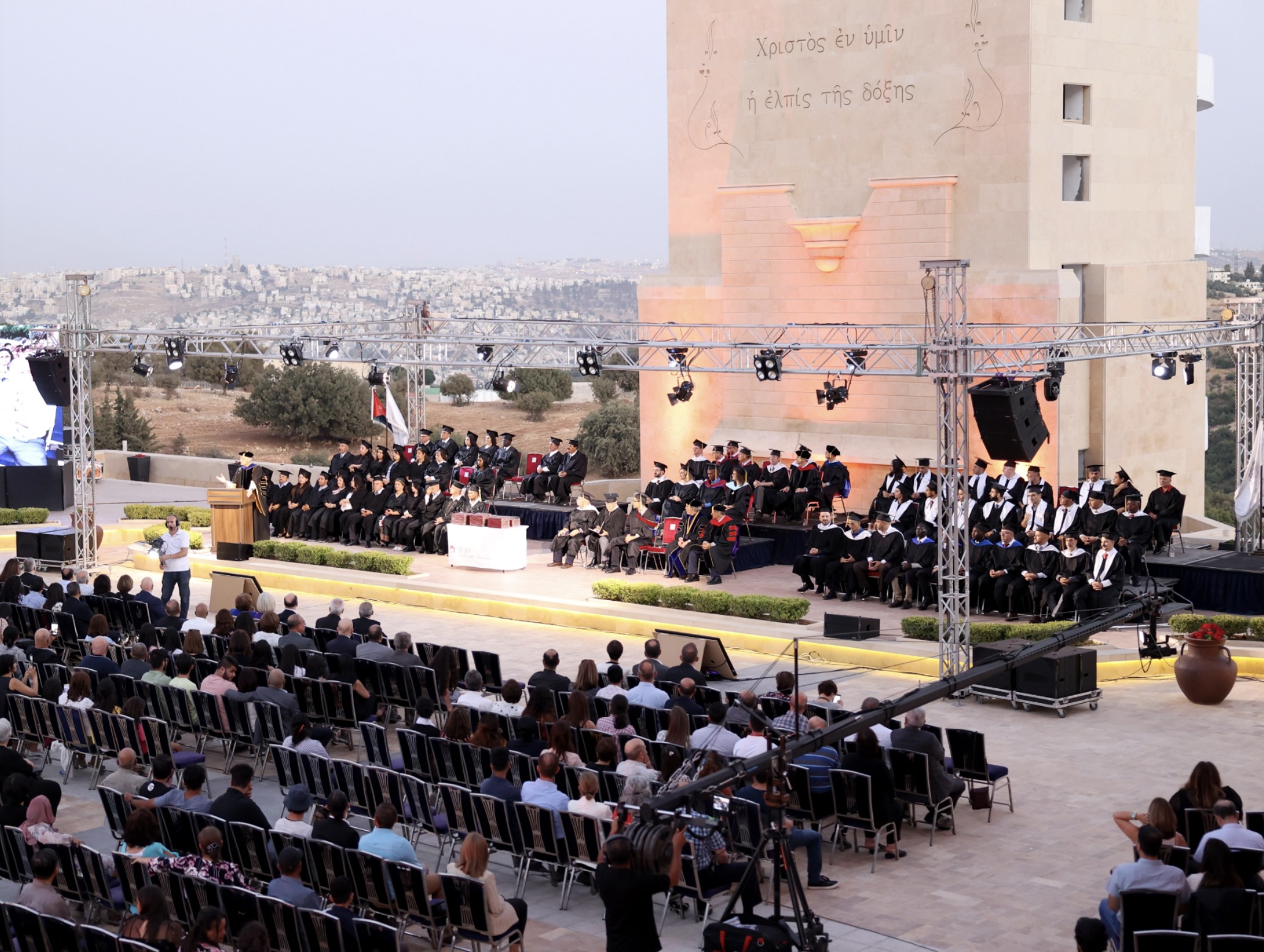
A graduation ceremony at Jordan Evangelical Theological Seminary. (Courtesy photo)
“While it is a missions-focused school, it is also a degree-granting institution at the bachelor, master and doctoral levels, with graduates now serving in 26 countries,” Shehadeh said. “As Dr. Criswell would say, ‘This is God!’”
Nabeeh Abbassi, former pastor of Arabic Church of Dallas and head of Jordanian Baptist Convention. (Photo: Heather Davis)
Another former pastor, Nabeeh Abbassi, also became a pastor of a Baptist church in Jordan and is the head of the Jordanian Baptist Convention.
“I am very proud and do rejoice in my heart for what the Lord has done. Being at the 40th celebration, it was a joy to see many familiar faces, many new faces, but also to recognize that at least 16 people who were part of this church have gone to glory,” Shehadeh said.
“The Arab Church of Dallas is a living testimony of God’s faithfulness and the faithfulness of the leadership that served in it.”
Wayland student mission trips made eternal difference
November 1, 2024
PLAINVIEW—For native-born Alaskan youngsters Parker and Marty, Wayland Baptist University’s nine-year investment in the Kenai Peninsula Sports Camp operated by Alaska Missions made a difference—an eternal difference.
“In 2015, we were the first group that went to help get the camp started,” explained Donnie Brown, director of spiritual life at Wayland. “We’ve been going back pretty much every year since then.”
Making his second visit to Alaska, Alex Clements was among five students to make the trip during the summer break. He got the opportunity to lead Parker and Marty to Christ. They are two of five kids who made professions of faith in Christ during the time the Wayland team was in Alaska.
Led by Wayland’s offensive line coordinator, Marcos Hinojos Jr., other Alaska team members included Annalicia Hernandez, Mikayla Shires, Jazmine Jackson and Dylan McDougal.
They recently were joined by baseball Coach Todd Weldon and students Jeremy Bolligar and Olivia Fisher as they spoke in a chapel service highlighting three of Wayland’s summer missions programs.
Weldon and Bolligar worked at a Students International baseball camp in Jarabacoa, Dominican Republic, while Fisher worked with Go Now Missions, a Texas Baptist missions partner, in Zwolle, La.
Making eternal impact in Alaska
Clements told students attending the Wayland chapel service about sharing a dorm with Parker and Marty and learning from them.
“They told us a lot of stories about how they lived—like how they had to go and hunt for a lot of their food, like literally going to hunt for whales and seals,” Clements said.
As they grew to understand each other, Clements and the other Wayland students shared their faith with Parker and Marty. By the end of the week, “those guys had been so receptive to what we were saying that they ended up being saved. I really saw God move through them.”
Hinojos confessed he initially wondered what kind of an impact five people from a Texas Baptist school could make in Alaska.
“But God kind of slapped me in the face with what he did with this group of five people,” Hinojos said. “Six kids came to accept the Lord, and their lives were changed not just in the moment, but forever—for eternity.”
“It doesn’t matter how young you are. It doesn’t matter where you’re at in your faith journey. None of that matters,” the football coach said. “What’s important is that you answer the call when the Lord says it’s time, and these five did. They dramatically changed the course of those kids’ lives forever. It was neat for me to see.”
Teaching kids to play football was way out of Shires’ comfort zone, yet God was teaching her as she used sports to share the gospel with kids.
“Alaska is known as one of the most beautiful places on earth, but there is also home of some of the most broken and lost souls. And you don’t know that until you go out there,” Shires said.
“So, God just kind of put on my heart that I just need to be a missionary wherever I go. You never know who’s going to be needing the gospel. God used this trip to help me to realize that every single person, no matter where you are, needs the gospel.”
Using baseball to reach youth in Dominican Republic
At the baseball camp in the Dominican Republic, a devotional time provided Bolligar an opportunity to share his faith with young players.
“At the end of the week, I got the opportunity to lead a devotional for them,” he said. “I never thought I would lead a devotional, and I never thought I’d be on stage speaking at chapel either. I just saw that the kids through the week just started getting more attentive and started asking a lot more questions. That’s the way I saw God work.”
His baseball coach also got opportunities to share his faith with young players.
“I felt really the Holy Spirit placed on my heart to communicate to those kids because in the Dominican Republic baseball is huge. It’s an opportunity to a better way of life,” Weldon said.
The kids who attended baseball camp might never make it to the major leagues in the United States, but the Wayland group used their interest in sports to introduce them to new life in Christ. Weldon emphasized “the importance of their relationship with Jesus and growing closer to him.”
Changing lives
Fischer spent her time in Louisiana working in backyard Bible schools for little children and visiting senior adults in a nursing home.
“We ran the gamut from little-bitties to the elderly,” she said. “Some of them knew about God, and some of them didn’t. But at the end of each VBS, they did like a little performance of what they learned. You could hear God moving through those children. You could hear the voice of the Holy Spirit, and it was just so moving to see how the kids had grown.”
Brown closed the chapel service with an invitation to students to participate in mission trips during fall and spring breaks as well as the summer months.
“God uses those mission opportunities to change people’s lives,” Brown said. “But also, your life is changed for participating.
“Our hope is that after you experience one of these trips—you go, and you serve—that you come back ready to serve right where you are and that the lessons that you’ve learned on the mission field become lessons that you can use right here on our campus. We would love to take a large group of students back to Alaska and to these other places.”
Hispanic Christians condemn racist jokes at Trump rally
November 1, 2024
NEW YORK (RNS)—Amid outrage over racist jokes told at a Donald Trump campaign event in New York City on Oct. 27, some Hispanic Christian leaders and scholars are raising questions about the Republican candidate’s standing with a crucial ethnic and religious demographic a week before Election Day.
Tony Hinchcliffe, a standup comedian, opened Sunday’s event at Madison Square Garden with a set that referred to Puerto Rico as a “floating island of garbage” and made disparaging comments about immigrants and Latinos.
“These Latinos, they love making babies, too,” said Hinchcliffe, who then added a lewd remark.
Archbishop calls for personal apology from Trump
The Trump campaign officials immediately tried to distance the campaign from Hinchcliffe’s “floating island of garbage” remark. Trump campaign Senior Adviser Danielle Alvarez told RNS the joke “does not reflect the views of President Trump or the campaign.”
In an open letter addressed to Trump and sent to RNS, Archbishop Roberto O. González Nieves of the Archdiocese of San Juan condemned the remarks, saying he is doing so after conferring with his fellow bishops.
“Puerto Rico is not a floating island of garbage,” the letter read. “Puerto Rico is a beautiful country inhabited by a beautiful and noble people, which is why in Spanish it is called ‘un encanto, un edén,’” or “an enchantment, an Eden.”
González went on to say Hinchcliffe’s remarks “do not only provoke sinister laughter but hatred” and “should not be a part of the political discourse of a civilized society,” invoking “a climate of equality, fraternity and good will among and for all women and men of every race, color and way of life” as the “foundation of the American dream.”
The Franciscan archbishop called on Trump to personally apologize for the remarks, saying it is “not sufficient for your campaign to apologize.”
‘Our community is deeply offended’
Gabriel Salguero, who heads the National Latino Evangelical Coalition, said his phone began buzzing with texts and phone calls as soon as footage of Hinchcliffe’s comments began circulating on social media on Sunday.
Gabriel Salguero (Courtesy of The Gathering via RNS)
“I was on the phone for hours after that,” said Salguero, a Floridian whose family is part of the Puerto Rican diaspora. “Our community is deeply offended. We don’t endorse candidates, but we do endorse decency.”
Salguero said while members of his faith community are not a monolith and many will likely still vote for Trump, “It certainly did not help him.”
Salguero sent a separate statement in which the National Latino Evangelical Coalition decried the “deeply xenophobic and lewd rhetoric made by a comedian targeting Latinos and other communities at the rally in Madison Square Garden last night.
“We firmly believe that racialized attacks should have no place in political campaigns and are contrary to the Gospel we proclaim,” the statement read.
The National Latino Evangelical Coalition statement included more of Salguero’s personal response, saying: “As a Puerto Rican living in Florida whose parents and siblings were born in Puerto Rico, has many relatives still living on the island, and had many relatives who served courageously the United States military, I take this as a personal affront. My wife, children, parents, extended family and friends are not ‘garbage’ as this joke crudely insinuated. As a Christian, I forgive offenses but I also call for repentance and an apology for platforming this hurtful rhetoric.”
‘I wish the mudslinging would stop on both sides’
Tony Suarez (Video Screen Grab via RNS)
The remarks drew a more qualified reproach from Tony Suarez, the vice president of the National Hispanic Christian Leadership Conference and a longtime faith adviser to Trump. Suarez, in a written statement, said Hinchcliffe’s performance “made me cringe,” and noted “the crowd didn’t seem to find him funny either.”
Suarez in his statement buffered his criticism by suggesting supporters of Vice President Kamala Harris, including her running mate Minnesota Gov. Tim Walz, were guilty of overwrought rhetoric by comparing the New York event to a Nazi rally.
“I wish the mudslinging would stop on both sides,” Suarez’s statement read. “From comparing President Trump’s event in NYC to a Nazi gathering to disparaging remarks regarding the beautiful island of Puerto Rico, none of this is productive.”
Reached by email, Samuel Rodriguez, president of the National Hispanic Christian Leadership Conference and another Trump faith adviser, responded to questions about the joke by writing, “Puerto Rico is beautiful!”
“That joke was not funny,” added Rodriguez, who spoke at a faith-themed Trump event on Monday. “I am glad the crowd did not respond, and I am likewise glad the Trump campaign did respond pushing back on the joke that was completely inappropriate and foolish”
Some Hispanic evangelicals pray for Trump victory
Trump has courted Hispanic evangelicals for as long as he has run for president, with some success. There is evidence it helped him in Florida in 2020, and he’s worked to replicate that effort this year. At a recent Latino Americans for Trump event in the state, Hispanic evangelical pastors prayed over Trump and asked God to make him president.
“We anoint (Trump) to be the next, 47th president of the United States, to restore the biblical values,” said Guillermo Maldonado, senior pastor of King Jesus International Ministry in Miami, as he prayed over Trump.
The comments at the rally may sour more Latino Catholics against Trump, as well. Nichole Flores, associate professor of religious studies and director of the Catholic Studies Initiative at the University of Virginia, said she was “shaking with rage” when she heard about Hinchcliffe’s comments.
Calling herself “deeply offended, but also deeply saddened,” Flores said that her family and community had been talked to in “vile and almost animal-like terms.”
Flores saw Hinchcliffe’s comments about Latino sexuality “in real continuity” with Trump’s infamous comments about Mexicans as rapists at his 2015 campaign launch, part of a “theme that Latinos are not just a threat to society, but that somehow we’re sexually deviant and other, and that is one of the bases for rejecting us from American society.”
U.S. Bishops decline requests for comment
U.S. Catholic bishops contacted by RNS, including Cardinal Timothy Dolan, who serves as the archbishop of New York and sat next to Trump at the Al Smith fundraiser convened in this city earlier this month, did not respond or declined requests for comment about the comedian’s jokes.
The lack of response did not surprise Flores, who said prelates had focused their public engagement on abortion as a “preeminent priority.”
“Had these remarks been about abortion, we likely would have heard from the bishops already,” Flores said. “Latino identity and dignity is not placed on that same level.”
Chieko Noguchi, the spokesperson for the U.S. Conference of Catholic Bishops, said in a statement the group does not “endorse political parties or candidates” and declined to comment on “something that was said during a political event.”
“But,” Noguchi added, “Pope Francis invited us to seek ‘a better kind of politics, one truly at the service of the common good’ in his encyclical letter Fratelli tutti. We should strive to seek the truth, build bridges, and find solutions together that promote the common good and dialogue in a respectful and meaningful way.”
Flores, for whom democracy is a key area of academic study, said that “while a lot of people have already voted,” Latinos “who are still weighing their votes will have this as their final impression.”
Still, there are many Latinos who have already voted for Trump or will still do so. For Flores, “this reveals something important and really damning about our political culture today, that the dignity of the human person and the dignity of life is not at the center of politics.
“That speaks to deeper challenges that Catholics, and Christians more broadly, have in offering an authentic public witness to the good news of Jesus Christ in the world, because if this is that witness, then we have a lot of work to do,” she said.