Around the State: DBU’s Pilgrim Chapel turns 15

On Sept. 9, Dallas Baptist University hosted a convocation chapel service to commemorate the 15th anniversary of the Pilgrim Chapel, where DBU President Adam C. Wright and DBU Chancellor Gary Cook briefly described how the iconic building came to be. In 1999, Cook felt led by God to start the fundraising campaign for a chapel with a donation from him and his wife, Sheila Cook. Inspired by the First Baptist Church in America in Providence, R.I., Cook modeled Pilgrim Chapel after this historic landmark. DBU decided to situate the chapel on top of the hill, overlooking Mountain Creek Lake, to cement the university’s vision of being a “city on a hill,” as Jesus spoke about in Matthew 5:14. Cookcontinued to pray for more funds and for someone to oversee the campaign. In 2005, Wright was 25 years old, working in undergraduate admissions at DBU and gripped with a “holy wrestling” in his heart. Wright was wondering where the Lord would place him next and was even considering leaving DBU. But Cook invited Wright to walk with him around campus. Cook described his vision for a chapel. Wright asked who would fund such a project. Cook responded, “I don’t know, but God knows.” Cook asked him to serve as the coordinator for the chapel campaign. Wright began his new role in late 2005 and began seeking and praying for a donor to fund this massive project. During the convocation, he read a prayer from the journal he used in 2005, “Lord, please put a burden on Bo Pilgrim to fund this project.” After months of working and praying, on March 24, 2006, Cook received the long-awaited call from Bo Pilgrim. This gift was the final piece everyone was waiting for, and they broke ground on the construction site shortly after. On Sept. 2, 2009, DBU students worshiped for the first time in Patty and Bo Pilgrim Chapel.

Artistic rendering of the Smith Engineering, Science and Nursing Building slated for completion at HCU in fall of 2026. (Rendering courtesy of Kirksey Architecture)

A new building is on the horizon at Houston Christian University thanks to a $20 million lead gift from Sherry and Jim Smith—the largest single gift in HCU’s history. The Smith Engineering, Science and Nursing Building will be a multidisciplinary facility. The multi-million-dollar structure will provide state-of-the-art technology, learning spaces and labs to equip students with the skills to compete in the high-demand engineering, science and nursing fields. HCU President Robert Sloan expressed appreciation to the Smiths and called their gift “consistent with their family’s long history of generosity, beginning with Jim’s father, Orrien Smith,” one of the founding fathers of the private faith-based institution. The $60 million-dollar, 71,000-square-foot, three-story building will be built on the east side of the HCU campus with a direct view to the Morris Family Center for Law & Liberty, celebrating the university’s dedication to the past and to the future. The Smith Engineering, Science and Nursing Building will enable the university to advance Imperative One of its Institutional Strategic Plan 2030 by providing new instructional space for students pursuing undergraduate and graduate-level degrees in STEM-related disciplines and will support the university’s goal to grow HCU’s student population to 10,000 by 2030. The building is slated for completion in fall 2026.

WBU commemorates 50 years of service to the local community and Sheppard Air Force Base at its Wichita Falls off-campus instructional site. (Wayland Photo)

Wayland Baptist University has reached a milestone as its Wichita Falls off-campus instructional site commemorates 50 years of service to the local community and Sheppard Air Force Base. A ribbon-cutting ceremony, celebrating a half century of educational service and community partnership, is scheduled for 11 a.m., Oct. 9, at Wayland’s Call Field Road location. Jerry Faught, executive director and campus dean at WBU-Wichita Falls, will speak, reflecting on the history of the off-campus instructional site and its future. Wayland’s Wichita Falls off-campus instructional site began in 1974 at Sheppard Air Force Base, launching programs tailored for active-duty military personnel, veterans and community members. Through the decades, the site has expanded its academic offerings and facilities—responding to the evolving needs of its students and embracing the shift toward online education, while maintaining in-person instruction at the Call Field location. Wayland’s Wichita Falls site has awarded approximately 5,400 undergraduate degrees and close to 1,000 graduate degrees in its 50 years. The Wichita Falls site at Sheppard Air Force Base marked the beginning of a Wayland system that now also includes on-site classes in Lubbock, Amarillo and San Antonio, as well as Arizona, Alaska and Hawaii. These are in addition to traditional classes at the home campus in Plainview and online classes offered globally.

UMHB’s College of Visual and Performing Arts will offer several events in October. (UMHB Photo)

The University of Mary Hardin-Baylor’s College of Visual and Performing Arts will offer several events in October. Performances take place in the Baugh Performance Hall in the Sue & Frank Mayborn Performing Arts Center, and tickets are required to attend. Guest artist Wendell Kimbrough performs on Oct. 3 at 7 p.m. Kimbrough is a songwriter and performer reimagining the Psalms for modern worship. With melodies steeped in the sounds of folk, gospel and country music, his songs are sung at churches around the world. Rodgers and Hammerstein’s A Grand Night for Singing will be presented Oct. 18 at 7 p.m. and Oct. 19 at 2:30 p.m. On Oct. 22, at 7 p.m., the university will welcome Chanticleer to the stage. This Grammy-award-winning vocal ensemble is known worldwide as “an orchestra of voices” for its wide-ranging repertoire and dazzling virtuosity. Since its foundation in 1978, Chanticleer quickly became one of the world’s most prolific recording and touring ensembles, selling over one million recordings and performing thousands of live concerts to audiences around the world. To learn more about these musical performances, visit www.umhb.edu/pac. To purchase tickets, call the Sue & Frank Mayborn Performing Arts Center at (254) 295-5999 or email pac@umhb.edu. Box office hours are noon to 4 p.m., Monday through Thursday.

ETBU welcomed students, families and the community for Family Weekend 2024, held on Sept. 27-28. (ETBU Photo)

East Texas Baptist University welcomed students, families and the community for Family Weekend 2024, held Sept. 27-28. The event offered activities that celebrated Tiger pride, fellowship and campus life. The weekend began on Friday with live music, lawn games and local food trucks for Gather at the Grove. Attendees also participated in activities at the outdoor recreation center—which included pickleball, sand volleyball and basketball. Fans cheered on the ETBU Volleyball team as they earned a 4-1 victory over the University of Mary Hardin-Baylor. Meanwhile, hockey enthusiasts headed to Shreveport, where ETBU Hockey tallied a win over the University of Texas at San Antonio. The evening ended with a movie night under the stars complete with popcorn, candy and drinks. Saturday started with Small Business Saturday Market and Brunch Bar—where families supported ETBU students, faculty and staff selling handcrafted goods and baked treats. Participants then gathered at Baker Chapel for family worship led by the chapel band. During family and faculty connection, families enjoyed Shiver Sticks and met their students’ professors. Throughout the afternoon, sports fans had the opportunity to cheer on the ETBU volleyball team against UT Dallas, the ETBU women’s and men’s soccer teams against Hardin-Simmons University or return to Shreveport to watch ETBU Hockey take on UTSA once again. A family tailgate began at 3:30 p.m., with the traditional Tiger walk to hype up the football team before the game. The weekend concluded with ETBU football, where the Tigers faced off against Centenary College in front of a packed house, securing a 47-8 victory.

(Left to right, from top left) HPU homecoming honorees Kathy (McCaleb) Strawn ’70; Mary Loretta (Jones) Houston ’74; Lauren (Teel) Browning ’10; Joe Young; Wilbert Rogers ’75; Robert Cuellar; and Steve ’77 and Carla (Vandiver) ’77 Evans. (HPU Photo)

Howard Payne University will celebrate eight individuals for accomplishments and service during homecoming on Oct. 18-19. The university’s homecoming weekend, presented by Citizens National Bank, also features Family Weekend and Yellow Jacket Preview. The honorees for 2024 are Lauren (Teel) Browning, Outstanding Young Graduate; Robert Cuellar, Dr. José Rivas Distinguished Service Award; Steve and Carla Evans, JAM Faithful Servant Award; Loretta Houston, Coming Home Queen; Wilbert Rogers, Medal of Service; Kathy Strawn, Distinguished Alumna; and Joe Young, Grand Marshal. The honorees will be recognized at the Alumni Banquet on Oct. 18, at 5 p.m., in the Beadel Dining Hall of HPU’s Mabee University Center. They also will be included in the homecoming parade on Oct. 19 at 10 a.m. and during the halftime show of the football game versus University of Mary Hardin-Baylor.

Current nursing students tour the construction of HSU’s new nursing school facilities in Abilene Hall. (HSU Photo)

Hardin-Simmons University announced its new on-campus nursing program has reached $8 million in funding—which includes a recent $1 million grant from the U.S. Economic Development Administration and generous contributions from foundations, alumni, friends, and donors—including $100,000 in nursing scholarships from a long-time HSU legacy family. The funding will enable the construction of state-of-the-art facilities, expand educational resources and provide enhanced student training opportunities. The nursing program’s new facility, located on the third floor of Abilene Hall, will feature modern classrooms, simulation labs and cutting-edge equipment designed to prepare students for success in an evolving healthcare landscape. HSU anticipates a surge in enrollment for the nursing program, which will help address the shortage of qualified nurses in Texas and beyond. With this transformative funding, HSU’s nursing program is set to make a lasting impact on healthcare education and address the increasing demand for healthcare professionals across the region.

Anniversary

John Crowder celebrates 30 years as pastor of First Baptist Church in West Oct. 6.
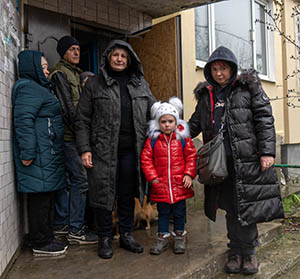


Save Ukraine seeks to rescue children, restore families

In the past decade, Save Ukraine has rescued and returned to Ukraine more than 500 children who had been deported forcibly to Russia and Russian-controlled territories.

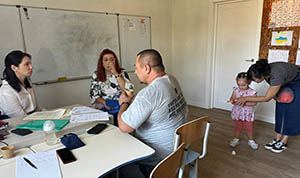
Save Ukraine has evacuated more than 110,000 people from the frontlines of combat zones and relocated them to safety. (Photo courtesy of Save Ukraine)

But those rescue missions only scratch the surface of the Kyiv-based nonprofit organization’s work, which also includes evacuating more than 110,000 vulnerable people from combat zones and safely relocating them.

In addition, CEO Mykola Kuleba has led Save Ukraine to develop more than 20 Education and Empowerment Centers in Ukraine—often based in churches—that provide access to “catch-up” classes for children and youth whose education has been interrupted.

Save Ukraine also sponsors six Hope and Healing Centers that offer temporary shelter, trauma-informed counseling, parenting programs and rehabilitation services for children and families.

The organization’s hotline responds to more than 300 requests for assistance daily.

More than 200 professionals and volunteers work with Save Ukraine to provide psychological support, legal aid, social work and humanitarian assistance to children and families who have been traumatized by war.

In the future, the organization envisions opening Children’s Justice Centers in Ukraine where traumatized victims of sexual abuse can receive treatment and therapy.

‘Children suffering every day’

“God loves all children, and there are Ukrainian children suffering every day,” Kuleba said.

Families attend parenting classes and receive counseling at a Hope and Healing Center sponsored by Save Ukraine. (Photo courtesy of Save Ukraine)

He and some of his colleagues visited Dallas to confer with Buckner International about the Buckner Family Hope Center model, which emphasizes engaging, equipping and elevating families, along with Buckner’s other programs.

“We want to learn more about evidence-based best practices for strengthening families,” said Heather Dyer of Save Ukraine U.S.

The Ukrainian government’s Children of War portal documents more than 19,500 children have been deported forcibly to Russia or Russian-controlled territories without the consent of their parents or guardians.

Save Ukraine works with relatives of deported children, investigators and others to rescue children who have been abducted and relocated to Russian-controlled areas.

Russian officials mischaracterize Save Ukraine as a “terrorist group” that “kidnaps children from Russian areas and sends them to Ukraine,” said Kuleba, the 2023 recipient of the Magnitsky Award for Human Rights Activism.

 “It’s all Putin propaganda,” he said.

Kuleba understandably is reluctant to discuss specific strategies his nonprofit organization uses to find and rescue the Ukrainian children who were abducted. However, he compared it to the “underground railroad” in the United States that helped enslaved people relocate to free states.

Rescue, relocation and reintegration

“We focus on rescue, relocation and reintegration,” he said.

Save Ukraine provides humanitarian aid to vulnerable families affected by the war with Russia. (Photo courtesy of Save Ukraine)

The process of reintegrating children back into their families and communities requires therapy and counseling, he noted. Rescued children consistently have described their experiences in Russian boarding schools, orphanages or “summer camps” as daily regimens of indoctrination.

“The Russian goal is to eradicate their Ukrainian identity,” Kuleba said. “Children are told they must speak only Russian, and they are punished if they are caught speaking Ukrainian.”

Children are taught a distorted Russian-centered view of history and are compelled to sing the Russian national anthem, he said.

Russian military personnel allow children as young as kindergarten age to handle their weapons, and students are given military-style uniforms, he added.

“The goal is to make future Russian soldiers,” Kuleba said. “It is abusive. It is a war crime and a crime against humanity.”

Called to care for children

Nearly 80 percent of the children Save Ukraine has rescued are returned to their parents or guardians. The remaining 113 orphaned children have been placed in homes of Ukrainian families—“not orphanages,” Kuleba emphasized.

“The Bible tells us pure religion is to care for orphans,” he said, referencing James 1:27.

Mykola Kuleba is CEO of Save Ukraine. (Photo / Ken Camp)

More than 20 years ago, Kuleba felt called to launch a ministry to care for children who were living on the streets in Ukraine. Eventually, he developed a network of centers to help place orphaned children with relatives or foster families. He was head of children’s services in Kyiv from 2006 to 2014.

In 2014, Kuleba was appointed commissioner of the president of Ukraine for children’s rights, where he helped develop programs and policies to prevent and combat the trafficking of children. He served in the commissioner’s role until 2021.

Also in 2014, after the Russian invasion of Crimea and Donbas, he founded Save Ukraine—primarily to evacuate children and families from the front lines of conflict.

“We went to the combat zones to help evacuate people,” he said.

That work—including providing follow-up trauma counseling and other mental health services—escalated after the full-scale Russian invasion of Ukraine began in February 2022.

“At times, we were rescuing up to 1,000 people a day,” Kuleba said.

Seeking to involve local churches

Churches in Ukraine have been at the forefront of providing support for internally displaced people since the 2022 invasion, he noted.

Based on what they learn from Buckner and other agencies in the United States, he envisions Save Ukraine developing a model for strengthening families that can be replicated by congregations throughout Ukraine.

“It’s not strictly a church-based program, but we want to develop a model and provide training so that it can be easily adapted by any local church,” Kuleba said.

He hopes Christians in the United States understand the suffering of people in Ukraine.

“Families are depressed, exhausted and traumatized. But we are still standing,” Kuleba said. “We need you to pray with us and pray for us. We need you to stand with us.”

While some in the United States debate policy and partisan politics, Dyer said she hopes American Christians will focus instead on the needs of children and families in Ukraine.

“It’s not about politics. It’s about people,” said Dyer, who adopted a daughter from Ukraine several years ago.

“It’s about God’s children. I think we’ve lost sight of that.”


Texans on Mission rebuild home for tornado victim

Brooke Brandon still fearfully recalls the day—June 21, 2023—the tornado ripped through the West Texas town of Matador. Her town. Her home. The home her parents built in 1963, and she and her siblings inherited.

“All I did was scream and pray,” she said. “I had three cats and was screaming for the cats, and there was a dog out in the storage room. So, all I could think of was the animals, you know?”

She remembers hearing wind and the sound of glass breaking, but “I don’t remember anything else, really. It’s just really loud.”

The tornado touched down about nine miles away from the city and moved quickly over the Texas caprock into Matador, taking out businesses and homes.

She and her neighbors were directly in its path. The home of the couple who lived next door “was leveled,” she said. The wife didn’t survive, and the husband still suffers from injuries he sustained that day.

Tornado survivor Brooke Brandon and her uncle, Stan Martin, express appreciation for the volunteer labor and building supplies provided by Texans on Mission and Southcrest Baptist Church in Lubbock. (Texans on Mission Photo / Russ Dilday)

Sitting at her kitchen table, she is surrounded by the sounds of hammers, drills and sawing. Her kitchen floor is stripped to the baseboards, and the walls are unfinished sheetrock. Still, she’s grateful for the construction all around her, calling it one of many “blessings after blessings.”

The noises around her are being created by a dozen Texans on Mission Rebuild volunteers, a team from Southcrest Baptist Church in Lubbock. Bob Davis of Matador coordinated the project, and he is part of Texans on Mission Builders.

The volunteers worked for a week refurbishing the garage and storage room and placing cement board on the façade, adding to the work already provided by a similar team from Lawn Baptist Church.

‘A bunch of blessings after blessings’

“Well, all I can say is it’s been a bunch of blessings after blessings,” she said. Those blessings started when first responders and her uncle, Stan Martin, found her and the three cats and the dog, all alive, after the tornado. A support fund provided by neighbors helped, too, but the money soon ran out. leaving her with few options to rebuild her destroyed home.

Larry Childers from Southcrest Baptist Church in Lubbock works on a rebuilding project for a Matador resident. (Texans on Mission Photo / Russ Dilday)

But then Rafa Muñoz of Texans on Mission called “out of the blue and says, ‘We’re fixing to come up there and do some stuff,’” she recalled.

That “stuff” was teams working under the Texans on Mission Rebuild banner showing up with materials and manpower to provide construction work.

She said the family was “running low on our money, the donation money we received, when all of a sudden, boom, it’s just happening. It’s been nothing but a miracle since then.

“Y’all just stepped in again and provided,” she continued.

“You can just see God working—the blessings that are here, that didn’t have to be here, but God has provided.”

The response has given her an “overwhelming feeling,” she explained.

Gary Beaty, team leader from Southcrest Baptist Church in Lubbock, works on a tornado-damaged home in Matador. (Texans on Mission Photo / Russ Dilday)

“Not overwhelming in a bad way, but of knowing a joy and happiness to know that,” she explained. “Because I feel like it’s a different situation for me. As far as I know, I’m the only person out of Matador that’s been able to get this type of help.

“It’s the flooding of people coming in and just working in the heat and whatever it is, and having the best attitudes about it as well,” she said about the Texans on Mission teams. “And it’s been fun being able to get to know them, too.”

Stan Martin also has helped the teams with the construction. He says the Southcrest team “is mainly doing the sheetrock and the OSB board in the garage and in the storage room.”

“We didn’t really tell everybody in the world, but we were running out of money and … couldn’t afford to buy any materials anymore,” he said.

“With everything that’s happened, we don’t need to be reminded there’s a God. … But if you’re sitting there wondering, you know, because everyone has these kinds of thoughts, if you just want to give up, or you say, ‘I’m tired of feeling this way,’ God always just comes back and says, ‘Here I am again.’”

Davis, project leader in Matador, said he felt compelled to step in because “there wasn’t any insurance on the house or anything, and they had limited funds to try to get this back where Brooke could live into it.”

Brad Barnes, a member of Southcrest Baptist Church in Lubbock, works on a Texans on Mission rebuilding project in Matador. (Texans on Mission Photo / Russ Dilday)

“I was glad to be a part of it, since I live here anyway,” he said.

Davis said the teams have “come in here and done things that there’s no way this family could have gotten done without them, and they think they’ve had the blessing out of this.

“We told them: ‘You may have, but we’re the ones that really get the blessing—the team members that do the work.’”

Southcrest team lead Gary Beaty, associate pastor of missions for the congregation, agreed.

“We’re trying to finish this project up, so Brooke can get a little bit of comfort and peace and get back to some semblance of normalcy,” he said.

“I’m not sure what her options would have been, but she’d definitely have been looking for another place to live, and I’m not sure what would have been available here for her.

“I think that without God being behind it, we wouldn’t be where we are right now, both with the people coming in and the work that’s been done on the house. Without God’s intervention and direction, this thing would never have taken off.”


Evangelical leaders urge biblical principles on immigration

WASHINGTON (RNS)—More than 200 evangelical Christian leaders—moderates as well as influential conservatives—have signed an open letter urging the presidential candidates of both parties to reflect “biblical principles on immigration.”

While challenging both parties, the letter signals particular discomfort with the approach taken by former President Donald Trump and his running mate, JD Vance, to the issue.

Immigrants enter the Catholic Charities RGV Humanitarian Respite Center in this 2019 file photo. (Delcia Lopez/The Monitor via AP)

The letter, released Sept. 30, was organized by the evangelical humanitarian aid organization World Relief and signed by the group’s vice president of advocacy and policy, Matthew Soerens, as well as Timothy R. Head of the Faith and Freedom Coalition; Daniel Darling of the Land Center for Cultural Engagement at Southwestern Baptist Theological Seminary; and National Association of Evangelicals President Walter Kim.

Other signers include Gabriel and Jeanette Salguero, leaders of the National Latino Evangelical Coalition; Raymond Chang, president of the Asian American Christian Collaborative; Dave Dummitt, senior pastor of Willow Creek Community Church; and Rich Nathan, pastor of Vineyard church in Columbus, Ohio.

“There’s no single evangelical perspective on U.S. immigration policy,” the letter argued. But it added, “The vast majority of American evangelicals are neither anti-immigrant nor advocates for open borders.”

The letter instead detailed three “core principles” regarding evangelical beliefs and immigration: the belief that immigrants are made in the image of God and have innate dignity, a desire for secure and orderly borders, and opposing immigration policies that separate families.

The call for more secure borders seemed to appeal to critics of the current administration, as did the letter’s concern about the “record number of apprehensions of individuals who have unlawfully crossed the U.S.-Mexico border” and those who have entered without being apprehended.

The signers argue the influx increases “the risk of entry of those intent on harming the United States and its citizens,” a concern heavily emphasized by Trump’s presidential campaign.

“We believe our government can and must both maintain a secure, orderly border and protect those fleeing persecution,” the letter reads.

‘Dehumanizing language’ condemned

But the letter appeared more reflective of criticism lobbed at Vance and Trump, particularly in light of controversy sparked by their repeated false claims about Haitian immigrants in Springfield, Ohio.

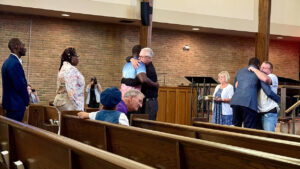
Carl Ruby, center, and other church representatives hug members of the Haitian community during a service at Central Christian Church in Springfield, Ohio, on Sunday, Sept. 15, 2024. (RNS photo/Kathryn Post)

“Dehumanizing language is offensive to evangelicals, especially because many of us are immigrants, are descendants of immigrants or have personal relationships with the immigrants who make up a growing share of our movement,” read World Vision’s letter, using language similar to religious leaders who have come to the Haitian community’s defense, with local and national clergy signing statements rallying in support.

The letter also singled out the “zero tolerance” policy instituted in 2018 by the Trump administration, which led to immigrant children detained along the U.S.-Mexico border being separated from their parents and sent to other facilities, sometimes without enough information to easily reunite them later.

The policy, overwhelmingly condemned by faith leaders at the time, induced hundreds of United Methodists to join an unsuccessful effort to bring church discipline against then-Attorney General Jeff Sessions, a UMC member who had attempted to justify the policy with Scripture.

At least one Catholic bishop also suggested “canonical penalties”—which includes denial of Communion—for any Catholics who helped implement the policy.

The letter connected the policy to recent proposals by Trump to enact the “largest deportation” in U.S. history.

“While those convicted of serious violent offenses should face deportation,” the letter reads, “any initiative to deport all unauthorized immigrants—the vast majority of whom have lived within the United States for at least a decade and have not been convicted of any serious crime—would result in family separation at an unconscionable scale.”

In an email to RNS, Soerens argued the Trump campaign “is making not just a moral error in using dehumanizing language and proposing policies that would separate families on a large scale, but also a political misstep.”

He said that while Trump has long enjoyed ironclad support from white evangelical voters, his approach to immigration could damage the former president’s prospects come Election Day.

“I’m obviously not predicting that most white evangelicals in Wisconsin or any state are going to vote for Harris, but if even a small share of 2020 Trump voters make that switch or—perhaps more likely—are so dismayed by both candidates that they simply stay home, it could be decisive in states like Wisconsin, North Carolina and Georgia, where the margin of victory is sure to be very close,” Soerens wrote.

‘Love our neighbors—including our immigrant neighbors’

The signers of the letter, who hail from all 50 states, include Myal Greene of World Relief, president of the Council for Christian Colleges and Universities David Hoag and an array of local faith leaders in states such as Wisconsin, among others.

“As you seek to appeal to evangelical voters, we urge you to reflect each of these biblically-informed values in the rhetoric you employ and the policy solutions you propose,” the letter concludes.

“Regardless of the outcome of this or any election, American evangelicals remain committed to the biblical call to love our neighbors—including our immigrant neighbors.”

The letter comes less than two days after a faith-themed event in Pennsylvania where Vance offered a theological defense of Trump’s border policies.

Speaking before a conservative Christian crowd, Vance—a Catholic—suggested his hardline position on immigration is rooted in the “Christian idea that you owe the strongest duty to your family,” and that leaders should prioritize their own citizens first.

“It doesn’t mean that you have to be mean to other people, but it means that your first duty as an American leader is to the people of your own country,” Vance said.


After Hurricane Helene, faith groups ramp up disaster relief

(RNS)—Even before Hurricane Helene made landfall in the United States—near Tallahassee, Fla., on Sept. 26—faith-based disaster groups were on the move.

Disaster relief staff from the Southern Baptist Convention shipped food and other essentials to Valdosta, Ga., where Send Relief, a Southern Baptist humanitarian group, runs a ministry center. From there, supplies could be sent to the Gulf Coast and other areas affected by the devastating storm.

Coming ashore as a Category 4 hurricane, Helene killed more than 130 people at last count and left millions without power in at least eight states across the Southeast U.S., according to the Associated Press.

On Friday, as the storm headed north, SBC officials and leaders from other faith-based groups were holding conference calls and planning their relief efforts.

In the early days of their response, along with assessing damages, Southern Baptists and Salvation Army officials planned to establish mobile kitchens capable of turning out 10,000 meals a day in Georgia and Florida.

Two of the first mobile feeding sites will be based at Baptist churches in Live Oak, Fla., and Perry, Fla., both within an hour of Tallahassee.

“The Baptists set up their field kitchens, begin cooking, and then Salvation Army field units gather the meals and distribute them into the communities that were impacted,” Jeff Jellets, disaster relief coordinator in the Southeast for the Salvation Army, said in a telephone interview.

The Salvation Army also will set up shower units and other support services in communities affected by Helene. Other faith groups will send teams of relief workers with chainsaws to clean up debris and tools to help muck out flooded houses and will provide chaplains to support those affected by the storm.

Jellets said disaster relief teams may end up working in communities farther north along Helene’s route as well, in Virginia and Tennessee, because of the extensive damage from the hurricane—which he called one of the worst storms he had seen in years.

Texas Baptists respond

Texans on Mission volunteers already have begun helping churches clean out flooded homes in the area around Tampa Bay, Fla.

A large group of Texans on Mission volunteers are on their way to Tennessee and North Carolina to help with flood recovery, chainsaw work and food service, as well as incident management.

They are supported by a shower and laundry unit, electrical repair teams, asset protection volunteers and chaplains.

The widespread effects of Helene will prove challenging for disaster relief groups. Normally volunteers and other staff come from nearby states. Helene was such a large system, however, that people are being mobilized as far away as the Midwest.

“This hurricane is more than 500 miles across and will impact as many as eight states within our territory,” Jellets said in an update on the Salvation Army’s work.

“In my more than 20 years of disaster experience, I can’t think of a time when such a large area was at risk and the Salvation Army could be called to support so many people.”

Josh Benton, a vice president at Send Relief, said Southern Baptists have trained volunteers and leaders in each state and can draw from that pool of volunteers in states affected by the storm as well as other states.

“That coordination allows us to respond in multiple areas,” he said.

Though the Southern Baptist Convention is a relatively decentralized denomination, disaster relief is an instance where churches coordinate closely for the benefit of communities hit by disaster, Benton said.

Benton said Send Relief works closely with the Salvation Army and other faith groups, as well as with federal officials, FEMA and local officials. Jellets said faith groups already are coordinating their plans and will continue to do so in the days ahead.

On Friday, the ministry center in Valdosta already was serving meals to those affected by the storm, including a family with 10 children who lost their home in the storm, said Jay Watkins, a pastor who coordinates the ministry center.

More than half of the groups in the National Voluntary Organization Active in Disasters—a network of nonprofit disaster response agencies—are faith-based groups that remain an essential partner in the nation’s response to natural disasters.

“This is one of the darkest days in many people’s lives,” said Jellet.

“When the disaster hits them, there is an incredible amount of trust and responsibility involved. God opens the door for us to bring a little bit of light into those situations.”

With additional reporting by Managing Editor Ken Camp.


Correlation between persecution and corruption explored

Nations identified as some of the worst persecutors of Christians also have some of the most corrupt governments, a new study by International Christian Concern asserts.

Afghanistan, Myanmar, Nigeria and North Korea are just a few of the nations that demonstrate a clear correlation between the persecution of religious minorities—particularly Christians—and internal corruption, “Corruption and Christian Persecution” by ICC Fellow Lisa Navarrette maintains.

Navarrette’s report compares those nations ICC has identified as the worst countries for Christian persecution since 2021 and the Corruption Perceptions Index scores assigned to those countries by Transparency International.

The index ranks 180 countries and territories based on their perceived levels of public sector corruption on a scale of 0 to 100, with 0 as highly corrupt and 100 as extremely clean.

ICC examines corruption and persecution in 14 countries:

  • Afghanistan—“Corruption is pervasive across various sectors of Afghan society, including government, law enforcement, judiciary and business,” the report states. In 2022, Afghanistan posted a score of 24 on the Corruption Perceptions Index. At the same time, the report notes: “Social marginalization, discrimination and the constant threat of violence mark Christian persecution in Afghanistan, rendering the country one of the most dangerous for Christians globally.”
  • Algeria—“Corruption is so widespread in Algeria that citizens call it the ‘national sport,’” Navarrette writes. The nation’s Corruption Perceptions Index scores fluctuated from 30 to 34 during the period from 2021 to 2023, “indicating varying levels of corruption perception,” the report states. In the predominantly Muslim nation, Christians—particularly converts from Islam—face varied forms of persecution including social ostracism and threats of violence. “While the Algerian constitution guarantees freedom of religion, in practice, Christians encounter discrimination, harassment and restrictions on their religious activities,” the report notes.
  • Azerbaijan—During the three-year period Navarrette examines, Azerbaijan posted an average score of 23 on the Corruption Perceptions Index. “Corruption is prevalent in both the public and private sectors, including bribery, embezzlement, nepotism and favoritism,” the report states. Christians often face discrimination, harassment and sometimes violence. “The government imposes strict regulations on religious activities, requiring religious groups to register with the state and limiting their ability to proselytize or engage in public gatherings,” the report states.
  • China—In spite of anti-corruption campaigns and institutional reforms, China’s rapid growth economically and its extensive bureaucracy “have created fertile grounds for corrupt practices, including bribery, embezzlement, kickbacks and nepotism,” the report states. At the same time, Christians in China face surveillance and harassment, and many experience detention, torture and even face death. “Christians in China have reported church demolitions, kidnappings, arbitrary detention and long-term incarceration without a conviction,” the report states.
  • Egypt—While the government and nongovernmental organizations have worked on anti-corruption and transparency initiatives in Egypt over the past decade, corruption remains “a major issue” that “affects all aspects of businesses and government,” the report asserts. “Bribery, nepotism and embezzlement are commonplace,” the report states. Coptic Christians, who have a long history in Egypt, constitute a sizeable minority in the country, but they face “discrimination, violence and legal restrictions,” the report states.
  • Eritrea—“An authoritarian government regime governs this country, and reports criticize it for its lack of transparency, arbitrary governance and widespread human rights abuses,” the report states, pointing to its Corruption Perceptions Index score of 22. The Eritrean government tightly regulates religious institutions and targets Christians who practice their faith in unregistered churches, the report notes. “The Eritrean government’s repression of religious freedom has led to a climate of fear and intimidation for Christians in the country,” the report states.
  • India—While India has passed laws and established anti-corruption agencies, “corruption remains widespread due to factors such as bureaucracy, weak law enforcement and a lack of accountability,” the report asserts. At the same time, the ruling Hindu Nationalist Party has created a climate that has produced “heightened levels of violent persecution directed toward the Christian community,” the report notes.
  • Indonesia—Although the nation has established anti-corruption agencies and passed legal reforms, corruption remains “rampant in Indonesia and affects all sectors, including government, law enforcement, judiciary and business,” the report states. Christianity is a recognized religion in the country, but Christian communities in Muslim-majority areas “often face discrimination, social marginalization and acts of violence perpetrated by extremist groups,” the report asserts.
  • Iran—“Weak governance structures, lack of transparency, political patronage, and the influence of powerful interest groups, organized crime and terrorist networks often facilitate corruption” in Iran, the report asserts. At the same time, Iranian Christians “experience significant persecution due to the government’s strict interpretation and enforcement of Islamic law,” the report states. “Christians face discrimination, harassment and persecution, including arrest, imprisonment and even execution on charges such as apostasy, evangelism and blasphemy.”
  • Myanmar—Armed conflict, militarization and political instability have fostered practices such as extortion, bribery and embezzlement in Myanmar, where Christians face discrimination and government-sanctioned persecution, the report notes. “The predominantly Buddhist government and military subject Christians to systemic persecution, including violence, displacement and denial of citizenship rights,” the report states.
  • Nigeria—“Corruption is rampant in Nigeria and often includes bribery, embezzlement, electoral fraud and kickbacks,” the report states. Nigeria consistently ranked among the lowest countries during the period from 2021 to 2023 with a Corruption Perceptions Index score of 24. Social inequality and lack of accountability foster criminal networks and terrorist groups such as Boko Haram, the report asserts. “These groups target Christians often through violent attacks, abductions, kidnapping for ransom, forced marriages, forced conversions and destruction of property,” the report states.
  • North Korea—“Corruption often takes the form of bribery, embezzlement, nepotism and cronyism, with elites and members of the ruling party benefitting disproportionately from access to resources and privileges,” the report states. Since Christianity is considered “a tool of Western imperialism” and a threat to the ruling regime, “Christian persecution in North Korea is severe and systematic,” the report asserts. Christians in North Korea are subject to arrest, imprisonment, torture and execution for practicing their faith or possessing religious materials, the report notes.
  • Pakistan—In addition to embezzlement, bribery, nepotism and cronyism, corruption in Pakistan also manifests itself in electoral fraud, the report asserts. “It hampers efforts to provide public services, ensure justice, and promote transparency and accountability,” the report states. Pakistani authorities often use blasphemy laws to target Christians, “resulting in arrest, imprisonment, and mob violence,” the report notes. “Violent attacks on churches and communities are commonplace.”
  • Turkey—“Corruption in Turkey has been a long-standing issue that is rampant in all sectors of society, including politics, business and law enforcement,” the report states. It is made worse by “lack of transparency in government processes and weak accountability mechanisms,” the report continues. The Christian minority in Turkey encounters “societal discrimination, limited religious freedom, and violence or harassment,” the report asserts.

“Lowering corruption rates can play a pivotal role in reducing Christian persecution rates by fostering a more just and accountable society,” Navarrette concludes.

“When corruption is minimized, the rule of law is strengthened, ensuring governments properly investigate cases of persecution against Christians and hold perpetrators accountable.

“Additionally, with improved governance comes greater protection for religious minorities’ rights, including freedom of religion and expression.”

The U.S. Department of State designated six of the 14 nations the report examines—Myanmar (Burma), China, Eritrea, Iran, North Korea and Pakistan—as Countries of Particular Concern. The designation is limited to countries where the government engages in or tolerates “systematic, ongoing, egregious violations of religious freedom.”

The State Department named two other countries the report examines—Algeria and Azerbaijan—to its second-tier Special Watch List.

The U.S. Commission on International Religious Freedom recommended 10 of the 14 countries—Afghanistan, Azerbaijan, Myanmar (Burma), China, Eritrea, India, Iran, Nigeria, North Korea and Pakistan—as Countries of Particular Concern. It recommended the remaining four—Algeria, Egypt, Indonesia and Turkey—to its Special Watch List.


Hendrick Health marks 100 years of service to community

Hendrick Health in Abilene has provided vital healthcare services in West Texas for 100 years this September.

Hendrick opened Sept. 15, 1924, as West Texas Baptist Sanitarium—admitting its first 11 patients the next day.

Millard A. Jenkens, pastor of First Baptist Church of Abilene, campaigned for a charity hospital for the city. (Hendrick Health Photo, circa 1915)

The five-story hospital was the fulfillment of a dream for Millard Alford Jenkins, who served as pastor of First Baptist Church in Abilene from 1915 until his retirement in 1948.

Harry Leon McBeth notes in Texas Baptists: A Sesquicentennial History, the early years of the 20th century saw Texas Baptists start several hospitals and medical training schools, the majority of which were “under the control of associations or local Baptist groups.”

The sanitarium in Abilene followed this trend. Jenkins campaigned for the sanitarium, but Simmons College—now known as Hardin-Simmons University—joined the cause.

In 1921, the college formed a committee to consider a hospital plan three years before its opening, the Hendrick100.org timeline notes.

Designed to equal care in Dallas-Fort Worth—in terms of equipment, services and skilled staff—West Texas Baptist Sanitarium’s completion meant local patients could have most medical needs met in their own community.

 The hospital opened with 52 patient beds (with room for 23 more), 10 nurses and 18 physicians with admitting privileges.

From its beginning, board members were committed to operating a community hospital to serve all, regardless of finances or religious creed. In 1935, the sanitarium affiliated with the Baptist General Convention of Texas, sealing its dedication to working together to heal bodies and souls.

Community donations have been a vital part of the hospital’s history, especially in harder economic times. During the Depression of the 1930s, the hospital struggled financially, even as its beds overflowed.

To continue providing care to destitute patients, the hospital accepted payment in black-eyed peas, chickens and goats. At times, nurses and staff agreed to accept produce in lieu of paychecks.

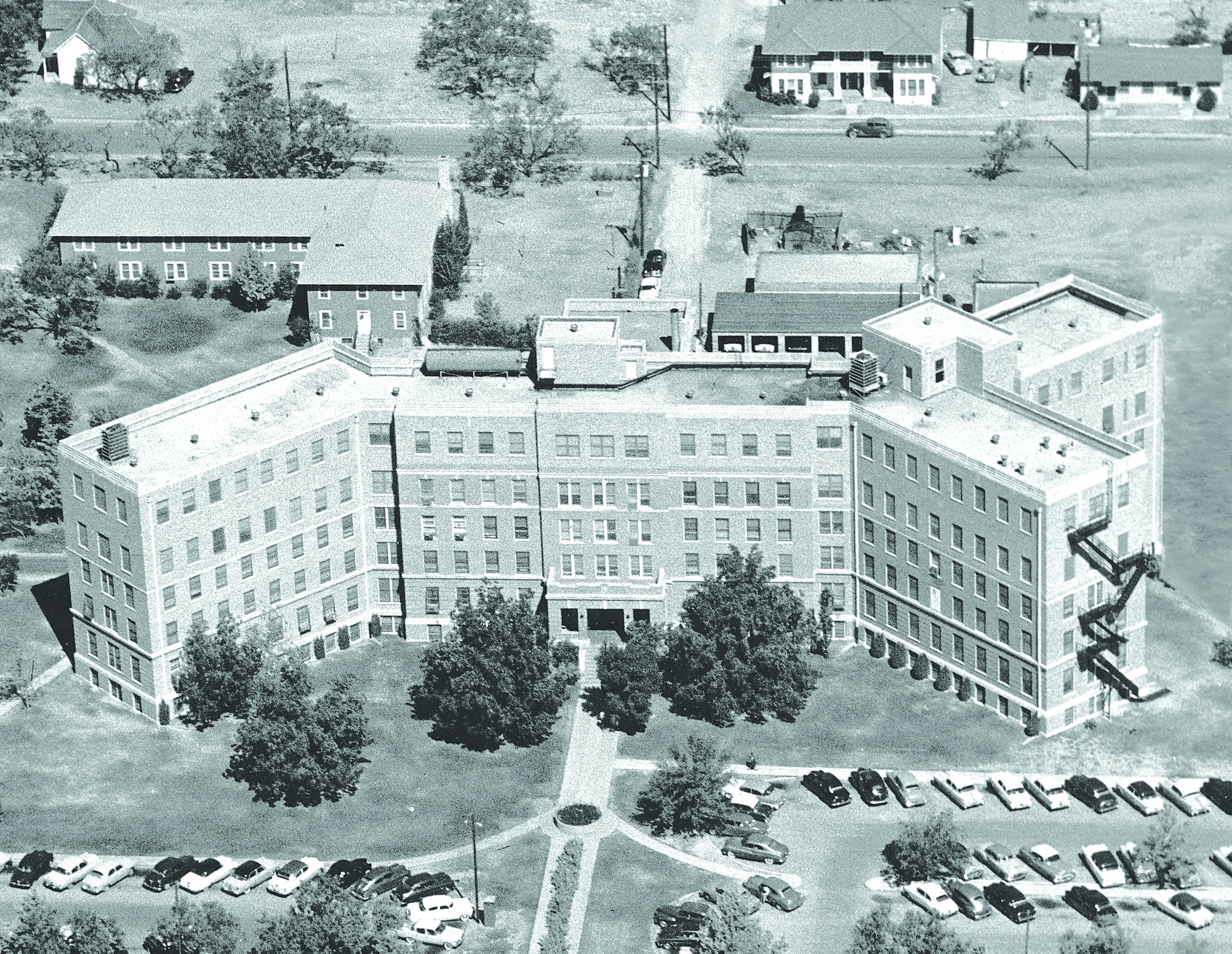
In 1946, a north wing was added in addition to the previously added east and west wings. Additional floors completed in 1950 grew the first three wings to six floors each. (Hendrick Health Photo, circa 1950)

Relief for the sanitarium’s dire financial situation came from Ida and Thomas Gould “T. G.” Hendrick. In 1936, their $100,000 gift enabled the hospital not only to avoid bankruptcy and pay off its debt, but also to add a much-needed four-story East Wing.

In appreciation of their generosity, West Texas Baptist Sanitarium was renamed Hendrick Memorial Hospital.

Through the end of the 20th century, donors funded more towers and wings. Yet as testament to its legacy, that original five-story building still stands, taller and wider, but still at the center of the hospital’s improvements and expansions.

With the completion of its most recent building project in 2012, the hospital added 250,000 square feet of space—approximately 10 times more space than the original hospital building.

Project highlights included relocation and expansion of Hendrick Children’s Hospital, added space for surgical services and a new physician office tower. The name evolved as services expanded to Hendrick Medical Center and later Hendrick Health System.

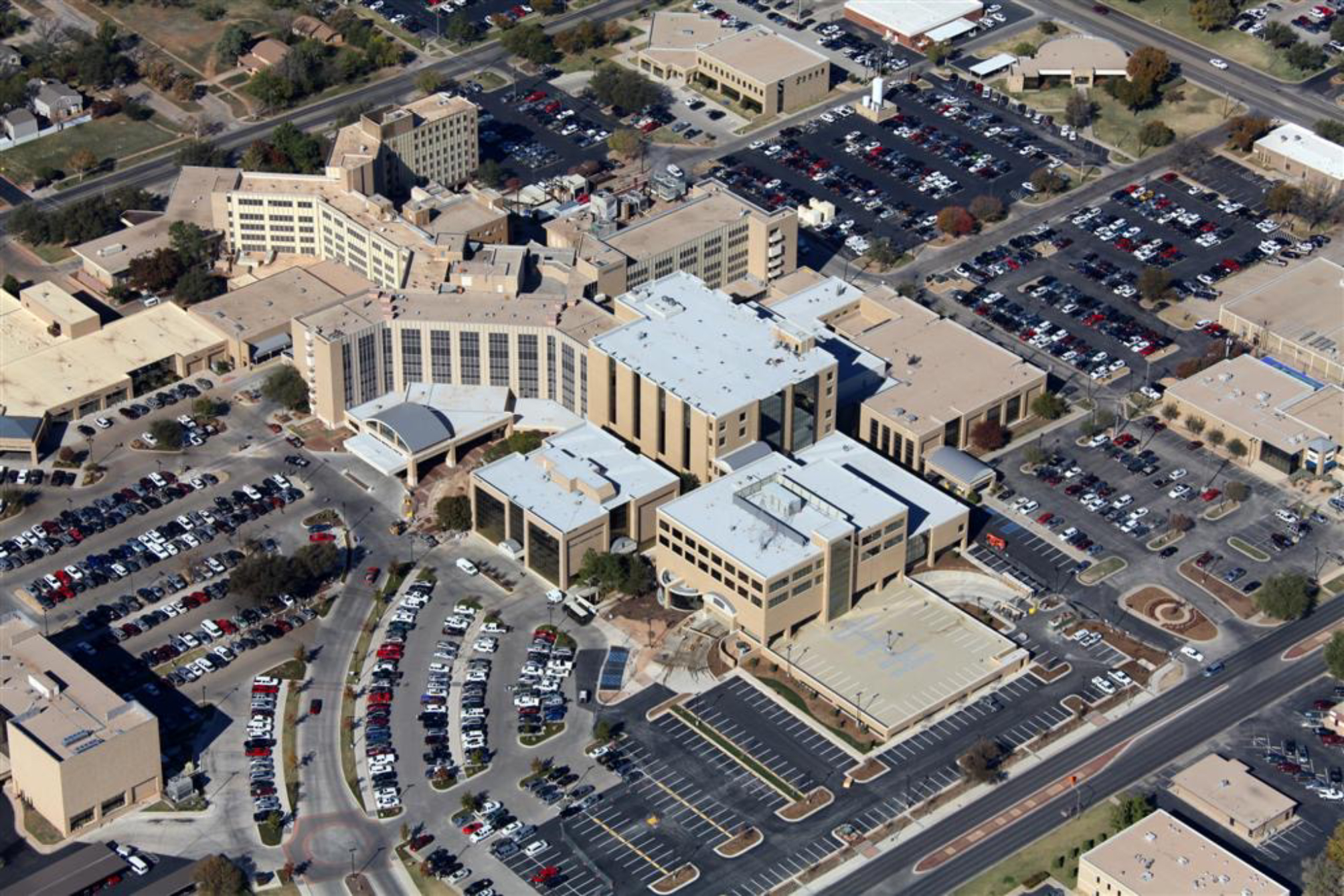
Project 2010, completed in 2012, ushered in the largest expansion to date adding 250,000 square feet. (Hendrick Health Photo)

In October 2020, the institution’s name became Hendrick Health with the acquisition of Hendrick Medical Center South, formerly Abilene Regional Medical Center in Abilene, and Hendrick Medical Center Brownwood, formerly Brownwood Regional Medical Center, in Brownwood.

Across its facilities, Hendrick Health currently employs approximately 5,400 providers and staff. It has more than 100 service locations and serves 24 counties, encompassing a landmass equal to 9 percent of Texas.

The health system’s approximately 670 medical staff represent 60 specialties.

In addition to being the largest privately-owned organization in Abilene, Hendrick Health also is the largest health system in a Texas metro area not supported by a county taxing district.

For 100 years, Hendrick Health has continued as a nonprofit, faith-based organization guided by a local, volunteer board and affiliated with the Baptist General Convention of Texas. Through medicine, ministry and research, Hendrick Health carries forward its founders’ legacy.

To commemorate the hospital’s founding, First Baptist Church of Abilene held a centennial convocation, Sept. 15.

Ward Hayes, BGCT CFO (right), presents Brad Holland, Hendrick Health CEO (left), with a certificate honoring 100 years of Hendrick Health. (Hendrick Health Photo)

 “We pause briefly today to reflect on Hendrick Health’s rich history of service and our healing ministry, but our continued focus is on meeting the growing health needs of our community for the future,” said Brad Holland, president and CEO of Hendrick Health, during the ceremony.

At a reception following the convocation, BGCT Treasurer/Chief Financial Officer Ward Hayes—a former Hendrick board member—presented Holland with a certificate from BGCT honoring this remarkable milestone.

“We are very excited about celebrating this incredible milestone with our Hendrick family and with the communities we serve,” Holland said.

“Throughout our history, our success has been directly tied to the support of individuals and entire communities,” he continued.

In addition to the convocation and reception at First Baptist Abilene, Hendrick held centennial flag-raising ceremonies at all three of its hospital campuses on Sept. 16, to kick off the next century of healing.

With additional reporting by Calli Keener.


Church leaders urged to reimagine future for buildings

(RNS)—As many as 100,000 church-owned buildings are expected to be sold or repurposed by 2030, according to an analysis in a new book, Gone for Good? Negotiating the Coming Wave of Church Property Transition.

Though Sunday attendance has recovered in part from COVID-19 restrictions, a decades-long decline has continued to take its toll, and the squeeze on churches only has gotten tighter in the post-pandemic economy, according to fall 2023 data from the Hartford Institute for Religion Research.

As a result, congregations face hard choices about what to do with large sacred structures that are underutilized, costly to keep up and suffering from deferred maintenance.

“Everything keeps getting more expensive, but we have fewer people in the congregation to pay for it,” said Jainine Gambaro, a member of Franklin Reformed Church in Nutley, N.J. “We keep going by the grace of God, but it’s an issue.”

Lindsay Baker. (Photo / Billy Howard Photography via RNS)

Gambaro was one of some 100 church leaders and congregants who gathered online and in person, Sept. 20-21, to hear from a lineup of real estate experts about how to reimagine a new future for church buildings.

The Future of Church Property conference, organized by Princeton Theological Seminary, focused on turning community needs into grants, partnerships with developers and new business-driven income streams.

Thanks to the federal Inflation Reduction Act, lots of new dollars are available for renovations, said Lindsay Baker, CEO of the International Living Future Institute, an advocacy group for making buildings healthier, greener and more affordable.

“There is a lot of money for you all right now, and that’s not always the case, so that’s exciting,” said Baker.

Consider social enterprise

Congregations were urged to consider social enterprise, a term for using business principles to address social problems while generating revenue. Attendees heard about congregations that had escaped financial dire straits and galvanized new ministry momentum by leasing space to the public for community and commercial use.

Sunset Ridge Church of Christ in San Antonio leases a former “junk room” to NYX Wellness, which painted walls and began offering yoga classes. It now brings in $650 per month for the church.

Sunset Ridge’s commercial-quality kitchen now is used by entrepreneurs to prepare food for retail sale, for another $400 per user per month. A coworking space brings together remote workers on a membership model: Each user pays $75 per month for unlimited access.

Getting the congregation on board for these innovations involved many “coffee chats” with the congregation—in which pastoral leaders listened to fears and answered questions—said Jess Lowry, executive director and pastoral leader of the Sunset Ridge Collective, which coordinates the church’s social enterprises.

“That time we invested ended up really helping people get ownership and understand,” Lowry said. “Even if they weren’t moved to participate in some part of the particular mission, they at least felt safe and comfortable that they weren’t just losing their church.”

The assembled church leaders were directed to resources such as the Good Futures Accelerator course from Rooted Good for other ideas on how to forward their missions while raising revenue.

Nina Janopaul. (Courtesy Photo via RNS)

Churches with land or buildings that can be developed into housing have huge opportunities in the current housing crisis, said Nina Janopaul, president of Virginia Episcopal Real Estate Partners.

She pointed to Arlington Presbyterian Church, across the Potomac River from Washington—which built 173 affordable housing units, working with a nonprofit developer who pieced together $71 million in direct funding and tax breaks for the project from multiple sources.

The project not only allowed the congregation to keep a presence at its location, Janopaul said, but it also spawned new energy for the congregation as it has mobilized to reach out to its new community and serve its needs.

Many nonprofit developers will cover costs before a project gets started as well, said Janopaul. They may cover predevelopment costs—which can run up to $50,000 for appraisals, zoning analysis and feasibility modeling—in exchange for a commitment to use that developer if the project goes forward.

In many cases, the church will be asked to lease the land to the affordable housing partner for a minimum of 50 years, Janopaul said, which sounds risky.

However, she added: “At least with a nonprofit, you know that in 50 years you’re not dealing with an individual who will sell it. … Nonprofits, you hope, are going to be around longer.”

Even when partners cover most of the costs, most housing projects take years to complete, and the deals themselves or neighborhood relations can become highly contentious. So, congregations that lack the wherewithal and need cash fast might do better to subdivide and sell off parcels, Janopaul said.

Consider engaging uses

Churches were urged to consider uses that will engage people in their community.

“Young people are really motivated by climate action and thoughtful community engagement,” Baker said.

Sometimes simply “greening” old buildings can show prospective churchgoers that a congregation shares their values.

Baker suggested improving the health profile of churches while shrinking their impact on the environment by using nontoxic flooring materials, increasing ventilation, replacing oil or gas with electric heat pumps and installing solar panels for power and shade.

Then, she said, take credit for doing so. “There are ways you can make that visible on your landscape and on your signage.”

The lofty visions presented at the conference partly were tempered by financial realities in congregations where even paying utility bills is a challenge.

“That’s how we got into this mess, all of us, because there wasn’t money to say, ‘Oh, let’s just fix this’ when something comes up,” said Meagan Manas, pastor of Clinton Presbyterian Church in Clinton, Mass., in the session.

But Manas realized surviving was going to take more than simple donations. “The answer to so many of the things (discussed) today feels like it’s money, but that’s not an answer for us. So, I’m looking for more creativity.”


Displaced Mexican Baptists allowed to return home

More than 30 Baptist families who were forced from their homes in Mexico’s Hidalgo State in April have been allowed to return home, a human rights organization focused on international freedom of religion reported.

State and municipal authorities brokered an agreement between village officials and displaced members of Great Commission Fundamental Baptist Church, Christian Solidarity Worldwide reported.

Baptists in Hidalgo State, Mexico, were forced to leave their homes in the villages of Coamila and Rancho Nuevo on April 26. (CSW Photo)

About 150 Baptists were forced to leave their homes in the villages of Coamila and Rancho—indigenous Nahuati-speaking communities—on April 26.

Village leaders reportedly cut off electricity, vandalized and blocked access to some homes and the church building, and posted guards at entry points to the village.

The displaced families—including more than 70 infants and children—sought refuge in Huejutla de Reyes, where evangelicals provided them food and water.

The municipal government of Huejutla de los Reyes worked with Hidalgo State Secretary Guillermo Olivares and Religious Affairs Director Margarita Cabrera Román to secure an agreement that ensured the religious freedom rights of the displaced Baptists would be observed, CSW reported.

Coamila and Rancho have a history of violating the religious freedom of minority faith groups dating back at least to 2015.

The villages are governed under Mexico’s Law of Uses and Customs, which recognizes the right of indigenous communities to maintain their cultural and traditional local governance.

The law stipulates local authorities must govern in line with rights guaranteed in the Mexican constitution and international conventions, but authorities previously did little to protect minority rights in those areas. However, a new municipal administration took office in September, CSW noted.

According to the terms of the brokered agreement, utilities were reconnected to the homes of the previously displaced people, and members of the church agreed to contribute financially to a community fund, which they had been blocked from paying since 2015.

“The agreement brokered by the Hidalgo State and Huejutla Municipal governments, and agreed to by the Coamila and Rancho Nuevo authorities and the displaced religious minority community, serves as an example of what can be achieved, in terms of protecting freedom of religion or belief and upholding Mexican law, when there is political will and an investment of time and other resources on the part of the government,” said Anna Lee Stangl, head of advocacy for CSW.

“The process of return and reintegration will take time, and we will be watching to ensure that the local authorities follow through with their promise to respect freedom of religion or belief.

“We are encouraged by the government’s prioritization of this case, and hope it represents the turning of a new page not just in the history of Huejutla de Reyes and these two communities, but in Mexico as a whole.”


Self-care essential to avoid ministerial burnout

People in helping professions of all kinds risk experiencing compassion fatigue and burnout, but ministers face an additional issue, clinical psychologist Don Corley of Waco asserted.

“They feel the weight of carrying the spiritual pain of others,” he said. “Ministers care for others’ spiritual well-being.”

Scott Floyd, director of counseling programs at B.H. Carroll Theological Seminary, identified conditions that contribute to burnout:

  • Unrealistic job demands.
  • Unclear job expectations.
  • Conflict.
  • Dealing with individuals in distress.
  • Feeling that tasks are never completed.
  • Lack of recognition for accomplishments.
  • Feeling second-guessed or criticized.

“If I work with groups of ministers, read through that list and ask how many of them experience one or more of those, they usually just laugh, because they experience so many of those all the time,” he said.

Isolation can contribute to burnout, he noted. Ministers may not have friends outside the church in whom they can confide. If they have close friends in the church, sometimes they face criticism for “playing favorite,” he added.

Ministers often work long hours dealing with high-stress situations that naturally create fatigue, but Floyd distinguishes between weariness, exhaustion and burnout.

Weary ministers need a couple of days away from work and a good night’s sleep to rejuvenate, he noted. Exhausted ministers may require an extended vacation or a long-term sabbatical to rest.

Burnout, on the other hand, takes a deeper biological and emotional toll, he said.

“A pastor or minister can get into a cycle where you’re tired, so you don’t exercise, you don’t take care of your own spiritual needs, you don’t eat healthily. And so, it becomes part of cycle that moves downward,” Floyd said.

Warning signs

Early warning signs that may indicate a minister is approaching burnout include physical symptoms such as headaches, stomachaches, high blood pressure, tight neck muscles and difficulty sleeping.

“There is full-scale burnout that a person experiences, but there are a lot of ministers who seem to exist at a sub-level right under that,” Floyd said. “Some are functioning in the midst of burnout, but there’s another big group who are walking right along the edge.”

Ministers may find themselves emotionally numb—not experiencing expected joy or sorrow. Others may observe changes in their personality or uncharacteristic impatience.

A minister may also notice his or her mind wandering, lack of productivity at work and “replaying conversations over and over,” Floyd said.

Under normal circumstances, the burdens of ministry can take a toll. But in recent years, additional factors—namely political polarization and a global pandemic—have contributed to ministerial burnout, Floyd observed.

Both in society at large and in the church, he observed a tendency of people to “identify my tribe and the other tribe, and to locate you so quickly and so completely into one of those categories.”

He pointed to the challenge of “conversation and behavior monitoring” on the part of some in the church. Those individuals are quick to relegate a minister to “the other tribe” on the basis of a single word or phrase, or on the minister’s perceived failure to “go far enough” in taking a stand on a particular issue, he noted.

The time surrounding the COVID-19 pandemic—and its aftermath—led to a significant increase in burnout, he added.

Ministers faced criticism for “doing too much” or “not doing enough” in terms of protecting the congregation, he observed.

After the pandemic, some pastors also faced the reality of smaller congregations, smaller budgets and smaller staffs, he noted.

“I think congregations’ expectations of pastors sometimes can be so extreme that even if the pastor has less help and less budget, it probably doesn’t lower the expectations of what the pastor can or should do,” Floyd said. “Self-expectation and congregant expectations add a lot of pressure.”

Taking steps to prevent burnout

Congregations can help by designating individuals on a rotating basis to cover night and weekend calls, so the pastor is not always the first person who has to respond to emergencies, Floyd suggested.

“I think ministry staff can work with congregations to help them identify what realistic expectations of ministry are,” he said.

Corley agreed ministry is inherently stressful, but “stress is not the problem,” he asserted.

In fact, stress can be energizing and motivating if it is perceived positively, he said. The problem is an inability to handle stress in healthy ways.

Corley believes overworked ministers should add one more thing to their “to-do” list if they want to avoid burnout.

“Mitigate stress by adding activities that are uplifting,” he said.

He particularly suggested activities that foster relationships, such as coffee with a friend, dinner with a spouse or simply taking a walk with someone and having a conversation.

Corley believes ministers often fail to consider two key words in Jesus’ command to love your neighbor: “as yourself.”

“The standard of love we have for others is how we care for ourselves,” he said. “It’s circular, not linear. Love ourselves while also loving others. Love others while loving ourselves. One begets the other. They’re all wrapped up in one.

“If you don’t take care of yourself, you cannot care for others.”

At the recent “Leadership for the Long Haul” conference at Baylor University, Corley participated in a public conversation about resilience in ministry with Charlie Dates, who simultaneously serves as pastor of two Chicago churches—Salem Baptist Church and Progressive Baptist Church.

Dates emphasized the importance of servant leadership, noting the need for ministers to be present to provide comfort in times of loss or bereavement.

However, he also emphasized the need for pastors to build in times for rest on a regular basis, to care for themselves and to delegate some responsibilities to others.

“I do my best to observe a sabbath during the week,” he said. “I’m not going to die for the church. Jesus already died for it.”

Biblical picture of a crash and burn

An incident in the life of the Old Testament prophet Elijah offers an instructive “picture of ministerial burnout,” Floyd said.

After the trial by fire on Mount Carmel, where Elijah triumphed over the prophets of Baal in dramatic fashion, Queen Jezebel threatened Elijah’s life. He fled to the wilderness, where he sat under a tree, praying God would take his life.

“That was a big-time crash, and it comes right after a huge spiritual victory,” Floyd said. “He goes from a huge spiritual accomplishment to despair.”

When God sent an angel to Elijah, he first touched the prophet. Then the angel gave him food to eat and water to drink. The angel let Elijah take a nap and then gave him more food and water before taking him on a 40-day journey to Mount Horeb.

Once Elijah arrived at Mount Horeb, God asked him, “What are you doing here?”

Elijah responded with “a grievance story—a rehearsed summary of how he feels he had been wounded,” Floyd said. Elijah told God what he had done for him, only to be forsaken.

“I alone am left, and they are seeking my life, to take it away,” Elijah told God.

After sending an earthquake and fire, God again asked Elijah, “What are you doing here?”

“Of course, God doesn’t ask questions because God needs information,” Floyd said. “I think he’s asking the question because Elijah needs to realize something about himself.

“There are times when God asks questions, and they’re not for God’s sake. They are for our sake.”

Recovery from burnout is a process—a “journey”—that takes time for healing, renewal and rejuvenation, Floyd asserted.

“It is through a whole process. It’s through touch and water and food and journey and mystery and struggle and question and wrestling,” he said.

“It seems there’s a lot there, if we can figure out how we take care of people physically, how we take care of them emotionally, how we let their bodies rest and their minds rest.

“My experience is that Baptist life is not conducive to rest. It really lends itself to busyness.”


Proximity and cooperation key to justice and compassion

DALLAS—Speakers at a Fellowship Southwest conference challenged participants to think about the intersection between faith and justice.

Attitudes and structures keep justice and compassion outside the central focus of the American church, the speakers agreed.

 But the keys to moving to the center the basic mandates of Christianity to care for the “Quartet of the Vulnerable”—widows, orphans, sojourners and the poor—are proximity and cooperation.

In a world where people learn differences are a threat, it’s difficult to live in solidarity, said Cláudio Carvalhaes, professor at Union Theological Seminary. Particularly in the West, individualism replaces care and compassion.

This fractured and individualistic society creates a tendency to push one’s pain onto people who are more vulnerable—such as immigrants—blaming them for problems they have not created.

Instead, people must live by compassion and “be with the immigrants,” no matter what the world says, he continued. He urged attendees to view immigrants as gifts and to “love our neighbors.” He also questioned whether “we really want to be a Christian,” if there is an option not to care “for the least of these” as Jesus did.

Compassion fuels justice, Carvalhaes stated. All bear the image of God, immigrants included. It’s important to learn the root causes of migration and to be close to migrants, because the more one knows the stories of migrants, the less fearful one becomes of them.

Only together can we engage the issue of immigration, Carvalhaes insisted. “I’m here for you, and we are here for the people who are suffering.”

Rise anew

Justin Jones explains resurrection isn’t a moment, it’s a movement at FSW justice conference. (Photo / Calli Keener)

Justin Jones, Tennessee State Representative for District 52, offered an alternative vision for the South—where it doesn’t rise again, but instead can rise anew, better than it’s ever been before.

To change this country, “we have to change the South,” Jones asserted.

The youngest Black member of the Tennessee legislature described his experience in the Tennessee House, where Republican statesmen expelled him and the other young Black Democrat who spoke out following a shooting that killed six people at the Covenant School in Nashville in 2023, but not the white woman who was with them.

They were reseated by their districts, but as a punishment for his “antics,” Jones was stripped of his committee and assigned to an agricultural committee, though he represented an inner-city district.

Not to be deterred from doing his job, he faced his fear of being a young Black man in rural Tennessee to visit with the farmers he was tasked with considering.

He described being greeted by MAGA hats, American flags and Fox News in the background, but he also found something he didn’t expect to be there—appreciation.

The farmers told Jones he was the only politician who’d ever visited them to find out what their needs were. And if he needed them to back him up at the statehouse, they told him they would be there—with manure to dump on the steps, if necessary.

He told them to hold off on the manure. But he said, “loving our neighbors isn’t just a word, it’s an action.”

People can come together to end centuries old systems, but “resurrection requires proximity.”

Jesus had to be at the tomb to raise Lazarus, Jones said, so he could say: “Move the stone.”

“But if the stone’s removed, there’ll be a smell,” the people warned Jesus.

Parts of resurrection may be unpleasant, but Christians must still “show up” and unbind them, Jones insisted. These “dry bones” can live again.

Barriers to racial justice

Sandra María Van Opstal discusses barriers to racial justice. (Photo / Calli Keener)

Sandra María Van Opstal, executive director of Chasing Justice, discussed barriers to racial justice, the first being distorted and dysfunctional narratives. The stories we tell ourselves, songs and the way we interpret Scripture shape our beliefs, she said. And the stories we tell ourselves shape what we believe about others.

White supremacy and American exceptionalism are two distorted narratives that have become internalized, then externalized in policy and systems until they became “the air we breathe,” she explained.

Likewise, discriminatory policies “affect the way we live with each other.” Christians vote according to their own needs, instead of in light of God’s commandment to care for “the quartet of the vulnerable.”

Furthermore, discipleship problems form barriers to racial justice. Van Opstal said Christians might push the other barriers off onto somebody else, but they can’t blame anyone else for this barrier.

She pointed squarely at Donald McGavran—the father of the church growth movement in the 1970s and 1980s—and his “homogenous unit principal,” or the missiological idea that church planting efforts are more successful when they focus on people of common characteristics.

“It’s our fault” discipleship is a barrier to racial justice, Van Opstal insisted.

McGavran’s idea is why “we have youth ministries, and children’s ministries, and motorcycle ministries,” because it’s easier to get people in the door when they have common traits, Van Opstal continued.

“The problem is, that’s not the way of Jesus. So structurally and systemically, we taught people to be and practice biases. We invited them to always elect to be with people just like them,” she said.

“They said people are more likely to become Christians if they don’t have to cross racial, linguistic or class barriers. Let’s make it easy for them to say ‘yes’ to Jesus. … When that’s the opposite of what we see in Galatians, Ephesians, Colossians,” where Christians came together to the table, regardless of class or where they came from.

“The reason Christians were called Christians is because they didn’t know what else to call them. They didn’t look alike. They didn’t practice the same expressions of faith. They didn’t come from the same places,” she said.

So Christians must “interrogate the stories we believe” and reorient toward Christ. Christians must change how they view people and how they “name them.” People are not criminals, aliens, poor—they are “our neighbors,” she insisted.

Other conference speakers included Mariah Humphries, Mvskoke Nation citizen and executive director for The Center for Formation, Justice and Peace; Cassandra Gould, senior strategist at the Faith in Action National Network; and Jeremy Everett, executive director of the Baylor Collaborative on Hunger and Poverty.


Everett: Solving hunger and poverty requires teamwork

Crossing lines to work together is essential in addressing hunger and poverty, advocate Jeremy Everett of Baylor University told participants at the Fellowship Southwest Compassion & Justice Conference, Sept. 21 in Dallas.

Everett, founding director of the Baylor Collaborative on Hunger and Poverty, recounted an event where multiple parties showed up across sectors to meet a need.

The days leading up to COVID-19’s widespread arrival in the United States were fraught with concern of an impending crisis the USDA saw coming among the food-insecure population, Everett said.

Weeks before the pandemic hit in its full intensity, Everett was in Washington, D.C., on an unrelated matter, when he received an unexpected call from the head of the U.S. Department of Agriculture requesting his immediate presence at the Whitten Building.

A call from the USDA secretary is not an everyday occurrence, even for the director of an organization dedicated to cultivating “scalable solutions to end hunger,” Everett stated.

While he assumed he’d done something terribly wrong to be called in, Everett found out it was even worse than that.

Everett recalled being warned the coming pandemic would be much worse than anyone knew, a shutdown of an unknown duration was likely, and people facing food insecurity would be severely impacted.

The lead up

In the summer of 2019, the Baylor Collaborative—then known as the Texas Hunger Initiative—had piloted a 10-week food-distribution program called “Meals to You,” using selected rural counties in Texas as “the test kitchen.” The program was designed to meet the unique food distribution needs of rural communities.

“Meals to You” involved shipping a week’s worth of food directly to the homes of children who participated in meal programs. It had proven to have equal impact on food insecurity, if not greater, than the USDA model of feeding children, which until then had been “the gold standard.”

The USDA secretary and undersecretary wanted to know: “Is there any way that you can scale up the ‘Meals to You’ program nationwide?”

The department estimated 25,000 families would need “Meals to You” provisions, Everett explained. Without discussing the question of scalability with his staff, Everett committed to scaling the program nationwide.

Shortly after he left the Whitten Building the estimate grew to 50,000 families. By the time he was on a plane back to Waco, 150,000 was the number.

The implementation

By the time of kickoff the following week, the Baylor Collaborative and McLane Global had 270,000 children signed up to receive meals “because their parents didn’t know how in the world they were going to provide food for their kids during a shutdown,” Everett recalled.

“Kids were so remote in Alaska, they required seaplanes and boats and barges to be able to get food boxes to children where they were living,” he continued.

Mules were used to deliver food boxes into the Grand Canyon. The United States Postal Service and United Parcel Service drivers dropped off food boxes elsewhere.

 “What was remarkable about this endeavor was the USDA brought their best to bear,” Everett said.

Congress’ bipartisan support made sure they had the resources they needed to provide food for the hungry, he continued. The private sector of the food industry stepped up with Pepsi-Co, Chartwells and other major food companies’ social enterprises arms providing and packaging the food.

UPS Go Brown—without being asked, because they’d recognized the increased shipments into some areas—played a major role in the distribution of boxes, with some delivery drivers relocating “during a pandemic to get food boxes out to the kids, because they knew they needed it.”

Everett asserted “all these groups brought their best to bear.” And it showed collaboration is possible and critical.

“The only way that we can solve for these big social issues is working together,” he said. And this case demonstrated “it is still possible to get bipartisan agreement on critical intervention.”

The Baylor Collaborative team works with the three-prong approach of research, practice and policy. The research continued to demonstrate the efficacy of the program when practiced over several years. In fact, the more rural and remote the child, the more beneficial the “Meals to You” program proved to be.

So, the Baylor Collaborative was able to go back to Congress, show their research, and earn bipartisan legislation to make “Meals to You” a permanent solution available to food insecure children in rural areas.

The work isn’t finished

Everett urged attendees to seek out opportunities to serve the hungry and the poor by proximity to the problem, because Jesus embodied a preference for the poor and identified the poor as members of his family.

“Sometimes we treat the poor like they just need to be better at financial management,” but disability and structural racism, the two biggest predictors of poverty, aren’t issues of poor financial training, he suggested.

Hunger and poverty are on the rise globally after many pre-pandemic years of improvement, but widespread food insecurity is a litmus test for the health and wellbeing of the world, a nation or a community.

When society turns a blind eye to children dying of hunger around the world in areas of conflict and crisis, or here in the states where governors turn down funding to expand child nutrition for their own political gain, “hunger becomes a litmus test for our souls,” Everett asserted.

“What has spiritually gone awry to justify child starvation or to act passively, offering our thoughts and prayers, as if we have no agency to improve these conditions?”