Can ‘convergence’ lead to truce in culture wars?

PALM BEACH GARDENS, Fla. (ABP)—Many Americans emerged from the 2012 election season convinced the nation’s political and religious divisions are wider and more hostile than ever—and getting worse.

But not Duke McCall, 98, a Baptist elder statesman who led various Southern Baptist agencies and the Baptist World Alliance before his retirement in the 1980s.

Eric Elnes, Senior Minister of Countryside Community Church in Omaha, Neb., sees the convergence movement as a meeting ground for post-evangelicals and post-progressives. (RNS PHOTO/Courtesy of Scott Griessel/Scottsdale Congregational United Church of Christ)

“I think we are moving toward a time when we will not be quite so antagonistic in the world of politics and religion,” McCall said.

He may not be alone. Consider the convergence movement, a small-but-growing alliance of disillusioned conservatives and liberals optimistic about the future of American Christianity.

“This is a meeting ground between what might be called … post-evangelicals and post-progressives,” said Eric Elnes, a Nebraska megachurch pastor and author whose Darkwood Brew Internet ministry caters to this spiritual demographic. Elnes leads a United Church of Christ congregation in Omaha and was the author of the Phoenix Affirmations, which called Christians to treat others fairly regardless of race, religion or sexual orientation.

But convergence Christianity, he said, is different because it seeks to avoid theological extremes on either end. Participating conservatives yearn for a kinder, less dogmatic theology that embraces mystery. The progressives desire a faith that values evangelism, firm beliefs in Christ and avoids political correctness, Elnes said.

“People are trusting that they have more common ground than differences,” he said.

Some experts point to signs Baptists may be feeling the convergence vibe and joining hands across a chasm that’s divided them since the 1980s. But other Baptists—such as Al Mohler, president of Southern Baptist Theological Seminary—are more skeptical, and they describe the trend simply as rebranded Christian liberalism with little chance of success among faithful believers on either side.
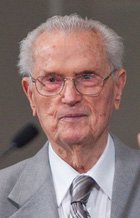
Duke McCall

“It doesn’t look like there’s some middle refuge there,” he said. “It’s rather wholesale theological liberalism.”

Nor does Mohler believe the trend will gain much headway among conservative and liberal Baptists, because the gulf remains too great between them—especially on biblical inerrancy, homosexuality and same-sex marriage. That separation will continue to preclude cooperation on missions because Baptists as a whole “end up associating with the Baptists with whom we agree,” he said.

But seemingly insurmountable differences can be overcome, said Frank Schaeffer, the son of famed conservative theologian  Francis Schaeffer. Schaeffer once embraced his father’s teachings, which are considered the foundation of the rise of the Religious Right. But he eventually converted to Orthodox Christianity and wrote Crazy for God: How I Grew Up As One of the Elect, Helped Found the Religious Right and Lived to Take All (or Almost All) of it Back.

Schaeffer now is friends with former theological opponents—including Elnes—and said he sees the seeds of similar transformations in the convergence movement.

“There is not going to be a future to the witness of the gospel unless these sides can agree to back down and meet—not in some mushy middle—but in respect for each other,” Schaeffer said. “This isn’t regional … this isn’t liberal. It’s rejecting the hard edge of the theological right and the political correctness of the theological left.”

And “this is happening already” among Baptists, said Bill Leonard, professor of Baptist studies and church history at the Wake Forest University divinity school. Younger Baptists—liberals and conservatives—are forging relationships through social networking around common causes such as concern for the environment.

Younger evangelicals are reportedly less interested in the homosexuality issue than their elders, Leonard said. Meanwhile, others disavow the “anti-Jesus talk” in some liberal congregations, Leonard said.
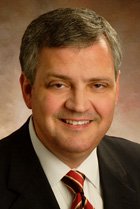
Albert Mohler

Both groups, he added, worry the church too closely reflects the nation’s hostile political divisions. 

“A younger generation is just tired of the constant bickering and division in the church,” he said.

The kinds of friendships being developed in convergence Christianity once were the norm in America—even among Southern Baptists, McCall said.

Back in the day, McCall said, he was a close friend of conservatives such as W.A. Criswell, with whom he vigorously disagreed and argued.

“If he thought it was black, I thought it was white,” McCall said.

Yet those disagreements were never considered personal. “I believed in the sincerity of his Christian commitment, and he in mine,” McCall said.

Even in retirement in Palm Beach Gardens, Fla., McCall said, he’s been reaching out to conservative institutions and individuals to arrange activities.

So far, to no avail. “I have friends who make fun of me because of my efforts,” he said. “But I still believe there’s hope.”


Home of former jailed pastor raided in Azerbaijan

ALIABAD, Azerbaijan (ABP)—Police in Azerbaijan raided the home of a Baptist pastor who served 10 months in prison before winning a pardon following appeals on his behalf from Baptist leaders worldwide.

Zaur Balaev

The Oslo-based news service Forum 18 reported authorities broke up a Baptist worship service in the Aliabad home of Zaur Balaev, who was imprisoned from May 2007 to March 2008 on charges supporters say were fabricated to punish him for freely exercising his religion.

Balaev was not present. He was in Moscow with his wife, Nunuka, who is being treated for pancreatic cancer.

About 10 police officers reportedly raided Balaev’s home Nov. 7, breaking up a meeting of about eight church members. Armed with a search warrant, they took pictures and seized about 17 items of Christian literature, including New Testaments and hand-written notebooks.

A witness said the officers were respectful, but said it is illegal to meet without registration. If officials determine the seized materials are not harmful, police said, they will be returned.

A separate raid targeted the nearby home of Hamid Shabanov, who was convicted in 2009 on a weapons charge. Members of his church said the pastor did not own a gun, but police apparently planted one in his home as an excuse to intimidate religious and ethnic minorities.

Balaev was arrested in May 2007 and sentenced to two years in prison that August for violent resistance of arrest. Witnesses described Balaev as a “man of peace” whose thin physique would not have posed much of a threat to the five police officers who took him into custody.

Azerbaijani Baptists asked for international support for the man they viewed as a prisoner of conscience. After appeals by leaders, including Tony Peck of the European Baptist Federation, Neville Callam of the Baptist World Alliance and former U.S. President Jimmy Carter, Azerbaijan’s president unexpectedly pardoned Balaev in March 2008, less than halfway through his sentence.

Balaev’s problems were not over, however. Not long after his release, he received a visit from two police officers who said his unregistered church did not have the right to gather for worship and warned of “unpleasantness with the law” if the congregation continued to meet.

Azerbaijan’s constitution provides for religious freedom, but other laws and policies allow authorities to interfere with groups considered “nontraditional” because they lack a long history in the country. That includes some minority Muslim and Christian groups, especially those like evangelicals and Jehovah’s Witnesses that proselytize.

Baptists in Aliabad, a village in northwestern Azerbaijan, claim they have sought legal recognition since 1994, but attempts to register have been obstructed repeatedly by government bureaucrats.


Criswell College sues government over Obama health mandate

DALLAS (ABP)–Criswell College, a Southern Baptist Bible school with informal ties to the Southern Baptists of Texas Convention, sued the federal government Nov. 1, claiming the contraceptive mandate in President Obama’s Affordable Care Act violates the school’s opposition to abortion.

Criswell College campus in Dallas.

Criswell College, named after its founder, W.A. Criswell — longtime pastor of First Baptist Church in Dallas and spiritual godfather of the “conservative resurgence” movement that shifted the Southern Baptist Convention rightward in the 1980s and 1990s — joins more than 30 other plaintiffs in lawsuits aimed at blocking enforcement of the administration’s 2010 overhaul of the nation’s health-care system, often known as Obamacare.

Like other Baptist schools in previous lawsuits, including Louisiana College and Liberty University, Criswell objects to being required to pay for contraceptive drugs for female employees that they believe induce abortion.

The coverage mandate exempts churches but not faith-based institutions with more than 50 employees, that may or may not share the organization's religious tenets, and with purposes broader than “the inculcation of religious values.”

The lawsuit says that means the government finds Criswell – described as a “Christ-centered institution of higher learning” that affirms biblical inerrancy – not “religious” enough to be entitled to constitutional protection.

“It would require us to obtain insurance that would cause us to violate our religious beliefs,” Criswell College Jerry Johnson said in a press release. “For us, this is a religious-liberty issue. We don’t want to have to pay for something that we have a religious conviction against.”

The college’s statement of faith is based on the Baptist Faith and Message as amended by the Southern Baptist Convention in 2000. It declares, “Children, from the moment of conception, are a blessing and heritage from the Lord,” and “We should speak on behalf of the unborn and contend for the sanctity of all human life from conception to natural death.”

The lawsuit points out that Criswell’s faith statement is more conservative than the one held by the Baptist General Convention of Texas. The BGCT affirms the Baptist Faith and Message as adopted by the SBC in 1963, prior to additions establishing husbands as head of the household and banning women preachers. The BGCT supports nine universities. Two of them, East Texas Baptist University and Houston Baptist University, together filed a similar lawsuit Oct. 9 challenging the health-care law.

Numerous lawsuits have been filed challenging Obamacare on different grounds. More than 30 involve religious employers who claim the coverage mandate contravene the Religious Freedom Restoration Act of 1993 or the U.S. Constitution.

A U.S. district judge in Michigan issued a temporary injunction ruling the federal government cannot force one Catholic business owner to include contraception in health-insurance coverage it provides to 170 employees, Christian-owned Hobby Lobby asked a judge in Oklahoma to block a portion of the law mandating the company provide morning-after birth control pills, and the Justice Department told the Supreme Court it does not object to review of an earlier ruling that went against Liberty University.

The White House has said it is sensitive to religious-liberty concerns but is determined that women have full access to health care. Some say the solution is for a single-payer health-care plan funded by the government similar to Medicare, an idea opposed by conservatives and insurance companies.

Established in 1970, Criswell College has 322 students and 50 employees. It was housed in facilities of First Baptist Church in Dallas before moving to a free-standing campus in an abandoned church building in 1989. President Jerry Johnson, Criswell’s sixth, began service in December 2003.


Seminaries try preventive medicine for ministerial burnout

WACO—Burnout leads many ministers to leave their posts, and in recent years, the subject has spurred everything from clergy health initiatives to sabbaticals to pastor burnout blogs.

But some seminaries are undertaking preventive medicine of the spiritual kind, which can play a significant role in overcoming future burnout, said Angela Reed, the director of spiritual formation at Baylor University’s Truett Theological Seminary.

Mentor Erin Conaway (2nd from left), pastor of Seventh & James Baptist Church in Waco, meets with Truett Theological Seminary students (left to right) Creston Thomas, Tim Chaplin and Heath Kirkwood. (PHOTO/Courtesy of Baylor University)

“If we don’t attend to these things in seminary, we’re not setting our students up for ministry over the long haul,” said Reed, assistant professor of practical theology at Truett and author of Quest for Spiritual Community: Reclaiming Spiritual Guidance for Contemporary Congregations.

Truett and some other theological schools have turned to covenant groups and other spiritual formation efforts aimed not only at building peer support and spiritual growth in seminary, but for years afterward.

“Increasingly, seminaries are going to specific programs,” said Daniel Aleshire, executive director of The Association of Theological Schools in the United States and Canada, which has 270 members. Some have a tradition of one-on-one spiritual directors, he said.

There is no guaranteed “inoculation against future burnout,” he said. But “there’s a great body of evidence that good pastoral work is always supported by some kind of community where there is accountability, honesty and confidentiality. What’s said in the group stays there. It’s a safe place.

“This gives an opportunity to share the hard questions about their own spiritual life and ministry. It’s worth the time and effort to continue that once they’re away from the unique world of the seminary.”

That foundation can help pastors maintain physical and emotional health, resist affairs and unwise financial decisions, maintain strong family relationships — even cope with clashes with congregants, Reed said.

Statistics attest to the need to “minister to ministers.” Surveys of pastors done by the Fuller Institute, George Barna, Pastoral Care Inc., LifeWay Research and H.B. London Jr. reveal:

• 90 percent of pastors report working between 55 to 75 hours a week.

• 90 percent feel inadequately trained to cope with the ministry demands.

• 50 percent feel unable to meet the demands of the job.

• 55 percent say they are discouraged.

• 70 percent do not have someone they consider a close friend.

• 80 percent believe pastoral ministry has affected their families in a negative way.

The demands also can take a physical toll in stress-linked conditions. Research by Duke University of United Methodist clergy in North Carolina shows they have higher rates of obesity, hypertension and depression.

“They feel that they have to be perfect, that they can’t show weakness, admit to their personal shortcomings, have doubts about their faith,” Reed said. Pastors’ schedules are unpredictable, and many feel the need to be on call 24/7. In some churches, pastors even have taken on the role of CEO in addition to that of spiritual leader. Baylor recently approved a joint master’s degree in divinity and business administration, blending theological and biblical preparation with business skills.

“Honest, deep relationships with people whom they are not pastoring can help them stay in ministry,” Reed said. “And those relationships can make a huge difference not only for the pastor, but for the congregation, too.”

Reed, a graduate of Princeton Theological Seminary, knows what it’s like to be burned out. In her early 20s, she took a position as an assistant pastor at a Mennonite Church in Manitoba, Canada.

“I began with so much energy—attending sporting events for our youth, making calls to them at night, running committees, teaching and offering pastoral care,” she said. “I was working day and night, trying to be there for everybody.”

After about a year and a half, “I was starting to fade,” she said. “It hit me when I was in a grocery store. I saw someone from my church and found myself wanting to walk the other way. … As my service time for others had grown, my personal time for myself and my relationship with God had shrunk.”

When a pastoral support team of two began to meet regularly with her, “it really helped to turn me around,” she said. “I started being very intentional about things like spiritual practices and spending time with my family.” About six months later, “I was in a different place—joyful, with a sense of purpose and balance in my personal life.”

At Truett, about 40 groups of six to eight members—usually composed of the same gender—form when students enter seminary and continue through their six semesters there. Members meet weekly and are given readings and assignments to help them develop spiritual disciplines to nurture relationships with God and others. They share everything from silent prayer to personal struggles and experiences with grief to keeping their priorities straight. The groups provide accountability for personal commitments students want to make about Sabbath-keeping, living faithfully and spending time with family and friends.

Kevin Miner of Angleton, a second-year seminary student at Truett who leads a covenant group, values the trust, confidentiality and encouragement he finds there. The group led a service of remembrance when one of its members who suffered chronic disease died in January.

“He was the same age as me and so close to me,” Miner said. “It can be hard to see God in the midst of tragedy. It was one of the worst of times. But for our group, it was one of the best times spiritually. We really bonded.”

Heath Kirkwood, a first-year seminary student from Brenham, makes a four-hour round trip on Mondays so he can be with his group.

“I’ve only missed one – the day my baby girl was born,” he said. “I sent an email and send, ‘Guys, I’m not going to be there.’ This is a brotherly thing.”

While the seminary tries to match compatible students by using questionnaires, “we don’t have a 100 percent rate of satisfaction,” Reed said. “Some people they get along with; some they don’t get along with as well, just like they would in a church staff. This is a training ground, and sometimes that means learning to grow alongside someone you wouldn’t choose as your best friend.”

Chris Johnson of Chalk Bluff Baptist Church in Waco, a 2009 Truett Seminary graduate, said the tools and support from his covenant group have been invaluable in his ministry to about 150 church members, and he is helping them form groups, as well.

“It’s easy in the classroom for things to be academic, but this is an opportunity to recognize the spiritual nature and to spend time in silence,” he said. “That’s important to students, because many don’t find it elsewhere.

“I’m still in contact with some of the guys in the group,” he said. “They help me to re-energize. … For me to be effective in the ministry, I have to take care of myself spiritually. I have to get strength from God, or I will fail.”


Texas Tidbits

Baylor receives ‘A’ for core curriculum. Baylor University is one of only 21 institutions nationwide to earn an “A” for its core curriculum, according to a report on the state of general education at the nation’s colleges and universities from the American Council of Trustees and Alumni.
The council’s study, posted online at www.WhatWillTheyLearn.com , looked at curriculum offerings at more than 1,000 public and private colleges and universities in all 50 states.

McFarland named to board of ethics center. Jaclanel Moore McFarland, a state district judge, has been named to the board of directors of the Baptist Center for Ethics. McFarland, a Houston native, is a former first vice president of the Baptist General Convention of Texas. McFarland holds undergraduate and law degrees from Baylor University, where she was a member of the board of regents.

Baylor regents approve degree programs. Baylor University’s board of regents approved two doctoral programs in the School of Music and a joint master of divinity/master of business administration degree from Truett Theological Seminary and the Hankamer School of Business. The School of Music will offer a doctor of philosophy degree in church music and a doctor of musical arts degree. Both programs are expected to begin in fall 2014. The joint MDiv/MBA is designed to prepare biblically and theologically grounded ministers who can implement financial strategies, transform organizational behavior and ensure financial integrity in congregations and nonprofit organizations, ac-cording to Terry Maness, dean of the Hankamer School of Business, and David Garland, dean of Truett Theological Seminary.

Five universities named among ‘military-friendly’ schools. G.I. Jobs magazine has named five universities related to the Baptist General Convention of Texas to its list of military-friendly schools—Dallas Baptist University, Hardin-Simmons University, Howard Payne University, University of Mary Hardin-Baylor and Wayland Baptist University. The designation means the Texas Baptist universities rank among the top 15 percent of schools across the nation in doing the most to embrace America’s veterans and military personnel as students. Criteria for making the list include efforts by universities to recruit and retain military and veteran students. The designation also takes into account a school’s ability to be flexible if military personnel are called to active duty.

Wayland receives $5 million gift. Wayland Baptist University received a $5 million gift to fund the Jimmy Dean Museum in Plainview. Donna Dean-Stevens, widow of the Lamb County-born entertainer and businessman, made the donation. Tentative plans call for the Jimmy Dean Museum to be built adjacent to the existing Museum of the Llano Estacado on the Wayland campus and include a community venue that can be used for various activities and events. The Dean family gave $1 million to Wayland in 2008.


On the Move

Jim Carter to Jersey Village Church in Houston as minister to senior adults and discipleship.

Don Fawcett to First Church in Lake Brownwood as interim pastor.

Lynn Rice to Hillcrest Church in Brownwood as pastor.

John Tunnell to Calvary Church in Brownwood as interim pastor.

Robert Whitefield to 3C Cowboy Fellowship in Salado as pastor from Proctor Church in Proctor.


Deer Project provides venison for Brownwood-area hungry families

BROWNWOOD—Good Samaritan Ministries is taking two things Brown County has in abundance and using one to bless the other.

Hunters know Brown County is an excellent place to find white-tailed deer. The county also has a child poverty rate of 29 percent.

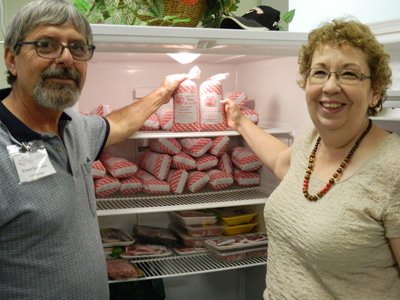
Angelia Bostick, director of Good Samaritan Ministries in Brownwood, and Ernest Espinoza, food manager for Good Samaritan, sort and distribute donated venison to hungry Brown County residents. (PHOTO/George Henson)

“Last year was a record year for the number of people coming to our pantry needing help, and this year will exceed last year,” said Angelia Bostick, director of the ministry, noting the pantry served 1,093 families in October.

The Deer Project, a program to use legally tagged and harvested deer to help feed the hungry, began in 2008.

The state already had a program called Hunters through the Hungry, and when Good Samaritan got involved, a local man who was not previously associated with the ministry read about it, he was curious.

“He asked me how we were doing with it, and I told him pretty good,” Bostick recalled. “He asked me how many deer had been donated, and I told him four.”

The man told her that he was sure that between him and his associates, they could bring in 100 deer.

Bostick said that would be nice, but Good Samaritan’s freezer space couldn’t accommodate that much meat.

The hunter—together with a few other men in Brown County—designed, funded and built a walk-in freezer that became operational in two months.

Two years ago, donations began paying the processing fees, and the ministry really took off. Last year, a little more than 11,000 pounds of venison was donated to the Deer Project to feed the hungry of Brown County. This year, the goal is 15,000 pounds.

“It doesn’t cost the hunter anything. They just harvest the deer, field dress it, and take it to one of our participating processors in the area, and tell them they want to donate it to Good Samaritan,” Bostick said.

“Our processors are tremendous, because they charge us only $1 per pound, and we average about 30 pounds of ground venison a deer.”

Processing costs decreased this year after the processors approached the ministry.

“We paid $1.55 a pound last year, but they said theyad a proposal. They said: ‘We think you’re paying too much. We want to go back to $1 per pound.’ That doesn’t happen—in this economy, for a business to say, ‘You’re paying too much, we want to charge you less.’ That’s a lot less than what they would charge normally, so that’s really a blessing,” Bostick said.

Good Samaritan passes the blessing on to the needy of Brown County.

“We’re country. We’re a rural community. People are used to eating wild game, so they just love it. And it’s high in protein and low in fat, so it’s very healthy,” Bostick pointed out. “They look forward to this. They’re already asking, ‘Do you have they deer meat yet?’”

The generosity makes it even nicer for some, she said.

“They’re excited to have it and also to know that so many different groups come together to make that two-pound chub end up in their basket,” Bostick said.

“You’ve got the hunters who are paying for the hunting license and paying for their deer lease or their deer corn. Then you’ve got those people who maybe don’t hunt but believe in the project, so they’re giving money to pay for the processing. And you’ve got the processors who give us such a great deal.

“It’s just a diverse group coming together to make sure families here have protein on their plate, and the most expensive thing any pantry can provide is protein. It’s pretty amazing.”

Deer hunters are excited to use their interests to help others, Bostick added.

“They get five tags, and for most people, two deer are going to fill their freezer, “ she said. “Hunters like to hunt, and it helps. It helps our land; it helps hungry neighbors,” she explained.

“We can feed people, or we can feed buzzards and coyotes, because if there are too many deer, they’re going to starve and die off, or it’s going to bring more predation. I’d rather legally harvest that deer and get it to a hungry family.

“It’s a natural resource God has provided us.”

Bostick noted hunters come to Brown County from around the state, and the ministry would be glad to accept their donations. For more information, call (325) 643-2273.


Baptist Briefs: Nigerian Baptists respond to floods

Flooding in Nigeria prompted the BWA to send relief funds.

Nigerian Baptists respond to floods. The Baptist World Alliance dispatched $10,000 for flood relief in Nigeria, where heavy rains have killed 363 people since July. More than 2 million Nigerians have been forced from their homes by this year’s floods, the worst in a half-century. Nigerian Baptists have responded with trucks carrying food items to three Baptist state conferences in hard-hit areas. Olasupo Ayokunle, president and chief executive officer of the Nigerian Baptist Convention, estimated costs for food, clothing and other supplies in the affected areas to be at least $25,000 in the initial stages of immediate assistance. In addition to the initial $10,000 grant, the BWA is accepting donations for other disaster relief.

SUV driver indicted in church van crash. A grand jury indicted the driver of an SUV that crashed into a church van in east Tennessee killing two people and injuring 11. Tyler Schaeffer, 21, was indicted on two counts of vehicular homicide, 20 counts of reckless aggravated assault, nine counts of vehicular assault, one count of DUI, one count of possession of a controlled substance and one count of possession of a synthetic derivative. Police believe Schaeffer was under the influence of methylone, a synthetic derivative used in bath salts that mimics the effects of ecstasy, when his vehicle crashed head-on into a vanload of youth from Cedar Grove Baptist Church in Maryville, Tenn., returning home from a weekend retreat. The fiery collision killed van driver Jeff Trussell, 45, a lay leader in the congregation, and Courteney Kaliszewski, 16, a high-school junior active in volunteer missions. Eleven other passengers were injured, some seriously, but they managed to get out of the van before it became engulfed in flames. Cedar Grove Pastor Bob Lynch noted the injured church members all are out of the hospital, but some face long-term rehabilitation or additional surgeries.

Baptist BriefsBJC sponsors student essay contest. High school juniors and seniors can win up to $2,000 for college in an essay scholarship contest sponsored by the Religious Liberty Council of the Baptist Joint Committee. Essays must examine religious diversity in America and evaluate the claim that the United States was founded as a “Christian nation.” Grand prize is $2,000 and airfare and lodging for two to Washington, D.C. Second prize is $1,000, and third prize is $250. Essays must be between 800 and 1,200 words, and they must be mailed—along with registration forms—and postmarked by March 1, 2013, to be eligible. Visit www.BJConline.org/contest for complete contest rules. For more information, contact Cherilyn Crowe at (202) 544-4226 or by e-mail at ccrowe@BJConline.org.

Oklahoma Baptists affirm failed ‘personhood’ amendent. Messengers to the Baptist General Convention of Oklahoma annual meeting applauded an attempt to amend the state constitution to declare an embryo a human being from the moment of conception. Although the attempt failed, messengers commended the efforts of lawmakers who proposed the amendment.

–Compiled from wire services


Around the State

Waco Regional Association will hold a basic coaching workshop Dec. 1 and 8 from 9 a.m. to 4 p.m. at Hillcrest Baptist Medical Center in Waco. Certified coaches will guide participants through the basic principles of coaching and practice. Anyone may register for this event. The cost is $50 and includes lunch and snacks on both days. For further information and registration details about “Empower: Basic Coach Train-ing,” email admin@wacoregionalbaptistassociation.org or call (254) 753-2408.

Almost 20 Dallas Baptist University international students helped Angel Wing Florals, an outreach ministry that arranges and delivers silk and fresh flowers to those in nursing homes, hospitals, retirement homes and assisted living communities. Founder Jeanette Bailey (left) assisted the DBU students in arranging colorful flowers in small vases. The students then wrote personal notes of encouragement they attached to their arrangements. After finishing their arrangements, the group traveled from DBU to a local nursing home to deliver the flowers and sing hymns for the residents.

East Texas Baptist University will hold a preview Dec. 6-7. The event allows prospective students to spend the night in the dorm, socialize with current students, and meet professors at breakfast and in classes. Participants will join current students at a Thursday-night basketball game and another event that will follow the game. Check-in is 6 p.m. Thursday, and the event ends at 1:45 p.m. Friday. A $20 nonrefundable fee must be paid to register, but if a student submits an application during the event, the application fee will be waived. For more information, call (800) 804-3828.

Abilene Association presented several honors at its annual meeting. David Cason, retiring pastor of Broadway Church after 37 years of service, was named pastor of the year. Loys Little, director of Abilene Social Ministries, was chosen lay person of the year. C.V. Blake, pastor for young and median adults at First Church in Abilene, was named staff member of the year. Churches of the year were Calvary Church, pastor, Michael Reed; and Clearfork Church, pastor, Larry Tarver.

Several award winners were announced during Baylor University homecoming activities. John Eddie Williams was named alumnus of the year, and Jay Brown was tapped as young alumnus of the year. Philip Gunn received the Pro Texana Medal of Service, while Billy Graham and Steve Green each earned the Pro Ecclesia Medal of Service. Drayton McLane Jr. received the Baylor Founders Medal.

Two longtime Baptist General Convention of Texas Executive Board staff members have announced their retirement. Myla McClinton, executive assistant to the executive director, will retire near the end of December. Lisa Walker, executive assistant to the chief financial officer, will retire Dec. 12.

Mark Alexander and Britnee Crawford have joined the faculty of Dallas Baptist University. Alexander is assistant professor of missions, and Crawford is assistant professor of mathematics.

Howard Payne University has promoted Sara Haley to assistant vice president for facilities and planning.

Rick Hammer, assistant professor of biology at Hardin-Simmons University, was named outstanding extension cooperator in horticulture by the Taylor County Extension Education office for training volunteers as master gardners and master naturalists.

Anniversaries

First Church in Corinth, 125th, Oct. 28. Bruce Larson is pastor.

Wendell Campbell, 25th, as pastor of West Mount Moriah Church in Fort Worth.

Leon Veazey, fifth, as pastor of First Church in Whitewright, Dec. 30.

Retiring

Harrol Bowman, as pastor of First Church in Aubrey, Dec. 31. He has served the congregation since 1984. Prior to that, he was youth minister at Southside Church in Corpus Christi and minister to adults at Orchard Road Church in Lewisville.

Deaths

Samuel Rodriguez, 78, Oct. 7 in Seguin. He surrendered to the ministry in 1988, and he was pastor of Westside Church in Seguin 19 years. He graduated from Baptist University of the Américas in 2011. He was preceded in death by his brother, Gabriel; and his sister, Juanita Montoya-Varela. He survived by his wife of 59 years, Rachel; sons, Samuel Jr., Jacob and Santiago; daughters, Grace Rodriguez, Orfalinda Rodriguez, Rhoda Castillo, Rachel Roa-Rodriguez and Celeste Molina; 10 grandchildren; and one great-grandchild.

Katy Piper, 93, Nov. 10 in San Antonio. Known as Miss Katy, she and her husband, Paul, were motivated toward philanthropy by a passion to help people. In 1952, they established Christ Is Our Salvation Foun-dation, its name expressing their lives’ mission. In 1984, they sold Piper Industries to the next generation and poured all their energy into the foundation. They also created Christian Mission Con-cerns of Tennessee, Texas and Colorado. Through the years, the foundations supported many ministries, mission projects and missionaries; provided scholarships; provided housing for low-income citizens; built day-care facilities and purchased a Christian camp; and provided funds for medical facilities, theological seminaries and Bible colleges. They also partnered with conventions to start and build new churches and provide support for pastors. They also provided funding for the ministries of the Baptist Standard and the establishment of FaithVillage. She was a member of Woodland Church in San Antonio. She was preceded in death by her husband in 2004, and by her son, Ronald. She is survived by her son, Paul Jr.; six grandchildren; and 10 great-grandchildren.

Bobbie Green, 78, Nov. 13 in Victoria. She served alongside her husband, Jack, for the 21 years he was a pastor and 25 years he was president of South Texas Children’s Home Ministries. She was a member of Northside Church in Victoria. She is survived by her husband of 58 years; sons, Glen and Forrest; daughter, Jeanene Atkinson; brothers, Howard, Steve and Kenneth; and six grandchildren.

Event

Christian music artists Point of Grace will bring their Home for the Holidays show to The Heights Church in Richardson Dec. 9 at 7 p.m. The church’s 100-voice choir will participate during the last half of the program. Doors will open at 6 p.m. Reserved tickets, ranging in price from $10 to $25, are on sale at www.theheights.org/ pointofgrace. For more information, call (972) 238-7243.

Ordained

Gene Spies to the ministry at First Church in Anton.

Bill Herman and Thomas Blair as deacons at Water Valley Church in Water Valley, Oct. 21.

John Holman to the ministry at First Church in Sandia, Oct. 28.

Fred Hornady, to the ministry at Macedonia-Hix Church in Caldwell, Nov. 4.

Jerry Allen Cole, to the ministry at Bedias Church in Bedias, Nov. 25. He is associate pastor of youth and children.


Waco pastor awaits ‘homecoming’ with Christ

WACO—When Mike Toby read Psalm 90:12—"Teach us to number our days, that we may present to you a heart of wisdom"—in his devotional time a few months ago, he had no idea how personal the message would become to him.

Mike Toby, pastor of First Baptist Church of Woodway in Waco.

Toby, who has served more than three decades as pastor of Waco's First Baptist Church of Woodway, woke up Sunday morning, Oct. 14, with his left hand completely numb.

"It was as though I woke up and walked through the looking-glass. Nothing was quite the same since then. And that began the journey in which we discovered I have brain cancer," he said in a video message posted on the church's website, www.fbcwoodway.org/mike-toby/.

Doctors described his cancer as a particularly aggressive type that offers few treatment options—none good. Highly invasive surgery carries serious risks and provides few benefits, along with the real likelihood of the cancer's return.

"It would seem that we're looking at three to six months. … I didn't want to spend one day trying to fight off the inevitable," Toby said, adding he rests secure in his faith in Christ.

"I have been the recipient of just unbelievable grace and blessing, every day has been full, and I don't feel the need to negotiate with God for 15 extra seconds. He has just so richly blessed me.

"So, the only prayer I would ask anyone to pray is that the Lord will take me home quickly. I don't want to suffer. I don't want my family to suffer."

God allowed him to see most of his hopes and dreams for life come true, Toby added, noting particular gratitude for his wife, Jackie; their sons, Josh and Scott; and his grandchildren. He also expressed thanks for a church in which he has absolute confidence and for a supportive and encouraging staff.

"I just have to say I'm a blessed man," he said.

Every day, he added, he has awakened with joy, eager to complete the work God enabled him to do.

"I look forward to seeing my Savior and to share in that homecoming. So, any prayer you are offering on my behalf is not for healing," he said in the video message. "Any healing comes when I am released into the arms of my Savior."

Toby, who grew up in Pasadena, served on the staff of churches in Louisiana, Florida, Arkansas and Texas. Before he came to Woodway, he was pastor of Pleasant Grove Baptist Church in Texarkana.

He served on the Baptist General Convention of Texas Executive Board and as a trustee of Howard Payne University and Hillcrest Baptist Medical Center, among other charitable institutions. He served three times as president of the pastors' conference of Waco Regional Baptist Association.

Toby's family set up a Facebook page—http://facebook.com/PastorMikeToby—for updates and as a place where friends can offer words of encouragement.


Schools, ministries benefit from ETBU-donated computers

MARSHALL—East Texas Baptist University recently donated 100 surplus computers to about a dozen Marshall-area schools and nonprofit ministries.

William B. Travis Elementary Principal Amy Dixon and assistant principal Jason Black load donated computers with help from East Texas Baptist University student Kellie Thompson. ETBU donated 100 surplus computers to various Marshall-area nonprofit organizations. (PHOTO: ETBU Great Commission Center)

When the desktop computers rotated out of service at ETBU, the university made them available on a first-come, first-served basis at no cost to local nonprofit organizations. 

"We were very glad that we were able to donate these computers to local ministries and other organizations," said Barry Hale, director of institutional technology. The three-year-old computers were in good working condition, equipped with the Windows Vista Basic operating system, Hale noted.

"We are so thankful for the 10 computers. This is an incredible gift," said Amy Dixon, principal of William B. Travis Elementary. "At this time, our intention is to do an inventory of the greatest needs in the classrooms and replenish in those places first."

Soda Lake Baptist Association received five computers.

"One of the computers will replace a 12-year-old computer in our ministry center," said Randy Babin, Director of Missions for the Soda Lake Baptist Association. "The other four could possibly be placed in good homes, as needed. We are grateful to receive these computers, because it gives us the opportunity to minister to people and tell them it is because Baptist people love them and God does, too."

Other recipients included Robert E. Lee and South Marshall elementary schools, Price T. Young Middle School, Buckner Children and Family Services, Mission Carthage, Brother's Keeper, LaPlace Mission Trip, HeartsWay Hospice and 100 Men of East Texas.


Baylor scholar makes New Testament accessible to Arabic readers

WACO—A Baylor University scholar has translated the New Testament from the primary language Jesus spoke into the common language of 21st century Arabic-speaking people.

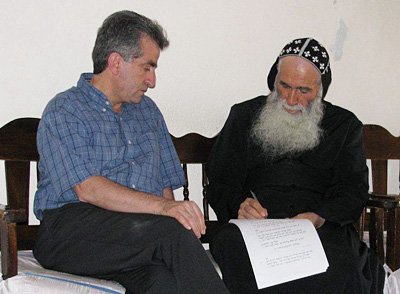
Abdul-Massih Saadi, a lecturer in Arabic at Baylor, said his 12-year undertaking has been "a good struggle" to translate the text from Syriac Aramaic into two versions—Modern Standard Arabic and Mardini, a colloquial Arabic dialect—in the volume.

Abdul-Massih Saadi, a lecturer in Arabic at Baylor and New Testament translator, consults with Hanna Kermiz, a monk at St. Gabriel Monastery in southeast Turkey.  (PHOTO/Courtesy of Abdul-Massih Saadi)

The 800-page project by Saadi, a former monk/civil engineer/business manager, meant not only poring over original texts, but also holding the colloquial Arabic version up for scrutiny by people ranging from educated to illiterate to be certain it meshed with the language they speak and understand—including idioms.

"Our translation is the first Arabic Bible based on Eastern Bible tradition, namely the Syriac," said Saadi, who is from Aleppo, Syria. "Most unique in this project is the Colloquial Arabic Version."

The term Syriac refers to one Aramaic dialect in which Christian literature was written. Evidence from the second century A.D. indicates Aramaic-speaking Christians undertook translating the Hebrew Bible and the Greek New Testament into Syriac, he said.

"The Syriac translation of the Greek New Testament restores many of Jesus' expressions in the language he spoke," Saadi said. "The Lord's Prayer, for instance, is as close as it possibly can be to the very words of Jesus himself. It is natural to think that those early Aramaic-speaking Christians had memorized the Lord's Prayer in its original form and that the translators wrote their memorized Aramaic version as they were consulting the written version in Greek."

Aramaic is "still a living language in Syria, Turkey and Iraq. Many Christian families there, including my wife's family and mine, speak it as their first language. There are even Muslims and Jews who speak it as their first language," Saadi said.

Translating, done with the help of his mother and brother, was "a learning process and struggle toward understanding both obvious and hidden meaning of the original text in forms of poetical devices or local idioms, then transferring these same meanings in clear expressions, carrying modern poetical devices and modern local idioms when it was feasible," Saadi said.

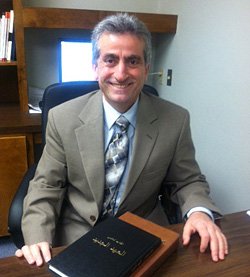
Abdul-Massih Saadi with his new Arabic translation.

"We invested considerable time to check the whole translation with Mardini speakers. After reading a passage to a group of them, we asked them to repeat or comment on that passage. Their response was valuable for checking the accuracy and naturalness of the translation."

His mission stemmed in part from his first name—Abdul-Massih—translated as "the Servant of the Messiah," he said.  

"For many in the Middle East, the name is not merely identification but rather identity and responsibility. Even in my childhood, when I used to do something wrong, people would reproach me saying, 'Either change your behavior or change your name.'"

He joined a monastic order at age 12 and spent 20 years there. He holds degrees in civil engineering, business management, theology and Eastern Christianity, and New Testament studies. He said that in 2002, God called him to marry and raise a family, and he has two sons. He taught at the University of Notre Dame before going to Baylor.

 "It would be very difficult to over-emphasize the scholarly and spiritual significance of this," said Heidi Bostic, chair of the department of modern and foreign languages in Baylor's College of Arts & Sciences. "Dr. Saadi's scholarly work, and indeed his own life story, highlight the significance of Arabic-speaking Christians around the world."

His painstaking and lengthy scholarly journey was a spiritual one as well, Saadi said.

"What is more blessed than dealing with God's word with family and friends in God's world?" he asked. "God was the first translator of his word to the world in an easy, natural, accurate and communicative way."