Bangladesh’s interfaith council pushes for secular state

DHAKA, Bangladesh (RNS)—Amid a spike in violence against religious minorities in Bangladesh, a national council of Buddhists, Hindus and Christians is renewing a campaign for the Muslim-majority South Asian nation to remove Islam as the state religion.

In mid-July, student-led protests demanding reform of the country’s job quota system turned violent, culminating in the collapse of former Prime Minister Sheikh Hasina’s government on Aug. 5.

After Hasina’s resignation, the anger aimed at her government poured onto religious minorities, especially Hindus and members of Hasina’s party, the secular Awami League, which is backed by much of the Hindu community.

The attacks on Hindu houses of worship, homes and businesses, as well as Awami League politicians, have resulted in the deaths of at least 650 people since the violence began, the United Nations Human Rights Commission reported.

The Bangladesh Hindu Buddhist Christian Unity Council, a human rights organization, argues enshrining Islam as the state religion has been detrimental to the country’s religious minorities and aspirations of greater democratic rule.

“According to the communalist and fundamentalist forces, Islam does not coexist with other religious faiths and beliefs and also contradicts democracy, in which they have no belief,” said Monindra Kumar Nath, the council’s joint general secretary.

Dream of a discrimination-free state

The council said earlier this month there were 1,045 cases of human rights violations against religious minorities between June and August. Council members, including Nath, have received death threats for their activism.

Nath called the reestablishment of “a discrimination-free state” a dream “dreamt by the recent student movement,” and one the Bangladesh Hindu Buddhist Christian Unity Council will keep fighting for.

The interethnic and interreligious forum was established by Maj. Gen. C.R. Dutta Bir Uttam, a veteran of Bangladesh’s guerrilla war for independence from Pakistan that began in the 1970s and was fought by people of different faiths, including Muslims, Christians, Buddhists and Hindus.

After the war in 1972, architects of the Bangladeshi Constitution included secularism alongside nationalism, socialism and democracy as the country’s four founding principles.

But a few years later, the first president, Sheikh Mujibur Rahman—known as the “father of the nation” and Hasina’s actual father—was overthrown and a military ruler, Ziaur Rahman, replaced secularism with “absolute trust and faith in the Almighty Allah.”

His successor Hussain Muhammad Ershad, another military officer, officially made Islam the state religion with a change to the constitution.

Activists since have demanded the removal of the mention of a state religion, but despite Ershad’s fall in 1990, successive governments have kept the status quo—including those led by the Awami League.

In 2011, a constitutional reform restored the original four founding principles, including secularism, but Hasina and others’ conception of secularism included a state Islam that would also guarantee religious freedom.

But religious minority leaders say they face discrimination and many hurdles to practice their faith freely.

Christian Solidarity Worldwide’s Asia team further explained, “the Bangladesh Hindu Buddhist and Christian Unity Council has called for the elimination of discrimination on the basis of freedom of religion or belief contained in the Constitution of the People’s Republic of Bangladesh.”

The council has urged the Chief Adviser of the interim government Muhammad Yunus that Bangladesh should repeal Article 2A— which defines the state religion as Islam—because it contradicts Article 12 that establishes the principles of secularism by eliminating communalism; the abuse of religion for political gains; discrimination or persecution of a particular religion; and asserts that political status is not favorable to any one religion.

Last September, the Bangladesh Hindu Buddhist Christian Unity Council launched a hunger strike to hold Awami League to its election promises.

These included proposing legislation that would allow Hindus to reclaim confiscated property, the creation of a national minority commission, protection for religious minorities and the reinstatement of employment quotas that would distribute government jobs more equally across faiths.

The Bangladesh Youth Unity Council, a student-led organization, wants the international community to remind the interim government about its international obligation to protect its citizens, irrespective of religion and ethnic identity.

“Whoever comes to power should establish a minorities commission and a ministry for religious and ethnic minorities,” said the youth council’s secretary, who requested anonymity out of concern for his safety. “They should give land rights to everyone and there should be a special tribunal to protect religious minorities.”

Communications laws, such as the Digital Security Act, are used to single out members of minority faiths, especially Hindus, for “offending the religious sentiments” of the Muslim majority. Courts have also imposed stricter penalties on religious minorities accused of posting offensive content on Facebook.

The youth secretary added, after Hasina fled earlier this month, the movement to remove Islam as the state religion in Bangladesh is at square one.

“The mob rule on the streets right now have made it clear that they don’t want religious minorities in Bangladesh,” he said. “They want only one single religion, which is Islam.”

The international community, including the United Nations and the U.S. State Department, has called for the protection of minorities in Bangladesh.

“We have made it clear that our goal is to ensure that the recent violence in Bangladesh is de-escalated. We are firmly against any racially driven attacks or incitement to such violence,” said Farhan Haq, the deputy spokesperson for United Nations Secretary-General Antonio Guterres, in an Aug. 8 statement.

Not a simple fix

Michael Kugelman, director of the South Asia Institute at the Wilson Center in Washington, said removing Islam as a state religion would significantly improve the interim government’s relationship with India, which has called on Bangladesh to protect its religious minorities in hopes of preventing Hindu refugees from coming across the border.

But Kugelman cautioned dropping Islam’s favored status is not a simple fix and he does not foresee it happening.

“Simply removing Islam as a state religion would not mean that influential religious and particularly Islamist actors would go away,” he added. “On the contrary, they would become more emboldened.”

The interim government’s prime minister, Nobel laureate Muhammad Yunus, recently showed support for minorities by visiting Dhakeshwari Temple, a prominent state-owned Hindu site in Dhaka considered the country’s national temple.

Yunus urged Bangladeshis to be patient before assessing his government’s performance, according to local media.

“In our democratic aspirations, we should not be seen as Muslims, Hindus, or Buddhists, but as human beings,” Yunus said, according to The Daily Star, the largest English daily newspaper in Bangladesh.

“Our rights should be ensured. The root of all problems lies in the decay of institutional arrangements. That is why such issues arise. Institutional arrangements need to be fixed.

But, CSW’s Asia team pointed out, “religious minorities in the country face regular discrimination, harassment and targeted attacks from Islamists groups.

“During the tenure of Sheikh Hasina the widespread impact of these groups were to some extent kept under control. With her exit, there is now certainly a vacuum that could be exploited by such groups to gain more control of the civic space.”

Whether the interim government will prioritize repealing the provision of the constitution yet is unknown, CSW’s representatives noted.

But if a repeal is sought under the current interim government, the options could be to form a constitution assembly, call for elections or hold a referendum on the matter.

CSW’s Asia team stated the interim government’s current plan is “to attend to urgent priorities such as boosting the economy, ensuring law and order is brought under control and addressing the climate and food crises that impact vulnerable groups.

“Dr. Yunus has also promised to safeguard the security of religious minorities and ethnic groups,” the Asia team said.

With additional reporting by Calli Keener of the Baptist Standard.



Texans on Mission partner responds to Bangladesh floods

DHAKA, Bangladesh—When late-August flooding caused widespread damage, crop loss and displacement in southeast Bangladesh and in the neighboring Indian state of Tripura, Texans on Mission responded with funding for the Baptist aid organization in the area.

 “We have an ongoing disaster relief training relationship with Baptist Aid,” a division of the Bangladesh Baptist convention, said Rupert Robbins, Texans on Mission associate director of disaster relief.

“We have the privilege of training Baptist leaders and volunteers in how to respond to disasters, and now they are putting that training to work and showing the love of Jesus to the people in need.

“Thanks to our wonderful donors, we also have been able to send funds to meet the tremendous needs being faced by churches in the region.”

Milton Munshi, director of Baptist Aid-Bangladesh Baptist Church Fellowship, said 12 districts are affected by the flood, and it probably will expand to others.

“A persistent monsoon low-pressure system over Bangladesh and the Bay of Bengal … is causing increased rainfall in both India and Bangladesh,” Munshi said in a report. Also, upstream flood gates have been opened, worsening the situation in southeast Bangladesh.

More than 2 million children in eastern Bangladesh are “at risk as floods sweep through homes, schools and villages,” UNICEF reported Friday. “In all, these floods, the worst in eastern Bangladesh in 34 years, have affected 5.6 million people.”

Fifty-two deaths have been reported.

More than 50 churches affected

Munshi said churches are in communities still under or surrounded by flood water. Farmers have lost their crops, and there are no regular job opportunities in flooded areas. People also need safe drinking water.

In the eight affected districts, 51 of 68 churches have been affected, Munshi said.

Baptist Aid-Baptist Church Fellowship called an emergency executive board meeting Aug. 24 and decided to pursue a two-stage disaster response, he reported.

First, emergency food and cash support for survival needs will be provided to vulnerable church members and their neighbors.

Second, the post-flood response will seek to regenerate and restore the mainly agricultural livelihood destroyed by flooding.

Robbins said it’s important that Texans on Mission already has an established relationship with Christians in Bangladesh, a predominantly Muslim country.

“These are brothers and sisters in Christ, and our hearts go out to the church as they minister in the name of Jesus during this time of widespread suffering,” Robbins said.

“It’s also inspiring to see how they are planning and working to respond effectively to this disaster and to honor our Lord. The love of God and neighbor is at the core of Texans on Mission, which knows no bounds.”


Meek seeks to connect all ages to the gospel message 

CEDAR HILL—As a room full of preteen campers saw a big, beautiful birthday cake come onto the stage during the final week of children’s camp at Mount Lebanon Baptist Encampment in Cedar Hill, they couldn’t wait to devour a piece for themselves.

That is, they couldn’t wait until camp pastor Logan Meek added a few extra ingredients—ketchup, mustard and salad dressing.

Suddenly, the cake wasn’t appealing to them anymore. Just as the cake was ruined, Meek shared with kids about the ugliness of sin and how it messes up everything.

Logan Meek

By using visual illustrations and object lessons to coordinate with Bible lessons, Meek hopes audiences of all ages will connect with the gospel on a personal level as he speaks at a variety of camps, retreats and ministry events around the country.

In addition to his speaking ministry, Meek also serves as the minister to college students and young adults at Immanuel Baptist Church in Lexington, Ky.

For Meek, the opportunity to minister full-time at his home church has brought his ministry full circle as the Lord placed him in various ministry roles and settings through the years, which has allowed him to learn and grow as a leader.

“I definitely see the value of kids and youth ministry, and I’m grateful for the impact it had in my life,” Meek said.

After he graduated from college, Meek participated in the Teach for America program, teaching sixth grade at a public school in Tulsa, Okla.

“God used that time in my life to really help me own my faith for myself,” he said. “I got connected with a great church that helped me find community and purpose. That’s one of the reasons I’m so passionate about college and young adult ministry, as well.

While teaching in Tulsa and serving at his church, Meek felt God’s calling to ministry.

“I remember having a moment where I realized in myself that my favorite part of my week was serving at church, and I began to pray, ‘God if you would allow me to use my job to serve you, I would say, yes,’” he recalled.

At that time, he also was serving in the summer with Student Life Camp. At the end of summer 2014, he joined Student Life’s full-time ministry team and moved to Birmingham, Ala.

“God has been teaching me more and more to speak, act and live without being concerned about what other people might think,” he said. “We have no reason to be ashamed, because God has adopted us as his children through Christ.

“I am always looking for new ideas. It’s such a blessing to be able to learn from others.”

Joy in seeing ‘breakthrough moments’

While speaking at ministry events across the country, Meek enjoys spending time off-stage connecting with ministry leaders and their groups.

“I love to watch when leaders from a church have breakthrough moments with the students or kids from their church,” Meek said. “It’s an honor to be part of what God is doing in those moments.

“It’s also really a wonderful thing to be part of the rich heritage of many camps, conference centers or churches. This summer at Mount Lebanon, I was really amazed at the history of life-change that’s taken place there.

This summer, one of the church groups at Mount Lebanon invited Meek to join them for their morning quiet time after breakfast.

“Starting with the leaders, they went around the circle and talked about how they all were learning what it looks like to have hope in difficult situations,” he said.

“One leader asked for prayer for his daughter, who was expected to be born soon and not live long after birth. Another leader shared about the stress that comes with searching for a new job.

“I was so encouraged to hear that even in the middle of these difficult things, they were all choosing to seek God and trust him more. I’ve seen over and over how God uses camp in our lives to help us reconnect to him like this. I am always reminded that it is God working in our lives that really matters.”

‘We have a calling that is urgent’

Today, as Meek travels around the country speaking in a variety of settings, he realizes the desperation, hurt and pain many students are struggling with and desires to see them changed by the gospel message.

“I enjoy the opportunity to share the gospel with people of all ages,” Meek said. “Students today are desperate for something real, and we have a calling that is urgent.

“I think about Romans 10:14, and it inspires me to just do my best to do something. God can use anyone to share the gospel, and he can use anyone to impact the life of a teenager or a kid. I think it’s too often that people can falsely believe that a certain ‘cool factor’ is needed to be a difference maker for a student. That’s just not true. I see students responding to the truth of the gospel.

“So many people are searching for solutions to anxiety and loneliness, looking for a deeper purpose and seeking community. The answer to all of these things at every stage of our lives is found in the truth of the good news of Jesus.

“Romans 1:16 reminds us that the gospel is the power of God for the salvation of all who would believe. I love to find creative and fresh ways to share that truth with anyone who will listen.”


Michael Evans nominee for BGCT registration secretary

Pastor Michael Evans of Bethlehem Baptist Church in Mansfield will be nominated for registration secretary of the Baptist General Convention of Texas.

Pastor Edward Wagner of Cornerstone Baptist Church in Harker Heights announced his intention to nominate Evans at Texas Baptists’ annual meeting in Waco, Nov. 10-12.

Saying Evans’ “character is impeccable,” Wagner said his election would “set a wonderful example.”

“Given the religious climate of our time, we need men of integrity to step forward and be of service in high-profile positions,” he said. “Michael Evans is a man of unquestionable moral integrity.”

Evans, who was BGCT president from 2018 to 2020, has served Bethlehem Baptist Church as senior pastor more than three decades and was elected mayor of Mansfield in December 2020. He is the first African American to serve the city in that leadership role.

In spite of his other responsibilities, Evans agreed to accept the additional role as BGCT registration secretary if elected out of his commitment to Texas Baptists.

“I love the BGCT and appreciate the work of Texas Baptists,” he said. “It’s an opportunity to serve, to stay connected to the lifeblood of Texas Baptists, and to encourage others to participate in our annual meeting.”

Evans is a Houston native who served nine years in the U.S. Navy as a reserve chaplain, and he also worked in chaplaincy at Dallas Children’s Hospital.

He served on the BGCT Executive Board staff as director of African-American ministries from 2001 to 2006, while continuing to serve Bethlehem Baptist Church.

Evans earned an undergraduate degree from the University of Texas at Arlington, a Master of Divinity degree from Brite Divinity School at Texas Christian University and a Doctor of Ministry degree from Baylor University’s Truett Theological Seminary.

He founded several community service organizations—the BBC Educational Enrichment Corporation, the Hope House Community Service Network and the Historic West Mansfield Texas Community Development Corporation.

He previously served as president of the board of trustees of the Mansfield Independent School District and was an administrator with the Tarrant County College District.

He and his wife Lisa have two adult children.


Texas Builders bring help to New Mexico mountain retreat

CLOUDCROFT, N.M.—Texas smolders in August. Aspendale Mountain Retreat Center does not. Texans on Mission Builders spent much of August in the cooler temperature of the Baptist camp, situated at about 9,000 feet elevation.

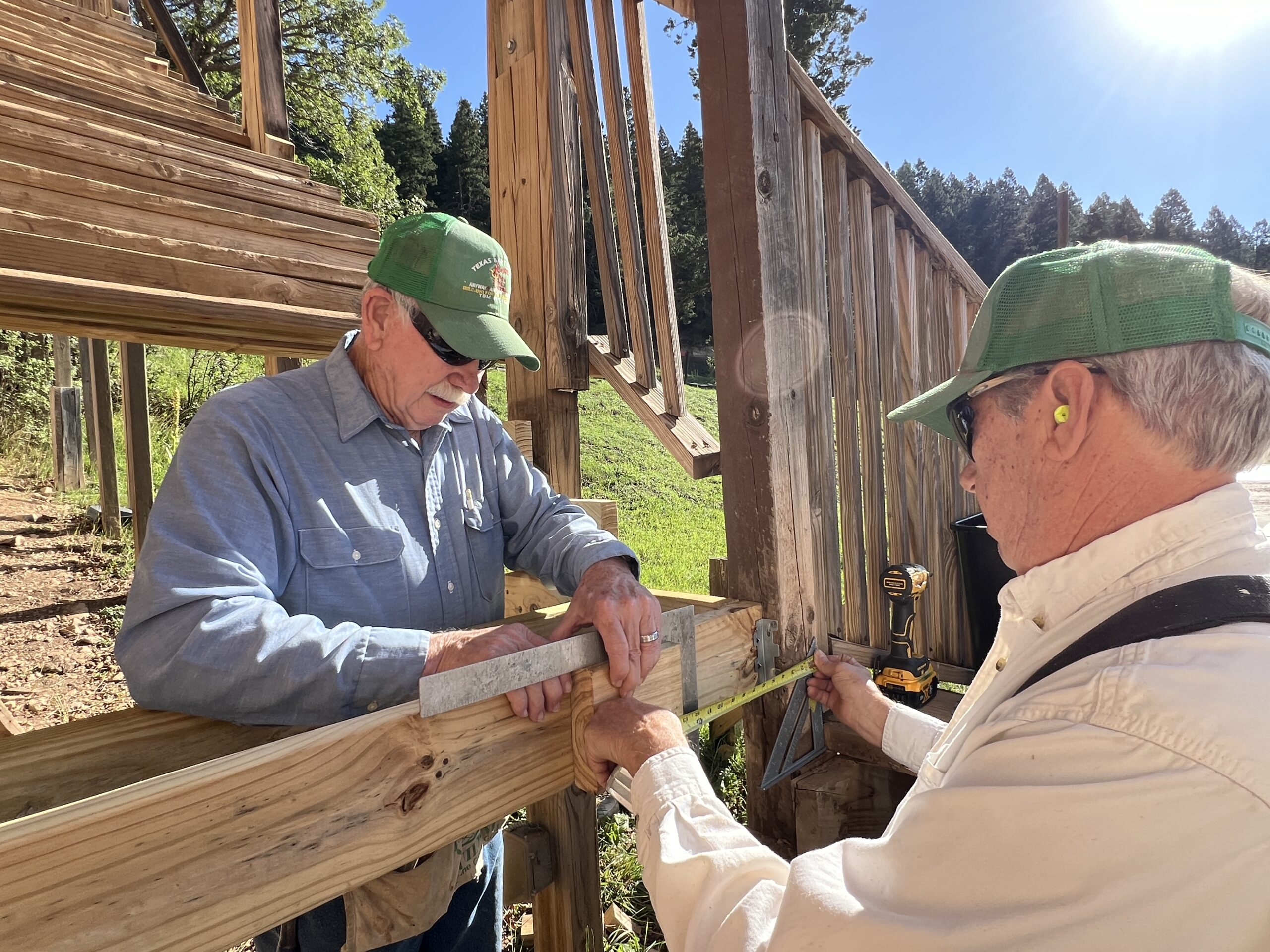
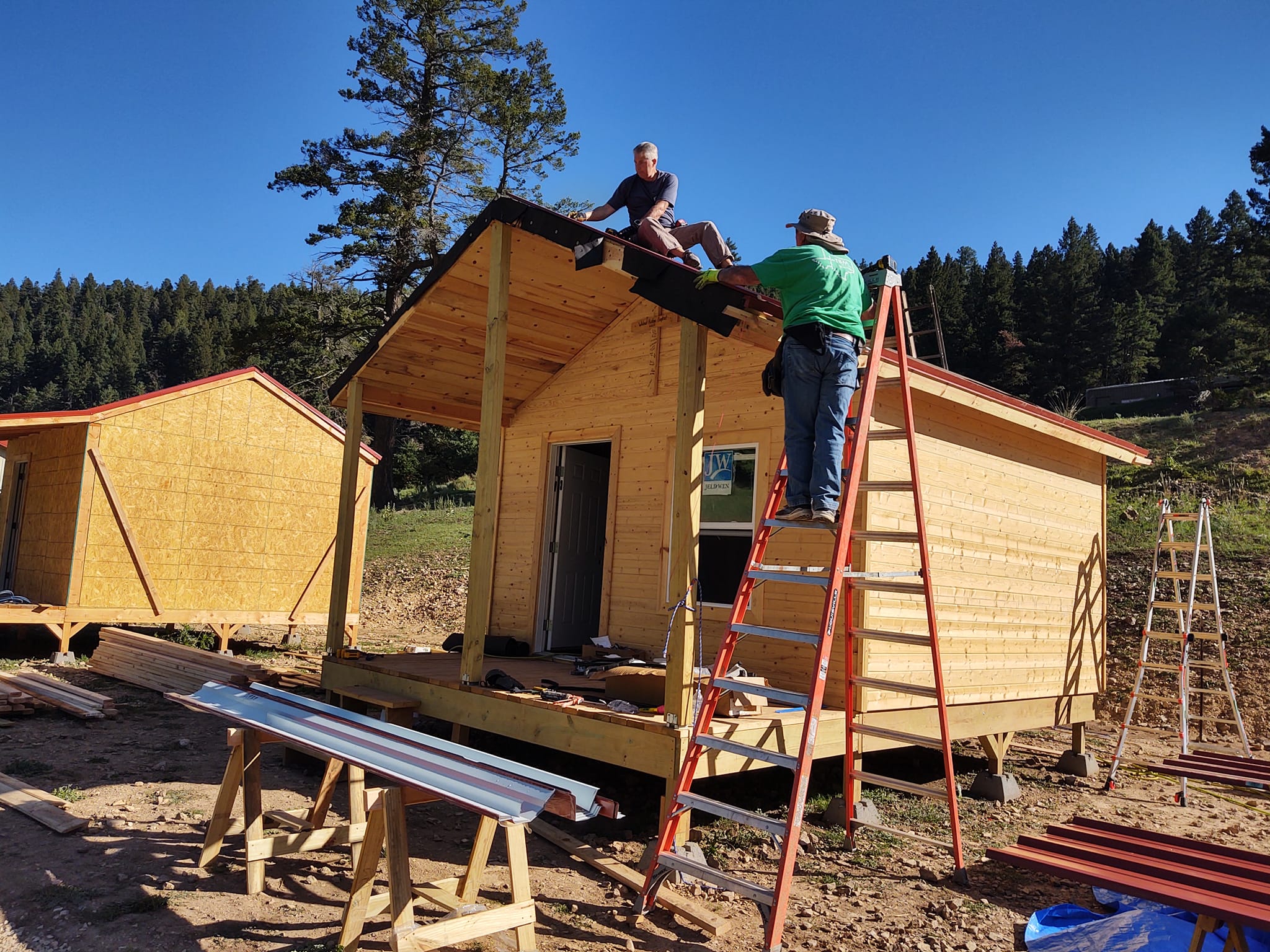
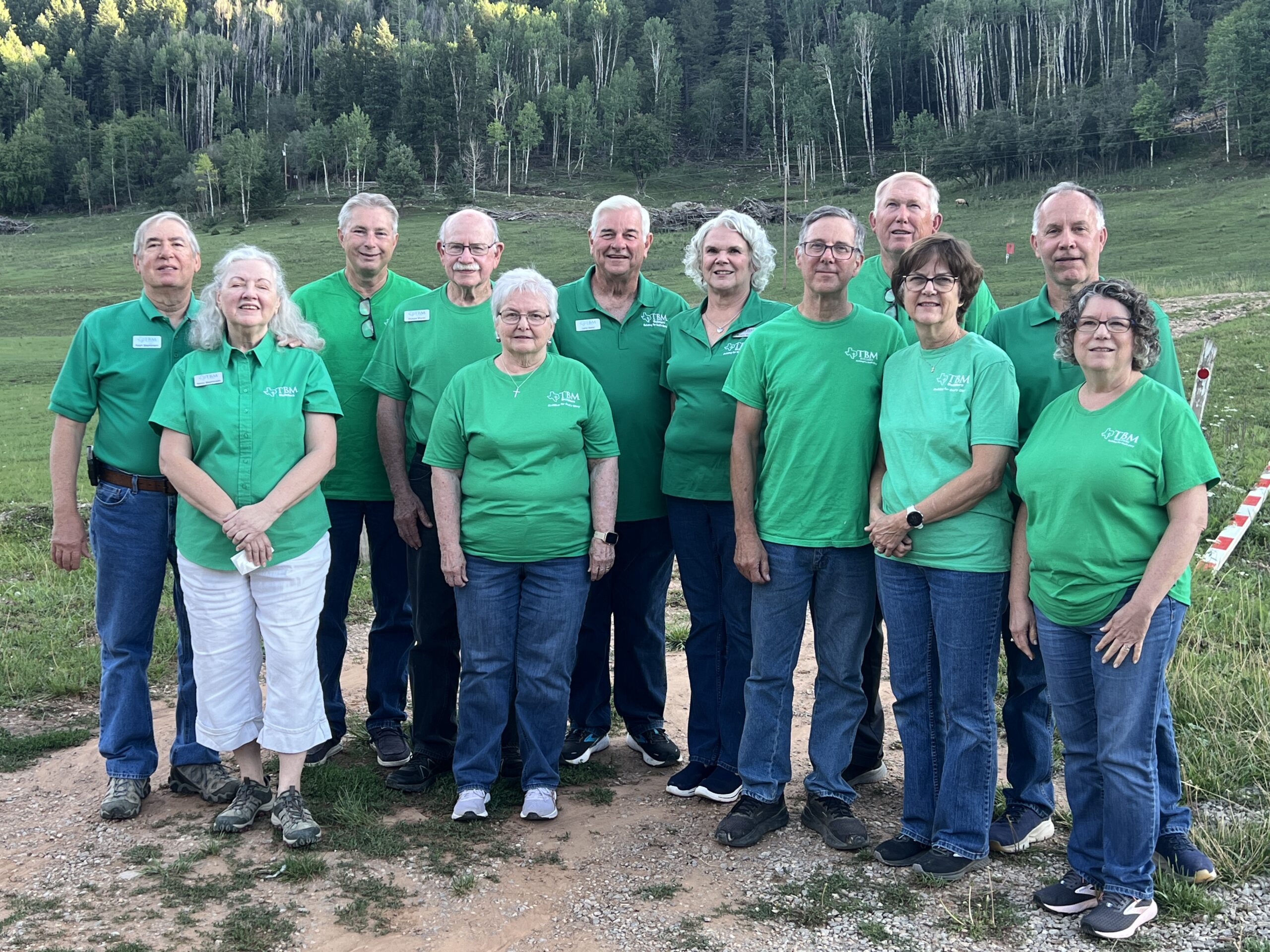
The eight-man, five-woman team built two cabins and repaired outdoor stairs on a dormitory facility, as well as making curtains and other items. They arrived in early August, just as summer camps wrapped up.

Richard Shaver (left) and Ralph Stephenson (right) construct dormitory stairs at Aspendale Mountain Retreat Center in Cloudcroft, N.M. (Texans on Mission Photo / Ferrell Foster)

“The timing was perfect,” said Jim Pettit, center director.

Walnut Ridge Baptist Church in Mansfield built the shell of the cabins in July. Then the Texans on Mission team finished the roof and interior.

Aspendale is in New Mexico, but it’s a camp associated with El Paso Baptist Association. It occupies a high valley with elk grazing during the morning and evening.

“You couldn’t pick a better place weather-wise,” with lows in the 40s and highs in the 70s, said Ralph Stephenson, coordinator of Texans on Mission Cabinet Builders. But the sun is “a little bit more intense with the altitude,” and breathing required some adjusting.

Larry Quinn, coordinator of Texans on Mission Camp Builders, called Aspendale the “westernmost camp that we have. Even though it’s in New Mexico, … we consider it one of our camps.”

Aspendale is a small camp serving the region around El Paso, which is “one of the poorer areas of Texas,” Pettit said. “We don’t have a lot of financial resources to fall back on.”

Impressive attitudes and skills

Texans on Mission Builders completed two cabins at Aspendale Mountain Retreat Center in Cloudcroft, N.M. (Texans on Mission Photo / Nancy Stephenson)

The cabins the Texans on Mission Builders worked on are 14 feet by 14 feet, providing a bathroom with a shower, kitchenette and sleeping area.

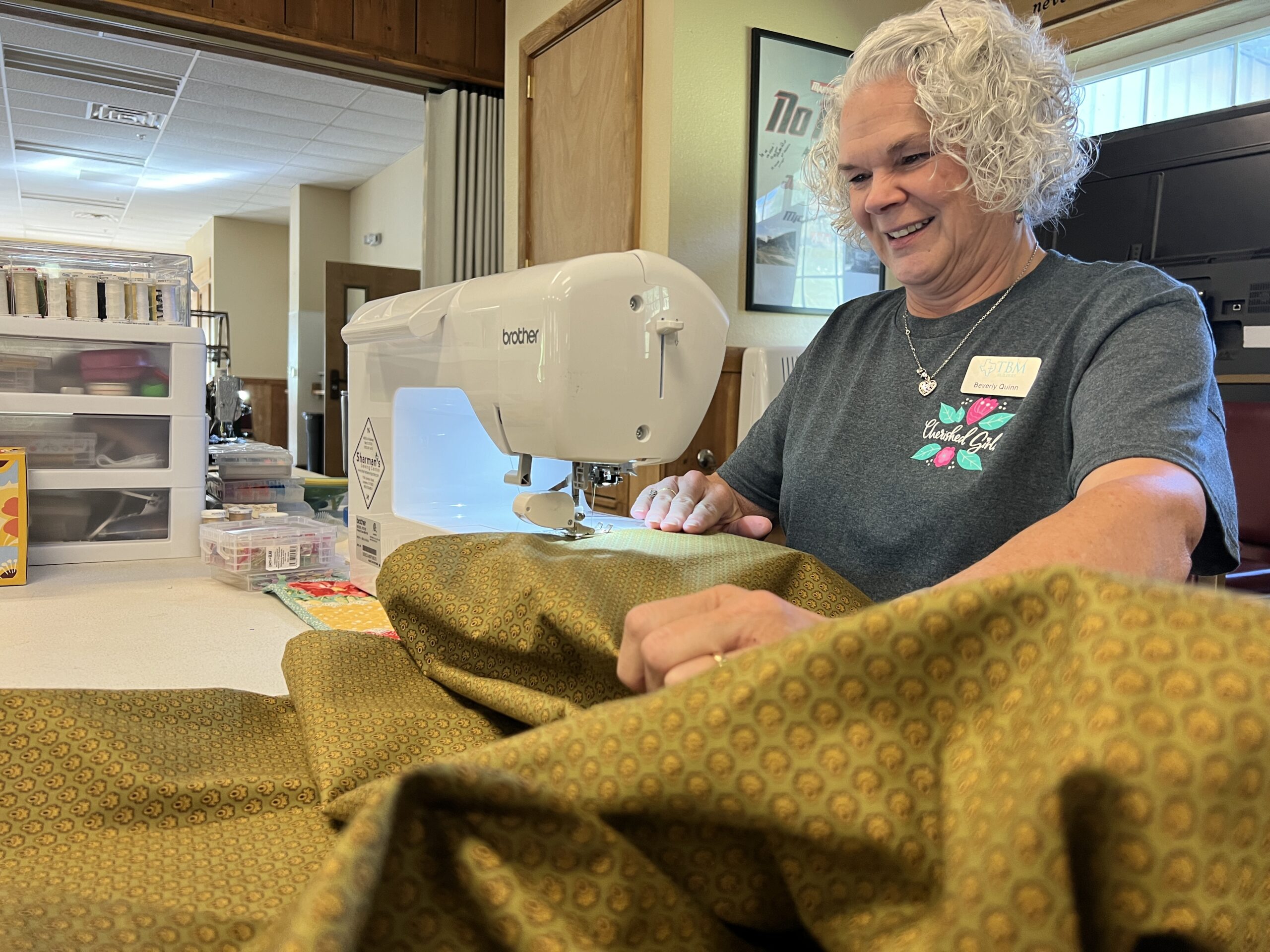
While Texans on Mission men built the cabins and reconstructed the outdoor stairs, the women sewed curtains for the cabins and made bags to be sold in the camp store.

Beverly Quinn said they also made blankets to be given away during Texans on Mission’s Christmas in the Valley program for families in the lower Rio Grande Valley.

The camp director’s introduction to Texans on Mission came last year.

“I was thoroughly impressed with the group that came last year and was excited that they had agreed to come back this year,” Pettit said.

“Everyone has been a blessing—great spirit, great attitude. You can tell there’s just the love to serve Christ in his kingdom work.”

Pettit also was “impressed with the professional work they perform” and with their concern for the finished product.

“I’ve just been totally impressed with the skills and the attitude of men and women that took time out of their schedule to come.”

Commitment to the work

Quinn has a deep spiritual commitment to supporting the work of camps.

“There’s about two places where children make major decisions for their life,” he said. “One of them is Vacation Bible School, and the other is camp.

“And I can’t tell you how many times I have heard from people that I used to know in my workaday world that say, ‘Oh, you’re at a camp that I went to,’ or ‘You’re at a camp where I accepted Jesus as my personal Savior.’”

Quinn said the Camp Builder volunteers “just feel obligated to continue that process. These camps really operate on shoestring budgets. So, it’s important that they have a little help from time to time, and the labor that we provide is free to them.”

Jerry and Ruth Kitts of Fruitvale have been working with Camp Builders for three years. “We were looking for some place to serve in retirement, and this fit our needs very well,” Jerry Kitts said.

“My wife and I serve together, and we want to be together,” he said. There are other ministries where he could work with tools and building, “but very few of them give the opportunity for the wife to participate, and Camp Builders is perfect.”

Texans on Mission Builders volunteers at Aspendale Mountain Retreat Center in Cloudcroft, N.M. (Texans on Mission Photo / Ferrell Foster)

Since Richard Shaver from Gainesville started working with Texans on Mission Builders in 2004, he has participated in almost 100 jobs.

He said the most rewarding part of the work are the friendships and “going to new parts of the state and the United States.”

He and his wife, Donna, have worked in four or five states other than Texas.

“We really enjoy just moving around with them, being with Christian friends,” he said.

“Everybody’s so friendly. They work with you. … When I started, I was not a builder.”

Others, however, gradually taught Shaver varied building skills. “You just get together, and it just seems like everybody fits.”

Why does he do it? “Well, I do this work to spread the word of our Lord and Savior.”

Willingness to learn

Quinn said some volunteers have construction skills when they begin, but others are new to building.

“Basically, what we ask for is people that are willing to learn, and they get mentored and taught on the job,” he said.

“As a matter of fact, I was one of the ones that didn’t have the opportunity to work in construction during my lifetime, and as a result I had to learn everything on the fly. But it’s a lot of fun, and the people and the guys are really great to do that with you.

Beverly Quinn sews curtains for the cabins at Aspendale Mountain Retreat Center in Cloudcroft, N.M. (Texans on Mission Photo / Ferrell Foster)

“The ladies do the same thing,” he continued. His wife, Beverly, kept telling the other women that she doesn’t sew. “Next thing I knew, I was buying her a sewing machine because she wanted to sew, too.”

Speaking to others who might want to be part of Camp Builders, Quinn said, “Just come pitch in and have a good time with us.”

Stephenson noted the varied Texans on Mission Builders groups “need more people, but whenever we come out, God always seems to bring the project to a successful conclusion, no matter how many people show up.”


People globally want leaders to stand up for believers

WASHINGTON (RNS)—A new Pew Research Center study revealed people around the globe favor leaders who stand up for their constituents with religious beliefs, even if the beliefs are not their own.

This survey was conducted between January and May of this year and reflects the data from nationally representative surveys of more than 53,000 respondents in 35 countries.

Residents of Indonesia, Bangladesh and the Philippines stood out as those who most desire national leaders who stand up for people with religious beliefs. Indonesia had the highest percentage of adults (90 percent) who say it is very/somewhat important.

Indonesians and Filipinos also placed at the top of countries where respondents wanted their leader to have strong religious beliefs of their own, along with Ghana, Kenya, Nigeria and South Africa.

Indonesians and Bangladeshis were the most likely to say they want their leaders to share their beliefs. Both countries are majority Muslim.

Swedish adults were the least likely to say it’s vital to have a prime minister with strong religious beliefs, with just 6 percent sharing that view.

In every country, the religiously unaffiliated were the least likely to say that leaders should stand up for people with religious beliefs.

Young and old generally agree

While that may be expected, the survey presented a wrinkle: Though there is often an age gap when it comes to religiosity, younger and older adults largely agreed in Pew’s survey that their president or prime minister should stand up for religious citizens and have a faith of their own.

The exception, said Jonathan Evans, senior researcher at Pew Research Center, is Latin America, where adults under 39 “are consistently less likely to say that each of these traits is important.”

Evans said Pew found the United States stood out among wealthier nations in the findings: 64 percent of U.S. respondents said it is important to have a leader who stands up for religious beliefs, a larger percentage than other industrialized nations. Only 42 percent of respondents in Germany and 25 percent of respondents in France agree.

In the United States, two-thirds of respondents say it is important to have a leader at the national level who stands up for people with religious beliefs. Less than half of respondents believed it is essential for their leader to have strong religious beliefs or have religious beliefs that are the same as their own.

This finding has implications as the U.S. election approaches. Vice President Kamala Harris identifies as a Christian and grew up with a Hindu mother, while her running mate, Minnesota Gov. Timothy Walz, is a Lutheran who grew up in a Catholic home.

Former President Donald Trump identifies as a Christian and has drawn support from evangelical Christian voters. His vice presidential pick, U.S. Sen. JD Vance, is an adult convert to Catholicism.


Complaint filed over Johnson Amendment’s application

TYLER (BP)—The National Religious Broadcasters association has joined a complaint alongside two East Texas churches calling for the Johnson Amendment to be declared unconstitutional.

The complaint was filed in the United States District Court for the Eastern District of Texas in Tyler on Aug. 28.

Sand Springs Church in Athens and First Baptist Church in Waskom joined in the complaint as did Intercessors for America, a national prayer ministry based in Purcellville, Va. First Baptist in Waskom is uniquely aligned with the Southern Baptists of Texas Convention.

Congress approved then-Senator Lyndon Johnson’s amendment to the U.S. tax code in 1954 that prohibited 501(c)(3) organizations such as charities and churches “from engaging in any political campaign activity.” In 1987, Congress added a clarification that the amendment also applies to statements opposing candidates.

According to a National Religious Broadcasters statement, the complaint details how organizations have “engage[d] in electoral activities that are open, obvious and well-known, yet the IRS allows some, but not all, such organizations to do so without penalty.”

The Internal Revenue Service, it continued, routinely “acts in an arbitrary and capricious manner” toward nonprofit organizations “that disfavors conservative organizations and conservative, religious organizations.” Such an unequal enforcement, it determines, constitutes “a denial of both religious freedom and equal protection.”

And as such, the National Religious Broadcasters notes, the amendment itself should be discarded.

“For too long, churches have been instructed to remain silent on pressing matters of conscience and conviction during election season or risk their 501(c)(3) status,” said National Religious Broadcasters President and CEO Troy A. Miller.

“We believe that all nonprofits should have the constitutional right to freely express their point of view on candidates, elections and issues on the ballot. Our challenge to the Johnson Amendment is about securing the future of free expression for all Americans, particularly those standing in the pulpit.”

National Religious Broadcasters General Counsel Michael Farris said the amendment’s history showed a “discriminatory” pattern of respecting only certain groups’ freedom of speech.

“Our intent is to vindicate the right of every church and religious nonprofit to express what their faith teaches on every issue, including political matters, as is their right and their duty,” he said.


Taliban laws regarding women prompt calls for prayer

NASHVILLE (BP)—A new Taliban law restricting the rights of women even further has led to calls for prayer from Arabic church leaders as well as Afghans who have fled in recent years.

“These women are victims,” said Raid Al Safadi, pastor of Arabic Baptist Church of San Antonio. “Islamic law and Sharia law deal with them as slaves, something that is owned and not as a human being.”

The “Law on the Promotion of Virtue and the Prevention of Vice” was adopted recently in Afghanistan. Among other things, it mandates women wear clothing that covers their entire bodies, including their faces. It also bans their voices being heard in public and adds more restrictions to moving about without being accompanied by a male relative.

“This makes me very sad,” Al Safadi said. “They have no rights, no freedom to express themselves or have a personality. They are not allowed the choice of how to live.”

Twenty years after its removal by U.S. troops, the Taliban returned to power in August 2021 as America’s military withdrew. That soon brought a return to the previous draconian laws as part of Taliban rule with the few Christians remaining forced to operate under extreme secrecy.

“It is a mess, and a lot of Afghanis came to America. One of our guys, though, told me through tears how much he praised God. His family was here, and there is a chance for his daughters to go to school in America,” Al Safadi said.

‘The Taliban has taken everything’

Another Afghan refugee who asked to remain anonymous told BP the news left him feeling “completely hopeless.”

“The Taliban has taken everything,” he said. “They cannot see people happy. I am very sad and worry about my own family. I am praying to God to show me a way to protect them from Satan.

“As a Christian, prayer is everything for me to share my sadness, and happiness, with God. Prayer has its own power and mine is that God establishes his kingdom in Afghanistan for his people.”

The new law also requires men to grow beards, bans drivers from playing music and restricts media from publishing images of people.

Al Safadi, who is from Jordan, tells of his own experiences in returning to remote villages that have a Christian presence because individuals have seen healings and been visited by Jesus in their dreams.

“It opens people’s eyes to something bigger than Islam,” he said. “I received many calls from those wanting to know more about Jesus.

“We can reach Afghanistan by reaching Afghani people in America. They are a big field and ready. Share the gospel with them to help them understand Christianity. When they become Christians, it becomes a great opportunity to become a ministry in Afghanistan for the future.”

There is a reason for the Taliban to want to limit exposure to technology. Al Safadi told how sites like YouTube can be crucial not only for Afghans to learn English, but also to be exposed to and learn about Christ.

“We need to work to empower and make disciples of Afghani people in America so we can send them all over the world,” he said. “They are in America, but their dream is to return to Afghanistan. When they become disciples, they can do something.”


‘Strawberry Fields’ inspiration bears Salvation Army fruit

(RNS)—Let me take you down to Strawberry Fields. No, not the memorial in New York’s Central Park to the former Beatle John Lennon, who was slain in Manhattan in 1980.

Instead, go to the place that inspired his song—where the Salvation Army is conducting an experiment in mixing tourism with faith and social action.

The original Strawberry Field was a children’s home in Liverpool, just around the corner from John Lennon’s childhood home.

It inspired the Beatles’ 1966 track “Strawberry Fields Forever”—penned by Lennon, who added an “s” to its name. It also may be one of the most innovative projects undertaken by the Salvation Army, the Christian anti-poverty movement founded in mid-1800s London.

Strawberry Field is known for its red gates festooned with strawberry motifs, which are often thronged with tourists taking selfies and some adding to the graffiti on the gates’ stone pillars.

But the Salvation Army has deployed the site’s connection to the Beatles to draw more visitors to fund its mission and encourage people who never would consider stepping inside a church to find out about Christianity.

Innovative spaces

The children’s home, closed in 2005, has been demolished. In its place is a new structure that contains a prayer space, a café and an exhibition about Lennon and the Beatles that includes one of Lennon’s pianos.

The building also houses a training project to help young people with special needs get into work.

The piano on which John Lennon composed “Imagine,” loaned to Strawberry Field by the George Michael estate, on display at the Salvation Army museum in Liverpool, England. (Photo / Catherine Pepinster)

Stymied by COVID-19 pandemic closures when it first opened in September 2019, it is at last coming into its own. Last year, Strawberry Field welcomed 120,000 paying visitors.

This year the Salvation Army expects even more. International Beatles Week, which started Aug. 22, will put it on the tourist trail that includes the nearby childhood homes of Paul McCartney and Lennon, local Beatles museums and other landmarks.

But none of the rest combine religion with Beatles tourism.

The Strawberry Field project is the result of years of discussion and prayer by the Salvation Army after it closed the children’s home.

The worldwide movement, founded by William and Catherine Booth to work in urban slums, became known as the Salvation Army in 1878.

It adopted a quasi-military structure, with officers rather than clergy leading it and members wearing uniform. Its membership across the world of 1.5 million still focuses on social action, and its officers—like Strawberry Field’s mission director, Kathy Versfeld—still wear the uniform.

Lennon is not a natural icon for a Christian organization. In 1966, he told an interviewer his band was “bigger than Jesus,” and opined: “Christianity will go. It will vanish and shrink.”

In the uproar that followed, more than 30 United States radio stations banned Beatles’ tracks, and young people were urged to burn their Beatles records and memorabilia.

In August 1966, as the Beatles launched a U.S. tour, Lennon said at a press conference: “I’m not anti-God, anti-Christ, or anti-religion. I was not knocking it. I was not saying we are greater or better.”

Rather than comparing himself to Christ, he said, he was trying to explain the decline of Christianity in the U.K.—which has seen more prosperous days.

Considering this history, honoring Lennon took more than a leap of faith, according to Versfeld.

Invite tourists to become seekers

“The Salvation Army through its research discovered a surprising fact, and that was that every year 60,000 John Lennon fans and Beatles fans were bringing themselves uninvited to the red gates, and many came not knowing what Strawberry Field was,” she said.

“The Salvation Army realized there was the potential not just for a commercial operation here,” she added, “but an opportunity for engagement with those individuals who would not quickly come through the doors of a Salvation Army church or center.”

The Beatles interactive display at Strawberry Field in Liverpool, England. (Photo / Catherine Pepinster)

The refrain of Lennon’s song—“Let me take you down, to Strawberry Fields”—is reflected in the Salvation Army’s invitation to explore its site, including the gardens where Lennon used to play. He later remembered visiting the home’s annual summer fete with his Aunt Mimi.

Paul McCartney—who wrote his song “Penny Lane” about his own childhood memories of Liverpool, in response to Lennon’s memories of Strawberry Field—has said the Salvation Army home and gardens were a utopia for the young Lennon.

“The bit he went into was a secret garden … and he thought of it like that. It was a little hideaway for him … living his dreams a little, a getaway. It was an escape,” McCartney says in Craig Brown’s biography of The Beatles, One, Two, Three, Four.

The Salvation Army said it wants visitors to Strawberry Field to be able to “find out more about what it means to explore spirituality and faith” and that the Army strives to be “an inclusive community with God at the center … but you do not have to belong to a Christian church—or any religious tradition at all to take part in what’s on offer here.”

‘To open the gates and do good’

Versfeld and her team want to challenge people who visit the center: “Strawberry Fields Forever—but what does last forever?” she asked. “What does abundance look like and what does it mean for us to open the gates and to do good?”

Lennon’s song “Imagine” is highlighted at Strawberry Field as an anthem for peace, its words carved in stone in the garden.

The upright Steinway piano, on which he composed the song, is on loan to the site from the estate of the late British singer-songwriter George Michael, who bought it at auction in 2000.

The bandstand, in the shape of a drum, at Strawberry Field in Liverpool, England. (Photo / Catherine Pepinster)

According to Allister Versfeld, Kathy’s husband and development director of Strawberry Field, it was the Salvation Army’s mission that convinced Michael’s representatives to lend the piano.

“They spent the day here. It was the work done here that convinced them it should come here,” he said.

Visitors today are invited to assist in Strawberry Field’s employment and training programs, Steps to Work, which are supported in part by the £11.20 admission fee—about $15—for the Beatles interactive display, together with spending in the café and the gift shop.

A ukulele band is among those who volunteer their time. On a recent day their version of the Beatles’ “Ob-La-Di, Ob-La-Da” filled the café. In the garden, there is space for people to spend time in contemplation—while at a far end is a giant bandstand shaped like a Salvation Army drum.

“This drum is on its side because in our early days people would see the band marching down the high street, and the drum would be used as a place of prayer,” explained Versfeld.

The doors are open seven days a week for tourists and local people alike. When the Versfelds arrived, the famous strawberry gates had been shut for years, but now, says Kathy, “The gates are open for good.”


Truett Seminary celebrates 30 years, looks to future

WACO—Baylor University’s Truett Theological Seminary returned to its birthplace at First Baptist Church in Waco for an Aug. 27 convocation marking 30 years of spiritual formation and preparing students for ministry.

“In 1994, in this very room, a handful of Truett Seminary administrators, faculty and staff, along with 51 students and a goodly number of stalwart supporters, began the story of which we are now a part, started the stream in which we now stand, sang the song we now sing,” Dean Todd Still said.

Truett Seminary classes met in the facility of First Baptist Church in Waco until 2002, when the seminary moved to its Baugh Reynolds Campus on the grounds of Baylor University.

Seminary ‘still on mission’

Brad Creed, the seminary’s second dean, reflected on the days preceding the seminary’s birth.

Brad Creed, second dean of Baylor University’s Truett Theological Seminary and president of Campbell University, spoke at Truett’s 30th anniversary convocation in Waco.

“I was there when Truett Seminary was a concept, a hope and a dream,” said Creed, now president of Campbell University in Buies Creek, N.C.

“I was there when it was two people, a legal pad and a pencil for sketching out those hopes and dreams. And look at you now, making those compelling ideas incarnate on a continuing basis.”

The seminary launched during a “time of denominational turmoil and unrest” in Baptist life, he acknowledged. While some other institutions created at that time did not survive, Truett Seminary persevered.

“Truett Seminary is visible. It is virile. It is viable. It is vibrant and still on mission to ‘equip God-called people for gospel ministry in and alongside Christ’s church by the power of the Holy Spirit,’” he said.

Creed offered thanks for the vision of the late former Baylor President Herbert Reynolds and former provost Donald Schmeltekopf and for the support of founding dean—and later university president—Robert Sloan, early faculty and donors who made Truett Seminary possible.

Pro Ecclesia, Pro Texana, Pro Mundo

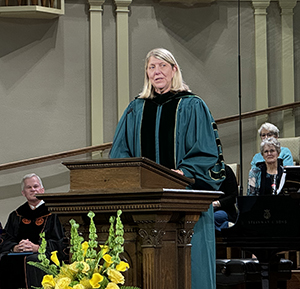
Since its founding, Truett Seminary has exemplified Baylor University’s recently expanded motto, Pro Ecclesia, Pro Texana, Pro Mundo—“for the church, for Texas, for the world,” Baylor President Linda Livingstone said.

Baylor University President Linda Livingstone underscored Truett Seminary’s contributions to the church, to Texas and to the world.

She particularly noted the partnerships Truett Seminary and Baylor University have with the Baptist General Convention of Texas and the Baptist World Alliance.

“Truett celebrates the diversity of the BGCT while also contributing to that diversity,” Livingstone said. “This includes racial diversity, with students from all backgrounds and walks of life, and it includes gender diversity.

“Truett plays an important role in fully affirming women in their call to ministry. And in this increasingly polarized theological landscape, Truett’s affirmation of women in ministry is more important than ever.”

After looking at Truett’s past and present, Still raised the question, “Where do we go from here?”

Truett Seminary will continue to embrace its identity as “an orthodox, evangelical multidenominational school in the historic Baptist tradition embedded in a Christian R1 university,” he said.

Dean Todd Still emphasized Truett Seminary’s goal of providing “quality theological education that is accessible, affordable and achievable.”

The seminary will seek to train “thoughtful, faithful Christian ministers for a 21st century church and world” by providing “quality theological education that is accessible, affordable and achievable,” he added.

“More than lofty—much less, empty—rhetoric, these are erstwhile commitments that ground us and guide us day in and day out, week in and week out, year in and year out. … We are all in—committed to being both humble and hungry, gritty and graceful, resolutely refusing to rest on our self-fashioned laurels,” Still said.

At a luncheon following the convocation, Truett Seminary announced church historian Alan Lefever as the inaugural Russell H. Dilday Endowed Visiting Professor in Baptist Life and Leadership.

Lefever, director of the Texas Baptist Historical Collection, has taught as an adjunct at Truett Seminary for 25 years. He expressed appreciation for the opportunity to serve at a seminary that “takes academics seriously,” while also creating a “culture of fellowship” and a “community of joy.”


On the Move: Pardue

Aaron Pardue to NorthSide Baptist Church in Weatherford, as discipleship pastor, from Northway Baptist Church in Angleton, where he was lead pastor.


Texans on Mission wraps up response to Hurricane Beryl

BRAZORIA—Texans on Mission Disaster Relief volunteers completed their six-week deployment in the aftermath of Hurricane Beryl, which struck the Houston area July 8.

Texans on Mission initially responded to the hurricane by providing mass meals for thousands of residents who lost power for an extended period.

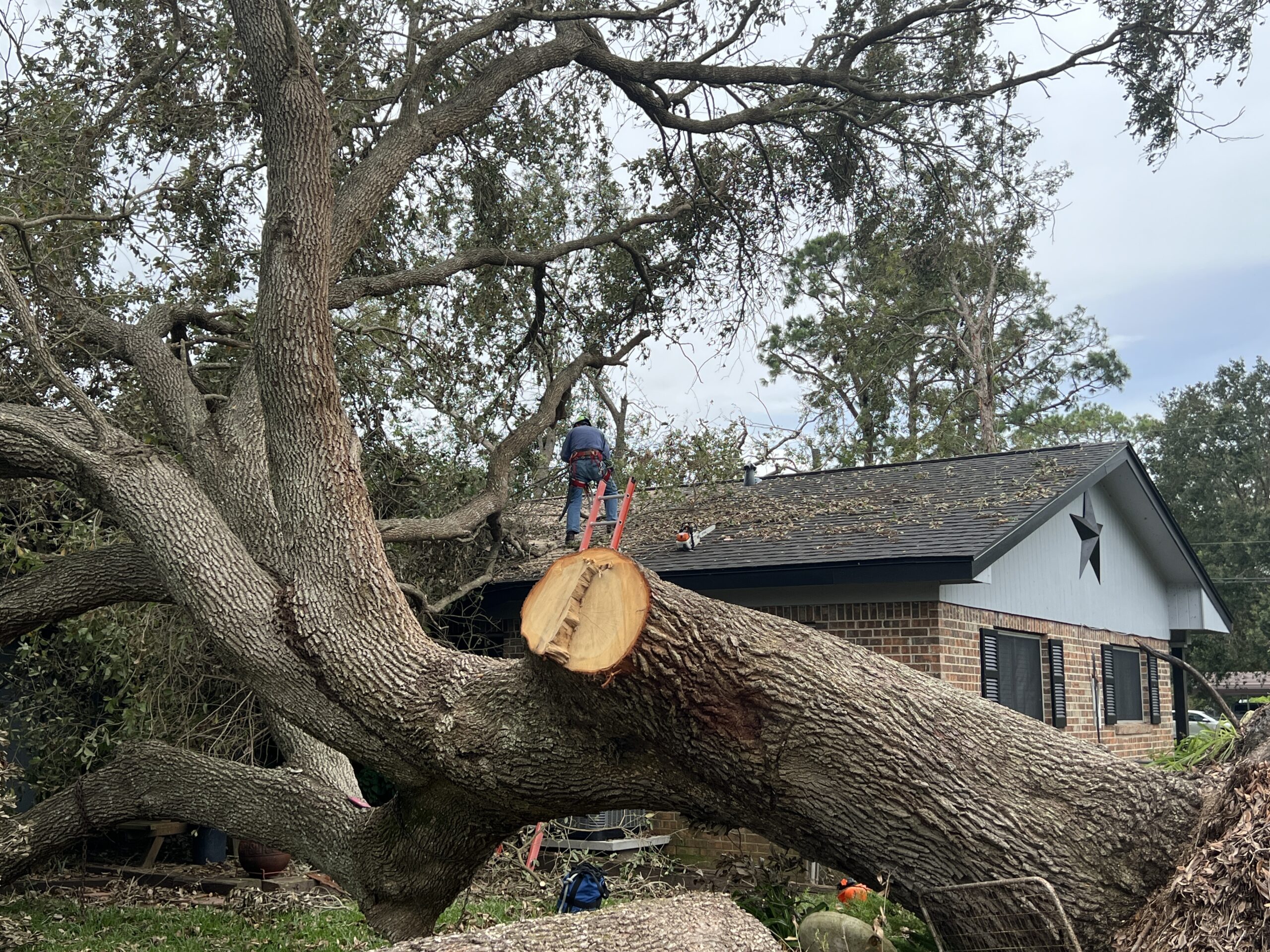
Then, the bulk of the effort shifted to Brazoria, south of Houston, where a resident said “thousands of trees” had been uprooted. In that area, chainsaw teams from throughout the state and beyond cut trees and limbs for removal shortly after the storm.

Texans on Mission volunteers and others contributed 1,815 days and 15,532 hours in service to people in need in Brazoria alone, said David Wells, Texans on Mission state disaster relief director.

“That’s equivalent to almost five years of work for one person.”

Another 407 volunteer days were worked in the Houston mass feeding operation.

The teams also reported 14 professions of faith in Christ and 401 ministry contacts in the two locations.

Brazoria First Baptist Church and its pastor, Greg Smith, were “very good to us,” Wells said. “It was a very strong relationship.”

The congregation provided its building for meals and sleeping quarters for the volunteers. “They have a powerful ministry and powerful opportunity” in their community, Wells continued.

Texans on Mission volunteers help with tree removal in the Houston area after Hurricane Beryl. (Texans on Mission Photo)

Seven chainsaw work orders remained when Texans on Mission pulled out, Wells said. Those were handed off to Brazoria First Baptist to be completed through their ministry.

Thinking more broadly of the Texans on Mission response to Hurricane Beryl, Wells said it “has been challenging, and yet our volunteers responded above and beyond normal expectations.

“They just kept at it, working to feed people, remove trees and share the love of Jesus in very practical ways.”

Because of Texans on Mission’s large network of volunteers and outside collaborators, it was able to coordinate deployment of volunteers and then rotate in new teams, he said.

“It requires a lot of logistical work, but we have both volunteers and staff who know how to operate this system in an effective manner.”

Every disaster is different and requires Texans on Mission to work with government entities in determining how best to respond.

“The level of complexity is high, but we have great people who have planned well and are also flexible in responding to each unique situation,” Wells stated.

The City of Brazoria issued a proclamation of appreciation for all organizations that helped respond, specifically noting Texans on Mission’s work providing free laundry to residents and assisting with tree removal.

“We, the City Council of Brazoria, Texas, wish to extend our sincerest gratitude and thanks to the countless people who helped during and after the storm,” the proclamation read.