Advent a make-or-break chance for churches, visitors

WASHINGTON (RNS)—Deck the halls and cue the pageant! The weeks before Christmas mark a time in American churches when the lapsed and the curious who seldom darken the door just might drop by for a taste of the season's spirit.

But if visitors briskly come and go without considering a commitment to join or get involved, then churches will have missed a golden opportunity with huge implications for the future.

Attendance tends to increase at worship services for the four weeks of Advent, but new attendees often don't see or feel what makes others stay involved year-round.

Part of what's at stake, researchers say, is the survival of congregations. Unless they start engaging the types of people who visit only at the holidays, aging mainline churches will have virtually no one in them in 30 years, according to Scott Thumma, a sociologist of religion at Hartford Seminary. Evangelical congregations, too, are in many cases poised to face a similar fate.

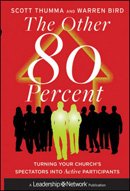
"If you just have the Advent season without also calling people to a more significant, disciplined sense of what the Christian life is, then you run the risk of letting people come in once a year and feel that they've done their Christian duty," said Thumma, author of The Other 80 Percent: Turning Your Church's Spectators into Active Participants.

The Christmas season is when Americans are most open to considering matters of faith, according to data from LifeWay Research, a Southern Baptist research firm. In a 2008 survey, 47 percent said they've been more open during the holidays. That's more than after a national crisis such as 9/11 (38 percent), after a natural disaster (34 percent) or the birth of a child (28 percent).

Attendance tends to increase at worship services for the four weeks of Advent, according to Thumma. But new attendees often don't see or feel what makes others stay involved year-round.
Scott Thumma

"When we get caught up in all the celebration and don't take time to think about communication, we miss a big point of the Christmas season," said LifeWay Research President Ed Stetzer. "I would grade churches a C or a D on this. A lot of churches just go through the motions and assume people will come."

This year, new initiatives are courting those who've wandered from the flock. Some call them the "Chreasters" — people who rarely show up beyond Christmas and Easter.

The Catholics Come Home project is for the first time running a $3.5 million TV campaign nationwide. CCH is also launching new local campaigns in St. Louis, Tampa and Fort Wayne, Ind. The Episcopal Church is running an online Advent greeting in which a young adult woman waxes nostalgic about holidays spent in church and invites everyone to services.

The challenge for congregations, however, involves breaking old habits and learning new ones during what is already a busy, demanding time of year.

"Special efforts (to engage inactive members and seekers) are not likely to occur during the Christmas season," said Alan Newton, executive minister for the American Baptist Churches in and around Rochester, N.Y. "It is a busy season with lots of charitable work, extra visiting of shut-ins and the like, (plus) extra services. A lot of the regulars travel on holidays, making extra efforts challenging."

Despite the difficulties, churches are finding ways to turn holiday activities into forums where people with tenuous or nominal ties to a faith community can explore deeper ones. Approaches vary widely, but all tend to give visitors a taste (or a reminder) of what's meaningful about church commitments.

Sometimes the focus is on a few individuals. At Our Saviour's Atonement Lutheran Church in New York, ministry associate Jacob Simpson said he struggles to get consistent participation from the six teenagers in his confirmation group.

But at Advent, he could ask a new question: how would you like to help your neediest neighbors? Their answer: with a winter clothing drive and volunteering at a soup kitchen. Based on their excitement for projects of their own design, he expects close to full participation.

"Kids don't understand why they should be coming to church, and churches often don't give kids enough to do," Simpson said. "We can be honest with them that this world is not perfect, and we're called to do something about it."

At worship services and special events, churchgoers need to remember the welcoming and non-judgmental father from the parable of the prodigal son, Thumma said. His tip: remind greeters to avoid comments like, "Where have you been? We haven't seen you in ages!" Stick instead with, "It's great to see you! How are things going? Come see what's happening here … "

Another tip: create environments where newcomers and inactive members can see and hear what makes church life meaningful. This might be a rolling video or a brief presentation during a reception. It could be a hallway lined with photos from mission trips, boys and men shoveling out elders after snowstorms, and other highlights of the year.

"It seems like a perfect occasion for the pastor or some religious leader to say, 'It wasn't just the shepherds or the wise men back then'" who were giving, Thumma said. '"We have people who're giving all year round in this community.'"


Christmas ornaments change lives in Thailand

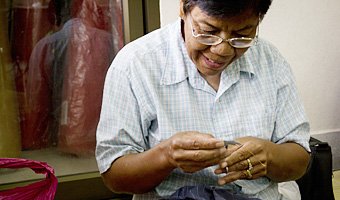
BANGKLA, Thailand (BP)—Ponpit Sayom uses a silver pen to sketch miniature figures of the wise men from the Christmas story and then cuts out the velvet ornaments that will hang on trees in countless American homes during the holidays.

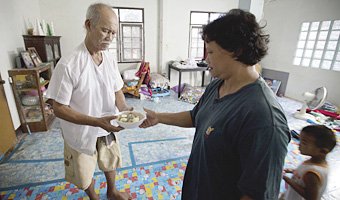
After making Christmas ornaments from 8 a.m. to 5 p.m. at Thai Country Trim, Ponpit Sayom comes home and cooks for her family, feeds and bathes her grandchildren and tends to her aging father who has Alzheimer's.

However, Christmas isn't celebrated in her home in Thailand. To her unbelieving family, Jesus is just another man. On Christmas Day, Sayom simply goes alone to church to celebrate her Savior's birth.

Food must still be earned, and her grandchildren need tending to. Sayom is the main breadwinner for her family of eight, especially since her husband's work has suffered setbacks from heavy rain and flooding. She prays one day her family will listen to the story represented in the ornaments she makes.

Sayom earns her wages by making hand-stitched Christmas ornaments for Thai Country Trim, a 25-year-old ministry that provides livelihood for rural Thai women.

Thai Country Trim employs 22 full-time workers at the ministry center — all Christians who lead Bible studies and small groups. The ministry also employs dozens of women who work from home, which allows them to make an income as they care for their children.

Thai Country Trim was the first artisan group in the Woman's Missionary Union WorldCrafts program that began in 1996 and now has national artisans in 33 countries.

Thai Country Trim employs dozens of rural Thai women who work from their home to make Christmas ornaments, enabling them to make an income as they care for their children.

WMU's support and promotion allows Thai Country Trim to employ more workers, director Cheryl Derbyshire said.

Derbyshire finds great joy in watching lives change as the 22 full-time workers share the gospel with the women who work from home who aren't Christians. Sayom, who has worked for Thai Country Trim for 20 years, is one of the full-time workers.

Sayom seems like the type of woman who'd spend her time in a rocking chair, sipping tea while rocking a grandchild to sleep.

But Sayom rarely has an idle moment. She spends her days and nights meticulously checking the stitching on Christmas ornaments. If a stitch is out of place, the entire ornament must be scrapped.

She rises at 5 a.m. to get her grandchildren ready for school. Then she heads to the Thai Country Trim center and draws and cuts out the figures of Christmas characters.

After working from 8 a.m. to 5 p.m., she returns home to cook for her family, feed and bathe her grandchildren and tend to her aging father who has Alzheimer's.

After others are in bed, she sits cross-legged on her linoleum floor and sews angel ornaments by the light of a fluorescent bulb until midnight to earn extra income.

To pass the time as she sews and decorates ornaments, Sayom sings praise songs and whispers prayers for her family. She's caring for three generations, her father, her children and her grandchildren.

A friend introduced Sayom to Thai Country Trim and helped her get a position making ornaments. She never had love before, she explains as tears form behind her silver glasses — tears of hurt, heartache and healing. Her father was always mean to her, she said, and her mom died when she was 7. Sayom said she grew up lonely and longing for love.

"When he's old, I don't want to take care of him," Sayom once told her brother.

But things changed when Sayom started working at Thai Country Trim. She learned she had value. She received praise for her handiwork and began taking pride in her work.

Like most Thais, Yupha Hanuman was a Buddhist. When her daughter caught dengue fever, Hanuman's Christian coworkers at Thai Country Trim covered her in prayer. God healed her daughter and, at a Christmas party, Hanuman chose to believe the message behind the ornaments she makes. Thai Country Trim allows Hanuman to provide for her aging mother.

In weekly Bible studies that are a part of the workday at the ministry center, Sayom heard God is like a father and loves her unconditionally. She saw his love in her coworkers' lives.

"My Christian friends loved me," Sayom says. The love the Christian workers showed her stirred her to believe in Christ.

Because of Christ's love, she says she's able to love her father. After a major surgery, her father needed to live with one of his children. He asked if he could live with her.

"I didn't want to," she admits. "But thanks to God, because when I came to know God, God changed my mind to love my dad."

God is changing her father's heart too. Although still not a Christian, he treats Sayom with more respect now.

Derbyshire has watched Sayom's transformation. As her self-esteem rose, she began to reach out to others. Sayom started working at home and has now moved to a full-time position working at the center. She helps lead weekly Bible studies with women who haven't believed yet.

Because of Thai Country Trim, Sayom is able to support herself and her family. She has a Christian community who supports her and nurtures her.

Life is still hard for Sayom. Her family has yet to believe. As mother to both her children and to her four grandchildren, she must continue to provide for them financially.

But, "God's greater," Sayom said, smiling.


Louisiana woman finds hope through Christian Women’s Job Corps

MONROE, La.—Danielle Flintroy described her life as "a complete mess" before arriving at Christian Women's Job Corps.

"I had lost my job, my home and my car," Flintroy said. "But more importantly, I almost lost my faith in God. It was the scariest thing I've ever experienced. I had an 11-year-old son to provide for, and my life was falling apart."

After being presented with the Sybil Bentley Dove Award, Danielle Flintroy speaks to the crowd gathered at the Louisiana Baptist Convention annual meeting at First Baptist Church in Covington.

Flintroy came to Christian Women's Job Corps of Monroe, La., because she wanted to make a step in the right direction, she said. Her favorite part of the program was the support and encouragement from her instructor and classmates.

"All the ladies bonded and became like a family," she said. "A loving family was exactly what I needed, because I felt my own family had turned their backs on me when I need them the most.

"Being in CWJC was like being welcomed into open, loving arms. It was peace in the middle of a raging storm. It was acceptance and guidance when I felt I didn't deserve it."

Woman's Missionary Union launched Christian Women's Job Corps more than 14 years ago to help women change their lives for the better by empowering them with biblical nourishment, a mentor for encouragement and accountability, and training opportunities to help them attain education, gainful employment and self-sufficiency.

Flintroy identifed Tonya Hancock, site coordinator for Monroe, as the most influential person for her in Christian Women's Job Corps.

"I already knew that with Christ all things are possible, but she made me believe it again," Flintroy said. "She made me know that God loves me in spite of myself and that he wants the best for me."

Her mentor, Tracey Bennett, said Flintroy has a kind and compassionate heart that draws her to help those in need or those less fortunate.

"Danielle seeks Jesus Christ in all she does," Bennett observed. "Her relationship with him spills over into all her other relationships. She knows and has experienced a tough and cruel world, but she uses the strength of the Lord to live her life."

In Christian Women's Job Corps, Flintroy learned first aid, CPR and computer skills. She prepared for a GED and learned interview etiquette and life management skills. But she said the most important thing she learned was Jeremiah 29:11—"'For I know the plans I have for you,' declares the LORD, 'plans to prosper you and not to harm you, plans to give you hope and a future.'"

"Because of CWJC, I have a much stronger faith and am ready to be a blessing for others in need," Flintroy said. "I give God all the glory for my blessings and triumphs. I can accept any challenges or obstacles with a smile in my heart because it's all in God's plan."

Flintroy is this year's recipient of the Sybil Bentley Dove Award, which is given annually to a current or former CWJC participant who advances herself through life skills, academic development, and faith in God. David George, president of the WMU Foundation, presented her with the award and a grant that accompanies it at the Louisiana Baptist Convention annual meeting at First Baptist Church in Covington.

Currently a resident and volunteer at the Louisiana Baptist Children's Home, Flintroy said her next steps are to find the job God wants her to have, secure housing for her and her son and get certified as a pharmacy technician.

"I am now able to use what I went through to let others know that no matter what you do or where you may end up, God will bring you out of the darkest hole and give you a purpose," she said. "You only have to seek him, and he will reveal his plan for you."


Parents, pastors wrestle with place of Santa at Christmas

WASHINGTON (RNS)—When John McCausland crafted his Christmas Eve sermon at his Episcopal church in Weare, N.H., he always followed a basic formula. There had to be a brother and a sister in the story. Jesus and the holy family played a prominent role. And there was always an appearance from Santa Claus.

The DVD "Why Do We Call it Christmas?" spends 45 minutes detailing the origins of Christmas traditions, including Santa Claus.

"If we never mention Santa Claus, then you create a parallel universe," said McCausland, who retired in June. "What I try to do in this story is to tie the two together, but not make Santa Claus primary."

McCausland kept the Jesus-and-Santa story tradition for 14 years at Holy Cross Episcopal Church. Children would carry the figures to the creche display and sit for McCausland's story, in which Santa often joins in the adoration of the Christ child.

Just where to place the jolly elf in the original Christmas story can be a perennial dilemma for both parents and pastors. This year, two new products draw on educating kids about the origins of Santa, or inspiring them to become Santas themselves.

Phil Vischer, creator of the popular VeggieTales characters, has launched a DVD that answers the question, "Why Do We Call it Christmas?" The video, hosted by Vischer and featuring puppets and animation, spends 45 minutes detailing the origins of Christmas traditions, including Santa Claus.

One puppet on the DVD credits American TV shows and movies that "mushed up Christmas" by melding stories of St. Nicholas and the Nativity. "How did this guy become such a big part of Jesus' birthday party?" Vischer asks as the video opens.

In an interview, he said he hopes to diffuse tensions between Christian parents who want nothing to do with Santa and those who think there's room for both Jesus and Santa.

"We have the ability to get kind of paranoid," Vischer said. "I think it's easy for some Christians to say there's got to be some plot, there's some evil organization, that is foisting Santa upon us to steal Jesus."

Vischer's video trip back through history details the celebrations of Christ's Mass (which became Christmas) to mark Jesus' birth, and the Feast of St. Nicholas that recalls the giving saint who helped poor children.

"I think it would be awesome if Christian parents could bring back a more overt celebration of St. Nicholas because, effectively, you can have your Santa and Jesus, too," Vischer said.

Kelly Moss, author of the new book The Santa Club, is doing just that by encouraging children to join "millions of Santa Clauses" around the world in being generous givers modeled after St. Nicholas, who she considers the first Santa as well as a follower of Jesus.

Her book was inspired by the answer her mother-in-law gave to her older son, Jonathan, when she and her husband were flummoxed about how to handle his inquiry about Santa. He stayed up that night with his grandmother and helped place gifts for his younger brother, Jameson, under the Christmas tree.

"The following year, when Jameson asked (about Santa), Jonathan said, 'I'll handle this, Mom,' and he welcomed him into The Santa Club," Moss recalled of her sons, now 22 and 20.

Others make only one choice, focusing on Jesus rather than Santa.

Michael Chanley, the former parenting minister at Southeast Christian Church in Louisville, Ky., said he stuck to the Bible and never intentionally taught about Santa.

"When children have asked, as they always do, I simply ask them what they believe. Regardless of what they say, my response is, basically, the same," said Chanley, now the executive director of the International Network of Children's Ministry.

"I tell them Christmas is a celebration of the birth of Christ. Then, I share with them the story of the real Santa Claus, St. Nicholas, and how his generosity inspired many of our traditions."

Gerry Bowler, author of the 2005 book, Santa Claus: A Biography, said discomfort with Santa has been around for centuries, even as some opposition has waned, with an image of Santa kneeling at the creche that's become popular in recent years.

"The warming really took place about 150 years ago and there've been frequent outbursts of resistance and then a gradual accommodation," he said.

Still, there are a range of holdouts, from Jehovah's Witnesses who don't celebrate any birthdays, to the Westboro Baptist Church in Topeka, Kan., which changed the lyrics of Santa Claus is Coming to Town to "Santa Claus Will Take You to Hell."

"You'll find a rationalist streak that says I must not tell my kid a lie: If this is a lie then when I tell them about Jesus, well, that's just like Santa," adds Bowler, who teaches a course on the social history of Christmas at the University of Manitoba in Canada.

But McCausland, the newly retired New Hampshire vicar, doesn't buy it. The father of two grown daughters and grandfather of two can't recall a child who concluded Jesus didn't exist if Santa does not.

"I think literal grown-ups worry about that," he said.


Hardage nominated for BGCT executive director

David Hardage—a veteran Texas Baptist pastor, associational leader and seminary development officer—will be nominated as the next executive director of the Baptist General Convention of Texas.

David Hardage

David Hardage

Ron Lyles of Pasadena, chair of the executive director search committee, notified the BGCT Executive Board Dec. 14 the committee is recommending Hardage to succeed Randel Everett, who became pastor of First Baptist Church in Midland Jan. 16.

The board will vote on the committee's recommendation at a called meeting Jan. 12.

Hardage serves as director of development for Baylor University's Truett Theological Seminary and as interim pastor at First Baptist Church in Waxahachie.

Previously, he was director of Waco Regional Baptist Association.

He served 13 years as pastor of First Baptist Church in Sulphur Springs. Previous pastorates included First Baptist Church in Holliday, First Baptist Church in Blum and First Baptist Church in Weatherford, Okla.

His previous interim pastorates include Columbus Avenue Baptist Church in Waco, First Baptist Church in Huntsville and First Baptist Church in Bryan.

Hardage expressed gratitude for the influence Texas Baptists have had throughout his life and ministry, and he noted his thanks for the opportunity to be considered as the next executive director of the executive board.

"I am honored and humbled by this opportunity to serve our Texas Baptist family," Hardage said. "I am a grassroots Texas Baptist. I was saved, baptized, called, licensed and ordained in Texas Baptist churches. I received my education at a Texas Baptist institution and have served as pastor of three Texas Baptist churches and interim pastor of five others. I have been the director of missions of a Texas Baptist association and now have served at one of our seminaries. It has also been my privilege to serve Texas Baptists, voluntarily, through a variety of committees and boards."

Hardage has served as chairman of the BGCT State Missions Commission, chairman of the BGCT Missions Funding Committee and as a trustee at East Texas Baptist University. He currently is a trustee at Latham Springs Camp and Retreat Center.

Lyles praised Hardage as a "man who has a strong love for Jesus and for the body of Christ, the church." He characterized Hardage as having the professional and personal skills to lead Texas Baptists.

"David's desire is to build upon the strengths of what we as Texas Baptists are doing well and to guide us in making the necessary changes to make our cooperative work even more effective and efficient. He wants to move us from viability to vitality," Lyles wrote to the Executive Board.

"The search committee looks forward to the official presentation of David Hardage for your consideration and affirmation. I am confident that those of you who do not know David well will be impressed when you have that opportunity. We gladly recommend him to you to serve as our next executive director."

Hardage is a graduate of Baylor University. He earned master of divinity from Southwestern Baptist Theological Seminary and a doctorate from Midwestern Baptist Theological Seminary in Kansas City, Mo.

–With additional reporting by Managing Editor Ken Camp


Evangelical group links climate change and poverty

WASHINGTON (ABP) – The National Association of Evangelicals released a document Dec. 14 about changes to the environment and how they affect the poor.

“Loving the Least of These: Addressing a Changing Environment,” explores why evangelicals should consider environmental change.

The 56-page discussion paper, “Loving the Least of These: Addressing a Changing Environment,” explores why evangelicals should consider environmental change, what science says about climate change and how changes in the environment worsen the effects of poverty. Finally, lead author Dorothy Boorse of Gordon College discusses “what our role as evangelicals should be and what, if anything, we can do to turn the tide for the sake of the poor.”

“While others debate the science and politics of climate change, my thoughts go to the poor people who are neither scientists nor politicians,” NAE President Leith Anderson said in the preface. “They will never study carbon dioxide in the air or acidification of the ocean. But they will suffer from dry wells in the Sahel of Africa and floods along the coasts of Bangladesh. Their crops will fail while our supermarkets are full. They will suffer while we study.”

The resource intended to “serve as a discussion starter among evangelicals who share common concern for the poor and a desire to consider the global topic of climate change” comes on the heels of the U.N. climate talks in Durban, South Africa. The compromise Durban “roadmap” calls for negotiation of a new global agreement by 2015. Changes will not take effect until 2020, a deadline critics pointing to current climate data say is much too late. 

The development agency Christian Aid called the deal a “betrayal of people across the world.”

“By giving themselves until 2015 to agree on a new deal which only takes effect in 2020, governments are delaying desperately needed action and condemning us all to dangerous warming of much more than 2 degrees,” said Christian Aid climate expert Mohamed Adow.

Quoted in the Christian News Today, Adow warned that deadly floods and droughts witnessed in parts of Africa and Asia will only get worse, and people living in impoverished communities will be affected most.

The NAE document says that whatever their views on the causes of climate change, most Americans can make lifestyle changes that will reduce their energy requirements. They include using energy more efficiently, switching to renewable energy sources and supporting energy policy reforms.

“Evangelicals have a long history of caring for the poor,” the document’s closing paragraphs concluded. “It was deep concern for the poor that prompted the NAE to study the potential impact of climate changes on the poor.

“This is not an issue one person can solve, but together, by God’s grace, we can make a difference. It would be easy to feel overwhelmed. We could throw up our hands in despair. Our faith, however, encourages us to persist: “Let us not become weary in doing good, for at the proper time we will reap a harvest if we do not give up” (Galatians 6:9).


Mohler insists real Christians believe in the Virgin Birth

LOUISVILLE, Ky. (ABP) – A Southern Baptist seminary president says Christians who deny the Virgin Birth aren’t really Christians at all.

In a blog commentary reposted annually since it first appeared in 2006, Southern Baptist Theological Seminary President Albert Mohler said Dec. 14 that a person can come to Christ without full knowledge of all that Christians believe, but once aware of the Bible’s teaching cannot reject the Virgin Birth.

The Annunciation

The Annunciation by Philippe de Champaigne (1602-1674)

Mohler said the Virgin Birth, mentioned in two of the four Gospels and not at all in the letters of Paul, was one of the first miracles to be discounted by liberal scholars like Catholic theologian Hans Kung and retired Episcopal bishop John Shelby Spong. More recently, he said, some evangelicals have argued that belief in the Virgin Birth isn’t necessary.

New York Times columnist William Kristoff wrote in 2003 that increasing faith in the Virgin Birth “reflects the way American Christianity is becoming less intellectual and more mystical over time.” 

Mohler said toning down the Virgin Birth in order to make Christianity more palatable to non-believers has theological consequences.

“If Jesus was not born of a virgin, who was His father?” he asked “There is no answer that will leave the gospel intact. The Virgin Birth explains how Christ could be both God and man, how He was without sin, and that the entire work of salvation is God’s gracious act. If Jesus was not born of a virgin, He had a human father. If Jesus was not born of a virgin, the Bible teaches a lie.”

Mohler said rejection of the Virgin Birth by Christians is evidence of “doctrinal and spiritual laxity.” He said those who deny or affirm Bible doctrines “only by force of whim” have “surrendered the authority of Scripture… undermined Christ’s nature and nullified the incarnation.”

“This much we know,” Mohler concluded. “All those who find salvation will be saved by the atoning work of Jesus the Christ — the virgin-born Savior. Anything less than this is just not Christianity, whatever it may call itself. A true Christian will not deny the Virgin Birth.”


–Bob Allen is managing editor of Associated Baptist Press.


Christmas symbols are in the eye of the beholder

WASHINGTON (RNS)—When is a candy cane not just a candy cane?  For some people, its red and white stripes might signify the sacrifice and purity of Jesus, or maybe just a 19th-century candy-maker's twist intended to dazzle his grandchildren. Both stories are alive and well on the Internet.
    
Is Santa Claus the imagined incarnation of the fourth-century St. Nicholas of Myra, the vision of a 19th-century poet or the carefully rendered creation of a 20th-century ad man?
    
Candy CanesAnd there's the tree. Is it a powerful, pre-Christian sign of enduring life? Or what remains of Martin Luther's Reformation teaching moment? Perhaps a natural reminder of renewal and hope, or a spiritual testament to resurrection?
  
Christmas has become a hybrid holiday, a mix of sacred and secular, depending on who is celebrating it. For some, the holiday is a religious occasion recalling the birth of Jesus. For others, Christmas signals the end of winter's darkness and the promise of returning light. Christmas may be a day devoted to family and memories of a shared past, or an opportunity to exchange gifts, even an opportunity to boost the struggling U.S. economy.
    
If Christmas has come to mean different things to different people, then it's not surprising that some familiar Christmas symbols bear the weight of more than one interpretation.
    
"Everything is open to interpretation," said Sharon Sherman, a professor of folklore at the University of Oregon. When folklorists study holidays, they look at the origins of symbols, how their interpretations have changed over the years and what purpose they serve in a given culture.
    
But Christmas poses a special challenge, she added. "The great majority of Christmas tradition has nothing to do with the birth of Jesus," she said.
    
The Confraternity of Penitents, a private Roman Catholic group centered in Middletown, R.I., might disagree. Their website offers "the Christian meaning" behind 44 common Christmas symbols. Gingerbread men, according to the site, are like human beings; they do not create themselves but are created.
    
"Spices, reminiscent of those mentioned in the Old Testament, make the gingerbread man the color of earth (Adam was created from the dust of the earth)," the site continues. "Like us, gingerbread people are not immortal. They are destined to be eaten and thus to unite with their creators."
    
The Internet is home to many theological theories and secular interpretations of holiday symbols, many of which can't be proven one way or another, according to Sherman.
    
"There's how something functions for you and how it functions for someone else," she said, arguing that it's less a matter of who is right and who is wrong.
    
Folklorists recognize symbols function in different ways. Simon J. Bronner, a professor of American studies and folklore at Penn State Harrisburg and author of Explaining Traditions: Folk Behavior in Modern Culture , said symbols offer a way to deal with nostalgia, express inner anxieties or conflicts and encourage more intimate connections between human beings.
    
Christmas symbols function all three ways — as links to a shared past (either real or imagined), expressions of deeply held values (sacred or secular) and as signs that others agree with one's own beliefs.
    
Arguments about the meaning of Christmas symbols are as old as the celebration itself. But practically speaking, does it matter if a candy cane is a religious symbol or simply a sweet and sometimes sticky treat? Or whether Santa Claus is selfless as a saint or "a right jolly old elf," as Clement Moore described him in "A Visit from St. Nicholas"?
    
For some people, it does matter. They find the answers they seek and circulate them to those who share their views. But for many others, it doesn't matter, Sherman said.
    
"What's important in most people's minds is how a given symbol or tradition is explained within his or her own family," whether it's their biological family or a more intentional grouping. It's family that pulls us all "home" for Christmas, she added, across the miles or in our hearts. And Christmas, whether one assigns it religious significance or not, is, after all, all about traditions, she said.
    
"Whether we're spiritual or not," she said, "traditions hold us together."


Nativity scene dispute puts focus on East Texas town

ATHENS (ABP) – An East Texas town is being dubbed Ground Zero in this year’s round of skirmishes known collectively as the Christmas Wars.

Attention turned to Athens, about 50 miles southeast of Dallas, after the Wisconsin-based Freedom From Religion Foundation asked Henderson County commissioners to remove from the courthouse lawn a nativity scene seen as an unconstitutional establishment of religion by government.

Nativity Scene

"When the county hosts this manger scene, which depicts the legendary birth of Jesus Christ, at the seat of its government, it places the imprimatur of the county government behind the Christian religious doctrine," said Annie Laurie Gaylor, co-president of the non-profit organization dedicated to “free thought” and the separation of church and state.

In so doing, Gaylor continued, Henderson County “excludes citizens who are not Christians,” including an estimated 15 percent of American adults who describe themselves as having no particular religion.

County attorney Clint Davis wrote back claiming the display — which includes other symbols, including Santa Clause and snowmen — is constitutional because of its secular purpose to “create a festive atmosphere for the celebration of Christmas.”

After a local TV news station reported that commissioners wouldn’t object to other religious displays being put on county property but had never been asked, Freedom From Religion Foundation attorney wrote Dec. 8 announcing plans to erect a display near the nativity scene of a “Winter Solstice” banner with the message “let reason prevail.” 

More than 70 pastors met Dec. 9 to plan a noon rally at the courthouse Dec. 17 to demand that the nativity scene remain.

Nathan Lorick, pastor of First Baptist Church in nearby Malakoff, Texas, described the controversy as part of a rise in “persecution” against Christians in America, according to the Christian Post.

Kyle Henderson, pastor of First Baptist Church of Athens, Texas, said the manger scene did not constitute government support of a religion but rather protection of the free-speech rights of the private group that placed it.

Henderson said in a statement on the church website that constitutional protections were put in place because of groups, including Baptists, that at the time of the nation’s founding were minorities.

“We should not stand up because we have the majority and can intimidate others, but we should stand up because we believe every citizen has the right to freely express their opinion,” he said.


School district settles suit with Tennessee ACLU

NASHVILLE, Tenn. (ABP) – A Tennessee school district has settled a lawsuit over the proper role of religion in public schools. The Sumner County Board of Education voted Dec 6 to accept an agreement with the American Civil Liberties Union of Tennessee ending a lawsuit filed against school officials May 2.

The ACLU alleged a pattern of unconstitutional religious activity dating back at least five years in the county’s schools. Alleged Establishment Clause violations included distributing Bibles in elementary schools, invocations at school board meetings, prayer over loudspeakers led by members of a student Bible club, teacher endorsement of religion and holding graduations and other school events in churches.

Filed on behalf of nine students attending five schools, the lawsuit also objected to busing of students to a Southern Baptist church for activities like a celebration of the completion of comprehensive testing without permission from their parents and allowing a youth minister from the church, Long Hollow Baptist Church, to join students at a middle school for lunch at least once a week.

A “consent decree” filed in United States District Court for the Middle District of Tennessee agrees that in the future school events would only be held in religious venues if no comparable secular alternative to accommodate them is readily available. School officials are no longer allowed to promote their personal religious views in the classroom, and lunch-room visitors will be limited to family members.

“We are pleased that the Sumner County School Board ultimately recognized its obligation to ensure the religious freedom of its students by preventing school officials from promoting their personal religious beliefs,” said George Barrett, cooperating attorney for ACLU of Tennessee.

The school board said the settlement “fully preserves the constitutional rights of students and teachers and looks forward to the school district’s continued success in its mission of educating students by preparing graduates, engaging minds and developing character.”

David French, senior counsel for the American Center for Law and Justice who represented the school board, said terms of the agreement allow students “the full range of constitutional rights” in areas like forming religious clubs, organizing See You at the Pole prayer events and praying in the end zone after football games.

Regarding teacher rights, French said, the settlement “clarifies the distinction between official and personal conduct” in using taxpayer-funded positions for educational aims.

The settlement marks the third time in three years the Tennessee ACLU has managed to change school policies on religious activities. In 2010, Cheatham County schools agreed to a court order requiring that religious practices at the school halt and in 2008 a federal judge ordered the Wilson County schools to end their endorsement of religion.


–Bob Allen is managing editor of Associated Baptist Press.

Previous story:

School district sued over religious activity


Baylor’s RG3 receives Heisman Trophy

NEW YORK—Quarterback Robert Griffin III won the Heisman Trophy on Dec. 10, becoming the 77th recipient of college sports’ highest award and the first in Baylor University’s history.

Heisman voters selected Griffin over Stanford quarterback Andrew Luck, Luck, Wisconsin running back Montee Ball, Louisiana State cornerback Tyrann Mathieu and Alabama running back Trent Richardson.

Robert Griffin III

Robert Griffin III

RG3, as fans throughout “Baylor Nation” know him, wore a new suit and brightly colored Superman socks for the occasion at Best Buy Theater in Times Square.

The redshirt junior—who already earned his undergraduate degree in political science from Baylor in three years, is working on a master’s degree in communications and plans to apply for Baylor Law School if he doesn’t go to the NFL—accounted for 45 touchdowns this season. Griffin ran for 100 or more yards twice and threw for 300 yards or more nine games this season.

Baylor notes Giffin also is:

• No. 1 in the nation in pass efficiency (on pace for a new NCAA record) and points responsibility

• Top-5 nationally in total offense, touchdown passes and completion percentage

• Owner of 51 Baylor records, including season and career marks for passing yards, passing touchdowns, completion percentage, total yards and total touchdowns

• Davey O'Brien Award winner

• Walter Camp Player of the Year finalist

• Manning Award finalist

• Johnny Unitas Golden Arm Award finalist

• Wuerffel Award finalist

• Academic All-District VII and 2011 Allstate AFCA Good Works Team selection

• Four-time national player of the week

• One of three players in FBS history with 10,000 yards passing and 2,000 yards rushing

• 2011 Big 12 Offensive Player of the Year

• 2011 Big 12 All Conference First Team.


Nursing students bring a dose of Christmas fun to Buckner afterschool programs

DALLAS—Nursing students from Texas Women's University and members of the Dallas Cake Club spread Christmas cheer at three Buckner afterschool programs in the Dallas area.

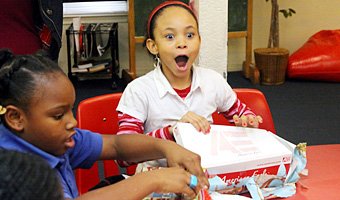
The faces of children in Buckner-run afterschool programs lit up when they opened their gifts to find toys, school supplies and hygiene products. (PHOTOS/Buckner International)

The Dallas Cake Club provided festive, fondant-covered confections to the Hillburn Hills, Simari Ridge and Wynnewood community resource centers, while the TWU nursing school brought wrapped boxes filled with gifts that nursing students had collected for each child.

"I really hope that the kids just know there are people out there who love them and care for them that are not in their everyday life," said Chelsea Moran, a junior in the nursing program and a member of First Baptist Church of Euless.

The children's faces lit up to open their boxes and see new school supplies, jewelry-making kits, action figures, kites, new socks, toiletries and other gifts.

"The kids responded well to the group, and they were very excited to get gifts," said Carter Shephard, community resource coordinator at Simari Ridge. "The nursing students made the kids feel that they care about them, support them and wanted them to have a great Christmas."

Nursing students from Texas Women's University collected gifts for each child in the Buckner-run afterschool programs at Wynnewood, Simari Ridge and Hillburn Hills community resource centers. (PHOTOS/Buckner International)

The nurses-in-training encouraged students to pursue education and achieve their dreams. They also answered questions about what it's like to work in nursing. The children especially were intrigued to learn that nursing students got to help in the delivery room.

"One of our primary goals is to use these experiences to show a compassionate side of nursing to students," said Myke Knapp, president of the TWU Nursing Student Association. "Another goal is to be role models and demonstrate how an education can take you beyond what you have come to know as your destiny."

The Christmas party marked the second event the TWU Nursing Student Association has held for the children in Buckner afterschool programs. Earlier this year, they collected 250 pounds of candy and 2,300 plastic eggs to organize an Easter egg hunt for the children.