Switchfoot challenges youth to make a difference

DALLAS—Members of the Christian rock band Switchfoot hope the release of their latest album encourages listeners to dive deeper into the Bible and stand strong during life’s trials.

The Grammy and Dove Award-winning Christian rock band Switchfoot will perform at Youth Evangelism Conference in Dallas June 24.

“Hello Hurricane acknowledges that storms will tear through our lives,” lead singer Jon Foreman said. “This album is an attempt to respond to those storms with an element of hope and trying to understand what it means to be hopeful in a world that keeps on spinning out of control.”

His brother, bass player Tim Foreman, agreed. “Because of Christ, we have a reason to have the faith to keep pressing on when the storms in life come. When the storms come, we have to be prepared to face them by having a solid foundation rooted in God’s word.”

Switchfoot has been a prominent force in Christian rock music more than a decade— selling more than 5 million records, touring around the world, winning a Grammy Award and multiple Dove Awards.

In addition to the Foreman brothers, the band is made up of Chad Butler, Jerome Fontamillas and Drew Shirley. The friends selected a group name based on their mutual interest in surfing.

“We grew up in California and loved to surf. So, it made sense to us that the band name would come from a surfing term,” Jon Foreman explained.

“To switch your feet means to take a new stance facing the opposite direction. It’s about change and movement—a different way of approaching life and music.”

{youtube}CO1n1mxcTXM{/youtube}

Through the years, Switchfoot gained national recognition with performances on television talk shows and having songs prominently featured in movies, such as A Walk to Remember and The Chronicles of Narnia: Prince Caspian

By taking their public platform and merging it with their heart for community, the band has worked with a number of relief efforts and humanitarian causes including the ONE Campaign, Habitat for Humanity, Invisible Children and To Write Love on Her Arms. They also founded the Switchfoot Bro-Am Surf Contest, a benefit contest and concert to help raise funds for various organizations serving at-risk and homeless youth in the band’s hometown of San Diego.

The band will perform at the Baptist General Convention of Texas’ Youth Evangelism Conference in Dallas June 24, and band members hope to provide students and young adults a life-changing encounter with God.

During their concerts, band members often share testimonies about how Christ has changed their lives. They also challenge young people to step out of their comfort zones and make a difference in the world.

“We really want our songs to be a vehicle to challenge people to think about what matters most in this world, encourage them to make an impact in big and small ways, and to lead people to Christ,” Tim Foreman said.

“The most important advice I can share with youth is for them to be aware of their limitations and the fact that they need a Savior. Time on this earth is so precious and short. Most of us don’t stop to comprehend what that really means. Most of the time, we end up taking people and situations in our lives for granted. But we need to be focusing on how we can make our lives count for what matters most.”


Race relations progress slow but steady

ATLANTA (ABP)—Two men who have been in the fray a long time believe race relations have improved in the United States 150 years after the start of the Civil War—at least enough to justify encouragement.

Integration actually came at the cost of community, Baltimore said, quoting an insight from Blowing the Trumpet in Open Court by Boykin Sanders. Black businesses lost customers when people could shop anywhere; black communities lost homeowners when banks no longer “red lined” suburban areas and black denominations lost churches when they were no longer the only option.

Baltimore sees bright spots in young people who “look through a different lens.” Like Baltimore, McCall sees “great hope” in young people. He teaches at Mercer University’s McAfee School of Theology and said his students laugh at issues their parents argued over.

McCall, 75, grew up where the biggest ethnic conflicts occurred between various European ethnic groups who lived in his Pennsylvania community.

He became embroiled in racial conflict as a student at the University of Louisville where, as the only black in the Baptist Student Union, local pastors asked BSU Director Fred Witty to exclude him. Witty refused, and students said they would “close the place down” if they were forced to exclude McCall.

Decades later, McCall sees formerly white churches in racially changing communities increasingly giving their property to black congregations who can minister in the community, rather than selling the property and giving proceeds to mission boards for ministry elsewhere.

It is “happening across the nation,” he said, which gives him cause for encouragement.


Believers find authentic community in organic churches

WASHINGTON (RNS)—Any given weekend, Jeanne O’Hair, her friends and family will raise their voices in hymns “as the Spirit leads us,” she said, in her “house church”—O’Hair’s living room in Brea, Calif.

In a metal outbuilding at a shuttered horse track near San Antonio, western-heritage church leader Jeff Bishop will celebrate at his “simple church” under a rough-hewn cedar cross, with “folks who speak ‘cowboy’ like I do,” he said.

Jeanne O’Hair (right) leads a service in the living room of her Brea, Calif., home. Also pictured are Joe Chebat, Joe West, Ali Eastburn and Ken Eastburn. (RNS PHOTO/ Robert Hanashiro/USA TODAY)

No matter what you call them, house churches, or “simple” or “organic” churches, have long thrived in Third World countries where clergy and funds for church buildings are scarce. Now, however, they are attracting a small but loyal following across the United States.

It’s not that Americans can’t find a conventional church congregation. Rather, millions of believers are leaving the pews for small, regular weekly gatherings where they pray, worship, study Scripture and support each other’s spiritual lives.

These groups operate without a building, a budget, an outside authority or, often, even a pastor. Many are lay-led groups where they like to say they “do church,” rather than “go to church.”

Participants are not “Christmas-and-Easter Christians”—folks who pour into the buildings on peak holy days and fade away a week later. Instead, “they’re intensely active believers who want to take charge themselves and find something that feels more authentic,” said Christian research expert George Barna, author of a new book, Maximum Faith.

“If you look at the Bible, the church we have today is nowhere to be found. The original form of church was the house church. Older people want to find a more personal experience of God, and young people don’t want the congregational structure or process. People don’t want to just read the responsive reading when they are told to,” Barna said.

A January 2011 survey by Barna found 5 percent of Americans—about 11.5 million American adults—say they attend a “house church or simple church, which is not associated in any way with a local, congregational type of church,” at least weekly or monthly. That’s up from 4 percent—about 8.8 million adults—in 2006.

Although the increase is slight, it’s clearly “more than a passing fancy. It has staying power,” current Barna Research President David Kinnaman said.

Before moving to California, O’Hair was on the staff of an Oregon megachurch that pulled out all the stops with seasonal pageantry—and later disbanded.

“We just weren’t seeing any fruit, any new members, for all that huge expense of time and effort. I love Jesus, and I love the church, but I think the way we do institutional church in America will be extinct before long. It will just crumble,” O’Hair said.

Now, she says she’s happier celebrating her Christian faith with Sunday morning house church meetings and potluck breakfast with her spiritual family.

“We believe this is what Paul meant by the priesthood of believers, something that’s increasingly missing in the modern, hierarchical church,” said O’Hair, who works in accounting at a private Christian school.

Bishop, a former fireman and acting director of the American Fellowship of Cowboy Churches, is not seminary trained or ordained, but he is licensed to the ministry. Bishop had taken the traditional church route, but said: “I don’t miss a thing about it. This is church for people like me—rural folk who speak my language.”

Ken Eastburn, an ordained Southern Baptist minister, checked out of traditional church a decade ago and jumped into a church without walls. Now he works with The Well, a network of eight groups like O’Hair’s. 

“The whole point is not to be passive about your faith,” Eastburn said. “Groups might meet on Sundays or on a weeknight, but the constants are that there’s always a meal together, a time of sharing, a time of prayer and Bible reading, and listening to each other and God, not a pastor.”

Traditional churches have taken note of the growing desire for more simple ways to worship. 

“Every large church I know is looking for ways to get small, to provide intimacy that may be missing,” said Kevin DeYoung, senior pastor at the 500-member University Reformed Church in East Lansing, Mich., and co-author of Why We Love the Church: In Praise of Institutions and Organized Religion.

“Christians can meet anywhere from a cathedral to a storefront to a basement. There’s no one perfect model,” DeYoung said.

One drawback, he said, is that alternative congregations may drift away from church doctrine: “One of the main jobs of the church is to be the pillar of the truth, and its leaders are there to shepherd and guard it. It can be dicey in these small groups.”


Christians shatter taboos around talking about money

BEVERLY, Mass. (RNS)—No sooner had 29-year-old Graham Messier joined a small group at his church than he found himself breaking an American taboo—talking about how much he earns and where it all goes.

Others in the group did likewise as they kicked off an eight-week program aimed at reconciling personal finances with Christian beliefs about economic justice.

It’s countercultural, they said, but it works.

Members of a Lazarus at the Gate discussion group talk about the ways they spend money and how simple choices at home can yield big differences abroad. (RNS PHOTO/Courtesy Boston Faith and Justice Network)

By the eighth meeting, Messier’s group had raised $1,800 for three nonprofits simply by cutting back on gourmet coffees, dining out and other nonessentials.

Talking about household budgets isn’t “the most comfortable thing in the world,” Messier acknowledged. “But talking as Christians about the reality of our money situations should be more of a focus than it is generally if we’re going to be real about loving, giving to the poor and taking care of our fellow man.”

Since inception in 2006, the Lazarus at the Gate curriculum has guided about 400 people in more than 30 groups to give away $200,000. Using the biblical story of poor Lazarus seeking help at a rich man’s gate, most participants learn ordinary Americans rank among the world’s richest 5 percent—and a few dollars go a lot farther in the developing world than they do at their local coffee shop.

What began as a Boston-based pilot has grown into an open-source curriculum. The ecumenical Boston Faith and Justice Network shares Lazarus materials on request with college student groups and churches.

The Boston group recently received funding from Episcopal City Mission and the Presbyterian Hunger Program to encourage the curriculum’s use in their denominations.

For small groups in American churches, intimate sharing is familiar terrain, but few go so far as to probe spending practices. This “special kind of discipleship” is rare, in part, because it entails true vulnerability, and people often don’t want to “disclose family secrets,” said Max Stackhouse, a retired Princeton Theological Seminary theologian and co-editor of the book, On Moral Business.

Talking about spending habits “really does cut to the depth of who you are,” said Craig Gay, a Regent College sociologist and author of Cash Values: Money and the Erosion of Meaning in Today’s Society.

“It really does lay you bare, and that’s threatening. Most of us don’t want to be that transparent with each other, (but) being less private and more accountable in this area is probably a good idea.”

Discomfort notwithstanding, Lazarus has proven a compelling challenge in various religious sectors, appealing to both evangelicals and mainline Prot-estants, said Ryan Scott McDonnell, executive director of the Boston Faith and Justice Network. College students seem especially interested.

“People are looking for a framework for social justice or something, and they have a hunger for it in their heart, and they don’t know how to articulate it or interpret it,” said Mako Nagasawa, co-author of the Lazarus curriculum and an adviser to the Asian Christian Fellowship group at Boston College.

“We want to say it comes from being made in the image of God and being redeemed by Jesus.”

As a Lazarus group gets started, participants share household budgets with the assurance that others won’t judge them or break confidentiality. Subsequent meetings place those budgets in larger contexts.

Participants explain how money was (or wasn’t) discussed at home during their childhoods. Together, they unpack biblical passages that address money and responsibilities. Presenters illustrate how poverty fuels social problems such as prostitution, human trafficking and environmental degradation.

Lazarus groups function as a kind of hybrid between secular giving circles and evangelical accountability groups. When members of Messier’s group convened at Christ Church of Hamilton and Wenham, Mass., participants would report their spending and saving over the previous week.

Even with group encouragement, efforts to cut back aren’t always successful.

Two artists in the Christ Church group, Matt Allard and Liana Hill, found visits from relatives and unpredictable cash flow prevented them from saving an extra $20 per week for charity. But they donated $140 anyway.

Lifting the veil on finances involves risk, Gay noted, and it requires vigilance to make sure no one suffers abuse. But when trust is warranted, he said, Lazarus groups might help people steer clear of secretive spending habits.

Simplicity for the sake of generosity is one the Lazarus goals, but exceptions are allowed. After seven weeks of vegetarian fare at the church, the final celebration dinner at one couple’s home featured flank steak and two desserts.

As the final meeting wound down, the group’s 13 members voted to divide their $1,800 equally among three organizations whose work includes microfinance, sustainable agriculture and rescuing prostitutes in Manila.

The group agreed to keep meeting monthly and making quarterly donations.

And they gave thanks for an experience that’s helped them learn to live more gratefully from day to day.


Couple offers HELP to enable Nepalese to help themselves

COLLEGE STATION—The Health Environmental Learning Program that Tim and Lani Ackerman began more than a decade ago still is helping the people of Nepal help themselves, even though the Ackermans each only spend two weeks a year in the Himalayan country.

Women learn how to read thermometers in a basic health class taught by HELP-trained teachers. (PHOTOS/Courtesy of HELP Ministry)

The Ackermans of College Station launched HELP in 1999, but it didn’t really take off until after the couple exhausted their savings and returned to the United States, they recalled. But they were not especially troubled when they left Nepal, because they sensed the Nepalese leaders they had developed were ready for the task.

“When we left, the impact of HELP and the way we reached out in one year doubled. And within two years, it tripled. And within five years, it was 10 times what it was when we left. That has to be God,” Lani Ackerman said. That sustainability mirrors the vision statement of HELP from the beginning: “To empower national believers to reach their unreached through community development.”

The Ackermans journeyed to Nepal out of concern for the people there without the backing of a missions-sending agency, even though they received support from a Southern Baptist church and its members. They went as “tentmakers,” missionaries who work at regular jobs in the country while also seeking to serve Christ—she as a physician and he as an ecologist, both of them teaching to earn a living.

They discovered Christians in Nepal live a very hard life.

Residents of a remote Nepali village learn literacy skills taught by HELP-trained workers. (PHOTOS/Courtesy of HELP Ministry)

“When people become Christians in a Hindu or Buddhist society, they are ostracized,” she said. “What Tim and I saw in our development work was that the Christians were among the poorest and most despised. So, when no one liked them, they were just thrown out of the community.”

“Even though in India and Nepal there is no caste system according to the government, culturally there is a caste system. It’s ingrained in them,” her husband continued.

“Christians were at the lowest point of that—to the point where they couldn’t use the water tap with the Hindus, they couldn’t use the washing areas, they certainly couldn’t share food or go into the houses of Hindus. So that was the thing about the Christians—they were not only uneducated and poor, they were despised.”

HELP began offering literacy classes in 2000 with about 20 students. Recent years have seen about 1,700 students in the classes.

A teacher offers instruction in a HELP-sponsored literacy class. (PHOTOS/Courtesy of HELP Ministry)

“We also saw the health issues, the environmental issues, the starvation,” Mrs. Ackerman said. “The Christians couldn’t focus on growing in their faith because their children were dying of diarrheal diseases.”

As HELP began its classes in the basics of health, agriculture and literacy, the gospel always has been a key component. And it’s working. Of the 1,700 in the annual literacy classes, about half already are Christians. Of the other half, “We see over half of those people come to Christ,” she said. “We see multiple churches planted just through literacy.”

Because Nepal has one of the highest maternal death rates during childbirth in the world, the average life expectancy for women living in the villages of the western part of the nation is only 36 years. To combat this, HELP offers health training in birth assistance.

Other health training components include general hygiene, building smokeless stoves to replace open-fire pits in the homes and construction of toilets.

“One woman became a Christian and was ostracized,” Lani Ackerman said. “She went to a literacy class and learned of the traditional birth assistance class. When she came home from the class, before the night was up, someone came to say a woman was dying in childbirth.”

A family in Nepal builds a pit latrine out of bamboo, using sanitation-improvement methods taught by HELP-trained instructors. (PHOTOS/Courtesy of HELP Ministry)

The woman went, prayed over the woman, and then put the skills she had learned to work, saving the lives of both the mother and baby.

“Overnight, she went from being one of the most despised people in the village to being the hero, and it gave her a platform to share the gospel that was phenomenal,” Lani Ackerman said.

Similar results have been seen in the agricultural training.

“It’s very interesting that here’s these Christians who are despised, they come to our agricultural trainings, they learn how to do things a new and improved way, and they go home and their crops are bigger, greener and produce more than their Hindu and Buddhist neighbors,” Ackerman said.

“They see the difference. And all of a sudden, the Christian’s socioeconomic status and even spiritual status is so escalated that Hindus are coming to them, and they are a vital part of the community’s agricultural education. And, again, they have a platform to share the gospel.”

The people use their newfound relative wealth to support their churches.

A Nepali woman sits by her smokeless stove, using cooking skills she learned from HELP ministry. (PHOTOS/Courtesy of HELP Ministry)

“We’ve seen hundreds of churches become self-sustaining because we teach them how to raise mushrooms, how to raise goats and also their churches grow when they invite Hindu and Buddhist neighbors to trainings they hold at the church,” Ackerman reported.

HELP employs about 20 full-time trainers to lead classes at churches throughout the country, paying each about $100 a month.

The Ackermans receive no salary and pay their own administrative costs and expenses for their trips to Nepal.

The $140,000 total HELP budget also includes an orphanage for about 40 children.

Everything HELP does is to help Christians reach their neighbors for Christ, often not through preaching but through helping their neighbors see the love of Christ through action, Lani Ackerman noted.

“No one is pressured to become a Christian,” she said. “They are loved into being a Christian.”


Faith Digest

Amnesty International chides Vatican. In its latest annual report, Amnesty International has criticized the Vatican for falling short of its commitments to protect children from sex abuse. This marks the first time the group has included the Vatican in its annual report, which assesses the state of human rights in 157 countries. That change follows a wave of scandals over sexually abusive Catholic priests in Europe and Latin America last year. Amnesty International said the Vatican failed in its obligations as a party to the United Nations’ Convention on the Rights of the Child by not removing alleged perpetrators from their posts pending proper investigations, not cooperating with judicial authorities to bring them to justice and not ensuring proper reparation to victims.

Crystal Cathedral for sale. The Crystal Cathedral has announced plans to sell its iconic glass-walled church in Southern California to pay back creditors and overcome bankruptcy. Senior Pastor Sheila Schuller Coleman, daughter of founder Robert H. Schuller, said the church will remain as a tenant and will have the option to buy back some of church’s campus in Garden Grove. The megachurch, known for its Hour of Power television broadcast, filed for Chapter 11 bankruptcy protection from its creditors last October. At the time, the church owed $7.5 million to creditors and has cut back staff, reduced airtime and halted its holiday pageants. Under the plan, the worship services and broadcasts are expected to continue without interruption, the church announced.

Same-sex relations receive record approval. Nearly two-thirds of Americans say gay or lesbian relations between consenting adults should be legal, the highest percentage ever recorded by the Gallup Poll. Researchers found 64 percent of American adults supported legal gay relations, which Gallup has included in surveys since 1977. Despite the high rate of support for gay relations, Americans are less likely—56 percent—to consider them “morally acceptable,” although that figure is the highest measured since Gallup first asked that question in 2001. The same poll found a majority of Americans (53 percent) supported gay marriage for the first time since Gallup started tracking the issue in 1996. The findings, based on telephone interviews of 1,018 adults, have a margin of error of plus or minus 4 percentage points.

Compiled from Religion News Service

Correction. The Faith Digest column in the May 23 issue carried an item titled, “Plans for interfaith school shelved.” In attribution to a quote, Lee Barker was identified incorrectly as president of Andover Newton Theological School. Barker is president of Meadville Lombard Theological School. Nancy Nienhuis, dean of students and vice president for strategic initiatives at Andover Newton Theological School added: “Andover Newton is moving ahead with its plans to create a multifaith model for seminary education; we just won’t be doing so with Meadville Lombard. Our current work with the Hebrew College Rabbinical School continues to be a part of this vision, as do new initiatives with other schools that will further broaden our multifaith focus.”


Bob Dylan’s religion— still tangled up in mystery

WASHINGTON (RNS)—In the 1960s, Bob Dylan was hailed as a prophet, first of folk music, then of rock ’n’ roll—at least by those who forgave him the heresy of having “gone electric.” But in the late 1970s, when rock’s best-known Jew famously declared Jesus to be the answer, many fans turned on him.

Author Michael J. Gilmour says it’s “hard to answer where (Dylan) is now” religiously. “He’s always going on first dates but never actually settles into a long-term relationship.”

For five decades, Robert Allen Zimmerman, who turned 70 May 24, has shocked, mystified, baffled and intrigued fans with songs rife with biblical references and no shortage of religious imagery.

For Michael J. Gilmour, an associate professor of New Testament and English literature at Providence College in Manitoba, Canada, and author of the book Gods and Guitars, Dylan proves an irresistible subject for theological analysis.

Some fans gladly embrace the idea of Dylan as a secular prophet, a term vague enough to permit “a semblance of religiosity that does not actually connect the singer to a faith tradition in any way,” Gilmour writes in his recent book, The Gospel According to Bob Dylan.

And while some might bristle at linking the word “gospel” to Dylan, Gilmour calls the famous songster a “serious religious thinker,” even a “musical theologian.”

Dylan often mentions God in his songs, “and though he rarely attempts to define what the term means, he still points us toward that vague Other,” Gilmour writes.

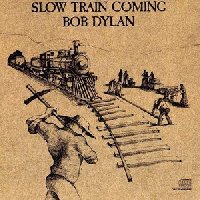
The author, 44, said he experienced something of a religious awak-ening at age 13 while attending a church camp, where he heard Dylan’s “Slow Train Coming,” a song born of the singer’s embrace of evangelical Christianity in 1979.

“It was the first time I listened to anything with sustained reflection on spiritual themes,” Gilmour said in an interview. “And the idea that a well-known celebrity actually took religion seriously struck me as rath-er important.”

Raised Jewish, Dylan had a bar mitzvah and, after a visit to Israel in 1971, even pronounced the late far-right Rabbi Meir Kahane “a really sincere guy.” Convalescing from a motorcycle accident and leading up to the 1967 album John Wesley Harding, he reportedly read the Bible extensively.

While former Beatle George Harrison embraced Hinduism without fuss and singer Cat Stevens became a pious Muslim, Dylan’s public and unexpected turn to Christianity was met with wide derision.

“What distinguished Dylan’s experience from Stevens’ and Harrison’s was the disdain generated by his turn to religion,” Gilmour writes.

Some conservative Christians latched onto Dylan’s fame as a way of raising their own profiles and further-ing their agendas, but his evangelicalism “turned a lot of people off.”

The singer reportedly has seemed to return to the Jewish fold. He has supported the ultra-Orthodox Chabad Lubavitch movement, even studying at one of its yeshivas, and had his sons, Samuel Isaac Abraham and Jakob Luke, bar mitzvahed.

However, Gilmour believes it’s “hard to answer where (Dylan) is now” religiously. “He’s always going on first dates but never actually settles into a long-term relationship.”

In any event, Dylan has recovered from that earlier disdain, Gilmour said.

“The impression I get from his concerts is that people cheer just as loudly for those (Christian gospel) songs as they do for the others,” he said.

From the time he broke onto the folk music scene in the early 1960s, some critics hailed Bob Dylan as a poet and prophet. But the biblical imagery that has infused so many of his lyrics has left some secular critics uneasy. (RNS PHOTO/Courtesy of Simon & Schuster)

Dylan treated Pope John Paul II to a stirring rendition of “Blowin’ in the Wind” and other standards at the 1997 World Eucharist Congress.

For Gilmour, Dylan’s papal show and his apparent return to Judaism show the musician “respects religion.”

Dylan has been truly mystified about the fuss over his spiritual messages, Gilmour writes, though he was “not above nurturing this mystique and indulging it occasionally (but) no doubt with a sense of irony (and) exaggerated self-description.”

In the end, the presence or absence of religious meaning in Dylan’s music is something that rests largely with the listener, Gilmour concedes.

“Some find Dylan merely using religious terms and imagery artistically but with no particular theological intent, whereas others find in his songs meaningful engagements with ultimate questions.

“The gospel according to Bob Dylan means something quite different from fan to fan.”

Gilmour confesses his answer always is the same when someone asks him about Dylan’s personal spiritual beliefs: “I do not know. Ultimately, it’s none of my business. All I can say with any confidence is that religious language is everywhere in his songs.”


REVIEW: God at the root of Malick’s `Tree of Life’

LOS ANGELES (RNS) — Terrence Malick’s new film, Tree of Life, is nearly indescribable. Not because its beauty or virtuosity are beyond words, although it has its moments.

Tree of Life, which opened May 27, is iconoclastic, its plot nonlinear, constructed by a series of impressions, images and the emotionally charged dynamic between its characters.

Fox Searchlight, the studio behind the film, described it as the story of “a lost soul in the modern world, seeking answers to the origins and meaning of life while questioning the existence of faith.”

Yes, it is that. But it is also so much more.

Brad Pitt and Laramie Eppler in Terrence Malick’s new film, “Tree of Life.” (RNS photo courtesy Merie Wallace/Twentieth Century Fox)

Attempting to describe Malick’s latest film — only the fifth he’s released in his 40-year career — brings to mind the story of a famous “pitch” the enigmatic writer/director David Mamet made to his producer for the film that would become The Edge.

When asked what his idea for the film was, Mamet said, “Something castable. Two guys, maybe.”

“C’mon, Dave, I need more to go on,” the exasperated producer replied.

“Two guys … and a bear,” the filmmaker said.

Malick, who, despite his meager cinematic output is considered by many cinephiles to be one of the finest filmmakers of his generation, likely never made such an “elevator pitch” for his latest film. But if he had, it might have gone something like this: “It’s about God, the Big Bang, family relationships, death, dinosaurs, jet engines and Texas. Basically it’s about everything.”

As the story goes, Malick began working on the idea for the film 30 or perhaps even 40 years ago. Reportedly, he spent years studying the origins of the universe and related science and technology with scholars. (A Harvard graduate and Rhodes Scholar, Malick taught philosophy at MIT before he started making films.)

Several critics have called Tree of Life Malick’s magnum opus, the culmination of all his artistic endeavors. Roger Ebert called the film “a form of prayer,” that created a “spiritual awareness” in the film critic, while eschewing “conventional theologies.”

Malick isn’t talking about his intentions. Notoriously private, he does not grant interviews and kept Tree of Life shrouded in secrecy from its inception until its recent screening at the Cannes Film Festival.

The film begins with a quote from one of the more confounding books of the Bible: Job. “Where were you when I laid the foundations of the Earth?”

The biblical story of Job is popular fodder for filmmakers. The Coen Brothers’ 2009 film, A Serious Man, was based loosely on the Job story. Despite being a good man beset by calamity, Job refuses to curse God. His friends try to help him figure out why he’s suffering, each coming up with a different wrongheaded theory. Yet Job remains faithful.

Brad Pitt and Hunter McCracken star in Terrence Malick’s new film, “Tree of Life.” (RNS photo courtesy Merie Wallace/Twentieth Century Fox)

It isn’t until Job actually sees God that the questions are answered and he is restored. First, though, God reminds Job that God is the Creator of all things and the author of life, so who is Job to question God’s wisdom?

Tree of Life opens in 1950s Texas with Mr. and Mrs. O’Brien (Brad Pitt and Jessica Chastain) in the midst of a Job-esque tragedy when they learn one of their children has died.

And the questions begin.

Malick’s dialogue is almost ascetically minimalist. Much of what is said is rendered in whispered voiceovers.

“Did you know? Where were you?”

“How did she bear it?”

“How did you find me? How did I love you?”

“When did you first touch my heart?”

There are two ways through life, the film posits: grace or nature. It’s up to everyone to choose a path and its consequences.

Mrs. O’Brien represents grace. She is stunningly, ethereally beautiful. She’s such a whimsical, pure soul that she is almost transparent. Mr. O’Brien is the flipside: Nature in all its cruelty. Lock-jawed and locked down, he is harsh, judgmental, emotionally withholding.

Mr. O’Brien isn’t awful, but his presence evokes a palpable, gut-wrenching tension in the rest of his family. She, meanwhile, is freedom and light. He is a funereal pall, telling Young Jack that if he wants to succeed in life he “can’t be good.”

“Young Jack,” the eldest of the three O’Brien siblings, is portrayed by newcomer Hunter McCracken, who steals the film from his stellar co-stars. McCracken, now a high school freshman in Possum Kingdom Lake, Texas, delivers one of the finest performances in recent memory by any actor, child or adult.

Wide-eyed and gangly, McCracken’s Young Jack is thoroughly compelling: laconic yet brimming with emotions he struggles to keep locked inside. He loves his father and he hates his father. It’s a paradox that mirrors his relationship with God.

Tree of Life is not a film for the masses. Only serious film lovers will abide its chronological gymnastics and general obtuseness.

However, if the audience hangs in there, as the film concludes with a scene that has startling emotional power, they may realize that they have not heard a story as much as they have had an experience.

And perhaps that was Malick’s goal.

When making a film that is, essentially, the chronicling of God’s relationship with humankind, even the most eloquent narrative would seem anemic.

But seeing God and experiencing the divine? That’s an entirely different kind of story.


On the Move

John Bevington has resigned as pastor of Bethel Church in Rockport.

Hixon Frank to Prestonwood Church in Dallas as minister of education from First Church in Wichita Falls, where he was minister of education.

Lester Griffin to Caprock Plains Area as director of missions from First Church in Crosbyton, where he was pastor.

Chuck Smith to First Church in Taft as pastor.

Paul Walker has resigned as singles minister at First Church in Wichita Falls to become the Young Life coordinator in the Temple area.

Yuri Zozulya to Lake View Church in Mathis as pastor of missions.


Around the State

Houston Baptist University elected its first three non-Baptist trustees—Terry Looper, founder, president and chief executive officer of Texon LP who is a trustee and elder at Grace Presbyterian Church in Houston; Tadd Tellepsen, president of Tellepsen Corporation and a member of St. Martin’s Episcopal Church in Houston and trustee of its Wayside Chapel and Urn Garden; and Charlie Ward Jr., retired NBA player and Heisman Trophy-winning head football and assistant basketball coach at Westbury Christian School and a member of The Greater Houston Church. The HBU board voted in March to amend the university’s bylaws to open up to one-fourth of its positions to non-Baptist Christians.

Baylor University was the only university in Texas named “with distinction” to the 2010 President’s Higher Education Community Service Honor Roll, the highest federal recognition a university can receive for its commitment to volunteering, service-learning and civic en-gagement. Two other Baptist General Convention of Texas-affiliated schools were named to the honor roll—Dallas Baptist University and East Texas Baptist University.

Baptist Child & Family Services’ inner-city project to help West Side San Antonio students and families, Guadalupe Street Coffee, has reopened after seven months of renovations. A grant funded a new learning lab, updated computers, a commercial kitchen, additional space for community events and other items. Fewer than 3 percent of the homes surrounding the coffee shop have computers.

Baylor University conferred 1,678 bachelor’s degrees, 326 master’s degrees and 26 doctoral degrees during May commencement ceremonies.

The University of Mary Hardin-Baylor presented degrees to a record 346 students during the spring commencement ceremony. Three hundred and four students received bachelor’s degrees, while 29 received master’s degrees and 13 earned doctoral degrees.

One hundred twenty-two students received degrees at Howard Payne University during the spring graduation ceremony. That number included 115 receiving bachelor’s degrees, two receiving associate’s degrees and five receiving master’s degrees, including the first three students to receive the master of education in instructional leadership de-gree from HPU.

East Texas Baptist University graduated 148 students during two commencement ceremonies.

Dallas Baptist University granted degrees to 659 students, including 402 undergraduate degrees, 255 master’s degrees and two doctoral degrees. John Ford received an honorary doctor of humanities degree.

Hardin-Simmons University presented degrees to 282 students during two spring commencement ceremonies. Of that number, 47 received master’s degrees. Homer Taylor and Tom Mosley received honorary doctor of humanities degrees.

Baptist University of the Américas graduated its largest bachelor of arts class and awarded its first honorary doctorate during spring commencement ceremonies. Thirty-four students received bachelors degrees, and 41 students received certificates in biblical studies. Alcides Guajardo received an honorary doctor of divinity degree “for a lifetime of honoring God by using his mind to the fullest to know God and make him known and for using his heart to show us all what a servant leader looks like,” BUA President René Maciel said.

Wayland Baptist University presented degrees to 134 students on its Plainview campus. Bachelor’s degrees totaled 101, master’s degrees 32, and one student earned an associate’s degree.

Houston Baptist University awarded 203 degrees during spring commencement ceremonies—162 graduate degrees and 41 graduate degrees. Retiring professor of Christianity Gene Wofford also was named professor emeritus. He joined the HBU faculty in 1975.

San Marcos Academy awarded its exemplary service medal to Paul Powell, dean emeritus of Truett Theological Seminary in Waco, and Bobby Dupree, the academy’s vice president for development, during the school’s 103rd commencement ceremony.

Anniversaries

Toby Irwin, fifth, as pastor of Belmore Church in San Angelo, June 4.

Fort Phantom Church in Abilene; 20th, June 26. Robert Newton is pastor.

Emmanuel Church in Hoensbroek, The Netherlands, 35th, July 13-15. The celebration will take place at Southwestern Seminary.

Deaths

J.B. Young, 95, May 21 in Wimberley. He was pastor emeritus of First Church in Wimberley, where he served from 1951 to 1955 and from 1958 until his retirement in 1982. He was a survivor of Pearl Harbor and retired from the U.S. Air Force after flying 66 combat missions in World War II. He was one of the most decorated men in the Air Force, and his portrait hangs in the Pentagon. He was preceded in death by his wife, Arline; son, Alton; daughter, Linda; and grandson, Ty. He is survived by his sons, Cary and Gary; sister, Velma Fling; three grandchildren; and three great-grandchildren.

John Jonsson, 86, May 26 in South Africa. He was an emeritus professor of religion and former director of the African studies program at Baylor University. A native South African, Baptist pastor and scholar, he protested apartheid from the pulpit, the classroom and in other public forums. He was the only Baptist minister to sign the Kairos Document, a plea to churches to demand an end to racial segregation. Jonsson grew up in South Africa, where his parents were Scandinavian missionaries a-mong the Zulu people. He served the Baptist World Alliance for more than two decades as a member of its Human Rights Commission. He taught at Baylor University from 1992 until his retirement in 2002. He was preceded in death by his son, David. He is survived by his wife, Gladys; daughters, Lois and Sylvia; son, Sven; and seven grandchildren.

Bruce Belin Jr., 84, May 27 in Houston. He was a founding member of Tallowood and Pecan Grove churches in Houston, and he was a long-time member of Second Church there. A real estate developer, he created the Belin Foundation to start churches in all his master-planned communities. A former chair of the Houston Baptist Unversity board of trustees, he was appointed to the board in 1967 and was one of the original members of the President’s Development Council. He also served on the board of the Cullen Trust for Higher Education, where he helped award millions of dollars in grants to capital projects on the HBU campus, including the Morris Cultural Arts Center. The Belin Chapel in the Morris Center was named in his honor. HBU awarded him an honorary doctorate in 1998, and he received HBU’s highest honor, the Spirit of Excellence Award, the same year. In 2005, he was presented the Milton Cross Service Award. Most recently, he made a lead gift in his wife’s honor to expand the Mary Ann Belin Nursing and Allied Health Simulation Lab on the HBU campus. He was preceded in death by his brothers, Doug and Gary. He is survived by his wife of 63 years, Mary Ann; son, Greg; daughter, Laurie Mahl-mann; six grandchildren; and five great-grandchildren.

H.B. Ramsour Jr., 100, May 28 in Dallas. He died two days after undergoing surgery for a broken hip. He was president emeritus of Baptist University of the Américas, where he served as president from 1960 to 1976 and oversaw the school’s move from downtown San Antonio to its present South Side location. He also led the process of the institution becoming part of the Baptist General Convention of Texas and the construction of seven of the eight current campus buildings. In 1939, the Foreign Mission Board of the Southern Baptist Convention commissioned Ramsour and his wife as missionaries to Japan. Rising military tensions caused them to be expelled from the country a year later. The family barely made it to the pier in time to board the last ship carrying Americans to safety. Coworkers who missed the ship died in concentration camps. After leaving Japan, the Ramsours served in Argentina and then in Hawaii. He was a graduate of Howard Payne University and Southwestern Seminary. He is survived by his wife, Violet; son, David; daughters, Carolyn Mosley and Jeanne Horne; seven grandchildren; and seven great-grandchildren.

Licensed

Jay Kott to the ministry at Shiro Church in Shiro.

Ordained

Chris Brister, Sastry Meesala and Cody Miller to the ministry at First Church in Duncanville.

Correction

Katrina Fritz-Mills of Telephone was mentioned in the May 23 edition of the Baptist Standard for being honored as Senior Call-Out Girl. The school naming her such should have been East Texas Baptist University, not University of Mary Hardin-Baylor as was published.


Texas lawmakers approve payday lending bills

AUSTIN—The Texas Legislature sent two bills to the governor’s desk that will provide more transparency and oversight to largely unregulated payday and auto title lenders.

Working in a broad coalition that included AARP, Texas Impact, Catholic Conference of Bishops and Goodwill of Texas, the Texas Baptist Christian Life Commission helped raise awareness about the need to regulate payday and auto title lenders that charge interest and fees that often exceed 500 percent.

Upon hearing from Baptists across the state, the CLC took up this issue four years ago and is beginning to see its advocacy efforts pay off, said CLC legislative counsel Stephen Reeves.

“The two bills that are on their way to the governor would ensure that borrowers are given clear information about the costs of these loans and would for the first time give the Office of Consumer Credit Commissioner the right to license, examine and collect data about these businesses,” Reeves said.

“They would also guarantee that collections harassment laws and federal laws regarding lending to members of the military are enforced.”

Addressing the Baptist General Convention of Texas Executive Board, CLC Director Suzii Paynter said several Texas Baptists testified before lawmakers about the impact payday lenders are having on communities. Those testimonies clearly had an impact, she said.

Jeff Johnson, pastor of First Baptist Church in Del Rio , told how local payday lenders solicited business from clients at a mental health and retardation facility. Rep. Vicki Truitt, R-Keller, added a section to one of the passed bills that would prevent advertising toward or soliciting on the premises of such facilities.

Reeves applauded lawmakers for taking these measures, but he noted more work remains. Payday and auto title lenders still can charge usurious interest rates that take advantage of people looking for help in their time of need.

“It has been made clear this session that these loans are a problem in Texas and the issue will not go away until the concerns of our communities are addressed,” he said.

“The legislation does not address these most pressing concerns. So, we are looking forward to working on the issue in the interim period and returning next session to advocate for bills that would break the cycle of debt perpetuated by these products.”


New Texas laws crack down on human trafficking

AUSTIN—Gov. Rick Perry has signed legislation designed to aid in the prosecution of human traffickers and increase penalties for such offenders.

Texas Senate Bill 24, led by Sen. Leticia Van de Putte, D-San Antonio, and supported by the Texas Baptist Christian Life Commission, helps put into place recommendations from the state attorney general to make prosecuting human traffickers easier.

human traffickingThe bill creates a new offense for “compelling” prostitution for adult and child victims, more stringent parole requirements for traffickers, stronger restrictions on bond release. Forced labor and forced sexual acts are now prosecutable with first-degree felony punishment limits up to a life sentence.

“Human traffickers exploit their victims' hopes and dreams, promising better days and better lives but delivering them instead into a world that's nothing more than modern-day slavery,” Perry said.

“Hopefully, when human traffickers understand their own freedom and profits are on the line, perhaps for the rest of their lives, they will think twice about continuing to engage in these criminal activities.”

CLC Director Suzii Paynter said lawmakers stood up for the vulnerable in Texas by passing SB 24.

“This critical piece of legislation being signed today gives our state the tools to prosecute offenders and protect victims of human trafficking,” she said.

“Human trafficking is not only an international problem, but a cause for deep concern in our state. I am proud to have worked with Gov. Perry, the Office of the Attorney General, and the legislature to create sound policy that combats human trafficking.

“The changes in statute made by SB 24 complement the work being done in our communities and churches to provide victims' services, and I would like to thank

Sen. Van de Putte and Rep. Thompson for their leadership in protecting the most vulnerable citizens of Texas.”

Texas House Bill 3000, spearheaded by Rep. Senfronia Thompson, D-Houston, creates a new first-degree felony charge in the penal code for continuous trafficking of people, which applies to those who commit at least two trafficking offenses and is punishable with up to a life sentence. A second conviction warrants life without the possibility of parole.

During the regular legislative session, numerous Texas Baptist groups—including the Hispanic Baptist Convention of Texas and Woman’s Missionary Union of Texas—visited with Texas lawmakers to help them understand the need for such legislation.

Human trafficking is one of the ministry points of emphasis for Texas WMU, which has sought to mobilize people across the state to minister to victims of trafficking, advocate on behalf of victims and seek to end what it calls modern day slavery.

“The issue of human trafficking is so large and complex that one could be paralyzed and do nothing,” said Carolyn Porterfield, Texas WMU multicultural consultant.

“That is not an acceptable option. As a first step, I chose to go to Austin and support what is being done. People can learn who is proposing legislation. The next step is to contact the office of our own state legislators and ask them to support it.”

Tomi Grover, who leads TraffickStop , a ministry partially supported by the Mary Hill Davis Offering for Texas Missions and gifts to missions through the Texas Baptist Cooperative Program, said the legislation is an important step to cracking down on human trafficking in Texas. Numerous reports have indicated Texas is one of the primary corridors for trafficking in United States.

“Through SB 24, Texas legislators are making it clear that this crime is not going to be tolerated in our state and that victims will be treated with dignity,” Grover said.