Buckner offers long-term missions opportunities

For the past 10 years, Buckner International has facilitated short-term mission trip opportunities—usually one week to 10 days long—for individuals and churches. Now, Buckner offers longer opportunities ranging from one month to one year.

With images of extreme poverty plastering the media each day, more and more Americans’ eyes have been opened to the needs. And many want to do something about it, Buckner officials noted.

Jordan Smith from The Village Church in Flower Mound serves with Buckner Kenya on a one-year assignment as a business sustainability project coordinator in Kitale.

“There is a new generation who wants to be more engaged and hands on with missions opportunities, and there are a lot of retired professionals who are looking to give back, too,” said Jane Ann Crowson, director of volunteer management and performance at Buckner International.

“We want to connect these volunteers with our ministry needs around the world to more effectively minister to children and families.”

Buckner provides volunteers logistical help, including travel arrangements and accommodations, as well as helping them develop a budget for their time of service.

“Volunteers then are responsible for raising the necessary funds to cover the budgeted cost,” Crowson explained.

Buckner also provides cross-cultural training and preparation before departure, she said.

Jordan Smith from The Village Church in Flower Mound serves in Kitale, Kenya, on a one-year assignment as a business sustainability project coordinator. During his tenure, he will help develop cost-saving techniques, like the use of bio-gas and greenhouses, and also develop micro-franchising and financing opportunities for families.

“I think when you take a step back and find yourself, like I did, falling into the trap of trusting your own abilities and following your own pursuits as opposed to trusting in the grace of God … you can’t sit around like nothing is wrong. You have to act,” he said.

“My goal is to help achieve the goals of Buckner Kenya, but I also want to put myself in a position of readiness to work for the glory of God and share the gospel where it is needed.”

Available opportunities through Buckner International for skilled workers may include clerical work, like volunteer management, or office assistance, teaching English, medical or dental work, light construction and business development.

Buckner is recruiting volunteers to serve in Mexico, Guatemala, Honduras, Dominican Republic, Peru, Kenya, Ethiopia, Russia and in the Lower Rio Grande Valley.

At this time, Buckner is accepting only individual adult volunteer applicants.

For more information, contact Crowson at jcrowson@buckner.org.


Different heritage, similar missions link two schools

SAN ANTONIO—A historically African-American college and a Hispanic theological university have entered a partnership to train Christian leaders for worldwide service.

Representatives of the Guadalupe School of Religion, an independent African-American college founded in 1884, and Baptist University of the Américas, a Texas Baptist-affiliated school, signed an agreement allowing students of the Guadalupe School access to the BUA library and research resources.

Carl Johnson, president of the Guadalupe School of Religion, and Javier Elizondo, provost of Baptist University of the Américas, signed an agreement allowing students of the Guadalupe School access to the BUA library and research resources.

Having access to BUA academic resources will greatly advance the Guadalupe School of Religion’s efforts to regain its ac-creditation with the Association of Higher Biblical Education, according to Carl Johnson, president of the Guadalupe School and pastor emeritus of Greater Corinth Baptist Church in San Antonio, and BUA Provost Javier Elizondo.

The agreement also opens the possibility of course credits transferring between the two schools. Johnson will attend the national meeting of ABHE in February as a guest of BUA.

The two schools will remain totally independent and focus on their own missions.

Johnson and Elizondo signed the articulation agreement Oct. 26 at a service attended by students, faculty and staff from both institutions.

While acknowledging the linkage of schools with traditionally different ethnic emphases is unusual, if not unique, they both saw it as consistent with the unity of the Christian church.

“What God has done at BUA is a gift, and we do not honor those who made it possible and we do not honor God if we don’t share with Christian brothers,” Elizondo said. “God has blessed and surprised us with a growing and rich relationships with African-Americans the past several years. African-Americans are the fastest growing segment of our student body. This is a natural obedience to God’s work in our midst.”

Hispanics and African-Americans “are saved by the same blood and redeemed by the same Savior,” Elizondo added.


Dignity based on creation, not capability

WACO—Discussions about dignity and dying benefit from a clear understanding of dignity’s source and meaning, a founding member of the President’s Council on Bioethics told a Baylor University gathering.

Gilbert Meilaender, professor of Christian ethics and chair of the theology department at Valparaiso University, a Lutheran school in Indiana, spoke to a symposium on “Human Dignity and the Future of Health Care,” sponsored by Baylor’s Institute for Faith and Learning.

Meilaender distinguished between the kind of dignity marked by exceptional achievement and the kind inherent in every person created by God.

Understood in the first sense, he asserted, dignity invites comparison to other people or to standards of excellence. But understood in the other sense, “grounded not in relation to each other but to God,” all people stand as equals, he insisted.

Secular modern and postmodern commitment to equal dignity of all people, understood apart from any religious underpinning, is “a commitment in search of a rationale,” Meilaender said.

When it comes to death and dying, both aspects of dignity must be considered, he asserted. Each death is part of “an inevitable trajectory of decline” common to all life in a fallen world, but at the same time, “at the point of death, each is singular and unique.”

Declining health and diminished capacities may rob an individual of dignity in comparison to other people. But those factors have no impact on the dying person’s standing before God, nor do they take away the rights inherent in his or her equality before God, he asserted.

Christians, particularly, should recognize the dual reality of death as both friend and enemy, Meilaender said. On the one hand, it represents the natural end of a journey, recognizing “we are not meant to live here forever,” he said. At the same time, it means the loss of earthly attachments and painful loss for those who are left behind.

During a panel discussion on faith in practice, Helen Harris, senior lecturer in the Baylor School of Social Work, reflected on her 13 years spent in hospice ministry.

“When dealing with end-of-life issues, it’s important to recognize who the expert is, and it’s not you,” Harris said. “The expert in the room is the patient—and the family—the people who are going through the experience.”

Chaplains, social workers and pastoral caregivers should be informed by faith—both their own and the faith of the person who is dying, she said. One challenge caregivers face in dealing with terminal patients relates to hope, she observed.

“We may need to redefine hope. If it is not hope to get well, maybe it is hope to live well in the meantime,” she said.

Another panelist and professor in the Baylor School of Social Work, James Ellor, emphasized the capacity of each individual for transcendence, keeping in mind the physical, social, emotional and spiritual dimensions of living.

“Just because a person does not have cognition,” he said, “that does not mean they do not have a spiritual nature.”

Current medical practice often tends to objectify and dehumanize patients, as in “the kidney in Room 5,” said Stephen Post, director of the Center for Medical Humanities, Compassionate Care and Bioethics at Stony Brook University in New York.

Institutional pressure to minimize time with patients to maximize revenue leaves patients feeling demeaned and doctors feeling demoralized, Post noted.

“The loss of compassion is bad for clinicians, and it’s bad for patients,” he said.

But in a setting where physicians are encouraged to engage in attentive listening and to “look for the personhood in people,” care improves at all levels.

“Compassionate care is a matter of choice and an expression of commitment to maintaining a healing space, regardless of the practice environment,” he said.

“Where doctors are compassionate, it results in early and more accurate diagnoses, as well as more efficient treatment planning and adherence.”


On the Move

Dee Blasingame to Calvary Church in Aransas Pass as pastor.

Josh Burgett to First Church in Floydada as minister of students.

John Darden to First Church in Tahoka as youth minister.

Trevor Dickson has resigned as minister of music at Crescent Heights Church in Abilene.

Loren Fast to First Church in Cotulla as pastor.

Roger Ferguson to First Church in Justin as pastor.

Zachary Francis to First Church in Devine as minister of youth.

Daniel Harper to First Church in DeLeon as pastor, where he was minister to students.

Matt Johnson to Richards Church in Richards as associate pastor for youth.

D. Lowrie to Bowie Association as Baptist Student Ministries director.

Randy Martinez to Crescent Heights Church in Abilene as minister of music.

John McCulloch to Lytle South Church in Abilene as minister of music from First Church in Lovington, N.M.

Kyle Medlock to Midtown Church in Brownwood as pastor, where he was interim.

Roland Ouellette has resigned as pastor of East Sherman Church in Sherman.

Roger Perkins to Memorial Church in Marshall as pastor.

T. Wayne Price to First Church in Refugio as pastor from First Church in Sonora.

Lupe Rando to Primera Iglesia in Floydada as pastor from Iglesia Nueva Vida in Vernon.

Ashton Reynolds to Wellborn Church in Wellborn as minister of youth and children.

Johnny Roland to Stagecoach Cowboy Church in Waxahachie as interim pastor.

Darren Shaddix has resigned as pastor of Calvary Church in Simms.

Joe Trull to Gribble Springs Church in Sanger as interim pastor.

Bobby Walker to Wynnewood Church in Dallas as pastor.

Chris Walker Jr. to Grace Fellowship in Three Rivers as pastor.

Bob Williford to Karnack Church in Karnack as pastor.

Afshin Ziafat to Providence Church in Frisco as pastor.


Faith Digest

Study says more link Christian faith to being American. As the United States has grown more diverse, more Americans believe being a Christian is a key aspect of being “truly American,” researchers say. Purdue University scholars found that between 1996 and 2004, Americans who saw Christian identity as a “very important” attribute of being American increased from 38 percent to 49 percent. Scholars said the findings, published in the journal Sociology of Religion, couldn’t definitively be tied to a particular event, but they suspect the 9/11 attacks and the wars in Iraq and Afghanistan could have played a role. The findings are based on an analysis of data from the General Social Survey, collected by the National Opinion Research Center, in which more than 1,000 respondents were queried in 1996 and 2004. In a separate survey, Public Religion Research Institute found 42 percent believe “America has always been and is currently a Christian nation.”

Most Protestant pastors nix Obama. Six out of every 10 Protestant pastors say they disapprove of President Obama’s job performance, a LifeWay Research survey found. Researchers said of the 61 percent who disapprove of Obama’s work, 47 percent disapprove strongly. The survey found 30 percent of pastors approve of the president’s performance, including 14 percent who strongly approve. Nine percent were undecided. When the Southern Baptist-affiliated research group surveyed Protestant pastors about their voting intentions just before the 2008 elections, 20 percent indicated they planned to vote for Obama, compared to 55 percent who planned to vote for GOP candidate John McCain. The new research was based on interviews with 1,000 Protestant clergy Oct. 7-14 and had an overall margin of error of plus or minus 3.2 percentage points. Researchers also found 84 percent of Protestant pastors disagreed with the idea of pastors endorsing political candidates from the pulpit.

Stem cell-funding agency apologizes for poem. The California agency that distributes public funds for stem cell research has apologized for honoring a poem that appropriated language from the Last Supper. The California Institute for Regenerative Medicine held a poetry contest to promote Stem Cell Awareness Day and draw attention to the complex and controversial field of medical research. When the two winners were announced, some Christian groups protested that one, “Stem C,” by Tyson Anderson, was blasphemous. The poem begins, “This is my body/which is given for you,” and concludes, “Take this/in remembrance of me,” words of Jesus during the Last Supper as recorded in the Gospels and memorialized at Christian worship services during Communion. The California institute, which helps distribute $3 billion in state funds for stem cell research, said it has removed the poem from its website. While many scientists say embryonic stem cell research holds great medical promise, some Christians call it a wanton destruction of human life because embryos must be destroyed in order to harvest the stem cells.

–Compiled from Religion News Service


Around the State

Paul Stripling will present guidance on “How to Minister to Those Experiencing Grief” at noon Nov. 11 as part of the University of Mary Hardin-Baylor ministers’ forum series. It will be held in the Shelton Theater. Participants are encouraged to bring a lunch.

Dallas Baptist University will hold homecoming festivities Nov. 15-20. The week will begin on Monday with an alumni dinner for the College of Education. On Thursday, the alumni dinner for the master of arts in counseling program will be held at 7 p.m., and the university’s annual Mr. Big Chief competition is set for 8 p.m. in the Burg Center. On Friday, the university will host a pre-game pep rally and parade at 3 p.m. in The Quad. At 6 p.m., DBU will hold its annual alumni homecoming banquet. This year, honorary alumni awards will be presented to Stephen Holcomb, DBU professor of music and director of choral studies, as well as Rose-Mary Rumbley, former DBU professor and Dallas historian. At 8 p.m., the Homecom-ing Extravaganza will kick off with this year’s theme, “Days at DBU: A Broadway Revue.” Saturday will be filled with a variety of celebrations, including reunion luncheons for university alumni at 1 p.m. At 4:30 p.m., students and alumni alike are invited to a tailgate party that will lead up to the homecoming game. The DBU Patriot basketball team will take on the Howard Payne University Yellow Jackets at 7 p.m. in the Burg Center. For more information on DBU Homecoming 2010, visit www.DBU.edu/ homecoming.

The Howard Payne University board of trustees has elected officers for the coming year. Brad Helbert of Abilene was re-elected chairman, and David Lowrie, pastor of First Church in El Paso, was re-elected first vice chairman. Robert Carter of Fort Worth will be second vice chairman, and Nell Hoffman of Bedford will be secretary.

Tommye Lou Davis has been appointed vice president for constituent engagement at Baylor University. She has taught Latin to Baylor students since joining the faculty in 1966. She is a member of First Church in Waco.

Dub Oliver, president of East Texas Baptist University, has been selected the Texas A&M Student Affairs Administration in Higher Education Alumni of the Year. He is the first recipient of this award.

Anniversaries

Lisa Vyers, fifth, as director of children’s ministries at Tabernacle Church in Ennis, Nov. 15.

First Church in Devers, 120th, Nov. 21. Fred Rainey will be the guest preacher, and Appointed by Grace will present the special music. A meal will follow the morning service. For more information, call (936) 549-7653. Harry McDaniel is pastor.

First Church in Alba, 125th, Nov. 21. The church also will celebrate the retirement of the debt on its new worship building. Former pastors and music ministers have been invited to attend. A meal will follow the morning service.

Robin McGee, 30th, as minister of music at First Church in Sherman.

Kenny Eiben, 20th, as pastor of Calvary Church in Corpus Christi.

Deaths

J.H. Wright, 95, Oct. 15 in Grand Prairie. He was pastor of churches in Holliday, Henrietta, Olney, Levelland, Grand Prairie and Corpus Christi. His first sermon was at First Church in Canyon. “It was on a very cold night, sleet and snow was falling outside, but the 12-minute effort brought as much perspiration as bailing hail in July,” it was recalled at his funeral. “The text was Romans 6:23, and the effort was so feeble, he did not use the text again until some 40 years later.” He also served 17 churches as interim pastor after his retirement. He was a trustee of Wayland Baptist College nine years, and served two terms as a trustee of Decatur Baptist College, including the board that moved the school to Dallas. He then served that school, Dallas Baptist University, 13 years as a trustee. He also was a trustee of South Texas Children’s Home nine years and was a member of the Executive Board of the Baptist General Convention of Texas. The children’s building of First Church in Grand Prairie is named in his honor. He was preceded in death by his wife of 68 years, Virginia, and his son, Johnny. He is survived by his son, Tom; daughter, Joy Heatherly; two sisters; two brothers; seven grandchildren; and eight great-grandchildren.

Mary Godsey, 82, Oct. 22 in Plainview. She was a pastor’s wife 62 years and a Sunday school teacher 64 years. She served as president of the Texas Woman’s Missionary Union for four years in the Hispanic Baptist Convencion. She served a two-year term as the Hispanic convention’s president’s wife. She traveled throughout Mexico and Texas as a missionary. She is survived by her husband, Glen; son, Lynn; daughters, Yolanda Rodriguez, Corina Cavaness and Betty Godsey; six grandchildren; and eight great-grandchildren.

Terry Bratton, 67, Oct. 26 in Abilene. He was a former associate professor of computer science and associate vice president for information technology at Hardin-Simmons University. Prior to coming to HSU, he was an assistant professor of business at Wayland Baptist University. He was pastor of Gilliland Church in Gilliland from 1978 to 1985. He was a member of College View Church in Abilene. He is survived by his wife of 47 years, Carol; sons, Terry, Kenneth and John; daughter, Jennifer Freeman; and seven grandchildren.

Event

Trinity Church in Bryan will hold homecoming services Nov. 21. Former pastor Barry Chinn will preach. Henry Stovall is pastor.

Ordained

David Chandler as a deacon at Rayburn Parkway Church in Bronson.

Roger Perkins to the ministry at Memorial Church in Marshall.

Marco Rodriguez and Jim Wesberry as deacons at South Garland Church in Garland.

Revivals

First Church, Merkel; Nov. 7-10; evangelist, Jonathan Hewitt; music, Wes James; pastor, Todd Keller.

First Church, Whitesboro; Nov. 7-10; evangelist, David Allen; pastor, Mike Flanagan.


Iraqi Baptist pastor says Baghdad’s Christians living in fear

FALLS CHURCH, Va. (ABP) — A Baptist pastor in Baghdad told a European Baptist leader that Christians there are living in fear following an Oct. 31 attack on a Catholic church in Iraq's capital that left more than 50 dead.

Security forces stormed the Our Lady of Salvation Chaldean Catholic Church, where more than 100 worshippers who gathered for evening mass were being held hostage by gunmen who reportedly demanded the release of jailed al-Qaeda militants.

While there have been many attacks on Iraqi Christians since the U.S.-led invasion in 2003, the Oct. 31 incident was by far the bloodiest and will likely expedite the exodus of Christians of various denominations in Iraq that have dwindled from an estimated 1 million in size to 600,000 or less.

Tony Peck, general secretary of the European Baptist Federation, said the pastor of the Baptist Church in Baghdad informed him that the "Christian community is now very fearful for its safety."

"Some of the Baptist believers are talking about moving away from Baghdad to North Iraq, others to Jordan and Syria," Peck quoted the Iraqi pastor as saying.

Peck called that a "very understandable response" that "would leave the Christian church in Iraq even weaker than before."

Some sources suggested part of the attackers' motivation was reports that a pastor in the United States planned to burn copies of the Quran, the Muslim holy book, in September. While the pastor called off those plans, Peck said the incident points to the need for Christians in the West to "be wise and considerate in the way they engage critically with Islam."

Baptists in Baghdad are also considering changing the day of worship from Sunday to Friday, the traditional day of worship for Muslims, a practice already adopted by Christians in several Muslim-majority countries.

Raimundo Barreto, director of freedom and justice for the Baptist World Alliance, expressed regret for "the unjustifiable murder" of Catholic Christians and affirmed "profound solidarity" with Christians in Iraq.

"As followers of Jesus Christ we advocate for true and lasting peace in that region," Barreto said. "We call on Christians all over the world to diligently work to prevent any escalation of violence, by not repaying evil with evil, but by overcoming evil with good. (Romans 12:17, 21)."

Peck said he asked the Baptist pastor in Baghdad to assure believers in the city that they were in the prayers of Baptists around the world.


–Bob Allen is senior writer for Associated Baptist Press.


Why do people leave churches?

NASHVILLE, Tenn. (ABP)—Many churches and denominations put a lot of effort into attracting new members only to lose many of them through a “back door”—a term used to describe people who regularly attended a church in the past but stopped.

“Churches have gone to great extreme effort to get people in the front door of the church,” Brad Waggoner of LifeWay Christian Resources said in a 2006 podcast. “There’s been some success numerically in that strategy, but very few people are talking about the back door of the church. That is: ‘Where do the people go that slip out of the life of the church?’

“The back door is just as important as the front door in determining the health of a local church.”

LifeWay President Thom Rainer described in an article on ChurchLeaders.com a meeting with more than 200 church leaders where nearly 90 percent indicated their churches had a problem with closing the back door.

“For years, the primary focus in many churches has been on the ‘front door’—people coming into the church,” Rainer said. “While such an emphasis remains the Great Commission priority, our research shows that churches and their leaders must not neglect the issue of the back door, commonly called assimilation.”

George Bullard of The Columbia Partnership, a Columbia, S.C.-based organization that helps churches pursue and sustain vital ministry, said churches face an “assimilation challenge” in the first year after new people begin attending to influence whether they become part of a community or slip through the back door.

“Church growth is a pretty simple concept,” Bullard said. “You get more people who have not been regular attendees and members to become regular attendees and members. You get more regular attendees and members to deepen their involvement in their church and its disciple-making activities. You get less-regular attendees and members to become bored, apathetic or offended and leave the church. If the second thing does not happen, the third thing is likely to happen.”

Mike James, discipleship and assimilation coordinator for the Kentucky Baptist Convention, said in a blog that assimilation is the difference between a church that is like Velcro—where people stick—or Teflon—where people join but stop attending.

Every church should have a strategy for getting first-time visitors to return and a follow-up plan to get them back a second time, James said. It begins by placing value on guests. “Scripture tells us to be warm and friendly to the people we meet,” he said.

James recommends treating every person like he or she is a guest. “Even your own members need a good welcome and a warm greeting,” he said.

The simplest and most effective way to attract guests is to invite them, James said. Polls show that between 75 percent and 90 percent attend church because a friend or relative invited them.

“Churches must be intentional in this process, or we become a revolving door with as many people going out the back door as we have coming through the front door,” James said.

Four things need to happen within the first year for people to assimilate into a new church, Bullard said.

Make attendance a habit.

First, he said, they must have established a pattern of regular attendance. By today’s standards, “in a culture that no longer sits around on Sundays,” Bullard said, regular attendance is between 39 and 42 Sundays a year.

Research indicates the American church went through a period of more than 10 years when churches significantly lowered their expectations of members and attendees, Rainer said. The result was an exodus of people from the church.


“Why would I want to be a part of something that expects nothing of me?” Rainer quoted a former active church member talking to the research team. Many churches now are attempting to remedy the problem with new-member classes, where expectations of service, stewardship and attendance are clearly established.

Common names for such classes are “Connections,” “Membership 101” or “Discovery,” James noted.

“Give it any name you desire, but by all means start one,” he said.

Get connected.

Second, Bullard said, they must have connected with some kind of teaching/learning experience such as a small group or Sunday school class.

“Churches that close the back door seek to get as many of their members as possible into small groups,” Waggoner said. “In some churches, these groups meet in homes. In other churches, the small group is a Sunday school class that meets at the church. The key issue, according to our research, is that the small group is an open group, meaning it has no predetermined termination date, and anyone can enter the group at any point.”

Develop deep relationships.

Third, Bullard said, they need to have developed friends “they call at 3 a.m.,” a reference to Hillary Clinton’s presidential campaign national-security ad featuring a ringing phone in the White House at 3 a.m. and posing a question to voters about who they want answering the phone.

Win Arn, a pioneer in church growth, showed years ago that if somebody can make five friends at a church, they are must less likely to drop out, Waggoner noted. “We need to create opportunities for people to build friendships and to get to know folks,” Waggoner said. “Just sitting in the pew is never God’s intention for any Christian.”

The more new members connect with longer-term members, the greater the opportunity for assimilation, Rainer said. One twist the research found, he said, is that most such relationships develop before the new member ever comes to church. In other words, members first developed relationships with people outside the walls of the church and then invited them after the relationship was established.

Go to work.

Finally, Bullard said, they need to get “some kind of job,” whether elected, appointed or as an ongoing volunteer.

“There’s no doubt about it that when you involve people in the ministries of the church, they are much more likely to give and much more likely to stay,” Waggoner agreed. “If they’re just pew sitters, they are more vulnerable to become disillusioned, and we’ll lose some of the people”

The earlier a new member or attendee can get involved in a church’s ministries, the higher the likelihood of effective assimilation, Waggoner said. “Churches that close the back door have a clear plan to get people involved and doing ministry as quickly as possible.”

“If people don’t do those four things, at the end of their first year, they are going to re-evaluate whether they want to stay in this church,” Bullard said.

While not a primary motivation for assimilating new people, Bullard added, an “unintended consequence” is that people who buy into the church with their time give five times more money than those who do not invest their time and energy.


Students exposed to culture, adventure in Ecuador

PLAINVIEW—The 10-member team from Wayland Baptist University hiked. They rafted. They played with children. And even if the trip description didn’t specifically call for sweating or walking miles, they did that, too.

Wayland Baptist University students (back row, left to right) Ben Robbins, Tierra Timarky, Sharon Haney, Shawn Langston and Drew Palser (front) enjoyed a hike through the Amazon jungle of the Andes mountains near Tena, Ecuador. (PHOTOS/Courtesy of Sharon Haney)

The group spent two weeks in Ecuador on a mission and education trip through Wayland’s School of Education.

Led by Erika Deike, assistant professor of exercise and sport science, and Gene Whitfill, assistant professor of education, eight students ventured through jungles and cities, up mountain peaks and down rivers.

“We didn’t know what to expect in some cases, but we got to see a lot of the different cultural aspects of Ecuador. We got to see more variety than we thought,” Deike said. “This year was more of a vision trip, and I’d definitely like to do more of the mission work next time.”

Missionaries Darryl and Kelly Chambers, parents of WBU soccer player Courtney Chambers, escorted the group. They run a guesthouse in the capital city of Quito that hosts mission groups coming through Ecuador. Because of their knowledge of the area and the language, they were able to plan activities and coordinate the group’s schedule.

“They were great. They drug us all over Ecuador and participated with us from Day 1 until we came back. Because they had such a vast experience, it was a great way to see the country,” Whitfill said. “They shared some cultural things about Ecuador and had a great knowledge of the activities we could do.”

Tierra Timarky, assistant professor Erika Deike, Sharon Haney, Michelle Ritter and Leigh Castillo—all from Wayland Baptist University—lead a song for children at the Casa De Fe orphanage in Shell, Ecuador. (PHOTOS/Courtesy of Sharon Haney)

The two weeks included three days spent working with 63 students at the Casa de Fe orphanage in nearby rural Shell, founded by an American woman who is a military veteran. One day, the group helped at the building site for the orphanage’s new facility being constructed to provide much-needed additional space, and they spent the majority of their time there leading a Vacation Bible School for the children.

Deike also led her community health and wellness students to share their knowledge and pre-trip research with the children through puppet presentations on basic hygiene and health practices, such as brushing teeth.

But the group also spent time having fun on an adventure course that included hiking up the Pinchicha volcanoes after taking a gondola ride to 13,000 feet. They also went whitewater rafting, rappelled down a waterfall, rode four-wheelers and go-carts to a recently active volcano at Baños, and tubed down a jungle river.

The group spent three nights and four days at the Amazon Field School run by Tod Swanson, an Arizona State University professor who grew up in Ecuador as the son of a medical missionary.

The Wayland Ecuador Travel Study group paused for a photo en route to the top of a volcano in Baños with tour guides Darryl and Kelly Chambers (right), who serve as missionaries there. Pictured are (front row, from left) Gene Whitfill, Michelle Ritter, Tierra Timarky, Leigh Castillo, Sharon Haney, Drew Palser, Erika Deike, (back row, from left) Shawn Langston, Ben Robbins and Desiree Sanchez. (PHOTOS/Courtesy of Sharon Haney)

The Wayland group learned much about the culture and traditions of the people of Ecuador, as well as some of the native language of Quichua and the folklore behind the plants used for food or medicine for centuries.

“That was a highlight for me. I really found all that fascinating,” said Whitfill, noting the group trekked into the jungle and spent one night there. “Even though it was a little scary, everyone really enjoyed it.”

The group worshipped with Ecuadorans in two churches, and Whitfill noted the customs were far different from American culture. After a long time of greeting and singing, followed by the sermon, the group was treated to a meal by the church—at nearly midnight.

The classes met for a week prior to leaving for Ecuador to conduct advanced research and demographic study on the cultures.

During the trip, Whitfill told his students to journal their cultural experiences and give a final report when they returned. Deike’s students reported about their experiences with Ecuadoran health and wellness practices.

Senior Shawn Langston of Plainview said he enjoyed the trip and experienced many things on his first trek outside the United States.

“It was definitely an eye-opening experience, especially with the orphans,” he said. “Overall, it was a great trip. I took for granted a lot of stuff, that’s for sure.”

Sharon Haney, a senior from Spearman, also enjoyed the varied experiences on her first foreign mission adventure. In particular, the orphanage made an impact.

“We learned a lot about how truly blessed we are here, and just how happy they are there with so little. The kids were amazing, and they really touched my heart,” she said. “Through this trip, we really had to rely on God. All the things we did like canyoning and hiking in the jungle, I couldn’t have done on my own strength.”

Whitfill said he came away from the trip with a great appreciation for serving and helping others at the orphanage and about the differences in how people live around the world in general.

Deike, who did the majority of the planning with the Chamberses, brought back ideas about future endeavors to the South American nation and how to better the experience for students.

“What I learned for next year is to get together more and build up the team more, and do a little more training for all of us. Also, I learned to just rely on God to lead us in the direction he wanted us to go, even if it wasn’t on our agenda,” she said, noting she also wanted to explore making the trip longer to allow for more mission work.

“You could tell the students were growing in their faith, and that was my goal … for them to step out of their comfort zone and see the bigger picture of God since you don’t have the comforts of home.”


American Shariah? That’s news to Muslims in U.S.

WASHINGTON (RNS)—Oklahoma state Rep. Rex Duncan expects his “Save Our State” referendum to keep Islamic law out of state courts to pass easily on Nov. 2. He’s less certain a similar measure could pass in Michigan.

The reason? Muslims have have established a foothold in and around Detroit, and they wield enough political power to stop it, he insists.

An estimated 3,500 Muslims gathered Sept. 25, 2009, at the foot of the U.S. Capitol for a first-ever Islam on Capitol Hill prayer rally. (RNS FILE PHOTO)

“I don’t believe anybody who would spend five minutes looking at the landscape and the political dynamics of Dearborn, Mich., would for one minute entertain the idea that they could pass a preemptive strike to keep Shariah law out of the courts,” Duncan said.

Duncan and other conservatives—including Tea Party favorite Sharron Angle in Nevada—ominously warn that Muslims are determined to impose Shariah law on the U.S. legal system.

When opponents of a proposed Islamic center near Ground Zero rallied at the site in September, many carried signs that depicted “SHARIA,” dripping in blood. Former House Speaker Newt Gingrich got a standing ovation at September’s Values Voter Summit when he called for “a federal law that says Shariah law cannot be recognized by any court in the United States.”

The odd thing is that no one in Oklahoma, Michigan or anywhere else is calling for Shariah—including and especially Muslims.

Instead, Muslim American leaders say Duncan’s referendum is a concrete example of fanning hyster-ia about the myth that they want to impose Shariah, which many Americans associate with misogyny, religious intolerance and cruel punishments.

“This is another right-wing fantasy that started on the hate blogs and worked its way into the mainstream media,” said Ibrahim Hooper of the Council of American-Islamic Relations in Washington, D.C. “Where is the evidence of the takeover?”

Perhaps the most frequently cited example comes from New Jersey, where a Moroccan Muslim immigrant who beat and raped his wife was acquitted by a local court that ruled the husband was acting according to his religious beliefs. An appellate court reversed the ruling, and many Muslim Americans say they found the initial New Jersey court ruling as absurd and cruel as non-Muslims.

What they do want, however, is protection for reasonable constitutionally protected acts, like wearing a headscarf or praying at work.

“Accommodating a Muslim employee’s request to wear a religious headscarf at work in no way imposes religious law on the workplace, any more than when employees wear a Latin cross or a Star of David,” said Daniel Mach, director of the ACLU’s Freedom of Religion and Belief program. “Somehow, basic religious exercise by Muslims is viewed as imposition by that group of its own faith on others.”

Frank Gaffney, president of the conservative Center for Security Policy in Washington, D.C., disagreed.

“The principle difference is that Shariah calls for the destruction of our country; Jewish law does not,” said Gaffney, whose institute released a 177-page report recently called “Shariah: The Threat to America.”

Examples of “creeping” Shariah infiltrating American society cited in the report include Muslims building mosques, using Islamic financing to buy homes, and depositing money in Islamic banks, which forbid interest and avoid investments in products like alcohol and tobacco.

“So when you’re talking about saying, ‘Well it’s just another religious court system that is operating kind of like the Jews do,’ it’s completely different; it’s sedition,” Gaffney said.

Muslims say such views reflect either bigotry or ignorance about Shariah, which means “path” in Arabic and is based on the Quran and the recorded teachings of Islam’s Prophet Muhammad.

Abdullahi Ahmed An-Na’im, an Islamic scholar at Emory University, argues in his 2008 book, Islam and the Secular State, that Shariah is meant to be followed as a personal religious code, not imposed as a public legal system covering all citizens in society.

“The moment the state imposes Shariah, it stops being Islamic,” An-Na’im said.

Other Muslims acknowledge some Islamic countries, such as Saudi Arabia and Iran, have legal systems based on strict interpretations of Shariah. That doesn’t mean, however, Muslims elsewhere desire the same thing. In fact, many condemn it.

“Assuming all Muslims follow medieval Islamic rules today is like assuming that all Catholics follow ninth-century canon law,” wrote Sumbul Ali-Karamali, a Muslim woman raised in California and author of The Muslim Next Door: The Quran, the Media and That Veil Thing, in a recent Huffington Post column.

Gaffney, whose report called Shariah the “preeminent totalitarian threat of our time,” dismissed alternative interpretations of Shariah as inauthentic. “There is only one interpretation of Shariah law,” Gaffney said.

Anti-Shariah legislation may never be introduced in Michigan, but Duncan believes other states will follow Oklahoma’s lead and pass similar legislation to ban Shariah.

“There are other states, I believe a dozen or so, maybe more, who are currently in discussions with me,” Duncan said, “and watching what we’re doing.”


Harvard scholar holds the threads to social fabric

CAMBRIDGE, Mass. (RNS)—Harvard University scholar Robert Putnam has earned a reputation as an expert on the threads that hold America’s social fabric intact. His 2001 bestseller, Bowling Alone: The Collapse and Revival of American Community, drew national attention to an alarming decline in civic engagement.

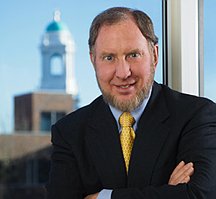
His new book, American Grace: How Religion Divides and Unites Us, with co-author David Campbell, plumbs the apparent divide between religious and nonreligious Americans. Across 688 pages, the two argue that Americans honor their neighbors’ religious differences largely because they’ve cultivated personal ties across sectarian lines.

Harvard University political scientist Robert Putnam’s new book, American Grace,

As it turns out, Putnam lives by that same ethic, intentionally shortening distances between Jews and Christians, Americans and internationals, heartland believers and coastal skeptics.

It’s a long way from Putnam’s hometown of Port Clinton, Ohio, to the ivy-covered walls of Harvard, but friends and associates say the relationships he formed along the way continue to deeply inform his work.

“I’m talking to people in the grocery store; he’s talking to congressional leaders,” said Virginia Park, who’s known Putnam almost 50 years since their time together at Port Clinton’s Trinity Methodist Church.

“But he’s never lost touch. … He reaches back into the community and communicates with people,” especially during important times like reunions or a death in the family.

Putnam’s co-author, Campbell, said there’s still a lot of Port Clinton that shows up in Putnam’s approach to his work at Harvard’s Kennedy School of Government.

“It’s easy to caricature someone like Bob as just a pointed headed intellectual who lives in Cam-bridge,” said Campbell, a political scientist at the University of Notre Dame. “Bob is an intellectual, and he does live in Cambridge, … but he comes from a background that I think gives him a healthy perspective on the role of religion in American society.”

When research for American Grace brought Putnam from famously secular Cambridge to a conservative Missouri Synod Lutheran congregation in Texas, the evangelical terrain didn’t feel especially foreign to him.

“Actually, it wasn’t so strange,” he said. “We went to a church picnic up under the oaks on the grounds of the church, and it was wonderful. I didn’t feel like, ‘What am I doing here?’ I felt completely comfortable in that setting.”

Putnam is concerned, however, that many Americans don’t share his fluid comfort among believers and nonbelievers. Instead, they fear people unlike themselves, often out of ignorance.

“People who are really secular and don’t really know much about religious people at all … project their worst fears,” Putnam said.

“They imagine that all evangelicals are would-be theocrats, that they’re sort of Taliban-like and would like to get rid of all the non-Christians. Conversely, evangelicals (and) other deeply religious people know about secular people from what they see on TV and think, ‘These people are really godless. … They’re Satan personified.”’

When he started work on American Grace, he was confident “that they were both just wrong.”

Research for the book confirmed that hunch: on the whole, neither seculars nor religious people are as hostile or eager to undermine the other as they’re purported to be in popular media.

Putnam’s own religious journey mirrors many of the findings in his book. In 1963, he broke with contemporary norms by marrying a Jew from an intellectual Chicago family. Within a few years, he’d converted to Judaism.

Putnam isn’t one to debate theology. He says he’s “puzzled” on theological matters, though he declines to describe himself as agnostic or anything else. He notes that on high holy days, he attends services not as an academic observer but as someone “there to worship God.”

His rabbi at Temple Isaiah in Lexington, Mass., Howard Jaffe, said Putnam has helped him better appreciate the intrinsic value of tight-knit communities and improve his relationships with religious leaders in the area.

“My conversations with Bob always inspired me to be more open to and aware of what’s going on in other religious organizations,” Jaffe said. “Bob’s work on the importance of working together (with non-Jews) inspired me to be more involved in developing that kind of social fabric.”

Putnam brings his passion for well-formed communities to his professional life as well. The research team for American Grace included about 25 graduate students and other assistants, who were encouraged over meals to tell personal stories from their varied backgrounds as Catholics, evangelicals, Mormons and others.

So deep is Putnam’s commitment to learning from others that he keeps an easel upright in his living room at all times for spontaneous brainstorming sessions.

“He loves people, and he loves ideas,” said Sean McGraw, a former research assistant who’s now a Catholic priest and assistant professor of political science at Notre Dame. “Working in teams gives him the best of both.”


Trustees & directors nominated for BGCT consideration

The following information is provided in compliance with the bylaws of the Baptist General Convention of Texas. Nominations to be considered by messengers to the BGCT annual meeting, Nov. 8-9 in McAllen, are presented by the Committee on Committees, Committee to Nominate Executive Board Directors and the Committee for Nominations for Boards of Affiliated Ministries.

Report of Committee on Committees


Committee to Nominate Executive Board Directors

Term to Expire 2013

Ella Prichard, Corpus Christi

Greg Long, Elgin

Jeff Raines, Amarillo

Kyna Saul, Hewitt

Nena Dowden, Nederland

Term to Expire 2012

Fred Hobbs, Victoria


Committee on Nominations for Boards of Affiliated Ministries

Term to Expire 2013

Curt Fenley, Lufkin

Dana Moore, Corpus Christi

Elijah Austin, Lubbock

Molly Farmer, Plano

Samuel Jones, Arlington


Executive Board Nominees


Executive Board Directors to be Re-elected

Term to Expire in 2013

Bill Bevill, Corpus Christi

Bruce Webb, The Woodlands

Charlotte Young, Dimmitt

Cheryl Jones, Temple

Clint Davis, Mount Pleasant

Darrell Miles, Cleburne

Debbie Ferrier, Houston

H.C. Rockmore, Longview

Jo Gartman, McAllen

Mike Middlebrooks, Mesquite

Stephen Hatfield, Lewisville

Van Christian, Comanche

Vernon Webb, San Antonio

New Executive Board Directors

Term to Expire in 2013

Ben Macklin, Vernon

Betty Burns, Plano

Bonnie Martinez, El Paso

Charles Richardson, Abilene

Coleman Cheong, Missouri City

Ernest Dagohoy, Houston

Iraj Hemati, Plano

Jay Abernathy, Palestine

Jerry Becknal, Canyon Lake

Jesse McLendon, Tyler

Margie Norman, Burleson

Michael Hale, Center

Mike Toby, Waco

Nestor Menjivar, Austin

Ralph West, Houston

Sam Dennis, Plano

Solomon Liu, North Richland Hills

Sylvia Villareal, Dallas

Vuthy Yos, Houston

Yutaka Takarada, Dallas

Unexpired 2012 Term

Alfred Brown, Mesquite

Bob Billups, Denton

Donna Fulfer, Garland

Jeff Johnson, Del Rio

Jim Nelson, Austin

Kyle Morton, Port Arthur

Ron Lyles, Pasadena

Wesley Johnson, Kerens

Unexpired 2011 Term

Vernon Stokes, Midland


Institution Board Nominees


Trustees – Baptist University of the Americas

Term to Expire in 2013

Carlos Alsina, Austin

Mary Frances Barrera, Tulia

Alcides Guajardo, Beeville

Teresa Luna, San Antonio

Beatrice Mesquias, Harlingen

Term to Expire in 2012

Rene Balderas, San Antonio

Term to Expire in 2011

Rhoda Gonzalez, Dallas

Term Extended 1 Year

Debbie Ferrier, Houston


Regents – Baylor University

Term to Expire in 2014

Milton Hixon, Austin

Duane Brooks, Houston


Trustees – Dallas Baptist University

Term to Expire in 2013

Wanda Carter, Dallas

Pete Delkus, Plano

Jim Nation, Dallas

Sudheer Jayaprobhu, Texarkana

Anita Jones, Dallas

Ken Pilgrim, Pittsburg

Michael Griffin, Flower Mound

Bobbie Pinson, Lancaster

Ron Skaggs, Plano

Ludwingk Rios, DeSoto

Mary Stuart, Dallas

Jeff Warren, Dallas

Term to Expire in 2011

Grady Tyroch, Temple


Trustees – East Texas Baptist University

Term to Expire in 2013

Glenn Bickerdike, Marshall

Susan Bush, Athens

Ray Delk, Marshall

Kenny Hall, Marshall

Sam Moseley, Marshall

Term to Expire in 2012

Mary Fitts, Marshall

Term to Expire in 2011

Hal Cornish, Marshall


Trustees – Hardin-Simmons University

Term to Expire in 2013

Bonnie Baldridge, Jayton

Marcus Norris, Amarillo

Ron Howell, Arlington

Leigh King, Abilene

Jan Patterson, San Antonio

Jerry Phillips, Lubbock

John Sieren, Arlington

Bubba Stahl, Kingsland

Josh Silva, Lubbock


Trustees – Houston Baptist University

Term to Expire in 2013

Pat Goettsche, Houston

Ben Renberg, Houston

David Stutts, Houston

Larry Womack, Houston


Trustees – Howard Payne University

Term to Expire in 2013

Dale Gore, Belton

Flora Andrade, Universal City

Jeremy Denning, Brownwood

John Duncan, Georgetown

Sharon Guthrie, Stephenville

Al Lock, Fort Worth

Marlon Prichard, Burleson

Nancy Pryor, Austin

Mike Toby, Waco

Term to Expire in 2012

Wilson Grant, San Antonio

Term to Expire in 2011

Roy Robb, San Angelo


Trustees – San Marcos Baptist Academy

Term to Expire in 2013

Ross King, San Marcos

Jackie Gray, Waco

Stan McClellan, Allen

Mack Phipps, Belton

Dale Taylor, Arlington


Trustees – University of Mary Hardin-Baylor

Term to Expire in 2013

Andy Davis, Belton

Brian Dunks, Waco

Mike Harkrider, Boerne

Jimmy Hinton, Temple

Betty Huber, Waco

John Covin, San Antonio

Martin Knox, Temple

John Messer Sr., Belton

Delia Quintanilla, Austin

Jane Potter, Belton

Drayton McLane III, Salado

Ted Bartley, Coppell

Term to Expire in 2011

Bob Galligan, McAllen


Trustees – Wayland Baptist University

Term to Expire in 2013

Gary Abercrombie, Plainview

Danny Campbell, Midland

Pat Crawford, Amarillo

Ken Coffee, San Antonio

Ella Prichard, Corpus Christi

Randy Stark, Quitaque

Tommy Lyons, San Antonio

Bob Moody, Lubbock

Jeff Raines, Amarillo


Trustees – Valley Baptist Missions/Education Center

Term to Expire in 2013

David Embry, Dripping Springs

Jo Lee, San Antonio

Tony Risica, McAllen

Josue Arrambide, Midland

Don Higginbotham, Fredericksburg

Term to Expire in 2012

Alton Holt, Silsbee


Baptist Health Foundation of San Antonio

Term to Expire in 2013

Jim Elkins, San Antonio

Alice Gong, San Antonio

Connie Jones, Boerne

Bill McCandless, San Antonio


Baptist Hospitals of Southeast Texas

Term to Expire in 2013

Loretta Hughes, Orange

Larry Walker, Beaumont


Baylor Health Care System

Term to Expire in 2013

Jim Denison – Dallas

Term to Expire in 2014

Janie Pena – Dallas

Jim Turner – Dallas


Hendrick Medical Center

Term to Expire in 2013

Terry Beal, Abilene

Ron Fogle, Abilene

Leland Robinson, Abilene

Tim Laws, Clyde

Kelly Kinard, Abilene

Shelly Utley, Abilene


Hillcrest Health System

Term to Expire in 2013

Will Fair, Waco


Baptist Community Services

Term to Expire in 2013

Robert Byrd, Canyon

Don Cartwright, Amarillo

Charles Moss, Amarillo

Roy Kornegay, Amarillo

Mike Wartes, Canyon


Baptist Child and Family Services

Term to Expire in 2013

Carl Register, San Antonio

Bob Ownby, Jr., San Antonio


Buckner International

Term to Expire in 2013

David Hennessee, San Antonio

Barry Pryor, Dallas

Kay Struzick, Houston


Children at Heart Ministries

Term to Expire in 2013

Barry Chinn, Austin

Buddy Ferguson, Austin

Becky Guajardo, Katy

Tom Norris, Waco

Stephen Webb, Austin


South Texas Children’s Home Ministries

Term to Expire in 2013

Johnny Melton, Rockport

David Brock, Boerne

Ron Hyde, Kenedy

Mickey Lofton, Beeville

Lamar Meadows Jr., Rosenberg

Tom Wolter, Bishop

Sherry Sigmon, San Antonio

Term Extended 1 Year

Tracy Crawford, Tyler


Baptist Church Loan Corporation

Term to Expire in 2013

Theodore Deaver, Houston

Gene Payne, Garland


Baptist Foundation of Texas

Term to Expire in 2013

Mark Lovvorn, Dallas

John Minton, Tyler

Robert Fowler, Houston


Baptist Standard

Term to Expire in 2013

Roger Hall, Midlothian

Kim Moore, Fair Oaks Ranch

Diane Payne, Houston

Wilburn Tanner, Lubbock

Nancy Gonzalez Salazar, San Antonio