CBF 2012 task force begins with listening sessions

DECATUR, Ga. (ABP) — A blue-ribbon task force assigned to study and recommend changes to the Cooperative Baptist Fellowship's structure has begun its work with a series of listening sessions for various stakeholders as the organization formed out of pangs of controversy 20 years ago seeks to move beyond the past and look toward the future.

"There is no way to understand the beginning of this movement or this organization without acknowledging that we were all about guarding something," David Hull, chairman of a "2012 Task Force" appointed this summer said in a listening session during the CBF Coordinating Council's regularly scheduled meeting Oct. 14-15 at First Baptist Church in Decatur, Ga.

David Hull

"Guarding is something that is important," Hull, a member of the interim steering committee behind formation of the Atlanta-based CBF in the context of controversy in the Southern Baptist Convention in 1991. "We need to protect those principles and the things that we hold dear in our heritage, but that looks to the past."

"As we approach this 20th anniversary it's a great time to celebrate and look back, but it's also a wonderful time to look forward," said Hull, pastor of First Baptist Church of Huntsville, Ala.

CBF Executive Coordinator Daniel Vestal initiated the 14-member task force after an invitation-only retreat of leaders of more than 20 Fellowship-affiliated organizations in April. The Coordinating Council endorsed the process in June, amid questions from some members about the composition of the task force and the scope of its authority.

In his initial report to the council, Hull said the group understood its task to be "to listen to the Fellowship community and to recommend ways to align our organizational structure with the vision, mission and values of the Cooperative Baptist Fellowship."

"We don't come with any preconceived notions of what needs to happen, what needs to change, what needs to stay the same," Hull said. "We're all involved and have been involved in CBF life, but we're coming to listen to many different groups, many different kind of folks who are involved in the CBF community, to hear from you what's working, what's not working, what needs to change, what doesn't."

The other task, Hull noted, is to "recommend."

"We have no power to implement anything," he said. "We are not anybody's governing body. We're just a group of folks who will commit time and energy and our best thoughts and resources to listen and then to try to shape some recommendations."

Between now and next year's General Assembly in Tampa, Fla., Hull said the task force would be in a "listening mode," meeting with groups such as state coordinating councils and gatherings of state coordinators.

"We want to be listening where CBF folks are already gathering; for example, state meetings, where they are already coming together," he said. "Let's go to places like that and listen."

The first listening session took place at a recent Alabama CBF gathering. National Coordinating Council members broke into groups Oct. 15 to discuss questions on a provided worksheet. One task force member moderated each group, while another took notes.

Hull said no single listening session would be able to cover every issue, but he asked the Coordinating Council to give special attention to one question regarding suggested changes to the structure of the Coordinating Council, since that is something most directly related to their function.

Hull said the task force has a long list of CBF constituency groups to ask for input. He mentioned young ministers just getting started in CBF churches, current students in CBF-related seminaries and divinity schools and partner groups that work under the Fellowship movement's umbrella but function independently of the organization.

Hull said in an interview that the task force doesn't have a particular number of listening sessions in mind, but they want to do as many as possible between now and the June 22-25 General Assembly.

After the Tampa assembly, Hull said, the task force plans to work about six months turning information from the listening sessions into concrete recommendations. In response to a question from one Coordinating Council member about how that group would handle inevitable differences of opinion, Hull used an analogy of a funnel, where the large volume of information at the top naturally narrows into common themes.

Hull said the task force expects to bring recommendations to the Coordinating Council in February. After that, the Coordinating Council will determine what recommendations to bring to the General Assembly.

"It is a huge assignment," Hull said. "One reason we have a separate working on this is so that a smaller group can devote time and energy. We don't have other CBF assignments like you do as a Coordinating Council or like other groups do or staff does. This is going to be our main assignment."

Individuals who do not get answers to their questions can submit them directly through a form on the CBF website.

Hull said this wouldn't be the only time that the Coordinating Council would have access to the task force. "We will come alongside you, work with you on this, and we want to hear from you: today and in the days to come," Hull said.


–Bob Allen is senior writer for Associated Baptist Press.


Global Christians protest China travel ban to Lausanne conference

WASHINGTON (ABP) — On the eve of a global Christian conference set to begin Oct. 16, Christian groups in the United States and elsewhere are protesting the Chinese government’s decision to prevent as many as 200 would-be participants from attending.

According to multiple news reports, the Chinese Christians have so far been barred from leaving their country for Cape Town, South Africa, site of the Third Lausanne Congress on World Evangelization. According to organizers, the conference will bring together 4,000 Christians from around the world “to confront the critical issues of our time — other world faiths, poverty, HIV/AIDS, persecution, among others — as they relate to the future of the church and world evangelization.”

“They said this is an illegal conference and they sent me home,” said Liu Guan, 36, an evangelical leader who was stopped at the airport when he tried to fly out of Beijing Oct. 10, according to The New York Times. “They said I can not go anywhere.”

“This is surprising and disappointing,” said National Association of Evangelicals President Leith Anderson, who plans to attend the gathering, according to a news release from the U.S. group. “The People’s Republic of China has recently welcomed dialogue with international Christians. I expected the Chinese to celebrate their presence and influence at Cape Town 2010 with delegations from 200 countries. I hope this is just a bureaucratic misunderstanding that will quickly be resolved so that China won't be the only country left out.”

Chinese officials have accused conference organizers of interfering in Chinese religious affairs by inviting members of China’s  unregistered evangelical churches but not its officially state-sanctioned Protestant denomination.

In a statement released to the Times, Ma Zhaoxu, spokesman for China’s Ministry of Foreign Affairs, said Lausanne officials “secretly extended multiple invitations to Christians who privately set up meeting points.” And that the act “publicly challenges the principle of independent, autonomous, domestically organized, and therefore represents a rude interference in Chinese religious affairs.”

Lausanne officials have denied the charges, saying they invited representatives of the China Christian Council and the Three-Self Patriotic Movement, the officially sanctioned arms of Chinese Protestantism.

While Christians who belong to officially sanctioned churches enjoy a significant degree of religious liberty in China, the nation’s communist officials have repeatedly come under fire for violating the religious freedom of churches and Christians who don’t submit to state registration. In some parts of the country, local officials reportedly continue to arrest and otherwise persecute leaders of so-called “house churches” and other unofficial congregations.

Agencies that monitor international religious freedom have also criticized China for oppression of other religious minorities — especially Uighur Muslims in western China and practitioners of the Falun Gong faith.


–Robert Marus is managing editor and Washington bureau chief for Associated Baptist Press.


UMHB students build playhouses for children of military families

BELTON—Armed with paintbrushes and donning oversized white T-shirts, four siblings gathered around their new playhouse to add the finishing touches of paint. The Carter girls were among dozens of military children who received a playhouse thanks to the efforts of University of Mary Hardin-Baylor students.

Four-year-old Sarah Carter carefully paints the window of her new playhouse as she and her sisters work with University of Mary Hardin-Baylor students to finish their new Cru Playhouse. (PHOTO/Jennifer Jones)

Eleven families of military personnel each received a playhouse for their children, made possible by the Cru Playhouses initiative. Mike McCarthy, director of campus activities at UMHB, called Cru Playhouses “a way for us to honor (the families’) military service and a way for us to teach our students how to honor military service.”

Nearly all of the families chosen to receive a playhouse have a parent who is a student at UMHB or is employed at the university. Most of the families chosen to receive a playhouse also have one parent currently deployed.

Giving back to military families is the focus of Cru Playhouses, but McCarthy believes by participating in this program, students were able to learn more about fellow students who have children and a spouse in active duty.

“A lot of our students have no idea what a real military family is like,” McCarthy said. “They only know what they’ve seen on TV. Cru Playhouses gives us a chance to be in contact with military families and see who they really are and what type of person devotes their life to military service.”

Ten student organizations constructed the Cru Playhouses, including the Student Government Association and the Baptist Student Ministry. A group of UMHB faculty also completed a playhouse this year.

Randy McSwain, a senior psychology major participated with other members of the Couch Cru, the student-spirit group dedicated to supporting Crusader athletic teams.

“We support the Cru, and this is something the Cru really supported, so we wanted to get involved,” McSwain said.

University of Mary Hardin-Baylor students construct 11 playhouses on campus to give to children of soldiers as part of Cru Playhouses. (PHOTO/Jennifer Jones)

McSwain was part of a design team who met with the families to determine how the children wanted the playhouses decorated. The playhouses were built Monday through Thursday, and on Friday, the children came to campus to help decorate and personalize their playhouses.

Parents Dawnella and Rob Carter brought their four daughters to meet with the Couch Cru design team.

“Rob wasn’t home, so I spoke to Mike (McCarthy), and he said that they had 11 playhouses that they wanted to give to military children. I thought he was calling to ask for names of people,” Mrs. Carter said. “I told him that my husband just retired after serving 25 years, and he said we were a family that they would love to honor. I actually started crying when he told me.”

Rob Carter is a first-year graduate student at UMHB pursuing a master’s degree in psychology. Carter served 25 years in the military and retired from the Army in May.

The Carter family has an older son, Matthew, and four daughters—Calista, age 9; Nicole, 8; Amanda, 6; and Sarah, 4.

“We’ve been here (in Central Texas) for two years, but right after we moved here my husband was deployed,” Mrs. Carter said. “He’s only been out of the military since May, so (a playhouse) has been on our wish list, just not a possibility for us yet.”

Ten student organizations and a faculty group constructed the Cru Playhouses. The children then painted the plahouses.

The Carters tried to keep the surprise a secret, but they gave couldn’t hold it in and told their girls the good news the day before they were set to go decorate their playhouse.

The girls have big plans for their playhouse, their mother said.

“They plan on landscaping around it, and they want to attract butterflies to it,” she said. “They have a spot all picked out in the yard for it, so they’re really excited.”

The Carter family had no idea about Cru Playhouses was until McCarthy called and said they were chosen to receive one.

“This is the best gift in the world,” Mrs. Carter said. “We didn’t know about this, we didn’t ask them for this, it was just offered to us, which was really neat. It’s the best gift in the world. When we saw our Carter Family Playhouse sign, we knew it was real.”


Baptist campaigns for Congo crimes justice

LONDON (ABP) — A Congolese-British Baptist who escaped death by firing squad in her home country three years ago is once again confronting the authorities to speak out against horrific human-rights abuses.

Marie-Therese Nlandu, an attorney who specializes in international human rights, has requested the prosecutor of the International Criminal Court in The Hague look into alleged war crimes and crimes against humanity committed by President Joseph Kabila and other senior figures of the Democratic Republic of the Congo's government.

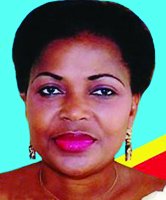
Marie-Therese Nlandu

Nlandu, a member of All Nations Baptist Church in London, submitted the request following the assassination of fellow human-rights activist Floribert Chebeya in June.

She cites the widespread practice of rape and mutilation of young women in the Grand Kivu area of her country. Rape has frequently been employed as a weapon of war in Congo’s recent conflicts over the country’s mineral riches.

Attacks against Kabila political rival Jean-Pierre Bemba and the murder of thousands in the Kongo Central province are also mentioned in Nlandu’s charges.

In 2006 and 2007 she spent 160 days on death row, charged with treason after defending people in various court cases.

After receiving treatment to recover from the injuries suffered as a result of the incarceration, Nlandu has traveled the world to speak to Congolese expatriate communities and raise awareness of the human-rights abuses.

Her husband, Noel Mbala, said his wife couldn't remain silent, despite the increased risk to her safety posed by her speaking out again.
“We can't just cross our arms — that's what makes evil prevail. What's happening is an internal torture for us as Christians,” he said. “We need the international prosecutor to look into these crimes.”

Supporters are asked to sign a petition to show support for the campaign.


–Paul Hobson is news editor of The Baptist Times, the weekly newspaper of the Baptist Union of Great Britain.


New polls show rising support for gay marriage, little change on abortion

WASHINGTON (ABP) – Abortion and gay rights appear to be decoupling as important dividing lines among Americans when it comes to social issues, according to recent surveys on values, faith and public life.

Rising support for legally recognized same-sex unions and other gay-rights issues alongside relatively steady numbers regarding support for legalized abortion confirm the findings of other studies. And the cleavage between the two issues as indicators of social or religious conservatism is particularly apparent among younger voters.

“The survey reveals a decoupling of the social issues of same-sex marriage and abortion, which have traditionally been mentioned in the same breath in the public discourse,” said Robert Jones, CEO of the Public Religion Research Institute, which released the second set of findings from its biennial American Values Survey Oct. 13.

They show an eight-point increase in support for same-sex marriage since 2008 as well as massive generation gaps between older and younger voters in their relative support for gay unions.

The poll showed that 37 percent of respondents favored full civil marriage rights for same-sex couples, up from 29 percent who supported them in 2008. Another 27 percent said they believe gay couples should be allowed to enter into civil unions short of marriage. Only 33 percent opposed any sort of legal recognition for same-sex couples.

The generation gap on the issue was stark. Among the youngest group surveyed (ages 18-29), a full three-quarters supported full same-sex marriage rights (52 percent) or civil unions (23 percent). But among those age 65 and over, only a small majority voiced support for same-sex marriage (22 percent) or civil unions (29 percent).

The survey also showed that white evangelicals are the major religious group most opposed to same-sex marriage. While nearly six out of 10 white evangelicals said they oppose gay marriage and a slight majority of African-American Protestants did, majorities of mainline Protestants and Catholics were supportive.

The generation gap in support of gay marriage held across all religious groups, including among white evangelicals.

And while nearly a fifth of respondents said they had become more supportive of gay rights in the last five years, only 6 percent said they had become less supportive.

Meanwhile, when it came to abortion, 55 percent of all respondents said it should be legal in all or most cases, while 42 percent said it should be illegal in all or most cases — reflecting proportions of the population that have held fairly steady for decades. More tellingly, 7 percent said they had become more supportive of abortion rights in the last five years. In the same period an identical percentage said they had become less supportive of legalized abortion.

While support for abortion rights was fairly similar across age groups, figures on other social questions also reflected a generation gap.

“Our survey found that nearly two-thirds of Americans under 30 say that one of the biggest problems in the country is that not everyone is given an equal chance in life. Less than half of adults age 65 and older see this as one of the biggest problems,” said Dan Cox, the institute’s director of research.

The findings of increasing support for gay marriage reflect other recent studies. A study released Oct. 6 by the Pew Forum on Religion and Public Life found 42 percent of Americans supported gay marriage, while 48 percent opposed it. It was the first time in the Pew Forum’s 15-year history of asking the question that opposition to same-sex marriage had fallen below 50 percent. Unlike the Public Religion Research Institute survey, the Pew Forum study did not ask respondents about their support for civil unions.

The poll of 3,013 adults was conducted the first two weeks of September. The margin of error is plus or minus 2 percentage points. A first set of findings, released the week before, found that there was much more overlap between the Tea Party movement and the Religious Right than many pundits suggest.

–Robert Marus is managing editor and Washington bureau chief for Associated Baptist Press.

Previous ABP story:

New poll finds large overlap in Religious Right, Tea Party (10/6/2010)


Buckner seeks adoptive families for Russian boys

DALLAS—Buckner International is seeking adoptive families for eight Russian boys.

“Unfortunately, boys stay on the adoption waiting list longer than girls do,” said Cindy Davison, marketing director for Dillon International, affiliated with Buckner.

Buckner International is seeking adoptive families for these eight Russian boys.

The disparity can be found with American parents adopting from any country, Davison said, but it became highlighted recently by the high number of Russian boys needing homes.

Garth and Tiffany Wilkins of Dallas adopted their son Vlad, a 10-year-old Russian orphan, in 2006. 

“When we found out about the need to adopt older kids, and especially boys, we decided we wanted to pursue older child adoption and let the Lord show us who he had planned for our family,” Mrs. Wilkins said.

“I think about it like this: If I was drowning, I would hope someone would want to throw me a life preserver. Most of the boys that are not adopted will ‘drown.’ They will drown in a sea of insecurity that leads to sins of organized crime, alcoholism, drug abuse. Why would someone let them drown?”

Garth and Tiffany Wilkins of Dallas adopted their son, Vlad, a Russian orphan, in 2006, and they adopted their daughter, 9-year-old Sasha, from Russia this year. 

Often times, she added, boys are less likely to share their emotions and therefore can be more likely to turn to destructive coping mechanisms. She thinks families are hesitant to adopt boys for this reason.

“Vlad is a precious little boy who was hardened due to pain. We’ve seen him change his world view, soften his heart, learn to feel his pain. In time hopefully he will use it to reach others,” she said.

The Wilkins also adopted their daughter, 9-year-old Sasha, from Russia this year. 

At age 17, Russian orphans have to leave the orphanage and frequently fall into alcohol, drugs, prostitution and crime. It is estimated that nearly 10 percent commit suicide within the first three years.

To learn more about the adoption process, visit www.beafamily.org/country-russia.shtml or call (866) 236-7823.


Critics still waiting for action from faith-based office

WASHINGTON (RNS)—Six months after advisers turned in 164 pages of recommendations to the White House’s faith-based office, thorny church-state questions remain unanswered and some critics say the office has been used to push the president’s health care reform.

Joshua DuBois, head of the White House Office for Faith-based and Neighborhood Partnerships, says his office is making slow but steady progress in implementing advisers’ recommendations and expects to have reforms announced soon. (RNS FILE PHOTO/ David Jolkovski)

Much of the work done by the White House Office of Faith-based & Neighborhood Partnerships has been low profile, and successors to the blue-ribbon advisory panel that ended its work in March haven’t been named.

Outsiders say whatever progress has been made has been done too quietly and that the White House has dragged its feet on a promise to change Bush-era rules that allow federal grant recipients to hire and fire based on religion.

“As far as I’m concerned, it’s been six months of silence,” said Barry Lynn of Americans United for Separation of Church and State, who served on a task force charged with reforming the office.

Joshua DuBois, who was tasked by President Obama with overhauling and expanding the office, estimated the administration has started or finished implementing at least half of the advisory council’s 64 recommendations.

Members of the original 25-member panel say the office is making gradual progress on their advice even if it is, as one adviser put it, “less sexy.”

DuBois insisted his office is making steady progress in mulling or implementing the council’s suggestions, even as he conceded, “We can always do more to get the word out about those efforts.”

“There’s a tremendous amount of work going on helping faith-based organizations serve people in need,” DuBois said, citing progress in feeding hungry children in Latino communities and flood disaster relief in Tennessee.

The announcement of a new set of advisers, which took longer than he expected, should occur “pretty soon,” he said.

According to an internal memo, the office is drafting an executive order to implement recommendations on internal reforms, which advisers had hoped would address church-state concerns.

DuBois declined to specify the nature of the reforms, but said: “I think you will see the exact form of that implementation soon. We’re working diligently on this.”

The office’s low profile has allowed it to fly below much of the political chatter in Washington, until recently when critics charged it was adopting the same practices that dogged the office under former President George W. Bush.

Critics have questioned why the office was involved in connecting faith leaders on a September conference call with the president about health care reform. Obama told clergy they could be “validators” for the reform, according to Politico.

“If that office is doing this, what are they not doing they should be doing?” asked Welton Gaddy, president of the Interfaith Alliance.

In a Washington Post column, former Bush speechwriter Michael Gerson added: “Obama has mainly employed his faith-based office to defend federal initiatives, particularly health care reform.”

Some council members, however, said there was nothing inappropriate about the White House trying to reach a broader audience through religious leaders.

“When there are issues at the federal level and information that need to get out to a network, we’ve got a great relational network,” said. Peg Chemberlin, president of the National Council of Churches and a former advisory council member.

DuBois strongly rejected the criticism and said such outreach would continue.

“It is reflective of an important shift from the previous office and those officials … that really saw faith-based organizations only as recipients of dollars and cents as opposed to important partners on nonfinancial issues, like sharing health care information,” he said.

Melissa Rogers, a church-state expert who chaired the advisory council, said the office has moved to implement some of the council’s goals. She remains hopeful that the recommendations on “much needed reform of the church-state rules” will be acted on soon.

“The White House has been putting them through a process,” she said, “and the process is near the finish line.”

But the matter of whether faith-based organizations can make hiring decisions based on religion and still receive federal grants remains as it was in the Bush administration.

“It’s a continuing frustration that they haven’t moved to clarify this,” said Rabbi David Saperstein, a Reform Jewish leader and another former member of the council. White House officials decided early on that that question would not be included in the panel’s portfolio.

DuBois said the hiring issue is being reviewed “very closely” by the Justice Department and White House counsel but “there is no further update at this point.”

Some members of the council, including Florida megachurch leader Joel Hunter, acknowledge that the jury is still out on their year of work.

“Whether or not they implement the recommendations in a substantive way really does remain to be seen,” he said.


Supreme Court torn on free speech rights, private funeral rites

WASHINGTON (RNS)—The last rites of a slain Marine clashed with a small church’s right to preach its anti-gay gospel in oral arguments heard before the U.S. Supreme Court.

Despite religion’s prominent role in the dispute, however, the justices seemed most interested in, and perplexed by, the limits of another First Amendment right—free speech.

Albert Snyder, center, is surrounded by veterans as he exits the Supreme Court after justices considered the limits of free speech surrounding an anti-gay church that picketed outside Snyder’s son’s military funeral. (RNS PHOTO/Paul Kuehnel/York Daily Record/Sunday News)

Westboro Baptist Church, an independent Baptist congregation with about 50 members based in Topeka, Kan., has picketed nearly 200 military funerals in recent years with signs like “Thank God for Dead Soldiers” and “You’re Going to Hell.”

Founded in 1955 by Fred Phelps and composed mostly of his relatives, Westboro believes God is punishing America for its tolerance of homosexuality by killing U.S. soldiers in Iraq and Afghanistan.

In 2006, Albert Snyder filed a federal lawsuit against Westboro after church members picketed near his Marine son’s funeral in a Catholic church in Westminster, Md. Snyder argues the church infringed on his rights of privacy and religious expression, and it intentionally inflicted emotional distress with nasty signs targeted at his son, Lance Cpl. Matthew Snyder.

In addition to the funeral protest, Westboro posted a poem on its website accusing Snyder and his ex-wife of raising their son “to defy his Creator, to divorce and to commit adultery.”

A federal court partially sided with Snyder and awarded him $5 million in damages; an appeals court overturned that verdict, ruling for the church.

Supreme Court justices seemed torn between sympathizing with Snyder’s anguish and defending Westboro’s right to picket and preach, no matter how offensive its message.

Any ruling they deliver, the justices know, will have far-reaching implications for the First Amendment. The justices repeatedly raised hypothetical situations and pondered where to draw the lines between free speech and harassment, between offering opinions on public issues and targeting private citizens with invective.

Sean Summers, Snyder’s attorney, said, “I would hope the First Amendment wasn’t enacted to allow people to disrupt and harass people at someone else’s private funeral.”

Summers painted Westboro as publicity hounds who sought to “hijack someone else’s private event” to promote their church and inflict harm on the Snyders.

But the justices questioned whether Westboro’s apocalyptic picket signs were targeted at the Snyder family or the country at large. “It sounds like ‘You,’” in signs like “You Are Going to Hell,” is directed at “the whole rotten society in their view,” said Justice Ruth Bader Ginsburg.

Westboro used many of the same signs to protest at the Maryland state capital the same day as the Snyder funeral, Ginsburg noted, meaning the church was likely targeting societal issues, not private families. Several justices alluded to the high court’s long history of protecting speech on matters of public concern.

But Ginsburg and other justices also appeared to empathize with the Snyder’s plight.

“This is a case about exploiting a private family’s grief,” she said. Ginsburg then asked Phelps’ daughter and church attorney, Margie Phelps, “Why should the First Amendment tolerate exploiting this Marine’s family when you have so many other forums for getting across your message?”

Margie Phelps said Americans are questioning why U.S. soldiers are dying, and Westboro Baptist Church has answers people need to hear. “We have an answer to your question … Our answer is that you have to stop sinning if you want this trauma to stop happening.”

“Nation, hear this little church,” Phelps said. “If you want to stop dying, stop sinning. That’s the only purpose of this little church.”

Justice Sonia Sotomayor acknowledged some of Westboro’s pickets, such as those condemning America or its wars, involve public speech and are thus likely protected by the First Amendment. “I fully accept you’re entitled in some circumstances to speak about any political issue you want,” Sotomayor said. “But what’s the line between doing that and then personalizing it and creating hardship for the individual?”


Wayland students, employees demonstrate degree of difference

PLAINVIEW—About 150 students, faculty and staff from Wayland Baptist University dedicated a recent Saturday morning to serve their community for the fifth annual Degree of Difference Day in Plainview.

Work crews set out around 9 a.m. to locations around town, benefitting several agencies and organizations. Groups painted facilities for Early Childhood Intervention, Girl Scouts and Compassionate Care Pregnancy Center and did cleaning for Plainview Christian Academy and the Plainview Cemetery. Teams also sorted and organized at Broadway Treasures and Hunger Plus and helped the Crisis Center of the Plains move into its new downtown location.

Rachel Stanfield (left) and Holly Owens “paint the town purple” as part of the service team at an early childhood intervention center in Plainview. The Wayland Baptist University students were among 150 volunteers who served their community on Degree of Difference Day. (PHOTO/Wayland Baptist University)

In addition, teams staffed a fund-raising booth for Plainview Special Olympics, baked cookies for goody bags for Meals on Wheels clients, visited clients at Plainview Healthcare Center and washed cars to benefit Habitat for Humanity.

Volunteers also collected donated nonperishable food from about 1,000 homes to benefit Faith in Sharing House. The food drive resulted in several pickup loads of canned goods and other nonperishables collected, and all the projects were completed within the workday.

Sophomore Alycia Leal said she enjoyed “just knowing that we made someone’s day a little brighter” on the team that baked cookies for Meals on Wheels. “Being able to share Wayland and God positively with people and catching up with old friends was a good thing,” she said.

Kenyon Andrews helped play bingo with seniors at the Plainview Healthcare Center and also shared his singing talent.

“I enjoyed getting to see people that are older in age and have such strength and wisdom to share for life,” Andrews said.

“We had a great amount of food that we picked up, but for the area we had it could have been so much more,” Natalie Crawford said, noting she enjoyed sorting canned goods and realizing what a contribution the group had made for Faith in Sharing House.

{youtube}OhN84o9XEdU{/youtube}
Students, faculty and staff from Wayland Baptist University serve their community for the fifth annual Degree of Difference Day in Plainview.

Shaney Brewer worked with a crew at Early Childhood Intervention painting part of the facility.

“It was just a fun, refreshing way to help out an incredible organization. They impact the lives of so many individuals. So, f this small gesture helps out, I’m glad I could be a part,” Brewer said. “I also enjoyed working alongside fellow WBU students to make a difference.”

Estelle Owens, history professor at Wayland, served as team leader for the group at Compassionate Care and was excited that her group completed all the chores, much to the surprise of center director SuNell Pyeatt.

“It was a good feeling to help an organization that has little money but provides a really good community service,” Owens said. “I loved being outside on a beautiful day and making obvious progress on the tasks we did.”


BRIC nations may help clarify direction of global Christian growth

WACO—Four emerging economic powerhouses popularly known as BRIC—Brazil, Russia, India and China—may provide building blocks for understanding developments in 21st century global Christianity, missions expert Philip Jenkins told a Baylor University symposium.

Traditional missions activity followed a track from the Northern Hemisphere—particularly the United States and Europe—to the Southern Hemisphere, said Jenkins, professor of humanities at Pennsylvania State University and author of two-dozen books. He spoke at an Oct. 11 symposium on world Christianity sponsored by the Baylor Institute for the Studies of Religion .

Philip Jenkins

“One hears a lot about reverse evangelism, from the global south to the European north,” Jenkins said. “But the big story is south-to-south evangelism, such as from Brazil to Africa.”

Rather than looking at old distinctions—the Third World in contrast to the major antagonists in the Cold War or the poor Southern Hemisphere in contrast to the industrialized Northern Hemisphere—Jenkins suggested looking at the fastest growing developing economies and examining how Christianity is flourishing there.

“Scholars of Christianity have struggled to escape from the traditional obsessions of Euro-American churches, the world of the rich and powerful, to acquaint themselves with the very different realities of Africa, with the world of the poorest,” he said.

“Perhaps now, we need to think of another set of unfamiliar circumstances—that of the almost-rich, almost-powerful and increasingly Christian.”

According to the World Christian Database , Brazil ranks second only to the United States in terms of Christian population, with 177 million Brazilian believers, compared to 260 million American Christians, he noted. China and Russia each have an estimated 115 million Christians, and the 58 million Christians in India equals the number in Germany and surpasses the Christian population of Britain.

Historically Roman Catholic Brazil, Orthodox Russia, Hindu India and officially atheist but traditionally Buddhist China have “radically different religious backgrounds,” Jenkins noted. “But all have to address similar questions about new religious movements.”

The fastest growing religious movements in these nations—typically evangelical and charismatic Christian churches—are not affiliated with the state, and they often are emerging in spite of strong state mechanisms, he noted.

“Those Christians are used to having minority status in a society with different cultural assumptions,” he said.


Rise of Hispanic evangelicals said influencing immigration debate

ATLANTA (ABP) — The immigration debate has drawn Latinos into the public square more fully than ever before — and Hispanic Protestants in particular — Gabriel Salguero, a noted Latino evangelical author and thinker, recently told an audience at Mercer University.

Salguero is director of the Hispanic Leadership Program at Princeton Theological Seminary and he and his wife, Jeanette, are senior pastors of The Lamb’s Church, a multicultural Nazarene congregation in New York. He gave four addresses at Mercer’s Macon, Ga., and Atlanta campuses on Oct. 11 and 12 as the first speaker hosted by the new Mercer Center for Theology and Public Life.

Hispanic evangelical leader Gabriel Salguero said followers of Christ from Hispanic and other backgrounds understand  they are integrated into the global church rather than assimilated. (Mercer photo)

He challenged the thesis of Who Are We?, written by the late Harvard University political scientist Samuel Huntington. It claimed that America is defined by an Anglo-Protestant ethic that includes individualism, the English language, hard work and a belief that the country is not a “nation of immigrants,” but rather a “nation of settlers” who came to develop a new country based on the rule of law. Huntington argued that previous waves of immigrants had assimilated into this settlers’ ethic, but a variety of factors led Hispanics to resist this.

Salguero pointed out that followers of Christ from Hispanic and other backgrounds understand that they are integrated into the global church rather than assimilated.

“It is possible to integrate the rule of law with respect for human dignity,” Salguero said. “The Scripture has done it all the time. Jesus puts it this way: ‘Humanity was not made for the law, but the law was made to serve humanity,’ So what we say as people of faith is that if the law is breaking people, then the law is broken.”

Latino evangelicals have come to the fore in the public-policy coalitions dealing with social issues as a result of the immigration conversation, Salguero contended.

“The immigration debate has been a watershed moment for Hispanic evangelicals. Before that, they were not really asked into the conversation; they were not part of these national coalitions,” he said. “But the immigration debate, for better or for worse, catapulted Hispanic evangelicals into the national scene.”

While Hispanic immigrants come from many different regions, religions and worldviews, Salguero said, upon their arrival in America they often develop an identity that is “pan-Hispanic or pan-Latino” in response to political and social pressures. Of the estimated 46 million Hispanics in the United States, as many of 9 million of those may be Protestants, and of those, Salguero said, they are mostly evangelical and charismatic/Pentecostal.

Hispanic evangelical leader Gabriel Salguero addresses students at Mercer University. (Mercer photo)

While Hispanic evangelicals have long had a history of grass-roots action and community development, the immigration debates have led various political groups to seek them out as partners in changing the debate. It has also served as an impetus for Hispanic evangelicals to organize and expand their own public-policy groups, even though they hold to a wide variety of theologies and political philosophies.

Fueled by their growing numbers and the rise of a new generation that is communications-savvy in English and are American citizens, Hispanic evangelicals have now begun to assert themselves and bring their sensibilities to the argument.

“This tells us that Latino evangelicals are coming of age in engaging the public sphere,” Salguero said. “Why? Because we have second-generation Latinos and Latinas who … are fully hybrid. They pray in Spanish, but they speak English.”

Hispanics have a deep understanding of being the outsider, and their varied roots and “mestizo” or mixed ethnic backgrounds help them to understand there is a hybrid nature to culture.  

Even their understanding of God is shaped by a difference in translation. The Gospel of John begins, in English, “In the beginning, there was the word” — but in Spanish, “word” is translated as verbo, or action word. By exerting their right to migrate — legally or illegally — and by their suffering through this experience and the pains of integration or assimilation, Hispanics have developed a different perspective that adds to the debate, Salguero said.

“Hispanic evangelicals have been arguing for common-sense immigration reform from a variety of perspectives. Number one, from a moral perspective … it is in keeping with the best Christian understandings of how we treat the stranger. The second is that it is in keeping with the best of U.S. ideals. The third is that it makes sense economically,” he said.

“What Hispanic evangelicals are trying to do, with varying degrees of success and failure, is to stake out their place for an indigenous given-ness, an indigenous particular contribution to the public-policy debate. So when they talk about poverty, they are arguing that there is something particular, there is something indigenous, an experience that they bring.”

–Mark Vanderhoek is director of media relations at Mercer University.

Related ABP story:

Gushee to head new Mercer Center for Theology and Public Life (5/7/2010)


Group urges IRS to probe church; calls for end to National Day of Prayer

WASHINGTON (ABP) — A church-state watchdog group says the Internal Revenue Service should investigate whether a New York church violated federal tax law by endorsing a Democrat running for governor.

Americans United for Separation of Church and State, a group frequently critical of conservative churches politicking for candidates on the Religious Right, voiced alarm Oct. 7 at activities reported at Brown Memorial Baptist Church in Brooklyn involving gubernatorial candidate Andrew Cuomo.

According to an Oct. 3 New York Times story headlined "Election season puts politicians in the pews," Cuomo made brief spiritual remarks before launching into a 10-minute "pitch for support in his bid for governor." After Cuomo spoke, the newspaper said the church's pastor "quickly encouraged congregants to vote for Mr. Cuomo."

Barry Lynn, Americans United's executive director, said in a letter to IRS officials that the report made it appear that the church "stepped over the line" of what is impermissible activity for non-profit organizations that take advantage of the benefits of being tax exempt.

Lynn said the church's intervention in New York's governor's race "would seem to be a clear violation of federal tax law" and urged the IRS to investigate.

On Oct. 8 Americans United asked a federal appeals court to declare establishing a National Day of Prayer unconstitutional. AU, along with the American Civil Liberties Union and Interfaith Alliance Foundation, filed a friend-of-the-court brief urging the 7th U.S. Circuit Court of Appeals to uphold a lower-court decision striking down a 1988 statute that directs the president to proclaim the first Thursday in May a day of prayer.

The court document argued that the statute, passed after pressure from the Religious Right in 1988, violates a constitutional ban on government establishment of religion. It described the statute as "a plain endorsement of religion over non-religion and of certain types of religious beliefs and practices over others."

"Congress needs to get out of the prayer business," said Lynn, an ordained minister in the United Church of Christ. "Prayer is an inherently religious practice, and our Constitution makes it clear that promoting it is not part of the government’s job."

Lynn said Americans can pray anytime they want without permission from Congress and alleged that the observance is not about religious freedom but rather "another opportunity for certain religious groups to use government to push their narrow viewpoint on the rest of us."


–Bob Allen is senior writer for Associated Baptist Press.