Deal seriously with violent biblical texts, historian says
WACO—Christians who characterize Islam as inherently violent on the basis of bloody passages in the Quran suffer from "holy amnesia" regarding their own Scripture, historian Philip Jenkins told a gathering at Baylor University.
"Most religions have somewhat bloody scriptures, and the worst thing we can do is forget they are there," said Jenkins, who recently joined Baylor's Institute for Studies of Religion as distinguished professor of history and co-director of the program on historical studies of religion.

Philip Jenkins of Baylor's Institute for Studies of Religion.
|
Christians who ignore violent texts in the Old Testament as irrelevant to their faith need to "exorcise the spirit of Marcion," a second-century heretic who taught the God of the Old Testament was different than and inferior to the God of the New Testament, he asserted.
"Take the New Testament away from its Old Testament Jewish roots, and you are left with a strange creature indeed," Jenkins said.
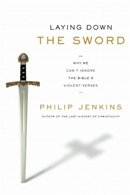
Jenkins, author of Laying Down the Sword: Coming to Terms with Violent Scriptures, cited several passages to illustrate the existence of violent passages in the Bible, such as the story in Numbers 25 of Phinehas, the zealous Hebrew who drove a spear through an Israelite man and a Midianite woman when he found them together in a tent. That story, in turn, became justification for continuing Israelite hostility toward the people of Midian.
Likewise, he noted commands in Deuteronomy and Joshua to kill every man, woman, child and animal in Canaan, and a similar command King Saul disobeyed in regard to King Agag and the Amalekites in 1 Samuel 15.
Christians have dealt with these and similar Scriptures in four ways, Jenkins said:
• Accept them.
Historically, violent passages have been used to justify actions ranging from the Crusades—notably the Pope's command to "save Jerusalem from the Amalekites"—to modern vigilantes in the violent Christian Identity movement who identify themselves as the "Phineas Priesthood," Jenkins noted.
"The last Christian to kill somebody in the belief he is killing an Amalekite has not yet been born," he said.
• Censor them.
|
Many Christians never read troubling passages in the Old Testament. In the liturgical tradition, they are omitted from the Revised Common Lectionary. In the evangelical tradition, they seldom are selected for sermons or Sunday school lessons.
• Soften them.
Some interpreters have spiritualized the stories, turning historical accounts into parables or extended allegories. That approach allows some readers to conclude, "No actual Canaanites were harmed in the making of these Holy Scriptures," he quipped.
• Take them seriously.
"We should read the Bible as it stands and try to understand why the writers presented the stories as they did," Jenkins said.
Accounts of Israelite enmity toward Midianites, Amalekites or Canaanites should be read not only within the context of the historical events, but also the context of the Hebrew Scriptures' development, he insisted. Events described centuries after the fact should be considered in light of the writers' historical setting—exile, captivity or oppression by foreign forces.
The book of Joshua, for example, most likely was written during the period of the Hebrew prophets who called the Jews to embrace justice and honor their covenant with God or suffer the consequences of disobedience.
"The threat was meant to apply not to foreign people but to the Hebrews themselves," Jenkins said.
When it comes to violent Scripture passages, Christians should "absorb them"—study them within historical context, view them with humility and interpret them in light of the revelation of God in Christ—"but never forget them," he concluded.