San Antonio Baptist church helps asylum seekers

SAN ANTONIO—When a mother and child seeking asylum in the United States faced deportation last year, Natalie Webb, pastor of Covenant Baptist Church in San Antonio, knew her congregation had the resources and the ability to help.

Even though immigrants have credible reasons to seek asylum in the United States, such as fearing for their own lives or their children’s lives, Webb said, immigration courts tend to turn away most applicants.

If asylum seekers are able to find a lawyer to represent them, and the attorney believes the client was turned away in error, an appeal is possible.

In February 2017, the San Antonio Sanctuary Network informed Covenant Baptist Church about a mother and her child who needed sanctuary to remain in the United States while they waited on the court to hear their appeal.

The mother and her child were able to find other resources and did not end up needing Covenant’s help, Webb noted. But since that day, her church has participated in the Sanctuary Network, a volunteer-led organization formed last year.

San Antonio Sanctuary Network formed
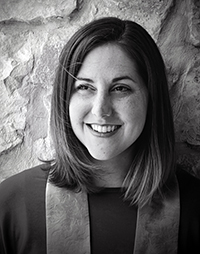
Natalie Webb is pastor of Covenant Baptist Church in San Antonio and co-chair of the San Antonio Sanctuary Network. (Photo courtesy of Natalie Webb)

Webb and Moon Brand now co-chair the network, which focuses primarily on providing asylum-seeking immigrants short-term shelter and accompaniment to immigration appointments.

“San Antonio Sanctuary Network came out of the Interfaith Welcome Coalition, and it is now its own group,” Webb explained.

The coalition began aiding immigrants years ago, during the Obama administration. At that time, families sometimes were dropped off at bus stations during the night, even though their buses might not leave until days later.

When the Trump administration made it tougher for immigrants to receive asylum, some congregations in the Interfaith Welcome Coalition declared themselves sanctuary churches. Most provide short-term lodging and assistance to families as their immigration cases are processed. Some are ready to offer safe haven to immigrants who face deportation.

Since many of the churches of the San Antonio’s Sanctuary Network also are part of the Interfaith Coalition, their work involves collaboration from churches of many Christian denominations, as well as other faiths, Brand noted.

Sanctuary offered in event of ‘worst-case scenario’

Churches in San Antonio have not had to offer sanctuary to immigrants yet, which is understood as the last aid a church could offer in case of an emergency, Webb clarified.

“Church sanctuary would be the response for families at risk of deportation in kind of a worst-case scenario,” Webb said.

The Sanctuary Network also developed other programs, such as enlisting volunteers to accompany asylum seekers to their court dates, immigration check-ins and any other appointment with offices of the U.S. Immigration and Customs Enforcement, Webb noted.

Webb and Brand both noted a significant change when people from the community accompany asylum-seekers to their appointments. The proceedings tend to go quicker, immigrants receive more favorable outcomes and they are not belittled, Webb said.

‘We are stronger together’

Often, when ICE agents learn volunteers of the interfaith coalition are accompanying immigrants, they tend to open up and be more approachable, Brand added.

They may think volunteers are from the church of their parents, or a family member, so they treat immigrants better, she said.

When people hear “interfaith,” they understand it could be any church offering assistance to their neighbor, Brand observed.

“We are stronger together,” she said.

The few asylum-seekers who are allowed to enter the country and continue their case are dropped off at a bus station until they depart to meet their family members, Webb said.

After the Trump administration implemented a zero tolerance policy that included asylum seekers, families that crossed the border were separated. U.S. Attorney General Jeff Sessions ordered adult immigrants to be sent to jail while they were prosecuted and children transported to different holding facilities until they were placed with other relatives.

In June, Trump signed an executive order ending the policy of family separation after public objection. Even though a federal judge ordered the Trump administration to reunify all families by July 26, hundreds of families still wait to be reunited.

Support and short-term shelter for families

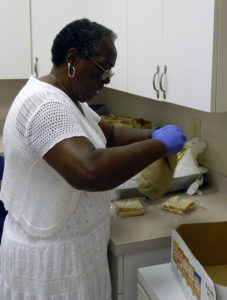
As families wait to continue the journey to their final destination, Covenant has begun to offer short-term shelter for them, Webb said.

Since this summer, the church has hosted five families, which also includes helping them find resources in San Antonio and around the cities where they are headed, said Webb.

Each family has different needs, so the support Sanctuary Network offers is specific to each case, Brand said.

“After they leave us, and they go to their final destination, we need to make sure that where they’re going they have resources,” said Brand. “We’ll see what immigration center is closest to them, what church that speaks their language is closest to them, and we connect them to that so they can have success.”

Webb’s and Brand’s interaction with immigrant families has developed into friendships, both said. Even after the families have arrived at their final destination, they still call Webb and Brand to talk.

Serving the vulnerable

Through the conversations, Webb and Brand make sure their transition is continuing smoothly, check in on them and see how their children are doing in school, Brand added.

“To me, this is what the mission of the church is,” Webb said. “When I think of my ministry and the church’s ministry, I think about Jesus in Luke, reading from Scripture about how he came to release prisoners, give sight to the blind, and heal the wounded.”

The call of the church is to serve the least of these, so when a church has the space that can be used for a ministry like this, it must be a good steward of its resources, Webb said. It’s simply part of the identity Christians must have, she added.

Even when some people oppose welcoming immigrants, Webb maintained her loyalty is to Christ and to serving those she has been commanded to serve.

“We learn so much from the lives of these families, and especially the women who have stayed with us,” Webb said. “They are the best picture that we have of Jesus; one of strength in weakness, risk and faith, and care for their children.”


Desire to serve keeps San Angelo woman rolling after 35 years

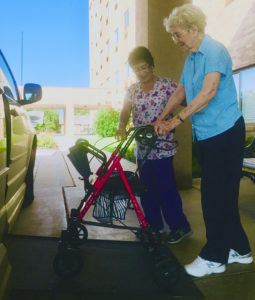
SAN ANGELO—When residents at Baptist Retirement Community in San Angelo need transportation to a doctor’s appointment, they know they have more than a free ride available. They have a friend in the driver’s seat.

For 35 years, Sally Lugo has provided the retirement community residents transportation to and from medical appointments. She views the service she offers as more than a job.

“It’s a ministry to me,” she said. “I feel called to do this as a mission. I like to help people.”

Sally Lugo views her role in providing transportation services for residents of Baptist Retirement Community in San Angelo as a calling. (Photo courtesy of Baptist Retirement Community)

Lugo initially joined the senior living community staff as an aide, working late-night shifts. When a job became available in transportation services, she applied for the position. She wanted employment that allowed her to be home with her young children early mornings and every evening.

“Now my children are all adults, with families of their own,” Lugo said.

Extended family

After three and a half decades serving seniors at Baptist Retirement Community, a Buckner senior living facility, they treat her like extended family. Lugo appreciates when residents ask about her four grandchildren, and she eagerly shows their latest photos on her smartphone.

Lugo enjoys the opportunities her job offers to get acquainted with residents as she drives them to and from their appointments.

“I learn a lot from them. I like listening to their stories,” she said. “I have a lot of respect for them, and I feel like I understand where they’re coming from.”

Through the years, she has listened to retired missionaries describe their experiences in overseas service, as well as hearing more than a few humorous or touching stories from residents.

“If I could go back, I would have kept a journal,” she said.

Happy to serve

Lugo recognizes visits to medical appointments can be stressful for senior adults, and she seeks to make the experience as pleasant and positive for them as possible.

“I’m there to listen, not to give advice,” she said. “I try to give them some encouragement, and they know I’m going to keep an eye on them. Sometimes, I’ll give them a call after an appointment, just to make sure they are OK. They appreciate it when I’m checking on them.”

Lugo knows residents’ families also appreciate the service she provides, since it means they don’t have to take time off from work or drive long distances for every appointment.

After three and a half decades, Lugo now recognizes some Baptist Retirement Community residents as the children of former residents she served.

Other drivers at the retirement community provide transportation to planned outings and shopping trips. Lugo’s job assignment focuses specifically on medical appointments. However, that doesn’t prevent her from offering her senior adult friends a ride to evening visitation at a funeral home or to a weekend memorial service.

Lugo finds satisfaction in greeting residents with a smile and providing them “a listening ear.” They, in turn, bring her joy on a daily basis, she added.

“I am very blessed in a lot of ways—being here as long as I’ve been and coming in contact with the residents,” she said. “I enjoy coming to work every day.”


Calling confirmed: Internship provides BUA student ministry experience

SAN ANTONIO—This summer, Baptist Temple in San Antonio found a way both to strengthen its community ministries and provide hands-on experience for a Baptist University of the Américas student.

Miguel Garcia, a BUA student, served as an intern at Baptist Temple through Student.Church, a program coordinated by the Cooperative Baptist Fellowship. Garcia was one of 46 undergraduate and graduate students who explored ministry opportunities at churches across the country through Student.Church.

Pastor Jorge Zayasbazan noted Baptist Temple already had bought a house and refurbished it for student missionaries who will live there while they serve in the congregation’s varied community ministries.

Baptist Temple’s hope to expand its involvement in the community and Garcia’s search to gain ministry experience came together through Student.Church, said Wanda Kidd, director of the program and collegiate ministries specialist at CBF.

Offer guidance and support

Student.Church internships, which begin at the end of May and conclude in early August, differ from many other church internships in the exposure and guidance students receive, Kidd noted.

“It’s not unusual for churches to have interns,” she said. “What is unusual is for church interns to know they are not insular in their experience.”

The Cooperative Baptist Fellowship sent 46 Student.Church interns across the country to learn and explore different areas of church ministry. (Photo / Wanda Kidd)

Student.Church supports interns by connecting them with mentors outside the church and bringing the students together so they can share experiences with each other, Kidd said.

Connections between students grow even more during debriefing at the end of the summer, when CBF assembles 40 to 50 student interns who bond as they relate their common experiences, Kidd said.

“People are always fascinated by how close these students are when they only have known each other for one week,” said Kidd. “There is a sense of community and shared experience.”

Student.Church internships offer a wide range of ministry experiences, including hospital visitation, business and church administration meetings, as well as sermon preparation and children’s lessons, she said.

A clear picture of congregational ministry

The experience gained at Baptist Temple gave Garcia a clearer picture of what ministry in the church can be like, he said.

Garcia, who hopes to serve as a worship leader in a church, noted he is on track to graduate from BUA next year. As an intern, he learned worship ministers can help other Christians be more active in the church, Garcia added.

“We’re meant to grow in our faith and plant other seeds,” he said.

Garcia’s experience and the lessons he learned while he served at Baptist Temple exemplify the reason CBF created Student.Church, Kidd noted. When the program started, she noted, more than 60 percent of students entering seminary reported they never wanted to serve in a local church.

“Since our organization is based in local congregation ministry, we said, ‘Maybe if we placed them in congregations and help them see the purpose and value of church, it might change that,’” she said.

Hands-on internship experiences in congregations tend to confirm a sense of calling, Kidd noted. Since Student.Church began, CBF has worked with 400 churches and somewhere between 400 and 500 students.

Every summer, one or two students decide they are not meant for ministry in a local church, she acknowledged.

However, many others—including some who accepted an internship because they could not find a summer job or because someone recommended the program to them—fall in love with ministry in a local church setting,  and their lives are shaped by the experience, Kidd said.

“I would have not done this for 10 years if I did not think this had intrinsic and lifelong value,” she said.


CommonCall: God gave the vision

KILGORE—Talk to James Bell even for a few minutes, and the subject of “vision” will arise.

“My vision is equipping people to see God’s love,” said Bell, bivocational pastor of Greater St. John Baptist Church in Laird Hill, an unincorporated community southwest of Kilgore. “God is with us always, but we don’t always focus on that. God had a vision for this church, even when nobody saw it.”

‘God has allowed me to see his power’

Since Bell became the congregation’s pastor 12 years ago, he has seen the rural church grow from three or four worshippers on a typical Sunday to more than 200, and he gives God all the glory.

“The Lord has been here the whole time,” Bell said, referring both to his personal testimony and the life of the church. “God has allowed me to see his power.”

About 15 years ago, God used Bell’s concern for a seriously ill friend to help begin the process of discerning his call to ministry.

“The Lord put him on my heart, to try to get him into church,” Bell recalled. “It took me and the Lord about a year and a half, but he ended up in church, and I found a calling.”

Later, God used a request from his sister to confirm that calling both to him and members of Greater St. John Baptist Church.

His sister had been diagnosed with what appeared to be a potentially life-threatening thyroid disease requiring multiple medications that created other health concerns. So, Bell prayed with his sister, asking God to heal her.

Later, his sister called him to say her doctor pronounced her completely free from the disease and took her off all the medicine she had been taking for three years.

At her request, he preached the Mother’s Day sermon at Greater St. John Baptist, where he had been teaching a Sunday school class. In time, he was licensed and ordained to the ministry, and the church called him as pastor.

“When God began calling me to the ministry, the Lord let me see some tremendous things,” Bell said, recalling multiple instances of answered prayers and changed lives. “I was eager to tell the story and let people know how good God is.”

‘Help the kids see there is a better future’

Pastor James Bell points with pride to graduation photos of young people who grew up as part of Greater St. John Baptist Church, near Kilgore. (Photo / Ken Camp)

Early in his pastorate, Bell particularly found success in reaching children, teenagers and young adults with the gospel, including many who would have been considered at-risk.

“I wanted to help the kids see there is a better future—a better day ahead,” he said.

However, he realized, he could not provide the kind of discipleship opportunities they needed and fulfill God’s vision for making an impact on the community alone.

About that time, he attended a Christmas program at First Baptist Church in Kilgore, and received a follow-up call from a church representative. Bell told the caller he was pastor of a small, rural church, and he needed help.

“I need tools to help build up the church,” Bell recalled telling him.

‘Unlocking the door to so many opportunities’

The caller introduced Bell to the staff at Gregg Baptist Association, and he learned about the advantages of working cooperatively in missions. Bell subsequently led Greater St. John Baptist to affiliate both with Gregg Baptist Association and the Baptist General Convention of Texas.

“The BGCT and the association have been like locksmiths to me, unlocking the door to so many opportunities,” Bell said.

When the church outgrew its sanctuary, the BGCT helped the congregation secure a low-interest loan and—with the help of volunteer builders and the sponsorship of First Baptist in Kilgore—construct a new facility.

Bell anticipates Greater St. John Baptist will pay off the 10-year note within a few months—about six years after obtaining the loan.

Greater St. John Baptist led Gregg Association in baptisms several years ago, based on percentage increases, and the congregation has been a statewide leader among African-American churches of its size in giving to the Cooperative Program unified budget.

Meanwhile, the church has increased its involvement in community ministry. Greater St. John Baptist provides food boxes to families in need at Thanksgiving and bicycles for children at Christmas.

“We’ve also been able to help people within the church who have almost lost a house after they lost their job,” Bell said.

Through good times and bad

As young people in the church have grown, the congregation celebrates their achievement, displaying their graduation photos on its “wall of honor.”

When some have strayed, Bell and his congregation have walked with them through their difficult times.

He recalled one young woman, a former leader among the youth, who made bad choices and entered into a relationship with a boyfriend who got her pregnant and physically abused her.

Her life took an even more drastic turn when he forced her to drive the car while he and another man committed an armed robbery, shooting and killing someone.

After the young woman was arrested and charged as an accomplice, Bell continued to visit her. He assured her even though she had turned her back on God, he had not forsaken her. They prayed together, asking God to use her even behind bars, and to open doors for a fresh start.

Eventually, her former boyfriend confessed he had forced her to participate in the crime against her will. She was released and returned to church. Now she holds down a steady job, and when she recently bought a small house, she asked Bell to say a prayer of blessing over it, committing her household to God.

“When I tell our church, ‘God is good all the time,’ they know it’s true, because they have seen it,” Bell said.

In the coming years, he trusts God to continue to “keep pouring blessings through the window,” as the church remains obedient to Christ’s call to love.

“If we keep showing love, we’ll continue to grow,” he said. “Jesus showed love. We need to love people the same way Jesus loves us. … People are watching to see how much love you have. What God pours into us, we need to pour off to others.”

Read more articles like this in CommonCall magazine. CommonCall explores issues important to Christians and features inspiring stories about disciples of Jesus living out their faith. An annual subscription is only $24 and comes with two free subscriptions to the Baptist Standard. To subscribe to CommonCallclick here.


ETBU women’s basketball team serves in Jamaica 

MARSHALL—The East Texas Baptist University women’s basketball team journeyed to Jamaica recently to “share the joy of the Lord with the people of the island,” a leader of the mission trip said.

As part of the Tiger Athletic Mission Experience, the group of 27—led by Head Coach Rusty Rainbolt and Lisa Seeley, director of global education at ETBU—worked in partnership with Ignite International.

‘Experience of a lifetime’

The ETBU women’s basketball team competed with international basketball teams, conducted sports clinics for children, volunteered in schools and visited orphanages in Jamaica. (ETBU Photo)

“The mission trip to Jamaica was an experience of a lifetime in so many ways,” Rainbolt said. “I can’t begin to describe all that we saw and experienced through those nine days. I can say that, more than ever, our team experienced the biblical elements of love, patience, longsuffering and kindness. May we never forget, and may we never be the same.”

Coaches prepared the student athletes both physically and spiritually for their time in Jamaica, Seeley said.

“From the beginning, the team was ready to share the joy of the Lord with the people of this island,” she said. “These young women are amazing and love God with all of their hearts. It has been a blessing to travel and serve with them.”

The ETBU team competed with international basketball teams, conducted sports clinics for children, volunteered in schools and visited orphanages.

‘This is why we are here’

A trip to the Melody House for Girls, a home for abused teenage young women, made a deep impression on Kayla Bise, an ETBU junior.

“A few of my teammates shared their testimonies, a powerful experience that created a connection with the girls,” she said. “Afterwards, the women had the opportunity to share their story with us and ask questions. One girl expressed how she knew who Jesus was but felt like God didn’t love her.

“We had the chance to open the Bible and show her how much God cares for her. By the end of the conversation, she accepted Jesus into her heart, and at that moment, I thought to myself: ‘This is it. This is why we are here.’”

The Tigers played at the University of West Indies against Jamaican Olympic and National Team athletes. During half-time, the groups gathered on the court to share Christian testimonies and pray together. Following the games, the teams spent time together in worship and fellowship.

“We were blessed to play with ladies from another country, who we could relate to on and off the court,” ETBU senior Valarie Matlock said. “At half-time, we brought the team in the middle of the court and told the crowd about what God does for us. We prayed together and showed them that God is more significant than our ability to play basketball. ETBU won 41-39, but the score was not as important as the fact that we were able to spread the word of God as a team.”

Both the student athletes and coaches mentioned how the seeds they planted will continue to sprout in the lives of the Jamaican people and in their own lives in the future.

“These staff members and student-athletes have poured their hearts into advancing the kingdom of God, encouraging the people of Jamaica, and building the team’s chemistry,” ETBU Assistant Coach Caleb Henson said.

“Our players have learned not to allow their youth to hinder them as they profess the name of Jesus. They have set an example for all believers with their vulnerability, love and faith. I believe this experience is going to serve as a foundation for our program as we head into the upcoming season.”

The trip to Jamaica marked the seventh Tiger Athletic Mission Experience, which provides student athletes opportunities to use sports as a platform to connect with people and share the gospel of Jesus. Ryan Erwin, ETBU vice president for athletics, will lead the ETBU hockey team to Austria and Slovakia in early January for the next trip.


Contact Sunset Commission to call for fair lending, alliance urges

Texans concerned about credit access businesses such as payday lenders should make their views known now to members of the state’s Sunset Commission, advocates for fair lending asserted during a recent webinar.

Representatives of the Texas Fair Lending Alliance urged citizens to contact the Sunset Commission before Aug. 29, when the group meets to determine its recommendations regarding the Office of Consumer Credit Commissioner. The office oversees licensing and collecting complaints on credit access businesses, including payday and auto-title lenders.

The Texas Fair Lending Alliance is a coalition of 60 individuals and organizations, including the Texas Baptist Christian Life Commission.

Opportunities and dangers noted

In an Aug. 20 online presentation, Ann Baddour with Texas Appleseed and Ashley Harris with United Ways of Texas noted Sunset review—a process established to hold state agencies accountable by periodically evaluating whether they should continue to exist—offers opportunities to strengthen consumer protection against what they consider predatory lending.

However, they asserted the payday lending industry also will attempt to persuade the Sunset Commission to expand the products it can offer, raise the rate caps on consumer loans and weaken regulations. So, they emphasized the importance of individual citizens making their voices heard.

Proponents of payday lending and auto-title loans insist they provide an important service by helping an underserved population gain access to quick cash.

However, opponents insist the lenders trap low-income consumers in a cycle of debt they cannot escape. In Texas, the average $500 payday loan costs $1,350 or more to repay, representatives of the Texas Fair Lending Alliance reported.

So far, 45 cities have adopted uniform ordinances to place limits on the number of times loans can be rolled over and paid in installments, and to require that proceeds from any renewal payments apply toward significantly reducing the original loan amount.

“The city payday reform ordinances continue to be on solid legal ground,” Baddour said.

However, she and Harris encouraged vigilance to make certain the Sunset Commission does not recommend the Texas Legislature seek to preempt city ordinances or allow the expansion of high-cost loan products.

Expand authority to include online lending

The Texas Fair Lending Alliance also recommends that the Office of Consumer Credit Commissioner’s authority be expanded to include over oversight of online lending, which is expected to reach 10 percent of the consumer lending market by 2020.

While online operators include legitimate companies, the online space also is “a haven for fraud,” Harris noted.

For instance, she reported, 10,000 Texans were cheated out of more than $50 million due to fraud perpetrated by an “online lead generator”—a business that takes personal data from people looking for loans online and then sells that information to the highest bidder.

Granting the Office of Consumer Credit Commissioner authority over online lending simply represents “a governance change, not a policy change,” Harris and Baddour emphasized.

The Texas Sunset Commission includes five state senators, five members of the Texas House of Representatives, and two members of the public appointed by the lieutenant governor and speaker of the house.

Sen. Brian Birdwell, R-Granbury, is chair, and Rep. Chris Paddie, R-Marshall, is vice chair.

Other members of the commission are Sen. Dawn Buckingham, R-Lakeway;  Sen. Bob Hall, R-Canton; Sen. Robert Nichols, R-Jacksonville; Sen. Kirk Watson, D-Austin; Rep. Dan Flynn, R-Van; Rep. Stan Lambert, R-Abilene; Rep. Poncho Nevarez , D-Eagle Pass; Rep. Senfronia Thompson, D-Houston; Emily Pataki of Cedar Park; and Ronald G. Steinhart of Dallas.

To submit public input on an agency under review by the Sunset Commission, click here.


Prichard writes practical primer for widows

Ella Prichard wrote Reclaiming Joy as a practical guide for widows—the book she needed but could not find when her husband of 46 years, Lev, died in 2009.

At the time, she felt unprepared for widowhood. She considered herself unequipped to assume leadership of the Corpus Christi-based oil and gas company he headed. She also struggled to cope with the emotional, spiritual and psychological challenges of bereavement.

Ella Prichard used the Apostle Paul’s letter to the Philippians as the framework for her book, “Reclaiming Joy: A Primer for Widows.” (Photo / Ken Camp)

Prichard found solace in Scripture—particularly the Gospel of John, the Psalms and the Apostle Paul’s letter to the Philippians—but little help in popular Christian books.

“There wasn’t a book for me. So many so-called Christian books are just filled with devotional platitudes,” she said. “I was not happy that Lev was in heaven singing with the angel choir. I wanted him here.”

Prichard, who studied journalism at Baylor University, had written extensively throughout her married life—everything from Sunday school curriculum to promotional material for nonprofit capital campaigns.

So, she began writing about her experiences in brief essays posted on Facebook and in tweets on Twitter.

“I found out Twitter is a wonderful place to scream out your pain in 140 characters,” she said.

In the process, she discovered an online community of women on similar journeys. While no two widows’ experiences are identical, some aspects of living with loss are universal, she noted.

“What you think is personal and unique turns out to be common,” she said. “Google it, and you find thousands of hits.”

Out of that experience, she decided to write a guide for dealing with the challenges widows face.

“I didn’t set out to write a Christian book. I set out to write a practical book,” she said.

Even so, Reclaiming Joy: A Primer for Widows uses the New Testament book of Philippians as its framework.

“I didn’t intend to write a memoir, but all I really had to offer was my own experiences and my own reactions to Philippians,” she realized.

‘The empty chair’

Initially, she thought about titling the book, “Rejoice!” However, reflecting on her experience, she realized how offensive that suggestion would be to someone who just experienced profound loss.

Instead, she wanted to present the steps she took toward reclaiming the joy she lost when her husband died.
Some readers think of Philippians only in terms of Paul’s emphasis on joy and “just hit the high notes,” Prichard said. More careful study revealed the epistle deals with overcoming discouragement and a variety of other challenges.

“It is filled with practical advice to a church with practical problems,” she said. “I began to recognize the darker parts.”

Prichard’s Christian faith provided the foundation that enabled her to move from intense pain to a new sense of joy, and she recognized Jesus was with her in the midst of her suffering. Still, she told her pastor at one point, “Jesus doesn’t sit across from me at the dinner table.”

She honestly acknowledged “the black hole that never goes away” and the ever-present reminder of  “the empty chair.”

From the Psalms, she found permission to voice questions and complaints to God.

“Perfect people aren’t believable,” she said. So, she transparently chronicled her experiences, including missteps along the way.

Rather than viewing grief as lack of faith, she found help in the Apostle Paul’s words in 1 Thessalonians 4:3. Paul did not tell the Thessalonian Christians not to grieve, she noted. Rather, he told them not to grieve as nonbelievers “who have no hope.”

While Christian Scriptures are woven throughout the book, Prichard believes people from a variety of faith backgrounds will relate to her experiences and find them helpful. She pointed to a “devout Jew” who told her he intends to give one copy to his widowed mother-in-law and another to his wife.

“I hope it speaks to those of other faiths and those who are just vaguely spiritual,” she said.

Taking note of lessons learned

Prichard divided the book into four sections, drawn from Philippians and affirmed by her personal experience: “Love overcomes fear.” “Unity strengthens relationships.” “Maturity brings wisdom.” “Peace leads to joy.”

Each of its 28 chapters ends with a particular lesson she learned, such as:

  • “We almost surely will encounter those who do not have our best interests at heart; but with God’s help, we can find the wisdom and courage to resist them, while not allowing them to make us bitter or untrusting.”
  • “Getting one’s priorities in order—learning to do what must be done without neglecting what really matters in life—requires self-awareness, time management and extraordinary self-discipline.”
  • “Our pretense of strength as new widows is the mask we wear to hide our weakness and vulnerability. Only when we acknowledge our discontent with our new role and admit that we are powerless to change our circumstances will we be ready to draw strength from our family, friends and faith. Then we can find contentment.”

Prichard learned the importance of finding balance. Exercise caution, but don’t live in fear. Take time for self-care, but grow to focus less on one’s own loss and more on the needs of others. Recognize solitude is a gift, but isolation is “the worst thing in the world,” she said.

“I’ve learned to look at my calendar, preferably a week out, at least at the beginning of the day, and to be sure I take a moment to escape drudgery and isolation,” she said. “Even going to the grocery store or out to eat by myself gets me out of the house and among people.”

She makes it a point to take breaks from the necessary work that must be accomplished, whether that means walking outdoors, enjoying a cup of coffee or calling a friend on the phone. She engages in some “pleasant and relaxing” activity and takes a step to “connect with other people somehow,” she said.

Prichard’s book begins with an emphasis on grace and gratitude. It ends with an emphasis on generosity and grace. In part, she noted, that reflects Paul’s writing in Philippians, but it also grew out of her personal journey back toward joy.

“You have to understand grace before you understand the rest,” she said.

Reclaiming Joy: A Primer for Widows is published by 1845 Books, an imprint of Baylor University Press. Its release date is Sept. 15, but the publisher is accepting pre-orders. 


BUA on track toward healthy future, president says

SAN ANTONIO—When Abraham Jaquez became president of Baptist University of the Américas one year ago, the school faced financial distress. But now BUA is on track to move forward, he said.

Last September, the Baptist General Convention of Texas Executive Board approved a $1 million loan, as well as a $250,000 gift and $250,000 challenge grant, to BUA. The university’s debt at that time totaled about $800,000.

After René Maciel’s resignation as president of BUA in 2016, the school spent almost a year in search of a president.

Thanks to Texas Baptists’ help and the school’s commitment to financial stewardship, BUA can maintain the course as a donor-driven institution, Jaquez said. BUA can honor its past, bring the best aspects of its heritage to the forefront and chart a new course, he said.

‘Being good stewards’

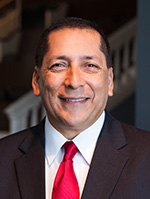
Abraham Jaquez 150
Abe Jaquez

“The mission and vision of BUA is to equip and educate cross-cultural Christian leaders” both for the ministry and the marketplace, Jaquez said, which the school accomplishes by “being good stewards of the resources God has given.”

While BUA maintains a steady uphill trajectory, the school is on its way to becoming sustainable if it maintains the course it is on now, he said.

In managing BUA’s resources, Jaquez said, he had to streamline some departments and cut some programs, such as the baccalaureate in Spanish literature.

Internal analysis showed a low number of students interested in the Spanish program in the past five years, and the program was not sustainable, he said.

“You have to make the decision of closing a program when you know it is time,” he said. Even so, discontinuing the program was a difficult decision, he added.

Those who previously graduated with a degree in Spanish Literature from BUA still have a valid baccalaureate, Jaquez said. The five students at BUA currently pursuing the major will be able to finish it, but it no longer is an option for students starting this fall semester, he explained.

BUA is researching additional majors that would complement what it offers now, considering what will attract students and what its constituents may need in the future, he noted.

The Baptist General Convention of Texas historically supported schools that faced difficulties in their early years, Jaquez noted. Although BUA began in 1947, it did not achieve accredited university status until 15 years ago, Jaquez said.

Committed to serving students

BUA continues to grow and expand its friends and partners, and the university is committed to serving students who are called into the ministry and the marketplace, he added.

The school’s commitment to its students includes ensuring their safety and meeting legal requirements. While multiple schools across the nation have faced reports of sexual harassment and abuse on campus, Jaquez said he is grateful no cases of sexual misconduct have been reported to the executive office during his tenure.

The school lists in its student handbook the help it offers to those who make a report of sexual harassment, as well as the procedures it will follow. As an academic institution, BUA complies with Title IX requirements regarding how to handle reported allegations of sexual misconduct.

Mary Ranjel, BUA’s vice president for student services and enrollment management, serves as Title IX coordinator of BUA, handling any cases and making sure the school is compliant with the law.

Reaccreditation process completed

In March, the Association for Biblical Higher Education evaluated BUA accreditation. Although the reaccreditation process followed soon after a presidential transition, and preparation for the accreditation study consumed significant time, the school “crossed the finish line with flying colors,” Jaquez said.

Abe Jaquez became the eighth president of Baptist University of the Americas in 2017. (BUA Photo)

The Association for Biblical Higher Education issued three recommendations for BUA: to complete an independent audit, which the school submitted on time this past May; upgrade its library resources; and publicly disclose its transfer credit policy, as well as the list of institutions with which BUA has articulation agreements to transfer college credits. The institutions listed online are Wayland Baptist University, Texas A&M-Commerce and the graduate programs of Dallas Baptist University.

After the Association for Biblical Higher Education evaluated BUA, Jaquez said, he was told the school is the only university in the United States that offers cross-cultural studies from a Hispanic context.

Jaquez pointed out he told the accreditation board in March about the changes he planned to implement at BUA, and its response to those changes was positive.

The Association for Biblical Higher Education reaccredited BUA for 10 years after its site visit to the San Antonio campus earlier this year, Jaquez said.

One of the Association for Biblical Higher Education’s requirements for accreditation is institutional stability and capacity. As part of the stability requirement, a school must report changes regarding discontinuation of a program six months before it goes into effect and “abnormal turnover” in board administration or faculty.

BUA has experienced personnel changes, including at the university’s Baptist Biblical Institute, which has its roots in the school since its foundation in 1947. Despite staff changes in the past year, the BBI program continues to grow, and it will grow to include more institutes in Texas this fall, Jaquez asserted.

“We want to try to add 10 to 15 BBIs a year,” Jaquez said.

Plans to increase enrollment in place

One of the consequences of not having a permanent president and preparing for ABHE’s evaluation was a lag in recruitment. According to information BUA provided for the BGCT Book of Reports, between the 2016-17 academic year and the 2017-18 academic year, enrollment declined 36.53 percent—from 375 students to 238 students.

BUA has developed a recruitment task force that involves faculty, staff and students in recruitment, Jaquez noted. The 2018 fall semester should show a greater number of students, and the fall of 2019 should be even better, he added.

Thanks to the changes that have been implemented and the support the school has received from the BGCT, total revenue rose to $961,161 in the most recent year, as noted in the Book of Reports.

Jaquez believes it is vital for BUA to maintain the relationships it has with Hispanic Baptist churches and strengthen them, since that is the primary group the school educates, he said. As pastors interact with church members who are considering college at a low cost, Jaquez hopes ministers will mention BUA.

With the support of the school’s board, Jaquez said, he hopes to guide the university to follow the plan he believes God has given.

“BUA is on track to providing education to students who want to pursue higher education and at a low cost,” Jaquez said. “That is who we are, and that is what we will do.”

With additional reporting by Editor Eric Black.


TBM volunteers train for disaster relief in Israel

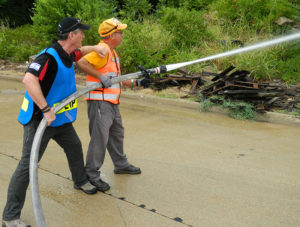
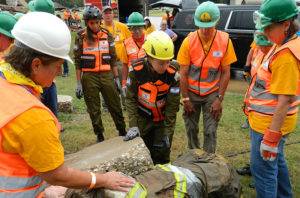
Texas Baptist Men volunteers spent three days learning how to remove an injured person trapped by rubble, handle a fire hose and recognize hazards such as improvised explosive devices—skills they almost certainly will not use but that will qualify them to provide disaster relief in Israel.

Personnel with the Israeli Defense Force’s Home Front Command and the Emergency Volunteer Project, an organization that recruits, trains and deploys individuals to support first responders in Israel after a manmade or natural disaster, taught TBM volunteers light urban search and rescue techniques.

Personnel with the Israeli Defense Force’s Home Front Command teach Texas Baptist Men volunteers how to assess the situation if they encounter a person trapped by rubble. (Photo / Ken Camp)

In addition to classroom lessons at the TBM Dixon Missions Equipping Center, volunteers also participated in hands-on training exercises at the Dallas Fire Department Training Center.

The basic instruction enables volunteers from the United States to meet the minimum standards the Israeli government requires of all its citizens—to render aid to first responders in emergency situations.

TBM volunteers who serve as volunteers in Israel after an earthquake or other disaster will serve meals in field kitchens and perform other familiar tasks, officials of the missions organization emphasized.

A former Arlington firefighter who works with the Emergency Volunteers Project now teaches TBM volunteer Ray Longoria from Canyon Lake how to handle a fire hose. (Photo / Ken Camp)

“We’re not becoming first responders,” said John Travis Smith, chief operating officer for TBM. “We’re not putting people in harm’s way. We’re not going to be sending people into buildings to fight fires or rescue people who are trapped.”

At the same time, by learning how to respond in worst-case scenarios, TBM volunteers who serve in field kitchens in Israel will be able to care for themselves and not become a burden to first responders, Smith added.

In February, the TBM board of directors voted to enter a two-year partnership with the Emergency Volunteer Project to engage in cross-training exercises. In addition to TBM volunteers learning the Israeli approach to support first responders after a disaster, TBM also will train Israelis in how to provide large-scale emergency food service.

TBM workers also likely will be involved in water purification and distribution, as well as painting and repairing civil defense shelters.

In the process, TBM officials emphasized, volunteers will have opportunities to “share the love of Jesus” in Israel.

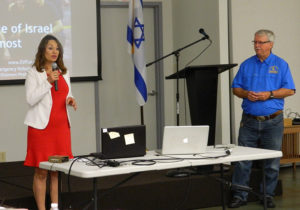
Yifat Sasha-Biton, member of the Knesset in Israel, spoke to TBM volunteers who trained to serve in her nation. She is pictured with Terry Henderson, TBM state director of disaster relief. (Photo / Ken Camp)

During the Aug. 9-11 training event in Dallas, TBM volunteers learned geological experts agree Israel likely will experience a major earthquake sometime within the next 20 years.

Representatives of the Israeli Defense Force’s Home Front Command also told the group 15,000 rockets have been fired at Israel from Gaza since 2001. The nation places significant emphasis not only on protecting its citizens, but also preparing them to render aid to the Israeli National Police on an ongoing basis and to the Home Front Command in times of national emergencies.

Yifat Sasha-Biton, member of the Knesset in Israel, traveled to Dallas to thank the TBM volunteers for their willingness to serve in her country.

Adi Zahavi, international director of the Emergency Volunteer Project, praised the TBM volunteers for entering into a partnership to respond to disasters in Israel.

“This is a great example of cooperation between the United States and Israel, between Christians and Jews,” he said. “When I look at you, I know we are in good hands.”


Claiborne: Restorative justice heals the wounds of violence

Biblical justice means restoring what has been broken, not just punishing people who break laws, author and Christian activist Shane Claiborne believes.

“Restorative justice goes deeper than just crime and punishment. It is healing the wounds of violence, sin and crime,” he said.

Shane Claiborne

Claiborne will speak on “Jesus and Justice” at the No Need Among You Conference, Oct. 3-5 at First Baptist Church in Waco, sponsored by the Texas Christian Community Development Network.

Since he’s addressing an audience in Texas—where more than one-third of all executions have occurred since the death penalty was reinstated in 1976—he plans to talk about capital punishment, among other things.

‘Killing the poorest of the poor’

Claiborne—author of Executing Grace: How the Death Penalty Killed Jesus and Why It’s Killing Us—sees evidence the United States is moving toward abolition of the death penalty.

“We’ve just got to get Christians to act more like Jesus,” he said, noting 85 percent of the executions in the last four decades have occurred in the Bible Belt.

Claiborne sees a definite “racial dynamic” at work, pointing out, “The states that held onto slavery the longest have held out on the death penalty the longest.”

People of color are disproportionately represented on Death Row, as are those from the lowest rungs of the socio-economic ladder, he noted.

“We are not killing the worst of the worst. We are killing the poorest of the poor,” Claiborne said.

However, he points to positive signs, notably the recent proclamation by Pope Francis declaring the death penalty unacceptable in all cases and raising opposition to capital punishment to the level of official Roman Catholic doctrine. He also noted about 80 percent of Christian Millennials oppose the death penalty.

“I am encouraged. I think it’s on its way out,” he said.

Redeeming neighborhoods and communities

However, Claiborne views restorative justice as larger than the single issue of capital punishment.

“At the heart of everything, it’s the idea that no one is beyond redemption. As the Bible says, ‘Where sin abounds, grace abounds much more,’” he said.

While most evangelical Christians accept that idea at the individual level, it has a larger dimension, Claiborne insisted.

“It’s also about redeeming our neighborhoods and our cities,” he said.

Community transformation and neighborhood redemption means some Christians need to relocate to areas where they can live among and learn from the poor, Claiborne asserted.

“We need a theology of place. It’s hard to love a neighborhood if you don’t live there,” he said.

A “radical reorientation” toward the values of God’s kingdom—characteristics such as love, service and selflessness—lived out in community will capture attention, because it’s “the antithesis of what we see in the world,” he noted.

“We need to talk about bringing the kingdom down where we live,” he said. “We can tell the world that there’s life after death, but the world seems to be wondering if there is life before death.”

No Need Among You

In addition to Claiborne, other keynote speakers at the No Need Among You Conference include Mark DeYmaz, cofounder and president of the Mosaix Global Network; Philip Jenkins and Stephanie Boddie from Baylor University; and Lorena Garza Gonzalez, vice president of Urban Strategies.

Early registration cost is $139 for individuals, $129 for members of a group and $119 for students. Discounts are available for members of the Texas Christian Community Development Network. The deadline for early registration is Sept. 1. Costs increase after that date. Single-day registration is available. To register, click here.


Political involvement a matter of Christian stewardship

ARLINGTON—Since United States citizens have the right to participate in the nation’s political process, American Christians should be good stewards of that privilege, said Kathryn Freeman, director of public policy of Texas Baptists’ Christian Life Commission.

The Bible includes the stories of the people of God such as Joseph, Moses, Esther and Daniel who interacted with individuals in powerful positions and guided them to help others, Freeman said during a session at the Texas Baptists’ Family Gathering in Arlington.

She also pointed to African-American civil rights activist Septima Clark and British statesman William Wilberforce as examples of Christians involved in the political process.

In a time of partisanship and political division, she emphasized the healing Christians who are involved in politics must bring to their communities.

“Some Christians have placed their hope in political leaders when they should remember those are not the ones who will make everything right,” Freeman said.

Since politicians and governments only have some control for a brief time, Christians must remember to give their ultimate allegiance to God, whose power will never end, she insisted.

Christians should interact with politicians and governments to advocate for the vulnerable and marginalized, not for their own self-interests, Freeman asserted.

To serve their communities effectively, churches need to be knowledgeable, she noted. To learn about current events, Christians should access a variety of news sources so they can have a more objective perspective, she added.

Maintaining communication with elected representatives can go a long way toward influencing government for good, she said, noting only about 9 percent of Texans contact state officials.

If governments do something to hurt or abuse others, Christians may need to engage in civil disobedience, Freeman said, keeping in mind a Christian’s primary responsibility is to follow Jesus.

“Ultimately, our citizenship is in heaven,” she said. “How we engage others should be reflected in that.”


CommonCall: Feed my sheep

LUBBOCK—Pastor Kenneth Jackson of New Light Baptist Church in Lubbock prayed 10 years ago, asking God to give him a vision for community outreach.

He found it in John’s Gospel, when he read a conversation between Jesus and Simon Peter.

Jesus asked if Simon Peter loved him, and the disciple replied, “Lord, you know I love you.”

“Feed my sheep,” Jesus responded.

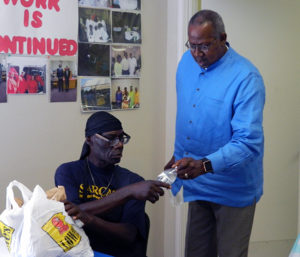
Kenneth Jackson, pastor of New Light Baptist Church in Lubbock, offers a neighborhood resident a bottle of water on a hot day. (Photo / Ken Camp)

“I realized that’s what God wants us to do,” Jackson said. “He commands us, ‘Feed my sheep.’”

Love in a Lunch ministry

Looking at the predominantly low-income neighborhood surrounding New Light Baptist, Jackson realized before its residents would accept spiritual nourishment, they first needed someone to help meet their basic needs. About eight out of 10 households are food-insecure, and many homeless people frequent the area.

New Light Baptist Church in Lubbock provides neighborhood residents an average 300 sack lunches a week, at least three Wednesdays a month, through its Love in a Lunch program. (Photo / Ken Camp)

So, the church’s Love in a Lunch program was born.

Jackson distributed fliers throughout the neighborhood, inviting residents to visit the church to receive a free sack lunch on Wednesday afternoon. The first week, Jackson and his wife, Ambra, prepared and distributed 15 meals, and the program continued to grow.

“When we hit 40, it was a big thing,” she said.

“When we hit 100, we were blown away,” he added.

Now the ministry provides an average 300 sack lunches a week, at least three Wednesdays per month, skipping the first week when many people have received their paycheck or government assistance. Toward the end of the month, it’s not unusual to surpass 350 meals.

‘A little cupful of committed people’

On a good Sunday morning, between 15 and 20 people worship at New Light Baptist Church, and sometimes as few as a half-dozen attend.

“Look at what the Lord has accomplished,” Jackson said. “I cannot say enough about how good God has been to New Light Baptist Church, allowing us to accomplish the vision with our little cupful of committed people.”

Kenneth Jackson, pastor of New Light Baptist Church in Lubbock, shows the love of Christ to neighborhood residents in tangible ways. (Photo / Ken Camp)

Youth at the church stuff paper sacks on Tuesdays with chips, cookies and a card imprinted with an evangelistic message—a “soft approach” to evangelism, Jackson said.

At about 10 a.m. on Wednesdays, women from the church begin preparing the sandwiches they add to the sack lunches they give away between 3 p.m. and 5 p.m.

“I thank God for these ladies who volunteer their time every week,” Jackson said. “They enjoy preparing the lunches, talking to the people and praying with them. … Some people have prayed to accept the Lord, sitting right around these tables, eating their sandwiches.”

Assessing needs

Everyone who receives a sack lunch signs in. First-time recipients must complete a one-page survey to provide contact information to enable a representative from New Light to make a home visit to verify the information—particularly the number of children in the household—and assess needs.

Once the assessment is completed, Jackson makes referrals and helps families contact other social service providers to receive any benefits for which they qualify.

Sometimes, the needs are readily apparent. Ambra Jackson remembers a woman who arrived on a Wednesday with the grandchildren she was raising. When the family sat down to eat their sandwiches, the grandmother told the children to let her cut them in half, so they would have something to eat that day and something the next day.

Ambra Jackson packs sack lunches at New Light Baptist Church in Lubbock. (Photo / Ken Camp)

“I told her: ‘Oh no, you eat it all. We’ll get you another to take home,’” she recalled.

Any sack lunches that are left over at 5 p.m. on Wednesday are distributed to homeless people. For an extended time, the church also delivered the meals to homebound elderly members, until those individuals moved into nursing homes.

‘The Lord kept providing’

For at least six months, the Jacksons paid personally for all the food they distributed.

“The Lord kept providing,” Ambra Jackson said.

In recent years, a Sunday school class at Southcrest Baptist Church in Lubbock has donated items on a regular basis, and some former recipients who have achieved financial self-sufficiency have returned to contribute to the ministry.

New Light Baptist’s Love in a Lunch program also receives financial support from the Baptist General Convention of Texas, made possible through gifts to the Texas Baptist Hunger Offering.

“Some of the people who come here drank their breakfast, lunch and supper, but we treat them with respect,” Jackson said. “These really are good people. They’re just having a hard time.”

Jackson remembered one man who showed up on Wednesday afternoon so high “he could fly a kite without a string,” but the pastor made a point to tell him God loved him.

Much later, the man returned to New Light clean and sober, eager to tell Jackson about the new business he successfully had launched and to thank the pastor for showing God’s love.

“He said: ‘You never talked down to me. You never criticized me,’” Jackson recalled, noting the man donated $100 toward the ministry. “People don’t need our criticism. They need our support.”

‘Gateway to the kingdom of God’

In addition to the Love in a Lunch ministry, New Light also provides about 450 backpacks, filled with school supplies and a Bible, to students the first weekend in August.

On the Wednesday the week before Thanksgiving, women from New Light—in conjunction with the Women on Mission from several sister churches—serve a sit-down meal for more than 400 people in the community rather than distributing sack lunches.

“We want them to understand what fellowship is all about,” Jackson said.

The church also wants them to understand what it means to live in fellowship with God and in obedience to him.

“The church is not an ATM. The church is not just a social service,” he said. “The church is the gateway to the kingdom of God.”

At some point, Jackson hopes to offer a money management course to help families learn how to make the most of limited resources and become good stewards.

However, before most hungry people are open to God or eager to receive instruction, they first need to see God’s people demonstrate love by meeting their immediate needs, he noted.

“These are some good people here,” Jackson said. “They’re just down and out, and they need somebody to offer them a hand up.”

This is part of an ongoing series about how Christians respond to hunger and poverty. Substantive coverage of significant issues facing Texas Baptists is made possible in part by a grant from the Prichard Family Foundation.

Read more articles like this in CommonCall magazine. CommonCall explores issues important to Christians and features inspiring stories about disciples of Jesus living out their faith. An annual subscription is only $24 and comes with two free subscriptions to the Baptist Standard. To subscribe to CommonCallclick here.