Petition seeks sanctuary status for Baylor campus

WACO—Several doctoral students in Baylor University’s religion department have initiated a petition asking the school’s administration to declare Baylor a sanctuary campus for refugees, immigrants and international visitors.

The petition, which gained more than 900 signatures in about 48 hours, asks Baylor to “refuse to comply with immigration investigations or deportations to the fullest extent possible, including denying access to university property.”

Executive order ‘incompatible with Baylor’s Christian commitments’

It declares President Donald Trump’s executive orders on immigration “with their maligning of ‘removable aliens’ and their targeting of Muslim populations, as incompatible with Baylor’s Christian commitments.”

Pat Neff 250The petition calls on Baylor to “publicly communicate a position of zero tolerance on aggressions relating to immigration status and identify particular spaces on campus where those who feel threatened can seek refuge.”

The petition—addressed to David Garland, interim president; Greg Jones, executive vice president and provost; Kevin Jackson, vice president for student life; and Jeffrey Hamilton, vice provost for global engagement—also asks Baylor’s administration to:

  • Guarantee privacy by prohibiting “the collection or release of information regarding the immigration status of Baylor students, scholars and community members by or to any enforcement agency.”
  • Create an office for noncitizen students to coordinate and strengthen on-campus services, including access to free legal counsel; increase financial aid for undocumented students; and allocate funds to assist with the financial and legal repercussions of immigration policy changes.
  • Take a leading advocacy role among Christian universities and partner with other institutions to “defend the dignity and rights of noncitizens.”
  • Advocate publicly for the maintenance of the Deferred Action for Childhood Arrivals program, launched by the Obama Administration in 2012.
  • Create a scholarship program for displaced students, giving preference to students from Iran, Iraq, Libya, Somalia, Sudan, Syria and Yemen—nations targeted in Trump’s temporary travel ban.
  • Meet with representatives of student groups, faculty and staff to plan the implementation of sanctuary initiatives that will “enable Baylor to fulfill its Christian commitments to hospitality, justice and reconciliation and truth.”

“Baylor’s profession of the Christian faith commits it to the formation of a hospitable, just and truth-telling community, especially for the sake of its most vulnerable members, in whom Christians discern the face of Christ,” the petition states.

“These commitments face a direct challenge from the U.S. president’s recent executive orders barring refugees, targeting travelers from Muslim-majority countries, and expanding the criminalization and deportation powers of U.S. immigration agencies, as well as by his campaign promises to deport millions of migrants and terminate Deferred Action for Childhood Arrivals.

“These executive actions are deeply troubling both in themselves and in light of the complex role that the United States has played in the migration of persons from Latin America and the Muslim-majority countries currently affected by the ban.

“Equally concerning is the occurrence of hate crimes and violence against immigrants, persons of Latin American and Middle Eastern origin, and other minority and marginalized persons across the nation and on our own campus. … This pivotal moment can become a time of creative and critical witness for Baylor as a “Christian institution of higher learning.”

Tom Millay, one of the authors of the petition, noted it was “theologically driven,” not politically motivated.

“We have different political opinions, but we all came together in affirming the executive orders are contrary to our Christian heritage,” Millay said.

University responds after executive order

On Jan. 30, Garland—along with Jones, Jackson and Hamilton—sent a letter to students, faculty and staff and posted it online

“We at Baylor University are committed through our Christian convictions to practices that support hospitality, community, respect and the open exchange of ideas across our world,” the letter said.

Noting the presidential executive order, the letter stated: “While immigration laws are understandably complex and inextricably tied to national security, changes in policies and practices as a result of the executive order may affect members of our Baylor community. We have members of our community from some of these identified countries (in the executive order) and others who have significant ties to them.”

The letter noted staff from Baylor’s Center for Global Engagement made personal contact with affected individuals, and it advised students, faculty or staff from any country specified in the executive order to contact the center before traveling outside the United States.

Subsequently, the Center for Global Engagement held an open meeting Feb. 2 with all international students at Baylor to discuss the executive order and how it might affect them.

On Feb. 6, Garland welcomed Baylor students and scholars from the affected countries to a lunch at Allbritton House, the Baylor president’s home, “to continue the open dialogue and demonstrate our firm commitment to supporting our global Baylor family,” a statement from the university said.

“The Center for Global Engagement and university officials are closely monitoring the situation and will continue to provide personal guidance, support and encouragement for our students, staff and faculty who are impacted directly,” the university statement said.

The American Association of University Professors endorsed the sanctuary campus movement after the presidential election last November and encouraged colleges and universities to adopt sanctuary policies. Nationally, at least eight institutions have declared their campuses as sanctuaries—Portland State University, Reed College, Wesleyan University, Pitzer College, Santa Fe Community College, the University of Pennsylvania, Connecticut College, Drake University and Swarthmore College.

A Jan. 27 presidential executive order suspended visas from seven Muslim-majority nations and indefinitely halted refugee resettlement from Syria. On Feb. 3, a federal judge in Washington suspended parts of the order. The Trump Administration subsequently challenged that ruling before the 9th Circuit Court of Appeals.




Some Baylor regents may need to resign, former regents assert

WACO—If any Baylor University regents failed in their responsibility to the school, they need to resign, 14 former regents said in a Feb. 6 letter to the university’s governing board.

Bears for Leadership Reform released the letter that criticizes the regents’ handling of the Pepper Hamilton law firm’s investigation into sexual violence and calls for increased transparency and accountability.

Former regents Mary Chavanne Holmgren, Randy Ferguson, Randy Fields, Gale Galloway, Gracie Hilton, David McCall, Drayton McLane, Jaclanel McFarland, Laree Perez, Ella Pritchard, John Starky, Emily Tinsley, Hal Wingo and John Wood signed the letter.

“The reality is that until regents release the actual ‘agreed-upon scope’ of the investigation, it is very difficult for anyone to determine if the investigation was or was not flawed,” the letter states.

“The details of the assaults certainly should not and do not need to be released. However, we strongly believe that the pertinent facts of the investigation in the form of a written report and the agreed-upon scope of the investigation should be released to the Baylor Family.”

Concerns about governance

The letter particularly focuses on questions raised by recommendations from Pepper Hamilton concerning governance. 

“If current regents on the board have acted inappropriately as suggested in Section III of the Pepper Hamilton recommendations, those regents—no matter how many—should resign from the board,” the letter stated.

Among other matters, the firm recommended the regents “review considerations and standards for new board membership, including actual or perceived conflicts of interest, and implement due diligence in the selection of board members.”

“The selection and election of regents—the ultimate leaders of Baylor University—is perhaps one of the most important actions of the board,” the letter stated. “If the office of regent has been compromised through the lack of exercising proper fiduciary responsibility, lack of appropriate due diligence, or conflicts of interest by regents, the regents responsible for these actions should resign their duties and allow their position to be filled by another person.”

Accrediting agency places school on warning

The former regents also expressed concern the Southern Association of Colleges and Schools Commission on Colleges placed Baylor on a one-year warning for noncompliance regarding student support services, control of intercollegiate athletics and institutional environment. 

“The accreditation of Baylor is certainly one of its most important assets. The fact that SACS has felt it necessary to put Baylor under a “Warning” status appears to be just further indication the regent board is not providing the governance leadership that a major university board should be providing,” the letter stated.

The former regents specifically requested the board:

  • Ensure that all victims of sexual violence are “getting whatever help is necessary for them to move forward with their lives.”
  • Make sure the Baylor campus is safe and that all appropriate Title IX procedures are in place and implemented.
  • Release all the facts from the Pepper Hamilton investigation, including its agreed-upon scope, as a written report.
  • Take seriously the importance of SACS accreditation and “provide the necessary leadership, guidance and governance to remove the accreditation blemish that Baylor has recently received.”

Board of regents chair responds

Ron Murff, chair of the Baylor regents, noted he and his board first learned about the letter from a news release forwarded from media.

“Many of the actions requested in the letter to demonstrate transparency and accountability already are well under way,” Murff said.

“We are passionately committed to ensuring the victims of these horrendous crimes receive the support they need and deserve. That process is ongoing.

“We have begun to implement a range of governance reforms drawn up by both representatives of the Baylor Family and independent experts. We are at the forefront of complying with Title IX policies and procedures after approving the 105 recommendations proposed by Pepper Hamilton. And we take seriously the importance of SACS accreditation. We, of course, thank the BLR for their ongoing input and support throughout this process.”

Town hall meeting scheduled

In a related matter, Murff responded to an invitation from Fred Norton of the Baylor Line Foundation to participate in a Feb. 15 town hall meeting in Waco on governance reform. Representatives of Bears for Leadership Reform already announced they would take part in the gathering.

In a Feb. 6 letter, Murff said he would be unable to participate in the public meeting but was “certainly open to feedback from the Baylor Line Foundation” regarding the report of the regents’ governance review task force, and he offered to set up a conference call for Norton with Greg Brenneman, who chaired the task force.

Murff also noted a new email address—BoardRelationsOffice@Baylor.edu—set up for the board to receive input from the Baylor Family, and he said a new website will launch soon.

“We intend to conduct a media availability session following the upcoming board meeting to discuss Baylor’s governance reforms and our next steps,” he continued. “Additionally, we are considering open forums for the campus community to discuss and understand board governance later this spring.”

Big 12 takes action

On Feb. 8, the Big 12 board of directors announced it will withhold 25 percent of Baylor’s revenue from the conference, pending an independent review of structural changes made in the wake of the sexual violence scandal. The funds will be placed in escrow until the independent audit is completed. 

“While the withholding of conference distributions is an unexpected financial event, we do not deem these actions to materially impact the overall financial position of the university,” Interim President David Garland said. “We pledge our full cooperation, and we will work with the Big 12 Conference to conduct the audit as expeditiously as possible.”

“This third-party review at the request of the Big 12 Conference will provide an opportunity for us to demonstrate our progress to date and our ongoing commitment in establishing Baylor as a leading institution in athletics compliance and governance and for preventing and addressing sexual assaults on college campuses.”

EDITOR’S NOTE: The last three paragraphs were added after the article originally was posted.


Texas Baptists challenged to teach children the power of worship

LEWISVILLE—Worship involves an intimate relationship with God—and children may find that concept easier to grasp than adults do, Kathleen Chapman told participants at Children’s Worship University.

Children “don’t come in with the doubts and baggage and skepticism the adult tends to have,” she said. “It’s easy for a child to wonder and be in awe and let all their inhibitions go and really show everyone how excited they are. It’s not as easy for adults to do that.”

“When you start worshipping, your life will be forever changed,” said Chapman, author of Teaching Kids Authentic Worship. She was the featured speaker at the training event for preschool and children’s choir and worship leaders, sponsored at First Baptist Church in Lewisville by the Baptist General Convention of Texas music and worship office.

Detailing facts about the human body and animals, Chapman reminded adults in the room about the intricacy of God’s work as Creator.

She took conference participants on a journey, detailing her personal experience seeking to understand the meaning and practice of worshipping God.

“If we don’t understand worship, the kids in our ministries are not going to understand worship,” Chapman said. “It’s a paralyzing effect. It was for me when I had been in ministry for so many years, and I realized I didn’t understand worship. I started at Square One—writing down ways I could worship God.”

Throughout the weekend event, participants engaged in workshops aimed at developing and maintaining strong children’s worship programs in their churches. Topics ranged from “Sing your way through the Bible” and “Praise Him with instruments” to “From rote singing to music reading” and “It’s like herding cats!”

“Our children are the future, and I can’t think of a better way to eternalize God’s truths than through worship,” said Angela Irby, planning team member for Children’s Worship University and worship associate for children’s music at The Heights Church in Richardson.

“I am thrilled to serve on the CWU planning team because I enjoy working to create and plan this special weekend event to help motivate and inspire anyone who has a love and passion to make a difference in the lives of children.”


CLC urges lawmakers to reject ‘anti-sanctuary city’ legislation

AUSTIN—The Texas Baptist Christian Life Commission joined a coalition of faith-based groups urging the Texas Legislature to reject one of Gov. Greg Abbott’s priorities—legislation outlawing “sanctuary cities.”

“Elected officials do not get to pick and choose which laws to enforce,” Abbott told a joint session of the Texas Legislature during his State of the State address. “This will be the session where we ban sanctuary cities.”

Abbott announced his support for SB 4, introduced by Sen. Charles Perry, R-Lubbock. The bill would cut off state money to local governments that instruct police officers not to ask detained individuals about immigration status.

‘A chilling effect’

However, leaders of religious organizations, including the CLC, Austin Interfaith and the Texas Catholic Conference of Bishops, called on lawmakers to reject the measure.

“SB 4 will force many immigrants, undocumented or otherwise, into the shadows out of fear of being unfairly targeted simply because of the color of their skin,” CLC Director Gus Reyes said.

“We are worried our people will be afraid to attend worship services on Sunday morning. This will have a chilling effect on the relationship between immigrant communities and law enforcement, but it will also negatively impact many of our congregations.”

‘Undermines public safety’

SB 4 would force local law enforcement to take time away from their primary duty—protecting the lives and property of citizens in their communities, a Methodist pastor from Austin said.

“This bill requires local police and sheriff’s deputies to enforce federal immigration laws, as if their job of maintaining public order and the public safety weren’t difficult enough as it is,” said John Elford, senior pastor of University United Methodist Church in Austin and a member of Austin Interfaith.

“It creates a chilling effect that undermines public safety, families and the well-being of the community. I find it hard to imagine how this is not evident to the leaders of our state.”

Other religious leaders insisted the legislation would result in the profiling of minorities and unfairly target immigrants.

“I am disappointed that so many of our state leaders are pushing legislation that, in our view, treats immigrants in a way that fails to reflect the respect due to every human being made in the image and likeness of God,” said Jennifer Carr Allmon, executive director of the Texas Catholic Conference of Bishops.

Governor puts bill on fast track

Abbott declared the sanctuary cities legislation an emergency item, which enables lawmakers to override rules that typically prevent them from voting on bills during the legislative session’s first 60 days.

After about 16 hours of testimony Feb. 2, the State Affairs Committee approved the bill 7-2 in a party-line vote, sending it to the full Senate. The Senate voted 20-11, along party lines, to give its preliminary approval to the measure Feb. 7.

A previous effort to ban sanctuary cities, supported by Gov. Rick Perry in 2011, failed in both the regular legislative session and a special session.

EDITOR’S NOTE: After this article originally was posted, the next-to-last paragraph was edited Feb. 8 to report on Senate action.

To find your state representative or state senator, click here.


TBM volunteers demonstrate Super Week of Caring

HOUSTON—Houston expected hundreds of thousands of visitors for festivities surrounding the Super Bowl, but about 60 Texas Baptist Men volunteers arrived in the city to help homeowners rather than focus on football.

Beckie Turk 250Beckie Turk from Deer Park First Baptist Church removes damaged drywall from a home in northwest Houston during the Super Week of Caring. (Photos / Ken Camp)TBM and its long-term recovery ministry sponsored a Super Week of Caring, Jan. 29-Feb. 4. Construction volunteers worked on more than 20 projects at five homes, helping residents recover from disasters.

Most of the projects grew out of Houston Mayor Sylvester Turner’s Blue Tarp program. The initiative is designed to provide a more permanent solution for residents of the Acres Homes neighborhood in northwest Houston whose roofs have been covered with tarps since Hurricane Ike in 2008.

After contractors replaced the roofs, TBM long-term recovery volunteers helped homeowners with other needs, particularly interior damage caused by leaky tarps.

“Many of these homes have been hit three times—first by Hurricane Ike nine years ago, by the Memorial Day floods in 2015 and by the Tax Day floods in April 2016,” said Gerald Davis, TBM long-term recovery coordinator.

Elmo Johnson 350Elmo Johnson, pastor of Rose of Sharon Missionary Baptist Church in Houston’s Fourth Ward, works on a home in the Acres Homes area of northwest Houston, where he lived as a teenager.Elmo Johnson, pastor of Rose of Sharon Missionary Baptist Church in Houston’s Fourth Ward, grew up in the Acres Homes neighborhood after his family moved to Houston from rural Louisiana. He welcomed the opportunity to work as a long-term recovery volunteer in the area.

“This means the world to me,” Johnson said. “This home where we’re working was probably here back when I was in school. … It’s like coming back around full circle to where I started.”

Les Baker Clyde McMinn 400Les Baker and Clyde McMinn from Wylie Baptist Church in Abilene work to replace a damaged sliding-glass door on a Houston home.For James and Barbara Guilbeaux, last year’s flood marked the latest in a series of setbacks dating to Tropical Storm Allison in 2001, when their home first sustained damage.

A crew from Wylie Baptist Church in Abilene performed extensive repairs on the Guilbeaux home, including replacing rotted exterior siding, kitchen flooring, interior ceilings, drywall and a sliding-glass door.

Wayne Whetsel 350Wayne Whetsel from Wylie Baptist Church in Abilene removes rotted siding from a home in northwest Houston.“This is such a boost,” James Guilbeaux said. “I got overwhelmed by everything that happened. But when the people who are working here leave, we will be miles ahead.”

Between bad experiences with unscrupulous contractors and an unwillingness to accept free labor, he acknowledged initial reservations.

“It felt kind of strange, because I’ve never been one who wanted anything for free. I always paid for everything,” he said.

Les Baker 250Les Baker from Wylie Baptist Church in Abilene works on a Houston home.“When help comes like this, it motivates me to do likewise. It’s such an inspiration to me. … Maybe I can show my gratitude by giving to somebody else.”

Barbara Guilbeaux, who is taking chemotherapy after a bout of lymphoma, understands what her husband means about feeling “overwhelmed” by circumstances. But mostly, she feels overwhelmed by thanksgiving.

“I’m just so thankful. I feel so blessed, I just want to jump up and shout,” she said. “I didn’t see it coming, but you never know what God has for you.”

TBM long-term recovery has scheduled additional home-repair mission projects March 8-11 and June 11-16 in Brazoria; March 12-16, June 19-24 and July 16-21 in Southeast Texas; March 13-17 in Jennings, La.; and July 9-14 in Houston. To register a group, click here

Home-repair weekends also are scheduled April 27-29 and Sept. 28-30 in Southeast Texas and May 25-27, Aug. 24-26 and Oct. 26-28 in the greater Houston area. To register a group, click here

For more information, call Marla Bearden at (214) 537-7358 or email marla.bearden@texasbaptistmen.org or call Gerald Davis at (214) 924-6401 or email gerald.davis@texasbaptistmen.org.


New Title IX lawsuit alleges culture of sexual violence at Baylor

A Baylor University graduate filed a Title IX lawsuit against the school Jan. 26 in U.S. District Court, alleging a culture of sexual violence that included 52 rapes in four years.

Read it in the Waco Tribune-Herald here.


North Texas woman sells all to serve in Nigeria

HIGHLAND VILLAGE—Cori Rodgers worked more than two decades in executive management in the auto service industry. Today, she can fit all her worldly possessions into a 2005 Honda.

Nigeria 300Nigerian children gather to hear the Bible read in their own language.“It’s the greatest time of my life,” said Rodgers, a member of The Village Church in Highland Village, who sold nearly everything she owns to pursue mission work in Nigeria with Wycliffe Bible Translators

No satisfaction

Rodgers grew up in a Christian home, but for an extended time, she chose material success over following Christ.

“For 20 years, I wallowed in the selfishness of my own heart,” she confessed. “No matter what I achieved, it didn’t satisfy me. My pockets seemed full, but my heart was empty.”

Several years ago, she agreed to go to church to make her parents happy, and hearing the gospel message changed everything.

“The word of God transformed my heart, and God began to transform my life,” she said. “My desire now is to allow the word of God to come alive in anyone who comes into contact with me.”

Cori RodgersCori RodgersFacing challenges

Moving from the corporate world to the mission field presented challenges, Rodgers acknowledged. Well-trained in business administration, she lacked any background in theology or linguistics. Family responsibilities and related financial obligations could have represented in insurmountable hurdle.

“There were a lot of ‘no’s to overcome before I answered God’s call to go,” she said. “There was a mountain of debt … but I saw God erase it like we would erase a text message.”

After selling nearly all her possessions and using personal savings, Rodgers had enough money to provide the initial funding she needed to be accepted for missions service through Wycliffe. She will depend on the ongoing financial support of donors for continuing needs.

Her parents supported her decision to follow God’s leadership, and they moved to Tennessee to live with her sister. She took a yearlong basic theological studies course at her home church.

Put management skills to work in Nigeria

She applied with Wycliffe in 2015 and was accepted last May. Wycliffe will provide the additional cultural and linguistic orientation she needs before she leaves for Nigeria in early March, and her business background won’t go to waste on the mission field.

“I will be using the skills the Lord allowed me to hone in management,” she said. “I will serve in an operational support position, freeing up the time of others to work in translation.”

Translation 350A linguist works with local people in Nigeria on a collaborative translation project.Rodgers will serve through SIL Nigeria, Wycliffe’s partner organization that formerly was known as the Summer Institute of Linguistics. Nigeria is home to 520 languages and dialects, and 244 languages have no Christian Scripture, she said.

Jos, a city of 900,000 in central Nigeria, will serve as the hub of activity for SIL workers throughout the nation. By promoting literacy, Rodgers and her co-workers will support economic and community development—goals the Nigerian government welcomes.

As a special projects assistant, Rodgers will facilitate workshops and seminars to engage communities in addressing issues such as trauma and disease, as well was literacy.

Rodgers recognizes and acknowledges the risks Christians face in Nigeria. Since 2011, Boko Haram extremists have killed more than 15,000 people and displaced 2.1 million from their homes, the 21st Century Wilberforce Initiative reported. 

“Of course, we’ll practice good common sense, but we realize persecution follows wherever we go,” she said. “It’s a concern, but I’m trusting the Lord to clear the way where he wants me to go. And I know I have a wonderful group of people praying for me.”


ETBU students honor MLK with day of service

MARSHALL—More than 160 East Texas Baptist University students, faculty, and staff participated in service projects throughout the Marshall area as part of the National Day of Service in memory of Martin Luther King Jr.

ETBU MLK 300ETBU freshman Meghan Richey and sophomore Katee Muckleroy clean tables at Mission Marshall.ETBU volunteers worked at multiple locations, including Mission Marshall, the Boys & Girls Club of Hallsville, Dayspring Therapeutic Equestrian Center and My Friend’s House, a local homeless shelter and thrift shop.

“I heard from every one of our ministry partners about how blessed they were to have so many students serving with them,” said Lisa Seeley, director of global education and the Great Commission Center at ETBU. “Without the help of volunteers, many of these ministries would not be able to effectively serve the community. I am so thankful that ETBU students are stepping up to fill this need.”

ETBU MLK 250ETBU senior Dylan Augustine helps at the Boys and Girls Club by cleaning and reorganizing classroom space.Members of ETBU’s volleyball, women’s soccer, baseball, hockey, and men’s and women’s basketball teams all participated in the day of service.

“Our women’s basketball team really enjoyed serving at the Dayspring Therapeutic Equestrian Center,” Head Coach Edsel Hamilton said. “As Christians, we have a calling to serve others, and this was a great opportunity to do that. Dayspring has a wonderful ministry, so it was rewarding to be able to help an organization that gives so much to others.”

Students also participated in the 33rd annual Martin Luther King Jr. parade and banquet sponsored by the Harrison County branch of the National Association for the Advancement of Colored People.

“I love attending ETBU because our university leaders put an emphasis on service,” ETBU junior Austin Grant said. “Participating in the National Day of Service gave me the opportunity to serve others and the personal satisfaction of knowing that I supported both the memory of a great man and our local community.”

MLK Day festivities concluded with the Freedom Banquet at the Marshall Convention Center. Scott Bryant, vice president for spiritual development and university chaplain, represented ETBU in a panel discussion focused on working together to address needs in the area.

“It was an honor to join together with others in the community to celebrate the life and legacy of Dr. Martin Luther King Jr., who worked for nonviolent social change,” Bryant said.


Committee seeks next Texas WMU executive director-treasurer

DALLAS—The search committee seeking the next executive director-treasurer of Woman’s Missionary Union of Texas will accept resumes and recommendations for the position through March 20.  

Sandy Wisdom-Martin left the Texas WMU post last October to become executive director of national WMU in Birmingham. Carolyn Porterfield is interim executive director-treasurer.

The call for resumes follows an extended period when the committee sought input from Texas WMU staff and constituents that included a survey completed by WMU leaders, directors of missions, Texas Baptist leaders and others.

A nominee or candidate should be a woman who has demonstrated strong and productive experience of missions advocacy, leadership and personal missions experience, according to Barbara Springer, chair of the search committee. To download the job description, click here

“We simply want God to guide us to his choice for this significant leadership role, and we know that Texas Baptists share that desire and are praying to that end,” Springer said.

The committee requests letters of recommendation with resumes be sent electronically to mawmaw0210@gmail.com by March 20. The committee must receive both a letter of recommendation and a resume before a candidate will be considered.


TBM celebrates 50 years of responding to invitations from God

In five decades, Texas Baptist Men ministries expanded from two programs—men’s ministry and the Royal Ambassadors missions organization for boys—to 18 areas with a global reach.

Mickey Lenamon 150Mickey Lenamon“Our ministries have grown, but our mission hasn’t changed,” TBM Executive Director Mickey Lenamon said. “The mission of Texas Baptist Men is to bring people to Jesus.”

As TBM marks its 50th anniversary, some principles have remained constant, Lenamon insisted.

“We started as a volunteer organization, and we are still a volunteer organization,” he said, noting a small staff in Dallas coordinates the work of at least 20,000 volunteers around the state.

The early years

TBM grew out of the Brotherhood Department of the Baptist General Convention of Texas’ State Missions Commission. After messengers to the BGCT annual meeting approved a proposal for TBM’s creation as a self-governing organization, TBM’s founders met to adopt its constitution 50 years ago.

Even before TBM approved its governing documents, its volunteers blazed a trail for Baptists around the country through their involvement in disaster relief. When Hurricane Beulah hit the Rio Grande Valley, Baptist Men responded. Bob Dixon, the state RA director who went on to serve 28 years as TBM executive director, cooked meals for storm victims using buddy burners—small camp stoves RAs learned to make in summer camp using gallon-sized cans.

In 1970, TBM took the lead in coordinating the disaster response after Hurricane Celia struck, and that experience demonstrated the need for a mobile field kitchen. So, John LaNoue—who built the first mobile clinic for Texas Baptists’ River Ministry when he served as Baptist Student Union director at Kilgore College—designed a trailer that could house the field kitchen equipment, a communications center, bunks for volunteers and essential equipment for disaster relief.

Using funds provided through the Mary Hill Davis Offering for Texas Missions, LaNoue and other volunteers then built Baptists’ first disaster relief mobile unit in the rear driveway of his Mesquite home.

Today, TBM operates a fleet of fully equipped disaster relief vehicles and can call upon more than 10,000 trained disaster relief volunteers across the state.

Join in God’s activity

Don Gibson, who retired last year as TBM executive director but continues to work as a volunteer in restorative justice ministry, often noted the missions organization underwent a major change after Henry Blackaby—then a director of missions in Vancouver, British Columbia—spoke at the group’s annual convention in 1987.

experiencing god 150Blackaby described the importance of looking to see where God is at work and making radical adjustments to follow God’s will—a concept he and Claude King later developed into a best-selling interactive workbook, Experiencing God: Knowing and Doing the Will of God.
When TBM began applying the principles Blackaby outlined, the organization shifted from a program-driven approach to ministry and began instead responding to “invitations to join in the activity of God,” and doors of opportunity opened, Gibson often said.

Open doors of opportunity

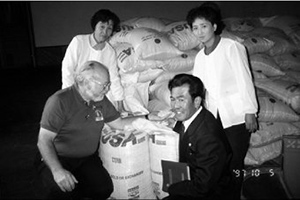
LaNoue Korea 300John LaNoue spent three months in North Korea in 1997 as part of a small team of nongovernmental organization representatives who monitored the distribution of food provided by humanitarian organizations in the United States. (File Photo)Particularly because of the organization’s pioneering work in disaster relief, doors opened for TBM to minister in places closed to traditional missions workers—North Korea, Iran, Iraq and Cuba, to name just a few.

This year, the missions organization assumes responsibility for a ministry handled in recent years by the Baptist General Convention of Texas and its Executive Board staff—long-term disaster recovery.

“This will give us even more opportunities for hands-on contact with the people we want to help,” said John Travis Smith, TBM’s chief operating officer. “In fits with an overall trend in disaster relief. We’re not doing as much mass feeding as in the past, but we’re doing more hands-on work that puts us in direct contact with recipients of the ministry.”

In past disasters, TBM volunteers in field kitchens prepared tens of thousands of meals the American Red Cross delivered to displaced people. While TBM continues to provide meals, typically on a somewhat smaller scale, more disaster relief volunteers are involved in ministries such as volunteer chaplaincy, box distribution and mud-out after floods, and ash-out after fires, Smith noted.

Growth and expansion

Other TBM programs such as volunteer builders, RAs and restorative justice ministry also have flourished, and as the ministries expanded, TBM growth outpaced the ability of the BGCT to provide all its financial needs.

Although the BGCT remains the largest single source of funding for TBM, the state convention provides a relatively small percentage of the missions organization’s annual operating budget. For the remainder, TBM depends on financial support from individuals and churches.

Lenamon particularly points to the TBM water ministry as an area of potentially exponential growth. In the last two decades, TBM has provided pure water to people in more than 70 countries. In addition to providing low-cost water purification systems, TBM has expanded the water ministry to include well-drilling, pump repair and training in health and hygiene.

“God has always opened the doors for us and allowed us to go in,” he said.

After 50 years, second- and third-generation participants in TBM are taking leadership roles, said Lenamon, who first became involved as an RA. He recalled attending various TBM events as a boy when his father, Joe Lenamon, was TBM president.

In the future, TBM will continue to provide avenues for members of Texas Baptist churches to serve in hands-on missions and ministry, he said. Beyond that, he hesitates to make specific predictions.

“I don’t want to limit God by my own small-minded thinking,” Lenamon said. “I just pray for God to show us what he wants us to do and give us the courage to do it. We are open to God’s calling.”

TBM will mark its 50th anniversary with a Feb. 17 “family reunion” dinner in Mesquite and an open house at the Robert E. Dixon Missions Equipping Center in Dallas from 10 a.m. to 2 p.m. Feb. 18. Reservations are requested, and seating is limited. For more information, click here


TBM receives grant for long-term recovery efforts in Houston

DALLAS—Texas Baptist Men received a $125,000 grant from the Greater Houston Storm Relief Fund and the Greater Houston Community Foundation to assist with long-term recovery and repair of homes affected by floods last April.

TBM is seeking to mobilize volunteers to repair about 30 damaged homes through its long-term disaster recovery ministry, a program previously handled by the Baptist General Convention of Texas and its Executive Board staff.

“We are excited to have this opportunity to assist several families who would not otherwise be receiving assistance,” said Terry Henderson, state director of TBM disaster relief and recovery. “Long-term recovery is a new ministry for TBM, and being granted these funds will help us with a successful beginning.”

TBM long-term recovery seeks to serve individuals and families who are uninsured, disabled or elderly. The program works with disaster survivors throughout the long-term restoration process by partnering with churches, associations, humanitarian organizations and other recovery teams to mobilize volunteers, gather and transport donated items, provide prayer and spiritual support, and raise awareness of specific needs. 

For information about how to volunteer in long-term recovery, click here or contact Marla Bearden at (214) 537-7358 or Gerald Davis at (214) 924-6401. 


Task force presents proposals for reforms in Baylor governance

WACO—Baylor University regents will vote next month on recommendations from the board’s governance review task force to increase the size of its executive committee, grant voting rights to regents who represent certain constituencies and create an expanded website with board information.

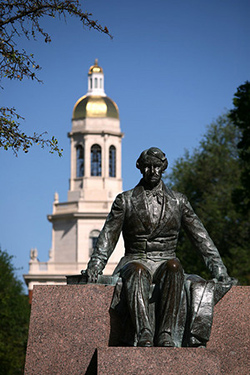
Baylor Statue 250The Baylor regent’s governance review task force presented a 27-page report with recommendations. It did not suggest the board open its meetings to the public, in spite of a request from Bears for Leadership Reform.The task force report acknowledged perceptions among many Baylor constituents that the board has not been open, and the task force presented a series of recommendations designed to “help build greater trust and confidence within the Baylor community.”

However, the task force specifically rejected a call from a group of prominent alumni and donors for the board of regents to open its meetings to the public.

“After extensive deliberations, the task force concluded that the specific recommendations in this report would sufficiently enhance accountability and transparency and that open meetings would risk unnecessarily disclosing competitive information and detract from the free and open exchange of views and robust dialogue that are necessary to fulfill the regents’ fiduciary duties,” the report stated.

John Eddie Williams, president of Bears for Leadership Reform, characterized the recommendations of the task force as “baby steps” that “do not go far enough” in light of the sexual abuse scandal that rocked Baylor. 

Task force produces report and recommendations

A six-member task force—three regents and three non-regents—produced the 27-page report that contains findings and recommendations regarding board composition and procedures, regent selection, board governance and administration, regent giving, the office of the board secretary, and transparency and engagement of the board with key constituencies. 

“At the outset, the task force acknowledged a widely held perception by many Baylor constituents that the board tends to micromanage university administrative matters and that it has not been open regarding how it has made its decisions, selected regents or chosen its leadership,” the report stated.

“The task force recommendations seek to address this perception by promoting greater transparency, openness, and accountability and effective oversight. The task force believes that these recommendations will help build greater trust and confidence within the Baylor community.”

The board of regents’ governance and compensation committee established the task force last November to review Baylor’s board structure and practices—including the relationship between the board and the university administration—and make recommendations regarding “best practices.” 

Board will vote in mid-February

The task force reviewed the university’s and board’s governing documents, examined reports from other universities that had completed similar reviews, surveyed authoritative literature regarding governance and spoke with individuals representing various Baylor constituencies.

Regents received the task force report Jan. 19, and the board will consider its recommendations at a Feb. 17 meeting.

The report recommends the regents’ governance committee create a task force for regent selection. It would include members of the governance committee, but at least half of its members should be non-regents with expertise in varied professional fields and who have diverse backgrounds and geographic locations. It also would include as non-voting members the university president and the vice president for advancement and development.

“The task force believes this recommendation is one of the most important in this report, as the consistent feedback from the Baylor community was that the scope of regent candidates needs to be broadened beyond those persons known by existing regents or identified through the current process,” the report stated.

Other recommendations include:

  • Increase the number of faculty representatives on the board from one to two.
  • Grant voting rights to regents who represent the faculty, the Baylor “B” Association of former athletic lettermen and the Bear Foundation fund-raising organization for athletics.
  • Continue to increase the overall diversity of race, gender and background of regents.
  • Revise the regent removal process, eliminating the clause that regents may be removed only “for cause” and giving the recommendation of removal of non-alumni-elected regents to the governance committee. That committee would make its recommendation to the executive committee, who would then have authority to make the recommendation to the full board.
  • Conduct annual self-assessment of the board, giving each regent the opportunity to suggest ways to improve how the board functions.
  • Provide all regents with all board materials, except when dealing with issues of compensation or—in the case of non-voting regents—information covered by attorney-client privilege.
  • Require the governance committee to solicit from all regents recommendations for board chair and vice chair, and expand the number of vice chairs from one to three.
  • Require the chair to resign from the board of regents no later than one year after completing his or her term as chair.
  • Create a full-time senior position of board secretary who would serve as the principal officer to the board in the administration of its responsibilities. The secretary—who should be an attorney—would be elected by a majority of the board, serve without a fixed term and report directly to the board.

“To bolster trust and confidence within the Baylor community, the task force recommends that the board secretary maintain a board website to inform constituents regarding the board calendar and agenda and provide summaries of board meetings,” the report said.

The website also should include biographical information on each regent, along with his or her term of office and committees and other board leadership positions. It also should include governing documents and both quarterly and annual reports to the Baylor community.

Change board committee structure

The task force also recommended changes to board committee structure to promote greater involvement by regents. The recommended changes would increase the size of the executive committee from eight members to “no more than 15 members,” the report said.

The task force recommended all regents be invited to attend every committee meeting, including the executive committee, unless it presents a conflict of interest. The recommendations include separating governance and compensation to reflect best practices.

The task force recommended maintaining a high level of confidentiality, saying regents should not “discuss the details of the board or committee discussions or disclose how other regents vote.” Public announcements and media communication should be the duty of the board chair in consultation with the university president, the report stated.

In regard to athletics, the task force report said, “it is imperative for the board to ensure implementation of, and compliance with, policies that will identify instances of misconduct by prospective student-athletes, including comprehensive background assessments.”

After review, the task force recommended no changes regarding the board’s 34-member size or requirements that three-fourths of the regents be Baptist, all must be Christians, half must be Texas residents, 10 percent be elected by alumni and up to one-fourth be elected by the Baptist General Convention of Texas, subject to confirmation by the regents.

Bears for Leadership Reform responds

“Without real transparency or accountability, this cannot truly be called reform,” Williams of Bears for Leadership Reform said. “In fact, the board will continue to decide who serves as a regent at Baylor; a few insiders will continue to hold all of the decision-making power on the board; and the decision-making process will remain hidden from the Baylor Family.

“While the task force reviewed how similar boards at other private universities, for-profit and not-for-profit institutions conduct business, these institutions have never been engulfed by a sexual and domestic assault scandal like Baylor.

“If we are to prevent this tragedy from ever happening again, Baylor and its board must not just match what other institutions are doing. It must set the standard and become the leader in transparency and accountability. Unfortunately, the changes recommended by the board of regents’ task force fail to thoroughly address these key principles.”